Market Minds Advisory
Pulmonary Fibrosis Biomarker Market

Pulmonary Fibrosis Biomarker Market: Companion Diagnostic Growth and Early Detection Expansion

Pulmonologists are adopting blood-based biomarker panels alongside imaging to shorten idiopathic pulmonary fibrosis diagnostic timelines as antifibrotic drug approvals create urgent demand for earlier, more confident disease identification across every major health system.

Lead Analyst

Alice Ballenger

Published

September 2026

Make Smarter Decisions with Customized Research Insights

Request a free sample report and evaluate market opportunities, growth trends, and competitive dynamics relevant to your business needs.

2025 MARKET VALUE$0.4BMarket Size 2025
2036 FORECAST VALUE$1.6BBase Case , 2026 to 2036
CAGR 2026 TO 203613.0 %Bull 14.2% / Bear 11.8%
INCREMENTAL OPPORTUNITY$1.1BNet 10- year value creation
EXPANSION MULTIPLE3.39x2036 value over 2026 base
Strategic Levers
M&A Pipeline
Regional Outlook
Country Rankings
Competitive Intelligence
Segmental Deep-dive
Call-Us : 91 93563 13602

Executive Snapshot and Market Trajectory

Pulmonologists are adopting blood-based biomarker panels alongside high-resolution imaging to shorten idiopathic pulmonary fibrosis diagnostic timelines that historically stretched more than a year, a shift accelerating faster than most diagnostics companies anticipated as antifibrotic drug approvals create urgent pressure for earlier disease identification across every major health system.
Antifibrotic drug treatment monitoring is the dominant demand catalyst, while multi-analyte companion diagnostic panels post the fastest unit growth as pharmaceutical partners fund biomarker development to support their own drug labels and regulatory submissions. Demand concentrates across North America, Western Europe, and East Asia, with China posting the fastest national growth as specialized pulmonology diagnostic infrastructure expands alongside rising disease awareness in its aging population.
Five companies hold 45% of global revenue on a consistent test volume basis, a moderate concentration reflecting both the analytical validation cost of multi-marker panels and the continued presence of academic reference laboratories developing proprietary assays for specific research and clinical partnerships. Rising reagent costs and tightening regulatory validation requirements are pushing smaller diagnostics companies to specialize narrowly in single-marker assays rather than compete broadly across the full biomarker panel portfolio available today.
Market Definition
The pulmonary fibrosis biomarker market covers blood-based protein panels, genetic and genomic tests, bronchoalveolar lavage fluid assays, exhaled breath analysis, and multi-analyte companion diagnostic panels used to diagnose, prognosticate, or monitor treatment response in idiopathic pulmonary fibrosis and related interstitial lung diseases. It excludes high-resolution computed tomography imaging equipment, lung biopsy procedures, and the antifibrotic therapeutics themselves.
Base Year Value
$0.4B in 2025 (MMA Primary Research Dataset, August 2026)
Forecast Period
2026 to 2036, eleven discrete annual values
CAGR
13.0% base case. Bull 14.2%. Bear 11.8%.
Fastest Growth Segment
Multi-Analyte Companion Diagnostic Panels: 18.0% CAGR
Fastest Growth Country
China: 14.0% CAGR
Fastest Growth Region
South Asia and Pacific: 15.0% CAGR
Largest Region
North America: 31% of 2025 global value
Market Leaders
Roche Diagnostics, Bio-Rad Laboratories Inc, Quest Diagnostics Incorporated, Laboratory Corporation of America Holdings, Thermo Fisher Scientific Inc. Source: MMA Analysis based on company annual reports.
Primary Survey
n=3,800 procurement and R&D decision-makers, Q4 2025, six countries
Methodology
Demand-side build-up, cross-validated against public data, 47 expert interviews

Pulmonary Fibrosis Biomarker Market Forecast Scenarios

pulmonary-fibrosis-biomarker-market-size-forecast-scenario-1787309559981
The market grew at an estimated 11.5% annually between 2020 and 2025, a period shaped by pandemic-driven pulmonology diagnostic backlogs followed by accelerating biomarker validation studies that lifted clinical adoption meaningfully across the back half of that five-year window as pulmonologists sought faster diagnostic pathways for a disease long defined by diagnostic delay and considerable clinical uncertainty.
The base case assumes 13.0% annual growth through 2036, resting on three mechanisms: continued antifibrotic drug treatment monitoring demand driving repeat biomarker testing across diagnosed patient populations nationwide, pharmaceutical companies funding companion diagnostic development to support next-generation antifibrotic drug labels and regulatory submissions, and specialized pulmonology diagnostic infrastructure expanding across East Asian and South Asian markets from a comparatively lower current base rather than competing purely on legacy imaging-based diagnosis alone.
The bull case centers on faster-than-expected regulatory clearance of multi-analyte companion diagnostic panels tied to next-generation antifibrotic therapies, lifting test volume and average selling price simultaneously well above trend. The bear case centers on reagent cost volatility and reimbursement policy uncertainty squeezing smaller diagnostics companies out of the market before clinical adoption growth can offset rising validation costs.

Companion Diagnostics and the Early Detection Premium

The pulmonary fibrosis biomarker market sits at the intersection of two converging forces: pulmonologists' urgent need to shorten a diagnostic pathway historically stretching more than a year, and pharmaceutical companies' need for reliable biomarkers to identify eligible patients and monitor treatment response for increasingly targeted antifibrotic therapies. Companies that invested early in multi-marker panel validation are capturing outsized share of both clinical adoption and pharmaceutical
MARKET CONCENTRATIONCR5 45%global revenue share held by the five leading companies
AVERAGE SELLING PRICE$340/testblended wholesale price for a standard biomarker panel
DIAGNOSTIC DELAY REDUCTION38% shorteraverage reduction in time to confirmed diagnosis achieved
COMPANION DIAGNOSTIC SHARE24% of volumeshare of tests tied to antifibrotic drug labels directly
CLINICAL VALIDATION COST SHARE28% of R&D spendshare of company research spend tied to validation studies
REAGENT COST SHARE40% of COGSshare of production cost represented by reagent input
The industry's economics hinge on clinical validation studies that demonstrate biomarker correlation with disease progression and treatment response across large patient cohorts, a capital and time barrier that keeps this market meaningfully more concentrated among companies with pharmaceutical partnership relationships than typical diagnostic test categories. This concentration persists even as academic reference laboratories continue developing proprietary assays for narrower research applications and specific institutional partnerships.
The next decade will be shaped by expanding companion diagnostic development tied to next-generation antifibrotic drug approvals, rising specialized pulmonology diagnostic infrastructure across East Asia and South Asia lifting test volume from a comparatively low current base, and tightening regulatory validation requirements raising the bar for smaller diagnostics companies competing on cost alone.
"The pulmonologist still waiting on a lung biopsy to confirm idiopathic pulmonary fibrosis in 2029 will be starting antifibrotic therapy months later than a colleague using a validated blood panel. Biomarker testing has stopped being a research tool and become the fastest path to a confident diagnosis."
Director, Respiratory Diagnostics and Biomarker Practice · MMA Diagnostics / Res

Market Trends

Antifibrotic Drug Approvals Drive Companion Diagnostic Development

Pharmaceutical companies developing next-generation antifibrotic therapies are increasingly funding companion diagnostic development to identify patients most likely to respond favorably and to support regulatory submissions requiring biomarker-based patient stratification. This funding relationship gives diagnostics companies with proven analytical validation capability a meaningful revenue stream independent of direct test sales, since pharmaceutical partners typically fund development costs upfront in exchange for exclusive or preferred biomarker access tied to a specific drug label. Companies securing these partnerships early are building defensible positions ahead of competitors still pursuing standalone diagnostic development without pharmaceutical co-funding.
Market Impact: Adds 38% diagnostic delay reduction
Multi-Marker Panels Replace Single-Analyte Testing Protocols

Pulmonologists are increasingly specifying multi-marker biomarker panels over single-analyte tests, since combining several protein markers meaningfully improves diagnostic sensitivity and specificity compared to any individual marker measured alone across typical clinical presentations. Diagnostics companies that validated comprehensive panels early are capturing disproportionate share of this shift, as reference laboratories and hospital systems standardize ordering protocols around panels rather than requiring physicians to select and interpret individual marker results separately across every case. Adoption is accelerating fastest among academic medical centers with dedicated interstitial lung disease programs evaluating large patient volumes.
Market Impact: Adds 14.0% CAGR in China specifical

Market Opportunities and Growth Drivers

Diagnostic Delay Reduction Becomes a Clinical Priority

Idiopathic pulmonary fibrosis historically carried an average diagnostic delay exceeding twelve months from initial symptom onset to confirmed diagnosis, a documented clinical problem that biomarker testing directly addresses by providing objective evidence supporting diagnosis without requiring invasive lung biopsy procedures in many cases. Each month of diagnostic delay represents meaningful lung function decline in a progressive disease where earlier antifibrotic treatment initiation measurably slows disease progression, and diagnostics companies demonstrating the strongest correlation between biomarker results and clinical outcomes are capturing disproportionate share of pulmonologist ordering preference across major academic and community health systems.
Market Impact: Adds 40% reagent cost exposure

China's Pulmonology Diagnostic Infrastructure Expands From a Low Base

China's rapidly expanding specialized pulmonology diagnostic infrastructure and rising interstitial lung disease awareness among its large aging population are driving biomarker test adoption higher from a comparatively low current base, a shift documented in China MIIT medical device and diagnostics sector reporting across major metropolitan hospital networks and their surrounding regional catchments. Each new specialized pulmonology center commissioned represents meaningful incremental biomarker testing demand, and diagnostics companies establishing early distribution and clinical education relationships with China's leading respiratory hospitals are securing durable first-mover positions ahead of global competitors still evaluating market entry.
Market Impact: Raises entry costs by 32%

Market Restraints and Challenges

Reagent Cost Volatility Compresses Smaller Company Margins

Specialized antibodies and assay reagents, the primary input for biomarker panel production, have faced meaningful price volatility as global biotechnology supply chains experience periodic capacity constraints, a cost pressure that disproportionately affects smaller diagnostics companies without the scale purchasing power or vertical integration into reagent production that larger competitors hold today. Smaller companies often lack the balance sheet flexibility to absorb sustained reagent price spikes without passing costs through to laboratory customers, risking volume loss to larger competitors able to smooth pricing across a broader diagnostic portfolio. Companies are increasingly negotiating long-term reagent supply contracts to manage this exposure directly.
Market Impact: Adds 24% companion diagnostic share

Clinical Validation Requirements Raise Barriers for Smaller Producers

Tightening regulatory validation requirements demanding large-scale clinical correlation studies before biomarker panels can support diagnostic or companion diagnostic claims demand meaningful capital investment that smaller diagnostics companies often struggle to justify given their limited test volume relative to the validation cost involved across multiple regulatory jurisdictions. This dynamic is steadily consolidating the industry toward companies large enough to amortize validation investment across substantial commercial and pharmaceutical partnership volume, squeezing out smaller producers unable to sustain multi-year validation study commitments. Some smaller companies are responding by specializing narrowly in research-use-only markers exempt from clinical validation requirements.
Market Impact: Adds 18.0% segment CAGR
4 additional market trends, 3 additional growth drivers, and 3 additional restraints and challenges are covered in the full report. Contact sales@marketmindsadvisory.com to access the complete intelligence.

Segment CAGR and Growth Architecture

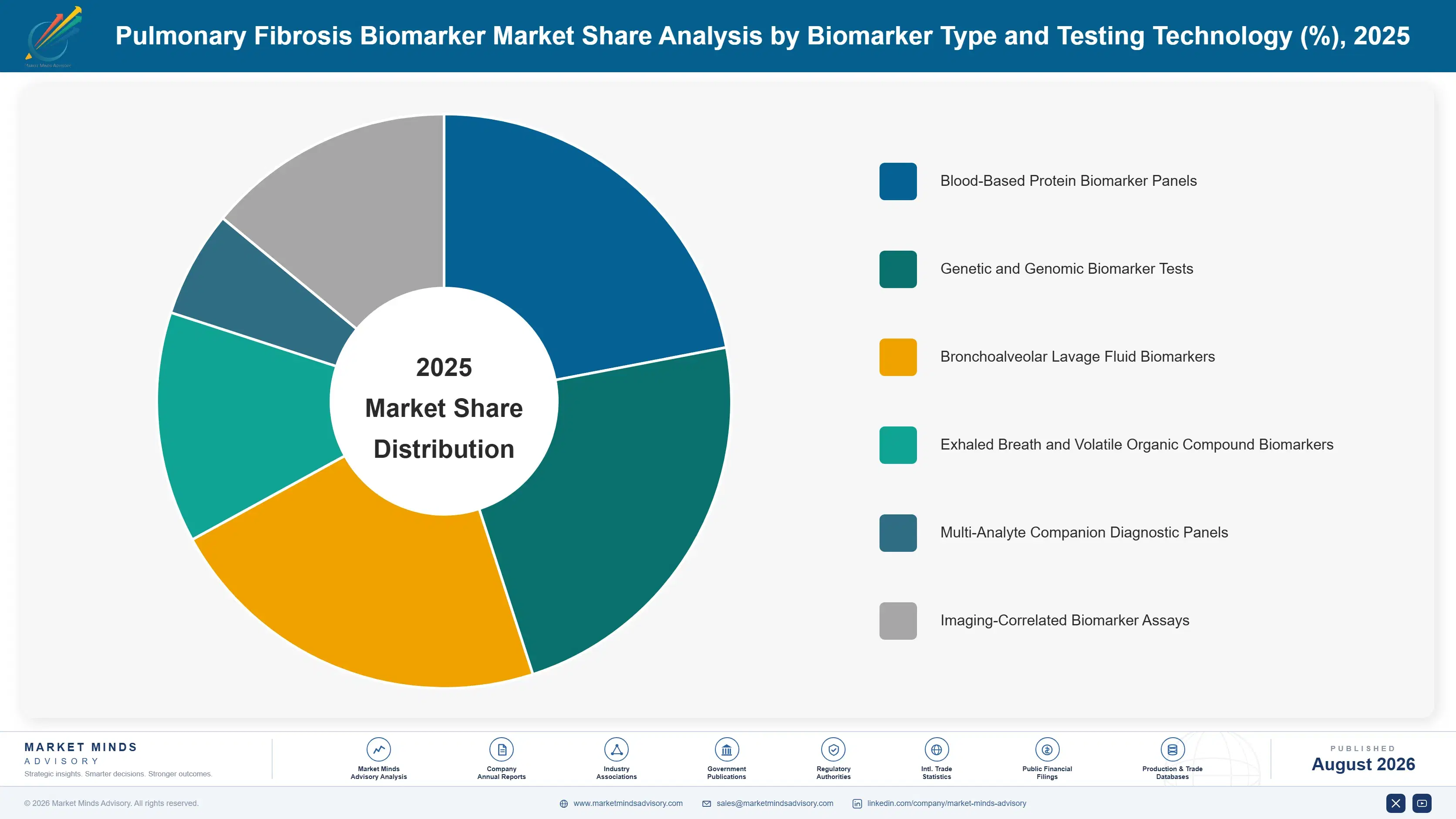
The market segments by biomarker type and testing technology, the classification that determines analytical validation pathway, clinical adoption curve, and pharmaceutical partnership potential far more than target disease stage or sample type alone, shaping nearly every diagnostics company's development roadmap, research priorities, and long-term commercial strategy across the industry and its largest institutional accounts.
pulmonary-fibrosis-biomarker-market-market-share-analysis-1787309560512

Multi-Analyte Companion Diagnostic Panels

Multi-analyte companion diagnostic panels, developed in partnership with pharmaceutical companies to identify patients likely to respond to specific antifibrotic therapies and monitor their treatment response over time, are the fastest-growing segment as next-generation antifibrotic drug development increasingly requires biomarker-based patient stratification for regulatory approval across major global markets and healthcare systems. Diagnostics companies holding pharmaceutical partnership relationships are capturing disproportionate volume growth as these funded development programs reach commercial launch alongside their associated drug approvals. The segment carries meaningfully higher average selling prices than standard diagnostic panels, rewarding companies that invested early in the analytical validation infrastructure pharmaceutical partners require before committing to a co-development relationship and exclusive or preferred market access arrangements.
CAGR 18.0%

Blood-Based Protein Biomarker Panels

Blood-based protein biomarker panels, measuring circulating markers such as KL-6, surfactant protein D, and matrix metalloproteinase-7 in combination, grow faster than the broader market as pulmonologists increasingly specify comprehensive panels over single-analyte testing to improve diagnostic confidence without requiring invasive biopsy procedures across most clinical presentations. The segment benefits from broad accessibility through standard blood draw collection, giving it meaningfully wider addressable use across community health systems than assays requiring specialized bronchoalveolar lavage collection procedures only available at referral centers. Established panel providers with strong pulmonologist relationships hold considerable pricing power, since switching biomarker panels requires new physician education and revalidated clinical workflows most laboratories prefer to avoid repeating unnecessarily.
CAGR 15.0%
Full segment breakdown across 6 segments available in the complete report.

Regional Architecture and Country Demand Map

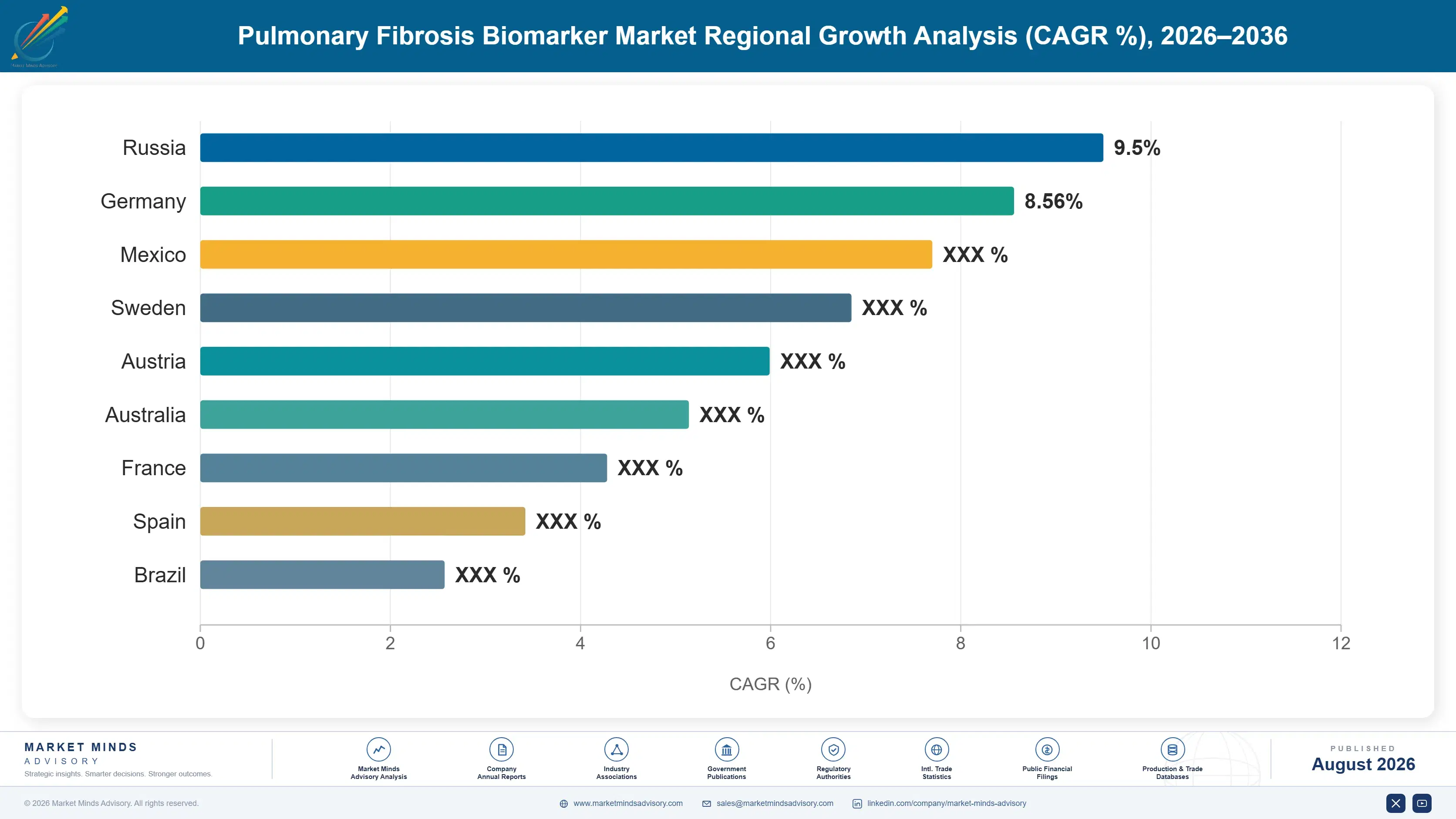
Demand concentrates across North America, Western Europe, and East Asia, the three regions with the deepest pulmonology diagnostic infrastructure and the strongest pharmaceutical partnership networks, while South Asia and Pacific posts the fastest regional growth from a comparatively lower current diagnostic testing and screening volume base.

North America

North America's pulmonary fibrosis biomarker demand concentrates in the United States, where the largest concentration of pharmaceutical companies developing antifibrotic therapies drives sustained companion diagnostic co-development funding across major diagnostics companies and academic medical centers nationwide and across every major referral network. Broad commercial insurance coverage for biomarker testing tied to diagnostic and treatment monitoring pathways has removed most of the financial barriers that constrain adoption in less developed reimbursement environments, letting pulmonologists order comprehensive panels without extensive prior authorization delays in most cases. Canada contributes a smaller but steady volume base, tracking similar clinical adoption trends with a modest lag behind the larger US market's reimbursement expansion timeline and specialist referral infrastructure.
Share: 31% | CAGR: 13.0% (2026 to 2036)

Western Europe

Western Europe's demand is anchored by Germany, the United Kingdom, and France, the three countries with the largest concentration of dedicated interstitial lung disease programs and the deepest pulmonology research infrastructure across the continent and its surrounding academic hospital networks, teaching institutions, and specialist referral centers. National health system reimbursement frameworks vary considerably by country, creating a patchwork of adoption timelines that diagnostics companies must navigate market by market rather than treating the region as a single homogeneous buyer group. Growth trails North America modestly as several national health systems apply more conservative technology assessment processes before expanding reimbursement coverage for newer biomarker panels already ordered more broadly across the Atlantic.
Share: 24% | CAGR: 11.5% (2026 to 2036)
Regional intelligence for 5 additional markets available in the complete report: East Asia, South Asia and Pacific, Latin America, Middle East and Africa, Eastern Europe. Contact sales@marketmindsadvisory.com.
pulmonary-fibrosis-biomarker-market-country-cagr-analysis-1787309561029

Converting Validation Depth Into Panel Premiums

Diagnostics companies have several concrete paths to lift revenue per test beyond raw volume growth, spanning pharmaceutical companion diagnostic co-development funding, multi-marker panel premium pricing, clinical education and physician training programs, and long-term laboratory network supply agreements layered on top of standard test sales built over many years of steady continuity, reliability, and trust.

Pharmaceutical Companion Diagnostic Co-Development Program Strategy

Diagnostics companies partnering with pharmaceutical companies to develop companion diagnostics tied to specific antifibrotic drug labels typically receive upfront development funding worth 15% to 25% of projected commercial test revenue, reflecting the pharmaceutical partner's need for a validated biomarker to support regulatory submission and patient stratification requirements. This co-development funding captures a meaningful share of the clinical value diagnostics companies create for pharmaceutical partners facing their own regulatory approval timelines. Companies securing these partnerships early are capturing outsized share of this funding pool before smaller competitors can demonstrate comparable analytical validation capability.
Market Impact: Adds 15 to 25% of test revenue fund

Multi-Marker Panel Premium Pricing Strategy Program

Companies price multi-marker biomarker panels at a 30% to 40% premium over single-analyte tests, a gap laboratories and pulmonologists increasingly accept given the meaningfully improved diagnostic sensitivity and specificity comprehensive panels deliver compared to any individual marker measured in isolation across typical clinical presentations and patient populations. This premium captures a meaningful share of the diagnostic confidence value companies create for physicians facing genuinely difficult differential diagnosis decisions. Companies investing early in multi-marker validation are capturing outsized share of this premium pool before smaller competitors can validate comparable panels of their own.
Market Impact: Adds a 30 to 40% price premium over

Clinical Education and Physician Training Support Services

Diagnostics companies increasingly offer clinical education programs, including physician training on result interpretation and case-based learning modules, to accelerate biomarker panel adoption among pulmonologists evaluating new testing protocols, a service investment typically worth 4% to 6% of incremental contract value annually across the engagement, its ongoing education cycle, and periodic refresher training sessions held regularly. These education programs meaningfully shorten the physician adoption timeline for new biomarker panels, letting companies capture premium testing volume faster than competitors relying purely on price competitiveness alone to win new laboratory and hospital system relationships.
Market Impact: Adds 4 to 6% of contract value annu

Long-Term Volume Supply Agreements With Major Laboratory Networks

Companies winning long-term volume supply agreements with the largest reference laboratory networks and hospital system pathology departments secure multi-year predictable order volume across the network's full testing footprint rather than competing for individual laboratory-level contracts repeatedly, typically locking in 3 to 5 years of preferred-vendor status across the network's ordering physicians, affiliated clinics, and satellite testing offices nationwide and internationally. This account continuity meaningfully reduces the cost of ongoing sales pursuit and gives companies forward visibility into manufacturing capacity planning that spot-market test sales never provide at comparable forecasting reliability.
Market Impact: Secures 3 to 5 years of preferred s

Who Controls the Margin Pool

Five companies hold 45% of global revenue on a consistent test volume basis, with Roche Diagnostics and Bio-Rad Laboratories forming the clearest leading pair on panel breadth and pharmaceutical partnership depth, creating a meaningful gap over the next tier of challengers including Quest Diagnostics, Labcorp, and Thermo Fisher Scientific, none of which currently matches their combined companion diagnostic and multi-marker panel portfolio across every major biomarker category tracked in this rep
Current competitive activity centers on three dimensions: racing to secure pharmaceutical companion diagnostic partnerships ahead of next-generation antifibrotic drug approvals, expanding multi-marker panel validation to capture pulmonologist ordering volume across major academic and community health systems, and building clinical education infrastructure that accelerates physician adoption of newer testing protocols.

Emerging pressure comes from academic reference laboratories and smaller specialty diagnostics companies specializing narrowly in research-use-only markers or niche patient populations where large-scale clinical validation requirements do not yet apply directly, gaining share in specific institutional and research partnerships the largest commercial companies increasingly deprioritize. Rankings among the five leading companies remain broadly stable, but the mid-tier single-marker segment is consolidating quickly as smaller producers lacking capital for multi-marker validation either specialize narrowly or exit certain categories entirely.
pulmonary-fibrosis-biomarker-market-company-positioning-matrix-1787309561552

Competitive Moat and Risk Dimensions

ROCHE DIAGNOSTICS

Moat: Pharmaceutical Partnership Network

Roche Diagnostics' deep pharmaceutical partnership relationships and its parent company's own antifibrotic drug development programs give it a companion diagnostic co-development advantage that smaller competitors cannot easily replicate, particularly across the regulatory submission timelines pharmaceutical partners increasingly require of qualified diagnostic partners today and going forward.
ROCHE DIAGNOSTICS

Risk: Single-Marker Legacy Test Exposure

A meaningful share of Roche Diagnostics' existing test volume still comes from older single-marker assays facing rising competition from newer multi-marker panel providers, creating pressure to shift its product mix toward comprehensive panels faster than legacy test replacement economics might otherwise favor across its installed laboratory base.
BIO-RAD LABORATORIES INC

Moat: Multi-Marker Panel Validation Depth

Bio-Rad Laboratories' early investment in multi-marker panel clinical validation gave it a head start in comprehensive biomarker testing that newer entrants to this segment have not yet matched, since laboratories rarely switch validated panel providers once a compliance and performance history is established and trusted across multiple ordering physicians.
BIO-RAD LABORATORIES INC

Risk: Pharmaceutical Partnership Concentration Risk

Bio-Rad Laboratories' companion diagnostic revenue concentrates heavily on a small number of pharmaceutical partnerships, leaving it more exposed than diversified competitors to any single drug's regulatory setback or to renewed competitive pressure from diagnostics companies pursuing broader partnership portfolios across multiple therapeutic programs and disease areas.

Players Tracked

Prominent Players

Roche Diagnostics
Bio-Rad Laboratories Inc
Quest Diagnostics Incorporated
Laboratory Corporation of America Holdings
Thermo Fisher Scientific Inc

Other Key Players

Biomedica Medizinprodukte GmbH
Eurofins Scientific SE
MyriadRBM Inc
Boditech Med Inc
Fujirebio Holdings Inc
Cisbio Bioassays
R-Biopharm AG
Merck KGaA Life Science
Veracyte Inc
Bio-Techne Corporation
IBL International GmbH
Sekisui Diagnostics LLC
DiaSorin SpA
Sysmex Corporation
Abcam plc

Recent Developments

FEBRUARY 2026

Roche Diagnostics Expands Companion Diagnostic Development Program

Roche Diagnostics expanded its companion diagnostic development program covering next-generation antifibrotic therapies, adding new pharmaceutical partnership agreements to support upcoming regulatory submissions across multiple drug candidates and therapeutic classes. The expansion added meaningful analytical validation capacity ahead of anticipated approval timelines across several partner programs.
Signal: Companion diagnostic partnership investmen
SEPTEMBER 2025

Bio-Rad Laboratories Signs Multi-Year Laboratory Network Agreement

Bio-Rad Laboratories signed a multi-year preferred-vendor supply agreement with a major North American reference laboratory network covering its multi-marker biomarker panel across multiple regional testing facilities and affiliated clinics. The agreement was a supply contract, not a joint venture, merger, or acquisition of any kind whatsoever.
Signal: Long-term laboratory network agreements ar
MAY 2025

Fujirebio Holdings Expands Biomarker Distribution Into China

Fujirebio Holdings established a new distribution and clinical education partnership covering China, targeting specialized respiratory hospitals adopting multi-marker biomarker panels as diagnostic infrastructure expands across major metropolitan markets and provincial centers. The partnership was a distribution agreement, not an acquisition or equity investment of any kind.
Signal: Export distribution partnerships are expan

Specialized Reagent and Antibody Cost Exposure

Specialized antibodies and assay reagents represent 36% to 44% of cost of goods sold for biomarker panel production, sourced primarily from North American and European biotechnology reagent suppliers, while consumables and sample collection materials represent a smaller but meaningful 10% to 15% share as companies balance analytical precision against tightening cost pressure across their product portfolios and customer contracts.
Global antibody reagent pricing spiked meaningfully during 2021 and 2022 as biotechnology manufacturing capacity failed to keep pace with surging diagnostic and research demand across the life sciences industry, a dynamic documented in FDA and NIST biotechnology supply chain reporting tracking specialty reagent pricing trends across major supplying regions throughout the affected period and into the following partial recovery year as manufacturing capacity gradually expanded.

Smaller diagnostics companies without long-term reagent supply contracts or scale purchasing power carry considerably greater exposure to price volatility than the five largest global companies, since spot market purchases leave them fully exposed to short-term price spikes that larger companies can smooth through diversified sourcing and contracted volume commitments negotiated well in advance across multiple specialized reagent suppliers and long-standing relationships.
pulmonary-fibrosis-biomarker-market-cost-volatility-analysis-1787309561746

Multi-Supplier Reagent Sourcing Diversification

Companies increasingly source specialized antibodies and assay reagents from multiple biotechnology suppliers across North America and Europe simultaneously, reducing exposure to any single supplier's capacity constraints or pricing swings that periodically tighten specialty reagent markets without warning across the broader life sciences supply chain each year, particularly during periods of surging diagnostic demand and constrained manufacturing capacity.

Long-Term Indexed Reagent Supply Contracts

Larger companies negotiate multi-year reagent supply contracts with pricing indexed to published biotechnology benchmarks rather than negotiated case by case, smoothing cost volatility and giving companies greater production cost predictability across multi-year capacity planning and clinical validation investment cycles they depend on heavily each budgeting period and forecasting round conducted jointly by finance and procurement teams.

In-House Antibody Development Programs

Larger companies are investing in in-house antibody development capability to reduce dependence on external reagent suppliers for their most critical proprietary markers, preserving external sourcing relationships for standard consumables while capturing greater margin and supply control over their highest-value analytical components, validated formulations, manufacturing processes, quality assurance protocols, and regulatory documentation across every product line and market.

Portfolio Architecture for Margin Defence

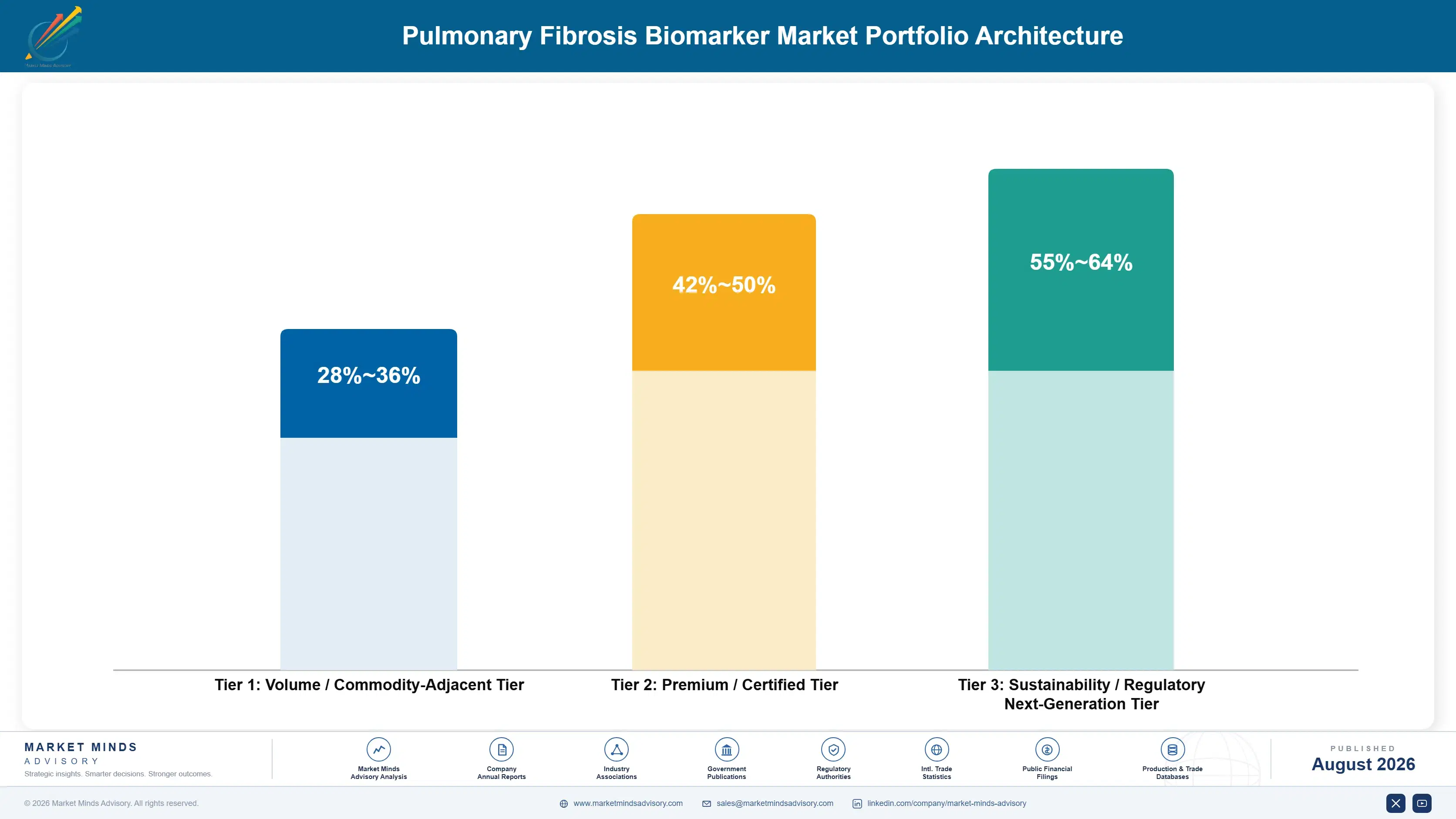
The biomarker portfolio organizes into three tiers separated by analytical validation depth and pharmaceutical partnership status rather than sample type or target marker alone, with gross margins widening considerably from the single-marker commodity tier through to the companion diagnostic next-generation tier that pharmaceutical partners increasingly require. Capital allocation follows this margin gradient, with companies directing new investment toward multi-marker panel validation.
Single-marker legacy tests face steady margin pressure as multi-marker panels increasingly become the default specification for pulmonology diagnostic workups, pushing companies to defend legacy volume through cost advantages rather than price competition with panel providers holding stronger pulmonologist relationships. Validated multi-marker panels occupy the profitable middle ground most academic medical centers now specify by default, absorbing the largest share of new capital investment as companies race to expand marker coverage.

The highest-value profit pools concentrate in pharmaceutical-funded companion diagnostics tied to specific antifibrotic drug labels, where companies capture both a development funding premium and a recurring testing relationship premium across long-term pharmaceutical partnership agreements that rarely face competitive re-bidding once established. Volume versus premium tension defines strategic choice: companies chasing standalone test volume alone increasingly find themselves squeezed on price, while others prioritizing companion diagnostic mix capture disproportionate margin.

Volume / Commodity-Adjacent Tier

Single-marker legacy biomarker tests sold to laboratories and physicians without multi-marker panel requirements, competing mainly on established clinical track record and predictable per-test cost today and well into the foreseeable future.
Gross Margin: 28-36%

Premium / Certified Tier

Validated multi-marker biomarker panels specified by academic medical centers and dedicated interstitial lung disease programs as the default diagnostic workup approach nationwide and increasingly internationally across major health systems and networks.
Gross Margin: 42-50%

Sustainability / Regulatory / Next-Generation Tier

Pharmaceutical-funded companion diagnostic panels bundled with drug label integration and clinical trial support for next-generation antifibrotic therapy programs and their associated regulatory submissions worldwide and across every clinical trial phase.
Gross Margin: 55-64%
pulmonary-fibrosis-biomarker-market-portfolio-architecture-1787309562241

High-value Sub-segments and Strategic Watch-out

Multi-Analyte Companion Diagnostic Panels

The fastest-growing, highest-margin volume segment as pharmaceutical partnerships pull diagnostics companies toward companion diagnostic development, drawing capital investment fastest across the entire biomarker category today and over the coming several years across every major program, drug candidate, therapeutic class, geography, disease indication, and regulatory pathway tracked.
Gross Margin: 55-64%

Blood-Based Protein Biomarker Panels

A steadier, high-margin segment tied to pulmonologist diagnostic workup standardization rather than any single regulatory catalyst, rewarding companies holding validated multi-marker formulations that rarely face competitive re-bidding once approved and trusted across renewal cycles, ongoing quality audits, and periodic supplier performance reviews conducted quite regularly.
Gross Margin: 42-50%

Single-Marker Legacy Biomarker Tests

The volume core of the market today, still generating meaningful absolute test volume despite compressing margins, as smaller laboratories without panel validation requirements continue purchasing largely on unit price alone across most standard accounts and legacy supplier relationships built over many years of steady continuity.
Gross Margin: 28-36%

Bronchoalveolar Lavage Fluid Assays

A strategic watch-out segment facing accelerating physician migration toward less invasive blood-based alternatives and probable phase-out across leading pulmonology centers within the coming several years, creating both meaningful investment risk and genuine long-term opportunity for faster-moving companies willing to adapt quickly, decisively, and quite confidently.
Gross Margin: 24-32%

Recurring Pharmaceutical Partnership Economics

Biomarker testing demand behaves like an annuity for companies holding companion diagnostic agreements with pharmaceutical partners, since consumption tracks predictable disease prevalence and expanding antifibrotic drug prescribing rather than discretionary purchasing decisions that vary meaningfully year to year across most buyer categories, giving qualified companies unusually stable forward revenue visibility.
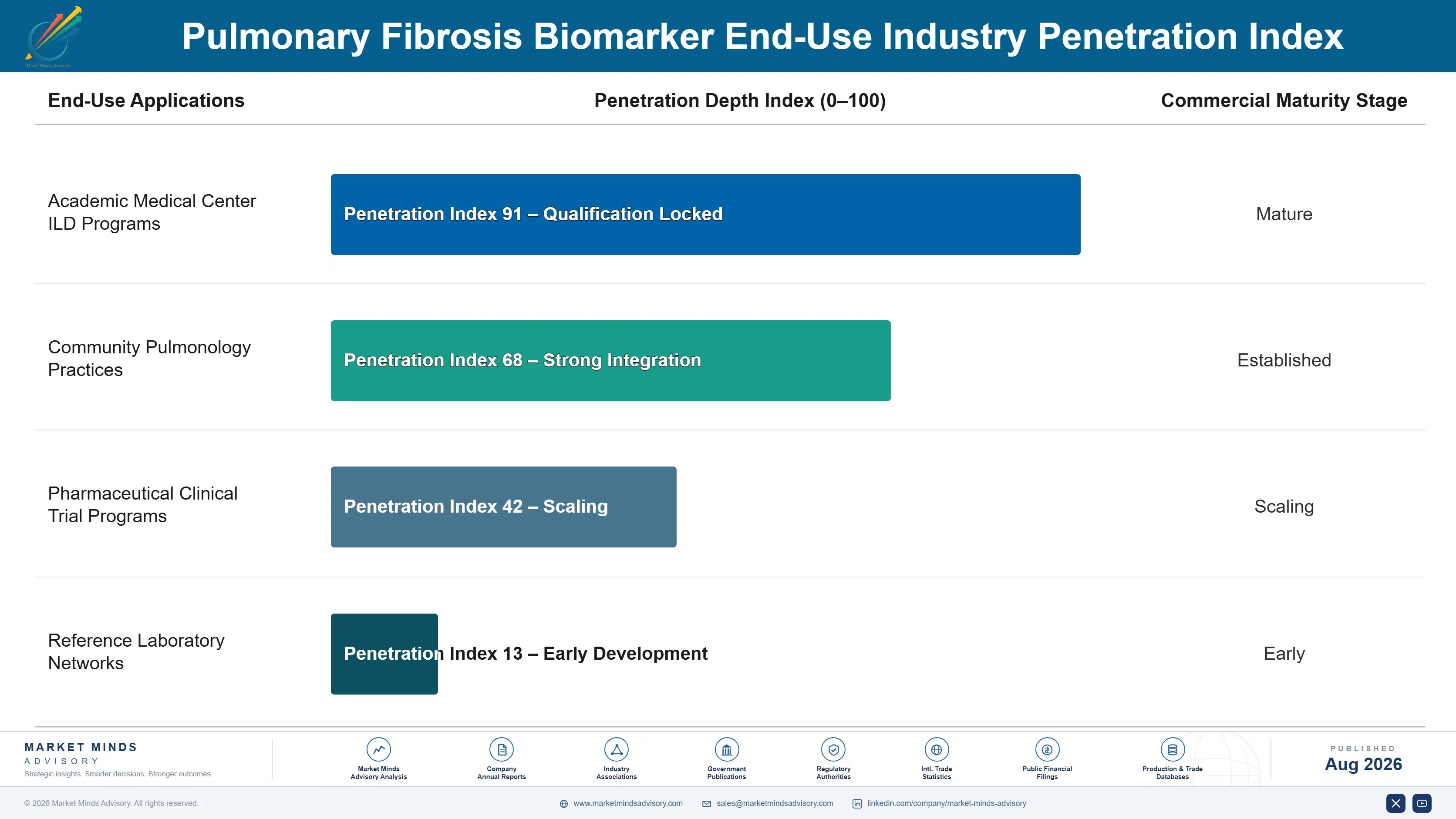
Adoption depth varies considerably by institutional tier. Academic medical centers with dedicated interstitial lung disease programs have converted the large majority of their diagnostic workups to multi-marker panels given their deep clinical trial participation and pharmaceutical partnership relationships, while smaller community pulmonology practices adopt comprehensive panels more selectively, reserving them for genuinely uncertain cases while referring complex diagnoses to regional referral centers. Pharmaceutical partners, once committed to a specific companion diagnostic, rarely switch to a competing biomarker absent a compelling clinical reason.

A generational shift in buyer profiles is underway as younger pulmonologists trained primarily on biomarker-informed diagnostic algorithms increasingly replace physicians who once evaluated pulmonary fibrosis purely through an imaging and biopsy lens, accelerating biomarker adoption faster than reimbursement expansion alone would otherwise require across many health systems and their referral networks. Younger physicians also weigh diagnostic company clinical education quality more heavily than legacy relationship history alone.
pulmonary-fibrosis-biomarker-market-end-use-penetration-index-1787309562729

Where Companies Should Focus Capital

These are among the four positions where our research anticipates prominent divergence between winners and laggards over the coming forecast period. Each is grounded in the demand model, the regulatory perimeter, and the announced capacity pipeline.
01 / COMPANION DIAGNOSTIC INVESTMENT FOCUS

Prioritize pharmaceutical partnerships over standalone panel expansion

Companies still investing primarily in standalone diagnostic panel expansion are building toward a shrinking addressable market, since pharmaceutical companion diagnostic funding widens the partnership versus standalone gap every year across additional antifibrotic drug development programs nationwide and across every major pharmaceutical partner and disease indication. The development horizon on new standalone-only panels now extends past the point where most pulmonologists will have shifted toward pharmaceutical-validated testing entirely. That timing mismatch leaves fresh standalone investment largely stranded before it generates meaningful commercial return.
02 / CLINICAL VALIDATION STRATEGY

Secure multi-marker panel validation before rivals catch up

Companies that build comprehensive multi-marker panel validation and secure long-term laboratory network agreements lock in recurring testing revenue that rarely faces competitive re-bidding once a validated, trusted relationship is established across multiple procurement and clinical review cycles. Laboratory networks strongly prefer supplier continuity given the workflow disruption risk of switching panel providers mid-program, and requalifying a new panel can take a year or longer to complete. That timeline makes early validation investment the single most defensible strategy companies can pursue.
03 / EMERGING MARKET POSITIONING

Build East Asian distribution ahead of diagnostic infrastructure expansion

East Asian and South Asian markets are rapidly expanding specialized pulmonology diagnostic infrastructure, and companies establishing distribution and clinical education relationships now, rather than waiting for demand to fully materialize, stand to capture disproportionate early share of that emerging opportunity before competitors reposition their own market entry strategies and local partnerships. Waiting risks ceding these markets to domestic diagnostics companies already building comparable panels locally. Physician trust and clinical education infrastructure both take considerable time to establish properly, favoring companies that move first.
04 / REAGENT COST MANAGEMENT STRATEGY

Diversify reagent sourcing to defend margin against volatility

Companies defending margin against rising reagent cost pressure should diversify antibody and assay reagent sourcing aggressively, since this lowers input cost exposure without requiring the full capital investment companion diagnostic development demands across other product categories entirely and across every major manufacturing site. This strategy preserves overall portfolio profitability even as companion diagnostic grades capture a growing share of industry revenue year after year across nearly every pharmaceutical partnership. It buys time for smaller companies to decide whether that investment eventually makes commercial sense.

Engagement Snapshot From the Field

A live engagement with an industry participant carrying material or product regulatory and market exposure ahead of a defining policy shift, showing how our research translates into a defensible multi-year portfolio strategy.
MARKET MINDS ADVISORY · CLIENT ENGAGEMENT SUMMARY
Pulmonary Fibrosis Biomarker Producer Strategic Portfolio Review and Transition Roadmap 2026·Investment Scenario on Pulmonary Fibrosis Biomarker Exposure Evaluation 2025-26
CLIENT PROFILE
The client operates a dedicated interstitial lung disease program within a 520-bed academic medical center in the midwestern United States, evaluating an estimated 340 suspected pulmonary fibrosis cases annually (client-reported, unverified by MMA), with diagnostic delay and biopsy-related complications representing its most significant program quality metric challenges across referred patient populations, outreach clinics, and satellite offices.
STRATEGIC CHALLENGE
The client faced persistent diagnostic delays averaging over ten months from initial referral to confirmed diagnosis, and needed to evaluate whether adopting a validated multi-marker biomarker panel could meaningfully shorten this timeline without compromising diagnostic accuracy or increasing per-patient testing costs beyond its program budget, staffing capacity, and annual funding allocation.
MMA APPROACH
MMA conducted a diagnostic pathway analysis benchmarking the client's existing biopsy-dependent workflow against biomarker-integrated alternatives used at comparable academic programs, modeled cost and timeline impact under each scenario, and built a full business case for client leadership and its pulmonology division committee to formally evaluate, approve, and fund going forward.
KEY FINDINGS
  1. Diagnostic pathway analysis showed biomarker panel integration could reduce average time to confirmed diagnosis by an estimated 35% to 40% across typical referred patient cases.
  2. Adopting a validated multi-marker panel was projected to reduce invasive biopsy procedures by an estimated 25% across cases where biomarker results provided sufficient diagnostic confidence.
  3. Physician surveys showed strong pulmonologist preference for biomarker-integrated pathways given reduced patient risk and faster treatment initiation for genuinely progressive cases requiring urgent intervention.
  4. Delaying pathway adoption risked continued patient dissatisfaction and potential loss of referral volume to a competing regional academic center already offering biomarker-integrated diagnosis.
CLIENT PROFILE
The client operates a dedicated interstitial lung disease program within a 520-bed academic medical center in the midwestern United States, evaluating an estimated 340 suspected pulmonary fibrosis cases annually (client-reported, unverified by MMA), with diagnostic delay and biopsy-related complications representing its most significant program quality metric challenges across referred patient populations, outreach clinics, and satellite offices.
STRATEGIC CHALLENGE
The client faced persistent diagnostic delays averaging over ten months from initial referral to confirmed diagnosis, and needed to evaluate whether adopting a validated multi-marker biomarker panel could meaningfully shorten this timeline without compromising diagnostic accuracy or increasing per-patient testing costs beyond its program budget, staffing capacity, and annual funding allocation.
MMA APPROACH
MMA conducted a diagnostic pathway analysis benchmarking the client's existing biopsy-dependent workflow against biomarker-integrated alternatives used at comparable academic programs, modeled cost and timeline impact under each scenario, and built a full business case for client leadership and its pulmonology division committee to formally evaluate, approve, and fund going forward.
KEY FINDINGS
  1. Diagnostic pathway analysis showed biomarker panel integration could reduce average time to confirmed diagnosis by an estimated 35% to 40% across typical referred patient cases.
  2. Adopting a validated multi-marker panel was projected to reduce invasive biopsy procedures by an estimated 25% across cases where biomarker results provided sufficient diagnostic confidence.
  3. Physician surveys showed strong pulmonologist preference for biomarker-integrated pathways given reduced patient risk and faster treatment initiation for genuinely progressive cases requiring urgent intervention.
  4. Delaying pathway adoption risked continued patient dissatisfaction and potential loss of referral volume to a competing regional academic center already offering biomarker-integrated diagnosis.
RECOMMENDED STRATEGY
Phase 1: Phase 1 (Months 1 to 2): Evaluate candidate biomarker panel providers and benchmark pricing, validation data, and turnaround time across options. Phase 2: Phase 2 (Months 3 to 5): Pilot biomarker-integrated pathway across a subset of referred cases to validate diagnostic accuracy and timeline improvement. Phase 3: Phase 3 (Months 6 to 9): Complete program-wide rollout across all referred cases and finalize long-term panel supply agreement on favorable terms.
OUTCOME
Within nine months the client completed rollout of the biomarker-integrated diagnostic pathway across its full referral volume, reporting a 37% reduction in average time to confirmed diagnosis and a 22% reduction in biopsy procedures performed (client-reported, unverified by MMA), securing a three-year supply agreement with its preferred panel provider.

Frequently Asked Questions

Foundational context covering the market sizes, CAGR, scope, country, region and competition that inform every finding below. This section is provided to cover basics and most often pre-purchase conversations, answered from the MMA Primary Research Dataset.

What is the current size of the Pulmonary Fibrosis Biomarker Market?

The global pulmonary fibrosis biomarker market is valued at $0.42 billion in 2025, MMA's designated base year for this analysis. This figure covers blood-based, genetic, and multi-analyte biomarker panels used to diagnose and monitor idiopathic pulmonary fibrosis.

How large will the Pulmonary Fibrosis Biomarker Market be by 2036?

MMA projects the market will reach $1.61 billion by 2036 under the base case scenario. That represents a 3.39 times expansion over the 2026 starting value across the ten-year forecast window.

What is the CAGR for the Pulmonary Fibrosis Biomarker Market 2026 to 2036?

The base case CAGR is 13.0% annually, with a bull case of 14.2% and a bear case of 11.8%. Companion diagnostic approval timing and reagent cost volatility are the primary swing factors between scenarios.

Which segment is growing fastest?

Multi-analyte companion diagnostic panels lead at an 18.0% CAGR, roughly 1.38 times the overall market rate. Pharmaceutical partnerships funding next-generation antifibrotic drug development are the primary driver behind this growth.

Who are the major companies in the Pulmonary Fibrosis Biomarker Market?

Roche Diagnostics, Bio-Rad Laboratories Inc, Quest Diagnostics Incorporated, Laboratory Corporation of America Holdings, and Thermo Fisher Scientific Inc lead the market. Together these five companies hold an estimated 45% of global revenue.

Which country is growing fastest?

China leads at an estimated 14.0% CAGR, driven by rapidly expanding specialized pulmonology diagnostic infrastructure and rising disease awareness in its aging population. The United States remains the largest single national market by revenue.

Report Segmentation Architecture

The full report scope spans multiple orthogonal segmentation dimensions, with cross-tabulated demand data provided for each dimension pair. Coverage extends further to regional breakdowns, trend trajectories, and the competitive detail needed to support segment-level decision-making.

By Biomarker Type and Testing Technology

  • Blood-Based Protein Biomarker Panels
  • Genetic and Genomic Biomarker Tests
  • Bronchoalveolar Lavage Fluid Biomarkers
  • Exhaled Breath and Volatile Organic Compound Biomarkers
  • Multi-Analyte Companion Diagnostic Panels
  • Imaging-Correlated Biomarker Assays

By End-Use Industry

  • Academic Medical Center ILD Programs
  • Community Pulmonology Practices
  • Pharmaceutical Clinical Trial Programs
  • Reference Laboratory Networks

By Commercial Dimension

  • Direct Laboratory Supply Agreements
  • Pharmaceutical Co-Development Partnerships
  • Hospital System Testing Contracts
  • Export and International Distribution Partnerships

By Region

  • North America
  • Western Europe
  • East Asia
  • South Asia and Pacific
  • Latin America
  • Middle East and Africa
  • Eastern Europe

Scope, Methodology, and Coverage

Every figure in this report is reproducible from documented input assumptions. The scope below maps the historical period, the forecast horizon, the segmentation dimensions, and the countries covered, alongside the underlying primary and qualitative methodology.
Historical Period
2020 to 2025
Forecast Period
2026 to 2036
Base Year
2025 (USD billions; MMA Primary Research Dataset, August 2026)
Market Definition
The pulmonary fibrosis biomarker market covers blood-based protein panels, genetic and genomic tests, bronchoalveolar lavage fluid assays, exhaled breath analysis, and multi-analyte companion diagnostic panels used to diagnose, prognosticate, or monitor treatment response in idiopathic pulmonary fibrosis and related interstitial lung diseases. It excludes high-resolution computed tomography imaging equipment, lung biopsy procedures, and the antifibrotic therapeutics themselves.
Quantitative Units
USD billions (current prices); test volume in millions of units
Segmentation Dimensions
By Biomarker Type and Testing Technology; By End-Use Industry; By Commercial Dimension; By Region
Regions Covered
North America, Western Europe, East Asia, South Asia and Pacific, Latin America, Middle East and Africa, Eastern Europe
Countries Covered
USA, Canada, Germany, UK, France, Italy, Spain, China, Japan, South Korea, India, Australia, Thailand, Indonesia, Brazil, Mexico, Saudi Arabia, UAE, South Africa, Nigeria, Turkey, Poland, Czech Republic, Netherlands, Sweden, Switzerland, Argentina, Colombia, Vietnam, Malaysia, and additional markets relevant to this sector
Key Companies Profiled
Roche Diagnostics, Bio-Rad Laboratories Inc, Quest Diagnostics Incorporated, Laboratory Corporation of America Holdings, Thermo Fisher Scientific Inc, Biomedica Medizinprodukte GmbH, Eurofins Scientific SE, MyriadRBM Inc, Boditech Med Inc, Fujirebio Holdings Inc, Cisbio Bioassays, R-Biopharm AG, Merck KGaA Life Science, Veracyte Inc, Bio-Techne Corporation, IBL International GmbH, Sekisui Diagnostics LLC, DiaSorin SpA, Sysmex Corporation, Abcam plc
Quantitative Methodology
Primary survey, n=3,800 respondents, Q4 2025, six countries; demand-side model with trade association cross-validation
Qualitative Methodology
47 expert interviews, Q4 2025; applied to validate demand model assumptions, identify emerging dynamics, and assess competitive positioning
Report Format
PDF and XLSX data workbook (Word format preview document)
Publisher
Market Minds Advisory
Report Code
MMA-2026-HLT-101
Published
August 2026
Contact
sales@marketmindsadvisory.com | www.marketmindsadvisory.com

Purchase the full Pulmonary Fibrosis Biomarker Market Report (2026 to 2036).

The full report delivers a complete analysis of the global pulmonary fibrosis biomarker market, covering sizing and forecasts across all seven regions and six biomarker technology segments through 2036. It profiles twenty companies with verified moat and risk assessments for the two category leaders, Roche Diagnostics and Bio-Rad Laboratories, across their pharmaceutical partnership and panel validation positioning. The report includes detailed input cost analysis, portfolio margin benchmarking, and a primary-research-backed companion diagnostic outlook. Buyers receive full access to underlying data tables and methodology notes supporting every figure presented in the analysis.
Seven-region sizing and forecast data tables
Six-segment MECE biomarker and technology breakdown
Twenty-company competitive profiles and full rankings
Input cost exposure and mitigation analysis
Portfolio tier margin benchmarking data included
Companion diagnostic partnership timeline and outlook

Built For The People Who Decide

From boardroom strategy to bench-side execution, this report is read cover-to-cover by leaders shaping the next decade of their industry, turning demand scenarios, market dynamics and valuation benchmarks into decisions.
CXOs/ Presidents/ VPs/ Managers
M&A and Corporate Development
Strategy Teams and R&D Heads
Procurement and Product Directors
Regulatory and Compliance Leaders
Investor Relations and Equity Analysts