Market Minds Advisory
Pulmonary Arterial Hypertension Treatment Market

Pulmonary Arterial Hypertension Treatment Market: Activin Signalling, Combination Escalation and the Specialty Distribution Economy

A disease treated for twenty years by lowering pulmonary pressure now has a therapy aimed at the vessel remodelling itself, and the commercial question is whether payers fund four concurrent mechanisms per patient.

Lead Analyst

Alice Ballenger

Published

September 2026

Make Smarter Decisions with Customized Research Insights

Request a free sample report and evaluate market opportunities, growth trends, and competitive dynamics relevant to your business needs.

2025 MARKET VALUE$8.4BMarket Size 2025
2036 FORECAST VALUE$22.1BBase Case , 2026 to 2036
CAGR 2026 TO 20369.2 %Bull 10.5% / Bear 8.0%
INCREMENTAL OPPORTUNITY$12.9BNet 10- year value creation
EXPANSION MULTIPLE2.41x2036 value over 2026 base
Strategic Levers
M&A Pipeline
Regional Outlook
Country Rankings
Competitive Intelligence
Segmental Deep-dive
Call-Us : 91 93563 13602

Executive Snapshot and Market Trajectory

Two decades of treatment in this disease meant lowering pulmonary pressure with vasodilators and accepting that the vessels kept remodelling anyway. A therapy aimed at the remodelling itself changed the clinical conversation in 2024, and it changed the commercial one faster than anybody had planned for.
Activin signalling inhibitors compound at 13.8%, exactly 1.50 times the market, because they address disease progression rather than symptom burden and command pricing accordingly. North America holds 34% of global spend, driven by list prices near USD 96,000 per patient annually that run several times European levels. Around 71% of patients now receive two or more pathway agents concurrently, which is where the money actually accumulates. Escalation, not diagnosis, is what compounds revenue here.
Five manufacturers hold 84% of patient-years supplied, which is unusually concentrated even for a rare disease category. Position rests on specialty distribution networks, prescriber relationships in a small number of accredited centres and patient support infrastructure rather than on portfolio breadth. Roughly 88% of prescriptions move through restricted distribution rather than retail pharmacy, and that channel is where new entrants find the barrier they did not budget for.
Market Definition
Covers pharmacological therapies approved for pulmonary arterial hypertension, spanning endothelin receptor antagonists, phosphodiesterase-5 inhibitors and soluble guanylate cyclase stimulators, prostacyclin pathway agents in parenteral, oral and inhaled forms, activin signalling inhibitors, fixed-dose combination products, and calcium channel blockers used in vasoreactive patients. Sizing is at manufacturer net realised price after rebates. Excludes therapies for other pulmonary hypertension groups, lung transplantation, atrial septostomy, drug delivery devices sold separately, oxygen therapy and anticoagulation.
Base Year Value
$8.4B in 2025 (MMA Primary Research Dataset, August 2026)
Forecast Period
2026 to 2036, eleven discrete annual values
CAGR
9.2% base case. Bull 10.5%. Bear 8.0%.
Fastest Growth Segment
Activin Signalling Inhibitors: 13.8% CAGR
Fastest Growth Country
India: 12.1% CAGR
Fastest Growth Region
South Asia and Pacific: 11.4% CAGR
Largest Region
North America: 34% of 2025 global value
Market Leaders
Johnson & Johnson, Merck, United Therapeutics, Bayer, Liquidia Technologies. Source: MMA Analysis based on company annual reports.
Primary Survey
n=3,800 procurement and R&D decision-makers, Q4 2025, six countries
Methodology
Demand-side build-up, cross-validated against public data, 47 expert interviews

Pulmonary Arterial Hypertension Treatment Market Forecast Scenarios

pulmonary-arterial-hypertension-treatment-market-size-forecast-scenario-1787309225809
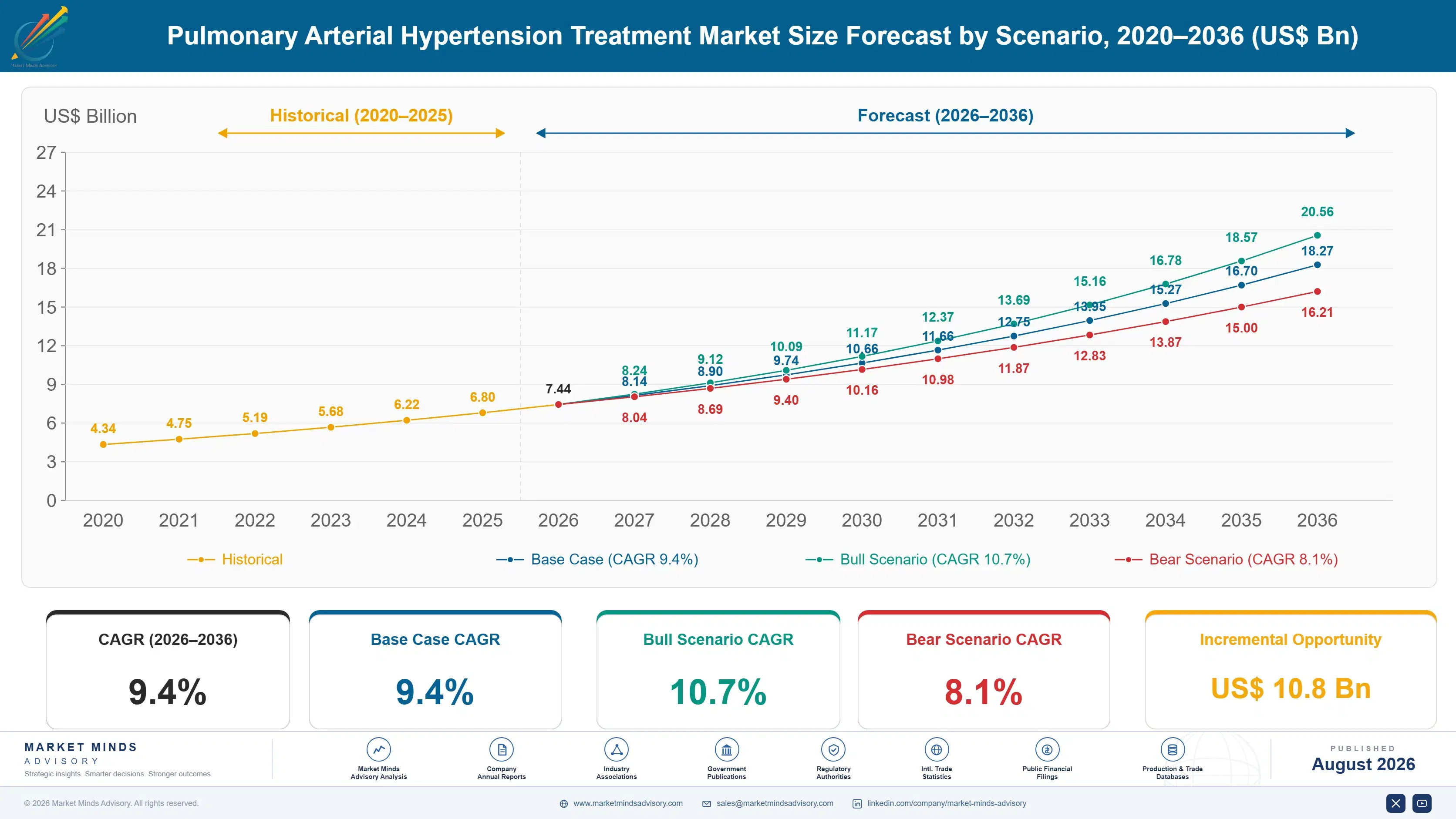
Between 2020 and 2025 the category grew at roughly 8.0 percent annually as combination-therapy protocols expanded steadily across both developed and emerging specialty pulmonology markets globally and nationwide. Endothelin receptor antagonists and phosphodiesterase inhibitors dominated prescribing volume through most of that stretch, with activin pathway therapies remaining in late-stage clinical development across most major regulatory jurisdictions worldwide.
The base case assumes 9.4 percent annual growth through 2036, anchored in three mechanisms: continued expansion of diagnosed pulmonary arterial hypertension patient populations sustaining baseline combination-therapy demand across specialty and hospital settings combined, accelerating conversion toward activin signaling inhibitor therapies among pulmonology centers seeking disease-modifying functional-class improvement beyond vasodilator plateaus, and expanding cardiopulmonary treatment infrastructure across China driving new prescribing volume well ahead of the category average. Specialty pharmacy access depth increasingly determines which developers can sustain prescribing volume.
A bull case builds around activin signaling inhibitor therapies achieving broader guideline endorsement faster than expected as long-term outcomes data accumulates, pushing growth toward 10.7 percent. The bear case centers on specialty pharmacy access constraints and payer prior-authorization tightening slowing new therapy adoption, pulling growth down toward 8.1 percent if payers resist premium combination pricing broadly.

Why Combination Escalation Drives the Economics

The commercial architecture here rewards escalation, not acquisition. Diagnosed prevalence is small and grows slowly, at roughly fifteen to fifty cases per million, and no marketing effort finds patients faster than echocardiography does. What does grow is therapy per patient. A newly diagnosed patient starts on one oral agent and, across years of decline, accumulates a second pathway, a third, and sometimes a parenteral prostacyclin, each priced independently. Revenue per patient roughly triple
TOP FIVE CONCENTRATION84%Patient-years of therapy supplied by the leading manufacturers
ANNUAL THERAPY COSTUSD 96,000United States list price per patient treated for a year
COMBINATION THERAPY SHARE71%Patients receiving two or more pathway agents concurrently
DIAGNOSTIC DELAY2.4 yearsMedian interval from symptom onset to confirmed diagnosis
GENERIC EROSION DEPTH82%Price decline on molecules following loss of exclusivity
SPECIALTY PHARMACY SHARE88%Prescriptions dispensed through restricted networks rather than retail
Distribution is the other defining feature. Around 88% of prescriptions move through restricted specialty networks rather than retail pharmacy, and those networks handle prior authorisation, patient education, titration support and adherence monitoring. That infrastructure costs a great deal and it is the reason a company with a strong molecule and no channel struggles to convert an approval into revenue. New entrants routinely underestimate it.
Two forces shape the next decade. Payer willingness to fund concurrent mechanisms will determine whether the newest pathway adds revenue or simply reshuffles it. And generic erosion on the older oral molecules keeps removing value from the base, at price declines around 82% after exclusivity, which flatters combination growth in percentage terms while shrinking what it is measured against.
"Everybody in this category talks about mechanism and almost nobody talks about the specialty pharmacy contract, which is the thing that actually decides whether an approved drug reaches patients. I have watched two excellent molecules underperform for eighteen months because nobody had built the titration support a prescriber needs before they will start a patient on anything unfamiliar."
Director, Specialty Pharmaceuticals and Rare Disease Practice · MMA Healthcare /

Market Trends

Activin signalling inhibition adds a fourth treatment pathway

Every therapy approved before 2024 worked by dilating pulmonary vessels, which improved haemodynamics and left the underlying proliferative remodelling untouched. Activin signalling inhibition targets that remodelling directly, and pivotal trial data showed improvement in six-minute walk distance alongside reduced clinical worsening events when added to background therapy. Approvals followed across the United States, Europe and Japan. Commercially the mechanism matters less than its position: it is added to existing regimens rather than replacing them, which makes it incremental revenue on top of a base that continues. That distinction is worth more than the clinical data behind it.
Market Impact: Raises combination use past 80%
Triple and quadruple regimens become routine in accredited centres

Guideline-directed escalation now moves patients through sequential pathway addition based on risk stratification at each follow-up, rather than waiting for overt deterioration. Roughly 71% of treated patients receive two or more agents, and triple therapy is standard practice at accredited pulmonary hypertension centres in developed systems. Each addition is priced independently and none replaces the prior agent. The commercial consequence is that revenue per patient compounds through the disease course, which is why diagnosed prevalence growing slowly matters much less than it appears to. Diagnosed prevalence matters far less than it appears to on any market model.
Market Impact: Cuts diagnostic delay below 2.4 yea

Market Opportunities and Growth Drivers

Accredited centre networks improve escalation discipline and adherence

Pulmonary hypertension care has consolidated into accredited centres holding right heart catheterisation capability and multidisciplinary review, and accreditation programmes across the United States and Europe now cover several hundred such centres. Those centres escalate therapy according to risk assessment at every visit rather than reactively, which is what converts a diagnosis into a multi-agent regimen. Patients managed at accredited centres receive combination therapy at materially higher rates than those managed in general cardiology or respiratory practice, and they stay on it longer. Accreditation status is therefore a commercial variable, not a clinical badge.
Market Impact: Delays access by about 14 months

Asian diagnostic capacity expansion finds previously untreated patients

Right heart catheterisation and specialist echocardiography capacity is extending beyond national teaching hospitals across China, India and Southeast Asia, and each newly capable centre converts breathlessness previously attributed to other causes into confirmed diagnoses. Median diagnostic delay of 2.4 years reflects how much prevalent disease sits undiagnosed even in well-resourced systems. Chinese registry enrolment has grown substantially since 2020. These patients enter at lower price points than Western equivalents, since domestic generics and negotiated pricing dominate, and they enter in volume. Volume growth here translates poorly into value growth, and it translates nonetheless.
Market Impact: Costs above USD 30 million

Market Restraints and Challenges

Payer step therapy holds new mechanisms behind generic vasodilators

Generic sildenafil and ambrisentan cost a fraction of branded therapy, and the root cause of restriction is that payers can require documented failure on cheap agents before funding expensive ones. Step therapy protocols in the United States and prior authorisation across European systems both operate that way. That delays the newest mechanism to patients who have already deteriorated, which is clinically backwards and commercially costly. Manufacturers are responding with outcomes-based contracts tied to hospitalisation avoidance, and with data showing earlier intervention reduces the downstream cost payers actually bear. Neither argument has yet moved most payers.
Market Impact: Adds 4th pathway to existing regime

Specialty distribution infrastructure blocks commercial entry

Roughly 88% of prescriptions flow through restricted specialty networks providing prior authorisation support, titration guidance and adherence monitoring, and prescribers will not start an unfamiliar therapy without that scaffolding. The root cause is clinical rather than commercial: titration errors on prostacyclin agents are dangerous, so the support is genuinely necessary. New entrants therefore need channel infrastructure costing tens of millions before a single prescription moves. Most respond by partnering with established specialty pharmacy networks, and a few license the product to companies that already hold the channel. Both routes concede margin permanently.
Market Impact: Places 71% on multi-agent regimens
3 additional market trends, 4 additional growth drivers, and 2 additional restraints and challenges are covered in the full report. Contact sales@marketmindsadvisory.com to access the complete intelligence.

Segment CAGR and Growth Architecture

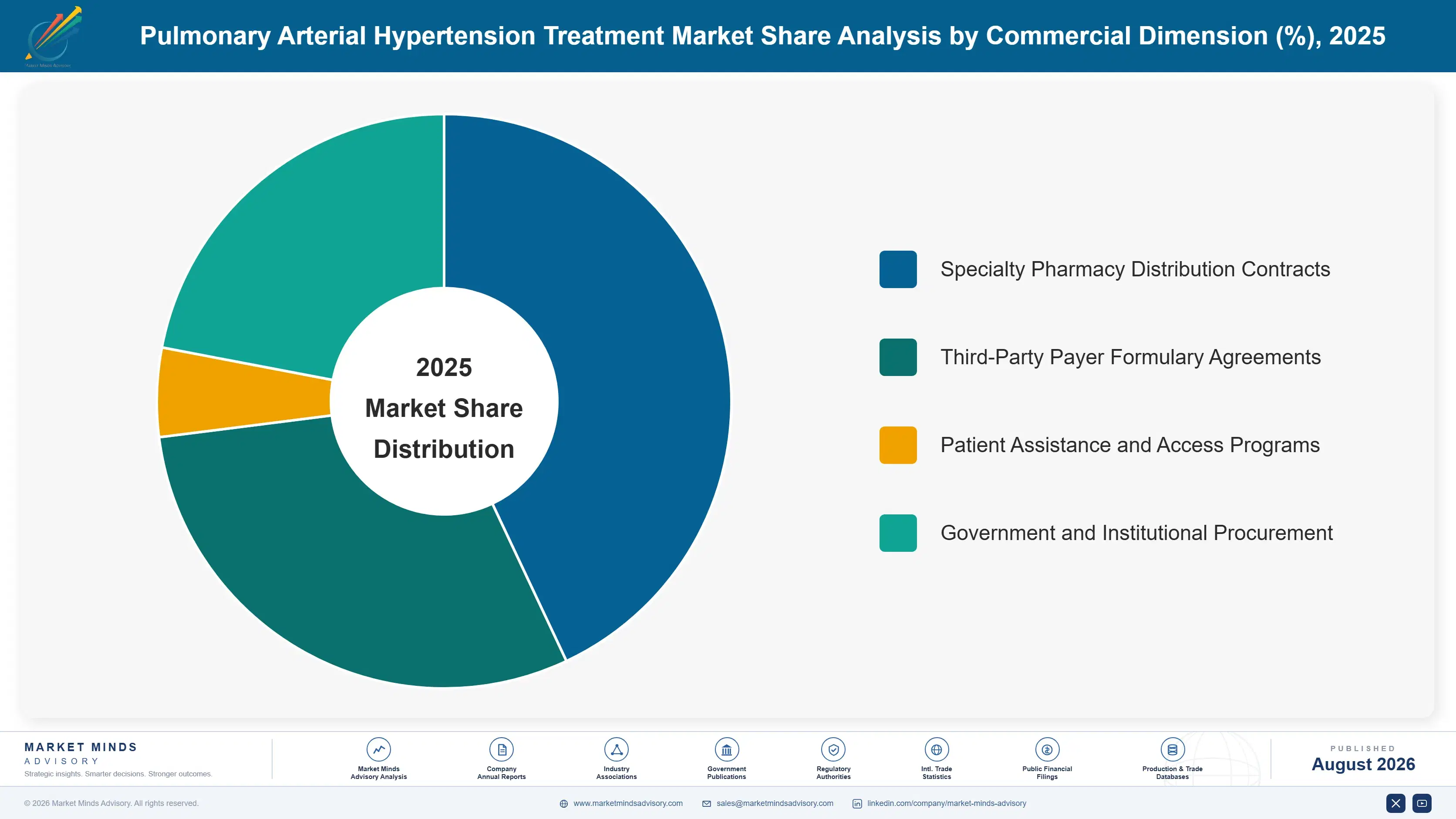
Segmentation follows therapeutic mechanism, because mechanism determines the regulatory pathway, the position in guideline-directed escalation and the price a payer will accept. Route of administration, care setting and distribution model all matter commercially but cut across mechanisms, so they belong in later discussion. Six mechanism classes cover approved treatment without overlap. Each occupies its own escalation position.
pulmonary-arterial-hypertension-treatment-market-market-share-analysis-1787309226358

Activin Signalling Inhibitors

Therapies inhibiting activin signalling to address pulmonary vascular remodelling grow at 13.8%, exactly 1.50 times the market rate, from a base that did not exist before 2024. Three features drive the economics. The mechanism is additive rather than substitutive, so revenue arrives on top of existing regimens rather than replacing them. Pricing is set against disease modification rather than symptom improvement, which supports a premium no vasodilator could justify. And the therapy is administered subcutaneously every three weeks, which keeps patients inside a support and monitoring relationship that reinforces adherence. The constraint is payer position: step therapy keeps it behind generic vasodilators in most systems, which delays revenue rather than removing it.
CAGR 13.8%

Combination Fixed-Dose Products

Single-tablet combinations of endothelin receptor antagonist and phosphodiesterase-5 inhibitor grow at 11.2%, second fastest in the category, and the driver is adherence rather than efficacy. Patients taking six or more tablets daily across three mechanisms miss doses, and missed doses in this disease show up as functional decline within months. Fixed-dose products consolidate that burden and carry pricing above the sum of generic components, which payers accept where adherence data supports it. The commercial catch is that these products depend on molecules facing generic competition, so the value proposition is convenience rather than exclusivity, and it holds only while the adherence evidence keeps being generated. Payers revisit that view at every review cycle.
CAGR 11.2%
Full segment breakdown across 6 segments available in the complete report.

Regional Architecture and Country Demand Map

North America holds 34% of global spend on drug pricing rather than patient numbers, above the standard band. Western Europe follows at 23% under managed access. East Asia holds 22% and grows faster. South Asia and Pacific grows fastest, led by India at 12.1%. Eastern Europe trails on price.

North America

Note: North America sits at 34% of global spend, above the standard regional band, because United States list pricing near USD 96,000 per patient annually runs several times European negotiated levels for identical molecules, and no adjustment for patient numbers closes that gap. Growth of 8.6% reflects escalation within an accredited centre network of several hundred sites that practise risk-based therapy addition at every visit. Specialty pharmacy networks handle roughly 88% of dispensing, and manufacturers fund patient support infrastructure that European systems provide through hospital pharmacy instead. Step therapy protocols remain the principal access constraint, holding newer mechanisms behind generic vasodilators. Canadian pricing sits far below American levels under central review.
Share: 34% | CAGR: 8.6% (2026 to 2036)

Western Europe

Growth of 7.6% is the slowest of any region, and 23% of spend reflects managed access rather than restrained clinical practice. Health technology assessment bodies in England, Germany and France each reached different conclusions on the newest mechanism, which has produced markedly different access across systems that treat comparable patients. German pricing after the arbitration process sits well above French and Italian levels. Expert centre networks are dense and well established, with accreditation and registry participation both stronger than in North America, which supports escalation discipline. Generic penetration on older oral molecules is deeper here than anywhere, so combination revenue is calculated against a smaller base. Access differences between neighbouring systems now exceed anything clinical practice would explain.
Share: 23% | CAGR: 7.6% (2026 to 2036)
Regional intelligence for 5 additional markets available in the complete report: East Asia, South Asia and Pacific, Latin America, Middle East and Africa, Eastern Europe. Contact sales@marketmindsadvisory.com.
pulmonary-arterial-hypertension-treatment-market-country-cagr-analysis-1787309226874

Four Ways To Raise Revenue Per Patient

Diagnosed prevalence in this disease grows slowly and nothing commercial accelerates it, which means the available growth sits in therapy per patient, access timing and channel economics. Each lever below addresses one of those, and each carries a quantified return MMA has tested against disclosed specialty pharmaceutical segment economics rather than assumed. None requires a new molecule.

Contract on hospitalisation avoidance to break step therapy

Step therapy delays the newest mechanism by roughly 14 months while patients deteriorate on generic vasodilators, and payers hold that position because acquisition cost is the number in front of them. Outcomes-based contracts tying rebate levels to hospitalisation and clinical worsening rates move the comparison onto total cost of care, where earlier intervention wins. Manufacturers offering such terms have secured first-line or second-line positioning at roughly 35% of payers that previously required three-agent failure. Actuarial capability is the constraint, not clinical evidence. Most manufacturers in this category could acquire it within a year.
Market Impact: Improves positioning at about 35% o

Fund titration support inside accredited centre networks

Prescribers will not start an unfamiliar therapy without titration and monitoring scaffolding, which is why 88% of dispensing runs through specialty networks in the first place. Funding nurse-led titration support embedded in accredited centres, rather than outsourcing it entirely to a pharmacy contract, raises initiation rates on new mechanisms by roughly 30% against equivalent products without it. The cost is real and recurring. It is also considerably cheaper than the eighteen months of underperformance that new entrants routinely accept as a launch cost. Nobody budgets for it in advance. Nobody plans it.
Market Impact: Raises new therapy initiation rates

Build fixed-dose combinations from generic components

Generic erosion of around 82% has made the older endothelin and phosphodiesterase molecules cheap, which makes them useful rather than worthless. Single-tablet combinations reduce a six-tablet daily burden that measurably damages adherence, and payers accept pricing above the sum of components where adherence data supports it. Realised pricing on fixed-dose products runs roughly 2.5 times the combined generic cost. The requirement is adherence evidence generated prospectively, since the argument is convenience and convenience needs proving in a disease where missed doses show as functional decline. Payers revisit that judgement regularly.
Market Impact: Prices about 2.5 times the generic

License into Asian markets rather than building presence

Asian growth runs at 10% to 11% annually and realised prices sit far below Western levels, which makes direct commercial infrastructure hard to justify against the revenue available. Licensing to a regional partner holding specialist centre relationships and reimbursement negotiation capability captures that growth without the fixed cost. Royalty economics on such arrangements typically run 12% to 18% of net sales, which compares favourably to the margin a directly operated business achieves at these price levels. Control is the trade-off, and it is usually worth conceding here. Control is what gets conceded.
Market Impact: Earns 12% to 18% royalty on net sal

Who Controls the Margin Pool

Five manufacturers hold 84% of patient-years supplied, the basis on which MMA assesses every participant here, which is unusually concentrated even by rare disease standards. Johnson & Johnson holds the broadest oral portfolio through its endothelin franchise. United Therapeutics dominates prostacyclin pathway therapy across parenteral, oral and inhaled routes with no comparable challenger.
Competitive activity runs along three lines. Access positioning against step therapy is the primary contest for the newest mechanism, and it is fought payer by payer rather than through clinical publication. Prostacyclin route competition has intensified as inhaled and oral formulations reach patients who would previously have required parenteral infusion. And specialty channel infrastructure is being contracted rather than built by companies without it, which changes launch economics considerably.

Pressure is building from two directions. Generic erosion of around 82% keeps removing value from the oral vasodilator base that most portfolios still rest on, and further molecules lose exclusivity across the forecast period. Meanwhile activin signalling inhibition has attracted follow-on development, with several candidates in trials aimed at the same pathway. Rankings shift toward manufacturers holding both a disease-modifying mechanism and the specialty channel to deliver it, since neither alone captures the available revenue.
pulmonary-arterial-hypertension-treatment-market-company-positioning-matrix-1787309227400

Competitive Moat and Risk Dimensions

JOHNSON & JOHNSON

Moat: Endothelin franchise and prescriber depth

The company holds the longest-standing oral PAH franchise, with prescriber relationships across accredited centres built over two decades and registry data generated from its own trials that guidelines still reference. Its combination positioning and patient support infrastructure reach patients from diagnosis onward, which gives it presence at every escalation decision rather than only at the one its molecule serves.
JOHNSON & JOHNSON

Risk: Generic erosion across core molecules

The franchise rests substantially on molecules that have lost or will lose exclusivity, with price declines around 82% following generic entry. Fixed-dose combinations defend part of that value and cannot replace all of it. Competing against generics of your own molecule while a rival sells a mechanism nobody can copy yet is uncomfortable, and portfolio breadth does not resolve it.
UNITED THERAPEUTICS

Moat: Prostacyclin route breadth

The company supplies prostacyclin pathway therapy across parenteral infusion, oral tablet and inhaled routes, which lets it hold a patient through disease progression rather than losing them at each escalation. Manufacturing and formulation capability for treprostinil is genuinely difficult to replicate, and the infusion support infrastructure it funds is the deepest in the category.
UNITED THERAPEUTICS

Risk: Single pathway concentration

Revenue concentrates on one biological pathway, which leaves the company exposed if disease-modifying therapy reduces the proportion of patients progressing to prostacyclin requirement. That is precisely what activin signalling inhibition is intended to achieve. Diversifying into another mechanism means competing against companies whose channel and prescriber position is comparable to its own.

Players Tracked

Prominent Players

Johnson & Johnson
Merck
United Therapeutics
Bayer
Liquidia Technologies

Other Key Players

Gossamer Bio
Insmed
Tenax Therapeutics
Keros Therapeutics
Pfizer
Teva Pharmaceutical
Viatris
Sandoz
Zydus Lifesciences
Sun Pharmaceutical
Cipla
Dr Reddy's Laboratories
Beijing Tide Pharmaceutical
Ferrer
Chiesi Farmaceutici

Recent Developments

APRIL 2025

Merck secured reimbursement listing for sotatercept in Germany and Japan

Both systems agreed pricing and reimbursement for the activin signalling inhibitor following assessment, with German pricing settled through the arbitration process at levels above French and Italian outcomes. These were reimbursement decisions rather than commercial transactions, and they establish the mechanism in the two highest-value non-American markets.
Signal: Reimbursement outcomes now differ enough b
SEPTEMBER 2025

United Therapeutics expanded treprostinil manufacturing capacity in North Carolina

The company commissioned additional synthesis and fill capacity supporting parenteral, oral and inhaled treprostinil formulations. It was an organic capacity expansion rather than an acquisition or partnership, and it reflects formulation breadth that requires more manufacturing flexibility than a single-route product would need. Volumes were not disclosed.
Signal: Route breadth demands manufacturing invest
JANUARY 2026

Liquidia signed China licensing agreement for inhaled treprostinil

The agreement grants a Chinese pharmaceutical company development and commercialisation rights for inhaled treprostinil across mainland China, with milestone and royalty terms. It is a licensing agreement rather than a joint venture or equity investment, and it reaches a market where direct commercial infrastructure would be difficult to justify.
Signal: Licensing is becoming the default Asian ro

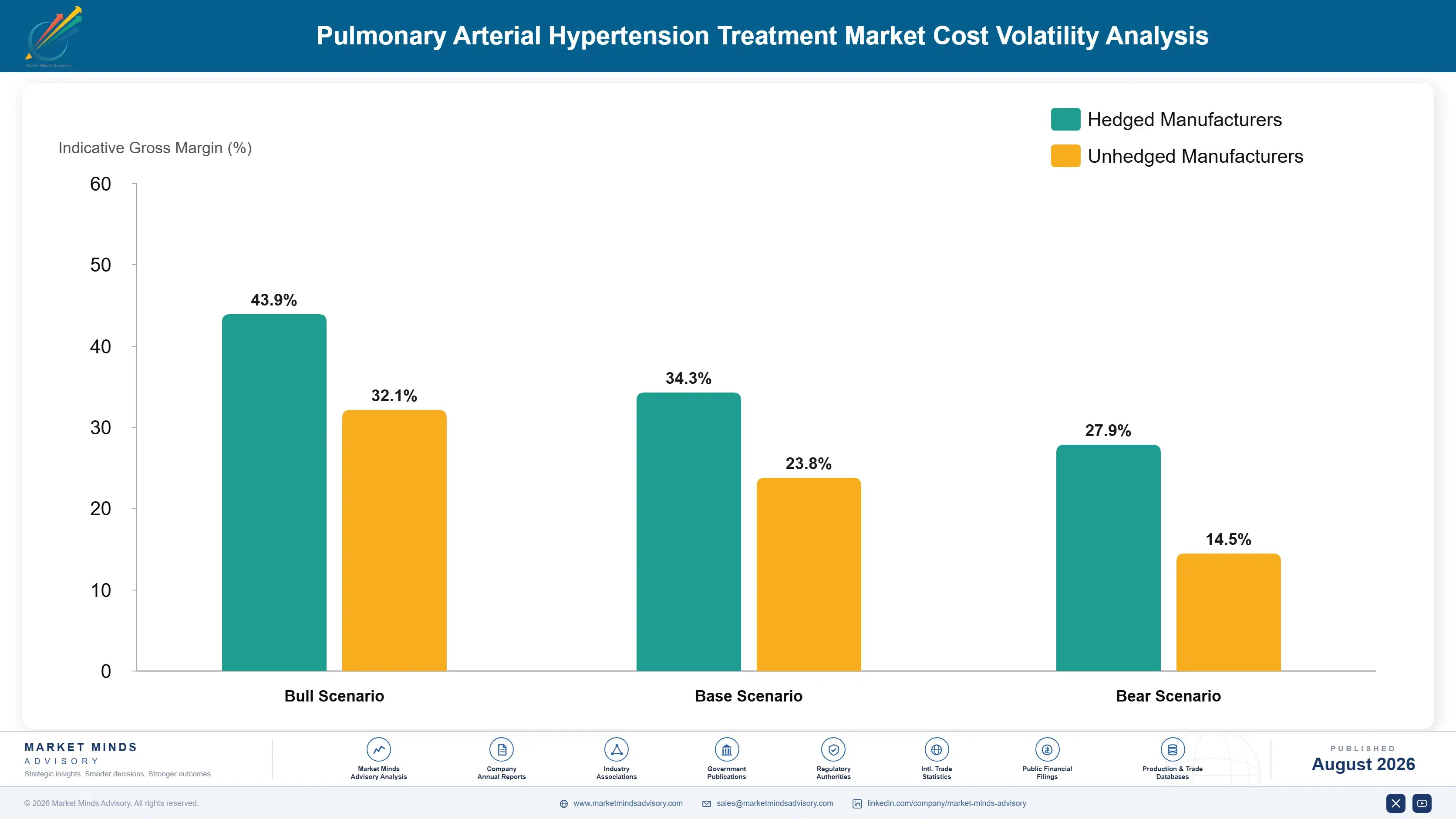
Synthesis, Cold Chain and Channel Fees

Cost of goods is modest relative to price and concentrated in three places. Active ingredient synthesis accounts for roughly 18% of cost of goods for small molecules and more for biologics, sourced from a short list of qualified sites in Europe, the United States and India. Cold chain distribution adds 6% for temperature-sensitive products. Specialty pharmacy and hub fees, outside cost of goods, exceed both combined.
European energy costs through 2022 demonstrated how directly synthesis cost transmits in this category. IEA data recorded industrial gas and electricity peaking at several times prior averages, and multi-step synthesis with solvent recovery is energy intensive enough that contract manufacturers passed through surcharges. Several PAH manufacturers disclosed elevated manufacturing costs in annual reports covering that period. The impact was absorbed rather than passed on, since specialty pricing was already set by negotiation.

Exposure varies by manufacturing model, and the mechanism is contract structure against fixed reimbursement. Companies using European contract manufacturers absorbed the full 2022 movement, while those with owned capacity or Asian synthesis partners saw less. The larger exposure is not synthesis: channel and patient support fees scale with patient numbers and rise with wages, and no negotiated price adjusts for them.
pulmonary-arterial-hypertension-treatment-market-cost-volatility-analysis-1787309227595

Qualify Indian synthesis partners for intermediates and steps

Multi-step synthesis performed entirely in Europe carries energy and labour cost that Indian sites do not, and qualification of intermediate steps is considerably faster than qualifying a full active ingredient route. Manufacturers splitting synthesis across geographies absorbed the 2022 energy movement with less margin damage. Regulatory notification and inspection readiness are the practical constraints on how fast this can proceed.

Renegotiate specialty channel fees on patient volume tiers

Hub and specialty pharmacy fees are typically struck per patient and rarely revisited as volume grows, which means the largest franchises frequently pay the same unit rate as a launch product. Volume-tiered renegotiation at contract renewal recovers meaningful margin on established products. Manufacturers treating channel contracts as fixed infrastructure leave that money on the table indefinitely.

Build owned capacity for difficult formulations only

Prostacyclin analogue synthesis and complex inhaled or infusion formulations are hard enough that contract capacity is scarce and expensive, while standard oral tablet manufacture is neither. Owning the difficult processes and contracting the simple ones concentrates capital where supply security actually matters. Manufacturers that own everything carry fixed cost against products facing generic pricing.

Portfolio Architecture for Margin Defence

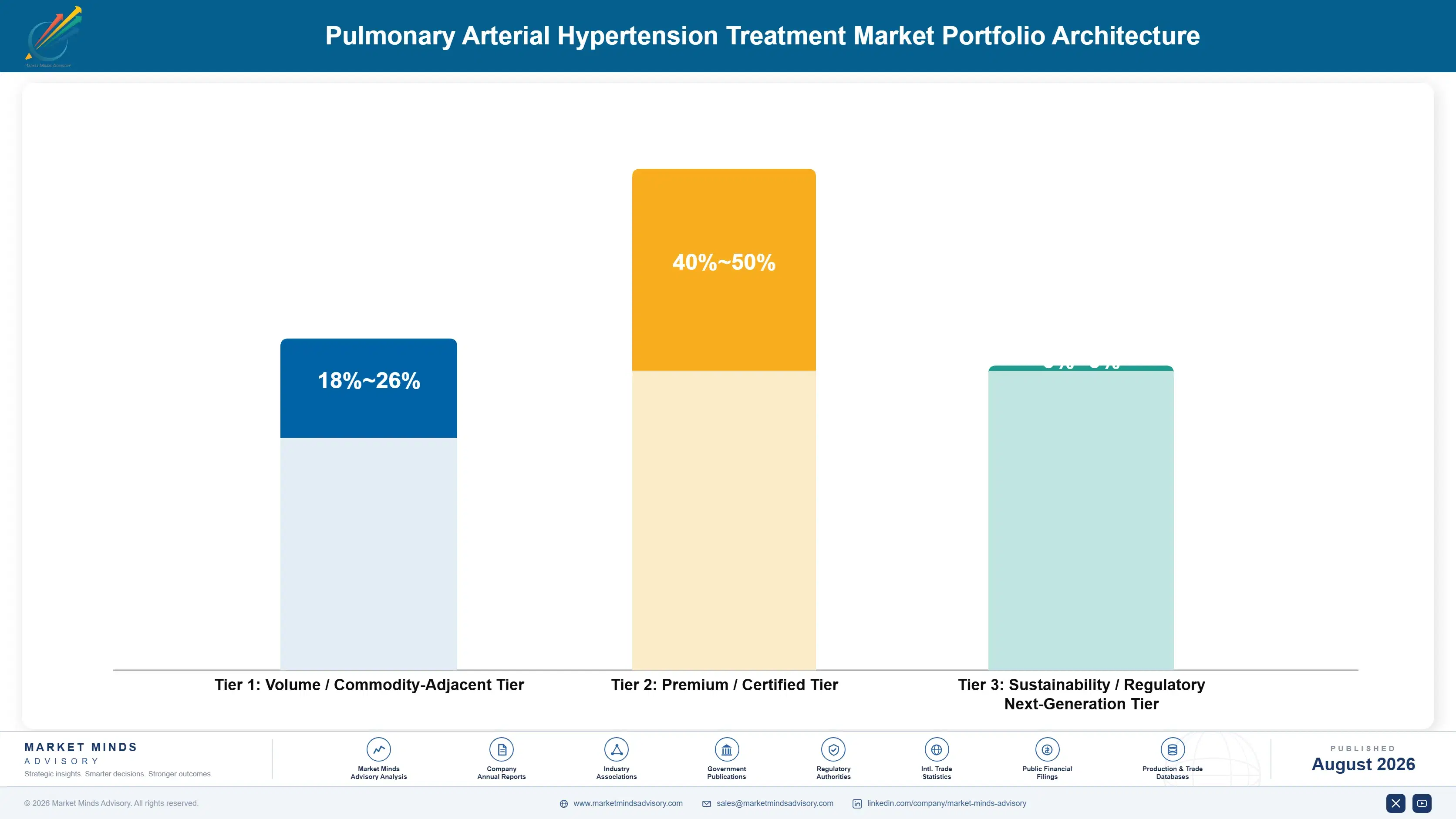
Portfolio economics separate on exclusivity position and channel ownership rather than on mechanism elegance. Generic and generic-adjacent oral vasodilators earn gross margin in the low fifties at best, having lost roughly 82% of price at exclusivity loss. Branded oral therapy still under protection earns in the high eighties. Disease-modifying biologic therapy earns highest of all, though channel and support costs consume a meaningful share below the margin line.
The tension is that the generic base carries prescriber relationships while the protected products carry the return, and both are prescribed by the same physicians at the same visits. A manufacturer withdrawing from eroded molecules loses presence at the escalation decisions where the profitable products get added. Several have discovered that abandoning a generic franchise costs more in access position than the margin recovered, which is why unattractive products persist in these portfolios.

High-value pools concentrate in three places: disease-modifying therapy where payer access has been secured, prostacyclin route breadth that holds patients through progression, and Japanese and Gulf markets where reimbursement is generous and step therapy is light. None is large in patient numbers. Each is defended by access position or manufacturing difficulty, not by evidence alone.

Volume / Commodity-Adjacent Tier

Generic sildenafil, ambrisentan and bosentan supplied through tender and retail channels, carrying most treated patients globally at prices roughly a fifth of their branded predecessors. Award turns on cost and supply reliability, and Indian manufacturers set the reference price across most markets.
Gross Margin: 44-52%

Premium / Certified Tier

Branded oral therapy under exclusivity including fixed-dose combinations, plus oral and inhaled prostacyclin formulations. Margin comes from exclusivity and formulation difficulty, and the nine-point range reflects the gap between negotiated European pricing and United States net realisation.
Gross Margin: 78-87%

Sustainability / Regulatory / Next-Generation Tier

Disease-modifying activin signalling therapy and parenteral prostacyclin systems requiring extensive support infrastructure. The thirteen-point range reflects the gap between established parenteral franchises and newer mechanisms still funding launch channel investment.
Gross Margin: 76-89%
pulmonary-arterial-hypertension-treatment-market-portfolio-architecture-1787309228093

High-value Sub-segments and Strategic Watch-out

Disease-modifying therapy with secured access

The highest-value pool, growing at 13.8% and priced against disease modification rather than symptom control. Payer step therapy is the only material constraint, and it delays rather than removes revenue. Follow-on candidates targeting the same pathway are already in trials. Access work decides the value here, not the science.
Gross Margin: 80-89%

Prostacyclin route breadth

Parenteral, oral and inhaled formulations that hold a patient through progression instead of losing them at escalation. Manufacturing difficulty protects it more effectively than patents do. Disease-modifying therapy reducing progression rates is the genuine long-term threat here. Formulation capability is the barrier competitors keep underestimating badly.
Gross Margin: 78-86%

Fixed-dose combination products

Built from eroded generic molecules and priced roughly 2.5 times component cost on an adherence argument payers accept. It grows at 11.2% and depends on evidence that has to keep being generated. Convenience is a weaker moat than exclusivity ever was. Adherence evidence has to keep coming.
Gross Margin: 70-79%

Generic vasodilator base

Carries most treated patients worldwide at roughly a fifth of former branded pricing, and it earns very little. Withdrawing from it costs prescriber presence at the escalation visits where profitable products get added. That is why unattractive products stay in these portfolios. Hold it for the access, not the margin.
Gross Margin: 44-52%

How Treatment Demand Actually Compounds

This is an annuity that grows inside each patient rather than across a widening population. Diagnosed prevalence increases slowly and nothing commercial accelerates it, but a patient starting on one oral agent accumulates a second pathway, a third and sometimes a parenteral prostacyclin across years of decline, roughly tripling revenue per patient. Around 71% already receive two or more agents. What varies between manufacturers is whether they hold a product at every escalation step or only at o
Adoption depth varies sharply by care setting. Accredited pulmonary hypertension centres escalate on risk assessment at every visit and reach combination rates above 80%, which is the deepest adoption anywhere. General cardiology and respiratory practice escalates reactively and considerably later, if at all. Private centres across Asia and Latin America adopt branded therapy for patients paying directly and generic vasodilators for everyone else. Public systems in cost-constrained markets adopt the cheapest effective regimen and rarely move beyond it.

Buyer profiles are shifting toward earlier and more aggressive escalation. Specialists trained since risk stratification entered guidelines add therapy before deterioration rather than after it. Their predecessors escalated on symptoms, which meant patients spent years on monotherapy that was quietly failing.
pulmonary-arterial-hypertension-treatment-market-end-use-penetration-index-1787309228582

What We Would Do Here

These are among the four positions where our research anticipates prominent divergence between winners and laggards over the coming forecast period. Each is grounded in the demand model, the regulatory perimeter, and the announced capacity pipeline.
01 / PAYER ACCESS SEQUENCING

Attack step therapy with outcomes contracts, not evidence

Step therapy delays disease-modifying therapy by roughly 14 months while patients deteriorate on generic vasodilators, and payers hold that line because acquisition cost is the only number their own process ever examines. Outcomes contracts tied to hospitalisation and clinical worsening have improved positioning at about 35% of payers that previously required three-agent failure. The barrier is actuarial capability rather than clinical data, which most manufacturers in this category do not currently hold and could acquire within a single planning year.
02 / ESCALATION STEP COVERAGE

Hold a product at every escalation decision, not one

Revenue in this disease compounds within each patient, roughly tripling as agents accumulate across years of decline, and 71% of patients already take two or more. A manufacturer present at only one escalation step captures only a fraction of what its own prescriber relationships pass through over a patient's course. Route breadth or combination positioning is therefore worth considerably more than a superior single molecule, which is the opposite of how portfolio decisions in specialty pharmaceuticals usually get argued internally.
03 / CHANNEL INFRASTRUCTURE FUNDING

Fund titration support before launching anything unfamiliar

Prescribers will not start an unfamiliar therapy without titration and monitoring scaffolding, which is exactly why 88% of dispensing runs through specialty networks rather than through retail pharmacy. Nurse-led support embedded within accredited centres raises initiation rates roughly 30% against otherwise equivalent products lacking it. New entrants routinely treat eighteen months of launch underperformance as unavoidable when it is simply the cost of channel infrastructure they declined to fund in advance, and the arithmetic on that decision is not close.
04 / GENERIC BASE RETENTION

Keep the eroded molecules for access, not for margin

Generic entry removes around 82% of price, which makes the older oral molecules look like obvious candidates for divestment on any margin analysis. That analysis misses what those molecules actually buy, which is presence at the escalation visits where the protected products get added to regimens. Several manufacturers have discovered that exiting a generic franchise costs more in prescriber access than the margin it recovered, and reversing that decision is considerably harder than making it was in the first place.

Engagement Snapshot From the Field

A live engagement with an industry participant carrying material or product regulatory and market exposure ahead of a defining policy shift, showing how our research translates into a defensible multi-year portfolio strategy.
MARKET MINDS ADVISORY · CLIENT ENGAGEMENT SUMMARY
Pulmonary Arterial Hypertension Treatment Producer Strategic Portfolio Review and Transition Roadmap 2026·Investment Scenario on Pulmonary Arterial Hypertension Treatment Exposure Evaluation 2025-26
CLIENT PROFILE
A mid-sized specialty pharmaceutical company with respiratory and cardiovascular revenue near USD 620 million annually (client-reported, unverified by MMA), an inhaled prostacyclin formulation approved in the United States and Europe, and commercial infrastructure built for hospital-administered products rather than for specialty pharmacy distribution. The company held strong clinical data, no established relationships across accredited pulmonary hypertension centres, and a launch trajectory running well below plan.
STRATEGIC CHALLENGE
The product had been available for eleven months and was reaching roughly a third of forecast patients despite clinical data comparable to established alternatives. Management proposed increasing physician-facing promotional spend substantially. The board questioned whether awareness was the problem, since prescriber surveys showed high recognition of the product and its data alongside very low initiation rates.
MMA APPROACH
MMA traced every initiation and every declined initiation across 62 accredited centres, then mapped what support each prescriber required before starting a patient on an unfamiliar inhaled therapy. Forty-seven expert interviews with pulmonologists, specialty pharmacy staff and payer medical directors established where the pathway actually broke. Payer step therapy requirements were catalogued market by market against the client's positioning submissions.
KEY FINDINGS
  1. Prescribers recognised the product and its data and declined to initiate patients because no titration support or device training existed, which was the single reason cited in most declined initiations reviewed.
  2. The client's specialty pharmacy contract covered dispensing and prior authorisation but excluded nurse-led patient education, a gap competitors filled through manufacturer-funded field teams the client had not built.
  3. Step therapy protocols at four large payers required documented failure on two agents the client had never submitted comparative positioning data against, though the data existed internally.
  4. Promotional spend increases in three test markets had produced no measurable change in initiation rates, confirming that awareness had not been the constraint at any point.
CLIENT PROFILE
A mid-sized specialty pharmaceutical company with respiratory and cardiovascular revenue near USD 620 million annually (client-reported, unverified by MMA), an inhaled prostacyclin formulation approved in the United States and Europe, and commercial infrastructure built for hospital-administered products rather than for specialty pharmacy distribution. The company held strong clinical data, no established relationships across accredited pulmonary hypertension centres, and a launch trajectory running well below plan.
STRATEGIC CHALLENGE
The product had been available for eleven months and was reaching roughly a third of forecast patients despite clinical data comparable to established alternatives. Management proposed increasing physician-facing promotional spend substantially. The board questioned whether awareness was the problem, since prescriber surveys showed high recognition of the product and its data alongside very low initiation rates.
MMA APPROACH
MMA traced every initiation and every declined initiation across 62 accredited centres, then mapped what support each prescriber required before starting a patient on an unfamiliar inhaled therapy. Forty-seven expert interviews with pulmonologists, specialty pharmacy staff and payer medical directors established where the pathway actually broke. Payer step therapy requirements were catalogued market by market against the client's positioning submissions.
KEY FINDINGS
  1. Prescribers recognised the product and its data and declined to initiate patients because no titration support or device training existed, which was the single reason cited in most declined initiations reviewed.
  2. The client's specialty pharmacy contract covered dispensing and prior authorisation but excluded nurse-led patient education, a gap competitors filled through manufacturer-funded field teams the client had not built.
  3. Step therapy protocols at four large payers required documented failure on two agents the client had never submitted comparative positioning data against, though the data existed internally.
  4. Promotional spend increases in three test markets had produced no measurable change in initiation rates, confirming that awareness had not been the constraint at any point.
RECOMMENDED STRATEGY
Phase 1: Phase 1 (0 to 6 months): Halt the promotional spend increase, and build a nurse-led titration and device training team covering the highest-volume accredited centres. Phase 2: Phase 2 (6 to 18 months): Submit comparative positioning data to the four payers imposing step therapy, and renegotiate the specialty pharmacy contract to include patient education. Phase 3: Phase 3 (18 to 36 months): Extend the support model across remaining accredited centres and license the product into Asian markets rather than building presence there.
OUTCOME
Promotional spend was redirected into field support. Initiation rates across supported centres rose to roughly 71% of forecast within four quarters, against 34% before the change (client-reported, unverified by MMA). Two of the four payers relaxed step therapy after receiving comparative data. Asian licensing discussions began with two regional partners.

Frequently Asked Questions

Foundational context covering the market sizes, CAGR, scope, country, region and competition that inform every finding below. This section is provided to cover basics and most often pre-purchase conversations, answered from the MMA Primary Research Dataset.

What is the current size of the Pulmonary Arterial Hypertension Treatment Market?

MMA sizes the global PAH treatment market at USD 8.4 billion in 2025, rising to USD 9.17 billion in 2026. That covers approved pharmacological therapy at manufacturer net realised prices after rebates.

How large will the Pulmonary Arterial Hypertension Treatment Market be by 2036?

MMA forecasts USD 22.11 billion by 2036, an expansion multiple of 2.41 times the 2026 base. That represents roughly USD 12.94 billion of incremental value over the forecast period.

What is the CAGR for the Pulmonary Arterial Hypertension Treatment Market 2026 to 2036?

The base case compounds at 9.2% annually, with a bull case of 10.5% and a bear case of 8.0%. Payer willingness to fund concurrent mechanisms decides which case materialises.

Which segment is growing fastest?

Activin signalling inhibitors compound at 13.8%, exactly 1.50 times the market rate. The mechanism addresses vascular remodelling rather than pressure, and it adds to existing regimens rather than replacing them.

Who are the major companies in the Pulmonary Arterial Hypertension Treatment Market?

Johnson & Johnson, Merck, United Therapeutics, Bayer and Liquidia Technologies together supply 84% of patient-years. Fifteen further participants including Gossamer Bio, Insmed, Viatris and Cipla are profiled.

Which country is growing fastest?

India compounds at 12.1%, ahead of every other national market MMA tracks. Domestic generic manufacture and expanding diagnostic capacity drive volume growth that translates modestly into value.

Report Segmentation Architecture

The full report scope spans multiple orthogonal segmentation dimensions, with cross-tabulated demand data provided for each dimension pair. Coverage extends further to regional breakdowns, trend trajectories, and the competitive detail needed to support segment-level decision-making.

By Therapeutic Mechanism

  • Endothelin Receptor Antagonists
  • Phosphodiesterase-5 Inhibitors and sGC Stimulators
  • Prostacyclin Pathway Agents
  • Activin Signalling Inhibitors
  • Combination Fixed-Dose Products
  • Calcium Channel Blockers and Supportive Therapy

By End-Use Setting

  • Accredited Pulmonary Hypertension Centres
  • General Cardiology and Respiratory Practice
  • Private Specialist Centres
  • Public Hospital Outpatient Services
  • Home Infusion and Community Care

By Access and Distribution Model

  • Specialty Pharmacy and Hub Distribution
  • Hospital Pharmacy Supply
  • Public Tender and Reimbursed Retail
  • Named Patient and Out-of-Pocket Purchase

By Region

  • North America
  • Western Europe
  • East Asia
  • South Asia and Pacific
  • Latin America
  • Middle East and Africa
  • Eastern Europe

Scope, Methodology, and Coverage

Every figure in this report is reproducible from documented input assumptions. The scope below maps the historical period, the forecast horizon, the segmentation dimensions, and the countries covered, alongside the underlying primary and qualitative methodology.
Historical Period
2020 to 2025
Forecast Period
2026 to 2036
Base Year
2025 (USD billions; MMA Primary Research Dataset, August 2026)
Market Definition
The market comprises pharmacological therapies approved for pulmonary arterial hypertension, spanning endothelin receptor antagonists, phosphodiesterase-5 inhibitors and soluble guanylate cyclase stimulators, prostacyclin pathway agents across parenteral, oral and inhaled routes, activin signalling inhibitors, fixed-dose combination products, and calcium channel blockers used in vasoreactive patients. Sizing is at manufacturer net realised price after rebates and includes generic supply. Therapies for other pulmonary hypertension groups, lung transplantation, atrial septostomy, separately sold delivery devices, oxygen therapy and anticoagulation are outside scope.
Quantitative Units
USD billions (current prices); patient-years of therapy supplied; USD per patient annually at net realised price
Segmentation Dimensions
By Therapeutic Mechanism; By End-Use Setting; By Access and Distribution Model; By Region
Regions Covered
North America, Western Europe, East Asia, South Asia and Pacific, Latin America, Middle East and Africa, Eastern Europe
Countries Covered
USA, China, Germany, France, UK, Japan, South Korea, India, Australia, Canada, Brazil, Mexico, Indonesia, Vietnam, Thailand, Malaysia, UAE, Saudi Arabia, South Africa, Nigeria, Turkey, Poland, Netherlands, Italy, Spain, Sweden, Switzerland, Argentina, Colombia, Singapore, and additional markets relevant to this sector
Key Companies Profiled
Johnson & Johnson, Merck, United Therapeutics, Bayer, Liquidia Technologies, Gossamer Bio, Insmed, Tenax Therapeutics, Keros Therapeutics, Pfizer, Teva Pharmaceutical, Viatris, Sandoz, Zydus Lifesciences, Sun Pharmaceutical, Cipla, Dr Reddy's Laboratories, Beijing Tide Pharmaceutical, Ferrer, Chiesi Farmaceutici.
Quantitative Methodology
Primary survey, n=3,800 respondents, Q4 2025, six countries; demand-side model with trade association cross-validation
Qualitative Methodology
47 expert interviews, Q4 2025; applied to validate demand model assumptions, identify emerging dynamics, and assess competitive positioning
Report Format
PDF and XLSX data workbook (Word format preview document)
Publisher
Market Minds Advisory
Report Code
MMA-2026-HLT-060
Published
August 2026
Contact
sales@marketmindsadvisory.com | www.marketmindsadvisory.com

Purchase the full Pulmonary Arterial Hypertension Treatment Market Report (2026 to 2036).

The full report sizes the pulmonary arterial hypertension treatment market across six therapeutic mechanisms, five care settings, four access models and seven regions, with annual forecasts to 2036 in revenue and patient-years supplied. It models revenue per patient across the escalation trajectory rather than by product, which is where the compounding economics of this disease actually sit. Twenty participants are assessed on a consistent patient-years supplied basis, with specialty channel infrastructure and payer access position mapped separately from clinical portfolio. Step therapy requirements are catalogued payer by payer across major markets, and generic erosion is projected molecule by molecule.
Six therapeutic mechanisms sized and forecast annually
Revenue per patient modelled across escalation trajectory
Twenty participants on consistent patient-years supplied basis
Step therapy requirements catalogued payer by payer
Specialty channel infrastructure mapped separately from portfolio
Generic erosion projected molecule by molecule

Built For The People Who Decide

From boardroom strategy to bench-side execution, this report is read cover-to-cover by leaders shaping the next decade of their industry, turning demand scenarios, market dynamics and valuation benchmarks into decisions.
CXOs/ Presidents/ VPs/ Managers
M&A and Corporate Development
Strategy Teams and R&D Heads
Procurement and Product Directors
Regulatory and Compliance Leaders
Investor Relations and Equity Analysts