Market Minds Advisory
Prostate Health Market

Prostate Health Market: Office-Based Intervention, Pharmacotherapy Abandonment and the Retreatment Question

More than a third of men stop their prostate medication inside a year, and the procedures replacing it are moving out of the operating theatre into the urologist's own office.

Lead Analyst

Alice Ballenger

Published

September 2026

Make Smarter Decisions with Customized Research Insights

Request a free sample report and evaluate market opportunities, growth trends, and competitive dynamics relevant to your business needs.

2025 MARKET VALUE$9.8BMarket Size 2025
2036 FORECAST VALUE$19.4BBase Case , 2026 to 2036
CAGR 2026 TO 20366.4 %Bull 7.6% / Bear 5.2%
INCREMENTAL OPPORTUNITY$9.0BNet 10- year value creation
EXPANSION MULTIPLE1.86x2036 value over 2026 base
Strategic Levers
M&A Pipeline
Regional Outlook
Country Rankings
Competitive Intelligence
Segmental Deep-dive
Call-Us : 91 93563 13602

Executive Snapshot and Market Trajectory

Daily pills for an enlarged prostate have a compliance problem nobody solved: 38% of men stop within a year, and 22% report sexual side effects on conventional therapy. That abandonment created the market for one-time office procedures, and it explains the competitive picture better than any technology argument.
Water vapour thermal therapy compounds at 9.6%, exactly 1.50 times the market rate, because it treats obstruction in the urologist's own office under local anaesthetic and preserves sexual function that surgery frequently does not. North America holds 30% of value, the largest regional position, on dedicated procedure reimbursement and device pricing rather than patient numbers. Office procedures now reach 41% of interventions, and reimbursement codes rather than device performance decide where they happen.
Five participants support 56% of treated patient episodes, and position rests on urologist training and reimbursement codes rather than on device engineering. Realised reimbursement near USD 4,800 per office procedure is what makes those economics work at all. Five-year retreatment at 14% is the number that decides whether any of this holds up. Trained urologist capacity rather than device supply is what limits volume everywhere the codes already exist.
Market Definition
Covers treatment of benign prostatic hyperplasia and lower urinary tract symptoms of prostatic origin, spanning water vapour thermal therapy, prostatic urethral lift implants, prostatic artery embolisation, transurethral resection and laser enucleation, alpha blocker pharmacotherapy, and 5-alpha reductase inhibitor pharmacotherapy. Sizing captures device, implant, disposable and pharmaceutical revenue at realised price. Excludes prostate cancer therapeutics and radiotherapy, prostate specific antigen and biopsy diagnostics, urinary catheters and incontinence products, erectile dysfunction treatment, prostate health dietary supplements, and urodynamic testing equipment.
Base Year Value
$9.8B in 2025 (MMA Primary Research Dataset, August 2026)
Forecast Period
2026 to 2036, eleven discrete annual values
CAGR
6.4% base case. Bull 7.6%. Bear 5.2%.
Fastest Growth Segment
Water Vapour Thermal Therapy: 9.6% CAGR
Fastest Growth Country
India: 9.0% CAGR
Fastest Growth Region
South Asia and Pacific: 8.5% CAGR
Largest Region
North America: 30% of 2025 global value
Market Leaders
Boston Scientific, Teleflex, Olympus, Astellas Pharma, Coloplast. Source: MMA Analysis based on company annual reports.
Primary Survey
n=3,800 procurement and R&D decision-makers, Q4 2025, six countries
Methodology
Demand-side build-up, cross-validated against public data, 47 expert interviews

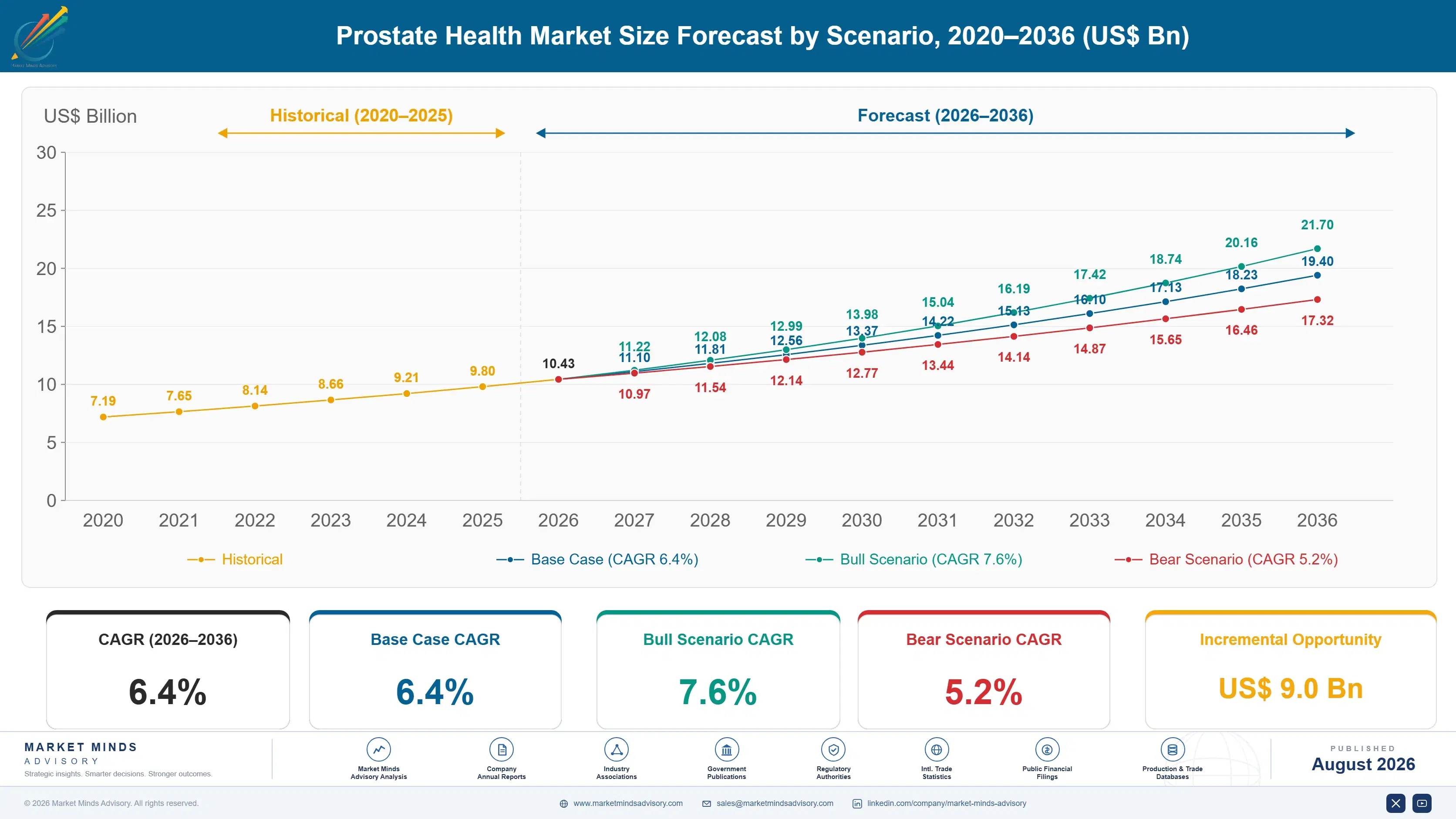
Prostate Health Market Forecast Scenarios

prostate-health-market-size-forecast-scenario-1787309785846
Growth of 5.3% across 2020 to 2025 combined a declining drug market with a rapidly growing procedural one. Alpha blocker and 5-alpha reductase inhibitor revenue fell as genericisation completed and discontinuation rates stayed near 38%, while minimally invasive office procedures grew from a small base on reimbursement codes that had only recently been established. Elective urology suspension during 2020 removed a substantial block of procedural volume that recovered strongly afterwards.
The base case of 6.4% rests on three mechanisms. Office-based minimally invasive procedures keep displacing both daily medication and theatre-based surgery, at realised reimbursement near USD 4,800 that supports genuine device economics. Sexual function preservation is the argument that actually moves patients, since 22% report dysfunction on conventional therapy. And Asian urology capacity is expanding quickly against enormous untreated symptomatic populations that have never so much as consulted a urologist.
The bull case of 7.6% assumes five-year retreatment rates hold near 14% as longer follow-up accumulates, which would establish minimally invasive treatment as definitive rather than temporising. The bear case of 5.2% reflects two pressures: retreatment rates rising with longer follow-up and pushing patients back toward resection, and reimbursement authorities reducing office payment as volumes exceed their models.

Why Men Stop Taking The Pills

The commercial history of this market is a story about compliance. Alpha blockers and 5-alpha reductase inhibitors work reasonably well and men stop taking them, with 38% discontinuing inside a year, because a daily pill for a symptom that waxes and wanes is easy to abandon and because 22% report sexual side effects. Transurethral resection works definitively and carries retrograde ejaculation in most patients plus a hospital stay. Between those two unattractive options sat an enormous untreated
TOP FIVE CONCENTRATION56%Treated patient episodes supported by the leading category participants
OFFICE PROCEDURE REIMBURSEMENTUSD 4,800Realised payment for one office-based prostate intervention episode
PHARMACOTHERAPY DISCONTINUATION38%Men stopping daily prostate medication within the first year
FIVE-YEAR RETREATMENT RATE14%Patients requiring further intervention after minimally invasive treatment
SEXUAL SIDE EFFECT INCIDENCE22%Men reporting sexual dysfunction on conventional daily drug therapy
OFFICE-BASED PROCEDURE SHARE41%Interventions performed outside hospital operating theatre settings entirely
Minimally invasive office procedures occupy that gap deliberately. Water vapour thermal therapy and urethral lift implants treat obstruction under local anaesthetic in a urologist's own office, preserve sexual function in the great majority of patients, and are done with in a single visit. Reimbursement near USD 4,800 per procedure supports device economics that hospital-based surgery never would, and 41% of interventions now happen outside a theatre entirely.
Two questions determine the next decade. Whether five-year retreatment stays near 14% decides if these procedures are definitive or merely temporising, and longer follow-up is only now accumulating. And whether reimbursement authorities maintain office payment rates as volumes grow is a commercial risk nobody in the category prices adequately.
"Urologists spent thirty years offering men a pill they would not take or an operation that would change their sex life. The office procedures took off because they are the first option that respects what patients actually care about. Whether they last ten years is still an open question, and everybody selling them knows it."
Director, Urology and Men's Health Practice · MMA Healthcare / Urology and Men's

Market Trends

Office-based intervention displaces both pills and theatre surgery

Water vapour thermal therapy and urethral lift implants treat prostatic obstruction under local anaesthetic in a urologist's office, without general anaesthesia, without a hospital stay and while preserving sexual function in most patients. That combination attacks both alternatives at once: the pill 38% of men abandon and the resection they fear. Office procedures now account for 41% of all interventions and the fastest modality compounds at 9.6%. Reimbursement near USD 4,800 per procedure is what makes the device economics work at all. Trained physician capacity rather than device supply limits how fast this grows.
Market Impact: Grows regional value at 8.5% yearly
Sexual function preservation becomes the decisive patient argument

Conventional pharmacotherapy causes sexual dysfunction in roughly 22% of men and transurethral resection causes retrograde ejaculation in the large majority, and patients weigh that far more heavily than clinicians historically assumed. Minimally invasive procedures that preserve ejaculatory function have therefore converted men who declined every previous option. Manufacturers presenting function preservation data rather than flow rate improvement reach patients directly through their own research before any consultation. Urologists have adjusted their counselling accordingly across most developed markets. Patients now arrive at consultation asking for a specific procedure by name, which is genuinely new.
Market Impact: Pays USD 4,800 per office procedure

Market Opportunities and Growth Drivers

Asian urology capacity meets enormous untreated symptomatic populations

Benign prostatic hyperplasia affects a very large share of men over fifty and most of Asia's symptomatic population has never consulted a urologist, which makes capacity rather than prevalence the binding constraint on treatment. Hospital construction and urology training programmes across China, India and Southeast Asia are relieving that constraint steadily. East Asia holds 28% of value and grows at 7.4%, and South Asia and Pacific grows at 8.5%. Pharmacotherapy dominates initial treatment there because procedural capacity remains limited. Domestic Chinese device manufacturers entering the segment will reset regional economics across the region considerably.
Market Impact: Requires retreatment in 14% of pati

Dedicated reimbursement codes make office economics genuinely work

Minimally invasive prostate procedures only became commercially viable once payers established dedicated codes reimbursing office-based delivery at levels covering device, disposable and physician cost together. Realised payment near USD 4,800 per procedure supports device pricing that hospital theatre economics never could. Where codes exist, adoption followed within two procurement cycles. Where they do not, the same devices sit unused regardless of clinical evidence, which is why reimbursement work rather than clinical development determines commercial outcome in this category. Payers set the rate administratively, so no participant can negotiate it account by account.
Market Impact: Threatens USD 4,800 payment levels

Market Restraints and Challenges

Retreatment rates decide whether the procedures are definitive

Minimally invasive treatments show five-year retreatment near 14%, and the root cause of the uncertainty is simply that follow-up beyond that horizon barely exists yet for the newer modalities. If retreatment climbs with longer observation, these procedures become temporising rather than definitive and the economics change entirely. Manufacturers are responding by funding long-term registry follow-up, by refining patient selection criteria to exclude anatomies that predict failure, and by positioning retreatment as acceptable given the low morbidity involved. Longer follow-up is only now accumulating for the newer modalities, and payers are watching it.
Market Impact: Shifts 41% of interventions to offi

Reimbursement rates fall as procedure volumes grow beyond forecast

Office procedure payment near USD 4,800 was set when volumes were small, and the root cause of the exposure is that payers routinely revisit rates once utilisation exceeds what they modelled. Several codes have already been reviewed. Participants mitigate by generating health economic evidence on avoided surgery and avoided medication cost, by diversifying across modalities with separate codes, and by expanding into markets where reimbursement is being established rather than reviewed. Health economic evidence on avoided surgery and avoided medication cost is the only defence that works once a review opens.
Market Impact: Preserves function in 94% of cases
3 additional market trends, 4 additional growth drivers, and 2 additional restraints and challenges are covered in the full report. Contact sales@marketmindsadvisory.com to access the complete intelligence.

Segment CAGR and Growth Architecture

Segmentation follows the treatment modality, because modality determines the care setting, the reimbursement pathway, the side effect profile patients weigh and the revenue per treated patient. Patient severity, physician specialty and geography all matter commercially but cut across every modality, so they belong in later discussion. Six modalities cover current prostate health management practice.
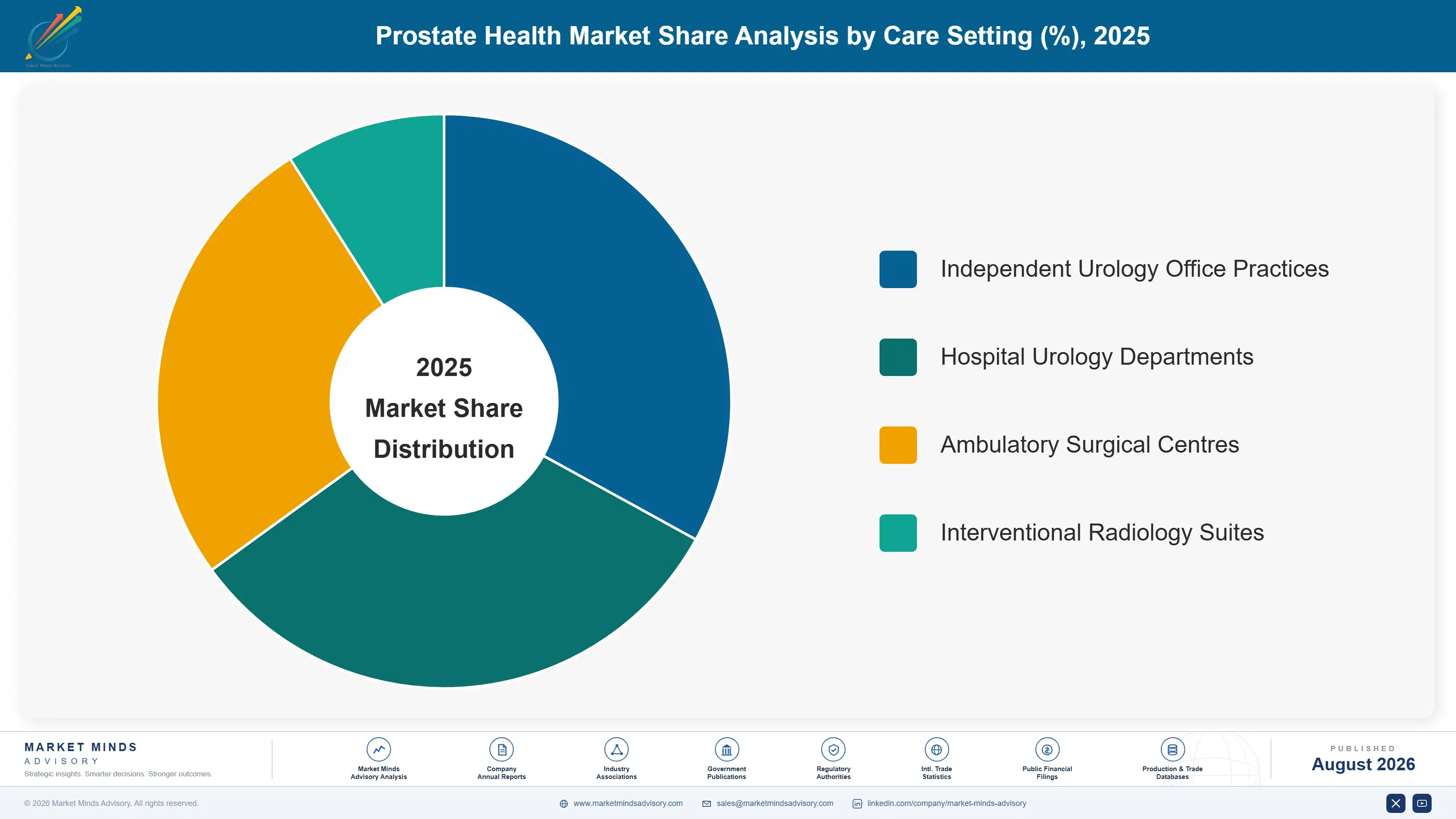
prostate-health-market-market-share-analysis-1787309786377

Water Vapour Thermal Therapy

Water vapour thermal therapy compounds at 9.6%, exactly 1.50 times the market rate, and it succeeded by respecting what patients care about rather than what flow rate studies measure. Convective steam delivered through the urethra under local anaesthetic treats obstruction in a urologist's office, preserves ejaculatory function in the great majority of men, and finishes in a single visit. Three commercial features follow. Dedicated reimbursement codes near USD 4,800 per procedure make the device economics work. Urologist training rather than device supply limits adoption pace. And five-year retreatment near 14% remains the open question everybody watches. Chinese manufacturers entering the segment will test the device pricing this structure currently supports everywhere.
CAGR 9.6%

Prostatic Urethral Lift Implants

Urethral lift implants grow at 8.2%, second fastest, and they compete directly with thermal therapy for the same office-based patient. Small permanent implants hold obstructing tissue aside mechanically rather than destroying it, which produces immediate symptom relief without the healing period thermal treatment requires. That immediacy is the commercial argument. Anatomical suitability is narrower, since large or intruding median lobes limit candidacy, and permanent implants raise questions about later surgery that urologists weigh carefully. Implant cost per procedure is the highest in the category. Urologists weigh the presence of a permanent implant against later surgical options carefully, and patient selection therefore matters more here than in thermal treatment. Training networks decide volume.
CAGR 8.2%
Full segment breakdown across 6 segments available in the complete report.

Regional Architecture and Country Demand Map

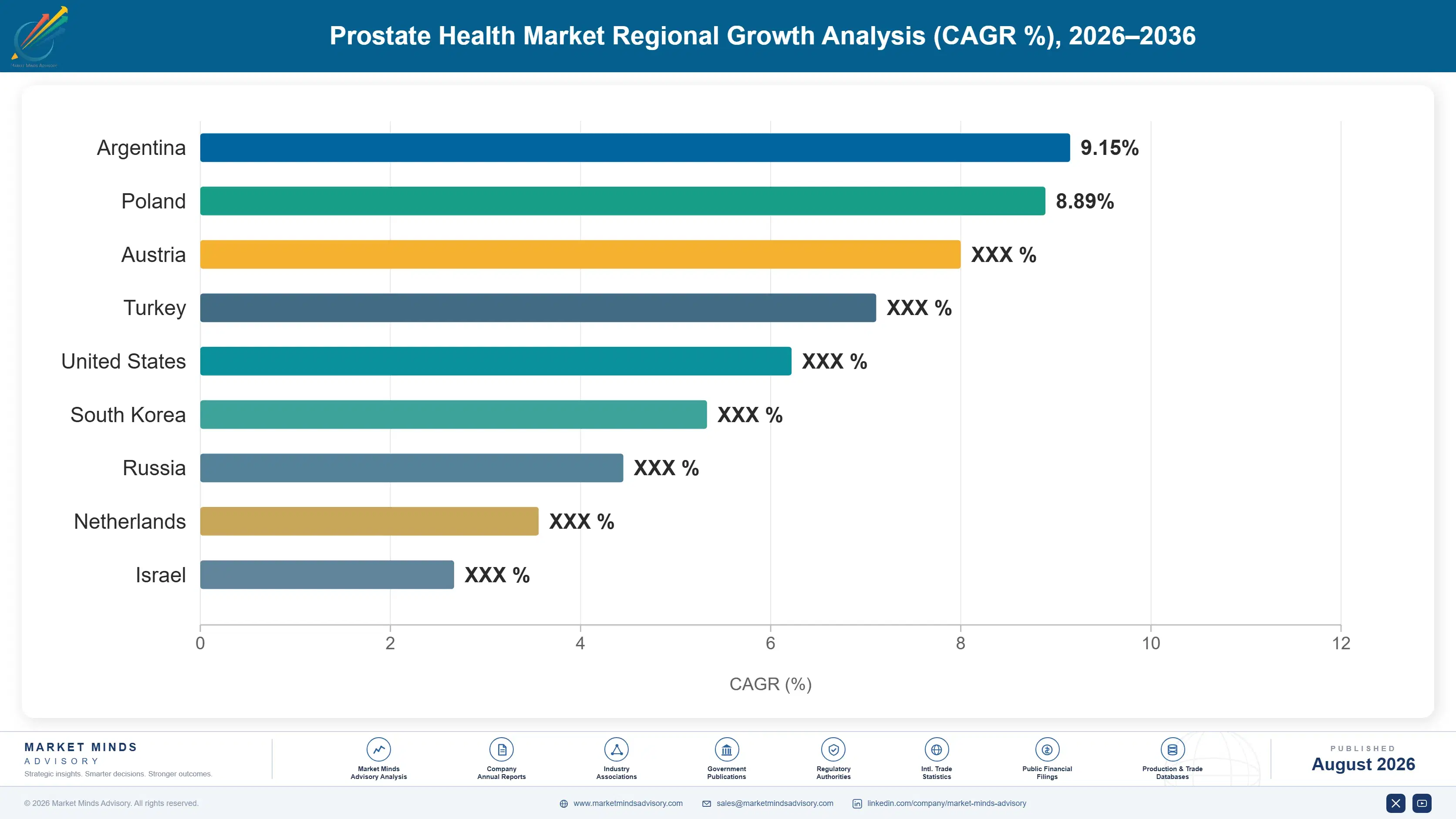
North America holds 30% of value on dedicated office procedure reimbursement and device pricing rather than patient numbers. East Asia follows at 28% with far larger patient populations. South Asia and Pacific grows fastest, led by India at 9.0%, where urology capacity is building rapidly.

North America

Thirty percent of global value sits in North America, growing at 5.7%, and reimbursement structure rather than patient numbers explains the position. Note: dedicated office procedure codes paying near USD 4,800 exist here and in very few other systems, which lifts realised value far above regions with larger symptomatic populations. Urology practices operate as businesses that invest in office procedure capability deliberately, and the economics reward them for doing so. Pharmacotherapy revenue has collapsed to generic levels. Retreatment data and code review are the two commercial risks practices watch closely. Independent practices adopt considerably faster than hospital-employed urologists, because the reimbursement accrues to the practice that invested in capability. That distinction matters commercially.
Share: 30% | CAGR: 5.7% (2026 to 2036)

Western Europe

Twenty-two percent of value and 4.9% growth reflect health systems that fund prostate treatment adequately without the office procedure economics that drive North American adoption. German and Dutch urology adopted minimally invasive treatment earliest in Europe, supported by reimbursement that recognises day-case delivery. British provision runs through hospital urology with long waiting lists that push men toward continued medication. Laser enucleation holds a stronger position here than elsewhere, particularly in high-volume German centres. Prostatic artery embolisation has developed a genuine following among interventional radiologists across several countries. Office-based delivery economics are weaker here than in North America because reimbursement is set at day-case rather than office rates in most systems. Adoption reflects that.
Share: 22% | CAGR: 4.9% (2026 to 2036)
Regional intelligence for 5 additional markets available in the complete report: East Asia, South Asia and Pacific, Latin America, Middle East and Africa, Eastern Europe. Contact sales@marketmindsadvisory.com.
prostate-health-market-country-cagr-analysis-1787309786888

Four Ways To Build Procedure Volume

Nothing in this category works without a reimbursement code, and 38% of men abandon the alternative that requires no code at all. The levers that matter secure payment, train the physicians who deliver the procedure, and answer the durability question before payers ask it. Each carries returns tested against disclosed participant economics and primary interview evidence.

Secure dedicated codes before launching in any market

Minimally invasive prostate devices sit unused in markets without dedicated office procedure codes regardless of clinical evidence, and adoption follows within two procurement cycles where codes exist. Participants sequencing reimbursement work ahead of commercial launch report procedure volume roughly 3 times higher in the first two years than those launching first and pursuing codes afterward. It delays revenue by quarters and requires health economic evidence built before any sales case exists, which commercial teams consistently resist. Devices without codes generate nothing at all, whatever any sales organisation manages to do with them.
Market Impact: Lifts early procedure volume roughl

Train urologists as a capacity investment, not marketing

Office procedure adoption is limited by how many urologists can perform the technique confidently rather than by device availability or patient demand anywhere. Participants running structured proctoring and practice setup support report trained physician productivity roughly 45% above those providing product training alone. It consumes experienced physician time and practice consulting resource that never appears as revenue, and it is the only intervention that reliably increases procedure volume in a market where codes already exist. Hospital-employed urologists adopt more slowly because reimbursement accrues to the institution rather than to them personally.
Market Impact: Raises trained physician productivi

Fund long-term registry follow-up before payers demand it

Five-year retreatment near 14% is the number that determines whether these procedures are definitive, and follow-up beyond that horizon barely exists for newer modalities. Participants funding prospective registry follow-up report reimbursement review outcomes roughly 50% more favourable than those relying on pivotal trial data alone. Registry programmes cost real money for years before any commercial benefit appears, and the alternative is having a payer set the terms of the conversation instead. Payers open these reviews when they choose to, and the participant holding the data controls how that conversation goes. That is worth funding.
Market Impact: Improves reimbursement review outco

Sell function preservation directly to patients themselves

Men weigh sexual function far more heavily than clinicians historically assumed, and 22% report dysfunction on conventional pharmacotherapy while resection causes retrograde ejaculation in most patients. Participants presenting function preservation evidence through patient-facing channels report consultation requests roughly 60% above those marketing only to urologists. It requires direct-to-patient capability medical device organisations rarely hold, and regulatory constraints on patient-facing claims vary enormously between markets. Men research treatment before consulting and increasingly arrive naming a specific procedure, which converts marketing spend into consultation volume in a way physician detailing never did. Urologists have adjusted their counselling accordingly.
Market Impact: Lifts patient consultation requests

Who Controls the Margin Pool

Five participants support 56% of treated patient episodes, the basis on which MMA assesses this category across pharmacotherapy and procedural modalities together. Boston Scientific leads on office-based thermal therapy and the reimbursement work behind it. Teleflex holds the strongest urethral lift position and the urologist training network that sustains it.
Competitive activity runs along three lines. Reimbursement code establishment is the primary contest in every market not yet covered, because devices without codes generate nothing. Urologist training capacity determines procedure volume where codes already exist, which favours participants who invested in proctoring infrastructure. And long-term registry evidence is being accumulated against the retreatment question that payers will eventually ask everybody.

Pressure arrives from two directions. Chinese device manufacturers are entering minimally invasive prostate treatment at prices that will reset regional economics, initially domestically and increasingly across Asia. Meanwhile prostatic artery embolisation gives interventional radiologists a competing procedure with its own codes and referral pathways. Rankings shift toward participants holding both reimbursement breadth and trained physician networks, because those two determine procedure volume far more than device performance does. Chinese entry and embolisation competition together will decide how much of that holds.
prostate-health-market-company-positioning-matrix-1787309787405

Competitive Moat and Risk Dimensions

BOSTON SCIENTIFIC

Moat: Thermal therapy and reimbursement depth

The company holds the leading office-based thermal therapy position and the reimbursement infrastructure behind it, having secured dedicated codes in markets competitors are still pursuing. Its broader urology portfolio reaches the same practices through several product categories simultaneously. Long-term follow-up data accumulating on its thermal platform gives it the evidence payers will eventually demand from everybody in the category.
BOSTON SCIENTIFIC

Risk: Reimbursement review exposure ahead

Office procedure payment near USD 4,800 was established when volumes were small, and payers routinely revisit rates once utilisation exceeds what they modelled. Several codes have already been reviewed. The company's economics depend heavily on those rates holding, and health economic evidence on avoided surgery cost is the only real defence available when a review opens.
TELEFLEX

Moat: Urethral lift training network

The company established the urethral lift category and holds the largest network of trained urologists performing it, which is the genuine constraint on procedure volume rather than device supply. Immediate symptom relief without a healing period is a commercial argument thermal therapy cannot match. Practice setup support and proctoring infrastructure built over years would take a competitor equally long.
TELEFLEX

Risk: Narrow anatomical candidacy limits

Urethral lift implants suit a narrower range of prostate anatomy than thermal therapy does, since large glands and intruding median lobes limit candidacy, and that caps the addressable population within any practice. Permanent implants also raise questions about later surgery. Implant cost per procedure is the highest in the category, which reimbursement review would expose more sharply than competitors.

Players Tracked

Prominent Players

Boston Scientific
Teleflex
Olympus
Astellas Pharma
Coloplast

Other Key Players

Laborie Medical Technologies
Richard Wolf
Karl Storz
Lumenis
Cook Medical
Merit Medical Systems
Terumo
Medtronic
Sun Pharmaceutical Industries
Teva Pharmaceutical Industries
Viatris
GSK
Zydus Lifesciences
Urotronic
Prodeon Medical

Recent Developments

APRIL 2025

Boston Scientific published extended thermal therapy durability data

The publication reports retreatment and symptom outcomes across a longer extended follow-up period, addressing the durability question that payers and urologists both keep raising about minimally invasive prostate treatment. It was a clinical data publication rather than any acquisition, licensing, joint venture or partnership arrangement whatsoever.
Signal: Publishing durability data before a payer
OCTOBER 2025

Teleflex expanded its urologist proctoring and practice support programme

The company added proctoring capacity and practice setup consulting across additional markets, citing trained physician availability rather than device supply as the real constraint on procedure volume growth. It was an organic commercial investment rather than any acquisition or partnership arrangement of any kind whatsoever.
Signal: Investing in proctoring rather than in pro
JANUARY 2026

Olympus acquired a minimally invasive prostate device developer

The acquisition adds an office-based prostate treatment platform alongside the company's established transurethral resection and laser portfolio, addressing the steady shift of prostate intervention out of hospital operating theatres. Terms were not disclosed. It was an outright acquisition rather than a licensing or joint venture arrangement.
Signal: A theatre equipment leader buying office c

Nitinol, Generators And Active Ingredient

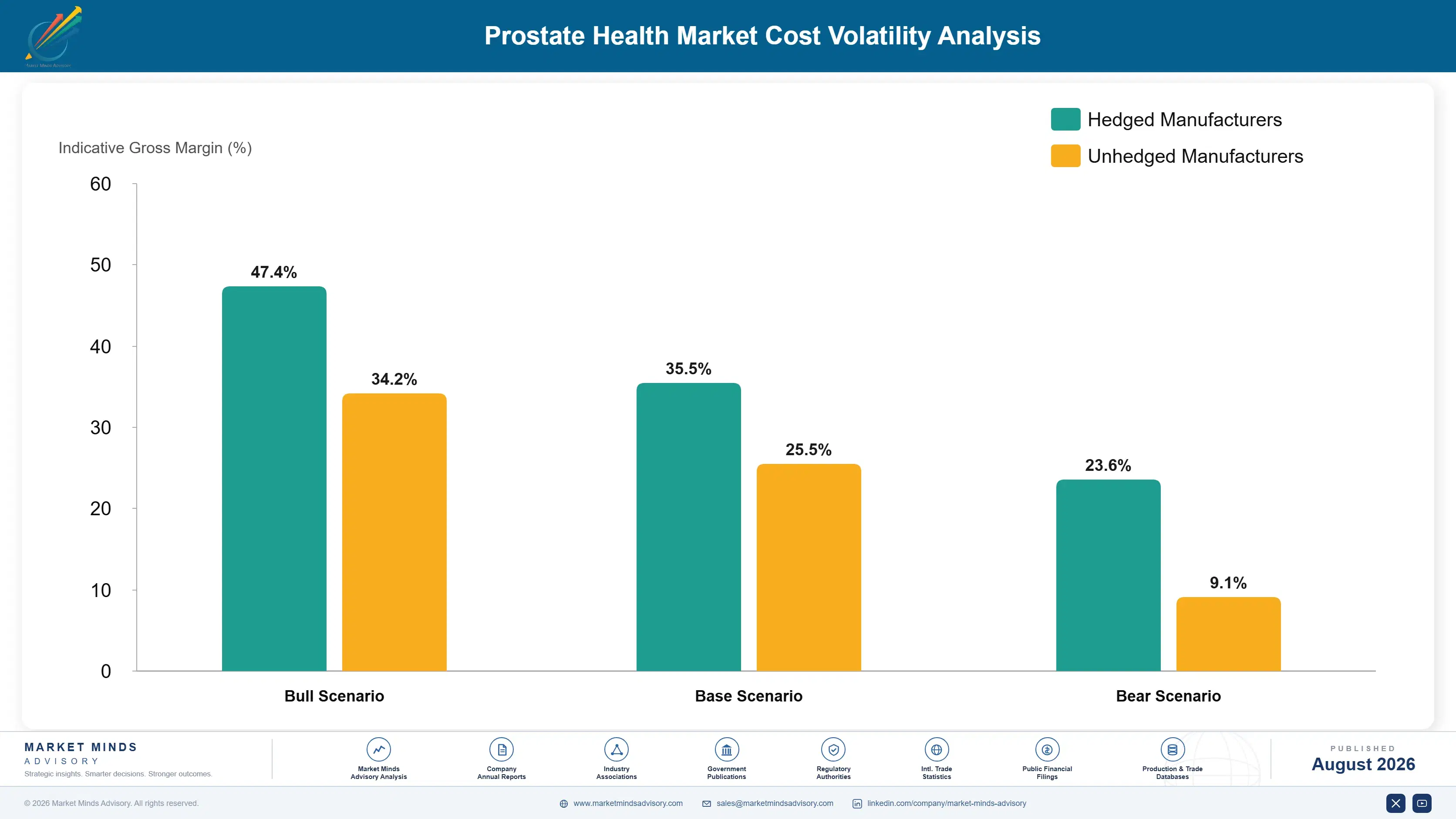
Cost structure differs completely between the procedural and pharmaceutical halves. Nitinol and titanium implant components are roughly 24% of implant device cost of goods. Single-use handpieces, thermal generators and electronics contribute 29%, with custom silicon inside the generators. On the pharmaceutical side, active ingredient represents roughly 31% of generic tablet cost of goods and originates overwhelmingly in India and China.
Two input movements affected the two halves differently across the same period. US Census Bureau import data recorded sharply higher nickel and titanium alloy values through 2022, raising implant cost, while SEMI reported foundry capacity fully allocated across 2021 and 2022, lengthening generator electronics lead times. Indian active ingredient producers passed through their own energy and freight increases simultaneously. Several participants disclosed elevated input costs in annual reports covering those years.

Exposure varies by business model and the mechanism is administratively set reimbursement against variable input cost. Device participants could not reprice, since office payment is fixed by code rather than negotiated. Generic participants absorbed active ingredient movement against tendered pricing that adjusts even slower. Chinese manufacturers with domestic alloy and electronics supply were better placed, which is part of why their entry accelerated.
prostate-health-market-cost-volatility-analysis-1787309787600

Design generators around mature multiply-sourced process nodes

Custom silicon inside thermal generators competed for foundry capacity against consumer electronics and lost across 2021 and 2022, delaying capital placements that procedure volume depends on entirely. Designing to mature nodes with several qualified foundries costs some capability and removes the allocation exposure permanently. Regulatory revalidation of a generator platform is substantial, so most do it at platform refresh.

Contract nitinol component supply on multi-year committed volumes

Nitinol and titanium implant components come from a limited set of qualified suppliers and represent 24% of implant cost, and office procedure reimbursement cannot be repriced when alloy costs move. Multi-year committed volumes cost a premium and remove that exposure. Qualifying an alternate component supplier requires mechanical testing and regulatory notification measured in quarters rather than weeks.

Build health economic evidence ahead of any reimbursement review

Office procedure payment was set when volumes were small and payers revisit rates once utilisation exceeds their models, which is the single largest commercial exposure in this category. Evidence on avoided surgery, avoided medication and avoided catheterisation cost is the only defence that works in a review. Building it after a review opens is far too late to matter.

Portfolio Architecture for Margin Defence

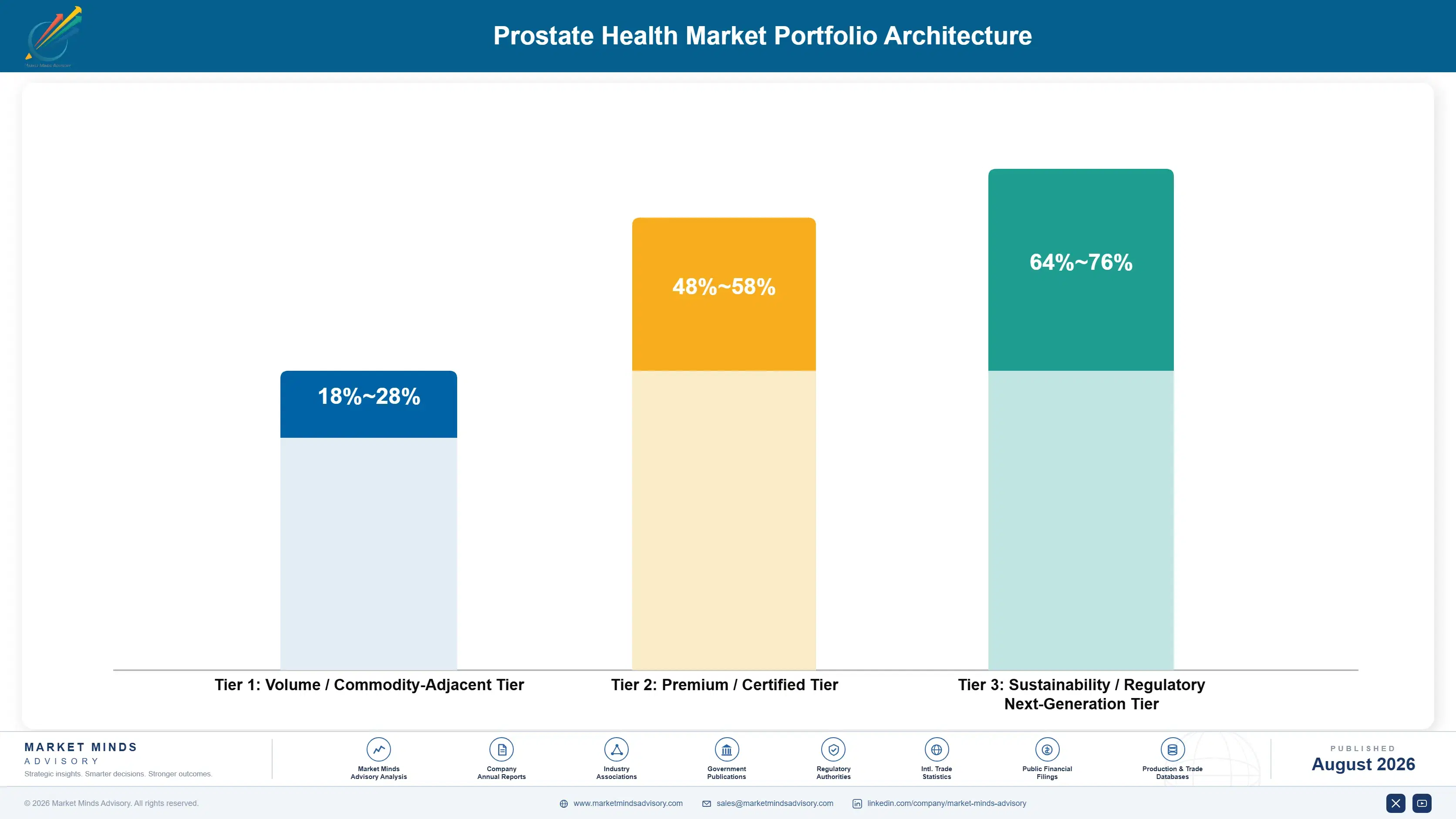
Portfolio economics separate almost entirely on reimbursement structure. Generic alpha blockers and 5-alpha reductase inhibitors earn gross margin in the low twenties, competing on tendered price alone. Transurethral resection and laser equipment earn considerably more, defended by capital installed base and hospital relationships. Office-based devices earn most, because dedicated codes paying near USD 4,800 support pricing no hospital theatre economics would tolerate.
The tension is that the highest-earning position depends on a payment rate somebody else sets and can revisit. Office procedure economics rest on codes established when volumes were small, and payers routinely reduce rates once utilisation exceeds their models. Diversifying across modalities with separate codes spreads that exposure. Building health economic evidence before a review opens is the only real defence, and it costs money years beforehand.

High-value pools concentrate in three places: office-based procedures in markets with established dedicated codes, trained physician networks that determine how much volume any code can actually generate, and long-term registry evidence positions that will decide reimbursement reviews. None is large in patient terms against the untreated symptomatic population. Each is defended by reimbursement work, physician relationships or accumulated data rather than by device engineering.

Volume / Commodity-Adjacent Tier

Generic alpha blocker and 5-alpha reductase inhibitor pharmacotherapy supplied through tender and retail pharmacy. Competition is entirely on price, and Indian producers set it across essentially every market worldwide, with no differentiation available.
Gross Margin: 18-28%

Premium / Certified Tier

Transurethral resection equipment, laser enucleation systems and their disposables, plus prostatic artery embolisation devices. Capital installed base and hospital relationships defend pricing. The ten-point range reflects tendered against physician-preference purchasing.
Gross Margin: 48-58%

Sustainability / Regulatory / Next-Generation Tier

Office-based water vapour thermal therapy and urethral lift implants in markets with dedicated procedure codes. Reimbursement structure and trained physician networks defend pricing entirely. The twelve-point range reflects coded against uncoded market economics.
Gross Margin: 64-76%
prostate-health-market-portfolio-architecture-1787309788101

High-value Sub-segments and Strategic Watch-out

Coded office procedure markets

Where dedicated reimbursement supports device pricing no theatre economics would tolerate, and adoption follows codes within two procurement cycles. Payment rates were set at low volumes. Review exposure is the risk nobody prices properly. Chinese entry will soon test the device pricing this structure supports.
Gross Margin: 66-76%

Trained urologist networks

The actual constraint on procedure volume once a code exists, since device supply has never been the limiting factor anywhere. Proctoring infrastructure takes years to build. Competitors cannot replicate a trained network quickly. Independent practices adopt considerably faster than hospital-employed urologists in every market reviewed.
Gross Margin: 62-72%

Generic pharmacotherapy volume

The largest treated patient position and the weakest economics, competing purely on tendered price while 38% of men abandon therapy within a year anyway. It funds nothing worth defending. Indian producers set the price everywhere. Discontinuation is what created the procedural market in the first place.
Gross Margin: 18-28%

Long-term registry evidence positions

What will decide reimbursement reviews and whether these procedures are judged definitive or temporising by payers. Programmes cost money for years beforehand. Whoever holds the data sets the terms of that conversation. Payers open these reviews when they choose to, not when participants are ready.
Gross Margin: 60-74%

How Prostate Treatment Demand Recurs

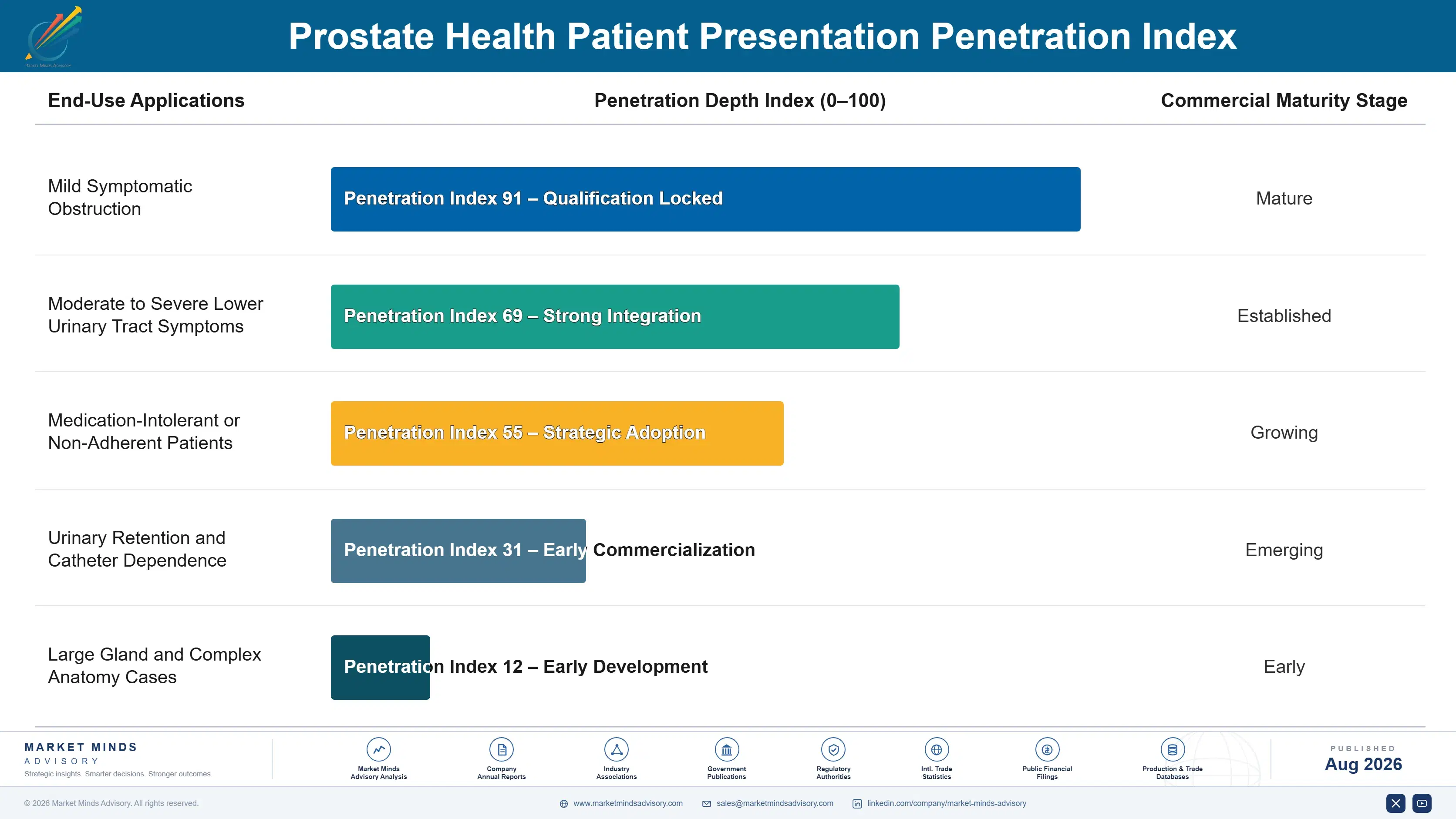
Demand here divides between an annuity nobody sustains and a single episode that may or may not repeat. Daily pharmacotherapy should generate revenue for decades and 38% of men stop within a year, which makes it the least reliable annuity in medicine. Office procedures generate one episode of substantial revenue, plus retreatment in roughly 14% of patients by five years, plus a capital generator that consumes single-use handpieces. That handpiece stream is the only genuine consumable annuity in
Adoption depth varies sharply by practice type. Independent urology practices adopt office procedures deeply, since practice economics reward capability investment directly and the reimbursement flows to them. Hospital-employed urologists adopt more slowly because the office economics accrue to the institution rather than the physician. Interventional radiology has adopted embolisation on entirely separate referral logic. Public systems in cost-constrained markets manage symptoms with generic pharmacotherapy and reserve resection for retention, which is most of the world.

Buyer profiles have shifted toward the patient more than in most categories. Men research treatment options before consulting, weigh sexual function heavily, and increasingly arrive asking for a specific procedure by name.
prostate-health-market-end-use-penetration-index-1787309788590

What We Would Do Here

These are among the four positions where our research anticipates prominent divergence between winners and laggards over the coming forecast period. Each is grounded in the demand model, the regulatory perimeter, and the announced capacity pipeline.
01 / REIMBURSEMENT SEQUENCING DISCIPLINE

Win the code first, then launch commercially

Minimally invasive prostate devices sit entirely unused in markets without dedicated office procedure codes, regardless of how strong the clinical evidence supporting them may happen to be. Participants who sequence reimbursement work ahead of commercial launch report procedure volume roughly 3 times higher across the first two years than those launching first and pursuing codes afterwards. It does delay revenue by several quarters and demands health economic evidence built before any sales case exists, which commercial teams resist consistently and quite wrongly.
02 / PHYSICIAN CAPACITY BUILDING

Train urologists, because devices are never the constraint

Office procedure volume is limited by how many urologists can perform the technique confidently rather than by device availability or patient demand anywhere in any market at all. Participants running structured proctoring and practice setup support report trained physician productivity roughly 45% above those providing only product training instead. It consumes experienced physician time and practice consulting resource that never shows up as revenue, and it remains the only intervention that reliably increases procedure volume in markets where a dedicated code already exists.
03 / DURABILITY EVIDENCE FUNDING

Own the retreatment data before a payer demands it

Five-year retreatment near 14% remains the single number that determines whether these procedures are judged definitive or merely temporising by payers, and follow-up beyond that horizon barely exists for any of the newer modalities yet. Participants funding prospective registry follow-up programmes report reimbursement review outcomes roughly 50% more favourable than those relying on pivotal trial data alone. Registry programmes cost real money for years before any commercial benefit appears, and the alternative is letting a payer set the terms of that conversation entirely.
04 / DIRECT PATIENT COMMUNICATION CHANNEL

Tell men about function, not about flow rates

Men weigh sexual function far more heavily than clinicians historically assumed, and 22% report dysfunction on conventional pharmacotherapy while resection causes retrograde ejaculation in the large majority of patients who undergo it. Participants presenting function preservation evidence through patient-facing channels report consultation requests roughly 60% above those marketing only to urologists and referring physicians instead, which is a considerable difference. It requires direct-to-patient marketing capability that medical device organisations rarely hold, and regulatory constraints on patient-facing claims vary enormously between individual national markets.

Engagement Snapshot From the Field

A live engagement with an industry participant carrying material or product regulatory and market exposure ahead of a defining policy shift, showing how our research translates into a defensible multi-year portfolio strategy.
MARKET MINDS ADVISORY · CLIENT ENGAGEMENT SUMMARY
Prostate Health Producer Strategic Portfolio Review and Transition Roadmap 2026·Investment Scenario on Prostate Health Exposure Evaluation 2025-26
CLIENT PROFILE
A minimally invasive urology device company with revenue near USD 145 million annually (client-reported, unverified by MMA), an office-based prostate treatment platform with strong pivotal trial data, dedicated reimbursement codes in two markets, and commercial launches under way in six more without codes. Roughly 91% of revenue came from the two coded markets despite eight markets carrying sales infrastructure.
STRATEGIC CHALLENGE
Revenue in the six uncoded markets had disappointed for two years and management proposed expanding sales headcount there to lift adoption. The board suspected the absence of reimbursement rather than sales effort explained the gap, but nobody had modelled what procedure volume was achievable at all without a dedicated code.
MMA APPROACH
MMA analysed adoption trajectories for comparable office-based procedures across eleven markets, separating the effect of code establishment from commercial investment at each stage. Forty-seven expert interviews with urologists, payer medical directors, practice managers and hospital administrators established how code decisions were actually made and how quickly adoption followed. The client's eight markets were then scored on code feasibility and timeline.
KEY FINDINGS
  1. Procedure volume in coded markets ran roughly 3 times higher than in uncoded markets across comparable first two years, and no amount of commercial investment closed that gap anywhere in the sample.
  2. Payer medical directors in four of six uncoded markets confirmed they would consider a dedicated code given health economic evidence on avoided surgery cost, which the client had not assembled.
  3. Trained physician availability rather than patient demand limited volume in both coded markets, and the client's proctoring capacity was running at full utilisation already.
  4. Practice managers confirmed that hospital-employed urologists adopted far more slowly than independent practices because the reimbursement accrued to the institution rather than the physician.
CLIENT PROFILE
A minimally invasive urology device company with revenue near USD 145 million annually (client-reported, unverified by MMA), an office-based prostate treatment platform with strong pivotal trial data, dedicated reimbursement codes in two markets, and commercial launches under way in six more without codes. Roughly 91% of revenue came from the two coded markets despite eight markets carrying sales infrastructure.
STRATEGIC CHALLENGE
Revenue in the six uncoded markets had disappointed for two years and management proposed expanding sales headcount there to lift adoption. The board suspected the absence of reimbursement rather than sales effort explained the gap, but nobody had modelled what procedure volume was achievable at all without a dedicated code.
MMA APPROACH
MMA analysed adoption trajectories for comparable office-based procedures across eleven markets, separating the effect of code establishment from commercial investment at each stage. Forty-seven expert interviews with urologists, payer medical directors, practice managers and hospital administrators established how code decisions were actually made and how quickly adoption followed. The client's eight markets were then scored on code feasibility and timeline.
KEY FINDINGS
  1. Procedure volume in coded markets ran roughly 3 times higher than in uncoded markets across comparable first two years, and no amount of commercial investment closed that gap anywhere in the sample.
  2. Payer medical directors in four of six uncoded markets confirmed they would consider a dedicated code given health economic evidence on avoided surgery cost, which the client had not assembled.
  3. Trained physician availability rather than patient demand limited volume in both coded markets, and the client's proctoring capacity was running at full utilisation already.
  4. Practice managers confirmed that hospital-employed urologists adopted far more slowly than independent practices because the reimbursement accrued to the institution rather than the physician.
RECOMMENDED STRATEGY
Phase 1: Phase 1 (0 to 9 months): Halt sales expansion in uncoded markets, and build health economic evidence on avoided surgery and medication cost immediately. Phase 2: Phase 2 (9 to 24 months): Pursue dedicated codes in the four feasible markets, and expand proctoring capacity in both coded markets substantially. Phase 3: Phase 3 (24 to 42 months): Launch commercially only where codes are secured, and target independent urology practices ahead of hospital-employed physicians.
OUTCOME
Sales expansion in uncoded markets was halted before the budget was committed. Health economic evidence was assembled and submitted in three markets, with one code secured within five quarters (client-reported, unverified by MMA). Proctoring capacity roughly doubled in the coded markets and procedure volume rose accordingly. Two uncoded market launches were withdrawn entirely rather than sustained at loss.

Frequently Asked Questions

Foundational context covering the market sizes, CAGR, scope, country, region and competition that inform every finding below. This section is provided to cover basics and most often pre-purchase conversations, answered from the MMA Primary Research Dataset.

What is the current size of the Prostate Health Market?

MMA sizes the global prostate health market at USD 9.8 billion in 2025, rising to USD 10.43 billion in 2026. That covers device, implant, disposable and pharmaceutical revenue for benign prostatic hyperplasia at realised price.

How large will the Prostate Health Market be by 2036?

MMA forecasts USD 19.4 billion by 2036, an expansion multiple of 1.86 times the 2026 base. That represents roughly USD 8.97 billion of incremental revenue across the forecast period.

What is the CAGR for the Prostate Health Market 2026 to 2036?

The base case compounds at 6.4% annually, with a bull case of 7.6% and a bear case of 5.2%. Whether five-year retreatment rates hold near current levels decides which case materialises.

Which segment is growing fastest?

Water vapour thermal therapy compounds at 9.6%, exactly 1.50 times the market rate. Office delivery under local anaesthetic with preserved sexual function is what patients actually choose it for.

Who are the major companies in the Prostate Health Market?

The top five participants support 56% of treated patient episodes, led by Boston Scientific and Teleflex. Twenty participants are profiled in full, spanning device, laser and pharmaceutical suppliers.

Which country is growing fastest?

India compounds at 9.0%, ahead of every other national market MMA tracks here. Urology capacity building against an enormous untreated symptomatic population drives most of that growth.

Report Segmentation Architecture

The full report scope spans multiple orthogonal segmentation dimensions, with cross-tabulated demand data provided for each dimension pair. Coverage extends further to regional breakdowns, trend trajectories, and the competitive detail needed to support segment-level decision-making.

By Treatment Modality

  • Water Vapour Thermal Therapy
  • Prostatic Urethral Lift Implants
  • Prostatic Artery Embolisation
  • Transurethral Resection and Laser Enucleation
  • Alpha Blocker Pharmacotherapy
  • 5-Alpha Reductase Inhibitor Pharmacotherapy

By Patient Presentation

  • Mild Symptomatic Obstruction
  • Moderate to Severe Lower Urinary Tract Symptoms
  • Medication-Intolerant or Non-Adherent Patients
  • Urinary Retention and Catheter Dependence
  • Large Gland and Complex Anatomy Cases

By Care Setting

  • Independent Urology Office Practices
  • Hospital Urology Departments
  • Ambulatory Surgical Centres
  • Interventional Radiology Suites

By Region

  • North America
  • Western Europe
  • East Asia
  • South Asia and Pacific
  • Latin America
  • Middle East and Africa
  • Eastern Europe

Scope, Methodology, and Coverage

Every figure in this report is reproducible from documented input assumptions. The scope below maps the historical period, the forecast horizon, the segmentation dimensions, and the countries covered, alongside the underlying primary and qualitative methodology.
Historical Period
2020 to 2025
Forecast Period
2026 to 2036
Base Year
2025 (USD billions; MMA Primary Research Dataset, August 2026)
Market Definition
The market comprises treatment of benign prostatic hyperplasia and lower urinary tract symptoms of prostatic origin, spanning water vapour thermal therapy, prostatic urethral lift implants, prostatic artery embolisation, transurethral resection and laser enucleation, alpha blocker pharmacotherapy, and 5-alpha reductase inhibitor pharmacotherapy. Sizing captures device, implant, disposable and pharmaceutical revenue at realised price. Prostate cancer therapeutics and radiotherapy, prostate specific antigen and biopsy diagnostics, urinary catheters and incontinence products, erectile dysfunction treatment, prostate health dietary supplements, and urodynamic testing equipment are outside scope.
Quantitative Units
USD billions (current prices); million treated patient episodes annually; USD per procedure at realised reimbursement
Segmentation Dimensions
By Treatment Modality; By Patient Presentation; By Care Setting; By Region
Regions Covered
North America, Western Europe, East Asia, South Asia and Pacific, Latin America, Middle East and Africa, Eastern Europe
Countries Covered
USA, Canada, China, Japan, South Korea, Taiwan, Germany, Netherlands, UK, France, Italy, Spain, Sweden, Switzerland, Austria, India, Australia, Singapore, Thailand, Malaysia, Brazil, Mexico, Argentina, Colombia, UAE, Saudi Arabia, Turkey, South Africa, Poland, Czech Republic, and additional markets relevant to this sector
Key Companies Profiled
Boston Scientific, Teleflex, Olympus, Astellas Pharma, Coloplast, Laborie Medical Technologies, Richard Wolf, Karl Storz, Lumenis, Cook Medical, Merit Medical Systems, Terumo, Medtronic, Sun Pharmaceutical Industries, Teva Pharmaceutical Industries, Viatris, GSK, Zydus Lifesciences, Urotronic, Prodeon Medical.
Quantitative Methodology
Primary survey, n=3,800 respondents, Q4 2025, six countries; demand-side model with trade association cross-validation
Qualitative Methodology
47 expert interviews, Q4 2025; applied to validate demand model assumptions, identify emerging dynamics, and assess competitive positioning
Report Format
PDF and XLSX data workbook (Word format preview document)
Publisher
Market Minds Advisory
Report Code
MMA-2026-HLT-277
Published
August 2026
Contact
sales@marketmindsadvisory.com | www.marketmindsadvisory.com

Purchase the full Prostate Health Market Report (2026 to 2036).

The full report sizes the prostate health market across six treatment modalities, five patient presentations, four care settings and seven regions, with annual forecasts to 2036 in revenue and treated patient episodes. It separates the effect of reimbursement code establishment from commercial investment on adoption trajectories across eleven markets, which is the analysis that explains why identical devices generate three times the volume in coded markets. Twenty participants are assessed on a consistent treated patient episodes basis, with reimbursement code coverage and trained physician network scale mapped separately. Retreatment evidence positions are compared, and code review exposure is quantified market by market.
Six treatment modalities sized and forecast annually
Reimbursement code effect separated from commercial investment
Twenty participants on consistent treated patient episodes basis
Trained physician network scale mapped participant by participant
Retreatment and durability evidence positions compared directly
Code review exposure quantified market by market

Built For The People Who Decide

From boardroom strategy to bench-side execution, this report is read cover-to-cover by leaders shaping the next decade of their industry, turning demand scenarios, market dynamics and valuation benchmarks into decisions.
CXOs/ Presidents/ VPs/ Managers
M&A and Corporate Development
Strategy Teams and R&D Heads
Procurement and Product Directors
Regulatory and Compliance Leaders
Investor Relations and Equity Analysts