Market Minds Advisory
Processed Fruit and Vegetable Market

Processed Fruit and Vegetable Market: Processed Fruit and Vegetable Market. Convenience Formats and Cold Chain Investment Redraw Preservation Economics.

Canned and jarred staples are losing ground to fresh-cut, frozen, and freeze-dried formats, while steel costs, crop weather shocks, and retailer private label pressure decide which processors keep margin across a fragmented supplier base.

Lead Analyst

Published

September 2026

Make Smarter Decisions with Customized Research Insights

Request a free sample report and evaluate market opportunities, growth trends, and competitive dynamics relevant to your business needs.

2025 MARKET VALUE$310.0BMarket Size 2025
2036 FORECAST VALUE$508.4BBase Case , 2026 to 2036
CAGR 2026 TO 20364.6 %Bull 5.9% / Bear 3.3%
INCREMENTAL OPPORTUNITY$184.1BNet 10- year value creation
EXPANSION MULTIPLE1.57x2036 value over 2026 base
Strategic Levers
M&A Pipeline
Regional Outlook
Country Rankings
Competitive Intelligence
Segmental Deep-dive
Call-Us : 91 93563 13602

Executive Snapshot and Market Trajectory.

Processed fruit and vegetables are a mature category with a shifting center of gravity. Canned staples still carry large volume, but growth has moved to fresh-cut, frozen, and freeze-dried formats that promise convenience without the long shelf-life compromise, and processors are reallocating capital toward chilled lines and cold chain assets.
Fresh-cut and chilled ready-to-eat products are growing fastest, helped by meal kit, snack, and quick-service demand, while freeze-dried and dehydrated products follow on premium snacking. East Asia holds the largest share because China, Japan, and Thailand combine huge crop volumes with dense processing capacity, and North America leads spend on convenience formats. Frozen products hold steady share in mainstream retail, and India and Thailand add growth as cold chains and modern grocery formats spread.
Competition is fragmented, with multinational brands, regional canners, and private label suppliers all sharing shelf space. Advantage comes from crop contracts, plant utilization, and retailer relationships rather than brand strength alone. Regulation shapes the field through food safety rules, pesticide residue limits, and sugar and sodium labeling, which favor scale processors with documented quality systems. Buyers reward documented traceability and consistent supply above headline price.
Market Definition
Processed fruit and vegetables comprise fruits and vegetables preserved or transformed by canning, freezing, drying, freeze-drying, pickling, fermenting, pureeing, concentrating, or fresh-cut chilling, and sold to consumers, foodservice operators, and food manufacturers. The scope excludes fresh whole produce, potato products, fruit juices sold as beverages, jams and confectionery, and finished multi-ingredient meals.
Base Year Value
$310.0B in 2025 (MMA Primary Research Dataset, September 2026)
Forecast Period
2026 to 2036, eleven discrete annual values
CAGR
4.6% base case. Bull 5.9%. Bear 3.3%.
Fastest Growth Segment
Fresh-Cut and Chilled Ready-to-Eat Products: 7.4% CAGR
Fastest Growth Country
India: 8.4% CAGR
Fastest Growth Region
South Asia and Pacific: 6.9% CAGR
Largest Region
East Asia: 30% of 2025 global value
Market Leaders
Conagra Brands, Kraft Heinz, Bonduelle Group, Greenyard, Del Monte Pacific. Source: MMA Analysis, company annual reports.
Primary Survey
n=3,800 procurement and R&D decision-makers, Q4 2025, six countries
Methodology
Demand-side build-up, cross-validated against public data, 47 expert interviews

Processed Fruit and Vegetable Market Forecast Scenarios

processed-fruits-and-vegetables-market-size-forecast-scenario-1789752431232
Between 2020 and 2025, processed fruit and vegetables grew steadily, with pandemic pantry buying lifting canned and frozen volume, followed by moderation as inflation pushed shoppers toward private label and value formats. Steel, energy, and freight costs raised prices, and growth averaged 4.2% a year, with frozen and fresh-cut products outpacing traditional canned lines during the period.
The base case assumes 4.6% annual growth through 2036, built on three named mechanisms: expansion of fresh-cut and chilled ready-to-eat lines for meal kits and quick-service chains, wider use of frozen and freeze-dried formats in snacking and infant nutrition, and rising processed produce consumption in India, Southeast Asia, and Africa as cold chains and modern retail develop. Private label growth supports volume while capping price gains. Each mechanism reinforces the others over time.
The bull case, at 5.9%, needs faster cold chain investment in emerging markets and steady crop yields. The bear case, at 3.3%, reflects another input cost spike, weaker consumer spending, and substitution toward fresh produce as retailers improve freshness and shorten distribution times. Either scenario leaves the underlying demand base intact, though pricing and mix would differ noticeably from the base path.

Crop Contracts and Format Mix Drive Processor Returns

Processed fruit and vegetables cover a wide range of preservation methods, each with different cost and quality trade-offs. Canning offers the longest shelf life at low cost, freezing preserves color and nutrients, drying and freeze-drying reduce weight for snacks and ingredients, and fresh-cut chilling delivers convenience with a short life. Plants sit close to growing regions, because produce loses quality and value quickly after harvest.
MARKET CONCENTRATION14% CR5Leading five processors hold a small combined share
AVERAGE SELLING PRICE$1.90 per kgConvenience formats sell well above traditional canned produce
TOP PRODUCING COUNTRY24% shareChina supplies nearly a quarter of processed output
RAW PRODUCE COST SHARE44% of COGSCrop prices dominate processor cost and margin swings
PACKAGING COST SHARE19% of COGSSteel, glass, and film weigh heavily on canned lines
PRIVATE LABEL SHARE36%Retailer brands take a large slice of shelf volume
The category is fragmented and crop-driven. Processors buy from thousands of growers under seasonal contracts, run plants at high utilization during harvest, and store finished goods until demand peaks. Retailers use private label to press prices, while foodservice and manufacturing customers demand consistent specifications, so producers invest in sorting, blanching, and quality systems, and in cold storage that lets them smooth deliveries across the year.
Growth is uneven across formats. Traditional canned vegetables and fruit in syrup are flat or declining in developed markets, but frozen, fresh-cut, and dehydrated products expand as consumers prioritize health, convenience, and reduced food waste. Emerging markets add volume from a low base, as modern retail and refrigerated distribution reach smaller cities, and processors add capacity in India, Thailand, and Eastern Europe to meet export demand.
"Everyone talks about fresh as the enemy of processed produce. The real fight is inside the category, where a frozen or chilled pack quietly takes the shelf space that canned goods held for a century."
Practice Lead, Food Processing and Agricultural Products Practice · MMA Food Processing and Agricultural Products Practice · September 2026

Market Trends

Fresh-Cut Chilled Ready-to-Eat Lines Expand Across Retail and Foodservice

Meal kit providers, quick-service chains, and grocery delis are buying peeled, cut, and washed produce in chilled packs, cutting kitchen labor and waste. Fresh-cut vegetables and fruit cups are the fastest-growing formats, and processors are building chilled plants with modified atmosphere packaging that extends life to eight or ten days. Investment in cold chain trucks and regional hubs supports delivery within 24 hours of processing, and retailers sign volume commitments for ready-to-eat lines. Retailers report that chilled lines carry lower shrink than whole produce, so delis and convenience stores add space for them, and processors respond with smaller packs.
Market Impact: scheme targets 42 food parks

Freeze-Dried Snacks and Ingredients Enter Mainstream Retail and Infant Nutrition

Freeze-dried fruit and vegetable snacks have moved from outdoor niches into mainstream retail, infant nutrition, and breakfast cereals, thanks to light weight, intact nutrients, and shelf life of 18 months without preservatives. Capacity is expanding in North America, Europe, and China, and processors report premium pricing of two to three times conventional dried products. Snack brands and baby food makers sign multi-year supply agreements to secure fruit and berry volumes. Freeze-dried capacity remains scarce, with a single large dryer costing $10 million to $20 million, so processors sign long agreements with fruit growers and snack brands before committing capital.
Market Impact: 50% waste cut by 2030

Market Opportunities and Growth Drivers

Cold Chain Investment in Emerging Markets Extends Processed Produce Reach

Cold chain investment in India, Southeast Asia, and Africa is extending the reach of processed produce, since refrigerated trucks, warehouses, and retail freezers make frozen and chilled formats viable outside big cities. National programs such as India's Pradhan Mantri Kisan SAMPADA Yojana fund food processing parks, cold storage, and packaging, and multinational and local processors are building plants near growing regions to reduce post-harvest losses and lift farmer incomes. Retail groups in India and Vietnam are opening refrigerated stores each month, and foodservice chains expand frozen storage in secondary cities, which widens the addressable market for processors in every region.
Market Impact: packaging reaches 19% of cost

Food Waste Reduction Targets Support Preserved Produce Formats

Consumers and retailers are cutting food waste, and processed produce turns surplus and cosmetically imperfect crops into stable products. Frozen and canned formats keep for months, so households discard less, and processors can use produce that retailers would reject at fresh counters. Governments in Europe and North America set food waste reduction targets, and retailers report waste savings as a sustainability metric, which supports steady demand for preserved produce. Many retailers now sell imperfect produce lines, and surplus crops go to frozen and puree plants at lower cost, which lifts processor yield per hectare and gives buyers a sustainability story.
Market Impact: 2022 yields fell 10% in Europe

Market Restraints and Challenges

Steel and Packaging Cost Spikes Squeeze Canned Product Margins

Steel tinplate, glass, and packaging film costs rose sharply in 2021 and 2022, and European energy prices spiked, according to European Commission data. The root cause is supply disruption, energy-intensive metal production, and freight bottlenecks. Packaging can reach 19% of cost, so price surges cut margins several points. Processors respond with lighter cans, alternative pouches, multi-year steel contracts, and price surcharges negotiated with retailers. Smaller canners without contracts pay spot prices and cannot pass costs to retailers quickly, so some have closed lines, while larger groups absorb the shock through scale purchasing and price resets on annual contracts.
Market Impact: chilled lines growing 9% annually

Weather-Driven Crop Yield Swings Disrupt Raw Material Supply

Fruit and vegetable yields swing with weather, and droughts, floods, and heat waves in 2022 and 2023 reduced tomato, pea, and fruit crops in several producing regions, according to Eurostat and USDA reports. The root cause is climate variability and limited irrigation on contract acreage. Lower yields raise raw material prices and cut plant utilization. Processors diversify growing regions, fund irrigation, and sign multi-year grower agreements. Growers bear yield risk on contract acreage, and processors often share losses, so bad seasons squeeze margins twice, through higher crop prices and idle plant capacity, while retailers resist surcharges and demand guaranteed volume.
Market Impact: premiums reach 2 to 3 times
3 additional market trends, 4 additional growth drivers, and 3 additional restraints and challenges are covered in the full report. Contact sales@marketmindsadvisory.com to access the complete intelligence.

Segment CAGR and Growth Architecture

Processed fruit and vegetables are segmented by preservation method and product format, because processing technology, shelf life, and cold chain requirements determine cost structure, price, and buyer type more directly than crop type does. Fresh-cut and chilled ready-to-eat products draw the most new investment as retailers, meal kit providers, and quick-service chains convert convenience demand into volume contracts.
processed-fruits-and-vegetables-market-market-share-analysis-1789752431535

Fresh-Cut and Chilled Ready-to-Eat Products

Fresh-cut and chilled ready-to-eat products are the fastest-growing segment, covering washed, peeled, cut, and portioned fruit and vegetables sold in chilled packs to retailers, meal kit providers, and foodservice chains. Shelf life is only about a week, so processors run plants near cities and depend on refrigerated distribution. Buyers value labor savings and portion control, and premiums over whole produce reach 40% to 80%. Food safety controls and pathogen testing determine which suppliers earn national retailer contracts. Contracts run one to three years, and processors that guarantee delivery within 24 hours win national retail listings. Food safety audits are strict, and a single recall can end a supply relationship, so investment in pathogen testing and sanitation is mandatory.
CAGR 7.4%

Freeze-Dried and Dehydrated Products

Freeze-dried and dehydrated products are the second-fastest segment, covering fruit crisps, vegetable powders, and ingredients for cereals, snacks, and infant foods. Water removal cuts weight and extends life beyond a year, and freeze-drying keeps color, flavor, and nutrients better than hot-air drying. Capital cost is high and energy demand large, so capacity is concentrated in a few processors. Demand is strongest in premium snacks and baby food, where brands pay for nutrient retention and clean labels. Suppliers compete on particle size and rehydration behavior, and brands negotiate annual volumes ahead of harvest. Prices for freeze-dried fruit run several times those of hot-air dried product, and new capacity in Asia and North America is testing premium pricing.
CAGR 6.8%
Full segment breakdown across 6 segments available in the complete report.

Regional Architecture and Country Demand Map

Processed produce value follows crop geography and processing capacity. East Asia leads through Chinese volume, North America follows through convenience spending, and India is the fastest-growing market as cold chains, modern retail, and food park investment extend the reach of processed formats. Asian volume dominates output.

North America

North America holds 24% share, led by the United States, where canned vegetables, frozen produce, and fresh-cut retail packs are all sizable, and where quick-service chains and meal kit companies pull volume into chilled formats. California, Washington, and the Midwest supply crops for processors, and large retailers push private label growth. Labor cost and freight influence competitiveness, while Canadian and Mexican suppliers add cross-border volume through trade agreements and shared growing seasons. Frozen vegetable sales lead retail growth, and fresh-cut fruit cups gain space in convenience stores and school meal programs. Federal nutrition rules on sodium and added sugar push processors to reformulate, and tariff changes affect canned imports from Asia and Latin America.
Share: 24% | CAGR: 4.4% (2026 to 2036)

Western Europe

Western Europe holds 19% share, with France, Spain, Italy, Germany, and the Netherlands hosting large canning, freezing, and chilled processing industries. Retailers set strict sustainability and pesticide residue standards, so certified suppliers hold advantages, and consumers favor organic and low-sugar formats. Energy costs and packaging regulation raise expenses, and mature demand for canned goods limits growth, though frozen and fresh-cut lines expand through supermarket and discounter programs across major markets. Discounters such as Aldi and Lidl drive frozen and private label volume, and French and German consumers buy chilled salad kits at scale. The Green Deal and packaging regulation push processors toward recyclable formats, and pesticide residue rules exclude some imported supply.
Share: 19% | CAGR: 3.1% (2026 to 2036)
Regional intelligence for 5 additional markets available in the complete report: East Asia, South Asia and Pacific, Latin America, Middle East and Africa, Eastern Europe. Contact sales@marketmindsadvisory.com.
processed-fruits-and-vegetables-market-country-cagr-analysis-1789752431886

Four Margin Levers for Produce Processors

Margin in processed produce comes from moving beyond commodity canned lines toward convenience formats, certified supply, and efficient plant use. Processors that lock in crop contracts, expand chilled and frozen capacity, cut packaging cost, and secure private label programs earn more per tonne than those competing only on price. Each route needs different capital and timing.

Shifting Capacity Toward Fresh-Cut and Chilled Formats

Fresh-cut and chilled products carry premiums of 40% to 80% over whole produce, and quick-service and meal kit buyers sign annual volume contracts. Processors that convert canning capacity to chilled lines need cold storage, modified atmosphere packaging, and strict food safety systems, but they gain higher margins and steadier demand. Payback for a chilled line runs three to four years when plants reach 75% utilization. Chilled lines also reduce waste, because processors control cutting yields and byproduct use, and quick-service buyers accept price indexation, which lowers exposure to seasonal swings in crop cost.
Market Impact: chilled formats earn 40% to 80% premiums per tonne

Locking In Grower Contracts and Irrigation Support

Raw produce is about 44% of cost, so processors that sign multi-year grower agreements and fund irrigation reduce exposure to spot prices and yield swings. Contracts with drought-tolerant varieties protect plant utilization, and growers accept modest price ceilings in return for certainty. Processors with strong grower networks report margin stability of 2 to 3 points during poor seasons compared with spot buyers. Some processors also share yield data with growers, which raises average output per hectare by 6% to 10% and lowers cost per tonne, and lenders offer cheaper credit to contract farmers holding multi-year purchase agreements.
Market Impact: grower contracts protect 2 to 3 margin points

Reducing Packaging Cost Through Lighter Formats and Contracts

Packaging can reach 19% of cost, so switching from heavy cans to lighter cans or retort pouches and signing multi-year steel supply contracts delivers direct savings. Lighter formats cut freight cost and appeal to retailers focused on sustainability, though pouches need new filling equipment. Processors that redesign packaging lines report savings of 5% to 9% on packaging spend, which is significant in low-margin lines. Pouches also weigh far less than cans, so freight cost per tonne falls, and retailers report that recyclable packaging helps them meet sustainability targets, which can support a modest price premium on shelf.
Market Impact: lighter packaging saves 5% to 9% on spend

Building Private Label Programs to Fill Plant Capacity

Private label accounts for about 36% of shelf volume, and retailers reward reliable suppliers with multi-year contracts that keep plants running at 80% to 90% utilization. Margins are thinner than for branded products, but volume lowers fixed cost per tonne and smooths harvest peaks. Processors that combine private label with branded and premium lines balance capacity use and profitability across cycles and retailer demands. Long contracts also cut sales and marketing cost per tonne, and shared forecasts help retailers avoid shelf gaps, so suppliers with strong on-time delivery records tend to win renewal.
Market Impact: private label lifts utilization to 80% to 90%

Who Controls the Margin Pool

The processed produce industry is highly fragmented, with the top five suppliers holding about 14% of global revenue, the basis used throughout this section. Conagra Brands, Kraft Heinz, Bonduelle Group, Greenyard, and Del Monte Pacific lead through brands, scale, and retailer relationships, while thousands of regional canners, freezers, and private label suppliers hold the rest. The gap between leaders and challengers is narrow. Concentration is low because crops are local.
Competition centers on three dimensions: access to crop acreage and grower contracts, plant utilization and cost efficiency, and retailer relationships through private label and branded programs. Leaders invest in frozen, chilled, and freeze-dried formats, while regional players compete on price and local sourcing. Food safety certification and sustainability reporting add differentiation as large retailers tighten supplier requirements.

Emerging pressure comes from Indian and Chinese exporters offering low-cost canned and frozen products, from retailers building direct sourcing programs, and from meal kit and quick-service chains contracting straight with processors. Rankings shift where companies win chilled and freeze-dried capacity, or suffer weather and packaging cost shocks. Acquisitions of regional plants and divestments of canned brands will reorder positions faster than organic growth.
processed-fruits-and-vegetables-market-company-positioning-matrix-1789752432219

Competitive Moat and Risk Dimensions

CONAGRA BRANDS

Moat: Brand Portfolio and Retail Reach

Conagra Brands combines a portfolio of frozen and shelf-stable vegetable and fruit products with deep relationships across North American retailers and foodservice distributors. Its scale supports procurement, plant efficiency, and marketing investment that smaller rivals cannot match, and its frozen vegetable lines give it exposure to the fastest-growing preserved formats among mainstream shoppers.
CONAGRA BRANDS

Risk: Input Costs and Private Label

Conagra faces rising input, packaging, and labor costs and constant retailer pressure from private label. Consumers trade down when prices rise, and canned and frozen vegetable categories are mature, so growth depends on innovation, price increases, and cost savings, which are harder to sustain during inflationary periods and after commodity cost spikes.
BONDUELLE GROUP

Moat: European Crop and Plant Network

Bonduelle Group runs an integrated network of growers and processing plants across Europe, North America, and other regions, covering canned, frozen, and fresh-cut vegetables. Its grower contracts secure crop supply, and its multi-format capacity lets it shift volume toward faster-growing chilled and frozen lines while serving retailers and foodservice customers across multiple countries with consistent quality standards.
BONDUELLE GROUP

Risk: Weather and Energy Cost Exposure

Bonduelle depends heavily on European growing regions and energy-intensive plants, so drought, heat, and gas price spikes hit margins. Canned lines carry large packaging cost exposure, and competitors in lower-cost regions can undercut prices on standard products. The company must keep investing in irrigation, efficiency, and premium formats to defend returns.

Players Tracked

Prominent Players

Conagra Brands
Kraft Heinz
Bonduelle Group
Greenyard
Del Monte Pacific

Other Key Players

Seneca Foods
Dole plc
Fresh Del Monte Produce
McCain Foods
J.R. Simplot Company
Nomad Foods
Ardo
Kagome
Ocean Spray
Welch's
SunOpta
Agrana Group
Hero Group
Tree Top
Sun-Maid Growers

Recent Developments

MARCH 2026

Greenyard Expands Chilled Fresh-Cut Capacity in Belgium

Greenyard completed an organic capacity expansion at a Belgian plant, adding chilled fresh-cut lines to serve retailers and meal kit customers. The project is internal capital spending, not an acquisition. It increases output of washed and portioned vegetables and supports contracts with supermarket chains in Belgium and France.
Signal: Shows leading processors shifting capital from canned lines toward chilled convenience formats for retail customers across Europe.
OCTOBER 2025

Del Monte Pacific Signs Supply Agreement With Quick-Service Chain

Del Monte Pacific signed a multi-year supply agreement with a quick-service restaurant chain for fruit cups and chilled vegetable products. The deal is a commercial contract, not an equity stake. It provides the chain with reliable supply, gives Del Monte predictable demand, and supports investment in chilled plant capacity.
Signal: Confirms multi-year contracts are becoming standard for supplying chilled produce to quick-service and meal kit customers.
JANUARY 2026

Kraft Heinz Divests Regional Canned Vegetable Brand

Kraft Heinz completed the sale of a regional canned vegetable brand to a private label focused processor. The transaction is a divestment, not a merger. It moves low-growth canned volume out of the company's portfolio, and it lets the buyer add branded volume to existing plants and retailer contracts.
Signal: Reflects large consumer groups exiting low-growth canned lines while private label processors consolidate volume across regional markets.

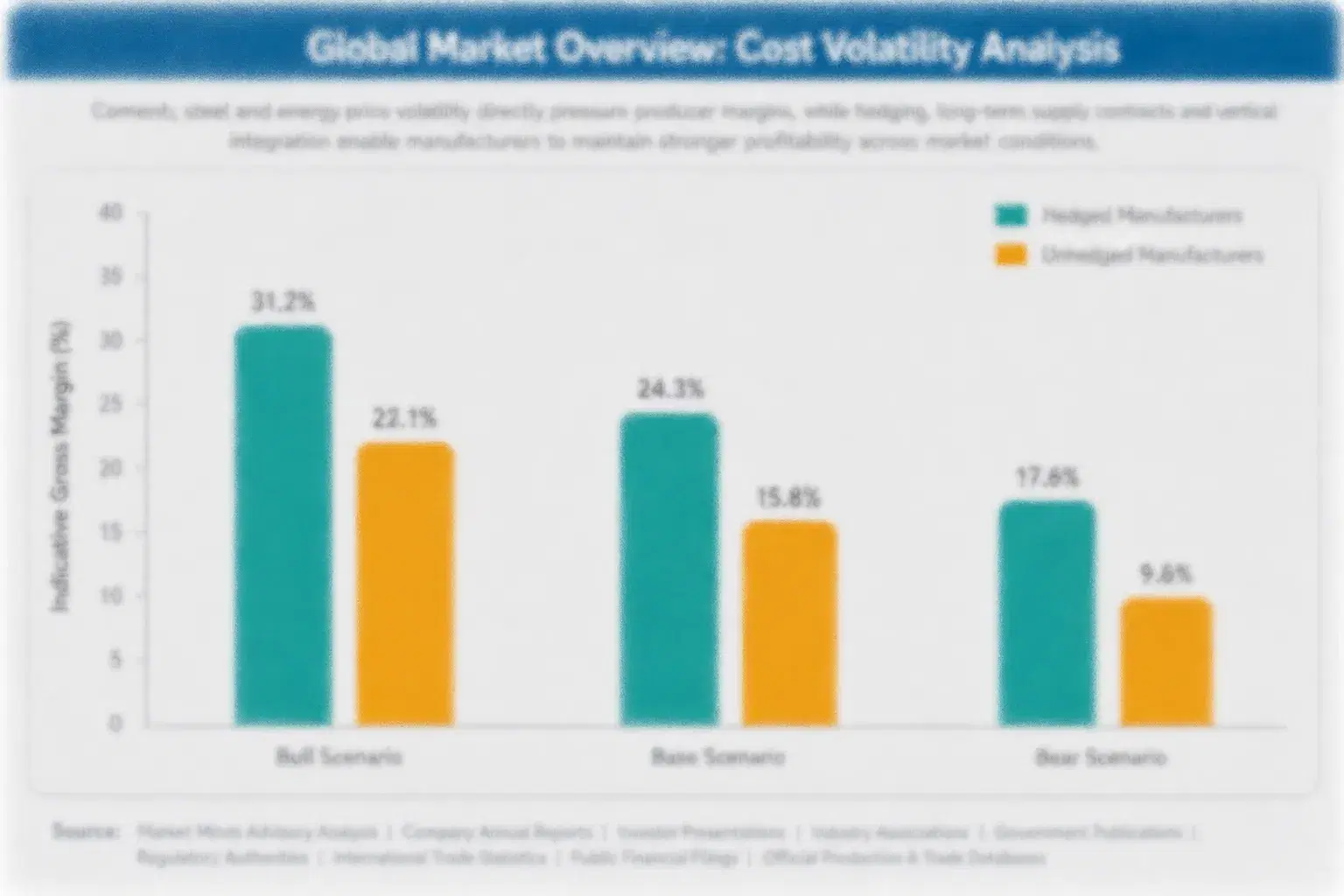
What Drives Processed Produce Costs

Raw produce accounts for roughly 44% of cost of goods, sourced from contract growers in California, Spain, Italy, China, Thailand, and Poland. Packaging, mainly steel, glass, and film, adds about 19%, with energy, labor, and freight making up most of the remainder, so crop prices and packaging costs together determine gross margin for most processors. Crop costs vary by region.
Steel and packaging costs rose sharply in 2021 and 2022, and European gas and electricity prices spiked, according to European Commission energy market reports, while USDA data showed higher canning and freezing cost across North America. Processors reported double-digit input cost inflation in annual filings, added surcharges to retail contracts, and delayed promotions, but private label retailers resisted increases, squeezing margins for months before contracts reset.

Exposure varies by player type and geography. Integrated processors with grower networks and long steel contracts absorb shocks better than independent canners buying spot crops and cans. Brand owners can raise prices faster than private label suppliers, while Asian exporters benefit from lower labor and energy cost but face freight volatility and quality audits from Western retailers that penalize inconsistent batches. Contract terms also differ.
processed-fruits-and-vegetables-market-cost-volatility-analysis-1789752432487

Signing Multi-Year Steel and Packaging Supply Contracts

Processors negotiate fixed-price or indexed contracts for steel, glass, and film to reduce exposure to market spikes. Contracts protect margins during shortages but lock in higher costs when prices fall, and volumes must be committed. Larger processors benefit most because they can commit to volumes that justify long-term supplier agreements and secure priority delivery during tight markets.

Investing in Grower Networks and Irrigation Programs

Processors fund irrigation, drought-tolerant varieties, and agronomy support for contract growers to protect yields and raw material quality. Multi-region sourcing spreads weather risk and keeps plants running through local shortages, though it raises logistics cost. Buyers gain confidence in supply continuity, and processors keep premium and private label programs running during regional crop failures.

Shifting Mix Toward Frozen and Chilled Value-Added Formats

Frozen and chilled products need less steel and often earn higher margins than canned lines, so shifting part of volume reduces packaging exposure. The approach requires freezing or chilled capacity and cold storage, and retailers must accept new shelf formats, but it also opens growth in convenience demand and helps processors defend margins against private label.

Portfolio Architecture for Margin Defence

Margins run from thin returns on canned private label products to strong profits on chilled, freeze-dried, and organic formats, with gross margin roughly doubling between the volume tier and the top tier. Convenience, certification, and technical processing add pricing power over what starts as the same crop, and buyers pay for consistency because a food safety failure can cost a retailer relationship for years.
Volume and premium pull in different directions. Canned and private label products sell in large lots to price-sensitive retailers at thin margins and face constant pressure from regional competitors. Chilled and freeze-dried formats sell in smaller lots at much higher margins but need capital, cold chain, and food safety systems, so processors must choose how much to commit to premium positioning.

High-value pools concentrate in fresh-cut and chilled ready-to-eat products for meal kit and quick-service customers, freeze-dried snacks and ingredients for infant nutrition and cereals, and organic frozen fruit for premium retail. These segments benefit from recurring orders, documented specifications, and limited competition from small plants. Processors combining crop security, cold chain, and food safety capability hold advantages that are difficult to copy quickly.

Volume / Commodity-Adjacent Tier

Canned vegetables and fruit in syrup for private label and institutional buyers, sold on price through retailers and distributors, with thin margins, high packaging exposure, and competition from regional canners worldwide.
Gross Margin: 10%-18%

Premium / Certified Tier

Frozen and organic fruit and vegetables with audited grower networks and traceability, sold under annual contracts to retailers and food makers that require documented quality, consistent color, and reliable supply throughout the year.
Gross Margin: 20%-30%

Sustainability / Regulatory / Next-Generation Tier

Fresh-cut chilled, freeze-dried, and functional products with modified atmosphere packaging and nutrient retention, positioned for convenience demand, food waste reduction, and clean-label formulations across developed and emerging markets, supported by proprietary processing know-how.
Gross Margin: 28%-40%
processed-fruits-and-vegetables-market-portfolio-architecture-1789752432815

High-value Sub-segments and Strategic Watch-out

Fresh-Cut and Chilled Ready-to-Eat Products

Fresh-cut and chilled products combine the fastest growth with strong pricing, as meal kit and quick-service buyers pay for labor savings and portion control. Cold chain and food safety needs limit entry, which protects margins, though processors must invest in plants near cities and maintain pathogen testing to keep contracts.
Gross Margin: 28%-40%

Freeze-Dried and Dehydrated Products

Freeze-dried and dehydrated products offer solid growth and healthy premiums, because snack, cereal, and infant food brands pay for nutrient retention and clean labels. Capital cost and energy demand are high, so capacity is scarce, and suppliers need long-term customer agreements to justify investment and to avoid overbuilding.
Gross Margin: 25%-38%

Canned and Jarred Products

Canned and jarred products remain the volume core, moving the largest tonnage to retailers and institutions at modest prices. Margins depend on packaging cost, crop prices, and plant utilization, and buyers negotiate hard, so returns rely on cost discipline and scale rather than differentiation or premium product features.
Gross Margin: 10%-18%

Fresh Produce Substitution

Fresh whole produce is the main strategic watch-out, since retailers keep improving cold chains and shortening distribution times, which lifts freshness and narrows the convenience advantage of preserved formats. If fresh prices fall or quality improves, shoppers may switch, slowing processed growth and pressuring pricing in some categories.
Gross Margin: n/a (substitution risk)

Why Retailers Keep Produce Suppliers

Processed produce demand behaves like an annuity once a retailer or foodservice buyer approves a supplier. Specifications for size, color, texture, and food safety are tied to a specific plant, so switching means new audits, possible line adjustments, and risk of shelf gaps. Annual agreements reinforce repeat orders, and buyers often accept modest price increases to protect supply continuity and consistent product quality. Quality drift is a bigger fear than price.
Stickiness varies by end-use vertical. Quick-service chains and meal kit providers show the deepest loyalty because recipes and delivery schedules depend on a specific supplier. Institutional caterers switch more often, since price and delivery dominate, though contracts limit churn. Retail private label buyers rebid frequently, making that group the most price sensitive and least attractive for long-term capacity planning.

Buyer profiles are changing. Younger shoppers and retail buyers emphasize health, convenience, and sustainability, and they favor suppliers that document traceability, low food waste, and recyclable packaging. Older buyers anchor on price and familiar canned staples. Suppliers must serve both groups, but growth concentrates among products that deliver quick preparation and clean-label positioning for busy households. Retail buyers increasingly ask for documented waste and recycling data.
processed-fruits-and-vegetables-market-end-use-penetration-index-1789752433134

MMA Verdict on Produce Processing Strategy

These are among the four positions where our research anticipates prominent divergence between winners and laggards over the coming forecast period. Each is grounded in the demand model, the regulatory perimeter, and the announced capacity pipeline.
01 / FORMAT MIX SHIFT

Move Capacity Toward Fresh-Cut and Chilled Ready-to-Eat Lines

Fresh-cut and chilled products grow about 1.61 times faster than the market and earn premiums of 40% to 80% over whole produce, with annual contracts from meal kit and quick-service buyers. Processors that convert canning capacity now will capture the shelf space and volume commitments that later entrants will find hard to win. MMA recommends committing capital within the next two years, because rivals are already contracting the best cold chain partners and quick-service accounts in every major region, and early movers set specifications.
02 / CROP SUPPLY SECURITY

Sign Multi-Year Grower Contracts and Fund Irrigation

Raw produce is about 44% of cost, and 2022 and 2023 weather shocks cut yields sharply in several regions, so processors without grower agreements paid spot prices and idled plants. Contracts with irrigation support protect 2 to 3 margin points in poor seasons. MMA regards grower networks as the foundation of every credible supply commitment to retailers, so processors that delay lose both crop access and shelf position, while rivals with contracts keep plants full and pay lower prices per tonne through the whole season.
03 / PACKAGING COST DISCIPLINE

Redesign Packaging and Lock In Steel Contracts

Packaging can reach 19% of cost, and steel prices spiked in 2021 and 2022, hitting canned lines hard. Lighter cans, pouches, and multi-year steel contracts save 5% to 9% on packaging spend, which is significant in low-margin categories. MMA advises prioritizing packaging redesign at plants with the highest can exposure, because savings compound each year, and the payback is short enough that even a single redesigned line justifies the project, with additional lines adding savings while retailers reward lighter recyclable formats with better shelf terms.
04 / EMERGING MARKET EXPANSION

Add Processing Capacity in India and Southeast Asia

Indian and Southeast Asian markets are growing at 6% to 8% annually, and cold chain investment is extending the reach of frozen and chilled formats. Processors that build plants near growing regions gain lower labor and energy costs and access to fast-growing consumers. MMA advises phasing investments with anchor customer commitments, while maintaining the food safety systems that premium buyers require during audits, since exporters that arrive early can lock in local grower partnerships and retail relationships before competitors do across the region.

Engagement Snapshot From the Field

A live engagement with an industry participant carrying material or product regulatory and market exposure ahead of a defining policy shift, showing how our research translates into a defensible multi-year portfolio strategy.
MARKET MINDS ADVISORY · CLIENT ENGAGEMENT SUMMARY
Processed Fruit and Vegetable Producer Strategic Portfolio Review and Transition Roadmap 2026·Investment Scenario on Processed Fruit and Vegetable Exposure Evaluation 2025-26
CLIENT PROFILE
The client is a mid-sized European vegetable processor with four plants and roughly $520 million in annual revenue (client-reported, unverified by MMA), selling canned and frozen vegetables to retailers, private label buyers, and institutional caterers. About 70% of volume was canned, gross margin sat near 13% (client-reported, unverified by MMA), and packaging was its largest controllable cost after crops.
STRATEGIC CHALLENGE
Steel and energy costs had compressed margins, while retailers pushed private label pricing and consumers shifted toward frozen and fresh-cut products the client had limited capacity to supply. Leadership needed a plan that reduced packaging cost, shifted mix toward higher-margin formats, and secured crop supply without overextending capital. The board wanted a decision within a year.
MMA APPROACH
MMA benchmarked 12 processors on cost structure and format mix, interviewed retailer buyers, quick-service procurement leads, and meal kit providers about specifications and price points, and modeled the economics of a chilled line, packaging redesign, and grower contracts under bull, base, and bear input cost scenarios across the four plants.
KEY FINDINGS
  1. Retort pouches and lighter cans could reduce packaging spend by about 7% and pay back within three years at current steel prices.
  2. A chilled fresh-cut line would earn premiums of about 55% and two retailers indicated they would sign annual contracts if supply was guaranteed.
  3. Grower contracts with irrigation support would protect roughly 2.5 margin points during a poor harvest like 2022, according to modeling across all four plants.
  4. Canned volume would remain necessary to fill plants, so the client should keep private label at about 45% of total volume, which keeps plant utilization high.
CLIENT PROFILE
The client is a mid-sized European vegetable processor with four plants and roughly $520 million in annual revenue (client-reported, unverified by MMA), selling canned and frozen vegetables to retailers, private label buyers, and institutional caterers. About 70% of volume was canned, gross margin sat near 13% (client-reported, unverified by MMA), and packaging was its largest controllable cost after crops.
STRATEGIC CHALLENGE
Steel and energy costs had compressed margins, while retailers pushed private label pricing and consumers shifted toward frozen and fresh-cut products the client had limited capacity to supply. Leadership needed a plan that reduced packaging cost, shifted mix toward higher-margin formats, and secured crop supply without overextending capital. The board wanted a decision within a year.
MMA APPROACH
MMA benchmarked 12 processors on cost structure and format mix, interviewed retailer buyers, quick-service procurement leads, and meal kit providers about specifications and price points, and modeled the economics of a chilled line, packaging redesign, and grower contracts under bull, base, and bear input cost scenarios across the four plants.
KEY FINDINGS
  1. Retort pouches and lighter cans could reduce packaging spend by about 7% and pay back within three years at current steel prices.
  2. A chilled fresh-cut line would earn premiums of about 55% and two retailers indicated they would sign annual contracts if supply was guaranteed.
  3. Grower contracts with irrigation support would protect roughly 2.5 margin points during a poor harvest like 2022, according to modeling across all four plants.
  4. Canned volume would remain necessary to fill plants, so the client should keep private label at about 45% of total volume, which keeps plant utilization high.
RECOMMENDED STRATEGY
Phase 1: Phase 1 (Months 1-6): Redesign packaging on two canned lines and sign grower contracts covering 1,500 hectares across three regions. Phase 2: Phase 2 (Months 7-15): Commission a chilled fresh-cut line and qualify products with two retailers and one meal kit provider. Phase 3: Phase 3 (Months 16-30): Expand frozen capacity and launch retailer branded programs in Germany, France, and the United Kingdom while tracking margin monthly.
OUTCOME
Within 30 months, the client moved about 25% of volume into chilled and frozen formats and raised gross margin from 13% to an estimated 19% (client-reported, unverified by MMA). Packaging spend fell 7%, two retailer contracts were signed, and revenue reached roughly $610 million (client-reported, unverified by MMA) without adding a fifth plant.

Frequently Asked Questions

Foundational context covering the market sizes, CAGR, scope, country, region and competition that inform every finding below. This section is provided to cover basics and most often pre-purchase conversations, answered from the MMA Primary Research Dataset.

What is the current size of the Processed Fruit and Vegetable Market?

The global processed fruit and vegetable market was valued at $310.0 billion in 2025. This covers canned, frozen, dried, chilled, pickled, and pureed produce sold to consumers, foodservice, and manufacturers.

How large will the Processed Fruit and Vegetable Market be by 2036?

MMA projects the market will reach approximately $508.4 billion by 2036. This represents cumulative growth of roughly $184.1 billion over the full ten-year forecast window.

What is the CAGR for the Processed Fruit and Vegetable Market 2026 to 2036?

The market is forecast to grow at a 4.6% compound annual rate between 2026 and 2036. The bull case reaches 5.9% while the bear case falls to 3.3%.

Which segment is growing fastest?

Fresh-Cut and Chilled Ready-to-Eat Products is the fastest-growing segment at 7.4% CAGR, roughly 1.61 times the overall market rate. Freeze-Dried and Dehydrated Products follows as the second-fastest segment at 6.8%.

Who are the major companies in the Processed Fruit and Vegetable Market?

Leading companies include Conagra Brands, Kraft Heinz, Bonduelle Group, Greenyard, and Del Monte Pacific. These five suppliers together hold an estimated 14% of total global market revenue today.

Which country is growing fastest?

India is the fastest-growing major market, expanding at approximately 8.4% CAGR each year. Cold chain investment, modern retail expansion, and government food park programs are driving this above-market growth.

Report Segmentation Architecture

The full report scope spans multiple orthogonal segmentation dimensions, with cross-tabulated demand data provided for each dimension pair. Coverage extends further to regional breakdowns, trend trajectories, and the competitive detail needed to support segment-level decision-making.

By Primary Market Dimension

  • Fresh-Cut and Chilled Ready-to-Eat Products
  • Freeze-Dried and Dehydrated Products
  • Frozen Fruit and Vegetables
  • Fermented and Pickled Products
  • Purees and Concentrates
  • Canned and Jarred Products

By End-Use Industry

  • Retail Consumer Packaged Foods
  • Foodservice and Quick-Service Restaurants
  • Food Manufacturing Ingredients
  • Infant and Clinical Nutrition
  • Institutional Catering

By Commercial Dimension

  • Branded Retail Programs
  • Private Label Programs
  • Foodservice Distributor Channels
  • Direct Manufacturer Contracts

By Region

  • North America
  • Western Europe
  • East Asia
  • South Asia and Pacific
  • Latin America
  • Middle East and Africa
  • Eastern Europe

Scope, Methodology, and Coverage

Every figure in this report is reproducible from documented input assumptions. The scope below maps the historical period, the forecast horizon, the segmentation dimensions, and the countries covered, alongside the underlying primary and qualitative methodology.
Historical Period
2020 to 2025
Forecast Period
2026 to 2036
Base Year
2025 (USD billions; MMA Primary Research Dataset, September 2026)
Market Definition
Processed fruit and vegetables comprise fruits and vegetables preserved or transformed by canning, freezing, drying, freeze-drying, pickling, fermenting, pureeing, concentrating, or fresh-cut chilling, and sold to consumers, foodservice operators, and food manufacturers. The scope excludes fresh whole produce, potato products, fruit juices sold as beverages, jams and confectionery, and finished multi-ingredient meals.
Quantitative Units
USD billions (current prices); metric tons for volume references
Segmentation Dimensions
By Preservation Method and Product Format; By End-Use Industry; By Commercial Dimension; By Region
Regions Covered
North America, Western Europe, East Asia, South Asia and Pacific, Latin America, Middle East and Africa, Eastern Europe
Countries Covered
USA, Canada, Mexico, Brazil, Chile, Argentina, Germany, France, Spain, Italy, Netherlands, Belgium, UK, Poland, Ukraine, Hungary, Romania, Turkey, Egypt, Morocco, South Africa, UAE, Saudi Arabia, China, Japan, South Korea, India, Thailand, Australia, Vietnam, and additional markets relevant to this sector
Key Companies Profiled
Conagra Brands, Kraft Heinz, Bonduelle Group, Greenyard, Del Monte Pacific, Seneca Foods, Dole plc, Fresh Del Monte Produce, McCain Foods, J.R. Simplot Company, Nomad Foods, Ardo, Kagome, Ocean Spray, Welch's, SunOpta, Agrana Group, Hero Group, Tree Top, Sun-Maid Growers
Quantitative Methodology
Primary survey, n=3,800 respondents, Q4 2025, six countries; demand-side model with trade association cross-validation
Qualitative Methodology
47 expert interviews, Q4 2025; applied to validate demand model assumptions, identify emerging dynamics, and assess competitive positioning
Report Format
PDF and XLSX data workbook (Word format preview document)
Publisher
Market Minds Advisory
Report Code
MMA-2026-AGR-247
Published
September 2026
Contact
sales@marketmindsadvisory.com | www.marketmindsadvisory.com

Purchase the full Processed Fruit and Vegetable Market Report (2026 to 2036).

The full report delivers a detailed assessment of global processed fruit and vegetable production, format mix, and competitive positioning through 2036. It includes segment forecasts by preservation method and product format, country-level data for all seven world regions, and profiles of the twenty companies most relevant to processing and branded supply. Analysts also receive input cost modeling and portfolio margin benchmarking built from MMA's primary research dataset. A scenario planning module lets subscribers stress-test bull and bear assumptions against crop and packaging outcomes. Quarterly updates keep the whole dataset current throughout.
Ten-year segment and regional demand forecasts
Crop supply and processing capacity tracking
Competitive benchmarking of top twenty processors
Packaging and harvest cost sensitivity modeling tools
Regional demand mechanism comparative analysis included
Quarterly primary survey data update access

Built For The People Who Decide

From boardroom strategy to bench-side execution, this report is read cover-to-cover by leaders shaping the next decade of their industry, turning demand scenarios, market dynamics and valuation benchmarks into decisions.
CXOs/ Presidents/ VPs/ Managers
M&A and Corporate Development
Strategy Teams and R&D Heads
Procurement and Product Directors
Regulatory and Compliance Leaders
Investor Relations and Equity Analysts