Market Minds Advisory
Primary Sclerosing Cholangitis (PSC) Market

Primary Sclerosing Cholangitis (PSC) Market: A Disease Without an Approved Therapy Nears Its First

Late-stage PPAR and FXR agonist pipeline readouts are approaching the first disease-modifying therapy ever approved for primary sclerosing cholangitis, forcing biopharma companies without credible programs to compete for a shrinking window of first-mover advantage.

Lead Analyst

Alice Ballenger

Published

September 2026

Make Smarter Decisions with Customized Research Insights

Request a free sample report and evaluate market opportunities, growth trends, and competitive dynamics relevant to your business needs.

2025 MARKET VALUE$0.4BMarket Size 2025
2036 FORECAST VALUE$2.2BBase Case , 2026 to 2036
CAGR 2026 TO 203616.2 %Bull 17.5% / Bear 14.8%
INCREMENTAL OPPORTUNITY$1.7BNet 10- year value creation
EXPANSION MULTIPLE4.48x2036 value over 2026 base
Strategic Levers
M&A Pipeline
Regional Outlook
Country Rankings
Competitive Intelligence
Segmental Deep-dive
Call-Us : 91 93563 13602

Executive Snapshot and Market Trajectory

Primary sclerosing cholangitis remains a disease with no approved disease-modifying therapy anywhere in the world, but that gap is closing fast. Late-stage pipeline readouts are turning decades of failed trials into genuine commercial anticipation. Clinicians who once had nothing to offer beyond monitoring now anticipate genuine treatment options.
PPAR agonist programs grow fastest as trial data builds on prior success in the closely related primary biliary cholangitis, followed closely by FXR agonist programs pursuing a second mechanistic pathway. Western Europe holds an outsized share relative to its population given the Nordic region's unusually high PSC prevalence and deep clinical trial infrastructure. That epidemiological concentration keeps shaping where trials actually enroll. That epidemiological reality shapes enrollment strategy for nearly every sponsor active today.
Competitive intensity concentrates among a small number of specialty biopharma companies with credible late-stage PSC programs, while larger diversified pharmaceutical companies watch from the sidelines through licensing and partnership rather than direct clinical investment. Regulatory orphan drug incentives are reshaping which companies can actually justify continued investment, forcing programs without differentiated mechanism data to compete for a shrinking pool of patient enrollment. That competitive divide keeps intensifying steadily.
Market Definition
The primary sclerosing cholangitis market covers pharmacological therapies, diagnostic and disease monitoring tools, and transplantation-related clinical management specifically for primary sclerosing cholangitis, including off-label standard-of-care therapy, pipeline disease-modifying therapies in clinical development, and biomarker-based monitoring. It excludes therapies and diagnostics developed for other cholestatic liver diseases such as primary biliary cholangitis unless a program is specifically pursuing a PSC indication, and general hepatology care not specific to PSC.
Base Year Value
$0.4B in 2025 (MMA Primary Research Dataset, August 2026)
Forecast Period
2026 to 2036, eleven discrete annual values
CAGR
16.2% base case. Bull 17.5%. Bear 14.8%.
Fastest Growth Segment
PPAR Agonist Disease-Modifying Therapies: 24.5% CAGR
Fastest Growth Country
Norway: 19.8% CAGR
Fastest Growth Region
South Asia and Pacific: 18.2% CAGR
Largest Region
North America: 31% of 2025 global value
Market Leaders
Gilead Sciences Inc., Mirum Pharmaceuticals Inc., Chemomab Therapeutics Ltd, Pliant Therapeutics Inc., GENFIT SA. Source: MMA Analysis based on company disclosures and clinical trial registries.
Primary Survey
n=3,800 procurement and R&D decision-makers, Q4 2025, six countries
Methodology
Demand-side build-up, cross-validated against public data, 47 expert interviews

Primary Sclerosing Cholangitis (PSC) Market Forecast Scenarios

primary-sclerosing-cholangitis-psc-market-size-forecast-scenario-1787307816331
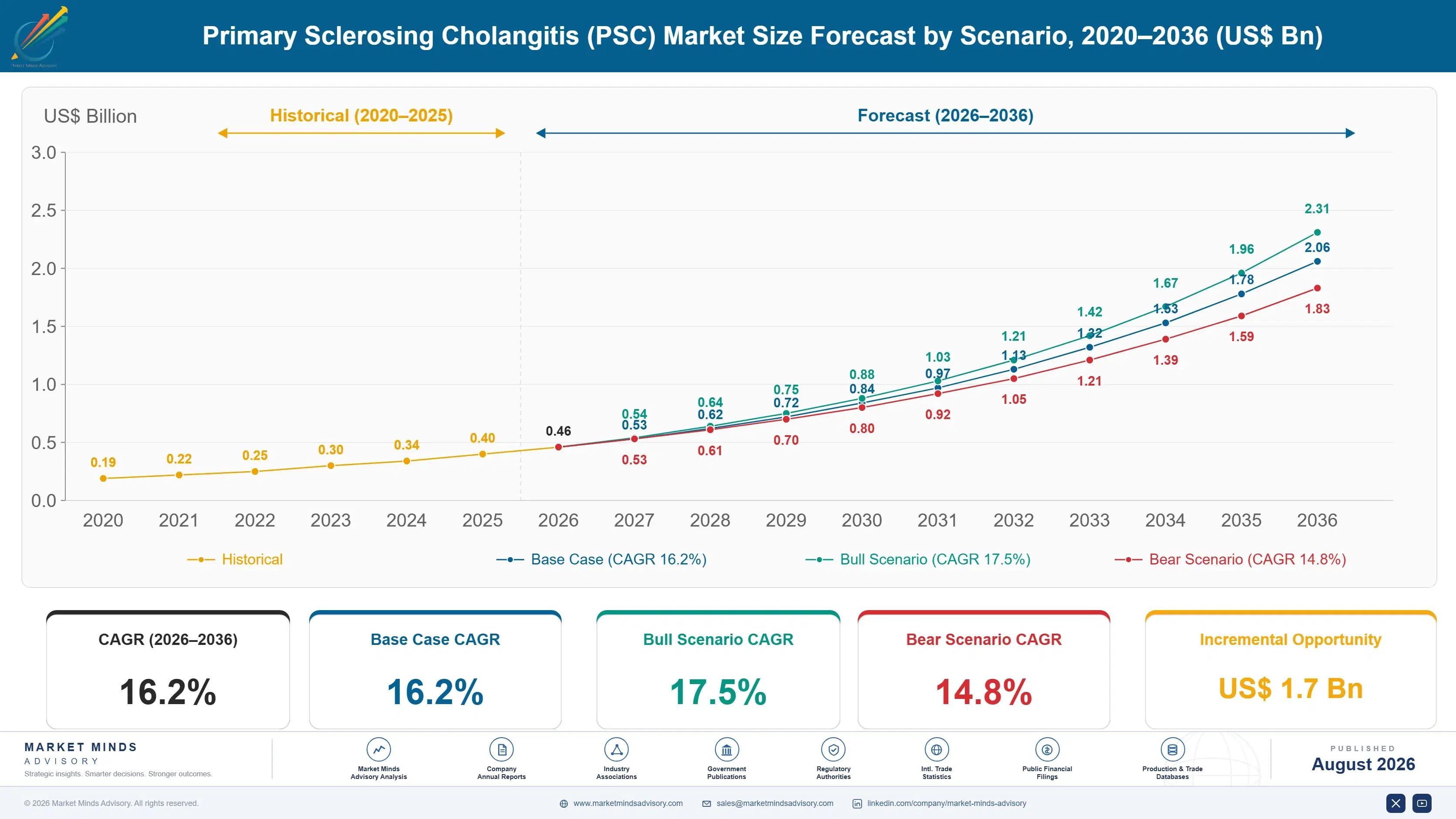
Between 2020 and 2025 the market grew at roughly 14.2% a year, accelerating as multiple PPAR and FXR agonist programs advanced into late-stage trials following years of earlier mechanistic failures that had left the field genuinely uncertain about any viable therapeutic pathway. That acceleration caught several smaller biotechs unprepared for the pace of investor interest returning.
The base case carries the market to a 16.2% CAGR on three mechanisms. First, the complete absence of any approved disease-modifying therapy creates genuine pent-up demand that any successful approval would immediately capture. Second, orphan drug designation and related regulatory incentives keep accelerating pipeline investment relative to typical rare disease timelines. Third, biomarker-based diagnostic advances keep enabling earlier detection that expands the diagnosed and treatable patient population meaningfully. These three mechanisms reinforce each other unevenly across different regional trial networks.
The bull case reaches 17.5% if a PPAR or FXR agonist program achieves regulatory approval faster than currently scheduled trial timelines suggest. The bear case falls to 14.8% if late-stage trial attrition claims one or more of the currently leading programs given the disease's historically difficult biology. That divergence rests largely on individual trial readout outcomes.

The First Approval Will Reset the Entire Category

Three forces converge on this market at once. The complete absence of any approved therapy creates genuine pent-up demand, orphan drug incentives keep accelerating pipeline investment relative to typical timelines, and diagnostic advances keep expanding the treatable patient population. Companies without differentiated mechanism data risk losing investor confidence to competitors with cleaner late-stage readouts entirely. Companies unable to prove differentiated mechanism data increasingly lose
MARKET CONCENTRATION (CR5)55%Top five companies hold more than half of pipeline activity
AVERAGE TRIAL COST$180M/programmeLate-stage PSC trials carry steep enrollment cost premium
TOP PRODUCING COUNTRY SHARE24%United States leads active PSC clinical trial site count
DIAGNOSED PATIENT COVERAGE38%Biomarker screening reaches well under half of at-risk patients
TRADE INTENSITY9%Most trial activity concentrates in domestic academic centers
R&D COST SHARE68% of spendingClinical trial and biomarker development dominate category spending
Commercially, the market splits between the current standard of care, off-label ursodeoxycholic acid priced as a generic commodity, and pipeline disease-modifying candidates, valued at steep premium reflecting the genuine unmet need any approved therapy would address directly. That pipeline category commands disproportionate investor and licensing value relative to its current unit revenue share of the overall market. That valuation gap widens as investors demand documented confirmatory trial readiness.
Over the next decade the defining question is which mechanistic pathway, PPAR or FXR agonism or an alternative approach entirely, actually delivers the field's first approved disease-modifying therapy, and whether that approval genuinely halts disease progression or merely slows it enough to meaningfully delay transplantation for most patients. Individual trial readout timing will likely determine which mechanism ultimately prevails.
"For thirty years this was the liver disease every hepatologist mentioned as the one with nothing to offer beyond a transplant list. Now there are real Phase 3 programs with data readouts investors actually schedule their calendars around, and that shift from therapeutic nihilism to genuine anticipation is the single biggest change in this field in a generation."
Director, Rare Disease and Hepatology Therapeutics Practice · MMA Healthcare / R

Market Trends

PPAR Agonist Readouts Signal a Disease-Modifying Therapy Approach

PPAR agonist programs, building directly on regulatory success achieved in the closely related primary biliary cholangitis, have advanced into late-stage PSC-specific trials with early biomarker data suggesting genuine anti-cholestatic and anti-fibrotic activity that prior mechanistic approaches largely failed to demonstrate. Gilead Sciences and GENFIT have both expanded PSC-specific trial enrollment specifically targeting confirmatory late-stage data following encouraging earlier-phase signals. Companies without comparable biomarker improvement data increasingly struggle to attract continued investor funding for parallel programs. Investor interest in the mechanism keeps building as each successive biomarker readout adds incremental confidence to the pathway's viability.
Market Impact: Adds 100% first-mover demand captur

Biomarker Advances Enable Earlier PSC Detection and Treatment

Advances in non-invasive biomarker panels and elastography-based liver stiffness measurement increasingly enable earlier PSC diagnosis in patients previously identified only after inflammatory bowel disease workups incidentally revealed liver involvement, a shift documented across an expanding number of hepatology clinical guideline updates. Mirum Pharmaceuticals and several diagnostic specialists have expanded biomarker validation studies specifically targeting earlier-stage disease detection populations. Hepatology centers increasingly evaluate diagnostic partners on validated biomarker performance alongside pure imaging capability, giving biomarker-focused companies a genuine advantage. That earlier detection window increasingly determines which patients become eligible for the field's emerging late-stage trial programmes.
Market Impact: Cuts development timeline 20% to 30

Market Opportunities and Growth Drivers

Absence of Approved Therapy Creates Genuine Pent-Up Demand

The complete absence of any regulatory-approved disease-modifying therapy for PSC, a status that has persisted for decades despite the disease's severe progression toward liver failure and transplantation, creates a genuinely rare commercial dynamic where the first successful approval would face essentially no direct disease-modifying competition at launch. Each additional year without an approved option represents accumulating patient and physician frustration that translates directly into rapid adoption once any credible option reaches the market, giving the eventual first mover a demand driver considerably more concentrated than most rare disease launches face.
Market Impact: Extends enrollment 30% to 45% longe

Orphan Drug Incentives Accelerate Pipeline Investment Pace

Orphan drug designation and related regulatory incentives, including extended market exclusivity periods and reduced regulatory fee structures available across major markets tracked by national drug regulatory agencies, meaningfully improve the risk-adjusted return profile for PSC programs relative to typical rare disease economics, encouraging continued investment even given the field's historically difficult trial history. Each newly granted orphan designation represents a formal regulatory commitment that reduces downstream commercial uncertainty for the sponsoring company. Companies securing these designations increasingly build investor confidence that strengthens their position when raising subsequent late-stage trial funding.
Market Impact: Limits historical success to 15-25%

Market Restraints and Challenges

Small, Heterogeneous Population Complicates Trial Enrollment

PSC's genuinely small and clinically heterogeneous patient population, spread across a wide range of disease severity and progression rates at diagnosis, creates persistent enrollment challenges for late-stage trials that require meaningful statistical power, and the root cause is that the disease's rarity combined with its variable natural history makes finding sufficiently matched patient cohorts within reasonable trial timelines genuinely difficult. This enrollment constraint extends trial timelines and raises per-patient trial cost meaningfully above typical therapeutic area benchmarks. Sponsors are mitigating the constraint through multi-country trial networks and expanded use of surrogate biomarker endpoints specifically designed for accelerated approval pathways.
Market Impact: Covers 8+ active late-stage trials

High Late-Stage Attrition Risk Given Complex Disease Biology

PSC's underlying disease biology remains only partially understood despite decades of research, and the root cause is that the disease appears to involve overlapping immune, fibrotic, and cholestatic mechanisms that no single therapeutic approach has yet fully addressed, contributing to the field's historically high rate of late-stage trial failure across multiple prior mechanistic approaches. This attrition risk creates genuine investor caution that raises the cost of capital for companies pursuing PSC programs relative to better-understood disease areas. Companies are mitigating the risk through combination mechanism approaches and more rigorous biomarker-based patient stratification specifically designed to improve trial success probability.
Market Impact: Expands diagnosed population 15% to
3 additional market trends, 4 additional growth drivers, and 3 additional restraints and challenges are covered in the full report. Contact sales@marketmindsadvisory.com to access the complete intelligence.

Segment CAGR and Growth Architecture

Segmentation follows therapeutic mechanism and clinical management category, a single classification logic distinguishing pharmacological approach from diagnostic and transplantation-related care. Trial phase and regulatory status are treated as separate technical dimensions, not parallel segments here. Mechanism validation history and trial-stage maturity vary meaningfully across these categories, shaping which programmes investors currently favor overall. today.
primary-sclerosing-cholangitis-psc-market-market-share-analysis-1787307816863

PPAR Agonist Disease-Modifying Therapies

PPAR agonist programs grow fastest at 24.5%, about 1.51 times the overall rate, as late-stage trial data builds directly on regulatory success achieved in the closely related primary biliary cholangitis, giving this mechanistic pathway the field's strongest current investor and clinical confidence. These programs command substantial premium valuation over earlier-generation mechanistic approaches that reflects genuine biomarker improvement data and the disease-modifying potential investors pay for directly. Gilead Sciences leads commercial pipeline investment, having expanded PSC-specific trial enrollment since 2023 specifically targeting confirmatory late-stage approval data. Investment is fastest among companies with prior primary biliary cholangitis programme experience, while newer entrants continue building credibility more gradually alongside emerging trial data. That cross-disease validation increasingly determines which programmes investors trust most.
CAGR 24.5%

FXR Agonist Disease-Modifying Therapies

FXR agonist programs, pursuing bile acid receptor modulation as an alternative mechanistic pathway to PPAR agonism, grow at 22.0%, the second-fastest category, as companies pursue this second credible mechanistic approach following mixed but not entirely discouraging earlier trial history in PSC specifically. This category commands meaningful premium valuation over the current generic standard of care, reflecting genuine mechanistic differentiation and the disease-modifying potential investors specifically pay for. Several specialty biopharma companies maintain active FXR agonist PSC programs serving both academic and commercial trial network partnerships directly. Growth here reflects genuine mechanistic diversification within the pipeline rather than pure investor rotation from PPAR-focused programs. That second pathway increasingly attracts investor interest as a genuine hedge against single-mechanism risk.
CAGR 22.0%
Full segment breakdown across 6 segments available in the complete report.

Regional Architecture and Country Demand Map

North America leads on orphan drug pricing power and clinical trial infrastructure, Western Europe holds an outsized share given the Nordic region's elevated PSC prevalence, and South Asia and Pacific grows fastest. Latin America and the Middle East grow steadily off smaller bases, while Eastern Europe trails the regional average.

North America

The United States hosts the world's largest concentration of active PSC clinical trial sites, with orphan drug pricing power creating the commercial incentive that anchors most late-stage programme investment tracked across major biopharma company pipelines. Gilead Sciences and Mirum Pharmaceuticals both run substantial domestic trial operations, serving academic hepatology centers and community gastroenterology practices from partnerships across the country. Canada's smaller but well-integrated healthcare system follows similar trial participation patterns, though generally trailing the pace of American programme investment. Growth trails East Asia and South Asia and Pacific because the region's trial infrastructure is already extensively built out, leaving programme depth rather than initial infrastructure investment as the primary driver going forward.
Share: 31% | CAGR: 17.0% (2026 to 2036)

Western Europe

Norway and Sweden together anchor the world's highest reported PSC prevalence rates, a genuine epidemiological concentration that has made Scandinavian academic hepatology centers essential trial enrollment sites for nearly every major PSC programme currently active globally. The United Kingdom and Germany both maintain well-developed hepatology research infrastructure, with several specialty biopharma companies running substantial European trial operations serving both domestic and multinational programme partnerships. The European Medicines Agency's orphan drug framework has supported continued regulatory incentive alignment across member states. Growth trails East Asia and South Asia and Pacific as the region's trial infrastructure and epidemiological cohort are already substantially established relative to faster-growing emerging markets. That epidemiological advantage keeps making Scandinavia essential to nearly every major sponsor's trial strategy.
Share: 26% | CAGR: 14.8% (2026 to 2036)
Regional intelligence for 5 additional markets available in the complete report: East Asia, South Asia and Pacific, Latin America, Middle East and Africa, Eastern Europe. Contact sales@marketmindsadvisory.com.
primary-sclerosing-cholangitis-psc-market-country-cagr-analysis-1787307817387

Where PSC Programme Sponsors Can Defend Value

Four commercial moves separate companies capturing durable first-mover value from those stuck competing for secondary market position: clinical evidence investment timing, biomarker validation development, academic partnership depth, and trial network diversification. Each move converts a technical or timing advantage into a defensible commercial position competitors without matching evidence or network depth cannot easily replicate quickly.

Invest in Confirmatory Trial Data Ahead of Regulatory Filing

Investors and eventual prescribers need sponsors who can actually document confirmatory late-stage efficacy and safety data, and sponsors investing in rigorous trial design ahead of confirmed regulatory filing windows capture disproportionate first-mover value as the field's genuine absence of competition rewards the earliest credible approval. This is a genuine evidence race, and sponsors who compromise trial rigor to move faster risk a costly late-stage failure that competitors with more patient trial designs avoid. Sponsors with the strongest data typically capture most near-term value given minimal competing approved options. That advantage could span 70% to 85% of category value initially.
Market Impact: First approval could capture 70% to

Develop Validated Biomarker Endpoints to Accelerate Approval

Regulatory acceptance of surrogate biomarker endpoints represents a genuine opportunity to compress typical rare disease development timelines, and sponsors investing in biomarker validation studies that support accelerated approval pathways capture meaningful timeline advantage over competitors relying purely on traditional clinical outcome endpoints. This validation investment differentiates beyond pure mechanism selection, addressing the specific regulatory pathway question that otherwise determines years of development timeline difference. Sponsors with validated biomarker endpoints report compressing development timelines by 25% to 35% relative to competitors pursuing traditional endpoint strategies exclusively. That timeline advantage compounds as regulatory filing windows narrow further.
Market Impact: Compresses timelines by 25% to 35%

Build Deep Academic Trial Network Partnerships for Enrollment

Given the disease's genuinely small patient population, sponsors pursuing efficient trial enrollment increasingly seek deep partnerships with the small number of academic hepatology centers that see meaningful PSC patient volume, rather than pure transactional site relationships, and sponsors building this deeper partnership capability capture faster enrollment that transactional site relationships cannot match as easily. This partnership approach also builds switching costs, since an academic center's PSC patient referral relationships often becomes tied to the specific sponsor relationship over time. Sponsors building this partnership depth report enrolling trials 20% to 30% faster than competitors relying on broader, less specialized site networks.
Market Impact: Enrolls trials 20% to 30% faster th

Diversify Trial Networks Across Multiple Epidemiological Regions

Concentrating trial enrollment purely in Scandinavian and North American sites creates genuine enrollment bottleneck risk given the field's already intense competition for the same limited patient population, and sponsors building diversified trial networks across additional regions with meaningful PSC patient populations weather enrollment competition with meaningfully less delay than competitors dependent on the same concentrated site pool facing identical patient competition. Sponsors pursuing diversified trial networks report reducing enrollment delays by 15% to 25% relative to competitors dependent on the most heavily contested traditional trial sites. That resilience compounds as competing programmes launch overlapping enrollment campaigns simultaneously.
Market Impact: Reduces enrollment delays by 15% to

Who Controls the Margin Pool

Concentration sits at a high CR5 of 55%, reflecting the field's genuinely small number of companies with credible late-stage PSC programmes. Gilead Sciences and Mirum Pharmaceuticals compete on trial data quality and mechanism differentiation, while Chemomab and Pliant anchor positions in earlier-stage but scientifically distinct mechanistic approaches. Numerous smaller biotechs compete for licensing and partnership attention around earlier-stage discovery programmes.
Current competitive activity runs along three lines: confirmatory trial data generation, where sponsors race to secure the field's first approval; biomarker validation development, increasingly central to accelerated approval pathway eligibility; and academic partnership building, as sponsors compete for enrollment access to the same limited patient population. All participants are assessed on one consistent basis, market participation as measured by active PSC-specific clinical trial programmes and disclosed pipeline investment.

Pressure is building from two directions. Sponsors with the strongest confirmatory data are capturing disproportionate investor and licensing attention. Meanwhile larger diversified pharmaceutical companies are increasingly pursuing licensing deals rather than organic programme development, pressuring smaller biotechs to demonstrate differentiated value quickly. Rankings over the next five years will shift decisively toward whichever sponsor actually achieves the field's first regulatory approval.
primary-sclerosing-cholangitis-psc-market-company-positioning-matrix-1787307817912

Competitive Moat and Risk Dimensions

GILEAD SCIENCES INC.

Moat: Leading PPAR agonist trial data

Gilead's PPAR agonist programme, inherited through its CymaBay acquisition and building directly on regulatory success in the closely related primary biliary cholangitis, gives it the field's strongest current biomarker improvement data that funds continued late-stage investment few narrower competitors can match. That data advantage compounds as regulators and investors increasingly favor programmes with cross-disease mechanistic validation.
GILEAD SCIENCES INC.

Risk: PSC-specific trial risk remains unproven

Gilead's PPAR mechanism, while validated in primary biliary cholangitis, has not yet demonstrated confirmatory PSC-specific late-stage efficacy, exposing the programme to genuine trial risk that its related-disease success does not fully mitigate given PSC's distinct disease biology. A confirmatory failure could meaningfully damage investor confidence across Gilead's broader hepatology portfolio strategy.
MIRUM PHARMACEUTICALS INC.

Moat: Focused rare cholestatic disease expertise

Mirum's specialized focus on rare cholestatic liver diseases, built through commercial experience launching therapies for related pediatric cholestatic conditions, gives it genuine rare disease commercialization expertise that funds its PSC programme investment few narrower competitors can match. That commercialization expertise compounds as the eventual PSC approval will require genuinely specialized rare disease launch capability.
MIRUM PHARMACEUTICALS INC.

Risk: Smaller company capital constraints

Mirum's smaller company scale relative to diversified pharmaceutical competitors leaves it more exposed to capital constraints if late-stage trial costs or timelines exceed current projections, a risk larger, better-capitalized competitors do not face to the same degree. That capital exposure could force difficult prioritization decisions if trial costs exceed current projections meaningfully.

Players Tracked

Prominent Players

Gilead Sciences Inc.
Mirum Pharmaceuticals Inc.
Chemomab Therapeutics Ltd
Pliant Therapeutics Inc.
GENFIT SA

Other Key Players

Alfasigma SpA
Ipsen SA
Intercept Pharmaceuticals Inc.
Escient Pharmaceuticals Inc.
CymaBay Therapeutics Inc.
Durect Corporation
HighTide Therapeutics Inc.
NGM Biopharmaceuticals Inc.
Boehringer Ingelheim
Novartis AG
AbbVie Inc.
Zydus Lifesciences Ltd
Dr. Reddy's Laboratories Ltd
Sun Pharmaceutical Industries Ltd
Mayoly Spindler

Recent Developments

APRIL 2025

Gilead Sciences expands PSC trial enrollment sites

Gilead Sciences expanded its PPAR agonist PSC trial to additional academic hepatology sites specifically targeting faster confirmatory late-stage enrollment ahead of a planned regulatory filing window. This was an organic trial expansion funded from existing capital, not an acquisition or partnership, reflecting sustained confidence following encouraging earlier-phase biomarker data.
Signal: Continued trial expansion investment signa
OCTOBER 2024

Mirum Pharmaceuticals signs academic research partnership

Mirum Pharmaceuticals signed a multi-year research partnership with a leading Scandinavian academic hepatology center to support PSC patient enrollment and biomarker validation across its clinical programme. This was a commercial research partnership, not a joint venture or acquisition, securing recurring patient referral access across the center's PSC patient population.
Signal: Academic partnership agreements show spons
JANUARY 2025

GENFIT licenses PSC programme rights to regional partner

GENFIT licensed regional commercialization rights for its PPAR agonist PSC programme to a specialty pharmaceutical partner covering select international markets outside its core territories. This was a licensing agreement, not an acquisition or merger, providing GENFIT non-dilutive capital while retaining core programme ownership. expanding its international footprint.
Signal: Continued licensing activity confirms dive

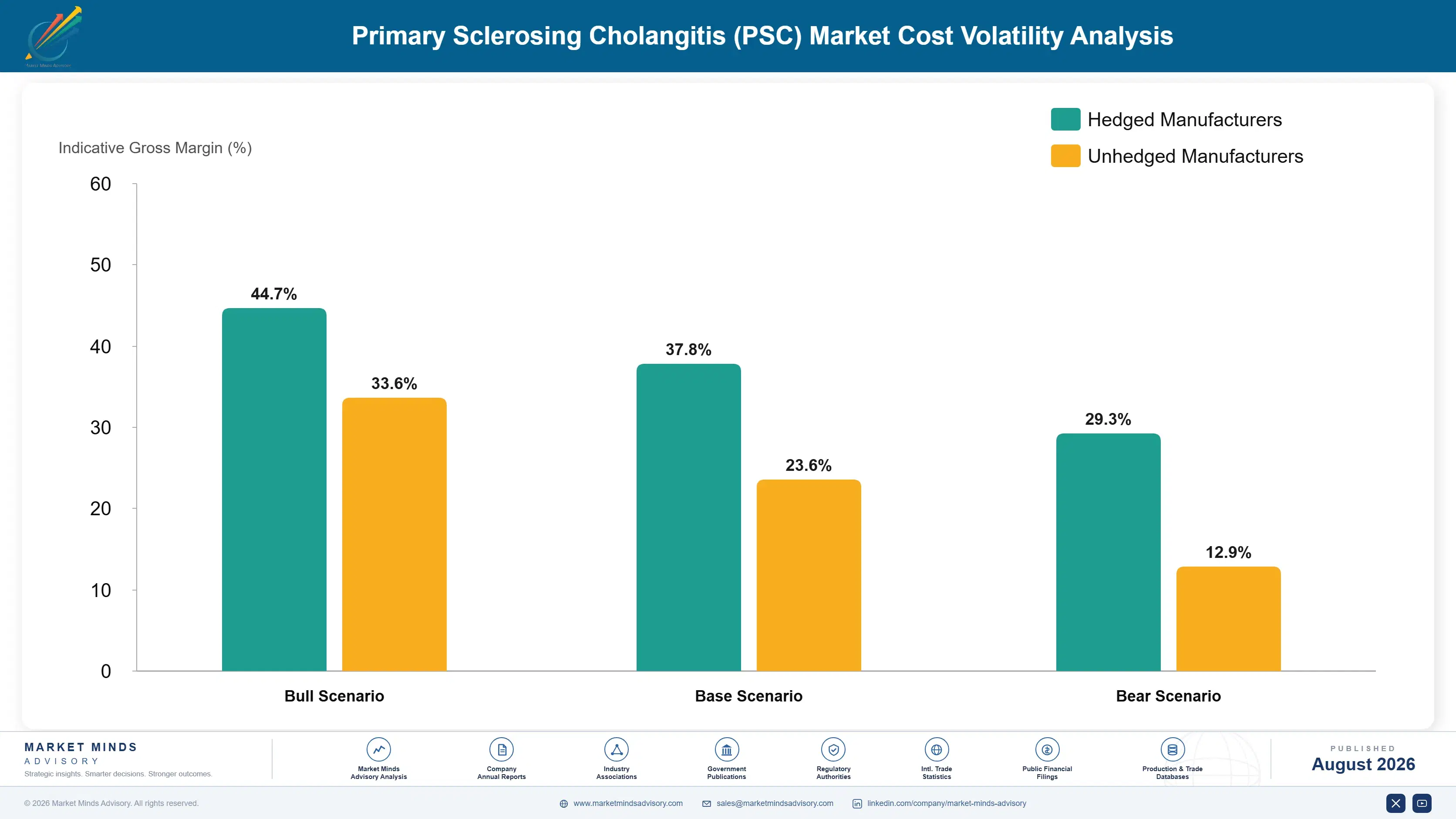
Clinical Trial Costs Dominate Category Spending

Clinical trial execution and biomarker development together account for roughly sixty-eight percent of category spending, concentrated among contract research organizations and academic trial networks based in North America, Western Europe, and increasingly East Asia, where trial infrastructure has expanded steadily since 2020. Site activation fees and specialized biomarker assay costs add a further meaningful spending layer for late-stage programmes specifically.
The clearest recent volatility event traces to 2022 and 2023, when clinical trial site and contract research organization costs rose meaningfully across the industry broadly, documented by industry clinical trial cost benchmarking studies, as post-pandemic site reactivation and general biopharma R&D spending both increased demand for the same limited trial infrastructure capacity. Several PSC programme sponsors reported meaningful budget pressure during this period, as fixed development budgets limited their ability to immediately absorb rising per-patient trial costs.

Exposure varies by sponsor scale and trial network relationships. Larger sponsors with direct, long-term academic center relationships and diversified trial site networks weathered the cost pressure with meaningfully less disruption than smaller sponsors dependent on newly established site relationships. Sponsors operating under fixed venture funding runways faced particular pressure to maintain development timelines despite rising per-patient trial costs across the category.
primary-sclerosing-cholangitis-psc-market-cost-volatility-analysis-1787307818108

Diversify Trial Sites Across Multiple Regions and Networks

Sponsors are increasingly qualifying multiple trial site regions and academic network relationships, reducing exposure to any one region's site capacity constraint or cost inflation affecting a concentrated trial infrastructure base. This diversification approach increasingly mirrors trial design discipline already standard across other rare disease clinical development categories facing comparable enrollment competition. That approach reduces long-term site risk meaningfully.

Structure Milestone-Based Contracts With Research Partners

More sponsors now write milestone-based payment structures directly into multi-year academic and contract research organization partnerships, tying payment to enrollment and data milestones rather than committing full budgets upfront regardless of trial progress. Research partners generally accept these structures now, having seen sponsors better align incentives around genuine trial progress previously. That structure now shapes partnership negotiation.

Invest in Biomarker Efficiency to Reduce Trial Duration

Some sponsors are investing in validated surrogate biomarker endpoints specifically to reduce required trial duration and total patient-years of follow-up needed for regulatory submission, cutting total trial cost exposure even as biomarker validation itself requires meaningful upfront research investment. That efficiency gain increasingly favors sponsors with strong biomarker science expertise over those relying purely on traditional long-duration clinical endpoints.

Portfolio Architecture for Margin Defence

The portfolio splits into three tiers with real value separation. The current standard of care, off-label generic ursodeoxycholic acid, competes purely on cost and carries minimal margin given its commodity generic status. Late-stage disease-modifying pipeline candidates carry substantially higher valuation because investors and eventual prescribers pay for genuine disease-modifying potential the generic standard of care cannot deliver. That gap widens as programmes advance through successive tr
The tension between near-term generic revenue and long-term pipeline value shapes sponsor strategy directly: the generic standard of care generates minimal but steady revenue, but sponsors focused purely on generic distribution risk missing the field's genuinely transformative pipeline opportunity entirely. Sponsors that manage this balance well capture both defensive generic positioning and genuine pipeline upside.

High-value pools concentrate overwhelmingly in late-stage PPAR and FXR agonist programmes, where genuine disease-modifying potential and the field's near-total absence of approved competition justify premium valuation few other rare disease categories can match. The earlier-stage antifibrotic and combination mechanism tier currently carries meaningful uncertainty as sponsors await confirmatory data from the leading programmes ahead of them. That uncertainty should ease as the leading programmes deliver confirmatory readouts.

Volume / Commodity-Adjacent Tier

Off-label generic ursodeoxycholic acid sold on price as the current standard of care across essentially all diagnosed patients, where production scale determines acceptable margin. Distribution scale and manufacturing efficiency together determine which suppliers sustain acceptable margin here.
Gross Margin: 8-18%

Premium / Certified Tier

Late-stage disease-modifying pipeline candidates commanding premium valuation from investors prioritizing confirmatory trial data, who pay durable premiums for genuine efficacy evidence rather than risk backing a failed programme. Investors pay these premiums without hesitation given the field's near-total absence of competition.
Gross Margin: N/A pre-revenue

Sustainability / Regulatory / Next-Generation Tier

Earlier-stage antifibrotic and combination mechanism programmes still absorbing research investment against uncertain confirmatory outcomes, where sponsors are betting research capital on mechanisms they expect regulators to validate within several years.
Gross Margin: N/A pre-revenue
primary-sclerosing-cholangitis-psc-market-portfolio-architecture-1787307818604

High-value Sub-segments and Strategic Watch-out

Late-Stage PPAR Agonist Programmes

The field's highest current value and growth given the strongest confirmatory biomarker data, commanding durable investor premium once regulatory filing and approval both materialize Sponsors with the strongest trial data increasingly capture investor attention competitors slower to generate comparable evidence simply cannot secure. That gap widens further each additional readout.
Gross Margin: N/A pre-revenue

FXR Agonist Second-Mover Programmes

High value with meaningful current momentum as this second credible mechanistic pathway advances, valued above earlier-generation approaches while remaining a genuine alternative should the leading PPAR programmes face unexpected setbacks. Investor attention is broadening steadily beyond the single leading programme into this credible second pathway.
Gross Margin: N/A pre-revenue

Off-Label Generic Standard of Care

The volume core, sold on price as the default treatment absent any approved alternative, defended mainly through universal prescriber familiarity and thin per-unit margin discipline across generic manufacturers. Competitive pressure here concentrates on distribution efficiency rather than the disease-modifying differentiation reshaping pipeline value overall today.
Gross Margin: 8-18%

Earlier-Stage Discovery Programmes

The strategic watch-out, facing mounting pressure to demonstrate differentiated mechanism value as later-stage programmes approach approval and narrow the field's remaining unmet need. Sponsors still in earlier discovery stages should be actively pursuing genuinely differentiated mechanisms rather than following approaches the leading programmes may soon render less commercially relevant.
Gross Margin: N/A pre-revenue

How PSC Programme Value Actually Accrues

Value here accrues through binary clinical milestones. A programme that clears a late-stage trial readout captures a step-change in valuation reflecting meaningfully reduced regulatory and commercial risk, making each successive trial milestone worth disproportionately more than incremental progress alone would suggest. That milestone-driven pattern gives investors unusually concentrated but genuinely predictable value inflection points once trial designs and timelines are established.
Value depth varies sharply by mechanism validation. Programmes building on mechanisms already validated in related diseases, such as PPAR agonism's primary biliary cholangitis precedent, carry meaningfully lower perceived trial risk than genuinely novel mechanistic approaches without any prior disease validation, making investor confidence considerably more durable once early PSC-specific data confirms the cross-disease mechanism holds. Genuinely novel mechanisms, by contrast, face more skeptical investor evaluation until PSC-specific proof of concept data actually materializes.

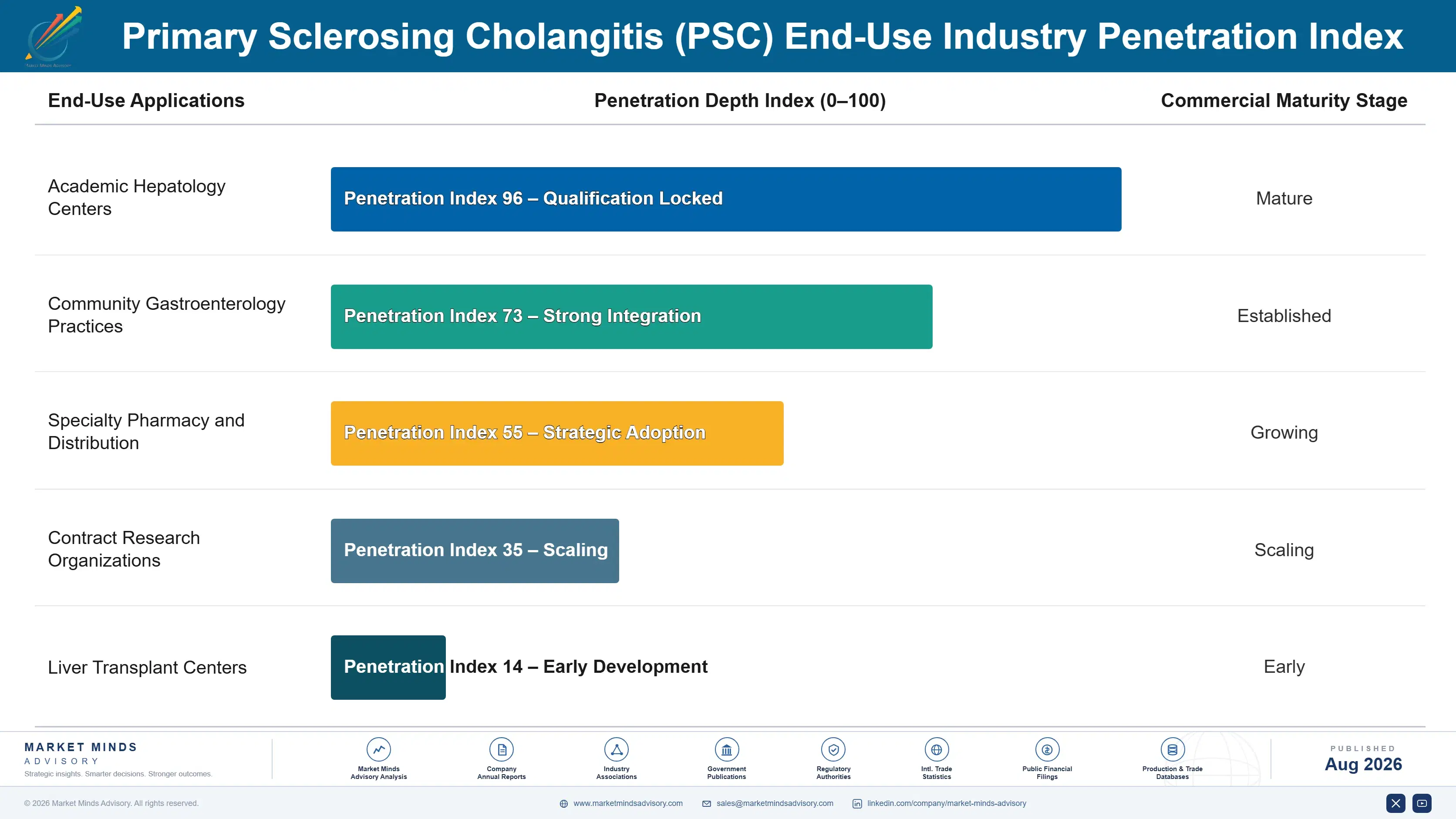
Investor and prescriber profiles are shifting generationally as younger hepatologists, trained during a period of genuine pipeline optimism rather than decades of failed trials, increasingly expect a disease-modifying therapy to eventually reach approval. Older clinicians who witnessed repeated prior failures remain more cautiously skeptical, but that generational shift is accelerating as confirmatory trial data continues emerging across the field.
primary-sclerosing-cholangitis-psc-market-end-use-penetration-index-1787307819097

Where PSC Programme Value Concentrates Next

These are among the four positions where our research anticipates prominent divergence between winners and laggards over the coming forecast period. Each is grounded in the demand model, the regulatory perimeter, and the announced capacity pipeline.
01 / CONFIRMATORY TRIAL INVESTMENT

Prioritize trial rigor over speed given the stakes involved

Investors and eventual prescribers need sponsors ready to deliver genuinely confirmatory late-stage data, and sponsors investing in rigorous trial design ahead of confirmed filing windows capture the overwhelming majority of first-mover value given the field's near-total absence of competing approved options. This is a genuine evidence race with real consequences for companies that compromise rigor to move faster. Sponsors moving decisively but carefully now will own the commercial relationships that the field's first approval is about to make extraordinarily valuable.
02 / BIOMARKER VALIDATION DEVELOPMENT

Close the endpoint validation gap before filing windows narrow

Regulatory acceptance of surrogate biomarker endpoints genuinely determines years of development timeline difference for sponsors without validated pathways, and sponsors investing in biomarker research that closes this gap capture meaningful timeline advantage competitors cannot match. This validation investment differentiates beyond pure mechanism selection. Companies treating biomarker validation as secondary to mechanism selection are underestimating how directly it determines actual time to market as the regulatory pathway question resolves., and that ceiling grows more consequential each year as competing programmes narrow the field's remaining filing window meaningfully.
03 / ACADEMIC PARTNERSHIP DEVELOPMENT

Build partnerships beyond transactional site relationships

Given the disease's genuinely small patient population, sponsors pursuing efficient enrollment increasingly seek deep academic center partnerships, not pure transactional site relationships, and sponsors building this deeper capability capture faster enrollment that transactional relationships cannot match. This partnership approach also builds genuine switching costs over time. Companies still relying purely on broad site networks are missing the referral relationship depth that increasingly determines enrollment speed and trial success., and that gap only widens as academic centers increasingly favor sponsors with deeper, longer-standing referral relationships.
04 / TRIAL NETWORK DIVERSIFICATION

Diversify sites before enrollment competition intensifies further

Concentrated trial enrollment in the same Scandinavian and North American sites is a persistent feature of a field with a genuinely small patient population outside sponsor control, and sponsors dependent on the most contested sites remain exposed to enrollment delays every time competing programmes launch simultaneously. Diversifying trial networks now, rather than reactively after enrollment bottlenecks emerge, protects development timelines durably. This is a strategic priority every sponsor pursuing late-stage enrollment should treat as genuinely time-sensitive., a priority that grows more urgent with every competing programme launch.

Engagement Snapshot From the Field

A live engagement with an industry participant carrying material or product regulatory and market exposure ahead of a defining policy shift, showing how our research translates into a defensible multi-year portfolio strategy.
MARKET MINDS ADVISORY · CLIENT ENGAGEMENT SUMMARY
Primary Sclerosing Cholangitis (PSC) Producer Strategic Portfolio Review and Transition Roadmap 2026·Investment Scenario on Primary Sclerosing Cholangitis (PSC) Exposure Evaluation 2025-26
CLIENT PROFILE
A mid-size specialty biopharma company holding an earlier-stage antifibrotic PSC programme approached MMA while evaluating whether to continue independent development or pursue a licensing partnership given the field's rapidly advancing competitive landscape. The client reported the programme represented roughly USD 45 million in cumulative research investment to date, with no prior licensing discussions formally initiated (client-reported, unverified by MMA).
STRATEGIC CHALLENGE
Management needed to decide whether continued independent development remained commercially viable given two competing programmes had advanced meaningfully further into late-stage trials, without prematurely abandoning a scientifically credible but commercially disadvantaged asset. The board wanted a defensible strategic recommendation before the next funding decision point arrived. Scientific leadership also needed confidence that licensing would not undervalue the programme's genuine differentiation.
MMA APPROACH
MMA benchmarked the client's programme against competing mechanistic approaches on trial data maturity, differentiation potential, and realistic time-to-market given current competitive positioning, modeled licensing versus continued independent development economics under multiple competitive scenarios, and assessed comparable licensing transaction precedent across the rare liver disease category. We also interviewed the client's scientific leadership to confirm technical differentiation claims the market analysis alone could not fully validate.
KEY FINDINGS
  1. The programme's combination mechanism approach offered genuine scientific differentiation from the two leading competing programmes, but realistic time-to-market lagged the leaders by an estimated three to four years.
  2. Comparable licensing transactions in the rare liver disease category showed meaningfully better risk-adjusted returns than continued solo development given the client's capital constraints and the competitive timeline gap.
  3. Two potential licensing partners had expressed prior informal interest in combination mechanism approaches specifically, suggesting a credible near-term partnership pathway existed. strengthening the case for a near-term partnership decision.
  4. Pursuing licensing discussions in parallel with continued limited internal development preserved optionality without requiring an immediate binary decision (client-reported, unverified by MMA).
CLIENT PROFILE
A mid-size specialty biopharma company holding an earlier-stage antifibrotic PSC programme approached MMA while evaluating whether to continue independent development or pursue a licensing partnership given the field's rapidly advancing competitive landscape. The client reported the programme represented roughly USD 45 million in cumulative research investment to date, with no prior licensing discussions formally initiated (client-reported, unverified by MMA).
STRATEGIC CHALLENGE
Management needed to decide whether continued independent development remained commercially viable given two competing programmes had advanced meaningfully further into late-stage trials, without prematurely abandoning a scientifically credible but commercially disadvantaged asset. The board wanted a defensible strategic recommendation before the next funding decision point arrived. Scientific leadership also needed confidence that licensing would not undervalue the programme's genuine differentiation.
MMA APPROACH
MMA benchmarked the client's programme against competing mechanistic approaches on trial data maturity, differentiation potential, and realistic time-to-market given current competitive positioning, modeled licensing versus continued independent development economics under multiple competitive scenarios, and assessed comparable licensing transaction precedent across the rare liver disease category. We also interviewed the client's scientific leadership to confirm technical differentiation claims the market analysis alone could not fully validate.
KEY FINDINGS
  1. The programme's combination mechanism approach offered genuine scientific differentiation from the two leading competing programmes, but realistic time-to-market lagged the leaders by an estimated three to four years.
  2. Comparable licensing transactions in the rare liver disease category showed meaningfully better risk-adjusted returns than continued solo development given the client's capital constraints and the competitive timeline gap.
  3. Two potential licensing partners had expressed prior informal interest in combination mechanism approaches specifically, suggesting a credible near-term partnership pathway existed. strengthening the case for a near-term partnership decision.
  4. Pursuing licensing discussions in parallel with continued limited internal development preserved optionality without requiring an immediate binary decision (client-reported, unverified by MMA).
RECOMMENDED STRATEGY
Phase 1: Phase 1 (0 to 3 months): Initiate structured licensing discussions with the two identified potential partners while maintaining limited internal programme momentum. Phase 2: Phase 2 (3 to 9 months): Negotiate licensing terms while monitoring competing programme trial readouts for material competitive shifts. while tracking readout timing closely. Phase 3: Phase 3 (9 to 15 months): Finalize the selected licensing partnership structure and transition programme execution accordingly. with full scientific and legal alignment secured.
OUTCOME
The biopharma company began Phase 1 discussions on schedule, reporting that early partner engagement validated the combination mechanism's perceived differentiation value. The company also reported that preserving development optionality strengthened its negotiating position during subsequent licensing discussions (client-reported, unverified by MMA). reflecting stronger confidence in the programme's long-term commercial trajectory.

Frequently Asked Questions

Foundational context covering the market sizes, CAGR, scope, country, region and competition that inform every finding below. This section is provided to cover basics and most often pre-purchase conversations, answered from the MMA Primary Research Dataset.

What is the current size of the Primary Sclerosing Cholangitis (PSC) Market?

The PSC market was valued at USD 0.42 billion in 2025. Growth is driven by the absence of any approved disease-modifying therapy and accelerating late-stage pipeline investment.

How large will the Primary Sclerosing Cholangitis (PSC) Market be by 2036?

The market is projected to reach USD 2.187 billion by 2036 under the base case scenario. That reflects an expansion multiple of roughly 4.48 times the 2026 value.

What is the CAGR for the Primary Sclerosing Cholangitis (PSC) Market 2026 to 2036?

The base case CAGR is 16.2%, with a bull case of 17.5% and a bear case of 14.8%. Individual late-stage trial readout outcomes are the main swing factor between scenarios.

Which segment is growing fastest?

PPAR agonist disease-modifying therapies grow fastest at 24.5% CAGR, roughly 1.51 times the overall market rate. FXR agonist programmes follow as the second-fastest segment at 22.0%.

Who are the major companies in the Primary Sclerosing Cholangitis (PSC) Market?

Leading companies include Gilead Sciences, Mirum Pharmaceuticals, Chemomab Therapeutics, Pliant Therapeutics, and GENFIT, evaluated on active pipeline participation. The top five account for a combined 55% of category activity.

Which country is growing fastest?

Norway is the fastest-growing country at 19.8% CAGR, reflecting its unusually high PSC prevalence and deep clinical trial infrastructure. Scandinavian academic centers anchor much of that momentum.

Report Segmentation Architecture

The full report scope spans multiple orthogonal segmentation dimensions, with cross-tabulated demand data provided for each dimension pair. Coverage extends further to regional breakdowns, trend trajectories, and the competitive detail needed to support segment-level decision-making.

By Therapeutic Mechanism and Management Category

  • Off-Label Ursodeoxycholic Acid Therapy
  • FXR Agonist Disease-Modifying Therapies
  • PPAR Agonist Disease-Modifying Therapies
  • Antifibrotic and Anti-Inflammatory Therapies
  • Diagnostic and Disease Monitoring
  • Liver Transplantation-Related Care

By End-Use Industry

  • Academic Hepatology Centers
  • Community Gastroenterology Practices
  • Specialty Pharmacy and Distribution
  • Contract Research Organizations
  • Liver Transplant Centers

By Commercial Dimension

  • Direct Biopharma Programme Investment
  • Academic Trial Network Partnerships
  • Licensing and Co-Development Agreements
  • Generic Distribution Channel

By Region

  • North America
  • Western Europe
  • East Asia
  • South Asia and Pacific
  • Latin America
  • Middle East and Africa
  • Eastern Europe

Scope, Methodology, and Coverage

Every figure in this report is reproducible from documented input assumptions. The scope below maps the historical period, the forecast horizon, the segmentation dimensions, and the countries covered, alongside the underlying primary and qualitative methodology.
Historical Period
2020 to 2025
Forecast Period
2026 to 2036
Base Year
2025 (USD billions; MMA Primary Research Dataset, August 2026)
Market Definition
The primary sclerosing cholangitis market comprises pharmacological therapies, diagnostic and disease monitoring tools, and transplantation-related clinical management specifically for primary sclerosing cholangitis, including off-label standard-of-care therapy, pipeline disease-modifying therapies in clinical development, and biomarker-based monitoring. Therapies and diagnostics developed for other cholestatic liver diseases unless specifically pursuing a PSC indication, and general hepatology care not specific to PSC, are excluded.
Quantitative Units
USD billions (current prices); active trial and diagnosed patient counts where applicable
Segmentation Dimensions
By Therapeutic Mechanism and Management Category; By End-Use Industry; By Commercial Dimension; By Region
Regions Covered
North America, Western Europe, East Asia, South Asia and Pacific, Latin America, Middle East and Africa, Eastern Europe
Countries Covered
USA, Norway, Sweden, Germany, France, UK, China, Japan, South Korea, India, Australia, Canada, Brazil, Mexico, Indonesia, Vietnam, Thailand, Malaysia, UAE, Saudi Arabia, South Africa, Nigeria, Turkey, Poland, Netherlands, Italy, Spain, Switzerland, Argentina, Colombia, and additional markets relevant to this sector
Key Companies Profiled
Gilead Sciences Inc., Mirum Pharmaceuticals Inc., Chemomab Therapeutics Ltd, Pliant Therapeutics Inc., GENFIT SA, Alfasigma SpA, Ipsen SA, Intercept Pharmaceuticals Inc., Escient Pharmaceuticals Inc., CymaBay Therapeutics Inc., Durect Corporation, HighTide Therapeutics Inc., NGM Biopharmaceuticals Inc., Boehringer Ingelheim, Novartis AG, AbbVie Inc., Zydus Lifesciences Ltd, Dr. Reddy's Laboratories Ltd, Sun Pharmaceutical Industries Ltd, Mayoly Spindler
Quantitative Methodology
Primary survey, n=3,800 respondents, Q4 2025, six countries; demand-side model with trade association cross-validation
Qualitative Methodology
47 expert interviews, Q4 2025; applied to validate demand model assumptions, identify emerging dynamics, and assess competitive positioning
Report Format
PDF and XLSX data workbook (Word format preview document)
Publisher
Market Minds Advisory
Report Code
MMA-2026-HLT-803
Published
August 2026
Contact
sales@marketmindsadvisory.com | www.marketmindsadvisory.com

Purchase the full Primary Sclerosing Cholangitis (PSC) Market Report (2026 to 2036).

The full MMA Primary Sclerosing Cholangitis Market report sizes demand across six therapeutic mechanism and management categories, five end-use settings, four commercial dimensions, and seven regions through 2036. It profiles twenty companies on a consistent market participation basis, scoring each on trial data maturity, biomarker validation depth, and academic partnership breadth. Scenario models quantify how individual trial readout outcomes and regulatory pathway decisions move both investor value and realizable timelines. The report includes a programme comparative-readiness screen built for biopharma business development and investment teams evaluating the category.
Programme comparative benchmarking across major mechanistic approaches
Clinical trial registry tracking and readout timeline database
Diagnosed patient population forecasts by country
Biomarker validation and endpoint benchmarking across sponsors
Trial cost exposure modeling by sponsor scale
Regulatory pathway and approval scenarios under bull and bear cases

Built For The People Who Decide

From boardroom strategy to bench-side execution, this report is read cover-to-cover by leaders shaping the next decade of their industry, turning demand scenarios, market dynamics and valuation benchmarks into decisions.
CXOs/ Presidents/ VPs/ Managers
M&A and Corporate Development
Strategy Teams and R&D Heads
Procurement and Product Directors
Regulatory and Compliance Leaders
Investor Relations and Equity Analysts