Market Minds Advisory
Premium Spirits Glass Bottle Market

Premium Spirits Glass Bottle Market Analysis 2026-2036

A premium whiskey brand will pay several times more for a bottle than the liquid costs to distill, because at the top of the category the glass is the first argument for the shelf.

Lead Analyst

Bilal Shaikh

Published

November 2026

Make Smarter Decisions with Customized Research Insights

Request a free sample report and evaluate market opportunities, growth trends, and competitive dynamics relevant to your business needs.

2025 MARKET VALUE$4.2BMarket Size 2025
2036 FORECAST VALUE$8.7BBase Case , 2026 to 2036
CAGR 2026 TO 20366.8 %Bull 8.1% / Bear 5.5%
INCREMENTAL OPPORTUNITY$4.2BNet 10- year value creation
EXPANSION MULTIPLE1.93x2036 value over 2026 base
Strategic Levers
M&A Pipeline
Regional Outlook
Country Rankings
Competitive Intelligence
Segmental Deep-dive
Call-Us : 91 93563 13602

Premium Spirits Glass Bottle Market Outlook

Premium spirits bottles compete on shelf presence and perceived craftsmanship rather than unit cost, since brand owners at this tier treat glass weight, mold complexity, and finishing detail as direct extensions of the brand story they are selling.
Tequila and mezcal bottles are growing fastest as agave spirits premiumize rapidly across export markets, while gin bottles benefit from a sustained craft distillery boom that rewards distinctive bottle silhouettes over standardized shapes. Western Europe anchors the largest regional market by value, reflecting Scotch whisky, Cognac, and premium gin heritage concentrated overwhelmingly in the United Kingdom and France specifically. Both categories reward distinctive design over standardized shapes.
Five producers hold roughly four tenths of global revenue, a figure that understates how fragmented custom mold design work remains even among scale leaders, since each premium brand typically commissions bespoke tooling rather than sharing stock bottle shapes across competitors. Sustainability pressure on heavyweight glass is reshaping competitive positioning fastest, as brand owners face growing scrutiny over the carbon footprint of ever-heavier premium bottle designs. That fragmentation keeps scale leaders from fully consolidating creative control.
Market Definition
The premium spirits glass bottle market covers custom-mold, heavyweight, and decoratively finished glass bottles for premium and luxury-tier whiskey, vodka, gin, tequila, cognac, and specialty spirits brands. It excludes standard, mainstream-tier spirits bottles already covered under the glass container market scope, as well as wine bottles and beer glassware and drinkware, each of which is addressed under a separate market scope. The global glass bottle and container market is a useful reference point here, growing from USD 68.0 billion in 2025 to USD 106.9 billion by 2036 at a 4.2% CAGR, according to MMA.
Base Year Value
$4.2B in 2025 (MMA Primary Research Dataset, October 2026)
Forecast Period
2026 to 2036, eleven discrete annual values
CAGR
6.8% base case. Bull 8.1%. Bear 5.5%.
Fastest Growth Segment
Tequila and Mezcal Bottles: 9.6% CAGR
Fastest Growth Country
Mexico: 9.8% CAGR
Fastest Growth Region
South Asia and Pacific: 8.8% CAGR
Largest Region
Western Europe: 30% of 2025 global value
Market Leaders
Saverglass, Verallia, Vetroelite, Bormioli Luigi, and Vidrala lead the market. Source: MMA Analysis based on company annual reports and investor filings.
Primary Survey
n=3,800 procurement and R&D decision-makers, Q4 2025, six countries
Methodology
Demand-side build-up, cross-validated against public data, 47 expert interviews

Premium Spirits Glass Bottle Market Forecast Scenarios

premium-spirits-glass-bottle-market-size-forecast-scenario-1791419236780
Premium spirits bottle demand accelerated between 2020 and 2025 as premiumization swept across whiskey, tequila, and gin categories simultaneously, as brand owners traded up to heavier, more decorative formats despite slowing overall spirits volume. The market grew at a historical compound annual growth rate of 5.3%, a pace now set to climb further as agave spirits premiumization and craft gin proliferation both broaden the addressable premium bottle base.
The base case assumes continued tequila and mezcal premiumization across export markets, sustained craft gin and craft whiskey distillery proliferation favoring distinctive bottle designs over standardized shapes, and steady premium bourbon and Scotch whisky demand growth. Brand owners keep treating bottle design as core to pricing power, craft distilleries keep commissioning custom molds to differentiate on crowded shelves, and emerging-market consumers keep trading up toward premium spirits as disposable income rises. Together these mechanisms sustain above-historical growth.
The bull case centers on faster-than-expected premiumization in emerging Asian and Latin American markets lifting both bottle volume and average selling price meaningfully across those regions specifically. The bear case is sustainability-driven lightweighting pressure forcing brand owners to abandon the heaviest, most decorative bottle formats faster than expected, compressing that tier.

Why the Glass Sells the Brand Before the Liquid Does

Premium spirits bottles carry weight and ornamentation deliberately, since brand owners at this tier have learned that a heavier bottle signals quality to consumers before they have tasted a single drop of the liquid inside, making the glass itself a direct pricing lever rather than a cost center to minimize. MMA expects the related returnable glass bottle market to be worth USD 5.14 billion by 2036.
MARKET CONCENTRATION (CR5)42%Top five producers hold roughly four tenths of global revenue
AVERAGE SELLING PRICE$1.85/unitBlended global average price per premium spirits bottle
TOP PRODUCING COUNTRY SHARE24%France supplies roughly a quarter of global premium output
CAPACITY UTILIZATION77%Specialty furnace operators run near three quarters capacity
MOLD TOOLING LAUNCH SHARE31%Custom mold tooling dominates new bottle launch investment
AVERAGE BOTTLE WEIGHT PREMIUM65%Typical weight premium over standard mainstream spirits bottles
Commercially, the market splits between established heritage categories like Scotch whisky and Cognac, where bottle design evolves slowly and protects decades of accumulated brand equity, and faster-moving categories like craft gin and premiumizing tequila, where frequent new bottle launches and custom mold commissioning happen considerably more often. Producers serving only heritage accounts enjoy stability but miss the faster-growing launch volume driving category growth. That trade-off is becoming a genuine strategic choice rather than a byproduct of which accounts a producer happens to hold. That trade-off is becoming a genuine strategic choice for most mid-sized producers. For a connected opportunity, MMA values the recyclable bottle dividers market at USD 1.9 billion in 2025.
Over the next decade, the forces reshaping the category center on sustainability pressure forcing a rethink of how much weight premium bottle design can defensibly carry, and on emerging-market premiumization creating entirely new custom mold commissioning demand outside the heritage Western European categories that have historically dominated design innovation.
"Ask a premium spirits brand owner what they're really buying from a glass producer, and the honest answer is shelf presence, not packaging. The liquid is almost incidental to that particular purchase decision."
Director, Packaging and Materials Practice · MMA Packaging and Materials Practice · October 2026

What Is Changing in Premium Spirits Glass Bottle

Agave Spirits Premiumization Drives Custom Bottle Commissioning

Tequila and mezcal brand owners are commissioning increasingly elaborate custom bottle designs as the category premiumizes rapidly across export markets, moving well beyond the simple, inexpensive bottles that once dominated agave spirits packaging before international demand accelerated. This premiumization is creating meaningful new custom mold commissioning volume that did not exist at comparable scale a decade ago, as brand owners seek bottle designs that can command super-premium pricing in competitive export markets like the United States and Europe. Producers with established Mexican manufacturing presence and agave spirits bottling expertise are capturing disproportionate share of this rapidly expanding category. That demand is tracked in the mezcal market, which MMA expects to expand at 11.4% a year to USD 6.2 billion by 2036.
Market Impact: Adds 6 to 9% of commissions

Sustainability Scrutiny Pressures Heavyweight Bottle Design

Brand owners face growing scrutiny from retailers and environmentally conscious consumers over the carbon footprint associated with ever-heavier premium bottle designs, creating tension between the weight-as-quality-signal tradition that has defined the category for decades and genuine sustainability commitments many brand owners have made publicly. This tension is forcing producers to develop lightweighting techniques that preserve the visual heft and tactile quality premium consumers expect without the full weight penalty traditional designs have carried. Producers that successfully square this circle are winning disproportionate share of brand owners under the most public sustainability pressure.
Market Impact: Adds 7 to 10% emerging-market volume

Premium Spirits Glass Bottle Supplier Priorities

Craft Distillery Proliferation Sustains Custom Mold Demand

The continued proliferation of craft gin and craft whiskey distilleries across mature consumption markets sustains steady custom mold commissioning demand, since new entrants competing for retail shelf space treat distinctive bottle silhouette as essential to standing out against both established brands and other craft competitors launching around the same time. This driver operates largely independently of overall spirits volume trends, since craft distilleries typically launch with modest volume but disproportionately high per-unit bottle investment relative to their scale. Producers with flexible, lower-minimum-order custom mold capability are capturing disproportionate share of this fragmented, high-touch demand.
Market Impact: Tooling costs 25 to 40%

Emerging-Market Premiumization Expands the Addressable Base

Rising disposable income across several emerging markets is pulling consumers toward premium spirits categories for the first time, expanding the addressable premium bottle base well beyond its traditional concentration in Western Europe and North America specifically. Brand owners entering these emerging markets increasingly commission region-specific bottle designs calibrated to local gifting and status-signaling preferences that differ meaningfully from established Western market expectations. Producers with manufacturing presence closer to these emerging consumption markets are capturing disproportionate share of this expanding, geographically diversifying demand. Several global spirits conglomerates have established dedicated regional design teams specifically to serve this shift.
Market Impact: Adds 10 to 15% engineering cost

Premium Spirits Glass Bottle Growth Barriers

Custom Mold Tooling Cost Limits Smaller Brand Access

Custom mold tooling for a genuinely distinctive premium bottle design requires substantial upfront investment that smaller and emerging spirits brands often cannot justify relative to their initial production volume, pushing many toward modified stock shapes that sacrifice some differentiation for meaningfully lower launch cost. The root cause is that mold engineering and tooling fabrication carry largely fixed costs regardless of eventual production volume, making the economics punishing for brands uncertain about their long-term sales trajectory. Producers are mitigating this by offering modular mold platforms that let smaller brands achieve meaningful visual differentiation at a fraction of fully bespoke tooling cost.
Market Impact: Lifts tequila price 15 to 22%

Sustainability Commitments Conflict With Weight-as-Quality Tradition

Brand owners who have made public sustainability commitments face a genuine conflict between those pledges and the weight-as-quality-signal tradition that has defined premium spirits packaging for decades, since consumers in this category still strongly associate bottle heft with product quality despite growing environmental awareness generally. The underlying cause is that premium spirits consumers have not yet fully internalized lighter bottles as a quality signal the way some other premium categories have managed, leaving brand owners caught between genuine commitments and consumer expectation. Producers are mitigating this through engineered lightweight glass that preserves visual thickness through design rather than mass. Adjacent demand is captured in the glass frosting for packaging market, which MMA expects to grow from USD 0.9 billion in 2025 to USD 1.96 billion by 2036.
Market Impact: Cuts bottle weight 8 to 14%
3 additional market trends, 4 additional growth drivers, and 3 additional restraints and challenges are covered in the full report. Contact sales@marketmindsadvisory.com to access the complete intelligence.

Premium Spirits Glass Bottle Segment CAGR Comparison

Spirits category, not bottle shape or decoration technique alone, is the clearest segmentation lens, since brand heritage, growth rate, and design commissioning frequency all vary primarily by what spirit the bottle ultimately holds. Six categories cover global revenue, from heritage whiskey and cognac through fast-premiumizing tequila and mezcal. No other lens captures this consistently.
premium-spirits-glass-bottle-market-market-share-analysis-1791419236952

Tequila and Mezcal Bottles

Tequila and mezcal bottles are the fastest-growing category because agave spirits continue premiumizing rapidly across export markets, moving well beyond the simple, inexpensive packaging that once dominated the category before international demand accelerated meaningfully over the past decade. Producers with established Mexican manufacturing presence and agave spirits bottling expertise are capturing disproportionate share of this rapidly expanding category as brand owners commission increasingly elaborate custom designs. Premium tequila bottles command meaningfully higher price than standard agave spirits packaging, reflecting custom mold investment and super-premium positioning. Several major spirits conglomerates have expanded premium tequila portfolios tied to redesigned bottle formats. Mold tooling lead times remain the main constraint limiting faster launches among smaller brands.
CAGR 9.6%

Gin Bottles

Gin bottles are the second-fastest category, growing as the craft gin distillery boom across mature consumption markets continues rewarding distinctive bottle silhouettes over standardized shapes that fail to differentiate on crowded retail shelves. Producers with flexible, lower-minimum-order custom mold capability are capturing disproportionate share of this fragmented demand, since craft gin brands typically launch with modest volume but disproportionately high per-unit bottle investment relative to their production scale. Brand owners favor this approach because distinctive bottle design has become nearly as important to craft gin's commercial success as the botanical recipe itself. Capacity additions are concentrated among producers already serving established craft gin customers expanding their portfolio into new expressions and limited releases.
CAGR 8.4%
Full segment breakdown across 6 segments available in the complete report.

Premium Spirits Glass Bottle Demand by Region

Western Europe anchors the largest regional market, reflecting Scotch whisky, Cognac, and premium gin heritage concentrated in the UK and France, while Latin America's tequila-driven share sits well above its standard band and East Asia trails on narrower category breadth.

North America

North America's premium spirits bottle demand centers on bourbon, American whiskey, and a thriving craft gin and craft vodka scene that treats bottle design as central to brand differentiation on crowded liquor store shelves. US producers and their glass suppliers increasingly favor custom mold commissioning for new premium bourbon launches, reflecting intensifying competition among both established distillers and a wave of newer entrants. Canada contributes meaningful premium whisky bottle demand tied to its own growing craft distillery sector. Mexico's premium tequila and mezcal bottle demand is counted separately within Latin America given its distinct category dynamics and manufacturing base. Craft vodka producers are also increasingly commissioning distinctive glassware to stand apart from legacy brands.
Share: 26% | CAGR: 7.0% (2026 to 2036)

Western Europe

Western Europe anchors the largest regional premium spirits bottle market by value, combining Scotch whisky heritage concentrated in Scotland, Cognac heritage concentrated in France, and a vibrant premium gin scene spanning both countries and beyond. French producers including Saverglass supply premium bottles to spirits brand owners across the entire continent and well beyond, reflecting decades of accumulated expertise in heavy, decoratively finished glass production specifically. The United Kingdom's Scotch whisky industry commissions some of the most elaborate and expensive bottle designs in the entire category, tied to the premium positioning single malt whisky commands globally. The region's share sits deliberately above the standard band, reflecting a genuine concentration of premium spirits heritage found nowhere else at comparable scale.
Share: 30% | CAGR: 5.3% (2026 to 2036)
Regional intelligence for 5 additional markets available in the complete report: East Asia, South Asia and Pacific, Latin America, Middle East and Africa, Eastern Europe. Contact sales@marketmindsadvisory.com.
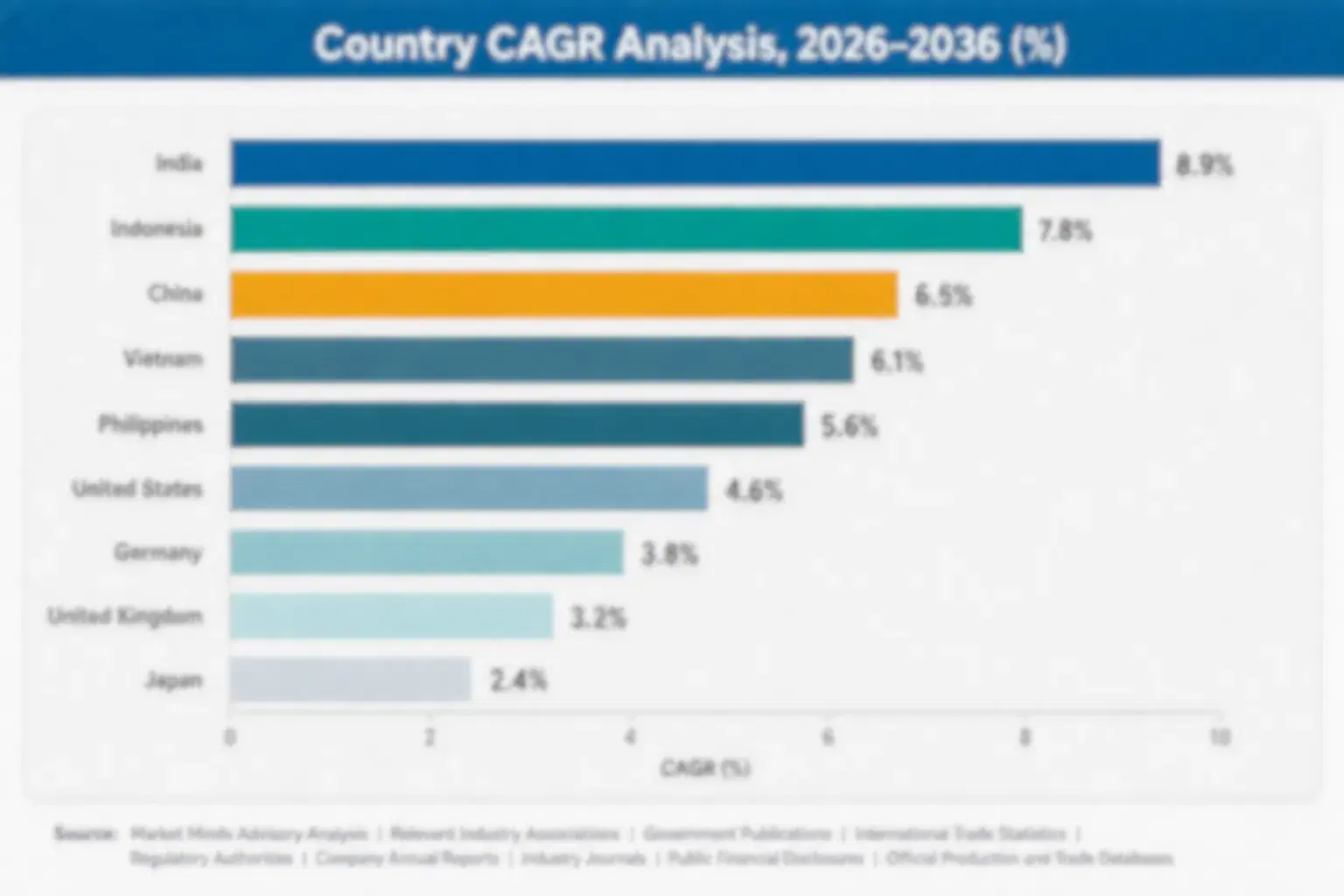
premium-spirits-glass-bottle-market-country-cagr-analysis-1791419237143

Where Bottle Design Becomes Brand Equity

Producers competing only on standard mold shapes face commoditization as brand owners increasingly demand distinctive designs, so the clearest paths to margin expansion run through custom mold capability, sustainable lightweighting, and emerging-market design expertise that customers will pay for directly. Four approaches stand out as genuinely available to most mid-sized producers. These suit producers without full studio capital.

Offering Modular Custom Mold Platforms for Smaller Brands

Producers that develop modular custom mold platforms, letting smaller and emerging spirits brands achieve meaningful visual differentiation without fully bespoke tooling investment, can capture launch volume from craft distilleries that fully custom producers price out entirely. This approach requires upfront investment in flexible mold engineering capability but opens a growing, high-touch volume pool that scale producers focused only on large-volume accounts often overlook. Producers offering this modular approach report winning roughly 20 to 30% more new craft distillery launches than competitors requiring fully bespoke tooling commitments. This suits brands uncertain whether early volume justifies fully bespoke investment.
Market Impact: Wins 20 to 30 percent more craft launches

Developing Engineered Lightweight Premium Glass Early

Producers that develop engineered lightweight glass technology, preserving visual thickness and tactile heft through design rather than raw material mass, can capture brand owners caught between sustainability commitments and traditional weight expectations that competitors relying on conventional heavyweight glass cannot satisfy simultaneously. A mid-sized producer winning even a modest share of brand owners under public sustainability pressure can generate substantial incremental revenue given typical premium contract scale. Producers with this capability report commanding pricing premiums of 15 to 22% over conventional heavyweight alternatives. This capability is becoming a prerequisite for winning new heritage brand contracts specifically.
Market Impact: Commands roughly a 15 to 22 percent premium

Building Manufacturing Presence in Premiumizing Emerging Markets

Producers that build manufacturing presence in Mexico, India, and other rapidly premiumizing emerging markets, rather than exporting exclusively from Western European facilities, can capture local custom mold commissioning demand while also minimizing shipping cost and lead time for fast-growing regional brand owners. This approach requires meaningful upfront capital investment given furnace and mold tooling construction cost, but rewards early movers with durable relationships across the fastest-growing categories in the market. Producers with established Mexican manufacturing presence report order growth considerably above the category average, often 12 to 18% faster annually.
Market Impact: Grows regional order volume 12 to 18 percent

Specializing in Heritage Whisky and Cognac Design Continuity

Producers that specialize in heritage whisky and Cognac bottle design continuity, maintaining decades-long design relationships with established brand owners protecting accumulated brand equity, can secure dependable, long-duration supply contracts that smooths the volatility typical of fast-moving craft category demand. This approach suits producers with deep decorative finishing expertise and established relationships with heritage spirits houses that value continuity over frequent redesign. Producers with these heritage relationships report contract duration running considerably longer, often spanning 10 to 15 years, than typical craft category agreements. These relationships rarely face competitive re-tender given how central design continuity is to heritage brand equity.
Market Impact: Secures roughly 10 to 15 years of contracts

Premium Spirits Glass Bottle Profit Pools

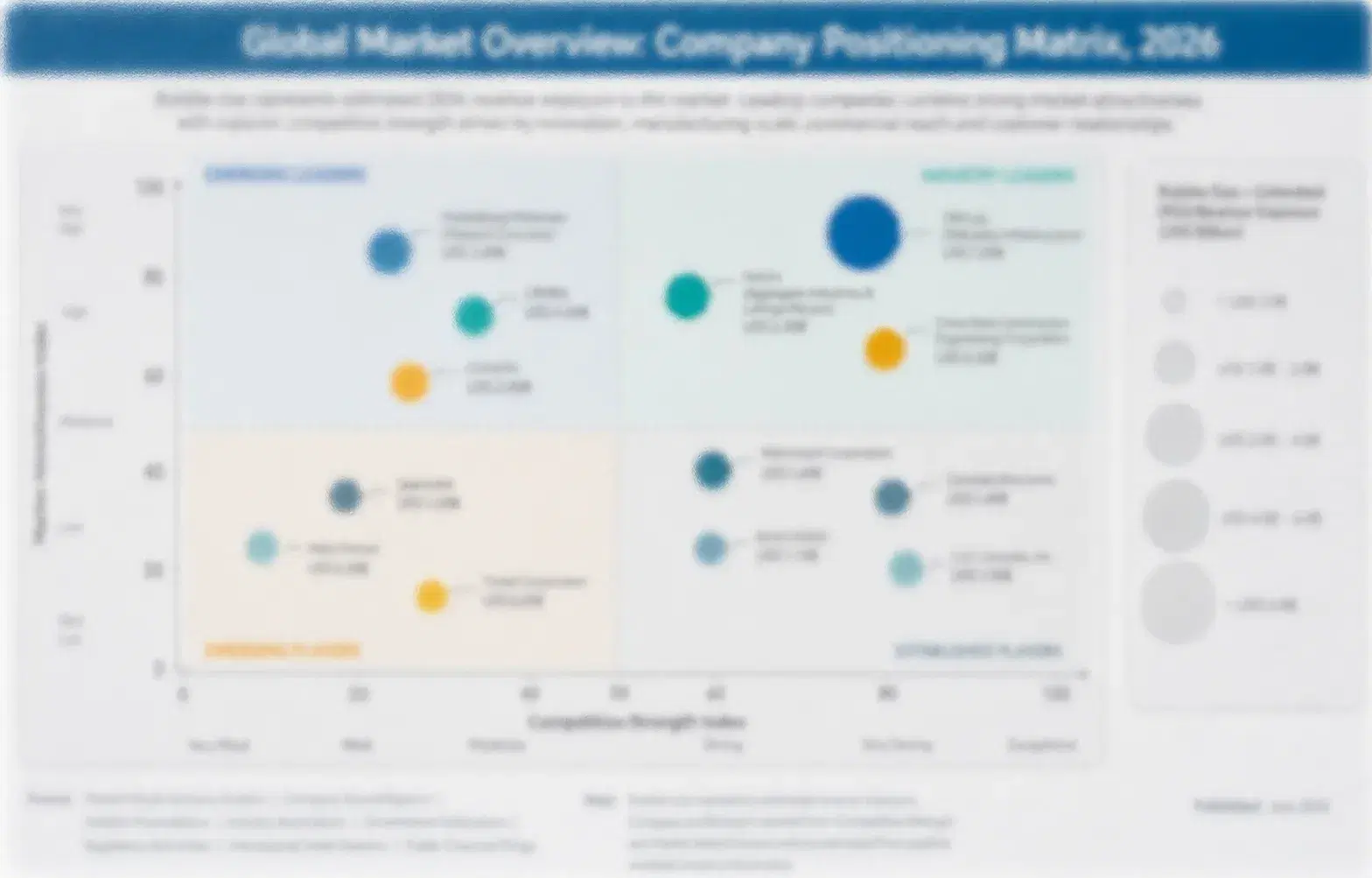
Five producers hold roughly four tenths of global revenue, a figure that understates how fragmented custom mold design work remains even among scale leaders, since each premium brand typically commissions bespoke tooling rather than sharing stock shapes across competitors. Saverglass and Verallia sit ahead of the next tier on heritage spirits relationships and design studio depth, while regional producers compete for faster-growing craft and emerging-market volume.
Competition plays out across three dimensions: heritage design relationship depth that protects decades-long Scotch and Cognac contracts, custom mold flexibility that wins fragmented craft distillery commissions, and emerging-market manufacturing presence that captures premiumizing tequila and Asian whisky demand. Producers that can credibly deliver on all three are winning the fastest-growing, highest-margin volume, while those competing purely on stock shapes face continuous margin pressure from lower-cost regional entrants.

Emerging pressure is coming from Mexican and Indian producers adding premium capacity fast enough to challenge established French and Italian specialists on price within their own fastest-growing home categories, aided by proximity and lower labor cost. Design agencies are also becoming competitive factors, partnering directly with brand owners on bottle concepts before any glass producer is involved.
premium-spirits-glass-bottle-market-company-positioning-matrix-1791419237324

Premium Spirits Glass Bottle Competition and Risks

SAVERGLASS S.A.S.

Moat: Deepest Heritage Spirits Relationships

Saverglass holds the deepest design relationships with heritage Scotch whisky and Cognac houses of any producer worldwide, spanning decades of collaborative bottle design history that newer entrants cannot replicate quickly regardless of their manufacturing capability or mold engineering investment. That track record functions as a qualification asset new entrants simply cannot purchase outright.
SAVERGLASS S.A.S.

Risk: Concentrated Heritage Category Exposure

Saverglass's revenue remains heavily weighted toward heritage whisky and Cognac categories, leaving it less positioned to capture the fastest-growing tequila and emerging-market premiumization volume than competitors with broader geographic manufacturing diversification already in place. Closing that gap would require years of dedicated investment in markets outside its traditional strength.
VERALLIA SA

Moat: Broadest Geographic Manufacturing Reach

Verallia's broad furnace network spanning Europe and expanding into Latin America gives it unusual flexibility to serve both heritage European spirits houses and fast-premiumizing Mexican tequila brands from geographically appropriate manufacturing locations. That flexibility is increasingly valuable as brand owners diversify sourcing across multiple regions simultaneously.
VERALLIA SA

Risk: Less Specialized Design Studio Depth

Verallia's broader commodity glass business means its premium spirits design studio capability is less specialized than pure-play competitors like Saverglass, potentially limiting its appeal to the most design-demanding heritage brand owners seeking dedicated creative partnership. Heritage houses evaluating long-term design partners often weight specialized creative reputation heavily in their selection.

Players Tracked

Prominent Players

Saverglass S.A.S.
Verallia SA
Vetroelite S.p.A.
Bormioli Luigi S.p.A.
Vidrala S.A.

Other Key Players

O-I Glass Inc
Ardagh Group S.A.
Stolzle Glass Group
BA Glass S.A.
Vetreria Etrusca S.p.A.
Allied Glass Containers Limited
Beatson Clark Limited
Wiegand-Glas GmbH
Zignago Vetro S.p.A.
Heinz-Glas GmbH
Piramal Glass Private Limited
Consol Glass Proprietary Limited
Nihon Yamamura Glass Co Ltd
Vitro Packaging LLC
Taiwan Glass Industry Corporation

Recent Developments

FEBRUARY 2025

Saverglass Commissions New Furnace Line in France

Saverglass commissioned a new furnace line in France dedicated to premium whiskey and Cognac bottle production, adding capacity to meet growing heritage brand owner demand for elaborate decorative finishing while expanding its design studio capability for next-generation custom bottle commissions. The facility reaches full output within roughly eighteen months.
Signal: Signals established heritage specialists are scaling capacity well ahead of real market demand.
SEPTEMBER 2024

Verallia Acquires Mexican Tequila Bottle Producer

Verallia acquired a Mexican glass bottle producer specializing in tequila and mezcal packaging, strengthening its presence in the fastest-premiumizing spirits category tracked in this report while reducing its historical reliance on European export volume into the region. The deal reflects growing recognition that tequila mirrors whisky's trajectory a decade ago.
Signal: Signals European leaders are building regional manufacturing presence in the fastest-growing spirits category.
APRIL 2025

Vetroelite and a Japanese Partner Form Whisky Bottle Venture

Vetroelite formed a joint venture with a Japanese partner to supply premium whisky bottles across Asian export markets, pooling design expertise and regional distribution relationships across two companies rather than competing head-on for the region's fastest-growing premium whisky accounts. The structure lets both share entry risk rather than competing independently.
Signal: Signals established players increasingly prefer partnering over competing hard for new Asian volume.

Mold Tooling Dominates Launch Economics

Custom mold tooling and decorative finishing processes together account for roughly 35 to 42% of total launch cost for a new premium bottle design, a cost structure unlike commodity glass packaging, where raw material and furnace energy dominate. Silica sand, soda ash, and furnace energy still matter for base glass production, but the category's cost structure is dominated by design and tooling investment rather than per-unit input cost.
Energy price volatility during 2022 compressed margins across the broader glass industry according to European Commission energy market reporting from that period, but premium producers with established pricing power were better positioned to pass through cost increases than commodity competitors, since brand owners at this tier are considerably less price sensitive on a per-unit basis. Producers without long-term energy contracts still absorbed meaningful near-term cost pressure despite this relative pricing power.

Smaller regional premium producers typically carry greater exposure to both energy volatility and the fixed cost burden of mold tooling investment than scale leaders, since they lack the volume to amortize tooling cost across as many units or the purchasing scale to negotiate favorable energy contracts. This disadvantage compounds for producers serving smaller craft brands with modest runs.
premium-spirits-glass-bottle-market-cost-volatility-analysis-1791419237509

Modular Mold Platforms That Spread Tooling Cost

Producers are developing modular mold platforms that let multiple smaller brand customers share base tooling investment while still achieving meaningful visual differentiation, spreading fixed design cost across a broader customer base than fully bespoke tooling would allow economically. This approach has proven especially valuable for producers serving a high volume of smaller craft accounts.

Long-Term Energy Supply Agreements With Price Caps

Producers negotiate multi-year energy agreements that cap price increases within a defined band, protecting margin on long-duration heritage contracts that cannot easily pass through sudden cost increases mid-contract. Brand owners value this predictability when budgeting multi-year packaging programs.

Engineered Lightweighting to Reduce Material Cost Exposure

Producers are developing engineered lightweighting techniques that reduce raw material volume per bottle while preserving visual and tactile quality, reducing exposure to raw material cost volatility as a secondary benefit alongside the sustainability positioning this technology also provides. Several producers now market this lightweighting capability as a distinct sustainability credential to prospective brand owners.

Portfolio Architecture for Margin Defence

Producers generally run a three-tier portfolio spanning modular and semi-custom bottle designs sold to smaller craft brands on relatively accessible tooling terms, fully bespoke heritage designs commanding premium economics tied to decades-long brand relationships, and next-generation engineered lightweight premium structures still scaling toward broader commercial adoption. Gross margin varies substantially across these tiers, with modular designs competing hardest on accessibility and turnaround speed. Capital allocation decisions increasingly follow this tier structure explicitly.
The tension between modular accessibility and fully bespoke exclusivity shapes producer capital allocation directly, since modular platforms generate broader but thinner-margin volume, while bespoke heritage design work requires deep creative and engineering investment before generating comparable per-contract returns. Producers without a clear positioning strategy risk getting squeezed between accessible modular competitors and prestigious bespoke design houses.

High-value margin pools are concentrating in bespoke heritage whisky and Cognac design work and in engineered lightweight premium structures, categories where brand owners are willing to pay meaningfully above modular pricing for exclusivity or sustainability credentials respectively. Producers positioned early in these categories are capturing a disproportionate share of total industry margin growth relative to their volume share today.

Volume / Commodity-Adjacent Tier

Modular and semi-custom bottle designs sold to smaller craft and emerging spirits brands on accessible tooling terms with faster turnaround than fully bespoke alternatives. Margins here depend heavily on turnaround speed and shared tooling efficiency.
Gross Margin: 18-25%

Premium / Certified Tier

Fully bespoke heritage whisky and Cognac bottle designs carrying decades-long brand relationships, sold to established houses willing to pay for exclusivity and design continuity. Producers here typically maintain dedicated creative studios separate from standard operations.
Gross Margin: 32-40%

Sustainability / Regulatory / Next-Generation Tier

Engineered lightweight premium structures still scaling toward broader commercial adoption, commanding premium pricing tied to sustainability credentials major brand owners increasingly require. Adoption is accelerating as more heritage houses publish sustainability commitments.
Gross Margin: 26-34%
premium-spirits-glass-bottle-market-portfolio-architecture-1791419237699

High-value Sub-segments and Strategic Watch-out

Tequila and Mezcal Bottles

Tequila and mezcal bottles combine the fastest unit growth in the category with rapidly rising average selling price, making this the segment producers are prioritizing most heavily for new design studio and manufacturing investment. Several producers have announced dedicated Mexican design and manufacturing teams separate from European operations.
Gross Margin: 28-36%

Gin Bottles

Gin bottles command strong design-driven pricing tied to the craft distillery boom, representing the category's clearest path to fragmented but high-touch commissioning revenue beyond heritage volume. Supply of flexible tooling capacity gives early movers unusual leverage. This advantage is expected to persist as the craft boom keeps broadening.
Gross Margin: 24-32%

Whiskey and Bourbon Bottles

Whiskey and bourbon bottles remain the format's largest volume base, generating steady revenue even as growth moderates relative to higher-growth tequila and craft gin categories across most mature consumption markets. Producers here compete primarily on heritage relationship depth rather than on price or turnaround speed.
Gross Margin: 26-34%

Rum and Other Specialty Spirits Bottles

Rum and specialty spirits bottles face the most direct competition from modular stock designs and offer the least room for premium differentiation, making this segment a candidate for continued share erosion over the forecast period ahead. Producers serving it treat it as a byproduct of capacity, not a priority.
Gross Margin: 16-22%

Why Heritage Contracts Outlast Any Manager

Heritage whisky and Cognac bottle relationships function like genuine annuities, since decades of accumulated brand equity tied to a specific bottle silhouette create enormous switching friction that survives multiple generations of brand management within the same spirits house. Craft category relationships behave very differently, resembling project-based engagements that reset with nearly every new product launch rather than persisting across years.
Adoption depth varies sharply by spirits category. Heritage whisky and Cognac bottle design is fully mature with minimal remaining innovation appetite, representing stable, relationship-driven demand. Craft gin and emerging tequila adoption remains highly dynamic, with frequent new launches and redesigns driving continuous commissioning activity. Emerging-market premium spirits bottle demand is earliest in its adoption curve, with substantial volume still using modest, non-custom packaging that premiumization will gradually convert. This uneven adoption picture is exactly why growth rates diverge so sharply by category.

Brand owner procurement increasingly separates heritage design relationships, managed through long-term creative partnership rather than competitive bidding, from craft and emerging-market sourcing, which emphasizes speed and modular flexibility instead. This split is becoming more pronounced as spirits conglomerates manage both heritage and craft-acquisition brands under the same corporate umbrella but through very different packaging sourcing processes.
premium-spirits-glass-bottle-market-end-use-penetration-index-1791419237884

What Premium Glass Producers Should Prioritize

These are among the four positions where our research anticipates prominent divergence between winners and laggards over the coming forecast period. Each is grounded in the demand model, the regulatory perimeter, and the announced capacity pipeline.
01 / AGAVE SPIRITS MANUFACTURING INVESTMENT

Build Mexican manufacturing presence ahead of continued premiumization

Producers investing in Mexican manufacturing and design capability now are capturing meaningfully better growth than those still serving the category purely through European exports, and that gap is widening as tequila and mezcal premiumization keeps accelerating across major export markets simultaneously. Heritage whisky and Cognac capacity still generates useful cash flow, but it offers little room for volume expansion given the category's mature growth profile. Producers that delay this investment risk ceding the fastest-growing, highest-margin volume to competitors who moved earlier and already hold established Mexican relationships.
02 / MODULAR MOLD PLATFORM DEVELOPMENT

Build modular platforms before craft brands consolidate elsewhere

Craft gin and craft whiskey distilleries are already shortlisting producers based on tooling accessibility and turnaround speed, not waiting for the category to mature before committing to packaging partners willing to work within their modest launch budgets. Producers without this capability risk exclusion from the category's most fragmented but collectively substantial volume entirely, since craft brands strongly prefer producers offering accessible entry points. Early positioning is becoming a precondition for winning this high-touch business at meaningful scale across multiple craft categories simultaneously.
03 / ENGINEERED LIGHTWEIGHTING CAPABILITY

Build sustainable weight-reduction technology before mandates arrive

Major spirits conglomerates are already publicly committing to sustainability targets that will eventually require lighter premium packaging, not waiting for regulation to force the issue before engaging producers who can deliver that technology credibly. Producers without this capability risk exclusion from an expanding share of heritage brand contracts entirely, since procurement teams increasingly screen for sustainability credentials alongside design quality. This dynamic is reshaping where specialty research investment flows, and capital committed to this technology now compounds into a lead rivals cannot close quickly.
04 / EMERGING-MARKET DESIGN STUDIO EXPANSION

Build design capability closer to premiumizing emerging markets

Rising disposable income across India and Southeast Asia is creating entirely new custom bottle commissioning demand that has no deep design studio tradition the way Western Europe does. That gap tends to widen further once a handful of early entrants establish design relationships with the region's emerging premium spirits brands, locking out latecomers from the most valuable accounts. Producers that build design studio capability closer to these markets now are trading near-term investment for meaningfully better positioning against the next wave of premiumization-driven commissioning demand.

Engagement Snapshot From the Field

A live engagement with an industry participant carrying material or product regulatory and market exposure ahead of a defining policy shift, showing how our research translates into a defensible multi-year portfolio strategy.
MARKET MINDS ADVISORY · CLIENT ENGAGEMENT SUMMARY
Premium Spirits Glass Bottle Producer Strategic Portfolio Review and Transition Roadmap 2026·Investment Scenario on Premium Spirits Glass Bottle Exposure Evaluation 2025-26
CLIENT PROFILE
The client is an emerging premium tequila brand based in Mexico with annual revenue in the $45 million range (client-reported, unverified by MMA), selling primarily through domestic retail with growing interest from United States distributors seeking to add the brand to their premium agave spirits portfolios. The company's existing bottle design had been adequate for domestic sales but lacked shelf presence for crowded export retail.
STRATEGIC CHALLENGE
The client needed to redesign its bottle to compete credibly against established premium tequila brands in United States retail, without a clear internal framework for balancing design ambition against the tooling investment its modest production scale could realistically support. The client also needed assurance that any new design would avoid infringing on competitor trademarks already established in the category.
MMA APPROACH
MMA's team benchmarked competitor bottle designs and price positioning across the United States premium tequila category, modeled tooling investment scenarios against the client's realistic production volume projections, and facilitated producer selection discussions that balanced design ambition against budget constraints. The engagement concluded with a recommended producer and a phased launch timeline matched to the client's budget.
KEY FINDINGS
  1. Competitor analysis revealed that modest but genuinely distinctive design elements, rather than maximum ornamentation, correlated most strongly with successful premium positioning in the client's target price tier.
  2. A modular mold platform approach would let the client achieve meaningful shelf differentiation at roughly forty percent of the cost of fully bespoke tooling given its production volume.
  3. Three of five candidate producers had direct experience launching comparable tequila brands into United States distribution, meaningfully narrowing the realistic shortlist. a factor that shaped the final producer shortlist considerably.
  4. The client's original design concept risked trademark conflict with an established competitor bottle shape, a risk the original design brief had not flagged internally before the engagement.
CLIENT PROFILE
The client is an emerging premium tequila brand based in Mexico with annual revenue in the $45 million range (client-reported, unverified by MMA), selling primarily through domestic retail with growing interest from United States distributors seeking to add the brand to their premium agave spirits portfolios. The company's existing bottle design had been adequate for domestic sales but lacked shelf presence for crowded export retail.
STRATEGIC CHALLENGE
The client needed to redesign its bottle to compete credibly against established premium tequila brands in United States retail, without a clear internal framework for balancing design ambition against the tooling investment its modest production scale could realistically support. The client also needed assurance that any new design would avoid infringing on competitor trademarks already established in the category.
MMA APPROACH
MMA's team benchmarked competitor bottle designs and price positioning across the United States premium tequila category, modeled tooling investment scenarios against the client's realistic production volume projections, and facilitated producer selection discussions that balanced design ambition against budget constraints. The engagement concluded with a recommended producer and a phased launch timeline matched to the client's budget.
KEY FINDINGS
  1. Competitor analysis revealed that modest but genuinely distinctive design elements, rather than maximum ornamentation, correlated most strongly with successful premium positioning in the client's target price tier.
  2. A modular mold platform approach would let the client achieve meaningful shelf differentiation at roughly forty percent of the cost of fully bespoke tooling given its production volume.
  3. Three of five candidate producers had direct experience launching comparable tequila brands into United States distribution, meaningfully narrowing the realistic shortlist. a factor that shaped the final producer shortlist considerably.
  4. The client's original design concept risked trademark conflict with an established competitor bottle shape, a risk the original design brief had not flagged internally before the engagement.
RECOMMENDED STRATEGY
Phase 1: Phase 1 (Months 1-2): Benchmark competitor bottle designs and price positioning across the target United States retail category. across five leading competitor brands. Phase 2: Phase 2 (Months 3-5): Model tooling investment scenarios and select a producer balancing design ambition against budget constraints. weighted against the client's actual budget. Phase 3: Phase 3 (Months 6-10): Finalize bottle design, complete tooling fabrication, and launch into United States distribution channels. coordinated closely with the client's distributor timeline.
OUTCOME
The client launched its redesigned bottle into United States distribution and reported distributor interest exceeding initial projections (client-reported, unverified by MMA), while avoiding the trademark conflict identified during the design review process. The client has since begun exploring a complementary mezcal line using the same design partner.

Frequently Asked Questions

Foundational context covering the market sizes, CAGR, scope, country, region and competition that inform every finding below. This section is provided to cover basics and most often pre-purchase conversations, answered from the MMA Primary Research Dataset.

What is the current size of the Premium Spirits Glass Bottle Market?

The global premium spirits glass bottle market reached $4.2 billion in base year 2025. Growth is driven primarily by tequila premiumization and the craft gin distillery boom.

How large will the Premium Spirits Glass Bottle Market be by 2036?

MMA projects the market will reach approximately $8.7 billion by 2036, roughly 1.9 times the 2026 figure. This reflects sustained premiumization across multiple spirits categories.

What is the CAGR for the Premium Spirits Glass Bottle Market 2026 to 2036?

The market is forecast to grow at a compound annual growth rate of 6.8% between 2026 and 2036. That pace reflects accelerating premiumization across the spirits industry.

Which segment is growing fastest?

Tequila and mezcal bottles are the fastest-growing segment, expanding at roughly 1.41 times the overall market CAGR. Rapid agave spirits premiumization across export markets is driving this growth.

Who are the major companies in the Premium Spirits Glass Bottle Market?

Saverglass, Verallia, Vetroelite, Bormioli Luigi, and Vidrala lead the global market. Together they hold an estimated 42% of global revenue in a notably design-fragmented industry.

Which country is growing fastest?

Mexico is the fastest-growing country market, expanding at roughly 9.8% annually, driven by rapid tequila and mezcal export premiumization across the United States and European retail channels.

Premium Spirits Glass Bottle Segments Covered

The full report scope spans multiple orthogonal segmentation dimensions, with cross-tabulated demand data provided for each dimension pair. Coverage extends further to regional breakdowns, trend trajectories, and the competitive detail needed to support segment-level decision-making.

By Spirits Category

  • Whiskey and Bourbon
  • Vodka
  • Gin
  • Tequila and Mezcal
  • Cognac and Brandy
  • Rum and Other Specialty Spirits

By Commercial Dimension

  • Heritage Brand Supply
  • Craft and Emerging Brand Supply
  • Private Label and Contract Bottling

By Distribution Channel

  • Direct-to-Brand-Owner Supply
  • Duty-Free and Travel Retail Supply
  • Regional Distributor Networks

By Region

  • North America
  • Western Europe
  • East Asia
  • South Asia and Pacific
  • Latin America
  • Middle East and Africa
  • Eastern Europe

Scope, Methodology, and Coverage

Every figure in this report is reproducible from documented input assumptions. The scope below maps the historical period, the forecast horizon, the segmentation dimensions, and the countries covered, alongside the underlying primary and qualitative methodology.
Historical Period
2020 to 2025
Forecast Period
2026 to 2036
Base Year
2025 (USD billions; MMA Primary Research Dataset, October 2026)
Market Definition
The premium spirits glass bottle market covers custom-mold, heavyweight, and decoratively finished glass bottles for premium and luxury-tier whiskey, vodka, gin, tequila, cognac, and specialty spirits brands. It excludes standard, mainstream-tier spirits bottles already covered under the glass container market scope, as well as wine bottles and beer glassware and drinkware, each of which is addressed under a separate market scope.
Quantitative Units
USD billions (current prices); million units of converted volume where applicable
Segmentation Dimensions
By Spirits Category; By Commercial Dimension; By Distribution Channel; By Region
Regions Covered
North America, Western Europe, East Asia, South Asia and Pacific, Latin America, Middle East and Africa, Eastern Europe
Countries Covered
USA, France, UK, Scotland, Italy, Spain, Germany, Japan, China, South Korea, India, Australia, Canada, Mexico, Brazil, Argentina, UAE, Saudi Arabia, South Africa, Poland, Czech Republic, Russia, Netherlands, Sweden, Switzerland, Taiwan, and additional markets relevant to this sector
Key Companies Profiled
Saverglass S.A.S., Verallia SA, Vetroelite S.p.A., Bormioli Luigi S.p.A., Vidrala S.A., O-I Glass Inc, Ardagh Group S.A., Stolzle Glass Group, BA Glass S.A., Vetreria Etrusca S.p.A., Allied Glass Containers Limited, Beatson Clark Limited, Wiegand-Glas GmbH, Zignago Vetro S.p.A., Heinz-Glas GmbH, Piramal Glass Private Limited, Consol Glass Proprietary Limited, Nihon Yamamura Glass Co Ltd, Vitro Packaging LLC, Taiwan Glass Industry Corporation
Quantitative Methodology
Primary survey, n=3,800 respondents, Q4 2025, six countries; demand-side model with trade association cross-validation
Qualitative Methodology
47 expert interviews, Q4 2025; applied to validate demand model assumptions, identify emerging dynamics, and assess competitive positioning
Report Format
PDF and XLSX data workbook (Word format preview document)
Publisher
Market Minds Advisory
Report Code
MMA-2026-PAC-221
Published
October 2026
Contact
sales@marketmindsadvisory.com | www.marketmindsadvisory.com

Purchase the full Premium Spirits Glass Bottle Market Report (2026 to 2036).

The full report provides detailed market sizing and ten-year forecasts across all six spirits category segments and all seven world regions, supported by producer-level design capability benchmarking and primary interview findings. It includes in-depth competitive profiles of the top five producers alongside second-tier player coverage, mold tooling and launch cost exposure analysis, and premiumization tracking across major consumption and export markets. Category-specific margin and pricing data is broken out separately from headline market figures to support both strategic planning and tactical sourcing decisions. Buyers receive the full data set in editable format alongside the formatted report document itself.
Ten-year market sizing across six spirits categories
Producer design capability benchmarking on a consistent basis
Premiumization tracking across major export markets
Mold tooling and launch cost exposure analysis
Editable data tables alongside the formatted report
Primary interview findings from 47 industry experts

Built For The People Who Decide

From boardroom strategy to bench-side execution, this report is read cover-to-cover by leaders shaping the next decade of their industry, turning demand scenarios, market dynamics and valuation benchmarks into decisions.
CXOs/ Presidents/ VPs/ Managers
M&A and Corporate Development
Strategy Teams and R&D Heads
Procurement and Product Directors
Regulatory and Compliance Leaders
Investor Relations and Equity Analysts