Market Minds Advisory
Precision Stainless Steel Market

Precision Stainless Steel Market: The Tolerance Is The Product, Not The Alloy

Anybody can supply the grade, because the alloy specifications are public and standard, and what is genuinely scarce is holding thickness within a few microns across a wide coil, batch after batch.

Lead Analyst

Published

September 2026

Make Smarter Decisions with Customized Research Insights

Request a free sample report and evaluate market opportunities, growth trends, and competitive dynamics relevant to your business needs.

2025 MARKET VALUE$14.6BMarket Size 2025
2036 FORECAST VALUE$32.7BBase Case , 2026 to 2036
CAGR 2026 TO 20367.6 %Bull 8.8% / Bear 6.4%
INCREMENTAL OPPORTUNITY$17.0BNet 10- year value creation
EXPANSION MULTIPLE2.08x2036 value over 2026 base
Strategic Levers
M&A Pipeline
Regional Outlook
Country Rankings
Competitive Intelligence
Segmental Deep-dive
Call-Us : 91 93563 13602

Executive Snapshot and Market Trajectory

The alloy is not the differentiator. Standard grades are published, widely melted and available from many producers. What separates suppliers is holding thickness to a few microns across a wide coil with consistent flatness and surface, coil after coil, which is rolling capability rather than metallurgy.
East Asia takes 36% of value because Chinese, Japanese and Korean producers dominate stainless output and Japanese mills lead precision strip and foil technology specifically, while battery and fuel cell material is overwhelmingly rolled in the region. Battery and fuel cell grade strip grows at 11.4%, half again the market rate of 7.6%, and it is a genuinely different product from conventional strip. Years of capital and rolling process discipline sit behind that capability.
Concentration is low at 34% and qualification rather than price decides most business. A strip qualified into a medical device, an airbag initiator or a fuel cell stack is specified by mill and coil source, so changing supplier means requalification measured in years. Mills therefore hold positions for a product's life and capacity rather than pricing settles who wins new work. Capacity rather than pricing settles who wins new work.
Market Definition
The market covers stainless steel supplied to precision dimensional and surface tolerances for demanding applications, including cold-rolled precision strip, ultra-thin precision foil, precision drawn and welded tube, precision wire and bar, coated and surface-engineered precision strip, and battery and fuel cell grade precision strip. Commodity stainless plate, sheet and long products supplied to general tolerances, carbon and alloy steels, nickel alloys outside stainless grades, and downstream fabricated components are excluded. Melting and slab production sold as intermediate feed falls outside scope.
Base Year Value
$14.6B in 2025 (MMA Primary Research Dataset, August 2026)
Forecast Period
2026 to 2036, eleven discrete annual values
CAGR
7.6% base case. Bull 8.8%. Bear 6.4%.
Fastest Growth Segment
Battery and Fuel Cell Grade Precision Strip: 11.4% CAGR
Fastest Growth Country
India: 10.0% CAGR
Fastest Growth Region
South Asia and Pacific: 9.6% CAGR
Largest Region
East Asia: 36% of 2025 global value
Market Leaders
Aperam, Nippon Steel, Outokumpu, Alleima, Proterial. Source: MMA Analysis based on disclosed stainless and specialty steel revenue, company annual reports 2025.
Primary Survey
n=3,800 procurement and R&D decision-makers, Q4 2025, six countries
Methodology
Demand-side build-up, cross-validated against public data, 47 expert interviews

Precision Stainless Steel Market Forecast Scenarios

precision-stainless-steel-market-size-forecast-scenario-1787693073073
Growth from 2020 to 2025 ran at 6.6% and raw material disruption shaped it more than demand did. Nickel pricing moved violently through 2022 when exchange trading was suspended and trades were cancelled, breaking the surcharge mechanism the industry relies on. Battery and fuel cell material grew rapidly from a small base throughout the period while conventional precision strip demand tracked industrial activity.
The 7.6% base case rests on three mechanisms. Battery case and fuel cell plate material keeps expanding as electrified vehicle production rises, and those grades require thinner gauge and tighter flatness than conventional strip. Downgauging continues across electronics, medical and automotive applications, which raises value per tonne even where tonnage is flat. And Asian precision rolling capacity keeps growing alongside the battery and electronics manufacturing it serves directly. Each mechanism works independently of the others.
The bull case at 8.8% turns on fuel cell stack production reaching commercial volume across multiple vehicle programmes, which would require bipolar plate material at quantities nobody has rolled yet. The bear case at 6.4% is electrified vehicle production growth slowing, which would leave precision rolling capacity built for battery demand competing for conventional work at conventional margins.

Microns Rather Than Metallurgy

Grade selection in this market is close to trivial. The common austenitic and martensitic specifications are published, melted by dozens of producers and available everywhere. The difficulty is dimensional: holding thickness within around two microns across a coil several hundred millimetres wide, with flatness and surface finish consistent from one coil to the next. That is rolling capability and process control rather than metallurgy.
FIVE-FIRM CONCENTRATION34%Share of stainless and specialty steel revenue held by leaders
PRECISION STRIP PREMIUM$1,850 per tonneTypical premium over commodity stainless for tight tolerance strip
TOP PRODUCING COUNTRYChina 34%Chinese share of global precision stainless rolling output annually
ACHIEVABLE THICKNESS TOLERANCE2 micronsVariation held across a wide coil by leading precision mills
REQUALIFICATION TIMELINE18 monthsTime to qualify an alternative mill into a critical application
NICKEL PRICE RANGE4.1 timesRatio between peak and trough nickel pricing in recent years
Alloy surcharge mechanisms are supposed to pass nickel volatility through to customers, and in March 2022 the mechanism failed. Exchange trading was suspended and trades were cancelled during an extraordinary price movement, leaving producers holding inventory priced against a formula referencing a market that had stopped functioning. Nickel has ranged by more than four times since 2020. Treating the surcharge as an automatic hedge proved expensive.
Qualification is what actually holds business in place. A precision strip specified into a medical device, an airbag initiator or a fuel cell stack is qualified by mill and frequently by coil source, and requalifying an alternative supplier takes around eighteen months of testing and documentation. That means mills hold positions for a product's commercial life once qualified.
"Customers ask about the grade and then buy on whether your mill can hold two microns across a metre of coil at three in the morning on a Sunday. Those are completely different questions."
Director, Specialty Steel and Precision Materials Practice · MMA Chemicals and Materials Practice · August 2026

Market Trends

Battery And Fuel Cell Grades Demand Different Rolling

Battery case strip and fuel cell bipolar plate material require thinner gauge, tighter flatness and specific surface characteristics that conventional precision strip was never optimised to deliver, alongside formability that survives deep drawing or stamping into complex channels. Growth at 11.4% follows electrified vehicle production directly. Producers treating this as ordinary strip lose qualification during trials rather than during commercial supply, which is expensive and quiet. Mills that developed dedicated practices for these grades hold positions competitors cannot enter without their own qualification cycle. Qualification cycles keep competitors out. Trials decide it, not specifications.
Market Impact: Rolls 34% of global output

Downgauging Raises Value Per Tonne While Tonnage Flattens

Every micron removed from a battery case, a connector or a medical component saves material, reduces weight and frequently improves performance, so customers push continuously for thinner gauge. That raises price per tonne substantially even where tonnage stays flat, which is why reported revenue growth in precision strip consistently outruns volume growth. There is a floor, since rolling below certain gauges compromises formability and the customers pushing hardest do not always understand that trade-off until a forming trial fails. Revenue growth outruns volume growth consistently. A forming trial usually reveals the limit.
Market Impact: Consumes material per 1 vehicle

Market Opportunities and Growth Drivers

Asian Rolling Capacity Follows Its Own Customers

Chinese producers account for roughly 34% of global precision rolling output and Japanese mills lead foil and ultra-thin strip technology, while the battery, electronics and connector manufacturing consuming this material sits overwhelmingly in the same region. Precision strip is expensive to ship relative to its value and qualification favours proximity for technical support, so capacity locates near consumption. Regional growth therefore compounds, since new battery capacity attracts new rolling capacity which attracts further downstream investment nearby. Capacity locates beside its customers because the material ships poorly and qualification favours technical proximity.
Market Impact: Spans a 4.1 times price range

Electrified Vehicle Production Pulls Specialist Grades

Battery case material and fuel cell bipolar plates are consumed per vehicle rather than per platform, which ties demand directly to production volume rather than to model launches. Both applications specify tolerances and surface characteristics beyond conventional precision strip. Fuel cell plate material in particular requires corrosion performance in a demanding electrochemical environment alongside formability into channels measured in fractions of a millimetre. Producers qualified into those programmes hold multi-year positions, and those who were not qualified cannot enter mid-programme. Positions last for the whole programme. Mid-programme entry is impossible.
Market Impact: Freezes supply for 18 months

Market Restraints and Challenges

Alloy Surcharge Mechanisms Break Under Extreme Volatility

Surcharge formulas referencing exchange nickel prices pass raw material volatility to customers under ordinary conditions, and in March 2022 exchange trading was suspended and trades cancelled during a price movement no formula anticipated. Root cause is that a contractual mechanism referencing a market assumes that market keeps functioning. The commercial impact was producers holding inventory priced against a reference that had stopped existing, with nickel ranging over four times since 2020. Mitigation means contractual fallback provisions, which very few contracts contained. Very few contracts contained them. Fallback provisions cost nothing.
Market Impact: Requires flatness below 2 microns

Qualification Timelines Freeze Both Sides Of The Market

Qualifying an alternative mill into a critical application takes around eighteen months of testing, forming trials and documentation, which protects incumbents and equally traps customers who need capacity a qualified supplier cannot provide. Root cause is that dimensional and surface consistency vary by mill and by rolling practice in ways specifications do not fully capture. The commercial impact is that shortages cannot be resolved by switching, so availability decides outcomes. Mitigation involves dual qualification during development, which few customers fund. Dual qualification is spreading slowly. Few customers fund dual qualification.
Market Impact: Lifts value across flat 0 tonnage
3 additional market trends, 4 additional growth drivers, and 2 additional restraints and challenges are covered in the full report. Contact sales@marketmindsadvisory.com to access the complete intelligence.

Segment CAGR and Growth Architecture

Segmentation follows product form: how the material is rolled and finished before it leaves the mill, rather than which industry consumes it or how it is contracted. Six forms cover the market without overlap, from cold-rolled strip through to battery and fuel cell grades. End-use industry and commercial arrangement are treated separately here. Both cut across all six forms.
precision-stainless-steel-market-market-share-analysis-1787693073251

Battery and Fuel Cell Grade Precision Strip

Battery case strip and fuel cell bipolar plate material need thinner gauge, tighter flatness and surface characteristics that conventional precision strip was never developed to hold, together with formability surviving deep drawing or stamping into channels measured in fractions of a millimetre. Growth at 11.4%, half again the market rate of 7.6%, tracks electrified vehicle production rather than any general industrial cycle. Producers treating these as ordinary strip fail during forming trials rather than in commercial supply, which is an expensive and quiet way to lose a programme that will run for years. Dedicated rolling practice is the entry requirement, and mills that developed it early hold positions others cannot contest.
CAGR 11.4%

Ultra-Thin Precision Foil

Rolling stainless below the gauges conventional precision mills reach requires equipment, tension control and measurement capability that very few producers hold, and Japanese mills lead the field by a considerable margin. Growth at 9.6% comes from electronics, medical components, gaskets and sensor applications where thickness reduction improves performance directly. Value per tonne is far higher than any other form here, which flatters reported growth relative to tonnage. The practical limit is formability rather than rolling capability, since material thin enough to roll is not always material a customer can actually form. Value per tonne here is far above any other form, which flatters reported growth relative to actual tonnage shipped.
CAGR 9.6%
Full segment breakdown across 6 segments available in the complete report.

Regional Architecture and Country Demand Map

Geography follows both rolling capability and downstream consumption, which locate together because precision strip ships poorly relative to its value. East Asia dominates on both, Western Europe holds specialist positions, and South Asia grows fastest from a smaller base. Qualification also favours proximity for technical support.

North America

American precision rolling serves medical device, aerospace, automotive safety and electronics manufacturing, with qualification into airbag initiators and medical components creating positions that last for a product's commercial life. Domestic capacity is limited relative to consumption and imports fill a substantial share, particularly in thinner gauges where domestic capability is thinner still. Trade measures on stainless imports have shaped sourcing in ways that qualification requirements complicate, since a qualified mill cannot simply be replaced with a domestic alternative. Canadian and Mexican consumption follows integrated North American manufacturing supply chains closely. Trade measures on stainless imports have shaped sourcing in ways qualification requirements complicate, since a qualified mill cannot simply be swapped for a domestic alternative.
Share: 22% | CAGR: 6.8% (2026 to 2036)

Western Europe

European mills hold specialist positions in precision strip and foil built over decades, with German, French and Swedish producers supplying demanding medical, automotive safety and industrial applications worldwide. Energy costs weigh heavily on cold rolling and annealing operations and have compressed margins considerably since 2022. Regional stainless production has contracted while precision capability has largely been retained, since it commands premiums that commodity output does not. European producers also lead surface-engineered and coated precision strip, which is a genuine technical position rather than merely a regional preference. Energy costs weigh heavily on cold rolling and annealing and have compressed margins considerably, while precision capability has been retained where commodity output has not.
Share: 20% | CAGR: 6.0% (2026 to 2036)
Regional intelligence for 5 additional markets available in the complete report: East Asia, South Asia and Pacific, Latin America, Middle East and Africa, Eastern Europe. Contact sales@marketmindsadvisory.com.
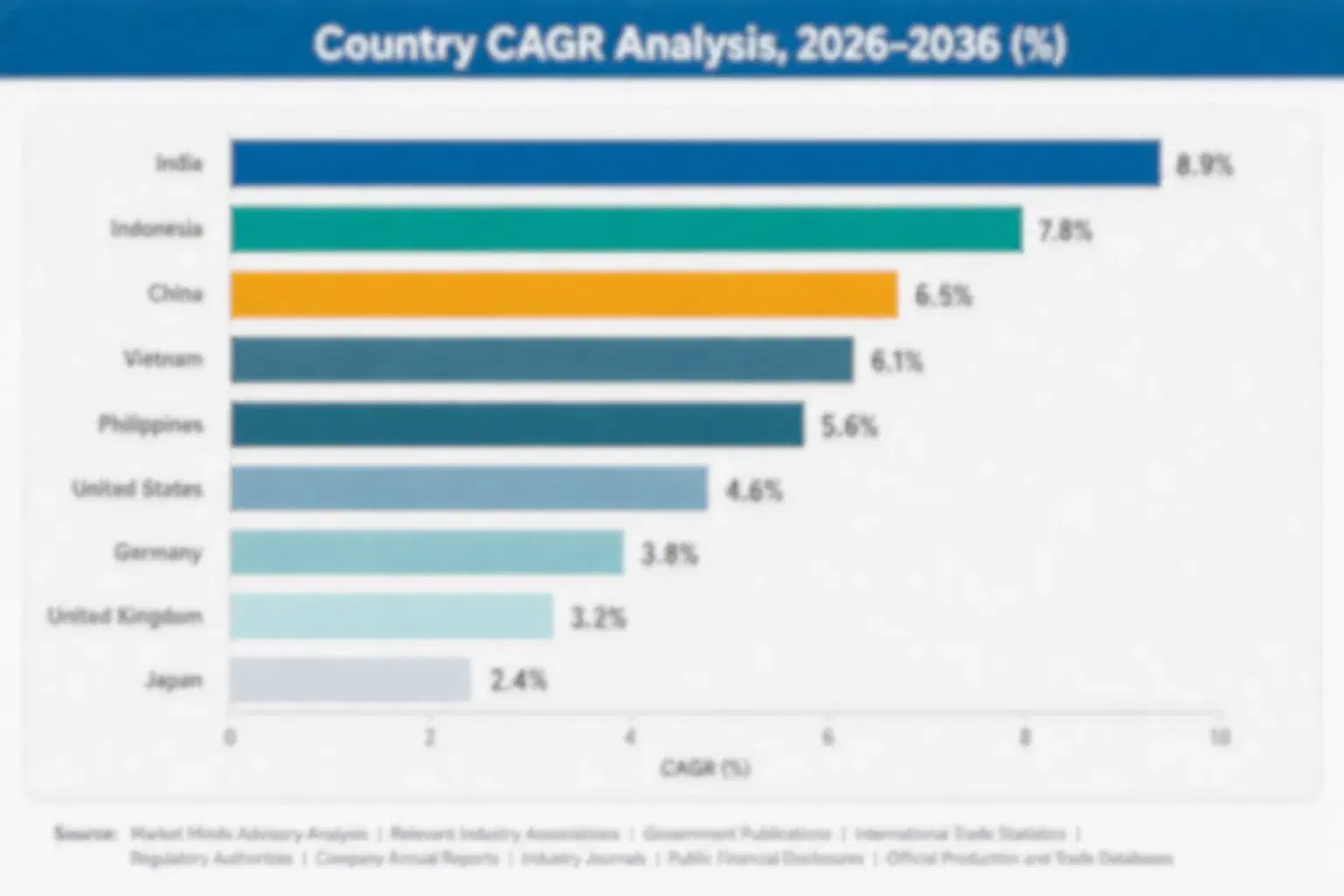
precision-stainless-steel-market-country-cagr-analysis-1787693073432

Selling Capability Rather Than Grade

Grades are standard and available everywhere, qualification takes around eighteen months and nickel has ranged over four times since 2020. Four levers work on tolerance capability, contract structure, application development and capacity positioning rather than on alloy specification, which competitors match immediately. Grade is not a differentiator anywhere. Everyone melts the same steel. Capability is the variable.

Sell Measured Tolerance Capability Not Specification

Every producer can supply the grade because specifications are published and widely melted, and what customers actually need is thickness held within around two microns across a wide coil with consistent flatness between coils. Mills publishing measured process capability data rather than specification compliance give engineers something to design against. That converts a commodity quotation into a technical conversation, and it reaches the design engineer who writes the qualification rather than the buyer comparing grade and price alone. Around 2 microns of consistent tolerance is the claim that matters, and almost nobody publishes their measured capability against it.
Market Impact: Demonstrates a genuine 2 micron rolling tolerance capability

Write Surcharge Fallback Into Every Contract

Alloy surcharge formulas reference exchange nickel pricing and assume that market keeps functioning, which it did not in March 2022 when trading was suspended and trades cancelled. Nickel has ranged over 4 times since 2020. Contracts containing fallback provisions for reference failure protected producers who had them and cost nothing to include beforehand. Almost no contracts contained them, and negotiating the clause during a quiet period is considerably easier than discovering its absence during the next disruption. The clause costs nothing beforehand. Almost nobody had one in place before 2022.
Market Impact: Covers the whole 4.1 times nickel price range

Develop Battery Grades As Distinct Products

Battery case and fuel cell plate material need thinner gauge, tighter flatness and formability that conventional precision strip was never developed to deliver, and mills treating them as ordinary grades fail during forming trials rather than in supply. Growth at 11.4% goes to producers with dedicated rolling practices. Developing those practices costs mill trials and metallurgical work ahead of contracted demand, and it buys positions in programmes running for years that competitors cannot enter mid-cycle. Programmes run for years once qualified. Failing a forming trial loses years of programme supply.
Market Impact: Captures the 11.4% growing battery grade strip demand

Hold Qualified Capacity Ahead Of Programme Demand

Requalifying an alternative mill takes around eighteen months, so a customer facing shortage cannot switch and a producer without available qualified capacity cannot capture the volume. Availability rather than pricing therefore decides new business. Mills holding qualified capacity ahead of contracted demand win programmes outright when incumbents run short, which happens regularly in a market where capacity additions take years. Carrying that capacity costs money through quiet periods and captures positions lasting a product's whole commercial life. Roughly 18 months of requalification protects whoever holds capacity when an incumbent runs short, which happens regularly.
Market Impact: Exploits the whole 18 month requalification timeline barrier

Who Controls the Margin Pool

Measured on disclosed stainless and specialty steel revenue, the five leading producers hold a CR5 of 34%, which is low and reflects a market where regional mills hold genuine qualified positions that global scale does not displace. Aperam, Outokumpu and Alleima lead European precision capability, Nippon Steel and Proterial lead Japanese foil and ultra-thin technology, and Chinese producers dominate volume in their own enormous market. Global scale does not displace a qualified regional mill.
Three contests define activity. Conventional precision strip competes on qualified capacity availability and on price within regions, since shipping erodes value quickly. Ultra-thin foil competes on rolling capability that very few mills hold at all. Battery and fuel cell grades compete on dedicated practices and forming performance, where trials rather than specifications decide the outcome. A producer strong in one of those three contests has little transferable advantage in the others.

Pressure comes from Chinese capacity expanding into higher tolerance work while European energy costs weigh on cold rolling and annealing operations. Rankings shift where new programmes qualify suppliers, since existing positions are effectively frozen by requalification timelines that nobody undertakes without cause. Existing positions are effectively frozen.
precision-stainless-steel-market-company-positioning-matrix-1787693073612

Competitive Moat and Risk Dimensions

APERAM

Moat: European Precision Qualification Base

Aperam holds qualified positions across medical, automotive safety and industrial applications built over decades, and requalifying an alternative mill takes around eighteen months of trials and documentation nobody undertakes casually. Those qualifications lock supply for a product's commercial life. A competitor with equivalent rolling capability still faces a customer with no reason to spend eighteen months proving it.
APERAM

Risk: European Energy Cost Exposure

Cold rolling and annealing are energy intensive and European industrial energy costs rose sharply from 2022, compressing margins against Asian producers whose energy position is materially better. Qualification protects existing volume without protecting the margin earned on it. New programme competition increasingly happens where energy cost differences translate directly into quoted price.
PROTERIAL

Moat: Ultra-Thin Rolling Technical Depth

Japanese mills including Proterial lead ultra-thin foil rolling, holding tension control, measurement and surface capability that very few producers anywhere have replicated. That capability took decades of equipment and process development to establish. A competitor entering ultra-thin work faces capital investment and a learning curve measured in years rather than any straightforward technology purchase.
PROTERIAL

Risk: Application Concentration Risk

Ultra-thin foil demand concentrates in electronics, medical and sensor applications whose volumes move with product cycles that mills do not influence. Value per tonne is high and tonnage is modest, which makes revenue sensitive to a small number of customer programmes. Losing one design cycle in a major application affects utilisation considerably more than it would in conventional strip.

Players Tracked

Prominent Players

Aperam
Nippon Steel
Outokumpu
Alleima
Proterial

Other Key Players

JFE Steel
Acerinox
voestalpine
Nippon Yakin Kogyo
Toyo Kohan
Waelzholz
Wickeder Group
Ulbrich Stainless Steels
Baosteel
TISCO
POSCO
Jindal Stainless
Tsingshan Holding Group
VDM Metals
Yieh United Steel

Recent Developments

MARCH 2025

Producer commissions dedicated battery grade precision rolling line

A precision stainless producer commissioned a rolling line dedicated to battery case and fuel cell plate grades, an organic capital investment rather than any acquisition or partnership. Conventional practices could not hold the flatness and formability those applications require during customer forming trials. Dedicated practice followed.
Signal: Battery grades need dedicated practice rather than adapted conventional rolling, which several producers discovered rather expensively.
JULY 2025

Steel producers add surcharge fallback provisions to supply contracts

Stainless producers began adding contractual fallback provisions covering failure of exchange nickel reference pricing, a commercial contracting change rather than any transaction. The 2022 suspension of exchange trading had left surcharge formulas referencing a market that had temporarily ceased to function at all. Fallback provisions now appear.
Signal: Contract structure is catching up with a mechanism failure that cost producers real money three years earlier.
NOVEMBER 2025

Automotive programme dual qualifies second precision strip supplier

An automotive component programme qualified a second precision strip mill alongside its incumbent, a supply chain decision rather than any commercial dispute. Requalification timelines measured in many months had previously left the programme unable to respond when its single qualified supplier faced capacity constraints. Availability decided it.
Signal: Dual qualification is spreading as customers recognise that qualification protects incumbents and traps buyers in equal measure.

What Precision Rolling Costs

Alloy content dominates and rolling adds the value. Nickel, chromium, molybdenum and the stainless substrate together run 54 to 62% of precision strip cost, purchased through alloy surcharge mechanisms that reference exchange pricing. Energy for cold rolling, annealing and pickling is the next largest element and is materially higher in Europe than in Asia. Measurement, inspection and yield loss on out-of-tolerance material account for most of the remainder.
The volatility that matters is nickel and industrial energy together. Nickel has ranged by more than four times since 2020, and the exchange suspension in March 2022 broke the surcharge mechanism producers rely on to pass that through. IEA industrial energy data documents the European cost increases that compounded it. Fallback provisions and hedged energy absorbed both. Those without carried inventory priced against a reference that had stopped functioning entirely.

Exposure divides by region and product mix. European mills carry energy-intensive cold rolling and annealing against Asian competitors with materially better positions. Ultra-thin producers carry higher yield loss, since out-of-tolerance material at those gauges cannot be downgraded and sold elsewhere. Battery grade producers carry qualification trial costs before any contracted volume exists. Finance functions resist that spending, and it decides who participates.
precision-stainless-steel-market-cost-volatility-analysis-1787693073801

Include surcharge reference failure clauses in contracts

Alloy surcharge formulas assume the referenced exchange keeps functioning, and in March 2022 it did not, leaving producers holding inventory priced against nothing. Fallback provisions cost nothing to include beforehand and protected the few producers who had them. Negotiating the clause during a quiet nickel market is considerably easier than discovering its absence during the next genuine disruption.

Hedge energy exposure across cold rolling operations

Cold rolling and annealing consume energy continuously and European industrial pricing rose sharply from 2022, compressing margins against Asian producers with materially better positions. Hedged supply costs flexibility and protects the margin that precision premiums are meant to deliver. Producers exposed to spot energy have watched precision work earn commodity returns for reasons unrelated to steel.

Model yield loss separately at ultra-thin gauges

Out-of-tolerance material at conventional gauges can be downgraded and sold, and at ultra-thin gauges it frequently cannot be sold at all. Modelling yield on a blended basis therefore understates the true cost of thin rolling considerably. Producers who costed it separately priced ultra-thin work correctly, while those using blended assumptions found the segment far less profitable than their models suggested.

Portfolio Architecture for Margin Defence

Margin follows how few mills can actually do the work. Conventional precision strip is supplied by many producers within each region and earns modest premiums over commodity stainless. Coated and surface-engineered strip earns better on process capability. Ultra-thin foil earns considerably more because very few mills roll it at all. Battery and fuel cell grades earn well and carry qualification trial costs that precede any contracted revenue whatsoever.
The tension is that the highest margin work carries the highest yield risk and the narrowest customer base. Ultra-thin foil cannot be downgraded when it falls out of tolerance and its demand concentrates in a handful of programmes. Battery grades require investment before contracts exist. Conventional strip is safe, regional and thin. Producers balancing that mix deliberately have done better than those drifting toward whichever end their heritage favoured.

High-value pools sit in three places. Ultra-thin foil, where rolling capability limits the field to a handful of mills worldwide. Battery and fuel cell grades qualified into multi-year vehicle programmes. And qualified capacity held ahead of demand, which captures programmes outright when an incumbent runs short and requalification is impossible within the timeframe.

Volume / Commodity-Adjacent

Cold-rolled precision strip and precision wire and bar supplied within regional radii where several mills hold comparable qualification. The 7-point range separates producers with hedged energy positions and integrated substrate supply from those exposed to spot energy and purchased coil at prevailing prices.
Gross Margin: 12-19%

Premium / Certified

Precision tube and coated or surface-engineered strip requiring process capability beyond dimensional tolerance alone. The 7-point spread separates producers with established coating and surface engineering capability from those competing on rolling tolerance without any downstream processing depth behind them.
Gross Margin: 24-31%

Sustainability / Regulatory / Next-Generation

Ultra-thin precision foil and battery and fuel cell grade strip. The 19-point range is wide because ultra-thin foil commands scarcity pricing on capability few mills hold, while battery grades carry qualification trial costs incurred well before any contracted volume exists.
Gross Margin: 27-46%
precision-stainless-steel-market-portfolio-architecture-1787693073991

High-value Sub-segments and Strategic Watch-out

Ultra-Thin Precision Foil

Highest value here, rolled by a handful of mills worldwide with tension control and measurement capability that took decades to develop properly. The risk is yield, since out-of-tolerance material at these gauges cannot be downgraded and sold, unlike every other form in this market. Scrap has no home.
Gross Margin: 43-46%

Qualified Battery Grade Supply

Strong growth at 11.4% into vehicle programmes running for years once qualification is complete and supply begins. The risk is that qualification trial costs are incurred before any contracted volume exists, which finance functions resist and which decides who can participate at all. Timing decides entry.
Gross Margin: 35-38%

Conventional Precision Strip

The volume core, supplied regionally where several mills hold comparable qualification and price competition is genuine. Producers hold the position because this tonnage carries mill utilisation, and utilisation rather than product margin determines whether a rolling operation earns anything at all. Utilisation is everything. Nobody exits it.
Gross Margin: 13-16%

Unhedged Surcharge Exposure

The strategic watch-out. Alloy surcharge formulas assume an exchange reference keeps functioning, and nickel has ranged over four times since 2020 with trading suspended once. The risk is inventory priced against a reference that stops existing, which no operational response addresses afterward. Nothing operational helps.
Gross Margin: 16-19%

Coils Consumed Every Shift

Precision strip is consumed continuously by stamping, forming and machining operations that run whenever the customer's line runs, so demand tracks production volume rather than any purchasing decision that gets revisited. A qualified mill supplies that programme for its commercial life, which in automotive means years and in medical devices can mean decades. That is a genuinely durable annuity.
Stickiness here is unusually strong and rests on qualification rather than on relationship. Requalifying an alternative mill takes around eighteen months of trials and documentation, so a customer stays with a qualified supplier through price increases it would otherwise contest. That protection cuts both ways, since the same timeline traps a customer whose qualified mill cannot supply the volume it needs, which is why dual qualification is spreading among larger programmes.

The decision that matters is taken during product development rather than during procurement. A design engineer specifying tolerance and a materials engineer qualifying a mill fix the supply years before any purchase order exists, and procurement then administers a choice it did not make. Calling on buyers negotiates within a decision somebody else already settled.
precision-stainless-steel-market-end-use-penetration-index-1787693074176

Capability Decides This Market

These are among the four positions where our research anticipates prominent divergence between winners and laggards over the coming forecast period. Each is grounded in the demand model, the regulatory perimeter, and the announced capacity pipeline.
01 / TOLERANCE CAPABILITY SELLING

Publish what your mill actually holds

Every producer can supply the standard grades because specifications are published and widely melted across dozens of mills worldwide without difficulty. What customers genuinely need is thickness held within around two microns across a wide coil with consistent flatness between coils, and mills publishing measured process capability rather than specification compliance give design engineers something concrete to work against. That converts a commodity quotation into a technical conversation, and it reaches the design engineer who actually writes the qualification rather than the buyer comparing price.
02 / SURCHARGE CONTRACT PROTECTION

The formula assumed the exchange would function

Alloy surcharge mechanisms reference exchange nickel pricing and assume that market continues functioning, which it did not in March 2022 when trading was suspended and completed trades were subsequently cancelled. Nickel has ranged by more than four times since 2020 even across ordinary trading conditions alone. Contracts containing fallback provisions for reference failure protected the few producers who had them and cost nothing at all to include beforehand, and negotiating that clause during a quiet market is far easier than afterward.
03 / DEDICATED GRADE DEVELOPMENT

Battery strip is not conventional strip thinner

Battery case and fuel cell plate material require thinner gauge, tighter flatness and formability that conventional precision practices were never developed to deliver reliably at volume. Mills treating them as ordinary grades fail during customer forming trials rather than in commercial supply, which is an expensive and quiet way to lose a programme lasting years. Developing dedicated rolling practices costs mill trials and metallurgical work well ahead of any contracted demand, and it buys positions that competitors simply cannot enter mid-programme.
04 / QUALIFIED CAPACITY POSITIONING

Availability beats price in a frozen market

Requalifying an alternative mill takes around eighteen months of trials and documentation, so a customer facing a shortage genuinely cannot switch supplier and a producer without free qualified capacity cannot capture that volume at all. Availability rather than pricing therefore decides the overwhelming majority of new business won in this market. Mills that hold qualified capacity ahead of contracted demand win programmes outright whenever an incumbent runs short, which happens regularly given that capacity additions themselves take several years to complete.

Engagement Snapshot From the Field

A live engagement with an industry participant carrying material or product regulatory and market exposure ahead of a defining policy shift, showing how our research translates into a defensible multi-year portfolio strategy.
MARKET MINDS ADVISORY · CLIENT ENGAGEMENT SUMMARY
Precision Stainless Steel Producer Strategic Portfolio Review and Transition Roadmap 2026·Investment Scenario on Precision Stainless Steel Exposure Evaluation 2025-26
CLIENT PROFILE
A European precision stainless producer operating two cold rolling mills and supplying strip across 22 markets, with reported revenue of 468 million euros (client-reported, unverified by MMA). Roughly 78% came from conventional precision strip sold on annual contracts with standard alloy surcharge terms. Battery grade development had been evaluated and deferred as too speculative given the absence of contracted demand behind it.
STRATEGIC CHALLENGE
Margins had compressed through energy cost increases and the company had absorbed a substantial loss during the 2022 nickel disruption. Management was pursuing operational cost reduction across both mills. Nobody had examined the surcharge contract terms that transmitted that loss, or what the deferred battery development would have been worth by now.
MMA APPROACH
MMA analysed surcharge contract terms against the 2022 disruption to quantify exactly how the loss was transmitted, which the company had recorded but never decomposed. Twelve expert interviews with automotive materials engineers, battery cell manufacturers and design engineers established how qualification decisions are actually taken. The analysis compared battery grade development economics against the operational cost programme underway.
KEY FINDINGS
  1. No contract contained fallback provisions for exchange reference failure, which is precisely how the 2022 loss reached the company rather than its customers.
  2. Battery grade qualifications the company deferred had since been awarded to competitors on multi-year programmes it can no longer enter mid-cycle. Entry is closed now.
  3. Design and materials engineers fixed supplier qualification years before procurement involvement, and the sales organisation called almost exclusively on buyers. Nobody called on engineers.
  4. Publishing measured process capability data modelled better qualification win rates than any pricing response would deliver (client-reported, unverified by MMA). Pricing changes nothing here.
CLIENT PROFILE
A European precision stainless producer operating two cold rolling mills and supplying strip across 22 markets, with reported revenue of 468 million euros (client-reported, unverified by MMA). Roughly 78% came from conventional precision strip sold on annual contracts with standard alloy surcharge terms. Battery grade development had been evaluated and deferred as too speculative given the absence of contracted demand behind it.
STRATEGIC CHALLENGE
Margins had compressed through energy cost increases and the company had absorbed a substantial loss during the 2022 nickel disruption. Management was pursuing operational cost reduction across both mills. Nobody had examined the surcharge contract terms that transmitted that loss, or what the deferred battery development would have been worth by now.
MMA APPROACH
MMA analysed surcharge contract terms against the 2022 disruption to quantify exactly how the loss was transmitted, which the company had recorded but never decomposed. Twelve expert interviews with automotive materials engineers, battery cell manufacturers and design engineers established how qualification decisions are actually taken. The analysis compared battery grade development economics against the operational cost programme underway.
KEY FINDINGS
  1. No contract contained fallback provisions for exchange reference failure, which is precisely how the 2022 loss reached the company rather than its customers.
  2. Battery grade qualifications the company deferred had since been awarded to competitors on multi-year programmes it can no longer enter mid-cycle. Entry is closed now.
  3. Design and materials engineers fixed supplier qualification years before procurement involvement, and the sales organisation called almost exclusively on buyers. Nobody called on engineers.
  4. Publishing measured process capability data modelled better qualification win rates than any pricing response would deliver (client-reported, unverified by MMA). Pricing changes nothing here.
RECOMMENDED STRATEGY
Phase 1: Phase one: add surcharge reference failure provisions at every contract renewal, starting immediately while the nickel market remains relatively quiet. Phase 2: Phase two: commit to battery grade development for the next qualification cycle rather than waiting for contracted demand that qualification precedes. Phase 3: Phase three: redirect commercial coverage toward design and materials engineering, where qualification is decided years before procurement is involved. Procurement only administers it.
OUTCOME
Fallback provisions were accepted at most renewals with less customer resistance than management had expected. Battery grade trials commenced and one qualification is underway for a programme starting in 2027 (client-reported, unverified by MMA). Commercial coverage was redirected toward development engineering and produced two qualification opportunities the buyer-focused organisation had never seen.

Frequently Asked Questions

Foundational context covering the market sizes, CAGR, scope, country, region and competition that inform every finding below. This section is provided to cover basics and most often pre-purchase conversations, answered from the MMA Primary Research Dataset.

What is the current size of the Precision Stainless Steel Market?

The market was worth 14.6 billion dollars in 2025, covering precision strip, ultra-thin foil, precision tube, wire and bar, coated strip and battery grades. It reaches 15.71 billion dollars in 2026.

How large will the Precision Stainless Steel Market be by 2036?

MMA forecasts 32.68 billion dollars by 2036, an increase of 16.97 billion dollars over the 2026 base. That represents an expansion multiple of 2.08 times across the forecast period.

What is the CAGR for the Precision Stainless Steel Market 2026 to 2036?

The base case compounds at 7.6% annually. MMA's bull case reaches 8.8% if fuel cell stack production reaches commercial volume, while the bear case sits at 6.4% on slower electrified vehicle growth.

Which segment is growing fastest?

Battery and fuel cell grade precision strip, at 11.4%, half again the market rate of 7.6%. These grades need dedicated rolling practices rather than conventional strip rolled thinner.

Who are the major companies in the Precision Stainless Steel Market?

Aperam, Nippon Steel, Outokumpu, Alleima and Proterial lead on disclosed stainless and specialty steel revenue. JFE Steel, Toyo Kohan, Waelzholz and Ulbrich hold strong positions in specific forms.

Which country is growing fastest?

India at 10.0%, driven by stainless production growth and precision rolling capability developing alongside expanding automotive and electronics manufacturing. China remains by far the largest producer.

Report Segmentation Architecture

The full report scope spans multiple orthogonal segmentation dimensions, with cross-tabulated demand data provided for each dimension pair. Coverage extends further to regional breakdowns, trend trajectories, and the competitive detail needed to support segment-level decision-making.

By Product Form

  • Cold-Rolled Precision Strip
  • Ultra-Thin Precision Foil
  • Precision Drawn and Welded Tube
  • Precision Wire and Bar
  • Coated and Surface-Engineered Precision Strip
  • Battery and Fuel Cell Grade Precision Strip

By End-Use Industry

  • Automotive and Electrified Vehicles
  • Electronics and Connectors
  • Medical Devices and Instruments
  • Aerospace and Defence
  • Industrial Springs and Fasteners
  • Appliance and Consumer Goods

By Commercial Dimension

  • Annual Contract Supply
  • Alloy Surcharge Indexed Contract
  • Qualified Programme Supply
  • Distributor and Service Centre Channel
  • Spot and Transactional Supply
  • Development Stage Qualification

By Region

  • North America
  • Western Europe
  • East Asia
  • South Asia and Pacific
  • Latin America
  • Middle East and Africa
  • Eastern Europe

Scope, Methodology, and Coverage

Every figure in this report is reproducible from documented input assumptions. The scope below maps the historical period, the forecast horizon, the segmentation dimensions, and the countries covered, alongside the underlying primary and qualitative methodology.
Historical Period
2020 to 2025
Forecast Period
2026 to 2036
Base Year
2025 (USD billions; MMA Primary Research Dataset, August 2026)
Market Definition
Scope covers stainless steel supplied to precision dimensional, flatness and surface tolerances for applications where standard commercial tolerances are insufficient, spanning cold-rolled precision strip, ultra-thin precision foil, precision drawn and welded tube, precision wire and bar, coated and surface-engineered precision strip, and battery case and fuel cell bipolar plate grade precision strip. Commodity stainless plate, sheet, coil and long products supplied to general commercial tolerances, carbon and low alloy steels, nickel-based superalloys outside stainless grades, titanium products, and downstream fabricated or stamped components are excluded. Melting, casting and slab production sold as intermediate feedstock falls outside the boundary.
Quantitative Units
USD billions (current prices); tonnes shipped; thickness tolerance achieved; qualified programmes supplied; alloy surcharge index
Segmentation Dimensions
By Product Form; By End-Use Industry; By Commercial Dimension; By Region
Regions Covered
North America, Western Europe, East Asia, South Asia and Pacific, Latin America, Middle East and Africa, Eastern Europe
Countries Covered
China, Japan, South Korea, USA, Germany, India, Sweden, France, Taiwan, Italy, Brazil, Turkey, Mexico, Poland, Saudi Arabia
Key Companies Profiled
Aperam, Nippon Steel, Outokumpu, Alleima, Proterial, JFE Steel, Acerinox, voestalpine, Nippon Yakin Kogyo, Toyo Kohan, Waelzholz, Wickeder Group, Ulbrich Stainless Steels, Baosteel, TISCO, POSCO, Jindal Stainless, Tsingshan Holding Group, VDM Metals, Yieh United Steel
Quantitative Methodology
Primary survey, n=3,800 respondents, Q4 2025, six countries; demand-side model with trade association cross-validation
Qualitative Methodology
47 expert interviews, Q4 2025; applied to validate demand model assumptions, identify emerging dynamics, and assess competitive positioning
Report Format
PDF and XLSX data workbook (Word format preview document)
Publisher
Market Minds Advisory
Report Code
MMA-2026-CHM-161
Published
August 2026
Contact
sales@marketmindsadvisory.com | www.marketmindsadvisory.com

Purchase the full Precision Stainless Steel Market Report (2026 to 2036).

The full report runs to 175 pages and covers all six product form segments, seven regions and 20 profiled companies in detail. It includes the complete segment CAGR set, regional rolling capacity and consumption data, and alloy surcharge transmission analysis across contract structures. Company profiles carry evaluation on disclosed stainless and specialty steel revenue, with moat and risk assessment for the top five producers. The competitive section extends to 15 tracked corporate and commercial developments across 2024 and 2025, each with commercial interpretation. Primary research inputs include a quantitative survey of 3,800 respondents and 47 expert interviews conducted in Q4 2025.
Six product form segments with individual CAGR forecasts
Seven regional markets with rolling capacity and consumption data
Twenty company profiles on consistent revenue evaluation basis
Fifteen tracked corporate and commercial developments with interpretation notes
Alloy surcharge transmission analysis across contract structures
Qualification timeline mapping by application and end-use industry

Built For The People Who Decide

From boardroom strategy to bench-side execution, this report is read cover-to-cover by leaders shaping the next decade of their industry, turning demand scenarios, market dynamics and valuation benchmarks into decisions.
CXOs/ Presidents/ VPs/ Managers
M&A and Corporate Development
Strategy Teams and R&D Heads
Procurement and Product Directors
Regulatory and Compliance Leaders
Investor Relations and Equity Analysts