Pigment Extension Moves From Tactic To Formulation Design
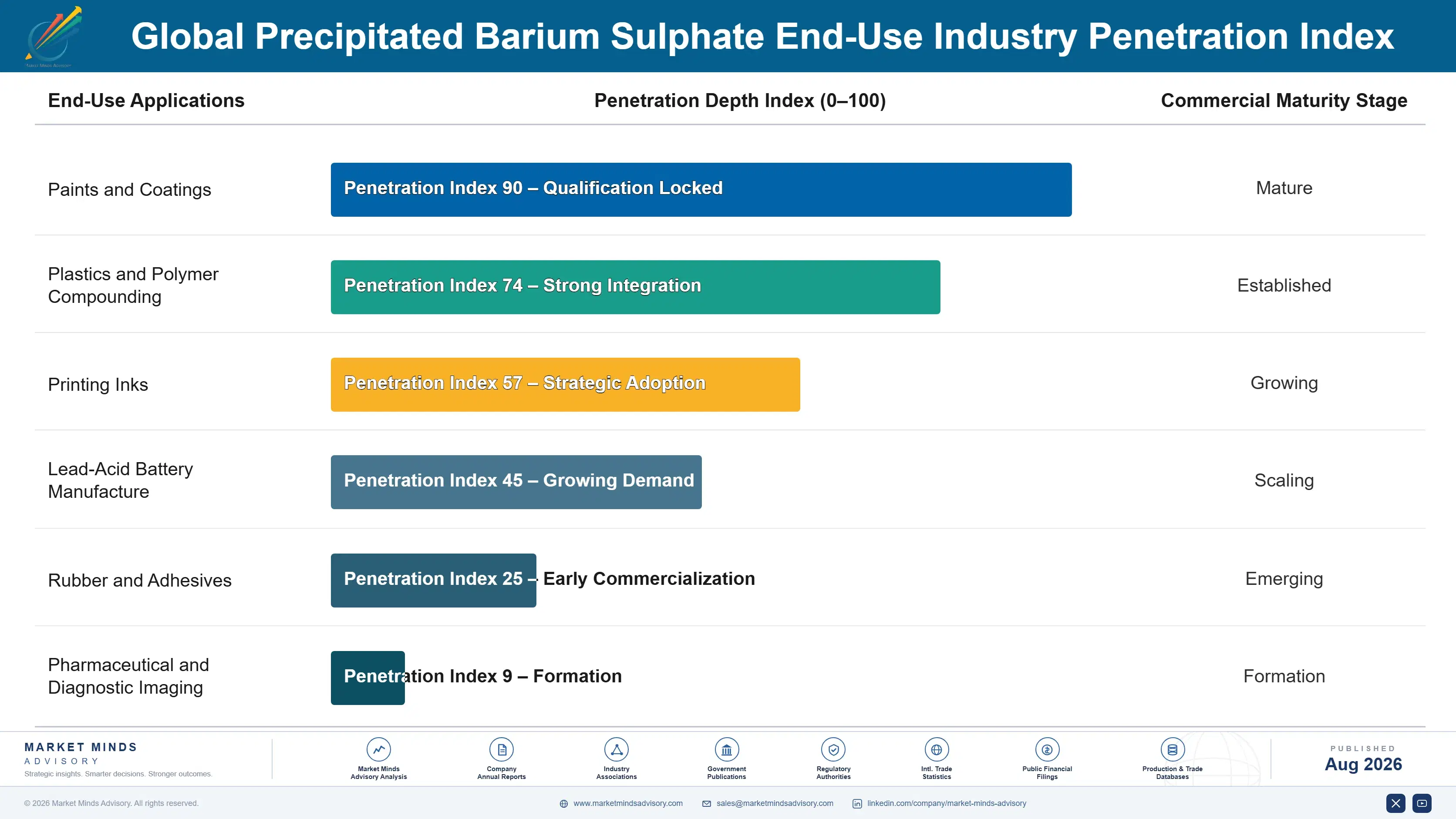
Coating formulators once added barium sulphate opportunistically when titanium dioxide prices rose. That has changed. Extension is now designed into base formulations at fixed loadings, typically replacing 12% to 18% of pigment in architectural and industrial coatings without measurable opacity loss. The shift matters commercially because it converts swing demand into contracted demand, and because it requires consistent particle specification rather than whatever tonnage is available. Formulators who redesigned around extension will not revert if pigment prices fall, since requalifying a coating costs more than the pigment saving they would recover from doing so.
Market Impact: Adds 40% more fine grade content