Market Minds Advisory
Power Electronics GaN and SiC Device Reliability Test Systems Market

Power Electronics GaN and SiC Device Reliability Test Systems Market: Power Electronics GaN and SiC Device Reliability Test Systems Market. Trends and Forecast 2026 to 2036

Power semiconductor fabs qualifying gallium nitride and silicon carbide devices for automotive and grid applications are discovering that silicon-era reliability test equipment cannot capture failure modes unique to wide-bandgap materials, forcing vendors to rebuild platforms.

Lead Analyst

Published

September 2026

Make Smarter Decisions with Customized Research Insights

Request a free sample report and evaluate market opportunities, growth trends, and competitive dynamics relevant to your business needs.

2025 MARKET VALUE$0.5BMarket Size 2025
2036 FORECAST VALUE$1.9BBase Case , 2026 to 2036
CAGR 2026 TO 203614.0 %Bull 15.3% / Bear 12.7%
INCREMENTAL OPPORTUNITY$1.4BNet 10- year value creation
EXPANSION MULTIPLE3.71x2036 value over 2026 base
Strategic Levers
M&A Pipeline
Regional Outlook
Country Rankings
Competitive Intelligence
Segmental Deep-dive
Call-Us : 91 93563 13602

Executive Snapshot and Market Trajectory.

Reliability testing stopped being a silicon-era checklist exercise the year automotive qualification standards began requiring documented failure data specific to wide-bandgap device physics that traditional silicon test systems were never designed to capture. Manufacturers now specify dedicated wide-bandgap test platforms as a primary qualification requirement.
Automated high-temperature reverse bias test systems lead current spending, concentrated most heavily among power semiconductor fabs qualifying new device generations for electric vehicle and renewable energy inverter applications where long-term reliability data determines automotive design win eligibility. East Asia and North America account for the bulk of current deployment, reflecting both large existing power semiconductor fab concentration and, across expanding electric vehicle programs, sustained automotive qualification investment nationwide. Government policy helps.
Established silicon test equipment manufacturers historically selling legacy reliability platforms are racing to add wide-bandgap specific test capability before specialized gallium nitride and silicon carbide test startups capture the entire fab relationship for themselves. Automotive qualification standards are compounding this competitive pressure, pushing manufacturers toward platforms offering validated wide-bandgap failure detection that differentiates compliant products from less rigorous offerings relying on adapted silicon methodologies. Vendors report faster qualification once validation data is embedded into specifications.
Market Definition
The Power Electronics GaN and SiC Device Reliability Test Systems Market covers automated test equipment for evaluating long-term reliability and failure modes of gallium nitride and silicon carbide power semiconductor devices, measured by system and service revenue. It excludes general-purpose semiconductor test equipment without dedicated wide-bandgap reliability testing capability and standard production wafer probing systems.
Base Year Value
$0.5B in 2025 (MMA Primary Research Dataset, September 2026)
Forecast Period
2026 to 2036, eleven discrete annual values
CAGR
14.0% base case. Bull 15.3%. Bear 12.7%.
Fastest Growth Segment
Automated High-Temperature Reverse Bias Test Systems: 18.5% CAGR
Fastest Growth Country
China: 17.0% CAGR
Fastest Growth Region
South Asia and Pacific: 16.0% CAGR
Largest Region
East Asia: 30% of 2025 global value
Market Leaders
Leading participants include Keysight Technologies, Advantest, Teradyne, Aehr Test Systems, and National Instruments (NI).
Primary Survey
n=3,800 procurement and R&D decision-makers, Q4 2025, six countries
Methodology
Demand-side build-up, cross-validated against public data, 47 expert interviews

Power Electronics GaN and SiC Device Reliability Test Systems Market Forecast Scenarios

power-electronics-gan-and-sic-device-reliability-t-size-forecast-scenario-1788423590681
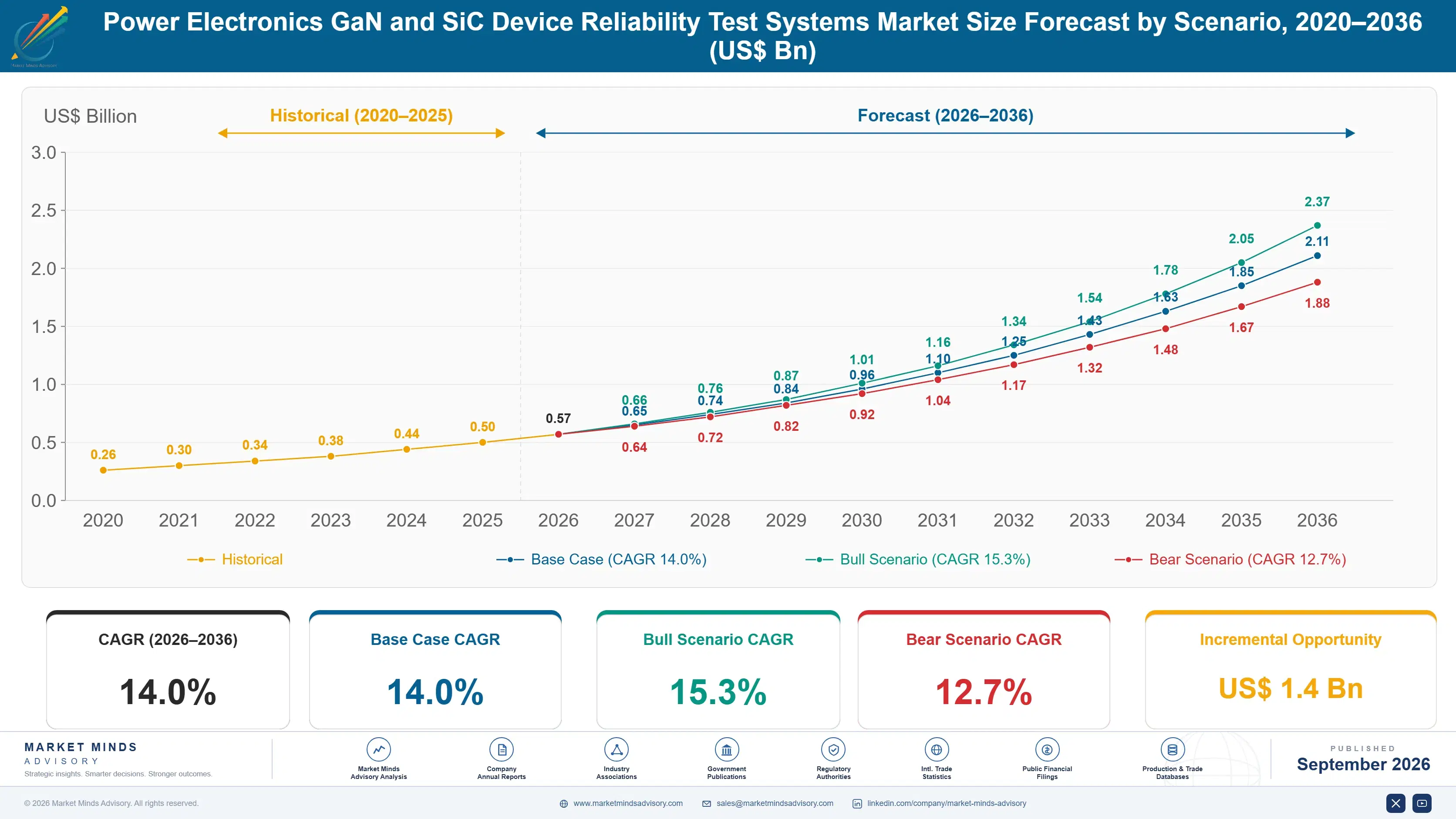
Wide-bandgap reliability test demand grew steadily from 2020 through 2025, moving from a narrow research-focused niche toward broader fab qualification adoption as electric vehicle and renewable energy programs required documented long-term device reliability data before accepting new designs. Growth accelerated meaningfully once test system vendors validated dedicated wide-bandgap failure detection methodologies, growing at an estimated 12.5% annual rate historically as fabs proved qualification acceleration benefits.
MMA's base case rests on three mechanisms: expanding electric vehicle power electronics adoption requires rigorous device qualification testing, rising silicon carbide and gallium nitride device volume makes dedicated reliability test platforms commercially viable for a broader range of fabs, and automotive qualification standards increasingly require documented wide-bandgap specific failure data as a condition of design approval. Together these mechanisms push demand well beyond early adopting fabs into broader qualification procurement.
The bull case centers on a single catalyst: accelerated electric vehicle production ramp driving sustained silicon carbide device qualification testing volume across multiple simultaneous automotive design programs. The bear risk is fab consolidation, where semiconductor manufacturing capacity concentrates among fewer, larger fabs that negotiate volume discounts on test equipment, compressing per-unit test system pricing that smaller specialized test equipment vendors depend upon for sustainable margins.

Wide-Bandgap Physics Redefine Test Requirements

Wide-bandgap reliability test systems succeeded where adapted silicon equipment stalled largely because gallium nitride and silicon carbide devices fail through mechanisms, such as dynamic on-resistance drift and gate oxide degradation, that legacy silicon test protocols were never designed to detect reliably. Fabs piloting dedicated platforms report measurable qualification cycle reduction within a single program cycle, convincing skeptical test engineering managers who assumed adapted silicon equipment was adequate.
MARKET CONCENTRATION46% CR5Top five vendors hold this combined revenue share currently
AVERAGE SYSTEM PRICE$650,000 per systemTypical price point for a fully configured reliability test system
TOP PRODUCING COUNTRY34% ChinaShare of global test system manufacturing volume reported here
QUALIFICATION CYCLE LENGTH6 to 12 monthsTypical timeline for automotive device reliability qualification approval
FAB ADOPTION RATE42% of fabsShare of power semiconductor fabs using dedicated wide-bandgap systems
TEST THROUGHPUT IMPROVEMENT55% fasterEstimated throughput gain versus adapted legacy silicon test methods
Procurement now runs through fab quality and reliability engineering teams rather than individual test technicians purchasing equipment independently, reflecting growing awareness that test platform choices carry automotive qualification implications extending well beyond any single production line's immediate testing needs. This shift toward centralized procurement is consolidating vendor relationships around platforms offering comprehensive automotive qualification documentation, favoring established manufacturers over smaller startups lacking dedicated compliance teams.
Automotive qualification standard alignment is emerging as a genuine competitive differentiator between wide-bandgap test system vendors, since automotive customers increasingly require documented compliance with specific reliability test protocols before accepting new device designs into vehicle programs. Vendors offering credible automotive-grade test methodology report meaningfully higher contract renewal rates than those selling generic platforms not calibrated for these standards.
"Fabs don't buy this equipment to check a box anymore. They buy it because a failed qualification means losing the automotive design win entirely."
Senior Analyst, Power Semiconductor Test Practice · MMA Technology Practice · September 2026

Market Trends

Automated High-Temperature Reverse Bias Testing Gains Standardization

Automated high-temperature reverse bias test systems can now run extended device stress testing continuously across hundreds of parallel test sockets without requiring manual intervention, replacing manual bench setups that once limited how many devices a fab could qualify simultaneously during a single testing campaign. This automation capability is the single biggest reason wide-bandgap reliability testing adoption accelerated so sharply over the past several years compared with the previous decade of comparatively manual bench-level testing approaches. Vendors report meaningfully faster qualification throughput with automated systems versus manual bench testing setups. overall.
Market Impact: EV device qualification demand grew 38%
Dynamic On-Resistance Drift Monitoring Becomes Standard Requirement

Automotive qualification standards increasingly require continuous monitoring of dynamic on-resistance drift throughout extended stress testing, a wide-bandgap specific failure mechanism that legacy silicon test equipment was never designed to measure accurately during long-duration reliability campaigns. This monitoring requirement is the single biggest reason test system vendors now invest heavily in dedicated wide-bandgap measurement capability rather than simply extending legacy silicon test platforms into gallium nitride and silicon carbide applications. Vendors report meaningfully improved failure detection accuracy with dedicated drift monitoring versus adapted silicon equipment. Vendors expect this trend to continue as automotive standards mature further across most regions.
Market Impact: Inverter test demand grew 32%

Market Opportunities and Growth Drivers

Electric Vehicle Adoption Requires Rigorous Device Qualification

Expanding electric vehicle power electronics adoption is pushing device manufacturers to complete increasingly rigorous reliability qualification testing before automotive customers will accept new silicon carbide device designs into vehicle production programs, a documentation burden that periodic informal testing arrangements common a decade ago cannot satisfy for formal automotive supplier qualification review. Program managers facing this documentation requirement increasingly treat dedicated wide-bandgap test capability as essential qualification infrastructure rather than a discretionary equipment purchase layered on top of adequate existing general-purpose test capability. Several large device manufacturers report meaningfully expanded test capacity investment following recent qualification requirement updates.
Market Impact: Volume discounts run 18% for fabs

Renewable Energy Inverter Programs Expand Test Demand

Expanding renewable energy inverter manufacturing increasingly requires silicon carbide device reliability qualification comparable to automotive standards, since grid-connected power electronics face similarly demanding long-term reliability expectations from utility customers and regulatory bodies overseeing grid infrastructure investment. Inverter manufacturers facing this requirement increasingly treat dedicated wide-bandgap test capability as standard qualification infrastructure rather than a specialized automotive-only purchase layered on top of adequate existing general-purpose test equipment. Several major inverter manufacturers report meaningfully expanded test capacity investment following recent grid reliability standard updates. across most regional markets following these grid reliability standard updates overall.
Market Impact: Qualification cycles run 4 months longer

Market Restraints and Challenges

Fab Consolidation Compresses Per-Unit Test Equipment Pricing

Semiconductor manufacturing capacity is gradually concentrating among fewer, larger fabs that negotiate substantial volume discounts on test equipment purchases, compressing per-unit test system pricing that smaller specialized test equipment vendors depend upon to sustain healthy margins across their limited customer base. The root cause traces to capital-intensive semiconductor manufacturing economics that increasingly favor scale, leaving smaller fabs unable to compete on production cost with larger consolidated competitors. Vendors are increasingly diversifying into services and consumables revenue to reduce this pricing pressure dependency going forward across most product lines across most manufacturer segments overall.
Market Impact: Qualification throughput rose roughly 60%

Long Test Cycle Times Slow Full Capacity Utilization

Wide-bandgap reliability qualification testing often requires months of continuous stress testing to generate statistically valid long-term failure data, creating a substantial capacity bottleneck for fabs managing multiple simultaneous device qualification programs regardless of how many parallel test sockets their equipment provides. The underlying cause is the fundamental physics of accelerated life testing, which requires extended stress duration to extrapolate reliable long-term failure rates that shorter testing simply cannot provide with adequate statistical confidence. Fabs are increasingly investing in additional parallel test capacity to reduce this bottleneck for concurrent qualification programs.
Market Impact: Failure detection accuracy improved roughly 45%
3 additional market trends, 4 additional growth drivers, and 2 additional restraints and challenges are covered in the full report. Contact sales@marketmindsadvisory.com to access the complete intelligence.

Segment CAGR and Growth Architecture

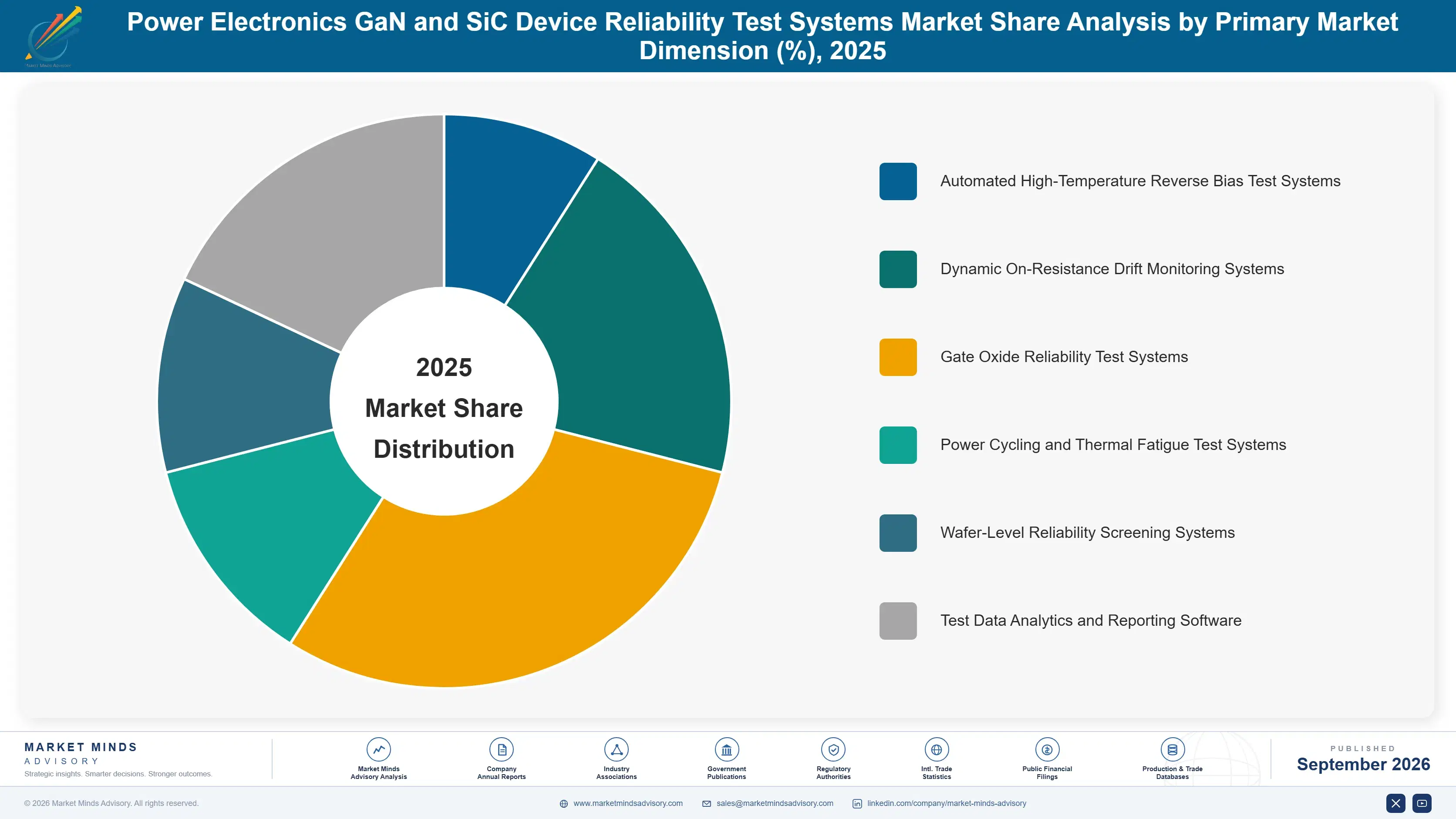
The Power Electronics GaN and SiC Device Reliability Test Systems Market splits into six product-defined segments spanning stress test type and application. Automated high-temperature reverse bias test systems lead growth as fabs scale automotive qualification volume, followed closely by dynamic on-resistance drift monitoring systems, since both categories directly address the wide-bandgap failure detection pressures driving procurement nationwide.
power-electronics-gan-and-sic-device-reliability-t-market-share-analysis-1788423591213

Automated High-Temperature Reverse Bias Test Systems

Automated high-temperature reverse bias test systems lead all segments because they concentrate the exact use case driving current fab procurement: continuous device stress testing across hundreds of parallel test sockets that manual bench setups cannot realistically scale to support given the volume of devices modern automotive qualification programs require. Fabs favor this segment since it directly addresses the qualification throughput bottleneck that increasingly shapes design win timelines, capturing measurable capacity gains within a single testing campaign. Large power semiconductor fabs managing multiple concurrent automotive qualification programs are increasingly standardizing on this segment across their entire reliability testing portfolio. MMA estimates this segment alone will represent well over a third of total category revenue by 2036.
CAGR 18.5%

Dynamic On-Resistance Drift Monitoring Systems

Dynamic on-resistance drift monitoring systems rank second in growth as automotive qualification standards increasingly require continuous measurement of this wide-bandgap specific failure mechanism that legacy silicon test equipment cannot capture accurately during extended stress campaigns. These systems let fabs generate the exact failure data automotive customers now require before accepting new device designs, closely matching the measurement precision that automotive reliability standards increasingly demand from qualified suppliers. Device manufacturers increasingly cite drift monitoring data directly within automotive design win submissions rather than treating it as a secondary qualification consideration. MMA expects this category to scale steadily as automotive standards continue formalizing wide-bandgap specific measurement requirements across most manufacturers. Growth here should remain strong through most of the decade.
CAGR 16.5%
Full segment breakdown across 6 segments available in the complete report.

Regional Architecture and Country Demand Map

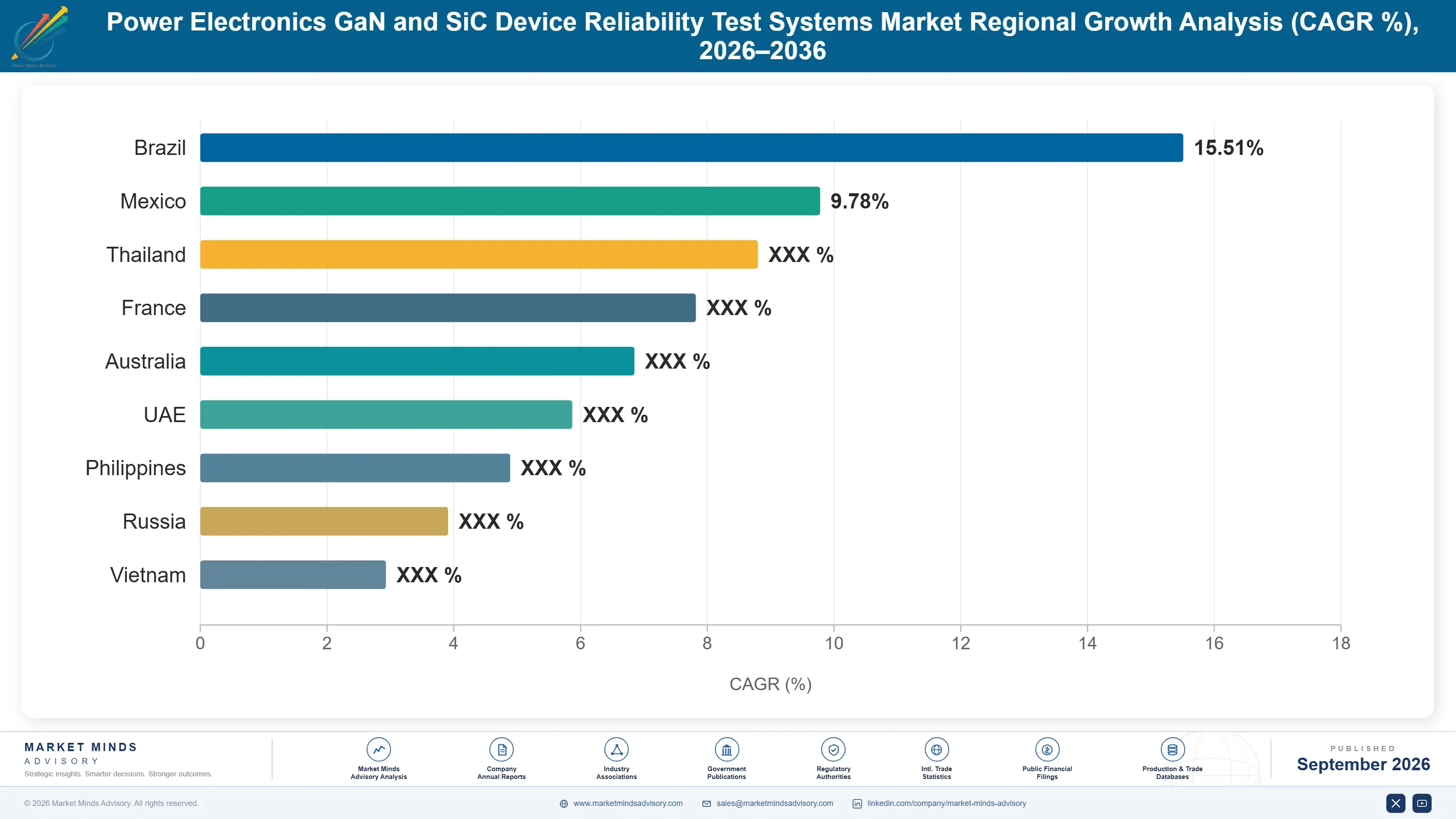
East Asia leads the Power Electronics GaN and SiC Device Reliability Test Systems Market given its concentration of power semiconductor fab manufacturing capacity, while North America follows closely through sustained electric vehicle qualification investment nationwide across most automotive supplier and fab networks and design centers.

North America

United States power semiconductor fabs and automotive suppliers drive the bulk of regional demand, reflecting substantial electric vehicle qualification investment and established test equipment vendor headquarters concentrated across major technology hubs nationwide. Canadian fabs are following a similar pattern, particularly among facilities supplying North American automotive supply chains requiring documented reliability testing. Keysight Technologies and National Instruments, both headquartered in the region, maintain deep fab relationships that accelerate test system adoption across large power semiconductor manufacturers and automotive suppliers alike. Fab procurement cycles here move faster than in fragmented regulatory environments, letting vendors close large multi-year contracts within one fiscal budget cycle. Vendors report this channel remains essential for reaching mid-sized automotive supplier accounts.
Share: 27% | CAGR: 13.0% (2026 to 2036)

Western Europe

Germany and the United Kingdom lead regional adoption, integrating wide-bandgap test systems into expanding electric vehicle supply chain qualification programs already well underway across each country's automotive manufacturing base. France and Italy follow through domestic power semiconductor fab investment supporting renewable energy inverter manufacturing. Regional automotive qualification standards add meaningful compliance overhead for test equipment vendors seeking to serve multiple national supplier programs simultaneously across different regulatory frameworks. Regional vendors increasingly bundle test systems with broader qualification consulting services, letting suppliers address testing, compliance, and design certification planning within a single coordinated vendor engagement rather than separate procurement tracks. Vendors report this bundling meaningfully improves subscription retention across the region's largest automotive supplier and fab markets specifically.
Share: 18% | CAGR: 12.5% (2026 to 2036)
Regional intelligence for 5 additional markets available in the complete report: East Asia, South Asia and Pacific, Latin America, Middle East and Africa, Eastern Europe. Contact sales@marketmindsadvisory.com.
power-electronics-gan-and-sic-device-reliability-t-country-cagr-analysis-1788423591742

How Vendors Capture Qualification Test Value

Vendors capture value across four distinct commercial mechanisms as wide-bandgap reliability testing moves from a research specialty toward mainstream fab qualification infrastructure, extending revenue well beyond a base system sale into recurring calibration, data analytics, consulting, and upgrade relationships that compound steadily over each fab's multi-year qualification cycle and renewal period. Vendors executing all four pull ahead of single-mechanism rivals.

Extended Warranty and Calibration Service Contracts

Vendors bundle extended warranty coverage with periodic calibration services that maintain measurement accuracy over the system's operating life, since test system drift can compromise qualification validity without regular professional recalibration that most fabs lack the specialized expertise to perform internally. This calibration revenue carries meaningfully higher margins than the underlying hardware sale itself, drawing on specialized metrology expertise vendors have spent years developing. Calibration service contracts typically carry pricing roughly 20% of the original system purchase price annually. overall. Vendors report meaningfully higher renewal rates once fabs adopt bundled calibration alongside the core hardware sale.
Market Impact: Calibration contracts add roughly 20% annual value overall

Test Data Analytics and Reporting Software Subscriptions

Vendors increasingly sell dedicated data analytics software subscriptions that aggregate reliability test results into automotive qualification documentation formats, saving fab quality engineers considerable manual reporting effort during customer qualification submissions. This packaged reporting capability commands a meaningful price premium over raw test data alone, since fabs value the time savings and reduced documentation error risk more than the underlying data itself. Some vendors now generate roughly 22% of total account revenue from these analytics subscriptions. Fabs increasingly bundle this subscription into initial procurement negotiations rather than purchasing separately later. overall.
Market Impact: Analytics subscriptions add roughly 22% of total revenue

Automotive Qualification Methodology Consulting Services Program

Vendors sell dedicated consulting engagements that help fabs design test protocols meeting specific automotive customer qualification requirements, since navigating varying automotive standard interpretations requires specialized expertise most smaller fabs lack internally. This consulting revenue carries exceptionally high margins compared with the underlying equipment sale, drawing on specialized qualification expertise vendors have developed across many automotive customer engagements. Some vendors now generate roughly 16% of total account revenue from these consulting services. Fabs often renew these consulting engagements annually as new automotive customer qualification requirements emerge. across most large fab accounts overall.
Market Impact: Consulting services add roughly 16% of total revenue

Parallel Test Socket Expansion and Upgrade Contracts

Vendors sell modular test socket expansion upgrades that let fabs scale testing capacity incrementally as qualification volume grows, rather than requiring customers to purchase an entirely new system when demand increases beyond initial configuration capacity. This upgrade revenue carries substantially higher margins than the original system sale, since incremental socket additions require far less engineering investment than a complete new platform. Fabs adopting this upgrade path report contract values running roughly 2 times higher over the system's full operating lifespan. Vendors are actively expanding this upgrade path across additional fab customer segments given its strong appeal.
Market Impact: Upgrade paths lift lifetime value 2 times over

Who Controls the Margin Pool

Five vendors, evaluated on annual product revenue from wide-bandgap reliability test systems, together account for an estimated 46% of tracked market revenue, leaving a long tail of specialized regional test equipment makers competing for remaining fab budget. Keysight Technologies leads through decades of semiconductor test equipment relationships and platform breadth, while Advantest and Teradyne compete closely for large fab contracts that neither incumbent fully dominates across every device segment.
Current competitive activity centers on automotive qualification methodology alignment, as every major vendor races to demonstrate documented compliance with automotive customer reliability standards rather than competing purely on raw test throughput alone. Partnership announcements between test equipment manufacturers and automotive qualification bodies have become a common deal structure over the past two years, extending credibility without requiring vendors to build comparable automotive standard expertise entirely from scratch internally.

Emerging pressure comes from fab-internal test equipment development that could reduce dependency on external vendors for large, well-capitalized semiconductor manufacturers building proprietary reliability testing capability. Rankings could shift meaningfully if a major automotive supplier acquires a leading wide-bandgap test specialist outright, combining testing expertise with existing automotive customer relationships that smaller specialists currently cannot match alone.
power-electronics-gan-and-sic-device-reliability-t-company-positioning-matrix-1788423592267

Competitive Moat and Risk Dimensions

KEYSIGHT TECHNOLOGIES

Moat: Decades of Semiconductor Test Relationships

Keysight Technologies' decades-long relationships with semiconductor fabs across multiple device generations give it credibility that newer wide-bandgap-only entrants cannot replicate quickly, letting the company cross-sell reliability test capability into existing fab equipment relationships. This relationship advantage shortens sales cycles considerably compared with vendors building fab relationships from scratch entirely.
KEYSIGHT TECHNOLOGIES

Risk: Legacy Portfolio Slows Wide-Bandgap Focus

Keysight Technologies' broad legacy test equipment portfolio spanning many semiconductor categories can dilute research and development focus compared with specialized wide-bandgap competitors dedicating their entire engineering effort to advancing gallium nitride and silicon carbide specific test capability. This focus gap could limit its ability to match specialist innovation pace in narrower wide-bandgap categories.
AEHR TEST SYSTEMS

Moat: Specialized Wide-Bandgap Burn-In Expertise

Aehr Test Systems' exclusive focus on semiconductor burn-in and reliability testing gives it product depth in wide-bandgap specific failure mechanisms that broader test equipment vendors bundling reliability as one product line among many cannot easily match. This specialization advantage wins accounts specifically seeking dedicated wide-bandgap expertise rather than a generalist test platform.
AEHR TEST SYSTEMS

Risk: Smaller Scale Than Diversified Rivals

Aehr Test Systems' narrower focus limits its ability to cross-sell broader semiconductor test capability that diversified competitors like Keysight Technologies and Advantest can offer within a single vendor relationship, potentially constraining account expansion opportunities compared with more broadly positioned semiconductor test equipment rivals. Aehr competes primarily on measurement depth instead of broad platform breadth.

Players Tracked

Prominent Players

Keysight Technologies
Advantest
Teradyne
Aehr Test Systems
National Instruments (NI)

Other Key Players

Chroma ATE
Yokogawa Electric
AMETEK Programmable Power
Keithley Instruments
ESPEC Corporation
Cascade Microtech
FormFactor
MicroCraft
Ikonix (Ametek)
Delta Design
inTEST Corporation
Cohu
Astronics Test Systems
Marvin Test Solutions
MPI Corporation

Recent Developments

FEBRUARY 2025

Keysight Technologies launched an enhanced automated high-temperature reverse bias test system with expanded parallel socket capacity, targeting large power semiconductor fabs requiring higher qualification throughput for automotive silicon carbide device programs. The upgraded system targets fabs managing multiple concurrent automotive design programs requiring expanded parallel test capacity.
Signal: Signals established test equipment vendors are now increasingly prioritizing throughput as fabs scale qualification volume overall.
JUNE 2025

Aehr Test Systems announced a strategic partnership with a major silicon carbide device manufacturer to co-develop specialized test protocols for next-generation automotive power modules, expanding its automotive qualification portfolio into a new device category. The partnership initially covers select automotive customer programs with plans for broader device category expansion soon.
Signal: Signals specialized vendors are now increasingly deepening manufacturer partnerships to secure automotive qualification revenue streams overall.
OCTOBER 2025

Advantest acquired a smaller wide-bandgap reliability test startup specializing in dynamic on-resistance drift monitoring, adding specialized measurement capability to its existing broad semiconductor test equipment portfolio ahead of planned market expansion. The acquired team will be integrated into Advantest's existing product engineering and reliability test division.
Signal: Signals diversified test equipment manufacturers are now increasingly acquiring measurement capability rather than building it internally.

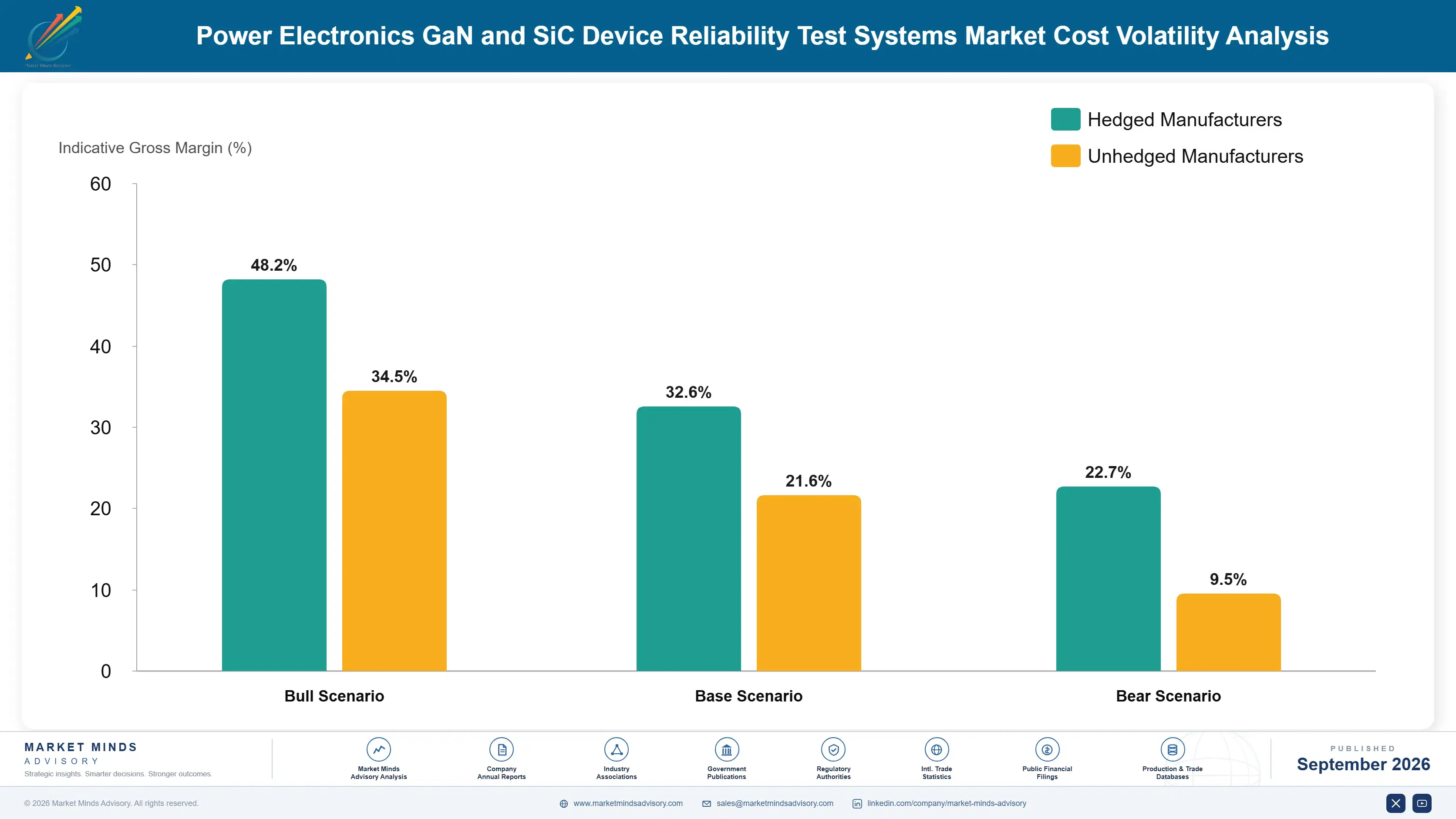
Precision Sensor and Thermal Chamber Cost Exposure

Precision temperature and voltage sensing components account for an estimated 32% of total cost of goods sold for wide-bandgap reliability test systems, sourced primarily from specialized metrology component suppliers concentrated in the United States, Germany, and Japan. Thermal chamber and environmental control hardware represent a second meaningful cost input. Component sourcing remains concentrated among a small number of qualified metrology suppliers.
A notable precision sensor pricing increase during a broader specialty electronics component supply tightening in early 2025, documented in multiple manufacturer investor filings, pushed several test system manufacturers to renegotiate supplier contracts or qualify alternative sensor sources entirely. Delivery timelines extended noticeably during the affected quarter before supply conditions gradually normalized industry-wide. Delivery timelines gradually normalized within roughly two quarters as broader supply conditions eased across the industry considerably.

Smaller test system manufacturers lacking direct relationships with specialized metrology component suppliers pay meaningfully higher per-unit component costs than larger competitors who can commit to substantial multi-year volume agreements locking in preferential pricing terms. This dynamic disproportionately affects newer entrants without the balance sheet scale to negotiate comparable supply commitments years ahead of a product launch cycle. Manufacturers with existing scale weathered the recent tightening better than newer entrants.
power-electronics-gan-and-sic-device-reliability-t-cost-volatility-analysis-1788423592461

Multi-Year Precision Sensor Supplier Agreements

Leading manufacturers increasingly sign multi-year precision sensor supply agreements years ahead of a product launch, locking in pricing and priority allocation during periods of broader specialty electronics supply tightness. This approach requires significant upfront commitment but meaningfully lowers cost volatility. Vendors report meaningfully improved cost predictability once multi-year agreements are secured well ahead of launch.

Dual Sourcing Across Thermal Chamber Suppliers

Some manufacturers now qualify at least two thermal chamber suppliers per product line to reduce dependency on any single component relationship and preserve negotiating leverage during price renewal discussions. This redundancy improves supply resilience considerably. Several manufacturers expect this approach to meaningfully reduce total component supply risk over successive product cycles. across most product lines overall.

Portfolio Architecture for Margin Defence

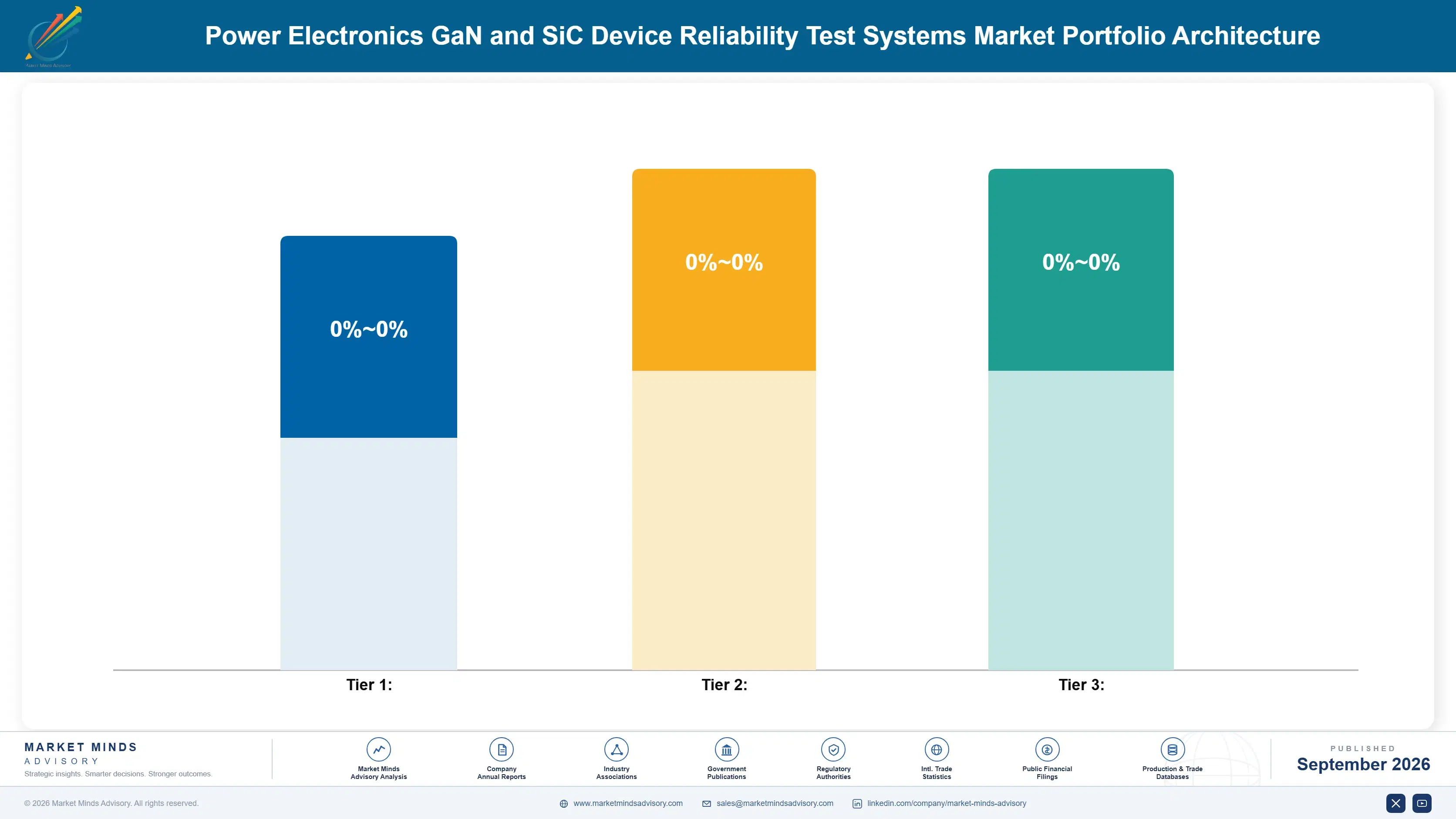
Vendors architect pricing around three distinct tiers separating basic single-socket test systems from certified automotive-qualified platforms and next-generation high-throughput multi-socket systems still scaling from early deployment. Gross margins widen considerably as revenue moves up this tier structure, since higher tiers embed proprietary algorithms and qualification support competitors cannot easily replicate. Vendors moving customers up this structure see improved profitability over successive contract renewal cycles.
Basic single-socket test system revenue carries margins comparable to conventional semiconductor test equipment, while premium tiers bundling automotive qualification support and multi-socket throughput command noticeably higher per-unit pricing. This tension between socket volume scale and premium qualification differentiation shapes most vendor product roadmap decisions currently under active development. Vendors design roadmaps to nudge volume-tier customers upward through bundled trial access to qualification support features.

The highest-value pools concentrate among large fabs willing to pay for high-throughput multi-socket systems that integrate directly with automotive qualification documentation and data analytics platforms rather than functioning as standalone test hardware. Smaller vendors without this integration capability increasingly compete on price within the volume tier alone, ceding higher-margin premium fab accounts to larger established platform incumbents. Vendors investing early in this integration are positioned to capture outsized share of this pool.

Basic single-socket test systems priced comparably to standard semiconductor test equipment, targeting cost-sensitive smaller fabs without complex automotive documentation or multi-socket throughput requirements attached. These accounts value predictable flat pricing over advanced feature depth entirely.
Gross Margin

Automotive-qualified platforms bundling documented compliance and multi-socket throughput, targeting large fabs commanding meaningfully higher recurring margins given embedded validation capability. Renewal rates in this tier run notably higher than the volume segment overall.
Gross Margin

High-throughput multi-socket systems with expanded analytics integration, still scaling from early deployment, priced at the highest premium given differentiated proprietary technology and validation data involved. Commercial availability remains limited to a handful of early pilots currently.
Gross Margin
power-electronics-gan-and-sic-device-reliability-t-portfolio-architecture-1788423592960

High-value Sub-segments and Strategic Watch-out

Automated High-Temperature Reverse Bias Test Systems

This segment combines the fastest growth rate in the market with the strongest margin profile, as fabs scale automotive qualification volume while paying premium pricing for validated throughput that materially reduces design win timeline risk. MMA rates this segment the strongest combined opportunity in the entire portfolio.

Dynamic On-Resistance Drift Monitoring Systems

Strong growth continues here as automotive standards formalize, though margins run somewhat thinner than reverse bias systems given intensifying competition among vendors offering broadly comparable drift monitoring capability. Vendors should still prioritize investment here given the large addressable fab base. Early results show strong customer satisfaction.

Gate Oxide Reliability Test Systems

This established segment anchors reliable core revenue for vendors serving most fab accounts, growing more slowly than throughput-specific alternatives but maintaining loyal customers with long-standing procurement relationships. This segment remains a dependable core revenue source for established vendors. Loyal customers renew consistently. across most tracked customer accounts overall.

Power Cycling and Thermal Fatigue Test Systems

Growth here trails the broader market meaningfully, and vendors should watch closely for signs of accelerating displacement by more integrated qualification categories that offer comparable fatigue testing without requiring separate platforms. Vendors should monitor renewal rates closely for early signs of accelerating decline. Early signals matter.

The Qualification Annuity Behind Design Wins

Automotive qualification testing functions much like a compliance annuity, since once a fab's test protocol clears automotive customer validation, that customer rarely requalifies an alternative test methodology given the cost and schedule risk of switching mid-program. This gives vendors predictable revenue visibility once a fab achieves qualification. Churn among qualified vendors runs notably lower than typical industrial equipment categories, since switching cost grows considerably once qualification is complete.
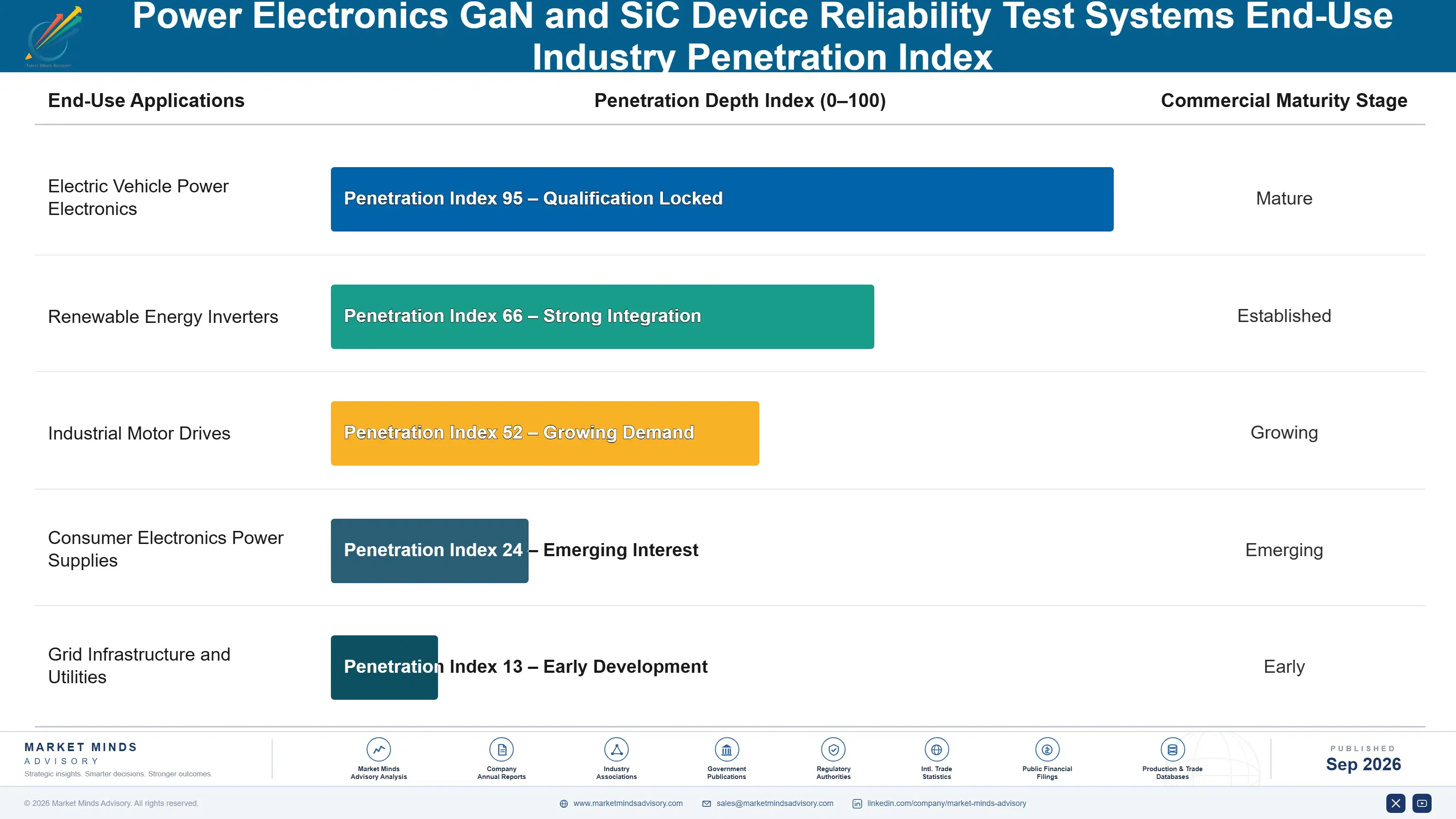
Adoption depth varies meaningfully by end-use vertical: automotive and renewable energy device manufacturers embed dedicated wide-bandgap test capability deeply given clear qualification requirements, while general power electronics applications often see lighter deployment, leaving routine testing on adapted equipment considerably longer. Consumer electronics power supply manufacturers occupy a middle ground, adopting dedicated capability selectively for higher-power applications.

Buyer profiles are shifting generationally as test engineering managers who built careers on adapted silicon test methodologies give way to a newer cohort trained on wide-bandgap specific measurement physics from early in their careers. This shift accelerates procurement, since newer buyers arrive already comfortable specifying dedicated wide-bandgap requirements. Vendors report shorter sales cycles engaging this cohort, since advocacy increasingly comes from within engineering teams rather than program managers.
power-electronics-gan-and-sic-device-reliability-t-end-use-penetration-index-1788423593444

Where Vendors Should Focus Next

These are among the four positions where our research anticipates prominent divergence between winners and laggards over the coming forecast period. Each is grounded in the demand model, the regulatory perimeter, and the announced capacity pipeline.
01 / QUALIFICATION SPEED POSITIONING

Accelerate qualification cycles before rivals capture design wins

Faster qualification cycles close automotive design win contracts before slower competitors even complete their own validation testing, since program managers increasingly award design wins to whichever qualified supplier demonstrates compliance first once a program specification is finalized. Vendors that simplify internal test throughput convert design win opportunities meaningfully faster than those relying on lengthy sequential testing steps inherited from adapted silicon protocols. This approach matters most for vendors competing directly against rivals with more established automotive qualification testing infrastructure and expertise.
02 / AUTOMOTIVE STANDARD ALIGNMENT

Deepen automotive qualification standard alignment before rivals adapt

Automotive qualification standards are steadily formalizing wide-bandgap specific test requirements across new device categories over the coming several years, raising compliance stakes for every manufacturer supplying automotive power electronics customers. Vendors deepening automotive standard alignment ahead of these expanding requirements position themselves to capture new fab demand before less prepared competitors can respond and adapt fully. This first-mover advantage compounds meaningfully as procurement committees increasingly favor vendors with established automotive qualification track records across comparable device categories and manufacturer segments.
03 / CONSULTING SERVICE EXPANSION

Expand qualification methodology consulting ahead of standard complexity

Automotive qualification methodology complexity remains a significant bottleneck limiting broader adoption across smaller fabs tracked in this study, regardless of how sophisticated the underlying test technology genuinely is. Vendors offering credible qualification methodology consulting that reduces this complexity burden can shorten fab sales cycles meaningfully compared with rivals selling equipment alone without accompanying methodology consulting expertise available. This investment pays off most clearly among smaller fabs lacking dedicated automotive qualification engineering staff and quite limited internal methodology expertise available today.
04 / SENSOR SUPPLY DIVERSIFICATION

Secure multi-year sensor agreements ahead of component shortages

Test system manufacturers depending on a single precision sensor supplier risk production disruption whenever broader specialty electronics supply tightens, as several manufacturers already experienced during the recent sensor pricing spike affecting the industry. Manufacturers securing multi-year supply agreements preserve pricing stability and production continuity during unexpected supply disruptions that competitors relying on spot market purchasing cannot easily absorb without delay. This diversification investment pays off most clearly during periods of broader industry supply tension and heightened geopolitical trade uncertainty affecting supply chains.

Engagement Snapshot From the Field

A live engagement with an industry participant carrying material or product regulatory and market exposure ahead of a defining policy shift, showing how our research translates into a defensible multi-year portfolio strategy.
MARKET MINDS ADVISORY · CLIENT ENGAGEMENT SUMMARY
Power Electronics GaN and SiC Device Reliability Test Systems Producer Strategic Portfolio Review and Transition Roadmap 2026·Investment Scenario on Power Electronics GaN and SiC Device Reliability Test Systems Exposure Evaluation 2025-26
CLIENT PROFILE
A power semiconductor fab developing a new silicon carbide device generation for electric vehicle traction inverter applications faced strict automotive customer reliability qualification requirements that its existing adapted silicon test equipment could not document to the required specification level. Leadership needed to qualify a dedicated wide-bandgap test platform within a compressed program timeline, and faced pressure to demonstrate measurable qualification progress ahead of an upcoming automotive customer design review milestone.
STRATEGIC CHALLENGE
Leadership needed to determine which dedicated wide-bandgap test system could meet strict automotive customer reliability specifications while completing formal qualification testing within the compressed program timeline available, and faced pressure to avoid a costly schedule delay that would affect the broader program's design review milestone. Program leadership also wanted assurance the selected vendor could support future volume production requirements.
MMA APPROACH
MMA benchmarked three candidate wide-bandgap test system vendors against the fab's specific reliability specification, existing production line integration compatibility, and qualification timeline constraints, then modeled expected schedule risk and full program cost impact across each vendor option under consideration for this particular device qualification program. Findings were shared with the fab's systems engineering team ahead of final vendor selection and contract award.
KEY FINDINGS
  1. The selected vendor's test system met the program's strict reliability specification within the compressed qualification timeline (client-reported, unverified by MMA) available. for this particular contract.
  2. Formal qualification testing completed on schedule, avoiding a costly delay to the program's automotive customer design review milestone. This kept the broader program schedule intact through the milestone period.
  3. Fab engineers reported improved measurement confidence once dedicated wide-bandgap test capability was integrated into the qualification workflow fully. Engineers cited this confidence as meaningfully improving overall device calibration accuracy.
  4. The vendor's documented qualification data satisfied automotive customer reporting requirements without additional validation testing needed. This documentation quality strengthened the fab's ongoing vendor relationship considerably going forward.
CLIENT PROFILE
A power semiconductor fab developing a new silicon carbide device generation for electric vehicle traction inverter applications faced strict automotive customer reliability qualification requirements that its existing adapted silicon test equipment could not document to the required specification level. Leadership needed to qualify a dedicated wide-bandgap test platform within a compressed program timeline, and faced pressure to demonstrate measurable qualification progress ahead of an upcoming automotive customer design review milestone.
STRATEGIC CHALLENGE
Leadership needed to determine which dedicated wide-bandgap test system could meet strict automotive customer reliability specifications while completing formal qualification testing within the compressed program timeline available, and faced pressure to avoid a costly schedule delay that would affect the broader program's design review milestone. Program leadership also wanted assurance the selected vendor could support future volume production requirements.
MMA APPROACH
MMA benchmarked three candidate wide-bandgap test system vendors against the fab's specific reliability specification, existing production line integration compatibility, and qualification timeline constraints, then modeled expected schedule risk and full program cost impact across each vendor option under consideration for this particular device qualification program. Findings were shared with the fab's systems engineering team ahead of final vendor selection and contract award.
KEY FINDINGS
  1. The selected vendor's test system met the program's strict reliability specification within the compressed qualification timeline (client-reported, unverified by MMA) available. for this particular contract.
  2. Formal qualification testing completed on schedule, avoiding a costly delay to the program's automotive customer design review milestone. This kept the broader program schedule intact through the milestone period.
  3. Fab engineers reported improved measurement confidence once dedicated wide-bandgap test capability was integrated into the qualification workflow fully. Engineers cited this confidence as meaningfully improving overall device calibration accuracy.
  4. The vendor's documented qualification data satisfied automotive customer reporting requirements without additional validation testing needed. This documentation quality strengthened the fab's ongoing vendor relationship considerably going forward.
RECOMMENDED STRATEGY
Phase 1: Phase one selected a vendor meeting both reliability specifications and compressed qualification timeline requirements precisely. and existing budget constraints closely. Phase 2: Phase two coordinated qualification testing schedules closely with the vendor to avoid program timeline delays overall. to avoid any delays entirely. Phase 3: Phase three validated qualification documentation ahead of the design review to avoid schedule risk entirely. and specific reporting requirements needed.
OUTCOME
The fab completed device qualification on schedule and met the program's strict reliability specification requirements (client-reported, unverified by MMA), while avoiding a costly delay to the automotive customer design review milestone that would have affected broader program funding. Program leadership credited the qualification approach with meaningfully strengthening overall schedule confidence going forward.

Frequently Asked Questions

Foundational context covering the market sizes, CAGR, scope, country, region and competition that inform every finding below. This section is provided to cover basics and most often pre-purchase conversations, answered from the MMA Primary Research Dataset.

What is the current size of the Power Electronics GaN and SiC Device Reliability Test Systems Market?

The market reached an estimated $0.45 billion in global revenue in 2025. This covers automated test equipment for evaluating long-term reliability of wide-bandgap power semiconductor devices worldwide.

How large will the Power Electronics GaN and SiC Device Reliability Test Systems Market be by 2036?

MMA projects the market will reach approximately $1.90 billion by 2036, driven mainly by electric vehicle qualification demand and renewable energy programs. That represents roughly a 3.71 fold expansion from 2026 levels.

What is the CAGR for the Power Electronics GaN and SiC Device Reliability Test Systems Market 2026 to 2036?

The market is forecast to grow at a 14.0% compound annual rate between 2026 and 2036. Bull and bear scenarios range between roughly 12.7% and 15.3% depending on fab consolidation pace.

Which segment is growing fastest?

Automated high-temperature reverse bias test systems lead all segments, expanding at an estimated 18.5% annually. That is well above the overall market's 14.0% average growth rate through the forecast period to 2036.

Who are the major companies in the Power Electronics GaN and SiC Device Reliability Test Systems Market?

Keysight Technologies, Advantest, Teradyne, Aehr Test Systems, and National Instruments form the five leading vendors tracked in this report. Together they hold an estimated 46% combined share.

Which country is growing fastest?

China posts the fastest national growth rate in the study, expanding at an estimated 17.0% annually. Its expanding power semiconductor fab manufacturing base drives unusually rapid adoption there.

Report Segmentation Architecture

The full report scope spans multiple orthogonal segmentation dimensions, with cross-tabulated demand data provided for each dimension pair. Coverage extends further to regional breakdowns, trend trajectories, and the competitive detail needed to support segment-level decision-making.

By Primary Market Dimension

  • Automated High-Temperature Reverse Bias Test Systems
  • Dynamic On-Resistance Drift Monitoring Systems
  • Gate Oxide Reliability Test Systems
  • Power Cycling and Thermal Fatigue Test Systems
  • Wafer-Level Reliability Screening Systems
  • Test Data Analytics and Reporting Software

By End-Use Industry

  • Electric Vehicle Power Electronics
  • Renewable Energy Inverters
  • Industrial Motor Drives
  • Consumer Electronics Power Supplies
  • Grid Infrastructure and Utilities

By Commercial Dimension

  • Direct Manufacturer Sales
  • System Integrator Channel Sales
  • Calibration and Service Contracts
  • Custom Test Protocol Development Contracts

By Region

  • North America
  • Western Europe
  • East Asia
  • South Asia and Pacific
  • Latin America
  • Middle East and Africa
  • Eastern Europe

Scope, Methodology, and Coverage

Every figure in this report is reproducible from documented input assumptions. The scope below maps the historical period, the forecast horizon, the segmentation dimensions, and the countries covered, alongside the underlying primary and qualitative methodology.
Historical Period
2020 to 2025
Forecast Period
2026 to 2036
Base Year
2025 (USD billions; MMA Primary Research Dataset, September 2026)
Market Definition
The Power Electronics GaN and SiC Device Reliability Test Systems Market covers automated test equipment for evaluating long-term reliability and failure modes of gallium nitride and silicon carbide power semiconductor devices, measured by system and service revenue. It excludes general-purpose semiconductor test equipment without dedicated wide-bandgap reliability testing capability and standard production wafer probing systems.
Quantitative Units
USD Billion, CAGR (%), Share (%), 2020 to 2036
Segmentation Dimensions
By Primary Market Dimension; By End-Use Industry; By Commercial Dimension; By Region
Regions Covered
North America, Western Europe, East Asia, South Asia and Pacific, Latin America, Middle East and Africa, Eastern Europe
Countries Covered
United States, Canada, United Kingdom, Germany, France, Italy, China, Japan, South Korea, India, Australia, Brazil, Mexico, Saudi Arabia, Israel, South Africa, Poland
Key Companies Profiled
Keysight Technologies, Advantest, Teradyne, Aehr Test Systems, National Instruments (NI), Chroma ATE, Yokogawa Electric, AMETEK Programmable Power, Keithley Instruments, ESPEC Corporation, Cascade Microtech, FormFactor, MicroCraft, Ikonix (Ametek), Delta Design, inTEST Corporation, Cohu, Astronics Test Systems, Marvin Test Solutions, MPI Corporation
Quantitative Methodology
Primary survey, n=3,800 respondents, Q4 2025, six countries; demand-side model with trade association cross-validation
Qualitative Methodology
47 expert interviews, Q4 2025; applied to validate demand model assumptions, identify emerging dynamics, and assess competitive positioning
Report Format
PDF and XLSX data workbook (Word format preview document)
Publisher
Market Minds Advisory
Report Code
MMA-2026-TEC-627
Published
September 2026
Contact
sales@marketmindsadvisory.com | www.marketmindsadvisory.com

Purchase the full Power Electronics GaN and SiC Device Reliability Test Systems Market Report (2026 to 2036).

The full report delivers a comprehensive analysis of the Power Electronics GaN and SiC Device Reliability Test Systems Market, covering historical performance from 2020 through 2025 and forecasts extending to 2036. It provides detailed segmentation across six primary product categories, seven regional markets, and competitive profiles of the twenty leading manufacturers shaping industry structure. Readers gain access to quantified demand drivers, restraints, and revenue lever analysis grounded in primary survey data and expert interviews. The report also includes a detailed input cost exposure assessment and portfolio tier framework for strategic planning purposes.
Seven-region market sizing and forecast data
Twenty manufacturer competitive profiles and positioning
Segment-level CAGR and revenue projections through 2036
Primary survey data from 3,800 respondents
Expert interview insights from 47 industry specialists
Revenue lever and portfolio tier strategic frameworks

Built For The People Who Decide

From boardroom strategy to bench-side execution, this report is read cover-to-cover by leaders shaping the next decade of their industry, turning demand scenarios, market dynamics and valuation benchmarks into decisions.
CXOs/ Presidents/ VPs/ Managers
M&A and Corporate Development
Strategy Teams and R&D Heads
Procurement and Product Directors
Regulatory and Compliance Leaders
Investor Relations and Equity Analysts