Market Minds Advisory
Poultry Diagnostics Market

Poultry Diagnostics Market: Testing Follows Trade Agreements, Not Sick Birds

A broiler is worth about a dollar and lives six weeks, so nothing here can be tested individually, and every assay in this market is really a sampling design applied to a whole flock.

Lead Analyst

Published

September 2026

Make Smarter Decisions with Customized Research Insights

Request a free sample report and evaluate market opportunities, growth trends, and competitive dynamics relevant to your business needs.

2025 MARKET VALUE$0.7BMarket Size 2025
2036 FORECAST VALUE$1.6BBase Case , 2026 to 2036
CAGR 2026 TO 20367.4 %Bull 8.6% / Bear 6.2%
INCREMENTAL OPPORTUNITY$0.8BNet 10- year value creation
EXPANSION MULTIPLE2.05x2036 value over 2026 base
Strategic Levers
M&A Pipeline
Regional Outlook
Country Rankings
Competitive Intelligence
Segmental Deep-dive
Call-Us : 91 93563 13602

Executive Snapshot and Market Trajectory

Export access rather than bird health drives most of this testing. A country demonstrating freedom from avian influenza and Newcastle disease keeps its trade routes open, and one that cannot loses billions in a fortnight. Diagnostics volume follows those certification requirements closely. Trade protocols explain more than bird counts.
East Asia takes 29% of value on sheer production scale and the highest avian influenza pressure anywhere, though testing intensity per bird remains considerably higher across North America and Europe. Sequencing and genotyping panels grow at 11.1%, half again the market rate of 7.4%, because vaccinated flocks make antibody testing ambiguous and only molecular methods answer the question that matters. Serology now answers a question that producers have largely stopped bothering to ask.
Concentration runs at 58% and the customer base is far more concentrated than that. Vertically integrated producers own breeding, feed, growing and processing, so a handful of companies buy most of the testing in any major market. They negotiate accordingly, and the price per assay reflects a buyer who knows exactly what a pooled sample should cost. Diagnostics gets treated as a controllable input cost.
Market Definition
The market covers diagnostic tests, panels and sampling systems used to detect and monitor disease in commercial poultry production, including ELISA and serological assays, molecular PCR assays, rapid antigen lateral flow tests, bacterial culture and susceptibility testing, sequencing and genotyping panels, and environmental and flock sampling systems. Poultry vaccines, therapeutic antimicrobials, feed additives, genetics and breeding services, and human food safety testing performed after processing are excluded. Veterinary laboratory services fall outside scope.
Base Year Value
$0.7B in 2025 (MMA Primary Research Dataset, August 2026)
Forecast Period
2026 to 2036, eleven discrete annual values
CAGR
7.4% base case. Bull 8.6%. Bear 6.2%.
Fastest Growth Segment
Sequencing and Genotyping Panels: 11.1% CAGR
Fastest Growth Country
India: 9.6% CAGR
Fastest Growth Region
South Asia and Pacific: 9.6% CAGR
Largest Region
East Asia: 29% of 2025 global value
Market Leaders
Zoetis, IDEXX Laboratories, Thermo Fisher Scientific, Innovative Diagnostics, BioChek. Source: MMA Analysis based on disclosed animal health diagnostics revenue, company annual reports 2025.
Primary Survey
n=3,800 procurement and R&D decision-makers, Q4 2025, six countries
Methodology
Demand-side build-up, cross-validated against public data, 47 expert interviews

Poultry Diagnostics Market Forecast Scenarios

poultry-diagnostics-market-size-forecast-scenario-1787686881999
Growth from 2020 to 2025 ran at 6.4% and avian influenza dominated the period entirely. The panzootic beginning in 2021 killed enormous numbers of commercial birds across four continents, spread into wild populations and mammals, and turned surveillance from a producer expense into a government biosecurity function with funding attached. Routine serological monitoring grew steadily throughout while molecular testing volumes rose sharply during each outbreak wave.
The 7.4% base case rests on three mechanisms. Vaccination against the very diseases producers most want to monitor makes serology ambiguous, which pushes testing toward molecular and sequencing methods that distinguish field infection from vaccine response. Export certification requirements continue tightening as importing countries impose stricter freedom-from-disease evidence. And Asian and South Asian commercial production keeps industrialising, which converts backyard flocks into monitored operations. Each of the three works independently of the others.
The bull case at 8.6% turns on avian influenza vaccination being adopted widely in commercial production, which would require differentiating assays across every vaccinated flock and multiply testing volumes considerably. The bear case at 6.2% is integrator consolidation continuing to compress test pricing faster than volume grows, which has already happened in several national markets.

A Dollar Bird And A Flock Question

The economics here start with a bird worth about a dollar that lives roughly 42 days. No individual test can be justified against that, so everything in this market is population sampling: pooled swabs, environmental boot socks, sentinel birds, serology on a subset chosen to represent a house of thirty thousand. The product a producer actually buys is a sampling design with an assay attached.
FIVE-FIRM CONCENTRATION58%Share of animal health diagnostics revenue held by leading suppliers
POOLED PCR TEST PRICE$4.20Typical price for a pooled molecular assay in commercial production
TOP PRODUCING COUNTRYChina 21%Chinese share of global commercial poultry production by volume
INTEGRATOR PURCHASE SHARE76%Testing volume bought by vertically integrated production companies
BROILER PRODUCTION CYCLE42 daysTypical growing period from placement through to processing
VACCINATED FLOCK PROPORTION89%Commercial flocks vaccinated against diseases that serology also monitors
Vaccination creates the central technical problem. Around 89% of commercial flocks are vaccinated against diseases that serological monitoring also measures, which means an antibody result cannot distinguish a vaccinated bird from an infected one without careful interpretation. That ambiguity is why molecular assays and sequencing panels grow faster than serology despite costing more per sample. They answer whether field virus is circulating rather than whether antibodies exist.
The buyer side is unusually concentrated. Vertically integrated companies own breeding stock, feed mills, growing operations and processing plants, and roughly 76% of testing volume is purchased by them. In several national markets fewer than ten organisations account for most commercial production. Those buyers know precisely what a pooled assay costs to run and negotiate annually across enormous volumes.
"Nobody is diagnosing a chicken. They are certifying a flock so a container can leave a port, and the assay is just the paperwork that makes it defensible."
Director, Animal Health Diagnostics and Livestock Practice · MMA Agriculture Practice · August 2026

Market Trends

Vaccination Pushes Monitoring Toward Molecular Methods

Roughly 89% of commercial flocks are vaccinated against diseases that serological monitoring also measures, which makes an antibody titre genuinely ambiguous without careful interpretation and flock history. Molecular assays detect the organism rather than the response to it, and differentiating designs distinguish field infection from vaccine strain directly. Producers increasingly pay the higher per-sample cost because a serological result that could mean either thing does not support any decision. Suppliers whose portfolios remain weighted toward ELISA are competing in the part of this market that answers questions less clearly every year.
Market Impact: Protects 8% of regional value

Avian Influenza Became A Government Funded Biosecurity Function

The panzootic beginning in 2021 killed enormous numbers of commercial birds across four continents and moved into wild populations and mammals, which changed how governments treat poultry surveillance entirely. Testing that producers once funded as a cost of doing business now carries public money and mandatory frequency in many jurisdictions. That shifts the buyer from an integrator negotiating hard on price to an agriculture ministry procuring against a surveillance specification. The two behave nothing alike commercially, and suppliers organised for one have found the other unfamiliar. That transition caught several suppliers unprepared.
Market Impact: Converts 21% of global production

Market Opportunities and Growth Drivers

Export Certification Requirements Set Testing Volume

Importing countries require evidence of freedom from avian influenza and Newcastle disease before accepting poultry products, and losing that status closes a market within days. For Brazil, Thailand, Poland and the United States, poultry export earnings are substantial enough that surveillance is a trade policy instrument rather than an animal health measure. Testing frequency and sampling design are therefore negotiated between governments rather than chosen by producers. Suppliers who track bilateral trade protocols understand demand better than those forecasting from flock populations. Trade protocols are the forecasting tool almost nobody in this industry actually reads.
Market Impact: Concentrates 76% of purchasing

Asian Commercial Production Continues Industrialising Rapidly

Backyard and semi-commercial poultry across China, India and Southeast Asia keeps converting into integrated commercial operations, and monitored flocks generate testing that unmonitored ones never did. China alone accounts for roughly 21% of global production. Industrialisation brings biosecurity programmes, veterinary oversight and export ambitions, each of which creates diagnostic demand independently. Growth here is a function of production structure changing rather than of bird numbers rising, which is why it continues even where total output has plateaued across several provinces. Structure rather than scale drives it. Output has plateaued in several provinces.
Market Impact: Limits spending across 42 days

Market Restraints and Challenges

Integrator Buying Power Compresses Price Continuously

Roughly 76% of testing volume is purchased by vertically integrated producers, and in several markets fewer than ten organisations buy most of it. Root cause is that poultry production consolidated faster than diagnostics supply did, leaving a fragmented supplier base facing very few enormous buyers. The commercial impact is annual price negotiation across huge volumes where the customer knows the cost of running a pooled assay precisely. Mitigation runs through programme design, interpretation support and data services that a purchasing department finds harder to price against a kit. Very few suppliers offer that today.
Market Impact: Clarifies results for 89% vaccinated

Bird Economics Cap What Any Test Can Cost

A commercial broiler is worth roughly a dollar and lives 42 days, which places an absolute ceiling on per-bird diagnostic spending that no clinical argument can lift. Root cause is simple production economics rather than any reluctance to monitor disease. The commercial impact is that every assay must work on pooled or environmental samples, and technologies requiring individual specimens are commercially irrelevant here regardless of performance. Mitigation involves designing sampling schemes that preserve sensitivity across pools, which is statistical work rather than assay development. Statistical design rather than analytical sensitivity is the constraint that matters.
Market Impact: Covers 4 affected continents
4 additional market trends, 3 additional growth drivers, and 2 additional restraints and challenges are covered in the full report. Contact sales@marketmindsadvisory.com to access the complete intelligence.

Segment CAGR and Growth Architecture

Segmentation follows test technology: the analytical method used to detect or characterise an agent, rather than which disease is targeted or who performs the testing. Six technologies cover the market without overlap, from serological assays through to sequencing panels. Disease target and purchasing route are treated separately, since both cut across every technology here.
poultry-diagnostics-market-market-share-analysis-1787686882283

Sequencing and Genotyping Panels

Sequencing grows at 11.1%, half again the market rate of 7.4%, because knowing that a virus is present has stopped being sufficient information. Producers and authorities need to know which strain, whether it matches the vaccine in use, and whether it arrived from wild birds or from a neighbouring farm. Genotyping answers all three and supports decisions that a positive result alone cannot. Cost per sample is far higher than any other method here, which limits it to breeder flocks, outbreak investigation and export certification rather than routine monitoring, and that boundary is unlikely to move quickly. Routine monitoring will stay with cheaper methods for the foreseeable future, whatever sequencing costs eventually do.
CAGR 11.1%

Rapid Antigen Lateral Flow Tests

Lateral flow tests run at the farm gate without a laboratory, which matters enormously when a decision about whether to move birds must be made in hours rather than days. Growth at 9.4% follows outbreak response protocols and pre-movement screening rather than routine surveillance. Sensitivity is lower than laboratory methods and everybody involved knows it, so these tests function as a triage step ahead of confirmatory work rather than as a replacement for it. Suppliers who position them honestly hold accounts, while those overselling farm-level accuracy generate false confidence that eventually costs them the relationship. Honest positioning holds these accounts, and overselling farm-level accuracy costs them. Everybody involved understands the sensitivity trade-off.
CAGR 9.4%
Full segment breakdown across 6 segments available in the complete report.

Regional Architecture and Country Demand Map

Geography follows production scale and export exposure rather than disease prevalence, which is broadly distributed. East Asia leads on sheer volume, North America and Western Europe test more intensively per bird, and Latin America punches well above its production share. Testing intensity per bird varies more than production volume does.

North America

American production is dominated by a small number of vertically integrated companies running structured monitoring programmes with testing intensity per bird among the highest anywhere. Those buyers negotiate annually across enormous volumes and understand assay economics thoroughly. Avian influenza outbreaks since 2022 brought federal surveillance funding and mandatory testing frequencies that shifted part of the demand toward government procurement. Canadian production follows similar integrated structures with provincial and federal surveillance layered on top. Mexican commercial poultry is substantial and growing, with testing driven increasingly by domestic biosecurity programmes rather than by export requirements. Government procurement now sits alongside integrator negotiation, and the two behave nothing alike commercially. Suppliers built for one struggle with the other.
Share: 25% | CAGR: 6.8% (2026 to 2036)

Western Europe

European testing intensity is high and shaped by regulation as much as by commercial decision, with surveillance frequencies specified rather than chosen. Dutch, French and German production operates under detailed monitoring requirements that have tightened repeatedly since successive avian influenza waves. British production faced significant outbreak losses and correspondingly intensified surveillance. Salmonella control programmes across the region generate substantial routine testing independent of viral disease monitoring. Regional production is not growing, so value growth comes from testing intensity and method shift toward molecular work rather than from any expansion in bird numbers. Value growth comes from method shift rather than from bird numbers, since regional production has not expanded in over a decade and is unlikely to.
Share: 21% | CAGR: 5.8% (2026 to 2036)
Regional intelligence for 5 additional markets available in the complete report: East Asia, South Asia and Pacific, Latin America, Middle East and Africa, Eastern Europe. Contact sales@marketmindsadvisory.com.
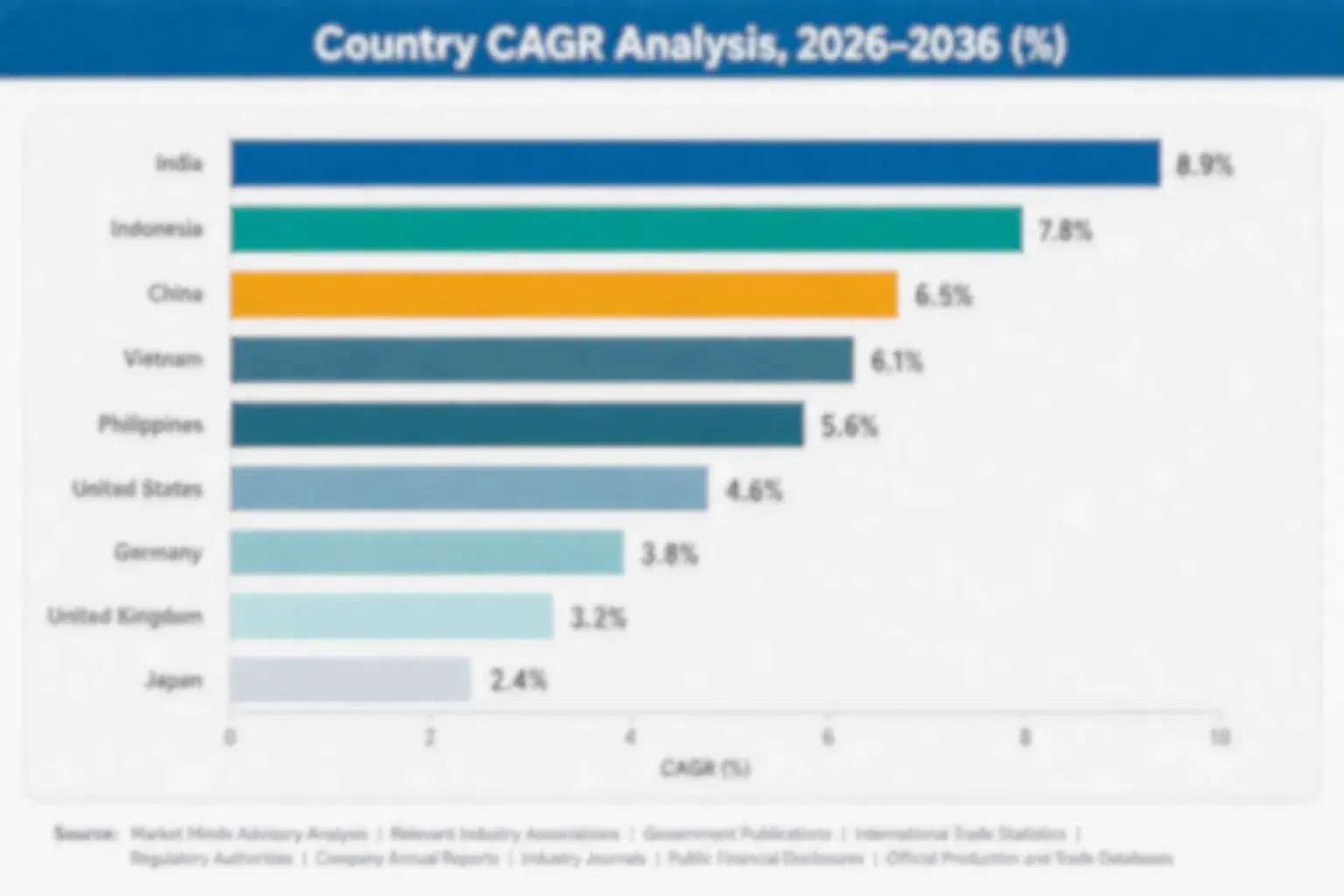
poultry-diagnostics-market-country-cagr-analysis-1787686882584

Selling Programmes Instead Of Kits

Roughly 76% of volume is bought by integrators who know assay costs precisely, bird economics cap what anything can cost, and vaccination has made serology ambiguous across most flocks. Four levers work on sampling design, interpretation and buyer type rather than on assay performance alone. Assay performance decides remarkably little of what gets bought.

Sell Sampling Design Rather Than Individual Assays

A broiler worth roughly a dollar cannot justify any individual test, so what a producer actually needs is a sampling scheme that detects a problem across thirty thousand birds at acceptable cost and confidence. That is statistical work rather than assay development. Suppliers providing validated pooling protocols, sample size guidance and interpretation support sell something a purchasing department cannot price against a competitor's kit. Those selling assays alone are competing on cost per test with a buyer who knows exactly what running one costs. A house of 30,000 birds needs a scheme rather than a kit.
Market Impact: Covers a pooled flock of some 30,000 birds

Move Portfolios Toward Differentiating Molecular Methods

Around 89% of commercial flocks are vaccinated against diseases that serology also measures, which makes antibody results genuinely ambiguous and increasingly unhelpful for decisions. Molecular and differentiating assays detect the organism and distinguish field infection from vaccine response directly. Producers pay the higher per-sample cost because an ambiguous result supports no action at all. Suppliers whose portfolios remain weighted toward ELISA are defending the part of this market that answers less every year, and that position deteriorates whether or not anybody competes for it. The erosion happens regardless of competition.
Market Impact: Serves the 89% of vaccinated commercial poultry flocks

Build Government Surveillance Procurement Capability Properly

Avian influenza turned poultry surveillance into a government biosecurity function across four continents, with public funding and mandated testing frequency replacing producer discretion in many jurisdictions. An agriculture ministry procuring against a surveillance specification behaves nothing like an integrator negotiating annual pricing. Suppliers organised entirely for commercial accounts find tender processes, national laboratory qualification and specification writing unfamiliar. Building that capability opens demand that is larger, more stable and considerably less price-compressed than integrator business has become anywhere. Surveillance now spans 4 continents with public funding attached. That demand is steadier and far less price-compressed than integrator business.
Market Impact: Reaches surveillance funding across all 4 of the continents

Follow Export Protocols Rather Than Flock Numbers

Testing volume is set by bilateral trade requirements rather than by bird populations, and Latin America holds 8% of global value on Brazilian export exposure alone despite modest regional consumption. Suppliers tracking certification protocol changes anticipate demand shifts that flock statistics never reveal. When an importing country tightens its freedom-from-disease evidence requirements, testing volume in the exporting country changes within a season. That intelligence costs a trade policy analyst rather than a laboratory, and almost nobody in this industry employs one. A trade policy analyst costs less than a laboratory technician. Nobody employs one.
Market Impact: Explains the odd 8% regional value distribution figure

Who Controls the Margin Pool

Measured on disclosed animal health diagnostics revenue, the five leading suppliers hold a CR5 of 58%, which understates their position because the buyer side is more concentrated still. Zoetis and IDEXX hold the broadest portfolios and the deepest integrator relationships, while specialists such as Innovative Diagnostics and BioChek compete strongly in poultry-specific serology where focus matters more than scale. The buyer side is more concentrated than the supply side, which is unusual.
Three contests define activity. Routine serological monitoring competes on price per test with integrators who know assay economics thoroughly. Molecular and differentiating assays compete on interpretation support and validated sampling protocols. Government surveillance competes on tender specification and national laboratory qualification, which is procurement work rather than commercial selling. A supplier organised for one of those contests handles the other two badly.

Pressure comes from domestic Chinese and Indian manufacturers serving their own enormous production bases at prices Western suppliers cannot approach. Rankings shift wherever molecular methods displace serology, since portfolio weighting rather than customer relationships determines who benefits from that transition. Portfolio weighting decides who benefits from the method shift, and customer relationships do very little to change that.
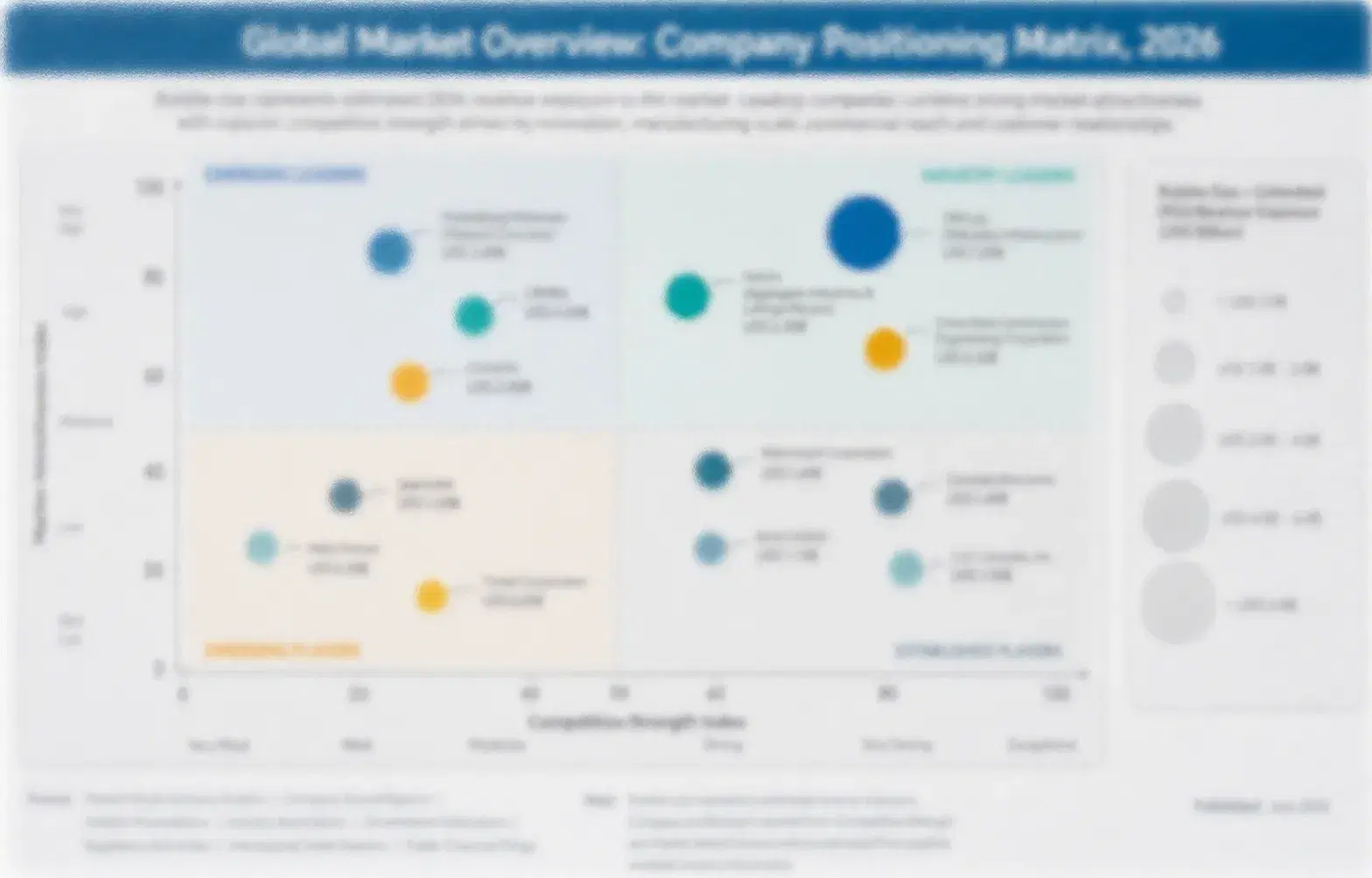
poultry-diagnostics-market-company-positioning-matrix-1787686882860

Competitive Moat and Risk Dimensions

ZOETIS

Moat: Integrator Relationship Breadth

Zoetis reaches poultry integrators through vaccines, therapeutics and diagnostics together, which puts diagnostics inside a commercial relationship spanning most of what a production company buys. Annual negotiation across that whole basket is a different conversation from selling assays alone. A diagnostics specialist competing on assay merit still faces a supplier already embedded across the customer's veterinary programme.
ZOETIS

Risk: Vaccine Diagnostic Tension

Selling both the vaccine and the assay that must distinguish vaccine response from field infection creates a position customers occasionally question, particularly where differentiating capability is imperfect. Independent suppliers make that argument freely. The combination is commercially powerful and carries a credibility question that a diagnostics-only competitor can raise without needing to prove anything.
IDEXX LABORATORIES

Moat: Assay Validation And Consistency

IDEXX poultry assays carry long validation histories and lot-to-lot consistency that laboratories running enormous throughput value above almost anything else, since a shifting cutoff across lots invalidates trend monitoring. That reliability was built over decades. A competitor offering equivalent sensitivity still has to demonstrate consistency across years rather than across a validation study.
IDEXX LABORATORIES

Risk: Serology Portfolio Weighting

A portfolio weighted toward serological assays faces a market where roughly 89% of flocks are vaccinated and antibody results answer less every year. Growth is concentrated in molecular and sequencing methods that require different capability and different manufacturing. Defending serology volume is possible and it does not participate in where this market is actually heading.

Players Tracked

Prominent Players

Zoetis
IDEXX Laboratories
Thermo Fisher Scientific
Innovative Diagnostics
BioChek

Other Key Players

Boehringer Ingelheim
Merck Animal Health
Ceva Sante Animale
Qiagen
Bio-Rad Laboratories
Neogen
GD Animal Health
Charles River Laboratories
Megacor Diagnostik
Hipra
Vaxxinova
Eurofins Scientific
Randox Laboratories
Bioingentech
Anicon Labor

Recent Developments

FEBRUARY 2025

Agriculture ministry expands mandatory avian influenza surveillance frequency

An agriculture ministry expanded mandatory avian influenza surveillance frequency across commercial poultry holdings, a regulatory decision rather than any commercial transaction. Public funding accompanied the requirement, which moves a portion of testing demand from producer discretion into government procurement running through national veterinary laboratories instead.
Signal: Surveillance demand is migrating toward government tenders, which suppliers built for integrator selling handle very poorly.
JUNE 2025

Differentiating molecular panel launched for vaccinated flock monitoring

A differentiating molecular panel was launched to distinguish field infection from vaccine strain in monitored commercial flocks, an internal product development rather than any partnership. Vaccination across roughly nine in ten commercial flocks had made serological monitoring increasingly ambiguous for the decisions producers actually needed to make.
Signal: Assay development is now aimed at the ambiguity vaccination creates rather than at detecting disease itself.
SEPTEMBER 2025

Importing country tightens freedom from disease evidence requirements

An importing country tightened the evidence required to demonstrate freedom from avian influenza and Newcastle disease before accepting poultry consignments. This was a trade protocol decision rather than any corporate event, and exporting country testing volumes adjusted within a single production season afterward. Volumes adjusted immediately.
Signal: Trade protocol changes move testing volume faster than any commercial activity a supplier could possibly undertake.

What An Assay Costs

Reagents and biologicals dominate. Antigens, antibodies, enzymes and plate coating together run 31 to 37% of manufacturing cost for a serological kit, with antigen production the largest and least substitutable element. Molecular assays cost more in reagents and considerably less in labour once automated. Sequencing panels carry consumable costs several times higher, which is precisely why they remain confined to breeder flocks and outbreak work rather than routine monitoring.
The volatility that matters is biological rather than chemical. Antigen and antibody production depends on cell culture and animal-derived material whose supply cannot be scaled quickly when demand spikes, and avian influenza outbreak waves produced exactly those spikes repeatedly since 2021. Thermo Fisher and Zoetis annual reports describe reagent supply pressures during that period. In-house antigen producers met surge demand; external buyers could not ship.

Exposure divides by integration and portfolio. Suppliers producing their own antigens control surge capacity and carry the fixed cost of that capability. Those buying reagents carry availability risk exactly when outbreak demand peaks and pricing is worst. Sequencing-weighted portfolios carry consumable cost tied to instrument platform suppliers. No poultry diagnostics company can influence instrument consumable pricing in any meaningful way at all.
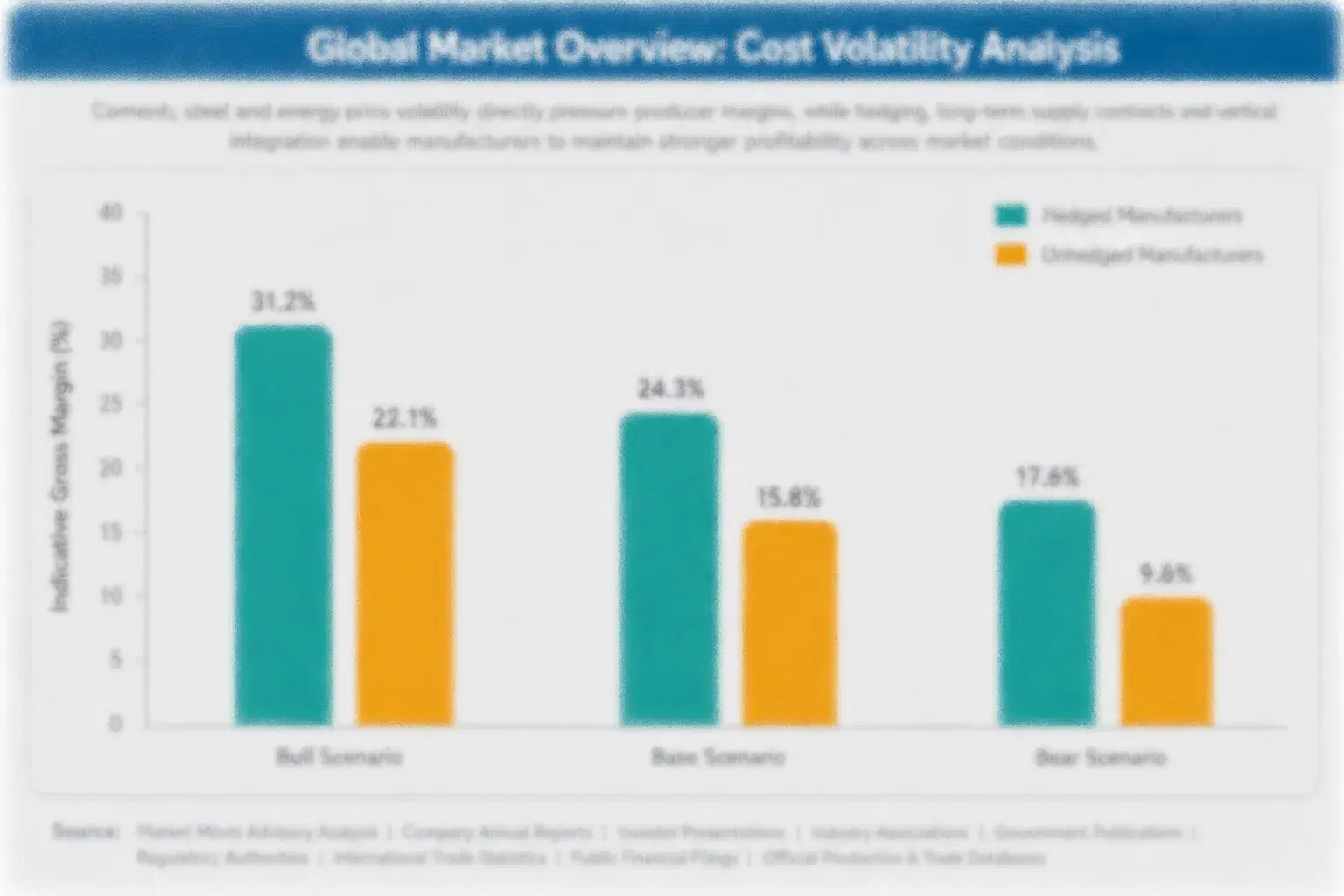
poultry-diagnostics-market-cost-volatility-analysis-1787686883223

Hold antigen production capability in house

Antigen and antibody supply cannot scale quickly and outbreak waves since 2021 produced repeated demand spikes exactly when external reagent supply tightened. In-house production carries fixed cost through quiet periods and allows shipping during the weeks that decide accounts. A supplier unable to deliver during an outbreak loses relationships that took years to build and rarely recovers them.

Design assays for pooled and environmental samples

Bird economics cap per-sample spending absolutely, so any assay requiring individual specimens is commercially irrelevant regardless of analytical performance. Validating sensitivity across pooling ratios and environmental matrices during development is far cheaper than retrofitting it afterward. Suppliers who validated pooling protocols early hold protocol positions that competitors must replicate rather than simply match on price.

Qualify multiple sequencing consumable sources

Sequencing panel economics depend on instrument platform consumables priced by suppliers who set them without reference to animal health markets. Designing panels that run across more than one platform costs validation work and prevents a single instrument vendor determining the cost of the fastest growing segment here. Platform dependency is the risk nobody in this category controls.

Portfolio Architecture for Margin Defence

Margin follows what a purchasing department can compare. Routine serological kits are directly comparable and priced accordingly, with integrators negotiating against known assay economics annually. Molecular assays earn more because interpretation and validated protocols accompany them. Sequencing panels earn most per sample and run at volumes too small to matter much. Government surveillance contracts earn moderately and reliably across multi-year specifications.
The tension is that the profitable direction requires capabilities most suppliers here were not built for. Programme design is statistical work, government tendering is procurement work, and sequencing is a genomics business. A company organised around manufacturing and selling ELISA plates does none of those naturally, and acquiring the capability has proved harder than acquiring the products. Several suppliers bought molecular portfolios and continued selling them like kits.

High-value pools sit in three places. Differentiating molecular assays sold with interpretation support to vaccinated flocks. Government surveillance contracts, which are larger and considerably less price-compressed than integrator business. And validated sampling protocols, which competitors must replicate rather than undercut. Each requires capability rather than product, which is why the transition has been slower than the underlying demand shift would suggest it needed to be.

Volume / Commodity-Adjacent

Routine ELISA and serological kits sold in high volume against directly comparable competitor products. The 7-point range separates suppliers producing their own antigens from those buying critical reagents externally and carrying both cost and availability exposure during outbreak periods.
Gross Margin: 34-41%

Premium / Certified

Molecular PCR assays and differentiating panels supplied with validated sampling protocols and interpretation support. The 7-point spread separates suppliers offering programme design and statistical guidance from those selling molecular kits the way they previously sold serological ones.
Gross Margin: 48-55%

Sustainability / Regulatory / Next-Generation

Sequencing and genotyping panels alongside government surveillance contract supply. The 24-point range is wide because sequencing carries high consumable costs set by instrument vendors while surveillance contracts price on specification compliance rather than on any competitive comparison.
Gross Margin: 44-68%
poultry-diagnostics-market-portfolio-architecture-1787686883533

High-value Sub-segments and Strategic Watch-out

Differentiating Molecular Panels

Highest value in routine use, answering the question vaccination made serology unable to settle across roughly nine in ten commercial flocks. The risk is that suppliers sell these as kits rather than as programmes, which surrenders the interpretation value that justifies the price premium entirely.
Gross Margin: 52-55%

Government Surveillance Contracts

Reliable value across multi-year specifications, priced on compliance rather than against competitors and far less compressed than integrator business. The risk is procurement capability, since suppliers organised for commercial selling handle tender writing and national laboratory qualification poorly. Capability rather than product is the barrier here.
Gross Margin: 49-52%

Routine Serological Kits

The volume core, directly comparable and negotiated annually by integrators who understand assay economics precisely. Suppliers hold the line because this volume maintains laboratory relationships through which molecular and sequencing work is subsequently placed with the same customers. Relationship value exceeds the margin on this volume considerably.
Gross Margin: 35-38%

Serology Weighted Portfolios

The strategic watch-out. Portfolios concentrated in antibody testing face flocks that are roughly 89% vaccinated, where results grow less informative every year. The risk is a position that erodes on its own merits regardless of whether any competitor actively attacks it. Nobody needs to attack it.
Gross Margin: 36-39%

Testing Tied To Production Cycles

Demand recurs with the production cycle rather than with any purchasing decision. A broiler house placed and processed every 42 days generates monitoring at defined points regardless of whether anything is wrong, and an integrator running hundreds of houses consumes testing continuously. That makes revenue predictable from placement schedules, which producers share with suppliers who have earned the relationship, and invisible to anybody forecasting from disease incidence.
Stickiness depends on protocol embedding rather than on preference. An assay written into a company monitoring protocol and validated against historical trend data is difficult to change, since switching breaks comparability across years of accumulated results. Government surveillance specifications hold for contract terms. Routine serological kits move on annual price negotiation because comparability across suppliers is easier to establish for well-characterised antibody tests than producers usually admit.

The buyer has changed in a way suppliers underestimated. Avian influenza brought agriculture ministries and national veterinary laboratories into purchasing decisions that integrators previously made alone, and those organisations run tenders against written specifications. A commercial team built to negotiate annual pricing with a production company is poorly equipped for specification writing and laboratory qualification, which is where a growing share of volume now gets decided.
poultry-diagnostics-market-end-use-penetration-index-1787686883836

What This Market Actually Buys

These are among the four positions where our research anticipates prominent divergence between winners and laggards over the coming forecast period. Each is grounded in the demand model, the regulatory perimeter, and the announced capacity pipeline.
01 / SAMPLING PROGRAMME SELLING

The product is a protocol, not a plate

A commercial broiler worth roughly a dollar and living 42 days cannot justify any individual test, so what a producer genuinely needs is a sampling scheme detecting problems across thirty thousand birds at acceptable cost and confidence. That is statistical work rather than assay development, and suppliers providing validated pooling protocols and interpretation sell something purchasing departments cannot easily price against a competitor kit. Selling assays alone means competing on cost per test against a buyer who knows precisely what running one costs.
02 / VACCINATION AMBIGUITY RESPONSE

Serology answers less every single year

Roughly 89% of commercial flocks are vaccinated against exactly the diseases that serological monitoring also measures, which leaves antibody results genuinely ambiguous and steadily less useful for the decisions producers must take. Molecular and differentiating assays detect the organism and separate field infection from vaccine response directly, and producers pay the higher per-sample cost willingly. Portfolios still weighted heavily toward ELISA are defending a position that erodes steadily on its own merits, whether or not any competitor ever attacks it directly.
03 / GOVERNMENT PROCUREMENT CAPABILITY

Ministries buy nothing like integrators do

Avian influenza turned poultry surveillance into a government biosecurity function across four continents, bringing public funding and mandated testing frequency where producer discretion previously governed everything. An agriculture ministry procuring against a written surveillance specification behaves nothing at all like an integrator negotiating annual volume pricing across a production base. Suppliers organised entirely around commercial accounts find tender processes, national laboratory qualification and specification writing genuinely unfamiliar, and building that capability opens demand that is larger, steadier and far less price-compressed.
04 / TRADE PROTOCOL INTELLIGENCE

Watch import rules, not flock statistics

Testing volume here is determined almost entirely by bilateral trade requirements rather than by bird populations, and Latin America holds 8% of global value on Brazilian export exposure alone despite comparatively modest regional consumption of poultry products. Suppliers who track certification protocol changes closely can anticipate demand shifts that flock statistics simply never reveal to anybody reading them. That intelligence costs a single trade policy analyst rather than a laboratory, and almost nobody across this entire industry currently employs anybody doing it.

Engagement Snapshot From the Field

A live engagement with an industry participant carrying material or product regulatory and market exposure ahead of a defining policy shift, showing how our research translates into a defensible multi-year portfolio strategy.
MARKET MINDS ADVISORY · CLIENT ENGAGEMENT SUMMARY
Poultry Diagnostics Producer Strategic Portfolio Review and Transition Roadmap 2026·Investment Scenario on Poultry Diagnostics Exposure Evaluation 2025-26
CLIENT PROFILE
An animal health diagnostics supplier providing poultry serological and molecular assays across 22 markets, with reported revenue of 76 million euros (client-reported, unverified by MMA). Roughly 79% came from ELISA kits sold to integrated producers under annual pricing agreements. A molecular portfolio had been acquired three years earlier and was being sold through the same commercial team and the same pricing structure.
STRATEGIC CHALLENGE
Serological revenue was flat and margins were falling under annual integrator negotiation, while the acquired molecular portfolio had not grown as modelled. Management assumed the molecular products needed better pricing. Nobody had examined whether the products were being sold in a way that reflected what molecular testing actually offers producers.
MMA APPROACH
MMA reviewed how the commercial team presented molecular assays against how producers described their decision needs, which nobody had compared directly. Thirteen expert interviews with integrator veterinarians and national laboratory managers established what determines assay selection. The analysis separated product capability from commercial framing, and examined government surveillance procurement the company had never pursued.
KEY FINDINGS
  1. Molecular assays were being sold on price per test alongside ELISA kits, which surrendered the interpretation and protocol value that justifies their premium entirely.
  2. Integrator veterinarians wanted validated pooling protocols and trend interpretation, and no supplier in the reviewed markets was providing either properly. The gap was completely unaddressed.
  3. Government surveillance tenders in six markets had been won by competitors, and the company had never submitted a bid to any of them.
  4. Building programme and tender capability modelled materially higher margin than any pricing change on the existing portfolio (client-reported, unverified by MMA). Pricing changes would achieve nothing.
CLIENT PROFILE
An animal health diagnostics supplier providing poultry serological and molecular assays across 22 markets, with reported revenue of 76 million euros (client-reported, unverified by MMA). Roughly 79% came from ELISA kits sold to integrated producers under annual pricing agreements. A molecular portfolio had been acquired three years earlier and was being sold through the same commercial team and the same pricing structure.
STRATEGIC CHALLENGE
Serological revenue was flat and margins were falling under annual integrator negotiation, while the acquired molecular portfolio had not grown as modelled. Management assumed the molecular products needed better pricing. Nobody had examined whether the products were being sold in a way that reflected what molecular testing actually offers producers.
MMA APPROACH
MMA reviewed how the commercial team presented molecular assays against how producers described their decision needs, which nobody had compared directly. Thirteen expert interviews with integrator veterinarians and national laboratory managers established what determines assay selection. The analysis separated product capability from commercial framing, and examined government surveillance procurement the company had never pursued.
KEY FINDINGS
  1. Molecular assays were being sold on price per test alongside ELISA kits, which surrendered the interpretation and protocol value that justifies their premium entirely.
  2. Integrator veterinarians wanted validated pooling protocols and trend interpretation, and no supplier in the reviewed markets was providing either properly. The gap was completely unaddressed.
  3. Government surveillance tenders in six markets had been won by competitors, and the company had never submitted a bid to any of them.
  4. Building programme and tender capability modelled materially higher margin than any pricing change on the existing portfolio (client-reported, unverified by MMA). Pricing changes would achieve nothing.
RECOMMENDED STRATEGY
Phase 1: Phase one: stop pricing molecular assays alongside ELISA kits, and build validated pooling protocols and interpretation support around them instead. Phase 2: Phase two: recruit tender and specification capability to compete for government surveillance procurement, which the company has never attempted anywhere. Phase 3: Phase three: maintain serological volume deliberately as relationship infrastructure rather than defending its margin, which cannot be recovered. It funds the relationships.
OUTCOME
Molecular assays were repositioned with protocol support and average selling prices rose materially within a year. Two government surveillance tenders were bid and one was won (client-reported, unverified by MMA). Serological margin continued declining as expected and total gross profit grew regardless of it. The commercial model changed rather than the products.

Frequently Asked Questions

Foundational context covering the market sizes, CAGR, scope, country, region and competition that inform every finding below. This section is provided to cover basics and most often pre-purchase conversations, answered from the MMA Primary Research Dataset.

What is the current size of the Poultry Diagnostics Market?

The market was worth 0.72 billion dollars in 2025, covering serological assays, molecular PCR, rapid antigen tests, bacterial culture, sequencing panels and sampling systems. It reaches 0.77 billion dollars in 2026.

How large will the Poultry Diagnostics Market be by 2036?

MMA forecasts 1.58 billion dollars by 2036, an increase of 0.81 billion dollars over the 2026 base. That represents an expansion multiple of 2.05 times across the forecast period.

What is the CAGR for the Poultry Diagnostics Market 2026 to 2036?

The base case compounds at 7.4% annually. MMA's bull case reaches 8.6% if avian influenza vaccination spreads across commercial production, while the bear case sits at 6.2% on integrator price compression.

Which segment is growing fastest?

Sequencing and genotyping panels, at 11.1%, half again the market rate of 7.4%. Knowing which strain is present, and whether it matches the vaccine, now matters more than detection alone.

Who are the major companies in the Poultry Diagnostics Market?

Zoetis, IDEXX Laboratories, Thermo Fisher Scientific, Innovative Diagnostics and BioChek lead on disclosed animal health diagnostics revenue. Ceva, GD Animal Health, Megacor and Hipra compete in specific technologies.

Which country is growing fastest?

India at 9.6%, driven by backyard flocks converting into integrated commercial operations that require monitoring for the first time. China follows on similar industrialisation across its own provincial production base.

Report Segmentation Architecture

The full report scope spans multiple orthogonal segmentation dimensions, with cross-tabulated demand data provided for each dimension pair. Coverage extends further to regional breakdowns, trend trajectories, and the competitive detail needed to support segment-level decision-making.

By Test Technology

  • ELISA and Serological Assays
  • Molecular PCR Assays
  • Rapid Antigen Lateral Flow Tests
  • Bacterial Culture and Susceptibility Testing
  • Sequencing and Genotyping Panels
  • Environmental and Flock Sampling Systems

By End-Use Industry

  • Integrated Broiler Production
  • Layer and Egg Production
  • Breeder and Hatchery Operations
  • National Veterinary Laboratories
  • Contract Testing Laboratories
  • Government Surveillance Programmes

By Commercial Dimension

  • Annual Integrator Agreement
  • Government Tender Contract
  • Distributor Supplied Market
  • Laboratory Service Purchase
  • Outbreak Response Procurement
  • Export Certification Testing

By Region

  • North America
  • Western Europe
  • East Asia
  • South Asia and Pacific
  • Latin America
  • Middle East and Africa
  • Eastern Europe

Scope, Methodology, and Coverage

Every figure in this report is reproducible from documented input assumptions. The scope below maps the historical period, the forecast horizon, the segmentation dimensions, and the countries covered, alongside the underlying primary and qualitative methodology.
Historical Period
2020 to 2025
Forecast Period
2026 to 2036
Base Year
2025 (USD billions; MMA Primary Research Dataset, August 2026)
Market Definition
Scope covers diagnostic tests, panels and sampling systems used to detect, characterise and monitor infectious disease in commercial poultry production, spanning ELISA and other serological assays, molecular PCR assays including differentiating designs, rapid antigen lateral flow tests, bacterial culture and antimicrobial susceptibility testing, sequencing and genotyping panels, and environmental and flock sampling systems including boot swabs and pooled collection devices. Poultry vaccines, therapeutic antimicrobials, feed additives, genetics and breeding services, and food safety testing performed on processed product are excluded. Veterinary laboratory service provision and farm management software fall outside the boundary.
Quantitative Units
USD billions (current prices); assays supplied; flocks monitored; samples pooled; surveillance frequency by jurisdiction
Segmentation Dimensions
By Test Technology; By End-Use Industry; By Commercial Dimension; By Region
Regions Covered
North America, Western Europe, East Asia, South Asia and Pacific, Latin America, Middle East and Africa, Eastern Europe
Countries Covered
China, USA, Brazil, India, Poland, Netherlands, France, Germany, Thailand, Japan, Mexico, UK, South Africa, Vietnam, Saudi Arabia
Key Companies Profiled
Zoetis, IDEXX Laboratories, Thermo Fisher Scientific, Innovative Diagnostics, BioChek, Boehringer Ingelheim, Merck Animal Health, Ceva Sante Animale, Qiagen, Bio-Rad Laboratories, Neogen, GD Animal Health, Charles River Laboratories, Megacor Diagnostik, Hipra, Vaxxinova, Eurofins Scientific, Randox Laboratories, Bioingentech, Anicon Labor
Quantitative Methodology
Primary survey, n=3,800 respondents, Q4 2025, six countries; demand-side model with trade association cross-validation
Qualitative Methodology
47 expert interviews, Q4 2025; applied to validate demand model assumptions, identify emerging dynamics, and assess competitive positioning
Report Format
PDF and XLSX data workbook (Word format preview document)
Publisher
Market Minds Advisory
Report Code
MMA-2026-AGR-104
Published
August 2026
Contact
sales@marketmindsadvisory.com | www.marketmindsadvisory.com

Purchase the full Poultry Diagnostics Market Report (2026 to 2036).

The full report runs to 155 pages and covers all six test technology segments, seven regions and 20 profiled companies in detail. It includes the complete segment CAGR set, regional production and testing intensity data, and export certification protocol analysis across fifteen national markets. Company profiles carry evaluation on disclosed animal health diagnostics revenue, with moat and risk assessment for the top five suppliers. The competitive section extends to 13 tracked corporate developments across 2024 and 2025, each with commercial interpretation. Primary research inputs include a quantitative survey of 3,800 respondents and 47 expert interviews conducted in Q4 2025.
Six test technology segments with individual CAGR forecasts
Seven regional markets with production and testing intensity data
Twenty company profiles on consistent revenue evaluation basis
Thirteen tracked corporate developments with commercial interpretation notes
Export certification protocol analysis across fifteen national markets
Integrator purchasing concentration mapped by producing country

Built For The People Who Decide

From boardroom strategy to bench-side execution, this report is read cover-to-cover by leaders shaping the next decade of their industry, turning demand scenarios, market dynamics and valuation benchmarks into decisions.
CXOs/ Presidents/ VPs/ Managers
M&A and Corporate Development
Strategy Teams and R&D Heads
Procurement and Product Directors
Regulatory and Compliance Leaders
Investor Relations and Equity Analysts