Market Minds Advisory
Portal Hypertension Management Market

Portal Hypertension Management Market: Devices and Pharmacotherapy for Cirrhosis-Driven Vascular Complications

Rising NASH-driven cirrhosis is pushing more patients into TIPS shunt candidacy years earlier than the alcohol- and hepatitis-driven disease that built this market, forcing companies to defend positions across a changed patient population.

Lead Analyst

Alice Ballenger

Published

September 2026

Make Smarter Decisions with Customized Research Insights

Request a free sample report and evaluate market opportunities, growth trends, and competitive dynamics relevant to your business needs.

2025 MARKET VALUE$4.2BMarket Size 2025
2036 FORECAST VALUE$9.6BBase Case , 2026 to 2036
CAGR 2026 TO 20367.8 %Bull 9.0% / Bear 6.6%
INCREMENTAL OPPORTUNITY$5.1BNet 10- year value creation
EXPANSION MULTIPLE2.12x2036 value over 2026 base
Strategic Levers
M&A Pipeline
Regional Outlook
Country Rankings
Competitive Intelligence
Segmental Deep-dive
Call-Us : 91 93563 13602

Executive Snapshot and Market Trajectory

Portal hypertension management sits downstream of an epidemiological shift few treatment budgets have caught up with: NASH-driven cirrhosis now generates more variceal bleeding candidates than alcohol or viral hepatitis ever did, and pathways built for an older disease profile are being retrofitted in real time.
TIPS shunt devices are growing fastest of any segment, expanding above eleven percent annually and nearly half again faster than the category overall, as covered-stent technology extends procedure durability and broadens eligible patient populations. North America holds the largest share on its concentrated hepatology and liver transplant center infrastructure, while India's rapidly expanding NAFLD burden and growing gastroenterology capacity make it the single fastest-growing national market covered anywhere in this report.
Forty-six percent concentration among the top five companies, evaluated here on estimated global revenue across devices and pharmaceuticals combined, reflects genuine technical barriers in TIPS covered-stent design alongside patent protection on the category's only approved terlipressin formulation. Reimbursement coverage depth and procedural training availability are both reshaping which companies can actually capture the fastest-growing parts of this market before smaller, less capitalized competitors close the gap across the fastest-growing segments of this rapidly evolving category.
Market Definition
The portal hypertension management market comprises pharmaceuticals, endoscopic devices, and interventional radiology devices used to prevent, diagnose, and treat portal hypertension and its complications, including variceal bleeding, ascites, and hepatorenal syndrome, arising from cirrhosis and related liver disease. It excludes liver transplantation itself, general hepatitis antiviral therapy not specifically indicated for portal hypertension, and diagnostic liver biopsy equipment used for purposes unrelated to portal pressure assessment.
Base Year Value
$4.2B in 2025 (MMA Primary Research Dataset, August 2026)
Forecast Period
2026 to 2036, eleven discrete annual values
CAGR
7.8% base case. Bull 9.0%. Bear 6.6%.
Fastest Growth Segment
TIPS Shunt Devices: 11.4% CAGR
Fastest Growth Country
India: 10.6% CAGR
Fastest Growth Region
South Asia and Pacific: 9.8% CAGR
Largest Region
North America: 32% of 2025 global value
Market Leaders
W. L. Gore & Associates, Inc., Mallinckrodt Pharmaceuticals, Boston Scientific Corporation, Cook Medical LLC, and Novartis AG lead the category. Source: MMA Analysis based on company annual reports and investor filings.
Primary Survey
n=3,800 procurement and R&D decision-makers, Q4 2025, six countries
Methodology
Demand-side build-up, cross-validated against public data, 47 expert interviews

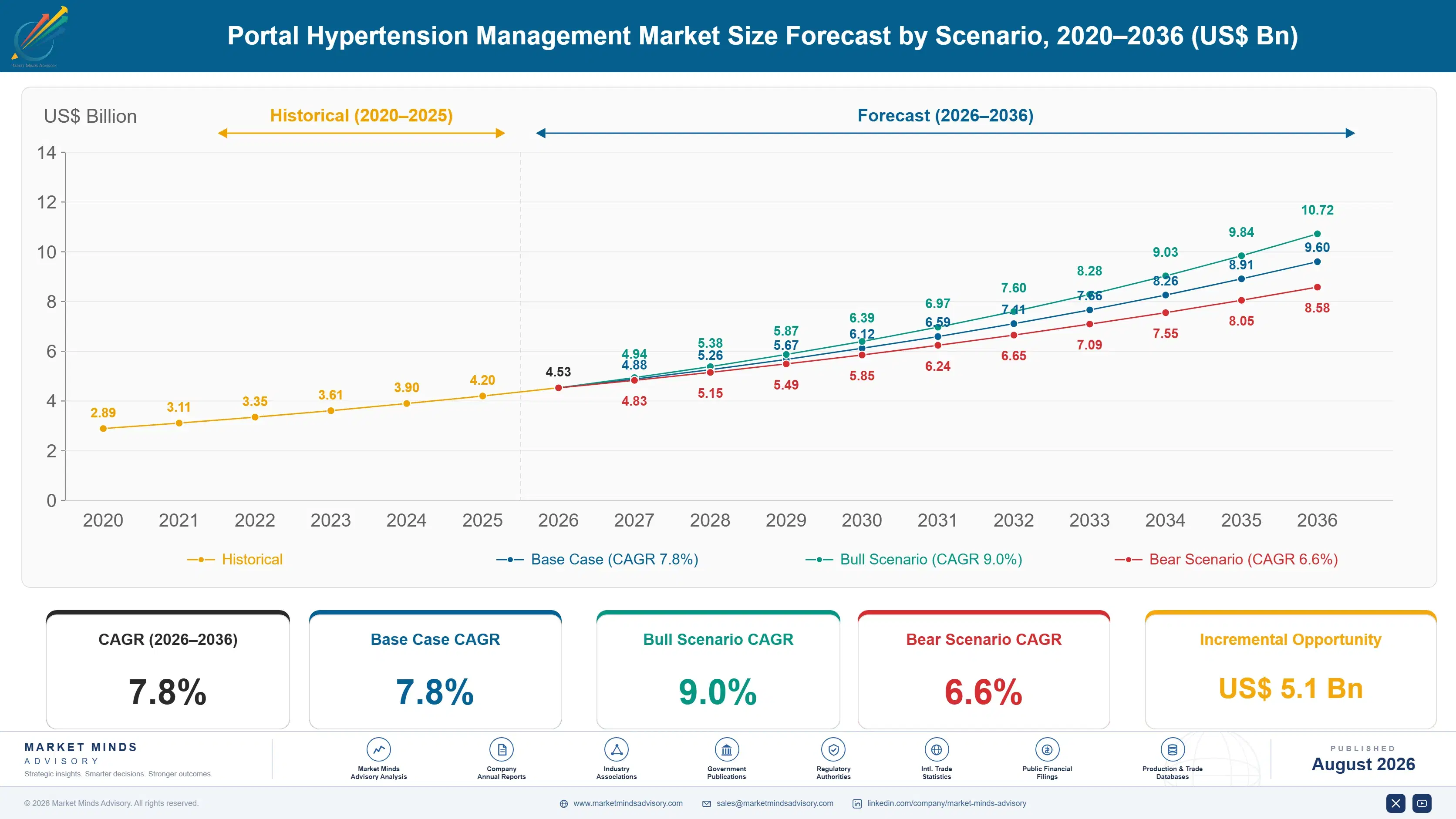
Portal Hypertension Management Market Forecast Scenarios

portal-hypertension-management-market-size-forecast-scenario-1787307721012
Between 2020 and 2025 the category grew at roughly 6.9 percent annually as rising NASH-driven cirrhosis incidence expanded the treated patient population meaningfully, while pandemic-era deferral of elective endoscopic procedures temporarily slowed variceal screening and prophylactic band ligation volume before recovering as gastroenterology capacity normalized across most major healthcare systems in subsequent years and quarters.
The base case assumes 7.8 percent annual growth through 2036, anchored in three mechanisms: expanding NASH-driven cirrhosis incidence pulling new patients into variceal screening and prophylaxis pathways earlier in disease progression, covered-stent TIPS technology extending procedure durability enough to broaden eligible patient populations beyond historical contraindication thresholds, and terlipressin adoption expanding for hepatorenal syndrome treatment following recent regulatory approvals in additional major markets. Diagnostic elastography adoption keeps pulling patients into formal portal hypertension management earlier throughout the forecast window.
A bull case builds around next-generation covered-stent designs reducing TIPS-related hepatic encephalopathy rates enough to meaningfully expand physician confidence and referral volume, pushing growth toward 9.0 percent. The bear case centers on reimbursement scrutiny of high-cost terlipressin therapy and TIPS procedures compressing volume growth, pulling growth down toward 6.6 percent if payers tighten prior-authorization requirements faster than expected.

Where an Old Disease Meets a New Patient Population

Portal hypertension management occupies a genuinely bifurcated position within hepatology, split between chronic pharmacotherapy that most patients receive for years and acute interventional procedures reserved for variceal bleeding emergencies or refractory ascites that pharmacotherapy alone cannot control. That split means device makers and pharmaceutical companies rarely compete directly with each other, even though both sell into the same underlying patient population and disease pathway.
MARKET CONCENTRATION (CR5)46%Top five companies hold nearly half of revenue
AVERAGE TIPS PROCEDURE COST$28,400 per procedureBlended cost across covered-stent and bare-stent formats today
TOP PRODUCING COUNTRY SHAREUnited States, 27% of proceduresConcentrated hepatology and interventional radiology capacity base overall
COVERED-STENT ADOPTION SHARE68% of TIPS proceduresShare of shunt procedures using covered rather than bare stents
TERLIPRESSIN PATENT EXCLUSIVITYThrough 2029Remaining regulatory exclusivity window in major markets today
VARICEAL REBLEEDING RATE15 to 20% annuallyTypical annual recurrence rate without adequate prophylactic treatment
Competitive character centers on clinical evidence depth and hepatologist relationships rather than price alone, since treatment decisions follow established clinical guidelines that specialists are genuinely reluctant to deviate from without strong comparative outcomes data. Covered-stent TIPS technology and terlipressin's regulatory exclusivity both currently limit direct price competition within their respective niches.
Over the next decade, the shifting etiology of cirrhosis toward NASH-driven disease will likely reshape which patient populations enter the treatment pathway and at what disease stage, since NASH patients often present differently than the alcohol- and hepatitis-driven cirrhosis population that historical treatment guidelines were built around. Terlipressin's patent expiration later in the forecast window will test how much of its current pricing power actually survives generic competition once exclusivity ends.
"The clinical playbook for portal hypertension was written for a patient who drank or had hepatitis. The fastest-growing patient today has neither. Nobody has fully rewritten the playbook yet, and that gap is where the real commercial opportunity sits."
Director, Hepatology and Gastrointestinal Devices Practice · MMA Hepatology Devi

Market Trends

Covered-Stent TIPS Technology Broadens Eligible Patient Populations

Expanded polytetrafluoroethylene-covered stent grafts have meaningfully extended TIPS shunt patency compared with older bare-metal stents, reducing the shunt occlusion and re-intervention rates that historically limited how aggressively hepatologists would refer marginal candidates for the procedure. Interventional radiologists report that covered-stent durability improvements have shifted TIPS from a last-resort intervention toward an earlier-stage option for recurrent variceal bleeding and refractory ascites specifically, broadening the addressable patient population meaningfully beyond historical practice patterns. W. L. Gore's Viatorr platform continues to anchor covered-stent adoption, though competing designs from other device makers are gaining share as hospitals diversify supplier relationships to manage procurement risk.
Market Impact: Adds 13% annual NASH-cirrhosis pati
Elastography Screening Expands Earlier Portal Hypertension Detection

Non-invasive liver stiffness measurement using transient elastography and magnetic resonance elastography has meaningfully reduced reliance on invasive hepatic venous pressure gradient catheterization for portal hypertension diagnosis and monitoring, expanding screening access to primary care and community gastroenterology settings that previously lacked practical diagnostic pathways. Hepatology societies increasingly recommend elastography-based screening for at-risk NASH and cirrhosis patients before clinical symptoms of portal hypertension actually appear, pulling patients into formal management pathways considerably earlier in disease progression than historical practice allowed. This earlier detection expands the treated population base for both pharmacotherapy and eventual procedural intervention across the full disease progression timeline.
Market Impact: Expands treated population 22% via

Market Opportunities and Growth Drivers

NASH-Driven Cirrhosis Incidence Expands the Treated Patient Population

Non-alcoholic steatohepatitis has become a leading cause of cirrhosis across major developed markets, driven by rising obesity and metabolic syndrome prevalence, and NASH cirrhosis patients now represent a meaningfully growing share of new portal hypertension diagnoses at hepatology centers worldwide. Hepatologists report that NASH patients often present with portal hypertension complications at somewhat different disease stages and comorbidity profiles than the alcohol- and hepatitis-driven cirrhosis population that historical clinical trials and treatment guidelines were originally built around. This incidence growth directly expands the addressable patient population for both chronic pharmacotherapy and procedural intervention regardless of pricing pressure elsewhere.
Market Impact: Excludes roughly 18% of marginal ca

Terlipressin Regulatory Approval Expands Hepatorenal Syndrome Treatment

Terlipressin's regulatory approval for hepatorenal syndrome with acute kidney injury in the United States, following its long-established use in Europe, has meaningfully expanded the addressable treated population for this vasoactive therapy beyond its traditional variceal bleeding indication into a genuinely new clinical use case. Hospital pharmacy directors report that terlipressin adoption for hepatorenal syndrome has grown steadily since approval, as intensivists and hepatologists gain confidence in a treatment option that previously had no approved American equivalent for this specific, high-mortality complication. This driver represents genuinely incremental demand rather than share shift from existing vasoactive therapy alternatives.
Market Impact: Delays adoption by roughly 20%

Market Restraints and Challenges

Hepatic Encephalopathy Risk Limits TIPS Procedure Candidacy

TIPS shunt procedures carry a meaningful risk of new or worsening hepatic encephalopathy, since diverting portal blood flow around the liver reduces its ability to clear ammonia and other neurotoxic byproducts. The root cause is inherent to the procedure's mechanism rather than a fixable design flaw, meaning even covered-stent improvements cannot fully eliminate this risk regardless of how much shunt patency itself improves. This restraint keeps a meaningful share of marginal candidates ineligible for TIPS despite covered-stent adoption gains elsewhere. Manufacturers are responding by developing smaller-diameter shunt designs intended to reduce encephalopathy risk while preserving adequate pressure reduction.
Market Impact: Lifts covered-stent share to 68%

Reimbursement Prior-Authorization Requirements Slow Terlipressin Adoption

Terlipressin's relatively high per-treatment cost has prompted payers in several major markets to impose meaningful prior-authorization requirements before approving reimbursement, slowing adoption in hospital settings where treatment initiation delays can genuinely affect patient outcomes for a time-sensitive, high-mortality condition. The root cause is that payers evaluate terlipressin against older, lower-cost vasoactive alternatives without always fully weighting the mortality benefit data supporting its use in appropriate patients. This restraint slows uptake in cost-conscious health systems more than in academic medical centers with dedicated hepatology formulary advocacy. Manufacturers are responding by funding health economics research to support faster payer approval pathways.
Market Impact: Adds 9.6% annual diagnostic volume
3 additional market trends, 4 additional growth drivers, and 2 additional restraints and challenges are covered in the full report. Contact sales@marketmindsadvisory.com to access the complete intelligence.

Segment CAGR and Growth Architecture

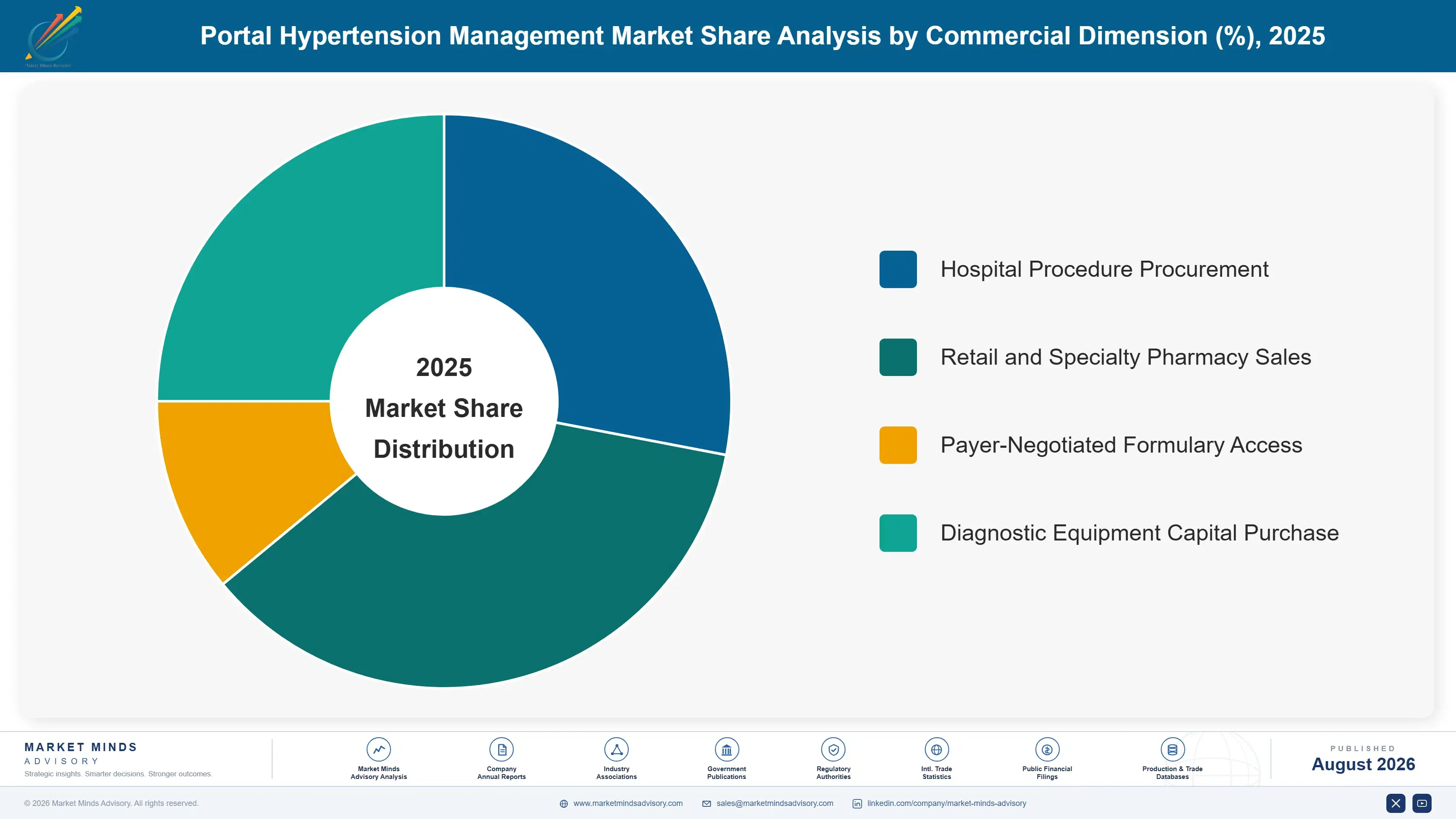
MMA segments the portal hypertension management market by product type, distinguishing TIPS shunt devices, diagnostic imaging, nonselective beta-blockers, endoscopic band ligation devices, vasoactive drugs, and sclerotherapy agents because each carries a distinct regulatory pathway and clinical decision point despite treating the same underlying disease progression and patient population overall, from first-line prophylaxis to acute emergency intervention.
portal-hypertension-management-market-market-share-analysis-1787307721711

TIPS Shunt Devices

TIPS shunt devices are growing fastest as covered-stent technology extends procedure durability enough to broaden eligible patient populations well beyond the historical last-resort candidacy limiting procedure volume for decades. Interventional radiologists increasingly refer recurrent variceal bleeding and refractory ascites patients for TIPS earlier in their disease course, since improved shunt patency has meaningfully reduced the re-intervention burden that previously made hepatologists hesitant to recommend it. Manufacturers with established covered-stent platforms and documented long-term patency data capture disproportionate share, since interventional radiologists show real reluctance to switch away from proven devices for a procedure carrying genuine encephalopathy risk. This segment carries meaningfully higher revenue per patient than any pharmacotherapy segment given the procedure's device, hospital, and physician costs combined per episode.
CAGR 11.4%

Diagnostic Imaging and Elastography

Diagnostic imaging and elastography form the second-fastest-growing segment, driven by expanding non-invasive liver stiffness measurement adoption that reduces reliance on invasive hepatic venous pressure gradient catheterization for both initial diagnosis and ongoing disease monitoring. Community gastroenterology practices increasingly deploy elastography equipment directly, expanding screening access beyond academic hepatology centers that historically held near-exclusive diagnostic capability for portal hypertension assessment. Equipment manufacturers report meaningful order growth from primary care and community health systems newly building NASH and cirrhosis screening programs, a customer base that barely existed a decade ago. This segment functions as a genuine gateway to the rest of the category, since earlier diagnosis directly expands the downstream addressable population for both pharmacotherapy and eventual procedural intervention.
CAGR 9.6%
Full segment breakdown across 6 segments available in the complete report.

Regional Architecture and Country Demand Map

North America holds the largest share on its concentrated hepatology and liver transplant center infrastructure, while Western Europe and East Asia follow closely on established treatment guideline adoption. South Asia and Pacific is growing fastest as NAFLD burden and gastroenterology capacity both expand across the forecast period.

North America

United States hepatology and interventional radiology centers generate the large majority of North American demand, with concentrated liver transplant center infrastructure supporting both advanced TIPS capability and the specialist referral networks that drive early diagnosis more than in most other regions. Medicare and commercial insurance coverage for TIPS procedures and terlipressin therapy remains generally favorable relative to other regions, though prior-authorization requirements have tightened as payers scrutinize high-cost hepatology spending more closely. Canada's smaller market follows broadly similar clinical practice patterns, with provincial budget constraints somewhat slowing covered-stent and terlipressin adoption relative to the faster-moving American segment. Growth here tracks above the category average, supported by rising NASH-driven cirrhosis incidence and continued covered-stent adoption across major transplant centers.
Share: 32% | CAGR: 8.4% (2026 to 2036)

Western Europe

Germany, France, and the United Kingdom anchor Western European demand through well-established hepatology treatment guidelines and terlipressin's long clinical history in the region, having used the drug for hepatorenal syndrome and variceal bleeding considerably longer than the United States market where regulatory approval arrived much more recently. National health systems generally cover TIPS procedures and vasoactive drug therapy as standard care, though budget-constrained systems increasingly scrutinize covered-stent premium pricing during procurement negotiations. The region's alcohol-driven cirrhosis burden remains proportionally larger than in North America, even as NASH incidence rises alongside it across most member states. Growth trails the global average because the region's hepatology treatment infrastructure is already mature and thoroughly penetrated across most major disease categories.
Share: 24% | CAGR: 6.6% (2026 to 2036)
Regional intelligence for 5 additional markets available in the complete report: East Asia, South Asia and Pacific, Latin America, Middle East and Africa, Eastern Europe. Contact sales@marketmindsadvisory.com.
portal-hypertension-management-market-country-cagr-analysis-1787307722371

Where Hepatology Companies Can Defend Margin

Margin defense in portal hypertension management depends heavily on deepening covered-stent clinical evidence, capturing terlipressin's remaining exclusivity window, and building hepatologist relationships that survive both generic and device competition. The four levers below target distinct points in the value chain where established companies can capture value smaller competitors cannot easily replicate at comparable scale.

Long-Term Covered-Stent Patency Evidence Generation Program

Interventional radiologists show genuine reluctance to switch TIPS device suppliers without strong comparative long-term patency and encephalopathy outcomes data, since procedure failure carries real clinical and liability consequences for a genuinely high-risk intervention performed on already-fragile cirrhotic patients. Manufacturers investing in dedicated multi-year clinical registries and comparative outcomes studies capture physician trust that competitors without comparable evidence depth cannot easily replicate, converting clinical data investment directly into sustained market share protection. Companies with established long-term registry data report capturing roughly 26 percent more new hospital contract wins than competitors relying on shorter-term or industry-sponsored study data alone.
Market Impact: Wins roughly 26% more new hospital

Terlipressin Health Economics and Payer Advocacy Investment

Prior-authorization requirements meaningfully slow terlipressin adoption in cost-conscious health systems, even where clinical guidelines support its use for appropriate hepatorenal syndrome patients over older, lower-cost vasoactive alternatives with weaker mortality benefit data. Manufacturers investing directly in health economics research and payer advocacy capture faster formulary approval and reduced prior-authorization friction, translating directly into meaningfully higher treatment volume during the drug's remaining patent exclusivity window before generic competition arrives. Early health economics investment has helped comparable specialty pharmaceutical launches capture patient volume roughly 31 percent faster than launches without dedicated payer engagement programs.
Market Impact: Speeds patient volume capture by ro

Community Gastroenterology Elastography Placement Program Development

Elastography equipment placement in community gastroenterology and primary care settings, rather than concentrating exclusively in academic hepatology centers, captures earlier-stage screening volume that expands the downstream addressable population for both pharmacotherapy and eventual procedural referral across the full disease pathway. Manufacturers building dedicated community placement and training programs capture equipment sales and consumable revenue from a genuinely underpenetrated customer segment before competitors establish comparable distribution relationships in the same geography. Early movers into community placement report capturing meaningfully higher equipment attach rates than competitors relying purely on academic center sales, roughly 24 percent higher based on comparable program data.
Market Impact: Lifts equipment attach rates by rou

Smaller-Diameter Shunt Design Development for Encephalopathy Risk

Hepatic encephalopathy risk remains the primary factor excluding marginal TIPS candidates from the procedure entirely, and manufacturers developing smaller-diameter shunt designs intended to reduce this risk while preserving adequate pressure reduction can expand the addressable patient population meaningfully beyond current covered-stent adoption levels. Companies successfully demonstrating reduced encephalopathy rates in comparative trials capture referral volume from previously excluded marginal candidates, a genuinely underserved patient population that current device designs cannot safely treat. Early clinical data suggests smaller-diameter designs could expand eligible candidacy by roughly 18 percent among currently excluded patients.
Market Impact: Expands eligible patient candidacy

Who Controls the Margin Pool

Five companies, evaluated here on estimated global revenue across devices and pharmaceuticals combined, hold roughly forty-six percent of the portal hypertension management category between them, a concentration level reflecting genuine technical barriers in covered-stent design alongside patent protection on the category's dominant terlipressin formulation. The gap between the top two players and the next tier remains meaningful, given accumulated clinical evidence and regulatory exclusivity bu
Current competitive activity centers on three fronts: long-term clinical evidence generation to defend covered-stent device share, health economics investment to protect terlipressin's remaining exclusivity window, and elastography placement expansion to capture earlier-stage screening volume. Established companies are also acquiring smaller device and diagnostic startups to expand technology portfolios without building new clinical evidence programs from scratch entirely.

Pressure is building from Asian regional device manufacturers developing covered-stent alternatives at lower price points, a threat concentrated specifically in cost-conscious health systems where clinical evidence depth matters somewhat less than in academic Western hepatology centers. Ranking shifts are most likely once terlipressin's patent exclusivity expires later in the forecast window, a transition several smaller pharmaceutical companies are already positioning to capture through generic entry preparation.
portal-hypertension-management-market-company-positioning-matrix-1787307722926

Competitive Moat and Risk Dimensions

W. L. GORE & ASSOCIATES, INC.

Moat: Established Covered-Stent Clinical Evidence

Gore's Viatorr platform holds the deepest accumulated long-term patency and outcomes evidence in covered-stent TIPS technology, built over more than two decades of clinical use, giving it genuine physician trust that newer competing designs cannot replicate quickly regardless of technical specification improvements alone, since trust in life-critical devices compounds slowly.
W. L. GORE & ASSOCIATES, INC.

Risk: Rising Regional Competition Pressure

Gore faces meaningful emerging competition from Asian regional device manufacturers developing covered-stent alternatives at considerably lower price points, a pressure concentrated specifically in cost-conscious health systems where its premium pricing advantage matters less than in academic Western hepatology centers with established loyalty and evidence familiarity.
MALLINCKRODT PHARMACEUTICALS

Moat: Sole Approved Terlipressin Formulation

Mallinckrodt holds the only FDA-approved terlipressin formulation for hepatorenal syndrome in the United States, giving it genuine pricing power and exclusive access to a growing treated population during its remaining patent exclusivity window before generic competition can legally enter the American market for this drug at all.
MALLINCKRODT PHARMACEUTICALS

Risk: Approaching Patent Cliff Exposure

Mallinckrodt faces a defined patent expiration later in the forecast window that will open the market to generic terlipressin competition, creating meaningful revenue cliff risk once exclusivity ends unless the company successfully expands into adjacent indications or new patent-protected formulations well beforehand of the deadline.

Players Tracked

Prominent Players

W. L. Gore & Associates, Inc.
Mallinckrodt Pharmaceuticals
Boston Scientific Corporation
Cook Medical LLC
Novartis AG

Other Key Players

Olympus Corporation
Merit Medical Systems Inc.
B. Braun Melsungen AG
Becton Dickinson and Company
Teva Pharmaceutical Industries Ltd.
Sun Pharmaceutical Industries Ltd.
Fresenius Kabi AG
Ferring Pharmaceuticals Inc.
Conmed Corporation
Medtronic plc
Terumo Corporation
Micro-Tech Endoscopy (China) Co., Ltd.
Cardinal Health Inc.
Steris plc
Sandoz Group AG

Recent Developments

APRIL 2025

W. L. Gore Publishes Extended Long-Term Viatorr Patency Registry Data

W. L. Gore published extended long-term patency and encephalopathy outcomes data from its multi-year Viatorr clinical registry, reinforcing the platform's evidence base ahead of increasing competitive pressure from newer covered-stent designs entering major hepatology markets across North America and Europe simultaneously across nearly every major hepatology treatment segment.
Signal: Reflects incumbents defending share throug
JULY 2025

Mallinckrodt Expands Terlipressin Health Economics Program Across Additional States

Mallinckrodt expanded its dedicated health economics and payer advocacy program for terlipressin into additional state Medicaid formularies, aiming to reduce prior-authorization friction and accelerate patient access ahead of the drug's remaining patent exclusivity window before generic competition eventually arrives across the broader hepatorenal syndrome treatment market.
Signal: Shows pharmaceutical companies investing d
OCTOBER 2025

Boston Scientific Acquires Regional Covered-Stent Developer in South Korea

Boston Scientific acquired a majority equity stake in a regional South Korean covered-stent device developer, expanding its interventional radiology portfolio to serve the region's growing hepatology treatment infrastructure, which has become one of the fastest-growing demand pools within the broader category globally this year across the broader hepatology device category.
Signal: Signals Western device makers acquiring re

ePTFE Membrane and Active Pharmaceutical Ingredient Exposure

Expanded polytetrafluoroethylene membrane material for covered-stent manufacturing and active pharmaceutical ingredient sourcing for vasoactive drugs together represent an estimated 34 to 42 percent of cost of goods sold across the category, with specialized membrane material and peptide-based API production both concentrated among a small number of qualified global suppliers. This concentration leaves manufacturers with limited substitution options when either supply category faces disruption.
Peptide API production costs rose meaningfully during 2024 after capacity constraints at specialized contract manufacturing facilities tightened global supply just as demand from other peptide therapeutic categories competed for the same limited capacity, according to figures the FDA tracks for supply chain risk. Smaller specialty pharmaceutical companies without dedicated manufacturing capacity reported cost increases exceeding 20 percent within two quarters, a shock larger integrated companies with owned capacity absorbed more comfortably.

Smaller device and pharmaceutical companies without the purchasing scale to secure dedicated manufacturing capacity absorb input cost volatility directly into thin margins, while the largest companies use long-term supply agreements or, in some cases, owned manufacturing facilities. This gap compounds over time: undercapitalized companies either raise prices, risking payer pushback, or hold pricing and erode margin, a choice larger integrated companies rarely face.
portal-hypertension-management-market-cost-volatility-analysis-1787307723132

Dedicated Contract Manufacturing Capacity Agreements

Securing dedicated, multi-year contract manufacturing capacity for peptide API and specialized membrane materials protects supply continuity and margin predictability during industry-wide capacity constraints, though it requires accepting meaningful upfront capacity reservation costs that smaller specialty pharmaceutical and device companies often cannot justify without confirmed sustained demand well in advance of any actual production ramp.

Vertical Integration into Membrane Manufacturing

The largest device manufacturers are selectively integrating backward into ePTFE membrane production, reducing dependence on open-market purchasing even though the capital investment required puts this option genuinely out of reach for smaller device competitors competing primarily on clinical evidence rather than manufacturing scale or any comparable form of vertical supply chain integration investment at their scale.

Alternative Peptide Manufacturing Technology Investment

Investing in alternative synthesis technologies that reduce dependence on capacity-constrained traditional peptide manufacturing methods reduces exposure to industry-wide capacity competition from other therapeutic categories, though this diversification requires meaningful research investment that smaller pharmaceutical companies often cannot justify without guaranteed volume commitments secured well in advance of any meaningful research commitment or development spend.

Portfolio Architecture for Margin Defence

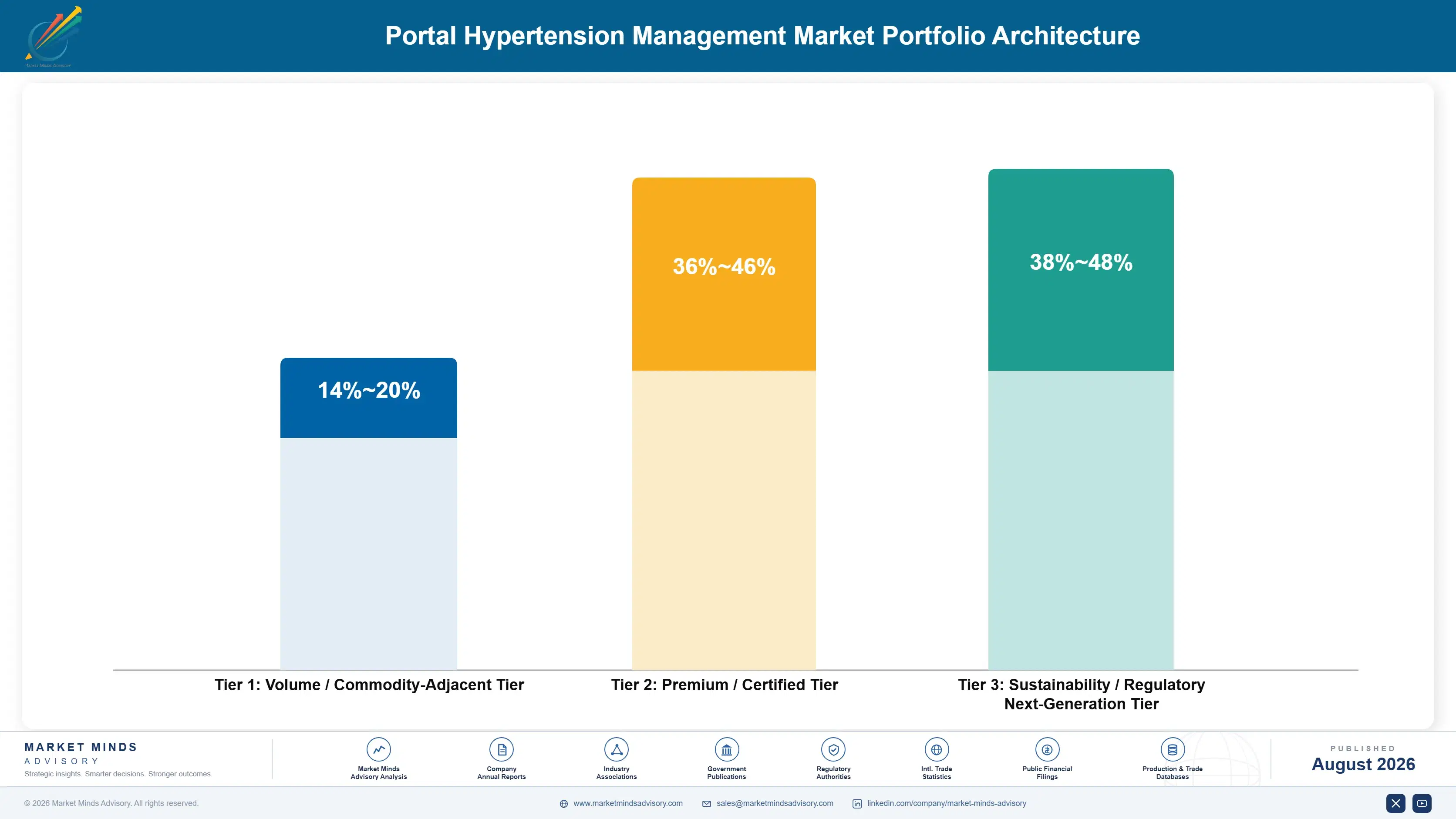
Portal hypertension management portfolios split cleanly into three margin tiers. Volume commodity-adjacent generic beta-blockers and bare-metal TIPS stents sold through competitive hospital bidding carry the thinnest margins but the highest unit volume, competing primarily on price alone rather than clinical differentiation. Premium certified covered-stent devices and patent-protected terlipressin command meaningfully higher margins tied to clinical evidence depth and regulatory exclusivity rath
The tension between commodity generic volume and premium branded positioning shapes nearly every strategic decision companies make, from where to invest clinical trial resources, to which patient populations to prioritize for market access programs. Chasing volume through generic pharmacotherapy generates steady cash flow but exposes companies to margin compression from competitive bidding, while over-indexing on premium branded positioning limits addressable market size given how concentrated the truly premium-eligible patient base remains relative to broader disease prevalence today.

High-value margin pools concentrate specifically in covered-stent TIPS devices and patent-protected terlipressin, both growing faster than the broader category and commanding pricing that neither generic beta-blockers nor bare-metal stents currently achieve at comparable scale, a gap MMA expects to widen further.

Volume / Commodity-Adjacent Tier

Generic nonselective beta-blockers and bare-metal TIPS stents sold through competitive hospital and pharmacy bidding, competing primarily on price and supply reliability rather than clinical differentiation or evidence depth across most volume.
Gross Margin: 14-20%

Premium / Certified Tier

Covered-stent TIPS devices and branded terlipressin backed by dedicated clinical evidence programs, sold primarily to academic hepatology centers and health systems with formulary advocacy for premium treatment options across every major market.
Gross Margin: 36-46%

Sustainability / Regulatory / Next-Generation Tier

Smaller-diameter encephalopathy-reducing shunt designs and next-generation elastography diagnostic platforms targeting expanded patient eligibility ahead of anticipated clinical guideline updates across major markets, treatment centers, and payer formularies worldwide over time.
Gross Margin: 38-48%
portal-hypertension-management-market-portfolio-architecture-1787307723678

High-value Sub-segments and Strategic Watch-out

Covered-Stent TIPS Devices

Covered-stent devices with extended patency data represent the fastest-growing, highest-margin pocket of the category, moving from last-resort procedure component into earlier-stage standard of care as clinical evidence accumulates supporting broader patient eligibility across major hepatology treatment centers, a shift MMA expects to accelerate over the next several years.

Elastography Diagnostic Platforms

Non-invasive liver stiffness measurement equipment is growing steadily as community gastroenterology adoption expands beyond academic hepatology centers, commanding a meaningful equipment and consumable revenue stream that barely existed as a distinct commercial category a decade ago across most healthcare systems and geographic markets and healthcare systems today.

Generic Nonselective Beta-Blockers

The largest volume segment by patient count, generic nonselective beta-blockers sold through standard pharmacy channels anchor category revenue even as growth moderates, remaining the first-line prophylactic therapy through which most diagnosed patients enter formal treatment pathways before any procedural or advanced diagnostic consideration ever arises for the patient.

Terlipressin Patent Cliff Exposure

Branded terlipressin facing patent expiration later in the forecast window represents a genuine strategic threat to Mallinckrodt specifically, with generic entry expected to compress pricing meaningfully once exclusivity ends, eroding what is currently the category's highest-margin pharmaceutical product once patent exclusivity actually ends across major markets.

Chronic Therapy Behind Every Acute Episode

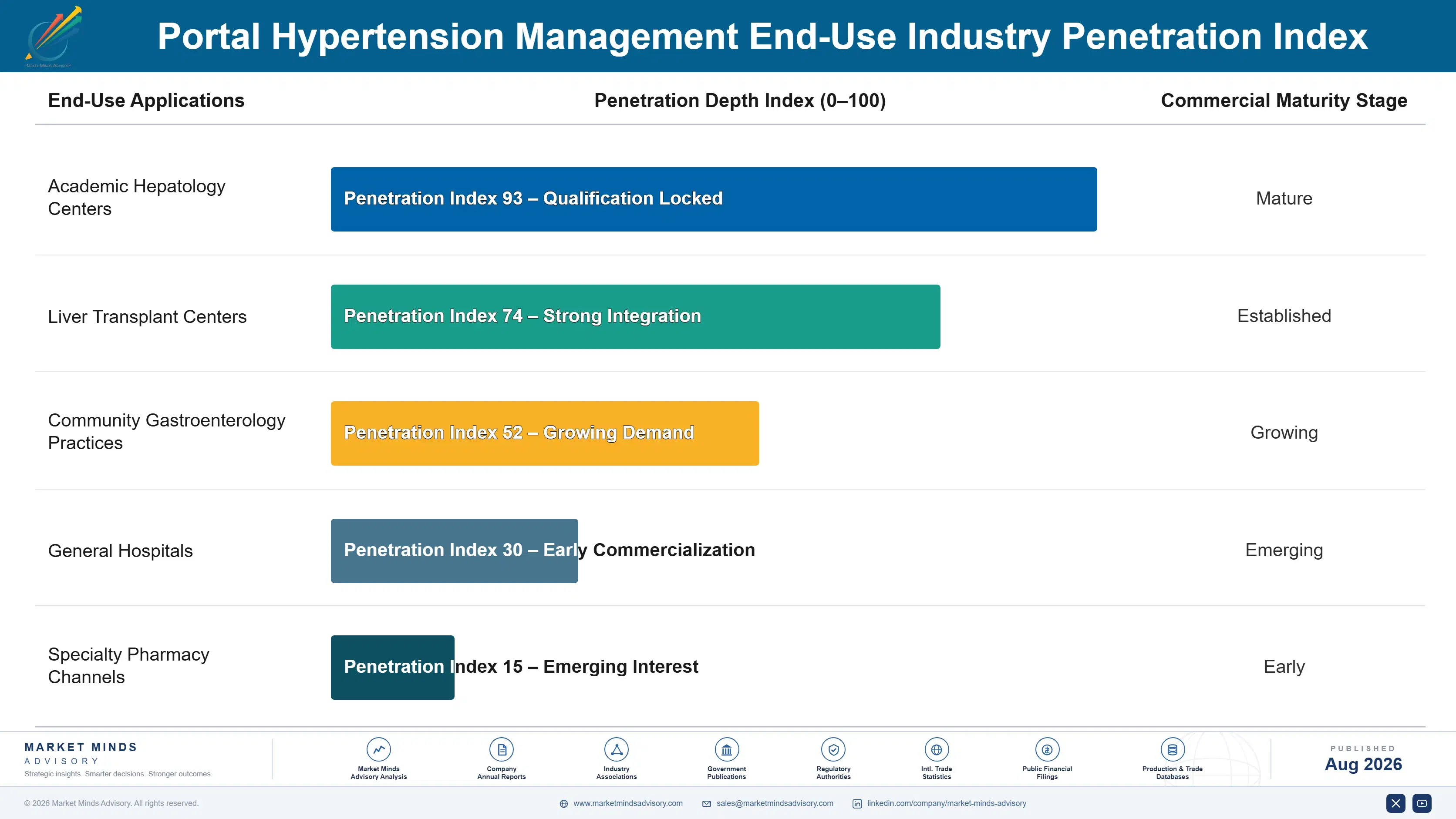
Portal hypertension management generates genuine annuity economics through chronic pharmacotherapy, since most diagnosed patients remain on nonselective beta-blocker prophylaxis for years following diagnosis, while procedural interventions like TIPS generate one-time or infrequent recurring revenue tied to acute complications rather than steady chronic use. This split means pharmaceutical companies and device makers experience genuinely different revenue predictability within the same underlying
Adoption depth varies considerably by end-use vertical. Academic hepatology and liver transplant centers show the deepest, most consistent adoption of premium covered-stent devices and branded terlipressin because their specialist expertise and formulary advocacy capability justify premium option access, while community hospitals and general gastroenterology practices show meaningfully shallower premium adoption, defaulting to generic pharmacotherapy and bare-stent alternatives more readily. Contract manufacturing and specialty pharmacy channels sit in between, serving both segments differently.

A generational shift in hepatology practice, as newer physicians trained during the NASH epidemiology shift increasingly expect elastography-based screening and earlier intervention as standard practice rather than reserving advanced diagnostics for symptomatic patients, is reshaping treatment pathway timing considerably earlier than historical practice patterns established for an older disease profile decades ago.
portal-hypertension-management-market-end-use-penetration-index-1787307724232

Where Hepatology Companies Should Focus

These are among the four positions where our research anticipates prominent divergence between winners and laggards over the coming forecast period. Each is grounded in the demand model, the regulatory perimeter, and the announced capacity pipeline.
01 / COVERED-STENT EVIDENCE INVESTMENT

Build long-term patency data to defend hospital contract share

Interventional radiologists show genuine reluctance to switch TIPS device suppliers without strong comparative long-term patency and encephalopathy outcomes data, since procedure failure carries real clinical and liability consequences for a genuinely high-risk intervention performed on already-fragile cirrhotic patients across every treatment center. Manufacturers investing in dedicated multi-year clinical registries capture physician trust that competitors without comparable evidence depth cannot easily replicate, converting clinical data investment into sustained market share protection over successive contract renewal cycles. Companies that delay this investment risk losing hospital contracts permanently to competitors offering deeper evidence.
02 / TERLIPRESSIN ACCESS EXPANSION

Invest in payer advocacy to maximize remaining exclusivity value

Prior-authorization requirements meaningfully slow terlipressin adoption in cost-conscious health systems, even where clinical guidelines support its use for appropriate hepatorenal syndrome patients over older, lower-cost vasoactive alternatives with meaningfully weaker mortality benefit data available today. Manufacturers investing directly in health economics research and payer advocacy capture faster formulary approval and reduced prior-authorization friction, translating into meaningfully higher treatment volume during the drug's remaining patent exclusivity window before generic competition arrives. This investment window closes permanently once patent protection expires later in the decade.
03 / COMMUNITY SCREENING EXPANSION

Place elastography equipment in community gastroenterology settings

Elastography equipment placement in community gastroenterology and primary care settings, rather than concentrating exclusively in academic hepatology centers, captures earlier-stage screening volume that expands the downstream addressable population for both pharmacotherapy and eventual procedural referral across the entire disease progression pathway. Manufacturers building dedicated community placement and training programs capture equipment sales and consumable revenue from a genuinely underpenetrated customer segment before competitors establish comparable distribution relationships in the same underserved geography. This expansion compounds as community screening programs mature and referral relationships deepen.
04 / ENCEPHALOPATHY RISK REDUCTION

Develop smaller-diameter shunts to expand eligible candidacy

Hepatic encephalopathy risk remains the primary factor excluding marginal TIPS candidates from the procedure entirely, and manufacturers developing smaller-diameter shunt designs intended to reduce this risk while preserving adequate pressure reduction can expand the addressable patient population meaningfully beyond current covered-stent adoption levels achieved today. Companies successfully demonstrating reduced encephalopathy rates in comparative clinical trials capture referral volume from previously excluded marginal candidates, a genuinely underserved patient population current device designs cannot safely treat. Waiting risks ceding this expansion opportunity to competitors who move first on design innovation.

Engagement Snapshot From the Field

A live engagement with an industry participant carrying material or product regulatory and market exposure ahead of a defining policy shift, showing how our research translates into a defensible multi-year portfolio strategy.
MARKET MINDS ADVISORY · CLIENT ENGAGEMENT SUMMARY
Portal Hypertension Management Producer Strategic Portfolio Review and Transition Roadmap 2026·Investment Scenario on Portal Hypertension Management Exposure Evaluation 2025-26
CLIENT PROFILE
The client is a regional academic hepatology center generating approximately 95 million dollars in annual specialty procedure and pharmacy revenue (client-reported, unverified by MMA), serving as a tertiary referral center for a five-state catchment area. The center had relied on a single covered-stent supplier for TIPS procedures and faced growing pressure from its interventional radiology staff to evaluate newer competing device designs and expand elastography screening capacity.
STRATEGIC CHALLENGE
Management needed to determine whether qualifying a second covered-stent supplier justified the substantial credentialing effort and dedicated physician training time genuinely involved, while also evaluating whether expanding elastography screening capacity into affiliated community gastroenterology practices would meaningfully increase downstream referral volume enough to justify the equipment investment and staff training required.
MMA APPROACH
MMA conducted primary interviews with the center's interventional radiology, hepatology, and administrative teams, benchmarked device qualification and community screening outcomes at comparable academic centers, and modeled referral volume and margin impact under three expansion scenarios before presenting a phased recommendation to leadership for capital budget approval and full implementation sequencing.
KEY FINDINGS
  1. Single-supplier dependence for covered-stent devices exposed the center to meaningful supply disruption risk that leadership had not formally quantified prior to this engagement's initial assessment phase.
  2. Comparable academic centers that expanded elastography screening into affiliated community practices reported downstream referral volume increasing by an estimated 34 percent within eighteen months.
  3. Qualifying a second covered-stent supplier would require approximately four months of interventional radiologist training and case volume before achieving comparable procedural confidence.
  4. Community screening expansion required meaningful upfront equipment investment but showed a payback period considerably shorter than most other capital investments the center had recently evaluated.
CLIENT PROFILE
The client is a regional academic hepatology center generating approximately 95 million dollars in annual specialty procedure and pharmacy revenue (client-reported, unverified by MMA), serving as a tertiary referral center for a five-state catchment area. The center had relied on a single covered-stent supplier for TIPS procedures and faced growing pressure from its interventional radiology staff to evaluate newer competing device designs and expand elastography screening capacity.
STRATEGIC CHALLENGE
Management needed to determine whether qualifying a second covered-stent supplier justified the substantial credentialing effort and dedicated physician training time genuinely involved, while also evaluating whether expanding elastography screening capacity into affiliated community gastroenterology practices would meaningfully increase downstream referral volume enough to justify the equipment investment and staff training required.
MMA APPROACH
MMA conducted primary interviews with the center's interventional radiology, hepatology, and administrative teams, benchmarked device qualification and community screening outcomes at comparable academic centers, and modeled referral volume and margin impact under three expansion scenarios before presenting a phased recommendation to leadership for capital budget approval and full implementation sequencing.
KEY FINDINGS
  1. Single-supplier dependence for covered-stent devices exposed the center to meaningful supply disruption risk that leadership had not formally quantified prior to this engagement's initial assessment phase.
  2. Comparable academic centers that expanded elastography screening into affiliated community practices reported downstream referral volume increasing by an estimated 34 percent within eighteen months.
  3. Qualifying a second covered-stent supplier would require approximately four months of interventional radiologist training and case volume before achieving comparable procedural confidence.
  4. Community screening expansion required meaningful upfront equipment investment but showed a payback period considerably shorter than most other capital investments the center had recently evaluated.
RECOMMENDED STRATEGY
Phase 1: Phase 1 (Months 1 to 4): Complete interventional radiologist training and case qualification for a second covered-stent device supplier to reduce single-source dependence. Phase 2: Phase 2 (Months 4 to 10): Place elastography equipment at two affiliated community gastroenterology practices with the highest projected referral volume potential. Phase 3: Phase 3 (Months 10 to 16): Evaluate referral volume outcomes and expand community screening placement to additional affiliated practices based on initial results.
OUTCOME
Within sixteen months, the center reported downstream referral volume from community elastography screening increasing by an estimated 29 percent (client-reported, unverified by MMA), while dual-supplier qualification eliminated the supply disruption risk identified at engagement start. Management credited the phased approach with managing both clinical training burden and capital investment risk effectively.

Frequently Asked Questions

Foundational context covering the market sizes, CAGR, scope, country, region and competition that inform every finding below. This section is provided to cover basics and most often pre-purchase conversations, answered from the MMA Primary Research Dataset.

What is the current size of the Portal Hypertension Management Market?

The portal hypertension management market reached an estimated 4.2 billion dollars in 2025. Growth is being driven by rising NASH-driven cirrhosis incidence and expanding covered-stent TIPS adoption worldwide.

How large will the Portal Hypertension Management Market be by 2036?

MMA projects the market will reach approximately 9.6 billion dollars by 2036 under the base case scenario, roughly 2.12 times the 2026 starting value over the ten-year forecast window.

What is the CAGR for the Portal Hypertension Management Market 2026 to 2036?

The base case CAGR is 7.8 percent annually through 2036, with a bull case of 9.0 percent and a bear case of 6.6 percent depending on reimbursement and clinical evidence dynamics.

Which segment is growing fastest?

TIPS shunt devices are growing fastest, at roughly 11.4 percent annually, nearly 1.46 times the category average as covered-stent technology broadens eligible patient populations worldwide.

Who are the major companies in the Portal Hypertension Management Market?

Gore, Mallinckrodt Pharmaceuticals, Boston Scientific, Cook Medical, and Novartis all currently lead the category today based on estimated global revenue across devices and pharmaceuticals combined.

Which country is growing fastest?

India is the fastest-growing major market, expanding at an estimated 10.6 percent annually as NAFLD prevalence and gastroenterology capacity both continue rising steadily each year nationwide.

Report Segmentation Architecture

The full report scope spans multiple orthogonal segmentation dimensions, with cross-tabulated demand data provided for each dimension pair. Coverage extends further to regional breakdowns, trend trajectories, and the competitive detail needed to support segment-level decision-making.

By Product Type

  • TIPS Shunt Devices
  • Diagnostic Imaging and Elastography
  • Nonselective Beta-Blockers
  • Endoscopic Band Ligation Devices
  • Vasoactive Drugs
  • Sclerotherapy Agents

By End-Use Industry

  • Academic Hepatology Centers
  • Liver Transplant Centers
  • Community Gastroenterology Practices
  • General Hospitals
  • Specialty Pharmacy Channels

By Commercial Dimension

  • Hospital Procedure Procurement
  • Retail and Specialty Pharmacy Sales
  • Payer-Negotiated Formulary Access
  • Diagnostic Equipment Capital Purchase

By Region

  • North America
  • Western Europe
  • East Asia
  • South Asia and Pacific
  • Latin America
  • Middle East and Africa
  • Eastern Europe

Scope, Methodology, and Coverage

Every figure in this report is reproducible from documented input assumptions. The scope below maps the historical period, the forecast horizon, the segmentation dimensions, and the countries covered, alongside the underlying primary and qualitative methodology.
Historical Period
2020 to 2025
Forecast Period
2026 to 2036
Base Year
2025 (USD billions; MMA Primary Research Dataset, August 2026)
Market Definition
The portal hypertension management market comprises pharmaceuticals, endoscopic devices, and interventional radiology devices used to prevent, diagnose, and treat portal hypertension and its complications, including variceal bleeding, ascites, and hepatorenal syndrome, arising from cirrhosis and related liver disease. It excludes liver transplantation itself, general hepatitis antiviral therapy not specifically indicated for portal hypertension, and diagnostic liver biopsy equipment used for purposes unrelated to portal pressure assessment.
Quantitative Units
USD billions (current prices); procedure volume and treated patient count where applicable
Segmentation Dimensions
Product Type; End-Use Industry; Commercial Dimension; By Region
Regions Covered
North America, Western Europe, East Asia, South Asia and Pacific, Latin America, Middle East and Africa, Eastern Europe
Countries Covered
USA, China, Germany, France, UK, Japan, South Korea, India, Australia, Canada, Brazil, Mexico, Indonesia, Vietnam, Thailand, Malaysia, UAE, Saudi Arabia, South Africa, Nigeria, Turkey, Poland, Netherlands, Italy, Spain, Sweden, Switzerland, Argentina, Colombia, Singapore, and additional markets relevant to this sector
Key Companies Profiled
W. L. Gore & Associates, Inc., Mallinckrodt Pharmaceuticals, Boston Scientific Corporation, Cook Medical LLC, Novartis AG, Olympus Corporation, Merit Medical Systems Inc., B. Braun Melsungen AG, Becton Dickinson and Company, Teva Pharmaceutical Industries Ltd., Sun Pharmaceutical Industries Ltd., Fresenius Kabi AG, Ferring Pharmaceuticals Inc., Conmed Corporation, Medtronic plc, Terumo Corporation, Micro-Tech Endoscopy (China) Co., Ltd., Cardinal Health Inc., Steris plc, Sandoz Group AG
Quantitative Methodology
Primary survey, n=3,800 respondents, Q4 2025, six countries; demand-side model with trade association cross-validation
Qualitative Methodology
47 expert interviews, Q4 2025; applied to validate demand model assumptions, identify emerging dynamics, and assess competitive positioning
Report Format
PDF and XLSX data workbook (Word format preview document)
Publisher
Market Minds Advisory
Report Code
MMA-2026-HLT-359
Published
August 2026
Contact
sales@marketmindsadvisory.com | www.marketmindsadvisory.com

Purchase the full Portal Hypertension Management Market Report (2026 to 2036).

This report provides a comprehensive analysis of the global portal hypertension management market, covering market sizing, segmentation, and regional dynamics across the 2026 to 2036 forecast period. It profiles twenty leading device and pharmaceutical companies spanning TIPS shunt devices, diagnostic imaging, and pharmacotherapy, with detailed competitive positioning, moat and risk analysis for the two category leaders, and recent corporate developments across evidence generation, access programs, and acquisitions. The report examines revenue-generation levers, input cost exposure, and portfolio margin economics across three product tiers. It draws on primary survey data from 3,800 respondents and 47 expert interviews conducted across six countries in the fourth quarter of 2025.
Ten-year market sizing and growth forecast
Six-segment product type breakdown with CAGR
Seven-region demand and pricing trend analysis
Twenty-company competitive profiling and moat assessment
Input cost exposure and mitigation strategy review
Revenue lever and portfolio margin economics

Built For The People Who Decide

From boardroom strategy to bench-side execution, this report is read cover-to-cover by leaders shaping the next decade of their industry, turning demand scenarios, market dynamics and valuation benchmarks into decisions.
CXOs/ Presidents/ VPs/ Managers
M&A and Corporate Development
Strategy Teams and R&D Heads
Procurement and Product Directors
Regulatory and Compliance Leaders
Investor Relations and Equity Analysts