Market Minds Advisory
Polymyxin Resistance Testing Market

Polymyxin Resistance Testing Market: Broth Microdilution Constraints, mcr Surveillance and the Last-Resort Antibiotic Nobody Can Test Easily

Colistin is the drug of last resort against carbapenem-resistant infections, and it is also the one antibiotic whose susceptibility cannot be measured by any of the methods a routine laboratory already owns.

Lead Analyst

Alice Ballenger

Published

September 2026

Make Smarter Decisions with Customized Research Insights

Request a free sample report and evaluate market opportunities, growth trends, and competitive dynamics relevant to your business needs.

2025 MARKET VALUE$0.3BMarket Size 2025
2036 FORECAST VALUE$1.1BBase Case , 2026 to 2036
CAGR 2026 TO 203611.4 %Bull 12.6% / Bear 10.2%
INCREMENTAL OPPORTUNITY$0.7BNet 10- year value creation
EXPANSION MULTIPLE2.94x2036 value over 2026 base
Strategic Levers
M&A Pipeline
Regional Outlook
Country Rankings
Competitive Intelligence
Segmental Deep-dive
Call-Us : 91 93563 13602

Executive Snapshot and Market Trajectory

Disk diffusion does not work for colistin. Neither do gradient strips. The molecule is large, cationic and sticks to plastic, and it barely moves through agar, so the two methods every clinical laboratory owns are both formally invalid for the one drug that matters most. Nobody planned for that.
Molecular mcr gene detection compounds at 17.1%, exactly 1.50 times the market, because plasmid-borne colistin resistance is a public health surveillance question as well as a bedside one. East Asia holds 30% of demand, which reflects where the mcr-1 gene was first identified and where agricultural colistin use created the selection pressure that produced it in the first place. Agricultural use created the gene long before hospitals met it.
Five suppliers hold 54% between them. Reference broth microdilution requires cation-adjusted broth, untreated polystyrene plates and no added surfactant, and getting any of that wrong shifts the result. That specificity has kept the field narrow and made commercial panel suppliers more important than the method's manual origins would suggest. Commercial panels that fix those variables are worth far more than the method's manual origins would suggest, and that is where the concentration comes from.
Market Definition
The market covers products and assays used to determine polymyxin susceptibility or detect polymyxin resistance in bacterial isolates, including reference broth microdilution panels, automated system colistin cards, broth disk elution and agar dilution kits, rapid colorimetric phenotypic assays, molecular mcr gene detection, and population analysis profiling for heteroresistance. General antimicrobial susceptibility panels not reporting a polymyxin result are excluded, as are polymyxin drug products themselves.
Base Year Value
$0.3B in 2025 (MMA Primary Research Dataset, August 2026)
Forecast Period
2026 to 2036, eleven discrete annual values
CAGR
11.4% base case. Bull 12.6%. Bear 10.2%.
Fastest Growth Segment
Molecular mcr Gene Detection Assays: 17.1% CAGR
Fastest Growth Country
India: 14.4% CAGR
Fastest Growth Region
South Asia and Pacific: 13.6% CAGR
Largest Region
East Asia: 30% of 2025 global value
Market Leaders
bioMerieux, Thermo Fisher Scientific, Becton Dickinson, Beckman Coulter, Liofilchem. Source: MMA Analysis based on company annual reports.
Primary Survey
n=3,800 procurement and R&D decision-makers, Q4 2025, six countries
Methodology
Demand-side build-up, cross-validated against public data, 47 expert interviews

Polymyxin Resistance Testing Market Forecast Scenarios

polymyxin-resistance-testing-market-size-forecast-scenario-1787307967664
Growth ran at an implied 9.8% across 2020 to 2025 and the shape was uneven. Diagnostic laboratory capacity diverted heavily to viral testing through 2020 and 2021, suppressing routine bacteriology volumes, then carbapenem-resistant infection rates rose sharply in the wake of that period and colistin testing demand recovered faster than the underlying laboratory market did.
The base case at 11.4% rests on three mechanisms. Carbapenem-resistant Enterobacterales and Acinetobacter prevalence keeps rising across Asia, the Middle East and southern Europe, and every one of those isolates generates a polymyxin susceptibility question. National surveillance programmes are adding mcr gene detection to their reporting requirements. And rapid phenotypic assays are pulling testing out of reference laboratories into hospital microbiology where turnaround matters clinically. None of the three depends on the others holding.
The bull case at 12.6% assumes newer Gram-negative agents fail to displace colistin as broadly as expected, leaving it in routine last-resort use through the decade. The bear case at 10.2% follows from cefiderocol and the newer beta-lactamase inhibitor combinations taking that role successfully, which would reduce the clinical need to test polymyxin susceptibility at all.

Testing the One Drug the Standard Methods Cannot Measure

Colistin came back into clinical use because nothing else was left. It had been abandoned in the 1970s for nephrotoxicity, and it returned four decades later as the only reliable option against carbapenem-resistant Gram-negative infections. What nobody planned for was that its chemistry makes it almost uniquely difficult to test, and that difficulty falls on laboratories at the exact moment a patient is critically ill.
TOP FIVE CONCENTRATION54%Combined share held by the five largest global suppliers
REFERENCE METHOD TURNAROUND18 hoursTime to result for standard broth microdilution against isolates
RAPID ASSAY TURNAROUND3 hoursTime to result using colorimetric phenotypic detection instead
LABORATORIES RUNNING REFERENCE METHOD31% of hospitalsShare equipped to perform validated broth microdilution in house
HETERORESISTANCE DETECTION GAP1 in 100,000Subpopulation frequency that standard testing routinely fails to detect
REFERRAL TESTING SHARE44% of volumeIsolates sent to reference laboratories rather than tested locally
The reasons are physical. Polymyxins are large cationic cyclic lipopeptides that adsorb onto plastic surfaces and diffuse poorly through agar, so disk diffusion and gradient strips give results that do not correlate with the true minimum inhibitory concentration. Both CLSI and EUCAST rule them out explicitly. Broth microdilution in cation-adjusted Mueller-Hinton broth, in untreated polystyrene, with no added surfactant, is the only reference method. Nothing simpler produces a defensible number.
That leaves most hospitals dependent on someone else. Only 31% run validated broth microdilution in house, and 44% of isolates go to a reference laboratory, adding a day or more to a result that clinicians need immediately. Rapid colorimetric assays returning an answer in about three hours are attacking exactly that gap. Speed is the whole proposition.
"There is a particular kind of clinical frustration in knowing the answer exists, knowing the laboratory downstairs cannot produce it, and knowing the patient has an infection that will not wait eighteen hours for a courier. That gap is the entire commercial opportunity here."
Director, Infectious Disease Diagnostics and Antimicrobial Resistance Practice ·

Market Trends

Plasmid-Borne mcr Resistance Turns Testing Into Public Health Surveillance

The mcr-1 gene identified in China in 2015 made colistin resistance transferable between bacteria rather than confined to chromosomal mutation, and further mcr variants have followed. That changed the question a laboratory is answering: a positive result matters for the patient and separately for whoever tracks how the gene is moving through a hospital, a food chain or a country. World Health Organization priority pathogen work and national surveillance programmes now specify mcr detection, and molecular assays compound at 17.1% against a market at 11.4%. Infection control now asks for the mechanism itself.
Market Impact: Reflex testing at 68% of volume
Rapid Phenotypic Assays Move Testing Out of Reference Laboratories

Colorimetric assays detecting bacterial growth in the presence of colistin return a result in roughly three hours against eighteen for broth microdilution, and they need no specialised instrumentation. That matters because 44% of isolates currently travel to a reference laboratory, adding a day or more while a critically ill patient is treated empirically. Adoption has been fastest in hospitals with intensive care units seeing carbapenem-resistant infections regularly. The trade-off is that these assays give a categorical answer rather than a precise minimum inhibitory concentration. For empirical therapy decisions that trade-off is entirely acceptable.
Market Impact: Surveillance programmes at 19% of v

Market Opportunities and Growth Drivers

Carbapenem-Resistant Infection Rates Generate the Underlying Test Volume

Every carbapenem-resistant Enterobacterales, Acinetobacter or Pseudomonas isolate raises the question of whether colistin will work, because the treatment options remaining after carbapenem failure are few. Prevalence has risen steadily across South Asia, East Asia, the Middle East and southern Europe, and intensive care units in those regions encounter these organisms routinely rather than exceptionally. Roughly 68% of polymyxin susceptibility tests are prompted by a carbapenem-resistant result on a prior panel, which makes this demand almost entirely reflexive rather than discretionary. Commercial effort cannot create the isolates, so regional volume tracks resistance epidemiology alone.
Market Impact: Only 31% of hospitals testing local

Agricultural Colistin Restrictions Create Surveillance Testing Programmes

China banned colistin as a growth promoter in 2017 and the European Union restricted veterinary use, both in direct response to mcr gene emergence in livestock. Enforcement requires monitoring, and monitoring means testing isolates from animals, food and environmental sources rather than only from patients. Veterinary and food chain surveillance now accounts for roughly 19% of polymyxin resistance testing volume, a category that barely existed a decade ago and which buys on programme budgets rather than on clinical need. Programme budgets carry multi-year visibility that clinical demand never provides, and national reference institutes rather than hospitals write the specification.
Market Impact: Newer agents covering 40% of indica

Market Restraints and Challenges

Reference Method Complexity Keeps Testing Out of Most Hospitals

Only 31% of hospital laboratories run validated broth microdilution for polymyxins in house. The root cause is that the method demands cation-adjusted Mueller-Hinton broth, untreated polystyrene plates and the deliberate absence of polysorbate 80, and deviation on any of those shifts results enough to change a susceptibility category. Suppliers mitigate through pre-prepared commercial panels that fix the variables, and through rapid assays that avoid the method entirely at some cost in precision. Competency, not willingness, is the barrier here. Most laboratories simply lack the volume. Volume is too low to hold competency at most sites.
Market Impact: Molecular detection compounding at

Newer Gram-Negative Agents May Reduce Clinical Need Entirely

Cefiderocol, ceftazidime-avibactam and the newer beta-lactamase inhibitor combinations were developed precisely to treat the infections colistin currently covers, and each successful displacement removes a testing question. The root cause is straightforward: colistin is used because alternatives were absent, not because it is a good drug. Nephrotoxicity makes clinicians eager to stop using it. Suppliers mitigate by building panels covering the newer agents alongside polymyxins, so a testing position survives the therapeutic shift rather than depending on it. Nephrotoxicity gives clinicians every reason to stop prescribing it wherever a credible alternative exists.
Market Impact: Result delivered within 3 hours
4 additional market trends, 3 additional growth drivers, and 2 additional restraints and challenges are covered in the full report. Contact sales@marketmindsadvisory.com to access the complete intelligence.

Segment CAGR and Growth Architecture

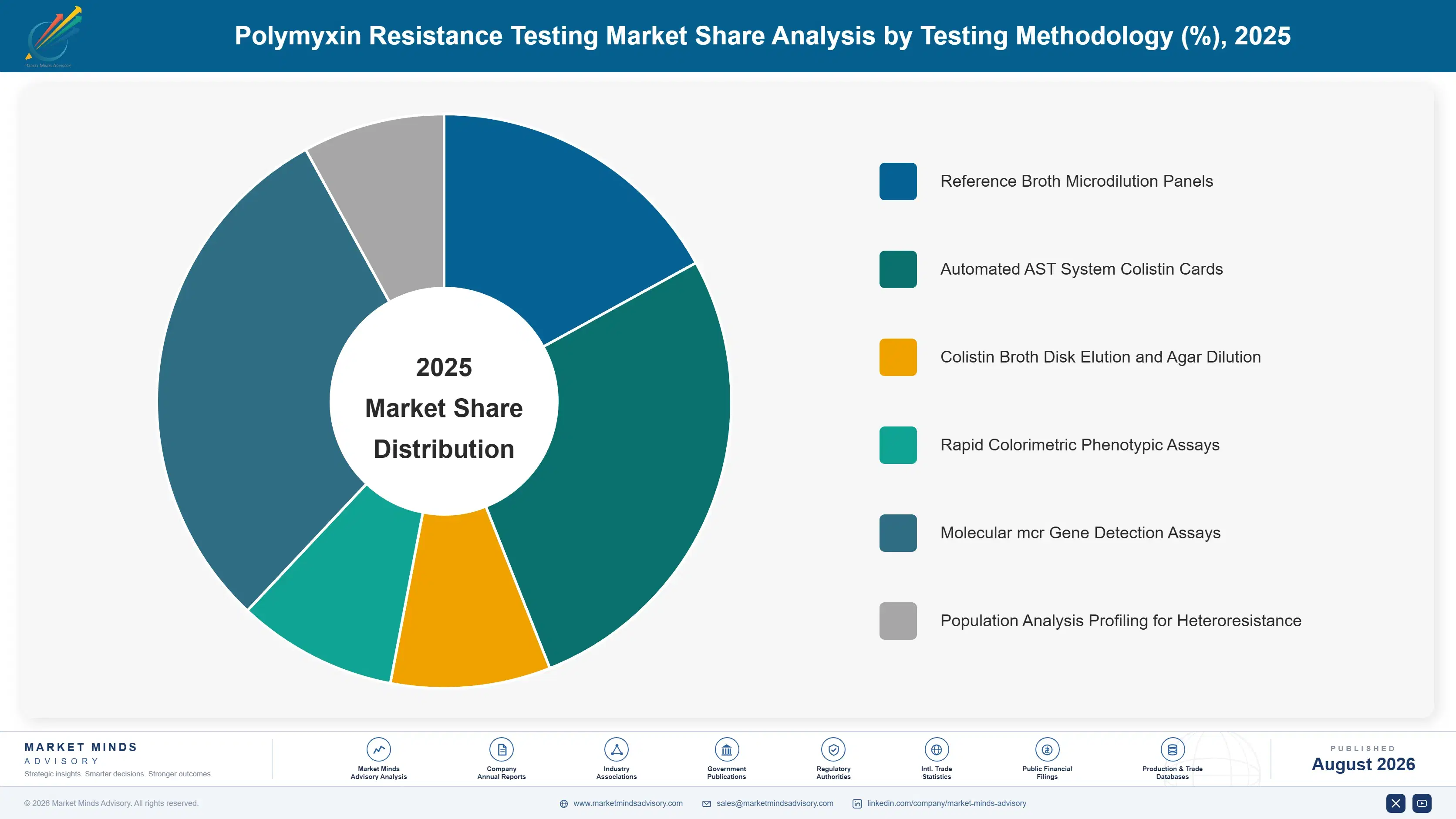
Segmentation follows testing methodology, because method determines the answer's form, the time it takes, the laboratory capability required and whether the result satisfies a clinical or a surveillance requirement. A molecular mcr assay and a broth microdilution panel answer genuinely different questions and are chosen by different people. No other dimension organises the market usefully.
polymyxin-resistance-testing-market-market-share-analysis-1787307968192

Molecular mcr Gene Detection Assays

Molecular detection compounds at 17.1%, exactly 1.50 times the market rate, because it answers a question phenotypic testing cannot. Identifying mcr-1 through mcr-10 tells an infection control team that resistance is plasmid-borne and therefore transferable between organisms, which changes isolation decisions and outbreak investigation entirely. National surveillance programmes increasingly specify gene detection rather than accepting a susceptibility category alone. The limitation is real and worth stating: a negative mcr result does not exclude chromosomally mediated resistance, so molecular testing supplements phenotypic work rather than replacing it. Multiplex panels covering mcr alongside carbapenemase genes have become the practical format, since the same isolate usually raises both questions at once. Workflow economics rather than science settled the format.
CAGR 17.1%

Population Analysis Profiling for Heteroresistance

Heteroresistance testing grows at 15.4% from a very small base, addressing a failure mode that standard susceptibility testing simply misses. A population reported as susceptible may contain a resistant subpopulation at roughly one in a hundred thousand organisms, and colistin therapy then selects for it, producing clinical failure in a patient whose laboratory result said the drug would work. Population analysis profiling detects those subpopulations by plating across a concentration gradient. The method is laborious and rarely available outside research and reference settings. Commercial interest has grown as clinical failure reports accumulated, though standardisation remains incomplete and no regulatory body has yet defined a reporting threshold. Commercial adoption waits on that definition.
CAGR 15.4%
Full segment breakdown across 6 segments available in the complete report.

Regional Architecture and Country Demand Map

Demand follows carbapenem resistance prevalence rather than healthcare spending, because polymyxin testing is almost entirely reflexive. Regions where intensive care units meet carbapenem-resistant organisms routinely generate test volumes far above what their diagnostic budgets alone would suggest. Resistance epidemiology rather than diagnostic budget is the map worth reading here.

East Asia

East Asia holds 30% of global demand, the largest regional share, and the history explains it. The mcr-1 gene was first identified in China in 2015, in livestock rather than in patients, after years of agricultural colistin use at a scale seen nowhere else. The 2017 growth promoter ban created a national surveillance requirement alongside the clinical one. Chinese hospital carbapenem resistance rates in Klebsiella and Acinetobacter are among the highest reported anywhere, which makes polymyxin testing routine rather than exceptional. Domestic suppliers including Autobio Diagnostics and Zhuhai DL Biotech serve much of that volume. Japanese and Korean rates are considerably lower, and their contribution is weighted toward reference and research testing rather than routine clinical use.
Share: 30% | CAGR: 12.6% (2026 to 2036)

South Asia and Pacific

South Asia and Pacific accounts for 14% of demand and grows fastest at 13.6%, with India compounding at 14.4%. Note: this share exceeds the standard regional band because Indian carbapenem-resistant Enterobacterales prevalence is among the highest measured anywhere, and colistin is consequently a routine rather than exceptional treatment decision across Indian intensive care. Test volume therefore runs far above what regional diagnostic spending would predict. Domestic manufacturers including HiMedia Laboratories supply much of the panel and media requirement at prices international suppliers cannot approach. Australian rates are low and testing is concentrated in reference laboratories. Southeast Asian demand is growing quickly, particularly across Thailand, Vietnam and Indonesia where intensive care capacity has expanded.
Share: 14% | CAGR: 13.6% (2026 to 2036)
Regional intelligence for 5 additional markets available in the complete report: North America, Western Europe, Latin America, Middle East and Africa, Eastern Europe. Contact sales@marketmindsadvisory.com.
polymyxin-resistance-testing-market-country-cagr-analysis-1787307968715

Where Diagnostic Value Sits in a Difficult Assay

Polymyxin testing is unusual because the method itself is the obstacle. Commercial value accrues to whoever removes a laboratory's reason not to test, whether by fixing the variables in a panel, cutting the turnaround, or answering the surveillance question phenotypic work cannot reach. Four positions do that. Each removes an obstacle rather than improving a product.

Pre-Fix the Reference Method Variables in Commercial Panels

Broth microdilution fails when the broth is not cation-adjusted, the plate is surface-treated or somebody adds polysorbate 80, and each error shifts results enough to change a category. Commercial panels that fix all three remove the competency barrier keeping 69% of hospital laboratories out of local testing. Suppliers holding validated ready-to-use panels convert referral volume into hospital volume, which is worth roughly 2.1 times the per-isolate value of supplying a reference laboratory. The requirement is validation evidence against the reference method rather than any manufacturing capability. Evidence is the entire product.
Market Impact: Local testing worth 2.1 times the r

Attack the Eighteen Hour Turnaround With Rapid Assays

A critically ill patient with a carbapenem-resistant infection is treated empirically while the isolate travels to a reference laboratory and eighteen hours of incubation pass. Colorimetric assays returning a categorical answer in about three hours address exactly that, and they need no specialised instrumentation. Intensive care units seeing these organisms regularly adopt fastest. Pricing runs 3 to 4 times a broth microdilution well on a per-isolate basis, and clinicians accept it readily because the alternative is another day of empirical therapy with a drug that may not be working at all.
Market Impact: Rapid assays priced 3 to 4 times hi

Multiplex mcr Detection Alongside Carbapenemase Genes

An isolate raising a polymyxin question has almost always already raised a carbapenemase question, so testing both from one sample is the natural format rather than a convenience. Molecular mcr detection compounds at 17.1% and multiplex panels capture it without requiring a separate workflow, separate validation or separate reimbursement conversation. Surveillance programmes specifying mcr reporting buy on programme budgets rather than clinical necessity, which makes the demand less sensitive to individual case volume. Gross margins on multiplex molecular panels run roughly 18 to 26 points above phenotypic consumables. One sample answers both questions.
Market Impact: Multiplex panels carrying 18 to 26

Serve Veterinary and Food Chain Surveillance Programmes

China's 2017 growth promoter ban and European Union veterinary restrictions both require monitoring to enforce, and monitoring means testing isolates from animals, food and environmental samples. That work now represents 19% of polymyxin resistance testing volume and barely existed a decade ago. It buys on programme budgets with multi-year visibility rather than on episodic clinical demand, and specification is set by national reference institutes rather than by individual laboratories. Winning a national programme secures volume for its duration, and those programmes rarely change supplier mid-cycle without cause. Displacement mid-programme is rare.
Market Impact: Surveillance work now at 19% of tot

Who Controls the Margin Pool

Five suppliers hold 54% of the market measured on diagnostic product revenue, the basis applied consistently through this section. Concentration is moderate for a diagnostics niche, and method validation explains most of it. bioMerieux and Thermo Fisher Scientific lead, with Becton Dickinson and Beckman Coulter close behind through their automated susceptibility platforms. Manufacturing capability barely differentiates anyone here.
Competition operates on three dimensions. Validation evidence against the reference broth microdilution method decides whether a laboratory can report a result at all. Turnaround decides whether a hospital tests locally or refers the isolate elsewhere. And installed automated platform base decides which supplier a laboratory considers first, since a colistin card running on existing instrumentation avoids a separate workflow entirely. All three are earned through validation work rather than bought.

Two pressures will move rankings. Regional suppliers including HiMedia Laboratories and Autobio Diagnostics serve the highest-prevalence markets at prices international companies cannot match. Against that, molecular multiplex capability rewards suppliers with established syndromic panel positions. Rankings will shift toward whoever combines rapid phenotypic capability with mcr detection on one workflow. Very few hold both capabilities today, and the ones closest are the syndromic panel suppliers rather than the traditional susceptibility testing names.
polymyxin-resistance-testing-market-company-positioning-matrix-1787307969240

Competitive Moat and Risk Dimensions

BIOMERIEUX

Moat: Installed platform and clinical depth

The company's automated susceptibility testing installed base places it inside the routine workflow of a large share of clinical microbiology laboratories, so a colistin card runs on instrumentation already validated and staffed. That position is reinforced by genuine depth in infectious disease clinical affairs, which matters where a method carries known limitations that must be explained to laboratory directors.
BIOMERIEUX

Risk: Automated card correlation limits

Automated system colistin results correlate imperfectly with reference broth microdilution, particularly around the susceptibility breakpoint where clinical decisions actually turn. Laboratories aware of that limitation confirm by reference method or refer the isolate, which erodes the workflow advantage. Rapid colorimetric competitors sidestep the automated platform entirely and answer faster than confirmation testing can.
THERMO FISHER SCIENTIFIC

Moat: Reference method panel breadth

Thermo Fisher supplies broth microdilution panels validated against the reference method across a wide antimicrobial range, which lets a laboratory report polymyxins alongside everything else from one workflow. Breadth matters because few laboratories can justify a dedicated polymyxin method, and a panel covering newer Gram-negative agents alongside colistin survives the therapeutic shift that threatens single-drug testing.
THERMO FISHER SCIENTIFIC

Risk: Turnaround against rapid assays

Broth microdilution takes eighteen hours regardless of how well the panel is manufactured, and that constraint is inherent to the method rather than to the product. Rapid colorimetric assays returning categorical answers in three hours address the clinical urgency directly. Defending the position requires participating in rapid formats rather than improving the reference panel further.

Players Tracked

Prominent Players

bioMerieux
Thermo Fisher Scientific
Becton Dickinson
Beckman Coulter
Liofilchem

Other Key Players

Bruker
Merlin Diagnostika
ELITechGroup
Bio-Rad Laboratories
HiMedia Laboratories
Mast Group
Bioanalyse
Autobio Diagnostics
Zhuhai DL Biotech
Wenzhou Kangtai Biotechnology
OpGen
QIAGEN
Roche Diagnostics
Copan Diagnostics
Alifax

Recent Developments

MARCH 2025

National surveillance programmes extend mcr gene reporting requirements

Several national antimicrobial resistance surveillance programmes added plasmid-mediated mcr gene detection to mandatory reporting for carbapenem-resistant isolates. These were public health programme changes rather than commercial developments, and they shift specification authority toward national reference institutes. Laboratories must now report mechanism alongside category. Molecular capability is now effectively required.
Signal: Reporting a susceptibility category is no
JULY 2025

Rapid colorimetric assays gain adoption in intensive care microbiology

Hospital laboratories serving intensive care units with recurrent carbapenem-resistant infections expanded use of colorimetric polymyxin assays returning results within about three hours. This reflects clinical practice change rather than any corporate transaction, and it moves testing volume away from reference laboratory referral. Referral volume is falling where adoption has happened.
Signal: Turnaround rather than precision is now de
OCTOBER 2025

Heteroresistance clinical failure reports prompt methodology review

Accumulating reports of colistin treatment failure in isolates reported susceptible prompted methodology discussion within standards bodies regarding heteroresistant subpopulations. These were technical review activities rather than regulatory decisions, and no reporting threshold has yet been defined for routine practice. Routine laboratories cannot currently act on the finding at all.
Signal: A susceptible result may conceal a resista

Media, Plates and Validation Overhead

Culture media, antimicrobial powder and consumable plasticware account for roughly 29% of cost of goods, sourced from specialist media manufacturers and pharmaceutical intermediate suppliers. Molecular reagents for mcr assays including enzymes and oligonucleotides run a further 21% and carry far higher unit costs. Quality control organism maintenance, lot release testing and validation documentation together make up most of the balance.
Molecular reagent supply tightened severely through 2021 and into 2022 as pandemic testing consumed global enzyme and oligonucleotide capacity, and bacterial resistance assay production was deprioritised behind viral testing across most suppliers. Company annual reports covering microbiology diagnostics segments disclose the resulting supply constraints and delivery extensions. European energy costs documented in International Energy Agency reporting raised media manufacturing costs in parallel through the same period.

Exposure divides by portfolio balance rather than by scale. A supplier weighted toward phenotypic panels carries low reagent cost but competes against regional manufacturers in exactly the high-prevalence markets where volume is greatest, and cannot pass increases through. One weighted toward molecular assays carries higher input cost against far higher unit prices set by surveillance programme budgets rather than by laboratory purchasing committees.
polymyxin-resistance-testing-market-cost-volatility-analysis-1787307969436

Dual-source molecular enzymes and oligonucleotide supply

Enzyme and oligonucleotide capacity proved the binding constraint through the pandemic period, and single-sourced assays could not be manufactured at all when that capacity was diverted. Qualifying a second supplier costs one validation cycle and removes the exposure permanently. Assay design that avoids proprietary enzyme chemistries reduces the qualification burden considerably where it can be achieved.

Manufacture culture media regionally near high-volume markets

Prepared media is heavy, has limited shelf life and is expensive to ship, while the highest-volume markets for polymyxin testing sit in South and East Asia. Regional manufacture cuts freight, shortens delivery and matches currency to revenue. It also positions a supplier against domestic manufacturers who currently win on delivered price rather than on product performance.

Weight portfolio toward programme-funded surveillance testing

Surveillance work buys on national programme budgets with multi-year visibility rather than on episodic clinical demand and hospital purchasing pressure. Pricing there reflects programme specification rather than comparison against a regional alternative. Shifting mix in that direction reduces input cost exposure while improving revenue predictability, which is unusual in diagnostics consumables. Revenue predictability is the real prize.

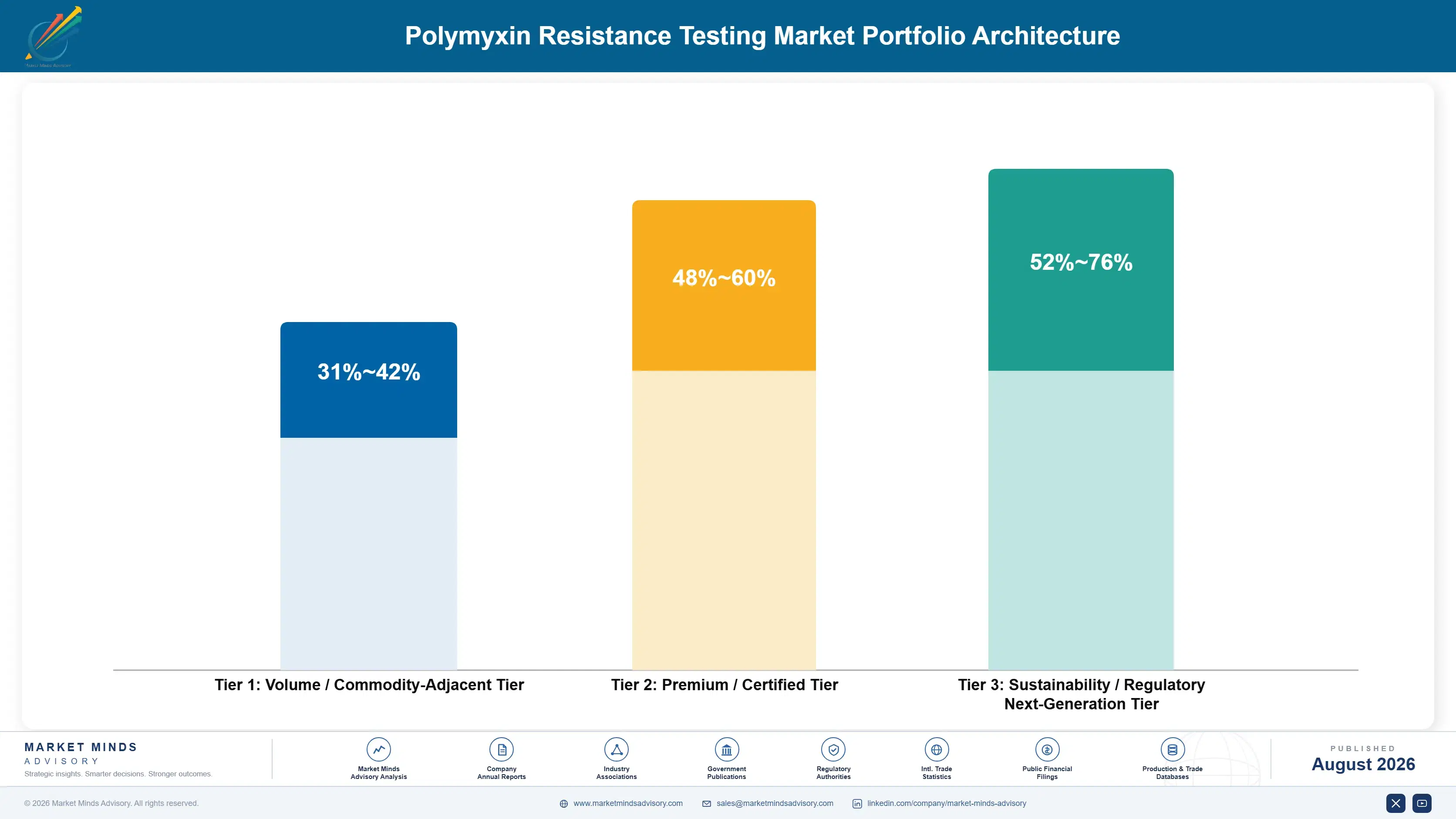
Portfolio Architecture for Margin Defence

The portfolio divides on what the buyer is actually purchasing. Basic media and manual panels are consumables sold on delivered price, and regional manufacturers compete hard in the highest-volume markets. Validated ready-to-use reference panels sell on evidence that removes a competency barrier. Rapid assays sell on turnaround against a clinical deadline. Molecular and surveillance products sell on a question phenotypic testing cannot answer at all. What the buyer is purchasing draws the whole
The tension is that consumable volume sits precisely where prevalence is highest and prices are lowest, in South and East Asia, while the premium formats sell best in markets with lower test volumes. A supplier chasing only premium positions concedes the volume base that carries manufacturing scale and laboratory relationships. Most successful participants run both and accept different margin expectations across them. Volume and margin sit in different geographies, which is unusual and awkward.

High-value pools concentrate where a clinical deadline, an infection control decision or a national programme sets the requirement. Rapid phenotypic assays, multiplex molecular panels and surveillance programme supply all qualify, and none is purchased primarily on cost per test. Cost per test decides none of them.

Volume / Commodity-Adjacent Tier

Culture media, agar dilution components and manual broth microdilution consumables sold to laboratories preparing their own testing. Competes on delivered price against regional manufacturers who dominate the highest-prevalence and most price-sensitive markets.
Gross Margin: 31-42%

Premium / Certified Tier

Ready-to-use broth microdilution panels validated against the reference method, and automated system colistin cards running on installed platforms. Validation evidence rather than manufacturing capability determines whether a laboratory can report the result at all.
Gross Margin: 48-60%

Sustainability / Regulatory / Next-Generation Tier

Rapid colorimetric assays, multiplex molecular mcr detection and heteroresistance profiling methods. The wide margin range reflects sharply differing reagent costs and the gap between established rapid formats and methods still lacking defined reporting thresholds.
Gross Margin: 52-76%
polymyxin-resistance-testing-market-portfolio-architecture-1787307969941

High-value Sub-segments and Strategic Watch-out

Multiplex Molecular mcr Panels

Compounding at 17.1% because an isolate raising a polymyxin question has almost always raised a carbapenemase question already. Surveillance programmes specifying gene reporting buy on multi-year budgets rather than on episodic clinical demand, which makes volumes unusually predictable. Multiplex format captures both from one workflow.
Gross Margin: 58-76%

Rapid Colorimetric Phenotypic Assays

Growing at 14.2% by returning a categorical answer in about three hours against eighteen for the reference method. Pricing runs 3 to 4 times a broth microdilution well, and intensive care clinicians accept it because the alternative is another day of empirical therapy. No specialised instrumentation is required.
Gross Margin: 54-68%

Reference Broth Microdilution Panels

The volume core at 9.6%, carrying the laboratory relationships from which everything else follows. Regional manufacturers compete hard on delivered price in the highest-prevalence markets, so this tier is run for scale and access rather than for margin. Withdrawing from it costs the account entirely.
Gross Margin: 40-52%

Heteroresistance Profiling Methods

The watch-out. Clinical failure in isolates reported susceptible points to a real gap, but population analysis profiling is laborious, standardisation is incomplete and no body has defined a reporting threshold for routine practice yet. Clinical failure reports keep accumulating regardless. No supplier can sell against it commercially yet.
Gross Margin: 44-72%

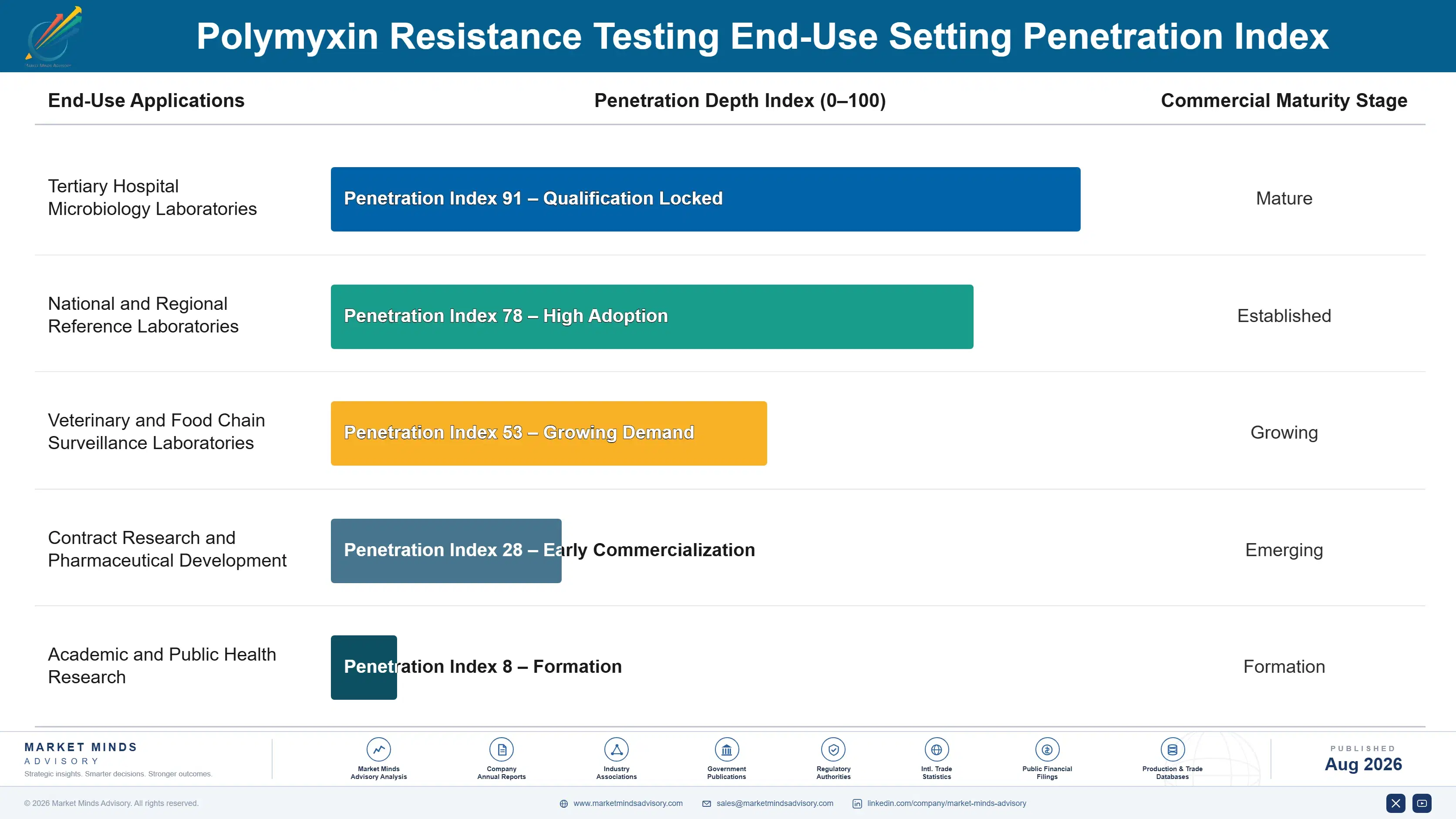
Testing Triggered by Another Result

Almost none of this demand is discretionary. Roughly 68% of polymyxin susceptibility tests are triggered reflexively by a carbapenem-resistant result on a prior panel, which means volume tracks resistance epidemiology rather than laboratory budgets or purchasing cycles. That makes the market unusually predictable at a regional level and almost impossible to grow through commercial effort, since no amount of selling creates a carbapenem-resistant isolate that does not exist.
Depth varies sharply by setting. Tertiary hospitals with intensive care units seeing these organisms weekly buy deepest, increasingly running rapid assays locally rather than referring. National reference laboratories buy across the full method range including molecular and heteroresistance work. Secondary hospitals refer almost everything, buying nothing beyond transport media. Veterinary and food surveillance laboratories buy to programme specification on multi-year cycles regardless of case volumes.

The deciding population has shifted upward. Method selection once sat with a laboratory director choosing what the bench could reliably perform. Increasingly it is set by national reference institutes writing surveillance specifications and by infection control committees who want the resistance mechanism identified rather than a susceptibility category alone. That is a different buying conversation.
polymyxin-resistance-testing-market-end-use-penetration-index-1787307970432

Where This Niche Rewards Investment

These are among the four positions where our research anticipates prominent divergence between winners and laggards over the coming forecast period. Each is grounded in the demand model, the regulatory perimeter, and the announced capacity pipeline.
01 / METHOD BARRIER REMOVAL

Whoever makes local testing possible captures the referral volume

Only 31% of hospital laboratories run validated broth microdilution for polymyxins, because the method demands cation-adjusted broth, untreated polystyrene and no added surfactant, with any deviation shifting the result. Commercial panels that fix those variables convert referral volume into local hospital volume worth roughly 2.1 times the per-isolate value. What the customer is buying is validation evidence against the reference method, not any manufacturing capability a competitor could not replicate, and that evidence takes time rather than capital to accumulate.
02 / TURNAROUND AGAINST DEADLINE

Three hours against eighteen is worth four times the price

A critically ill patient with a carbapenem-resistant infection is treated empirically while the isolate travels to a reference laboratory and a further eighteen hours of incubation elapse. Colorimetric assays returning a categorical answer in about three hours need no specialised instrumentation at all, and they price at 3 to 4 times a single broth microdilution well. Clinicians accept that pricing readily, because the alternative is another full day of therapy with a drug that may not be working at all.
03 / MECHANISM OVER CATEGORY

Infection control now wants the gene, not just the result

Plasmid-borne mcr resistance is transferable between organisms, so identifying it directly changes isolation decisions and outbreak investigation in ways that a susceptibility category never could. Molecular detection consequently compounds at 17.1%, exactly 1.50 times the market rate, and national surveillance programmes increasingly specify gene reporting rather than accepting a phenotypic result alone. Multiplex panels covering mcr alongside carbapenemase genes have become the natural commercial format, since the very same isolate almost always raises both questions at exactly the same moment.
04 / THERAPEUTIC DISPLACEMENT RISK

Colistin is used because alternatives were absent, not because it works well

Cefiderocol and the newer beta-lactamase inhibitor combinations were developed specifically to treat the very infections colistin currently covers, and colistin nephrotoxicity makes clinicians eager to stop prescribing the drug wherever they possibly can. Each successful displacement removes a polymyxin testing question from the workflow permanently rather than temporarily. Suppliers therefore have to build panels covering those newer agents alongside the polymyxins, so that a testing position survives the therapeutic shift rather than depending entirely on colistin remaining in routine use.

Engagement Snapshot From the Field

A live engagement with an industry participant carrying material or product regulatory and market exposure ahead of a defining policy shift, showing how our research translates into a defensible multi-year portfolio strategy.
MARKET MINDS ADVISORY · CLIENT ENGAGEMENT SUMMARY
Polymyxin Resistance Testing Producer Strategic Portfolio Review and Transition Roadmap 2026·Investment Scenario on Polymyxin Resistance Testing Exposure Evaluation 2025-26
CLIENT PROFILE
A national public health laboratory network in a high-prevalence Asian market, operating one central reference facility and eleven regional laboratories, with an antimicrobial resistance testing budget near USD 14 million annually (client-reported, unverified by MMA). Polymyxin susceptibility testing represented roughly 9% of that budget (client-reported, unverified by MMA), almost entirely centralised broth microdilution performed for referring hospitals.
STRATEGIC CHALLENGE
Referral turnaround averaged 3.4 days from isolate collection to reported result, and clinicians had largely stopped waiting for it, treating empirically instead. Management proposed expanding central capacity. A minority view within the network argued that centralisation itself was the problem and that no amount of added capacity would fix a courier-driven delay.
MMA APPROACH
MMA reconstructed the full time path from isolate collection to clinical decision across a sample of referred cases, separating transport, queueing and incubation time. Rapid assay performance was compared against the network's own reference results, and the cost of distributed rapid testing was modelled against the central capacity expansion the network had already scoped.
KEY FINDINGS
  1. Transport and queueing accounted for 2.6 of the 3.4 days, meaning added central capacity would have addressed under a quarter of the delay clinicians actually experienced in practice.
  2. Clinicians had stopped acting on 61% of returned polymyxin results because treatment decisions had already been made and, in most cases, could not be revisited safely at that point.
  3. Rapid colorimetric assays agreed with the network's reference broth microdilution results closely enough for empirical therapy decisions, though not closely enough to replace reference testing for surveillance reporting.
  4. Molecular mcr detection was performed only centrally and on a fraction of isolates, leaving the network unable to answer transmission questions that its own surveillance mandate required.
CLIENT PROFILE
A national public health laboratory network in a high-prevalence Asian market, operating one central reference facility and eleven regional laboratories, with an antimicrobial resistance testing budget near USD 14 million annually (client-reported, unverified by MMA). Polymyxin susceptibility testing represented roughly 9% of that budget (client-reported, unverified by MMA), almost entirely centralised broth microdilution performed for referring hospitals.
STRATEGIC CHALLENGE
Referral turnaround averaged 3.4 days from isolate collection to reported result, and clinicians had largely stopped waiting for it, treating empirically instead. Management proposed expanding central capacity. A minority view within the network argued that centralisation itself was the problem and that no amount of added capacity would fix a courier-driven delay.
MMA APPROACH
MMA reconstructed the full time path from isolate collection to clinical decision across a sample of referred cases, separating transport, queueing and incubation time. Rapid assay performance was compared against the network's own reference results, and the cost of distributed rapid testing was modelled against the central capacity expansion the network had already scoped.
KEY FINDINGS
  1. Transport and queueing accounted for 2.6 of the 3.4 days, meaning added central capacity would have addressed under a quarter of the delay clinicians actually experienced in practice.
  2. Clinicians had stopped acting on 61% of returned polymyxin results because treatment decisions had already been made and, in most cases, could not be revisited safely at that point.
  3. Rapid colorimetric assays agreed with the network's reference broth microdilution results closely enough for empirical therapy decisions, though not closely enough to replace reference testing for surveillance reporting.
  4. Molecular mcr detection was performed only centrally and on a fraction of isolates, leaving the network unable to answer transmission questions that its own surveillance mandate required.
RECOMMENDED STRATEGY
Phase 1: Phase 1 (months 1 to 8): Deploy rapid colorimetric assays at the twelve highest-volume referring hospitals and retain reference testing centrally for confirmation. Phase 2: Phase 2 (months 8 to 20): Cancel the central capacity expansion and redirect funding into multiplex molecular mcr and carbapenemase detection at regional level. Phase 3: Phase 3 (months 20 to 32): Rebuild national surveillance reporting around resistance mechanism identification rather than around susceptibility categories alone.
OUTCOME
Median time from collection to an actionable result fell from 3.4 days to under 8 hours at participating hospitals (client-reported, unverified by MMA). The central expansion was cancelled, releasing approximately USD 2.7 million (client-reported, unverified by MMA). Regional molecular capability identified two previously undetected mcr transmission clusters within the first year.

Frequently Asked Questions

Foundational context covering the market sizes, CAGR, scope, country, region and competition that inform every finding below. This section is provided to cover basics and most often pre-purchase conversations, answered from the MMA Primary Research Dataset.

What is the current size of the Polymyxin Resistance Testing Market?

The global market was worth USD 0.34 billion in 2025, reaching USD 0.38 billion in 2026. East Asia holds the largest regional share at 30% of demand.

How large will the Polymyxin Resistance Testing Market be by 2036?

MMA forecasts USD 1.11 billion by 2036, an expansion multiple of 2.94 times the 2026 base. That represents roughly USD 0.73 billion of incremental value.

What is the CAGR for the Polymyxin Resistance Testing Market 2026 to 2036?

The base case compounds at 11.4% annually, with a bull case of 12.6% and a bear case of 10.2%. Historical growth from 2020 to 2025 ran at 9.8%.

Which segment is growing fastest?

Molecular mcr gene detection assays compound at 17.1%, exactly 1.50 times the market rate. Plasmid-borne resistance is transferable between organisms, which makes the mechanism a surveillance question.

Who are the major companies in the Polymyxin Resistance Testing Market?

bioMerieux, Thermo Fisher Scientific, Becton Dickinson, Beckman Coulter and Liofilchem hold a combined 54% of the market. Regional manufacturers compete strongly in the highest-prevalence Asian markets.

Which country is growing fastest?

India compounds at 14.4%, well ahead of every other national market. Carbapenem-resistant Enterobacterales prevalence there is among the very highest measured anywhere in the world.

Report Segmentation Architecture

The full report scope spans multiple orthogonal segmentation dimensions, with cross-tabulated demand data provided for each dimension pair. Coverage extends further to regional breakdowns, trend trajectories, and the competitive detail needed to support segment-level decision-making.

By Testing Methodology

  • Reference Broth Microdilution Panels
  • Automated AST System Colistin Cards
  • Colistin Broth Disk Elution and Agar Dilution
  • Rapid Colorimetric Phenotypic Assays
  • Molecular mcr Gene Detection Assays
  • Population Analysis Profiling for Heteroresistance

By End-Use Setting

  • Tertiary Hospital Microbiology Laboratories
  • National and Regional Reference Laboratories
  • Veterinary and Food Chain Surveillance Laboratories
  • Contract Research and Pharmaceutical Development
  • Academic and Public Health Research

By Commercial Dimension

  • Direct Institutional Supply
  • Laboratory Distributor Channel
  • National Programme and Tender Procurement
  • Installed Platform Consumable Supply

By Region

  • North America
  • Western Europe
  • East Asia
  • South Asia and Pacific
  • Latin America
  • Middle East and Africa
  • Eastern Europe

Scope, Methodology, and Coverage

Every figure in this report is reproducible from documented input assumptions. The scope below maps the historical period, the forecast horizon, the segmentation dimensions, and the countries covered, alongside the underlying primary and qualitative methodology.
Historical Period
2020 to 2025
Forecast Period
2026 to 2036
Base Year
2025 (USD billions; MMA Primary Research Dataset, August 2026)
Market Definition
The market covers diagnostic products and assays used to determine polymyxin susceptibility or detect polymyxin resistance mechanisms in bacterial isolates, spanning reference broth microdilution panels, automated susceptibility system colistin cards, broth disk elution and agar dilution kits, rapid colorimetric phenotypic assays, molecular mcr gene detection assays and population analysis profiling methods for heteroresistance. General antimicrobial susceptibility panels that do not report a polymyxin result are excluded, as are polymyxin therapeutic products and antimicrobial stewardship software. Sizing is measured at supplier revenue in current prices.
Quantitative Units
USD billions (current prices); isolates tested and time to reported result where applicable
Segmentation Dimensions
By Testing Methodology; By End-Use Setting; By Commercial Dimension; By Region
Regions Covered
North America, Western Europe, East Asia, South Asia and Pacific, Latin America, Middle East and Africa, Eastern Europe
Countries Covered
USA, China, Germany, France, UK, Japan, South Korea, India, Australia, Canada, Brazil, Mexico, Indonesia, Vietnam, Thailand, Malaysia, UAE, Saudi Arabia, South Africa, Nigeria, Turkey, Poland, Netherlands, Italy, Spain, Sweden, Switzerland, Argentina, Colombia, Singapore, and additional markets relevant to this sector
Key Companies Profiled
bioMerieux, Thermo Fisher Scientific, Becton Dickinson, Beckman Coulter, Liofilchem, Bruker, Merlin Diagnostika, ELITechGroup, Bio-Rad Laboratories, HiMedia Laboratories, Mast Group, Bioanalyse, Autobio Diagnostics, Zhuhai DL Biotech, Wenzhou Kangtai Biotechnology, OpGen, QIAGEN, Roche Diagnostics, Copan Diagnostics, Alifax
Quantitative Methodology
Primary survey, n=3,800 respondents, Q4 2025, six countries; demand-side model with trade association cross-validation
Qualitative Methodology
47 expert interviews, Q4 2025; applied to validate demand model assumptions, identify emerging dynamics, and assess competitive positioning
Report Format
PDF and XLSX data workbook (Word format preview document)
Publisher
Market Minds Advisory
Report Code
MMA-2026-HLT-668
Published
August 2026
Contact
sales@marketmindsadvisory.com | www.marketmindsadvisory.com

Purchase the full Polymyxin Resistance Testing Market Report (2026 to 2036).

The full report sizes polymyxin resistance testing across six methodologies, three commercial dimensions and seven regions, with annual forecasts to 2036 under base, bull and bear scenarios. Test volume is modelled from carbapenem resistance prevalence and reflex testing rates by country rather than from diagnostic spending, which is what actually determines demand in this category. Referral versus local testing economics are quantified by hospital tier and turnaround requirement. Therapeutic displacement risk from newer Gram-negative agents is assessed by indication and region. Twenty suppliers are profiled on a consistent diagnostic product revenue basis.
Test volume modelled from carbapenem resistance prevalence by country
Referral versus local testing economics quantified by hospital tier
Therapeutic displacement risk assessed by indication and region
Rapid assay correlation against reference method performance compared
National surveillance programme specifications mapped across markets
Regional manufacturer pricing benchmarked in high-prevalence markets

Built For The People Who Decide

From boardroom strategy to bench-side execution, this report is read cover-to-cover by leaders shaping the next decade of their industry, turning demand scenarios, market dynamics and valuation benchmarks into decisions.
CXOs/ Presidents/ VPs/ Managers
M&A and Corporate Development
Strategy Teams and R&D Heads
Procurement and Product Directors
Regulatory and Compliance Leaders
Investor Relations and Equity Analysts