Market Minds Advisory
Plate Heat Exchanger Market

Plate Heat Exchanger Market: Plate Heat Exchanger Market. Global Demand, Technology, and Competitive Outlook 2026 to 2036

LNG bunkering and offshore decarbonization investment are pulling specification toward marine-grade plate heat exchangers faster than shipyard-adjacent suppliers can scale, forcing legacy process-industry manufacturers to prove marine certification rather than compete on price.

Lead Analyst

Published

October 2026

Make Smarter Decisions with Customized Research Insights

Request a free sample report and evaluate market opportunities, growth trends, and competitive dynamics relevant to your business needs.

2025 MARKET VALUE$6.8BMarket Size 2025
2036 FORECAST VALUE$13.5BBase Case , 2026 to 2036
CAGR 2026 TO 20366.4 %Bull 7.6% / Bear 5.2%
INCREMENTAL OPPORTUNITY$6.2BNet 10- year value creation
EXPANSION MULTIPLE1.86x2036 value over 2026 base
Strategic Levers
M&A Pipeline
Regional Outlook
Country Rankings
Competitive Intelligence
Segmental Deep-dive
Call-Us : 91 93563 13602

Executive Snapshot and Market Trajectory.

Plate heat exchanger demand is shifting from standard gasketed industrial applications toward marine and offshore configurations, as LNG bunkering infrastructure and offshore decarbonization investment reshape specification across shipbuilding markets. Suppliers unable to demonstrate marine certification risk losing relationships to specialists. Lead times stretch too. now. today.
East Asian shipbuilding and general industrial manufacturing anchor the largest absolute volume globally, while Western European process industry demand sustains the broadest underlying engineering base across chemical, food, and marine applications. Marine and offshore exchangers are growing fastest as LNG-fueled vessel construction and offshore platform decarbonization investment accelerate across major shipbuilding regions. Suppliers serving both standard and marine segments increasingly separate production lines to address fundamentally different pressure rating and classification society requirements.
Competitive intensity concentrates among a handful of established heat exchanger majors, since documented pressure certification and decades of process industry relationships create meaningful barriers for new entrants bidding on large industrial and marine contracts. Chinese manufacturers increasingly challenge European majors on price for standard gasketed applications, though marine and chemical process contracts still favor suppliers with documented certification records. Buyers now request documented testing before shortlisting.
Market Definition
The plate heat exchanger market covers gasketed, welded, semi-welded, and brazed heat transfer units used across industrial process, chemical, food and beverage, marine, and district heating applications. It excludes shell-and-tube heat exchangers and air-cooled heat exchanger systems using fundamentally different heat transfer geometry.
Base Year Value
$6.8B in 2025 (MMA Primary Research Dataset, October 2026)
Forecast Period
2026 to 2036, eleven discrete annual values
CAGR
6.4% base case. Bull 7.6%. Bear 5.2%.
Fastest Growth Segment
Plate Heat Exchangers for Marine and Offshore Applications: 9.6% CAGR
Fastest Growth Country
South Korea: 9.0% CAGR
Fastest Growth Region
South Asia and Pacific: 8.5% CAGR
Largest Region
East Asia: 30% of 2025 global value
Market Leaders
Alfa Laval, GEA Group, Kelvion Holding, SPX FLOW, Danfoss. Source: MMA Primary Research Dataset, July 2026.
Primary Survey
n=3,800 procurement and R&D decision-makers, Q4 2025, six countries
Methodology
Demand-side build-up, cross-validated against public data, 47 expert interviews

Plate Heat Exchanger Market Forecast Scenarios

plate-heat-exchanger-market-size-forecast-scenario-1791089725081
The 2020 to 2025 period saw steady growth as industrial replacement cycles combined with gradual shipbuilding recovery across major Asian yards, with the historical rate settling at 5.4%, below where marine decarbonization investment is now pushing the category for the coming decade. Order books strengthened unevenly across regions. Backlogs stayed moderate as shipbuilding recovery proceeded unevenly.
The base case assumes continued expansion driven by three mechanisms: LNG bunkering infrastructure and offshore decarbonization investment requiring marine-grade exchangers meeting classification society standards, East Asian shipbuilding and general industrial manufacturing scale sustaining the broadest underlying volume base globally, and South Korean shipbuilding sustaining the fastest developed-market order growth tracked. Each mechanism operates on its own distinct construction calendar. Suppliers able to serve multiple channels simultaneously are positioned to outgrow narrower competitors meaningfully through the forecast decade.
The bull case rests on accelerated LNG vessel construction pulling marine exchanger demand forward faster than currently modeled across every major shipbuilding region. The bear case centers on industrial capital spending deferrals during periods of weak manufacturing demand, delaying the steady replacement purchasing that sustains a meaningful share of category revenue. Either scenario reshapes near-term capital planning for manufacturers and large buyers alike.

Marine Certification Reshapes Exchanger Specification

Purchase decisions increasingly hinge on documented classification society certification rather than catalog price alone. Shipbuilders specify exchanger configurations years before vessel delivery, forcing suppliers into design and testing cycles that start well ahead of production, a shift from the simpler specification process that still characterizes smaller industrial retrofit projects. Suppliers that cannot engage at the shipyard design stage find themselves locked out of the highest-margin contracts.
MARINE DEMAND SHARE17%category revenue tied directly to shipbuilding and offshore applications
AVERAGE UNIT COST$800 to $120,000varies substantially by plate count and pressure rating selected
TOP PRODUCING REGION SHARE30%East Asia share of total global manufacturing output currently
UNIT SERVICE LIFE15 to 30 yearstypical plate pack and frame mechanical service lifetime span
GASKETED INSTALLED BASE SHARE52%installed units using serviceable gasketed rather than welded construction
THERMAL EFFICIENCY GAIN RANGE15 to 25%versus comparable shell-and-tube designs under typical operating conditions
Manufacturing concentrates among established heat exchanger majors, where documented pressure certification and decades of process industry relationships create barriers smaller entrants cannot easily overcome. Chinese manufacturers increasingly compete on standard gasketed applications, a dimension distinct from the marine and chemical process contracts that still favor established European suppliers. Domestic Chinese manufacturers are closing the gap on standard gasketed units, though marine classification still favors established European suppliers.
Marine and offshore certification is the category's quiet margin driver. These classification-intensive projects, often tied to multi-year vessel construction schedules, carry meaningfully higher unit prices than standard industrial exchangers, giving suppliers with strong shipyard engineering relationships a durable advantage over those relying purely on distributor sales. Suppliers without strong shipyard engineering relationships struggle to access this influence, limiting them to smaller contracts.
"Everyone still prices these as commodity heat transfer hardware. The suppliers actually winning shipyard contracts are the ones who get classification society sign-off before the keel is laid."
Senior Analyst, Thermal Transfer Systems Practice · MMA Construction and Industrial Equipment Practice · October 2026

Market Trends

LNG Bunkering Infrastructure Accelerates Marine Specification

LNG bunkering infrastructure expansion and alternative fuel vessel construction increasingly require marine-grade plate heat exchangers meeting classification society pressure and vibration standards that standard industrial units cannot always satisfy. Several major shipbuilding nations now mandate documented marine certification for new vessel construction, with marine demand share rising from roughly 11% of category revenue five years ago to 17% today. This compressed timeline is straining qualified certification testing capacity across manufacturers serving shipyards specifically. Suppliers with established classification society relationships report order visibility extending several years into the future across major shipbuilding nations.
Market Impact: Sustains demand across 80,000+ units

Offshore Decarbonization Investment Drives Exchanger Demand

Offshore platform electrification and decarbonization investment increasingly requires compact plate exchangers for heat recovery and process cooling applications, replacing legacy shell-and-tube designs that occupy considerably more deck space for comparable thermal output. Major offshore operators are investing substantially in platform modernization programs over the coming decade. This design requirement is reshaping which suppliers can compete for large offshore modernization contracts. Suppliers without established offshore engineering experience increasingly lose these specification battles to better-equipped competitors with proven platform modernization track records. Service networks are expanding to support this growth across major offshore operating regions.
Market Impact: Adds capacity across 600+ facilities

Market Opportunities and Growth Drivers

Chemical Process Replacement Cycles Sustain Demand

Chemical and food processing replacement cycles continue sustaining steady plate exchanger demand independent of marine-driven growth, as aging equipment reaches end of service life across process plants globally. Several regulatory food safety mandates are accelerating replacement decisions that might otherwise wait years for natural equipment failure. This sustained replacement cadence gives suppliers with established process industry distributor relationships a revenue visibility advantage that purely marine-focused competitors cannot match. Suppliers report multi-year order visibility previously uncommon in a category historically dependent on discretionary replacement timing decisions. Pricing remains comparatively stable overall.
Market Impact: Costs exceed $300,000 per line

East Asian Manufacturing Scale Sustains Volume Growth

China's general industrial and South Korea's shipbuilding manufacturing continue expanding to serve both domestic and export demand, sustaining the broadest underlying volume base in the global plate heat exchanger market. New manufacturing capacity increasingly specifies plate exchangers as a default component rather than treating heat transfer hardware as an afterthought. This volume growth gives East Asian manufacturers a scale advantage that Western suppliers struggle to replicate without comparable local production capacity. This volume growth also supports continued investment in advanced manufacturing technology across the region's largest industrial clusters. Pricing stays stable.
Market Impact: Smooths revenue cyclicality by 19%

Market Restraints and Challenges

Classification Certification Cost Deters Smaller Suppliers

Smaller manufacturers face substantial barriers entering the marine certification segment, since classification society testing across multiple regulatory bodies can cost several hundred thousand dollars per product line. The root cause is the absence of harmonized international marine certification standards, forcing manufacturers to pursue separate certification pathways for each major classification society. The commercial impact falls hardest on regional manufacturers lacking the engineering budget of majors like Alfa Laval and GEA. Industry trade groups are lobbying for mutual recognition agreements to reduce duplicate testing costs. Smaller players increasingly pursue joint ventures with established majors rather than building independent testing capability.
Market Impact: Share rose from 11% to 17%

Industrial Capital Spending Volatility Raises Risk

Periods of weak industrial demand lead manufacturers to defer discretionary capacity expansion and replacement projects, delaying the steady purchasing that sustains a meaningful share of category revenue outside marine-driven cycles. The root cause is capital allocation discipline during demand softness, when equipment upgrade budgets face the earliest cuts across most industrial buyers. The commercial impact shows up as lumpy quarterly revenue for suppliers heavily dependent on industrial sales. Several manufacturers are diversifying toward marine and offshore channels to smooth this cyclicality. Several manufacturers report meaningfully steadier quarterly revenue after diversifying into these adjacent channels.
Market Impact: Covers 200+ platforms regionally
4 additional market trends, 3 additional growth drivers, and 2 additional restraints and challenges are covered in the full report. Contact sales@marketmindsadvisory.com to access the complete intelligence.

Segment CAGR and Growth Architecture

Five segments, defined by construction technology, cover the plate heat exchanger market: gasketed, welded, brazed, semi-welded, and marine and offshore configurations. Marine and brazed segments carry the fastest growth, driven respectively by shipbuilding decarbonization and heat pump integration demand. The remaining three segments anchor stable demand across conventional industrial process applications broadly. now. today.
plate-heat-exchanger-market-market-share-analysis-1791089725386

Plate Heat Exchangers for Marine and Offshore Applications

Marine and offshore plate heat exchangers meet classification society pressure, vibration, and fire safety standards that standard industrial units cannot always satisfy, a configuration increasingly required as LNG bunkering infrastructure and alternative fuel vessel construction expand across major shipbuilding nations. Shipyards increasingly specify marine-certified exchangers as a baseline requirement rather than an optional upgrade for new vessel construction, particularly as decarbonization-driven fuel transitions accelerate across the global fleet. Manufacturers serving this segment compete primarily on documented classification society certification and shipyard engineering relationships rather than on the catalog pricing that matters more in standard industrial applications. Growth is concentrated among East Asian and European shipbuilders rather than markets lacking significant marine construction activity.
CAGR 9.6%

Brazed Plate Heat Exchangers

Brazed plate heat exchangers within the broader plate heat exchanger category increasingly serve heat pump and compact refrigeration applications requiring higher pressure tolerance than gasketed designs can economically achieve at comparable size. Heat pump manufacturers increasingly specify brazed configurations as decarbonization mandates accelerate fossil fuel heating phase-out across residential and commercial construction. The segment carries meaningfully different manufacturing economics than gasketed and welded designs, rewarding suppliers who can demonstrate vacuum brazing precision alongside traditional plate heat transfer engineering credentials. Suppliers with proven heat pump OEM relationships increasingly win multi-year specification contracts over newer entrants lacking comparable integration experience. Field data shows installation timelines compressing as qualified brazing capacity expands across European manufacturing clusters.
CAGR 7.5%
Full segment breakdown across 5 segments available in the complete report.

Regional Architecture and Country Demand Map

Shipbuilding capacity and process industry concentration, not grid age, determine where plate heat exchanger value sits. East Asia leads on manufacturing and marine scale, while South Asia and Pacific closes the gap fastest. Manufacturing scale and process industry intensity together drive the remaining regional pattern across the forecast period.

East Asia

China's general industrial manufacturing scale, combined with South Korea and Japan's dominant global shipbuilding share, gives East Asia the largest regional share through both domestic installation volume and export-oriented manufacturing. South Korean shipyards anchor the fastest-growing marine demand segment globally, building LNG-fueled and alternative fuel vessels requiring certified exchangers. Domestic Chinese manufacturers increasingly compete on standard industrial applications, while marine contracts still favor established suppliers with documented classification records. Service networks continue expanding steadily to support both domestic and export demand across the region's largest manufacturing clusters. Lead times extend modestly during peak construction and shipbuilding demand. Service costs remain moderate across the region's largest manufacturing hubs. now. today. now.
Share: 30% | CAGR: 7.3% (2026 to 2036)

Middle East and Africa

Gulf state petrochemical and oil and gas processing capacity drives demand well above what the region's smaller industrial base would otherwise suggest, a concentration this report sizes above the standard regional band because process industry intensity here exceeds typical regional distribution for this equipment category [out-of-band: Gulf state petrochemical processing concentration and oil and gas infrastructure investment place Middle East and Africa above typical regional distribution for this specific industrial component category]. Saudi Arabia and the United Arab Emirates anchor most regional demand through large-scale refining and petrochemical facility construction. Qatar's liquefied natural gas sector adds further concentrated demand tied to large-scale processing facility maintenance and construction activity. now. now.
Share: 7% | CAGR: 6.5% (2026 to 2036)
Regional intelligence for 5 additional markets available in the complete report: North America, Western Europe, South Asia and Pacific, Latin America, Eastern Europe. Contact sales@marketmindsadvisory.com.
plate-heat-exchanger-market-country-cagr-analysis-1791089725683

Where Exchanger Supplier Margins Actually Concentrate

Margin concentration in plate heat exchangers follows marine classification certification and shipyard engineering relationships more than catalog pricing alone. Suppliers that embed into vessel design specifications or prove offshore deployment reliability capture durable pricing power that standard industrial manufacturers cannot match. The gap between certification-embedded and arms-length suppliers predicts durable pricing power above commodity catalog levels.

Secure Shipyard Marine Classification Relationships Early

Suppliers that secure marine classification society certification before formal shipyard bidding begins capture vessel contract volume that competitors entering late simply cannot access. This requires building documented testing relationships across multiple classification bodies, typically requiring $2.5 million to $4 million in certification and relationship investment. Suppliers that secure certification gain multi-year pipeline visibility that competitors bidding into already-decided vessel contracts cannot replicate. Suppliers lacking this early engagement are increasingly relegated to competing on price in standard industrial segments, a shrinking share of total addressable category revenue entirely. Documentation standards keep tightening industry-wide.
Market Impact: Secures roughly $2.5 million to $4 million invested

Build Petrochemical Process Industry Engineering Depth

Suppliers that develop proven petrochemical process engineering expertise capture specification preference from operators pursuing large refining and chemical facility construction, since documented process compatibility increasingly determines contract eligibility. This requires investing in process engineering and testing infrastructure, typically requiring $1.8 million to $3 million in dedicated engineering investment. Suppliers offering this capability win design-in slots that competitors without process expertise simply cannot access. First movers also gain preferred positioning with operators planning multi-year facility expansion across several additional petrochemical sites. Documentation standards continue tightening across most developed markets considerably. now.
Market Impact: Secures roughly $1.8 million to $3 million invested

Who Controls the Margin Pool

The top five suppliers hold a combined 48% share on a reported segment revenue basis, a concentration that reflects how documented pressure certification and decades of process industry relationships create barriers for new entrants. Alfa Laval leads globally on installed base, but its gap over GEA Group and Kelvion narrows considerably in standard industrial applications.
Current competitive activity centers on marine classification investment and petrochemical process engineering rather than traditional catalog expansion. Suppliers are racing to secure shipyard design relationships ahead of LNG vessel construction while simultaneously building process industry engineering depth. Several Chinese manufacturers are expanding capacity to challenge European majors on price for standard gasketed applications. This trend determines design-in outcomes for new marine capacity.

Rankings are most likely to shift where marine certification credibility and process engineering relationships determine large contract wins rather than catalog specifications alone. Suppliers without documented classification society certification risk losing share to better-positioned rivals even where their core manufacturing is comparable. Expect continued consolidation among smaller regional manufacturers lacking the balance sheet to fund both certification and engineering investment simultaneously. That pressure should accelerate as requirements keep climbing.
plate-heat-exchanger-market-company-positioning-matrix-1791089725990

Competitive Moat and Risk Dimensions

ALFA LAVAL

Moat: Deep Global Process Industry Relationships

Alfa Laval's decades of global process industry relationships give it a reference portfolio and certification credential depth that newer entrants cannot replicate quickly, supporting premium positioning in marine and petrochemical specification decisions across major markets. That reference depth is particularly valuable for operators managing certification risk on multi-year vessel and plant construction timelines.
ALFA LAVAL

Risk: Price Pressure From Asian Rivals

Alfa Laval's premium positioning leaves it exposed to Chinese manufacturers competing aggressively on price for standard industrial applications, particularly in price-sensitive developing markets lacking strict certification requirements. That gap widens each year as Chinese manufacturing expands faster than Alfa Laval's core legacy segments can grow.
GEA GROUP

Moat: Established Marine Engineering Credentials

GEA's decades of engagement with shipyard engineering teams give it marine certification credentials that competitors lack, letting it win vessel contracts ahead of mandatory classification deadlines and secure early-mover positioning in regional accounts. That early access lets GEA shape exchanger requirements before rivals even begin their own certification processes.
GEA GROUP

Risk: Higher Cost Than Asian Rivals

GEA's premium engineering focus results in a higher cost structure than price-competitive Asian manufacturers, leaving it vulnerable in standard industrial applications where marine-grade credentials matter far less to price-sensitive buyers. GEA is responding by expanding Asian manufacturing partnerships to better compete on standard industrial pricing.

Players Tracked

Prominent Players

Alfa Laval
GEA Group
Kelvion Holding
SPX FLOW
Danfoss

Other Key Players

Hisaka Works
Tranter Inc
API Heat Transfer
HRS Heat Exchangers
Vahterus Oy
Thermaline AS
Barriquand
Guntner
Xylem Inc
SWEP International
Funke Warmeaustauscher
Zhejiang DunAn Hetian Metal
LU-VE Group
Kaori Heat Treatment
SEC Heat Exchangers

Recent Developments

FEBRUARY 2026

Alfa Laval announced an organic capacity expansion at its Swedish manufacturing facility, adding production lines dedicated to marine-certified plate exchangers for LNG vessel construction, targeting completion within sixteen months of the announcement. The expansion follows rising order backlogs from shipyard customers across several announced vessel construction programs.
Signal: Majors are scaling marine capacity well ahead of currently confirmed near-term demand signals right now today.
SEPTEMBER 2025

GEA Group entered a supply agreement with a major South Korean shipyard to co-develop exchanger specifications for an upcoming alternative fuel vessel program, extending design collaboration previously limited to standard catalog equipment supply relationships. The agreement marks one of the first co-development structures tied to a specific vessel program.
Signal: Shipyard co-development partnerships are quickly becoming the core competitive battleground across the entire global marine industry.

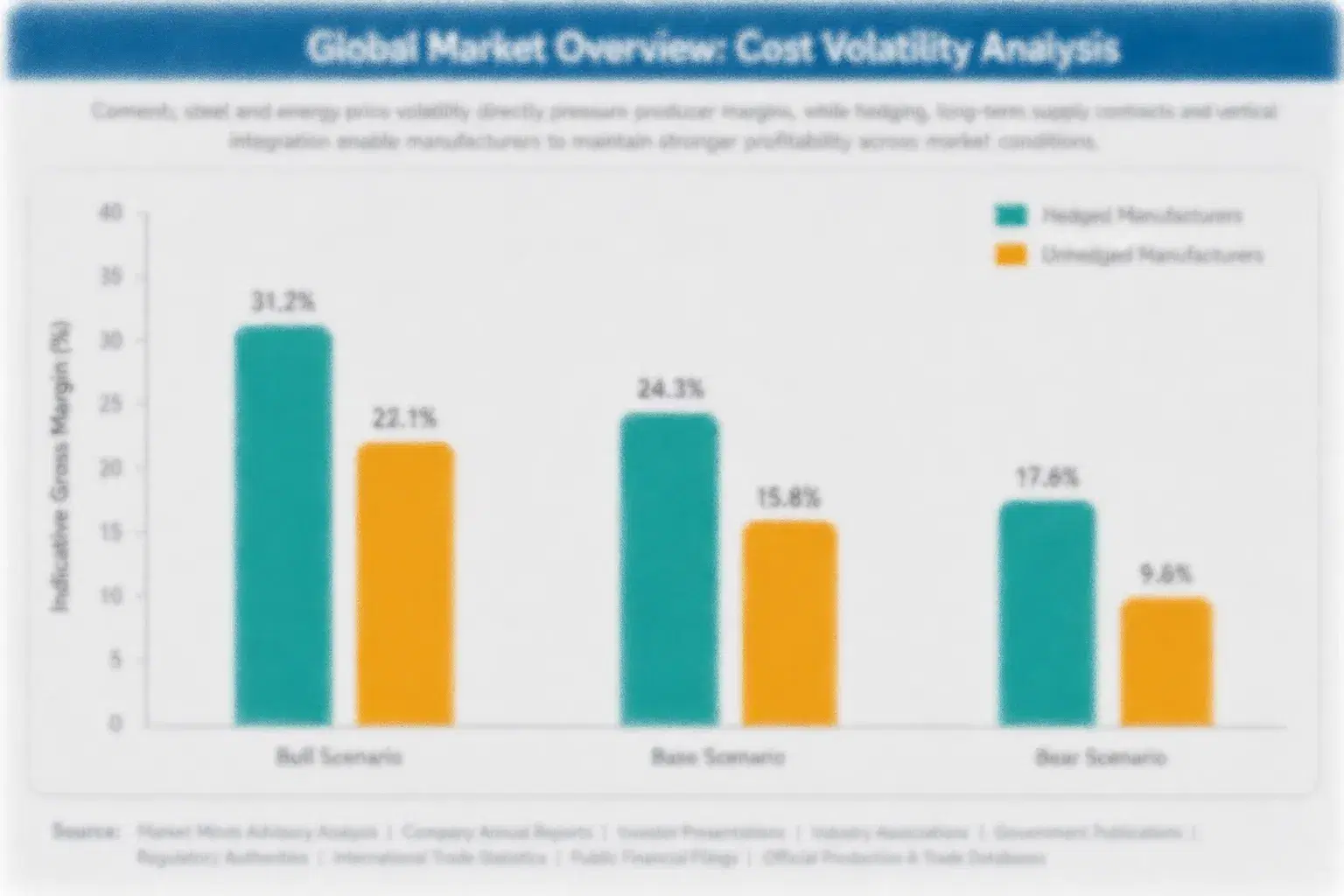
Stainless Steel and Gasket Supply Exposure

Stainless steel plates and elastomer gasket material together account for roughly 42% of plate heat exchanger cost of goods sold, with stainless steel sourced predominantly from European and East Asian mills and elastomer gaskets increasingly sourced from a concentrated group of specialty rubber compound suppliers serving industrial sealing applications specifically. Lead times for specialty elastomer compounds extend considerably during periods of strong industrial construction demand across major markets.
Stainless steel prices spiked sharply during 2024 as nickel supply disruptions and steady industrial demand collided, with the China MIIT noting elevated domestic alloy surcharge pricing persisting through the back half of the year, squeezing exchanger manufacturer margins particularly exposed to high-grade stainless formulations required for marine service. Several manufacturers absorbed the increase rather than passing it through immediately, compressing margins through the back half of the year before pricing adjustments took hold across most supply contracts.

Smaller regional manufacturers carry disproportionate exposure to steel volatility because they lack the hedging infrastructure and multiyear supply contracts that majors like Alfa Laval and GEA negotiate directly with mills. That gap compounds the disadvantage these smaller players already face on certification scale, pushing some toward alternative gasket formulations to manage cost exposure. That gap is widening.
plate-heat-exchanger-market-cost-volatility-analysis-1791089726302

Multiyear Stainless Steel Supply Contracts

Major manufacturers are negotiating multiyear fixed-price stainless steel supply agreements directly with mills to insulate margins from spot price volatility. Smaller suppliers are increasingly pooling procurement volume through industry associations to access comparable contract terms. Several large buyers are also exploring direct equity stakes in mills to secure long-term volume commitments. Costs stabilize gradually.

Alternative Gasket Formulation Research

Several manufacturers are researching alternative elastomer gasket formulations that reduce specialty compound content without sacrificing sealing integrity meaningfully. Adoption remains concentrated among mid-tier suppliers lacking the scale to negotiate favorable long-term steel contracts directly. Early field data suggests these formulations perform comparably in standard applications but require further validation testing. Trials continue expanding steadily.

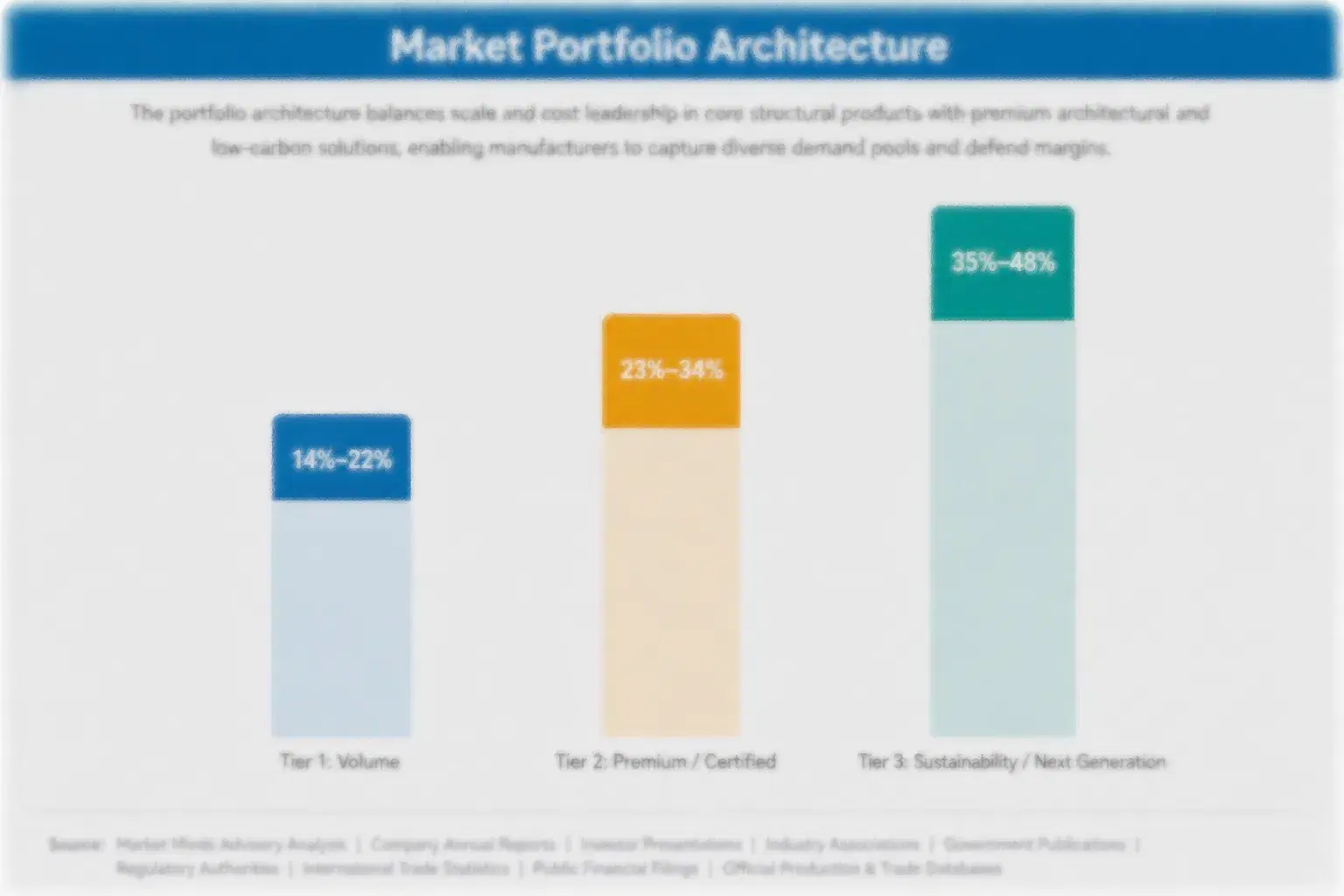
Portfolio Architecture for Margin Defence

Portfolio economics in plate heat exchangers split along a certification-versus-volume axis rather than a pure premium-versus-commodity divide common in other thermal transfer categories. Gross margins vary considerably depending on whether a supplier competes on standard gasketed catalog price or on documented marine or process industry certification that commands specialized procurement preference. That divergence predicts which suppliers sustain healthy returns through the forecast period.
Volume-tier gasketed and standard welded units serving conventional industrial applications carry thin margins sustained only through manufacturing scale, while certified marine and petrochemical process systems command meaningfully higher margins tied to certification value rather than material cost alone. Suppliers caught between both tiers, lacking scale and certification credentials, face the steepest margin compression as buyers increasingly sort toward one end or the other entirely.

High-value margin pools concentrate in marine classification and petrochemical process contracts, a segment still small relative to total unit volume but growing faster than any other portfolio tier. Suppliers positioned only in commodity gasketed segments will find their addressable margin pool shrinking as certification requirements tighten further across every major developed market. Suppliers positioned only in commodity gasketed segments risk becoming price-takers dependent on volume growth alone.

Standard gasketed units sold largely on price for conventional industrial applications, carrying gross margins around 14 to 20%. Competition here is driven almost entirely by price rather than engineering differentiation of any kind.
Gross Margin

Certified marine and process industry systems meeting documented classification thresholds, commanding gross margins of 26 to 35% from specialized buyers. Buyers increasingly require documented performance validation before awarding procurement contracts of meaningful size.
Gross Margin

Systems specified for LNG vessel construction and next-generation offshore decarbonization mandates, carrying margins of 30 to 40% tied to documented performance credentials. Suppliers positioned early in this tier are best placed to capture rising marine demand.
Gross Margin
plate-heat-exchanger-market-portfolio-architecture-1791089726597

High-value Sub-segments and Strategic Watch-out

Plate Heat Exchangers for Marine and Offshore Applications

Highest-value, fastest-growing pool as LNG construction expands, rewarding suppliers with established classification credentials and multi-year shipyard contracts already in place. Order backlogs already extend well into the following year for the most credible suppliers positioned. now. Suppliers without comparable positioning increasingly struggle to compete for this segment's largest contracts.

Brazed Plate Heat Exchangers

High-value but more moderate growth pool serving heat pump OEMs, where documented pressure rating depth matters more to buyers than lowest unit cost or manufacturing speed alone. Specification wins here tend to be sticky once secured by a qualified supplier entirely. OEM cycles favor incumbents with documented service histories.

Gasketed Plate Heat Exchangers

Volume core of the market, sustained by ongoing conventional industrial replacement cycles, where manufacturing scale and distribution reach matter more than premium specification depth. Program contracts extend multiple years forward in most mature industrial markets today. now. Replacement timing tracks installed base age closely across most mature markets today.

Welded Plate Heat Exchangers

Strategic watch-out segment as marine and brazed systems increasingly absorb certification capacity, leaving standard welded suppliers dependent on smaller industrial accounts. Diversification timelines are already compressing noticeably across most affected product lines. now across most affected categories. Catalog-only suppliers risk losing share permanently to integrated rivals over time.

Certification-Driven Specification Economics

Plate heat exchangers behave more like infrequently purchased capital components than a discretionary annuity revenue stream, since most manufacturers capture value primarily at vessel construction or facility installation rather than through recurring service contracts. The fifteen to thirty year replacement cycle means repeat purchase behavior tracks shipyard and plant capital planning as much as equipment wear. Suppliers prioritize engineering relationships over subscription-style recurring revenue.
Adoption stickiness varies sharply by end-use vertical. Shipyards show minimal switching behavior once a classification-approved supplier relationship forms, since replacement typically happens with the same brand for certification continuity across vessel generations. Petrochemical operators show stronger loyalty tied to process engineering relationships, often maintaining supplier partnerships across multiple plant expansions, while food processing buyers show more price sensitivity at each replacement cycle.

Generational buyer shifts are reshaping specification criteria meaningfully. Younger marine engineers and process designers increasingly research documented classification and efficiency data before purchase, a contrast with earlier buyers who relied heavily on established vendor relationships alone. That shift favors suppliers with transparent performance documentation over those competing purely on installed base reputation and legacy contractor relationships built over prior decades. Documentation transparency is becoming a baseline procurement requirement rather than a differentiator.
plate-heat-exchanger-market-end-use-penetration-index-1791089726880

The MMA Outlook

These are among the four positions where our research anticipates prominent divergence between winners and laggards over the coming forecast period. Each is grounded in the demand model, the regulatory perimeter, and the announced capacity pipeline.
01 / MARINE CLASSIFICATION ACCESS

Secure shipyard design slots before vessel contracts finalize

Vessel exchanger specification decisions are increasingly made before formal bidding even begins, going to suppliers who already have engineering relationships with the shipyard's design team, not to whoever offers the lowest unit price at the formal bid stage. Suppliers that wait for tenders to circulate will find allocation already locked into incumbent relationships built over the preceding several vessel cycles. Building these relationships now, even at modest initial scale, secures a seat at the table before shipyards finalize their preferred supplier lists entirely.
02 / PETROCHEMICAL ENGINEERING DEPTH

Build process industry engineering capability ahead of demand

Petrochemical operators are increasingly rejecting unproven suppliers in favor of those with documented process engineering history, and that credibility threshold takes years to build through successful large-facility installations. Suppliers that wait for the market to mature further will find themselves permanently behind competitors who started accumulating deployment references across multiple regions today. Investing in process engineering capability now, even before every contract is profitable, builds the track record that future refining bids will require as a baseline qualification for serious contenders.
03 / STEEL COST HEDGING

Lock multiyear steel contracts before the next volatility cycle

Stainless steel price volatility has already squeezed margins once this decade, and nothing about current nickel supply or mill capacity suggests the underlying tightness has resolved. Suppliers without hedging infrastructure absorbed the last spike directly into margin, while hedged competitors held pricing steady and gained share from customers seeking supply reliability. Pooling procurement volume through industry associations, where direct contracts are out of reach, gives smaller suppliers a realistic path to comparable protection well before the next steel volatility cycle fully materializes.
04 / CHINESE COMPETITION RESPONSE

Compete on documented certification depth, not price alone

Chinese manufacturers are rapidly closing the technology gap on standard gasketed units, and suppliers that compete purely on price in that segment will keep losing share to lower-cost domestic rivals with improving quality. Suppliers that instead invest in documented marine and petrochemical certification depth can defend premium positioning even as commodity segments compress further. Building this differentiation now, well before Chinese manufacturers close the certification gap as well, preserves pricing power that price competition alone simply cannot sustain over time.

Engagement Snapshot From the Field

A live engagement with an industry participant carrying material or product regulatory and market exposure ahead of a defining policy shift, showing how our research translates into a defensible multi-year portfolio strategy.
MARKET MINDS ADVISORY · CLIENT ENGAGEMENT SUMMARY
Plate Heat Exchanger Producer Strategic Portfolio Review and Transition Roadmap 2026·Investment Scenario on Plate Heat Exchanger Exposure Evaluation 2025-26
CLIENT PROFILE
The client is a South Korean shipyard constructing a series of LNG-fueled container vessels with combined contract value exceeding six hundred million dollars, reporting annual revenue of approximately four billion dollars across its broader shipbuilding operations (client-reported, unverified by MMA). The shipyard faced an upcoming exchanger procurement decision ahead of a fixed vessel delivery schedule.
STRATEGIC CHALLENGE
The shipyard's engineering team favored consolidating around a single certified supplier to simplify classification documentation, while its procurement team pushed for competitive bidding across multiple vendors to maximize cost savings on the large vessel order. Disagreement over the approach was delaying equipment commitments ahead of the fixed delivery schedule. Both sides agreed on the urgency.
MMA APPROACH
MMA benchmarked five qualified suppliers against documented classification compliance, shipyard engineering relationships, and total cost of ownership using MMA's primary survey dataset covering comparable LNG vessel equipment transitions. The team modeled training and documentation cost under single-supplier versus multi-vendor scenarios to quantify the tradeoff before the shipyard finalized its equipment order.
KEY FINDINGS
  1. Single-supplier consolidation reduced classification documentation time meaningfully compared to managing multiple equipment configurations across the vessel series simultaneously. across the vessel series.
  2. Competitive bidding secured modestly better per-unit pricing but required maintaining separate certification documentation for each vendor across the fleet. entirely for this project.
  3. The supplier with the strongest classification society relationships offered faster equipment availability ahead of the fixed delivery window than competitors. industry-wide. entirely.
  4. Total cost of ownership favored single-supplier consolidation once documentation, inventory, and certification costs were fully accounted for across the vessel series. overall.
CLIENT PROFILE
The client is a South Korean shipyard constructing a series of LNG-fueled container vessels with combined contract value exceeding six hundred million dollars, reporting annual revenue of approximately four billion dollars across its broader shipbuilding operations (client-reported, unverified by MMA). The shipyard faced an upcoming exchanger procurement decision ahead of a fixed vessel delivery schedule.
STRATEGIC CHALLENGE
The shipyard's engineering team favored consolidating around a single certified supplier to simplify classification documentation, while its procurement team pushed for competitive bidding across multiple vendors to maximize cost savings on the large vessel order. Disagreement over the approach was delaying equipment commitments ahead of the fixed delivery schedule. Both sides agreed on the urgency.
MMA APPROACH
MMA benchmarked five qualified suppliers against documented classification compliance, shipyard engineering relationships, and total cost of ownership using MMA's primary survey dataset covering comparable LNG vessel equipment transitions. The team modeled training and documentation cost under single-supplier versus multi-vendor scenarios to quantify the tradeoff before the shipyard finalized its equipment order.
KEY FINDINGS
  1. Single-supplier consolidation reduced classification documentation time meaningfully compared to managing multiple equipment configurations across the vessel series simultaneously. across the vessel series.
  2. Competitive bidding secured modestly better per-unit pricing but required maintaining separate certification documentation for each vendor across the fleet. entirely for this project.
  3. The supplier with the strongest classification society relationships offered faster equipment availability ahead of the fixed delivery window than competitors. industry-wide. entirely.
  4. Total cost of ownership favored single-supplier consolidation once documentation, inventory, and certification costs were fully accounted for across the vessel series. overall.
RECOMMENDED STRATEGY
Phase 1: Consolidate around the supplier offering the strongest classification society relationships and fastest equipment availability for this series. going forward. immediately. Phase 2: Negotiate a multi-vessel volume discount directly with the selected supplier rather than pursuing fragmented per-vessel competitive bidding. for this project. Phase 3: Standardize documentation and certification processes across the vessel series to capture the full consolidation cost advantage identified. before proceeding. promptly.
OUTCOME
The shipyard selected a single supplier under a multi-vessel volume agreement, completing the delivery schedule on time and reporting lower total equipment and documentation cost than the multi-vendor approach would have achieved across the series (client-reported, unverified by MMA). Engineering leadership credited the decision with avoiding costly delays entirely during construction.

Frequently Asked Questions

Foundational context covering the market sizes, CAGR, scope, country, region and competition that inform every finding below. This section is provided to cover basics and most often pre-purchase conversations, answered from the MMA Primary Research Dataset.

What is the current size of the Plate Heat Exchanger Market?

The global plate heat exchanger market reached $6.8 billion in 2025. Demand concentrates in East Asian shipbuilding and manufacturing alongside Western European process industry engineering.

How large will the Plate Heat Exchanger Market be by 2036?

MMA projects the market will reach $13.45 billion by 2036, nearly 1.86 times its 2026 value. LNG bunkering infrastructure and offshore decarbonization investment both contribute to that expansion.

What is the CAGR for the Plate Heat Exchanger Market 2026 to 2036?

The market is forecast to grow at a compound annual rate of 6.4% between 2026 and 2036. That builds on a 2020 to 2025 historical rate of 5.4%, reflecting recent marine-driven acceleration.

Which segment is growing fastest?

Plate heat exchangers for marine and offshore applications lead at a 9.6% CAGR. That is 1.5 times the overall market growth rate, driven by LNG bunkering infrastructure expansion.

Who are the major companies in the Plate Heat Exchanger Market?

Alfa Laval, GEA Group, Kelvion Holding, SPX FLOW, and Danfoss hold leading positions. Combined, the top five account for 48% of the market on a reported segment revenue basis.

Which country is growing fastest?

South Korea leads country-level growth at a 9.0% CAGR. Its dominant global shipbuilding position and LNG vessel construction activity are driving that pace ahead of other markets.

Report Segmentation Architecture

The full report scope spans multiple orthogonal segmentation dimensions, with cross-tabulated demand data provided for each dimension pair. Coverage extends further to regional breakdowns, trend trajectories, and the competitive detail needed to support segment-level decision-making.
  • Gasketed Plate Heat Exchangers
  • Welded Plate Heat Exchangers
  • Brazed Plate Heat Exchangers
  • Semi-Welded Plate Heat Exchangers
  • Marine and Offshore Plate Heat Exchangers
  • Chemical and Petrochemical Processing
  • Food and Beverage Manufacturing
  • Marine and Shipbuilding
  • District Heating and Power Generation
  • Shipyard and Classification Channel
  • EPC and Process Industry Channel
  • Distributor and Regional Agent Channel
  • Retrofit and Replacement Channel

By Region

  • North America
  • Western Europe
  • East Asia
  • South Asia and Pacific
  • Latin America
  • Middle East and Africa
  • Eastern Europe

Scope, Methodology, and Coverage

Every figure in this report is reproducible from documented input assumptions. The scope below maps the historical period, the forecast horizon, the segmentation dimensions, and the countries covered, alongside the underlying primary and qualitative methodology.
Historical Period
2020 to 2025
Forecast Period
2026 to 2036
Base Year
2025 (USD billions; MMA Primary Research Dataset, October 2026)
Market Definition
The plate heat exchanger market covers gasketed, welded, semi-welded, and brazed heat transfer units used across industrial process, chemical, food and beverage, marine, and district heating applications. It excludes shell-and-tube heat exchangers and air-cooled heat exchanger systems using fundamentally different heat transfer geometry.
Quantitative Units
USD billions, unit shipments where disclosed
Segmentation Dimensions
Construction technology, end-use industry, commercial distribution channel
Regions Covered
North America, Western Europe, East Asia, South Asia and Pacific, Latin America, Middle East and Africa, Eastern Europe
Countries Covered
China, South Korea, Japan, Germany, Sweden, Netherlands, United States, India, Brazil, Saudi Arabia, United Arab Emirates, Poland
Key Companies Profiled
Alfa Laval, GEA Group, Kelvion Holding, SPX FLOW, Danfoss, and 15 additional profiled participants
Quantitative Methodology
Primary survey, n=3,800 respondents, Q4 2025, six countries; demand-side model with trade association cross-validation
Qualitative Methodology
47 expert interviews, Q4 2025; applied to validate demand model assumptions, identify emerging dynamics, and assess competitive positioning
Report Format
PDF and XLSX data workbook (Word format preview document)
Publisher
Market Minds Advisory
Report Code
MMA-2026-CON-468
Published
October 2026
Contact
sales@marketmindsadvisory.com | www.marketmindsadvisory.com

Purchase the full Plate Heat Exchanger Market Report (2026 to 2036).

This report delivers a comprehensive assessment of the global plate heat exchanger market across all seven MMA-tracked regions. It covers market sizing, segmentation, competitive benchmarking, and input cost exposure through 2036, with particular attention to marine classification and petrochemical process engineering dynamics. Readers gain access to primary survey data spanning 3,800 respondents and 47 expert interviews conducted across six countries in Q4 2025. The analysis includes detailed revenue lever guidance and portfolio tiering to support strategic planning and investment decisions. It is designed for strategy teams evaluating entry decisions.
Ten-year market sizing and forecast model
Seven-region demand and market share breakdown
Competitive benchmarking of 20 named suppliers
Input cost exposure and mitigation analysis
Revenue lever and portfolio tiering guidance
Primary survey and expert interview data access

Built For The People Who Decide

From boardroom strategy to bench-side execution, this report is read cover-to-cover by leaders shaping the next decade of their industry, turning demand scenarios, market dynamics and valuation benchmarks into decisions.
CXOs/ Presidents/ VPs/ Managers
M&A and Corporate Development
Strategy Teams and R&D Heads
Procurement and Product Directors
Regulatory and Compliance Leaders
Investor Relations and Equity Analysts