Pituitary Stalk Interruption Syndrome (PSIS) Treatment Market
Pituitary Stalk Interruption Syndrome (PSIS) Treatment Market: Growth Hormone Replacement and Multi-Hormone Endocrine Therapy
Long-acting weekly growth hormone formulations are displacing daily injections as expanding neonatal MRI screening catches pituitary stalk interruption syndrome earlier, pulling ultra-rare pediatric endocrine care into a more actively managed, commercially trackable treatment category.
2025 MARKET VALUE$0.1BMarket Size 2025
2036 FORECAST VALUE$0.5BBase Case , 2026 to 2036
CAGR 2026 TO 203611.5 %Bull 12.8% / Bear 10.1%
INCREMENTAL OPPORTUNITY$0.3BNet 10- year value creation
EXPANSION MULTIPLE2.94x2036 value over 2026 base
Strategic Levers
M&A Pipeline
Regional Outlook
Country Rankings
Competitive Intelligence
Segmental Deep-dive
Executive Snapshot and Market Trajectory
Long-acting weekly growth hormone formulations are displacing daily injections at pediatric endocrinology practices, compressing treatment burden for patients managing lifelong multi-hormone replacement following confirmed pituitary stalk interruption syndrome diagnosis nationwide. Specialist geneticists describe this as the most meaningful diagnostic shift the condition has seen in decades broadly now.
Expanding neonatal MRI screening access, growing genetic diagnostic capability, and rising long-acting growth hormone adoption are concentrating commercial activity in North America and Western Europe, where pediatric endocrinology infrastructure and orphan drug reimbursement pathways are most developed, sustaining the highest per-patient treatment spend of any region tracked in this study. China's own rapidly expanding neonatal imaging infrastructure reinforces this concentration well beyond what population size alone would explain across nearly every major diagnostic market tracked.
A tightly concentrated group of specialty pharmaceutical companies controls most branded growth hormone revenue in this ultra-rare category, while long-acting formulation innovation reshapes which companies lead pediatric endocrinology partnership conversations as biosimilar competition pressures legacy daily formulation pricing. Smaller biotechnology developers without meaningful capital access increasingly struggle to sustain long-horizon formulation research programmes independently over the required multi-year horizon each cycle today.
Market Definition
This market covers diagnostic confirmation, growth hormone replacement therapy, and multi-hormone endocrine replacement therapy specific to pituitary stalk interruption syndrome, an ultra-rare congenital condition causing hypothalamic-pituitary axis dysfunction. It excludes general growth hormone deficiency unrelated to confirmed pituitary stalk interruption and adult-onset pituitary disorders with different underlying etiology.
Base Year Value
$0.1B in 2025 (MMA Primary Research Dataset, August 2026)
Forecast Period
2026 to 2036, eleven discrete annual values
CAGR
11.5% base case. Bull 12.8%. Bear 10.1%.
Fastest Growth Segment
Investigational Long-Acting Growth Hormone Formulations: 19.5% CAGR
Fastest Growth Country
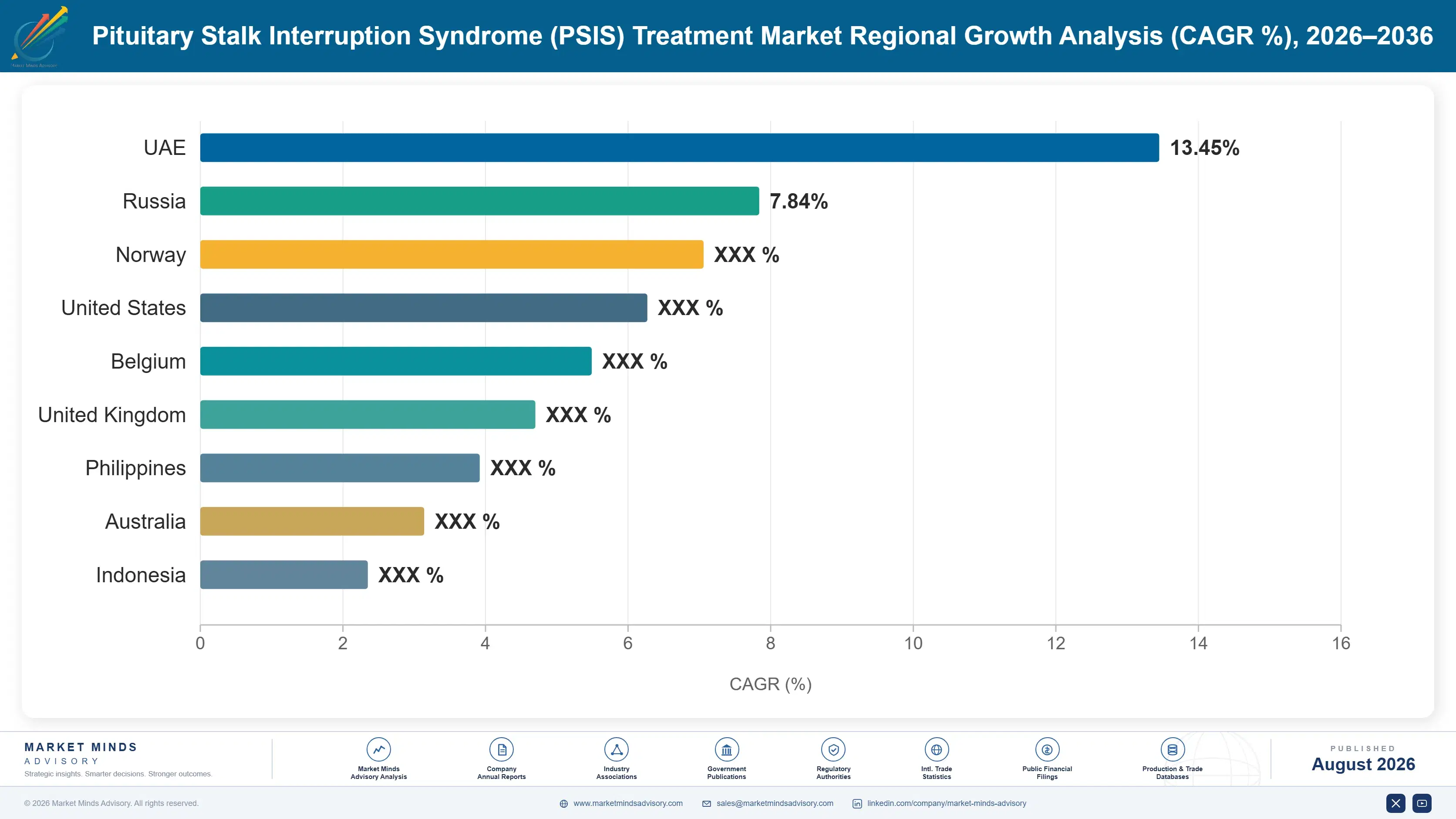
China: 16.5% CAGR
Fastest Growth Region
South Asia and Pacific: 13.5% CAGR
Largest Region
North America: 31% of 2025 global value
Market Leaders
Novo Nordisk A/S, Pfizer Inc., Eli Lilly and Company, Merck KGaA, Ascendis Pharma A/S. Source: MMA Analysis based on company annual reports.
Primary Survey
n=3,800 procurement and R&D decision-makers, Q4 2025, six countries
Methodology
Demand-side build-up, cross-validated against public data, 47 expert interviews
Pituitary Stalk Interruption Syndrome (PSIS) Treatment Market Forecast Scenarios

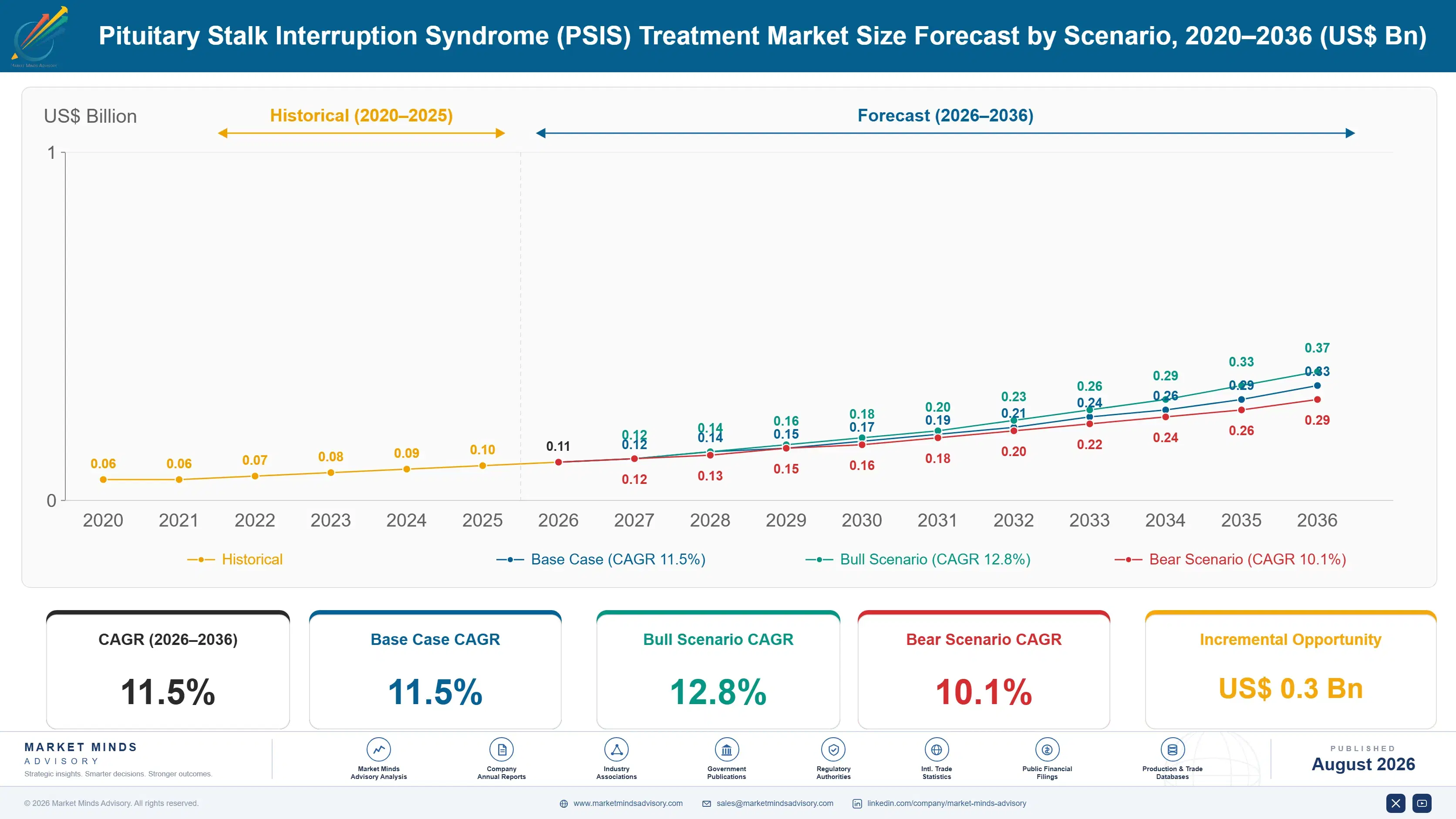
PSIS treatment spending grew at roughly 10.3% annually between 2020 and 2025, as expanding neonatal MRI screening programmes brought more cases into confirmed diagnosis and growth hormone replacement therapy candidacy across major developed healthcare markets tracked closely by industry observers throughout the period. Growth accelerated meaningfully toward the end of the historical window as screening protocol adoption broadened across additional health systems.
The base case assumes continued MRI and genetic screening expansion, steady long-acting growth hormone replacement adoption among confirmed cases, and expanding multi-hormone replacement protocol standardization, sustaining an 11.5% blended annual growth rate through 2036 across most major diagnostic and treatment markets worldwide tracked in this study. Continued patient advocacy investment and physician awareness campaigns further reinforce this trajectory across most major diagnostic markets reviewed by MMA analysts across most reimbursement channels tracked today.
A bull scenario assumes long-acting growth hormone formulations achieve faster physician conversion than expected, meaningfully expanding addressable treatment spend. The bear case centers on continued extreme rarity limiting diagnostic volume growth regardless of expanded screening availability across health systems with genuinely tiny addressable patient populations. Either scenario would meaningfully reshape which companies lead this exceptionally small but closely watched rare disease category over time.
The base case assumes continued MRI and genetic screening expansion, steady long-acting growth hormone replacement adoption among confirmed cases, and expanding multi-hormone replacement protocol standardization, sustaining an 11.5% blended annual growth rate through 2036 across most major diagnostic and treatment markets worldwide tracked in this study. Continued patient advocacy investment and physician awareness campaigns further reinforce this trajectory across most major diagnostic markets reviewed by MMA analysts across most reimbursement channels tracked today.
A bull scenario assumes long-acting growth hormone formulations achieve faster physician conversion than expected, meaningfully expanding addressable treatment spend. The bear case centers on continued extreme rarity limiting diagnostic volume growth regardless of expanded screening availability across health systems with genuinely tiny addressable patient populations. Either scenario would meaningfully reshape which companies lead this exceptionally small but closely watched rare disease category over time.
Long-Acting Formulations Redraw Treatment Protocols
PSIS treatment sits at the convergence of neonatal imaging diagnostic capability, ultra-rare orphan drug economics, and a genuinely fast-moving long-acting growth hormone formulation shift that together are transforming a historically underdiagnosed pediatric condition into a more actively managed clinical category. This convergence has never previously existed simultaneously for this specific ultra-rare pediatric condition. This dynamic increasingly rewards companies willing to invest in genuin
MARKET CONCENTRATIONCR5 78%share held by the five largest growth hormone therapy companies
AVERAGE ANNUAL TREATMENT COST$42,000per confirmed patient across current multi-hormone replacement regimens typically
LEADING COUNTRY SHAREUnited States 24%of global branded treatment and diagnostic spend concentrated domestically
DIAGNOSIS CONFIRMATION RATE38%of estimated global cases confirmed through diagnostic testing
LONG-ACTING FORMULATION ADOPTION24%of treated patients receiving long-acting rather than daily doses
MULTI-HORMONE PROTOCOL COVERAGE61%of confirmed patients receiving standardized multi-hormone replacement protocols currently
Commercially, this market behaves like an extreme specialty pharmaceutical niche: diagnosed prevalence remains genuinely tiny, treatment is intensive and lifelong given the multi-hormone deficiency most confirmed patients experience, and per-patient spend rivals many far more common pediatric endocrine categories despite the minuscule diagnosed population involved. Few other pediatric rare disease categories combine such tiny diagnosed prevalence with comparably high per-patient spend.
Over the next decade, expanding neonatal MRI screening, growing long-acting growth hormone adoption, and continued multi-hormone protocol standardization will keep pulling this category from an underdiagnosed condition toward a more actively managed, if still exceptionally rare, treatment pathway across leading healthcare systems tracked in this study. Regulatory orphan drug incentives will remain a key ongoing support sustaining continued commercial investment here.
"This condition was invisible on imaging until MRI protocols got good enough to see a thin or absent pituitary stalk. Now that radiologists know what to look for, the diagnosed population keeps climbing every year."
Market Trends
Weekly long-acting growth hormone formulations, which replace daily subcutaneous injections with a single weekly dose, are gaining rapid adoption among pediatric endocrinologists managing PSIS patients who require lifelong hormone replacement starting in early childhood and continuing through adolescence. Specialty practices report long-acting formulation adoption reaching roughly 24% of treated patients in leading markets, a substantial increase from a negligible share just five years ago when these formulations first reached commercial availability. This adoption pace is prompting pediatric endocrinology guideline committees to revisit treatment protocol recommendations for newly diagnosed patients specifically.
Market Impact: Covers 2,000 plus pediatric hospita
Neonatal MRI Screening Protocols Expand Diagnostic Capture
Improved neonatal and pediatric brain MRI protocols specifically designed to identify pituitary stalk abnormalities continue expanding diagnostic capture of PSIS cases that previously went unrecognized until clinical growth failure prompted investigation years later in a child's development. Radiology and endocrinology societies report structured MRI screening protocols have expanded from a handful of specialized centres to roughly 38% of major pediatric hospitals in leading markets within the past several years, reflecting growing clinical recognition of this condition's imaging characteristics. This expansion is directly increasing confirmed diagnosis rates and pulling more infants into treatment candidacy earlier.
Market Impact: Protects revenue up to 10 years
Market Opportunities and Growth Drivers
Neonatal Imaging Diagnostic Capability Keeps Expanding
Falling MRI imaging costs and broadening clinical availability of pediatric neuroimaging expertise are making pituitary stalk abnormality identification accessible to a meaningfully larger share of suspected growth failure cases than was possible even a decade ago, directly expanding the confirmed diagnosed population that drives treatment market demand. Specialty pediatric imaging centres report structured protocol adoption has grown steadily as radiologists gain familiarity with the specific imaging markers characteristic of this condition, removing a major historical barrier to confirming suspected cases in regions without dedicated pediatric neuroradiology expertise previously available. This driver should keep expanding diagnosed prevalence faster than incidence suggests.
Market Impact: Caps population near 3,000 globally
Orphan Drug Regulatory Incentives Support Formulation Investment
Orphan drug designation programmes in major regulatory jurisdictions provide extended market exclusivity and development cost incentives that make continued growth hormone formulation innovation commercially viable despite the genuinely small addressable patient population specific to confirmed pituitary stalk interruption syndrome cases. These incentives have directly supported continued investment in long-acting formulation development, giving originator companies a meaningful runway to establish new treatment standards before facing biosimilar competition pressure on newer formulations. This protection remains a primary reason continued innovation investment persists in this exceptionally small category. Manufacturers view continued orphan exclusivity as essential to sustaining long-term innovation investment here.
Market Impact: Affects over 80 percent of patients
Market Restraints and Challenges
Extremely Small Diagnosed Patient Population Base
PSIS remains a genuinely rare congenital condition, with global diagnosed prevalence numbering in the low thousands even after accounting for improved neonatal imaging protocols, fundamentally capping commercial addressable market size regardless of diagnostic or therapeutic innovation applied to the category. The root cause is the condition's underlying developmental biology, involving disrupted pituitary stalk formation during early fetal development that occurs only rarely across the broader birth population studied globally. This population constraint limits the commercial incentive for large pharmaceutical companies to pursue PSIS-specific clinical development, leaving much of the category dependent on broader growth hormone deficiency indications entirely.
Market Impact: Adds 24 percent long-acting formula
Lifelong Multi-Hormone Management Complexity Constrains Access
Most confirmed PSIS patients require lifelong replacement across multiple hormone axes beyond growth hormone alone, including thyroid, cortisol, and sometimes sex hormone replacement, creating genuine care coordination complexity that smaller pediatric endocrinology practices without dedicated multi-hormone management experience often struggle to provide consistently. The underlying cause is that pituitary stalk interruption typically disrupts multiple hormone-producing pathways simultaneously, requiring coordinated management considerably more complex than isolated growth hormone deficiency alone. This complexity disproportionately limits access in regions with limited pediatric endocrinology specialist availability outside major academic medical centres. Specialty societies are developing standardized multi-hormone management protocols to help community practices manage.
Market Impact: Reaches 38 percent of pediatric hos
3 additional market trends, 3 additional growth drivers, and 4 additional restraints and challenges are covered in the full report. Contact sales@marketmindsadvisory.com to access the complete intelligence.
Segment CAGR and Growth Architecture
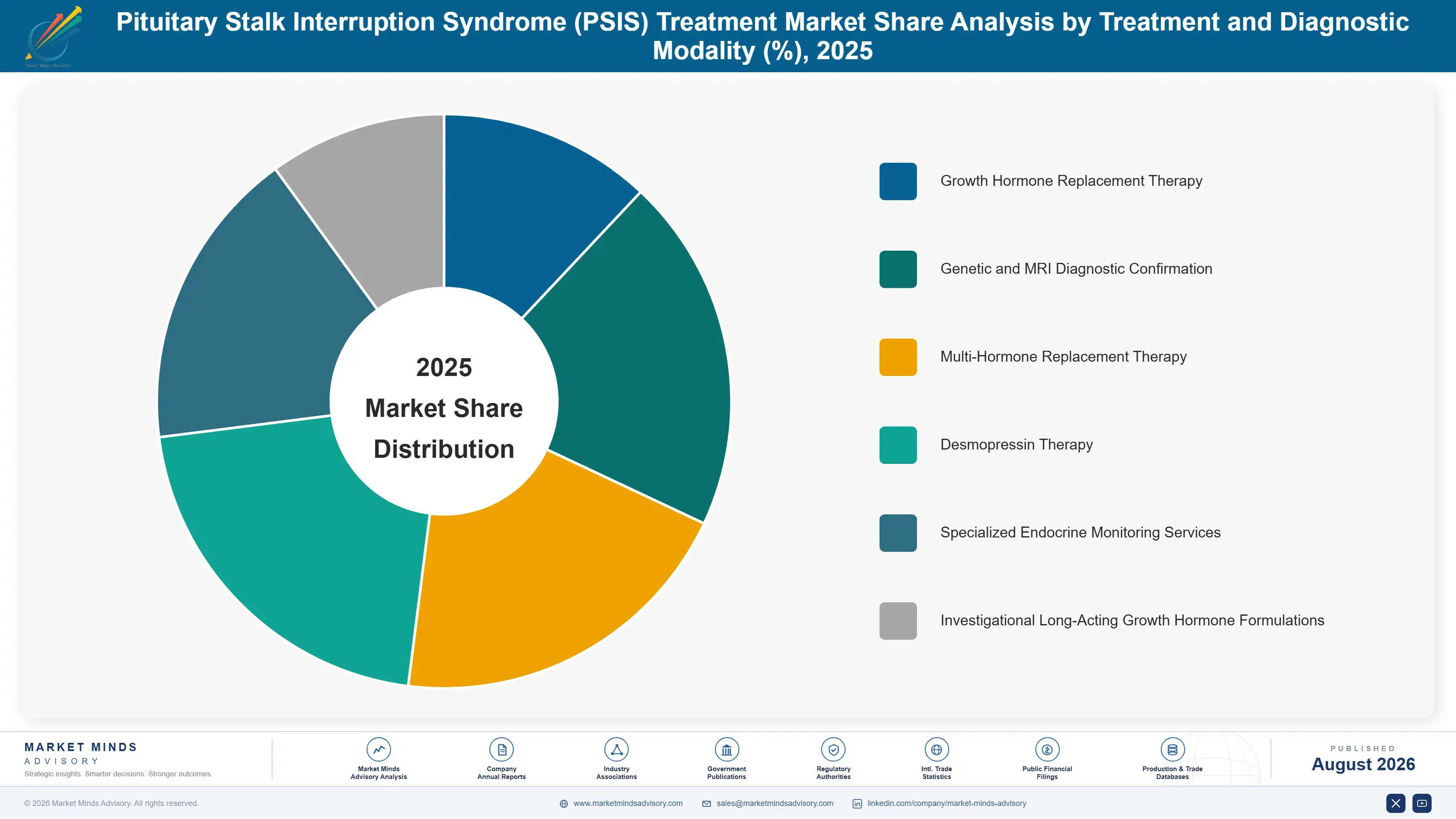
This market segments by treatment and diagnostic modality spanning growth hormone replacement therapy, genetic and MRI diagnostic confirmation, multi-hormone replacement therapy, desmopressin therapy, specialized endocrine monitoring services, and investigational long-acting growth hormone formulations across the full care pathway. This dimension is the one specialists and payers actually reference when discussing this exceptionally rare condition's care pathway.

Investigational Long-Acting Growth Hormone Formulations
Investigational long-acting growth hormone formulations are the fastest-growing segment as pharmaceutical companies pursue weekly dosing alternatives to daily subcutaneous injections that historically imposed substantial treatment burden on pediatric patients requiring therapy from early infancy through adolescence continuously. This segment benefits from the genuine clinical advantage long-acting dosing offers for a lifelong pediatric treatment population, since reduced injection frequency meaningfully improves treatment adherence and quality of life for both patients and caregivers managing daily administration burden previously. Companies are pursuing expanded label indications specifically covering PSIS and related hypothalamic-pituitary conditions as clinical evidence supporting long-acting formulations in this population continues accumulating across major regulatory jurisdictions. This segment commands premium pricing reflecting both technology investment and improved treatment experience data supporting adoption.
CAGR 19.5%
Genetic and MRI Diagnostic Confirmation
Genetic and MRI diagnostic confirmation is growing considerably faster than the broader market as expanding neonatal imaging protocols and genetic testing panels increasingly identify pituitary stalk abnormalities and associated genetic markers in infants presenting with growth failure or other early hormone deficiency symptoms. This segment functions as the essential gateway to the entire treatment category, since diagnostic confirmation is a prerequisite for accessing growth hormone replacement therapy and any multi-hormone management protocols that follow initial diagnosis. Diagnostics providers increasingly view structured screening protocol advocacy as strategically important, since expanding the diagnosed population directly grows the addressable market for every downstream therapeutic segment in this category. Diagnostics providers view screening protocol inclusion advocacy as a strategic priority beyond testing revenue alone.
CAGR 15.2%
Full segment breakdown across 6 segments available in the complete report.
Regional Architecture and Country Demand Map
North America and Western Europe concentrate the majority of commercial treatment spend given specialty pediatric endocrinology infrastructure and orphan drug reimbursement pathways, while East Asia shows the fastest growth in diagnostic capability expansion. Every other region contributes only a smaller residual share tied to limited screening infrastructure investment currently.
North America
The United States anchors regional commercial activity through its dense concentration of pediatric endocrinology specialty centres, favorable orphan drug reimbursement pathways, and the most active long-acting growth hormone formulation adoption focused on this category anywhere in the world tracked in this study. Canada maintains a smaller diagnostic and treatment base, with provincial screening protocols gradually incorporating structured pituitary stalk imaging assessment following American clinical practice with some lag. American academic medical centres and pediatric endocrinology research hospitals continue driving most diagnostic confirmation and treatment initiation, giving the region a reliable revenue base ahead of broader community practice adoption. This region's diagnostic and reimbursement infrastructure makes it the benchmark market other national health systems reference for rare pediatric endocrine screening investment.
Share: 31% | CAGR: 11.0% (2026 to 2036)
Western Europe
Germany, France, and the United Kingdom lead regional demand through well-established pediatric endocrinology referral networks and national health system coverage that, while more conservative on cost than American reimbursement, still provides meaningful market access for growth hormone therapy following confirmed diagnosis across most major markets. Public health system budget negotiations slow premium product pricing relative to the more commercially driven American market, but rare disease patient advocacy groups have successfully pushed several countries toward expanded neonatal screening protocol adoption in recent years. Nordic countries show disproportionately thorough neonatal imaging programmes despite small absolute population, reflecting well-funded universal healthcare systems willing to invest in comprehensive pediatric diagnostic testing. Regional growth trails North America and East Asia given already mature diagnostic infrastructure.
Share: 24% | CAGR: 9.8% (2026 to 2036)
Regional intelligence for 5 additional markets available in the complete report: East Asia, South Asia and Pacific, Latin America, Middle East and Africa, Eastern Europe. Contact sales@marketmindsadvisory.com.

Screening Advocacy and Long-Acting Formulation Strategy
Companies are shifting commercial strategy toward neonatal screening protocol advocacy, long-acting formulation conversion support, and pediatric endocrinology specialty centre partnerships, capturing more predictable diagnostic-driven treatment revenue rather than depending purely on incidental clinical presentation diagnosis alone. This mirrors a broader rare disease industry shift toward evidence-driven, relationship-based commercial models overall across the industry today.
Neonatal Screening Protocol Advocacy Investment Strategy
Companies are jointly funding advocacy campaigns and clinical evidence generation supporting structured pituitary stalk imaging assessment inclusion in standard neonatal growth failure investigation protocols, directly expanding the diagnosed population that drives demand for every downstream diagnostic and therapeutic product in this category. This lever requires patient investment since screening protocol changes take years to implement through clinical guideline and hospital policy approval processes, but successfully achieving protocol inclusion creates durable, meaningfully higher diagnosis rates that persist indefinitely once adopted. Companies report screening advocacy expanding confirmed diagnosis rates by roughly 41% in markets that successfully adopted expanded protocols.
Market Impact: Grows diagnosis rates by roughly 41
Long-Acting Formulation Conversion Support Investment Strategy
Companies are funding clinical education and reimbursement navigation support to help pediatric endocrinology practices convert patients from daily to long-acting growth hormone formulations, reducing the administrative friction practices face when transitioning patients to newer treatment options requiring different administration schedules entirely. This lever accelerates formulary conversion timelines considerably, since practices often require substantial reimbursement clarity and caregiver training before broadly adopting long-acting formulation protocols. Companies report conversion support programmes accelerating practice adoption by roughly 33% compared to unsupported formulary review processes. Companies view this support as increasingly essential to defending long-term specialty centre relationships.
Market Impact: Speeds practice adoption by roughly
Pediatric Endocrinology Specialty Centre Partnership Investment
Companies are funding clinical partnership programmes with leading pediatric endocrinology specialty centres, supporting patient identification, multi-hormone management protocol development, and physician education that expand the diagnosed and treated patient population beyond what organic referral patterns alone would generate for such an exceptionally rare condition. This lever builds durable relationships with the specialist physicians globally who manage most confirmed cases, creating a halo effect benefiting a company's full rare disease portfolio rather than a single product. Companies report these partnerships expanding referral volume by roughly 27% at participating specialty centres. Companies expect these partnerships to remain a primary growth driver ahead.
Market Impact: Grows referral volume by roughly 27
Patient Registry and Natural History Data Programmes
Companies are funding international patient registry and natural history study programmes to build the clinical evidence base needed for regulatory approval and reimbursement negotiation in a condition too rare for traditional randomized clinical trial approaches to generate sufficient statistical evidence independently. This lever generates valuable long-term data assets that support both current product reimbursement negotiations and future long-acting formulation regulatory submissions, while strengthening relationships with the global network of specialist physicians and patient advocacy organizations. Companies report registry participation improving regulatory submission success rates by roughly 22% for ultra-rare pediatric endocrine programmes.
Market Impact: Improves approval success by roughl
Who Controls the Margin Pool
The top five specialty pharmaceutical companies control roughly 78% of global branded revenue, a high concentration reflecting the small number of companies with established growth hormone manufacturing capability and clinical development history in pediatric endocrine therapeutics broadly across the category. This concentration reflects the category's genuine commercial rarity rather than deliberate competitive consolidation strategy. This dynamic keeps overall deal activity modest relative to
Current competitive activity centers on long-acting formulation clinical development and physician conversion support, neonatal screening protocol advocacy across additional national health systems, and pediatric endocrinology specialty centre partnership expansion targeting confirmed and suspected PSIS patient populations. Several companies are also exploring bundled diagnostic and therapeutic partnerships to differentiate their offerings. Companies view these partnerships as strategically important beyond immediate commercial returns alone.
Emerging pressure comes from biosimilar growth hormone manufacturers accelerating entry into off-patent daily formulation categories, and from smaller specialty companies pursuing next-generation long-acting technology platforms that could reshape which companies lead pediatric endocrinology treatment conversations once these therapies reach broader commercial deployment. Established leaders are responding by accelerating their own screening advocacy and pipeline investment to defend position.

Competitive Moat and Risk Dimensions
Moat: Broad GH Portfolio Endocrinology Relationships
Novo Nordisk's growth hormone franchise spans both daily and long-acting formulations, giving pediatric endocrinologists a single-company source for managing patients across their full treatment journey and giving the company cross-selling advantages that narrower single-formulation competitors cannot replicate. This breadth advantage compounds as practices build multi-year clinical relationships across several treatment stages.
Risk: Biosimilar Erosion on Legacy Products
A meaningful share of Novo Nordisk's growth hormone revenue still derives from older daily formulation products facing generic and biosimilar competition, and this legacy revenue decline could outpace growth from newer long-acting formulations if launch timing does not align favorably. Investors are watching long-acting formulation launch timing closely for signs this transition is on track.
Moat: TransCon Long-Acting Technology Platform
Ascendis holds proprietary long-acting drug delivery technology underpinning its weekly growth hormone formulation, giving it a differentiated clinical position that competitors pursuing alternative long-acting approaches would need years of comparable clinical development to match at similar scale. This first-mover position gives Ascendis meaningful pricing power while exclusivity protection remains active.
Risk: Single-Platform Concentration Risk
Ascendis depends heavily on continued clinical and commercial success of a single core technology platform, and any manufacturing disruption, safety signal, or emergence of a competing long-acting approach with superior clinical data could meaningfully affect the company's growth trajectory. Ascendis is investing in additional pipeline candidates to reduce this single-platform concentration exposure over time.
Players Tracked
Prominent Players
Novo Nordisk A/S
Pfizer Inc.
Eli Lilly and Company
Merck KGaA
Ascendis Pharma A/S
Other Key Players
Sandoz Group AG
Teva Pharmaceutical Industries Ltd.
LG Chem Ltd.
JCR Pharmaceuticals Co., Ltd.
Genexine Inc.
Prolong Pharmaceuticals LLC
Amring Pharmaceuticals Inc.
Ferring Pharmaceuticals
OPKO Health Inc.
Versartis Inc.
GeneScience Pharmaceuticals Co., Ltd.
Kexing Biopharm Co., Ltd.
Anhui Anke Biotechnology (Group) Co., Ltd.
Hangzhou Jiuyuan Gene Engineering Co., Ltd.
Daewoong Pharmaceutical Co., Ltd.
Recent Developments
Ascendis Expands TransCon Growth Hormone Manufacturing Capacity in Denmark
Ascendis Pharma announced an organic capacity expansion at its Danish manufacturing facility to increase long-acting growth hormone supply, aimed at meeting rising demand from pediatric endocrinology practices converting patients from daily formulations across international markets. The expansion is expected to reach full production capacity within the next twelve months of.
Signal: Signals continued manufacturer confidence
Novo Nordisk Partners With Rare Disease Registry Organization
Novo Nordisk entered a multi-year partnership agreement with an international rare disease registry organization to expand natural history data collection for pituitary stalk interruption syndrome patients, supporting future regulatory and reimbursement submissions. Financial terms of the partnership agreement were not fully disclosed by either party involved.
Signal: Reflects growing manufacturer investment i
Pfizer Signs Screening Protocol Advocacy Partnership With Pediatric Society
Pfizer entered a partnership agreement with a national pediatric endocrinology society to fund clinical evidence generation supporting structured pituitary stalk imaging inclusion in standard neonatal growth failure investigation protocols across participating hospitals. Financial terms of the collaboration agreement were not disclosed by either party involved in it.
Signal: Indicates growing originator investment in
Recombinant Protein and Delivery Technology Exposure
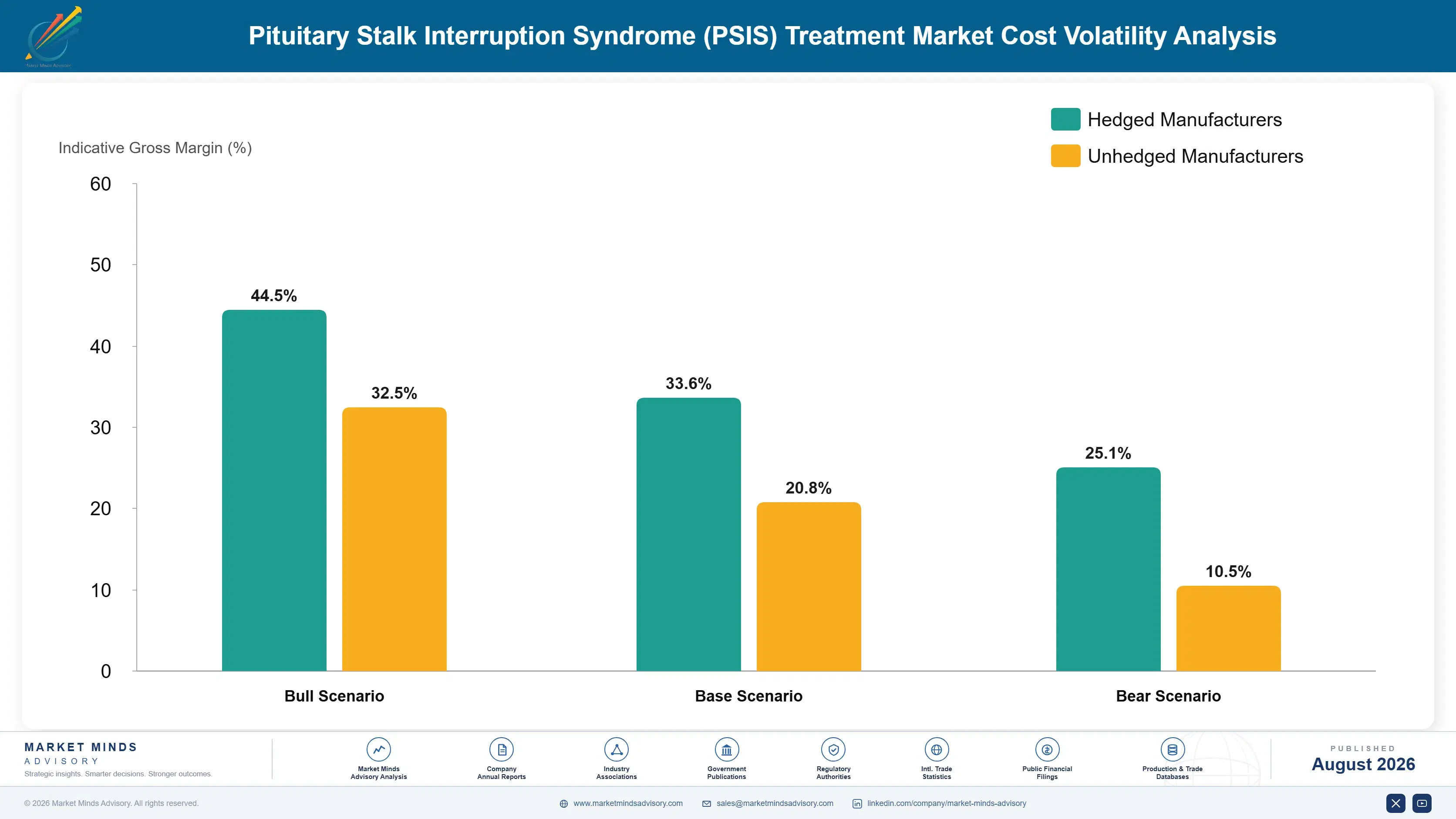
Recombinant protein manufacturing infrastructure, specialized long-acting delivery technology components, and cold chain distribution together represent roughly 43% of cost of goods sold across this category, with recombinant growth hormone manufacturing concentrated at a small number of specialized biologics facilities globally. Companies without vertically integrated production face materially higher exposure to this concentration today across the industry overall.
Biologics manufacturing and cold chain distribution costs both rose meaningfully during 2021 and 2022 amid broader biotechnology supply chain disruption, with company annual reports from major manufacturers confirming that input cost pressure remained elevated through much of the period before moderating somewhat through 2024 and 2025. Smaller developers absorbed a disproportionate share of this cost inflation given weaker supplier negotiating positions previously available to them overall.
Smaller specialty biotechnology developers without established manufacturing infrastructure face materially higher production cost exposure than large pharmaceutical companies who can negotiate favorable contract manufacturing terms given their broader production scale, creating a durable cost disadvantage for smaller developers pursuing this exceptionally small category. This cost disadvantage compounds the already limited commercial incentive facing smaller developers in this category today across most manufacturers studied.

Shared Manufacturing Capacity Arrangements
Smaller developers are pursuing shared or contract manufacturing arrangements with larger biologics producers to access production capacity without the capital investment required to build dedicated facilities for such a small patient population. This approach has become increasingly common as smaller developers seek to compete without major capital investment, particularly for companies pursuing this exceptionally small category.
Long-Acting Delivery Technology Licensing Partnerships
Companies without proprietary long-acting technology are pursuing licensing partnerships with established delivery technology developers, reducing development cost and timeline compared to building comparable technology independently. This approach has become increasingly common across smaller specialty pharmaceutical developers pursuing this exceptionally small category worldwide, positioning these companies favorably as long-acting formulation demand continues expanding steadily across the category.
Cold Chain Distribution Network Sharing
Smaller manufacturers are sharing cold chain distribution infrastructure with larger partners to reduce logistics costs, improving the economics of serving geographically dispersed but genuinely small patient populations. This sharing arrangement has become increasingly common as manufacturers seek to serve genuinely small patient populations efficiently, improving overall economics for companies serving this population globally each cycle.
Portfolio Architecture for Margin Defence
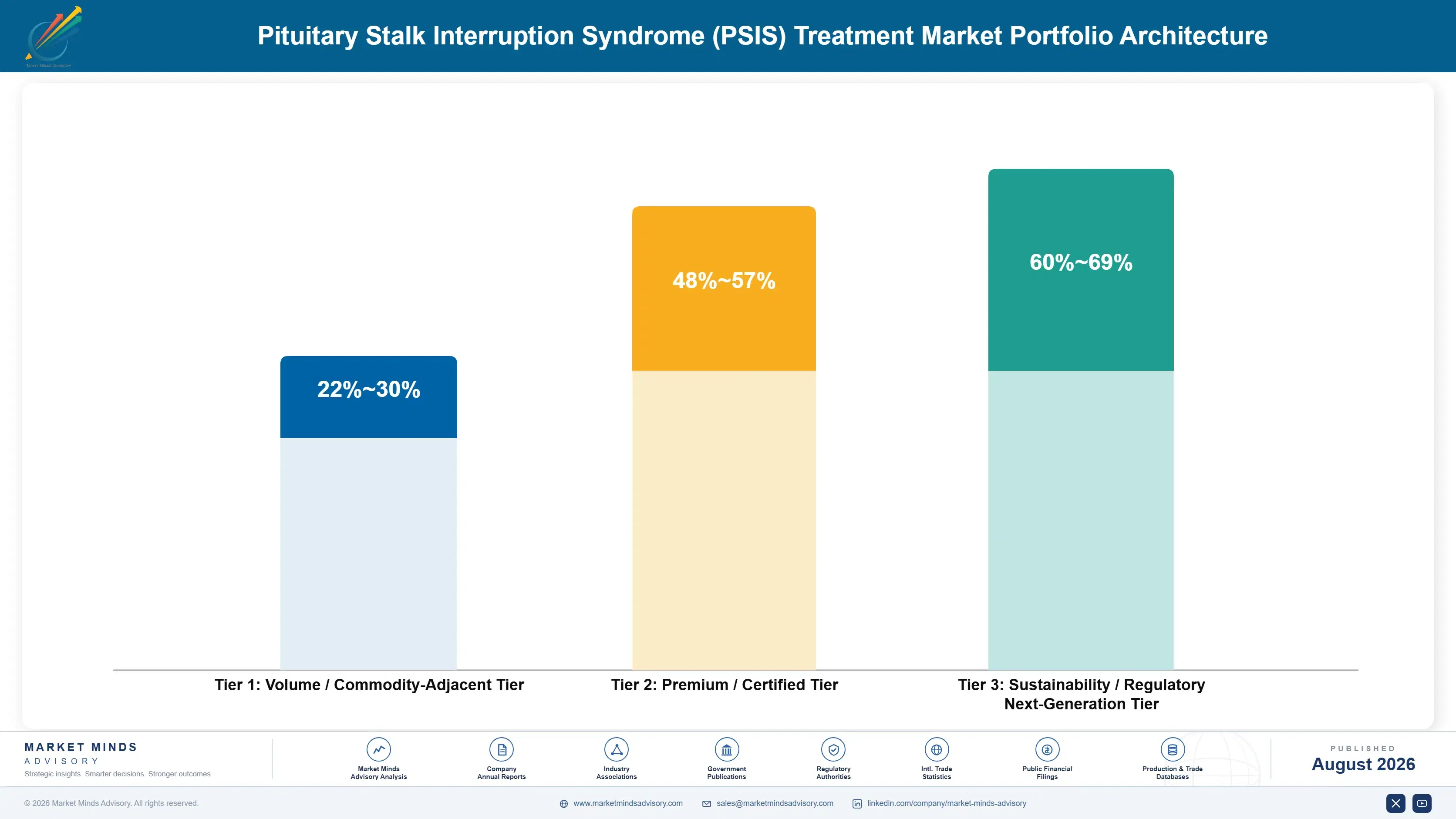
This market organizes into three commercial tiers spanning generic and biosimilar daily growth hormone formulations at the volume end, branded daily formulations and multi-hormone replacement therapies occupying the premium middle tier, and long-acting growth hormone formulations capturing the strongest margins at the top of the portfolio architecture overall. Companies increasingly structure research investment explicitly around this three-tier architecture given the category's small scale.
Volume and premium tiers pull companies in different directions: generic and biosimilar formulations sustain baseline treatment access in cost-constrained health systems, while branded and long-acting therapies deliver materially stronger margins that increasingly determine which companies can fund the clinical research this ultra-rare category requires going forward. Most companies now allocate a growing share of investment toward the premium and next-generation tiers. This explicit structuring helps allocate genuinely scarce research resources toward the highest-potential opportunities available.
The highest-value pools concentrate around long-acting growth hormone formulations sold under specialty centre partnerships and orphan drug pricing protection, where treatment convenience and clinical differentiation together sustain premium pricing power that generic daily formulations simply cannot match across comparable patient volume. Companies unable to compete in this tier increasingly struggle to sustain meaningful category leadership.
Volume / Commodity-Adjacent Tier
Generic and biosimilar daily growth hormone formulations sustaining baseline treatment access across cost-constrained health systems broadly. This tier represents the largest treated patient volume even though it generates comparatively modest revenue.
Gross Margin: 22-30%
Premium / Certified Tier
Branded daily formulations and multi-hormone replacement therapies sold under continuing orphan exclusivity protection across major markets. This tier currently funds much of the exploratory research pursued by smaller specialty developers.
Gross Margin: 48-57%
Sustainability / Regulatory / Next-Generation Tier
Long-acting growth hormone formulations commanding the strongest pricing power given treatment convenience and clinical differentiation. This tier increasingly determines which companies can sustain meaningful category leadership over time across the wider industry.
Gross Margin: 60-69%

High-value Sub-segments and Strategic Watch-out
Investigational Long-Acting Growth Hormone Formulations
The fastest-growing and highest-margin segment, combining genuine treatment convenience advantages with strong pediatric endocrinology adoption momentum, drawing intense investment across the sector. Companies expect this potential to keep attracting sustained investor attention despite the category's early stage, keeping investor attention high despite the segment's genuinely early clinical stage.
Gross Margin: 60-69%
Genetic and MRI Diagnostic Confirmation
Strong growth driven by falling imaging costs and expanding neonatal screening protocol inclusion that directly grows the addressable diagnosed population. Diagnostics companies increasingly view this segment as strategically important beyond direct testing revenue alone, since expanding the diagnosed population directly grows demand for downstream therapeutic products.
Gross Margin: 26-34%
Multi-Hormone Replacement Therapy
The volume core revenue segment sustaining near-term category economics given most confirmed patients require multiple concurrent hormone replacement therapies. This segment remains the category's most reliable near-term revenue source for most companies involved, even as gene therapy and biologic alternatives advance toward eventual commercial competition.
Gross Margin: 40-48%
Desmopressin Therapy
A strategic watch-out segment facing limited standalone growth potential, though it remains essential for patients with diabetes insipidus complications. Companies watch this segment mainly for signs of broader supportive care bundling opportunities emerging, since bundling could meaningfully improve per-patient revenue without separate approval pathways overall.
Gross Margin: 24-31%
Diagnosis-Driven Lifelong Treatment Pathways
Confirmed diagnosis functions as the annuity anchor for this entire category: once pituitary stalk interruption is confirmed through imaging, every diagnosed patient generates recurring growth hormone and multi-hormone replacement revenue for the remainder of their treatment life, typically spanning from early childhood through adulthood continuously. Companies increasingly price diagnostic testing competitively specifically to accelerate this downstream therapeutic relationship.
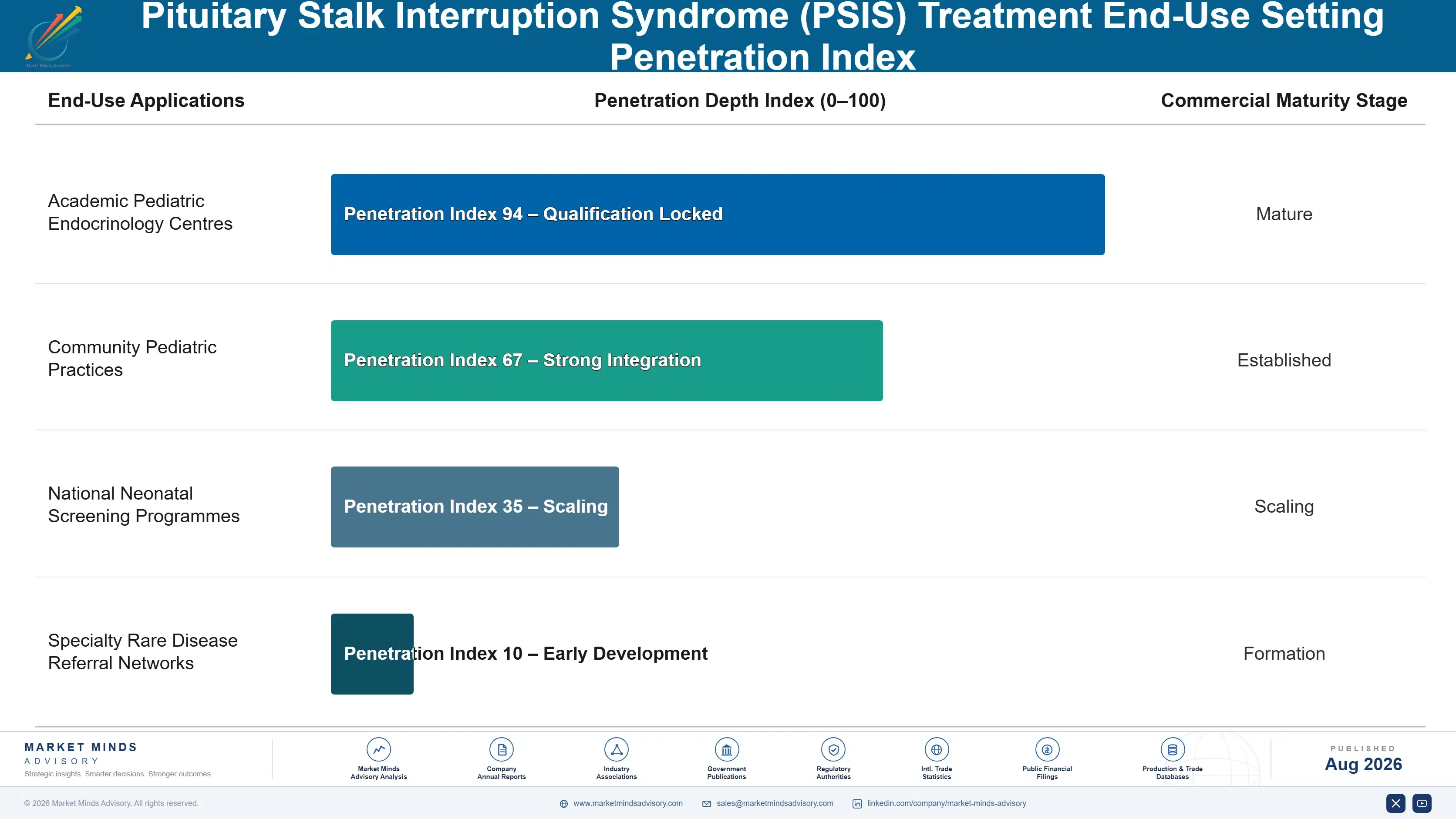
Adoption depth varies considerably by care setting: major academic pediatric endocrinology centres manage most confirmed cases and adopt long-acting formulations and advanced multi-hormone management protocols earliest, while community pediatric practices more often refer suspected cases to specialist centres immediately upon growth failure suspicion. Regional specialist infrastructure maturity further shapes which treatment options patients realistically encounter first. Companies tailor commercial and educational investment differently across each of these distinct care settings.
A generational shift is underway as pediatric endocrinologists trained during the neonatal screening era enter practice expecting structured imaging assessment as standard diagnostic practice, gradually normalizing earlier intervention that earlier-trained physicians historically could only pursue after clinical growth failure had already become apparent in affected children. Companies are adapting medical education investment accordingly to reach this newly informed physician cohort.

Where PSIS Treatment Economics Are Heading
These are among the four positions where our research anticipates prominent divergence between winners and laggards over the coming forecast period. Each is grounded in the demand model, the regulatory perimeter, and the announced capacity pipeline.
Neonatal screening protocols will keep expanding diagnosed prevalence
Companies advocating for expanded neonatal MRI screening protocols are directly growing the addressable diagnosed population that determines total category revenue, and this trajectory shows no sign of reversing given continued imaging cost declines and clinical familiarity growth. Screening protocol adoption will remain uneven across health systems rather than becoming universal within the current forecast period. Companies without meaningful screening advocacy investment risk missing the diagnostic volume growth that ultimately determines commercial opportunity in this ultra-rare category, regardless of how quickly individual national health systems act.
Long-acting formulations will keep displacing daily injection protocols
The long-acting growth hormone formulations currently gaining adoption represent the single largest near-term value creation opportunity in this category, since treatment convenience directly drives physician and caregiver preference for pediatric patients requiring lifelong hormone replacement therapy. Companies succeeding first in this transition would likely establish durable prescribing habits given the category's genuine treatment burden reduction advantage. Expect long-acting formulation adoption to remain the most closely watched indicator of this category's near-term commercial trajectory among specialty investors within this exceptionally small but closely watched rare disease category.
Diagnostic capability holds disproportionate influence over category growth
Diagnostics and imaging providers effectively control the gateway to this entire treatment category, since therapeutic revenue growth depends entirely on diagnostic confirmation rates that screening protocol advocacy and imaging technology investment directly influence across the broader healthcare system. This positioning gives diagnostic capability meaningful strategic leverage in an otherwise therapeutics-dominated rare disease commercial landscape overall. Expect diagnostic capability to increasingly determine which regions and health systems capture disproportionate value in this category rather than testing revenue captured from individual diagnostic procedures alone.
Coordinated care protocols will determine long-term patient retention
Companies and specialty centres investing in standardized multi-hormone management protocols are directly improving the coordinated care experience that determines whether confirmed patients remain engaged in treatment throughout their lifelong therapy journey across multiple hormone replacement categories simultaneously. This investment increasingly determines patient retention and treatment adherence more than any single product's clinical profile alone. Expect coordinated care protocol investment to become an increasingly explicit strategic priority across manufacturers and specialty care providers alike given the modest capital required relative to broader rare disease commercial investment.
Engagement Snapshot From the Field
A live engagement with an industry participant carrying material or product regulatory and market exposure ahead of a defining policy shift, showing how our research translates into a defensible multi-year portfolio strategy.
MARKET MINDS ADVISORY · CLIENT ENGAGEMENT SUMMARY
Pituitary Stalk Interruption Syndrome (PSIS) Treatment Producer Strategic Portfolio Review and Transition Roadmap 2026·Investment Scenario on Pituitary Stalk Interruption Syndrome (PSIS) Treatment Exposure Evaluation 2025-26
CLIENT PROFILE
The client is a national pediatric endocrinology specialty network evaluating whether to invest in clinical evidence generation supporting structured pituitary stalk imaging assessment inclusion in standard neonatal screening protocols, with projected annual diagnostic and treatment coordination revenue of approximately $6.8 million (client-reported, unverified by MMA) if protocol adoption succeeds within its target national market over the coming years.
STRATEGIC CHALLENGE
The network had limited internal rare disease policy advocacy experience and was uncertain whether the multi-year investment required to support screening protocol inclusion would generate sufficient long-term diagnostic and treatment coordination volume to justify the upfront clinical evidence generation and regulatory engagement costs involved given competing internal research and development priorities.
MMA APPROACH
MMA's team benchmarked comparable ultra-rare pediatric condition screening protocol campaigns, modeled projected diagnostic and treatment volume under successful and unsuccessful protocol inclusion scenarios, and assessed the network's competitive positioning relative to other specialty networks pursuing similar advocacy efforts simultaneously to inform the network's final investment decision process to present to the network's leadership team for review.
KEY FINDINGS
- Comparable ultra-rare pediatric condition screening protocol campaigns typically required three to five years from initial advocacy investment to formal protocol adoption approval.
- Successful protocol inclusion was projected to generate diagnostic volume sufficient to recover advocacy investment within approximately twenty months of formal adoption taking effect.
- Partnering with an established rare disease patient advocacy organization meaningfully improved historical campaign success rates compared to specialty networks pursuing advocacy independently.
- Early evidence generation investment positioned the network favorably relative to competitors who had not yet prioritized this specific ultra-rare condition for advocacy investment.
CLIENT PROFILE
The client is a national pediatric endocrinology specialty network evaluating whether to invest in clinical evidence generation supporting structured pituitary stalk imaging assessment inclusion in standard neonatal screening protocols, with projected annual diagnostic and treatment coordination revenue of approximately $6.8 million (client-reported, unverified by MMA) if protocol adoption succeeds within its target national market over the coming years.
STRATEGIC CHALLENGE
The network had limited internal rare disease policy advocacy experience and was uncertain whether the multi-year investment required to support screening protocol inclusion would generate sufficient long-term diagnostic and treatment coordination volume to justify the upfront clinical evidence generation and regulatory engagement costs involved given competing internal research and development priorities.
MMA APPROACH
MMA's team benchmarked comparable ultra-rare pediatric condition screening protocol campaigns, modeled projected diagnostic and treatment volume under successful and unsuccessful protocol inclusion scenarios, and assessed the network's competitive positioning relative to other specialty networks pursuing similar advocacy efforts simultaneously to inform the network's final investment decision process to present to the network's leadership team for review.
KEY FINDINGS
- Comparable ultra-rare pediatric condition screening protocol campaigns typically required three to five years from initial advocacy investment to formal protocol adoption approval.
- Successful protocol inclusion was projected to generate diagnostic volume sufficient to recover advocacy investment within approximately twenty months of formal adoption taking effect.
- Partnering with an established rare disease patient advocacy organization meaningfully improved historical campaign success rates compared to specialty networks pursuing advocacy independently.
- Early evidence generation investment positioned the network favorably relative to competitors who had not yet prioritized this specific ultra-rare condition for advocacy investment.
RECOMMENDED STRATEGY
Phase 1: Phase 1 (Months 1-9): Partner with a patient advocacy organization and begin clinical evidence generation supporting the case for screening protocol inclusion. Phase 2: Phase 2 (Months 10-24): Engage hospital system and clinical guideline committee decision-makers with accumulated evidence while building physician awareness broadly. Phase 3: Phase 3 (Months 25-42): Pursue formal protocol adoption approval and prepare diagnostic infrastructure for anticipated volume increase following inclusion and finalize commercial rollout planning.
OUTCOME
The network secured formal advisory meetings with several major hospital system decision-makers within the recommended timeline, with protocol inclusion consideration now advancing through formal clinical guideline review (client-reported, unverified by MMA) with a formal decision expected within the coming twelve months that would determine the network's next funding allocation cycle.
Frequently Asked Questions
Foundational context covering the market sizes, CAGR, scope, country, region and competition that inform every finding below. This section is provided to cover basics and most often pre-purchase conversations, answered from the MMA Primary Research Dataset.
What is the current size of the Pituitary Stalk Interruption Syndrome (PSIS) Treatment Market?
The global PSIS treatment market was valued at approximately $0.15 billion in 2025. This reflects the condition's genuine rarity alongside a commercially trackable diagnostic and therapeutic category.
How large will the Pituitary Stalk Interruption Syndrome (PSIS) Treatment Market be by 2036?
The market is projected to reach approximately $0.50 billion by 2036. This reflects expanding neonatal screening and long-acting growth hormone formulation adoption commercialization across major regulatory jurisdictions worldwide.
What is the CAGR for the Pituitary Stalk Interruption Syndrome (PSIS) Treatment Market 2026 to 2036?
The market is expected to grow at a compound annual growth rate of 11.5% between 2026 and 2036. This reflects expanding diagnostic capability and formulation innovation.
Which segment is growing fastest?
Investigational long-acting growth hormone formulations are the fastest-growing segment, expanding at approximately 19.5% annually. This reflects rising pediatric endocrinology adoption of weekly dosing options for pediatric patients requiring lifelong hormone replacement therapy.
Who are the major companies in the Pituitary Stalk Interruption Syndrome (PSIS) Treatment Market?
Leading companies include Novo Nordisk, Pfizer, Eli Lilly, Merck KGaA, and Ascendis Pharma. Together they account for roughly 78% of global branded revenue across this ultra-rare diagnostic and therapeutic category.
Which country is growing fastest?
China is the fastest-growing major market at an estimated 16.5% CAGR, driven by rapidly expanding neonatal imaging capacity and pediatric endocrinology specialist training within its own population, a documented clinical pattern.
Report Segmentation Architecture
The full report scope spans multiple orthogonal segmentation dimensions, with cross-tabulated demand data provided for each dimension pair. Coverage extends further to regional breakdowns, trend trajectories, and the competitive detail needed to support segment-level decision-making.
By Treatment and Diagnostic Modality
- Growth Hormone Replacement Therapy
- Genetic and MRI Diagnostic Confirmation
- Multi-Hormone Replacement Therapy
- Desmopressin Therapy
- Specialized Endocrine Monitoring Services
- Investigational Long-Acting Growth Hormone Formulations
By End-Use Setting
- Academic Pediatric Endocrinology Centres
- Community Pediatric Practices
- National Neonatal Screening Programmes
- Specialty Rare Disease Referral Networks
By Commercial Dimension
- Direct Specialty Pharmacy Distribution
- National Health System Reimbursement
- Patient Advocacy Organization Channels
- Clinical Research and Registry Programmes
By Region
- North America
- Western Europe
- East Asia
- South Asia and Pacific
- Latin America
- Middle East and Africa
- Eastern Europe
Scope, Methodology, and Coverage
Every figure in this report is reproducible from documented input assumptions. The scope below maps the historical period, the forecast horizon, the segmentation dimensions, and the countries covered, alongside the underlying primary and qualitative methodology.
Historical Period
2020 to 2025
Forecast Period
2026 to 2036
Base Year
2025 (USD billions; MMA Primary Research Dataset, August 2026)
Market Definition
This report covers diagnostic confirmation, growth hormone replacement therapy, and multi-hormone endocrine replacement therapy specific to pituitary stalk interruption syndrome, an ultra-rare congenital condition causing hypothalamic-pituitary axis dysfunction. It excludes general growth hormone deficiency unrelated to confirmed pituitary stalk interruption and adult-onset pituitary disorders with different underlying etiology.
Quantitative Units
USD billions (current prices); diagnosed patient volume; average annual cost per patient
Segmentation Dimensions
By Treatment and Diagnostic Modality; By End-Use Setting; By Commercial Dimension; By Region
Regions Covered
North America, Western Europe, East Asia, South Asia and Pacific, Latin America, Middle East and Africa, Eastern Europe
Countries Covered
USA, China, Germany, France, UK, Japan, South Korea, India, Australia, Canada, Brazil, Mexico, Indonesia, Vietnam, Thailand, Malaysia, UAE, Saudi Arabia, South Africa, Nigeria, Turkey, Poland, Netherlands, Italy, Spain, Sweden, Switzerland, Argentina, Colombia, Singapore, and additional markets relevant to this sector
Key Companies Profiled
Novo Nordisk A/S, Pfizer Inc., Eli Lilly and Company, Merck KGaA, Ascendis Pharma A/S, Sandoz Group AG, Teva Pharmaceutical Industries Ltd., LG Chem Ltd., JCR Pharmaceuticals Co., Ltd., Genexine Inc., Prolong Pharmaceuticals LLC, Amring Pharmaceuticals Inc., Ferring Pharmaceuticals, OPKO Health Inc., Versartis Inc., GeneScience Pharmaceuticals Co., Ltd., Kexing Biopharm Co., Ltd., Anhui Anke Biotechnology (Group) Co., Ltd., Hangzhou Jiuyuan Gene Engineering Co., Ltd., Daewoong Pharmaceutical Co., Ltd.
Quantitative Methodology
Primary survey, n=3,800 respondents, Q4 2025, six countries; demand-side model with trade association cross-validation
Qualitative Methodology
47 expert interviews, Q4 2025; applied to validate demand model assumptions, identify emerging dynamics, and assess competitive positioning
Report Format
PDF and XLSX data workbook (Word format preview document)
Publisher
Market Minds Advisory
Report Code
MMA-2026-HLT-130
Published
August 2026
Contact
sales@marketmindsadvisory.com | www.marketmindsadvisory.com
Purchase the full Pituitary Stalk Interruption Syndrome (PSIS) Treatment Market Report (2026 to 2036).
The full report provides detailed modality-level segmentation, screening protocol tracking, and country-level diagnostic infrastructure analysis across all seven regions covered in this study. It includes company-level competitive benchmarking based on formulation innovation and specialty centre partnership reach. Subscribers receive quarterly updates tracking new screening protocol decisions and long-acting formulation clinical development milestones as they occur. A companion dataset provides diagnosed patient volume estimates by region for detailed market sizing purposes A dedicated analyst contact is also available to support custom data requests beyond the standard deliverable scope provided.
Modality-level segmentation breakdown by treatment category
Screening protocol tracking and analysis service
Country-level diagnostic infrastructure analysis and comparison
Company competitive benchmarking scorecards and overview report
Quarterly formulation and screening milestone updates
Diagnosed patient volume dataset by region
Built For The People Who Decide
From boardroom strategy to bench-side execution, this report is read cover-to-cover by leaders shaping the next decade of their industry, turning demand scenarios, market dynamics and valuation benchmarks into decisions.
CXOs/ Presidents/ VPs/ Managers
M&A and Corporate Development
Strategy Teams and R&D Heads
Procurement and Product Directors
Regulatory and Compliance Leaders
Investor Relations and Equity Analysts