Market Minds Advisory
Phenylketonuria Therapeutics Market

Phenylketonuria Therapeutics Market: From Dietary Restriction to Pharmacological Management

Specialty metabolic disease centers are converting treatment protocols from dietary restriction toward enzyme substitution therapy as clinical guidelines shift and gene therapy candidates advance through late-stage trials across major pharmaceutical markets worldwide.

Lead Analyst

Alice Ballenger

Published

September 2026

Make Smarter Decisions with Customized Research Insights

Request a free sample report and evaluate market opportunities, growth trends, and competitive dynamics relevant to your business needs.

2025 MARKET VALUE$1.2BMarket Size 2025
2036 FORECAST VALUE$3.3BBase Case , 2026 to 2036
CAGR 2026 TO 20369.5 %Bull 10.8% / Bear 8.2%
INCREMENTAL OPPORTUNITY$1.9BNet 10- year value creation
EXPANSION MULTIPLE2.48x2036 value over 2026 base
Strategic Levers
M&A Pipeline
Regional Outlook
Country Rankings
Competitive Intelligence
Segmental Deep-dive
Call-Us : 91 93563 13602

Executive Snapshot and Market Trajectory

Phenylketonuria treatment is shifting rapidly from lifelong dietary restriction toward enzyme substitution and emerging gene therapy candidates, as newborn screening programs catch more cases earlier and specialty metabolic clinics push patients toward pharmacological management over formula alone across most developed healthcare systems and rare disease centers.
Specialty metabolic disease centers and rare disease pharmaceutical developers now drive treatment innovation, favoring enzyme substitution therapy and engineered enzyme candidates over medical food alone as clinical data demonstrates meaningful dietary phenylalanine tolerance improvement. North America and Western Europe together account for the largest share of therapeutic spending, with orphan drug pricing structures in the United States and comprehensive newborn screening programs across Germany, France, and the United Kingdom anchoring diagnosis and treatment access.
A small number of specialty pharmaceutical and medical nutrition companies dominate global supply, competing on enzyme therapy efficacy and medical food palatability rather than price alone across most reimbursement systems. Regulatory approval timing for gene therapy candidates and next-generation enzyme therapies is reshaping competitive rankings meaningfully, rewarding developers that moved fastest through orphan drug clinical trial pathways across major pharmaceutical markets and specialty metabolic disease centers worldwide.
Market Definition
The Phenylketonuria Therapeutics Market covers pharmaceutical products, enzyme substitution therapies, and medical foods used to manage phenylketonuria, a rare inherited metabolic disorder requiring lifelong phenylalanine restriction or pharmacological intervention. It excludes newborn screening diagnostic tests, general infant formula without phenylalanine restriction, and gene therapy products not yet commercially approved for phenylketonuria treatment.
Base Year Value
$1.2B in 2025 (MMA Primary Research Dataset, August 2026)
Forecast Period
2026 to 2036, eleven discrete annual values
CAGR
9.5% base case. Bull 10.8%. Bear 8.2%.
Fastest Growth Segment
Gene Therapy Candidates: 32.0% CAGR
Fastest Growth Country
China: 14.0% CAGR
Fastest Growth Region
South Asia and Pacific: 11.5% CAGR
Largest Region
North America: 32% of 2025 global value
Market Leaders
BioMarin Pharmaceutical, Nestle Health Science, Danone Nutricia, Applied Pharma Research, Synlogic. Source: MMA Analysis, July 2026.
Primary Survey
n=3,800 procurement and R&D decision-makers, Q4 2025, six countries
Methodology
Demand-side build-up, cross-validated against public data, 47 expert interviews

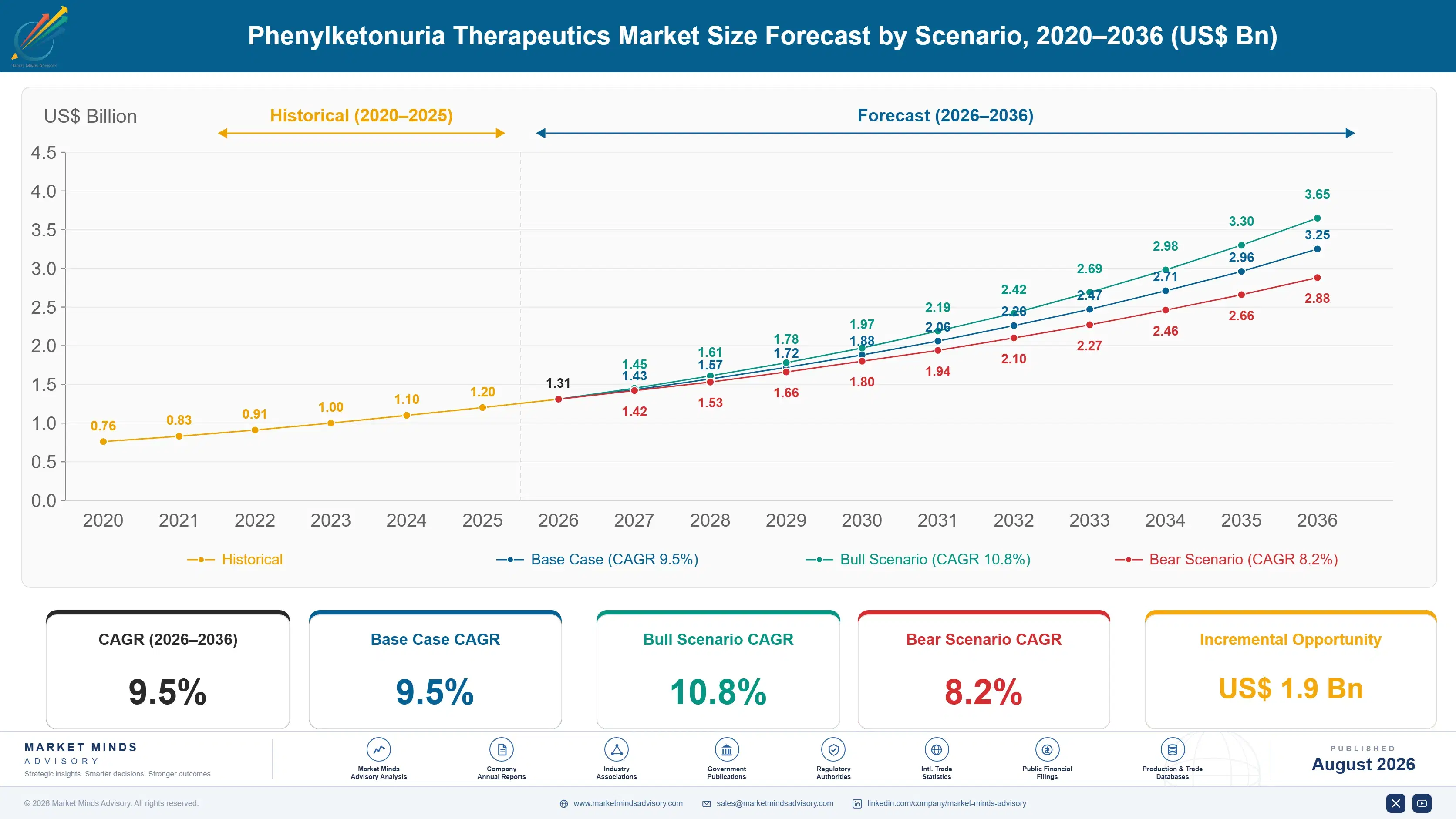
Phenylketonuria Therapeutics Market Forecast Scenarios

phenylketonuria-therapeutics-market-size-forecast-scenario-1787306568576
Global phenylketonuria therapeutics revenue grew steadily between 2020 and 2025 as enzyme substitution therapy adoption expanded beyond early clinical trial populations into broader specialty metabolic clinic use across most developed markets and rare disease treatment networks, lifting the historical growth rate above eight percent annually as more diagnosed patients pursued pharmacological management over dietary restriction alone.
The base case assumes continued conversion from dietary-only management toward enzyme substitution therapy across specialty metabolic centers, expanding newborn screening coverage across East Asian markets, and rising gene therapy pipeline progress tied to ongoing clinical trials and regulatory engagement. These three mechanisms together support base-case growth near the middle of the forecast band through 2036, with enzyme therapy capturing an increasing share of new therapeutic spending across most developed rare disease markets.
A bull scenario assumes accelerated gene therapy approval alongside expanded newborn screening coverage across several emerging markets, pushing growth toward the top of the forecast band through the decade. A bear scenario assumes slower orphan drug reimbursement negotiations and delayed gene therapy clinical trial results, holding conversion timelines back and growth closer to the forecast floor instead.

From Dietary Restriction to Pharmacological Management

The phenylketonuria therapeutics market is transitioning from a dietary management model, largely unchanged for decades, toward pharmacological intervention as enzyme substitution therapy demonstrates meaningful dietary phenylalanine tolerance improvement in real-world clinical practice across most specialty metabolic centers and referring pediatric clinics. Specialty metabolic disease centers increasingly frame treatment goals around normalized diet and quality of life rather than strict lifelo
MARKET CONCENTRATION78%Combined revenue share held by top five rare disease companies
AVERAGE ANNUAL THERAPY COST$250,000 per patientBlended cost across enzyme substitution and medical food regimens
TOP ADOPTING COUNTRYUSA, 36% shareShare of global therapeutic spending concentrated in one country
ENZYME THERAPY PENETRATION24% of patientsShare of diagnosed patients now using enzyme substitution therapy
NEWBORN SCREENING COVERAGE82% of birthsShare of global births covered by phenylketonuria screening programs
DIAGNOSIS TO TREATMENT CYCLE6 weeksTypical time between newborn screening and treatment initiation start
Commercial character is defined by extremely high per-patient annual therapy cost reflecting orphan drug pricing structures, so revenue concentrates disproportionately among the small number of companies with approved enzyme therapy products already reaching clinical practice worldwide and across major reimbursement systems. Rare disease patient advocacy organizations and specialty metabolic physicians increasingly influence treatment protocol standardization, shaping how quickly new therapies reach broader adoption beyond early clinical trial centers.
Regulatory approval timing for gene therapy candidates and next-generation enzyme therapies is reshaping competitive rankings meaningfully, rewarding developers that moved fastest through orphan drug clinical trial pathways while expanding newborn screening coverage keeps growing the diagnosed patient population steadily as more countries adopt comprehensive screening programs across their entire national healthcare systems and reimbursement frameworks.
"This is one of the few rare disease categories where the patient community has more clinical sophistication than most general practitioners."
Director, Rare Disease and Specialty Pharmaceuticals Practice · MMA Rare Disease

Market Trends

Gene Therapy Candidates Advancing Through Late-Stage Clinical Trials

Gene therapy candidates aiming to restore functional phenylalanine hydroxylase enzyme activity are progressing through late-stage clinical trials, offering the prospect of durable or potentially curative treatment rather than lifelong dietary restriction or daily enzyme injection. Early trial data showing sustained blood phenylalanine reduction after single-dose administration has generated significant patient community interest, particularly among adults who have managed the condition through dietary restriction alone for decades. Roughly 24 percent of diagnosed patients in leading markets now use enzyme substitution therapy, up from near zero a decade earlier, and developers are racing to complete pivotal trials for full approval.
Market Impact: Screening coverage exceeds 82 perce

Newborn Screening Expansion Widens Diagnosed Patient Population

National newborn screening programs are expanding coverage across emerging markets that previously lacked systematic phenylketonuria testing, catching cases at birth rather than after developmental delay symptoms emerge months or years later. This screening expansion is fundamentally changing the addressable patient population, since early diagnosis and treatment initiation prevents the severe intellectual disability that untreated phenylketonuria causes. Global newborn screening coverage is expected to add several hundred thousand newly diagnosed infants over the forecast period, sustaining therapeutic demand growth even where developed market screening coverage already approaches saturation across most established healthcare systems.
Market Impact: 38 percent of eligible patients tre

Market Opportunities and Growth Drivers

Expanding Newborn Screening Programs Across Emerging Markets

National health ministries across emerging markets are adding phenylketonuria to mandatory newborn screening panels, following World Health Organization guidance and demonstrated cost-effectiveness of early detection versus lifetime disability care costs avoided. This screening expansion catches cases immediately after birth rather than after developmental delay symptoms become apparent, dramatically improving long-term patient outcomes and expanding the treatable diagnosed population. Newborn screening coverage now exceeds 82 percent of global births in countries with formal programs, up meaningfully from a smaller share a decade earlier, directly expanding the addressable treatment population for therapeutics developers.
Market Impact: Treatment initiation delayed roughl

Clinical Guideline Updates Favor Earlier Pharmacological Intervention

Updated clinical treatment guidelines from major metabolic disease professional societies increasingly recommend enzyme substitution therapy earlier in the treatment pathway rather than reserving it for patients who have already failed dietary management alone, following outcomes data showing improved quality of life. This guideline shift removes a major adoption barrier for physicians previously hesitant to prescribe expensive orphan therapies to relatively stable dietary-managed patients. Roughly 38 percent of eligible diagnosed patients in leading reimbursement markets now receive enzyme therapy within two years of eligibility, up from a much smaller share five years earlier, directly lifting therapeutic spending.
Market Impact: Adults switch 15 points less often

Market Restraints and Challenges

Extreme Orphan Drug Pricing Strains Payer Budgets

Enzyme substitution therapy carries annual treatment cost reaching several hundred thousand dollars per patient, and payers increasingly scrutinize orphan drug pricing given the growing number of rare disease therapies competing for limited specialty pharmacy budget allocation. The root cause is a development cost structure where orphan drug developers must recoup substantial clinical trial investment across a necessarily small patient population, driving per-patient pricing far above conventional pharmaceuticals. Payers are exploring outcomes-based contracting and value-based pricing models to soften budget strain, but prior authorization delays still push treatment initiation back by roughly 3 months on average.
Market Impact: Enzyme therapy reaches 24 percent s

Adult Patient Dietary Adherence Habits Resist Switching

Adult patients who have successfully managed phenylketonuria through strict dietary restriction for decades often resist switching to pharmacological therapy despite eligibility, citing established routine and uncertainty about long-term therapy side effects and cost. The root cause is limited long-term real-world outcomes data for enzyme substitution therapy relative to the multi-decade track record of dietary management, leaving some patients and physicians cautious about switching a stable treatment approach. Patient advocacy organizations are expanding peer support programs to address this hesitancy, but adult switching rates remain roughly 15 percent below pediatric patient rates.
Market Impact: Adds roughly 300,000 newly diagnose
4 additional market trends, 4 additional growth drivers, and 4 additional restraints and challenges are covered in the full report. Contact sales@marketmindsadvisory.com to access the complete intelligence.

Segment CAGR and Growth Architecture

Segmentation follows therapeutic modality and product type, the dimension that most directly determines development pathway, regulatory approval timeline, and reimbursement structure across specialty metabolic disease treatment centers, academic research hospitals, and referring pediatric clinics worldwide today. This lens captures where therapeutic spending is shifting fastest during the ongoing transition from dietary management toward pharmacological intervention.
phenylketonuria-therapeutics-market-market-share-analysis-1787306569113

Gene Therapy Candidates

Gene therapy candidates are the fastest-growing product category, expanding at roughly 32 percent annually from a small clinical trial base as developers advance late-stage candidates aiming to restore functional phenylalanine hydroxylase enzyme activity through a single durable treatment. Adoption is concentrated among leading academic metabolic disease research centers first, with broader specialty clinic access following as pivotal trial data accumulates and regulatory approval progresses. Developers are racing to complete clinical trials and secure manufacturing capacity ahead of anticipated approval, while patient advocacy organizations increasingly treat gene therapy as a realistic near-term treatment horizon rather than distant research. Clinical trial data continues expanding across broader patient age ranges, further widening the eligible population for this segment specifically.
CAGR 32.0%

Enzyme Substitution Therapy

Enzyme substitution therapy forms the second-fastest-growing category at roughly 18 percent annually, driven by expanding clinical guideline support for earlier pharmacological intervention and growing physician confidence following years of accumulated real-world outcomes data across major markets. This therapy offers meaningful dietary phenylalanine tolerance improvement without requiring the strict lifelong restriction that dietary management alone demands, appealing to patients weighing quality of life against daily injection burden. Specialty metabolic centers increasingly position enzyme therapy as a standard treatment option rather than a last-resort intervention after dietary management failure. Growth trails gene therapy candidates because the eligible patient population, while broader today, faces more established medical food competition on cost and convenience.
CAGR 18.0%
Full segment breakdown across 6 segments available in the complete report.

Regional Architecture and Country Demand Map

Therapeutic spending concentrates in markets with comprehensive newborn screening programs and orphan drug reimbursement infrastructure, with North America and Western Europe together accounting for more than half of global revenue, while adoption elsewhere tracks screening coverage expansion and specialty center density closely across the decade.

North America

North America takes the largest regional share, anchored by the United States, where orphan drug pricing structures and specialty pharmacy benefit design support premium therapeutic spending that few other markets can match. Comprehensive newborn screening coverage across all fifty states catches nearly every diagnosed case at birth, feeding a well-established referral pathway into specialty metabolic disease treatment centers concentrated at major academic medical centers. Regulatory approval for new enzyme substitution and gene therapy candidates typically arrives first in the United States among major markets, letting developers capture the earliest adopter revenue before competitors launch comparable products elsewhere globally. Canada contributes steady incremental volume, though its smaller specialty referral network keeps growth somewhat more modest than the dominant United States market.
Share: 32% | CAGR: 10.5% (2026 to 2036)

Western Europe

Western Europe combines comprehensive public healthcare coverage for orphan therapies with somewhat slower enzyme substitution therapy adoption than North America, reflecting national health technology assessment processes in Germany, France, and the United Kingdom that evaluate cost-effectiveness methodically before granting reimbursement approval nationwide and quite consistently across most cases. Germany's large specialty metabolic disease network anchors regional therapeutic spending, while the United Kingdom's National Health Service manages access through structured commissioning processes that periodically constrain early access despite established clinical demand and physician support. Nordic countries maintain some of the highest newborn screening coverage rates globally, reflecting decades-long commitment to comprehensive metabolic disease detection programs across most of the region consistently and reliably.
Share: 25% | CAGR: 8.0% (2026 to 2036)
Regional intelligence for 5 additional markets available in the complete report: East Asia, South Asia and Pacific, Latin America, Middle East and Africa, Eastern Europe. Contact sales@marketmindsadvisory.com.
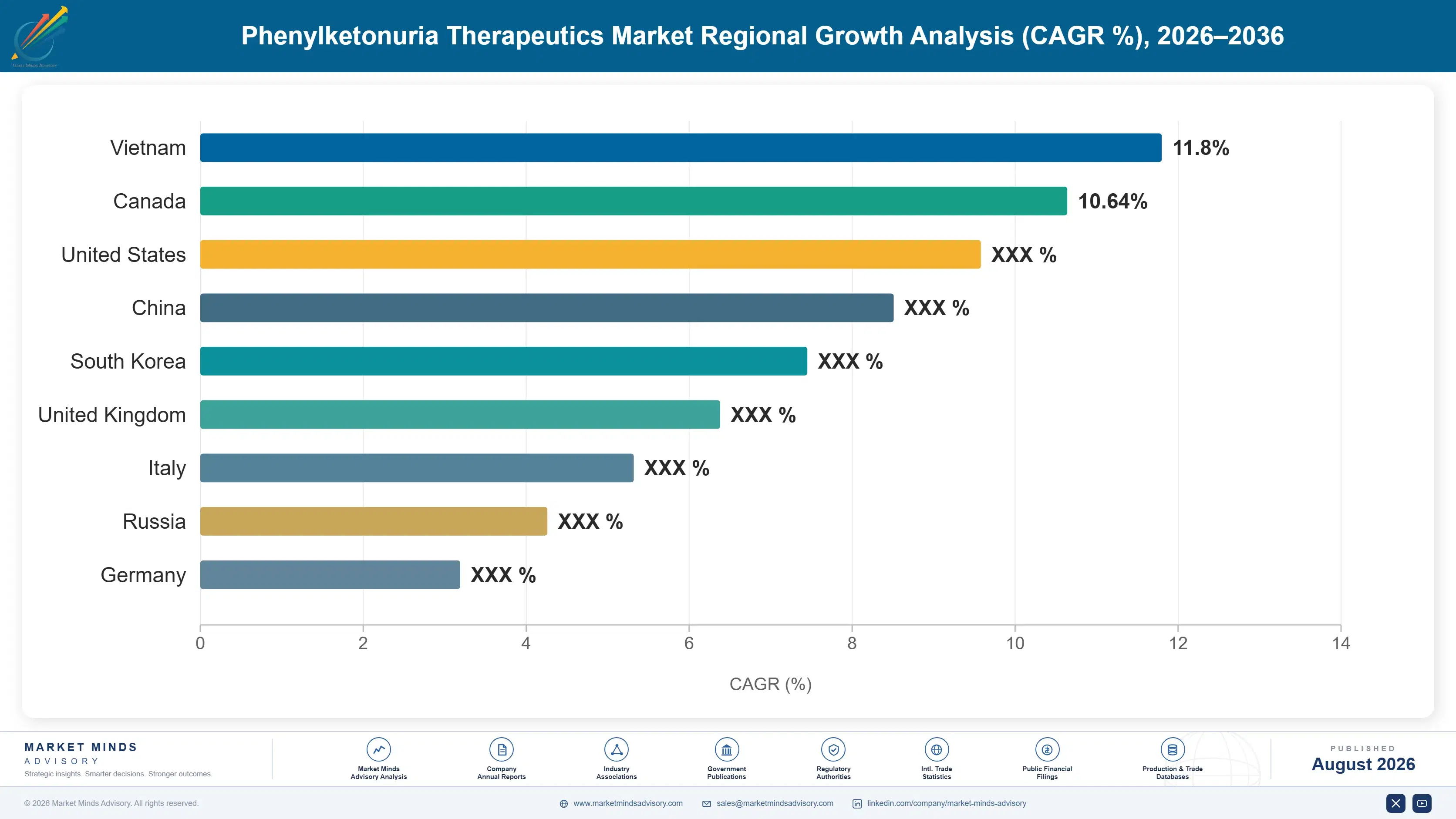
phenylketonuria-therapeutics-market-country-cagr-analysis-1787306569628

Orphan Drug Access Capture and Guideline Influence

Developer revenue growth in this market depends heavily on converting specialty metabolic center relationships into recurring enzyme therapy prescribing volume, since orphan drug pricing makes payer access negotiation as important as clinical efficacy itself in most reimbursement systems. These four levers describe where therapeutic revenue is concentrating fastest during this shift toward pharmacological treatment.

Specialty Metabolic Center Prescribing Relationship Strategy

Winning the trust of specialty metabolic disease physicians at leading academic treatment centers typically locks in years of recurring prescribing volume, since switching therapies requires new clinical monitoring and outcomes tracking that physicians rarely pursue without a compelling efficacy or safety reason to change protocols. Developers prioritizing rapid clinical education and patient support program investment are capturing prescriber loyalty that compounds meaningfully as referral volume scales over subsequent years. Prescriber retention rates have climbed to roughly 90 percent among leading developers as clinical familiarity and outcomes confidence deepen with each treated patient.
Market Impact: Prescriber retention rates reach ro

Payer Value-Based Access Contracting Expansion Strategy

Negotiating outcomes-based contracts with major payers, where reimbursement ties partly to demonstrated blood phenylalanine reduction, lets developers justify premium orphan drug pricing while reducing payer budget uncertainty about therapy effectiveness across their covered patient population and formulary decisions. Value-based contracts now cover roughly 34 percent of enzyme therapy prescriptions among major payers, up meaningfully from a smaller share three years earlier, and typically accelerate prior authorization approval timelines considerably across most participating plans. Developers able to demonstrate consistent real-world outcomes data capture a disproportionate share of this expanding contracted prescribing base.
Market Impact: Value-based contracts now cover rou

Clinical Guideline Committee Engagement Growth Strategy

Engaging directly with major metabolic disease professional society guideline committees to demonstrate clinical evidence quality accelerates formal treatment guideline inclusion, since physicians increasingly prescribe according to published society recommendations rather than individual product marketing claims alone across most specialty referral networks and academic treatment centers. Developers investing early in guideline committee engagement build durable prescribing advantage that persists even as competing products enter the market later with comparable technical specifications and outcomes data. Guideline-recommended therapies see prescribing volume roughly 40 percent higher than non-recommended alternatives within two years of guideline publication.
Market Impact: Guideline-recommended therapies see

Emerging Market Newborn Screening Partnership Strategy

Partnering with national health ministries to support newborn screening program expansion in emerging markets ahead of competitors establishes first-mover advantage in the resulting diagnosed patient pipeline, since many emerging markets are building systematic screening capability for the first time rather than expanding existing programs. Developers investing in local clinical education and regulatory registration tailored to specific national health authorities capture a disproportionate share of newly diagnosed patient relationships. Emerging market prescribing volume is growing roughly 21 percent annually, outpacing mature market growth meaningfully as screening coverage expands and diagnosis rates increase across these developing healthcare systems.
Market Impact: Emerging market volume grows roughl

Who Controls the Margin Pool

The top five companies by revenue share hold roughly 78 percent combined, a very high concentration level reflecting the extreme regulatory and clinical trial barriers facing new entrants in orphan disease pharmaceuticals. BioMarin Pharmaceutical and Nestle Health Science lead through combined enzyme therapy portfolio strength and medical food distribution reach, with a clear gap separating them from smaller emerging biotech challengers.
Current competitive activity centers on three dimensions: racing gene therapy candidates through late-stage clinical trials toward regulatory approval, expanding specialty metabolic physician clinical education and patient support programs, and negotiating value-based payer contracts to justify premium orphan drug pricing. Published clinical guideline endorsement increasingly separates trusted developers from newer entrants still building outcomes evidence.

Emerging pressure comes from smaller specialized biotech developers advancing gene therapy or next-generation enzyme engineering candidates, gradually winning academic research center partnerships through promising early trial data despite lacking the broader commercial infrastructure of established competitors. Rankings could shift meaningfully if a gene therapy candidate secures approval ahead of competitors, since a durable or curative treatment option would fundamentally reshape prescribing patterns across the entire specialty metabolic disease treatment landscape.
phenylketonuria-therapeutics-market-company-positioning-matrix-1787306570148

Competitive Moat and Risk Dimensions

BIOMARIN PHARMACEUTICAL

Moat: Broadest Enzyme Therapy Portfolio

BioMarin Pharmaceutical offers both the phenylalanine hydroxylase stabilizer and the enzyme substitution therapy simultaneously, letting specialty metabolic centers standardize on one vendor across the full pharmacological treatment pathway regardless of disease severity a given patient presents. This portfolio breadth reduces switching risk for treatment center accounts and gives BioMarin pricing leverage across multiple product categories that narrower-focused competitors cannot match.
BIOMARIN PHARMACEUTICAL

Risk: Slower Gene Therapy Pipeline Progress

BioMarin's gene therapy candidate for phenylketonuria trails specialized biotech developers who can iterate candidate development faster without the organizational complexity of a diversified rare disease portfolio, potentially ceding leadership in the fastest-growing product category to nimbler competitors focused entirely on this single emerging treatment modality and its evolving regulatory pathway.
NESTLE HEALTH SCIENCE

Moat: Deep Medical Food Distribution Reach

Nestle Health Science has invested heavily in specialty medical food manufacturing and distribution infrastructure spanning dietary formula, supplements, and low-protein foods, building a comprehensive dietary management offering that pharmaceutical-only competitors cannot replicate quickly regardless of underlying enzyme therapy efficacy or pricing competitiveness in the broader category.
NESTLE HEALTH SCIENCE

Risk: Limited Pharmaceutical Pipeline Depth

Nestle Health Science's core strength in medical food and nutrition products leaves it without a meaningful presence in the higher-margin enzyme substitution and gene therapy segments driving the category's fastest growth, potentially limiting long-term revenue upside relative to pharmaceutical-focused competitors expanding into these newer treatment modalities.

Players Tracked

Prominent Players

BioMarin Pharmaceutical
Nestle Health Science
Danone Nutricia
Applied Pharma Research
Synlogic

Other Key Players

Homology Medicines
Moderna
Selecta Biosciences
Codexis
Ultragenyx Pharmaceutical
Ajinomoto Cambrooke
Vitaflo International
Mead Johnson Nutrition
Abbott Nutrition
Solace Nutrition
Firstplay Dietary Foods
Theriva Biologics
PTC Therapeutics
Ipsen
Chiesi Farmaceutici

Recent Developments

MARCH 2025

BioMarin Reports Positive Gene Therapy Trial Results

BioMarin Pharmaceutical received positive late-stage clinical trial results for its gene therapy candidate targeting functional phenylalanine hydroxylase enzyme restoration, showing sustained blood phenylalanine reduction in most treated adult patients. The results position BioMarin to file for regulatory approval ahead of competing gene therapy developers still in earlier trial phases.
Signal: Signals BioMarin extending its lead in the
SEPTEMBER 2024

Nestle Health Science Signs Value-Based Payer Contract

Nestle Health Science signed a value-based contracting agreement with a major national payer covering its enzyme substitution therapy portfolio, tying reimbursement partly to demonstrated blood phenylalanine reduction outcomes. The agreement accelerates prior authorization timelines and reflects the growing importance of outcomes-based payer relationships over traditional fee-for-service pricing models.
Signal: Signals growing payer willingness to adopt
JANUARY 2025

Synlogic Signs Commercial Distribution Partnership

Synlogic completed a strategic partnership agreement with a specialty pharmaceutical distributor to expand commercial reach for its engineered bacteria enzyme therapy candidate ahead of anticipated regulatory approval. The partnership strengthens Synlogic's go-to-market infrastructure, reducing dependence on building direct commercial capability from the ground up entirely.
Signal: Signals smaller developers pursuing partne

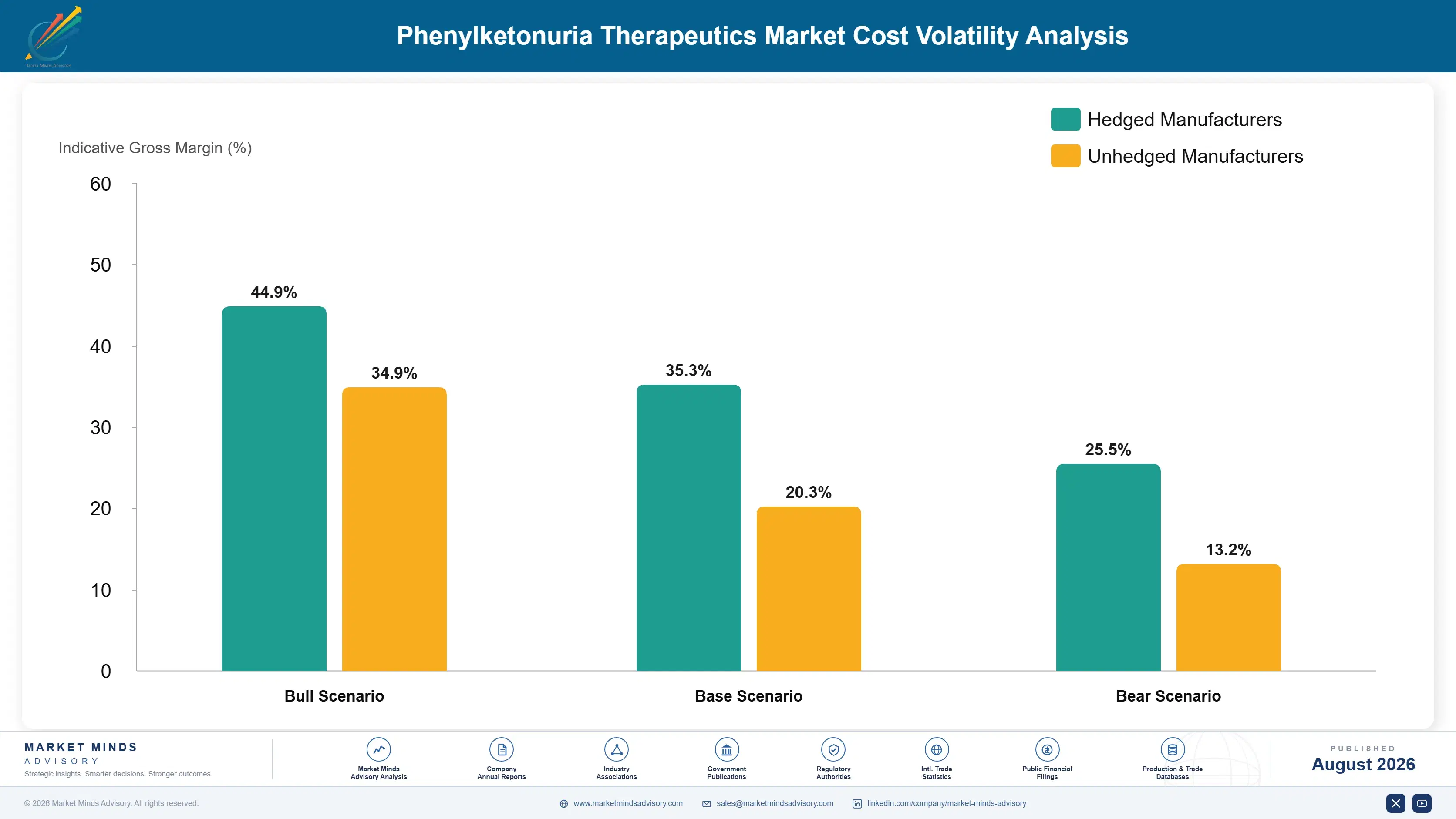
Biologic Manufacturing and Cold Chain Exposure

Recombinant protein manufacturing capacity and cell culture media account for roughly 26 percent of cost of goods sold for enzyme substitution therapy, sourced primarily from specialized biologic contract manufacturers in the United States and Ireland, while cold chain logistics for temperature-sensitive biologics account for a comparable share of total delivered therapy cost across most distribution channels worldwide.
Biologic manufacturing capacity tightened meaningfully during 2023 as broader biopharmaceutical demand competed directly with orphan drug developers for limited contract manufacturing slots, according to the FDA's biologics manufacturing capacity monitoring reports and current industry survey data. Several developers absorbed longer production lead times temporarily while securing dedicated capacity commitments, before manufacturing bottlenecks eased and developers adjusted production scheduling protocols roughly 5 percent to prioritize highest-demand products.

Smaller specialized biotech developers without long-term contract manufacturing agreements face the steepest exposure, since they typically compete for available capacity on shorter-term contracts rather than through reserved capacity agreements that larger companies like BioMarin negotiate directly with manufacturers well in advance of anticipated demand. This gap widens further for developers dependent on single-source cold chain logistics providers facing periodic seasonal capacity constraints.
phenylketonuria-therapeutics-market-cost-volatility-analysis-1787306570345

Reserved Contract Manufacturing Capacity Agreements

Larger developers negotiate annual or multi-year reserved capacity agreements directly with biologic contract manufacturers, insulating a meaningful share of production timelines from spot-market capacity competition that smaller competitors cannot avoid or hedge. This approach requires scale and forecasting confidence that smaller specialist developers typically lack, reinforcing a durable advantage for established category leaders over time.

Dual Sourcing Across Cold Chain Logistics Providers

Qualifying cold chain logistics providers across more than one geographic region reduces exposure to any single capacity constraint, temperature excursion incident, or shipping disruption affecting one distribution corridor at any given time. Developers pursuing dual sourcing report smoother delivery scheduling during high-demand periods, avoiding sudden delivery delays tied to concentrated single-provider dependence on any one logistics partner.

In-House Manufacturing Capacity Investment

Some larger developers are building in-house biologic manufacturing capacity rather than relying entirely on contract manufacturers, reducing recurring capacity competition exposure for companies with sufficiently high and predictable production volume across their orphan drug portfolio. This shift requires substantial upfront capital investment that smaller developers cannot easily justify, though it can meaningfully reduce long-run production cost per patient treated.

Portfolio Architecture for Margin Defence

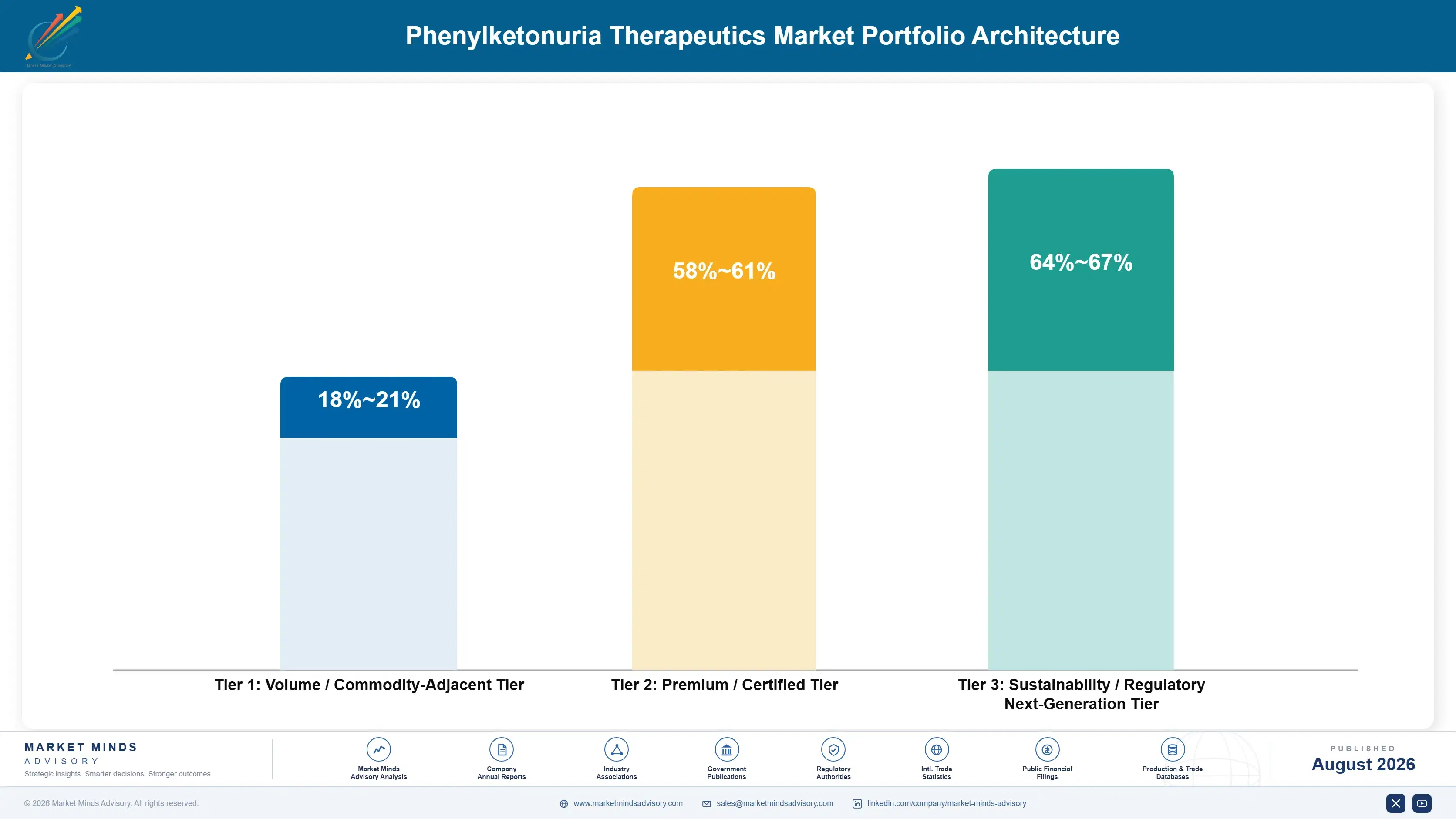
Portfolio economics in this category split cleanly across three tiers defined by therapeutic modality, manufacturing complexity, and clinical evidence maturity rather than by any single developer differentiator. Volume-tier medical foods carry thin margins in a mature, competitive segment, while premium and next-generation biologics command dramatically higher gross margin as payers absorb orphan drug pricing structures for products with demonstrated clinical benefit rather than raw manufacturin
The volume-premium tension plays out most visibly between patients managing the condition through dietary restriction and medical food alone, and patients at specialty metabolic centers whose physicians increasingly recommend pharmacological intervention regardless of the dramatic price differential over dietary management. Developers straddling both tiers manage distinct commercial models, manufacturing infrastructure, and clinical education investment for each customer segment simultaneously.

High-value margin pools concentrate in enzyme substitution therapy and gene therapy candidates sold directly into specialty metabolic disease treatment centers and academic research hospitals, where prescribing volume commitments justify dedicated manufacturing capacity and clinical education investment. Next-generation combination approaches, pairing enzyme therapy with dietary management optimization, remain a smaller but closely watched pool as physicians increasingly value integrated treatment protocols over single-modality approaches.

Volume / Commodity-Adjacent Tier

Medical foods and low-phenylalanine formula products sold primarily to patients managing the condition through dietary restriction alone, prioritizing daily nutritional adequacy over pharmacological intervention given cost constraints or personal treatment preference across most affected households.
Gross Margin: 18-21%

Premium / Certified Tier

Phenylalanine hydroxylase stabilizers and enzyme substitution therapies sold to specialty metabolic disease centers and eligible patients prioritizing improved dietary phenylalanine tolerance, reduced restriction burden, and better documented long-term neurocognitive outcomes across their treatment lifetime.
Gross Margin: 58-61%

Sustainability / Regulatory / Next-Generation Tier

Gene therapy candidates and expanding combination protocol approaches engineered for academic metabolic disease research hospitals pursuing durable or potentially curative treatment pathways for patients previously limited to lifelong pharmacological or dietary management alone.
Gross Margin: 64-67%
phenylketonuria-therapeutics-market-portfolio-architecture-1787306570835

High-value Sub-segments and Strategic Watch-out

Gene Therapy Candidates

Gene therapy candidates sold under specialty research center partnerships combine high growth with strong margin, as clinical evidence accumulation and manufacturing scale-up let developers price above conventional enzyme therapy consistently across most academic research hospital accounts and referral networks nationwide and across major pharmaceutical markets.
Gross Margin: 62-65%

Enzyme Substitution Therapy

Enzyme substitution therapies targeting broad diagnosed patient populations offer strong margin with moderate volume growth, benefiting from expanding clinical guideline support and specialty physician prescribing relationships that deepen treatment center account penetration over successive treatment cycles and evolving reimbursement protocols across most developed markets nationwide.
Gross Margin: 56-59%

Medical Foods and Low-Phenylalanine Formula

Medical foods and low-phenylalanine formula products remain the volume core of the category, generating steady but thinning-margin revenue from patients managing the condition through dietary restriction not yet converted to pharmacological therapy given cost constraints and limited specialty referral access across several developed and emerging markets.
Gross Margin: 17-20%

Combination Treatment Protocols

Combination treatment protocols warrant close monitoring as pairing enzyme therapy with optimized dietary management could reshape treatment guidelines quickly if a major clinical trial demonstrates meaningfully superior outcomes over single-modality approaches currently favored across most specialty metabolic disease treatment centers and academic research hospitals nationwide.
Gross Margin: 40-43%

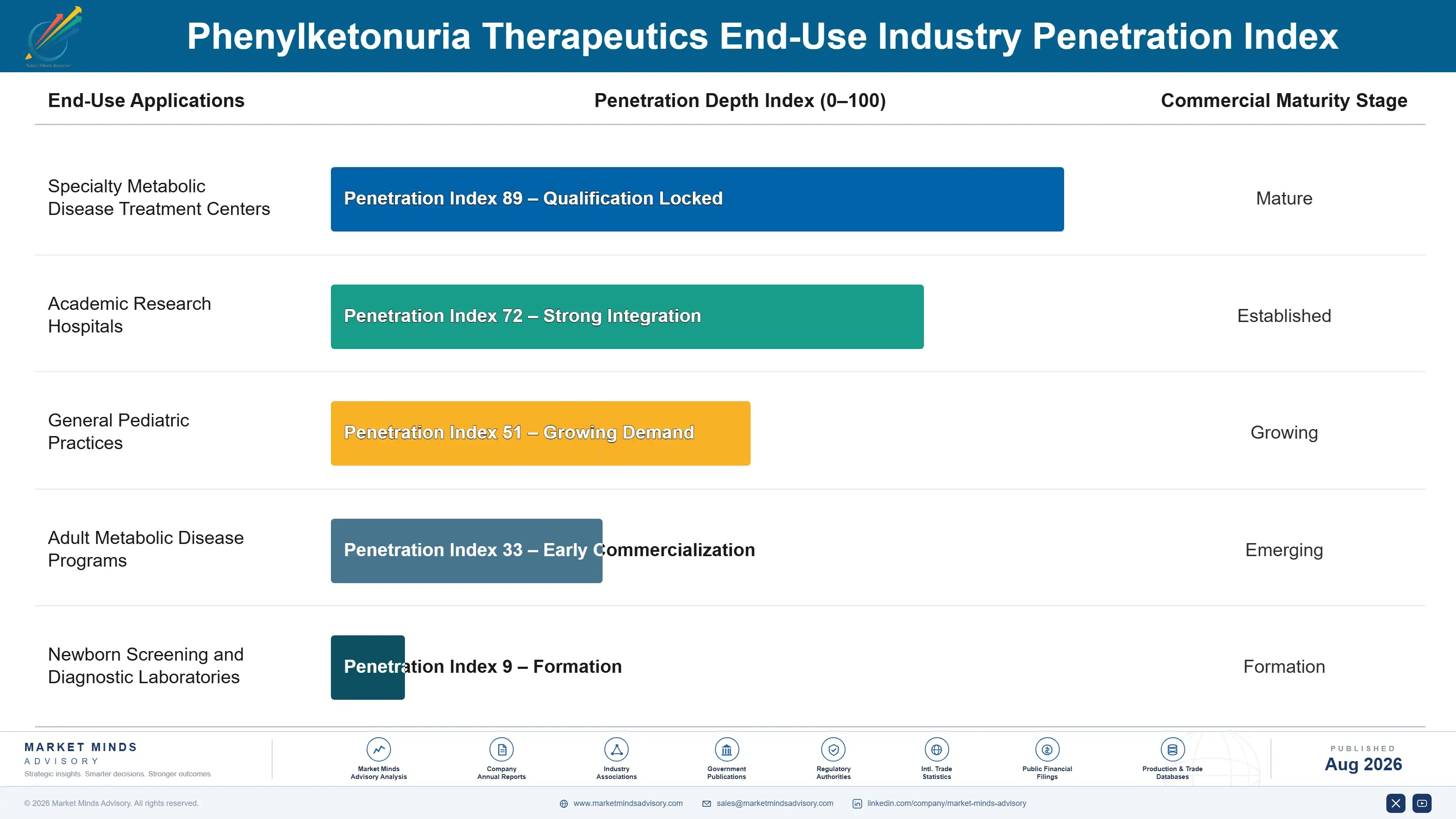
Lifelong Treatment Revenue Per Diagnosed Patient

Demand in this category behaves like a lifelong treatment annuity rather than an acute intervention, since phenylketonuria requires management from birth through adulthood with no cure available outside gene therapy candidates still in clinical trials, generating recurring revenue tied directly to diagnosed patient population rather than a single treatment episode. Developer economics favor companies that can sustain specialty physician trust and patient support program quality over a multi-deca
Adoption depth varies meaningfully by vertical: specialty metabolic disease centers convert to newest-generation pharmacological therapy fastest given case complexity and academic research mission incentives, general pediatric practices lag as clinical training and case volume constrain confident prescribing, and adult metabolic disease programs increasingly cross-adopt therapies originally developed for pediatric patients into long-term management protocols as patients age into adulthood.

A generational shift is underway as newer metabolic disease physicians, trained during fellowship on enzyme substitution and emerging gene therapy protocols, default to recommending pharmacological intervention at diagnosis rather than reserving it for patients who have already struggled with dietary management. This preference is increasingly influencing specialty practice hiring decisions and treatment protocol standardization as competition for skilled specialists intensifies across most major markets.
phenylketonuria-therapeutics-market-end-use-penetration-index-1787306571323

Where Value Concentrates Through 2036

These are among the four positions where our research anticipates prominent divergence between winners and laggards over the coming forecast period. Each is grounded in the demand model, the regulatory perimeter, and the announced capacity pipeline.
01 / GENE THERAPY DEVELOPMENT PRIORITY

Prioritize gene therapy clinical trial completion over incremental enzyme therapy improvements

Completing pivotal gene therapy clinical trials and securing regulatory approval is the single clearest growth vector in this category, and developers protecting near-term enzyme therapy margin instead risk losing the durable treatment position to competitors advancing gene therapy faster. Specialty metabolic disease centers and patient advocacy organizations are the stakeholders actually driving specification change, and they have shown strong enthusiasm for a potentially curative treatment option. Capital directed toward gene therapy trial completion will compound faster than spending preserving legacy dietary management product positioning indefinitely.
02 / PAYER VALUE-BASED ACCESS

Negotiate outcomes-based contracts that justify premium orphan drug pricing

Payer scrutiny of extreme orphan drug pricing directly determines how quickly eligible patients can access enzyme substitution therapy, and developers with the broadest value-based contracting coverage convert clinical eligibility into prescribing volume fastest. Value-based contracts already cover a meaningfully growing share of enzyme therapy prescriptions among major payers, and that share is likely to keep climbing steadily as outcomes data accumulates across most developed reimbursement markets. Developers without value-based contracting infrastructure will struggle increasingly to reach price-sensitive but clinically eligible patients.
03 / CLINICAL GUIDELINE INFLUENCE

Engage guideline committees to accelerate formal treatment recommendation inclusion

Physicians increasingly prescribe according to published professional society guideline recommendations rather than individual product marketing claims, and developers with the deepest guideline committee engagement convert clinical evidence into prescribing volume fastest across their target specialty accounts. Guideline-recommended therapies see meaningfully higher prescribing volume than non-recommended alternatives within two years of publication, directly rewarding developers who invest early in evidence generation and committee relationships. Developers underinvesting in guideline engagement will struggle increasingly to convert clinical interest into sustained prescribing revenue growth.
04 / EMERGING MARKET SCREENING PARTNERSHIP

Partner on newborn screening expansion ahead of competitors entering emerging markets

Health ministries in emerging markets are frequently building systematic newborn screening capability for the first time rather than expanding existing programs, making screening partnership timing a decisive first-mover advantage for whichever developer establishes relationships earliest across each national market. Developers investing in local clinical education and regulatory registration tailored to specific national health authorities capture a disproportionate share of newly diagnosed patient relationships as screening programs come online. This discipline separates developers building durable emerging market share from those competing only in already-mature markets.

Engagement Snapshot From the Field

A live engagement with an industry participant carrying material or product regulatory and market exposure ahead of a defining policy shift, showing how our research translates into a defensible multi-year portfolio strategy.
MARKET MINDS ADVISORY · CLIENT ENGAGEMENT SUMMARY
Phenylketonuria Therapeutics Producer Strategic Portfolio Review and Transition Roadmap 2026·Investment Scenario on Phenylketonuria Therapeutics Exposure Evaluation 2025-26
CLIENT PROFILE
The client operates a regional metabolic disease treatment network managing specialty care for several hundred diagnosed phenylketonuria patients across a multi-state referral area, including both pediatric and adult patient populations. The network had historically relied primarily on dietary management protocols, with limited enzyme substitution therapy adoption due to uncertainty about payer reimbursement approval timelines and patient willingness to switch established treatment routines.
STRATEGIC CHALLENGE
Leadership needed to determine which patient subgroups would benefit most from expanded enzyme substitution therapy access, given limited clinical staff capacity to manage the more intensive monitoring requirements that pharmacological therapy demands relative to dietary management alone. Prior authorization denial rates from regional payers had discouraged broader physician prescribing despite clinical eligibility among many patients.
MMA APPROACH
MMA conducted a patient population segmentation analysis identifying subgroups with the strongest clinical and quality-of-life case for enzyme therapy, combined with a payer prior authorization pattern analysis across the network's three largest regional insurers. The analysis modeled clinical staff capacity requirements and prior authorization success rate improvement strategies under different patient prioritization scenarios.
KEY FINDINGS
  1. Adult patients who had been managing the condition since early childhood showed the strongest quality-of-life case for switching to enzyme therapy overall.
  2. Prior authorization denial rates varied significantly across the three regional payers evaluated, correlating strongly with documentation completeness present at each initial submission.
  3. Structured prior authorization support reduced denial rates by roughly 45 percent across the network entire participating specialty practices (client-reported, unverified by MMA).
  4. Clinical staff capacity constraints ultimately limited enzyme therapy expansion pace more than patient willingness or payer reimbursement approval timelines combined together overall.
CLIENT PROFILE
The client operates a regional metabolic disease treatment network managing specialty care for several hundred diagnosed phenylketonuria patients across a multi-state referral area, including both pediatric and adult patient populations. The network had historically relied primarily on dietary management protocols, with limited enzyme substitution therapy adoption due to uncertainty about payer reimbursement approval timelines and patient willingness to switch established treatment routines.
STRATEGIC CHALLENGE
Leadership needed to determine which patient subgroups would benefit most from expanded enzyme substitution therapy access, given limited clinical staff capacity to manage the more intensive monitoring requirements that pharmacological therapy demands relative to dietary management alone. Prior authorization denial rates from regional payers had discouraged broader physician prescribing despite clinical eligibility among many patients.
MMA APPROACH
MMA conducted a patient population segmentation analysis identifying subgroups with the strongest clinical and quality-of-life case for enzyme therapy, combined with a payer prior authorization pattern analysis across the network's three largest regional insurers. The analysis modeled clinical staff capacity requirements and prior authorization success rate improvement strategies under different patient prioritization scenarios.
KEY FINDINGS
  1. Adult patients who had been managing the condition since early childhood showed the strongest quality-of-life case for switching to enzyme therapy overall.
  2. Prior authorization denial rates varied significantly across the three regional payers evaluated, correlating strongly with documentation completeness present at each initial submission.
  3. Structured prior authorization support reduced denial rates by roughly 45 percent across the network entire participating specialty practices (client-reported, unverified by MMA).
  4. Clinical staff capacity constraints ultimately limited enzyme therapy expansion pace more than patient willingness or payer reimbursement approval timelines combined together overall.
RECOMMENDED STRATEGY
Phase 1: Phase 1 (Months 1 to 2): Conduct patient segmentation analysis and payer prior authorization pattern review across the entire network. Phase 2: Phase 2 (Months 3 to 5): Deploy structured prior authorization support protocols across all network specialty practice locations very thoroughly. Phase 3: Phase 3 (Months 6 to 12): Expand enzyme therapy access to prioritized patient subgroups and track outcomes systematically and closely.
OUTCOME
The network expanded enzyme substitution therapy access to prioritized patient subgroups within the recommended timeline, reporting a 31 percent increase in eligible patients receiving pharmacological treatment and meaningfully improved prior authorization approval rates (client-reported, unverified by MMA). Physician confidence in prescribing enzyme therapy improved measurably per internal survey feedback collected after rollout.

Frequently Asked Questions

Foundational context covering the market sizes, CAGR, scope, country, region and competition that inform every finding below. This section is provided to cover basics and most often pre-purchase conversations, answered from the MMA Primary Research Dataset.

What is the current size of the Phenylketonuria Therapeutics Market?

The global Phenylketonuria Therapeutics Market is valued at approximately 1.2 billion dollars in 2025. This figure spans medical foods, enzyme stabilizers, enzyme substitution therapy, and emerging gene therapy candidates.

How large will the Phenylketonuria Therapeutics Market be by 2036?

The market is projected to reach approximately 3.26 billion dollars by 2036. This represents cumulative growth driven primarily by enzyme therapy adoption and expanding newborn screening coverage.

What is the CAGR for the Phenylketonuria Therapeutics Market 2026 to 2036?

The market is forecast to grow at a compound annual growth rate of 9.5 percent between 2026 and 2036. Base-case growth reflects accelerating pharmacological adoption tempered by orphan drug payer scrutiny.

Which segment is growing fastest?

Gene therapy candidates are the fastest-growing segment, expanding at roughly 32 percent annually from a small clinical trial base, more than three times the overall market rate. Growth is concentrated among academic research centers.

Who are the major companies in the Phenylketonuria Therapeutics Market?

Leading companies include BioMarin Pharmaceutical, Nestle Health Science, Danone Nutricia, Applied Pharma Research, and Synlogic. These five companies hold roughly 78 percent of global revenue share combined.

Which country is growing fastest?

China is among the fastest-growing national markets, supported by expanding newborn screening coverage and rising government healthcare investment. Growth here outpaces most established Western markets meaningfully.

Report Segmentation Architecture

The full report scope spans multiple orthogonal segmentation dimensions, with cross-tabulated demand data provided for each dimension pair. Coverage extends further to regional breakdowns, trend trajectories, and the competitive detail needed to support segment-level decision-making.

By Primary Market Dimension

  • Gene Therapy Candidates
  • Enzyme Substitution Therapy
  • Phenylalanine Hydroxylase Stabilizers
  • Medical Foods and Low-Phenylalanine Formula
  • Large Neutral Amino Acid Supplements
  • Phenylalanine-Degrading Enzyme Oral Therapies

By End-Use Industry

  • Specialty Metabolic Disease Treatment Centers
  • Academic Research Hospitals
  • General Pediatric Practices
  • Adult Metabolic Disease Programs
  • Newborn Screening and Diagnostic Laboratories

By Commercial Dimension

  • Specialty Pharmacy Distribution
  • Payer Value-Based Contracts
  • Direct Treatment Center Sales
  • Patient Assistance Payment Programs

By Region

  • North America
  • Western Europe
  • East Asia
  • South Asia and Pacific
  • Latin America
  • Middle East and Africa
  • Eastern Europe

Scope, Methodology, and Coverage

Every figure in this report is reproducible from documented input assumptions. The scope below maps the historical period, the forecast horizon, the segmentation dimensions, and the countries covered, alongside the underlying primary and qualitative methodology.
Historical Period
2020 to 2025
Forecast Period
2026 to 2036
Base Year
2025 (USD billions; MMA Primary Research Dataset, August 2026)
Market Definition
The Phenylketonuria Therapeutics Market covers pharmaceutical products, enzyme substitution therapies, and medical foods used to manage phenylketonuria, a rare inherited metabolic disorder requiring lifelong phenylalanine restriction or pharmacological intervention. It excludes newborn screening diagnostic tests, general infant formula without phenylalanine restriction, and gene therapy products not yet commercially approved for phenylketonuria treatment.
Quantitative Units
USD billions (current prices); diagnosed patients in thousands of cases
Segmentation Dimensions
By Therapeutic Modality and Product Type; By End-Use Industry; By Commercial Dimension; By Region
Regions Covered
North America, Western Europe, East Asia, South Asia and Pacific, Latin America, Middle East and Africa, Eastern Europe
Countries Covered
USA, China, Germany, France, UK, Japan, South Korea, India, Australia, Canada, Brazil, Mexico, Indonesia, Vietnam, Thailand, Malaysia, UAE, Saudi Arabia, South Africa, Nigeria, Turkey, Poland, Netherlands, Italy, Spain, Sweden, Switzerland, Argentina, Colombia, Singapore, and additional markets relevant to this sector
Key Companies Profiled
BioMarin Pharmaceutical, Nestle Health Science, Danone Nutricia, Applied Pharma Research, Synlogic, Homology Medicines, Moderna, Selecta Biosciences, Codexis, Ultragenyx Pharmaceutical, Ajinomoto Cambrooke, Vitaflo International, Mead Johnson Nutrition, Abbott Nutrition, Solace Nutrition, Firstplay Dietary Foods, Theriva Biologics, PTC Therapeutics, Ipsen, Chiesi Farmaceutici
Quantitative Methodology
Primary survey, n=3,800 respondents, Q4 2025, six countries; demand-side model with trade association cross-validation
Qualitative Methodology
47 expert interviews, Q4 2025; applied to validate demand model assumptions, identify emerging dynamics, and assess competitive positioning
Report Format
PDF and XLSX data workbook (Word format preview document)
Publisher
Market Minds Advisory
Report Code
MMA-2026-HLT-535
Published
August 2026
Contact
sales@marketmindsadvisory.com | www.marketmindsadvisory.com

Purchase the full Phenylketonuria Therapeutics Market Report (2026 to 2036).

This report delivers a full quantitative and qualitative assessment of the global Phenylketonuria Therapeutics Market, covering historical performance from 2020 through 2025 and forecasts through 2036 across base, bull, and bear scenarios. It profiles twenty companies spanning medical foods, enzyme stabilizers, enzyme substitution therapy, and gene therapy candidates, benchmarked on a consistent revenue basis. Regional analysis spans all seven major world regions, with detailed demand mechanisms specific to each. The report also includes segmentation analysis, input cost exposure assessment, competitive positioning, and an anonymized client case study illustrating practical access strategy decision-making.
Ten-year historical and forecast market sizing
Treatment modality segmentation with growth rates
Seven-region demand mapping and competitive benchmarking
Twenty-company competitive profiling and moat analysis
Input cost exposure and mitigation strategy assessment
Anonymized client case study and strategic verdict

Built For The People Who Decide

From boardroom strategy to bench-side execution, this report is read cover-to-cover by leaders shaping the next decade of their industry, turning demand scenarios, market dynamics and valuation benchmarks into decisions.
CXOs/ Presidents/ VPs/ Managers
M&A and Corporate Development
Strategy Teams and R&D Heads
Procurement and Product Directors
Regulatory and Compliance Leaders
Investor Relations and Equity Analysts