Market Minds Advisory
Phenylethanol Market

Phenylethanol Market: Natural-Grade Certification Redraws Fragrance Chemical Economics

Rising demand for documented natural-grade rose aroma chemicals is pushing phenylethanol buyers toward certified fermentation-derived supply that conventional petrochemical-synthesis material cannot substantiate under tightening fragrance house and regulatory scrutiny today.

Lead Analyst

Lisa Gevelber

Published

September 2026

Make Smarter Decisions with Customized Research Insights

Request a free sample report and evaluate market opportunities, growth trends, and competitive dynamics relevant to your business needs.

2025 MARKET VALUE$0.4BMarket Size 2025
2036 FORECAST VALUE$0.8BBase Case , 2026 to 2036
CAGR 2026 TO 20366.0 %Bull 7.2% / Bear 4.8%
INCREMENTAL OPPORTUNITY$0.4BNet 10- year value creation
EXPANSION MULTIPLE1.80x2036 value over 2026 base
Strategic Levers
M&A Pipeline
Regional Outlook
Country Rankings
Competitive Intelligence
Segmental Deep-dive
Call-Us : 91 93563 13602

Executive Snapshot and Market Trajectory

Phenylethanol demand is shifting fastest toward cosmetics and personal care preservative applications, as rising natural-grade certification needs push manufacturers to validate documented fermentation-derived purity well beyond what conventional synthetic supply can reliably deliver across most fragrance applications, categories, and formulation types today and going forward.
Demand concentrates in three areas: fragrance and perfumery applications supplying mainstream rose-scent formulation, flavor and food applications supplying mid-tier taste and aroma needs, and cosmetics preservative applications supplying premium natural-grade positioning where documented purity matters most to formulators and regulators alike. East Asia anchors global supply given China's expanding synthetic production scale and integrated chemical manufacturing capacity, holding the largest regional share tracked throughout this report's full ten-year forecast window and beyond every projection made.
Competition remains fragmented among established fragrance chemical manufacturers, led by Symrise and Givaudan, both of which maintain years of extraction engineering and formulation depth built through direct fragrance house and cosmetics manufacturer relationships spanning multiple grades, regions, and application segments worldwide today. Documented natural-grade purity and traceability data, not raw synthesis cost alone, increasingly decide which manufacturers retain long-term supply contracts and revenue across this industry today.
Market Definition
This market covers 2-phenylethanol produced for use in fragrance, flavor, cosmetics preservation, and pharmaceutical antimicrobial applications, including synthetic and fermentation-derived natural-grade purity tiers sold to formulators and distributors. It excludes other phenolic alcohols and phenylethanol sold exclusively as an industrial solvent outside fragrance, flavor, or cosmetics applications.
Base Year Value
$0.4B in 2025 (MMA Primary Research Dataset, August 2026)
Forecast Period
2026 to 2036, eleven discrete annual values
CAGR
6.0% base case. Bull 7.2%. Bear 4.8%.
Fastest Growth Segment
Cosmetics and Personal Care Preservative Applications: 8.5% CAGR
Fastest Growth Country
India: 7.8% CAGR
Fastest Growth Region
South Asia and Pacific: 8.0% CAGR
Largest Region
East Asia: 29% of 2025 global value
Market Leaders
Symrise AG, Givaudan SA, BASF SE, Solvay SA, Jiangsu Baoyu Chemical Co., Ltd. Source: MMA Analysis based on company disclosures.
Primary Survey
n=3,800 procurement and R&D decision-makers, Q4 2025, six countries
Methodology
Demand-side build-up, cross-validated against public data, 47 expert interviews

Phenylethanol Market Forecast Scenarios

phenylethanol-market-trends-forecast-size-forecast-scenario-1787336653111
Phenylethanol demand grew at an estimated 5.2% historical CAGR across 2020 to 2025, reflecting steady fragrance and flavor category expansion across most major consuming markets worldwide and export regions each year. Growth picked up modestly from 2023 onward as natural-grade fermentation-derived supply gained cosmetics formulator traction and certification capacity expanded across manufacturers and regulatory bodies alike.
The base case assumes 6.0% CAGR through 2036, driven by three mechanisms operating together. First, cosmetics formulators increasingly specify documented natural-grade material supporting clean-label positioning that conventional synthetic supply cannot match under demanding fragrance house scrutiny and traceability requirements. Second, manufacturers are expanding fermentation-derived production capacity to validate purity across increasingly diverse cosmetics and pharmaceutical channel markets. Third, growing pharmaceutical antimicrobial applications reward suppliers with strong purity documentation across nearly every major regulated formulation market sold globally today.
The bull case (7.2% CAGR) assumes faster-than-expected natural-grade cosmetics adoption pulls fermentation-derived phenylethanol demand forward ahead of current manufacturer capacity planning assumptions made earlier. The bear case (4.8% CAGR) reflects the risk that synthetic alternatives and competing preservative chemistries erode phenylethanol's addressable applications, tempering demand across a market still closely tied to comparative fragrance chemical positioning.

Natural-Grade Certification Depth Now Separates Manufacturers

Phenylethanol economics increasingly separate along documented natural-grade fermentation purity performance rather than raw synthesis cost alone, since formulators pay premium pricing for manufacturers with proven traceability data that undocumented competitors cannot credibly demonstrate under demanding fragrance house and cosmetics labeling scrutiny worldwide. This gap has widened noticeably since 2022 as major buyers tightened specifications around measurable natural-origin claims and documentation.
CR5 CONCENTRATION38%share held by top five phenylethanol manufacturers globally today
AVERAGE SELLING PRICE$8,200-15,600 per tonneprice range spanning synthetic to natural-grade fermentation purity
TOP PRODUCING COUNTRY SHAREChina, 32%share of global phenylethanol production capacity currently held
CAPACITY UTILIZATION68%average operating rate across qualified fragrance chemical plants
TRADE INTENSITY52%of finished phenylethanol volume crossing borders before final sale
FEEDSTOCK COST SHARE40% of COGSstyrene and ethylbenzene feedstock components combined together today
Commodity synthetic-grade buyers and premium natural-grade formulators behave very differently as buyers in this market today across most regions worldwide and across applications and channels. Commodity buyers negotiate primarily on price and delivery volume given high-frequency bulk purchase cycles, while premium formulators require extensive traceability validation and purity documentation that few smaller manufacturers can support without dedicated testing investment spanning years and multiple product generations.
Over the next decade, two forces will determine winners. Continued mainstream synthetic-grade demand will keep expanding addressable fragrance and flavor volume across cost-sensitive applications worldwide, while natural-grade and pharmaceutical adoption adds a second, purity-driven growth vector rewarding manufacturers with strong documentation ahead of conventional competitors lacking comparable fermentation infrastructure built over sustained years of investment, accumulated expertise, and regulatory trust.
"A phenylethanol shipment without a documented natural-origin trail is a commodity, not a premium fragrance ingredient. Formulators learned to demand real fermentation traceability data, not generic synthetic specifications, and that now separates credible suppliers from the rest."
Director, Fragrance and Flavor Chemicals Practice · MMA Chemicals and Materials Practice · August 2026

Market Trends

Fermentation-Derived Natural Grades Accelerate on Clean-Label Demand

Cosmetics and fragrance formulators are increasingly specifying fermentation-derived natural-grade phenylethanol supporting documented origin traceability that conventional petrochemical synthesis cannot achieve, particularly across applications targeting measurable clean-label parity with competing aroma chemical systems under demanding regulatory scrutiny across major cosmetics markets. This demand has grown fastest among formulators launching products with natural-origin positioning claims, where documented traceability directly affects consumer trust and retailer acceptance relative to rival products using less capable supply chains. Several major manufacturers have expanded fermentation production capacity to serve this demand, recognizing that once a formulator qualifies a supplier, switching costs remain considerable given requalification work.
Market Impact: Adds 3 percent baseline demand growth
Pharmaceutical Antimicrobial Applications Reshape Sourcing Strategy

Pharmaceutical formulators are increasingly specifying pharmacopoeia-grade phenylethanol for antimicrobial preservative applications tuned to each market's specific purity and traceability requirements rather than relying on universal fragrance-grade sourcing alone across most regulatory jurisdictions and export markets today. This demand has grown as buyers standardize compliance documentation across expanding sourcing programs rather than treating regulatory traceability as a discretionary procurement choice made once and forgotten by leadership teams entirely each cycle. Manufacturers serving this demand typically maintain close relationships with regulatory affairs teams built over years of collaborative product qualification and testing work.
Market Impact: Adds 4 percent natural labeling demand

Market Opportunities and Growth Drivers

Rising Fine Fragrance Consumption Sustains Baseline Demand

Continued growth in fine fragrance and personal care product consumption across major consuming markets sustains steady baseline demand for phenylethanol aroma chemical systems, as fragrance houses increasingly recognize rose-scent character directly affects formulation quality and consumer preference across nearly every major fragrance category and retail segment worldwide today. This demand has remained remarkably stable given the predictable purchase cycle timelines across established fragrance manufacturing programs and consumer household budgets. Manufacturers serving this demand typically maintain long-standing relationships with fragrance houses built over years of consistent delivery performance and quality assurance.
Market Impact: Adds 8 percent feedstock cost volatility

Natural-Origin Labeling Regulation Sustains Category Growth

Continued tightening of natural-origin and clean-label labeling regulation across major consuming markets sustains steady demand growth for fermentation-derived phenylethanol as a well-documented, regulator-approved natural aroma chemical, as manufacturers increasingly specify documented compliance that undocumented competitors cannot credibly support without dedicated fermentation investment across nearly every major cosmetics category program worldwide today. This demand has grown as buyers standardize compliance documentation across expanding category management programs rather than relying solely on legacy sourcing alone. Manufacturers serving this demand typically maintain long-standing relationships with regulatory bodies and industry associations built over years.
Market Impact: Adds 2 year supply delay

Market Restraints and Challenges

Petrochemical Feedstock Price Volatility Compresses Margins

Styrene and ethylbenzene feedstock prices have shown meaningful volatility tied to broader petrochemical commodity cycles and growing cross-category demand from the wider fragrance chemical sector competing for the same limited processing capacity and feedstock supply across regions worldwide. This volatility disproportionately affects smaller manufacturers with limited purchasing scale, since these inputs represent a substantial share of total production cost that cannot easily be offset through process efficiency improvements alone. Manufacturers are addressing this through longer-term feedstock supply agreements and, where feasible, backward integration into upstream petrochemical production that bypasses distributor markups entirely across their networks.
Market Impact: Adds 7 percent natural-grade segment volume

Fermentation Yield Constraints Limit Natural Supply Growth

Persistent yield and scale-up constraints in rose petal and fermentation-derived production continue limiting broader natural-grade phenylethanol supply growth, as manufacturers face substantial process engineering and capital investment requirements to maintain consistent output before achieving sustained cost parity with synthetic material across most premium cosmetics segments worldwide today. This restraint disproportionately affects manufacturers lacking established fermentation process expertise relative to leading natural-grade suppliers with mature production scale and capital resources. Manufacturers are addressing this through targeted process optimization research and phased capacity expansion strategies that spread investment across multiple production qualification cycles over several years.
Market Impact: Adds 5 percent pharmaceutical grade demand
3 additional market trends, 4 additional growth drivers, and 3 additional restraints and challenges are covered in the full report. Contact sales@marketmindsadvisory.com to access the complete intelligence.

Segment CAGR and Growth Architecture

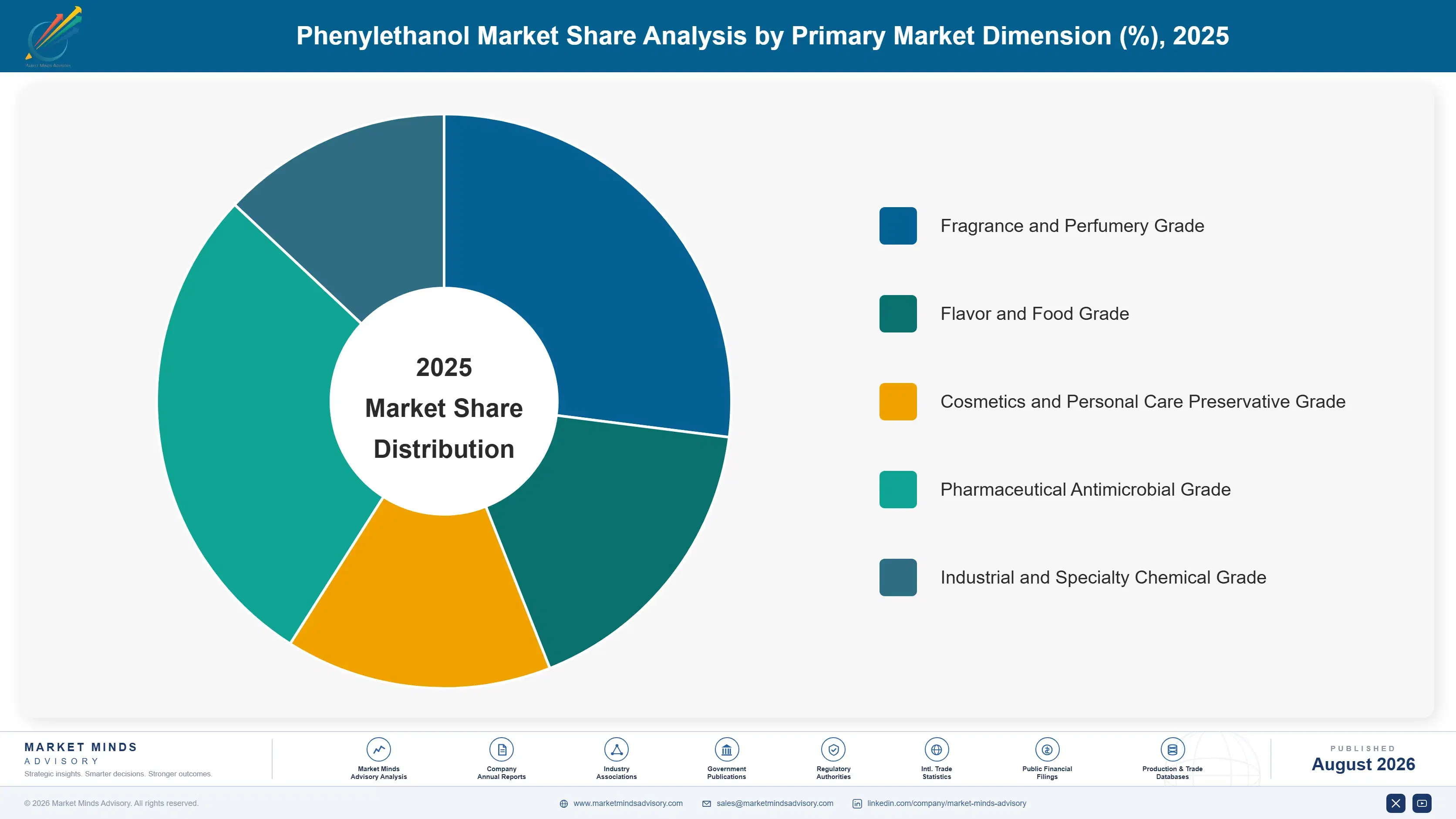
MMA segments this market by end-use application, the classification formulators and manufacturers use when specifying phenylethanol purity grade for a given fragrance or regulatory requirement across programs, regions, and safety processes worldwide today. This lens separates fragrance, flavor, and preservative applications by underlying purity chemistry rather than packaging format or brand positioning alone across channels.
phenylethanol-market-trends-forecast-market-share-analysis-1787336653666

Cosmetics and Personal Care Preservative Applications

Cosmetics and personal care preservative applications form the fastest-growing segment by a wide margin, expanding directly alongside natural-grade certification investment as formulators seek documented fermentation-derived origin traceability that conventional synthetic supply cannot match under demanding regulatory scrutiny across major cosmetics markets. This segment commands the highest pricing in the entire market, reflecting the fermentation process engineering and traceability testing investment required to substantiate claims credibly to increasingly sophisticated cosmetics regulatory teams across regions. Symrise and Givaudan hold strong positions in this segment given established natural-grade certification expertise and testing infrastructure built over years of product qualification. Growth here concentrates disproportionately among formulators targeting the fastest-growing clean-label-conscious consumer segments where documented purity matters most to overall regulatory acceptance and brand trust.
CAGR 8.5%

Pharmaceutical Antimicrobial Applications

Pharmaceutical antimicrobial preservative applications are expanding faster than the broader fragrance and flavor base, driven by tightening regulatory scrutiny and premium formulator investment accelerating specification across expanding regulated pharmaceutical product programs and manufacturing platforms worldwide today and into the coming years ahead. This segment requires close collaboration between manufacturers and regulatory affairs teams during product qualification, since pharmacopoeia compliance requirements vary meaningfully across different jurisdictions and applications available today across markets and channels. BASF and Solvay maintain meaningful positions in this segment given established regulatory relationships built over years of collaborative qualification work. Growth here tracks broader pharmaceutical regulatory tightening rather than short-term feedstock price swings affecting standard fragrance-grade competitors and manufacturers across the industry.
CAGR 7.0%
Full segment breakdown across 6 segments available in the complete report.

Regional Architecture and Country Demand Map

East Asia dominates phenylethanol supply given China's expanding synthetic production scale, with Western Europe following closely through established fragrance house heritage and North America contributing through cosmetics formulation demand and sustained clean-label investment across most channels, regions, and export markets worldwide each successive planning year.

North America

United States cosmetics and personal care formulation base, concentrated across the country's largest fragrance and flavor manufacturing networks, anchors North American phenylethanol demand alongside substantial natural-grade certification programs pursued each year by leading formulators. Emerald Kalama Chemical and Bedoukian Research maintain extensive domestic production and distribution capacity serving formulators directly from established regional facilities built over years of accumulated process engineering expertise and sustained investment. Canada contributes smaller but steady demand tied to its own fragrance manufacturing market, largely mirroring broader United States sourcing patterns and regulatory trends across most channels. This demand base reflects the region's growing natural-grade adoption, and continued clean-label regulation tightening sustains steady growth through the forecast period across multiple application segments nationwide.
Share: 24% | CAGR: 6.3% (2026 to 2036)

East Asia

China's expanding synthetic chemical manufacturing scale, combined with Japan's deep fragrance formulation heritage and Kao Corporation's manufacturing certification depth, anchors East Asian phenylethanol supply alongside substantial domestic production capability built over the past decade of sustained investment and expansion across multiple regions. Chinese manufacturers, including Jiangsu Baoyu Chemical and Zhejiang NHU, have scaled domestic production aggressively to serve growing global export demand alongside domestic cosmetics manufacturing requirements. Japan's Kao Corporation and South Korean formulators contribute substantial fragrance-grade expertise serving sophisticated domestic and export markets efficiently across multiple channels. Continued Chinese chemical manufacturing investment keeps this region's growth rate among the fastest globally through the entire forecast period ahead of most projections.
Share: 29% | CAGR: 7.0% (2026 to 2036)
Regional intelligence for 5 additional markets available in the complete report: Western Europe, South Asia and Pacific, Latin America, Middle East and Africa, Eastern Europe. Contact sales@marketmindsadvisory.com.
phenylethanol-market-trends-forecast-country-cagr-analysis-1787336654187

Where Phenylethanol Manufacturers Can Expand Margins

Manufacturers create outsized value not from standard synthetic volume alone but from natural-grade certification depth, fermentation traceability documentation, and long-term supply contracts built over years of sustained process investment and testing. The levers below identify where margin expands fastest, moving beyond commodity chemical supply toward validated natural-origin performance and durable formulator relationships across the industry.

Natural-Grade Certification Commands a Strong Premium

Manufacturers that achieve and document verified fermentation-derived origin traceability and purity consistency capture meaningfully higher realized pricing than standard synthetic-grade material, often 3.5 to 5.0 times the price per tonne for equivalent fragrance capability, because formulators pay for the documented natural-origin claim this certification provides over conventional undocumented alternatives sold at lower price points. This documentation requires sustained process investment spanning multiple production batches and qualification cycles, but manufacturers that achieve it gain access to the highest-margin segment of the entire market well ahead of competitors still selling undocumented natural claims to increasingly demanding regulatory buyers.
Market Impact: Adds 620 to 890 basis points gross margin

Deep Traceability Documentation Deepens Formulator Ties

Manufacturers that develop deep traceability documentation and testing capability capture design-in advantages that conventional competitors cannot easily replicate once a formulator standardizes sourcing around a specific manufacturer's qualified natural-grade material across successive product generations and purchase cycles going forward and beyond current expectations. This capability requires sustained laboratory investment across multiple production batches and testing cycles and years of accumulated compliance performance data, but manufacturers achieving strong documentation capability typically retain 70 percent or more of qualified formulator accounts through successive supply renewal cycles, converting laboratory investment into recurring revenue.
Market Impact: Retains over 70 percent of all qualified accounts

Securing Long-Term Fragrance House Agreements Early

Manufacturers that secure multi-year supply agreements tied to specific fragrance house qualification programs gain revenue visibility spanning multiple purchase cycles, typically 3 to 5 years, since fragrance houses rarely switch aroma chemical suppliers mid-qualification given the reformulation and requalification risk involved in changing suppliers mid-program without strong cause or reason. This contract security requires proven purity consistency and delivery reliability across sustained performance periods and multiple production batches spanning many years, but manufacturers achieving program-level qualification convert commodity volume into durable, multi-year revenue relationships that smaller transactional sellers simply cannot match or replicate easily.
Market Impact: Secures 3 to 5 years of contract revenue

Building Fermentation Process Development Capability Early

Manufacturers that develop proprietary fermentation process research and scale-up capability capture cost and yield advantages that conventional synthesis-dependent competitors cannot easily replicate once a manufacturer secures preferred process efficiency across their broader research networks, laboratories, and manufacturing facilities worldwide today. This development model requires sustained research investment across multiple discovery cycles and years of accumulated process engineering expertise and industry collaboration, but manufacturers achieving strong fermentation capability typically secure 4 to 6 year yield advantages spanning successive production cycles that synthesis-dependent buyers cannot access without comparable long-term investment and commitment.
Market Impact: Secures 4 to 6 years of yield advantage

Who Controls the Margin Pool

CR5 stands at 38%, reflecting a fragmented market shaped by the natural-grade certification and fragrance house qualification barriers that favor established chemical manufacturers over smaller regional producers lacking comparable investment. The gap between the top five and smaller manufacturers is widest in documented fermentation-derived performance, where traceability barriers protect leaders far more than in standard synthetic-grade supply chains. This gap is widening steadily over successive qualification cycles.
Competition currently plays out across three dimensions: natural-grade certification races among leaders serving major fragrance house programs, traceability documentation investment among manufacturers building long-term formulator relationships, and commodity synthetic-grade capacity expansion among a broader group of regional Chinese specialists. Smaller regional manufacturers compete primarily on price and basic delivery volume rather than purity documentation depth or global testing scale.

Emerging pressure comes from two directions. Indian and Southeast Asian manufacturers are investing in natural-grade certification capability to reduce reliance on imported European and Japanese material, though traceability validation depth remains a gap relative to established leaders with decades of experience. Continued fragrance house consolidation could also reorder competitive rankings if remaining buyers concentrate sourcing allocation further, favoring manufacturers with the deepest existing regulatory relationships over newer entrants lacking comparable track records.
phenylethanol-market-trends-forecast-company-positioning-matrix-1787336654715

Competitive Moat and Risk Dimensions

SYMRISE AG

Moat: Broadest Integrated Fragrance Portfolio

Symrise operates the broadest integrated fragrance ingredient portfolio and deepest natural rose-scent extraction heritage in the industry, having supplied fragrance houses across dozens of countries for over a decade across multiple product grades and regions worldwide, giving it formulation trust and shelf presence that newer entrants cannot easily replicate.
SYMRISE AG

Risk: Petrochemical Feedstock Cyclicality

Symrise's production economics remain closely tied to petrochemical feedstock cyclicality given its synthetic production route reliance, leaving it more exposed than fermentation-focused competitors to shifts in styrene and ethylbenzene pricing or economic conditions that periodically affect production margins and revenue stability across its diversified business.
GIVAUDAN SA

Moat: Deepest Fragrance House Relationships

Givaudan operates the deepest global fragrance house customer relationships and longstanding perfumery application expertise among independent manufacturers, giving it design-in advantages that narrower specialist competitors cannot match, built over years of established fragrance formulation partnerships spanning multiple product segments, regions, and export markets worldwide today.
GIVAUDAN SA

Risk: Customer Concentration Risk Exposure

Givaudan's revenue base remains closely tied to fragrance industry customer concentration given its reliance on major perfume house contracts, leaving it more exposed than diversified competitors to shifts in fragrance house sourcing decisions or economic conditions that periodically affect category demand, pricing discipline, and overall revenue stability.

Players Tracked

Prominent Players

Symrise AG
Givaudan SA
BASF SE
Solvay SA
Jiangsu Baoyu Chemical Co., Ltd.

Other Key Players

International Flavors & Fragrances Inc.
Robertet SA
Kao Corporation
Zhejiang NHU Company Ltd.
Vigon International, Inc.
Privi Speciality Chemicals Limited
Treatt plc
Emerald Kalama Chemical, LLC
Oxea GmbH
Wuhan Youji Industries Co., Ltd.
Jiangxi Kexin Bio-industry Co., Ltd.
Bedoukian Research, Inc.
Advanced Biotech
Ernesto Ventos, S.A.
Anhui Jinhe Industrial Co., Ltd.

Recent Developments

MARCH 2025

Symrise Expands Fermentation-Derived Production Capacity

Symrise announced completion of a fermentation-derived natural-grade phenylethanol production capacity expansion at its facility, adding qualified capacity to serve growing cosmetics demand across multiple product programs and export regions worldwide. The expansion follows several years of natural-grade certification investment supporting traceability documentation and testing work.
Signal: Confirms leading manufacturers are dedicating capacity specifically to natural-grade material ahead of continued clean-label demand growth.
JULY 2025

Givaudan and a Major Fragrance House Sign Supply Agreement

Givaudan signed a multi-year supply agreement with a major fragrance house covering phenylethanol supply for an upcoming natural-grade reformulation program scheduled for later procurement phases and years. The agreement secures forward volume for Givaudan at negotiated pricing tied to the fragrance house's category planning schedule.
Signal: Signals fragrance houses are increasingly securing long-term aroma chemical supply relationships tied directly to reformulation planning cycles.
NOVEMBER 2025

Jiangsu Baoyu Chemical Expands Export Testing Capability

Jiangsu Baoyu Chemical announced completion of expanded purity and traceability validation testing capacity at its facility, adding qualified capability to serve growing export demand for validated fragrance chemical performance across multiple international markets worldwide. The expansion follows sustained investment tracking tightening global cosmetics regulation trends.
Signal: Signals Chinese manufacturers are scaling testing capacity fast enough to keep pace with tightening global regulatory scrutiny.

Petrochemical Feedstock Exposure

Styrene and ethylbenzene feedstock components together account for roughly 40% of cost of goods sold across phenylethanol production, with pricing tied to broader petrochemical commodity cycles rather than fragrance-specific dynamics alone across most producing regions and export markets worldwide today. Manufacturers relying on spot-market purchases face greater price exposure than those with long-term agreements already in place.
Petrochemical feedstock prices rose sharply during 2021 and 2022, documented in company annual reports across the specialty chemical sector, as global supply chain disruption tightened available processing capacity faster than downstream demand could adjust. Several manufacturers reported compressed margins and delayed shipments during this period, since long-term contract pricing could not be renegotiated quickly enough to reflect rising feedstock cost. Manufacturers absorbed the largest share of this pressure.

This exposure disadvantages smaller manufacturers without long-term feedstock agreements relative to larger, better-capitalized competitors who hedge exposure through diversified sourcing and, in some cases, backward integration built over years of capital investment. Manufacturers without secured supply face meaningfully greater difficulty maintaining consistent margins during periods of feedstock volatility, particularly smaller regional manufacturers lacking comparable purchasing scale and negotiating leverage with upstream petrochemical producers.
phenylethanol-market-trends-forecast-cost-volatility-analysis-1787336654913

Long-Term Feedstock Supply Contracts

Manufacturers are locking in multi-year styrene and ethylbenzene feedstock supply contracts at fixed or formula-based pricing, trading some upside flexibility for predictable production costs across successive planning cycles and budget years ahead each year. This approach has become considerably more common since 2021 as manufacturers sought greater cost predictability across volatile periods worldwide today.

Fermentation Process Investment as Hedge

Several larger manufacturers are investing in fermentation-derived natural-grade production, directly reducing exposure to petrochemical merchant market pricing volatility and unpredictable spot purchasing conditions across most regions worldwide today and even much further beyond expectations. This approach requires sustained process investment but delivers a durable cost advantage once capacity matures over successive production cycles ahead.

Diversified Geographic Sourcing Strategies

Manufacturers are diversifying feedstock sourcing across multiple geographic supplier regions, reducing overall exposure to any single region's supply chain disruption or localized volatility events and unexpected shortages of critical raw materials, components, and production inputs worldwide. This diversification has become standard practice among the largest manufacturers pursuing consistent year-round supply availability and predictable production planning.

Portfolio Architecture for Margin Defence

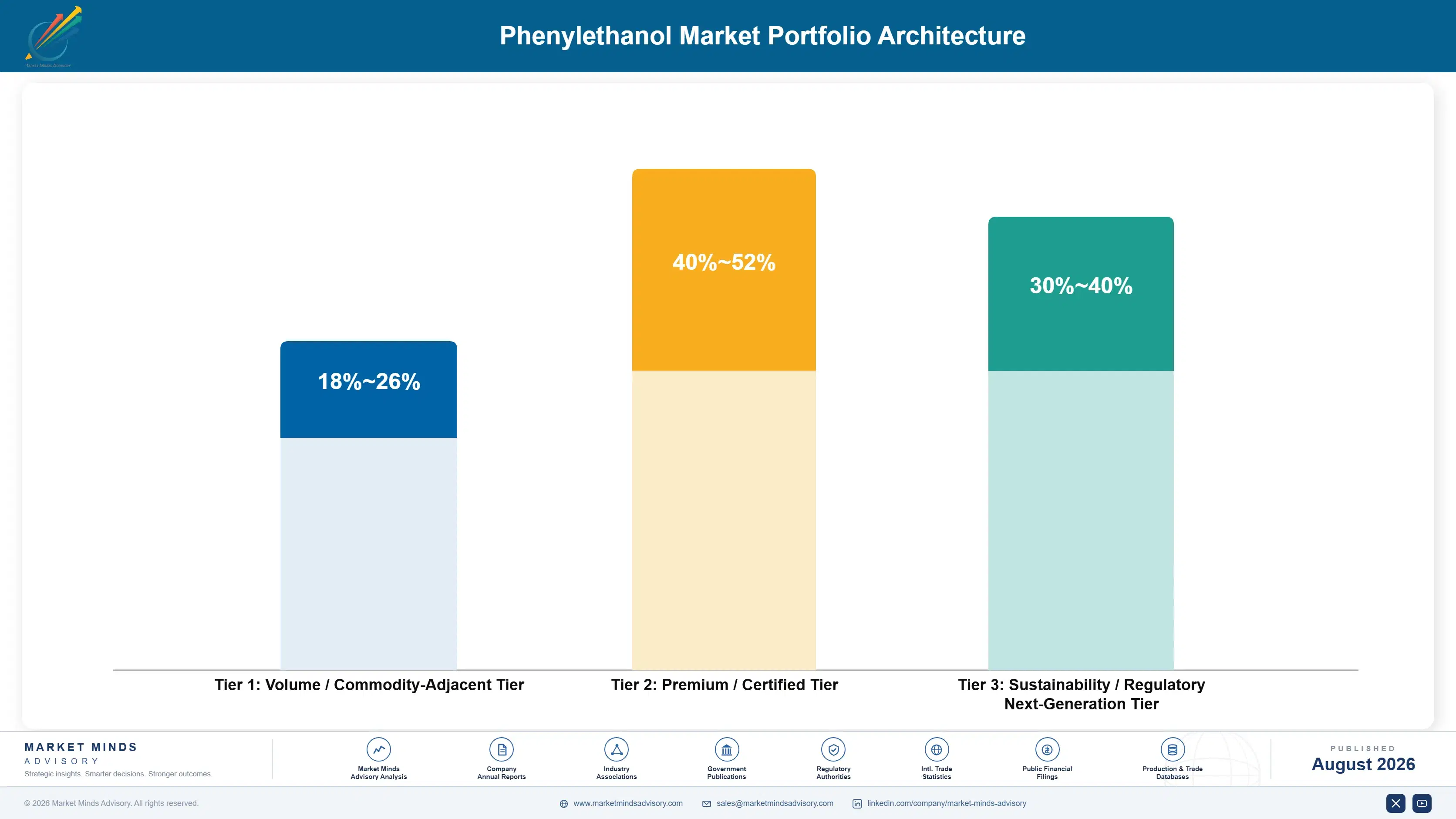
MMA organizes this market into three tiers by natural-grade certification depth and margin profile. The volume tier covers standard synthetic-grade material sold into conventional mainstream fragrance and flavor applications, competing primarily on price and delivery volume. The premium tier covers documented natural-grade and pharmaceutical-grade systems commanding higher margins through traceability certification and formulator partnership barriers. The sustainability tier captures next-generation bio-based and regeneratively sourced fermentation formulations still scaling toward broader adoption.
Volume tier manufacturers compete on price and delivery consistency with moderate margins, while premium tier manufacturers protect pricing power through natural-grade documentation and formulator partnership barriers that keep new entrants out for years at a time. This creates real tension inside diversified manufacturers, since capital allocated to sustaining standard synthetic capacity competes directly with capital needed to fund fermentation process research and testing infrastructure, and most large manufacturers now favor the latter given superior long-term returns.

The highest-value pools concentrate in documented natural-grade systems for major fragrance house programs and long-term supply agreements, where certification barriers and contract security combine to support the strongest pricing power in the entire market. Bio-based fermentation formulations are emerging as a further high-value position as sustainability requirements accelerate industry-wide.

Volume / Commodity-Adjacent Tier

Standard synthetic-grade material sold into conventional mainstream fragrance and flavor applications, competing primarily on price and delivery volume across most regional distribution programs, industrial channels, and export markets worldwide today.
Gross Margin: 18-26%

Premium / Certified Tier

Documented natural-grade and pharmaceutical-grade systems commanding higher margins through traceability certification and durable formulator partnerships built over years of sustained process investment and testing across product grades and export markets.
Gross Margin: 40-52%

Sustainability / Regulatory / Next-Generation Tier

Bio-based and regeneratively sourced fermentation formulations positioned well ahead of rising sustainability requirements among manufacturers pursuing improved environmental compliance and regulatory perception across their expanding production networks, facilities, and markets worldwide today.
Gross Margin: 30-40%
phenylethanol-market-trends-forecast-portfolio-architecture-1787336655424

High-value Sub-segments and Strategic Watch-out

Documented Natural-Grade Systems for Fragrance House Programs

This segment combines the strongest natural-grade certification barriers in the market with steady growth tied to continued clean-label positioning investment across most major fragrance house programs worldwide. Manufacturers with established validation documentation hold a durable advantage new entrants rarely overcome quickly given regulatory testing costs and years of process engineering.

Long-Term Fragrance House Supply Agreements

Fragrance house qualification programs support steady demand growth largely independent of broader petrochemical commodity cycles, with established qualification providing meaningful competitive protection against new entrants seeking entry into these long-term relationships and supply contracts across the industry today and well beyond most current planning horizons.

Standard Synthetic-Grade Mainstream Supply

The largest volume base by unit count, this segment covers standard-grade material sold into conventional fragrance and flavor applications, where competition is driven mostly by price and delivery reliability rather than natural-grade documentation depth or certification investment among manufacturers involved across most regional markets today.

Indian Natural-Grade Certification Capability Expansion

Indian and Southeast Asian manufacturers are expanding natural-grade certification capability to serve growing domestic cosmetics demand, a trajectory worth monitoring closely by manufacturers still dependent primarily on imported certification and testing infrastructure alone across their supply chains, networks, and feedstock sourcing relationships worldwide going forward.

Supply Contract Loyalty by Purity Grade

Once a manufacturer secures a qualified position within a fragrance house's approved supplier program, that relationship typically persists across multiple purchase cycles, since switching aroma chemical suppliers requires formulators to abandon established scent profiles and qualification testing that most fragrance houses avoid absorbing without strong cause given reformulation and consumer perception exposure. This creates durable, low-churn revenue characteristics distinct from the more transactional nature of conventional spot-market commodity demand.
Adoption depth varies sharply by end use. Natural-grade and pharmaceutical-grade buyers show the deepest stickiness, since switching suppliers requires abandoning familiar purity profiles and regulatory filings that most formulators avoid without strong cause given resubmission costs. Mainstream synthetic-grade buyers show similarly strong stickiness tied to scent profile familiarity across purchase cycles. First-time commodity buyers show the least stickiness of the three, since these purchases occur more transactionally on standard spot pricing considerations.

Buyer profiles are shifting as formulators increasingly weigh natural-origin validation and total traceability documentation, not just unit price, following recent periods of category scrutiny from tightening cosmetics and fragrance regulation. Younger formulator teams increasingly favor manufacturers with credible clean-label positioning over pure legacy supplier relationships, a consideration that has grown more prominent following recent generational shifts in procurement priorities.
phenylethanol-market-trends-forecast-end-use-penetration-index-1787336655911

Where MMA Sees the Opportunity

These are among the four positions where our research anticipates prominent divergence between winners and laggards over the coming forecast period. Each is grounded in the demand model, the regulatory perimeter, and the announced capacity pipeline.
01 / NATURAL-GRADE CERTIFICATION INVESTMENT

Build Fermentation Certification Ahead of Demand

Documented natural-grade systems command the strongest pricing power in the entire market, and manufacturers that invest in fermentation certification now position themselves well ahead of continued clean-label positioning investment through 2036. This capability requires sustained process investment across multiple production batches spanning several fermentation chemistries. Waiting until natural-grade demand is obviously dominant risks ceding this documentation advantage to manufacturers who invested earlier and already hold formulator relationships spanning multiple qualification cycles and years of accumulated regulatory trust built through consistent performance.
02 / TRACEABILITY DOCUMENTATION INVESTMENT

Build Documentation to Deepen Formulator Ties

Deep traceability documentation and testing capability provides the most direct path to winning long-term formulator relationships in a market where buyers increasingly value validated natural-origin consistency over conventional undifferentiated synthetic material sold on price alone. Manufacturers that invest in testing infrastructure now position themselves well ahead of competitors still selling purely as transactional commodity vendors lacking comparable data. This capability requires substantial testing investment, but manufacturers that achieve deep testing capability convert investment into recurring revenue that smaller competitors cannot easily replicate.
03 / FRAGRANCE HOUSE CONTRACT DEVELOPMENT

Secure Long-Term Fragrance House Contracts Early

Fragrance houses rarely switch aroma chemical suppliers mid-qualification, and manufacturers that secure positions with reformulation programs currently underway gain revenue visibility spanning years of future purchase cycles across multiple industrial networks and regions. This positioning requires proven purity consistency and delivery reliability relative to competing manufacturers over sustained periods. Manufacturers that achieve it convert commodity volume into the most durable revenue relationships available in this market, and waiting until programs are already committed risks missing this opportunity entirely, ceding it to competitors that moved earlier.
04 / FERMENTATION DEVELOPMENT INVESTMENT

Build Fermentation Yield for Durable Cost Access

Proprietary fermentation process development represents an underappreciated growth opportunity in a market where most manufacturers still compete primarily on petrochemical synthesis rather than fermentation-based production built over sustained time. Manufacturers that build early fermentation capability capture value beyond standard synthetic pricing through recurring, multi-cycle yield advantages spanning successive production runs and years. This development requires sustained research investment, but manufacturers achieving strong fermentation capability secure more stable cost access that pure synthesis-dependent buyers cannot match without comparable years of accumulated investment behind it.

Engagement Snapshot From the Field

A live engagement with an industry participant carrying material or product regulatory and market exposure ahead of a defining policy shift, showing how our research translates into a defensible multi-year portfolio strategy.
MARKET MINDS ADVISORY · CLIENT ENGAGEMENT SUMMARY
Phenylethanol Producer Strategic Portfolio Review and Transition Roadmap 2026·Investment Scenario on Phenylethanol Exposure Evaluation 2025-26
CLIENT PROFILE
The client is a global fragrance and flavor manufacturer generating substantial annual production revenue across a diversified product lineup spanning synthetic and premium natural-grade segments and multiple regional production facilities worldwide and export markets. The manufacturer was evaluating whether to invest in fermentation-derived natural-grade certification for its phenylethanol product line supporting improved clean-label positioning relative to competing synthetic-grade suppliers.
STRATEGIC CHALLENGE
The manufacturer needed to decide whether to invest approximately $10 million (client-reported, unverified by MMA) in achieving fermentation-derived natural-grade certification for its flagship phenylethanol product line, or continue supplying exclusively synthetic-grade material given uncertain return on the certification investment relative to current capital budget constraints and testing timelines and requirements.
MMA APPROACH
MMA's advisory team conducted primary interviews with natural-grade certification bodies about qualification cost and documented traceability performance data, and analyzed comparable manufacturer certification transitions to assess realistic testing cost impact and financial return. The analysis weighed certification investment against projected formulator acceptance improvement and supply contract benefit across the product line's lifecycle.
KEY FINDINGS
  1. Interview data indicated that two major certification bodies had documented testing protocols specifically validated for the client's target purity specification, narrowing realistic partner options considerably.
  2. Comparable manufacturer certification transitions typically required 10 to 15 months from testing partner selection to full regulatory approval and formulator qualification completion.
  3. Testing cost data from comparable manufacturers indicated meaningful improvements in formulator contract win rates following natural-grade certification over standard synthetic-grade alternatives available.
  4. Manufacturers that achieved natural-grade certification ahead of peer competitors reported stronger long-term contract retention than competitors who retained standard synthetic-grade product designs.
CLIENT PROFILE
The client is a global fragrance and flavor manufacturer generating substantial annual production revenue across a diversified product lineup spanning synthetic and premium natural-grade segments and multiple regional production facilities worldwide and export markets. The manufacturer was evaluating whether to invest in fermentation-derived natural-grade certification for its phenylethanol product line supporting improved clean-label positioning relative to competing synthetic-grade suppliers.
STRATEGIC CHALLENGE
The manufacturer needed to decide whether to invest approximately $10 million (client-reported, unverified by MMA) in achieving fermentation-derived natural-grade certification for its flagship phenylethanol product line, or continue supplying exclusively synthetic-grade material given uncertain return on the certification investment relative to current capital budget constraints and testing timelines and requirements.
MMA APPROACH
MMA's advisory team conducted primary interviews with natural-grade certification bodies about qualification cost and documented traceability performance data, and analyzed comparable manufacturer certification transitions to assess realistic testing cost impact and financial return. The analysis weighed certification investment against projected formulator acceptance improvement and supply contract benefit across the product line's lifecycle.
KEY FINDINGS
  1. Interview data indicated that two major certification bodies had documented testing protocols specifically validated for the client's target purity specification, narrowing realistic partner options considerably.
  2. Comparable manufacturer certification transitions typically required 10 to 15 months from testing partner selection to full regulatory approval and formulator qualification completion.
  3. Testing cost data from comparable manufacturers indicated meaningful improvements in formulator contract win rates following natural-grade certification over standard synthetic-grade alternatives available.
  4. Manufacturers that achieved natural-grade certification ahead of peer competitors reported stronger long-term contract retention than competitors who retained standard synthetic-grade product designs.
RECOMMENDED STRATEGY
Phase 1: Phase 1 (Months 1-5): Select a qualified certification body and begin traceability testing across priority target specification profiles and product batches. Phase 2: Phase 2 (Months 6-10): Complete regulatory submission and confirm traceability performance data across the initial formulator qualification phase and markets. Phase 3: Phase 3 (Months 11-15): Execute full commercial rollout across remaining formulator accounts, monitoring contract win rate and retention closely each quarter.
OUTCOME
The manufacturer completed its certification transition within fifteen months and documented meaningful improvements in formulator contract win rates supporting its capital budget planning across the broader product program and lineup. The manufacturer reported that natural-grade certification strengthened long-term contract retention relative to its prior synthetic-grade product segments and offerings.

Frequently Asked Questions

Foundational context covering the market sizes, CAGR, scope, country, region and competition that inform every finding below. This section is provided to cover basics and most often pre-purchase conversations, answered from the MMA Primary Research Dataset.

What is the current size of the Phenylethanol Market?

The Phenylethanol Market was valued at $0.42 billion in 2025. MMA projects it will reach $0.45 billion in 2026 as natural-grade adoption continues expanding across applications.

How large will the Phenylethanol Market be by 2036?

MMA forecasts the market will reach $0.81 billion by 2036, up from $0.45 billion in 2026. That represents a 1.80 times expansion over the ten-year forecast window.

What is the CAGR for the Phenylethanol Market 2026 to 2036?

The market is projected to grow at a 6.0% CAGR between 2026 and 2036. MMA's bull and bear scenarios range from 7.2% to 4.8% depending on regulatory and adoption pace.

Which segment is growing fastest?

Cosmetics and Personal Care Preservative Applications is the fastest-growing segment, expanding at an 8.5% CAGR, roughly 1.42 times the overall market rate as clean-label trends accelerate.

Who are the major companies in the Phenylethanol Market?

Symrise, Givaudan, BASF, Solvay, and Jiangsu Baoyu Chemical lead the market, together holding an estimated 38% of global production capacity, revenue, and overall market share.

Which country is growing fastest?

India is the fastest-growing country market, expanding at an estimated 7.8% CAGR as cosmetics manufacturing and clean-label regulation adoption both continue rapid nationwide expansion and investment.

Report Segmentation Architecture

The full report scope spans multiple orthogonal segmentation dimensions, with cross-tabulated demand data provided for each dimension pair. Coverage extends further to regional breakdowns, trend trajectories, and the competitive detail needed to support segment-level decision-making.

By Primary Market Dimension

  • Fragrance and Perfumery Grade
  • Flavor and Food Grade
  • Cosmetics and Personal Care Preservative Grade
  • Pharmaceutical Antimicrobial Grade
  • Industrial and Specialty Chemical Grade

By End-Use Industry

  • Fragrance and Perfumery Manufacturing
  • Flavor and Food Manufacturing
  • Cosmetics and Personal Care Manufacturing
  • Pharmaceutical Manufacturing
  • Soap and Detergent Manufacturing

By Commercial Dimension

  • Manufacturer Direct Distribution
  • Chemical Distributor Channels
  • Long-Term Supply Contract Programs

By Region

  • North America
  • East Asia
  • Western Europe
  • South Asia and Pacific
  • Latin America
  • Middle East and Africa
  • Eastern Europe

Scope, Methodology, and Coverage

Every figure in this report is reproducible from documented input assumptions. The scope below maps the historical period, the forecast horizon, the segmentation dimensions, and the countries covered, alongside the underlying primary and qualitative methodology.
Historical Period
2020 to 2025
Forecast Period
2026 to 2036
Base Year
2025 (USD billions; MMA Primary Research Dataset, August 2026)
Market Definition
This report covers 2-phenylethanol produced for use in fragrance, flavor, cosmetics preservation, and pharmaceutical antimicrobial applications, including synthetic and fermentation-derived natural-grade purity tiers sold to formulators and distributors. It excludes other phenolic alcohols and phenylethanol sold exclusively as an industrial solvent outside fragrance, flavor, or cosmetics applications.
Quantitative Units
USD billions (current prices); tonnes produced where applicable
Segmentation Dimensions
By End-Use Application; By End-Use Industry; By Commercial Dimension; By Region
Regions Covered
North America, East Asia, Western Europe, South Asia and Pacific, Latin America, Middle East and Africa, Eastern Europe
Countries Covered
China, Japan, South Korea, India, Australia, United States, Canada, France, Germany, Switzerland, Netherlands, Brazil, Mexico, Argentina, Colombia, UAE, Saudi Arabia, South Africa, Poland, Czech Republic, and additional markets relevant to this sector
Key Companies Profiled
Symrise AG, Givaudan SA, BASF SE, Solvay SA, Jiangsu Baoyu Chemical Co., Ltd., International Flavors & Fragrances Inc., Robertet SA, Kao Corporation, Zhejiang NHU Company Ltd., Vigon International, Inc., Privi Speciality Chemicals Limited, Treatt plc, Emerald Kalama Chemical, LLC, Oxea GmbH, Wuhan Youji Industries Co., Ltd., Jiangxi Kexin Bio-industry Co., Ltd., Bedoukian Research, Inc., Advanced Biotech, Ernesto Ventos, S.A., Anhui Jinhe Industrial Co., Ltd.
Quantitative Methodology
Primary survey, n=3,800 respondents, Q4 2025, six countries; demand-side model with trade association cross-validation
Qualitative Methodology
47 expert interviews, Q4 2025; applied to validate demand model assumptions, identify emerging dynamics, and assess competitive positioning
Report Format
PDF and XLSX data workbook (Word format preview document)
Publisher
Market Minds Advisory
Report Code
MMA-2026-CHM-104
Published
August 2026
Contact
sales@marketmindsadvisory.com | www.marketmindsadvisory.com

Purchase the full Phenylethanol Market Report (2026 to 2036).

The full Phenylethanol Market report delivers ten-year forecasts across all seven regions, six end-use application segments, and the full competitive landscape of twenty profiled manufacturers. It includes detailed analysis of natural-grade certification economics, traceability documentation strategies, and demand drivers spanning fragrance, flavor, cosmetics, and pharmaceutical manufacturing applications. Buyers receive segment-level margin benchmarking across the volume, premium, and sustainability tiers identified in this summary. The report also includes primary survey data from 3,800 respondents and 47 expert interviews conducted in the fourth quarter of 2025, supporting every demand and pricing assumption.
Ten-year regional and segment-level forecast models
Competitive profiles covering twenty chemical manufacturers
Natural-grade certification economics and pricing analysis
Traceability documentation and supply partnership mapping
Portfolio margin benchmarking across three commercial tiers
Primary survey and expert interview data appendix

Built For The People Who Decide

From boardroom strategy to bench-side execution, this report is read cover-to-cover by leaders shaping the next decade of their industry, turning demand scenarios, market dynamics and valuation benchmarks into decisions.
CXOs/ Presidents/ VPs/ Managers
M&A and Corporate Development
Strategy Teams and R&D Heads
Procurement and Product Directors
Regulatory and Compliance Leaders
Investor Relations and Equity Analysts