Market Minds Advisory
Pet Cancer Therapeutics Market

Pet Cancer Therapeutics Market: The Shift From Chemotherapy to Targeted Immunotherapy

Specialty veterinary oncology practices are converting treatment protocols from conventional chemotherapy toward monoclonal antibody and cellular immunotherapy as pet insurance coverage expands and clinical outcomes data improve across major veterinary markets worldwide.

Lead Analyst

Alice Ballenger

Published

September 2026

Make Smarter Decisions with Customized Research Insights

Request a free sample report and evaluate market opportunities, growth trends, and competitive dynamics relevant to your business needs.

2025 MARKET VALUE$0.8BMarket Size 2025
2036 FORECAST VALUE$3.0BBase Case , 2026 to 2036
CAGR 2026 TO 203613.5 %Bull 14.8% / Bear 12.2%
INCREMENTAL OPPORTUNITY$2.2BNet 10- year value creation
EXPANSION MULTIPLE3.55x2036 value over 2026 base
Strategic Levers
M&A Pipeline
Regional Outlook
Country Rankings
Competitive Intelligence
Segmental Deep-dive
Call-Us : 91 93563 13602

Executive Snapshot and Market Trajectory

Veterinary oncology is shifting rapidly from conventional cytotoxic chemotherapy toward monoclonal antibody and cellular immunotherapy as pet owners increasingly demand human-grade cancer treatment options for beloved companion animals now covered by expanding pet insurance policies across most developed veterinary markets nationwide and internationally.
Specialty veterinary oncology practices and referral hospitals now drive purchasing, favoring targeted monoclonal antibody and cellular immunotherapy protocols over conventional chemotherapy as clinical outcomes data improves and pet owner willingness to pay rises steadily. North America and East Asia together account for the largest share of therapeutic spending, with dense specialty veterinary oncology practice networks in the United States and rapidly growing companion animal populations across China anchoring adoption across both urban and suburban markets.
A concentrated group of established animal health companies competes alongside emerging biotech developers racing to bring novel immunotherapy candidates through veterinary regulatory approval pathways well ahead of established competitors nationwide. Regulatory clearance timing for new biologics is reshaping competitive rankings meaningfully, rewarding developers that moved fastest through conditional licensing and full approval processes across major veterinary pharmaceutical markets, specialty referral networks, and pet insurance reimbursement systems worldwide.
Market Definition
The Pet Cancer Therapeutics Market covers pharmaceutical and biologic products used to treat diagnosed cancer in companion animals, including conventional chemotherapy, targeted small molecule inhibitors, monoclonal antibodies, and cellular immunotherapy. It excludes veterinary diagnostic imaging equipment, cancer screening tests, and human oncology drugs used off-label without veterinary-specific formulation or approval.
Base Year Value
$0.8B in 2025 (MMA Primary Research Dataset, August 2026)
Forecast Period
2026 to 2036, eleven discrete annual values
CAGR
13.5% base case. Bull 14.8%. Bear 12.2%.
Fastest Growth Segment
Cellular and CAR-T Immunotherapy: 28.0% CAGR
Fastest Growth Country
China: 19.0% CAGR
Fastest Growth Region
South Asia and Pacific: 15.5% CAGR
Largest Region
North America: 32% of 2025 global value
Market Leaders
Zoetis, Elanco Animal Health, Merck Animal Health, Boehringer Ingelheim Animal Health, Virbac. Source: MMA Analysis, July 2026.
Primary Survey
n=3,800 procurement and R&D decision-makers, Q4 2025, six countries
Methodology
Demand-side build-up, cross-validated against public data, 47 expert interviews

Pet Cancer Therapeutics Market Forecast Scenarios

pet-cancer-therapeutics-market-size-forecast-scenario-1787306562837
Global pet cancer therapeutics revenue grew steadily between 2020 and 2025 as pet insurance penetration expanded and specialty veterinary oncology referral practices multiplied across major metropolitan areas nationwide and internationally, lifting the historical growth rate above twelve percent annually as more pet owners pursued advanced treatment beyond conventional chemotherapy alone across most developed veterinary markets.
The base case assumes continued conversion from conventional chemotherapy to monoclonal antibody and cellular immunotherapy across specialty referral practices, expanding pet insurance coverage across East Asian markets, and rising diagnostic screening volume tied to earlier cancer detection protocols and routine wellness examinations. These three mechanisms together support base-case growth near the middle of the forecast band through 2036, with immunotherapy capturing an increasing share of new therapeutic spending across most developed veterinary markets.
A bull scenario assumes faster-than-expected conditional licensing approval for pipeline immunotherapy candidates alongside expanded pet insurance coverage across emerging markets, pushing growth toward the top of the forecast band through the decade. A bear scenario assumes slower veterinary regulatory approval timelines and delayed pet owner adoption of premium-priced therapies, holding growth closer to the forecast floor instead.

From Palliative Chemotherapy to Targeted Immunotherapy

The pet cancer therapeutics market is transitioning from a palliative chemotherapy model toward curative-intent targeted therapy, as monoclonal antibody and cellular immunotherapy products enter clinical practice with efficacy data that increasingly rivals conventional treatment while sparing pets the harsher side effects associated with older, more toxic legacy protocols. Specialty veterinary oncologists now frame treatment discussions around quality of life alongside survival extension.
MARKET CONCENTRATION64%Combined revenue share held by top five animal health companies
AVERAGE TREATMENT COURSE COST$4,200 per courseBlended cost across chemotherapy, antibody, and immunotherapy protocols
TOP ADOPTING COUNTRYUSA, 33% shareShare of global therapeutic spending concentrated in one country
IMMUNOTHERAPY PENETRATION22% of treatmentsShare of oncology treatments now using antibody or cellular therapy
PET INSURANCE COVERAGE31% of pet ownersShare of pet owners carrying policies covering cancer treatment
ONCOLOGIST REFERRAL CYCLE3 weeksTypical time between diagnosis and specialty oncology referral visit
Commercial character is defined by premium per-course pricing for advanced biologics layered onto a smaller base of conventional generic chemotherapy drugs, so revenue growth concentrates disproportionately among developers with approved immunotherapy products already reaching clinical practice nationwide. Pet owner willingness to pay has risen alongside expanding insurance coverage, though treatment remains largely an out-of-pocket or insurance-reimbursed elective decision rather than a mandated protocol.
Regulatory clearance timing for new biologics under conditional licensing pathways is reshaping competitive rankings meaningfully, rewarding developers that moved fastest through veterinary approval processes while rising cancer diagnosis rates keep expanding the addressable treatment population steadily as diagnostic screening improves and pet lifespans steadily extend across most developed veterinary healthcare systems, specialty referral networks, and expanding pet insurance programs worldwide.
"Pet owners aren't shopping for the cheapest chemo anymore, they're shopping for the same immunotherapy their own oncologist would recommend."
Director, Animal Health and Veterinary Practice · MMA Animal Health Therapeutics

Market Trends

Monoclonal Antibody Therapies Reaching Broader Clinical Adoption

Monoclonal antibody therapies targeting canine and feline lymphoma and other common cancers are moving from specialty referral centers into broader general practice use as conditional licensing gives way to full regulatory approval in leading veterinary markets. Clinical data showing improved tumor response rates and fewer side effects than conventional chemotherapy is driving referring veterinarians to recommend antibody therapy earlier in the treatment pathway rather than as a last resort. Roughly 22 percent of oncology treatments now involve antibody or cellular immunotherapy, up from near zero five years earlier, and developers are racing to expand manufacturing capacity to meet demand.
Market Impact: Lifetime incidence exceeds 45 perce

Pet Insurance Expansion Reduces Cancer Treatment Cost Barrier

Pet insurance penetration has climbed meaningfully across major markets as more employers offer pet benefits and insurers expand policy options covering advanced cancer treatment rather than only accident and basic illness care. This coverage expansion removes a major cost barrier for pet owners considering premium-priced immunotherapy over conventional generic chemotherapy alternatives available at lower cost. This shift is expected to add roughly 4 million newly insured pets globally over the forecast period, sustaining treatment volume growth even where household discretionary veterinary spending holds steady across most developed pet ownership markets.
Market Impact: 31 percent of insured pets covered

Market Opportunities and Growth Drivers

Rising Cancer Diagnosis Rates Among Aging Companion Animals

Improved veterinary diagnostic capability and greater pet owner awareness are catching more cancer cases earlier in disease progression, expanding the diagnosed patient pool available for active treatment rather than palliative care alone. Longer companion animal lifespans, driven by better nutrition and preventive veterinary care, mean more pets reach the age bracket where cancer incidence rises sharply, similar to the pattern seen in human aging populations. Cancer diagnosis rates among dogs over ten years old now exceed 45 percent lifetime incidence in several major markets, directly expanding the addressable treatment population for oncology therapeutics.
Market Impact: Uninsured households trail treatmen

Expanding Pet Insurance Coverage for Advanced Oncology Treatment

Pet insurance providers across major markets have introduced dedicated cancer treatment riders and expanded standard policy coverage to include monoclonal antibody and cellular immunotherapy rather than only conventional chemotherapy, following growing consumer demand for comprehensive coverage across most household budget tiers. This coverage expansion removes a major cost barrier for pet owners weighing premium-priced immunotherapy against euthanasia or palliative care alone. Roughly 31 percent of insured pets in leading markets now carry policies covering advanced immunotherapy, up from a much smaller share four years earlier, directly lifting therapeutic spending nationwide.
Market Impact: Pipeline candidates take roughly 7

Market Restraints and Challenges

High Treatment Cost Limits Access For Uninsured Pet Owners

Advanced immunotherapy and monoclonal antibody treatment courses carry substantial out-of-pocket cost, and many pet owners without insurance coverage cannot justify the expense relative to euthanasia or minimal palliative care, even where clinical benefit is well established. The root cause is a reimbursement structure in most markets that leaves veterinary care almost entirely outside government or employer-subsidized health coverage, unlike human oncology treatment. Developers are exploring payment plan financing and manufacturer assistance programs to soften the barrier, but uninsured pet owners still pursue advanced treatment at rates roughly 40 percent below insured households.
Market Impact: Immunotherapy reaches 22 percent of

Limited Clinical Trial Infrastructure Slows Pipeline Development

Veterinary oncology clinical trials enroll far fewer patients than human oncology trials, since the pool of pets with a specific cancer subtype at a given specialty referral center is inherently small, slowing statistical validation of new therapeutic candidates. The root cause is a fragmented specialty veterinary oncology infrastructure without the large coordinated trial networks that human oncology research benefits from routinely. Industry consortia are developing shared multi-site trial networks to address this gap, but veterinary oncology pipeline candidates still take roughly 7 years on average to reach full regulatory approval.
Market Impact: Adds roughly 4 million insured pets
4 additional market trends, 4 additional growth drivers, and 4 additional restraints and challenges are covered in the full report. Contact sales@marketmindsadvisory.com to access the complete intelligence.

Segment CAGR and Growth Architecture

Segmentation follows drug and technology type, the dimension that most directly determines manufacturing complexity, regulatory pathway, and clinical adoption timeline across specialty veterinary oncology practices, academic teaching hospitals, and referring general veterinary clinics nationwide today. This lens captures where therapeutic spending is shifting fastest during the ongoing transition from conventional chemotherapy toward targeted biologics.
pet-cancer-therapeutics-market-market-share-analysis-1787306563373

Cellular and CAR-T Immunotherapy

Cellular and CAR-T immunotherapy is the fastest-growing product category, expanding at roughly 28 percent annually as specialty veterinary oncology centers begin offering engineered cell-based treatments previously available only in human oncology research settings. Adoption is concentrated among leading academic veterinary teaching hospitals first, with community specialty referral practices following as manufacturing cost declines and clinical validation data accumulates over time. Developers are racing to expand cell manufacturing capacity and shorten the collection-to-infusion timeline, while referring veterinarians increasingly treat cellular therapy as a viable option for cancers previously considered untreatable. Clinical trial data continues expanding validated cancer subtypes, further widening the eligible patient population for this segment specifically across most major veterinary markets.
CAGR 28.0%

Monoclonal Antibody Therapies

Monoclonal antibody therapies form the second-fastest-growing category at roughly 20 percent annually, driven by expanding regulatory approval beyond conditional licensing and growing clinical evidence supporting use across a widening range of canine and feline cancer subtypes across most major veterinary markets worldwide currently and consistently. These biologic therapies offer targeted mechanism of action with fewer systemic side effects than conventional cytotoxic chemotherapy, appealing to pet owners weighing quality of life against treatment intensity. Specialty referral practices increasingly position antibody therapy as a first-line option rather than a rescue treatment after chemotherapy failure. Growth trails cellular immunotherapy because the eligible patient population, while broader, faces more established generic chemotherapy competition on price.
CAGR 20.0%
Full segment breakdown across 6 segments available in the complete report.

Regional Architecture and Country Demand Map

Therapeutic spending concentrates in markets with dense specialty veterinary oncology practice networks and strong pet insurance penetration, with North America and East Asia together accounting for more than half of global revenue, while adoption elsewhere tracks insurance expansion and referral infrastructure growth closely across the forecast decade.

North America

North America takes the largest regional share, anchored by the United States, where a dense network of board-certified veterinary oncology specialists and high pet insurance penetration support premium therapeutic spending that few other markets can match. Regulatory clearance for new biologics typically arrives first in the United States among major markets, letting developers capture the earliest adopter revenue before competitors launch comparable products elsewhere globally. Employer-sponsored pet benefit programs have expanded meaningfully across major metropolitan areas, further widening access to advanced immunotherapy beyond households that would otherwise self-fund treatment entirely out of pocket. Canada contributes steady incremental volume, though its smaller specialty referral network keeps growth somewhat more modest than the dominant United States market.
Share: 32% | CAGR: 14.5% (2026 to 2036)

Western Europe

Western Europe combines strong companion animal welfare culture with somewhat slower biologic therapy adoption than North America, reflecting national veterinary regulatory processes in Germany, France, and the United Kingdom that evaluate new therapeutic categories methodically before granting full marketing authorization nationwide and quite consistently. Germany's large specialty veterinary referral network anchors regional therapeutic spending, while the United Kingdom's private pet insurance market, among the most mature globally, supports steady treatment volume despite the absence of public veterinary healthcare subsidy. Nordic countries maintain some of the highest pet insurance penetration rates globally, reflecting strong cultural norms around comprehensive companion animal care across most of the region consistently and reliably every year.
Share: 20% | CAGR: 12.0% (2026 to 2036)
Regional intelligence for 5 additional markets available in the complete report: East Asia, South Asia and Pacific, Latin America, Middle East and Africa, Eastern Europe. Contact sales@marketmindsadvisory.com.
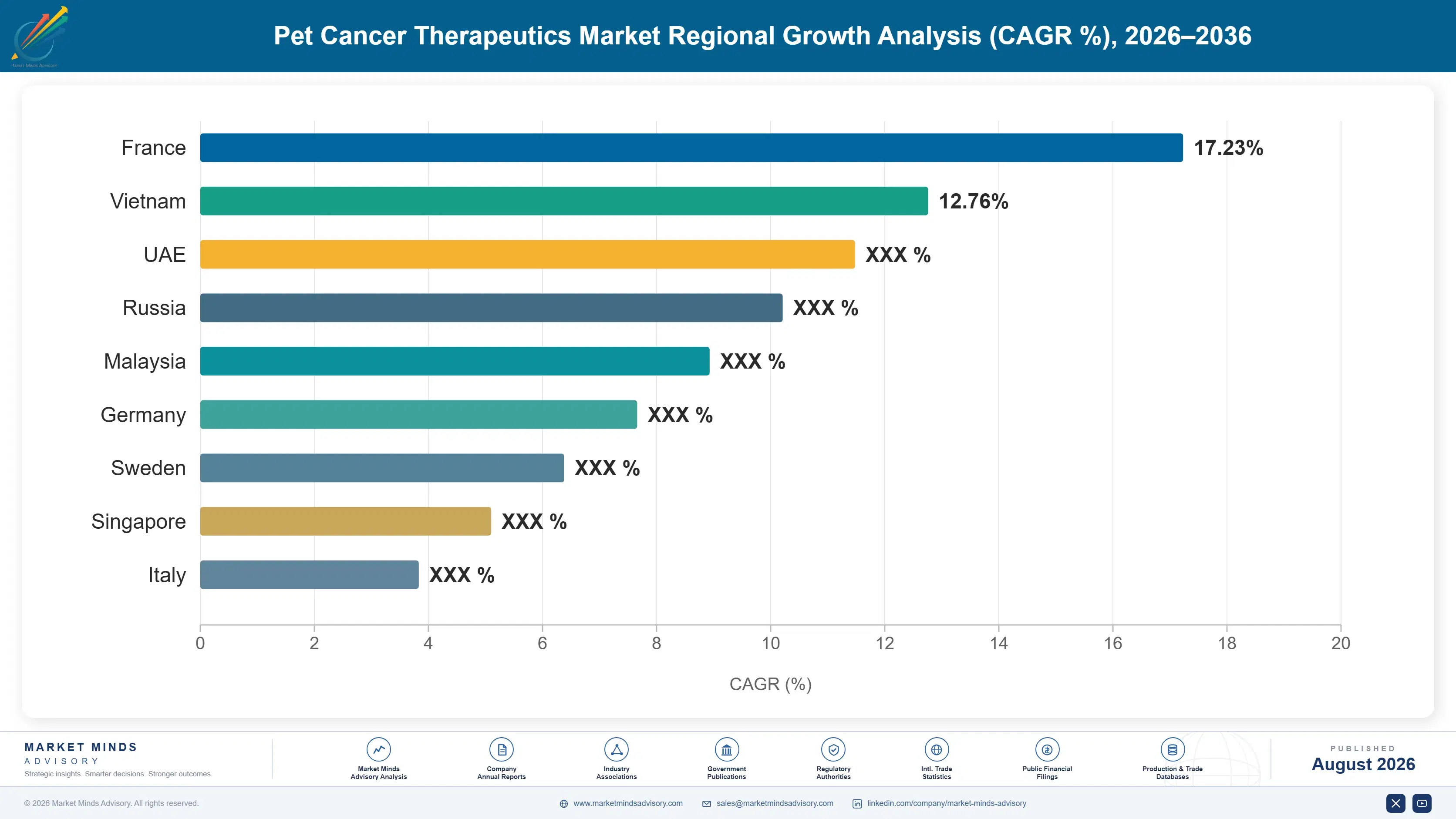
pet-cancer-therapeutics-market-country-cagr-analysis-1787306563893

Immunotherapy Adoption Capture and Referral Network Depth

Developer revenue growth in this market depends heavily on converting specialty referral relationships into recurring immunotherapy prescribing volume, since switching biologic products carries meaningful clinical familiarity cost once an oncologist standardizes protocols around a given treatment approach permanently. These four levers describe where therapeutic revenue is concentrating fastest during this ongoing shift toward biologics.

Specialty Oncologist Prescribing Relationship Deepening Strategy

Winning the trust of board-certified veterinary oncologists at leading specialty referral practices typically locks in years of recurring prescribing volume, since switching biologic products requires new clinical familiarity and outcomes tracking that oncologists rarely pursue without a compelling accuracy or cost reason to change protocols. Developers prioritizing rapid clinical education and case support are capturing prescriber loyalty that compounds meaningfully as referral volume scales over subsequent years. Prescriber retention rates have climbed to roughly 88 percent among leading developers as clinical familiarity and outcomes confidence deepen with each treated case.
Market Impact: Prescriber retention rates reach ro

Pet Insurance Formulary Inclusion Expansion Strategy

Securing formulary inclusion with major pet insurance providers lets developers reach a much broader base of pet owners able to afford premium-priced immunotherapy without absorbing the full treatment cost themselves out of pocket entirely. Formulary-covered products now account for roughly 42 percent of immunotherapy prescriptions among insured pet owners, up meaningfully from a smaller share three years earlier, and inclusion typically drives an immediate uplift in prescribing volume once coverage takes effect. Developers able to demonstrate cost-effectiveness data to insurers capture a disproportionate share of this expanding formulary-covered prescribing base.
Market Impact: Formulary-covered prescriptions now

Clinical Outcomes Publication and Case Series Growth Strategy

Publishing peer-reviewed clinical outcomes studies and multi-case series demonstrating treatment response builds referring veterinarian confidence and accelerates specialty referral volume, since oncologists increasingly require published evidence before adopting new biologics into standard practice protocols and formal treatment guidelines. Developers investing early in multi-site outcomes studies build reputational advantage that persists even as competing products enter the market later with comparable technical specifications and marketing claims. Published outcomes studies have grown to roughly 30 papers annually across leading developers, directly correlating with faster specialty referral practice adoption timelines and stronger prescriber loyalty.
Market Impact: Published outcomes studies reach ro

Emerging Market Distribution Partnership Expansion Strategy

Establishing distribution partnerships with regional veterinary pharmaceutical distributors in emerging markets ahead of competitors establishes first-mover advantage in specialty practice relationships, since many emerging market veterinary systems are building oncology treatment capability for the first time rather than replacing existing protocols. Developers investing in local clinical education and regulatory registration tailored to specific national veterinary authorities capture a disproportionate share of new specialty referral practice relationships. Emerging market prescribing volume is growing roughly 24 percent annually, outpacing mature market growth meaningfully as pet insurance coverage expands and household discretionary veterinary spending increases across these developing markets.
Market Impact: Emerging market volume grows roughl

Who Controls the Margin Pool

The top five companies by revenue share hold roughly 64 percent combined, a fairly high concentration level reflecting the regulatory and manufacturing complexity barriers facing new entrants in veterinary biologics and cellular therapy. Zoetis and Elanco Animal Health lead through combined established portfolio breadth and specialty oncologist relationships, with a clear gap separating them from smaller emerging biotech challengers.
Current competitive activity centers on three dimensions: racing new immunotherapy candidates through conditional licensing and full veterinary regulatory approval, expanding specialty oncologist clinical education and case support programs, and pursuing formulary inclusion agreements with major pet insurance providers to widen affordable access. Published clinical outcomes evidence increasingly separates trusted developers from newer entrants still building case series data.

Emerging pressure comes from smaller specialized biotech developers offering novel cellular immunotherapy or targeted small molecule candidates, gradually winning academic veterinary teaching hospital accounts through published outcomes data despite lacking the broader commercial infrastructure of established competitors. Rankings could shift meaningfully if a specialist developer secures a major distribution partnership or insurance formulary inclusion, since prescriber loyalty compounds quickly once a product becomes embedded in specialty referral practice protocols.
pet-cancer-therapeutics-market-company-positioning-matrix-1787306564415

Competitive Moat and Risk Dimensions

ZOETIS

Moat: Broadest Oncology Portfolio Breadth

Zoetis offers conventional chemotherapy, targeted small molecules, and monoclonal antibody products simultaneously, letting specialty practices standardize on one vendor across their entire oncology protocol regardless of cancer subtype or treatment stage a given case calls for. This portfolio breadth reduces switching risk for referral practice accounts and gives Zoetis pricing leverage across multiple product categories that narrower-focused competitors cannot match.
ZOETIS

Risk: Slower Cellular Therapy Pipeline

Zoetis's cellular immunotherapy pipeline trails specialized biotech developers who can iterate candidate development faster without the organizational complexity of a diversified animal health portfolio, potentially ceding leadership in the fastest-growing product category to nimbler competitors focused entirely on this single emerging treatment modality and its evolving regulatory requirements.
ELANCO ANIMAL HEALTH

Moat: Deep Specialty Oncologist Relationships

Elanco Animal Health has invested heavily in specialty oncologist clinical education programs and dedicated case support infrastructure across its territory, building prescriber loyalty that newer competitors without comparable investment struggle to match quickly regardless of underlying product efficacy or pricing competitiveness in the broader market landscape.
ELANCO ANIMAL HEALTH

Risk: Integration Complexity From Acquisitions

Elanco Animal Health has grown its oncology portfolio substantially through acquisition of smaller biotech developers, and integrating these disparate product lines and manufacturing processes carries meaningful execution risk that could slow launch timelines for pipeline candidates relative to more organically focused competitors in the category.

Players Tracked

Prominent Players

Zoetis
Elanco Animal Health
Merck Animal Health
Boehringer Ingelheim Animal Health
Virbac

Other Key Players

VetDC
ELIAS Animal Health
Torigen Pharmaceuticals
Anivive Lifesciences
Vetoquinol
Ceva Animal Health
Dechra Pharmaceuticals
IDEXX Laboratories
Heska Corporation
PetDx
Volition Veterinary Diagnostics
Qbiotics Group
Invetx
Bimeda Animal Health
Vetsource

Recent Developments

MARCH 2025

Zoetis Receives Full Approval for Monoclonal Antibody Therapy

Zoetis received full regulatory approval for its monoclonal antibody therapy following successful completion of conditional licensing requirements, broadening the approved indication to include additional canine lymphoma subtypes previously excluded from initial clearance. The approval lets Zoetis compete more directly with specialized biotech developers for specialty oncologist prescribing volume.
Signal: Signals Zoetis closing the evidence gap wi
SEPTEMBER 2024

Elanco Signs Formulary Inclusion Agreement With Major Pet Insurer

Elanco Animal Health signed a formulary inclusion agreement with a major pet insurance provider covering its monoclonal antibody portfolio across the provider's cancer treatment policy tier. The agreement bundles cost-effectiveness data sharing and claims processing support, reflecting the growing importance of insurer relationships over direct-to-clinic sales alone.
Signal: Signals growing pet insurance provider wil
JANUARY 2025

VetDC Acquires Cellular Immunotherapy Developer

VetDC completed the acquisition of a smaller cellular immunotherapy developer, adding proprietary cell manufacturing technology to strengthen its pipeline against larger established competitors nationwide and internationally. The acquisition accelerates VetDC's cellular therapy roadmap, reducing dependence on third-party manufacturing partnerships for its core treatment candidates going forward.
Signal: Signals continued industry consolidation a

Biologic Manufacturing and Cold Chain Exposure

Cell culture media and bioreactor manufacturing capacity account for roughly 28 percent of cost of goods sold for monoclonal antibody and cellular therapy products, sourced primarily from specialized biologic contract manufacturers in the United States and Germany, while cold chain logistics for temperature-sensitive biologics account for a comparable share of total delivered product cost across most distribution channels.
Biologic manufacturing capacity tightened meaningfully during 2023 as human biopharmaceutical demand competed directly with veterinary biologic developers for limited contract manufacturing slots, according to the FDA's biologics manufacturing capacity monitoring reports and industry survey data. Several veterinary developers absorbed longer lead times temporarily while securing dedicated capacity commitments, before manufacturing bottlenecks eased and developers adjusted production scheduling protocols roughly 6 percent to prioritize highest-demand products.

Smaller specialized biotech developers without long-term contract manufacturing agreements face the steepest exposure, since they typically compete for available capacity on shorter-term contracts rather than through reserved capacity agreements that larger animal health companies like Zoetis and Elanco negotiate directly with manufacturers well in advance. This gap widens further for developers dependent on single-source cold chain logistics providers facing periodic capacity constraints.
pet-cancer-therapeutics-market-cost-volatility-analysis-1787306564610

Reserved Contract Manufacturing Capacity Agreements

Larger animal health companies negotiate annual or multi-year reserved capacity agreements directly with biologic contract manufacturers, insulating a meaningful share of production timelines from spot-market capacity competition that smaller competitors cannot avoid. This approach requires scale and forecasting confidence that smaller specialist developers typically lack, reinforcing a durable advantage for established category leaders over time.

Dual Sourcing Across Cold Chain Logistics Providers

Qualifying cold chain logistics providers across more than one geographic region reduces exposure to any single capacity constraint, temperature excursion incident, or shipping disruption affecting one distribution corridor at any given time. Developers pursuing dual sourcing report smoother delivery scheduling during high-demand periods, avoiding sudden delivery delays tied to concentrated single-provider dependence on any one logistics partner.

In-House Manufacturing Capacity Investment

Some larger developers are building in-house biologic manufacturing capacity rather than relying entirely on contract manufacturers, reducing recurring capacity competition exposure for companies with sufficiently high and predictable production volume across their portfolio. This shift requires substantial upfront capital investment that smaller developers cannot easily justify, though it can meaningfully reduce long-run production cost per treatment course.

Portfolio Architecture for Margin Defence

Portfolio economics in this category split cleanly across three tiers defined by treatment modality, manufacturing complexity, and clinical evidence depth rather than by any single developer differentiator. Volume-tier conventional generic chemotherapy carries thin margins in a mature, price-competitive segment, while premium and next-generation biologics command meaningfully higher gross margin as specialty practices pay for targeted efficacy and improved quality of life rather than raw drug co
The volume-premium tension plays out most visibly between price-sensitive uninsured pet owners, who remain anchored to conventional chemotherapy economics, and insured households at specialty referral practices, whose oncologists increasingly recommend the newest biologic therapies regardless of premium pricing over legacy generic alternatives. Developers straddling both tiers manage distinct sales motions, manufacturing models, and clinical education investment for each customer segment simultaneously.

High-value margin pools concentrate in monoclonal antibody and cellular immunotherapy products sold directly into specialty referral practices and academic veterinary teaching hospitals, where prescribing volume commitments justify dedicated manufacturing capacity and clinical education investment. Next-generation combination immunotherapy protocols, pairing cellular therapy with checkpoint inhibitor drugs, remain a smaller but closely watched pool as oncologists increasingly value multi-mechanism treatment over single-agent approaches.

Volume / Commodity-Adjacent Tier

Conventional generic cytotoxic chemotherapy drugs sold primarily to general practice veterinarians and price-sensitive pet owners prioritizing lower upfront treatment cost over newest-generation biologic therapy adoption timelines and specialty referral requirements.
Gross Margin: 24-27%

Premium / Certified Tier

Monoclonal antibody and targeted small molecule therapies sold to specialty referral practices and insured pet owners prioritizing improved tumor response rates, fewer systemic side effects, and better documented quality of life outcomes.
Gross Margin: 48-51%

Sustainability / Regulatory / Next-Generation Tier

Cellular and CAR-T immunotherapy platforms and expanding combination protocol candidates engineered for academic veterinary teaching hospitals pursuing curative-intent treatment pathways for cancer subtypes previously considered untreatable through conventional treatment approaches.
Gross Margin: 54-57%
pet-cancer-therapeutics-market-portfolio-architecture-1787306565109

High-value Sub-segments and Strategic Watch-out

Cellular and CAR-T Immunotherapy Products

Cellular and CAR-T immunotherapy products sold under specialty referral partnerships combine high growth with strong margin, as clinical evidence accumulation and manufacturing scale-up let developers price above conventional chemotherapy consistently across most academic teaching hospital accounts and referral networks nationwide and across major veterinary markets.
Gross Margin: 52-55%

Monoclonal Antibody Therapies

Monoclonal antibody therapies targeting common canine and feline cancer subtypes offer strong margin with moderate volume growth, benefiting from expanding regulatory approval and specialty oncologist prescribing relationships that deepen referral practice account penetration over successive treatment cycles and evolving clinical protocols across most developed markets nationwide.
Gross Margin: 49-52%

Conventional Generic Chemotherapy Drugs

Conventional generic chemotherapy drugs remain the volume core of the category, generating steady but thinning-margin revenue from general practice veterinarians and price-sensitive uninsured pet owners not yet converted to biologic therapy given cost constraints and limited specialty referral access across several developed and emerging markets.
Gross Margin: 23-26%

Combination Immunotherapy Protocols

Combination immunotherapy protocols warrant close monitoring as pairing cellular therapy with checkpoint inhibitor drugs could reshape treatment guidelines quickly if a major clinical trial demonstrates meaningfully superior outcomes over single-agent approaches currently favored across most specialty referral practices and leading academic teaching hospitals worldwide today.
Gross Margin: 38-41%

Recurring Treatment Course Revenue Per Diagnosis

Demand in this category behaves like a treatment course annuity rather than a single transaction, since most cancer diagnoses require multiple treatment cycles spanning weeks or months, generating recurring revenue tied directly to diagnosis volume rather than a single prescription event. Developer economics favor companies that can sustain specialty oncologist trust and clinical evidence credibility over the full multi-cycle treatment course rather than those competing purely on initial per-dos
Adoption depth varies meaningfully by vertical: specialty referral practices convert to newest-generation biologics fastest given case complexity and academic research mission incentives, general practice veterinarians lag as clinical training and case volume constrain confident biologic prescribing, and academic teaching hospitals increasingly cross-adopt cellular immunotherapy originally developed for one cancer subtype into broader clinical trial protocols across multiple indications.

A generational shift is underway as newer veterinary oncologists, trained during residency on biologic and cellular therapy protocols, default to recommending immunotherapy at first diagnosis rather than reserving it for cases where conventional chemotherapy has already failed. This preference is increasingly influencing specialty practice hiring decisions and treatment protocol standardization as competition for skilled oncologists intensifies steadily across most major veterinary markets.
pet-cancer-therapeutics-market-end-use-penetration-index-1787306565601

Where Value Concentrates Through 2036

These are among the four positions where our research anticipates prominent divergence between winners and laggards over the coming forecast period. Each is grounded in the demand model, the regulatory perimeter, and the announced capacity pipeline.
01 / PRESCRIBER RELATIONSHIP PRIORITY

Prioritize specialty oncologist clinical education over near-term pricing margin

Winning the trust of board-certified veterinary oncologists at leading specialty referral practices is the single clearest growth vector in this category, and developers protecting near-term pricing margin instead risk losing prescriber loyalty to competitors expanding clinical education investment faster. Specialty referral practices and academic teaching hospitals are the buyers actually driving specification change, and they have shown strong willingness to switch protocols for superior published outcomes evidence. Capital directed toward clinical education and case support will compound faster than spending preserving legacy generic chemotherapy product lines indefinitely.
02 / INSURANCE FORMULARY ACCESS

Secure pet insurance formulary inclusion to widen affordable patient access

Formulary inclusion with major pet insurance providers directly determines how many pet owners can afford premium-priced immunotherapy without absorbing the full treatment cost themselves, and developers with the broadest formulary coverage convert clinical interest into signed prescriptions fastest. Formulary-covered prescriptions already account for a meaningfully growing share of immunotherapy volume among insured households, and that share is likely to keep climbing steadily as insurance penetration expands across most developed markets. Developers without formulary access will struggle increasingly to reach price-sensitive but clinically eligible patients.
03 / CLINICAL OUTCOMES PUBLICATION

Publish outcomes studies that accelerate specialty referral practice adoption

Referring veterinarians increasingly require published clinical evidence before adopting new biologics into standard practice protocols, and developers with the deepest outcomes publication record convert referral interest into prescribing volume fastest across their target specialty practice accounts. Published outcomes studies directly correlate with faster specialty practice adoption timelines and stronger prescriber loyalty across most referral networks and academic teaching hospital relationships nationwide. Developers underinvesting in outcomes publication will struggle increasingly to convert clinical interest into sustained prescribing revenue growth over time.
04 / EMERGING MARKET DISTRIBUTION

Build distribution partnerships ahead of competitors entering emerging markets

Veterinary systems in emerging markets are frequently building oncology treatment capability for the first time rather than replacing existing manual protocols, making distribution partnership timing a decisive first-mover advantage for whichever developer establishes relationships earliest across each national market. Developers investing in local clinical education and regulatory registration tailored to specific national veterinary authorities capture a disproportionate share of these new specialty referral practice relationships as they come online. This discipline separates developers building durable emerging market share from those competing only in already-mature veterinary markets.

Engagement Snapshot From the Field

A live engagement with an industry participant carrying material or product regulatory and market exposure ahead of a defining policy shift, showing how our research translates into a defensible multi-year portfolio strategy.
MARKET MINDS ADVISORY · CLIENT ENGAGEMENT SUMMARY
Pet Cancer Therapeutics Producer Strategic Portfolio Review and Transition Roadmap 2026·Investment Scenario on Pet Cancer Therapeutics Exposure Evaluation 2025-26
CLIENT PROFILE
The client operates a regional specialty veterinary oncology group managing twelve referral practices across a major metropolitan area, treating several thousand cancer diagnoses annually across canine and feline patients. The group had historically relied on conventional chemotherapy protocols, with limited adoption of newer monoclonal antibody and cellular immunotherapy options due to uncertainty about pet owner willingness to pay for premium treatment.
STRATEGIC CHALLENGE
Leadership needed to determine whether expanding biologic therapy offerings across the group's practices would generate sufficient incremental revenue to justify clinical training investment and inventory carrying cost, given uncertain pet owner adoption rates for premium-priced treatment options. Practice-level oncologists varied in their confidence recommending newer therapies over familiar conventional protocols.
MMA APPROACH
MMA conducted a pet owner willingness-to-pay analysis combined with a formulary coverage assessment across major pet insurance providers serving the group's patient population, drawing on primary interviews with practice oncologists and referring general practitioners. The analysis modeled incremental revenue potential under different biologic adoption rate scenarios, incorporating insurance reimbursement timelines and inventory carrying cost assumptions.
KEY FINDINGS
  1. Insured pet owners showed meaningfully higher willingness to pursue biologic therapy than uninsured households facing the full treatment cost entirely on their own.
  2. Formulary coverage varied significantly across the three major regional pet insurance providers serving the group patient population and its broader referral base.
  3. Practice-level revenue modeling suggested biologic therapy adoption could lift average revenue per diagnosed case by roughly 35 percent (client-reported, unverified by MMA).
  4. Oncologist confidence in recommending biologic therapy correlated strongly with prior clinical training exposure and ready access to published clinical outcomes evidence data.
CLIENT PROFILE
The client operates a regional specialty veterinary oncology group managing twelve referral practices across a major metropolitan area, treating several thousand cancer diagnoses annually across canine and feline patients. The group had historically relied on conventional chemotherapy protocols, with limited adoption of newer monoclonal antibody and cellular immunotherapy options due to uncertainty about pet owner willingness to pay for premium treatment.
STRATEGIC CHALLENGE
Leadership needed to determine whether expanding biologic therapy offerings across the group's practices would generate sufficient incremental revenue to justify clinical training investment and inventory carrying cost, given uncertain pet owner adoption rates for premium-priced treatment options. Practice-level oncologists varied in their confidence recommending newer therapies over familiar conventional protocols.
MMA APPROACH
MMA conducted a pet owner willingness-to-pay analysis combined with a formulary coverage assessment across major pet insurance providers serving the group's patient population, drawing on primary interviews with practice oncologists and referring general practitioners. The analysis modeled incremental revenue potential under different biologic adoption rate scenarios, incorporating insurance reimbursement timelines and inventory carrying cost assumptions.
KEY FINDINGS
  1. Insured pet owners showed meaningfully higher willingness to pursue biologic therapy than uninsured households facing the full treatment cost entirely on their own.
  2. Formulary coverage varied significantly across the three major regional pet insurance providers serving the group patient population and its broader referral base.
  3. Practice-level revenue modeling suggested biologic therapy adoption could lift average revenue per diagnosed case by roughly 35 percent (client-reported, unverified by MMA).
  4. Oncologist confidence in recommending biologic therapy correlated strongly with prior clinical training exposure and ready access to published clinical outcomes evidence data.
RECOMMENDED STRATEGY
Phase 1: Phase 1 (Months 1 to 2): Conduct willingness-to-pay analysis and formulary coverage assessment across the group entire twelve-practice patient population. Phase 2: Phase 2 (Months 3 to 5): Deliver clinical training on biologic therapy protocols across all twelve practice locations systematically and thoroughly. Phase 3: Phase 3 (Months 6 to 12): Roll out expanded biologic therapy offerings and track adoption against revenue projections closely and continuously.
OUTCOME
The group expanded biologic therapy offerings across all twelve practices within the recommended timeline, reporting a 28 percent increase in average revenue per diagnosed case and improved oncologist confidence in treatment recommendations (client-reported, unverified by MMA). Pet owner satisfaction with expanded treatment options improved measurably per internal survey feedback collected after rollout.

Frequently Asked Questions

Foundational context covering the market sizes, CAGR, scope, country, region and competition that inform every finding below. This section is provided to cover basics and most often pre-purchase conversations, answered from the MMA Primary Research Dataset.

What is the current size of the Pet Cancer Therapeutics Market?

The global Pet Cancer Therapeutics Market is valued at approximately 0.75 billion dollars in 2025. This figure spans conventional chemotherapy, targeted small molecules, monoclonal antibodies, and cellular immunotherapy products.

How large will the Pet Cancer Therapeutics Market be by 2036?

The market is projected to reach approximately 3.02 billion dollars by 2036. This represents cumulative growth driven primarily by biologic therapy adoption and expanding pet insurance coverage.

What is the CAGR for the Pet Cancer Therapeutics Market 2026 to 2036?

The market is forecast to grow at a compound annual growth rate of 13.5 percent between 2026 and 2036. Base-case growth reflects accelerating biologic adoption tempered by uninsured household cost sensitivity.

Which segment is growing fastest?

Cellular and CAR-T immunotherapy is the fastest-growing segment, expanding at roughly 28 percent annually, more than twice the overall market rate. Growth is concentrated among academic teaching hospitals pioneering new treatment protocols.

Who are the major companies in the Pet Cancer Therapeutics Market?

Leading companies include Zoetis, Elanco Animal Health, Merck Animal Health, Boehringer Ingelheim Animal Health, and Virbac. These five companies hold roughly 64 percent of global revenue share combined.

Which country is growing fastest?

China is among the fastest-growing national markets, supported by rapidly rising companion animal populations and an expanding network of private veterinary specialty hospitals. Growth here outpaces most established Western markets meaningfully.

Report Segmentation Architecture

The full report scope spans multiple orthogonal segmentation dimensions, with cross-tabulated demand data provided for each dimension pair. Coverage extends further to regional breakdowns, trend trajectories, and the competitive detail needed to support segment-level decision-making.

By Primary Market Dimension

  • Cellular and CAR-T Immunotherapy
  • Monoclonal Antibody Therapies
  • Checkpoint Inhibitor Immunotherapies
  • Targeted Small Molecule Kinase Inhibitors
  • Conventional Cytotoxic Chemotherapy Drugs
  • Radiation Therapy Adjuvant Drug Combinations

By End-Use Industry

  • Specialty Veterinary Oncology Referral Practices
  • General Practice Veterinary Clinics
  • Academic Veterinary Teaching Hospitals
  • Mobile and In-Home Veterinary Oncology Services
  • Veterinary Research and Clinical Trial Organizations

By Commercial Dimension

  • Direct Practice Sales
  • Pet Insurance Formulary Channels
  • Distributor and Wholesaler Networks
  • Manufacturer Assistance Payment Programs

By Region

  • North America
  • Western Europe
  • East Asia
  • South Asia and Pacific
  • Latin America
  • Middle East and Africa
  • Eastern Europe

Scope, Methodology, and Coverage

Every figure in this report is reproducible from documented input assumptions. The scope below maps the historical period, the forecast horizon, the segmentation dimensions, and the countries covered, alongside the underlying primary and qualitative methodology.
Historical Period
2020 to 2025
Forecast Period
2026 to 2036
Base Year
2025 (USD billions; MMA Primary Research Dataset, August 2026)
Market Definition
The Pet Cancer Therapeutics Market covers pharmaceutical and biologic products used to treat diagnosed cancer in companion animals, including conventional chemotherapy, targeted small molecule inhibitors, monoclonal antibodies, and cellular immunotherapy. It excludes veterinary diagnostic imaging equipment, cancer screening tests, and human oncology drugs used off-label without veterinary-specific formulation or approval.
Quantitative Units
USD billions (current prices); treatment courses in thousands of cases
Segmentation Dimensions
By Drug and Technology Type; By End-Use Industry; By Commercial Dimension; By Region
Regions Covered
North America, Western Europe, East Asia, South Asia and Pacific, Latin America, Middle East and Africa, Eastern Europe
Countries Covered
USA, China, Germany, France, UK, Japan, South Korea, India, Australia, Canada, Brazil, Mexico, Indonesia, Vietnam, Thailand, Malaysia, UAE, Saudi Arabia, South Africa, Nigeria, Turkey, Poland, Netherlands, Italy, Spain, Sweden, Switzerland, Argentina, Colombia, Singapore, and additional markets relevant to this sector
Key Companies Profiled
Zoetis, Elanco Animal Health, Merck Animal Health, Boehringer Ingelheim Animal Health, Virbac, VetDC, ELIAS Animal Health, Torigen Pharmaceuticals, Anivive Lifesciences, Vetoquinol, Ceva Animal Health, Dechra Pharmaceuticals, IDEXX Laboratories, Heska Corporation, PetDx, Volition Veterinary Diagnostics, Qbiotics Group, Invetx, Bimeda Animal Health, Vetsource
Quantitative Methodology
Primary survey, n=3,800 respondents, Q4 2025, six countries; demand-side model with trade association cross-validation
Qualitative Methodology
47 expert interviews, Q4 2025; applied to validate demand model assumptions, identify emerging dynamics, and assess competitive positioning
Report Format
PDF and XLSX data workbook (Word format preview document)
Publisher
Market Minds Advisory
Report Code
MMA-2026-HLT-534
Published
August 2026
Contact
sales@marketmindsadvisory.com | www.marketmindsadvisory.com

Purchase the full Pet Cancer Therapeutics Market Report (2026 to 2036).

This report delivers a full quantitative and qualitative assessment of the global Pet Cancer Therapeutics Market, covering historical performance from 2020 through 2025 and forecasts through 2036 across base, bull, and bear scenarios. It profiles twenty companies spanning conventional chemotherapy, targeted small molecules, monoclonal antibodies, and cellular immunotherapy products, benchmarked on a consistent revenue basis. Regional analysis spans all seven major world regions, with detailed demand mechanisms specific to each. The report also includes segmentation analysis, input cost exposure assessment, competitive positioning, and an anonymized client case study illustrating practical formulary strategy decision-making.
Ten-year historical and forecast market sizing
Treatment modality segmentation with growth rates
Seven-region demand mapping and competitive benchmarking
Twenty-company competitive profiling and moat analysis
Input cost exposure and mitigation strategy assessment
Anonymized client case study and strategic verdict

Built For The People Who Decide

From boardroom strategy to bench-side execution, this report is read cover-to-cover by leaders shaping the next decade of their industry, turning demand scenarios, market dynamics and valuation benchmarks into decisions.
CXOs/ Presidents/ VPs/ Managers
M&A and Corporate Development
Strategy Teams and R&D Heads
Procurement and Product Directors
Regulatory and Compliance Leaders
Investor Relations and Equity Analysts