Market Minds Advisory
Peripheral Vascular Stents Market

Peripheral Vascular Stents Market: Leave Nothing Behind, and the Reimbursement That Decides Where

A stent in a coronary artery sits still, while one in the femoral artery is bent and crushed with every step, which is why this field spent twenty years learning to leave nothing behind.

Lead Analyst

Alice Ballenger

Published

September 2026

Make Smarter Decisions with Customized Research Insights

Request a free sample report and evaluate market opportunities, growth trends, and competitive dynamics relevant to your business needs.

2025 MARKET VALUE$4.6BMarket Size 2025
2036 FORECAST VALUE$11.0BBase Case , 2026 to 2036
CAGR 2026 TO 20368.2 %Bull 9.4% / Bear 7.0%
INCREMENTAL OPPORTUNITY$6.0BNet 10- year value creation
EXPANSION MULTIPLE2.22x2036 value over 2026 base
Strategic Levers
M&A Pipeline
Regional Outlook
Country Rankings
Competitive Intelligence
Segmental Deep-dive
Call-Us : 91 93563 13602

Executive Snapshot and Market Trajectory

The femoral artery is a hostile place for metal. It bends, twists, shortens and gets compressed every time a patient takes a step, and stents that worked perfectly in coronary arteries fractured there. Twenty years of engineering went into that single problem. Nitinol and helical construction exist because of it.
Drug-eluting peripheral stents compound at 12.3%, a full 1.50x the market rate, on restenosis rates that bare metal never approached. East Asia holds the largest share at 30%, driven by a diabetic population larger than any other region's and by peripheral disease prevalence that follows it directly rather than by any pricing advantage. Roughly 58% of procedures now happen in settings where the treating physician frequently owns the facility.
Concentration is high at 72%, held by four large device groups plus one specialist. Below the knee remains the genuinely unsolved problem: vessels too small and too diseased for durable stenting, where roughly 34% of critical limb ischaemia patients still face amputation within a year. That is where the clinical need and the commercial opportunity both sit. Several development programmes have already failed there. Bare metal pricing is pressed from both directions at once.
Market Definition
This market covers stents implanted in arteries outside the coronary and cerebral circulations, spanning self-expanding nitinol stents, balloon-expandable peripheral stents, drug-eluting peripheral stents, covered stents and stent grafts for peripheral use, and bioresorbable peripheral scaffolds. Coronary stents, cerebral and carotid stents, aortic stent grafts for aneurysm repair, venous stents, drug-coated balloons, atherectomy devices, and vascular closure devices are excluded.
Base Year Value
$4.6B in 2025 (MMA Primary Research Dataset, August 2026)
Forecast Period
2026 to 2036, eleven discrete annual values
CAGR
8.2% base case. Bull 9.4%. Bear 7.0%.
Fastest Growth Segment
Drug-Eluting Peripheral Stents: 12.3% CAGR
Fastest Growth Country
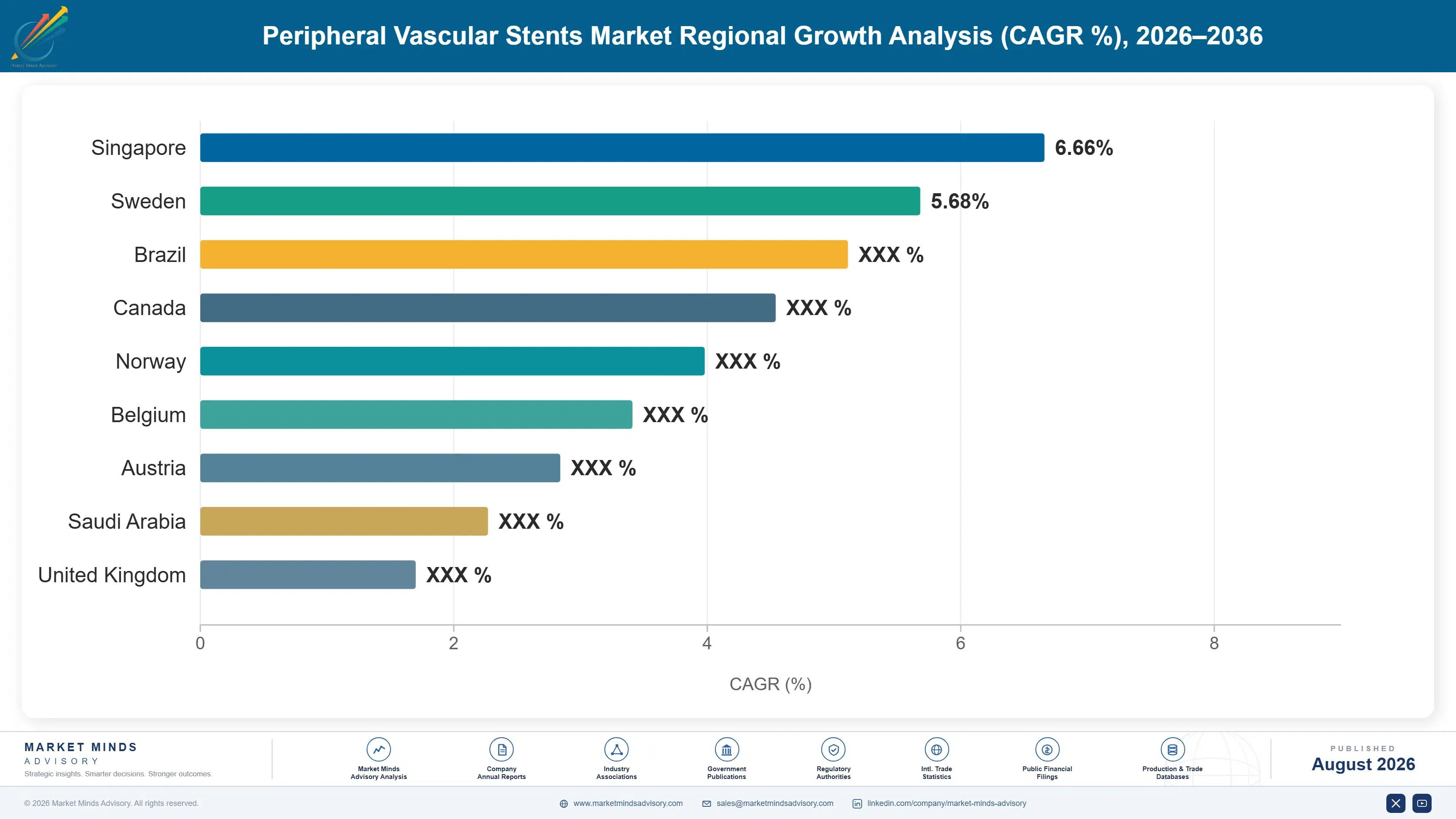
India: 11.6% CAGR
Fastest Growth Region
South Asia and Pacific: 10.4% CAGR
Largest Region
East Asia: 30% of 2025 global value
Market Leaders
Abbott, Boston Scientific, Medtronic, Cook Medical, and Becton Dickinson. Source: MMA Primary Research Dataset, July 2026.
Primary Survey
n=3,800 procurement and R&D decision-makers, Q4 2025, six countries
Methodology
Demand-side build-up, cross-validated against public data, 47 expert interviews

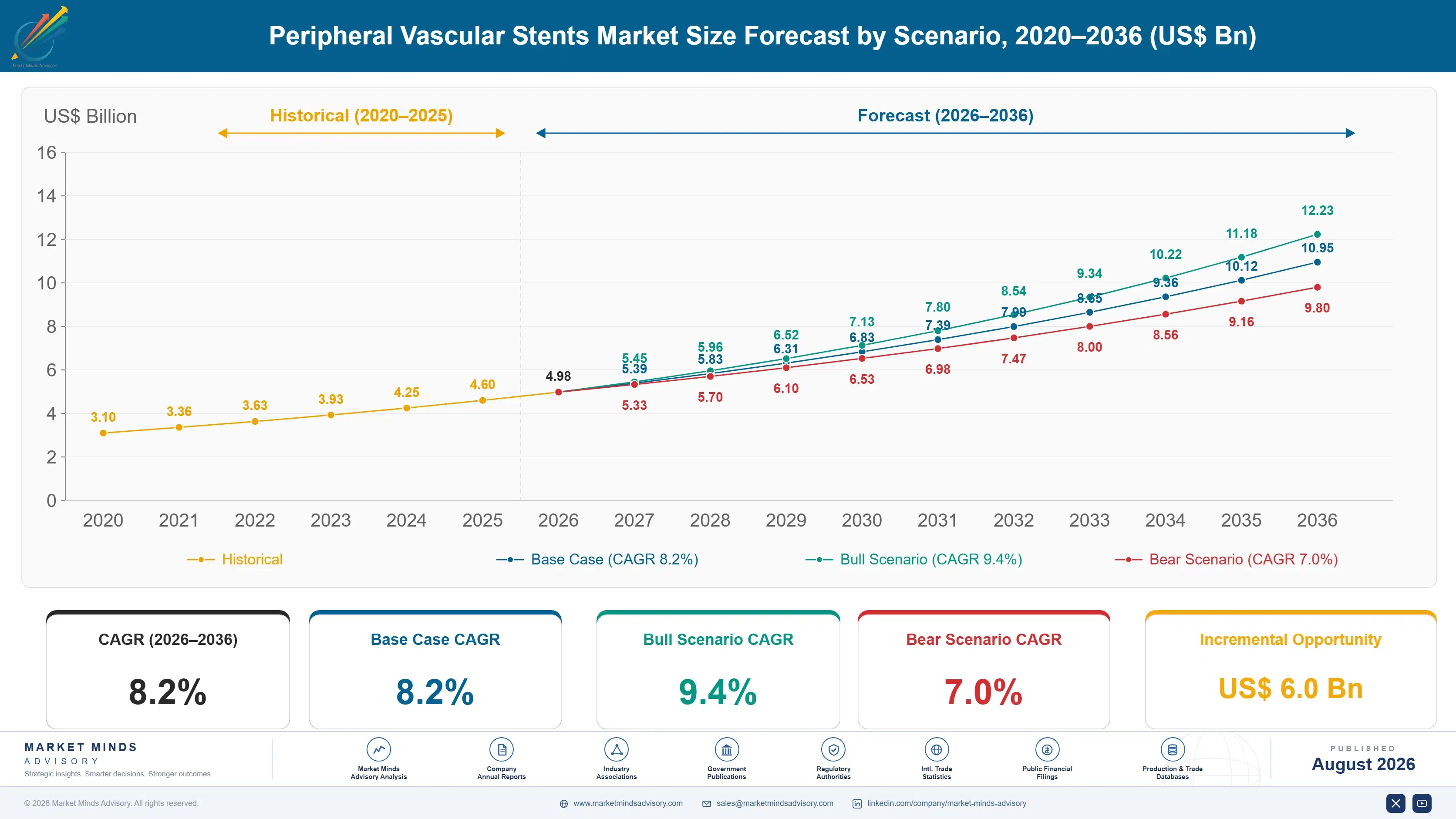
Peripheral Vascular Stents Market Forecast Scenarios

peripheral-vascular-stents-market-size-forecast-scenario-1787306506757
Growth ran near 6.8% from 2020 to 2025 and a safety controversy shaped much of it. Questions raised about mortality signals associated with paclitaxel-based peripheral devices suppressed use across several markets for roughly two years before subsequent analysis and regulatory review restored confidence. Procedure volumes recovered afterward, and drug-eluting device share resumed climbing from a temporarily depressed base.
Base case growth of 8.2% rests on three mechanisms. Diabetic populations continue expanding across Asia and the Middle East, and peripheral arterial disease follows diabetes with a predictable lag. Limb salvage programmes are being established in markets that previously amputated, which converts an untreated population into a treated one. And drug-eluting devices keep taking share from bare metal on restenosis performance that is no longer disputed. None of the three requires a technology advance that has not already happened.
The bull case at 9.4% assumes below-the-knee devices reach durable clinical performance within the period, opening a patient population currently served by angioplasty alone and by amputation. The bear case at 7.0% reflects reimbursement pressure on peripheral intervention volumes, where several payers have questioned whether procedure rates reflect clinical need or facility economics. Both scenarios turn on decisions outside any manufacturer's control.

Peripheral Stenting: Motion, Restenosis, Limb Salvage

Coronary stenting solved a comparatively easy mechanical problem. A coronary artery moves with the heart but does not bend through ninety degrees, shorten by 13% or get squeezed between muscle groups. The superficial femoral artery does all of that with every step a patient takes, and early stents transplanted from cardiology fractured in it. Nitinol, helical designs and interwoven constructions all exist because of that single problem.
TOP FIVE CONCENTRATION72%Concentrated among large device groups with vascular sales organisations
AVERAGE SELLING PRICE$1,850Typical price across peripheral stent configurations sold to hospitals
TWELVE-MONTH AMPUTATION RATE34%Critical limb ischaemia patients losing a limb within a year
FEMORAL ARTERY COMPRESSION13%Vessel shortening the device must tolerate during ordinary walking
DRUG-ELUTING SHARE41%Peripheral stent procedures using a drug-eluting device today
OUTPATIENT PROCEDURE SHARE58%Interventions performed outside a hospital inpatient setting entirely
Restenosis was the second problem and it proved more stubborn. Bare metal in a peripheral artery reoccludes at rates that would be unacceptable anywhere in cardiology, and drug elution reduced that materially. A safety controversy over paclitaxel suppressed use for roughly two years before subsequent analysis and regulatory review restored confidence, and drug-eluting devices now account for around 41% of procedures with the share still climbing.
Below the knee remains genuinely unsolved. The vessels are small, diffusely diseased and constantly moving, and no stent has demonstrated durable patency there. Roughly 34% of patients presenting with critical limb ischaemia lose a limb within twelve months, which is a worse outcome than most cancers produce. Whoever solves durable below-the-knee revascularisation addresses a clinical failure rather than an incremental improvement.
"Everyone talks about drug elution and the paclitaxel argument, and meanwhile a third of critical limb ischaemia patients lose a leg inside a year. That is the real number in this field. Above the knee is a solved engineering problem being refined; below the knee is a clinical failure nobody has fixed, and the commercial prize sits there."
Principal Analyst, Vascular Intervention and Endovascular Therapies Practice · M

Market Trends

Drug elution recovers share after the paclitaxel controversy

A mortality signal raised against paclitaxel-based peripheral devices suppressed their use across several markets for roughly two years, and regulatory bodies issued warnings that clinicians followed carefully. Subsequent analysis of longer-term data and regulatory review restored confidence, and drug-eluting devices now account for around 41% of peripheral procedures with share still rising. The episode left a durable lesson: in a field where devices treat limbs rather than lives, a mortality question stops adoption instantly regardless of how it eventually resolves. Participants without long-term follow-up data could not answer questions they had never anticipated.
Market Impact: India compounding at 11.6% annually
Procedures migrate out of hospitals into office settings

Roughly 58% of peripheral interventions now happen outside hospital inpatient settings, in office-based laboratories and ambulatory centres where physicians frequently hold ownership stakes. That migration changes purchasing entirely: device selection moves from a value analysis committee to a physician who is also the buyer, and price sensitivity rises sharply because the margin is personal. It has also drawn payer scrutiny over whether procedure rates in those settings reflect clinical need or facility economics. Suppliers structured around hospital committees serve that buyer poorly, and several have lost share without recognising where.
Market Impact: Amputation rate near 34% annually

Market Opportunities and Growth Drivers

Diabetic populations expand the disease pool with a predictable lag

Peripheral arterial disease follows diabetes reliably, and the diabetic population across Asia and the Middle East continues expanding faster than anywhere else. The lag between diabetes prevalence and peripheral intervention demand runs roughly a decade, which makes this among the more forecastable device markets available. India compounds at 11.6%, faster than any country covered, on exactly that relationship. The mechanism requires no clinical practice change, no reimbursement decision and no technology advance to operate. Gulf state diabetic prevalence ranks among the highest anywhere, which builds disease burden well beyond regional population size.
Market Impact: Patency below 50% at twelve months

Limb salvage programmes convert amputations into interventions

In health systems without established endovascular capability, critical limb ischaemia has historically been managed by amputation because nothing else was available. Building limb salvage programmes converts that untreated population directly into a treated one, and each preserved limb represents several interventions over the following years rather than a single procedure. The clinical argument against a 34% twelve-month amputation rate is powerful enough that health systems fund these programmes even where general device budgets are constrained. Supporting programme establishment with training and pathway development reaches these patients years before any competitor arrives selling devices into an already established practice.
Market Impact: Price pressure across 58% of volume

Market Restraints and Challenges

Below the knee has defeated every stent design so far

Tibial and pedal vessels are small, diffusely diseased and in constant motion, and no stent has demonstrated durable patency in them. The root cause is that the mechanical and biological conditions differ fundamentally from the femoral segment rather than merely being harder versions of it. Commercial impact is that the patients with the greatest clinical need remain served by angioplasty alone. Participants are pursuing bioresorbable scaffolds, dedicated below-knee drug-eluting designs and combination approaches, none of which has yet delivered. Development risk here is genuine rather than theoretical. Every approach so far has failed clinically.
Market Impact: Drug-eluting share reaching 41% now

Physician-owned settings compress device pricing directly

With roughly 58% of procedures now in office-based and ambulatory settings, the physician selecting the device frequently owns the facility and absorbs its cost personally. The root cause is a payment structure that bundles device cost into a facility fee rather than reimbursing it separately. Commercial impact is severe price pressure in the fastest-growing care setting. Participants respond with volume agreements, bundled portfolio pricing across the vascular range and service arrangements that shift value away from unit price. None of those measures restores the pricing hospital purchasing once supported. The channel keeps growing regardless.
Market Impact: Outpatient settings holding 58% sha
4 additional market trends, 3 additional growth drivers, and 2 additional restraints and challenges are covered in the full report. Contact sales@marketmindsadvisory.com to access the complete intelligence.

Segment CAGR and Growth Architecture

Five device classes divide this market by construction and therapeutic mechanism, which is how interventionalists actually select between them at the table. The division also separates the engineering problem that has been solved from the two that have not, and pricing across the classes reflects that separation closely. Solved problems price like commodities and unsolved ones do not.
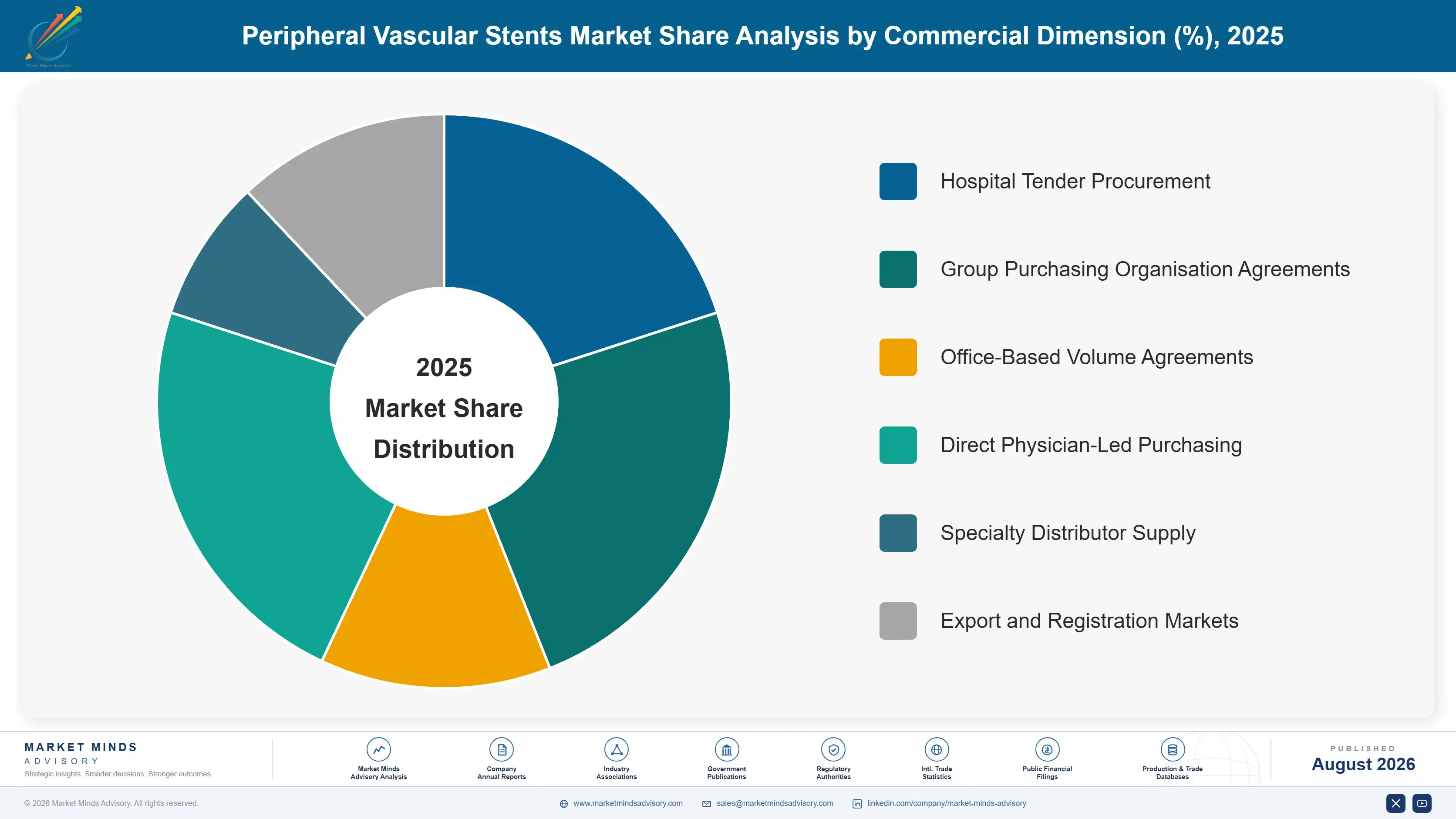
peripheral-vascular-stents-market-market-share-analysis-1787306507288

Drug-Eluting Peripheral Stents

Compounding at 12.3%, a full 1.50x the market rate, these devices combine a nitinol platform with an antiproliferative agent to address the restenosis rates that bare metal never overcame in peripheral vessels. Share now sits near 41% of procedures and continues climbing after a paclitaxel safety controversy suppressed use for roughly two years before regulatory review restored confidence. Pricing runs well above bare metal on demonstrated patency advantage. The episode also demonstrated that a mortality question stops peripheral adoption instantly, because these devices treat limbs rather than lives. Interventionalists who continued using these devices through the uncertainty developed loyalty that survived the episode intact. Evidence depth accumulated through that period is now the defence against newer entrants.
CAGR 12.3%

Self-Expanding Nitinol Stents

Growing at 7.4%, self-expanding nitinol platforms solved the mechanical problem that defeated devices transplanted from cardiology, tolerating the bending, torsion and 13% shortening that the superficial femoral artery imposes with every step. Helical and interwoven constructions represent the engineering answers that emerged, and fracture rates fell accordingly. This is the volume core of the market and the class most exposed to price competition, since the mechanical problem is now genuinely solved and multiple manufacturers produce acceptable platforms at comparable performance levels. Chinese manufacturers compete effectively here on delivered price, and office-based purchasing intensifies that pressure because the physician selecting the device frequently absorbs its cost personally. Price erosion in this class is continuous.
CAGR 7.4%
Full segment breakdown across 5 segments available in the complete report.

Regional Architecture and Country Demand Map

Regional distribution follows diabetic prevalence and endovascular capability, which do not overlap neatly. Several regions carry very large disease burdens with limited intervention capacity, and those gaps represent the clearest growth available anywhere in this market. Diabetic prevalence predicts future demand here better than current procedure volume does.

East Asia

Thirty per cent of global value, the largest regional position, and diabetes explains it. China carries more people with diabetes than any other country and peripheral arterial disease follows that prevalence with roughly a decade's lag, which is now arriving. Endovascular capability has expanded rapidly across provincial hospitals, and domestic manufacturers including Lepu and MicroPort compete effectively on delivered price against imported platforms. Japan performs high procedure volumes with meticulous technique and strong drug-eluting adoption. South Korea and Taiwan follow Japanese practice patterns closely at smaller scale. Below-knee disease burden across the region is substantial and largely managed with angioplasty alone. Below-knee intervention capability remains concentrated in tertiary centres. Amputation still manages much of it.
Share: 30% | CAGR: 9.0% (2026 to 2036)

North America

Twenty-seven per cent of value, and the care setting here differs from everywhere else in ways that matter commercially. Roughly 58% of procedures happen in office-based laboratories and ambulatory centres where the treating physician frequently owns the facility, which moves device selection away from committees and compresses pricing directly. Payer scrutiny of peripheral intervention rates has intensified as a result. Drug-eluting adoption recovered strongly after the paclitaxel controversy, and limb salvage programmes are well established across academic and community vascular practice. Interventional cardiologists now perform a growing share of peripheral work, which has shifted which commercial relationships matter and which conferences reach the audience that decides. Payment scrutiny is intensifying in parallel.
Share: 27% | CAGR: 7.8% (2026 to 2036)
Regional intelligence for 5 additional markets available in the complete report: Western Europe, South Asia and Pacific, Latin America, Middle East and Africa, Eastern Europe. Contact sales@marketmindsadvisory.com.
peripheral-vascular-stents-market-country-cagr-analysis-1787306507811

Where Peripheral Stent Value Concentrates

The femoral engineering problem is solved and multiple manufacturers produce acceptable platforms, which makes that segment a price contest. Value comes from the restenosis argument, from the vascular beds nobody has conquered, and from the care setting shift that changed who signs for the device. Two of those three are commercial rather than technical problems.

Build the below-knee position nobody currently holds

Roughly 34% of critical limb ischaemia patients lose a limb within twelve months, and no stent has demonstrated durable patency in tibial or pedal vessels. That is a clinical failure rather than an incremental gap, and it sits in the patient group with the most urgent need. Development risk is genuine, since several approaches have already failed there. The commercial position for whoever succeeds would be uncontested, and interviewed vascular specialists valued a durable below-knee device above every other unmet need in the field. Nothing else in this market carries comparable upside.
Market Impact: Amputation rate standing at 34% in

Sell restenosis economics rather than device performance

A reintervention costs a health system the whole procedure again plus the patient's risk exposure, and drug-eluting devices priced well above bare metal justify themselves on avoided reinterventions rather than on patency percentages. Drug-eluting share sits near 41% and rises fastest where suppliers present total episode cost rather than comparative patency data. Participants using episode cost modelling reported conversion roughly 40% higher than those leading with trial endpoints, which reflects how procurement actually evaluates these decisions. Trial endpoints persuade clinicians while episode cost persuades the committee that actually signs. Both audiences need addressing separately rather than through one argument.
Market Impact: Conversion roughly 40% higher using

Serve the office-based setting on its own terms

Roughly 58% of procedures now occur in settings where the treating physician frequently owns the facility and absorbs device cost against a bundled fee. That buyer behaves nothing like a hospital committee: decisions are fast, price sensitivity is acute and relationships are personal. Suppliers running dedicated office-based commercial models with volume agreements and portfolio pricing hold share that hospital-oriented organisations lose steadily. Treating this channel as a smaller version of the hospital business is the most common commercial error in this market. Territory targets and compensation usually need restructuring first.
Market Impact: Channel now covering 58% of all per

Follow diabetes prevalence into limb salvage programmes

Peripheral disease follows diabetes with roughly a decade's lag, which makes the demand curve unusually forecastable, and health systems establishing limb salvage programmes convert amputation populations into intervention populations directly. Each preserved limb generates several procedures over subsequent years rather than one. India compounds at 11.6% on this exact dynamic. Supporting programme establishment with training and pathway development reaches patients years before any competitor arrives selling devices into an established practice. Each preserved limb generates several procedures over subsequent years rather than one, because peripheral disease progresses. Lifetime value far exceeds the first case.
Market Impact: India compounding at 11.6% each and

Who Controls the Margin Pool

The top five hold 72% of the market measured on revenue from peripheral vascular stent products, the basis used throughout this section. Concentration reflects the fact that these devices reach interventionalists through vascular commercial organisations already supplying balloons, wires, sheaths and atherectomy devices to the same physicians. Abbott and Boston Scientific sit ahead of the field, with Medtronic strong in drug-eluting and Cook Medical holding depth in specialist configurations.
Competitive activity runs along three lines. Participants are pursuing below-the-knee performance where no durable solution exists, on the view that the position would be uncontested. Several are building dedicated commercial models for office-based laboratories, which behave nothing like hospital accounts. And Chinese manufacturers compete on delivered price in domestic tender and increasingly in export markets across Asia, Latin America and Eastern Europe.

Pressure comes from two directions simultaneously. Price compression in physician-owned settings affects the fastest-growing care channel, and low-cost manufacturers press the bare metal segment where the mechanical problem is solved and platforms are comparable. Rankings will shift on below-knee performance if anyone achieves it, since that would create a position nobody currently occupies at all.
peripheral-vascular-stents-market-company-positioning-matrix-1787306508335

Competitive Moat and Risk Dimensions

ABBOTT

Moat: Vascular portfolio reaching same physician

Peripheral stents reach interventionalists through a commercial organisation already supplying balloons, wires, sheaths and imaging to the same laboratories under the same agreements, which makes the stent part of a portfolio conversation rather than a standalone contest. That breadth matters more in office-based settings than in hospitals, where a single supplier relationship simplifies inventory and pricing for an owner-operator.
ABBOTT

Risk: Bare metal price exposure

A substantial part of the position sits in self-expanding nitinol platforms where the mechanical problem is genuinely solved and several manufacturers produce comparable devices, which invites Chinese and regional competitors on delivered price. Growth in that class runs at 7.4% against price erosion, and portfolio bundling defends it only where the buyer values breadth over unit cost.
BOSTON SCIENTIFIC

Moat: Drug-eluting peripheral position

Depth in drug-eluting peripheral devices places the company in the fastest-growing class at 12.3%, and clinical data accumulated across the paclitaxel controversy and its resolution is difficult for a new entrant to replicate quickly. Interventionalists who continued using these devices through the uncertainty developed loyalty that survived the episode, which is worth more than any trial endpoint.
BOSTON SCIENTIFIC

Risk: Safety perception recurrence risk

The paclitaxel episode demonstrated that a mortality question suppresses peripheral device adoption within weeks and takes years to resolve, because these devices treat limbs rather than lives and clinicians will not accept mortality risk for limb outcomes. Any comparable signal against another antiproliferative agent would affect the class at once, regardless of how the analysis eventually concluded.

Players Tracked

Prominent Players

Abbott
Boston Scientific
Medtronic
Cook Medical
Becton Dickinson

Other Key Players

Terumo
Cordis
Gore Medical
BIOTRONIK
iVascular
Lepu Medical
MicroPort Scientific
Meril Life Sciences
Endologix
Getinge
Merit Medical Systems
Zylox-Tonbridge Medical
Sahajanand Medical Technologies
Alvimedica
Reflow Medical

Recent Developments

JANUARY 2019

Mortality signal raised against paclitaxel peripheral devices

A published meta-analysis reported a late mortality signal associated with paclitaxel-based peripheral devices, prompting regulatory communications and a sharp reduction in use across several markets. The finding was a research publication rather than any regulatory action or commercial event, and it suppressed an entire device class within weeks of appearing.
Signal: In limb indications a mortality question h
JULY 2023

Regulators withdraw paclitaxel mortality warnings

United States regulators updated their position on paclitaxel-coated peripheral devices after reviewing longer-term data, removing the mortality warning that had constrained use since 2019. The update was a regulatory reassessment rather than a new approval, and drug-eluting device share resumed climbing from a temporarily depressed base afterward.
Signal: Confidence took four years to restore foll
MARCH 2024

Payers scrutinise office-based peripheral intervention rates

Payers and oversight bodies increased scrutiny of peripheral intervention volumes performed in office-based laboratories, questioning whether procedure rates in physician-owned facilities reflected clinical need or facility economics. This was a payment integrity review rather than any clinical or regulatory determination about the devices themselves. Device selection was not itself questioned.
Signal: The fastest-growing care setting now carri

What Actually Costs Money Here

Nitinol dominates this cost base and behaves unlike ordinary stainless steel. Nitinol tubing, laser cutting, electropolishing and shape-setting account for roughly 33% of cost of goods, and the supply base capable of medical-grade nitinol processing is genuinely narrow. Delivery systems including catheters, sheaths and deployment mechanisms add a further 24%, and drug coating on eluting devices contributes around 11% with disproportionate regulatory burden.
Nitinol pricing and processing capacity tightened through 2021 and 2022 as demand from vascular, orthopaedic and consumer applications competed for the same specialist suppliers, and vascular device manufacturers documented extended lead times through annual filings. Ethylene oxide sterilisation capacity constrained output during the same period under emissions scrutiny. Clinical trial costs also rose materially as evidence expectations tightened following the paclitaxel episode. Every participant absorbed that evidence cost simultaneously.

Exposure varies by device class and by manufacturing integration. Participants producing their own nitinol components control the narrowest part of the supply chain, which is protective during constraint and expensive to establish. Drug-eluting participants carry coating validation, stability testing and regulatory burden that bare metal manufacturers avoid entirely. Chinese manufacturers carry materially lower processing and labour costs domestically, and that advantage narrows once export registration is added.
peripheral-vascular-stents-market-cost-volatility-analysis-1787306508532

Vertical integration of nitinol processing

Medical-grade nitinol tubing and shape-setting capability sits with a small group of specialist suppliers, and constraint periods showed how little influence a buyer holds over allocation. Building the capability internally takes years and substantial capital, which is exactly why the participants that already own it defended supply through recent shortages far more comfortably. Few competitors will attempt it.

Evidence generation planned before it is demanded

The paclitaxel episode raised evidence expectations across the whole class, and participants without long-term follow-up data were unable to answer questions they had not anticipated. Designing registries and extended follow-up into trials from the outset costs more upfront and provides the only usable response when a safety question arrives unexpectedly. The cost is paid years before the need appears.

Portfolio pricing across the vascular range

Office-based buyers absorbing device cost against a bundled facility fee resist unit pricing more sharply than hospitals do. Bundling stents with balloons, wires and sheaths under volume agreements moves the negotiation away from unit cost toward total supply cost, which suits a supplier with breadth and disadvantages single-product competitors considerably. Breadth is the requirement rather than price alone.

Portfolio Architecture for Margin Defence

Margin architecture separates by whether the clinical problem is solved. Bare metal self-expanding platforms address a mechanical challenge that nitinol design resolved years ago, and multiple manufacturers produce acceptable devices, which holds gross margin in the fifties under steady price erosion. Drug-eluting devices address restenosis with demonstrated advantage and carry regulatory barriers competitors need years to clear, and they clear well above seventy per cent.
The tension is between the solved problem and the unsolved one. Bare metal platforms carry the procedure volume, the physician relationships and the manufacturing scale that everything else depends upon, while facing price competition from every direction. Below-knee devices would carry enormous value if they worked, and several development programmes have already failed there. Nobody has found a comfortable position between the two.

High-value pools concentrate where a device changes what happens to the patient rather than how the procedure is performed. Drug-eluting devices that prevent reintervention and any future device that prevents amputation both sit there. Everything competing on deliverability, radial force and conformability is competing on attributes that several manufacturers now deliver adequately at prices that keep falling.

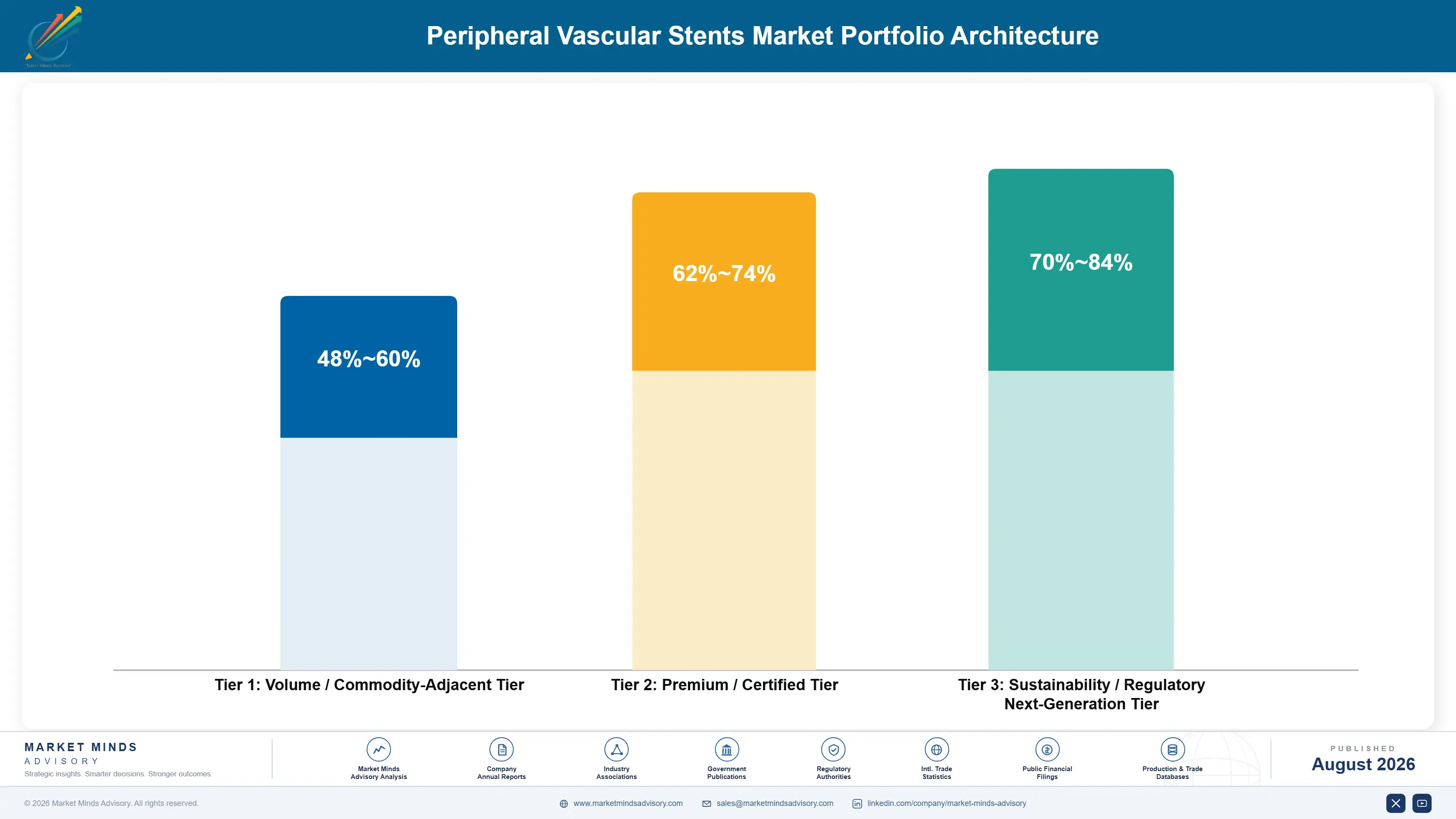
Volume / Commodity-Adjacent Tier

Bare metal self-expanding and balloon-expandable peripheral platforms where the mechanical problem is solved and several manufacturers produce comparable devices, so delivered price decides awards in tender and office-based settings alike.
Gross Margin: 48-60%

Premium / Certified Tier

Covered stents, stent grafts and specialist configurations for complex anatomy, protected by clinical familiarity, sizing range and the physician relationships built through difficult cases rather than through routine work. Case complexity rather than volume sustains this tier.
Gross Margin: 62-74%

Sustainability / Regulatory / Next-Generation Tier

Drug-eluting peripheral devices and bioresorbable scaffolds, defended by antiproliferative coating technology, long-term clinical evidence and regulatory positions that took years and considerable expense to establish. Safety perception risk attaches to the whole class at once, which is the position's one genuine vulnerability.
Gross Margin: 70-84%
peripheral-vascular-stents-market-portfolio-architecture-1787306509037

High-value Sub-segments and Strategic Watch-out

Drug-Eluting Peripheral Stents

High value and the fastest growth at 12.3%, addressing restenosis that bare metal never solved. Share near 41% and rising, though the class carries safety perception risk that any new mortality question would trigger across every product at once. Evidence depth is the defence. Recovery is well underway.
Gross Margin: 70-84%

Below-Knee Revascularisation Devices

The unsolved opportunity, where no durable stent exists and roughly 34% of critical limb ischaemia patients lose a limb yearly. Several development programmes have already failed, and whoever succeeds faces no competition whatsoever. Vascular specialists rank this above every other unmet need in the field.
Gross Margin: 72-86%

Self-Expanding Nitinol Stents

The volume core at 7.4%, carrying procedure volume and physician relationships that everything else reaches the laboratory through. Also the most price-exposed segment, pressed by Chinese manufacturers and by office-based purchasing simultaneously. Scale here carries the manufacturing base and the relationships everything else depends upon.
Gross Margin: 48-60%

Covered Stents and Peripheral Grafts

The strategic watch-out at 8.8%. Complex anatomy work carries good margin and deep physician loyalty, but volumes depend on case complexity that consolidates into fewer specialist centres each year rather than expanding. Winning a specialist centre is worth years of routine volume. Consolidation concentrates the opportunity.
Gross Margin: 62-74%

Who Implants and What Follows

Revenue arrives per procedure and repeats in a way few device markets match, because peripheral disease progresses. A patient treated in the femoral artery frequently returns for tibial disease, for the contralateral limb, or for restenosis at the original site. That progression makes patient lifetime value substantially higher than a single procedure suggests, and it makes reintervention rates a commercial variable as much as a clinical one.
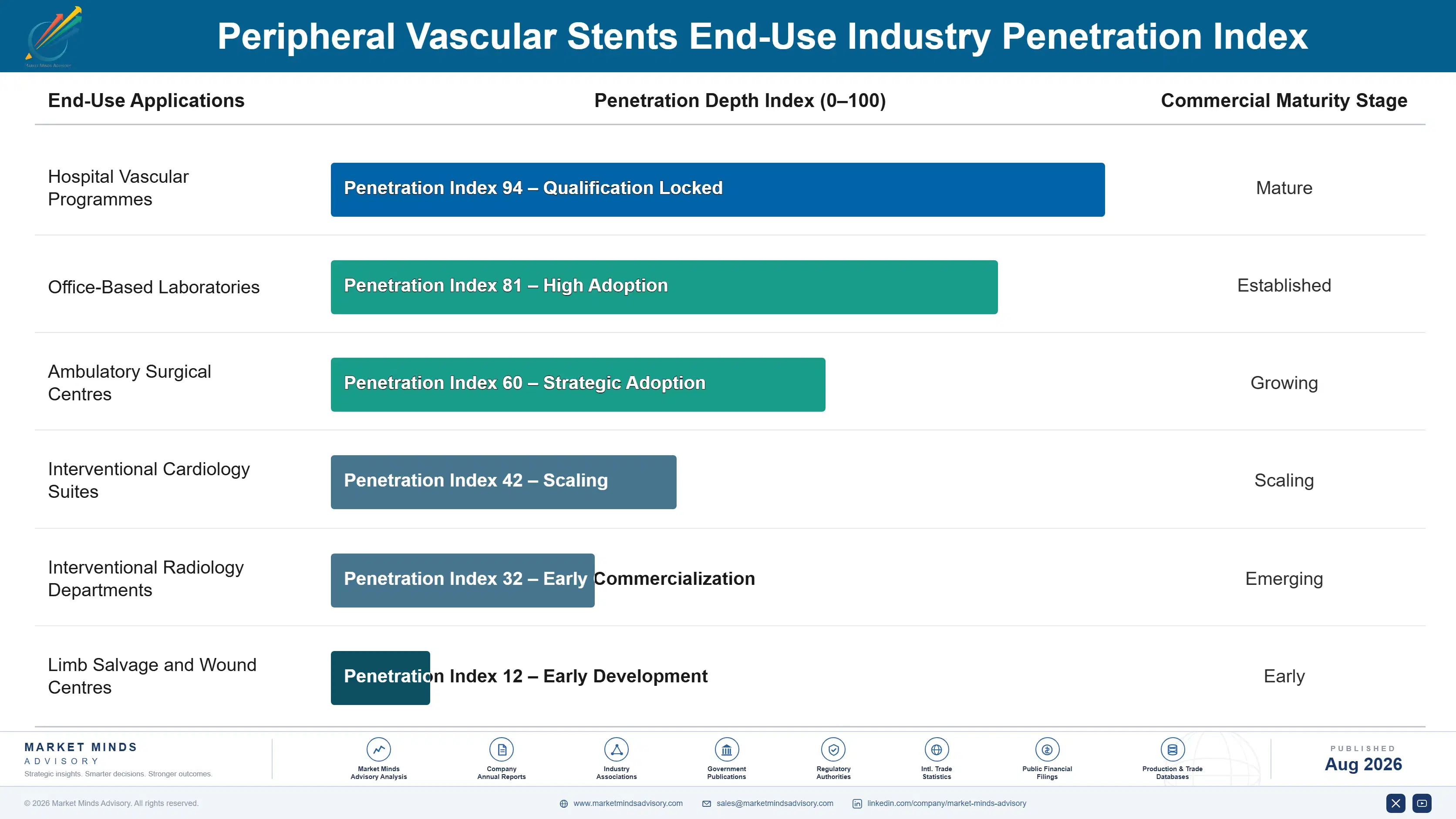
Adoption depth varies sharply by care setting rather than by geography. Hospital vascular programmes evaluate through committees, standardise across operators and change slowly, which makes those accounts durable once won. Office-based laboratories decide individually and quickly, with the owner-operator weighing device cost against personal margin, and they switch readily on price. Roughly 58% of volume now sits in that second group, and it behaves nothing like the first.

The implanting specialty has also broadened considerably. Peripheral intervention was once vascular surgery and interventional radiology; it is now performed by interventional cardiologists, and increasingly by physicians whose training came through cardiology rather than vascular medicine. That shift changes which commercial relationships matter, which conferences reach the audience, and which clinical arguments land, and most organisations adapted to it late.
peripheral-vascular-stents-market-end-use-penetration-index-1787306509527

Where Value Actually Sits

These are among the four positions where our research anticipates prominent divergence between winners and laggards over the coming forecast period. Each is grounded in the demand model, the regulatory perimeter, and the announced capacity pipeline.
01 / BELOW-KNEE DEVELOPMENT PRIORITY

A third of these patients still lose a leg

Roughly 34% of patients presenting with critical limb ischaemia lose a limb within twelve months, which is a worse outcome than most cancers produce and has not improved meaningfully in years. No stent has yet demonstrated durable patency in tibial or pedal vessels, and several well-funded development programmes have already failed in the attempt to achieve it. Whoever eventually solves it would face no competition whatsoever, and interviewed vascular specialists ranked it above every other unmet need in the entire field.
02 / REINTERVENTION COST FRAMING

Sell avoided procedures, not patency percentages

A reintervention costs a health system the entire procedure over again alongside the patient's renewed exposure to procedural risk, which is an argument that procurement functions understand immediately and act upon without persuasion. Drug-eluting devices priced well above bare metal alternatives justify themselves entirely on avoided reinterventions rather than on comparative patency data drawn from trial endpoints. Participants that used total episode cost modelling reported conversion running roughly 40% higher than those leading with clinical performance comparisons instead of it.
03 / OFFICE-BASED CHANNEL DESIGN

The owner-operator is not a hospital committee

Roughly 58% of all peripheral procedures now take place in settings where the treating physician frequently owns the facility outright and then absorbs the device cost personally against a single bundled payment. That particular buyer decides quickly, negotiates hard on unit price and maintains supplier relationships that are personal rather than institutional in almost every respect. Suppliers that run dedicated office-based commercial models with separate pricing authority hold share which hospital-oriented organisations have been losing steadily for several years now.
04 / SAFETY SIGNAL PREPAREDNESS

Limb indications cannot absorb mortality questions

The paclitaxel episode suppressed an entire device class within weeks of a single publication and took four years to resolve fully, because clinicians will not accept mortality risk in exchange for limb outcomes. Participants without long-term follow-up data could not answer questions they had never anticipated having to answer at all, and lost share while others could. Designing registries and extended follow-up into trials from the very outset is the only usable response available when such a signal eventually arrives.

Engagement Snapshot From the Field

A live engagement with an industry participant carrying material or product regulatory and market exposure ahead of a defining policy shift, showing how our research translates into a defensible multi-year portfolio strategy.
MARKET MINDS ADVISORY · CLIENT ENGAGEMENT SUMMARY
Peripheral Vascular Stents Producer Strategic Portfolio Review and Transition Roadmap 2026·Investment Scenario on Peripheral Vascular Stents Exposure Evaluation 2025-26
CLIENT PROFILE
A vascular device manufacturer with annual revenue near $640 million (client-reported, unverified by MMA), holding a peripheral stent portfolio spanning bare metal and drug-eluting platforms sold across North America and Europe. Share in North America had eroded for three consecutive years despite competitive clinical data, and leadership could not identify where the losses were occurring or to whom.
STRATEGIC CHALLENGE
Hospital account share had held steady while total revenue declined, which pointed to losses somewhere the company was not measuring. The commercial organisation was structured entirely around hospital vascular programmes, with office-based laboratories treated as small accounts served by the same representatives on the same terms and with the same pricing structures.
MMA APPROACH
We reconstructed procedure volumes by care setting across four years and mapped the company's share within each. Thirty-one office-based laboratory owners and 22 hospital vascular programme directors were interviewed on purchasing behaviour, price sensitivity and supplier relationships. We modelled a dedicated office-based commercial structure against continued unified coverage. Competitor channel structures were assessed in parallel.
KEY FINDINGS
  1. Hospital share was stable while office-based share had fallen by more than half over the period, and that channel had grown to 58% of total procedure volume in the meantime.
  2. Office-based owners named unit price as their primary criterion in 27 of 31 interviews, and none had been offered a portfolio volume agreement by the client at any point.
  3. Representatives covering both channels spent roughly 80% of their time in hospital accounts, because that was how territory targets and compensation had always been structured.
  4. Competitors holding office-based share had built separate commercial teams with different pricing authority and considerably shorter decision cycles than the client's process allowed.
CLIENT PROFILE
A vascular device manufacturer with annual revenue near $640 million (client-reported, unverified by MMA), holding a peripheral stent portfolio spanning bare metal and drug-eluting platforms sold across North America and Europe. Share in North America had eroded for three consecutive years despite competitive clinical data, and leadership could not identify where the losses were occurring or to whom.
STRATEGIC CHALLENGE
Hospital account share had held steady while total revenue declined, which pointed to losses somewhere the company was not measuring. The commercial organisation was structured entirely around hospital vascular programmes, with office-based laboratories treated as small accounts served by the same representatives on the same terms and with the same pricing structures.
MMA APPROACH
We reconstructed procedure volumes by care setting across four years and mapped the company's share within each. Thirty-one office-based laboratory owners and 22 hospital vascular programme directors were interviewed on purchasing behaviour, price sensitivity and supplier relationships. We modelled a dedicated office-based commercial structure against continued unified coverage. Competitor channel structures were assessed in parallel.
KEY FINDINGS
  1. Hospital share was stable while office-based share had fallen by more than half over the period, and that channel had grown to 58% of total procedure volume in the meantime.
  2. Office-based owners named unit price as their primary criterion in 27 of 31 interviews, and none had been offered a portfolio volume agreement by the client at any point.
  3. Representatives covering both channels spent roughly 80% of their time in hospital accounts, because that was how territory targets and compensation had always been structured.
  4. Competitors holding office-based share had built separate commercial teams with different pricing authority and considerably shorter decision cycles than the client's process allowed.
RECOMMENDED STRATEGY
Phase 1: Phase one: establish a separate office-based commercial team with independent pricing authority and portfolio volume agreements covering the whole vascular range. Phase 2: Phase two: restructure territory targets and compensation so office-based coverage is not consistently displaced by larger hospital account activity. Coverage must be protected from displacement. Phase 3: Phase three: build reintervention cost evidence for the drug-eluting range, targeting hospital committees where episode economics still decide awards. Episode economics still decide there.
OUTCOME
The office-based team launched within six months and reversed share decline in that channel within the first year (client-reported, unverified by MMA). Portfolio agreements covered a third of targeted accounts by year end. Hospital share held steady, and total North American revenue grew for the first time in four years.

Frequently Asked Questions

Foundational context covering the market sizes, CAGR, scope, country, region and competition that inform every finding below. This section is provided to cover basics and most often pre-purchase conversations, answered from the MMA Primary Research Dataset.

What is the current size of the Peripheral Vascular Stents Market?

The global market is valued at $4.6 billion in 2025, rising to $4.97 billion in 2026. East Asia holds the largest share at 30%, driven by a diabetic population larger than any other region's.

How large will the Peripheral Vascular Stents Market be by 2036?

MMA forecasts $11.02 billion by 2036, an increase of $6.05 billion over the 2026 base and an expansion multiple of 2.22x. Drug-eluting devices carry most of that increase.

What is the CAGR for the Peripheral Vascular Stents Market 2026 to 2036?

The base case compound annual growth rate is 8.2%, with a bull case at 9.4% and a bear case at 7.0%. Historical growth from 2020 to 2025 ran near 6.8%, depressed by a safety controversy.

Which segment is growing fastest?

Drug-eluting peripheral stents compound at 12.3%, a full 1.50x the market rate. They address restenosis rates that bare metal platforms never overcame in peripheral vessels, and share now sits near 41%.

Who are the major companies in the Peripheral Vascular Stents Market?

Abbott, Boston Scientific, Medtronic, Cook Medical and Becton Dickinson together hold 72% of revenue from peripheral vascular stent products. All five reach interventionalists through broader vascular commercial organisations.

Which country is growing fastest?

India compounds at 11.6%, faster than any other country covered, on a diabetic population among the largest anywhere and endovascular capability expanding through private hospital groups. Limb salvage programmes are converting amputations into interventions.

Report Segmentation Architecture

The full report scope spans multiple orthogonal segmentation dimensions, with cross-tabulated demand data provided for each dimension pair. Coverage extends further to regional breakdowns, trend trajectories, and the competitive detail needed to support segment-level decision-making.

By Device Class

  • Self-Expanding Nitinol Stents
  • Balloon-Expandable Peripheral Stents
  • Drug-Eluting Peripheral Stents
  • Covered Stents and Peripheral Stent Grafts
  • Bioresorbable Peripheral Scaffolds

By End-Use Industry

  • Hospital Vascular Programmes
  • Office-Based Laboratories
  • Ambulatory Surgical Centres
  • Interventional Cardiology Suites
  • Interventional Radiology Departments
  • Limb Salvage and Wound Centres

By Commercial Dimension

  • Hospital Tender Procurement
  • Group Purchasing Organisation Agreements
  • Office-Based Volume Agreements
  • Direct Physician-Led Purchasing
  • Specialty Distributor Supply
  • Export and Registration Markets

By Region

  • East Asia
  • North America
  • Western Europe
  • South Asia and Pacific
  • Latin America
  • Middle East and Africa
  • Eastern Europe

Scope, Methodology, and Coverage

Every figure in this report is reproducible from documented input assumptions. The scope below maps the historical period, the forecast horizon, the segmentation dimensions, and the countries covered, alongside the underlying primary and qualitative methodology.
Historical Period
2020 to 2025
Forecast Period
2026 to 2036
Base Year
2025 (USD billions; MMA Primary Research Dataset, August 2026)
Market Definition
This market comprises stents implanted in arteries outside the coronary and cerebral circulations, measured at manufacturer revenue across hospital tender procurement, group purchasing organisation agreements, office-based volume agreements, direct physician-led purchasing, specialty distributor supply, and export registration markets. Coverage spans self-expanding nitinol stents including helical, laser-cut and interwoven constructions for the femoropopliteal and iliac segments, balloon-expandable peripheral stents for iliac and renal application, drug-eluting peripheral stents carrying antiproliferative coatings, covered stents and peripheral stent grafts used in complex anatomy and vessel injury, and bioresorbable peripheral scaffolds. Coronary stents of every construction, cerebral and carotid stents, aortic stent grafts used for aneurysm repair, venous stents for iliofemoral obstruction, drug-coated balloons and plain balloon angioplasty catheters, atherectomy and thrombectomy devices, embolic protection devices, vascular closure devices, and diagnostic catheters and guidewires fall outside scope.
Quantitative Units
USD millions (current prices); stents implanted by class; procedures performed by care setting; average selling price by class; drug-eluting share of procedures; reintervention rate; amputation rate in critical ischaemia
Segmentation Dimensions
By Device Class; By End-Use Industry; By Commercial Dimension; By Region
Regions Covered
East Asia, North America, Western Europe, South Asia and Pacific, Latin America, Middle East and Africa, Eastern Europe
Countries Covered
China, Japan, South Korea, Taiwan, United States, Canada, Germany, France, Italy, Spain, United Kingdom, Netherlands, Belgium, Switzerland, Austria, India, Australia, Singapore, Thailand, Malaysia, Indonesia, Brazil, Mexico, Argentina, Chile, Colombia, Saudi Arabia, United Arab Emirates, Kuwait, Egypt, South Africa, Poland, Czechia, Hungary, Romania, Turkey, and additional markets relevant to vascular intervention analysis
Key Companies Profiled
Abbott, Boston Scientific, Medtronic, Cook Medical, Becton Dickinson, Terumo, Cordis, Gore Medical, BIOTRONIK, iVascular, Lepu Medical, MicroPort Scientific, Meril Life Sciences, Endologix, Getinge, Merit Medical Systems, Zylox-Tonbridge Medical, Sahajanand Medical Technologies, Alvimedica, Reflow Medical
Quantitative Methodology
Primary survey, n=3,800 respondents, Q4 2025, six countries; demand-side model with trade association cross-validation
Qualitative Methodology
47 expert interviews, Q4 2025; applied to validate demand model assumptions, identify emerging dynamics, and assess competitive positioning
Report Format
PDF and XLSX data workbook (Word format preview document)
Publisher
Market Minds Advisory
Report Code
MMA-2026-MED-507
Published
August 2026
Contact
sales@marketmindsadvisory.com | www.marketmindsadvisory.com

Purchase the full Peripheral Vascular Stents Market Report (2026 to 2036).

The full MMA report treats the femoral artery as a solved engineering problem and the tibial vessels as an unsolved clinical failure, and sizes the commercial consequence of both. It covers five device classes and seven regions to 2036, modelling stents implanted, procedures by care setting, pricing by class, drug-eluting share, reintervention rates and amputation outcomes separately. Competitive assessment covers twenty manufacturers on one consistent revenue basis. Cost exposure is traced through nitinol, delivery systems and coating. Four commercial levers and a strategic verdict close the report, grounded in 47 expert interviews and a 3,800-respondent survey.
Five device classes sized separately through 2036
Procedure volumes split by care setting across covered markets
Office-based purchasing behaviour benchmarked against hospital committee decisions
Twenty manufacturers assessed on one consistent revenue basis
Diabetic prevalence modelled against peripheral intervention demand lag
Anonymised manufacturer engagement with tested channel recommendations

Built For The People Who Decide

From boardroom strategy to bench-side execution, this report is read cover-to-cover by leaders shaping the next decade of their industry, turning demand scenarios, market dynamics and valuation benchmarks into decisions.
CXOs/ Presidents/ VPs/ Managers
M&A and Corporate Development
Strategy Teams and R&D Heads
Procurement and Product Directors
Regulatory and Compliance Leaders
Investor Relations and Equity Analysts