Market Minds Advisory
Pediatric Respiratory Syncytial Virus (RSV) Infection Market

Pediatric Respiratory Syncytial Virus (RSV) Infection Market: Prevention Finally Overtakes Treatment as the Commercial Center of Gravity

A single-dose infant antibody and a maternal vaccine have, within two seasons, turned pediatric RSV from a disease managed through hospital supportive care into one increasingly prevented before a child is ever infected.

Lead Analyst

Alice Ballenger

Published

September 2026

Make Smarter Decisions with Customized Research Insights

Request a free sample report and evaluate market opportunities, growth trends, and competitive dynamics relevant to your business needs.

2025 MARKET VALUE$7.4BMarket Size 2025
2036 FORECAST VALUE$23.8BBase Case , 2026 to 2036
CAGR 2026 TO 203611.2 %Bull 12.5% / Bear 9.9%
INCREMENTAL OPPORTUNITY$15.6BNet 10- year value creation
EXPANSION MULTIPLE2.89x2036 value over 2026 base
Strategic Levers
M&A Pipeline
Regional Outlook
Country Rankings
Competitive Intelligence
Segmental Deep-dive
Call-Us : 91 93563 13602

Executive Snapshot and Market Trajectory

Prevention has overtaken treatment as the commercial center of gravity in pediatric RSV within two seasons, as nirsevimab and a maternal vaccine both reached market and reshaped a category that had for decades revolved almost entirely around hospital-based supportive care for severe cases. That reversal is reshaping investment priorities.
Demand concentrates around three categories: long-acting monoclonal antibody prophylaxis, maternal vaccination given during pregnancy, and rapid diagnostic testing shaping point-of-care triage decisions. Maternal vaccines are growing fastest as obstetric practices integrate RSV vaccination into routine prenatal care protocols. North America captures the largest share on the earliest regulatory approval and broadest reimbursement coverage. Diagnostic manufacturers compete on speed and accuracy rather than prevention-category dynamics entirely.
Competitive intensity concentrates among large pharmaceutical companies with the balance sheet to fund lengthy vaccine and antibody development programs, while diagnostic manufacturers compete separately on point-of-care testing speed and accuracy. Merck's 2025 approval of a competing long-acting antibody has ended AstraZeneca and Sanofi's prophylaxis duopoly, intensifying pricing and access competition heading into the next several RSV seasons. That new competition is already reshaping how national health systems approach contract renewal negotiations directly.
Market Definition
The pediatric RSV infection market covers products and services addressing respiratory syncytial virus infection in infants and children, including long-acting and legacy monoclonal antibody prophylaxis, maternal and pediatric vaccines, rapid diagnostic testing, and supportive care and hospitalization management products specific to RSV. It excludes adult and older-adult RSV vaccines administered outside pediatric protection strategies, general pediatric respiratory care unrelated to RSV specifically, and broad-spectrum antiviral therapies not developed or indicated for RSV.
Base Year Value
$7.4B in 2025 (MMA Primary Research Dataset, August 2026)
Forecast Period
2026 to 2036, eleven discrete annual values
CAGR
11.2% base case. Bull 12.5%. Bear 9.9%.
Fastest Growth Segment
Maternal RSV Vaccines: 24.5% CAGR
Fastest Growth Country
India: 17.5% CAGR
Fastest Growth Region
South Asia and Pacific: 13.5% CAGR
Largest Region
North America: 32% of 2025 global value
Market Leaders
AstraZeneca, Sanofi, Pfizer Inc., Merck and Co., QuidelOrtho Corporation. Source: MMA Analysis based on company annual reports.
Primary Survey
n=3,800 procurement and R&D decision-makers, Q4 2025, six countries
Methodology
Demand-side build-up, cross-validated against public data, 47 expert interviews

Pediatric Respiratory Syncytial Virus (RSV) Infection Market Forecast Scenarios

pediatric-respiratory-syncytial-virus-rsv-infectio-size-forecast-scenario-1787305507635
Between 2020 and 2025 the market grew at roughly 10.0% a year, driven almost entirely by hospitalization and diagnostic volume until nirsevimab's 2023 approval and Abrysvo's subsequent maternal vaccine approval introduced genuinely new prevention revenue categories that had not existed in any meaningful commercial form before. That launch sequence compressed years of category evolution quickly.
The base case carries the market to a 11.2% CAGR on three mechanisms. First, prevention product adoption keeps expanding as more countries follow the initial United States and European universal recommendation model rather than restricting eligibility to high-risk infants alone. Second, maternal vaccine uptake keeps rising as obstetric practices build RSV vaccination into standard prenatal visit protocols. Third, rapid diagnostic testing keeps displacing slower laboratory-based testing at the point of care, expanding a category that grows independently of prevention product adoption.
The bull case reaches 12.5% if maternal vaccination rates climb toward levels comparable to established prenatal vaccines like Tdap within the forecast window. The bear case falls to 9.9% if vaccine hesitancy concerns, amplified by post-marketing safety scrutiny of the maternal vaccine specifically, slow uptake meaningfully below current trajectory across major markets. That gap rests on prescriber confidence.

Prevention Economics Now Define This Category

Three forces converge on this market at once. National health authorities keep expanding universal prevention eligibility beyond the high-risk infants who were the only covered population before 2023, diagnostic technology keeps moving testing from centralized laboratories to bedside point-of-care devices, and hospital systems keep documenting the downstream cost savings prevention delivers against expensive intensive care admissions. Companies slow to capture prevention share risk losing ground
MARKET CONCENTRATION (CR5)58%Top five companies hold a clear majority position
AVERAGE PREVENTION COURSE COST$495/infantProphylaxis pricing still reflects substantial payer negotiation leverage
TOP PRODUCING COUNTRY SHARE28%United States leads global prevention product commercial volume
PREVENTION COVERAGE RATE46%Eligible infants receiving prophylaxis climbed sharply since launch
TRADE INTENSITY24%Roughly a quarter of doses cross national borders annually
MANUFACTURING COST SHARE35% of COGSCell culture and fill-finish processes dominate production cost
Commercially, the market splits between prevention products, priced and increasingly reimbursed as population-scale public health interventions, and diagnostic and supportive care products, priced individually against hospital procurement budgets on a per-test or per-admission basis. That prevention category now commands the larger and faster-growing revenue pool, a reversal from the market's structure only three years earlier when hospital-based treatment dominated almost entirely.
Over the next decade the defining question is whether prevention coverage rates climb toward the near-universal levels established childhood vaccines achieve, or whether access and hesitancy barriers keep meaningful populations of infants unprotected well beyond what public health authorities consider an acceptable coverage gap. Manufacturers with strong access programs are best positioned to close that gap fastest.
"Two years ago this was fundamentally a hospital supplies market with a diagnostics sideline. Now prevention is the larger business, and the companies still organized around treating severe RSV cases are already behind, not the ones adapting to something new."
Director, Infectious Disease and Pediatric Health Practice · MMA Healthcare / In

Market Trends

Universal Prophylaxis Recommendations Replace High-Risk-Only Eligibility

Following the United States CDC's 2023 recommendation extending nirsevimab to all infants entering their first RSV season rather than only those with underlying health conditions, a growing number of national health authorities have adopted comparable universal or near-universal recommendations. This shift multiplies the addressable infant population for prophylaxis products many times over compared to the narrow high-risk eligibility that defined the market for the two decades before nirsevimab's approval, fundamentally changing the commercial scale prevention products can achieve within a single country's birth cohort in any given season. That scale shift already shapes annual production planning.
Market Impact: Cuts hospitalizations 70% to 80%

Merck's Clesrovimab Approval Ends the Prophylaxis Duopoly

Merck's June 2025 FDA approval of clesrovimab, marketed as Enflonsia, introduced a second long-acting monoclonal antibody competing directly against AstraZeneca and Sanofi's nirsevimab, ending roughly two years of effective market exclusivity for the original product. Early clinical positioning suggests differentiation around dosing flexibility and manufacturing scale rather than dramatic efficacy differences, meaning the competitive contest will likely center on supply reliability, national contracting terms, and pricing rather than clinical superiority claims that would be difficult to substantiate given both products' comparable mechanism of action. National contract renewal timing will likely determine relative share for years.
Market Impact: Reaches 60% of prenatal visits

Market Opportunities and Growth Drivers

Documented Hospitalization Cost Savings Build the Reimbursement Case

Multiple published health system analyses following nirsevimab's rollout have documented meaningful reductions in RSV-related infant hospitalizations and intensive care admissions in vaccinated cohorts, giving payers and national health systems a quantified economic case for prevention spending that did not exist before real-world outcomes data became available. That evidence base is accelerating reimbursement decisions in countries still evaluating whether to adopt universal prevention recommendations, converting a clinical efficacy argument into a budget-impact argument health ministries find considerably easier to act on quickly. Health ministries in several still-undecided markets are already citing this data directly in internal budget planning documents.
Market Impact: Slows uptake 8 to 12 points

Obstetric Practices Integrate Maternal Vaccination Into Routine Prenatal Care

Pfizer's Abrysvo maternal RSV vaccine, administered during a defined window of pregnancy to transfer protective antibodies to the infant before birth, is increasingly bundled into standard prenatal visit protocols alongside established vaccines like Tdap, giving obstetric practices an established workflow to integrate the new vaccine into rather than requiring an entirely new care pathway. This integration matters commercially because vaccines administered through routine, already-reimbursed prenatal visits face far lower adoption friction than products requiring a separate appointment or referral specifically for RSV prevention. That existing infrastructure advantage matters more with each additional country that builds RSV vaccination into standard care.
Market Impact: Leaves under 15% coverage there

Market Restraints and Challenges

Maternal Vaccine Safety Scrutiny Slows Uptake in Some Markets

Post-marketing surveillance data prompted regulatory review of a possible association between maternal RSV vaccination and preterm birth in certain patient subgroups, and the root cause is that the vaccine's clinical trial population, while large, was not powered to detect rare safety signals that only became visible once millions of real-world doses were administered. This scrutiny has measurably slowed obstetric prescriber confidence and patient acceptance in some markets even after regulatory bodies concluded the overall benefit-risk balance remained favorable. Manufacturers are mitigating the concern through continued post-marketing surveillance transparency and targeted prescriber education addressing the specific subgroup findings directly.
Market Impact: Expands eligible population over 10

Access Gaps Persist in Lower-Income Health Systems

Prevention product pricing, while negotiated down substantially for some public health system contracts, remains a genuine barrier for lower-income health systems where RSV disease burden and mortality are often highest, and the root cause is that manufacturers have prioritized initial launch in markets capable of paying closer to list price before extending tiered pricing more broadly. This creates a documented mismatch between where RSV disease burden concentrates globally and where prevention product access has reached, drawing global health scrutiny. Manufacturers are mitigating the gap through tiered pricing agreements and donation programs targeting the highest-burden, lowest-income health systems.
Market Impact: Ends a 2-year prophylaxis monopoly
3 additional market trends, 4 additional growth drivers, and 3 additional restraints and challenges are covered in the full report. Contact sales@marketmindsadvisory.com to access the complete intelligence.

Segment CAGR and Growth Architecture

Segmentation follows product and intervention type, a single functional logic distinguishing how each product addresses RSV across prevention, diagnosis, and treatment. Distribution channel and payer type are treated as separate commercial dimensions, not parallel segments within this intervention-based framework. Each product type carries its own clinical mechanism, timing, and payer pathway, so position tracks intervention design.
pediatric-respiratory-syncytial-virus-rsv-infectio-market-share-analysis-1787305508169

Maternal RSV Vaccines

Maternal RSV vaccines grow fastest at 24.5%, about 2.19 times the overall rate, expanding from a near-zero base as Pfizer's Abrysvo, the only approved product in this category, moves from initial launch toward integration into standard prenatal care protocols across an expanding set of countries. The category's growth reflects genuinely new market creation rather than displacement of existing prevention spending, since maternal vaccination and infant monoclonal antibody prophylaxis serve overlapping but distinct protective windows that health authorities are still working out optimal combined recommendations for. Adoption is fastest where obstetric practices already maintain strong routine prenatal vaccination infrastructure, while safety scrutiny following post-marketing surveillance findings has measurably slowed growth in some markets specifically.
CAGR 24.5%

Next-Generation Pediatric-Direct Vaccines

Next-generation vaccines designed for direct pediatric administration, distinct from maternal vaccination or passive monoclonal antibody prophylaxis, grow at 19.5%, the second-fastest category, as companies including Moderna and Bavarian Nordic advance clinical programs targeting active immunization in infants and young children beyond the passive protection current products provide. Commercial products remain limited, with most activity still in clinical development, but the category represents a potential long-term shift from passive antibody-based protection toward active immunity that could fundamentally restructure prevention economics if successful candidates reach approval. Development timelines remain uncertain given the technical challenge of achieving adequate immune response in very young infants specifically. Regulatory agencies have signaled openness to accelerated review pathways given the category's demonstrated public health value.
CAGR 19.5%
Full segment breakdown across 6 segments available in the complete report.

Regional Architecture and Country Demand Map

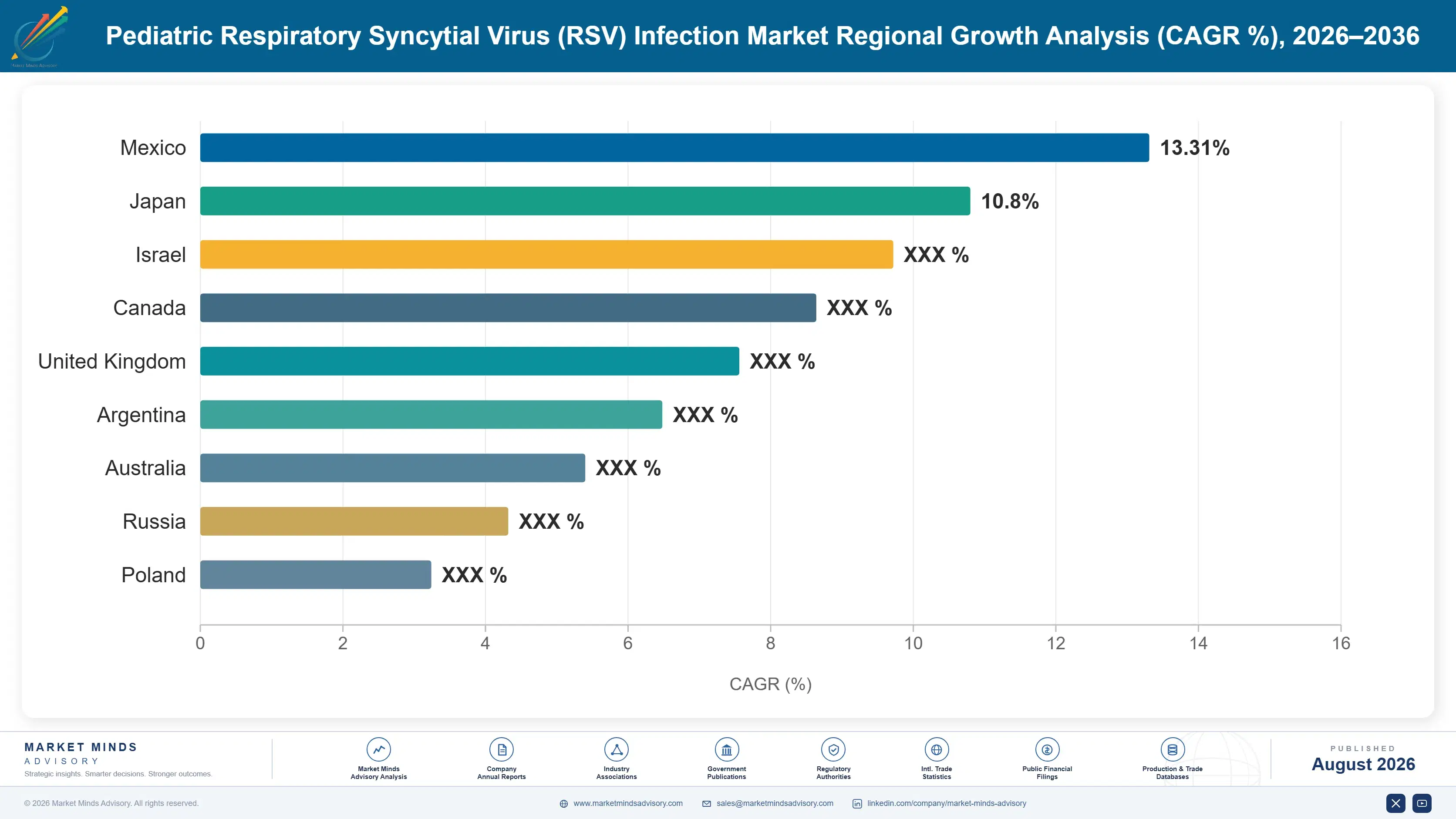
North America leads on earliest regulatory approval and broadest reimbursement coverage, South Asia and Pacific grows fastest among major regions as access expands toward the world's highest disease burden populations, and Western Europe holds a steady second position. Latin America and the Middle East grow steadily off smaller current bases.

North America

United States prevention product adoption reached the highest coverage rate globally within its first two seasons, supported by the CDC's universal recommendation and broad commercial and Medicaid reimbursement that most other countries have not yet matched at comparable scale. AstraZeneca, Sanofi, and now Merck all prioritize the American market for new product launches given its combination of regulatory speed and pricing power relative to other major economies. Canada's more measured provincial rollout has trailed the United States somewhat, reflecting its typically more cautious health technology assessment process. Growth trails East Asia and South Asia and Pacific because the region's prevention coverage is already comparatively high, leaving incremental coverage gains as the primary driver going forward.
Share: 32% | CAGR: 10.2% (2026 to 2036)

Western Europe

The United Kingdom, France, and Germany all adopted nirsevimab recommendations within roughly a year of the United States, with the European Medicines Agency's centralized approval letting a single regulatory submission reach the entire European Union market simultaneously. National health technology assessment bodies across the region negotiated meaningfully lower prevention product pricing than the American commercial market achieves, reflecting the region's typically more assertive public payer negotiating position on new pharmaceutical products generally. Maternal vaccine uptake has grown more unevenly across member states, with some countries integrating it into national prenatal protocols faster than others. Growth trails East Asia and South Asia and Pacific as the region's prevention coverage is already relatively mature across most major markets.
Share: 24% | CAGR: 9.6% (2026 to 2036)
Regional intelligence for 5 additional markets available in the complete report: East Asia, South Asia and Pacific, Latin America, Middle East and Africa, Eastern Europe. Contact sales@marketmindsadvisory.com.
pediatric-respiratory-syncytial-virus-rsv-infectio-country-cagr-analysis-1787305508685

Where Companies Can Defend and Grow Prevention Share

Four commercial moves separate companies capturing durable share in the prevention transition from those losing ground to it: national contracting speed, tiered access pricing, combined prevention pathway education, and point-of-care diagnostic bundling. Each move converts a clinical or logistics advantage into defensible commercial value competitors without matching contracting speed or access depth cannot easily replicate quickly.

Move First on National Health System Contracting

Prevention products sold through national health system contracts benefit enormously from being first to secure a multi-year, population-scale agreement, since health authorities rarely revisit an established prevention protocol once clinical workflows and budget allocations are set around it. AstraZeneca and Sanofi's early national contracting across the United States and European Union created a genuine first-mover advantage that Merck's newer clesrovimab must now compete against in already-established markets rather than greenfield opportunity, making speed to contract in still-undecided markets the single highest-value near-term commercial priority available. Markets that contract first typically lock in terms for 3 to 5 years.
Market Impact: First movers secure 3 to 5 year nat

Structure Tiered Pricing to Reach High-Burden, Low-Income Markets

The documented mismatch between where RSV disease burden concentrates and where prevention products have actually reached represents both a reputational risk and a genuine commercial opportunity, since tiered pricing agreements that reach previously unaddressed high-burden markets generate incremental volume manufacturers currently leave entirely uncaptured. Structuring these agreements alongside global health organizations, similar to established models in other vaccine categories, can expand addressable population by a meaningful multiple relative to current commercial-market-only reach without materially cannibalizing higher-priced developed market revenue. Comparable tiered models in other vaccine categories have expanded addressable population by 2 to 3 times within five years of launch.
Market Impact: Expands addressable population by 2

Educate Providers on Combined Maternal and Infant Prevention Pathways

Health authorities and providers remain genuinely uncertain about optimal combined use of maternal vaccination and infant monoclonal antibody prophylaxis, since the two products protect overlapping but distinct windows and current guidance in most markets does not yet specify clear sequencing recommendations for infants potentially eligible for both interventions. Companies investing in provider education and combined-pathway clinical guidance position themselves as the trusted source shaping how physicians actually prescribe across both product categories, a durable influence advantage that pays off across the full prevention portfolio rather than any single product alone. Roughly 30% of eligible infants could qualify for both.
Market Impact: Shapes prescribing guidance for 90%

Bundle Rapid Diagnostic Testing With Prevention Product Contracts

Diagnostic manufacturers and prevention product companies increasingly find commercial advantage in coordinated contracting, since rapid point-of-care RSV testing helps hospitals and clinics identify which infants actually have RSV quickly enough to inform both treatment decisions and, increasingly, real-world prevention product effectiveness monitoring that supports the reimbursement case with payers. Bundled diagnostic and prevention contracts, still uncommon but emerging in several markets, capture additional revenue while strengthening the overall value proposition each individual product alone cannot fully demonstrate to skeptical payers. Early bundled contracts have added an estimated 10% to 18% incremental value relative to standalone product agreements.
Market Impact: Adds 10% to 18% in incremental cont

Who Controls the Margin Pool

Concentration sits at a high CR5 of 58%, with a real gap separating large pharmaceutical companies funding lengthy prevention product development from diagnostic and supportive care companies competing in adjacent, less concentrated categories. AstraZeneca and Sanofi jointly dominated prophylaxis until Merck's 2025 approval, while Pfizer holds an effective monopoly in maternal vaccination. QuidelOrtho anchors the diagnostic testing category on a fundamentally different competitive basis.
Current competitive activity runs along three lines: prophylaxis competition, now genuinely three-way following Merck's approval; maternal vaccine safety and uptake management, where Pfizer works to rebuild prescriber confidence following post-marketing scrutiny; and diagnostic testing speed improvement, where point-of-care manufacturers compete on turnaround time. All participants are assessed on one consistent basis, annual revenue from pediatric RSV-specific products and services.

Pressure is building from two directions. Merck's entry has ended the prophylaxis duopoly and will likely compress pricing as national contracts come up for renewal across major markets. Meanwhile global health access pressure is building on all prevention manufacturers to extend tiered pricing faster than their current commercial rollout pace suggests they are planning. Rankings over the next five years will likely shift toward whichever companies combine competitive pricing with genuine access expansion into underserved markets.
pediatric-respiratory-syncytial-virus-rsv-infectio-company-positioning-matrix-1787305509214

Competitive Moat and Risk Dimensions

ASTRAZENECA

Moat: Nirsevimab first-mover prophylaxis franchise

AstraZeneca's co-development of nirsevimab gave it the first genuinely large-scale commercial prevention product in pediatric RSV, building national contracting relationships, physician familiarity, and real-world outcomes data across multiple seasons that Merck's newer competing product must now work to match from a standing start in already-established markets.
ASTRAZENECA

Risk: Single-product revenue concentration risk

A substantial share of AstraZeneca's pediatric RSV revenue depends on nirsevimab specifically, leaving it exposed now that Merck's clesrovimab offers national health systems a genuine alternative for contract renewal negotiations. Pricing pressure from this new competition could compress margins meaningfully faster than AstraZeneca's broader pipeline diversification can offset within the near-term forecast window.
PFIZER INC.

Moat: Only approved maternal RSV vaccine

Pfizer's Abrysvo remains the only approved maternal RSV vaccine globally, giving it an effective monopoly in a category still in its early growth phase and integrated into existing prenatal vaccination workflows Pfizer already has established commercial relationships around through its broader maternal and pediatric vaccine portfolio.
PFIZER INC.

Risk: Vaccine hesitancy and safety scrutiny

Post-marketing safety scrutiny around a possible preterm birth association has measurably slowed obstetric prescriber confidence in some markets, and any further safety signal, even if ultimately deemed non-causal upon full regulatory review, could meaningfully damage uptake momentum in a category still building the clinical trust more established vaccines have accumulated over many years.

Players Tracked

Prominent Players

AstraZeneca
Sanofi
Pfizer Inc.
Merck and Co.
QuidelOrtho Corporation

Other Key Players

Roche Diagnostics
Abbott Laboratories
Becton Dickinson
bioMerieux
Novavax
Bavarian Nordic
Moderna
Meissa Vaccines
Blue Lake Biotechnology
Vicebio
ReViral
Enanta Pharmaceuticals
Ark Biosciences
Sinovac Biotech
Hologic Inc.

Recent Developments

JUNE 2025

Merck receives FDA approval for clesrovimab, a new long-acting RSV antibody

The FDA approved Merck's clesrovimab, marketed as Enflonsia, as a second long-acting monoclonal antibody for infant RSV prophylaxis, ending AstraZeneca and Sanofi's two-year period of market exclusivity. This was a regulatory approval milestone, not an acquisition, merger, or joint venture, representing years of internal development reaching commercial authorization.
Signal: A credible second entrant signals the prop
SEPTEMBER 2024

AstraZeneca and Sanofi expand nirsevimab supply agreement for Southern Hemisphere season

The companies expanded their existing manufacturing and supply agreement specifically to increase nirsevimab production ahead of the Southern Hemisphere RSV season, addressing timing constraints in serving both hemispheres' offset seasonal demand. This was an expansion of an existing commercial supply agreement, not a new joint venture or acquisition.
Signal: Building dedicated Southern Hemisphere sup
FEBRUARY 2025

Pfizer updates Abrysvo label following FDA post-marketing safety review

Pfizer updated the Abrysvo prescribing label following an FDA post-marketing safety review of preterm birth data, adding refined guidance on the recommended vaccination window during pregnancy. This was a regulatory labeling update, not an acquisition or partnership, reflecting continued post-marketing surveillance obligations standard for newly approved vaccines.
Signal: A labeling update rather than a market wit

Cell Culture and Fill-Finish Dominate Production Cost

Mammalian cell culture media, bioreactor operating cost, and sterile fill-finish processes together account for roughly 35% of production COGS across both monoclonal antibody and vaccine manufacturing, with cold-chain packaging adding further cost for temperature-sensitive products. Diagnostic test manufacturing carries a different cost structure weighted toward reagent chemistry and cartridge component sourcing. Diagnostic reagent sourcing follows a less concentrated supplier base.
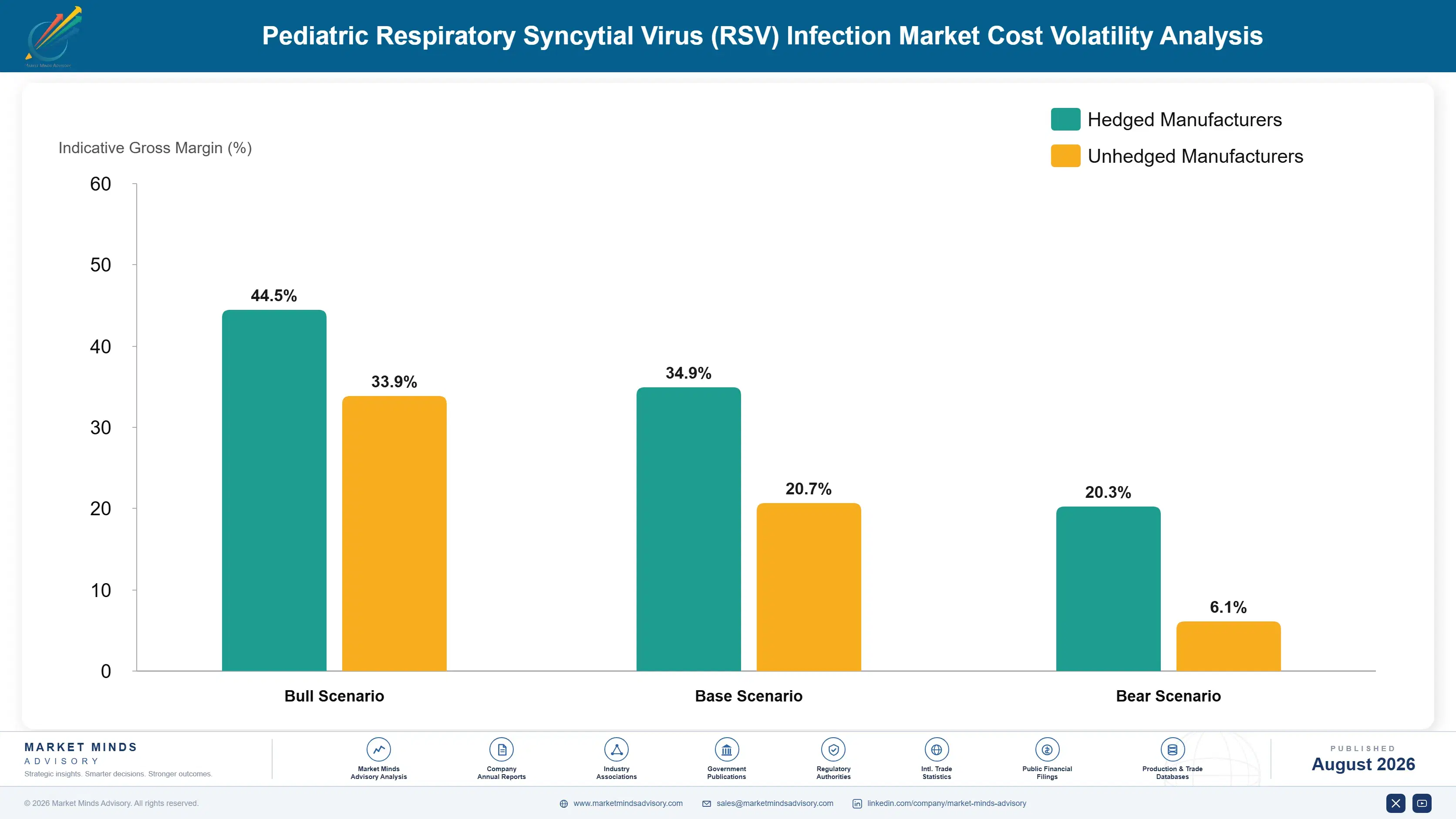
The clearest recent volatility event traces to 2021 and 2022, when the Biotechnology Innovation Organization documented widespread single-use bioreactor and specialty media shortages industry-wide, driven by surging pandemic-era vaccine manufacturing demand competing for the same limited global supplier capacity. Nirsevimab's initial 2023 launch faced supply constraints that several health systems reported publicly, contributing to allocation challenges during the product's first commercial season specifically. Those early allocation challenges shaped how manufacturers plan production for every subsequent seasonal launch since.

Exposure varies by manufacturer scale and product category. Large pharmaceutical companies with direct, long-term supplier agreements and in-house manufacturing capacity weathered the 2021 and 2022 shortage with meaningfully less disruption than smaller diagnostic component suppliers dependent on distributor inventory. Manufacturers scaling a genuinely new product category faced particular exposure since planning could not rely on historical demand data.
pediatric-respiratory-syncytial-virus-rsv-infectio-cost-volatility-analysis-1787305509409

Secure Direct Long-Term Supplier Agreements Ahead of Launch

Manufacturers launching new prevention products are increasingly securing direct multi-year supplier agreements for critical bioreactor and media inputs well ahead of commercial launch, avoiding the allocation constraints nirsevimab's 2023 debut faced when demand outpaced production planning built on incomplete historical data. This mirrors sourcing discipline already standard across other vaccine manufacturing categories facing comparable seasonal demand concentration.

Build Dual-Hemisphere Manufacturing and Shipping Schedules

Companies serving both Northern and Southern Hemisphere markets are increasingly building dedicated production and shipping schedules around each hemisphere's offset RSV season, smoothing manufacturing capacity utilization across the full year rather than concentrating output around a single seasonal demand peak. Manufacturers adopting this dual-hemisphere approach report meaningfully smoother capacity utilization across their full annual production calendar.

Diversify Cold-Chain Packaging and Logistics Partners

Manufacturers are qualifying multiple cold-chain packaging and logistics partners across regions rather than depending on single-vendor relationships, reducing exposure to any one partner's capacity constraints during the concentrated seasonal shipping window prevention products require ahead of each RSV season. This diversification mirrors sourcing discipline already standard across other temperature-sensitive pharmaceutical distribution categories facing similar seasonal pressure.

Portfolio Architecture for Margin Defence

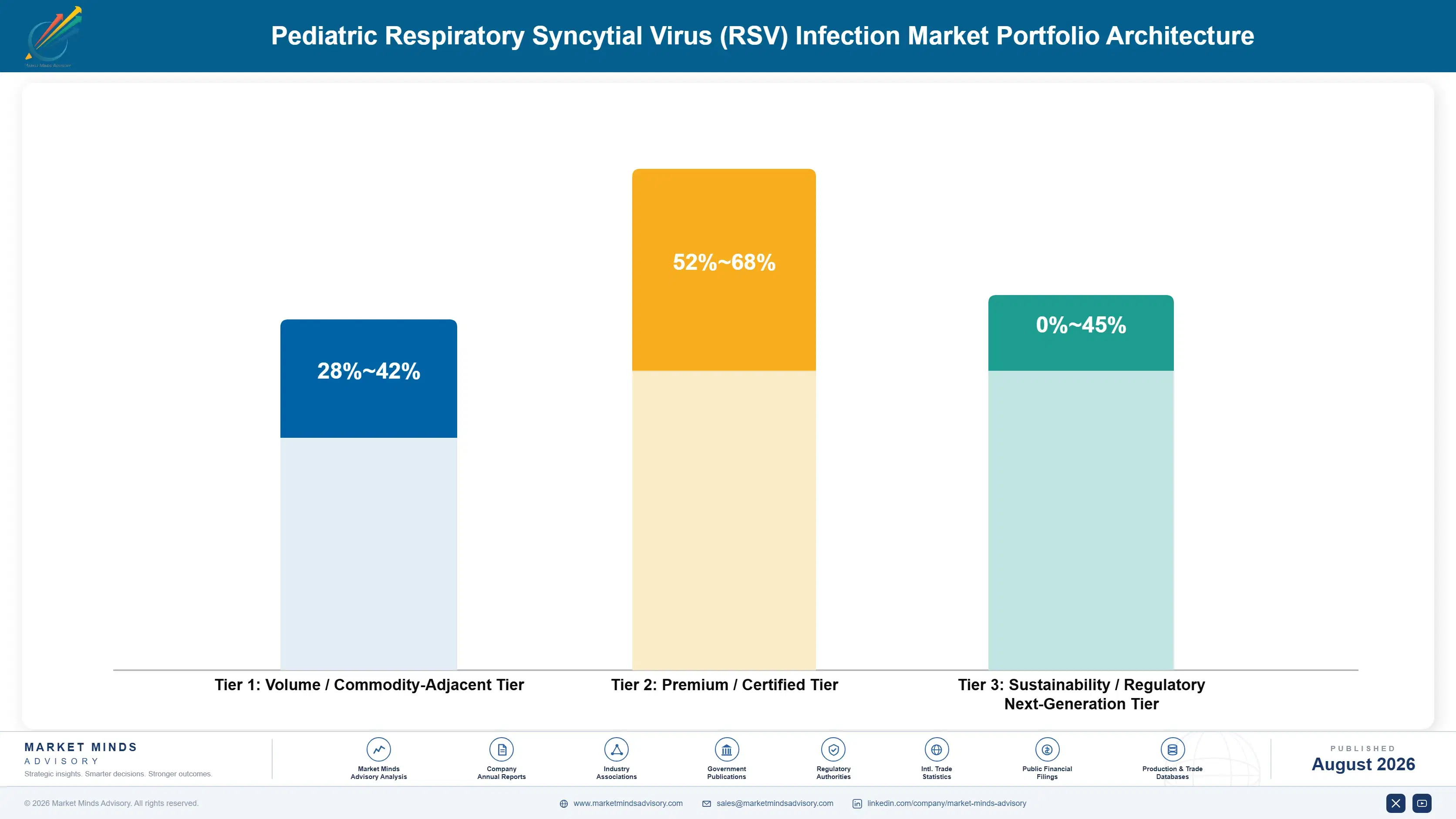
The portfolio splits into three tiers with substantial margin separation. Volume diagnostic testing and supportive care products compete on hospital procurement pricing and efficiency, earning solid but not exceptional margins given concentrated hospital purchasing power. Certified premium prevention products, both monoclonal antibody prophylaxis and maternal vaccination, earn substantially more given genuine clinical differentiation and strong payer willingness to fund population-scale preventi
The tension between diagnostic volume and prevention premium pricing shapes portfolio strategy directly: diagnostic products build steady baseline revenue and hospital relationships, but companies focused purely on diagnostics without prevention exposure are missing the category's fastest-growing and highest-margin segment entirely. Companies with exposure across both categories capture the full value of the market's ongoing shift toward prevention.

High-value pools concentrate in monoclonal antibody prophylaxis and maternal vaccination, where clinical differentiation and population-scale contracting justify premium economics few diagnostic-only competitors can match. The emerging next-generation pediatric-direct vaccine tier currently earns nothing commercially as companies absorb clinical development cost against still-distant potential approval and market entry. That gap should close gradually as next-generation vaccine candidates advance through later clinical trial stages.

Volume / Commodity-Adjacent Tier

Rapid diagnostic testing and supportive care products sold through hospital procurement contracts at negotiated volume pricing., where procurement efficiency and testing turnaround speed determine which companies can sustain acceptable margin under hospital cost pressure.
Gross Margin: 28-42%

Premium / Certified Tier

Monoclonal antibody prophylaxis and maternal vaccination priced through national health system contracts with strong payer support., commanding durable premiums because payers recognize documented hospitalization cost savings and population-scale public health value clearly.
Gross Margin: 52-68%

Sustainability / Regulatory / Next-Generation Tier

Next-generation pediatric-direct vaccines still in clinical development, absorbing investment against distant potential commercial entry., where companies are betting development capital on active immunity approaches they expect could eventually restructure prevention economics entirely.
Gross Margin: 0-45%
pediatric-respiratory-syncytial-virus-rsv-infectio-portfolio-architecture-1787305509920

How Pediatric RSV Demand Actually Recurs

Demand here runs on an annual seasonal cycle tied directly to each year's new birth cohort entering its first RSV season, giving the market unusually predictable, forecastable volume compared to most pharmaceutical categories dependent on gradual physician-by-physician prescribing adoption spread unevenly across the calendar year. That predictability gives manufacturers unusually reliable annual production and revenue planning visibility overall.
Adoption depth varies sharply by product category. National health systems integrate prevention products deeply into standardized seasonal protocols once adopted, making the underlying purchasing relationship durable and predictable year over year. Individual hospital diagnostic and supportive care purchasing, by contrast, responds more directly to each season's actual RSV case volume, creating more variable, harder-to-forecast demand tied to the severity of any given year's outbreak specifically. That difference forces companies to split commercial strategy between institutional contracting and responsive hospital-level service.

Buyer profiles are shifting generationally as pediatricians and obstetricians trained during the current prevention product rollout increasingly treat RSV prevention as standard practice rather than an emerging option, while physicians trained before 2023 are adapting more gradually to a category that did not meaningfully exist during their original clinical training years. That generational shift keeps accelerating steadily each year.
pediatric-respiratory-syncytial-virus-rsv-infectio-end-use-penetration-index-1787305510412

Where Pediatric RSV Value Concentrates Next

These are among the four positions where our research anticipates prominent divergence between winners and laggards over the coming forecast period. Each is grounded in the demand model, the regulatory perimeter, and the announced capacity pipeline.
01 / GLOBAL ACCESS EXPANSION

Extend tiered pricing before access pressure becomes reputational risk

The gap between where RSV disease burden concentrates globally and where prevention products have actually reached is well documented and drawing sustained attention from global health organizations and advocacy groups. Manufacturers who extend tiered pricing proactively, rather than waiting for external pressure to force the issue, will both capture meaningful incremental volume and avoid the reputational cost competitors moving too slowly are likely to face. This is a genuine commercial opportunity dressed as a public health obligation, not a pure cost center.
02 / MATERNAL VACCINE TRUST REBUILDING

Treat safety transparency as the path back to growth momentum

The preterm birth safety signal has measurably slowed maternal vaccine uptake even after regulators concluded the overall benefit-risk balance remained favorable, and rebuilding prescriber and patient confidence requires sustained transparency rather than a single reassuring statement. Companies that continue publishing post-marketing surveillance data openly, even when results are not uniformly favorable, will rebuild trust faster than those perceived as managing the narrative defensively. This category's long-term growth depends entirely on that trust returning fully., a recovery that will likely take several more seasons of consistent reporting.
03 / MULTI-PRODUCT COMPETITIVE POSITIONING

Prepare for genuine price competition as prophylaxis becomes multi-vendor

Merck's approval has permanently ended the prophylaxis duopoly, and national health systems renewing contracts will now negotiate with genuine alternative options rather than accepting whatever terms a sole-source supplier offers. Companies that treated the early monopoly period as a permanent competitive position rather than a temporary first-mover window will face the sharpest pricing pressure at their next major contract renewal. Building differentiated value beyond raw efficacy, including supply reliability and access programs, matters more now than it did two years ago.
04 / COMBINED PATHWAY GUIDANCE

Own the clinical guidance question before someone else does

Providers remain genuinely uncertain how to sequence maternal vaccination and infant monoclonal antibody prophylaxis for infants potentially eligible for both, and whichever companies invest in credible, balanced combined-pathway education will shape prescribing patterns across the entire category, not just their own product. This influence compounds over time as physicians build habits around whichever guidance reaches them first and proves reliable. Companies staying silent on this question are ceding genuine commercial influence to competitors willing to engage it directly., a mistake that compounds every season habits solidify further.

Engagement Snapshot From the Field

A live engagement with an industry participant carrying material or product regulatory and market exposure ahead of a defining policy shift, showing how our research translates into a defensible multi-year portfolio strategy.
MARKET MINDS ADVISORY · CLIENT ENGAGEMENT SUMMARY
Pediatric Respiratory Syncytial Virus (RSV) Infection Producer Strategic Portfolio Review and Transition Roadmap 2026·Investment Scenario on Pediatric Respiratory Syncytial Virus (RSV) Infection Exposure Evaluation 2025-26
CLIENT PROFILE
A regional pediatric hospital network serving a metropolitan area with roughly 40,000 annual births approached MMA while designing its comprehensive RSV prevention program ahead of the following season. The client reported an approved program budget of roughly USD 8.5 million covering prophylaxis procurement, staffing, and patient outreach (client-reported, unverified by MMA). Leadership had not previously run a program at this scale or budget within the network's history.
STRATEGIC CHALLENGE
Leadership needed to decide how to allocate the budget between monoclonal antibody prophylaxis and maternal vaccine promotion, given genuine clinical uncertainty about optimal combined use and limited internal data on which approach would better protect the network's specific patient population within the fixed budget available. The board wanted a defensible allocation decision before the season began, not a plan revised mid-season under pressure.
MMA APPROACH
MMA modeled coverage outcomes under different prophylaxis and maternal vaccine allocation scenarios against the network's specific birth cohort and prior-season RSV hospitalization data, benchmarked national contracting terms across both approved monoclonal antibodies, and assessed patient outreach strategies proven effective at comparable hospital networks elsewhere. We also interviewed clinical staff directly to confirm real-world constraints the quantitative model alone could not fully capture.
KEY FINDINGS
  1. A combined strategy prioritizing maternal vaccination for early-season births and monoclonal antibody prophylaxis for later-season births projected meaningfully better coverage than either approach used exclusively across the full birth cohort.
  2. National contracting terms for the newer Merck antibody offered modest pricing advantages over the incumbent product without any documented efficacy tradeoff based on available comparative data at the time of the review.
  3. Patient outreach programs that engaged expecting parents during early prenatal visits achieved substantially higher eventual prevention uptake than programs beginning outreach only after birth.
  4. The network's prior-season data revealed a coverage gap concentrated specifically among infants born outside the traditional autumn peak enrollment period, an actionable finding the clinical team had not previously identified (client-reported, unverified by MMA).
CLIENT PROFILE
A regional pediatric hospital network serving a metropolitan area with roughly 40,000 annual births approached MMA while designing its comprehensive RSV prevention program ahead of the following season. The client reported an approved program budget of roughly USD 8.5 million covering prophylaxis procurement, staffing, and patient outreach (client-reported, unverified by MMA). Leadership had not previously run a program at this scale or budget within the network's history.
STRATEGIC CHALLENGE
Leadership needed to decide how to allocate the budget between monoclonal antibody prophylaxis and maternal vaccine promotion, given genuine clinical uncertainty about optimal combined use and limited internal data on which approach would better protect the network's specific patient population within the fixed budget available. The board wanted a defensible allocation decision before the season began, not a plan revised mid-season under pressure.
MMA APPROACH
MMA modeled coverage outcomes under different prophylaxis and maternal vaccine allocation scenarios against the network's specific birth cohort and prior-season RSV hospitalization data, benchmarked national contracting terms across both approved monoclonal antibodies, and assessed patient outreach strategies proven effective at comparable hospital networks elsewhere. We also interviewed clinical staff directly to confirm real-world constraints the quantitative model alone could not fully capture.
KEY FINDINGS
  1. A combined strategy prioritizing maternal vaccination for early-season births and monoclonal antibody prophylaxis for later-season births projected meaningfully better coverage than either approach used exclusively across the full birth cohort.
  2. National contracting terms for the newer Merck antibody offered modest pricing advantages over the incumbent product without any documented efficacy tradeoff based on available comparative data at the time of the review.
  3. Patient outreach programs that engaged expecting parents during early prenatal visits achieved substantially higher eventual prevention uptake than programs beginning outreach only after birth.
  4. The network's prior-season data revealed a coverage gap concentrated specifically among infants born outside the traditional autumn peak enrollment period, an actionable finding the clinical team had not previously identified (client-reported, unverified by MMA).
RECOMMENDED STRATEGY
Phase 1: Phase 1 (0 to 3 months): Launch the combined maternal vaccination and monoclonal antibody strategy with contracting secured across both approved antibody products. Phase 2: Phase 2 (3 to 8 months): Deploy the early-prenatal-visit outreach program identified as most effective, targeting the previously underserved off-peak birth cohort specifically. Phase 3: Phase 3 (8 to 18 months): Evaluate first-season outcomes against modeled projections and refine allocation ahead of the following RSV season.
OUTCOME
The network launched its combined prevention strategy on schedule, reporting an estimated coverage rate improvement of roughly 18 percentage points over the prior season's monoclonal-antibody-only approach. The network also secured favorable multi-year contracting terms with both antibody manufacturers during the engagement (client-reported, unverified by MMA).

Frequently Asked Questions

Foundational context covering the market sizes, CAGR, scope, country, region and competition that inform every finding below. This section is provided to cover basics and most often pre-purchase conversations, answered from the MMA Primary Research Dataset.

What is the current size of the Pediatric RSV Infection Market?

The pediatric RSV infection market was valued at USD 7.4 billion in 2025. Growth is driven by expanding prevention product coverage, maternal vaccine adoption, and rapid diagnostic testing expansion.

How large will the Pediatric RSV Infection Market be by 2036?

The market is projected to reach USD 23.8 billion by 2036 under the base case scenario. That reflects an expansion multiple of roughly 2.89 times the 2026 value.

What is the CAGR for the Pediatric RSV Infection Market 2026 to 2036?

The base case CAGR is 11.2%, with a bull case of 12.5% and a bear case of 9.9%. Maternal vaccine uptake recovery is the main swing factor between scenarios.

Which segment is growing fastest?

Maternal RSV vaccines grow fastest at 24.5% CAGR, roughly 2.19 times the overall market rate. Next-generation pediatric-direct vaccines follow as the second-fastest segment at 19.5%.

Who are the major companies in the Pediatric RSV Infection Market?

Leading companies include AstraZeneca, Sanofi, Pfizer Inc., Merck and Co., and QuidelOrtho Corporation. The top five hold a combined 58% of the market, concentrated mostly in prevention products rather than diagnostics.

Which country is growing fastest?

India is the fastest-growing country at 17.5% CAGR, driven by its large birth cohort and expanding public health system access. Government immunization initiatives anchor much of that growth.

Report Segmentation Architecture

The full report scope spans multiple orthogonal segmentation dimensions, with cross-tabulated demand data provided for each dimension pair. Coverage extends further to regional breakdowns, trend trajectories, and the competitive detail needed to support segment-level decision-making.

By Product and Intervention Type

  • Long-Acting Monoclonal Antibody Prophylaxis
  • Maternal RSV Vaccines
  • Rapid Diagnostic Testing
  • Legacy Monthly Monoclonal Antibody Prophylaxis
  • Supportive Care and Hospitalization Products
  • Next-Generation Pediatric-Direct Vaccines

By End-Use Setting

  • Hospital and Neonatal Intensive Care Units
  • Outpatient Pediatric and Obstetric Clinics
  • Public Health and Immunization Programs
  • Retail and Community Pharmacy

By Commercial Dimension

  • National Health System Contracts
  • Private Payer and Commercial Insurance Channel
  • Direct Hospital Procurement
  • Global Health and Tiered Access Programs

By Region

  • North America
  • Western Europe
  • East Asia
  • South Asia and Pacific
  • Latin America
  • Middle East and Africa
  • Eastern Europe

Scope, Methodology, and Coverage

Every figure in this report is reproducible from documented input assumptions. The scope below maps the historical period, the forecast horizon, the segmentation dimensions, and the countries covered, alongside the underlying primary and qualitative methodology.
Historical Period
2020 to 2025
Forecast Period
2026 to 2036
Base Year
2025 (USD billions; MMA Primary Research Dataset, August 2026)
Market Definition
The pediatric RSV infection market comprises products and services addressing respiratory syncytial virus infection in infants and children, including long-acting and legacy monoclonal antibody prophylaxis, maternal and pediatric vaccines, rapid diagnostic testing, and supportive care and hospitalization management products specific to RSV. Adult and older-adult RSV vaccines, general pediatric respiratory care unrelated to RSV, and broad-spectrum antivirals not developed for RSV are excluded.
Quantitative Units
USD billions (current prices); doses and tests administered where applicable
Segmentation Dimensions
By Product and Intervention Type; By End-Use Setting; By Commercial Dimension; By Region
Regions Covered
North America, Western Europe, East Asia, South Asia and Pacific, Latin America, Middle East and Africa, Eastern Europe
Countries Covered
USA, China, Germany, France, UK, Japan, South Korea, India, Australia, Canada, Brazil, Mexico, Indonesia, Vietnam, Thailand, Malaysia, UAE, Saudi Arabia, South Africa, Nigeria, Turkey, Poland, Netherlands, Italy, Spain, Sweden, Switzerland, Argentina, Colombia, Singapore, and additional markets relevant to this sector
Key Companies Profiled
AstraZeneca, Sanofi, Pfizer Inc., Merck and Co., QuidelOrtho Corporation, Roche Diagnostics, Abbott Laboratories, Becton Dickinson, bioMerieux, Novavax, Bavarian Nordic, Moderna, Meissa Vaccines, Blue Lake Biotechnology, Vicebio, ReViral, Enanta Pharmaceuticals, Ark Biosciences, Sinovac Biotech, Hologic Inc.
Quantitative Methodology
Primary survey, n=3,800 respondents, Q4 2025, six countries; demand-side model with trade association cross-validation
Qualitative Methodology
47 expert interviews, Q4 2025; applied to validate demand model assumptions, identify emerging dynamics, and assess competitive positioning
Report Format
PDF and XLSX data workbook (Word format preview document)
Publisher
Market Minds Advisory
Report Code
MMA-2026-HLT-601
Published
August 2026
Contact
sales@marketmindsadvisory.com | www.marketmindsadvisory.com

Purchase the full Pediatric Respiratory Syncytial Virus (RSV) Infection Market Report (2026 to 2036).

The full MMA Pediatric RSV Infection Market report sizes demand across six product and intervention types, four end-use settings, four commercial dimensions, and seven regions through 2036. It profiles twenty companies on a consistent revenue basis, scoring each on prevention pipeline depth, access program breadth, and manufacturing scale. Scenario models quantify how universal eligibility adoption and maternal vaccine confidence recovery move both demand and realizable pricing. The report includes delivered-cost modeling by product category and a company access-readiness screen built for commercial and public health strategy teams.
Prevention product coverage tracking by country and season
Maternal vaccine safety and uptake trend monitoring
National contracting terms and renewal timeline database
Diagnostic testing adoption forecasts by care setting
Tiered pricing and global access program benchmarking
Prophylaxis competitive scenarios under bull and bear cases

Built For The People Who Decide

From boardroom strategy to bench-side execution, this report is read cover-to-cover by leaders shaping the next decade of their industry, turning demand scenarios, market dynamics and valuation benchmarks into decisions.
CXOs/ Presidents/ VPs/ Managers
M&A and Corporate Development
Strategy Teams and R&D Heads
Procurement and Product Directors
Regulatory and Compliance Leaders
Investor Relations and Equity Analysts