Market Minds Advisory
Passwordless Authentication Market

Passwordless Authentication Market: Passwordless Authentication Market. Trends and Forecast 2026 to 2036

Credential phishing losses and mounting regulatory pressure are pushing enterprises to replace passwords entirely with passkeys and biometric verification, forcing identity vendors to prove their systems work across devices, browsers, and legacy enterprise applications simultaneously.

Lead Analyst

Published

September 2026

Make Smarter Decisions with Customized Research Insights

Request a free sample report and evaluate market opportunities, growth trends, and competitive dynamics relevant to your business needs.

2025 MARKET VALUE$15.0BMarket Size 2025
2036 FORECAST VALUE$76.8BBase Case , 2026 to 2036
CAGR 2026 TO 203616.0 %Bull 17.3% / Bear 14.7%
INCREMENTAL OPPORTUNITY$59.4BNet 10- year value creation
EXPANSION MULTIPLE4.41x2036 value over 2026 base
Strategic Levers
M&A Pipeline
Regional Outlook
Country Rankings
Competitive Intelligence
Segmental Deep-dive
Call-Us : 91 93563 13602

Executive Snapshot and Market Trajectory.

Enterprises are abandoning passwords faster than most analysts expected just two years ago. Passkey adoption jumped sharply once Microsoft, Google, and Apple aligned on FIDO2 standards, and mounting phishing losses tied to stolen credentials pushed corporate boards toward mandatory rollout timelines across employee and customer authentication systems alike.
Financial services and large technology employers lead deployment, replacing password prompts with device-bound biometric and hardware key verification across employee and customer login flows nationwide and across most digital banking and payment channels overall. North America and East Asia concentrate the bulk of enterprise spending, reflecting dense clusters of regulated finance, cloud platform vendors, and mobile device manufacturers already embedding passkey support natively into operating systems and browsers at meaningful commercial scale.
Vendor consolidation is accelerating as identity platform providers acquire smaller passkey and biometric specialists to close feature gaps quickly and cheaply across their product lines and customer bases. Regulatory pressure from financial supervisors and data protection authorities is compounding this technology momentum, forcing laggard enterprises toward faster password retirement timelines than most vendors originally planned for within their existing multi-year product roadmaps, budgets, and staffing allocations.
Market Definition
The Passwordless Authentication Market covers software, hardware tokens, and biometric verification systems that authenticate users without a memorized password, including passkeys, FIDO2 security keys, and device-based biometric login. It excludes traditional multi-factor authentication add-ons layered on top of existing password systems and general identity governance software.
Base Year Value
$15.0B in 2025 (MMA Primary Research Dataset, September 2026)
Forecast Period
2026 to 2036, eleven discrete annual values
CAGR
16.0% base case. Bull 17.3%. Bear 14.7%.
Fastest Growth Segment
Passkey-Based Authentication (FIDO2/WebAuthn): 21.0% CAGR
Fastest Growth Country
India: 19.0% CAGR
Fastest Growth Region
South Asia and Pacific: 18.0% CAGR
Largest Region
North America: 30% of 2025 global value
Market Leaders
Leading participants include Microsoft, Okta, Ping Identity, Yubico, and Thales.
Primary Survey
n=3,800 procurement and R&D decision-makers, Q4 2025, six countries
Methodology
Demand-side build-up, cross-validated against public data, 47 expert interviews

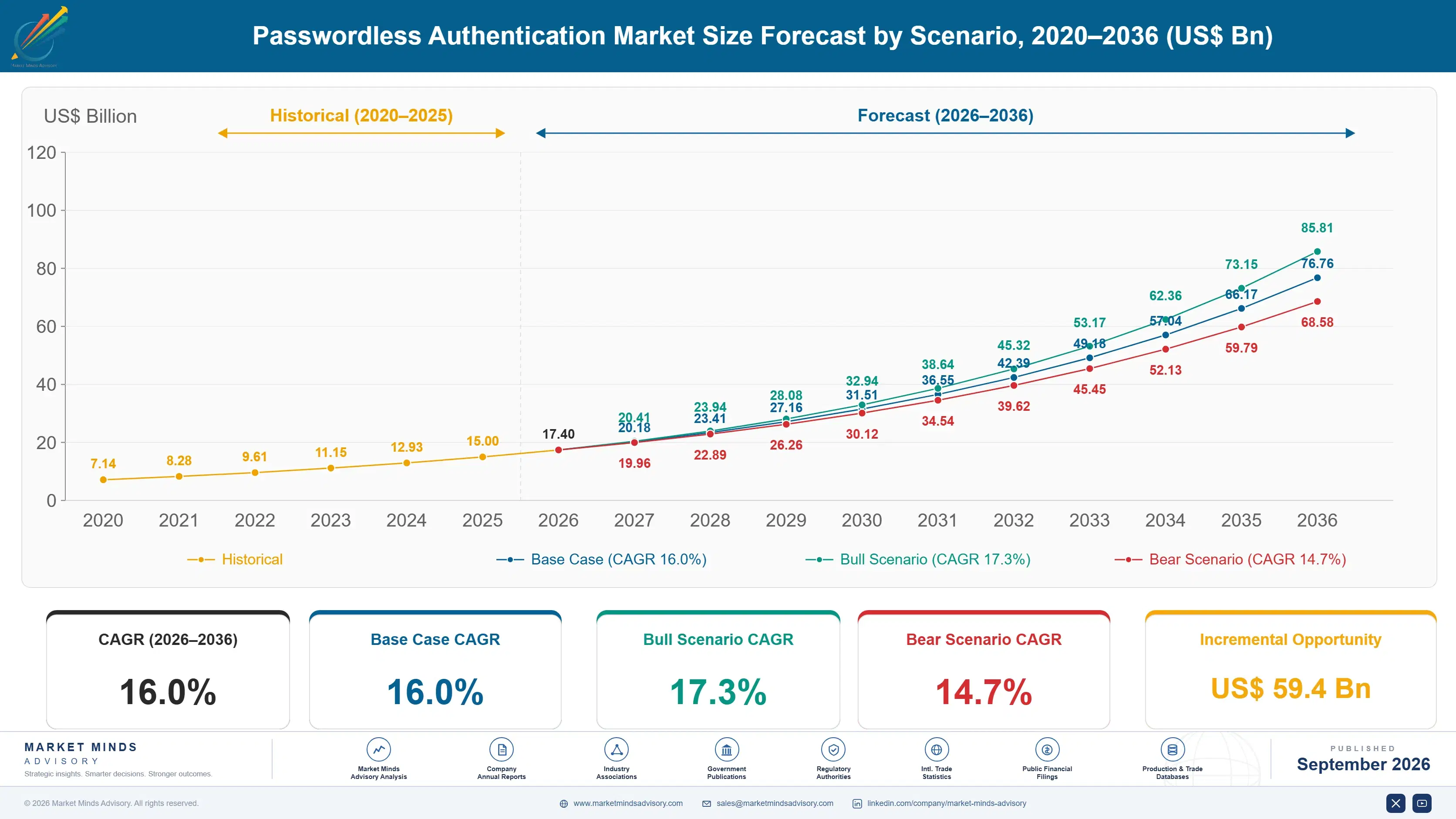
Passwordless Authentication Market Forecast Scenarios

passwordless-authentication-market-size-forecast-scenario-1788417429337
Password-based login dominated enterprise authentication from 2020 through most of 2025, with multi-factor add-ons layered on top rather than passwords being replaced outright across most corporate environments. Passkey standards matured only in the final two years of this period, growing at an estimated 14% annual rate historically as early adopters tested device-bound credentials at meaningful commercial scale.
MMA's base case assumes continued acceleration as three mechanisms compound steadily through the decade: native operating system support removes integration friction for developers, cyber insurance underwriters increasingly require phishing-resistant authentication as a condition of coverage, and regulatory mandates within financial services set hard compliance deadlines enterprises cannot easily postpone. These forces together push enterprise rollout well beyond early adopter segments into genuinely mainstream deployment across most industry verticals and company sizes.
The bull case centers on a single dominant catalyst: mandatory passkey requirements spreading from finance into healthcare and government procurement contracts nationwide over the coming several years. The bear risk is enterprise migration fatigue, where integration complexity across legacy applications stalls rollout timelines, and enterprises instead revert to extending password lifespans with additional multi-factor layers bolted awkwardly on top.

The Enterprise Race to Retire the Password

Passwordless authentication moved from pilot programs to board-level mandates once major cyber insurance underwriters began pricing phishing-resistant login as an explicit coverage condition. Enterprises that once treated multi-factor add-ons as sufficient protection are now retiring passwords outright, replacing login prompts with device-bound passkeys and hardware security keys across both employee and customer-facing systems at meaningful commercial scale across nearly every industry vertical nationwide.
MARKET CONCENTRATION38% CR5Top five identity vendors hold this combined market share
AVERAGE DEPLOYMENT COST$45 per seat annuallyTypical enterprise per-employee annual subscription pricing tier reported
TOP ADOPTING COUNTRY42% United StatesShare of tracked global enterprise passkey deployment volume overall
ENTERPRISE ROLLOUT TIMELINE18 to 24 monthsTypical full organization migration completion window reported by vendors
PHISHING RESISTANCE RATE99% blocked attemptsCredential phishing attempts reportedly stopped by passkey based systems
LEGACY APPLICATION COVERAGE65% of enterprise appsShare of applications supporting native passkey integration currently
The underlying technology stack converges around FIDO2 and WebAuthn standards, which let a single passkey work across browsers, operating systems, and mobile devices without meaningful vendor lock-in concerns for enterprise buyers. This interoperability breakthrough, achieved only within the last two years, removed the single largest barrier that stalled earlier biometric authentication rollouts across fragmented enterprise device environments and legacy application estates.
Identity platform vendors are racing to embed passkey support directly into existing single sign-on products rather than selling standalone point solutions, since enterprises strongly prefer consolidated vendor relationships over managing separate authentication tools individually. Consolidation pressure is reshaping vendor roadmaps faster than most analysts anticipated even eighteen months ago, and smaller specialists increasingly become acquisition targets for larger platform incumbents with deeper balance sheets and broader distribution reach.
"Enterprises stopped asking whether to retire passwords and started asking how fast they legally can. The vendors who win this cycle are the ones that make migration boring."
Senior Analyst, Digital Identity and Access Practice · MMA Technology Practice · September 2026

Market Trends

Native Operating System Passkey Support Reaches Critical Mass

Microsoft, Google, and Apple have now embedded passkey creation and sync directly into Windows, Android, and iOS, removing the need for enterprises to deploy separate authentication client software on managed devices. This native integration cut typical enterprise pilot timelines from many months down to a handful of weeks, since employees can register a passkey using hardware most already carry rather than issuing separate physical security tokens. Enterprise IT teams report meaningfully faster user adoption once passkey creation requires no downloaded app, no separate registration portal, and no dedicated help desk walkthrough session.
Market Impact: Mandates affect 60% of banks
Cyber Insurance Underwriters Now Require Phishing-Resistant Login

Cyber insurance carriers increasingly condition full coverage, or meaningfully lower premiums, on enterprises deploying authentication methods resistant to credential phishing rather than relying on passwords paired with SMS-based multi-factor codes alone. This underwriting shift has become a faster forcing mechanism than internal security policy, since finance and risk officers now drive authentication budget decisions directly rather than leaving decisions solely to security teams. Several major carriers now publish explicit passkey requirements directly in renewal terms and underwriting questionnaires sent well ahead of each policy renewal cycle across most enterprise account tiers and industry segments.
Market Impact: Attack surface grew 45% since 2022

Market Opportunities and Growth Drivers

Financial Regulators Mandate Strong Customer Authentication Upgrades

Banking regulators across major markets are updating strong customer authentication rules to explicitly favor phishing-resistant methods over SMS one-time codes, which remain vulnerable to interception and social engineering attacks against call centers. Large retail banks facing these updated requirements are replacing legacy multi-factor systems with passkey-based login for both online banking portals and mobile applications well ahead of mandatory compliance deadlines. Compliance officers now treat this migration as a near-term budget priority rather than a future consideration left for later fiscal years, planning cycles, or lower-priority technology backlog items entirely.
Market Impact: Legacy apps delay rollout 8 months

Remote Work Normalization Expands Enterprise Identity Attack Surface

Distributed workforces logging in from personal devices and home networks expanded the number of credential theft opportunities well beyond what traditional perimeter security models were designed to handle effectively. Enterprises responded by extending passwordless requirements beyond core applications to cover virtual private network access, cloud storage, and internal collaboration tools that previously relied on shared password vaults. This broader deployment scope is pulling budget forward faster than originally planned in most annual security roadmaps across large distributed enterprise organizations globally, including those with substantial contractor and remote employee populations. Budget owners now treat this expansion as an ongoing planning priority.
Market Impact: Recovery calls cost $35 each

Market Restraints and Challenges

Legacy Application Compatibility Gaps Slow Full Migration

Many enterprises run decades-old internal applications built around password fields that were never designed to accept modern authentication protocols, forcing IT teams to maintain parallel login systems during extended transition periods. The root cause traces to custom-built software lacking vendor support for retrofitting authentication modules without a full application rewrite, which few enterprises can budget for immediately. Vendors are exploring middleware adapters that translate passkey assertions into formats legacy systems accept, though adoption of these bridges remains limited so far given integration cost, ongoing maintenance burden, and uncertain long-term vendor support commitments.
Market Impact: Pilot timelines fell by 70%

Device Loss Recovery Processes Remain Inconsistent Across Vendors

When an employee loses the device holding their passkey, account recovery procedures vary widely across identity vendors, creating help desk burden and occasional security gaps if recovery verification is too weak. The underlying cause is the absence of a unified industry recovery standard comparable to FIDO2 itself, leaving each vendor to design its own approach. Leading vendors are now piloting multi-device passkey backup and encrypted cloud sync to reduce single-device dependency and recovery friction going forward across both employee and customer facing account populations spanning many different device types and operating systems.
Market Impact: Premiums drop up to 15%
3 additional market trends, 4 additional growth drivers, and 2 additional restraints and challenges are covered in the full report. Contact sales@marketmindsadvisory.com to access the complete intelligence.

Segment CAGR and Growth Architecture

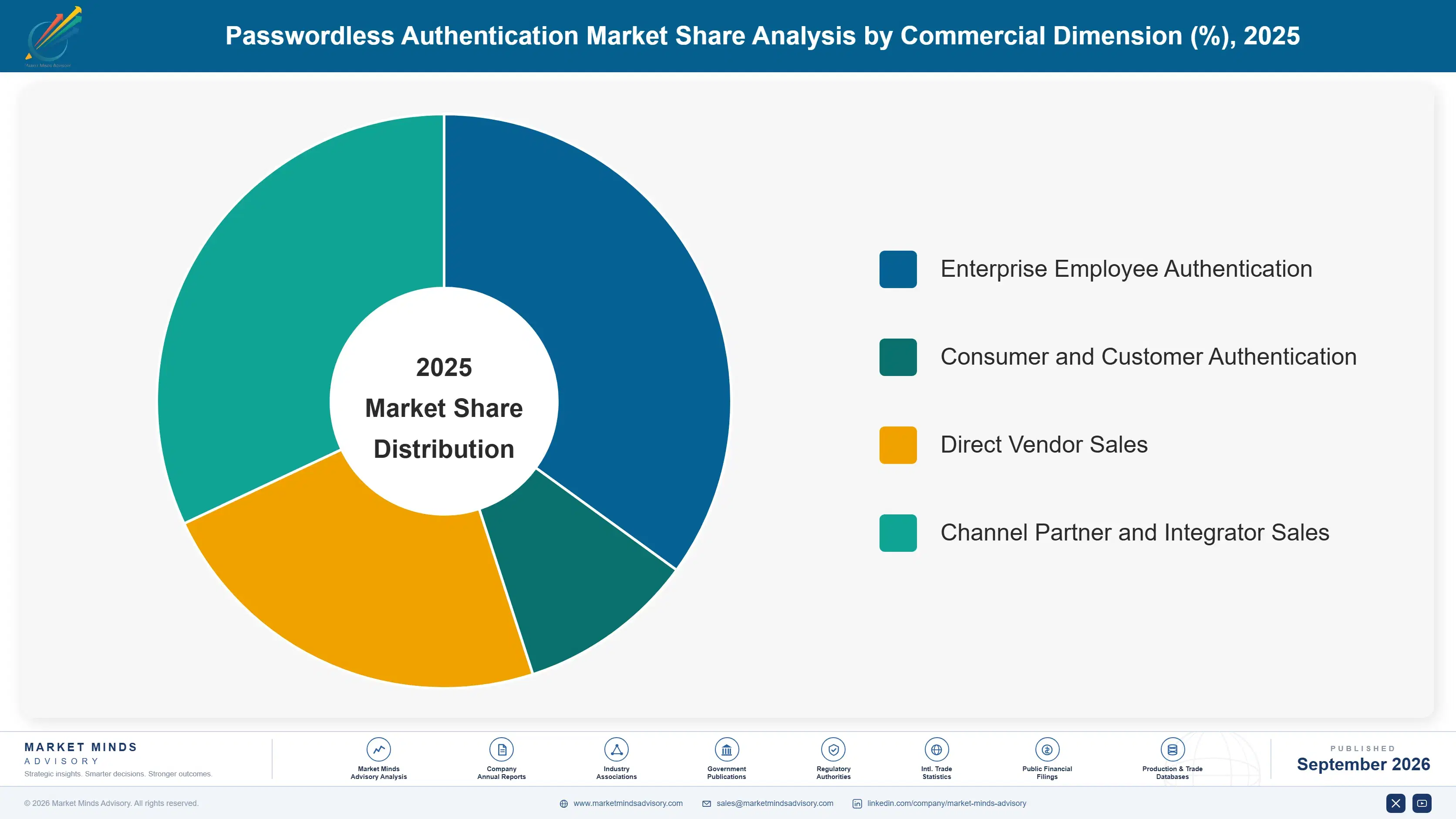
The Passwordless Authentication Market splits into six technology-defined segments spanning credential type and deployment method across enterprise and consumer contexts. Passkey-based authentication using FIDO2 and WebAuthn standards leads growth as native operating system support removes the integration friction that constrained biometric and hardware token adoption in earlier enterprise deployment cycles across most industries and company sizes.
passwordless-authentication-market-market-share-analysis-1788417429914

Passkey-Based Authentication (FIDO2/WebAuthn)

Passkey-based authentication is expanding faster than any other segment as Microsoft, Google, and Apple embed FIDO2 credential creation natively into their operating systems and browsers without requiring separate client software. Enterprises favor this segment because a single passkey works across devices and platforms without vendor lock-in, unlike proprietary hardware token or app-based push systems that tie credentials to a single vendor's platform. Large technology employers and financial institutions are migrating employee and customer login flows to passkeys first, since the phishing resistance and lower help desk burden deliver measurable cost savings within the first deployment year for most enterprise IT departments, security teams, and help desk staff managing daily support ticket volume.
CAGR 21.0%

Biometric Authentication (Fingerprint, Face, Voice)

Biometric authentication using fingerprint, facial, and voice recognition ranks second in growth, driven by widespread smartphone camera and sensor hardware that most employees and consumers already carry without additional purchase. Financial services firms increasingly pair biometric verification with device-bound passkeys for high-value transaction approval, layering an additional confidence signal onto login events that carry meaningful fraud risk. Consumer banking and healthcare applications lead adoption, since regulatory frameworks in both sectors increasingly recognize biometric verification as equivalent to, or stronger than, traditional password and one-time code combinations for identity assurance purposes overall, particularly where transaction values or regulatory exposure justify the additional verification step involved, and where customers already expect biometric convenience from other everyday mobile applications.
CAGR 17.0%
Full segment breakdown across 6 segments available in the complete report.

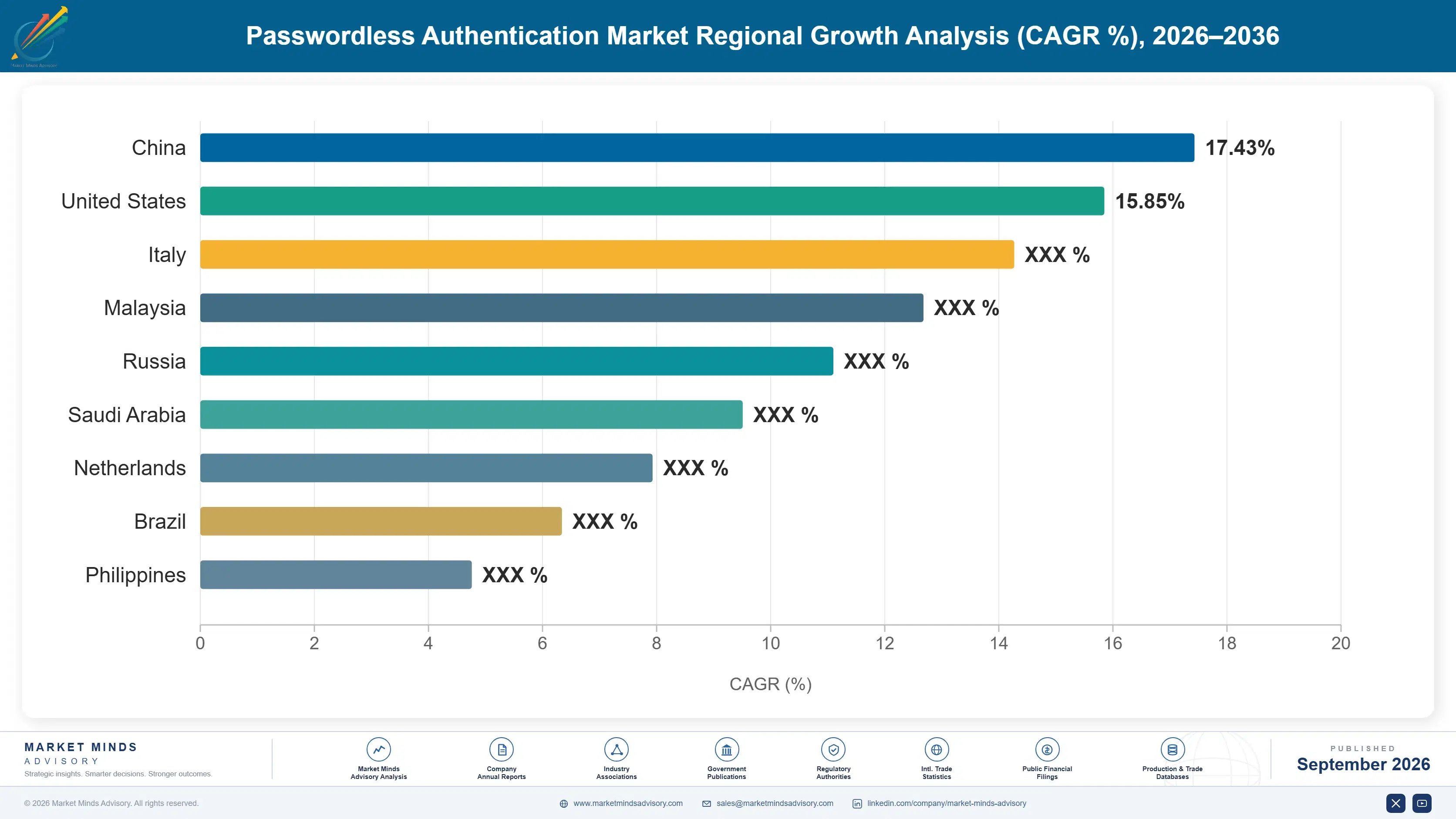
Regional Architecture and Country Demand Map

North America leads the Passwordless Authentication Market given its dense concentration of regulated finance, cloud platform vendors, and cyber insurance underwriters driving mandatory adoption, while East Asia follows closely through rapid mobile device manufacturer integration and government digital identity programs across South Korea, Japan, and China.

North America

United States financial institutions and large technology employers drive the bulk of regional demand, pushed by cyber insurance underwriting requirements and Strong Customer Authentication style regulatory pressure spreading from European rulemaking into domestic compliance frameworks. Canadian banks are following closely behind their American counterparts, extending passkey requirements into online and mobile banking channels well ahead of most other regulated industries. Microsoft and Okta, both headquartered in the region, maintain deep enterprise sales relationships that accelerate rollout timelines across Fortune 500 companies and public sector agencies alike. Enterprise procurement cycles here also move faster than in fragmented regulatory environments, letting vendors close large multi-year contracts within a single fiscal budget cycle rather than a multi-year approval process.
Share: 30% | CAGR: 16.5% (2026 to 2036)

Western Europe

The European Union's revised Strong Customer Authentication requirements under updated payment services rules are forcing banks and fintech firms to retire SMS-based one-time codes in favor of phishing-resistant login methods well ahead of most global peers. Germany and the United Kingdom lead enterprise passkey deployment, reflecting dense financial services clusters in Frankfurt and London that face the earliest compliance deadlines. Data protection authorities across the bloc are also scrutinizing biometric data handling closely, which slows some deployment relative to less regulated regions elsewhere. This regulatory intensity, however, also gives European vendors an early credential of proven compliance that they can market internationally once passwordless mandates eventually reach other jurisdictions still finalizing their own authentication rulemaking timelines.
Share: 20% | CAGR: 14.5% (2026 to 2036)
Regional intelligence for 5 additional markets available in the complete report: East Asia, South Asia and Pacific, Latin America, Middle East and Africa, Eastern Europe. Contact sales@marketmindsadvisory.com.
passwordless-authentication-market-country-cagr-analysis-1788417430437

How Identity Vendors Capture Enterprise Migration Value

Vendors capture value across four distinct commercial mechanisms as enterprises retire passwords entirely, moving well beyond simple per-seat subscription pricing toward layered service, analytics, and platform revenue models. Consolidation into single sign-on platforms is reshaping which of these mechanisms deliver the strongest sustained margin over the coming several years of enterprise password retirement and migration.

Per-Seat Subscription Pricing With Volume Tiers

Identity vendors price core passkey and single sign-on subscriptions on a per-employee basis, with volume discounts kicking in above certain enterprise headcount thresholds that reward larger multi-year contract commitments. This pricing model anchors baseline recurring revenue, since enterprises rarely renegotiate per-seat rates mid-contract once systems integrate deeply into onboarding and access provisioning workflows. Larger enterprise contracts typically carry per-seat pricing roughly 20% below list rate once volume discounts and multi-year commitment terms apply across the full negotiated agreement covering thousands of employee accounts. Vendors report this discount structure still protects overall gross margin given lower per-account support costs at scale.
Market Impact: Enterprise contracts discount pricing roughly 20% at scale

Premium Support and Migration Consulting Services

Vendors increasingly sell dedicated migration consulting engagements that help enterprises map legacy password-dependent applications and design phased passkey rollout plans tailored to each organization's specific application estate and compliance requirements. This consulting revenue carries meaningfully higher margins than the underlying software subscription itself, since it draws on specialized implementation expertise that few enterprises maintain internally at sufficient depth. Some vendors now generate roughly 15% of total account revenue from these premium services during the first year of a new enterprise relationship alone. Enterprises often renew these consulting engagements annually as new application categories require migration attention.
Market Impact: Consulting services add roughly 15% of first-year revenue

Fraud Detection and Risk Analytics Add-Ons

Leading vendors bundle behavioral risk analytics and fraud detection scoring on top of core authentication, charging separately for the ability to flag anomalous login patterns even after a valid passkey credential has been presented successfully. This add-on layer appeals strongly to financial services customers facing regulatory pressure to demonstrate continuous transaction monitoring beyond simple login verification alone. Attach rates for this add-on now exceed 30% among large financial services accounts specifically, reflecting the elevated fraud risk tolerance those customers are willing to pay to reduce. Vendors are actively expanding this analytics layer into additional customer verticals beyond financial services alone.
Market Impact: Add-on attach rates exceed 30% among finance customers

Device and Hardware Key Reseller Margins

Some identity vendors resell FIDO2-compliant hardware security keys directly to enterprise customers who prefer physical tokens over device-bound biometric credentials for particularly sensitive administrative or privileged access accounts. While hardware margins run considerably thinner than software subscription margins, the arrangement lets vendors capture the full customer relationship rather than ceding hardware procurement to a separate specialist supplier entirely. Bundled hardware and software deals typically carry contract values roughly 3 times higher than software-only agreements of comparable employee headcount and deployment scope overall. Vendors position this bundling primarily toward highly regulated customers requiring hardware-backed credentials for administrative access.
Market Impact: Bundled hardware deals run roughly 3 times larger overall

Who Controls the Margin Pool

Five vendors, evaluated on annual recurring revenue from authentication products, together account for an estimated 38% of tracked identity market revenue, leaving a long tail of specialists competing for remaining enterprise budget. Microsoft leads through native platform integration advantages that smaller specialists cannot match, while Okta and Ping Identity compete closely for enterprise accounts that require multi-cloud and hybrid deployment flexibility neither incumbent fully dominates.
Current competitive activity centers on rapid feature parity races, as every major vendor now offers passkey creation, biometric verification, and fraud analytics within a single platform rather than as separate purchases. Acquisition activity has intensified as larger platforms absorb smaller passkey and biometric specialists to close remaining feature gaps quickly rather than build comparable capability internally over multiple product development cycles.

Emerging pressure comes from device manufacturers like Apple and Google embedding authentication capability directly into consumer operating systems, potentially disintermediating dedicated identity vendors for simpler use cases over time. Rankings could shift meaningfully if a major cloud platform bundles enterprise-grade passwordless authentication into existing productivity suite subscriptions, undercutting standalone identity vendor pricing across mid-market accounts specifically over the coming several years.
passwordless-authentication-market-company-positioning-matrix-1788417430956

Competitive Moat and Risk Dimensions

MICROSOFT

Moat: Native Platform Integration Advantage

Microsoft embeds passkey authentication directly into Windows, Azure Active Directory, and Microsoft 365, giving it a distribution advantage no standalone identity vendor can replicate without a comparable operating system footprint. This deep integration lets enterprises adopt passkeys without procuring a separate product entirely. Few rivals can match this reach at comparable scale.
MICROSOFT

Risk: Antitrust Scrutiny Over Bundling

Regulators in the European Union and United States have scrutinized Microsoft's practice of bundling security features into existing subscriptions, raising the possibility that future rulings could force unbundling or pricing changes that reduce the platform integration advantage the company currently enjoys. Enterprises would then need to evaluate standalone alternatives more seriously.
OKTA

Moat: Multi-Cloud Identity Neutrality

Okta's independence from any single cloud or device platform makes it the preferred choice for enterprises running hybrid or multi-cloud environments who do not want authentication tied to one vendor's platform. This neutrality wins accounts that distrust platform lock-in from Microsoft or Google. Enterprises value this independence highly during vendor selection processes.
OKTA

Risk: Pricing Pressure From Bundled Rivals

As platform vendors bundle authentication into existing productivity suite subscriptions at effectively no incremental cost, Okta faces mounting pressure to justify standalone subscription pricing, particularly among small and mid-market accounts most sensitive to total software spend consolidation. This dynamic could compress Okta's growth in the smallest customer segment considerably.

Players Tracked

Prominent Players

Microsoft
Okta
Ping Identity
Yubico
Thales

Other Key Players

Cisco Duo
Transmit Security
HYPR
Beyond Identity
Trusona
ForgeRock
OneLogin
SecureAuth
RSA Security
IBM Security Verify
Entrust
Broadcom
CyberArk
Ubisecure
Nok Nok Labs

Recent Developments

MARCH 2025

Microsoft expanded passkey support across Windows Hello for Business and Azure Active Directory, enabling enterprise administrators to enforce passwordless sign-in policies organization-wide without deploying additional client software or hardware tokens for most standard employee accounts. The rollout extended to conditional access policies covering third-party applications integrated through single sign-on connectors.
Signal: Signals platform vendors are racing hard to make passwordless authentication the enterprise default configuration everywhere globally.
JULY 2025

Okta acquired a smaller behavioral biometrics startup to add continuous authentication risk scoring directly into its core identity platform, closing a feature gap against rivals that already offered fraud analytics as part of a combined authentication and risk management suite. The deal followed months of pilot testing with select customers.
Signal: Signals fraud analytics capability is quickly becoming table stakes rather than a standalone differentiated product offering.
OCTOBER 2025

Yubico partnered with a major cloud service provider to pre-bundle hardware security keys into new enterprise device provisioning workflows, reducing deployment friction for customers in regulated industries requiring hardware-backed credentials for privileged administrative account access. The arrangement covers device provisioning across North America and Western Europe initially.
Signal: Signals hardware token vendors are actively securing distribution deals to defend share against growing software-only rivals.

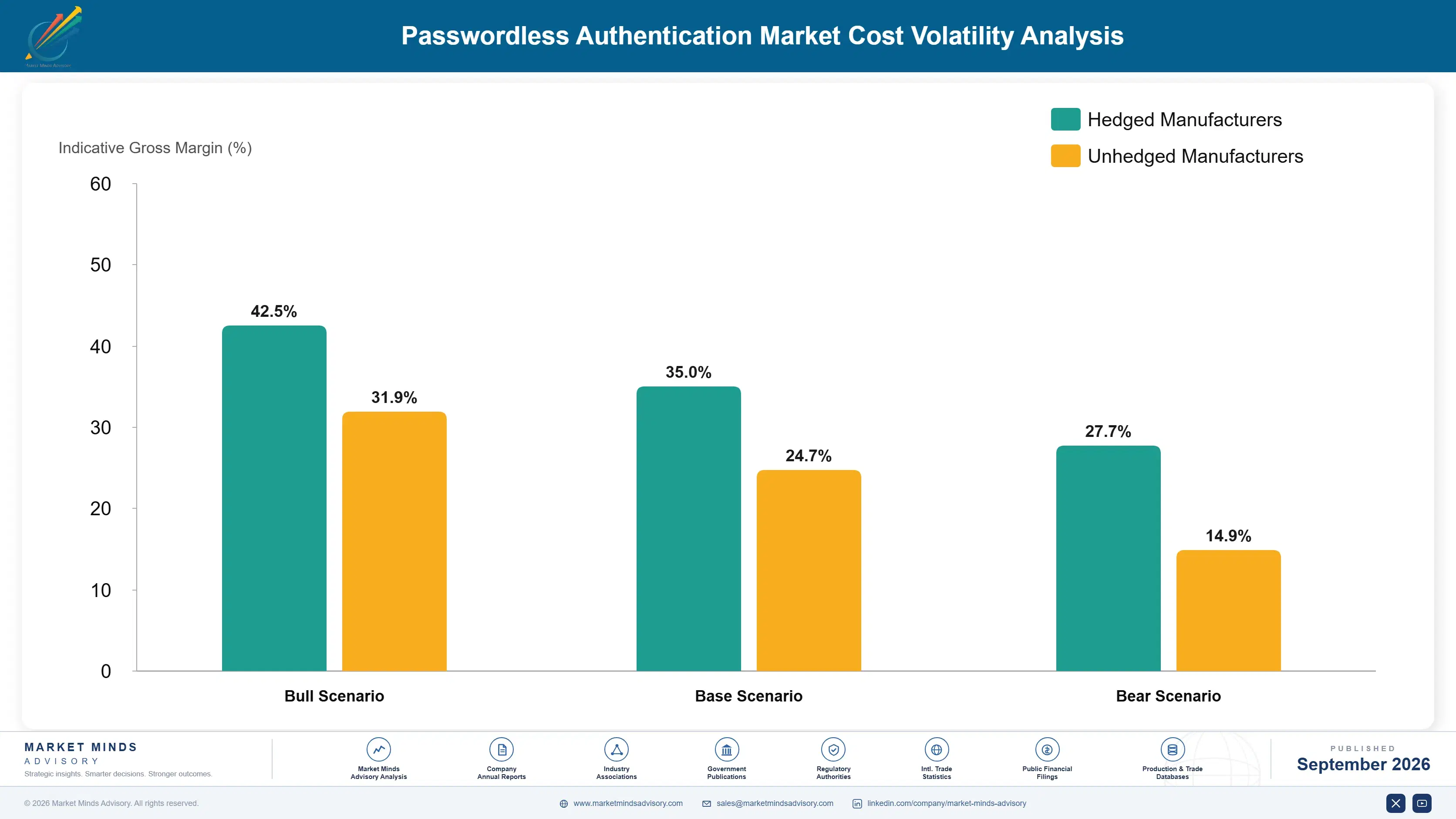
Cloud Infrastructure and Engineering Talent Exposure

Cloud hosting and compute infrastructure account for an estimated 25% of total cost of goods sold for identity vendors, sourced primarily from major hyperscale providers in the United States and Western Europe. Specialized security engineering talent represents a second major cost input, concentrated in a handful of technology hub cities where competition for qualified personnel remains intense across the sector.
A notable cloud pricing increase from a major hyperscale provider in early 2025, documented in that company's own annual report, pushed several mid-sized identity vendors to renegotiate hosting contracts or migrate workloads to alternative providers entirely. The transition period created temporary service reliability concerns for a handful of enterprise customers during the multi-month migration window that some vendors underestimated in their original planning timelines. Enterprise renewal negotiations grew noticeably more contentious as a result.

Smaller identity vendors lacking negotiating leverage with hyperscale cloud providers pay meaningfully higher per-unit hosting costs than larger competitors who can commit to multi-year volume agreements, creating a persistent cost disadvantage that compounds over time as transaction volume scales. This dynamic disproportionately affects newer entrants without established enterprise customer bases large enough to justify long-term infrastructure commitments comparable to incumbent vendors.
passwordless-authentication-market-cost-volatility-analysis-1788417431150

Multi-Cloud Hosting Redundancy Strategy

Leading vendors increasingly distribute workloads across two or more cloud providers to reduce dependency on any single hosting relationship and preserve negotiating leverage during contract renewal cycles. This redundancy adds modest complexity but meaningfully lowers concentration risk. Vendors report meaningfully improved contract terms once a credible alternative provider option exists on the table during renewal discussions.

Remote Engineering Talent Sourcing

Vendors are expanding remote hiring beyond traditional technology hub cities to access qualified security engineering talent at lower comparable compensation levels. This approach widens the talent pool considerably while easing upward wage pressure in the most competitive metro markets. Several vendors now report meaningfully faster hiring timelines and lower average compensation costs after expanding beyond traditional hub city recruiting.

Portfolio Architecture for Margin Defence

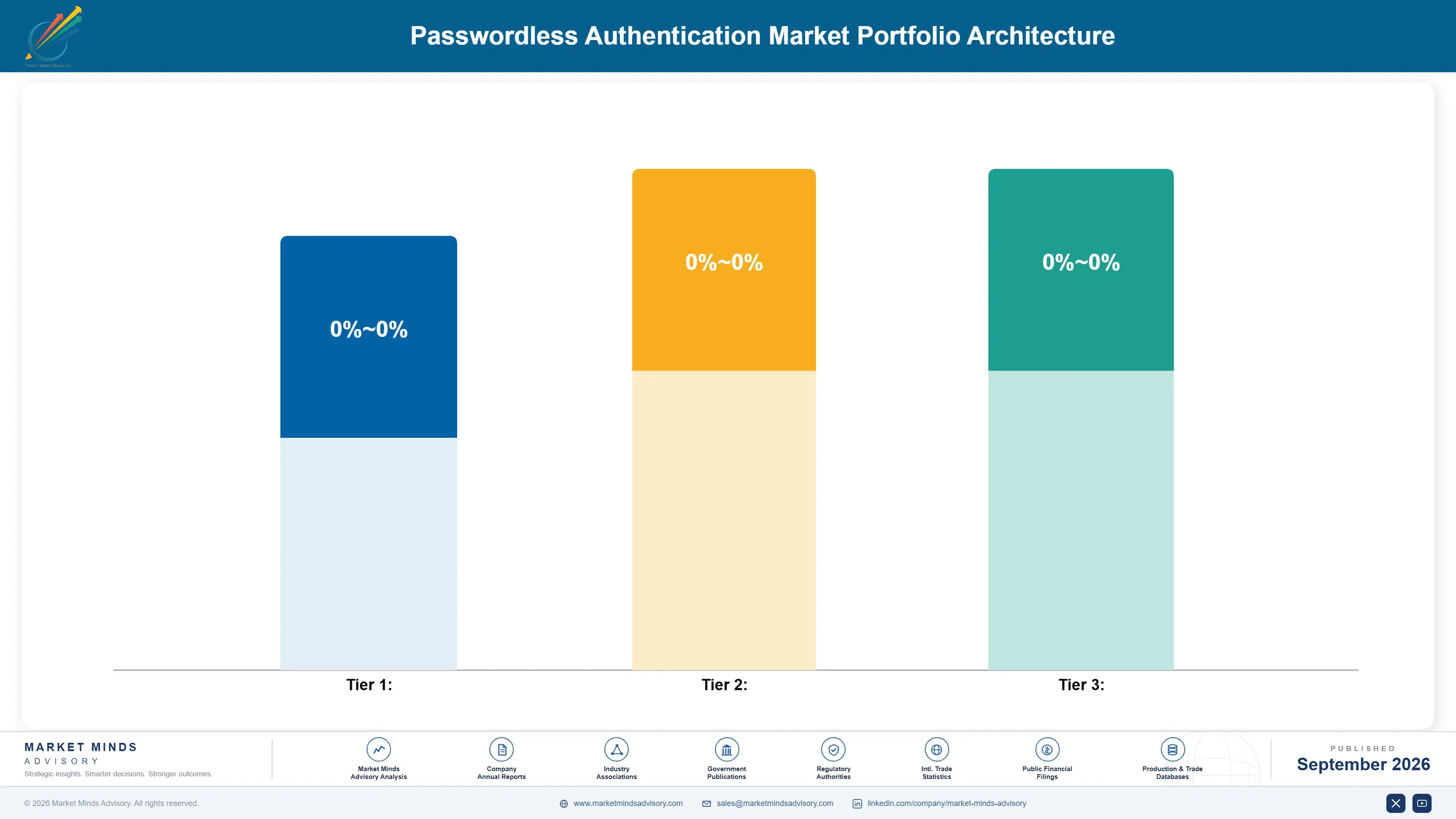
Identity vendors architect pricing around three distinct tiers that separate commodity single-factor replacement from premium risk-aware authentication and next-generation adaptive systems still emerging from research pipelines. Gross margins widen as customers move up this tier structure, since higher tiers embed proprietary fraud analytics competitors cannot easily replicate. Vendors moving customers up this structure over renewal cycles see improved account profitability.
Volume-tier subscriptions covering basic passkey replacement carry margins comparable to typical enterprise software licensing, while premium tiers bundling continuous risk scoring and compliance reporting command noticeably higher pricing per seat. This tension between volume scale and premium differentiation shapes most vendor product roadmap decisions currently under active development. Vendors design roadmaps to nudge volume-tier customers upward through bundled trial access to premium risk scoring features.

The highest-value pools concentrate among large regulated enterprises willing to pay for adaptive authentication that adjusts verification requirements dynamically based on real-time behavioral risk signals rather than static rules. Smaller vendors without this dynamic capability increasingly find themselves competing on price within the volume tier alone, ceding higher-margin premium accounts to larger established platform incumbents. Vendors investing early in adaptive authentication research are positioning to capture outsized share of this value pool.

Basic passkey replacement subscriptions priced comparably to standard enterprise software licensing, targeting cost-sensitive mid-market accounts without complex compliance requirements or dedicated security budgets for premium risk analytics. These accounts value predictable flat pricing over advanced feature depth.
Gross Margin

Bundled authentication and continuous risk scoring subscriptions targeting regulated financial services and healthcare customers, commanding meaningfully higher per-seat pricing given embedded compliance reporting capability. Renewal rates in this tier run notably higher than the volume segment.
Gross Margin

Adaptive authentication systems using behavioral biometrics and continuous risk assessment, still emerging from vendor research pipelines, priced at the highest premium given differentiated proprietary technology involved. Commercial availability remains limited to a handful of early enterprise pilots.
Gross Margin
passwordless-authentication-market-portfolio-architecture-1788417431646

High-value Sub-segments and Strategic Watch-out

Passkey-Based Authentication (FIDO2/WebAuthn)

This segment combines the fastest growth rate in the market with the strongest margin profile, as native operating system support removes deployment friction while enterprises pay premium pricing for phishing-resistant credentials that materially reduce breach exposure. MMA rates this segment the strongest combined opportunity in the entire portfolio.

Biometric Authentication (Fingerprint, Face, Voice)

Strong growth continues here as smartphone hardware proliferates, though margins run somewhat thinner than passkey-based authentication given intensifying competition among device manufacturers embedding biometric capability natively into consumer hardware at no additional cost. Vendors should still prioritize investment here given the large addressable customer base.

Hardware Security Key Authentication

This established segment anchors reliable core revenue for vendors serving regulated industries requiring physical tokens, growing more slowly than software-based alternatives but maintaining loyal customers with high switching costs and long-standing procurement relationships. This segment remains a dependable core revenue source for established vendors. Loyal customers renew at high rates.

Certificate-Based Device Authentication

Growth here trails the broader market meaningfully, and vendors should watch closely for signs of accelerating displacement by passkey-based alternatives that offer comparable device-level security assurance without requiring dedicated certificate infrastructure management overhead. Vendors should monitor renewal rates closely for early signs of accelerating decline.

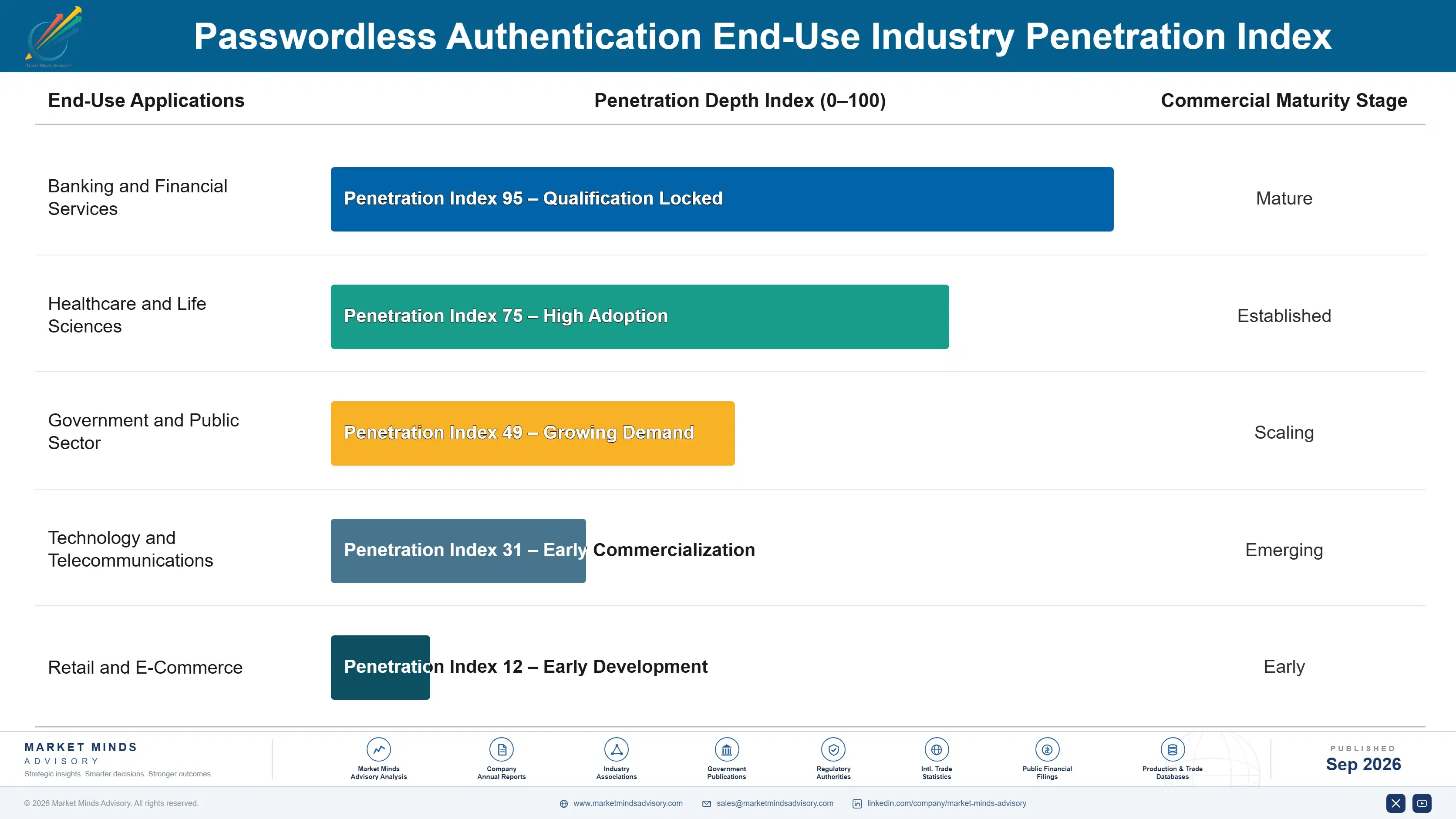
The Compliance Annuity Behind Password Retirement

Enterprise passwordless contracts function much like insurance premiums, renewing automatically each year as compliance deadlines and cyber insurance underwriting requirements make reverting to passwords practically unthinkable once systems are fully deployed. This annuity-like renewal pattern gives vendors predictable multi-year revenue visibility once an enterprise completes migration. Churn for fully migrated accounts runs notably lower than typical enterprise software, since switching cost grows each deployment year.
Adoption depth varies meaningfully by end-use vertical: financial services and healthcare embed passwordless authentication deeply across every customer touchpoint given regulatory pressure, while retail and manufacturing verticals often limit deployment to employee-facing systems alone, leaving customer authentication on legacy methods longer. Manufacturing environments in particular still rely heavily on shared workstation logins across shop floor terminals, a use case passkey standards handle less gracefully than dedicated employee devices.

Buyer profiles are shifting generationally as chief information security officers who grew up managing password policies give way to a newer cohort trained on zero-trust architecture principles from the start of their careers. This generational shift accelerates procurement decisions, since newer buyers arrive already skeptical of password-based systems. Vendors report shorter sales cycles engaging this cohort, since advocacy increasingly comes from within security teams rather than executives.
passwordless-authentication-market-end-use-penetration-index-1788417432125

Where Vendors Should Focus Next

These are among the four positions where our research anticipates prominent divergence between winners and laggards over the coming forecast period. Each is grounded in the demand model, the regulatory perimeter, and the announced capacity pipeline.
01 / COMPLIANCE-LED SALES MOTION

Lead enterprise sales with regulatory deadlines, not features

Compliance deadlines close enterprise deals faster than any feature comparison exercise, since finance and risk officers now approve authentication budget directly rather than deferring entirely to security teams. Vendors that lead sales conversations with specific regulatory deadlines and underwriting requirements convert enterprise prospects meaningfully faster than those leading purely with technical feature capability alone. This approach matters most for vendors selling into financial services and healthcare accounts facing the nearest compliance deadlines and steepest underwriting penalties for delayed migration timelines overall.
02 / PLATFORM CONSOLIDATION STRATEGY

Acquire adjacent capability before rivals close feature gaps

Enterprises increasingly prefer a single consolidated identity platform over managing several separate point solutions for passkeys, biometrics, and fraud analytics spread across different vendor relationships and support contracts. Vendors lacking even one of these adjacent capabilities risk losing entire accounts to rivals offering a more complete bundled platform at broadly comparable overall pricing and terms. Acquiring smaller specialists quickly closes capability gaps before competitors can establish similar bundled offerings across their own customer bases and existing long-standing enterprise relationships already in place.
03 / LEGACY APPLICATION BRIDGING

Invest in middleware that speeds legacy application migration

Legacy application compatibility remains the single largest friction point delaying full enterprise password retirement across most large organizations tracked closely throughout this particular study. Vendors offering credible middleware bridges that translate passkey assertions into formats older legacy systems can accept can shorten enterprise migration timelines meaningfully compared with rivals lacking this specific technical capability. This investment pays off most clearly among enterprises carrying large custom-built application estates that vendors otherwise cannot easily migrate within reasonable enterprise deployment timelines and budgets.
04 / REGIONAL REGULATORY POSITIONING

Build compliance credentials ahead of expanding regional mandates

Regulatory mandates originating in Western Europe and North American financial services are steadily expanding into new geographies and industry verticals over the coming several years of policy development. Vendors establishing compliance credentials and local partnerships ahead of these expanding mandates position themselves to capture new regional demand before less prepared competitors can arrive and establish comparable local relationships. This first-mover advantage compounds meaningfully over time as government procurement rules increasingly favor vendors demonstrating prior compliance track records across comparable jurisdictions.

Engagement Snapshot From the Field

A live engagement with an industry participant carrying material or product regulatory and market exposure ahead of a defining policy shift, showing how our research translates into a defensible multi-year portfolio strategy.
MARKET MINDS ADVISORY · CLIENT ENGAGEMENT SUMMARY
Passwordless Authentication Producer Strategic Portfolio Review and Transition Roadmap 2026·Investment Scenario on Passwordless Authentication Exposure Evaluation 2025-26
CLIENT PROFILE
A regional bank holding company operating across several states faced updated regulatory requirements mandating phishing-resistant authentication for both employee system access and customer-facing online and mobile banking applications well ahead of a fixed compliance deadline set by federal banking supervisors. Leadership needed to migrate tens of thousands of employee accounts and a larger customer base without disrupting daily operations, and without exceeding the approved compliance budget.
STRATEGIC CHALLENGE
Leadership needed to determine which passwordless authentication approach could meet strict regulatory phishing-resistance requirements while remaining usable for an older customer demographic less comfortable with new technology, and faced pressure to complete migration within a fixed regulatory deadline without triggering costly support ticket volume increases from confused customers unfamiliar with passkey enrollment during the transition period.
MMA APPROACH
MMA benchmarked four candidate identity vendors against the bank's specific regulatory compliance requirements, existing core banking system compatibility, and customer support cost implications, then modeled expected customer enrollment friction and full multi-year total cost of ownership across each vendor option under consideration for this particular deployment. Findings were shared with the bank's technology steering committee ahead of final vendor selection.
KEY FINDINGS
  1. Passkey-based authentication met regulatory phishing-resistance requirements for both employee and customer account access (client-reported, unverified by MMA) without requiring hardware token distribution.
  2. Customer enrollment friction proved lower than initially projected, since most customers already used biometric sign-in on their personal mobile banking devices. Support staff reported this as unexpectedly smooth during onboarding.
  3. Employee migration completed within twelve weeks across all branch locations, well ahead of the original eighteen-week internal project timeline. Branch managers cited clear internal communication as a key factor.
  4. Customer support ticket volume rose only briefly during initial enrollment before returning to baseline within roughly six weeks overall. Weekly monitoring reports tracked this decline closely across all branches.
CLIENT PROFILE
A regional bank holding company operating across several states faced updated regulatory requirements mandating phishing-resistant authentication for both employee system access and customer-facing online and mobile banking applications well ahead of a fixed compliance deadline set by federal banking supervisors. Leadership needed to migrate tens of thousands of employee accounts and a larger customer base without disrupting daily operations, and without exceeding the approved compliance budget.
STRATEGIC CHALLENGE
Leadership needed to determine which passwordless authentication approach could meet strict regulatory phishing-resistance requirements while remaining usable for an older customer demographic less comfortable with new technology, and faced pressure to complete migration within a fixed regulatory deadline without triggering costly support ticket volume increases from confused customers unfamiliar with passkey enrollment during the transition period.
MMA APPROACH
MMA benchmarked four candidate identity vendors against the bank's specific regulatory compliance requirements, existing core banking system compatibility, and customer support cost implications, then modeled expected customer enrollment friction and full multi-year total cost of ownership across each vendor option under consideration for this particular deployment. Findings were shared with the bank's technology steering committee ahead of final vendor selection.
KEY FINDINGS
  1. Passkey-based authentication met regulatory phishing-resistance requirements for both employee and customer account access (client-reported, unverified by MMA) without requiring hardware token distribution.
  2. Customer enrollment friction proved lower than initially projected, since most customers already used biometric sign-in on their personal mobile banking devices. Support staff reported this as unexpectedly smooth during onboarding.
  3. Employee migration completed within twelve weeks across all branch locations, well ahead of the original eighteen-week internal project timeline. Branch managers cited clear internal communication as a key factor.
  4. Customer support ticket volume rose only briefly during initial enrollment before returning to baseline within roughly six weeks overall. Weekly monitoring reports tracked this decline closely across all branches.
RECOMMENDED STRATEGY
Phase 1: Phase one selected a vendor meeting both regulatory phishing-resistance requirements and older customer usability expectations precisely and consistently. and cost expectations. Phase 2: Phase two piloted enrollment with a small customer segment before expanding rollout to the full customer base gradually. over several weeks. Phase 3: Phase three trained branch staff to assist customers unfamiliar with passkey enrollment during the transition period. and provide hands-on guidance to customers.
OUTCOME
The bank completed employee and customer migration ahead of the regulatory compliance deadline, meeting all phishing-resistance requirements without material disruption to daily banking operations (client-reported, unverified by MMA), while support costs returned to baseline within six weeks of full customer enrollment completion. Regulators later cited the migration as a model implementation.

Frequently Asked Questions

Foundational context covering the market sizes, CAGR, scope, country, region and competition that inform every finding below. This section is provided to cover basics and most often pre-purchase conversations, answered from the MMA Primary Research Dataset.

What is the current size of the Passwordless Authentication Market?

The Passwordless Authentication Market reached an estimated $15.0 billion in global revenue in 2025. This covers passkey, biometric, and hardware key authentication software and services replacing traditional password-based login systems.

How large will the Passwordless Authentication Market be by 2036?

MMA projects the market will reach approximately $76.76 billion by 2036, driven mainly by regulatory mandates and native operating system passkey support. That represents roughly a 4.41 fold expansion from 2026 levels.

What is the CAGR for the Passwordless Authentication Market 2026 to 2036?

The market is forecast to grow at a 16.0% compound annual rate between 2026 and 2036. Bull and bear scenarios range between roughly 14.7% and 17.3% depending on enterprise migration pace.

Which segment is growing fastest?

Passkey-based authentication using FIDO2 and WebAuthn standards leads all segments, expanding at an estimated 21.0% annually. That is well above the overall market's 16.0% average growth rate through 2036.

Who are the major companies in the Passwordless Authentication Market?

Microsoft, Okta, Ping Identity, Yubico, and Thales form the five leading vendors tracked in this report. Together they hold an estimated 38% combined share of tracked authentication revenue.

Which country is growing fastest?

India posts the fastest national growth rate in the study, expanding at an estimated 19.0% annually. Its expanding digital identity infrastructure and smartphone penetration drive unusually rapid biometric adoption there.

Report Segmentation Architecture

The full report scope spans multiple orthogonal segmentation dimensions, with cross-tabulated demand data provided for each dimension pair. Coverage extends further to regional breakdowns, trend trajectories, and the competitive detail needed to support segment-level decision-making.

By Primary Market Dimension

  • Passkey-Based Authentication (FIDO2/WebAuthn)
  • Biometric Authentication (Fingerprint, Face, Voice)
  • Hardware Security Key Authentication
  • Mobile Push Notification Authentication
  • Certificate-Based Device Authentication
  • Identity Verification and Recovery Services

By End-Use Industry

  • Banking and Financial Services
  • Healthcare and Life Sciences
  • Government and Public Sector
  • Technology and Telecommunications
  • Retail and E-Commerce

By Commercial Dimension

  • Enterprise Employee Authentication
  • Consumer and Customer Authentication
  • Direct Vendor Sales
  • Channel Partner and Integrator Sales

By Region

  • North America
  • Western Europe
  • East Asia
  • South Asia and Pacific
  • Latin America
  • Middle East and Africa
  • Eastern Europe

Scope, Methodology, and Coverage

Every figure in this report is reproducible from documented input assumptions. The scope below maps the historical period, the forecast horizon, the segmentation dimensions, and the countries covered, alongside the underlying primary and qualitative methodology.
Historical Period
2020 to 2025
Forecast Period
2026 to 2036
Base Year
2025 (USD billions; MMA Primary Research Dataset, September 2026)
Market Definition
The Passwordless Authentication Market covers software, hardware tokens, and biometric verification systems that authenticate users without a memorized password, including passkeys, FIDO2 security keys, and device-based biometric login. It excludes traditional multi-factor authentication add-ons layered on top of existing password systems and general identity governance software.
Quantitative Units
USD Billion, CAGR (%), Share (%), 2020 to 2036
Segmentation Dimensions
By Primary Market Dimension; By End-Use Industry; By Commercial Dimension; By Region
Regions Covered
North America, Western Europe, East Asia, South Asia and Pacific, Latin America, Middle East and Africa, Eastern Europe
Countries Covered
United States, Canada, Germany, United Kingdom, France, South Korea, Japan, China, India, Australia, Brazil, Mexico, Saudi Arabia, United Arab Emirates, South Africa, Poland
Key Companies Profiled
Microsoft, Okta, Ping Identity, Yubico, Thales, Cisco Duo, Transmit Security, HYPR, Beyond Identity, Trusona, ForgeRock, OneLogin, SecureAuth, RSA Security, IBM Security Verify, Entrust, Broadcom, CyberArk, Ubisecure, Nok Nok Labs
Quantitative Methodology
Primary survey, n=3,800 respondents, Q4 2025, six countries; demand-side model with trade association cross-validation
Qualitative Methodology
47 expert interviews, Q4 2025; applied to validate demand model assumptions, identify emerging dynamics, and assess competitive positioning
Report Format
PDF and XLSX data workbook (Word format preview document)
Publisher
Market Minds Advisory
Report Code
MMA-2026-TEC-615
Published
September 2026
Contact
sales@marketmindsadvisory.com | www.marketmindsadvisory.com

Purchase the full Passwordless Authentication Market Report (2026 to 2036).

The full report delivers a comprehensive analysis of the Passwordless Authentication Market, covering historical performance from 2020 through 2025 and forecasts extending to 2036. It provides detailed segmentation across six primary authentication technology types, seven regional markets, and competitive profiles of the twenty leading identity vendors shaping industry structure. Readers gain access to quantified demand drivers, restraints, and revenue lever analysis grounded in primary survey data and expert interviews. The report also includes a detailed input cost exposure assessment and portfolio tier framework for strategic planning purposes.
Seven-region market sizing and forecast data
Twenty vendor competitive profiles and positioning
Segment-level CAGR and revenue projections through 2036
Primary survey data from 3,800 respondents
Expert interview insights from 47 industry specialists
Revenue lever and portfolio tier strategic frameworks

Built For The People Who Decide

From boardroom strategy to bench-side execution, this report is read cover-to-cover by leaders shaping the next decade of their industry, turning demand scenarios, market dynamics and valuation benchmarks into decisions.
CXOs/ Presidents/ VPs/ Managers
M&A and Corporate Development
Strategy Teams and R&D Heads
Procurement and Product Directors
Regulatory and Compliance Leaders
Investor Relations and Equity Analysts