Market Minds Advisory
Packer Bottle Market

Packer Bottle Market: Moisture Ingress, Child-Resistant Closure Systems and the Container Behind Every Tablet Count

A solid dose bottle is opened and closed daily for months, and every opening admits humid air the desiccant must absorb before the tablets do, which is a slower failure than any leak.

Lead Analyst

Bilal Shaikh

Published

September 2026

Make Smarter Decisions with Customized Research Insights

Request a free sample report and evaluate market opportunities, growth trends, and competitive dynamics relevant to your business needs.

2025 MARKET VALUE$4.3BMarket Size 2025
2036 FORECAST VALUE$8.2BBase Case , 2026 to 2036
CAGR 2026 TO 20366.1 %Bull 7.3% / Bear 4.9%
INCREMENTAL OPPORTUNITY$3.7BNet 10- year value creation
EXPANSION MULTIPLE1.81x2036 value over 2026 base
Strategic Levers
M&A Pipeline
Regional Outlook
Country Rankings
Competitive Intelligence
Segmental Deep-dive
Call-Us : 91 93563 13602

Executive Snapshot and Market Trajectory

A blister pack protects each tablet once. A packer bottle protects ninety of them across ninety separate openings, and every one lets humid room air inside. The container keeps working long after the pharmacy handed it over, which is a different engineering problem entirely, and a slow silent failure.
Integrated desiccant bottles compound at 9.2%, exactly 1.50 times the market, because moisture-sensitive solid dose formulations have multiplied and a loose desiccant canister is one more thing a patient can swallow. East Asia holds 29% of demand on generic manufacturing volume and domestic pharmaceutical output no other region matches. Bottles remain the dominant dispensing format across much of that output. Nobody tests a bottle that way.
Five suppliers hold 43%. The barrier is qualification rather than moulding: a bottle is validated as a container closure system with a specific cap and liner against stability data, and changing any element reopens work nobody undertakes for a lower unit price. Requalifying a container closure system costs around USD 180,000 before the supply delay is counted, which is why qualified positions persist for a product's whole commercial life. Qualification is the whole barrier.
Market Definition
The market covers rigid plastic bottles supplied to pharmaceutical, nutraceutical and diagnostic manufacturers for solid dose and liquid products, spanning standard round packer bottles, integrated desiccant bottles, high-barrier multilayer bottles, child-resistant closure systems, wide-mouth nutraceutical bottles and recycled content packer bottles. Glass vials, blister packaging, sachets, dispensing closures sold separately and secondary cartons are excluded.
Base Year Value
$4.3B in 2025 (MMA Primary Research Dataset, August 2026)
Forecast Period
2026 to 2036, eleven discrete annual values
CAGR
6.1% base case. Bull 7.3%. Bear 4.9%.
Fastest Growth Segment
Integrated Desiccant Packer Bottles: 9.2% CAGR
Fastest Growth Country
India: 9.8% CAGR
Fastest Growth Region
South Asia and Pacific: 8.3% CAGR
Largest Region
East Asia: 29% of 2025 global value
Market Leaders
Berry Global, Gerresheimer, Alpha Packaging, Comar, Drug Plastics Group. Source: MMA Analysis based on company annual reports.
Primary Survey
n=3,800 procurement and R&D decision-makers, Q4 2025, six countries
Methodology
Demand-side build-up, cross-validated against public data, 47 expert interviews

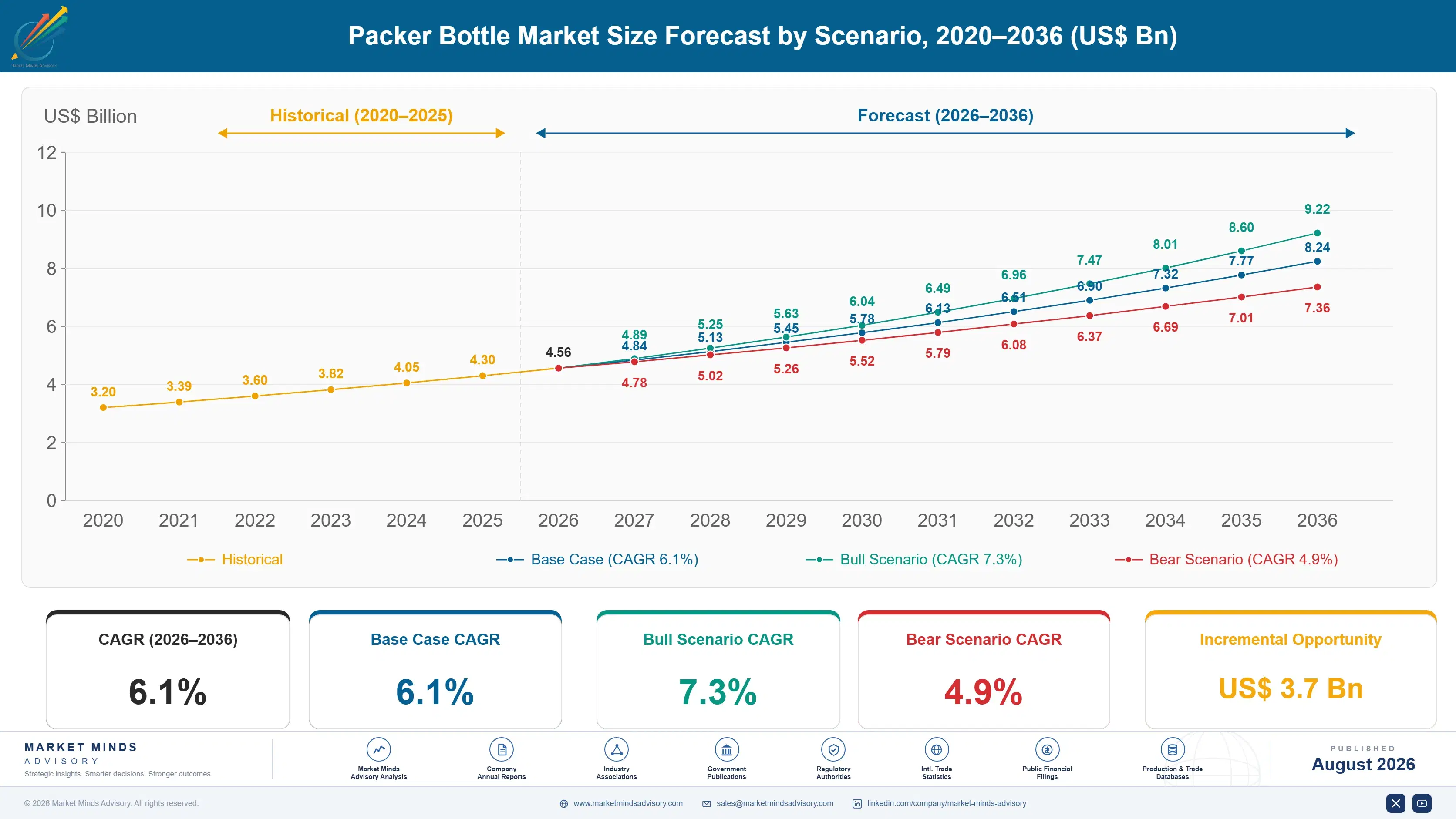
Packer Bottle Market Forecast Scenarios

packer-bottle-market-size-forecast-scenario-1787308608322
Growth ran at an implied 4.9% across 2020 to 2025 and it followed prescription volume rather than pharmaceutical revenue, which diverged sharply as biologics took an increasing share of spending without using bottles at all. Nutraceutical demand rose strongly through the same period and now represents a meaningful part of packer bottle consumption in its own right. Two customer bases now share one product.
The base case at 6.1% rests on three mechanisms. Moisture-sensitive solid dose formulations keep multiplying as active ingredient chemistry becomes more complex, and each one requires barrier or desiccant protection the standard bottle never provided. Nutraceutical and supplement volumes continue rising across every region. And recycled content requirements are reaching pharmaceutical packaging for the first time. None of the three depends on pharmaceutical revenue growth. Prescription counts rather than pharmaceutical value drive the whole category.
The bull case at 7.3% assumes solid dose generics continue expanding in emerging markets where blister packaging is less established and bottles dominate dispensing entirely. The bear case at 4.9% follows from continued therapeutic shift toward biologics and injectables, which use vials and syringes, alongside blister adoption in markets that historically dispensed from bulk bottles. Dispensing practice decides both.

Protecting a Tablet Ninety Times Over

Packaging engineers spend most of their attention on permeation through the bottle wall, and it is the smaller problem. A patient opens a ninety count bottle ninety times over three months, and each opening admits around 18 milligrams of water vapour from room air. Across a course of treatment that accounts for roughly 71% of the desiccant capacity consumed, against a fraction of it from the wall.
TOP FIVE CONCENTRATION43%Combined share held by the five largest global suppliers
MOISTURE ADMITTED PER OPENING18 milligramsWater vapour entering a bottle at each opening
DESICCANT CAPACITY CONSUMED71% by openingAbsorbent capacity used by patient handling rather than permeation
SYSTEM REQUALIFICATION COSTUSD 180,000 typicalCost of revalidating a container closure system after component change
RESIN COST SHARE54% of COGSPolymer input as proportion of total bottle production cost
CHILD-RESISTANT REQUIREMENT82% of prescriptionsDispensed solid dose volume requiring certified child-resistant closures
That reframes what the container has to do. A blister protects each dose once and then discards the protection. A bottle protects the remaining eighty-nine tablets after the first opening, and the ninth, and the sixtieth, in whatever humidity the patient's bathroom happens to hold. Integrated desiccant designs exist because a canister rattling loose in the bottle is both less effective and something a patient can swallow.
The commercial structure follows qualification rather than manufacturing. A bottle is validated as a container closure system with a specific cap, liner and desiccant against stability data submitted to a regulator, and revalidating after any component change costs around USD 180,000 before the delay is counted. Nobody undertakes that to save on a moulded container.
"The stability data is generated on a sealed bottle in a chamber, and the patient keeps theirs on a windowsill in a bathroom and opens it every morning. Everybody in the industry knows those are different tests, and the second one is the only one that matters to the tablet."
Director, Pharmaceutical Packaging and Container Systems Practice · MMA Rigid Ph

Market Trends

Integrated Desiccant Displaces Loose Canisters and Sachets

Desiccant supplied as a loose canister or sachet is effective in a chamber and problematic in a household, because it moves within the bottle, can be swallowed by a patient or a child, and is frequently discarded on first opening by people who assume it is packaging waste. Desiccant integrated into the bottle wall, the closure liner or a fixed sleeve stays where it belongs for the product's life. The segment compounds at 9.2% against a market at 6.1%, and regulators increasingly prefer designs that remove the loose component entirely. Capacity sizing is the real engineering.
Market Impact: Moisture protection on 38% of appro
Recycled Content Requirements Reach Pharmaceutical Packaging

Pharmaceutical packaging has been largely exempt from recycled content expectations on patient safety grounds, and that position is eroding as brand owners extend corporate commitments across their whole portfolio and European rules narrow the exemptions. The difficulty is genuine: recycled polymer carries an undocumented additive and contaminant history that extractables and leachables assessment must characterise. Suppliers offering recycled content with full analytical documentation reach customers who want the commitment without the regulatory risk attached to it. Documentation rather than the polymer is the product. Exemptions are narrowing steadily as brand commitments extend.
Market Impact: Nutraceuticals at 31% of volume

Market Opportunities and Growth Drivers

Moisture-Sensitive Formulations Multiply Across Solid Dose Pipelines

Active pharmaceutical ingredient chemistry has become steadily more complex, and a growing share of solid dose formulations degrade, change dissolution profile or lose potency on exposure to humidity. Amorphous solid dispersions, which improve solubility for poorly soluble compounds, are particularly moisture-sensitive by construction. Each of those products needs barrier or desiccant protection a standard high density polyethylene bottle never provided. Roughly 38% of new solid dose approvals now specify moisture protection beyond a conventional bottle and closure alone. Amorphous dispersions are the hardest case. Solubility engineering created the problem. Standard bottles never provided it.
Market Impact: Blisters holding 54% of Europe

Nutraceutical Volumes Grow Without Pharmaceutical Qualification Burden

Supplement and nutraceutical manufacturers buy packer bottles in very large volumes and face nothing resembling the container closure qualification pharmaceutical products require, which makes them a completely different customer for the same moulded article. They buy on delivered price, shelf presentation and wide-mouth convenience, switch suppliers freely, and value lead time above documentation. Roughly 31% of packer bottle volume now serves nutraceutical rather than pharmaceutical applications, and that share has risen consistently for a decade. They behave as an entirely separate market wearing the same moulded bottle. Lead time beats documentation entirely.
Market Impact: Solid dose at 61% of prescriptions

Market Restraints and Challenges

Blister Packaging Displaces Bottles in Several Markets

Unit dose blister packaging protects each tablet individually until the moment it is taken, which removes the repeated opening problem entirely. The root cause is dispensing practice rather than any packaging preference: markets where pharmacies dispense manufacturer packs use blisters, and those where pharmacies count tablets into a bottle do not. European and Asian dispensing favours blisters while North American practice favours bottles. Suppliers mitigate by concentrating on bottle-dispensing markets and on nutraceuticals, where blisters have made little progress. Blisters have made little progress in supplements. Dispensing practice decides the format.
Market Impact: Desiccant absorbing 71% from openin

Therapeutic Shift Toward Biologics Bypasses Solid Dose Entirely

Pharmaceutical spending has moved decisively toward biologics and injectables, which fill into vials, syringes and autoinjectors rather than bottles. The root cause is drug discovery direction rather than any packaging failure, and it has widened the gap between pharmaceutical revenue growth and solid dose unit volume considerably. Bottle demand tracks prescription counts rather than pharmaceutical value. Suppliers mitigate by following generic solid dose volume, which continues rising in unit terms, and by expanding into nutraceutical applications. Unit prescription counts keep rising regardless. Generic solid dose volumes keep expanding in unit terms.
Market Impact: Recycled grades at 9% of volume
3 additional market trends, 4 additional growth drivers, and 2 additional restraints and challenges are covered in the full report. Contact sales@marketmindsadvisory.com to access the complete intelligence.

Segment CAGR and Growth Architecture

Segmentation follows bottle construction and protection level, because each carries a different qualification burden, a different customer and a different failure mode. An integrated desiccant bottle and a standard nutraceutical container are moulded on similar equipment and sold into completely unrelated commercial processes. Protection level decides which customer is buying. Qualification burden follows from that.
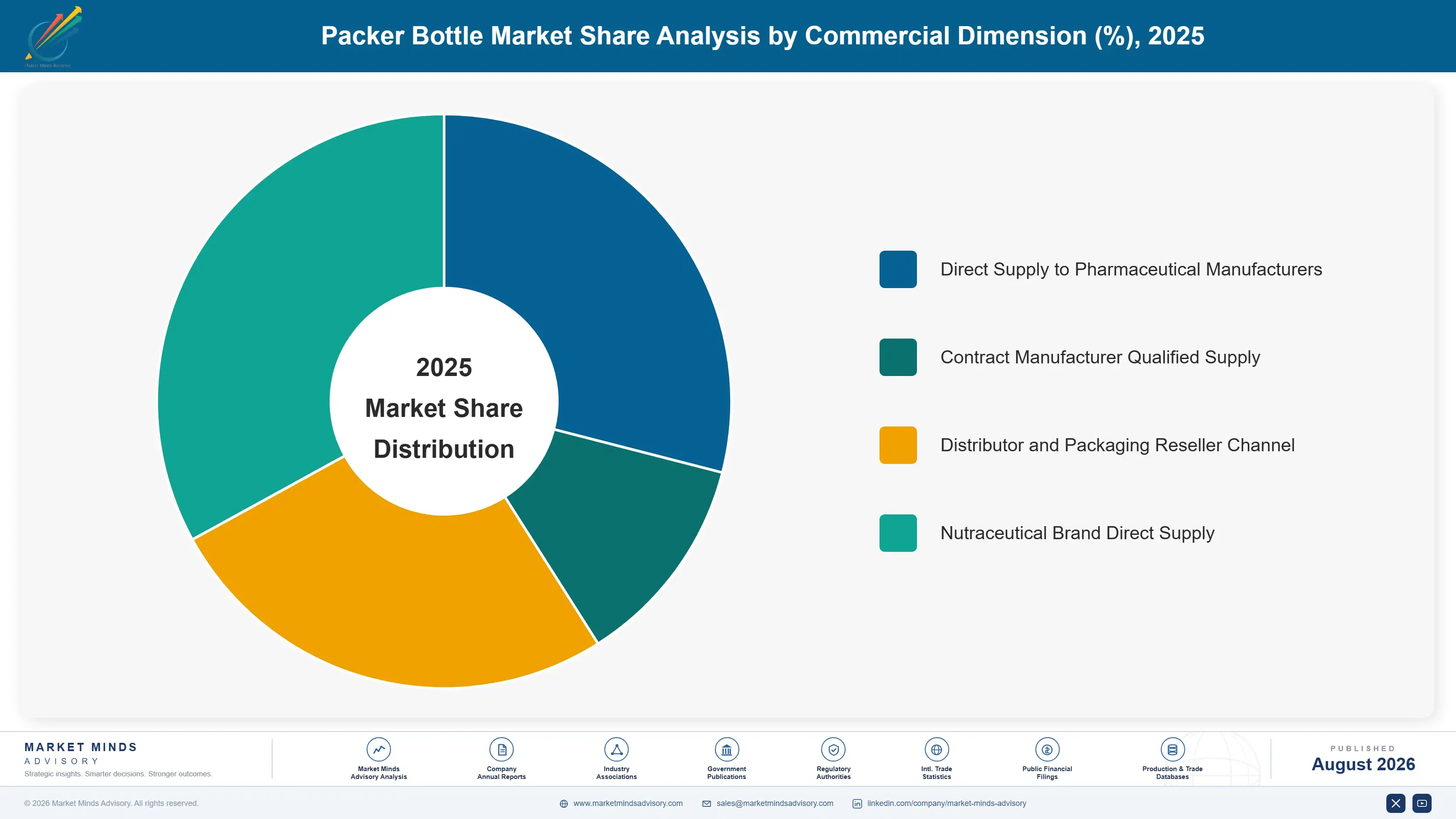
packer-bottle-market-market-share-analysis-1787308608853

Integrated Desiccant Packer Bottles

Integrated desiccant bottles compound at 9.2%, exactly 1.50 times the market rate, on a problem that only appears once a patient has the product. A loose canister works perfectly in a stability chamber and behaves badly in a household, where it moves inside the bottle, can be swallowed, and is routinely discarded on first opening as packaging waste. Desiccant built into the bottle wall as a co-extruded layer, into the closure liner or into a fixed sleeve stays in place for the product's whole life. Absorbent capacity has to be sized against opening frequency rather than permeation, since roughly 71% of it goes to patient handling, and getting that calculation wrong shortens shelf life invisibly.
CAGR 9.2%

High-Barrier Multilayer Bottles

Multilayer bottles grow at 7.8% by reducing permeation through the wall rather than absorbing what enters through the neck. A co-extruded barrier layer, typically ethylene vinyl alcohol or a cyclic olefin, cuts moisture and oxygen transmission substantially against monolayer high density polyethylene. That matters most for products with long shelf lives, tropical distribution or extreme sensitivity, where wall permeation over thirty-six months becomes the dominant exposure even though opening dominates over a single course. The complication is recyclability, since a multilayer structure containing a barrier polymer does not recycle as high density polyethylene, and brand owner packaging commitments are beginning to notice. No compromise has emerged yet. Capacity sizing is the real engineering here.
CAGR 7.8%
Full segment breakdown across 6 segments available in the complete report.

Regional Architecture and Country Demand Map

Demand follows dispensing practice rather than pharmaceutical consumption, since a market that dispenses manufacturer blister packs uses very few bottles. Generic solid dose manufacturing concentrates production well beyond what regional prescribing alone would generate. Dispensing practice rather than pharmaceutical spending is the map worth reading.

East Asia

East Asia holds 29% of global demand, the largest regional share, on domestic pharmaceutical manufacturing volume rather than on dispensing practice. Chinese solid dose production serves an enormous domestic market and increasingly exports, and bottles remain the dominant format for many product categories there. Domestic bottle suppliers serve most of that volume at delivered costs international companies cannot approach, while high-barrier and integrated desiccant constructions remain largely imported or supplied by international manufacturers with Chinese plants. Japanese demand is smaller, technically exacting and weighted toward high-barrier constructions given humid summers. Korean demand follows both pharmaceutical and a substantial nutraceutical sector. Growth of 7.1% tracks solid dose production volume closely. Domestic suppliers dominate standard constructions.
Share: 29% | CAGR: 7.1% (2026 to 2036)

South Asia and Pacific

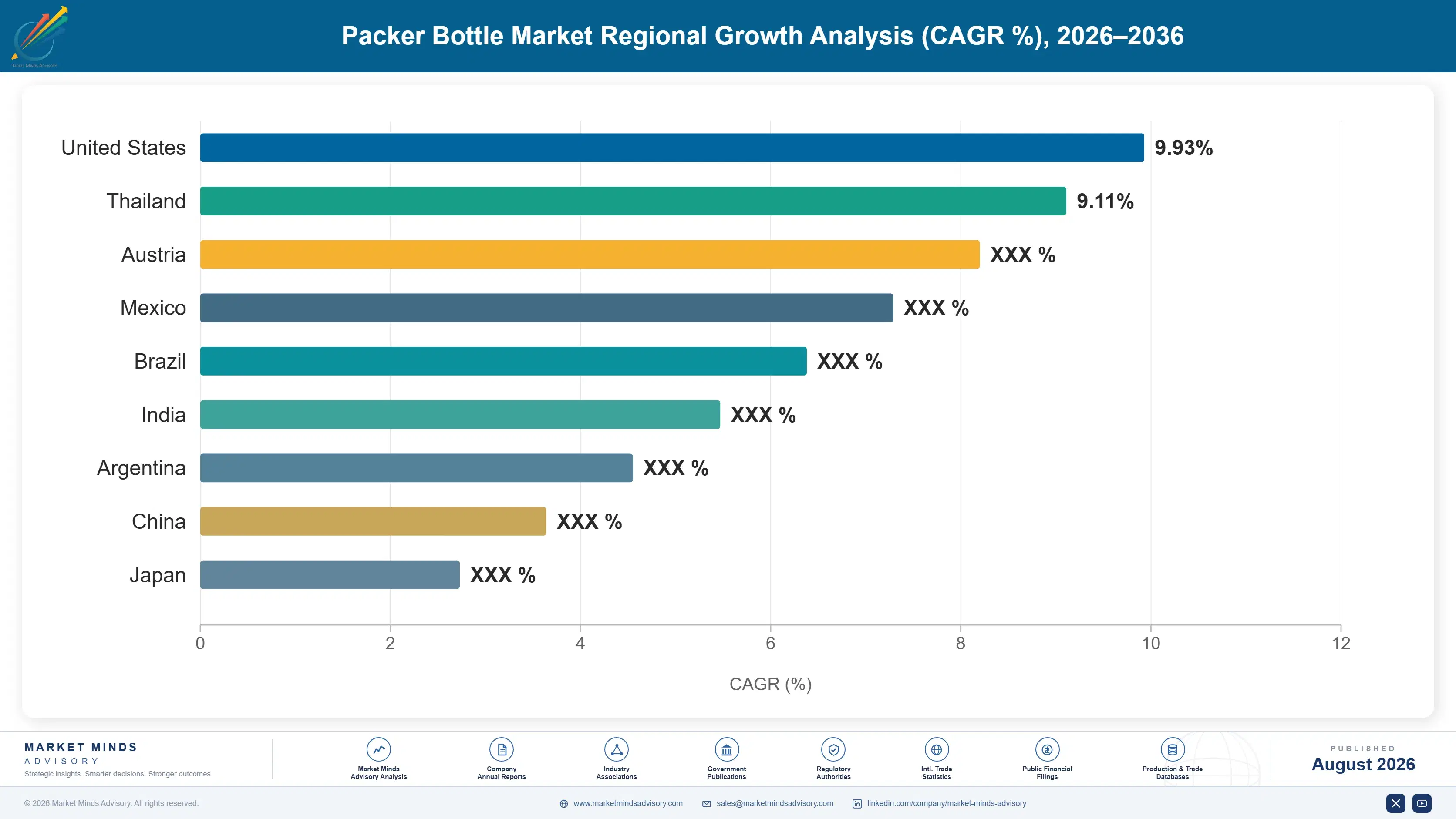
South Asia and Pacific accounts for 13% of demand and grows fastest at 8.3%, with India compounding at 9.8%. Note: this exceeds the standard band because Indian generic manufacturers supply solid dose products worldwide and bottles dominate that output. Indian generic manufacturers supply solid dose products to regulated and emerging markets worldwide, and packer bottles are the dominant format for a large share of that output. Regulated export destinations pull higher-specification bottles into Indian production. Tropical humidity makes moisture protection a genuine formulation issue rather than a theoretical one. Southeast Asian pharmaceutical manufacturing has grown alongside. Australian demand is smaller and follows Western European dispensing practice with correspondingly lower bottle volumes.
Share: 13% | CAGR: 8.3% (2026 to 2036)
Regional intelligence for 5 additional markets available in the complete report: North America, Western Europe, Latin America, Middle East and Africa, Eastern Europe. Contact sales@marketmindsadvisory.com.
packer-bottle-market-country-cagr-analysis-1787308609357

Selling Protection After the Pharmacy

A packer bottle is a moulded container that almost anybody can produce, and the commercial positions worth holding all rest on what happens to the product after dispensing rather than on the moulding itself. Four of them do, and none is defended on price per thousand bottles. Moulding capability differentiates nobody at all. Dispensing behaviour decides everything.

Size Desiccant Against Opening Frequency Not Permeation

Roughly 71% of desiccant capacity is consumed by moisture admitted during patient openings rather than by permeation through the wall, and stability data generated on sealed bottles in a chamber never reveals that. Suppliers that calculate required absorbent capacity against actual dosing frequency and regional humidity produce a specification the customer cannot generate alone. Integrated desiccant bottles compound at 9.2% and carry gross margins roughly 14 to 21 points above standard constructions, and the calculation itself is what differentiates the supplier. Getting it wrong shortens shelf life invisibly. Chambers reveal none of it.
Market Impact: Openings consuming 71% of the desic

Own the Container Closure Qualification Documentation

A bottle is validated as a system with a specific cap, liner and desiccant against stability data submitted to a regulator, and revalidating after any component change costs around USD 180,000 before delay is counted. Suppliers providing extractables and leachables data, moisture ingress characterisation and change control support become part of the customer's regulatory file rather than a line in its bill of materials. That position persists for the product's commercial life and cannot be dislodged on unit price by anybody. Purchasing has no authority to reopen it. The position persists commercially.
Market Impact: Requalification costing USD 180,000

Serve Nutraceutical Volume as a Separate Business

Nutraceutical manufacturers buy roughly 31% of packer bottle volume with no container closure qualification burden at all, purchasing on delivered price, shelf presentation and lead time while switching suppliers freely. Treating them as pharmaceutical customers with lighter documentation loses the business on cost and service. Running them as a genuinely separate commercial operation, with different lead time commitments and decoration capability, captures volume that fills moulding capacity between the qualified pharmaceutical runs that carry the margin. Roughly 31% of volume behaves this way, and treating it as pharmaceutical supply loses it on both cost and service simultaneously.
Market Impact: Nutraceuticals now taking 31% of th

Document Recycled Content Against Extractables Requirements

Pharmaceutical packaging exemptions from recycled content expectations are narrowing as brand owner commitments extend across portfolios and European rules tighten. The genuine obstacle is that recycled polymer carries an undocumented additive and contaminant history which extractables and leachables assessment must characterise fully. Suppliers offering recycled content with complete analytical documentation reach customers who want the commitment without accepting the regulatory risk. Recycled grades already hold 9% of volume and the documentation is the product rather than the polymer. Analytical characterisation is the deliverable. Regulatory risk is what customers are avoiding.
Market Impact: Recycled grades now reaching 9% of

Who Controls the Margin Pool

Five suppliers hold 43% of the market measured on bottle and closure revenue, the basis applied consistently through this section. Concentration reflects container closure qualification lock-in rather than moulding capability, since blow moulding polyethylene bottles is widely available. Berry Global and Gerresheimer lead, from scale and pharmaceutical specialisation positions respectively. Blow moulding polyethylene separates nobody.
Competition operates on three dimensions. Qualification support decides whether a supplier enters the customer's regulatory documentation or simply supplies against a drawing. Desiccant and barrier technology decides participation in the segments actually growing. And nutraceutical service capability decides access to roughly a third of category volume that behaves like a completely different market. All three sit outside manufacturing capability entirely. None of the three can be assembled quickly.

Two pressures will reshape position. Indian and Chinese suppliers compete credibly on standard pharmaceutical bottles for their own generic manufacturing bases, which are the largest solid dose production centres anywhere. Against that, integrated desiccant and documented recycled content reward technical and regulatory capability. Rankings will move toward whoever pairs qualification depth with genuine desiccant engineering. Very few hold both today. The ones closest are pharmaceutical specialists rather than general converters.
packer-bottle-market-company-positioning-matrix-1787308609876

Competitive Moat and Risk Dimensions

BERRY GLOBAL

Moat: Scale and closure system integration

Berry supplies bottles and closures as matched systems across substantial global capacity, which matters because the container closure system is qualified as a unit and a customer would rather validate one supplier than reconcile two. Scale in polyethylene purchasing also carries weight where resin represents 54% of bottle cost and pharmaceutical volumes are large but not enormous.
BERRY GLOBAL

Risk: Regional cost competition

Standard pharmaceutical and nutraceutical bottles face Indian and Chinese suppliers serving the world's largest generic manufacturing bases at delivered costs a global structure cannot match. Where a customer buys an unqualified nutraceutical container or a simple bottle for domestic supply, scale confers little the buyer will pay for and the price gap shows in every quotation.
GERRESHEIMER

Moat: Pharmaceutical regulatory depth

Gerresheimer operates as a pharmaceutical packaging specialist rather than a general converter, with extractables and leachables capability, change control practice and regulatory documentation built into how it supplies rather than added on request. That places the company inside customer container closure filings, where displacement becomes a regulatory exercise rather than a purchasing decision anybody makes lightly.
GERRESHEIMER

Risk: Nutraceutical channel economics

Roughly 31% of packer bottle volume serves nutraceutical customers who buy on delivered price and lead time with no qualification burden whatsoever, and a pharmaceutical cost structure competes poorly there. Ceding that volume leaves moulding capacity underutilised between qualified pharmaceutical runs, which raises the unit cost carried by everything else the plant produces.

Players Tracked

Prominent Players

Berry Global
Gerresheimer
Alpha Packaging
Comar
Drug Plastics Group

Other Key Players

Amcor
Silgan Holdings
Origin Pharma Packaging
Pretium Packaging
Plastipak Holdings
CSP Technologies
Airnov Healthcare Packaging
O.Berk Company
TricorBraun
Bormioli Pharma
Kaufman Container
Sanner Group
Jiangsu Hualan Technology
Shandong Pharmaceutical Glass
Vinlon Packaging

Recent Developments

JANUARY 2025

Moisture-sensitive formulations drive integrated desiccant specification

Solid dose developers increasingly specified integrated desiccant constructions during formulation development rather than adding loose canisters afterwards, citing patient handling and regulatory preference for removing swallowable components. This reflects development practice change rather than any corporate transaction between suppliers. Loose canisters are being designed out at source.
Signal: A component a patient can swallow is now a
JUNE 2025

Recycled content expectations reach pharmaceutical packaging portfolios

Brand owners extended corporate recycled content commitments into pharmaceutical packaging categories previously treated as exempt, requiring suppliers to characterise recycled polymer against extractables and leachables requirements. These were corporate policy decisions rather than regulatory mandates. Recycled polymer carries an undocumented additive history that assessment must characterise fully.
Signal: Documented analytical characterisation rat
OCTOBER 2025

Multilayer barrier bottles face recyclability specification pressure

Packaging sustainability functions at pharmaceutical companies began questioning multilayer barrier constructions that cannot be recycled as polyethylene, despite their moisture performance advantages. This reflects internal specification tension rather than regulation, and no resolution has emerged across the industry yet. Both requirements are legitimate and they point in opposite directions.
Signal: Barrier performance and recyclability are

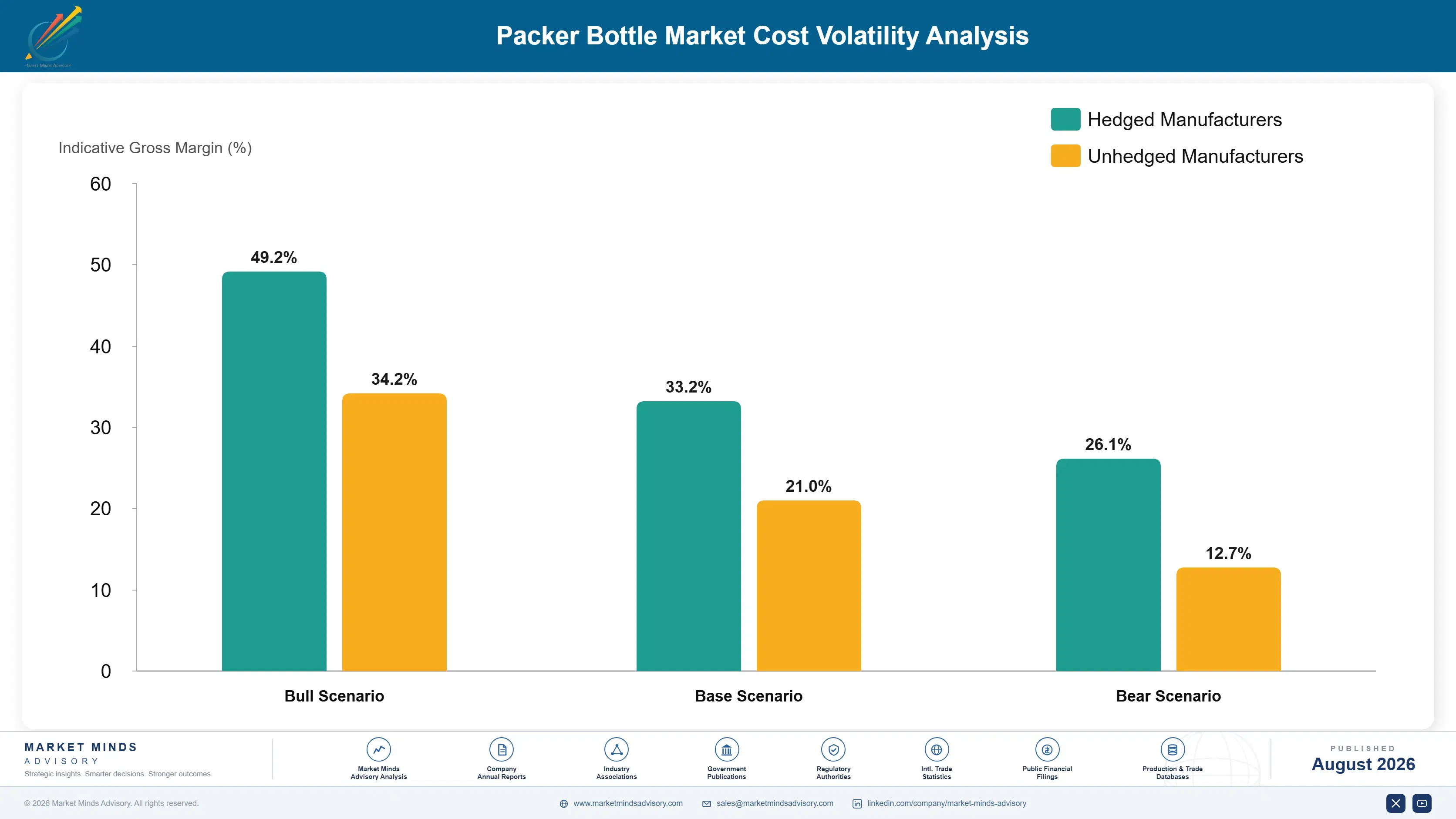
Resin, Desiccant and Documentation

High density polyethylene resin accounts for roughly 54% of cost of goods, purchased regionally from petrochemical producers with pharmaceutical grade certification requirements that narrow the supplier field. Closures, liners and induction seals run a further 18%, with desiccant materials carrying disproportionate cost in integrated constructions. Cleanroom moulding, quality systems and regulatory documentation make up most of the remainder.
Polyethylene pricing moved sharply through 2022 and 2023 as European energy disruption raised feedstock and polymerisation costs, and International Energy Agency reporting across that period documents the underlying movement. Pharmaceutical bottle suppliers absorbed much of it, because a resin grade named in a container closure filing cannot be substituted without requalification the customer refuses. Company annual reports covering healthcare packaging segments disclose the resulting margin pressure.

Exposure divides by customer mix rather than by scale. Suppliers weighted toward qualified pharmaceutical work carry resin they cannot substitute but sell to customers who will absorb a cost movement rather than requalify. Those weighted toward nutraceutical volume can change resin freely and compete against suppliers who will always undercut them, which is the worse position of the two despite the greater flexibility.
packer-bottle-market-cost-volatility-analysis-1787308610070

Qualify a second pharmaceutical grade resin per specification

A resin grade named in a container closure filing cannot be changed without requalification, so an alternative must be characterised during product development rather than in response to a supply or price event. Carrying two qualified grades costs one additional extractables and leachables exercise and removes an exposure that becomes permanent once customers file stability data around the product.

Run nutraceutical volume to fill capacity between qualified batches

Pharmaceutical runs are scheduled around qualified campaigns and leave moulding capacity idle between them, while nutraceutical customers buy flexible volume at short notice. Treating that work as capacity absorption rather than as a margin business improves plant economics considerably, provided the commercial terms reflect what it actually is. Commercial terms should reflect what it actually is.

Price qualification support separately from the moulded article

Extractables and leachables data, moisture ingress characterisation and change control support are what a pharmaceutical customer genuinely buys, and bundling them into a unit price invites comparison against unqualified bottles. Separating the documentation commercially makes the value visible and protects the moulded article from being tendered against suppliers offering nothing beyond the container itself.

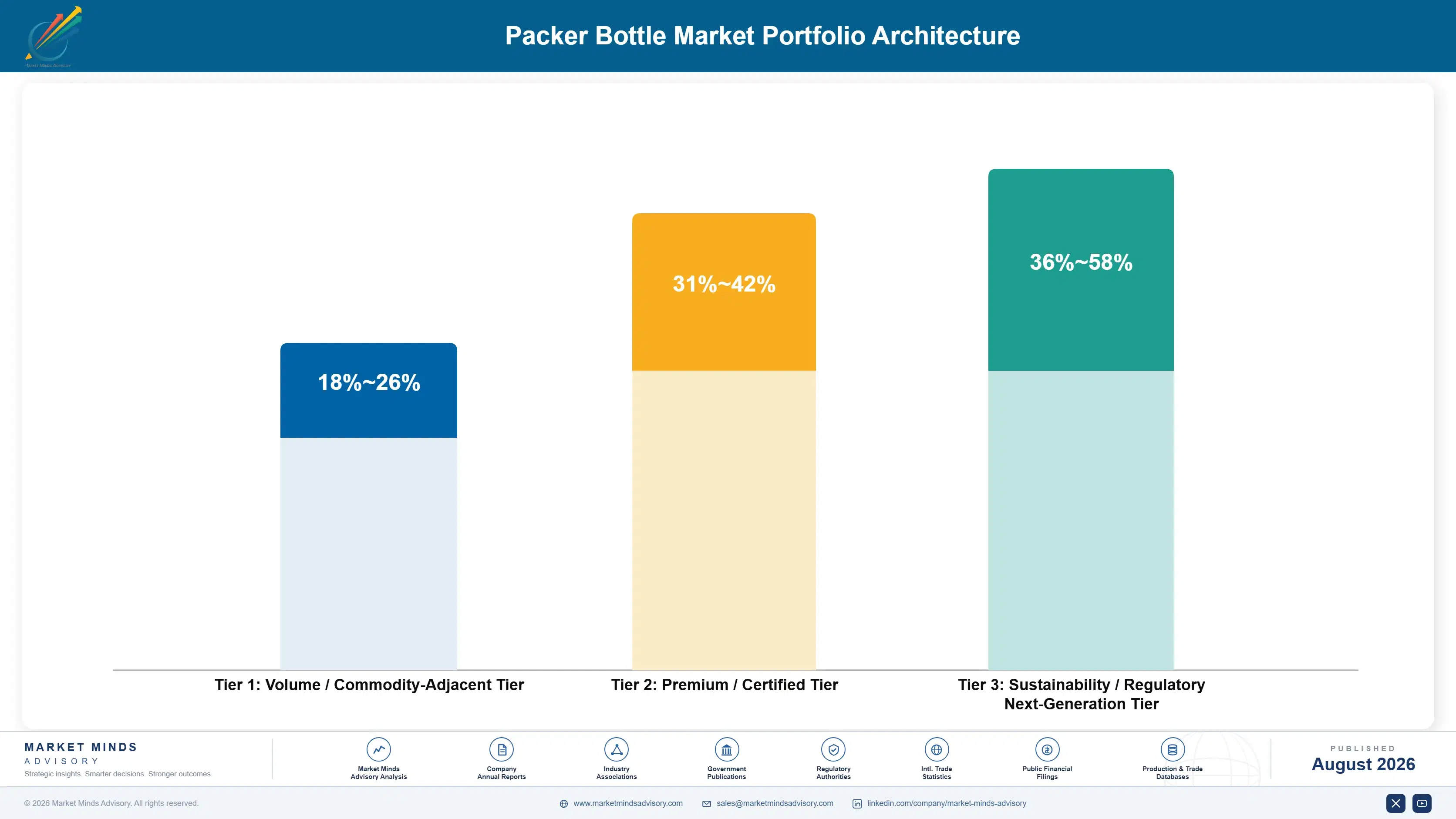
Portfolio Architecture for Margin Defence

The portfolio separates on whether documentation travels with the bottle. Nutraceutical containers are moulded articles sold on price, presentation and lead time to customers who switch freely. Standard pharmaceutical bottles carry qualification. Integrated desiccant and high-barrier constructions carry both qualification and genuine engineering. Child-resistant closure systems carry certification testing that is prescribed and unforgiving. Documentation draws the whole ladder here.
The tension is that nutraceutical volume fills the moulding capacity between qualified pharmaceutical campaigns and carries almost no margin, while pharmaceutical work carries the margin and cannot be scheduled continuously. Running both is a plant utilisation decision rather than a portfolio preference, and suppliers who treat nutraceutical work as a lesser version of pharmaceutical supply lose it on service without gaining anything. Utilisation and margin are separate objectives. Plant scheduling drives the whole decision.

High-value pools concentrate where a formulation is sensitive, a regulator is watching or a certification applies. Integrated desiccant bottles, high-barrier multilayer and certified child-resistant systems all qualify, and none is awarded on price per thousand containers. Unit price decides none of them. Development scientists rather than buyers select each of them.

Volume / Commodity-Adjacent Tier

Standard nutraceutical and wide-mouth supplement bottles sold on delivered price, shelf presentation and lead time with no container closure qualification burden. Customers switch suppliers freely and Indian and Chinese producers compete effectively on cost.
Gross Margin: 18-26%

Premium / Certified Tier

Qualified pharmaceutical packer bottles and certified child-resistant closure systems validated against stability data as complete container closure systems. Documentation and change control support rather than moulding capability determine who can supply at all.
Gross Margin: 31-42%

Sustainability / Regulatory / Next-Generation Tier

Integrated desiccant constructions, high-barrier multilayer bottles and documented recycled content grades. The wide margin range reflects the gap between established desiccant technology and recycled content work where the analytical documentation is still being defined.
Gross Margin: 36-58%
packer-bottle-market-portfolio-architecture-1787308610568

High-value Sub-segments and Strategic Watch-out

Integrated Desiccant Constructions

Compounding at 9.2% because roughly 71% of absorbent capacity goes to patient openings rather than wall permeation, and a loose canister is both less effective and swallowable. Sizing capacity against dosing frequency is what the customer genuinely cannot calculate alone. Regulators prefer the loose component removed.
Gross Margin: 40-52%

Certified Child-Resistant Systems

Required on roughly 82% of dispensed solid dose volume in bottle-dispensing markets, with prescribed certification testing that is unforgiving of failure. The closure must defeat a determined child while remaining operable by an elderly patient with limited grip. Certification testing is prescribed. Failure requires full redesign.
Gross Margin: 34-46%

Standard Nutraceutical Bottles

The volume core at 4.6%, sold on delivered price and lead time with no qualification burden and complete customer switching freedom. Run to absorb moulding capacity between qualified pharmaceutical campaigns rather than for any margin it returns. Customers switch without warning. Lead time is what wins it.
Gross Margin: 18-26%

High-Barrier Multilayer Constructions

The watch-out and the opportunity together. Barrier layers cut wall permeation substantially and prevent the bottle recycling as polyethylene, and packaging sustainability functions have begun raising that tension with no technical compromise available yet. Suppliers should expect to sell both constructions to the same customer.
Gross Margin: 32-52%

Filed With the Regulator

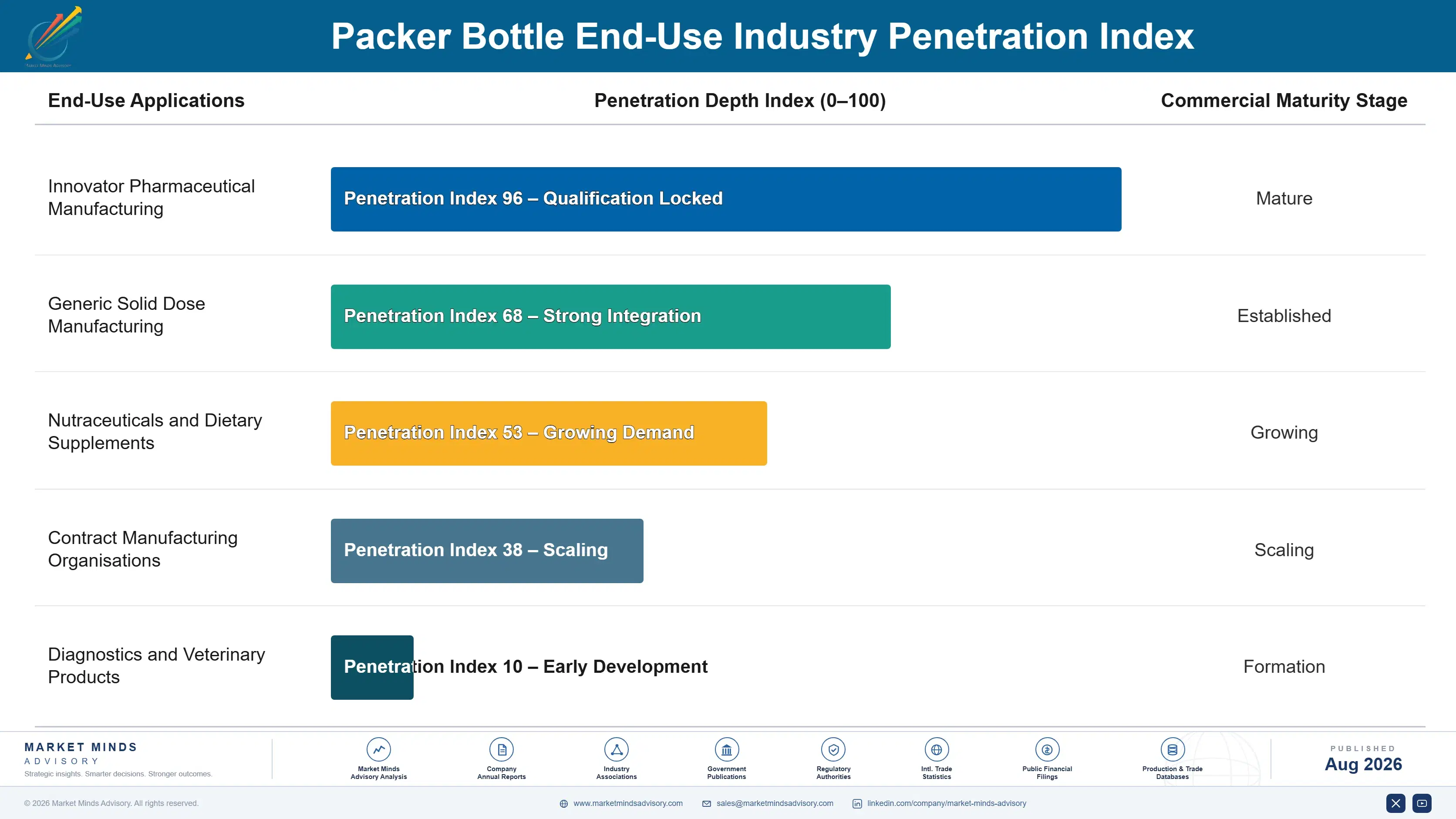
Recurring revenue here sits inside regulatory filings rather than contracts. A container closure system named in a stability submission is supplied for the product's commercial life, because changing bottle, cap, liner or desiccant reopens qualification costing around USD 180,000 before the delay to supply is counted. Nobody undertakes that for a lower unit price, which gives suppliers of qualified pharmaceutical bottles unusually durable positions for a moulded article. Filings outlast purchasi
Depth varies enormously by customer type. Innovator pharmaceutical companies buy deepest, involving suppliers during formulation development when the container is still being selected. Generic manufacturers buy on qualified specification with real price sensitivity underneath it. Contract manufacturers buy whatever their customer's filing names. Nutraceutical brands buy on price and lead time with no qualification at all and switch without warning.

The deciding population sits with development rather than purchasing. Container selection during formulation is made by pharmaceutical development scientists assessing moisture sensitivity and stability. Once filed, procurement reorders what the submission names and cannot vary it, which is why suppliers who reach development-stage customers hold positions purchasing has no authority to reopen. That is a different conversation entirely.
packer-bottle-market-end-use-penetration-index-1787308611055

Where Bottle Suppliers Hold Position

These are among the four positions where our research anticipates prominent divergence between winners and laggards over the coming forecast period. Each is grounded in the demand model, the regulatory perimeter, and the announced capacity pipeline.
01 / OPENING FREQUENCY ENGINEERING

The chamber test measures the wrong exposure entirely

Stability data is generated on sealed bottles held under controlled chamber conditions, while a patient opens a ninety count bottle ninety separate times in whatever humidity a bathroom happens to hold. Each opening admits around 18 milligrams of water vapour, and roughly 71% of the desiccant capacity goes to that rather than to permeation through the wall. Suppliers that size absorbent capacity against realistic dosing frequency and regional humidity produce a specification the customer genuinely cannot generate on its own.
02 / REGULATORY FILE ENTRY

Being named in a filing outlasts every purchasing decision

A bottle is qualified as a complete container closure system with a specific cap, liner and desiccant against stability data submitted to a regulator, and changing any single component reopens qualification work costing around USD 180,000 before any supply delay is counted. Suppliers providing extractables and leachables data, moisture ingress characterisation and formal change control support enter the customer's own regulatory documentation permanently. Procurement then simply reorders whatever the submission names, and it has no authority whatsoever to vary that.
03 / DUAL BUSINESS RECOGNITION

Nutraceutical buyers are a different market wearing the same bottle

Roughly 31% of all packer bottle volume serves nutraceutical customers who face no container closure qualification whatsoever, and who buy purely on delivered price, presentation and lead time while switching suppliers freely. Treating them as pharmaceutical accounts with somewhat lighter paperwork attached loses that business on both cost and service at the same time. Run as a genuinely separate commercial operation it absorbs moulding capacity between qualified pharmaceutical campaigns, which is ultimately what makes the whole plant economics work at all.
04 / BARRIER RECYCLABILITY CONFLICT

The best moisture protection is the least recyclable construction

Multilayer barrier bottles cut wall permeation very substantially using co-extruded ethylene vinyl alcohol or cyclic olefin layers, and those same layers then stop the finished bottle recycling as polyethylene at all. Pharmaceutical packaging exemptions from recycled content expectations are steadily narrowing, as brand owner commitments now extend right across whole product portfolios. No technical compromise has emerged at all, so suppliers should expect to sell both constructions to the same customer for different products rather than ever resolving that tension.

Engagement Snapshot From the Field

A live engagement with an industry participant carrying material or product regulatory and market exposure ahead of a defining policy shift, showing how our research translates into a defensible multi-year portfolio strategy.
MARKET MINDS ADVISORY · CLIENT ENGAGEMENT SUMMARY
Packer Bottle Producer Strategic Portfolio Review and Transition Roadmap 2026·Investment Scenario on Packer Bottle Exposure Evaluation 2025-26
CLIENT PROFILE
A generic pharmaceutical manufacturer with roughly USD 1.7 billion in revenue (client-reported, unverified by MMA), producing solid dose products across four plants for regulated and emerging markets. Packer bottle and closure spend ran near USD 38 million annually (client-reported, unverified by MMA), specified product by product with container selections inherited from original development work rarely revisited afterwards.
STRATEGIC CHALLENGE
Two moisture-sensitive products had shown out-of-specification dissolution results at the end of shelf life in tropical markets, and the stability group attributed it to distribution conditions. Procurement had separately consolidated bottle supply on unit price. Neither function had examined whether desiccant capacity had been sized against actual patient opening behaviour rather than chamber conditions.
MMA APPROACH
MMA modelled moisture ingress across a full dosing course using regional humidity data and realistic opening frequency, then compared the result against the desiccant capacity specified in each affected product's container closure system. Requalification cost and timeline were established for the alternative constructions available. Alternative constructions were assessed against required capacity.
KEY FINDINGS
  1. Desiccant capacity on both affected products had been sized against permeation alone, and modelled patient openings consumed the entire absorbent reserve well before the stated shelf life expired.
  2. Tropical market humidity roughly doubled the moisture admitted per opening against the temperate assumptions used in the original specification, which no stability protocol had ever tested.
  3. Integrated desiccant constructions were available that removed the loose canister and increased effective capacity, at a unit cost increase far below the value of the affected batches.
  4. The consolidated supplier held no capability to model opening-driven ingress and had never been asked to, since the specification described a canister rather than a required capacity.
CLIENT PROFILE
A generic pharmaceutical manufacturer with roughly USD 1.7 billion in revenue (client-reported, unverified by MMA), producing solid dose products across four plants for regulated and emerging markets. Packer bottle and closure spend ran near USD 38 million annually (client-reported, unverified by MMA), specified product by product with container selections inherited from original development work rarely revisited afterwards.
STRATEGIC CHALLENGE
Two moisture-sensitive products had shown out-of-specification dissolution results at the end of shelf life in tropical markets, and the stability group attributed it to distribution conditions. Procurement had separately consolidated bottle supply on unit price. Neither function had examined whether desiccant capacity had been sized against actual patient opening behaviour rather than chamber conditions.
MMA APPROACH
MMA modelled moisture ingress across a full dosing course using regional humidity data and realistic opening frequency, then compared the result against the desiccant capacity specified in each affected product's container closure system. Requalification cost and timeline were established for the alternative constructions available. Alternative constructions were assessed against required capacity.
KEY FINDINGS
  1. Desiccant capacity on both affected products had been sized against permeation alone, and modelled patient openings consumed the entire absorbent reserve well before the stated shelf life expired.
  2. Tropical market humidity roughly doubled the moisture admitted per opening against the temperate assumptions used in the original specification, which no stability protocol had ever tested.
  3. Integrated desiccant constructions were available that removed the loose canister and increased effective capacity, at a unit cost increase far below the value of the affected batches.
  4. The consolidated supplier held no capability to model opening-driven ingress and had never been asked to, since the specification described a canister rather than a required capacity.
RECOMMENDED STRATEGY
Phase 1: Phase 1 (months 1 to 7): Requalify both affected products with integrated desiccant constructions sized against modelled tropical opening exposure. Phase 2: Phase 2 (months 7 to 18): Review desiccant sizing across the whole moisture-sensitive portfolio using the same opening frequency methodology. Phase 3: Phase 3 (months 18 to 30): Rebuild bottle specification to state required moisture capacity rather than naming a desiccant component.
OUTCOME
Both products cleared end of shelf life dissolution testing following requalification (client-reported, unverified by MMA). Packaging cost rose by approximately USD 1.1 million annually against avoided batch failure and market withdrawal exposure the client valued near USD 9 million. Four further products were reformulated onto integrated desiccant constructions (client-reported, unverified by MMA).

Frequently Asked Questions

Foundational context covering the market sizes, CAGR, scope, country, region and competition that inform every finding below. This section is provided to cover basics and most often pre-purchase conversations, answered from the MMA Primary Research Dataset.

What is the current size of the Packer Bottle Market?

The global market was worth USD 4.3 billion in 2025, reaching USD 4.56 billion in 2026. East Asia holds the largest regional share at 29% of demand.

How large will the Packer Bottle Market be by 2036?

MMA forecasts USD 8.24 billion by 2036, an expansion multiple of 1.81 times the 2026 base. That represents roughly USD 3.68 billion of incremental value.

What is the CAGR for the Packer Bottle Market 2026 to 2036?

The base case compounds at 6.1% annually, with a bull case of 7.3% and a bear case of 4.9%. Historical growth from 2020 to 2025 ran at 4.9%.

Which segment is growing fastest?

Integrated desiccant packer bottles compound at 9.2%, exactly 1.50 times the market rate. Roughly 71% of absorbent capacity goes to patient openings rather than wall permeation.

Who are the major companies in the Packer Bottle Market?

Berry Global, Gerresheimer, Alpha Packaging, Comar and Drug Plastics Group hold a combined 43% of the market. Container closure qualification rather than moulding capability sustains that concentration.

Which country is growing fastest?

India compounds at 9.8%, ahead of every other national market. Generic manufacturers supply solid dose products worldwide and tropical humidity makes moisture protection genuinely necessary.

Report Segmentation Architecture

The full report scope spans multiple orthogonal segmentation dimensions, with cross-tabulated demand data provided for each dimension pair. Coverage extends further to regional breakdowns, trend trajectories, and the competitive detail needed to support segment-level decision-making.

By Bottle Construction and Protection

  • Standard Round Packer Bottles
  • Integrated Desiccant Packer Bottles
  • High-Barrier Multilayer Bottles
  • Child-Resistant Closure Systems
  • Wide-Mouth Nutraceutical Bottles
  • Recycled Content Packer Bottles

By End-Use Industry

  • Innovator Pharmaceutical Manufacturing
  • Generic Solid Dose Manufacturing
  • Nutraceuticals and Dietary Supplements
  • Contract Manufacturing Organisations
  • Diagnostics and Veterinary Products

By Commercial Dimension

  • Direct Supply to Pharmaceutical Manufacturers
  • Contract Manufacturer Qualified Supply
  • Distributor and Packaging Reseller Channel
  • Nutraceutical Brand Direct Supply

By Region

  • North America
  • Western Europe
  • East Asia
  • South Asia and Pacific
  • Latin America
  • Middle East and Africa
  • Eastern Europe

Scope, Methodology, and Coverage

Every figure in this report is reproducible from documented input assumptions. The scope below maps the historical period, the forecast horizon, the segmentation dimensions, and the countries covered, alongside the underlying primary and qualitative methodology.
Historical Period
2020 to 2025
Forecast Period
2026 to 2036
Base Year
2025 (USD billions; MMA Primary Research Dataset, August 2026)
Market Definition
The market covers rigid plastic bottles supplied to pharmaceutical, nutraceutical and diagnostic manufacturers for solid dose and liquid products, spanning standard round packer bottles, integrated desiccant constructions, high-barrier multilayer bottles, certified child-resistant closure systems, wide-mouth nutraceutical bottles and recycled content grades, together with the caps, liners and induction seals supplied with them. Glass vials and bottles, blister and strip packaging, sachets, dispensing and measuring closures sold separately, and secondary cartons are excluded. Sizing is measured at supplier revenue in current prices.
Quantitative Units
USD billions (current prices); bottle units and moisture vapour transmission rates where applicable
Segmentation Dimensions
By Bottle Construction and Protection; By End-Use Industry; By Commercial Dimension; By Region
Regions Covered
North America, Western Europe, East Asia, South Asia and Pacific, Latin America, Middle East and Africa, Eastern Europe
Countries Covered
USA, China, Germany, France, UK, Japan, South Korea, India, Australia, Canada, Brazil, Mexico, Indonesia, Vietnam, Thailand, Malaysia, UAE, Saudi Arabia, South Africa, Nigeria, Turkey, Poland, Netherlands, Italy, Spain, Sweden, Switzerland, Argentina, Colombia, Singapore, and additional markets relevant to this sector
Key Companies Profiled
Berry Global, Gerresheimer, Alpha Packaging, Comar, Drug Plastics Group, Amcor, Silgan Holdings, Origin Pharma Packaging, Pretium Packaging, Plastipak Holdings, CSP Technologies, Airnov Healthcare Packaging, O.Berk Company, TricorBraun, Bormioli Pharma, Kaufman Container, Sanner Group, Jiangsu Hualan Technology, Shandong Pharmaceutical Glass, Vinlon Packaging
Quantitative Methodology
Primary survey, n=3,800 respondents, Q4 2025, six countries; demand-side model with trade association cross-validation
Qualitative Methodology
47 expert interviews, Q4 2025; applied to validate demand model assumptions, identify emerging dynamics, and assess competitive positioning
Report Format
PDF and XLSX data workbook (Word format preview document)
Publisher
Market Minds Advisory
Report Code
MMA-2026-PAC-780
Published
August 2026
Contact
sales@marketmindsadvisory.com | www.marketmindsadvisory.com

Purchase the full Packer Bottle Market Report (2026 to 2036).

The full report sizes packer bottles across six construction types, three commercial dimensions and seven regions, with annual forecasts to 2036 under base, bull and bear scenarios. Moisture ingress is modelled across a full dosing course using realistic opening frequency and regional humidity, which is where desiccant sizing actually fails rather than in chamber testing. Dispensing practice is mapped by market to establish where bottles are used at all. Nutraceutical demand is separated from pharmaceutical throughout, since the two behave as entirely different markets. Twenty suppliers are profiled on a consistent bottle and closure revenue basis.
Moisture ingress modelled across a full dosing course
Dispensing practice mapped by market and product category
Nutraceutical demand separated from pharmaceutical throughout
Container closure requalification costs quantified by change type
Barrier construction recyclability tensions assessed by structure
Child-resistant certification requirements compared across jurisdictions

Built For The People Who Decide

From boardroom strategy to bench-side execution, this report is read cover-to-cover by leaders shaping the next decade of their industry, turning demand scenarios, market dynamics and valuation benchmarks into decisions.
CXOs/ Presidents/ VPs/ Managers
M&A and Corporate Development
Strategy Teams and R&D Heads
Procurement and Product Directors
Regulatory and Compliance Leaders
Investor Relations and Equity Analysts