Market Minds Advisory
Optic Neuropathy Management Market

Optic Neuropathy Management Market: The Therapeutic Window Closes Before Diagnosis

Roughly half of the retinal ganglion cells are already dead by the time vision loss gets noticed, and the average diagnosis takes eight months more. Every therapy in this market is salvage.

Lead Analyst

Alice Ballenger

Published

September 2026

Make Smarter Decisions with Customized Research Insights

Request a free sample report and evaluate market opportunities, growth trends, and competitive dynamics relevant to your business needs.

2025 MARKET VALUE$1.9BMarket Size 2025
2036 FORECAST VALUE$5.1BBase Case , 2026 to 2036
CAGR 2026 TO 20369.4 %Bull 10.7% / Bear 8.1%
INCREMENTAL OPPORTUNITY$3.0BNet 10- year value creation
EXPANSION MULTIPLE2.46x2036 value over 2026 base
Strategic Levers
M&A Pipeline
Regional Outlook
Country Rankings
Competitive Intelligence
Segmental Deep-dive
Call-Us : 91 93563 13602

Executive Snapshot and Market Trajectory

The optic nerve is the one part of the central nervous system a clinician can see through a pupil, and it still takes eight months on average to reach a diagnosis. Half the retinal ganglion cells are gone by then. The market reaches USD 1.9 billion in 2025.
Hereditary optic neuropathies grow fastest at 14.1%, exactly 1.50 times the market rate, because gene therapy and mitochondrial approaches finally have something to offer conditions that previously had absolutely nothing at all. East Asia holds 28% of value on genuinely higher neuromyelitis optica prevalence and on large Chinese hereditary cohorts. South Asia and Pacific takes 12% of value and grows fastest of any region in this forecast.
Concentration reaches 68% across the top five, where a handful of biologic manufacturers dominate a field containing very few approved therapies of any kind at all. Competition turns on how early in the disease a patient gets reached, rather than on any comparative efficacy between the products themselves. The single most valuable intervention available is shortening the diagnostic pathway, and nobody's business model currently rewards anyone at all for doing it.
Market Definition
The optic neuropathy management market covers therapies, devices, and monitoring used to treat and manage damage to the optic nerve from non-glaucomatous causes, spanning hereditary optic neuropathies, inflammatory and demyelinating optic neuritis, ischaemic optic neuropathy, traumatic optic neuropathy, and toxic and nutritional optic neuropathy. Glaucoma medications, devices and surgery, cataract and refractive procedures, retinal vascular and macular therapies, low vision aids, and general neurology treatment not directed at the optic nerve are excluded.
Base Year Value
$1.9B in 2025 (MMA Primary Research Dataset, August 2026)
Forecast Period
2026 to 2036, eleven discrete annual values
CAGR
9.4% base case. Bull 10.7%. Bear 8.1%.
Fastest Growth Segment
Hereditary Optic Neuropathies: 14.1% CAGR
Fastest Growth Country
India: 13.2% CAGR
Fastest Growth Region
South Asia and Pacific: 11.6% CAGR
Largest Region
East Asia: 28% of 2025 global value
Market Leaders
Roche, AstraZeneca, Amgen, Chiesi Farmaceutici, GenSight Biologics. Source: MMA Primary Research Dataset, July 2026.
Primary Survey
n=3,800 procurement and R&D decision-makers, Q4 2025, six countries
Methodology
Demand-side build-up, cross-validated against public data, 47 expert interviews

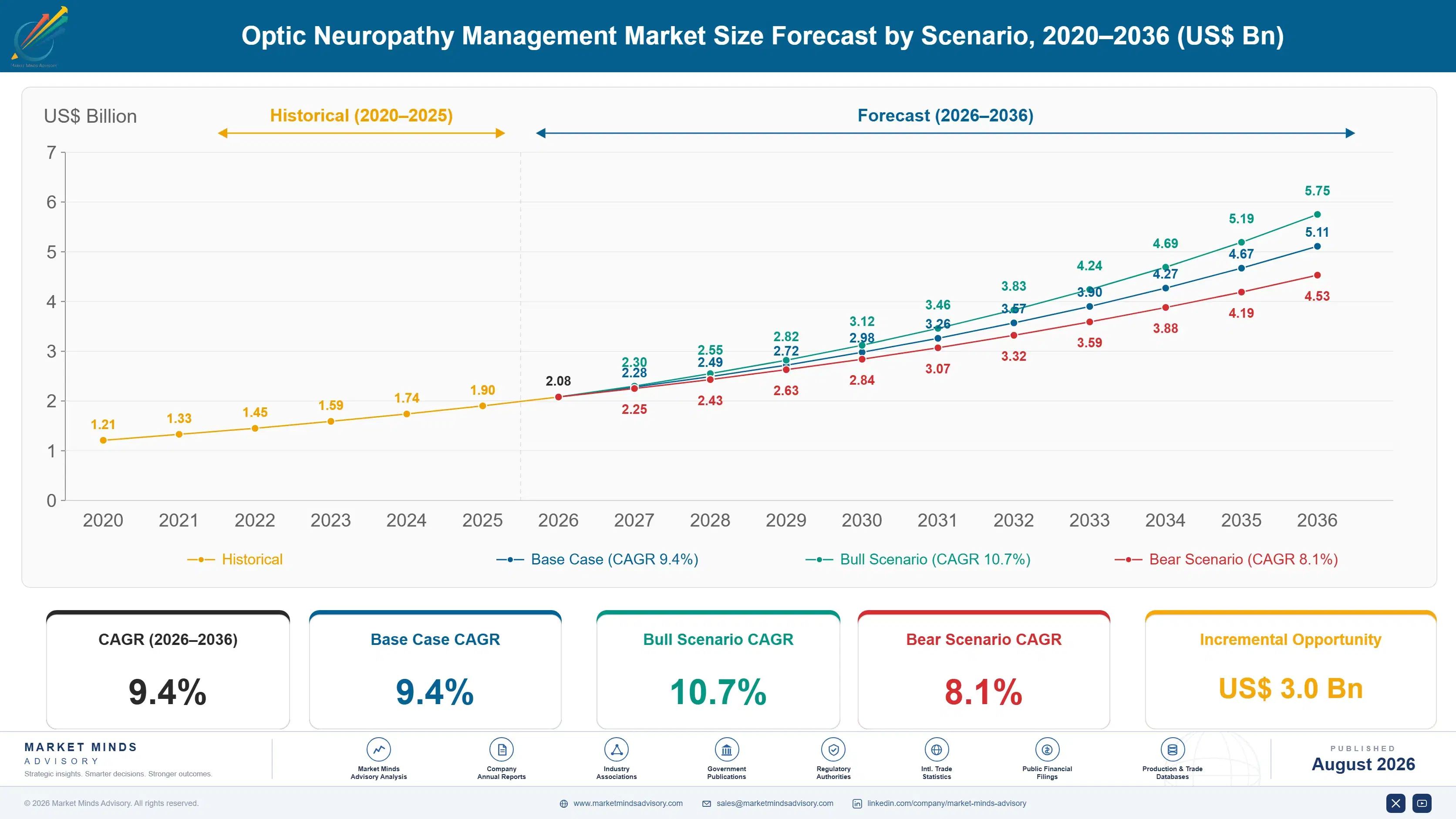
Optic Neuropathy Management Market Forecast Scenarios

optic-neuropathy-management-market-size-forecast-scenario-1787297681713
Between 2020 and 2025 the treatable share of these conditions expanded for the first time in decades. Approved biologics for neuromyelitis optica moved optic neuritis in that population from steroids and hope into targeted maintenance therapy. Hereditary optic neuropathy gained its first approved options in several markets. An 8.2% historical CAGR reflects new therapy availability rather than any change in how many people are affected.
Three mechanisms carry the 9.4% base case. Biologic maintenance therapy in demyelinating disease is the largest, since patients remain on treatment indefinitely at very high annual cost. Hereditary optic neuropathy is the second, where gene therapy and mitochondrial agents are reaching conditions that had no treatment at all. And diagnostic imaging adoption is the third, as optical coherence tomography spreads into settings that previously referred blind. None of the three depends on prevalence changing at all.
The 10.7% bull case rests on gene therapy achieving durable benefit in hereditary disease, which would justify one-time pricing against a lifetime of blindness avoided. The 8.1% bear case is payer resistance to biologics costing above three hundred thousand dollars a year in rare conditions where trial populations were small and long-term comparative evidence remains genuinely thin.

Watching Neurons Die Through A Pupil

Optic neuropathy is unusual among neurological conditions because the damaged tissue is directly visible. A clinician with an ophthalmoscope sees the optic disc, and optical coherence tomography measures the nerve fibre layer to a few micrometres. Nothing comparable exists for the brain or spinal cord. Given that, the eight-month average delay from first symptom to confirmed aetiological diagnosis is difficult to explain and expensive to ignore.
TOP FIVE CONCENTRATION68%Biologic manufacturers dominate a field with very few approved therapies
GANGLION CELLS LOST50%Neurons already destroyed before vision loss becomes clinically apparent
ANNUAL BIOLOGIC COSTUSD 320,000List price for a year of maintenance biologic therapy
DIAGNOSTIC DELAY8 monthsTime from first symptom to a confirmed aetiological diagnosis
IRREVERSIBLE LOSS RATE45%Patients left with permanent deficit despite having received treatment
GENE THERAPY TRIALS14Active clinical programmes targeting hereditary optic nerve disease
Retinal ganglion cells do not regenerate. Roughly half of them are already lost by the time a patient notices any vision change, and every additional month before treatment removes more of what remains. That means the therapeutic window has substantially closed before most patients ever reach a specialist, and around 45% end up with permanent deficit despite receiving whatever treatment exists for their particular aetiology.
The delay is a coordination failure rather than a technical one. A patient sees an optometrist, gets referred into ophthalmology, is then referred onward to neurology, and the aetiological workup follows a path that nobody owns end to end. Imaging companies sell instruments, biologic manufacturers sell therapy, and the months in between belong to nobody at all.
"We can measure the nerve fibre layer to a few microns and we still take the better part of a year to work out why somebody is going blind. The technology stopped being the problem a long time ago."
Director, Neuro-Ophthalmology Practice · MMA Healthcare Practice ·<

Market Trends

Gene Therapy Reaches Conditions With No Prior Treatment

Hereditary optic neuropathies were untreatable for as long as they have been described, and mitochondrial agents plus adeno-associated viral gene therapy have changed that within a decade. Fourteen active clinical programmes now target hereditary optic nerve disease, several addressing the specific mitochondrial mutations responsible for the most common inherited form. Durability remains the open question, since a single administration priced against a lifetime of blindness avoided must actually last a lifetime. This segment grows at 14.1% against a market at 9.4%, and it grows from a base of essentially nothing.
Market Impact: Therapy costs 320,000 dollars annually

Optical Coherence Tomography Moves Into Community Settings

Nerve fibre layer imaging that once required a hospital eye department now sits in high street optometry practices across several countries, which puts the measurement capable of detecting early optic nerve damage in front of patients months before a specialist sees them. The data exists and the referral pathway frequently does not use it, since an optometrist detecting thinning has no clear route to a neuro-ophthalmological workup. Closing that gap is the single largest available improvement in outcomes and nobody currently owns the problem commercially. The data exists months before anybody acts on it.
Market Impact: Testing separates 3 distinct conditions

Market Opportunities and Growth Drivers

Biologic Maintenance Therapy Extends Treatment Indefinitely

Neuromyelitis optica spectrum disorder produces severe optic neuritis with high relapse risk, and approved complement and interleukin pathway biologics reduce that risk substantially when given continuously. Patients therefore remain on therapy indefinitely rather than for a defined course, at annual costs above three hundred thousand dollars in some markets. Prevalence is higher in East Asian and Afro-Caribbean populations than in white European ones, which distributes this revenue differently from most neurology. Duration rather than patient numbers drives the value here. Patients remain on therapy indefinitely rather than for any defined course. Nothing about that changes with time.
Market Impact: 50% of neurons lost early

Aetiological Testing Separates Conditions That Look Alike

Optic neuritis in multiple sclerosis, in neuromyelitis optica, and in myelin oligodendrocyte glycoprotein disease presents similarly and requires completely different treatment, with some therapies for one condition actively worsening another. Antibody testing that distinguishes them has become standard in specialist practice and is spreading into general neurology. Each correct classification routes a patient toward an expensive targeted therapy they would otherwise never receive. Diagnostic precision is therefore what converts prevalence into treated patients across this whole category. Misclassification is therefore a clinical hazard rather than only a commercial loss. Guidelines now recommend testing universally at first presentation.
Market Impact: Trials enrol under 100 patients

Market Restraints and Challenges

Irreversible Damage Precedes Every Treatment Decision

Retinal ganglion cells do not regenerate, roughly half are lost before symptoms appear, and the eight-month average diagnostic delay removes more. The root cause is that the optic nerve has substantial functional reserve, so measurable vision loss is a late sign rather than an early one. Commercially this caps what any therapy can demonstrate, since a trial recruiting patients who have already lost most of their axons is measuring salvage rather than rescue. Participants are mitigating through earlier screening pathways, imaging-triggered referral, and family screening in hereditary disease. Rescue was never available to any of these patients.
Market Impact: 14 programmes now in trials

Rare Disease Economics Constrain Payer Willingness

These conditions individually affect small populations, trials therefore enrol modest numbers, and the resulting evidence is thinner than payers funding three hundred thousand dollar annual therapies would prefer. The root cause is arithmetic: rare disease cannot generate large randomised datasets. Commercially it produces restricted reimbursement, prior authorisation requirements, and slow access outside the United States. Mitigation runs toward registry evidence, outcome-based agreements, and vision-related quality of life data that makes the value case in terms payers actually recognise. Rare disease simply cannot generate large randomised datasets. Payers know that and restrict anyway.
Market Impact: Imaging reaches 60% of optometrists
3 additional market trends, 2 additional growth drivers, and 4 additional restraints and challenges are covered in the full report. Contact sales@marketmindsadvisory.com to access the complete intelligence.

Segment CAGR and Growth Architecture

Segmentation follows the neuropathy aetiology, because the underlying cause determines whether any treatment exists at all, which specialty manages the patient, how the diagnosis gets confirmed, and what a payer will actually fund. Patient age, severity, and care setting are handled in the framework and commentary rather than being treated as separate segments here.
optic-neuropathy-management-market-market-share-analysis-1787297682644

Hereditary Optic Neuropathies

Hereditary optic neuropathies grow fastest at 14.1%, exactly 1.50 times the market rate, and they grow from a base of essentially nothing. Leber hereditary optic neuropathy and dominant optic atrophy were untreatable for as long as they have been described, and mitochondrial agents plus viral vector gene therapy have changed that inside a decade. Fourteen active programmes now target these conditions. Family screening matters commercially as well as clinically, because carriers identified before conversion are the only patients who could ever be treated early enough. Durability of a single administration remains the open question that pricing depends on entirely. Nothing in ophthalmology has moved this far from nothing in so short a time.
CAGR 14.1%

Inflammatory and Demyelinating Optic Neuritis

Inflammatory optic neuritis grows at 11.2%, and almost all of that value sits in neuromyelitis optica spectrum disorder rather than in the multiple sclerosis population that is far larger. Approved complement and interleukin pathway biologics reduce relapse risk substantially and are taken indefinitely at annual costs above three hundred thousand dollars. Antibody testing separating this condition from multiple sclerosis and from myelin oligodendrocyte glycoprotein disease is what converts a patient into an eligible one, and treatments for one can actively worsen another. Prevalence runs higher in East Asian and Afro-Caribbean populations than in white European ones. That epidemiological difference moves the regional revenue map noticeably. Duration rather than patient count drives the value.
CAGR 11.2%
Full segment breakdown across 5 segments available in the complete report.

Regional Architecture and Country Demand Map

Regional shares here reflect a genuine epidemiological difference rather than only economics, which is genuinely unusual in a market of this particular kind. Neuromyelitis optica prevalence varies several fold between populations, and hereditary founder mutations cluster geographically in ways that move the whole map noticeably.

East Asia

East Asia takes 28% of value, the largest share of any region, and epidemiology rather than pricing explains most of it. Neuromyelitis optica spectrum disorder is several times more prevalent across Japanese, Korean, and Chinese populations than in white European ones, which makes the eligible population for high-cost biologics genuinely larger here. Japanese reimbursement covers those therapies comprehensively. Chinese hereditary optic neuropathy cohorts are among the largest studied anywhere, with mitochondrial founder mutations well characterised in the population. Growth at 10.2% exceeds the global rate as Chinese access to approved biologics continues widening steadily. Prevalence rather than pricing carries the position here. Very few therapy areas work that way. Access keeps widening.
Share: 28% | CAGR: 10.2% (2026 to 2036)

South Asia and Pacific

Fastest growth sits in South Asia and Pacific at 11.6%, on 12% of global value. Indian neuro-ophthalmology capability is concentrated in a small number of major centres against an enormous population, so the treated fraction of eligible patients remains very low and every improvement in access moves volume noticeably. Nutritional and toxic optic neuropathy carries a heavier burden here than in wealthier regions, driven by tobacco, alcohol, and nutritional deficiency. Australian access to biologics is well funded on a small population. Growth reflects specialist capacity expanding rather than any change in prevalence. Nutritional causes carry heavier burden than in wealthier regions. Specialist capacity is the binding constraint everywhere. Prevalence has not changed.
Share: 12% | CAGR: 11.6% (2026 to 2036)
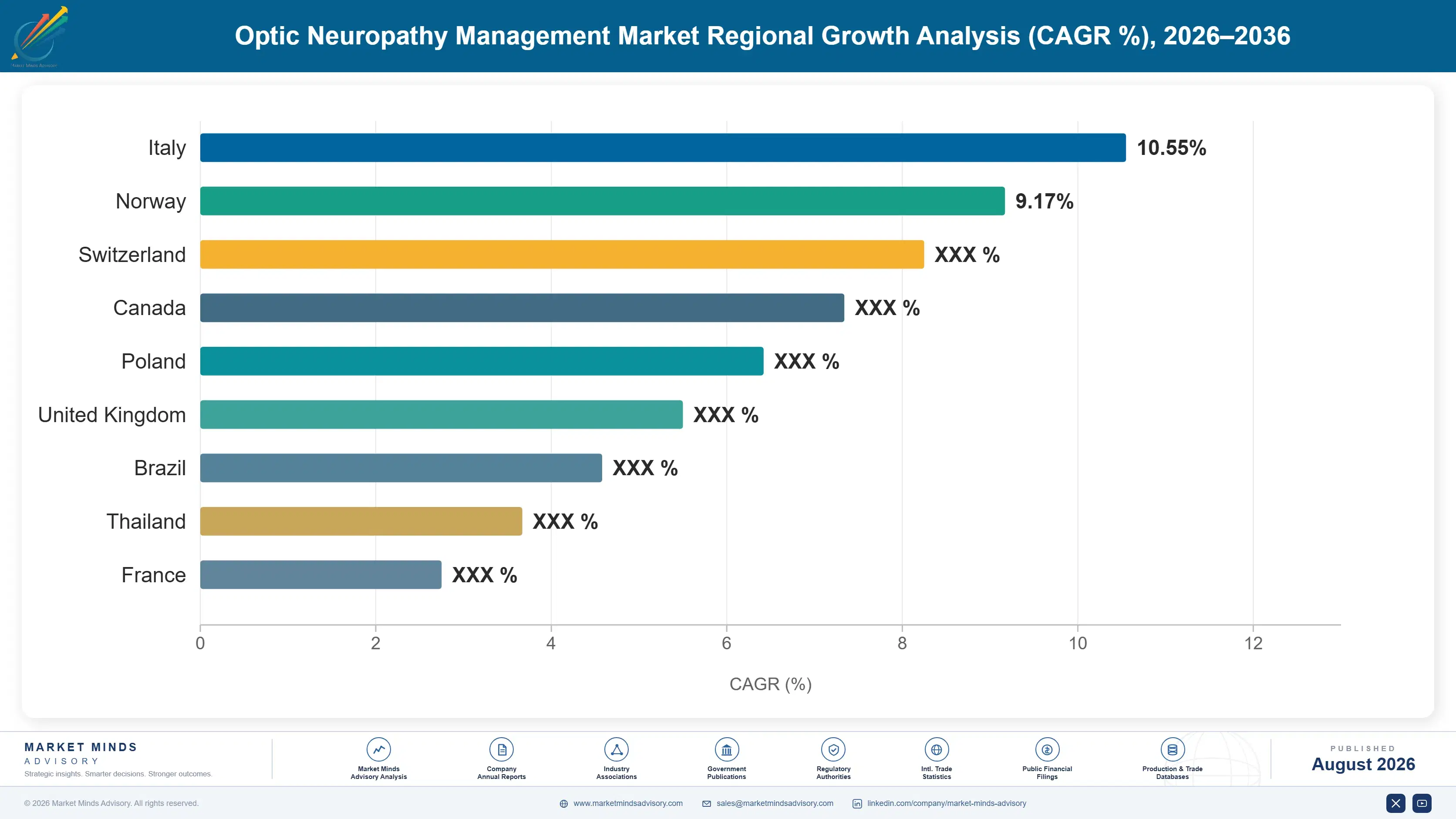
Regional intelligence for 5 additional markets available in the complete report: North America, Western Europe, Latin America, Middle East and Africa, Eastern Europe. Contact sales@marketmindsadvisory.com.
optic-neuropathy-management-market-country-cagr-analysis-1787297683527

Where Optic Neuropathy Value Actually Sits

Every therapy in this market is salvage, because half the neurons are gone before anybody notices and eight months pass before the cause is established. The value is in reaching patients earlier, in making sure the right condition is diagnosed rather than the one that looks similar, and in finding family members before they convert.

Shorten The Referral Pathway From Optometry

Nerve fibre layer imaging now sits in roughly 60% of community optometry practices, months before any patient reaches a specialist, and an optometrist who detects thinning frequently has no route to a neuro-ophthalmological workup. Funding a direct referral pathway costs very little and reaches patients while axons remain to save. It converts prevalence into treated patients more efficiently than any promotional activity, and around 45% of patients currently end with permanent deficit. Nobody currently owns this problem commercially at all. The imaging and the therapy sit in different companies. Months belong to nobody.
Market Impact: Imaging now sits in 60% of optometry practices

Fund Antibody Testing That Routes The Patient Correctly

Optic neuritis from multiple sclerosis, neuromyelitis optica, and myelin oligodendrocyte glycoprotein disease looks alike and treats completely differently, with some therapies for one worsening another. Antibody testing costs USD 200 to USD 600 and determines whether a patient reaches a therapy priced above three hundred thousand dollars annually. Manufacturers funding that testing in general neurology are buying identification rather than promotion, and the conversion economics are better than anything else available to them. General neurology is where the classification actually gets made. Specialists were never the constraint. Nothing else converts this efficiently.
Market Impact: Testing costs 200 to 600 dollars per patient

Screen Families Before Any Member Converts

Hereditary optic neuropathy runs in families with known mutations, and carriers can be identified decades before vision is affected at all. Those are the only patients who could ever be treated early enough for a therapy to preserve rather than salvage vision, which is precisely the evidence gene therapy needs to justify one-time pricing above USD 800,000. Cascade screening programmes cost very little and build a treatable cohort years ahead of any conversion event. Almost nobody is funding this systematically today. Preserving sight is a different claim from salvaging it. Only screened carriers can ever demonstrate that.
Market Impact: Carriers identified 20 years ahead of any conversion

Who Controls the Margin Pool

Concentration reaches 68% across the top five measured on optic neuropathy therapy and management revenue, and neuromyelitis optica biologics account for most of that figure. Roche, AstraZeneca through Alexion, and Amgen through Horizon supply the approved complement and interleukin pathway therapies. Chiesi holds the hereditary optic neuropathy position with an approved mitochondrial agent, and GenSight remains the most advanced gene therapy developer working in that indication.
Competition currently turns on which patients get identified rather than on comparative efficacy, because head-to-head data barely exists in populations this small. Diagnostic pathway influence, specialist relationships within a very small subspecialty, and reimbursement navigation matter far more than any product differentiation does. Nothing about these therapies competes on price at all.

Pressure comes from gene therapy, which if durable would replace indefinite biologic dosing with single administration and change the whole revenue model. Imaging companies are also moving toward interpretation rather than instruments, which puts them closer to the diagnostic decision. Rankings will shift toward whoever shortens the path from first symptom to correct treatment, since that determines the treated population far more than any therapeutic advance ever will.
optic-neuropathy-management-market-company-positioning-matrix-1787297684505

Competitive Moat and Risk Dimensions

ROCHE

Moat: Neurology depth and specialist reach

Roche reaches neurologists through an established neuroscience organisation built across multiple sclerosis and other conditions, which puts it in front of the exact clinicians who first see these patients. In a subspecialty numbering a few thousand physicians worldwide, that existing relationship is worth considerably more than any incremental efficacy claim could be.
ROCHE

Risk: Gene therapy would displace maintenance

The revenue model rests on indefinite maintenance dosing, and a durable one-time therapy in these indications would compress a decade of treatment into a single administration. Even partial success in gene therapy programmes changes how payers view long-term biologic commitments, and the developers pursuing it have no maintenance revenue to protect.
ASTRAZENECA

Moat: Complement pathway franchise depth

AstraZeneca holds complement inhibition expertise built across several rare conditions through Alexion, including the manufacturing, patient support, and reimbursement navigation that ultra-high-cost rare disease therapy requires. Those capabilities transfer directly between indications and are genuinely difficult for a new entrant to assemble at the scale rare disease access demands.
ASTRAZENECA

Risk: Small populations limit growth

Neuromyelitis optica affects very few people in absolute terms, and once the diagnosed population is treated there is nowhere obvious for volume to go except into markets that will not pay these prices. Growth then depends entirely on diagnosis rates improving, which the company influences only indirectly and slowly.

Players Tracked

Prominent Players

Roche
AstraZeneca
Amgen
Chiesi Farmaceutici
GenSight Biologics

Other Key Players

Santhera Pharmaceuticals
Neurotech Pharmaceuticals
Quark Pharmaceuticals
Novartis
Biogen
Sanofi
Teva Pharmaceutical Industries
Regenera Pharma
Nanoscope Therapeutics
Stealth BioTherapeutics
Eyevensys
Sun Pharmaceutical Industries
Carl Zeiss Meditec
Topcon Healthcare
Heidelberg Engineering

Recent Developments

MARCH 2025

Gene therapy reported durable benefit in hereditary optic neuropathy

A gene therapy developer reported sustained visual improvement several years after a single administration in hereditary optic neuropathy, addressing the durability question that pricing for this modality depends upon entirely. Regulatory pathways for one-time therapies in ophthalmology remain considerably less settled than they are for chronic dosing.
Signal: Durability decides whether one-time therapy displaces an entire decade of maintenance dosing outright, or does not.
SEPTEMBER 2024

Antibody testing became standard in general neurology guidelines

Neurology guidelines began recommending antibody testing to distinguish neuromyelitis optica and myelin oligodendrocyte glycoprotein disease from multiple sclerosis at first presentation with optic neuritis. Treatments appropriate for one of these conditions can actively worsen another, which made misclassification a genuine clinical hazard rather than an inconvenience.
Signal: Correct classification is what converts a patient into an eligible one, and misclassification actively harms them instead.
DECEMBER 2024

Manufacturer funded optometry referral pathway pilot

A manufacturer funded a pilot linking community optometry nerve fibre layer imaging directly through to neuro-ophthalmology referral, bypassing the general ophthalmology step that typically adds several months of delay. Diagnostic delay in the pilot group fell substantially against the historical pathway measured at the same centres.
Signal: Shortening the pathway reaches patients while axons remain, which no therapeutic advance can ever substitute for.

Biologic Manufacture, Vectors, And Access

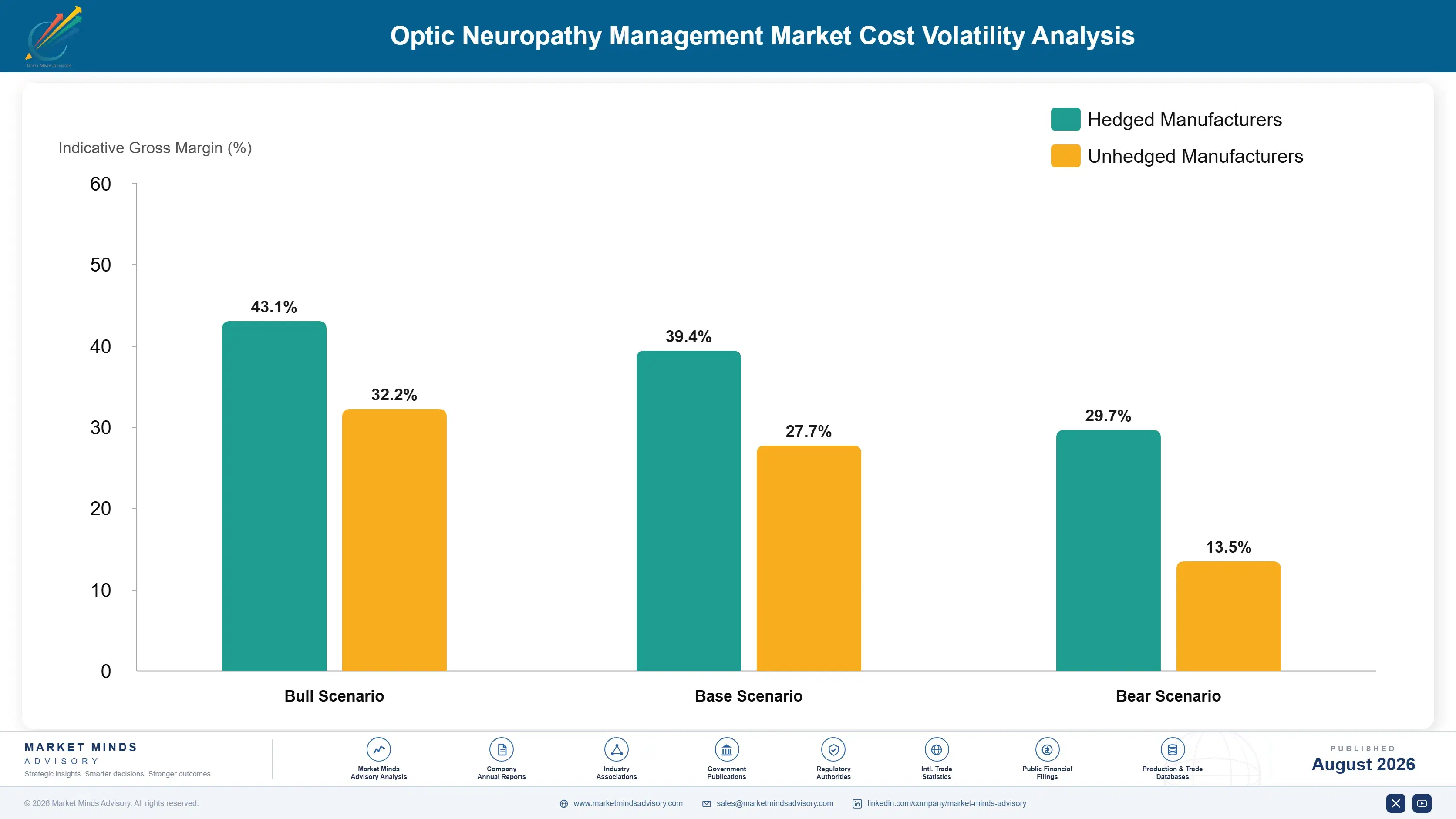
Biologic drug substance manufacture carries roughly 12% to 20% of revenue in this class, covering cell culture, purification, and fill-finish for monoclonal antibodies produced at modest scale. Viral vector production for gene therapy is considerably more expensive per dose and constrained by a narrow specialist manufacturing base. Clinical development, market access submissions, and patient support programmes account for far more of the cost structure than manufacturing ever does.
Single-use bioprocessing consumables and viral vector manufacturing slots both tightened sharply through 2021 and 2022 as cell and gene therapy demand outran available capacity, and lead times ran past a year at the peak. European Commission energy statistics record industrial electricity roughly doubling across the same period. Roche and Sartorius each reported bioprocessing input and capacity pressure, and rare disease programmes competed poorly for slots against larger commercial products.

Exposure divides by modality rather than by geography. Antibody manufacturers work with established contract capacity, predictable yields, and reasonable substitution between suppliers. Gene therapy developers depend on a very small number of vector facilities where a scheduling change delays a trial by quarters. Rare disease volumes make either party a low priority customer, which no purchasing skill overcomes.
optic-neuropathy-management-market-cost-volatility-analysis-1787297684817

Secure vector manufacturing slots years in advance

Viral vector capacity is scarce, allocated well ahead, and prioritised toward programmes with larger commercial volumes than rare ophthalmic disease can promise. Multi-year reservation agreements cost money before a programme has read out and remove a delay risk measured in quarters. Developers who book late find their trial timelines set by somebody else's manufacturing calendar.

Share market access infrastructure across rare indications

Patient support, reimbursement navigation, and registry operation cost roughly the same whether a therapy treats one rare condition or several. Companies with multiple rare disease products spread that infrastructure and reach a cost per patient that a single-product developer cannot approach. It argues for portfolio breadth in exactly the segment where focus is usually assumed to be better.

Design registries with payers before launching them

Small trial populations guarantee that payers will demand real-world evidence, and a registry built afterwards to answer questions nobody agreed in advance rarely satisfies anyone. Co-designing endpoints and comparators with assessment bodies before enrolment makes the resulting data usable. It requires engaging payers earlier than commercial teams usually find comfortable. Retrofitting a registry to answer unagreed questions satisfies nobody.

Portfolio Architecture for Margin Defence

Margin here is almost entirely a function of how many eligible patients actually get found, because manufacturing cost is small and pricing already sits at whatever payers will tolerate. A biologic reaching a correctly diagnosed neuromyelitis optica patient generates several hundred thousand dollars a year indefinitely. The same therapy reaches nobody at all if that patient was classified as having multiple sclerosis instead.
The volume tension is between maintenance therapy and one-time treatment. Indefinite biologic dosing produces predictable annual revenue and depends on patients staying diagnosed, treated, and reimbursed for decades. Gene therapy compresses that into a single administration at a price nobody has yet fully validated, and if durable it removes the maintenance stream entirely. Both cannot be the future of the same patient.

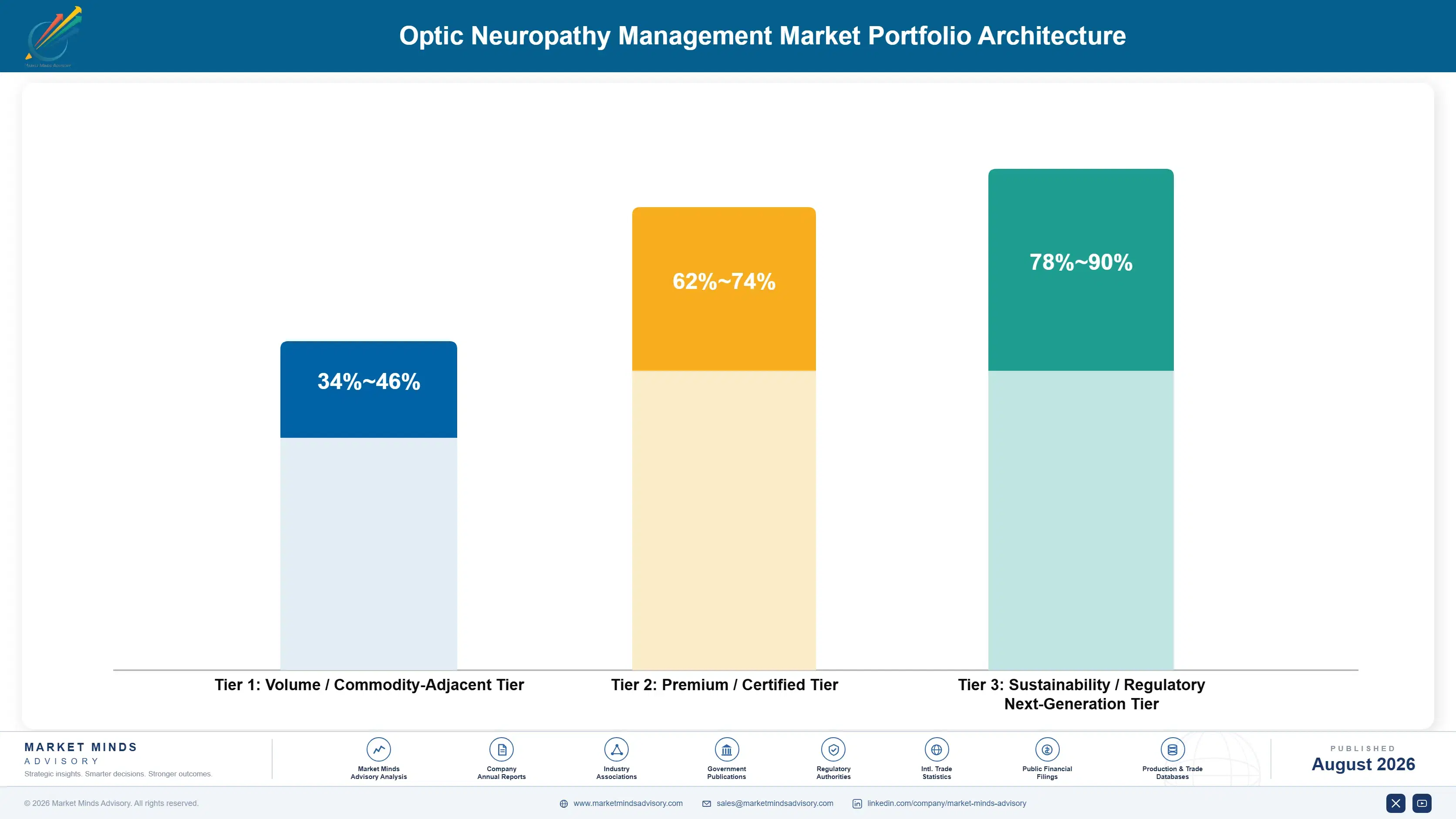
High-value pools sit in three places. Correctly routed biologic patients in demyelinating disease, hereditary optic neuropathy where gene therapy is reaching conditions that previously had nothing at all, and diagnostic pathway work that finds patients while axons still remain to be saved. The third of those generates no direct revenue whatever and quietly determines the size of the other two.

Volume / Commodity-Adjacent Tier

Corticosteroids, supportive treatment, and general monitoring used across ischaemic and traumatic optic neuropathy where no targeted therapy exists at all. Generic pricing and very limited differentiation define the whole category.
Gross Margin: 34-46%

Premium / Certified Tier

Approved mitochondrial agents for hereditary disease and imaging systems supporting specialist monitoring. Clinical evidence and specialist adoption rather than manufacturing cost sustain the margin against a limited field of alternatives.
Gross Margin: 62-74%

Sustainability / Regulatory / Next-Generation Tier

Complement and interleukin pathway biologics in demyelinating disease, and gene therapy for hereditary optic neuropathy. The very wide range reflects genuinely different economics between indefinite maintenance dosing and single-administration one-time treatment.
Gross Margin: 78-90%
optic-neuropathy-management-market-portfolio-architecture-1787297685426

High-value Sub-segments and Strategic Watch-out

Neuromyelitis Optica Biologics

Indefinite maintenance therapy above three hundred thousand dollars annually in a population with genuinely higher prevalence across East Asian and Afro-Caribbean groups. Revenue depends entirely on antibody testing correctly classifying the patient in the first place. Duration rather than patient numbers drives the value. Classification decides eligibility.
Gross Margin: 80-90%

Hereditary Gene Therapy

Reaching conditions that had no treatment whatever until this decade, with fourteen separate clinical programmes now in active development around the world. Durability of a single administration is the one question that all of the pricing and all of the reimbursement ultimately depends upon here.
Gross Margin: 74-88%

Supportive And Generic Management

Corticosteroids and monitoring across ischaemic and traumatic neuropathies where no targeted therapy exists at all. It is most of the patient population and a small fraction of the market value by any measure. Most of the patients and very little of the money. No targeted therapy exists at all.
Gross Margin: 34-46%

Diagnostic Pathway Programmes

Antibody testing and referral pathway funding that determines whether a patient ever reaches an eligible diagnosis. The watch-out is that it generates no direct revenue and is therefore first to be cut whenever budgets tighten anywhere. It generates no direct revenue and determines everything else.
Gross Margin: 58-72%

What Determines Who Gets Treated

Revenue here is a function of diagnosis rather than of prevalence, and the gap between the two is very wide. A neuromyelitis optica patient correctly identified generates several hundred thousand dollars annually for as long as therapy continues, which is typically indefinitely. The same patient classified as having multiple sclerosis receives a different drug, generates nothing here, and may be actively harmed by it.
Stickiness is close to total once treatment starts and correct. Nobody changes a biologic that is preventing relapses in a condition where a single relapse can cost permanent vision, and there is no meaningful head-to-head evidence that would justify switching. Patients remain on therapy for decades. The commercial risk is entirely upstream, in patients never being diagnosed correctly, rather than in losing anybody already treated.

Buyer profiles sit further apart here than in most therapy areas. The neuro-ophthalmologist who confirms the diagnosis is rarely the neurologist who prescribes, and neither is the community optometrist who first sees the nerve fibre thinning months earlier. Payers approve or restrict on evidence generated in populations of fewer than a hundred patients. A commercial organisation reaching only one of those four is missing most of the pathway.
optic-neuropathy-management-market-end-use-penetration-index-1787297685915

Where To Compete Here

These are among the four positions where our research anticipates prominent divergence between winners and laggards over the coming forecast period. Each is grounded in the demand model, the regulatory perimeter, and the announced capacity pipeline.
01 / REFERRAL PATHWAY INVESTMENT

Reach patients while axons still remain

Roughly half the retinal ganglion cells are lost before symptoms appear and eight months more pass before a cause is established, by which point around 45% of patients face permanent deficit whatever treatment eventually follows. Nerve fibre imaging already sits in most community optometry practices months before any specialist sees the patient at all. Funding a direct referral route from community optometry into neuro-ophthalmology costs very little and converts prevalence into treatable patients better than any promotional activity ever could.
02 / DIAGNOSTIC ROUTING FUNDING

Pay for the test that finds your patient

Optic neuritis arising from multiple sclerosis, from neuromyelitis optica, and from myelin oligodendrocyte glycoprotein disease presents almost identically and yet treats completely differently, with therapies for one condition actively worsening another. Antibody testing costing only a few hundred dollars determines whether a patient ever reaches a therapy priced above three hundred thousand dollars annually. Funding that testing across general neurology is buying patient identification rather than any promotion, and no other spend in this category converts anywhere near as efficiently.
03 / FAMILY CASCADE SCREENING

Find carriers decades before they convert

Hereditary optic neuropathy runs in families with identifiable mutations, and carriers can be found many years before any vision is affected at all. Those are the only patients who could ever be treated early enough for a therapy to preserve rather than salvage sight, which is exactly the evidence gene therapy needs to justify one-time pricing. Cascade screening programmes cost very little and build a treatable cohort years ahead of any conversion event, and almost nobody at all is currently funding this systematically.
04 / MAINTENANCE MODEL EXPOSURE

Plan for durable therapy displacing annual dosing

The dominant revenue model in this market is indefinite biologic maintenance at very high annual cost, which assumes patients keep being diagnosed, treated, and reimbursed for decades without any interruption at all. A durable single-administration gene therapy would compress that entire revenue stream into one payment, and fourteen programmes are now working toward exactly that outcome. Companies with existing maintenance revenue to protect will naturally resist that shift, and the developers pursuing it have nothing whatsoever to lose from succeeding.

Engagement Snapshot From the Field

A live engagement with an industry participant carrying material or product regulatory and market exposure ahead of a defining policy shift, showing how our research translates into a defensible multi-year portfolio strategy.
MARKET MINDS ADVISORY · CLIENT ENGAGEMENT SUMMARY
Optic Neuropathy Management Producer Strategic Portfolio Review and Transition Roadmap 2026·Investment Scenario on Optic Neuropathy Management Exposure Evaluation 2025-26
CLIENT PROFILE
A rare disease biopharmaceutical company marketing a biologic for a demyelinating optic neuropathy indication with annual therapy costs above USD 300,000 and annual revenue near USD 480 million (client-reported, unverified by MMA). Treated patient numbers had plateaued across all of its major markets, well below the prevalence estimates used to build the original launch forecast.
STRATEGIC CHALLENGE
Commercial leadership assumed the plateau reflected competitive loss or payer restriction, and had responded with additional promotional investment directed at prescribing neurologists. Neither share data nor reimbursement approval rates supported that explanation at all, and nobody had examined whether eligible patients were even being correctly identified in the first place.
MMA APPROACH
MMA reconstructed the diagnostic pathway from first symptom through to treatment initiation across four markets, measuring precisely where patients were being lost. Antibody testing rates at first presentation with optic neuritis were compared against guideline recommendations. Misclassification into multiple sclerosis was then estimated from testing gaps and from specialist interview evidence.
KEY FINDINGS
  1. Antibody testing was performed at first presentation in fewer than half of optic neuritis cases across the markets examined, against guidelines recommending it universally (client-reported, unverified by MMA).
  2. Estimated misclassification into multiple sclerosis accounted for a treated population shortfall considerably larger than any competitive loss the client had ever recorded.
  3. Community optometry nerve fibre imaging had detected an abnormality months before specialist referral in a substantial share of the patients eventually diagnosed.
  4. Promotional spend aimed at prescribing neurologists was reaching clinicians who already prescribed entirely appropriately whenever their patients arrived at them correctly diagnosed.
CLIENT PROFILE
A rare disease biopharmaceutical company marketing a biologic for a demyelinating optic neuropathy indication with annual therapy costs above USD 300,000 and annual revenue near USD 480 million (client-reported, unverified by MMA). Treated patient numbers had plateaued across all of its major markets, well below the prevalence estimates used to build the original launch forecast.
STRATEGIC CHALLENGE
Commercial leadership assumed the plateau reflected competitive loss or payer restriction, and had responded with additional promotional investment directed at prescribing neurologists. Neither share data nor reimbursement approval rates supported that explanation at all, and nobody had examined whether eligible patients were even being correctly identified in the first place.
MMA APPROACH
MMA reconstructed the diagnostic pathway from first symptom through to treatment initiation across four markets, measuring precisely where patients were being lost. Antibody testing rates at first presentation with optic neuritis were compared against guideline recommendations. Misclassification into multiple sclerosis was then estimated from testing gaps and from specialist interview evidence.
KEY FINDINGS
  1. Antibody testing was performed at first presentation in fewer than half of optic neuritis cases across the markets examined, against guidelines recommending it universally (client-reported, unverified by MMA).
  2. Estimated misclassification into multiple sclerosis accounted for a treated population shortfall considerably larger than any competitive loss the client had ever recorded.
  3. Community optometry nerve fibre imaging had detected an abnormality months before specialist referral in a substantial share of the patients eventually diagnosed.
  4. Promotional spend aimed at prescribing neurologists was reaching clinicians who already prescribed entirely appropriately whenever their patients arrived at them correctly diagnosed.
RECOMMENDED STRATEGY
Phase 1: Phase one: redirect promotional budget toward funding antibody testing at first presentation, which identifies patients rather than persuading already convinced prescribers. Phase 2: Phase two: build referral pathways running from community optometry into neuro-ophthalmology across all those markets where diagnostic delay measured longest. Phase 3: Phase three: measure commercial performance on correctly diagnosed patients rather than on prescriber reach, so activity targets the constraint that actually binds.
OUTCOME
The client redirected the majority of its promotional budget into diagnostic testing support and referral pathway funding, reporting newly diagnosed eligible patients rising roughly 40% across the following year (client-reported, unverified by MMA). Treated patient numbers moved above the previous plateau for the first time since launch, on lower total commercial spend.

Frequently Asked Questions

Foundational context covering the market sizes, CAGR, scope, country, region and competition that inform every finding below. This section is provided to cover basics and most often pre-purchase conversations, answered from the MMA Primary Research Dataset.

What is the current size of the Optic Neuropathy Management Market?

The market reached USD 1.9 billion in 2025 and is forecast at USD 2.08 billion for 2026. Value concentrates heavily in high-cost biologics for demyelinating disease rather than across the whole patient population.

How large will the Optic Neuropathy Management Market be by 2036?

MMA forecasts USD 5.10 billion by 2036, an increase of USD 3.03 billion over 2026. That represents an expansion multiple of 2.46 times across the forecast period.

What is the CAGR for the Optic Neuropathy Management Market 2026 to 2036?

The base case CAGR is 9.4%, with a bull case at 10.7% and a bear case at 8.1%. The bear case reflects payer resistance to very high cost therapies evidenced in small populations.

Which segment is growing fastest?

Hereditary optic neuropathies grow fastest at 14.1%, exactly 1.50 times the market rate. Gene therapy and mitochondrial agents are reaching conditions that previously had no treatment at all.

Who are the major companies in the Optic Neuropathy Management Market?

Roche, AstraZeneca, Amgen, Chiesi Farmaceutici, and GenSight Biologics lead the market. The top five hold roughly 68% of revenue, with neuromyelitis optica biologics accounting for most of that concentration.

Which country is growing fastest?

India grows fastest at 13.2%, because neuro-ophthalmology capability is concentrated in very few centres against an enormous population. Every improvement in specialist access moves treated volume noticeably.

Report Segmentation Architecture

The full report scope spans multiple orthogonal segmentation dimensions, with cross-tabulated demand data provided for each dimension pair. Coverage extends further to regional breakdowns, trend trajectories, and the competitive detail needed to support segment-level decision-making.

By Neuropathy Aetiology

  • Hereditary Optic Neuropathies
  • Inflammatory and Demyelinating Optic Neuritis
  • Toxic and Nutritional Optic Neuropathy
  • Ischaemic Optic Neuropathy
  • Traumatic Optic Neuropathy

By End-Use Industry

  • Neuro-Ophthalmology Services
  • General Neurology Practice
  • Ophthalmology Departments
  • Community Optometry
  • Genetic and Rare Disease Centres

By Commercial Dimension

  • Specialty Pharmacy Distribution
  • Hospital Direct Supply
  • Managed Access and Named Patient
  • Diagnostic Testing Support Programmes
  • Imaging Equipment Placement

By Region

  • East Asia
  • South Asia and Pacific
  • North America
  • Western Europe
  • Latin America
  • Middle East and Africa
  • Eastern Europe

Scope, Methodology, and Coverage

Every figure in this report is reproducible from documented input assumptions. The scope below maps the historical period, the forecast horizon, the segmentation dimensions, and the countries covered, alongside the underlying primary and qualitative methodology.
Historical Period
2020 to 2025
Forecast Period
2026 to 2036
Base Year
2025 (USD billions; MMA Primary Research Dataset, August 2026)
Market Definition
The optic neuropathy management market comprises therapies, devices, and monitoring used to treat and manage damage to the optic nerve arising from non-glaucomatous causes, valued at supplier net revenue across neuro-ophthalmology services, general neurology, ophthalmology departments, community optometry, and genetic and rare disease centres. It spans complement and interleukin pathway biologics for demyelinating optic neuritis, mitochondrial agents and gene therapy for hereditary optic neuropathies, corticosteroid and supportive management for ischaemic, traumatic, toxic, and nutritional neuropathies, together with the antibody and genetic testing support, optical coherence tomography monitoring, and patient access programmes attached to them. Glaucoma medications, devices and surgery, cataract and refractive procedures, retinal vascular and macular therapies, neuro-imaging equipment, low vision aids and rehabilitation, and general multiple sclerosis therapy not directed at optic nerve involvement are excluded.
Quantitative Units
USD billions (current prices); volume in patients treated annually
Segmentation Dimensions
By Neuropathy Aetiology; By End-Use Industry; By Commercial Dimension; By Region
Regions Covered
East Asia, South Asia and Pacific, North America, Western Europe, Latin America, Middle East and Africa, Eastern Europe
Countries Covered
Japan, China, South Korea, Taiwan, India, Australia, Singapore, Thailand, Indonesia, USA, Canada, Mexico, Brazil, Argentina, Colombia, Chile, Germany, France, UK, Italy, Spain, Netherlands, Sweden, Finland, Denmark, Switzerland, Poland, Czechia, Hungary, Romania, Saudi Arabia, United Arab Emirates, Israel, Egypt, South Africa, Nigeria, and additional markets relevant to this sector
Key Companies Profiled
Roche, AstraZeneca, Amgen, Chiesi Farmaceutici, GenSight Biologics, Santhera Pharmaceuticals, Neurotech Pharmaceuticals, Quark Pharmaceuticals, Novartis, Biogen, Sanofi, Teva Pharmaceutical Industries, Regenera Pharma, Nanoscope Therapeutics, Stealth BioTherapeutics, Eyevensys, Sun Pharmaceutical Industries, Carl Zeiss Meditec, Topcon Healthcare, Heidelberg Engineering
Quantitative Methodology
Primary survey, n=3,800 respondents, Q4 2025, six countries; demand-side model with trade association cross-validation
Qualitative Methodology
47 expert interviews, Q4 2025; applied to validate demand model assumptions, identify emerging dynamics, and assess competitive positioning
Report Format
PDF and XLSX data workbook (Word format preview document)
Publisher
Market Minds Advisory
Report Code
MMA-2026-HLT-729
Published
August 2026
Contact
sales@marketmindsadvisory.com | www.marketmindsadvisory.com

Purchase the full Optic Neuropathy Management Market Report (2026 to 2036).

The full report examines optic neuropathy management demand across seven regions and five aetiologies, with particular attention to why the therapeutic window closes before most patients are diagnosed at all. It quantifies diagnostic delay by pathway step and models what antibody testing and optometry referral funding are worth in identified patients. Competitive analysis covers twenty participants assessed on optic neuropathy therapy and management revenue, including how durable gene therapy would displace indefinite biologic maintenance. Regional chapters separate genuine epidemiological variation from access and pricing effects, which diverge here more than usual.
Seven-region prevalence and access variation analysis
Five aetiology segmentation with growth rates
Twenty participant competitive and pipeline assessment
Diagnostic delay decomposition by pathway step
Antibody testing conversion economics by market
Gene therapy durability scenarios against maintenance revenue

Built For The People Who Decide

From boardroom strategy to bench-side execution, this report is read cover-to-cover by leaders shaping the next decade of their industry, turning demand scenarios, market dynamics and valuation benchmarks into decisions.
CXOs/ Presidents/ VPs/ Managers
M&A and Corporate Development
Strategy Teams and R&D Heads
Procurement and Product Directors
Regulatory and Compliance Leaders
Investor Relations and Equity Analysts