Market Minds Advisory
One-Step RT-qPCR Kits Market

One-Step RT-qPCR Kits Market: Syndromic Panels Redraw the Category

A commercial reading of one-step RT-qPCR kits, where multiplex syndromic panels pull testing volume forward, liquid biopsy adoption expands oncology demand, and pandemic-era overcapacity pressures margins considerably across most regions.

Lead Analyst

Alice Ballenger

Published

September 2026

Make Smarter Decisions with Customized Research Insights

Request a free sample report and evaluate market opportunities, growth trends, and competitive dynamics relevant to your business needs.

2025 MARKET VALUE$2.6BMarket Size 2025
2036 FORECAST VALUE$6.3BBase Case , 2026 to 2036
CAGR 2026 TO 20368.4 %Bull 9.7% / Bear 6.9%
INCREMENTAL OPPORTUNITY$3.5BNet 10- year value creation
EXPANSION MULTIPLE2.24x2036 value over 2026 base
Strategic Levers
M&A Pipeline
Regional Outlook
Country Rankings
Competitive Intelligence
Segmental Deep-dive
Call-Us : 91 93563 13602

Executive Snapshot and Market Trajectory

A laboratory running six sequential single-target tests to identify one respiratory pathogen is spending time and reagent volume that a single multiplex panel eliminates entirely, and that specific efficiency gap is why syndromic testing has become the category's most contested growth segment currently tracked closely today.
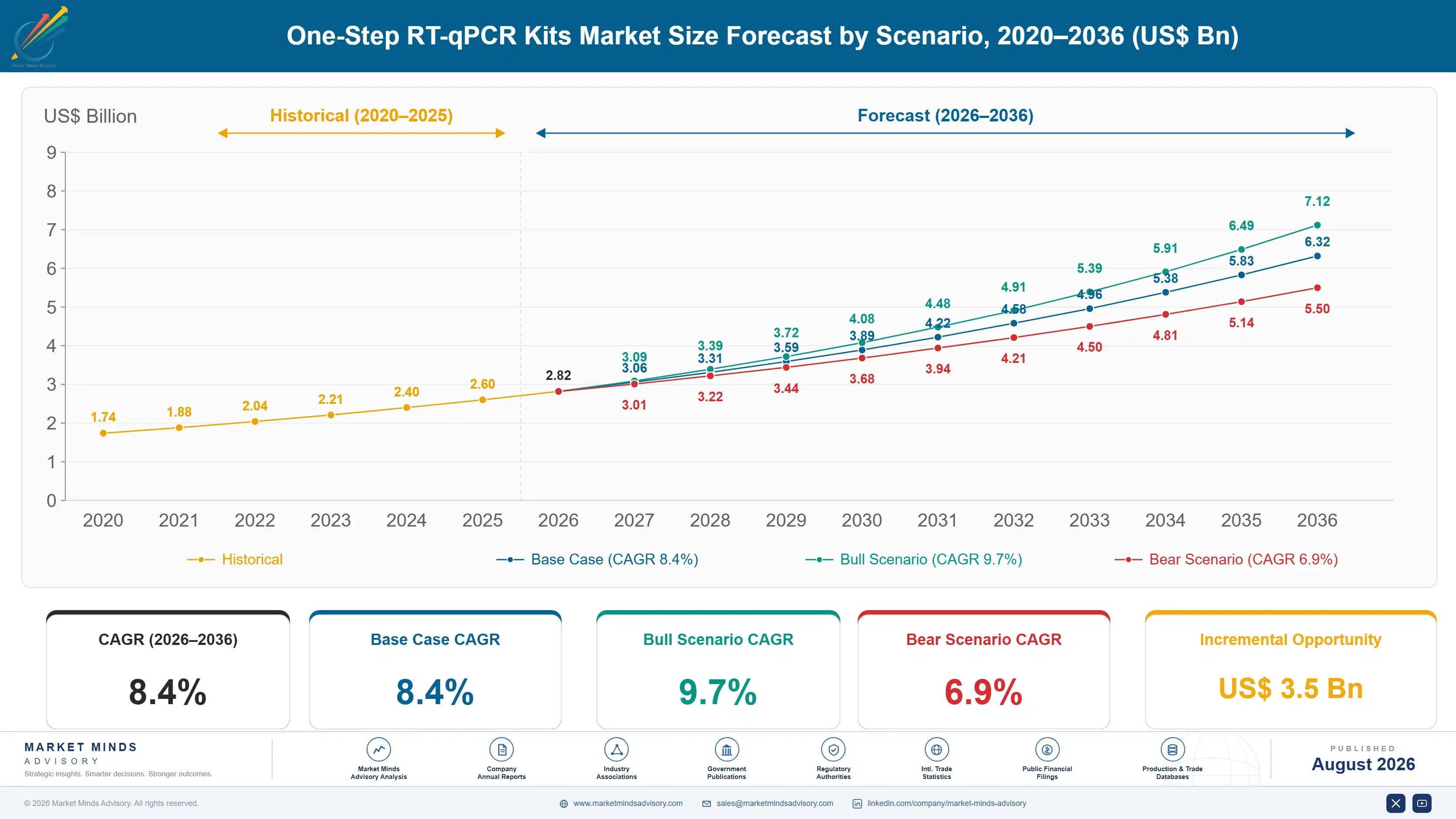
The market stands at USD 2.6 billion in 2025 and reaches USD 6.31 billion by 2036 at an 8.4% CAGR. Multiplex syndromic panel kits grow fastest at 12.5%, about 1.49 times the overall rate, pulled forward by laboratories consolidating multiple pathogen targets into single-run testing workflows across most major markets. North America holds 30% of value on established molecular diagnostics infrastructure, while India posts the fastest national growth at 10.5% on expanding laboratory capacity nationally.
Concentration sits at a substantial 55% among the top five, led by Thermo Fisher Scientific's reagent manufacturing scale and QIAGEN's molecular assay design depth built over decades of laboratory relationships. Two forces reshape the field now. Multiplex syndromic panels are reducing per-test diagnostic turnaround time across infectious disease testing, and point-of-care-adjacent platforms are expanding molecular testing beyond centralized reference laboratories into more clinical settings.
Market Definition
The one-step RT-qPCR kits market covers reagent kits that combine reverse transcription and polymerase chain reaction amplification in a single reaction step for RNA target detection, including infectious disease, gene expression, oncology, and veterinary applications. Two-step RT-qPCR workflows requiring separate reverse transcription and amplification reagents, and standalone PCR instruments, are excluded.
Base Year Value
$2.6B in 2025 (MMA Primary Research Dataset, August 2026)
Forecast Period
2026 to 2036, eleven discrete annual values
CAGR
8.4% base case. Bull 9.7%. Bear 6.9%.
Fastest Growth Segment
Multiplex Syndromic Panel Kits: 12.5% CAGR
Fastest Growth Country
India: 10.5% CAGR
Fastest Growth Region
South Asia and Pacific: 10.2% CAGR
Largest Region
North America: 30% of 2025 global value
Market Leaders
Thermo Fisher Scientific, QIAGEN, Bio-Rad Laboratories, Roche Diagnostics, Bioneer Corporation. Source: MMA Analysis based on company annual reports and industry association data.
Primary Survey
n=3,800 procurement and R&D decision-makers, Q4 2025, six countries
Methodology
Demand-side build-up, cross-validated against public data, 47 expert interviews

One-Step RT-qPCR Kits Market Forecast Scenarios

one-step-rt-qpcr-kits-market-size-forecast-scenario-1787332383915
Growth from 2020 to 2025 compounded near 7.6%, reflecting pandemic-era testing volume normalization following the exceptional demand spike before recovering toward steadier growth from 2023 onward as multiplex syndromic panel adoption and oncology liquid biopsy testing expanded considerably across most major markets tracked closely by analysts, manufacturers, and public health agencies alike throughout that period.
Three mechanisms carry the base case to 8.4%. First, multiplex syndromic panel adoption, as laboratories consolidate multiple pathogen targets into single-run testing workflows that reduce reagent consumption and turnaround time considerably. Second, expanding liquid biopsy adoption in oncology, which requires RT-qPCR-based mutation detection kits across a growing diagnosed patient population globally. Third, rising infectious disease surveillance investment, which sustains testing volume across public health and reference laboratory networks tracked closely.
The bull case at 9.7% assumes multiplex syndromic panel adoption accelerates faster than current laboratory workflow transitions suggest and liquid biopsy testing expands more quickly across additional cancer types tracked closely worldwide. The bear case at 6.9% assumes price erosion following pandemic-era capacity buildout continues pressuring margins and cold chain logistics requirements keep limiting access in resource-constrained testing settings globally.

Why the Single-Run Panel Now Beats the Sequential Test

Three forces set demand. Infectious disease testing volume provides the steadiest layer, since reference laboratories and hospital systems continue running molecular diagnostics for respiratory and other pathogen categories year-round. Oncology liquid biopsy adoption adds a fast-growing second layer, as RT-qPCR-based mutation detection expands across a growing diagnosed cancer patient population. Multiplex syndromic panel consolidation adds a third layer, as laboratories replace multiple single-
MARKET CONCENTRATIONCR5: 55%Substantially concentrated behind established molecular reagent manufacturing leaders
AVERAGE SELLING PRICEUSD 3 to 45 per reactionVaries considerably by target complexity and multiplex panel capability
TOP CONSUMING REGIONNorth America: 30% of global valueReflects established molecular diagnostics and reference laboratory infrastructure
MULTIPLEX PANEL PENETRATIONRoughly 30% of infectious disease testsRising steadily as laboratories consolidate pathogen targets into single runs
TYPICAL SHELF LIFE12 to 24 months refrigeratedReflects enzyme and reagent stability requirements across most kit formulations
COGS FEEDSTOCK SHAREAbout 40 to 52%Reflects enzyme, primer, and probe input costs by grade
The commercial character rewards assay design depth and multiplex capability over price competition alone in premium segments. A laboratory director choosing a kit supplier increasingly weighs multiplex target breadth and published sensitivity data as heavily as unit price, since a kit that misses a clinically relevant target creates diagnostic risk far exceeding any price difference between suppliers. Thermo Fisher's manufacturing scale and QIAGEN's assay design depth give both a trust advantage newer entrants must earn.
The next decade turns on two things. Whether multiplex syndromic panel adoption can expand quickly enough across more infectious disease categories beyond respiratory testing where consolidation currently concentrates. And whether point-of-care-adjacent platforms can bring genuine molecular testing capability closer to patients without sacrificing the sensitivity and multiplex depth that centralized reference laboratory testing currently delivers reliably.
"Laboratories used to buy kits one pathogen at a time. Now they buy a panel that answers five clinical questions in a single run, and that shift in purchasing logic has completely restructured which suppliers win laboratory contracts."
Director, Molecular Diagnostics and Life Sciences Practice · MMA Healthcare / Mo

Market Trends

Multiplex Panels Cut Per-Test Turnaround Time

Laboratories increasingly consolidate multiple pathogen targets into single multiplex panel runs rather than performing sequential single-target tests, a shift that has pushed multiplex penetration to roughly 30 percent of infectious disease tests from a considerably lower base a few years ago. This matters commercially because multiplex panels reduce reagent consumption, technician time, and diagnostic turnaround considerably compared with running each target separately. QIAGEN and Bio-Rad Laboratories have both expanded multiplex panel product lines considerably to capture this converging laboratory workflow preference. Single-target kit manufacturers without multiplex capability increasingly lose specification to competitors offering consolidated panel workflows.
Market Impact: Surveillance testing volume rose 15
Point-of-Care-Adjacent Platforms Expand Molecular Testing Access

Compact, rapid RT-qPCR platforms increasingly bring molecular testing capability closer to patients in urgent care, smaller hospital, and decentralized testing settings that previously depended entirely on centralized reference laboratory turnaround times. This capability meaningfully reduces the time between sample collection and clinically actionable results for time-sensitive infectious disease diagnoses. Roche Diagnostics and Thermo Fisher Scientific have both expanded compact platform product lines considerably to serve this decentralizing testing trend. The commercial consequence is that kit manufacturers without platform compatibility across both centralized and point-of-care-adjacent instruments increasingly lose specification in decentralizing testing networks.
Market Impact: Liquid biopsy volume rose 20% yearl

Market Opportunities and Growth Drivers

Rising Surveillance Investment Sustains Testing Volume

Government and public health infectious disease surveillance investment has expanded considerably following the pandemic, sustaining reference laboratory testing volume beyond the exceptional acute demand spike that characterized 2020 through 2022 specifically. Public health agencies across multiple countries have established ongoing respiratory and gastrointestinal pathogen surveillance programmes that require continuous molecular testing infrastructure and reagent supply. Every surveillance programme sustained requires ongoing kit procurement regardless of whether acute outbreak conditions persist at any given time. This driver continues strengthening as surveillance infrastructure investment becomes a permanent public health budget line item rather than a temporary emergency response measure.
Market Impact: Pandemic-era capacity exceeds 40% e

Expanding Liquid Biopsy Adoption Drives Oncology Demand

Liquid biopsy testing, which uses RT-qPCR-based mutation detection to identify actionable cancer markers from a blood sample rather than requiring invasive tissue biopsy, continues expanding across a growing diagnosed cancer patient population and additional approved cancer types. Oncologists increasingly specify liquid biopsy testing for treatment selection and monitoring given its considerably reduced patient burden compared with repeated tissue biopsy procedures. Roche Diagnostics and QIAGEN have both expanded oncology-focused RT-qPCR kit portfolios considerably in response to this sustained clinical adoption growth. This driver continues strengthening as liquid biopsy clinical validation expands across more cancer types and treatment decision points tracked currently.
Market Impact: Cold chain adds 15% cost

Market Restraints and Challenges

Pandemic-Era Overcapacity Now Pressures Margins Broadly

Manufacturing capacity built rapidly during the pandemic to meet exceptional testing demand now exceeds normalized post-pandemic volume considerably, creating genuine overcapacity that has pushed several manufacturers into aggressive price competition to maintain production utilization. The root cause is that capacity investment decisions made during acute emergency conditions did not anticipate how quickly testing volume would normalize once the pandemic phase subsided. Commercially this compresses margin across the category broadly, particularly for manufacturers whose capacity expansion was most heavily weighted toward pandemic-specific applications. Manufacturers are responding by redirecting excess capacity toward oncology and expanded panel applications with more durable demand.
Market Impact: Multiplex tests reach 30% of volume

Cold Chain Requirements Limit Resource-Constrained Access

Most RT-qPCR kits require refrigerated or frozen storage and transport to maintain enzyme and reagent stability, a logistics requirement that genuinely limits access in resource-constrained settings lacking reliable cold chain infrastructure across the full distribution pathway. The root cause is that reverse transcriptase and polymerase enzymes degrade meaningfully at ambient temperature over the shelf life periods most laboratories require for practical inventory management. Commercially this excludes many resource-constrained testing settings from accessing standard kit formulations, limiting addressable market expansion in several developing regions. Manufacturers are responding with lyophilized and room-temperature-stable formulations that reduce cold chain dependency for distribution.
Market Impact: Decentralized testing rose 22% year
3 additional market trends, 4 additional growth drivers, and 3 additional restraints and challenges are covered in the full report. Contact sales@marketmindsadvisory.com to access the complete intelligence.

Segment CAGR and Growth Architecture

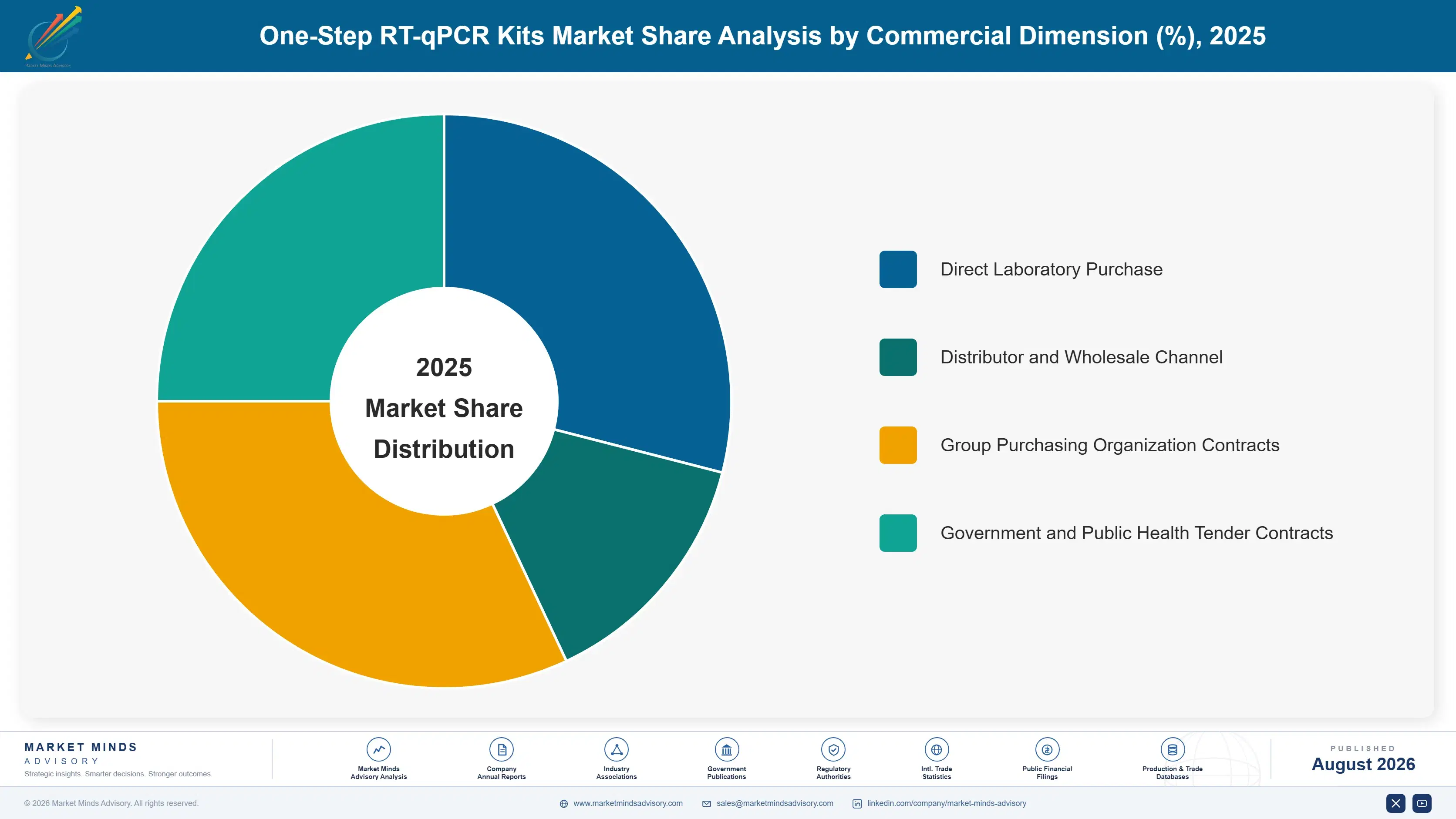
Segmentation follows detection application, a single diagnostic logic describing what biological target category each kit is designed to identify across most clinical, veterinary, and academic research settings tracked. Each application carries distinct assay design requirements and regulatory pathways, so commercial position tracks application rather than underlying chemistry, which appears separately within the framework below.
one-step-rt-qpcr-kits-market-market-share-analysis-1787332384455

Multiplex Syndromic Panel Kits

Multiplex syndromic panel kits grow fastest at 12.5%, about 1.49 times the overall 8.4% rate, pulled forward by laboratories consolidating multiple pathogen targets into single-run testing workflows that reduce reagent consumption and diagnostic turnaround time considerably. This category requires sophisticated assay design capable of detecting multiple targets simultaneously without cross-reactivity interference, a technical distinction that favours manufacturers with genuine multiplex chemistry depth over single-target kit producers. QIAGEN and Bio-Rad Laboratories have both expanded multiplex panel product lines considerably to capture this converging laboratory workflow preference across respiratory and gastrointestinal testing. Hospital and reference laboratories increasingly specify this category first when replacing aging single-target testing infrastructure given its clear efficiency advantage.
CAGR 12.5%

Oncology and Liquid Biopsy Kits

Oncology and liquid biopsy kits grow at 11.0%, the second-fastest category, as RT-qPCR-based mutation detection from blood samples continues expanding across a growing diagnosed cancer patient population and additional approved cancer types tracked closely worldwide and consistently. This category benefits from oncologists increasingly specifying liquid biopsy testing for treatment selection and monitoring given its considerably reduced patient burden compared with repeated invasive tissue biopsy procedures. Roche Diagnostics and QIAGEN both maintain meaningful positions here given established relationships with oncology treatment centers and clinical evidence generation programmes. Precision oncology treatment selection increasingly depends on this testing category to match patients with targeted therapies appropriate to their specific tumor mutation profile identified.
CAGR 11.0%
Full segment breakdown across 5 segments available in the complete report.

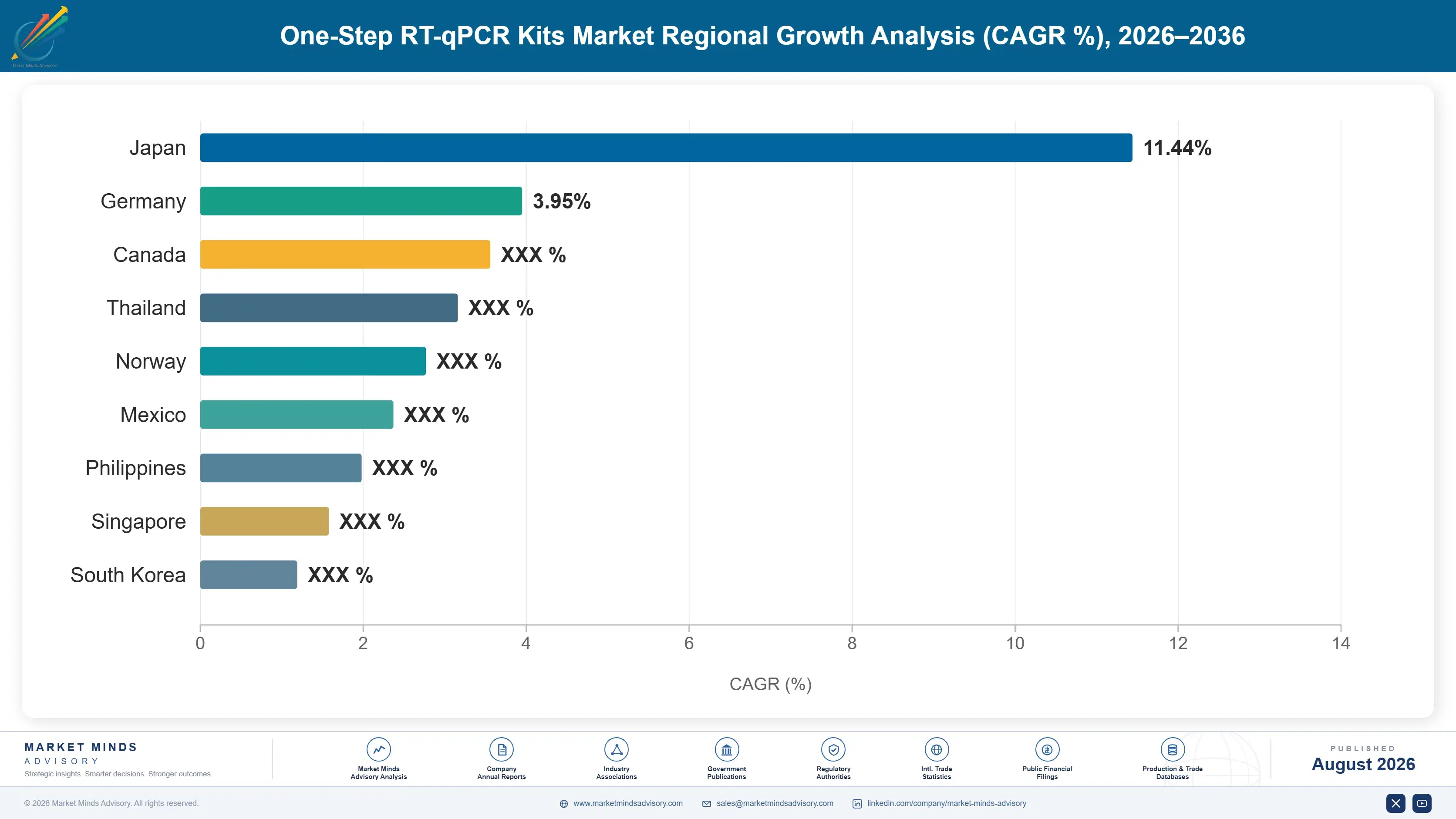
Regional Architecture and Country Demand Map

Molecular diagnostics infrastructure and laboratory testing capacity together set this distribution, since kit demand tracks closely where reference laboratory networks concentrate most heavily worldwide today and increasingly. North America leads on established infrastructure, while South Asia and Pacific posts the fastest regional growth of all seven.

North America

Established molecular diagnostics infrastructure and reference laboratory network scale anchor North American demand more than any other single factor. North America holds 30% of value, the largest single share, with United States reference laboratory networks and hospital systems driving substantial multiplex syndromic panel and liquid biopsy kit demand nationwide. Public health surveillance investment has expanded considerably following the pandemic, sustaining testing volume across established laboratory infrastructure. Canadian testing infrastructure follows similar adoption patterns, though centralized procurement differs meaningfully from the American commercial laboratory model. Growth of 7.8% reflects mature market dynamics tempered by continued multiplex panel and oncology kit adoption expansion. Regional generic and branded kit competition remains substantial across most standard infectious disease categories.
Share: 30% | CAGR: 7.8% (2026 to 2036)

Western Europe

National health system procurement and centralized reference laboratory networks together define this market above any other single factor. Western Europe holds 22% of value, with German, British, and French national health systems funding molecular diagnostics through centralized procurement processes that differ considerably from the more fragmented American commercial laboratory landscape. Liquid biopsy oncology testing adoption has grown considerably given strong national cancer screening and treatment infrastructure across the region. Reimbursement frameworks here tend toward slower but more comprehensive national adoption decisions once new testing categories gain approval. Growth of 7.0%, the slowest of the seven, reflects mature market penetration in the region's largest national health system testing networks specifically. Scandinavian countries lead in per-capita molecular diagnostics adoption given strong funding.
Share: 22% | CAGR: 7.0% (2026 to 2036)
Regional intelligence for 5 additional markets available in the complete report: East Asia, South Asia and Pacific, Latin America, Middle East and Africa, Eastern Europe. Contact sales@marketmindsadvisory.com.
one-step-rt-qpcr-kits-market-country-cagr-analysis-1787332384963

Where RT-qPCR Kit Manufacturer Margin Concentrates

Competing purely on unit price per reaction concentrates margin in exactly the commodity single-target segment where pandemic-era overcapacity now competes most aggressively and repeatedly. The four moves below shift value toward positions assay design depth and clinical relationships genuinely protect: multiplex panel engineering, liquid biopsy assay development, point-of-care-adjacent platform compatibility, and cold chain-independent formulation research.

Invest in Multiplex Panel Engineering Depth Directly

Multiplex penetration has reached roughly 30 percent of infectious disease tests, a share that has risen steadily as laboratories consolidate multiple pathogen targets into single-run workflows that reduce reagent consumption and turnaround time considerably across most tracked markets and testing categories. Manufacturers with genuine multiplex chemistry capability capture specification that single-target kit producers increasingly cannot match as laboratories prioritize workflow consolidation over standalone testing methods. Building this capability requires sustained investment in assay design engineering that avoids cross-reactivity interference across simultaneously detected targets, a multi-year technical commitment most smaller competitors avoid.
Market Impact: Multiplex tests now reach roughly 3

Develop Liquid Biopsy Assay Capability at Scale

Liquid biopsy testing volume has risen roughly 20 percent annually as RT-qPCR-based mutation detection expands across a growing diagnosed cancer patient population and additional approved cancer types requiring molecular confirmation for treatment decisions made by oncologists worldwide and consistently each year. Manufacturers with genuine liquid biopsy assay development capability capture specification that competitors offering only conventional infectious disease kits increasingly cannot access as oncologists prioritize this testing category for treatment selection decisions. This capability requires sustained clinical evidence generation and oncology-specific assay validation beyond conventional infectious disease kit development entirely.
Market Impact: Liquid biopsy volume rose roughly 2

Ensure Broad Point-of-Care-Adjacent Platform Compatibility Now

Decentralized molecular testing volume has risen roughly 22 percent annually as compact, rapid platforms increasingly bring testing capability closer to patients in urgent care and smaller hospital settings previously dependent entirely on centralized laboratory turnaround times and staff availability. Manufacturers ensuring kit compatibility across both centralized and point-of-care-adjacent instruments capture specification that competitors limited to a single platform type increasingly cannot access as testing continues decentralizing rapidly across most healthcare systems. This capability requires sustained engineering investment in cross-platform chemistry validation beyond single-instrument kit development entirely, a genuine multi-year commitment.
Market Impact: Decentralized testing volume rose r

Fund Cold Chain-Independent Formulation Research Now

Cold chain logistics requirements add roughly 15 percent to distribution cost and genuinely limit access in resource-constrained settings lacking reliable refrigerated transport infrastructure across the full supply pathway from manufacturer to laboratory bench and back again reliably every time. Manufacturers developing lyophilized and room-temperature-stable formulations capture addressable market expansion in developing regions that competitors dependent on conventional refrigerated formulations increasingly cannot access at all today or tomorrow. This research investment, sustained across successive product generations, increasingly determines which manufacturers can serve resource-constrained testing markets competitively and reliably over time and distance.
Market Impact: Cold chain adds roughly 15% to dist

Who Controls the Margin Pool

Concentration sits at a substantial 55% among the top five, led by Thermo Fisher Scientific's reagent manufacturing scale and QIAGEN's molecular assay design depth built over decades of laboratory relationships. The gap between leaders and challengers is multiplex assay design depth and clinical evidence breadth rather than raw price, which pandemic-era overcapacity has compressed considerably. All participants are assessed on global reaction volume as disclosed in company reports, held consiste
Competition runs along four lines. First, multiplex panel engineering depth, increasingly the fastest-growing purchase consideration among reference laboratories. Second, liquid biopsy assay development that captures expanding oncology testing demand. Third, point-of-care-adjacent platform compatibility that serves decentralizing testing networks. Fourth, cold chain-independent formulation research that expands addressable market in resource-constrained settings.

Pressure is building from two directions. Chinese manufacturers including Sansure Biotech and BGI Genomics have built substantial manufacturing scale and are converting cost advantages into meaningful share gains in price-sensitive commodity segments. Meanwhile established leaders continue defending position through sustained multiplex and liquid biopsy assay investment that smaller competitors struggle to match. Rankings should favour manufacturers combining assay design depth with genuine clinical evidence over single-target kit price alone.
one-step-rt-qpcr-kits-market-company-positioning-matrix-1787332385477

Competitive Moat and Risk Dimensions

THERMO FISHER SCIENTIFIC

Moat: Reagent manufacturing scale

Thermo Fisher Scientific maintains one of the broadest reagent manufacturing footprints in the category, built over decades of production scale spanning infectious disease through oncology applications. Its diversified application base across clinical, research, and public health customers provides considerable revenue stability. Strong relationships with major reference laboratories sustain steady specification wins across multiple testing categories globally.
THERMO FISHER SCIENTIFIC

Risk: Chinese manufacturers scaling aggressively

Chinese manufacturers now offer comparable conventional single-target kit specifications at meaningfully lower prices, eroding the premium Thermo Fisher has historically commanded in cost-sensitive commodity segments specifically. Its scale advantages matter less as standard infectious disease kits commoditize faster than emerging multiplex and liquid biopsy categories. Newer, more agile competitors are moving faster on next-generation multiplex chemistry currently.
QIAGEN

Moat: Molecular assay design depth

QIAGEN built its position around deep molecular assay design expertise spanning multiplex syndromic panels through oncology liquid biopsy applications simultaneously. Its clinical evidence generation programmes support broader payer and regulatory approval across more testing categories than most standalone competitors currently achieve. Established relationships with leading reference laboratories and oncology centers provide considerable specification advantage.
QIAGEN

Risk: Narrower manufacturing scale than rivals

QIAGEN's assay design focus, while valuable, gives it less manufacturing scale than Thermo Fisher Scientific to absorb sustained cost pressure across commodity segments simultaneously. Capital constraints relative to larger diversified life sciences competitors limit its research and development pace somewhat. Chinese competitors are increasingly challenging its position in cost-sensitive emerging market segments specifically.

Players Tracked

Prominent Players

Thermo Fisher Scientific
QIAGEN
Bio-Rad Laboratories
Roche Diagnostics
Bioneer Corporation

Other Key Players

Takara Bio
Promega Corporation
Agilent Technologies
Revvity
Meridian Bioscience
Bio Basic
GenScript
Zymo Research
New England Biolabs
Norgen Biotek
Jena Bioscience
Enzynomics
Vazyme Biotech
Sansure Biotech
BGI Genomics

Recent Developments

MARCH 2025

QIAGEN launches expanded multiplex respiratory panel

QIAGEN launched an expanded multiplex respiratory panel kit covering additional pathogen targets in a single reaction, targeting reference laboratories seeking to consolidate testing workflows across more infectious disease categories. This was a product launch rather than any acquisition, directly addressing the fastest-growing segment of testing demand.
Signal: Category leaders are racing to extend mult
OCTOBER 2024

Roche Diagnostics expands liquid biopsy kit portfolio

Roche Diagnostics expanded its liquid biopsy RT-qPCR kit portfolio to cover additional cancer mutation targets, supporting broader oncology treatment selection applications across multiple cancer types worldwide. This was a product launch rather than any acquisition, directly expanding the addressable oncology testing category for its platform.
Signal: Diagnostics leaders are prioritizing oncol
JANUARY 2025

Thermo Fisher Scientific signs distribution partnership in emerging markets

Thermo Fisher Scientific signed a distribution partnership with a regional diagnostics distributor to expand access to its RT-qPCR kit portfolio across additional emerging market laboratory networks and healthcare systems. This was a distribution partnership rather than an acquisition, extending market reach without direct manufacturing investment.
Signal: Established manufacturers are borrowing re

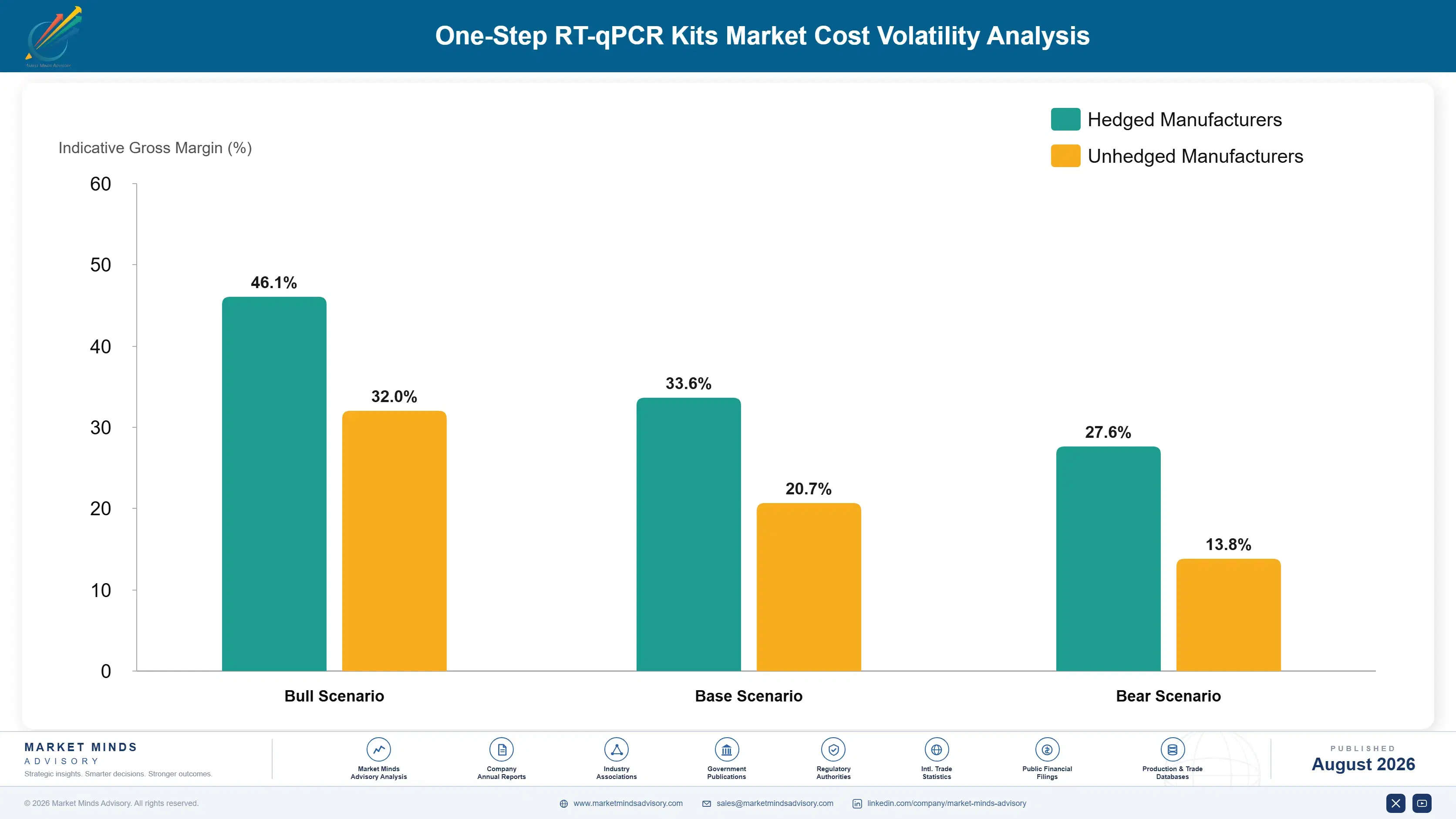
Enzymes, Primers, and Probe Chemistry

Reverse transcriptase and polymerase enzymes, along with custom primers and fluorescent probes, together account for 40% to 52% of cost of goods sold, reflecting the precision biochemistry these kits require for reliable target amplification and detection. These inputs are sourced predominantly from specialty enzyme and oligonucleotide manufacturers concentrated in North America and East Asia directly.
Enzyme and oligonucleotide synthesis capacity tightened considerably through 2021 and 2022 amid pandemic-driven demand exceeding available production capacity, with several manufacturers disclosing extended lead times on core enzyme components specifically, per company annual report commentary covering that period. Several manufacturers delayed shipments and, in some cases, reformulated kits around available enzyme sources as a direct result of that scarcity. Supply has since eased considerably as pandemic-era demand normalized, though specialty probe chemistry lead times remain longer than pre-2020 norms.

Exposure separates clearly by component sourcing strategy and manufacturing scale. Larger manufacturers with in-house enzyme production and diversified oligonucleotide supplier relationships absorbed less disruption than smaller competitors dependent on single-source components during the tightest shortage periods specifically. Manufacturers with vertically integrated enzyme manufacturing faced considerably less exposure to the external supply constraints that affected smaller kit assemblers more heavily during recent shortages.
one-step-rt-qpcr-kits-market-cost-volatility-analysis-1787332385671

Diversify enzyme and oligonucleotide sourcing

Single-source component dependence exposed several manufacturers to extended lead times during the 2021 and 2022 pandemic-driven shortage specifically and repeatedly across the industry. Qualifying multiple enzyme and oligonucleotide suppliers reduces this concentration risk considerably across future disruption cycles ahead. The trade-off is additional qualification and validation testing cost that smaller manufacturers sometimes cannot justify economically.

Pursue in-house enzyme manufacturing capability

Larger manufacturers with in-house enzyme production faced meaningfully less disruption than smaller competitors dependent on external suppliers during recent shortages and price spikes across the sector. Vertical integration reduces exposure to cross-border supply disruption considerably over time and across future cycles. This requires manufacturing investment that only larger, well-capitalized manufacturers can typically justify given current production volumes.

Invest in formulation research to offset cost pressure

Enzyme and probe cost pressure compresses margin regardless of manufacturer scale, while multiplex and liquid biopsy assay capability, once developed, carries meaningfully higher margin and genuine differentiation value over time across most product categories. Formulation research investment shifts manufacturer economics away from pure commodity enzyme competition entirely and durably across successive product generations launched.

Portfolio Architecture for Margin Defence

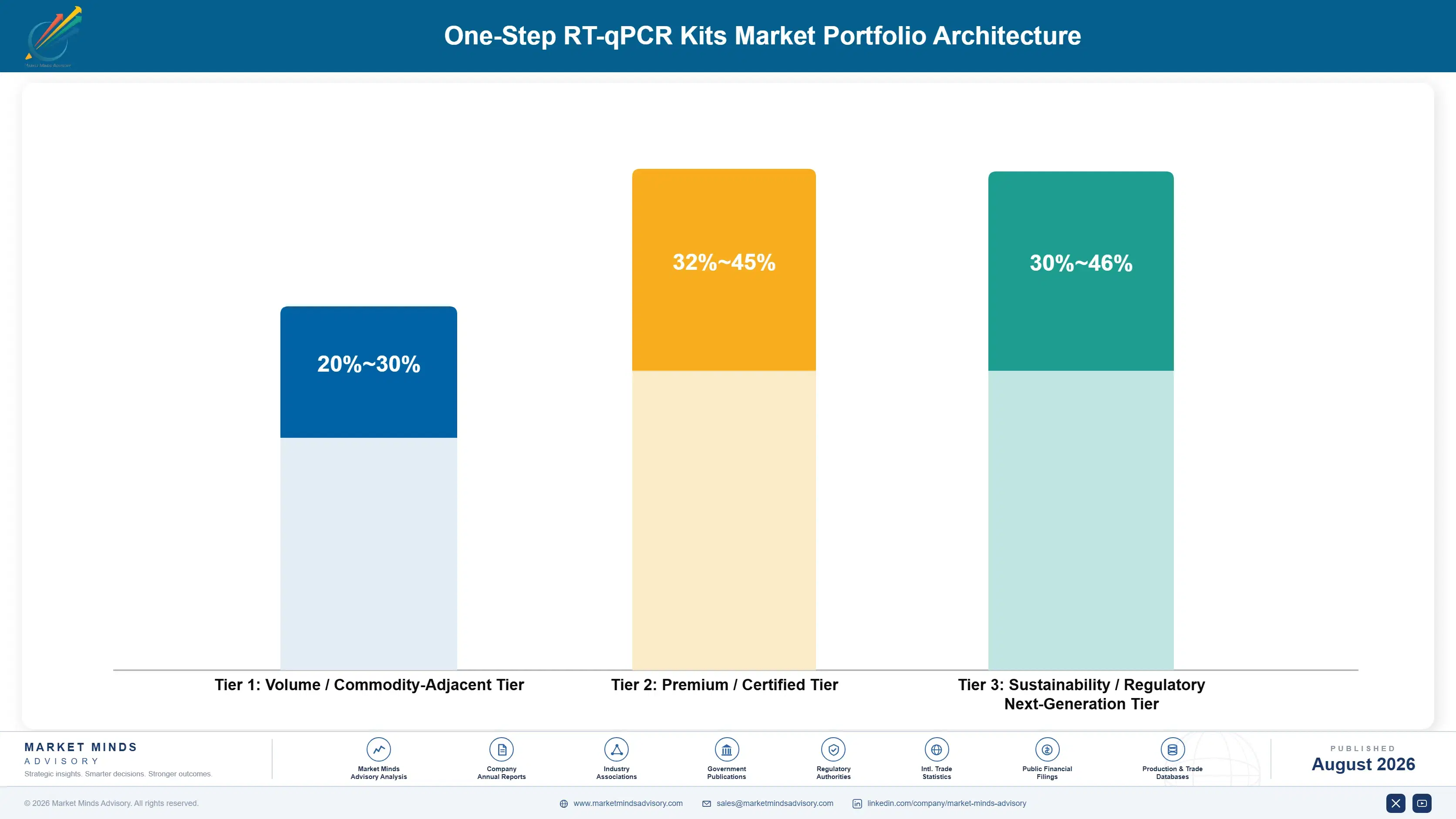
The portfolio splits into three tiers with distinct economics. Standard single-target infectious disease kits form the volume tier, competing increasingly on price against pandemic-era overcapacity with margin set by component cost and production efficiency. Multiplex syndromic panels and liquid biopsy kits earn considerably more since assay design depth and clinical evidence breadth deter competitors lacking comparable technical investment. Point-of-care-adjacent platform compatibility and cold
The tension runs between standard single-target revenue that funds the business today and multiplex and liquid biopsy investment that positions it for the next decade of premium demand. A manufacturer defending single-target volume too aggressively against overcapacity-driven price competition cedes the highest-margin multiplex and oncology segments to competitors investing there directly. Companies managing this well use single-target cash flow to fund assay design research rather than treating them as competing priorities.

High-value pools concentrate where assay design depth, clinical evidence breadth, or platform compatibility limit competition: multiplex syndromic panels, liquid biopsy oncology kits, and cold chain-independent formulations for resource-constrained markets. Standard single-target kits sold without differentiated capability sit at the other end, competing almost entirely on price against every overcapacity-driven manufacturer now serving cost-sensitive institutional buyers.

Volume / Commodity-Adjacent Tier

Standard single-target infectious disease kits competing increasingly on price against pandemic-era overcapacity, with margin set overwhelmingly by component cost and production efficiency across most conventional categories tracked and monitored closely.
Gross Margin: 20-30%

Premium / Certified Tier

Multiplex syndromic panels and liquid biopsy kits supporting meaningfully stronger margin than standard single-target production, reflecting genuine assay design and clinical evidence differentiation earned over years of validation and testing.
Gross Margin: 32-45%

Sustainability / Regulatory / Next-Generation Tier

Cold chain-independent formulations, point-of-care-adjacent platform compatibility, and next-generation liquid biopsy panels developed ahead of expanding molecular diagnostics access across multiple resource-constrained markets currently under active regulatory review and ongoing revision.
Gross Margin: 30-46%
one-step-rt-qpcr-kits-market-portfolio-architecture-1787332386162

High-value Sub-segments and Strategic Watch-out

Multiplex Syndromic Panel Kits

High value and high growth at 12.5%, the fastest category in the market, driven by laboratories consolidating multiple pathogen targets into single-run workflows across most major reference laboratory networks currently expanding worldwide and consistently each year across most healthcare systems, testing menus, and clinical programmes.
Gross Margin: 32-45%

Oncology and Liquid Biopsy Kits

High value with strong growth at 11.0%, the second-fastest category, driven by RT-qPCR-based mutation detection expanding across a growing diagnosed cancer patient population and additional approved cancer types across most major oncology treatment centers and healthcare systems worldwide today and increasingly across most regions and countries.
Gross Margin: 32-45%

Veterinary and Agricultural Testing Kits

The volume core by revenue, growing near 8.0% as this remains a well-established application across nearly every major animal health and agricultural testing programme tracked currently worldwide, though growth has moderated meaningfully as premium alternatives gain share steadily each year across most established markets and testing categories.
Gross Margin: 20-30%

Infectious Disease Detection Kits

The strategic watch-out, growing near 7.0% and facing commoditization pressure from pandemic-era overcapacity offering comparable specifications across most standard institutional procurement categories currently under sustained budget pressure everywhere globally and increasingly regionally across most healthcare systems, testing networks, laboratories, distribution channels, procurement groups, and hospital buyers.
Gross Margin: 20-30%

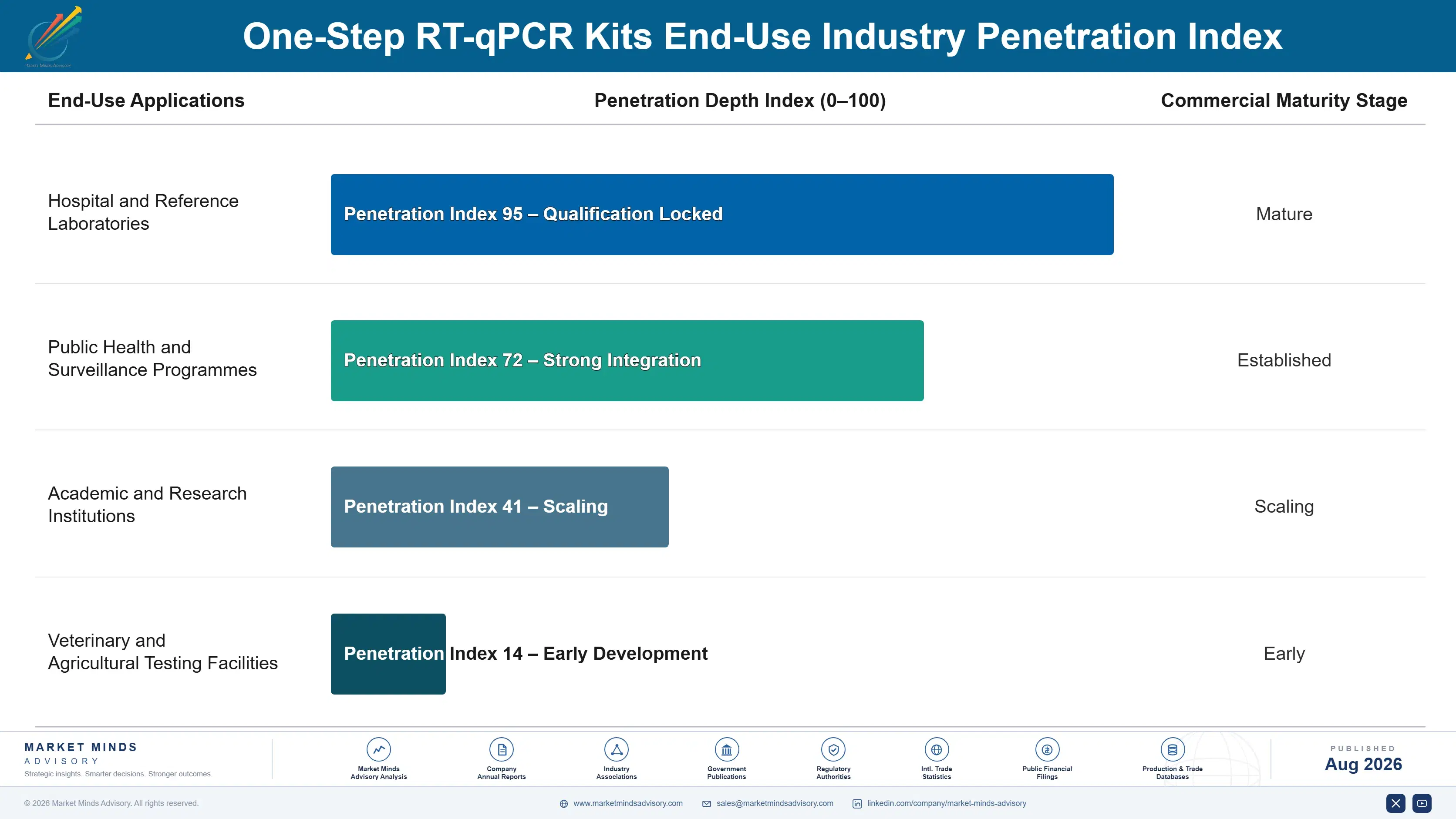
How Laboratory Validation Locks In Volume

Revenue depends on laboratory validation cycles and platform specification loyalty, and a manufacturer's default status with a reference laboratory network generates years of repeat procurement across every facility that network operates. Switching kit suppliers requires revalidating assay performance against laboratory accreditation standards, a cost and delay that deters displacement even when a competitor offers marginally better pricing upfront.
Adoption depth varies sharply by category. Multiplex panel buyers commit hardest, given the workflow integration complexity and instrument calibration interdependence between kit and laboratory equipment once validated for routine use. Liquid biopsy buyers sit in the middle, balancing established oncology center relationships against periodic competitive retendering during contract renewal cycles. Standard single-target kit buyers switch most readily, since specification differentiation between qualified manufacturers remains genuinely minimal across comparable products offered.

Buyer profiles have shifted from procurement officers evaluating unit price alone toward laboratory directors weighing multiplex breadth, clinical evidence, and platform compatibility together. Liquid biopsy adoption has introduced a new buyer consideration around oncology treatment decision support that conventional infectious disease testing economics never required previously. Younger laboratory directors also weigh data integration and analytics access more heavily than predecessors did, favouring manufacturers with genuinely connected reporting platforms.
one-step-rt-qpcr-kits-market-end-use-penetration-index-1787332386650

Our Call on One-Step RT-qPCR Kits

These are among the four positions where our research anticipates prominent divergence between winners and laggards over the coming forecast period. Each is grounded in the demand model, the regulatory perimeter, and the announced capacity pipeline.
01 / MULTIPLEX PANEL DEPTH

Workflow consolidation now decides specification

Multiplex penetration has reached roughly 30 percent of infectious disease tests, a share that has risen steadily as laboratories consolidate multiple pathogen targets into single-run workflows that reduce reagent consumption and turnaround time considerably across most reference laboratory networks tracked closely and consistently. Manufacturers with genuine multiplex chemistry capability capture specification that single-target kit producers increasingly cannot match as laboratories prioritize workflow consolidation. Companies should build this capability now, since it increasingly gates access to the fastest-growing category available today.
02 / LIQUID BIOPSY DEVELOPMENT

Oncology testing rewards assay investment

Liquid biopsy testing volume has risen roughly 20 percent annually as RT-qPCR-based mutation detection expands across a growing diagnosed cancer patient population and additional approved cancer types requiring molecular confirmation for treatment decisions made worldwide. Manufacturers with genuine liquid biopsy assay development capability capture specification that competitors offering only conventional infectious disease kits increasingly cannot access as oncologists prioritize this category. Companies should invest in this capability deliberately, since it increasingly determines specification on the category's fastest-growing clinical segment today.
03 / CROSS-PLATFORM TESTING COMPATIBILITY

Decentralized testing rewards cross-platform reach

Decentralized molecular testing volume has risen roughly 22 percent annually as compact, rapid platforms increasingly bring testing capability closer to patients in urgent care and smaller hospital settings previously dependent entirely on centralized laboratory turnaround times and staffing levels available. Manufacturers ensuring kit compatibility across both centralized and point-of-care-adjacent instruments capture specification that competitors limited to a single platform type increasingly cannot access. Companies should invest in cross-platform validation now, since testing decentralization shows no sign of reversing anytime soon.
04 / COLD CHAIN INDEPENDENCE

Room-temperature stability expands addressable markets

Cold chain logistics requirements add roughly 15 percent to distribution cost and genuinely limit access in resource-constrained settings lacking reliable refrigerated transport infrastructure across the full supply pathway from manufacturer all the way to the final laboratory testing bench. Manufacturers developing lyophilized and room-temperature-stable formulations capture addressable market expansion in developing regions that competitors dependent on conventional refrigerated formulations increasingly cannot access. Companies should fund this research now, since it increasingly determines competitiveness in the fastest-growing regional markets available worldwide.

Engagement Snapshot From the Field

A live engagement with an industry participant carrying material or product regulatory and market exposure ahead of a defining policy shift, showing how our research translates into a defensible multi-year portfolio strategy.
MARKET MINDS ADVISORY · CLIENT ENGAGEMENT SUMMARY
One-Step RT-qPCR Kits Producer Strategic Portfolio Review and Transition Roadmap 2026·Investment Scenario on One-Step RT-qPCR Kits Exposure Evaluation 2025-26
CLIENT PROFILE
A regional reference laboratory network operating twelve testing facilities engaged MMA ahead of a multi-year capital decision covering conversion from single-target to multiplex syndromic panel testing across its respiratory disease menu. The client reported that its existing single-target testing workflow was becoming increasingly uncompetitive against hospital systems already offering multiplex panel turnaround times (client-reported, unverified by MMA).
STRATEGIC CHALLENGE
Leadership faced a choice between a comprehensive conversion covering all twelve facilities simultaneously or a phased approach prioritizing the highest-volume facilities first. The board worried that a comprehensive approach would strain capital budgets across multiple fiscal years, while a phased approach risked leaving some facilities competitively disadvantaged against multiplex-equipped competitors for a longer period than desired.
MMA APPROACH
MMA benchmarked testing volume and competitive turnaround time pressure across the network's twelve facilities against multiplex conversion cost and expected volume retention under each scenario. We modelled capital investment scenarios ranging from comprehensive simultaneous conversion to phased three-year rollout prioritizing highest-volume facilities. We then assessed staff training requirements and workflow disruption for each conversion scenario under consideration.
KEY FINDINGS
  1. Four of the twelve facilities, all in competitive urban markets, accounted for over 60 percent of the network's documented volume loss to multiplex-equipped competitors.
  2. A phased approach prioritizing those four facilities first was projected to recover the majority of at-risk volume within the first year of conversion.
  3. Comprehensive simultaneous conversion would have required capital investment roughly 2.2 times larger than the phased approach within the same fiscal year budget.
  4. Staff training time was reduced by roughly 25 percent when facilities were converted sequentially rather than simultaneously across the entire network overall.
CLIENT PROFILE
A regional reference laboratory network operating twelve testing facilities engaged MMA ahead of a multi-year capital decision covering conversion from single-target to multiplex syndromic panel testing across its respiratory disease menu. The client reported that its existing single-target testing workflow was becoming increasingly uncompetitive against hospital systems already offering multiplex panel turnaround times (client-reported, unverified by MMA).
STRATEGIC CHALLENGE
Leadership faced a choice between a comprehensive conversion covering all twelve facilities simultaneously or a phased approach prioritizing the highest-volume facilities first. The board worried that a comprehensive approach would strain capital budgets across multiple fiscal years, while a phased approach risked leaving some facilities competitively disadvantaged against multiplex-equipped competitors for a longer period than desired.
MMA APPROACH
MMA benchmarked testing volume and competitive turnaround time pressure across the network's twelve facilities against multiplex conversion cost and expected volume retention under each scenario. We modelled capital investment scenarios ranging from comprehensive simultaneous conversion to phased three-year rollout prioritizing highest-volume facilities. We then assessed staff training requirements and workflow disruption for each conversion scenario under consideration.
KEY FINDINGS
  1. Four of the twelve facilities, all in competitive urban markets, accounted for over 60 percent of the network's documented volume loss to multiplex-equipped competitors.
  2. A phased approach prioritizing those four facilities first was projected to recover the majority of at-risk volume within the first year of conversion.
  3. Comprehensive simultaneous conversion would have required capital investment roughly 2.2 times larger than the phased approach within the same fiscal year budget.
  4. Staff training time was reduced by roughly 25 percent when facilities were converted sequentially rather than simultaneously across the entire network overall.
RECOMMENDED STRATEGY
Phase 1: Phase 1 (0 to 6 months): Convert the four highest-volume, most competitively pressured facilities to multiplex testing immediately and thoroughly. Phase 2: Phase 2 (6 to 18 months): Extend multiplex conversion to four additional mid-volume facilities based on early observed positive results. Phase 3: Phase 3 (18 to 36 months): Complete conversion across all remaining facilities based on documented volume recovery data collected earlier.
OUTCOME
The client converted its four highest-volume facilities to multiplex testing first, recovering the majority of its documented at-risk volume within the first year of the programme. Testing turnaround time and competitive positioning both improved meaningfully at converted facilities following the rollout (client-reported, unverified by MMA).

Frequently Asked Questions

Foundational context covering the market sizes, CAGR, scope, country, region and competition that inform every finding below. This section is provided to cover basics and most often pre-purchase conversations, answered from the MMA Primary Research Dataset.

What is the current size of the One-Step RT-qPCR Kits Market?

The global one-step RT-qPCR kits market is valued at USD 2.6 billion in 2025, covering infectious disease, gene expression, oncology, and veterinary applications combining reverse transcription and amplification in one step. Two-step workflows are excluded.

How large will the One-Step RT-qPCR Kits Market be by 2036?

The market is forecast to reach USD 6.31 billion by 2036 in the base case, about 2.24 times the 2026 level. That represents incremental value of roughly USD 3.5 billion across the decade.

What is the CAGR for the One-Step RT-qPCR Kits Market 2026 to 2036?

The market grows at an 8.4% CAGR in the base case, with bull and bear scenarios at 9.7% and 6.9%. The spread turns mainly on multiplex panel adoption pace and pandemic-era margin pressure.

Which segment is growing fastest?

Multiplex syndromic panel kits grow fastest at 12.5%, about 1.49 times the overall rate, pulled forward by laboratories consolidating pathogen targets into single-run workflows. Oncology and liquid biopsy kits follow at 11.0%.

Who are the major companies in the One-Step RT-qPCR Kits Market?

Leading companies include Thermo Fisher Scientific, QIAGEN, Bio-Rad Laboratories, Roche Diagnostics, and Bioneer Corporation. Concentration sits at a substantial 55%, led by Thermo Fisher's manufacturing scale.

Which country is growing fastest?

India grows fastest at a 10.5% CAGR, driven by rapid expansion of private and public diagnostic laboratory networks nationally. China follows given its substantial diagnostics manufacturing base.

Report Segmentation Architecture

The full report scope spans multiple orthogonal segmentation dimensions, with cross-tabulated demand data provided for each dimension pair. Coverage extends further to regional breakdowns, trend trajectories, and the competitive detail needed to support segment-level decision-making.

By Detection Application

  • Infectious Disease Detection Kits
  • Gene Expression Analysis Kits
  • Oncology and Liquid Biopsy Kits
  • Veterinary and Agricultural Testing Kits
  • Multiplex Syndromic Panel Kits

By End-Use Industry

  • Hospital and Reference Laboratories
  • Public Health and Surveillance Programmes
  • Academic and Research Institutions
  • Veterinary and Agricultural Testing Facilities

By Commercial Dimension

  • Direct Laboratory Purchase
  • Distributor and Wholesale Channel
  • Group Purchasing Organization Contracts
  • Government and Public Health Tender Contracts

By Region

  • North America
  • Western Europe
  • East Asia
  • South Asia and Pacific
  • Latin America
  • Middle East and Africa
  • Eastern Europe

Scope, Methodology, and Coverage

Every figure in this report is reproducible from documented input assumptions. The scope below maps the historical period, the forecast horizon, the segmentation dimensions, and the countries covered, alongside the underlying primary and qualitative methodology.
Historical Period
2020 to 2025
Forecast Period
2026 to 2036
Base Year
2025 (USD billions; MMA Primary Research Dataset, August 2026)
Market Definition
The one-step RT-qPCR kits market comprises reagent kits that combine reverse transcription and polymerase chain reaction amplification in a single reaction step for RNA target detection, valued at manufacturer revenue for infectious disease, gene expression, oncology, and veterinary applications. Two-step RT-qPCR workflows requiring separate reverse transcription and amplification reagents, and standalone PCR instruments, are excluded from this scope.
Quantitative Units
USD billions (current prices); reaction volume by application where applicable
Segmentation Dimensions
By Detection Application; By End-Use Industry; By Commercial Dimension; By Region
Regions Covered
North America, Western Europe, East Asia, South Asia and Pacific, Latin America, Middle East and Africa, Eastern Europe
Countries Covered
USA, Canada, Germany, UK, France, Italy, Spain, China, Japan, South Korea, India, Australia, Brazil, Mexico, UAE, Saudi Arabia, Turkey, South Africa, Nigeria, Poland, Czech Republic, Sweden, Netherlands, Switzerland, Singapore, Vietnam, Indonesia, Philippines, Argentina, Colombia, and additional markets relevant to this sector
Key Companies Profiled
Thermo Fisher Scientific, QIAGEN, Bio-Rad Laboratories, Roche Diagnostics, Bioneer Corporation, Takara Bio, Promega Corporation, Agilent Technologies, Revvity, Meridian Bioscience, Bio Basic, GenScript, Zymo Research, New England Biolabs, Norgen Biotek, Jena Bioscience, Enzynomics, Vazyme Biotech, Sansure Biotech, BGI Genomics
Quantitative Methodology
Primary survey, n=3,800 respondents, Q4 2025, six countries; demand-side model with trade association cross-validation
Qualitative Methodology
47 expert interviews, Q4 2025; applied to validate demand model assumptions, identify emerging dynamics, and assess competitive positioning
Report Format
PDF and XLSX data workbook (Word format preview document)
Publisher
Market Minds Advisory
Report Code
MMA-2026-HLT-304
Published
August 2026
Contact
sales@marketmindsadvisory.com | www.marketmindsadvisory.com

Purchase the full One-Step RT-qPCR Kits Market Report (2026 to 2036).

The full MMA One-Step RT-qPCR Kits report sizes the market across five detection applications, four end-use industries, four commercial channels, and seven regions through 2036. It profiles 20 companies on a consistent reaction volume basis, scoring each on multiplex panel engineering, liquid biopsy assay development, point-of-care-adjacent platform compatibility, and cold chain-independent formulation research. Scenario models quantify how multiplex adoption, liquid biopsy expansion, and pandemic-era capacity trends move both reaction volume and achievable margin by application. The report also includes laboratory validation mapping and multiplex panel competitive benchmarking for manufacturer and investor strategy teams.
Five-application and four-channel market sizing to 2036
Twenty-company benchmark on reaction volume basis
Multiplex panel engineering competitive positioning analysis
Liquid biopsy assay development benchmarking review
Point-of-care-adjacent platform compatibility tracking and analysis
Laboratory validation and procurement cycle analysis

Built For The People Who Decide

From boardroom strategy to bench-side execution, this report is read cover-to-cover by leaders shaping the next decade of their industry, turning demand scenarios, market dynamics and valuation benchmarks into decisions.
CXOs/ Presidents/ VPs/ Managers
M&A and Corporate Development
Strategy Teams and R&D Heads
Procurement and Product Directors
Regulatory and Compliance Leaders
Investor Relations and Equity Analysts