Market Minds Advisory
Oncolytic Adenovirus Market

Oncolytic Adenovirus Market: Delivery Is the Problem Nobody Has Solved

Systemic dosing is neutralised by pre-existing antibodies in most of the population, which is why almost every approved and late-stage product still has to be injected directly into a tumour.

Lead Analyst

Alice Ballenger

Published

September 2026

Make Smarter Decisions with Customized Research Insights

Request a free sample report and evaluate market opportunities, growth trends, and competitive dynamics relevant to your business needs.

2025 MARKET VALUE$0.3BMarket Size 2025
2036 FORECAST VALUE$1.6BBase Case , 2026 to 2036
CAGR 2026 TO 203615.4 %Bull 16.6% / Bear 14.2%
INCREMENTAL OPPORTUNITY$1.2BNet 10- year value creation
EXPANSION MULTIPLE4.18x2036 value over 2026 base
Strategic Levers
M&A Pipeline
Regional Outlook
Country Rankings
Competitive Intelligence
Segmental Deep-dive
Call-Us : 91 93563 13602

Executive Snapshot and Market Trajectory

Around 78% of adults carry neutralising antibodies to common adenovirus serotypes, so an intravenous dose is largely cleared before it reaches a tumour. That single fact explains why nearly every product in this field is injected directly into a lesion, and why the addressable tumour types are so narrow.
Growth runs at 15.4% and combination use carries it. Checkpoint inhibitor combination regimens grow at 23.1%, exactly 1.50 times the market rate, because the virus works better as an immune primer than as a killing agent. East Asia holds the largest share at 31%, on Chinese approval history and clinical trial volume rather than on pricing. Armed transgene-carrying constructs follow at 19.2% and produce the strongest signals currently reported.
Concentration reaches 74% across the top five measured on treated patients, and it reflects manufacturing capability rather than commercial reach. Producing clinical-grade replication-competent virus at scale is genuinely difficult, and batch failure rates near 19% keep supply constrained even where clinical demand is established. Chinese producers hold a volume position built on two decades of approved domestic use. Western developers have no equivalent of that at all. Trials are frequently sized against supply.
Market Definition
This market covers oncolytic adenovirus therapeutics used in cancer treatment, spanning intratumoural monotherapy products, checkpoint inhibitor combination regimens, armed and transgene-carrying adenoviral constructs, capsid-modified and retargeted vectors for systemic delivery, and contract manufacturing of clinical and commercial adenoviral product. Non-adenoviral oncolytic platforms including herpes, vaccinia, and reovirus, adenoviral vaccines and gene therapy vectors used outside oncology, and checkpoint inhibitors supplied independently fall outside scope.
Base Year Value
$0.3B in 2025 (MMA Primary Research Dataset, August 2026)
Forecast Period
2026 to 2036, eleven discrete annual values
CAGR
15.4% base case. Bull 16.6%. Bear 14.2%.
Fastest Growth Segment
Checkpoint Inhibitor Combination Regimens: 23.1% CAGR
Fastest Growth Country
India: 19.6% CAGR
Fastest Growth Region
South Asia and Pacific: 17.6% CAGR
Largest Region
East Asia: 31% of 2025 global value
Market Leaders
Shanghai Sunway Biotech, Targovax, Genelux, Candel Therapeutics, Lokon Pharma. Source: MMA Analysis based on company annual reports.
Primary Survey
n=3,800 procurement and R&D decision-makers, Q4 2025, six countries
Methodology
Demand-side build-up, cross-validated against public data, 47 expert interviews

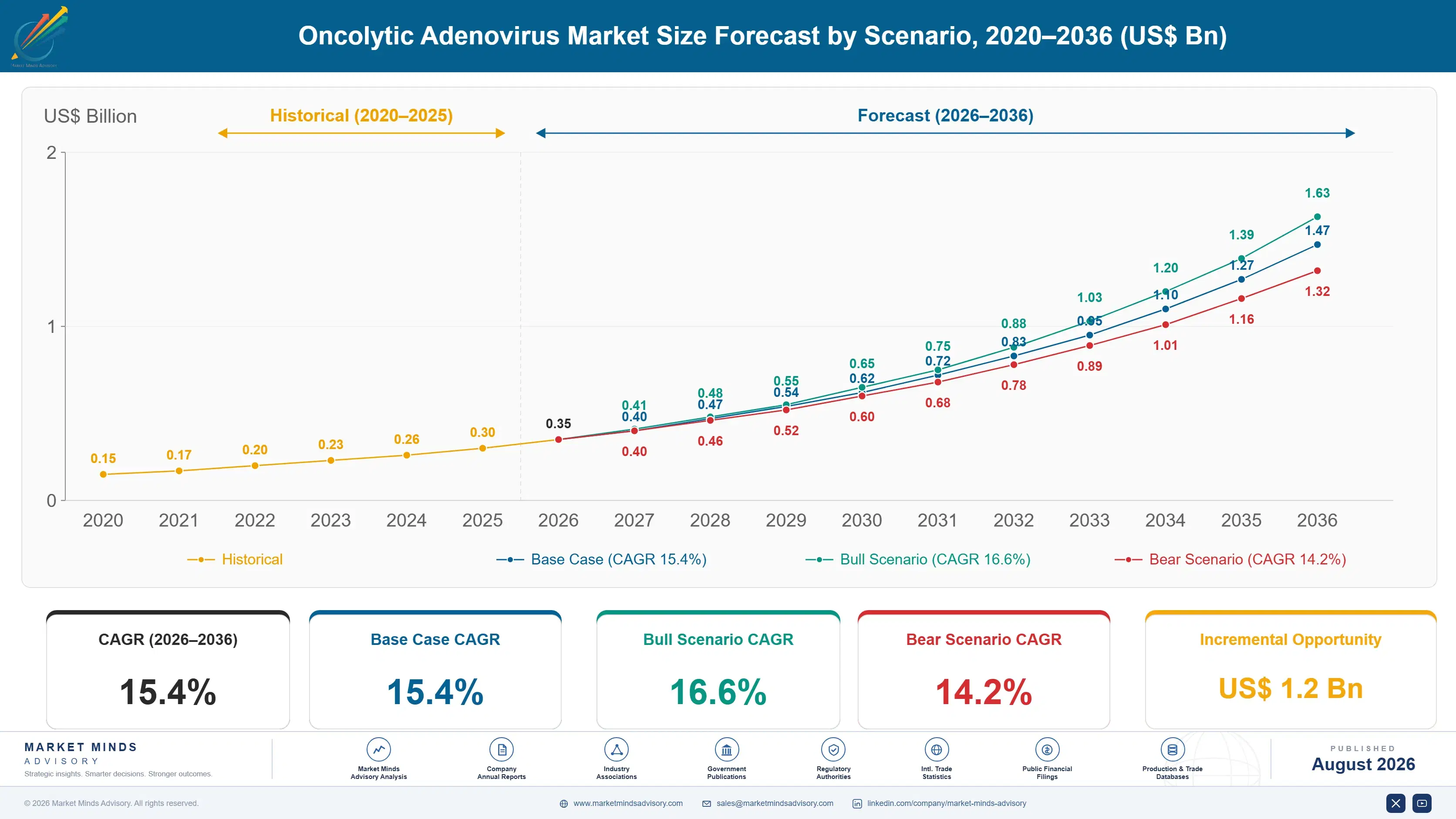
Oncolytic Adenovirus Market Forecast Scenarios

oncolytic-adenovirus-market-size-forecast-scenario-1787301091271
The 2020 to 2025 period ran at 13.9% from a very small base and clinical progress outpaced commercial development. Trial enrolment stalled through 2020 and 2021 as oncology units restricted procedures, which hurts intratumoural products disproportionately because each dose requires an interventional visit. Combination trials with checkpoint inhibitors expanded steadily and produced most of the clinical signal that now supports the field.
Three mechanisms carry the 15.4% base case. Checkpoint combination adoption is the largest, since the virus performs better as an immune primer than as a direct cytotoxic agent. Manufacturing capacity expansion is the second, because batch failure and supply constraint have limited trial sizes rather than patient interest. And capsid engineering for systemic delivery is the third, though it remains earlier than the field's rhetoric suggests. None of the three depends on systemic delivery being solved first.
The 16.6% bull case rests on a capsid-modified construct demonstrating meaningful systemic delivery, which would open tumour types that intratumoural injection can never reach. The 14.2% bear case is combination trials failing to separate the virus contribution from the checkpoint inhibitor's own effect, which would leave regulators unwilling to approve the combination as a distinct regimen.

Why It Has to Be Injected Directly

Roughly 78% of adults already carry neutralising antibodies to the common adenovirus serotypes used as oncolytic backbones, acquired through ordinary respiratory infections in childhood. An intravenous dose therefore meets an immune system that has seen this virus before and clears most of it within minutes. That is not a formulation problem, and it has resisted twenty years of attempts to engineer around it.
PRE-EXISTING ANTIBODY PREVALENCE78%Of adults carrying neutralising antibodies against common adenovirus serotypes
INTRATUMOURAL DELIVERY SHARE91%Of clinical and approved product given directly into lesions
MANUFACTURING BATCH FAILURE19%Of production runs rejected on potency or contamination testing
COMBINATION TRIAL SHARE68%Of active studies pairing the virus with a checkpoint inhibitor
TOP FIVE CONCENTRATION74%High, reflecting manufacturing capability rather than commercial reach
ACCESSIBLE TUMOUR SHARE34%Of solid tumours reachable by repeated image-guided injection
The consequence shapes the entire field. About 91% of clinical and approved product is delivered by direct injection into a lesion, which requires an accessible tumour, an interventional radiologist or surgeon, and a procedure repeated across a dosing schedule. Only around 34% of solid tumours are reachable that way with any reliability, so the addressable population is defined by anatomy rather than by biology or by tumour type.
Manufacturing then constrains what remains. Replication-competent virus must be produced in cell culture, purified, and released against potency and contamination specifications that roughly 19% of batches fail. Capacity is scarce, and several programmes have sized trials against available supply rather than against enrolment interest, which is an unusual and rarely acknowledged constraint on how fast the clinical evidence accumulates.
"The biology has been convincing for a decade. The reason you have not seen it work at scale is that most people's immune systems delete it on the way in, and most tumours are somewhere you cannot easily put a needle."
Director, Oncology Biologics and Advanced Therapies Practice · MMA Healthcare an

Market Trends

The Virus Works Better As Immune Primer Than Killer

Clinical thinking has shifted from direct tumour lysis toward using the virus to convert an immunologically cold tumour into one a checkpoint inhibitor can act on. Roughly 68% of active studies now pair the two, and combination regimens grow at 23.1% against 15.4% for the market. The reframing matters commercially because it changes the comparator, the endpoint, and the partner a developer needs, and very few small companies can supply the checkpoint arm themselves. Partnership terms rather than clinical performance frequently determine what a programme is finally worth. Checkpoint holders developing internally weakens that position further.
Market Impact: Combinations are 68% of studies
Capsid Engineering Targets The Systemic Delivery Problem

Programmes modifying capsid proteins to evade the neutralising antibodies carried by around 78% of adults are the field's main answer to its central constraint, using rare serotypes, chimeric capsids, and polymer shielding. Progress is real and considerably earlier than the sector's rhetoric implies. A construct demonstrating meaningful systemic delivery would open tumour types that direct injection can never reach, which is why capital keeps flowing toward programmes years from any clinic. Published attempts have repeatedly shown partial evasion in preclinical models without translating into human systemic delivery. A portfolio resting entirely on it bets on a timeline nobody controls.
Market Impact: Reaches 34% of solid tumours

Market Opportunities and Growth Drivers

Cold Tumours Need Something To Make Them Visible

Checkpoint inhibitors fail in tumours with little immune infiltration, and that describes most pancreatic, prostate, and glioma disease where treatment options remain poor. An oncolytic virus injected into such a lesion produces local inflammation, antigen release, and immune cell recruitment that can convert the tumour into a responder. The clinical rationale is unusually clear, which is why roughly 68% of active studies are combinations rather than monotherapy investigations. Pancreatic, prostate, and glioma disease all combine poor options with low immune infiltration. Only lesions that can actually be reached by needle qualify, which narrows it considerably.
Market Impact: Only 34% of tumours reachable

Armed Constructs Deliver Payloads Where Systemic Dosing Cannot

Adenoviral genomes accommodate transgenes encoding cytokines, immune agonists, and antibody fragments, which lets a single intratumoural injection produce a local concentration of a molecule that would be intolerable given systemically. That is a genuine advantage of the platform rather than a workaround for its limitations. Programmes arming constructs with interleukins and checkpoint fragments are producing the strongest clinical signals currently reported, and the approach avoids the delivery problem entirely. Manufacturing is correspondingly harder, since transgene expression must be characterised alongside viral potency. Roughly 19% of batches already fail release without that additional burden.
Market Impact: Batch failure runs at 19%

Market Restraints and Challenges

Anatomy Rather Than Biology Defines The Patient Population

About 91% of product is delivered intratumourally and only around 34% of solid tumours can be reliably reached by repeated image-guided injection, so eligibility depends on where a tumour sits rather than on what it is. The root cause is neutralising antibody prevalence blocking systemic dosing. Commercial impact is a market bounded by interventional access rather than by disease prevalence. Mitigation runs through capsid engineering, locoregional delivery catheters, and selecting indications where lesions are reliably accessible. Head and neck, hepatocellular, melanoma, and superficial bladder disease all offer reliable access. Programmes choosing those first have reached data years earlier.
Market Impact: Combinations growing at 23.1%

Batch Failure Constrains Trials Before Enrolment Does

Roughly 19% of production runs are rejected on potency or contamination testing, and the root cause is that replication-competent virus is harder to characterise and release than a protein or an antibody. Commercial impact is programmes sizing trials against available supply rather than against enrolment interest, which slows evidence accumulation across the whole field. Mitigation runs through improved analytical release methods, dedicated suites rather than shared capacity, and contract manufacturing partners with viral vector experience. A failed batch consumes full suite time regardless, so shared capacity multiplies the delay considerably. Dedicated suites outperform shared campaign slots substantially.
Market Impact: Antibodies affect 78% of adults
3 additional market trends, 4 additional growth drivers, and 2 additional restraints and challenges are covered in the full report. Contact sales@marketmindsadvisory.com to access the complete intelligence.

Segment CAGR and Growth Architecture

Segmentation here follows construct design and delivery route, because those two things determine which tumours are treatable, what regulatory pathway applies, what manufacturing is required, and whether a partner is needed at all. Delivery route decides which patients can actually be treated, which is what makes tumour type and line of therapy considerably weaker primary dimensions.
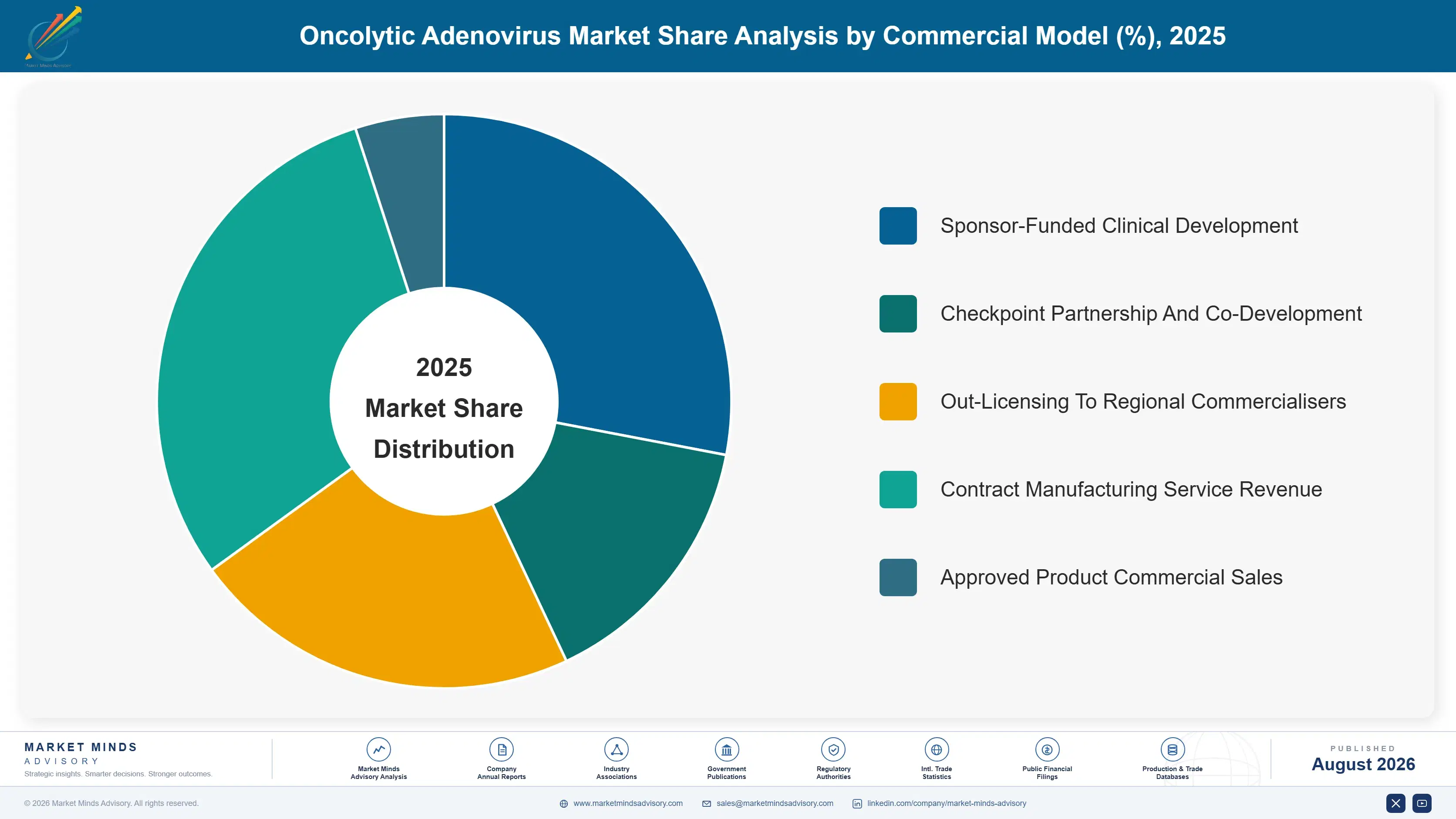
oncolytic-adenovirus-market-market-share-analysis-1787301091802

Checkpoint Inhibitor Combination Regimens

The fastest route at 23.1%, exactly 1.50 times the market rate, and the one that reframed the platform from cytotoxic agent to immune primer. Roughly 68% of active studies now pair the virus with a checkpoint inhibitor, addressing cold tumours where checkpoint monotherapy fails and treatment options remain poor. The commercial complication is that very few developers can supply the checkpoint arm themselves, so partnership terms rather than clinical performance frequently determine what a programme is ultimately worth to its owner. Checkpoint holders beginning internal oncolytic programmes weaken that negotiating position further still. Negotiating supply and downstream rights before committing a trial design produces materially different terms. Sequencing this late has cost programmes repeatedly.
CAGR 23.1%

Armed And Transgene-Carrying Constructs

Second fastest at 19.2%, and the segment exploiting a genuine platform advantage rather than working around a limitation. Adenoviral genomes accommodate transgenes encoding cytokines, immune agonists, and antibody fragments, so a single intratumoural injection produces local concentrations of molecules that would be intolerable given systemically. The strongest clinical signals currently reported come from armed constructs. Manufacturing is correspondingly harder, since transgene expression must be characterised alongside viral potency and roughly 19% of batches already fail release. Transgene size, promoter choice, and capsid modification all affect viral yield during purification. Constructs optimised purely for biological activity frequently produce poorly at scale. Process development belongs during construct design rather than after candidate selection.
CAGR 19.2%
Full segment breakdown across 5 segments available in the complete report.

Regional Architecture and Country Demand Map

East Asia leads at 31% on Chinese approval history, clinical trial volume, and domestic manufacturing capacity together. North America follows on combination trial activity, ahead of Western Europe. South Asia and Pacific grows fastest from a very small base. Manufacturing capacity constrains several regions more than demand does.

East Asia

Thirty-one percent, the largest share, and China explains most of it through a head start no other region has. An oncolytic adenovirus was approved there for head and neck cancer two decades before Western regulators considered the class seriously, which created clinical familiarity, treatment protocols, and manufacturing capability that persist today. Chinese trial volume in this class exceeds every other region combined. Japanese and Korean programmes contribute smaller, more recent, combination-focused activity. Growth at 16.4% runs above the market rate on continued Chinese trial and treatment expansion. The 31% share sits marginally outside the framework band, justified by that approval head start and by trial volume exceeding all other regions combined. Domestic manufacturing capability developed alongside it.
Share: 31% | CAGR: 16.4% (2026 to 2036)

North America

Combination trial activity rather than approved product carries this 26%. American academic centres run the largest share of checkpoint combination studies outside China, supported by access to checkpoint inhibitors that small developers could not otherwise obtain and by interventional radiology capacity that intratumoural dosing genuinely requires. Contract manufacturing capacity for viral vectors is also concentrated here. Growth at 14.8% sits close to the market rate, constrained by manufacturing supply and by trial sites rather than by patient or investigator interest. Checkpoint holders here are also beginning internal oncolytic programmes, which weakens partnership leverage for small developers. Interventional radiology capacity also concentrates recruitment into a relatively small number of well-equipped centres.
Share: 26% | CAGR: 14.8% (2026 to 2036)
Regional intelligence for 5 additional markets available in the complete report: Western Europe, South Asia and Pacific, Latin America, Middle East and Africa, Eastern Europe. Contact sales@marketmindsadvisory.com.
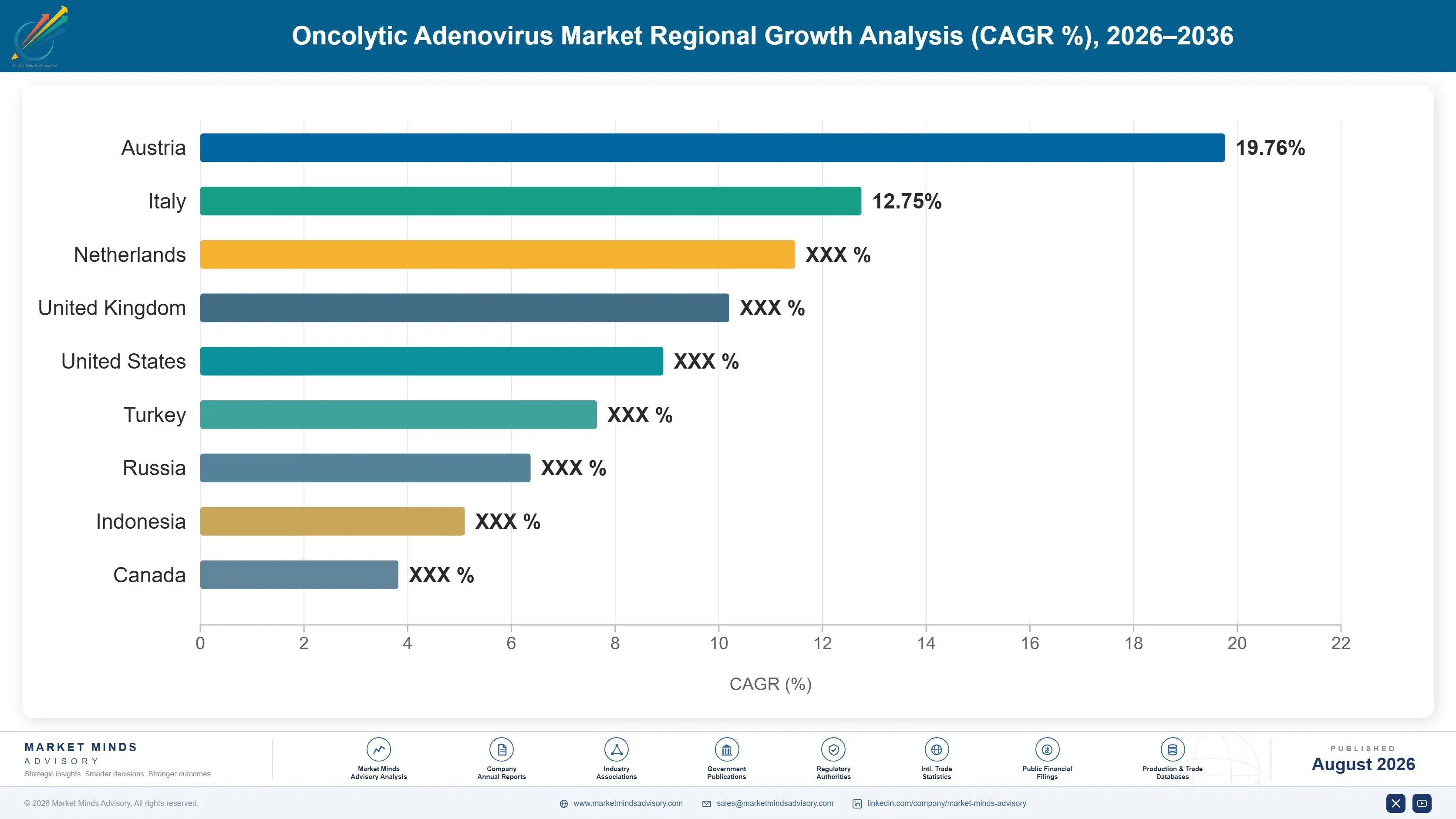
oncolytic-adenovirus-market-country-cagr-analysis-1787301092322

Working Around the Delivery Wall

Antibodies neutralise systemic dosing in roughly 78% of adults, about 91% of product is injected directly, only 34% of tumours are reachable, and 19% of batches fail release. Value comes from selecting accessible indications, from arming constructs, and from securing manufacturing and checkpoint partners early. Anatomy and manufacturing bound this field more than biology does.

Select Indications On Anatomy Before Biology

About 91% of product is delivered intratumourally and only around 34% of solid tumours can be reliably reached by repeated image-guided injection, so a programme choosing an indication on biological rationale alone frequently selects a population it cannot dose. Head and neck, hepatocellular, melanoma, and superficial bladder disease all offer reliable access. Programmes that chose accessible indications first have reached clinical data years ahead of those that chose the most compelling biology and then discovered the delivery problem. Interventional radiology capacity at a site matters more than oncology interest for recruitment.
Market Impact: Only 34% of solid tumours are actually reachable

Arm The Construct Rather Than Chase Systemic Delivery

Adenoviral genomes accommodate transgenes encoding cytokines, immune agonists, and antibody fragments, so a single injection can produce local concentrations that would be intolerable given systemically. That exploits a genuine platform advantage instead of fighting the neutralising antibodies carried by roughly 78% of adults. Capsid engineering for systemic delivery is worth pursuing and is considerably earlier than the field's rhetoric implies, so a portfolio resting entirely on it is betting on a timeline nobody controls. The strongest clinical signals currently reported all come from armed constructs rather than from plain ones.
Market Impact: Antibodies neutralise dosing in roughly 78% of adults

Secure The Checkpoint Partner Before The Trial Design

Roughly 68% of active studies pair the virus with a checkpoint inhibitor, and very few developers in this field can supply that arm themselves, so partnership terms rather than clinical performance frequently determine what a programme is finally worth. Negotiating supply and rights before designing a trial produces very different terms from negotiating once the design commits a developer to a specific partner drug. Programmes that left it late have paid for that sequencing repeatedly. Checkpoint holders now beginning internal programmes weaken the small developer position further with each passing year.
Market Impact: Roughly 68% of all active studies are combinations

Book Manufacturing Capacity Ahead Of Enrolment

Roughly 19% of production runs fail release on potency or contamination testing, and viral vector capacity is scarce enough that several programmes have sized trials against available supply rather than against enrolment interest. Booking dedicated suite time ahead of a trial start costs money against uncertain need and prevents the slower failure of an underpowered study. Contract partners with genuine replication-competent virus experience are a small group, and their capacity is committed well in advance. A failed batch consumes full suite time regardless, so shared capacity multiplies each failure into scheduling delay.
Market Impact: About 19% of all batches now fail release

Who Controls the Margin Pool

Concentration reaches 74% across the top five measured on treated patients, and the figure reflects manufacturing capability rather than commercial reach. Producing clinical-grade replication-competent adenovirus at scale, characterising it, and releasing it against potency specifications is genuinely difficult, and roughly 19% of batches still fail. Chinese producers hold a volume position built on two decades of approved use that Western developers have no equivalent of at all.
Competitive activity runs on three fronts. Construct design and transgene selection is the first, since armed constructs are producing the strongest clinical signals currently reported. Checkpoint partnership access is the second, which determines whether a developer can run the combination trials that roughly 68% of the field is running. And manufacturing capacity is the third, frequently the binding constraint on how fast a programme can generate evidence.

Pressure arrives from two directions. Non-adenoviral oncolytic platforms including herpes and vaccinia avoid the pre-existing antibody problem to varying degrees. And large pharmaceutical companies holding checkpoint inhibitors can develop internally rather than partner. Both pressures fall hardest on small developers whose value rests on a partnership they do not control.

Rankings will move on clinical readouts rather than on commercial activity.
oncolytic-adenovirus-market-company-positioning-matrix-1787301092848

Competitive Moat and Risk Dimensions

SHANGHAI SUNWAY BIOTECH

Moat: Approved product and treatment history

Two decades of approved clinical use in China created treatment protocols, physician familiarity, and manufacturing process knowledge that no Western developer can assemble from trial data alone. Real-world experience across a large treated population also informs dosing and combination design in ways controlled studies do not. That accumulated position is genuinely difficult to replicate at any speed.
SHANGHAI SUNWAY BIOTECH

Risk: Domestic position travels poorly

Clinical experience accumulated under one regulatory regime carries limited weight with Western authorities requiring their own controlled evidence, so the head start does not convert into international approval automatically. Combination development with Western checkpoint inhibitors also requires partnerships that geopolitical conditions have made harder to secure. A strong domestic position can remain a domestic one indefinitely.
CANDEL THERAPEUTICS

Moat: Armed construct clinical evidence

Clinical data from transgene-carrying constructs in accessible tumour types exploits the platform's genuine advantage rather than fighting its delivery limitation, and evidence in that direction is what currently attracts partnership interest. Selecting indications where lesions are reliably reachable also removed a failure mode that has cost competitors years. Both choices reflect understanding the constraint rather than working around it.
CANDEL THERAPEUTICS

Risk: Dependence on external checkpoint supply

Combination development requires a checkpoint inhibitor a small developer cannot manufacture, so trial design, timing, and eventual commercial terms all depend on a partner with considerably more negotiating leverage. That partner may also develop internally once data becomes convincing. Clinical success in a combination can strengthen a competitor's position as much as the developer's own.

Key Players

Shanghai Sunway Biotech
Targovax
Genelux
Candel Therapeutics
Lokon Pharma

Others

Oncorus
Replimune
Transgene
VCN Biosciences
Theriva Biologics
Epicentrx
Salvax Biotechnology
Tilt Biotherapeutics
Igenomix Oncology
Beijing Bio-Targeting Therapeutics
Hangzhou Converd
Oncolys BioPharma
Astellas Pharma
Merck KGaA
Boehringer Ingelheim

Recent Developments

JANUARY 2025

Armed construct reports combination data in accessible tumours

A developer reported clinical results for a transgene-carrying adenoviral construct combined with a checkpoint inhibitor in tumour types selected for reliable intratumoural access rather than for biological rationale alone. The readout was a clinical data disclosure rather than any acquisition, joint venture, or licensing arrangement between companies.
Signal: Programmes choosing indications on anatomy first are reaching data years ahead of others discovered the problem later.
APRIL 2025

Developer books dedicated viral vector manufacturing suite capacity

A clinical-stage developer contracted dedicated suite time with a viral vector contract manufacturer ahead of trial start, committing capital against uncertain enrolment rather than competing for shared capacity later. The arrangement was a manufacturing services contract rather than any joint venture, acquisition, or equity investment.
Signal: Supply rather than enrolment has been sizing trials across much of this field rather than patient interest.
AUGUST 2025

Capsid-modified construct enters first systemic delivery study

A capsid-engineered adenoviral construct designed to evade pre-existing neutralising antibodies entered a first clinical study using intravenous administration, testing the delivery route the field has pursued for two decades. The study start was a sponsor development decision rather than any partnership, acquisition, or licensing arrangement.
Signal: Systemic delivery remains an open question that would reshape the addressable population entirely if it ever works.

Cell Culture, Purification and Release

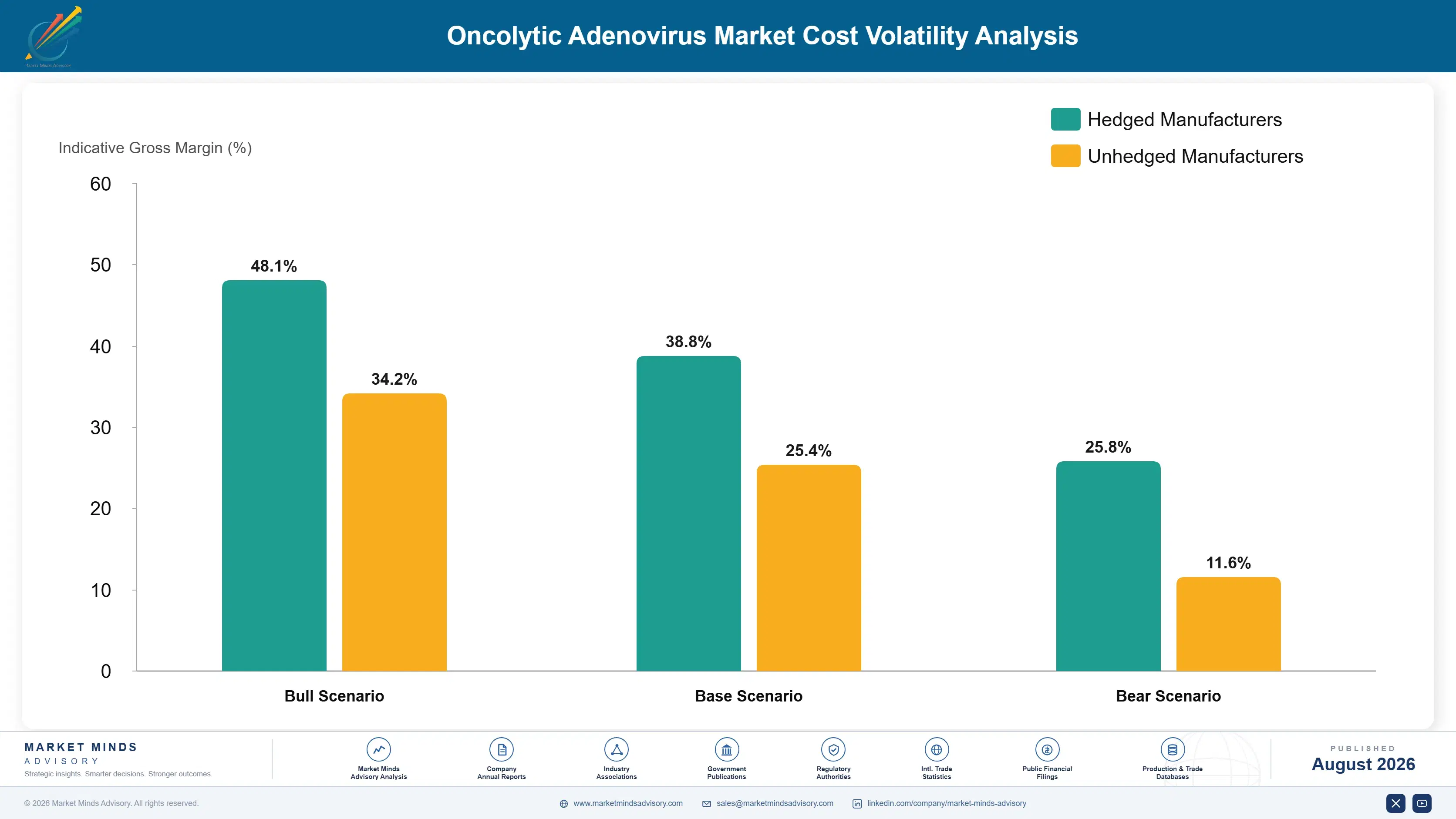
Cell culture and upstream production carry roughly 29% of cost of goods sold, purification and downstream processing about 24%, analytical characterisation and release testing near 21%, and fill finish, cold chain, and quality overhead the balance. Release testing is unusually heavy for a biologic because replication-competent virus requires potency, identity, and adventitious agent testing that protein products do not.
Single-use bioreactor components and purification resins were severely allocated through 2021 and 2022 as vaccine manufacturing consumed available supply, and several viral vector producers disclosed extended lead times and rescheduled campaigns in annual filings covering those years. Availability has since normalised. Specialist manufacturing labour cost rose through the recovery and has not retreated, and that labour dominates the release testing burden. Campaign rescheduling delayed several programmes materially. Capacity remains committed well ahead.

The competitive disadvantage mechanism runs through batch failure rather than through input purchasing. Roughly 19% of runs are rejected, so a producer running several points better spreads every input across substantially more saleable doses, and the difference compounds because failed batches consume full suite time. Dedicated suites outperform shared capacity here, which favours developers who committed to capacity early over those competing for slots.
oncolytic-adenovirus-market-cost-volatility-analysis-1787301093046

Invest in analytical release methods before scaling production

Roughly 19% of batches fail on potency or contamination testing, and much of that reflects assay variability rather than genuine product failure in every case. Improved analytical methods reduce false rejections and shorten release timelines simultaneously. The investment is unglamorous against construct engineering and it returns more per dollar than almost anything else available at this stage.

Contract dedicated suites rather than shared campaign slots

A failed batch consumes full suite time regardless of its eventual outcome, so shared capacity multiplies the cost of a 19% failure rate through scheduling delay as well as through material loss. Dedicated suite arrangements cost more per booked slot, and they remove the queue that turns a single failure into several lost quarters.

Design constructs for manufacturability alongside potency

Transgene size, promoter choice, and capsid modification all affect viral yield and stability during purification, and constructs optimised purely for biological activity frequently produce poorly. Involving process development during construct design rather than after candidate selection avoids rebuilding a programme at the point where changes are most expensive. Very few small developers currently sequence the work that way.

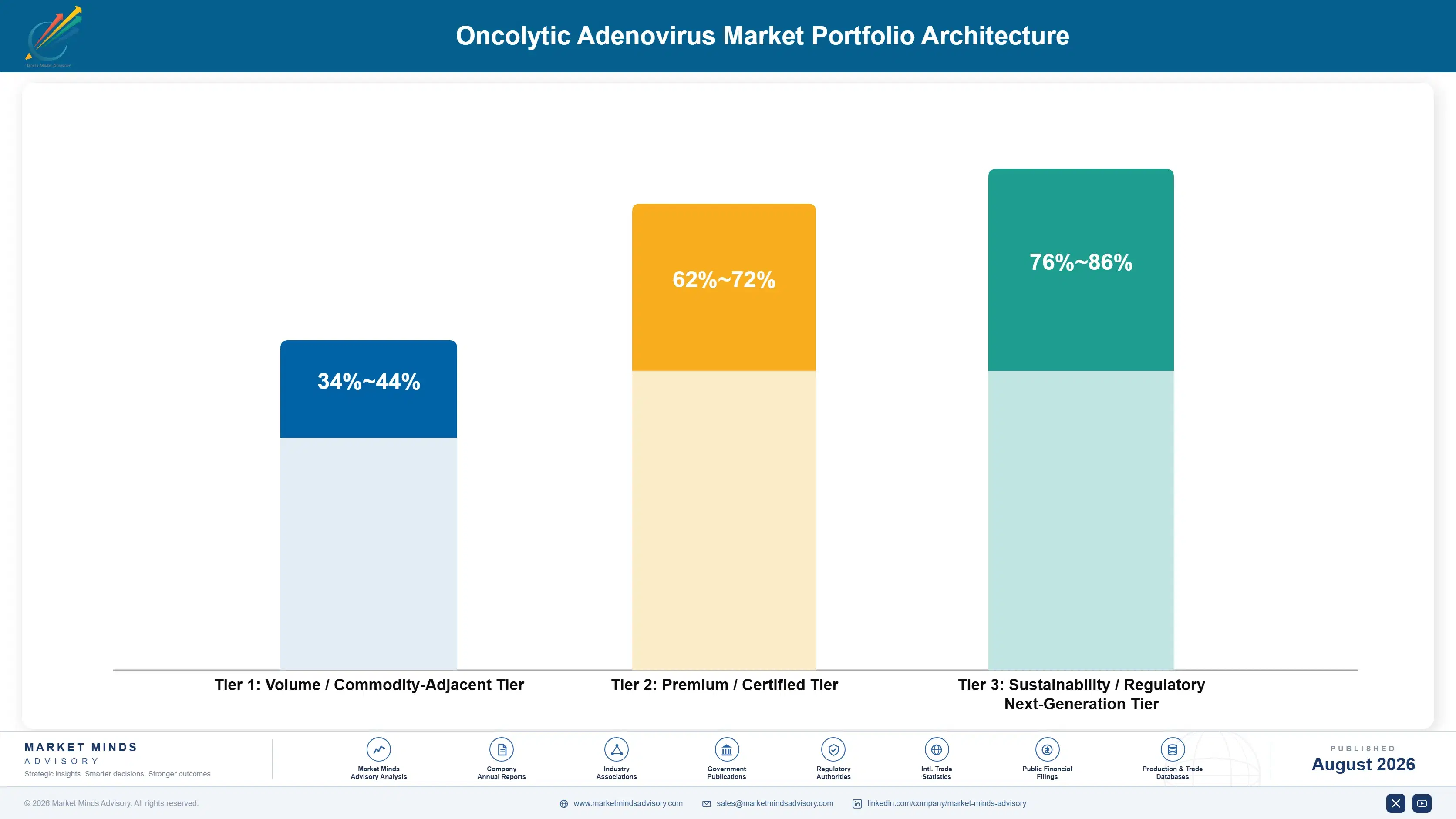
Portfolio Architecture for Margin Defence

Three tiers describe this field and the spread follows evidence and delivery route rather than construct sophistication. Contract manufacturing sits at the bottom, priced on capacity and process capability rather than on any clinical outcome. Intratumoural monotherapy occupies the middle, approved in limited settings and clinically modest on its own. Combination and armed constructs sit at the top, where the strongest signals and almost all the partnership value concentrate.
The tension is that the top tier depends on a partner most developers cannot control. Combination regimens carry the clinical promise and require a checkpoint inhibitor that a small company neither manufactures nor owns, so value accrues partly to the partner regardless of whose virus generated the response. Monotherapy avoids that dependence and produces weaker data. Almost every developer is navigating that trade rather than solving it.

High-value pools concentrate where the platform advantage is genuine rather than compensatory. Armed constructs delivering payloads that could not be given systemically are the clearest case, since no alternative achieves the same local concentration. Manufacturing capacity pools value similarly, because scarce capable suites price on availability rather than on any therapeutic outcome. Both positions are defensible in quite different ways.

Volume / Commodity-Adjacent Tier

Contract manufacturing of clinical and commercial adenoviral product, priced on capacity and process capability rather than clinical outcome. Scarce and difficult work, though the margin follows suite utilisation and batch success rather than any therapeutic value created.
Gross Margin: 34-44%

Premium / Certified Tier

Intratumoural monotherapy products approved or in late development for accessible tumour types. Clinically modest alone and commercially constrained by the roughly 34% of solid tumours that repeated image-guided injection can reliably reach.
Gross Margin: 62-72%

Sustainability / Regulatory / Next-Generation Tier

Checkpoint combination regimens and armed transgene-carrying constructs producing the strongest clinical signals reported. Best margin by a clear distance, and the tier where nearly all partnership and acquisition value in this field currently concentrates.
Gross Margin: 76-86%
oncolytic-adenovirus-market-portfolio-architecture-1787301093544

High-value Sub-segments and Strategic Watch-out

Checkpoint Combination Regimens

Fastest growth at 23.1%, exactly 1.50 times the market rate, addressing cold tumours where checkpoint monotherapy fails outright. Very few developers can supply the checkpoint arm themselves, so partnership terms rather than clinical performance often decide value. Checkpoint holders now developing internally weakens that position further.
Gross Margin: 76-86%

Armed Transgene-Carrying Constructs

Strong growth at 19.2% exploiting a genuine platform advantage rather than working around the delivery limitation. Local payload concentrations that would be intolerable given systemically are achievable, and the strongest clinical signals currently reported all come from here. Manufacturing complexity rises considerably alongside each added transgene.
Gross Margin: 76-86%

Viral Vector Contract Manufacturing

Scarce capacity that has been sizing trials across much of this field, with roughly 19% of batches failing release on potency or contamination testing. Dedicated suites outperform shared campaign slots substantially, and experienced partners are few. Capacity is committed well ahead of demand. Booking early prevents considerably worse outcomes.
Gross Margin: 34-44%

Systemic Delivery Programmes

The strategic watch-out, since neutralising antibodies in roughly 78% of adults have resisted twenty years of capsid engineering attempts. A portfolio resting entirely on solving it is betting on a timeline that nobody involved actually controls. Preclinical evasion has never yet translated into human systemic delivery.
Gross Margin: 62-72%

Trials, Procedures and Partners

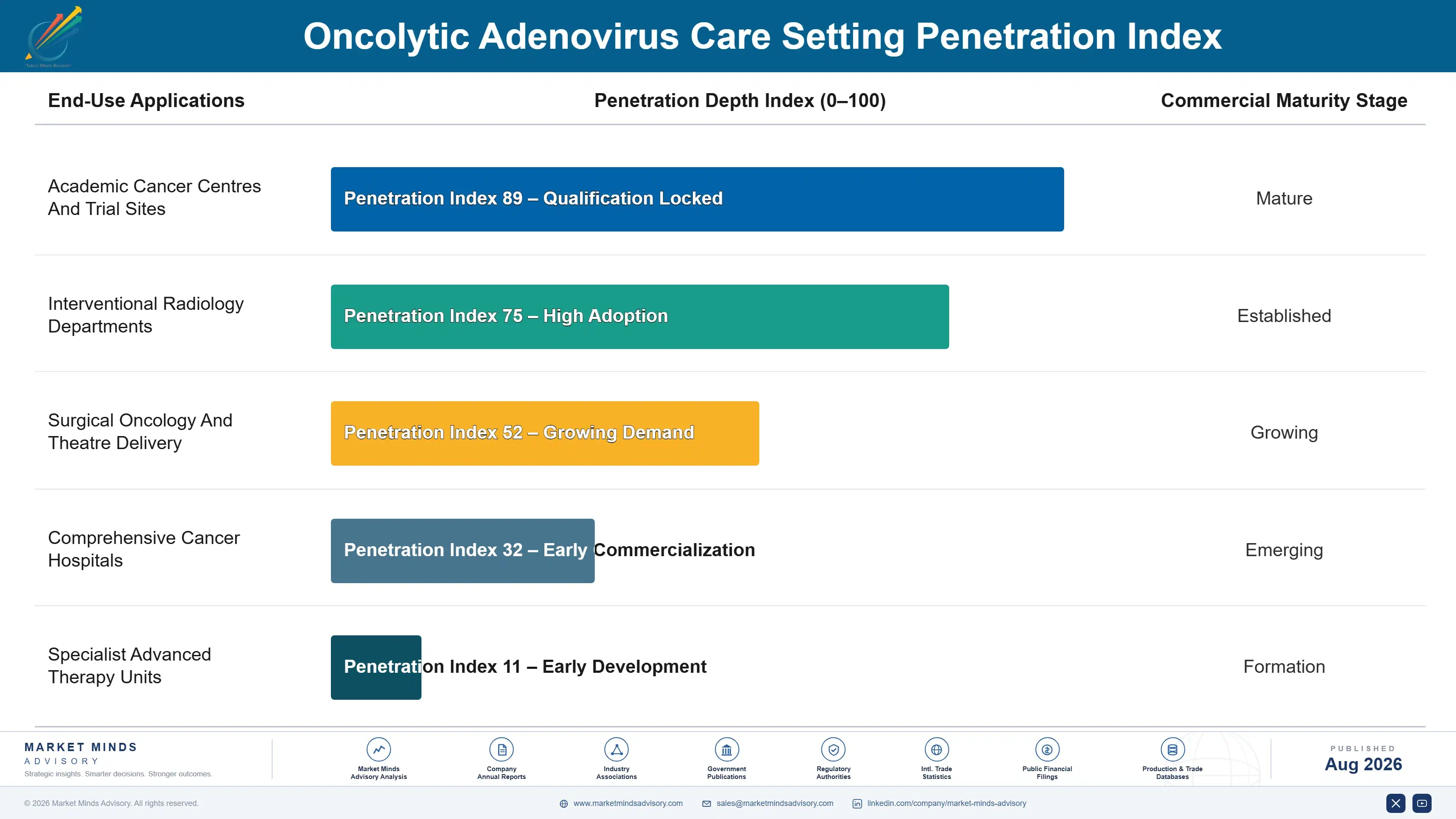
Demand today is overwhelmingly clinical rather than commercial, so revenue follows trial starts and manufacturing slots rather than treated patient populations. That inverts the usual pattern: a developer's near-term income depends on partnership payments and grant funding while the treated population stays small. Chinese approved use is the exception and provides the only meaningful commercial volume anywhere in this field at present.
Delivery requirements shape demand more than clinical preference does. Each intratumoural dose consumes an interventional radiology or surgical slot, so a centre's capacity to run these programmes depends on procedural throughput rather than on oncology interest. Centres with strong interventional departments recruit disproportionately, and that concentration will persist into commercial use because exactly the same constraint applies to routine treatment as to clinical trials.

Buyer profiles will shift substantially if systemic delivery ever works. The current decision maker is an academic investigator with interventional access and trial funding. A systemically delivered construct would move the decision to medical oncologists prescribing in ordinary clinics, which is a completely different commercial model. Manufacturing capacity would then have to expand by an order of magnitude to serve it.
oncolytic-adenovirus-market-end-use-penetration-index-1787301094038

What We Would Tell a Board

These are among the four positions where our research anticipates prominent divergence between winners and laggards over the coming forecast period. Each is grounded in the demand model, the regulatory perimeter, and the announced capacity pipeline.
01 / INDICATION ACCESS SELECTION

Choose tumours you can actually reach with a needle

About 91% of product in this field is delivered intratumourally and only around 34% of solid tumours can be reliably reached by repeated image-guided injection, so a programme selecting an indication on biological rationale alone frequently picks a population it cannot dose at all. Head and neck, hepatocellular, melanoma, and superficial bladder disease all offer reliable access. Programmes that chose accessible indications first have reached clinical data years ahead of those which selected compelling biology and discovered the delivery problem afterward.
02 / PLATFORM ADVANTAGE EXPLOITATION

Arm the construct instead of fighting the antibodies

Adenoviral genomes readily accommodate transgenes encoding cytokines, immune agonists, and antibody fragments, so a single intratumoural injection produces local concentrations of molecules that would be entirely intolerable given systemically. That approach exploits a genuine platform advantage rather than fighting the neutralising antibodies carried by roughly 78% of all adults. Capsid engineering deserves continued funding and remains considerably earlier than this field's rhetoric implies, so a portfolio resting on it alone is betting on a timeline that nobody involved actually controls.
03 / CHECKPOINT PARTNERSHIP SEQUENCING

Negotiate the checkpoint arm before designing the trial

Roughly 68% of active studies pair the virus with a checkpoint inhibitor, and very few developers in this field can supply that arm themselves, so partnership terms rather than clinical performance frequently decide what a programme is finally worth. Negotiating supply and downstream rights before committing a trial design to a specific partner drug produces materially different terms. Programmes that left this sequencing until late have paid for that mistake repeatedly across the last decade of transactions in this field.
04 / MANUFACTURING CAPACITY COMMITMENT

Book the suite before you need it, not after

Roughly 19% of production runs fail release on potency or contamination testing, and viral vector capacity is scarce enough that several programmes have sized their trials against available supply rather than against enrolment interest. Booking dedicated suite time ahead of a trial start costs real money against uncertain need, and it prevents the much slower failure of an underpowered study. Contract partners with genuine replication-competent virus experience are a very small group, and they commit their available capacity well in advance.

Engagement Snapshot From the Field

A live engagement with an industry participant carrying material or product regulatory and market exposure ahead of a defining policy shift, showing how our research translates into a defensible multi-year portfolio strategy.
MARKET MINDS ADVISORY · CLIENT ENGAGEMENT SUMMARY
Oncolytic Adenovirus Producer Strategic Portfolio Review and Transition Roadmap 2026·Investment Scenario on Oncolytic Adenovirus Exposure Evaluation 2025-26
CLIENT PROFILE
A clinical-stage oncology developer with approximately 46 million dollars in annual revenue from partnerships and grants (client-reported, unverified by MMA), holding two oncolytic adenovirus programmes: an armed construct in a phase two combination study and a capsid-modified construct in preclinical development for systemic delivery. Cash runway extended roughly two years and both programmes competed for the same resources.
STRATEGIC CHALLENGE
Management proposed accelerating the capsid-modified systemic programme on the argument that intratumoural delivery limited commercial potential permanently. The board wanted an independent view on the realistic timeline and probability of the systemic approach before shifting resources away from a programme already generating clinical data. Both programmes competed for the same scarce resources.
MMA APPROACH
We assessed the systemic programme against two decades of published capsid engineering attempts, examining what each had achieved and where each had stalled. Manufacturing capacity and batch failure history were reviewed across both programmes. Partnership terms on the combination study were compared against comparable transactions, and indication accessibility was mapped for the armed construct's target tumours.
KEY FINDINGS
  1. Published capsid engineering programmes had repeatedly demonstrated partial antibody evasion in preclinical models without translating into meaningful systemic delivery in any human study.
  2. The armed construct's target indications offered reliable intratumoural access, and its clinical signal compared favourably with reported data from competing programmes. Access had been assessed early.
  3. Batch failure history sat close to the field average, and shared campaign slots had already delayed the combination study by more than one quarter.
  4. Checkpoint partnership terms had been agreed after trial design commitment, and comparable transactions negotiated earlier carried materially better downstream economics. Sequencing explained the difference.
CLIENT PROFILE
A clinical-stage oncology developer with approximately 46 million dollars in annual revenue from partnerships and grants (client-reported, unverified by MMA), holding two oncolytic adenovirus programmes: an armed construct in a phase two combination study and a capsid-modified construct in preclinical development for systemic delivery. Cash runway extended roughly two years and both programmes competed for the same resources.
STRATEGIC CHALLENGE
Management proposed accelerating the capsid-modified systemic programme on the argument that intratumoural delivery limited commercial potential permanently. The board wanted an independent view on the realistic timeline and probability of the systemic approach before shifting resources away from a programme already generating clinical data. Both programmes competed for the same scarce resources.
MMA APPROACH
We assessed the systemic programme against two decades of published capsid engineering attempts, examining what each had achieved and where each had stalled. Manufacturing capacity and batch failure history were reviewed across both programmes. Partnership terms on the combination study were compared against comparable transactions, and indication accessibility was mapped for the armed construct's target tumours.
KEY FINDINGS
  1. Published capsid engineering programmes had repeatedly demonstrated partial antibody evasion in preclinical models without translating into meaningful systemic delivery in any human study.
  2. The armed construct's target indications offered reliable intratumoural access, and its clinical signal compared favourably with reported data from competing programmes. Access had been assessed early.
  3. Batch failure history sat close to the field average, and shared campaign slots had already delayed the combination study by more than one quarter.
  4. Checkpoint partnership terms had been agreed after trial design commitment, and comparable transactions negotiated earlier carried materially better downstream economics. Sequencing explained the difference.
RECOMMENDED STRATEGY
Phase 1: Phase 1 (months one to nine): hold the systemic programme at research funding, concentrate resources on the armed construct combination study. Phase 2: Phase 2 (months nine to twenty-four): contract dedicated manufacturing suite capacity and improve analytical release methods to reduce batch failures. Phase 3: Phase 3 (months twenty-four to forty-two): renegotiate downstream partnership economics from a position supported by clinical data. and improved manufacturing reliability.
OUTCOME
The systemic programme was held at research funding rather than accelerated. Dedicated suite capacity was contracted within two quarters and combination study timelines stabilised, while the armed construct reported data that improved the client's position in partnership discussions (client-reported, unverified by MMA). Runway extended by several quarters as a result.

Frequently Asked Questions

Foundational context covering the market sizes, CAGR, scope, country, region and competition that inform every finding below. This section is provided to cover basics and most often pre-purchase conversations, answered from the MMA Primary Research Dataset.

What is the current size of the Oncolytic Adenovirus Market?

The market is valued at USD 0.34 billion in 2025, rising to USD 0.39 billion in 2026. Scope covers oncolytic adenovirus therapeutics and their contract manufacturing, not herpes, vaccinia, or other oncolytic platforms.

How large will the Oncolytic Adenovirus Market be by 2036?

MMA forecasts USD 1.63 billion by 2036, an increase of USD 1.24 billion over the 2026 base. That represents an expansion multiple of 4.18 times across the forecast period.

What is the CAGR for the Oncolytic Adenovirus Market 2026 to 2036?

The base case CAGR is 15.4%, with a bull case of 16.6% and a bear case of 14.2%. The historical rate from 2020 to 2025 was 13.9% from a very small base.

Which segment is growing fastest?

Checkpoint inhibitor combination regimens at 23.1%, exactly 1.50 times the market rate. The virus performs better as an immune primer for cold tumours than as a direct cytotoxic agent.

Who are the major companies in the Oncolytic Adenovirus Market?

Shanghai Sunway Biotech, Targovax, Genelux, Candel Therapeutics, and Lokon Pharma lead on treated patients. The top five hold 74%, reflecting manufacturing capability rather than commercial reach.

Which country is growing fastest?

India at 19.6%, where viral vector contract manufacturing capability is expanding quickly and serving developers elsewhere. Domestic trial activity is growing in tumours where lesions are reliably accessible.

Report Segmentation Architecture

The full report scope spans multiple orthogonal segmentation dimensions, with cross-tabulated demand data provided for each dimension pair. Coverage extends further to regional breakdowns, trend trajectories, and the competitive detail needed to support segment-level decision-making.

By Construct Design And Delivery Route

  • Intratumoural Monotherapy Products
  • Checkpoint Inhibitor Combination Regimens
  • Armed And Transgene-Carrying Constructs
  • Capsid-Modified And Retargeted Vectors
  • Contract Manufacturing Of Adenoviral Product

By Care Setting

  • Academic Cancer Centres And Trial Sites
  • Interventional Radiology Departments
  • Surgical Oncology And Theatre Delivery
  • Comprehensive Cancer Hospitals
  • Specialist Advanced Therapy Units

By Commercial Model

  • Sponsor-Funded Clinical Development
  • Checkpoint Partnership And Co-Development
  • Out-Licensing To Regional Commercialisers
  • Contract Manufacturing Service Revenue
  • Approved Product Commercial Sales

By Region

  • East Asia
  • North America
  • Western Europe
  • South Asia and Pacific
  • Latin America
  • Middle East and Africa
  • Eastern Europe

Scope, Methodology, and Coverage

Every figure in this report is reproducible from documented input assumptions. The scope below maps the historical period, the forecast horizon, the segmentation dimensions, and the countries covered, alongside the underlying primary and qualitative methodology.
Historical Period
2020 to 2025
Forecast Period
2026 to 2036
Base Year
2025 (USD billions; MMA Primary Research Dataset, August 2026)
Market Definition
This market comprises oncolytic adenovirus therapeutics developed and used in cancer treatment, measured at developer, licensor, and contract manufacturer revenue across clinical development, partnership, and commercial sales. Coverage spans intratumoural monotherapy products, checkpoint inhibitor combination regimens where the adenoviral component is attributed, armed and transgene-carrying adenoviral constructs, capsid-modified and retargeted vectors developed for systemic delivery, and contract manufacturing of clinical and commercial adenoviral product. Non-adenoviral oncolytic platforms including herpes simplex, vaccinia, reovirus and measles constructs, adenoviral vaccines and gene therapy vectors used outside oncology, checkpoint inhibitors supplied independently, and conventional chemotherapy fall outside scope.
Quantitative Units
USD millions and billions (current prices); treated patients annually; active clinical programmes by phase; manufactured batches and release success rates
Segmentation Dimensions
By Construct Design And Delivery Route; By Care Setting; By Commercial Model; By Region
Regions Covered
East Asia, North America, Western Europe, South Asia and Pacific, Latin America, Middle East and Africa, Eastern Europe
Countries Covered
China, Japan, South Korea, United States, Canada, Sweden, Finland, Netherlands, United Kingdom, Germany, Spain, India, Australia, Singapore, Brazil, Mexico, Israel, Saudi Arabia, United Arab Emirates, Poland, Czechia, and additional markets relevant to this sector
Key Companies Profiled
Shanghai Sunway Biotech, Targovax, Genelux, Candel Therapeutics, Lokon Pharma, Oncorus, Replimune, Transgene, VCN Biosciences, Theriva Biologics, Epicentrx, Salvax Biotechnology, Tilt Biotherapeutics, Igenomix Oncology, Beijing Bio-Targeting Therapeutics, Hangzhou Converd, Oncolys BioPharma, Astellas Pharma, Merck KGaA, Boehringer Ingelheim
Quantitative Methodology
Primary survey, n=3,800 respondents, Q4 2025, six countries; demand-side model with trade association cross-validation
Qualitative Methodology
47 expert interviews, Q4 2025; applied to validate demand model assumptions, identify emerging dynamics, and assess competitive positioning
Report Format
PDF and XLSX data workbook (Word format preview document)
Publisher
Market Minds Advisory
Report Code
MMA-2026-HLT-630
Published
August 2026
Contact
sales@marketmindsadvisory.com | www.marketmindsadvisory.com

Purchase the full Oncolytic Adenovirus Market Report (2026 to 2036).

The full report sizes oncolytic adenovirus across five construct and delivery categories, five care settings, five commercial models, and seven regions, with intratumoural and systemic routes analysed separately throughout. Tumour accessibility is quantified by indication, since anatomy rather than biology bounds the addressable population in this field. Manufacturing batch failure rates and capacity availability are assessed against programme timelines. Competitive profiling covers twenty companies on treated patients, checkpoint partnership terms are compared across transactions negotiated at different development stages, and Chinese approved use is separated from Western clinical development throughout.
Intratumoural and systemic delivery routes analysed separately throughout
Tumour accessibility quantified by indication and imaging modality
Batch failure rates assessed against programme timeline impact
Checkpoint partnership terms compared across development stage negotiated
Capsid engineering programmes reviewed against two decades of attempts
Chinese approved use separated from Western clinical development activity

Built For The People Who Decide

From boardroom strategy to bench-side execution, this report is read cover-to-cover by leaders shaping the next decade of their industry, turning demand scenarios, market dynamics and valuation benchmarks into decisions.
CXOs/ Presidents/ VPs/ Managers
M&A and Corporate Development
Strategy Teams and R&D Heads
Procurement and Product Directors
Regulatory and Compliance Leaders
Investor Relations and Equity Analysts