Market Minds Advisory
Oncology Apoptosis Modulators Market

Oncology Apoptosis Modulators Market: Beyond Venetoclax: A Diversifying Target Landscape

Venetoclax proved that forcing cancer cells into programmed death works clinically, yet tumor lysis syndrome toxicity and acquired resistance mutations are forcing developers to chase entirely new apoptosis targets before the next blockbuster class arrives.

Lead Analyst

Alice Ballenger

Published

September 2026

Make Smarter Decisions with Customized Research Insights

Request a free sample report and evaluate market opportunities, growth trends, and competitive dynamics relevant to your business needs.

2025 MARKET VALUE$4.2BMarket Size 2025
2036 FORECAST VALUE$17.4BBase Case , 2026 to 2036
CAGR 2026 TO 203613.8 %Bull 15.2% / Bear 12.4%
INCREMENTAL OPPORTUNITY$12.6BNet 10- year value creation
EXPANSION MULTIPLE3.64x2036 value over 2026 base
Strategic Levers
M&A Pipeline
Regional Outlook
Country Rankings
Competitive Intelligence
Segmental Deep-dive
Call-Us : 91 93563 13602

Executive Snapshot and Market Trajectory

Oncology apoptosis modulators are graduating from a single approved drug class into a genuinely diversified pipeline, as BCL-2 inhibition's clinical proof of concept pulls MDM2, MCL-1, and IAP antagonist programs through trials that would have seemed speculative only five years earlier across most oncology indications. Physicians increasingly expect this breadth.
MCL-1 inhibitors grow fastest at 18.9%, roughly 1.37 times the overall rate, as this target class increasingly addresses acquired resistance to established BCL-2 inhibitor therapy across relapsed leukemia and lymphoma populations. North America holds the largest regional share at 37%, reflecting the premium pricing and broad reimbursement that concentrate global oncology drug revenue domestically, while China's expanding oncology biotech pipeline makes it the fastest-growing single country worldwide by a considerable margin.
Competitive intensity centers on just under three-fifths of the market held by five developers, with AbbVie and Roche leading through venetoclax's established commercial position and years of accumulated clinical safety data rivals cannot easily replicate. Regulatory scrutiny compounds the picture, since tumor lysis syndrome risk increasingly shapes trial design and dosing protocols, forcing developers to defend safety profiles through extensive monitoring data rather than efficacy claims alone.
Market Definition
The oncology apoptosis modulators market covers small-molecule and biologic therapeutics that directly restore or trigger programmed cell death pathways in cancer cells, including BCL-2 family inhibitors, MDM2-p53 inhibitors, IAP antagonists, and related death-receptor agonists used across hematologic and solid tumor indications. It excludes broader cytotoxic chemotherapy, immune checkpoint inhibitors, and targeted kinase inhibitors that do not act primarily through apoptosis pathway modulation.
Base Year Value
$4.2B in 2025 (MMA Primary Research Dataset, August 2026)
Forecast Period
2026 to 2036, eleven discrete annual values
CAGR
13.8% base case. Bull 15.2%. Bear 12.4%.
Fastest Growth Segment
MCL-1 Inhibitors: 18.9% CAGR
Fastest Growth Country
China: 19.5% CAGR
Fastest Growth Region
South Asia and Pacific: 15.8% CAGR
Largest Region
North America: 37% of 2025 global value
Market Leaders
AbbVie, Roche, Novartis, AstraZeneca, Ascentage Pharma. Source: MMA Analysis based on company annual reports.
Primary Survey
n=3,800 procurement and R&D decision-makers, Q4 2025, six countries
Methodology
Demand-side build-up, cross-validated against public data, 47 expert interviews

Oncology Apoptosis Modulators Market Forecast Scenarios

oncology-apoptosis-modulators-market-size-forecast-scenario-1787301413318
Between 2020 and 2025 the market grew at roughly 12.5% annually, accelerating as venetoclax's label expansion into additional leukemia and lymphoma indications proved the apoptosis mechanism's clinical value beyond its original approval. China's expanding oncology biotech sector added a second wave of BCL-2 and MCL-1 inhibitor candidates entering clinical trials, converting research investment into pipeline depth independent of Western trial timelines.
The base case carries the market to 13.8% annual growth through three mechanisms. First, next-generation BCL-2 and MCL-1 inhibitors keep advancing through pivotal trials, converting clinical proof of concept into approvable label expansions across relapsed and refractory populations. Second, MDM2-p53 inhibitor programs increasingly target solid tumor indications beyond the hematologic malignancies where apoptosis modulators first proved commercially viable. Third, combination regimens pairing apoptosis modulators with targeted therapy and immunotherapy keep expanding addressable patient populations, converting pipeline value into multi-drug commercial opportunity.
The bull case, 15.2%, assumes additional MDM2 and MCL-1 approvals expand the addressable patient population faster than currently modeled. The bear case, 12.4%, assumes tumor lysis syndrome and on-target toxicity findings slow regulatory approval timelines, pushing some developers back toward safer but less differentiated combination strategies instead of monotherapy approaches across multiple major cancer indications currently in development.

Beyond Venetoclax: A Diversifying Target Landscape

Three forces converge on this market simultaneously. Next-generation BCL-2 and MCL-1 inhibitors keep advancing through pivotal trials, converting clinical proof of concept into approvable label expansions across relapsed and refractory hematologic populations. MDM2-p53 inhibitor programs increasingly target solid tumor indications well beyond the leukemia and lymphoma base where apoptosis modulators first proved viable. And combination regimens pairing apoptosis modulators with targeted therapy
MARKET CONCENTRATIONCR5: 58%Top five developers control just over half global revenue
PEAK SALES PER APPROVALUSD 500M to 3.2B annuallyPeak revenue varies sharply by target class and indication breadth
TOP COUNTRY BY REVENUEUnited States: 34% of salesPremium pricing and broad reimbursement concentrate revenue domestically each year
CLINICAL TRIAL SUCCESS RATE9%Oncology apoptosis candidates face steep attrition from early trials
R&D COST SHARE62% of total spendClinical trial execution dominates total program investment for most developers
PATENT EXCLUSIVITY WINDOW8 to 12 yearsRemaining exclusivity varies widely by molecule and filing date
Commercially, this market behaves like a specialty oncology therapeutics business layered onto unusually demanding safety monitoring requirements. Developers compete on tumor lysis syndrome risk mitigation, dosing protocol sophistication, and combination regimen data as much as on raw efficacy, since physicians increasingly weigh manageable toxicity alongside response rate. That safety documentation depth, more than trial size alone, increasingly separates competitive programs from those that stall in later-phase development.
Over the next decade expect continued expansion beyond BCL-2 inhibition into MDM2, MCL-1, and IAP antagonist mechanisms addressing solid tumors directly. China's oncology biotech pipeline will keep anchoring global candidate volume growth. And resistance mutation data, more than raw response rate alone, will increasingly determine which apoptosis targets developers actually prioritize for late-stage investment and licensing.
"Cancer cells forgot how to die, and every drug in this category is essentially a reminder. The trick nobody has fully solved is delivering that reminder without also reminding healthy tissue."
Director, Oncology Therapeutics Practice · MMA Healthcare Practice ·

Market Trends

MDM2 Inhibitors Push Apoptosis Into Solid Tumors

MDM2-p53 inhibitors, which block the protein that normally suppresses the p53 tumor suppressor pathway, are moving apoptosis modulation beyond its hematologic malignancy origins into solid tumor indications where the mechanism was previously considered unreliable. These candidates address a genuine clinical gap, since many solid tumors retain functional p53 that MDM2 overexpression silences, a mechanism distinct from the p53 mutations that limit other therapy classes. Several developers have advanced MDM2 inhibitor candidates into late-stage trials across liposarcoma and other p53 wild-type solid tumors, and additional programs are progressing through earlier phases, positioning this mechanism as a genuine expansion vector beyond leukemia.
Market Impact: Adds $1 billion in label revenue
Resistance Mutations Drive MCL-1 Inhibitor Pipeline

MCL-1 inhibitors are advancing rapidly through clinical development as a direct response to acquired resistance patterns observed in patients who initially respond to BCL-2 inhibitor therapy before their leukemia or lymphoma cells upregulate MCL-1 as a survival escape route. These candidates address a genuine treatment gap, since patients who progress on venetoclax previously had few apoptosis-targeted options remaining and often reverted to chemotherapy. Several developers have advanced MCL-1 inhibitor candidates into mid- and late-stage trials enrolling BCL-2 inhibitor relapsed populations, and additional combination studies are progressing through earlier phases, positioning this mechanism as the category's fastest-growing expansion vector.
Market Impact: Anchors 24% of trial starts

Market Opportunities and Growth Drivers

Venetoclax Label Expansion Keeps Validating The Mechanism

Venetoclax's regulatory approval has expanded steadily beyond its original chronic lymphocytic leukemia indication into acute myeloid leukemia and additional combination regimens, giving the entire apoptosis modulator category a growing body of real-world safety and efficacy data that newer entrants can reference during trial design. This lowers the evidentiary bar new developers face, since regulators and physicians increasingly understand tumor lysis syndrome monitoring protocols that once represented a genuine adoption barrier for the whole mechanism class. Physicians increasingly view BCL-2 inhibition as a proven backbone therapy, accelerating adoption of newer apoptosis-targeted combination regimens across broader patient populations.
Market Impact: Adds $15,000 per patient monitoring

China's Oncology Biotech Sector Keeps Scaling Rapidly

China's domestic oncology biotech sector has expanded rapidly as government research funding and growing venture capital investment scale clinical trial capacity to serve both domestic cancer treatment demand and international licensing markets. Domestic Chinese developers including Ascentage Pharma increasingly advance apoptosis-targeted candidates through global clinical trials that previously relied heavily on Western sponsor companies, giving the country meaningful pipeline depth and expanding licensing deal flow. This sector scale-up gives China outsized influence over global apoptosis modulator candidate volume and licensing economics, since Chinese trial enrollment speed increasingly sets the pace that Western developers must match in competitive indications.
Market Impact: Cuts response duration by 25%

Market Restraints and Challenges

Tumor Lysis Syndrome Limits Dosing Flexibility

BCL-2 inhibitors and related apoptosis modulators carry a genuine risk of tumor lysis syndrome, a potentially fatal metabolic complication that occurs when large numbers of cancer cells die rapidly and release their contents into the bloodstream faster than the body can clear them. The root cause is mechanistic: the same rapid apoptosis induction that makes these drugs effective also creates the metabolic surge that causes the complication. The commercial impact falls hardest on outpatient treatment settings, since tumor lysis syndrome risk often requires inpatient monitoring during initial dose ramp-up. Some developers are exploring gradual dose-ramping protocols to reduce this risk.
Market Impact: Expands solid tumor population by 4

Resistance Mutations Erode Long-Term Response Durability

Cancer cells frequently develop acquired resistance to apoptosis modulators over extended treatment courses, most commonly by upregulating alternative anti-apoptotic proteins such as MCL-1 when BCL-2 is inhibited, a genuine clinical limitation that caps how long any single apoptosis-targeted therapy remains effective for a patient. The root cause is biological redundancy: cancer cells maintain multiple overlapping survival pathways, so blocking one mechanism often shifts dependence to another. The commercial impact concentrates in relapsed and refractory populations, where sequential apoptosis-targeted therapies increasingly compete for the same shrinking patient pool. Developers are responding by advancing combination regimens targeting multiple apoptosis mechanisms.
Market Impact: Addresses resistance in 30% of pati
3 additional market trends, 3 additional growth drivers, and 4 additional restraints and challenges are covered in the full report. Contact sales@marketmindsadvisory.com to access the complete intelligence.

Segment CAGR and Growth Architecture

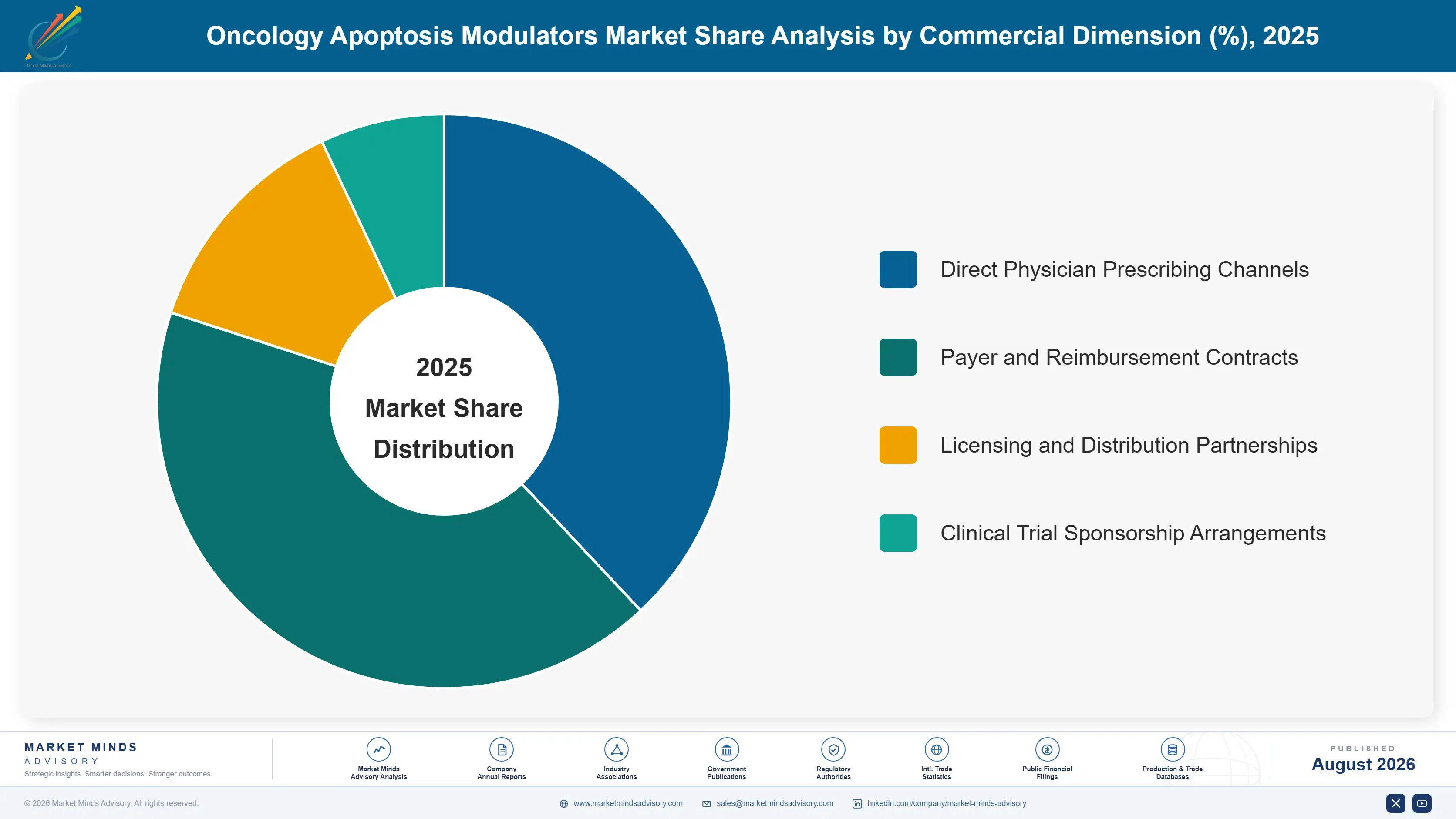
Segmentation follows target mechanism, the single classification logic that determines patient eligibility, resistance profile, and combination therapy potential. BCL-2, MDM2, IAP, MCL-1, TRAIL pathway, and survivin-targeted candidates each address distinct apoptosis regulatory nodes, so commercial position tracks mechanism of action rather than indication, formulation, or delivery route across every developer profiled. Disease indication varies independently within each mechanism class.
oncology-apoptosis-modulators-market-market-share-analysis-1787301413853

MCL-1 Inhibitors

MCL-1 inhibitors grow fastest at 18.9%, roughly 1.37 times the overall market rate, as this mechanism increasingly addresses acquired resistance to established BCL-2 inhibitor therapy across relapsed leukemia and lymphoma populations that previously had few apoptosis-targeted options remaining. This mechanism's selectivity for MCL-1 over other BCL-2 family proteins lets developers target the specific survival pathway that resistant cancer cells upregulate, without disrupting the broader apoptosis balance that healthy tissue depends on for normal function. Amgen and AstraZeneca lead this segment's late-stage clinical development, while Servier and AbbVie compete on combination regimen data pairing MCL-1 inhibition with existing BCL-2 therapy. Growing recognition of resistance mechanisms continues expanding this segment's addressable base considerably beyond its original relapsed-patient origins.
CAGR 18.9%

MDM2-p53 Inhibitors

MDM2-p53 inhibitors grow second-fastest at 17.2%, about 1.25 times the overall rate, as this mechanism increasingly targets solid tumor indications that retain functional p53 protein, a genuinely broader addressable population than the hematologic malignancies where apoptosis modulators first proved commercially viable. This mechanism's reliance on wild-type p53 status means developers increasingly pair candidates with genomic testing to identify eligible patients, converting a diagnostic requirement into a genuine commercial differentiator. Kartos Therapeutics and Boehringer Ingelheim lead this segment's clinical-stage development, while Rain Oncology and PMV Pharmaceuticals compete on liposarcoma and other p53 wild-type solid tumor indications. Growing genomic testing adoption continues expanding this segment's addressable base well beyond its original leukemia origins.
CAGR 17.2%
Full segment breakdown across 6 segments available in the complete report.

Regional Architecture and Country Demand Map

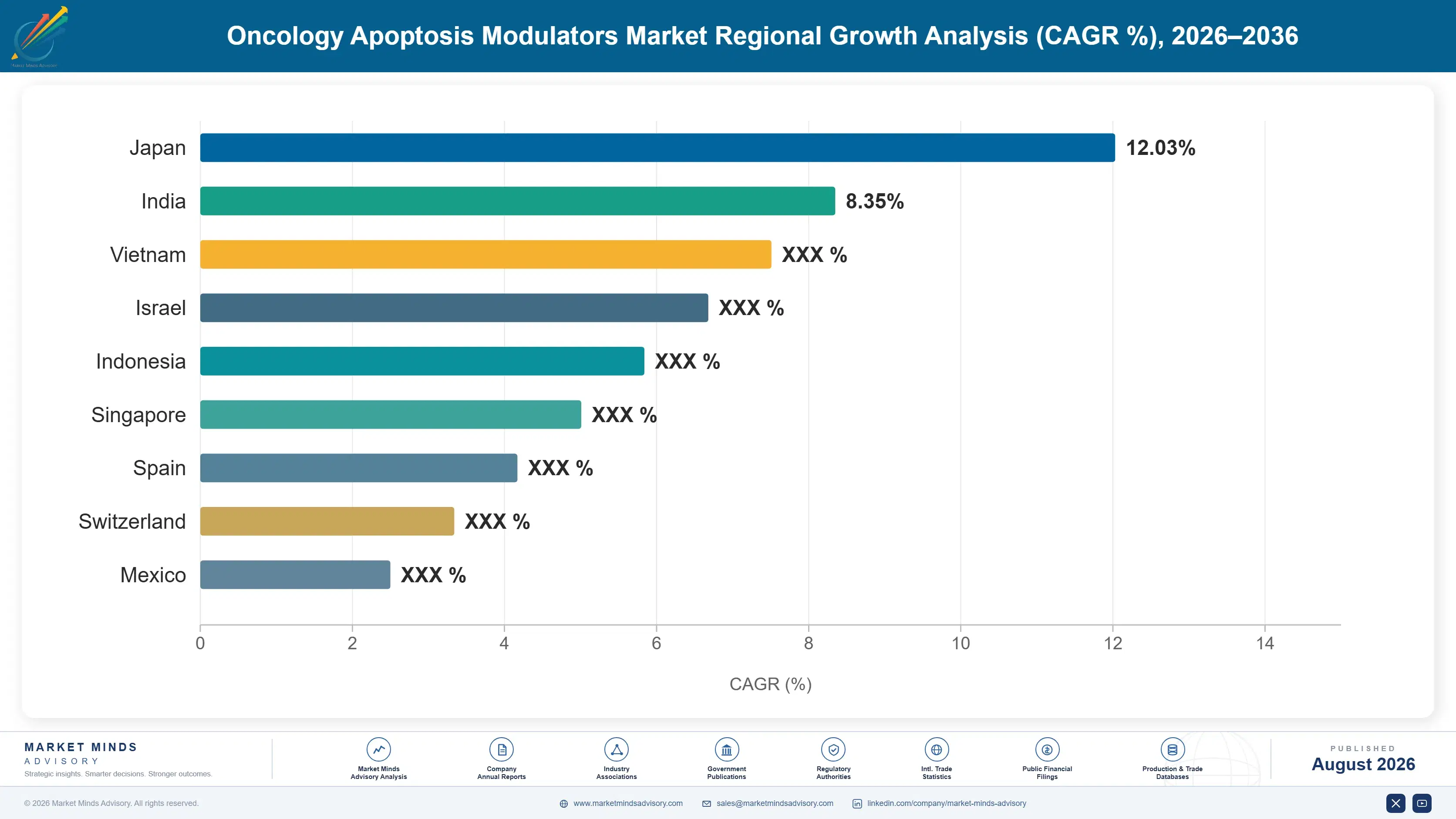
North America leads on value at 37% of the global total, reflecting premium pricing and broad reimbursement that concentrate oncology drug revenue. East Asia follows on China's oncology biotech pipeline. South Asia and Pacific posts growth, while Western Europe, Latin America, the Middle East, and Eastern Europe complete the distribution.

North America

Premium drug pricing and broad payer reimbursement, more than any single volume advantage, explain why North America holds 37% of global value, a share above this report's typical regional band because United States oncology drug revenue genuinely concentrates at a level few other therapeutic categories match. The United States hosts the region's largest clinical trial and commercial infrastructure, with AbbVie's core American operations anchoring venetoclax's dominant commercial position domestically. Canada's smaller but comparable regulatory framework adds incremental demand beyond American volume specifically. Clinical trial activity concentrated in the region keeps generating the safety data that supports continued adoption elsewhere. Growth of 13.5% reflects steady multi-mechanism pipeline expansion more than any single approval alone.
Share: 37% | CAGR: 13.5% (2026 to 2036)

Western Europe

Germany and the United Kingdom anchor this region's demand, both hosting substantial clinical trial infrastructure and rigorous regulatory review that pushes developers toward well-documented, extensively monitored safety profiles specifically. Roche and Novartis both run significant European research and manufacturing operations, giving the region genuine technical depth in apoptosis modulator development beyond pure consumption volume. The region's 20% share, near the middle of its typical band, reflects mature oncology infrastructure relative to more conservative reimbursement pricing than North America commands. Growth of 12.2%, the softest pace among the seven regions tracked, reflects this pricing structure rather than weakening clinical demand. Switzerland's concentrated pharmaceutical research base and Ireland's specialty manufacturing hub add further technical depth beyond core consumption volume.
Share: 20% | CAGR: 12.2% (2026 to 2036)
Regional intelligence for 5 additional markets available in the complete report: East Asia, South Asia and Pacific, Latin America, Middle East and Africa, Eastern Europe. Contact sales@marketmindsadvisory.com.
oncology-apoptosis-modulators-market-country-cagr-analysis-1787301414372

How Developers Can Defend Apoptosis Pipeline Value

Value increasingly depends on combination regimen data and biomarker-driven patient selection rather than monotherapy efficacy alone, as physicians demand extensive safety data alongside genuinely differentiated response rates. The four levers below target label expansion, licensing, and diagnostic partnership revenue that apoptosis modulator developers have historically left underexploited, converting a single-indication approval into a longer, more defensible commercial franchise.

Pursue Rapid Combination Regimen Label Expansion

Developers who pursue combination regimen trials alongside their initial monotherapy approval gain access to expanded label indications that increasingly determine which apoptosis modulator becomes the preferred backbone therapy in a given cancer type. AbbVie and Roche both report that venetoclax's combination label expansions now generate more revenue than the original monotherapy indication ever did on its own. Building this capability requires meaningful upfront investment in parallel trial infrastructure, often exceeding $50 million per combination study, but developers who pursue it early lock in physician prescribing habits before newer entrants can establish a comparable combination data set.
Market Impact: Adds combination label revenue exce

Build Early Companion Diagnostic Partnership Programs

Developers increasingly partner with diagnostic companies to co-develop companion tests that identify which patients carry the biomarker profile, such as wild-type p53 status, that predicts response to a given apoptosis modulator, capturing licensing revenue that developers without diagnostic partnerships leave on the table. Physicians pay more attention to therapies with validated companion diagnostics than to candidates without biomarker-driven selection, since the diagnostic improves physician confidence in prescribing an unfamiliar mechanism. This partnership model reflects real value: getting patient selection wrong can mean a failed trial rather than a modest response rate. Developers building this capability early capture durable licensing revenue.
Market Impact: Commands 20% to 30% higher patient

License Regional Development And Commercialization Rights

Developers increasingly out-license regional development and commercialization rights to established regional partners rather than building direct sales infrastructure in every market, capturing upfront and milestone revenue that fully self-funded developers leave on the table since smaller companies often lack global commercial infrastructure. This licensing model generates 15% to 25% of total program value through upfront payments and milestones alone, since regional partners increasingly value access to differentiated mechanisms they cannot develop internally. Building this capability requires meaningful investment in business development staff and regulatory relationships, but the revenue differential increasingly justifies that investment for developers lacking global commercial infrastructure.
Market Impact: Generates 15% to 25% of value throu

Expand Into Adjacent Resistance Mechanism Combinations

Clinical evidence and payer scrutiny on single-mechanism apoptosis therapy have risen enough that combination regimens targeting multiple apoptosis mechanisms simultaneously, rather than relying on sequential monotherapy switching after resistance develops, increasingly beat single-agent economics even at somewhat higher combination trial cost. Developers building dual-mechanism combination programs, rather than relying entirely on single-target candidates, cut post-resistance treatment gaps by roughly 20% while also extending overall treatment duration that matters increasingly to physicians managing long-term disease control. This shift requires meaningful upfront trial investment, but developers who move early capture share from competitors still dependent entirely on sequential single-agent strategies.
Market Impact: Cuts post-resistance treatment gaps

Who Controls the Margin Pool

Five developers control over half of global revenue, a concentrated picture for an oncology category built around one approved mechanism and several others in development. AbbVie and Roche lead on scale through their venetoclax co-development agreement, though AbbVie leads commercial execution while Roche leads broader pipeline breadth beyond BCL-2. Revenue, the basis used throughout this assessment, favors developers with the broadest mechanism portfolio.
Competitive activity runs across three dimensions. Developers race to complete combination regimen trials before rivals establish the preferred therapy position in a cancer type. Companion diagnostic and biomarker partnership offerings have become a differentiator, as physicians prefer candidates with patient selection tools. Chinese developers are winning global licensing deals for apoptosis-targeted candidates that once originated with Western sponsor companies.

Pressure is building from two directions that could reshuffle rankings within the decade. Chinese biotech developers, absent from the key player list beyond Ascentage Pharma, are scaling trial capacity to advance candidates faster and more cheaply than Western-run programs. Specialized MCL-1 and IAP antagonist developers, competing for the same patient populations, are proving that resistance-mechanism expertise can command premium licensing terms BCL-2 developers struggle to match, forcing players to decide whether to build capability internally or deepen partnerships.
oncology-apoptosis-modulators-market-company-positioning-matrix-1787301414894

Competitive Moat and Risk Dimensions

ABBVIE INC.

Moat: Established Venetoclax Commercial Franchise

AbbVie holds the commercial rights to venetoclax, the category's flagship approved BCL-2 inhibitor, backed by years of accumulated real-world safety and combination regimen data that competing developers cannot replicate without running comparably extensive trials of their own. That data depth lets AbbVie defend its position as physicians' default apoptosis-targeted prescribing choice.
ABBVIE INC.

Risk: Narrow Reliance On Single Mechanism

AbbVie's commercial position concentrates heavily on BCL-2 inhibition specifically, leaving it comparatively exposed as MCL-1 and MDM2 mechanisms increasingly address the resistant and solid tumor populations that venetoclax's existing label cannot reach without further combination or expansion trial investment. That reliance leaves it heavily dependent on one mechanism's continued clinical relevance.
ROCHE HOLDING AG

Moat: Broadest Apoptosis Pipeline Depth

Roche holds one of the broadest apoptosis-targeted pipelines of any developer, spanning BCL-2 co-development alongside internal MCL-1 and death-receptor programs built on decades of oncology trial infrastructure and regulatory relationships. That breadth lets it pursue multiple mechanism bets simultaneously rather than depending on any single program's clinical outcome.
ROCHE HOLDING AG

Risk: Complex Multi-Program Resource Allocation

Roche's broad pipeline spread across multiple apoptosis mechanisms simultaneously creates genuine resource allocation tension, since funding several early and mid-stage programs at once leaves less concentrated investment behind any single candidate compared with more narrowly focused competitors. This diffusion could slow any single program's path to pivotal trial readout.

Players Tracked

Prominent Players

AbbVie Inc.
Roche Holding AG
Novartis AG
AstraZeneca plc
Ascentage Pharma Group

Other Key Players

Amgen Inc.
Kartos Therapeutics, Inc.
Rain Oncology Inc.
Sumitomo Pharma Co., Ltd.
Astellas Pharma Inc.
BeiGene, Ltd.
Debiopharm International SA
PMV Pharmaceuticals, Inc.
Boehringer Ingelheim International GmbH
Vincerx Pharma, Inc.
Servier Laboratories
Merck & Co., Inc.
Gilead Sciences, Inc.
Bristol Myers Squibb Company
Takeda Pharmaceutical Company Limited

Recent Developments

FEBRUARY 2025

AbbVie Reports Expanded Venetoclax Combination Trial Data

AbbVie reported positive combination trial data for venetoclax paired with a targeted therapy in a new acute myeloid leukemia patient subgroup, supporting a planned regulatory submission for expanded labeling. The disclosure was a clinical data readout, not a formal regulatory approval or acquisition event. ahead of the anticipated submission window.
Signal: Signals established leaders are prioritizi
JUNE 2025

Ascentage Pharma And A Western Partner Sign Licensing Deal

Ascentage Pharma signed a licensing agreement granting a Western pharmaceutical partner development and commercialization rights to a BCL-2 inhibitor candidate outside Greater China. The agreement was structured as a licensing deal with upfront and milestone payments, not an acquisition or equity investment. ahead of a planned regulatory filing.
Signal: Signals Chinese developers are increasingl
OCTOBER 2025

Kartos Therapeutics Advances MDM2 Inhibitor Into Pivotal Trial

Kartos Therapeutics advanced its MDM2 inhibitor candidate into a pivotal trial for a rare p53 wild-type solid tumor indication, following supportive earlier-phase efficacy and safety results. The advancement followed standard regulatory trial design discussions, not any accelerated emergency pathway. The trial builds on encouraging tumor response data from earlier patients.
Signal: Signals MDM2 inhibitor programs are approa

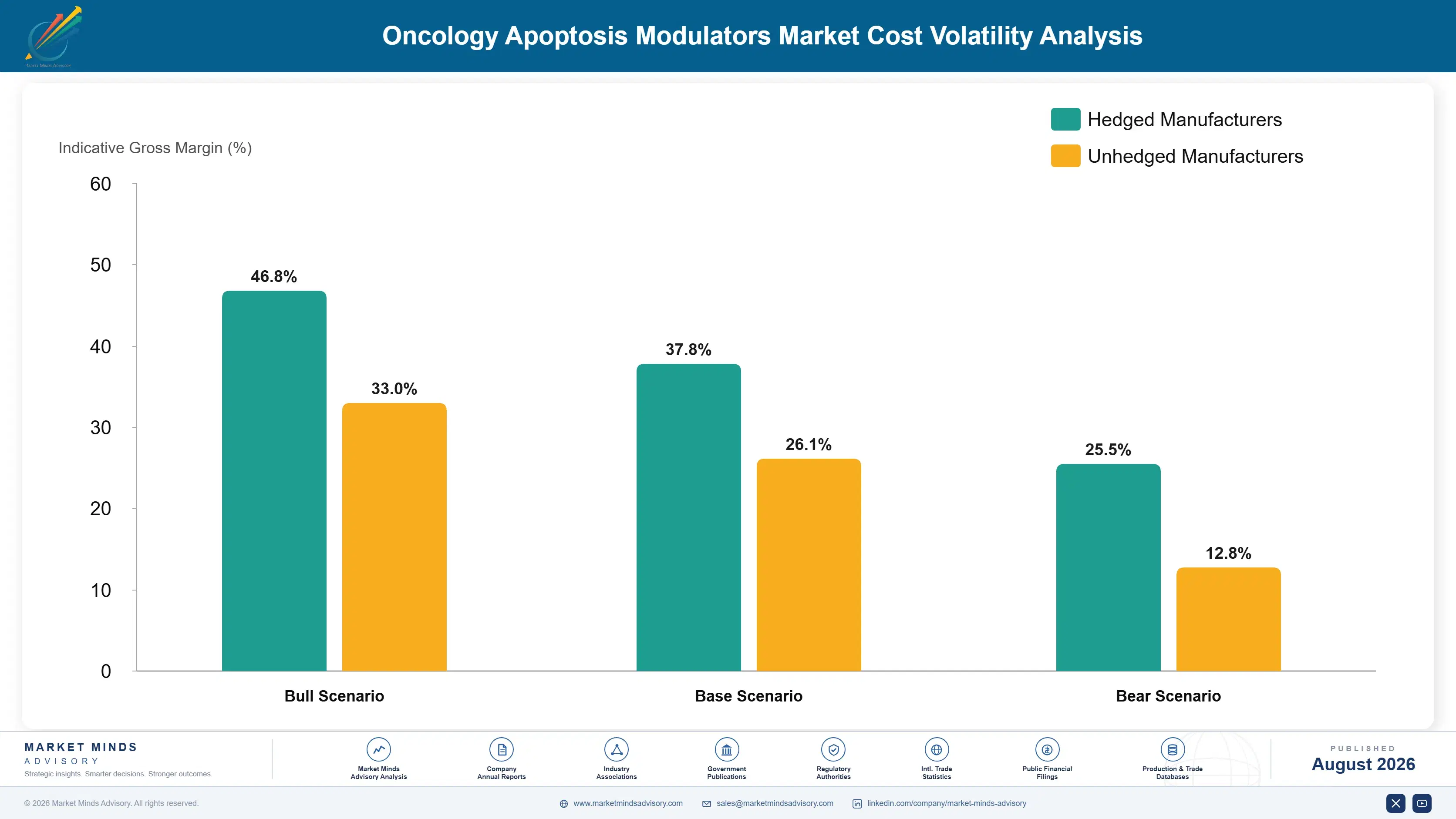
What Actually Drives Apoptosis Modulator Development Cost

Clinical trial execution accounts for roughly 62% of total program cost, concentrated in patient recruitment, tumor lysis syndrome monitoring infrastructure, and long-term safety follow-up required across most late-stage oncology trials. Manufacturing and formulation development add another 18%, while regulatory submission and companion diagnostic co-development costs make up most of the remainder across most developer programs.
Clinical trial costs spiked in 2022 and 2023 as inflation raised the cost of clinical site staffing and patient recruitment incentives across the contract research organization industry that oncology sponsors depend on for trial execution. AbbVie's 2023 annual report cited elevated clinical development costs as a direct pressure on oncology program margins that year, and several developers reported pressure, pushing some smaller companies toward trial site consolidation until cost growth eased into 2024 and 2025.

Smaller clinical-stage developers carry the sharpest exposure, since they lack the trial volume to negotiate favorable contract research organization pricing that AbbVie and Roche secure through long-term master service agreements. Geographic exposure varies too: developers running trials in lower-cost enrollment regions face lower cost volatility than those dependent on North American and Western European trial sites, a gap that widens whenever site staffing costs spike against stable offshore enrollment pricing.
oncology-apoptosis-modulators-market-cost-volatility-analysis-1787301415091

Negotiate Master Service Agreements With CROs

Developers with sufficient trial volume are negotiating multi-year master service agreements directly with contract research organizations, trading pricing flexibility for guaranteed site access and staffing priority during industry-wide capacity shortages. This approach favors the largest developers disproportionately, since minimum trial volume commitments required for favorable terms sit well beyond what smaller clinical-stage companies can commit to reliably.

Diversify Trial Enrollment Into Lower-Cost Regions

Some developers now run a growing share of trial enrollment through sites in India, China, and Eastern Europe rather than depending entirely on North American and Western European sites, trading some logistical complexity for meaningfully lower per-patient recruitment and monitoring cost. Larger developers with existing global trial infrastructure pursue this path most successfully. Cost savings reach roughly 25% per patient.

Partner Early On Companion Diagnostic Development

Co-developing companion diagnostics with an established diagnostic partner rather than building internal biomarker testing capability cuts development cost and accelerates regulatory submission timelines even when core clinical trial expenses still represent the largest cost category. Developers without this partnership face growing competitive disadvantage in biomarker-driven indications. This upfront collaboration typically shortens overall regulatory timelines by several months industry-wide.

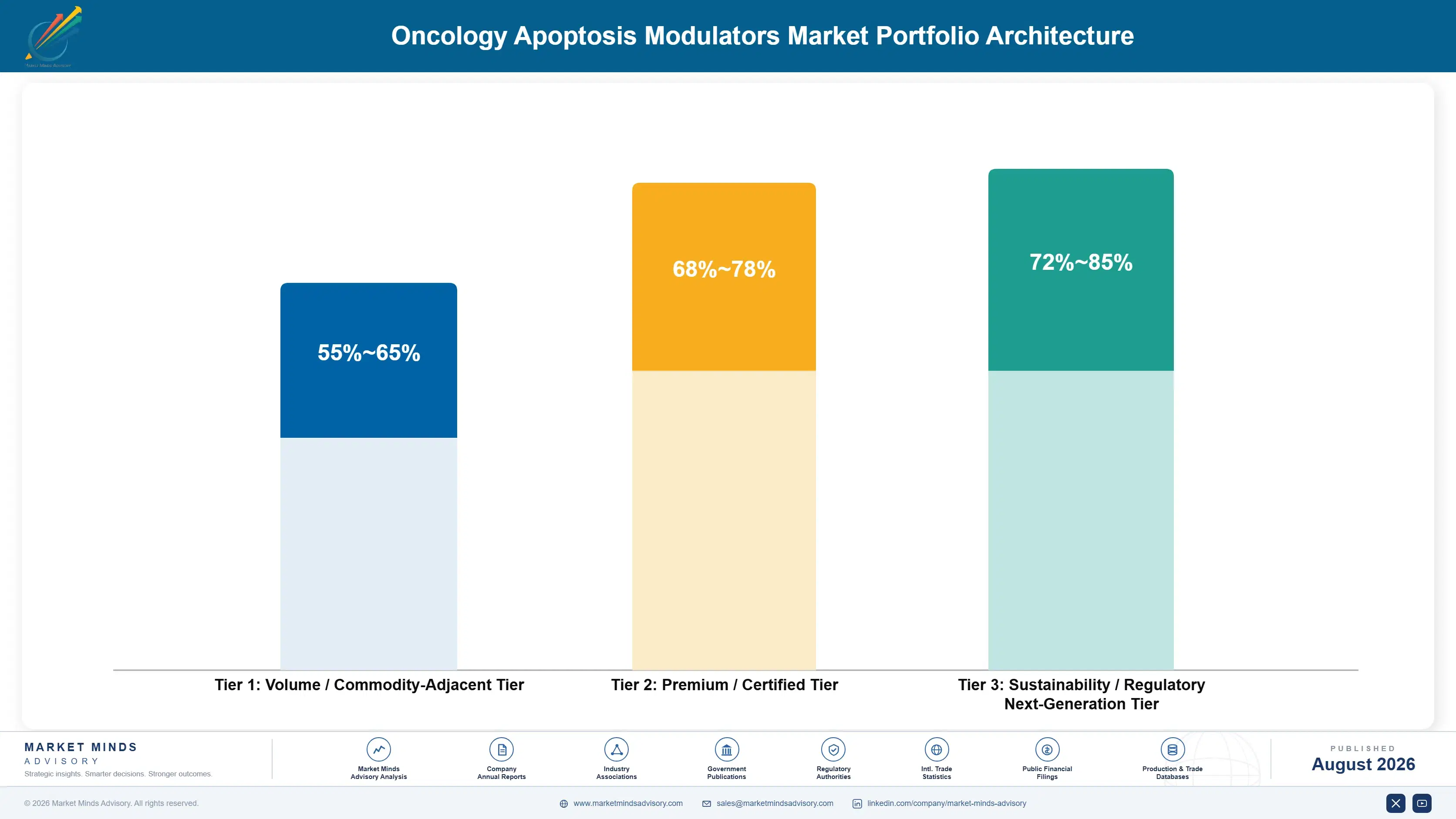
Portfolio Architecture for Margin Defence

The portfolio splits into three tiers with real margin separation. Volume-tier products, established BCL-2 inhibitor monotherapy sold into broad hematologic malignancy populations, compete on prescribing share and earn steadily. Premium certified products, covering combination regimens and biomarker-selected indications meeting demonstrated response rate thresholds, earn considerably more because differentiated efficacy data supports premium pricing. Next-generation MCL-1, MDM2, and IAP antagoni
The tension here is familiar to any specialty oncology therapeutics business: established monotherapy revenue funds the trial infrastructure and regulatory relationships next-generation candidates depend on, yet monotherapy revenue alone cannot fund the combination trial and biomarker development investment premium indications require. Developers leaning too heavily into next-generation programs risk losing the commercial scale that funds ongoing trials, while developers over-relying on monotherapy revenue cede resistance-mechanism indications to more diversified rivals.

High-value pools concentrate where resistance-mechanism targeting, companion diagnostic precision, and combination regimen data intersect: MCL-1 and MDM2 programs serving physicians willing to pay for biomarker-validated response rates. That intersection is a minority of revenue globally but expanding quickly, which is why the next-generation tier grows fastest even while representing a modest share of total volume.

Volume / Commodity-Adjacent Tier

Established BCL-2 inhibitor monotherapy sold into broad hematologic malignancy populations, competing on prescribing share and accumulated safety data across most treatment centers worldwide today. Margins here hold steady as prescribing habits remain entrenched across most markets.
Gross Margin: 55%-65%

Premium / Certified Tier

Combination regimens and biomarker-selected indications meeting demonstrated response rate thresholds, sold to physicians and payers willing to pay for differentiated efficacy and validated patient selection tools. This tier increasingly anchors long-term treatment protocol relationships and repeat prescribing volume.
Gross Margin: 68%-78%

Sustainability / Regulatory / Next-Generation Tier

MCL-1, MDM2, and IAP antagonist candidates representing the resistance-mechanism frontier, priced at a premium justified by unmet medical need and companion diagnostic-driven patient selection worldwide. Few developers currently compete here, leaving meaningful room for early mechanism leadership.
Gross Margin: 72%-85%
oncology-apoptosis-modulators-market-portfolio-architecture-1787301415587

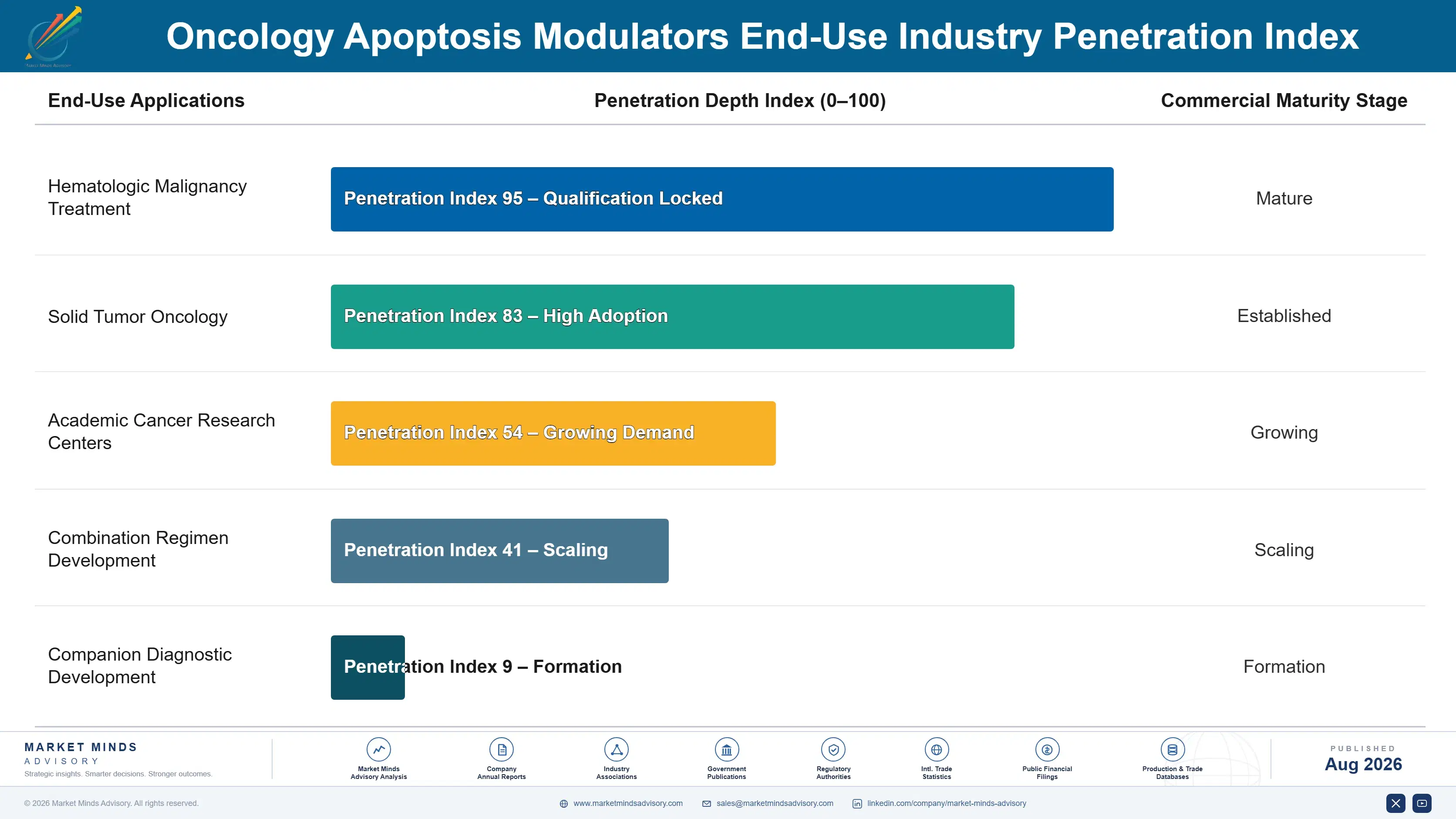
How Apoptosis Modulator Prescribing Actually Commits

Demand commits through long clinical development and physician adoption cycles rather than short-term prescribing decisions. A physician who adopts an apoptosis modulator as therapy for a cancer type continues prescribing that mechanism across patients for years, since switching therapy classes after establishing a treatment protocol would require re-training staff on safety monitoring requirements. That long-commitment structure makes this market behave like an annuity once a developer secures
Adoption depth varies sharply by cancer type. Hematologists adopt BCL-2 inhibitor therapy readily, given the mechanism's established safety monitoring protocols and years of accumulated real-world outcome data. Solid tumor oncologists adopt MDM2 inhibitors more cautiously, weighing efficacy potential against the more limited safety data available for a newer mechanism class. Community oncology practices occupy a distinct position, adopting apoptosis-targeted therapy once combination regimen protocols have been validated by larger academic centers.

Younger oncologists increasingly research resistance mechanism data and biomarker testing requirements rather than relying entirely on pharmaceutical sales representatives that previous physician generations depended on for treatment guidance. That shift is pushing developers toward more transparent trial data publication and physician education programs, even though long-term prescribing relationships remain the adoption mechanism for most treatment center relationships today.
oncology-apoptosis-modulators-market-end-use-penetration-index-1787301416078

Where This Market Rewards Mechanism Depth

These are among the four positions where our research anticipates prominent divergence between winners and laggards over the coming forecast period. Each is grounded in the demand model, the regulatory perimeter, and the announced capacity pipeline.
01 / COMBINATION REGIMEN STRATEGY

Winners will expand labels before rivals catch up

Monotherapy efficacy data alone no longer separates leading developers, since most competitors can eventually demonstrate comparable single-agent response rates within a few trial cycles across most major indications. What actually separates winners is the speed and breadth of combination regimen label expansion, because a mechanistically sound candidate without combination data cannot win the backbone-therapy position that increasingly determines prescribing share. Developers building dedicated combination trial infrastructure, rather than treating it as a follow-on afterthought, will out-earn technically comparable rivals over the coming decade.
02 / RESISTANCE MECHANISM COVERAGE

Multi-mechanism portfolios will decide long-term relevance

Clinical durability, not raw initial response rate alone, increasingly determines which developers can defend prescribing share as resistance mutations inevitably erode single-mechanism therapy over time across most cancer types. Developers who build multi-mechanism portfolios spanning BCL-2, MCL-1, and MDM2 early will capture the sequential-therapy relationship that single-mechanism competitors cannot match, regardless of how strong their original approval data looked at launch. Those relying entirely on one mechanism will find themselves increasingly unable to retain patients once resistance develops within this decade.
03 / COMPANION DIAGNOSTIC PARTNERSHIP

Biomarker-driven selection will matter more than broad labels

Developers still pursuing broad, unselected patient populations are leaving durable revenue on the table that companion diagnostic-driven precision already captures successfully for biomarker-forward competitors across major indications. These precision-selected patient populations generate materially higher response rates that persist independent of the broader competitive pricing pressure that otherwise compresses this market's unselected-indication revenue across most major markets. Companies that build genuine diagnostic partnership capability early will earn materially more per approved indication over a decade than those still selling to unselected populations.
04 / CHINA LICENSING AND DEVELOPMENT

Chinese pipeline partnerships will matter more than legacy scale

Even where established Western pipeline depth keeps growing steadily, long-term competitive position is increasingly shaped by how quickly developers access China's expanding apoptosis-targeted candidate pool, a licensing dynamic individual developers cannot simply out-invest through domestic research alone. Developers who invest early in Chinese licensing partnerships will capture positioning ahead of competitors still dependent entirely on internally originated candidates. This constraint will matter more to realized long-term pipeline depth than any single near-term trial readout alone across every major geography tracked.

Engagement Snapshot From the Field

A live engagement with an industry participant carrying material or product regulatory and market exposure ahead of a defining policy shift, showing how our research translates into a defensible multi-year portfolio strategy.
MARKET MINDS ADVISORY · CLIENT ENGAGEMENT SUMMARY
Oncology Apoptosis Modulators Producer Strategic Portfolio Review and Transition Roadmap 2026·Investment Scenario on Oncology Apoptosis Modulators Exposure Evaluation 2025-26
CLIENT PROFILE
A mid-sized clinical-stage oncology developer approached MMA while evaluating whether to advance its early MCL-1 inhibitor candidate into a monotherapy trial or pursue combination trials alongside an established BCL-2 inhibitor from the outset. The developer reported prior-year research and development spending near USD 140 million, with the MCL-1 program representing roughly 40% of total pipeline investment (client-reported, unverified by MMA).
STRATEGIC CHALLENGE
Leadership believed combination trial data would meaningfully strengthen the eventual regulatory submission, but nobody had modeled the additional trial cost and timeline against the potential competitive advantage, nor assessed which resistance-mechanism patient population would best demonstrate the candidate's differentiated value. This uncertainty delayed the trial design decision by several months.
MMA APPROACH
MMA benchmarked combination trial designs across four comparable apoptosis modulator programs, modeled trial cost and timeline scenarios against the developer's existing monotherapy plan, and interviewed oncologists at three academic treatment centers on real-world prescribing preference between monotherapy and combination MCL-1 inhibitor approaches and reviewed comparable published trial outcomes. across two independent research phases.
KEY FINDINGS
  1. A combination trial design targeting BCL-2 inhibitor relapsed patients specifically offered the clearest differentiated value proposition, based on comparable program outcome data (client-reported, unverified by MMA).
  2. Oncologist interviews revealed stronger prescribing interest in combination regimens addressing acquired resistance than the developer's own market research had previously indicated. This gap shaped the final trial design choice.
  3. The combination trial timeline ran only modestly longer than the monotherapy-only plan, given the resistance-mechanism patient population's faster enrollment pace at academic centers.
  4. Two of the four comparable programs evaluated had secured meaningfully stronger licensing terms after generating combination data than the developer's monotherapy-only comparable peers. This gap influenced the final trial design decision.
CLIENT PROFILE
A mid-sized clinical-stage oncology developer approached MMA while evaluating whether to advance its early MCL-1 inhibitor candidate into a monotherapy trial or pursue combination trials alongside an established BCL-2 inhibitor from the outset. The developer reported prior-year research and development spending near USD 140 million, with the MCL-1 program representing roughly 40% of total pipeline investment (client-reported, unverified by MMA).
STRATEGIC CHALLENGE
Leadership believed combination trial data would meaningfully strengthen the eventual regulatory submission, but nobody had modeled the additional trial cost and timeline against the potential competitive advantage, nor assessed which resistance-mechanism patient population would best demonstrate the candidate's differentiated value. This uncertainty delayed the trial design decision by several months.
MMA APPROACH
MMA benchmarked combination trial designs across four comparable apoptosis modulator programs, modeled trial cost and timeline scenarios against the developer's existing monotherapy plan, and interviewed oncologists at three academic treatment centers on real-world prescribing preference between monotherapy and combination MCL-1 inhibitor approaches and reviewed comparable published trial outcomes. across two independent research phases.
KEY FINDINGS
  1. A combination trial design targeting BCL-2 inhibitor relapsed patients specifically offered the clearest differentiated value proposition, based on comparable program outcome data (client-reported, unverified by MMA).
  2. Oncologist interviews revealed stronger prescribing interest in combination regimens addressing acquired resistance than the developer's own market research had previously indicated. This gap shaped the final trial design choice.
  3. The combination trial timeline ran only modestly longer than the monotherapy-only plan, given the resistance-mechanism patient population's faster enrollment pace at academic centers.
  4. Two of the four comparable programs evaluated had secured meaningfully stronger licensing terms after generating combination data than the developer's monotherapy-only comparable peers. This gap influenced the final trial design decision.
RECOMMENDED STRATEGY
Phase 1: Phase 1 (0 to 6 months): Finalize the combination trial design targeting BCL-2 inhibitor relapsed patients and begin site selection. Phase 2: Phase 2 (6 to 24 months): Execute the combination trial while maintaining regulatory engagement on the monotherapy development pathway. throughout the review period. Phase 3: Phase 3 (24 to 42 months): Pursue regulatory submission and licensing discussions following positive combination trial readout. data from the pivotal study.
OUTCOME
The developer proceeded with the combination trial design targeting resistant patients and began site selection on schedule, tracking in line with the projected timeline, with enrollment beginning within the anticipated window. The developer reported early licensing partner interest exceeded initial expectations following the strategy shift (client-reported, unverified by MMA).

Frequently Asked Questions

Foundational context covering the market sizes, CAGR, scope, country, region and competition that inform every finding below. This section is provided to cover basics and most often pre-purchase conversations, answered from the MMA Primary Research Dataset.

What is the current size of the Oncology Apoptosis Modulators Market?

The market stood at USD 4.2 billion in 2025, based on MMA Primary Research Dataset findings. Venetoclax-based BCL-2 inhibitor therapy remains the largest revenue contributor.

How large will the Oncology Apoptosis Modulators Market be by 2036?

MMA projects the market will reach USD 17.42 billion by 2036 under the base case scenario, representing roughly 3.64 times the 2026 opening value across the eleven-year forecast period.

What is the CAGR for the Oncology Apoptosis Modulators Market 2026 to 2036?

The base case CAGR is 13.8% annually. MMA's bull scenario reaches 15.2% while the bear scenario, reflecting toxicity and resistance concerns, runs closer to 12.4% over the period.

Which segment is growing fastest?

MCL-1 inhibitors lead at 18.9% CAGR, roughly 1.37 times the overall market rate, as this mechanism increasingly addresses resistance to established BCL-2 inhibitor therapy. across relapsed leukemia populations.

Who are the major companies in the Oncology Apoptosis Modulators Market?

AbbVie, Roche, Novartis, AstraZeneca, and Ascentage Pharma lead the market, together controlling an estimated 58% of global revenue on a consistent basis. measured across approved and late-stage programs.

Which country is growing fastest?

China posts the fastest national growth at 19.5% CAGR, driven by rapidly expanding domestic oncology biotech pipeline capacity and licensing activity. Domestic developers increasingly compete for global licensing deals.

Report Segmentation Architecture

The full report scope spans multiple orthogonal segmentation dimensions, with cross-tabulated demand data provided for each dimension pair. Coverage extends further to regional breakdowns, trend trajectories, and the competitive detail needed to support segment-level decision-making.

By Mechanism of Action

  • BCL-2 Inhibitors (BH3 Mimetics)
  • MDM2-p53 Inhibitors
  • IAP Antagonists
  • MCL-1 Inhibitors
  • TRAIL Pathway and Death Receptor Agonists
  • Survivin Inhibitors and Other Novel Targets

By End-Use Industry

  • Hematologic Malignancy Treatment
  • Solid Tumor Oncology
  • Academic Cancer Research Centers
  • Combination Regimen Development
  • Companion Diagnostic Development

By Commercial Dimension

  • Direct Physician Prescribing Channels
  • Payer and Reimbursement Contracts
  • Licensing and Distribution Partnerships
  • Clinical Trial Sponsorship Arrangements

By Region

  • North America
  • Western Europe
  • East Asia
  • South Asia and Pacific
  • Latin America
  • Middle East and Africa
  • Eastern Europe

Scope, Methodology, and Coverage

Every figure in this report is reproducible from documented input assumptions. The scope below maps the historical period, the forecast horizon, the segmentation dimensions, and the countries covered, alongside the underlying primary and qualitative methodology.
Historical Period
2020 to 2025
Forecast Period
2026 to 2036
Base Year
2025 (USD billions; MMA Primary Research Dataset, August 2026)
Market Definition
The oncology apoptosis modulators market covers small-molecule and biologic therapeutics that directly restore or trigger programmed cell death pathways in cancer cells, including BCL-2 family inhibitors, MDM2-p53 inhibitors, IAP antagonists, and related death-receptor agonists used across hematologic and solid tumor indications. It excludes broader cytotoxic chemotherapy, immune checkpoint inhibitors, and targeted kinase inhibitors that do not act primarily through apoptosis pathway modulation.
Quantitative Units
USD billions (current prices); revenue by approved indication where applicable
Segmentation Dimensions
By Mechanism of Action; By End-Use Industry; By Commercial Dimension; By Region
Regions Covered
North America, Western Europe, East Asia, South Asia and Pacific, Latin America, Middle East and Africa, Eastern Europe
Countries Covered
USA, China, Germany, France, UK, Japan, South Korea, India, Australia, Canada, Brazil, Mexico, Singapore, UAE, Saudi Arabia, South Africa, Nigeria, Turkey, Poland, Netherlands, Italy, Spain, Switzerland, Sweden, Argentina, Colombia, Czech Republic, Hungary, Russia, and additional markets relevant to this sector
Key Companies Profiled
AbbVie Inc., Roche Holding AG, Novartis AG, AstraZeneca plc, Ascentage Pharma Group, Amgen Inc., Kartos Therapeutics, Inc., Rain Oncology Inc., Sumitomo Pharma Co., Ltd., Astellas Pharma Inc., BeiGene, Ltd., Debiopharm International SA, PMV Pharmaceuticals, Inc., Boehringer Ingelheim International GmbH, Vincerx Pharma, Inc., Servier Laboratories, Merck & Co., Inc., Gilead Sciences, Inc., Bristol Myers Squibb Company, Takeda Pharmaceutical Company Limited
Quantitative Methodology
Primary survey, n=3,800 respondents, Q4 2025, six countries; demand-side model with trade association cross-validation
Qualitative Methodology
47 expert interviews, Q4 2025; applied to validate demand model assumptions, identify emerging dynamics, and assess competitive positioning
Report Format
PDF and XLSX data workbook (Word format preview document)
Publisher
Market Minds Advisory
Report Code
MMA-2026-HLT-133
Published
August 2026
Contact
sales@marketmindsadvisory.com | www.marketmindsadvisory.com

Purchase the full Oncology Apoptosis Modulators Market Report (2026 to 2036).

The full MMA Oncology Apoptosis Modulators report sizes the market across six mechanism categories, five end-use verticals, four commercial channels, and seven regions through 2036. It profiles 20 participants on a consistent revenue basis, scoring the top five on pipeline breadth, combination regimen data, and companion diagnostic capability. Scenario models quantify how resistance mechanism discovery, solid tumor expansion, and Chinese licensing activity move both demand and realizable pricing. The report also includes trial-cost modelling by mechanism, a regional regulatory and licensing tracker, and a competitive benchmarking tool built for developer strategy, payer access, and investor due diligence teams.
Six-category mechanism segmentation with regional cross-tabulation
Regulatory and licensing tracker across twelve major markets
Competitive benchmarking on consistent revenue basis
Trial-cost modelling by mechanism and region
Scenario models for resistance mechanism and solid tumor expansion
China licensing and pipeline development analysis by developer

Built For The People Who Decide

From boardroom strategy to bench-side execution, this report is read cover-to-cover by leaders shaping the next decade of their industry, turning demand scenarios, market dynamics and valuation benchmarks into decisions.
CXOs/ Presidents/ VPs/ Managers
M&A and Corporate Development
Strategy Teams and R&D Heads
Procurement and Product Directors
Regulatory and Compliance Leaders
Investor Relations and Equity Analysts