Market Minds Advisory
North America Venture Capital Market

North America Venture Capital Market: AI Deal Concentration Redraws Fund Allocation Strategy

AI-focused startups are absorbing an outsized share of new venture capital deployed, forcing generalist funds to defend allocation discipline against limited partners demanding heavier AI sector concentration inside every new fund vintage raised.

Lead Analyst

Published

September 2026

Make Smarter Decisions with Customized Research Insights

Request a free sample report and evaluate market opportunities, growth trends, and competitive dynamics relevant to your business needs.

2025 MARKET VALUE$58.0BMarket Size 2025
2036 FORECAST VALUE$142.3BBase Case , 2026 to 2036
CAGR 2026 TO 20368.5 %Bull 9.7% / Bear 7.3%
INCREMENTAL OPPORTUNITY$79.3BNet 10- year value creation
EXPANSION MULTIPLE2.26x2036 value over 2026 base
Strategic Levers
M&A Pipeline
Regional Outlook
Country Rankings
Competitive Intelligence
Segmental Deep-dive
Call-Us : 91 93563 13602

Executive Snapshot and Market Trajectory

North America's venture capital industry is being reshaped by AI startups absorbing an outsized share of new capital deployed, forcing generalist funds to defend disciplined sector allocation against limited partners pushing for heavier AI concentration in every new fund raised. Few limited partners priced this shift into fund allocation frameworks.
AI and deep tech-focused venture investment is expanding fastest, growing at roughly 1.82 times the market's overall pace as compute infrastructure and foundation model startups attract outsized valuations relative to historical software deal benchmarks. Venture debt and structured growth financing follows closely behind, capturing capital-efficient founders avoiding further equity dilution. North America concentrates the overwhelming majority of this market's capital deployment, since the market is defined around United States and Canadian venture capital activity specifically.
Competitive intensity is rising as generalist multi-stage funds, sector-specialist AI funds, and corporate venture arms all compete for the same limited pool of the highest-quality deals, while extended fundraising timelines and compressed exit markets are simultaneously reshaping which fund strategies deliver the returns limited partners now expect. Funds slow to adapt underwriting and capital structure strategy risk losing ground to faster-moving competitors across nearly every major deal category.
Market Definition
This report covers equity and structured debt capital deployed by venture capital firms, corporate venture arms, and institutional growth investors into privately held technology and technology-enabled companies headquartered in the United States and Canada. It excludes private equity buyout transactions, public market secondary trading, and angel investment below institutional fund minimums, which fall outside the defined venture capital scope.
Base Year Value
$58.0B in 2025 (MMA Primary Research Dataset, August 2026)
Forecast Period
2026 to 2036, eleven discrete annual values
CAGR
8.5% base case. Bull 9.7%. Bear 7.3%.
Fastest Growth Segment
AI and Deep Tech-Focused Venture Investment: 15.5% CAGR
Fastest Growth Country
United States: 9.2% CAGR
Fastest Growth Region
South Asia and Pacific: 10.5% CAGR
Largest Region
North America: 88% of 2025 global value
Market Leaders
Sequoia Capital, Andreessen Horowitz, Accel, General Catalyst, Insight Partners. Source: MMA Primary Research Dataset, July 2026.
Primary Survey
n=3,800 procurement and R&D decision-makers, Q4 2025, six countries
Methodology
Demand-side build-up, cross-validated against public data, 47 expert interviews

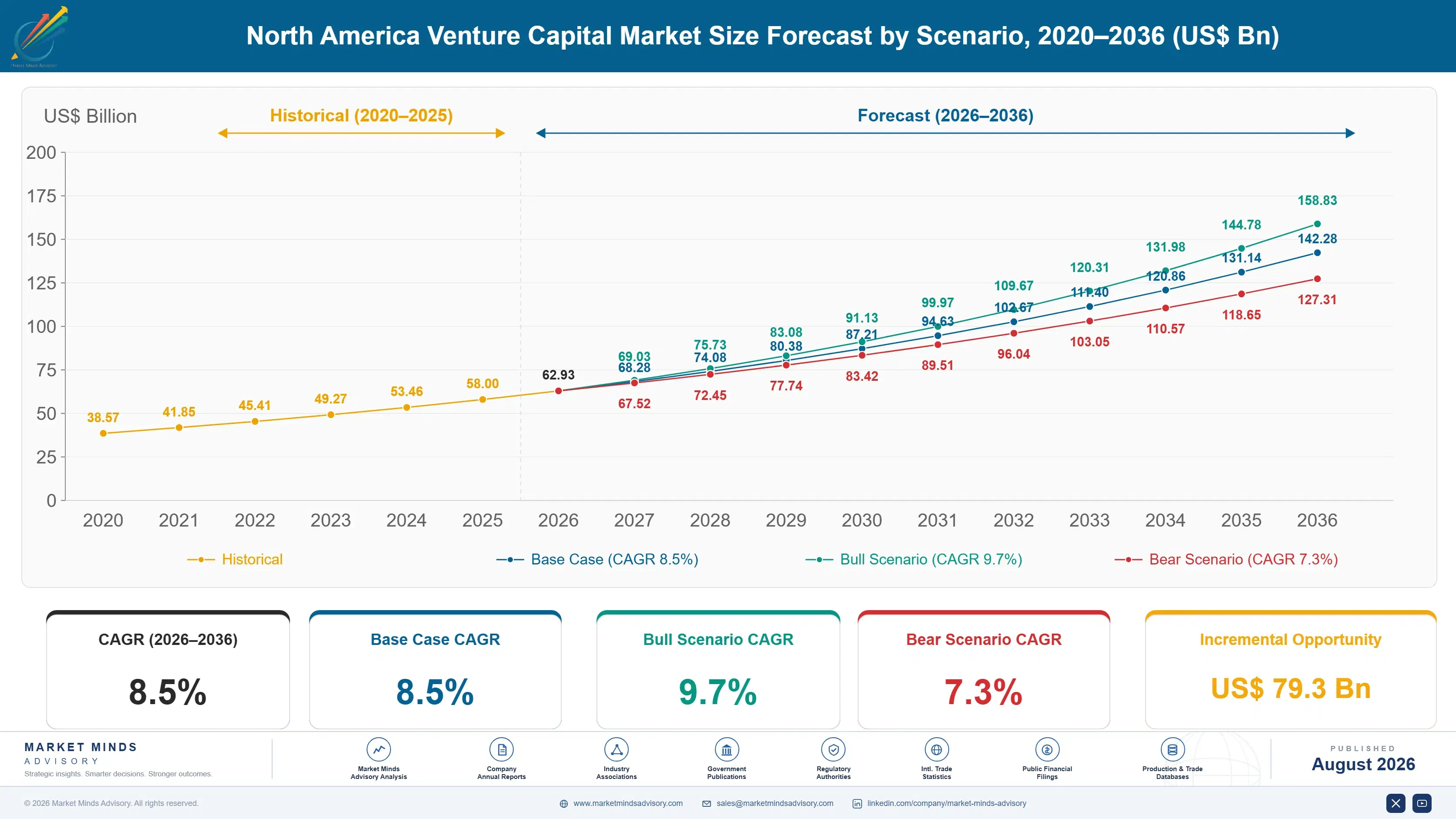
North America Venture Capital Market Forecast Scenarios

north-america-venture-capital-market-size-forecast-scenario-1787938745046
North America venture capital deployment grew at an estimated 7.5 percent historical pace between 2020 and 2025, propelled by a pandemic-era funding surge followed by a sharp 2022 to 2023 correction as interest rates rose and exit markets froze. Momentum recovered meaningfully through 2024 and 2025 as AI-focused deal flow reignited investor enthusiasm across nearly every fund strategy.
The base case assumes 8.5 percent annual growth through 2036, driven by three commercial mechanisms. First, AI and deep tech deal flow is expanding total capital deployed well beyond prior software-cycle benchmarks. Second, venture debt is capturing capital-efficient founders seeking growth financing without further equity dilution. Third, corporate venture arms are expanding strategic investment programs to secure early access to emerging technology partnerships. These three mechanisms increasingly reinforce one another across the broader industry landscape.
The bull case centers on faster-than-expected AI startup exit activity restoring limited partner distributions across the industry. The bear case centers on prolonged exit market weakness extending fund cycles further, which could meaningfully slow new fundraising and constrain deployment pace across smaller, less established fund managers specifically. Either scenario depends heavily on how quickly public market IPO windows reopen for venture-backed companies broadly.

AI Concentration Redraws Fund Allocation Discipline

North America's venture capital industry sits at an unusual point where sector concentration risk and investor return expectations are colliding directly. AI startups absorbing an outsized share of new capital deployed is the single largest determinant of how limited partners are reallocating commitments across fund managers heading into 2026 and beyond. Funds that misjudge this reallocation risk losing access to limited partner capital favoring sector-focused strategies.
MARKET CONCENTRATION (CR5)22%Top five firms hold under a quarter combined
AVERAGE DEAL SIZE GROWTH18%Annual growth in typical round size across stages
AI SECTOR DEAL SHARE38%Total capital deployed directed toward AI-focused startups specifically
MEDIAN TIME TO EXIT7.2 yearsTypical duration from initial investment to liquidity event
DRY POWDER DEPLOYMENT RATE62%Share of raised fund capital already actively deployed
CORPORATE VENTURE PARTICIPATION RATE31%Funding rounds including at least one corporate investor
Beneath the AI concentration story, the industry is absorbing a genuine, lasting change in exit timing. Extended fundraising cycles and compressed public market exit windows are pushing companies to stay private meaningfully longer than a decade ago, forcing funds to hold positions well beyond traditional fund lifecycles and creating real pressure on limited partner liquidity expectations. Funds unable to structure comparable liquidity solutions risk facing mounting limited partner pressure over lagging distributions.
Distribution economics are shifting too. Venture debt providers are steadily capturing capital-efficient founders who prefer avoiding further equity dilution over pursuing additional priced equity rounds. Funds without complementary debt product offerings risk losing access to some of the most attractive later-stage deals to competitors offering more flexible capital structures. Funds without complementary debt offerings increasingly cede this growing category to earlier movers.
"Every fund claims AI conviction now, but the ones actually generating returns are the ones who built genuine technical underwriting capability years ago, not the ones who just rebranded their thesis deck last quarter."
Director, North American Venture Capital Practice · MMA Technology Practice · August 2026

Market Trends

AI Startups Absorb Outsized Share Of New Capital

AI-focused startups, particularly those building foundation models and compute infrastructure, are absorbing an outsized share of new venture capital deployed relative to their share of total startup formation, reflecting investor conviction that this technology cycle carries meaningfully larger addressable markets than prior software cycles. Limited partners are increasingly pushing fund managers to demonstrate heavier AI sector concentration within new fund vintages, creating pressure on generalist funds that historically maintained broader sector diversification across their portfolios. Sequoia Capital and Andreessen Horowitz have both expanded dedicated AI teams to compete for this concentrated deal flow against well-capitalized specialists.
Market Impact: Adds 31% corporate co-investment participation
Venture Debt Expands Capital-Efficient Growth Financing

Venture debt providers are capturing meaningful market share from traditional equity financing as capital-efficient founders increasingly prefer structured debt over additional priced equity rounds that would further dilute existing ownership stakes. This shift is particularly pronounced among AI infrastructure companies with predictable, contracted revenue streams that support debt underwriting more readily than earlier-stage, pre-revenue startups. Venture debt providers report meaningfully stronger deal flow growth than in prior funding cycles, as founders increasingly view debt financing as a genuine strategic tool rather than a last-resort financing option reserved for companies unable to raise equity.
Market Impact: Expands average round size 18% annually

Market Opportunities and Growth Drivers

Expanding Corporate Venture Programs Add New Capital Sources

Major technology corporations continue expanding dedicated corporate venture arms to secure early access to emerging technology partnerships and potential acquisition targets, adding a durable new capital source beyond traditional institutional limited partner fund structures. These corporate investors often bring strategic value beyond capital alone, including potential commercial partnerships and distribution access that pure financial investors cannot offer portfolio companies, making corporate venture participation increasingly attractive to founders evaluating competing term sheets from multiple potential investors simultaneously. Founders increasingly view this corporate participation as a strategic signal to other potential investors evaluating the same competitive financing round.
Market Impact: Extends holding periods by 18 months

Rising Foundation Model Compute Costs Expand Round Sizes

Rising compute infrastructure costs required to train and operate foundation AI models are directly expanding the capital requirements of AI-focused startups, mechanically increasing average round sizes across the sector even without proportional growth in the number of companies being funded. This dynamic represents a genuine, lasting shift in capital intensity compared with prior software cycles, where marginal infrastructure costs remained comparatively low throughout a company's early growth trajectory. Fund managers underwriting these companies must now factor compute cost trajectories explicitly into their capital efficiency and runway assumptions. This favors funds with genuine technical expertise over generalists unfamiliar with compute economics.
Market Impact: Raises risk across 38% of capital

Market Restraints and Challenges

Compressed Exit Markets Extend Fund Holding Periods

Public market IPO windows have remained largely closed for venture-backed companies across much of the past several years, forcing funds to hold positions considerably longer than traditional fund lifecycles anticipated when raising capital from limited partners. The root cause is broader public market volatility and investor caution toward unprofitable growth companies specifically. The commercial impact extends distribution timelines that limited partners depend on for their own capital allocation decisions. Fund managers are mitigating this through secondary market sales and continuation vehicles that provide partial liquidity without requiring a full exit event.
Market Impact: Grows AI deal share to 38%

AI Sector Concentration Raises Portfolio Correlation Risk

Heavy AI sector concentration across many fund portfolios simultaneously raises correlation risk, since a broad AI valuation correction would affect a disproportionate share of total industry capital deployed rather than being contained to isolated individual company failures. The root cause is genuine investor conviction driving crowded positioning across similar deal types. The commercial impact could be significant if AI valuations correct sharply before revenue growth catches up to current pricing. Fund managers are mitigating this through more selective underwriting focused on companies with demonstrated revenue traction rather than pure growth potential.
Market Impact: Grows venture debt volume 20% annually
3 additional market trends, 2 additional growth drivers, and 3 additional restraints and challenges are covered in the full report. Contact sales@marketmindsadvisory.com to access the complete intelligence.

Segment CAGR and Growth Architecture

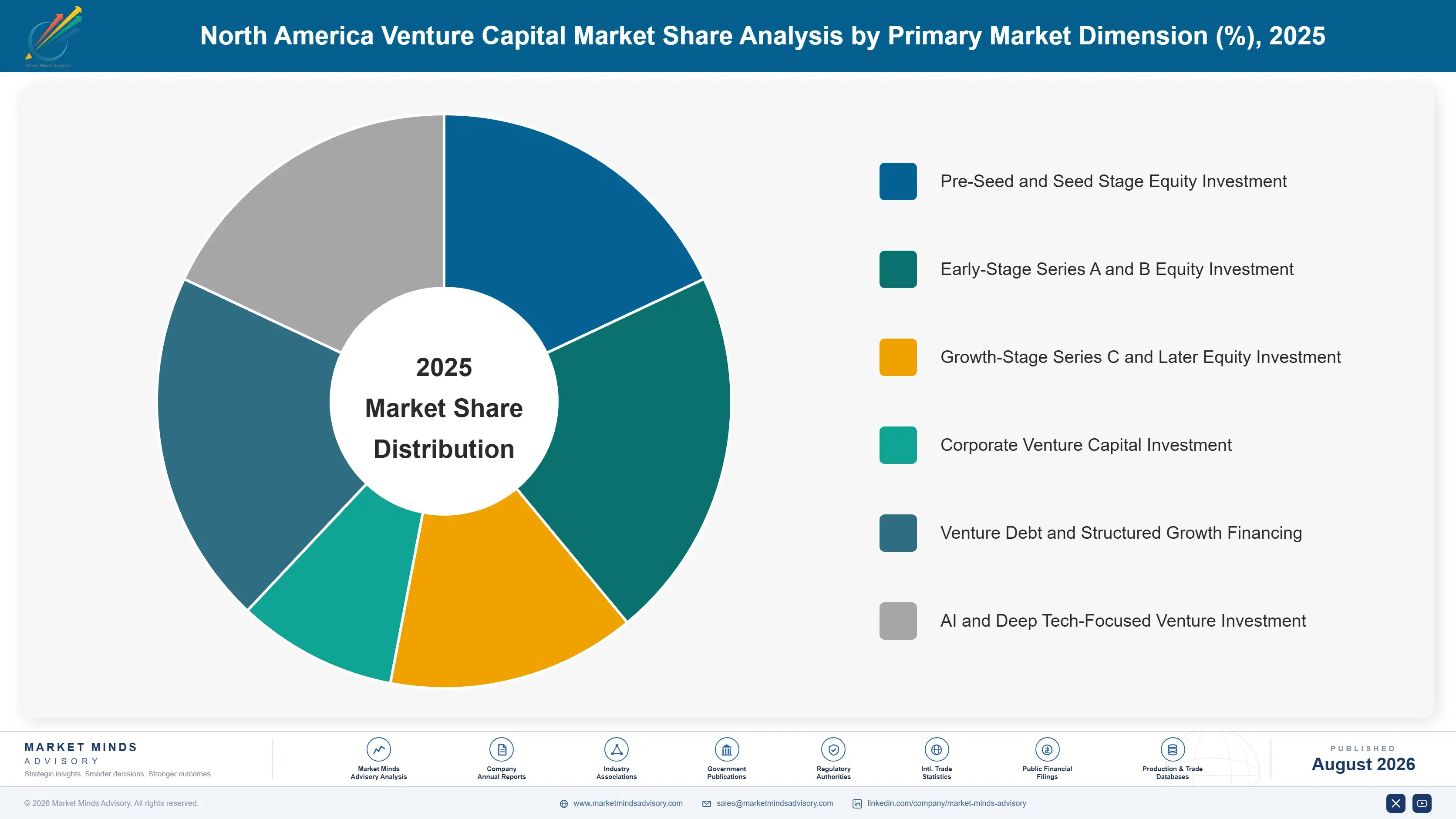
North America's venture capital market segments most usefully by investment stage and capital structure, spanning seed, early-stage, growth-stage, corporate venture, venture debt, and AI-focused investment, rather than by industry vertical or geography alone. This lens keeps early formation-stage capital distinct from later growth financing, corporate strategic capital, and complementary structured debt financing entirely and clearly.
north-america-venture-capital-market-market-share-analysis-1787938745577

AI and Deep Tech-Focused Venture Investment

AI and deep tech-focused venture investment is growing fastest, expanding at roughly 1.82 times the market's overall pace as compute infrastructure and foundation model startups attract outsized valuations relative to historical software deal benchmarks across every investment stage. Limited partners are increasingly pushing fund managers to demonstrate heavier AI sector concentration within new fund vintages, creating pressure on generalist funds that historically maintained broader sector diversification. Sequoia Capital and Andreessen Horowitz have both expanded dedicated AI investment teams specifically to compete for this concentrated deal flow against increasingly well-capitalized sector-specialist funds entering the space. Funds without demonstrated technical underwriting capability risk losing access to the highest-quality AI deals to competitors with deeper domain expertise.
CAGR 15.5%

Venture Debt and Structured Growth Financing

Venture debt and structured growth financing forms the second-fastest growing segment, propelled by capital-efficient founders increasingly preferring structured debt over additional priced equity rounds that would further dilute existing ownership stakes. This shift is particularly pronounced among AI infrastructure companies with predictable, contracted revenue streams that support debt underwriting more readily than earlier-stage, pre-revenue startups typically can. Venture debt providers report meaningfully stronger deal flow growth than in prior funding cycles, as founders increasingly view debt financing as a genuine strategic tool rather than a last-resort option reserved for companies unable to raise equity capital. Providers that built specialized underwriting models for capital-intensive AI infrastructure companies are capturing disproportionate volume compared with generalist venture debt lenders.
CAGR 12.5%
Full segment breakdown across 6 segments available in the complete report.

Regional Architecture and Country Demand Map

This report is scoped to United States and Canadian venture capital activity specifically, so North America concentrates the overwhelming majority of capital deployment. Every other region reflects only cross-border co-investment and limited partner exposure. North America itself hosts nearly all deal origination and fund headquarters activity measured in this report.

North America

North America's 88% share sits far above the standard 22 to 32% band, and the deviation is intentional: this report defines its scope as United States and Canadian venture capital activity specifically, and virtually all fund headquarters, deal origination, and portfolio companies fall within this region. Sequoia Capital, Andreessen Horowitz, Accel, General Catalyst, and Insight Partners collectively deploy a meaningful share of this capital across every major investment stage.AI sector concentration redistributes capital within the region itself, shifting allocation toward compute infrastructure and foundation model startups, keeping the region's share durably dominant. No other region approaches this scale of genuine domestic deal origination and fund headquarters activity across the venture industry.
Share: 88% | CAGR: 9.5% (2026 to 2036)

Western Europe

Western Europe's connection to this market runs primarily through European institutional limited partners, including pension funds and sovereign wealth vehicles, that commit capital to North American venture funds as part of diversified global private markets allocation strategies. The 4% share sits below the standard 18 to 26% band because European involvement represents limited partner capital commitment rather than domestic North American deal origination, which this market defines as its core scope. Growth tracks continued European institutional appetite for North American venture exposure. This coordination role remains modest given the limited scope of direct deal origination influence available to these limited partners. Growth tracks continued European institutional demand for North American technology exposure specifically.
Share: 4% | CAGR: 7.0% (2026 to 2036)
Regional intelligence for 5 additional markets available in the complete report: East Asia, South Asia and Pacific, Latin America, Middle East and Africa, Eastern Europe. Contact sales@marketmindsadvisory.com.
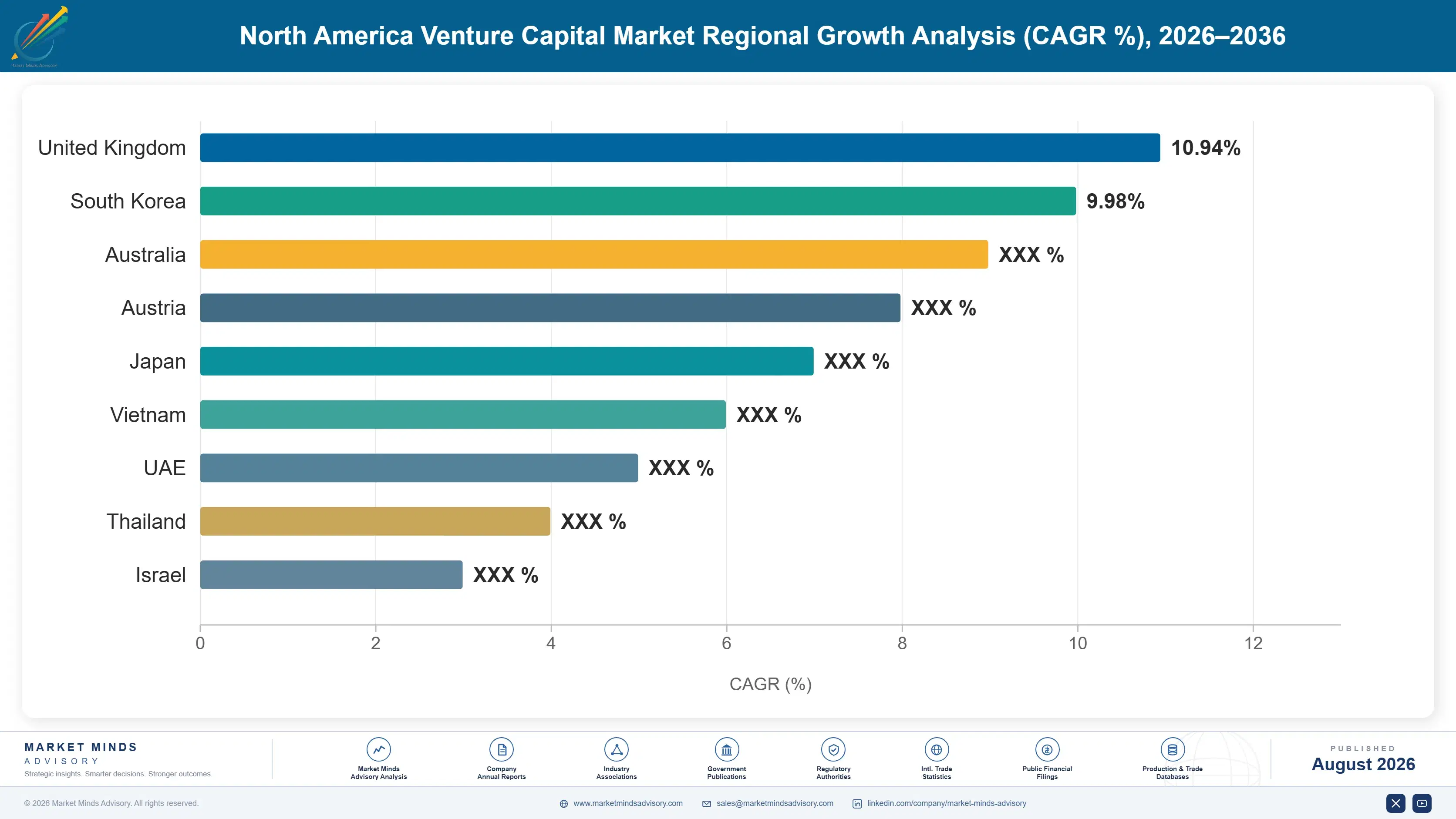
north-america-venture-capital-market-country-cagr-analysis-1787938746102

Capturing Returns Beyond Traditional Equity Rounds

Fund performance for North American venture firms increasingly depends on capturing value beyond traditional priced equity rounds, since generalist deal flow alone offers diminishing differentiation as competition intensifies for the highest-quality AI and technology deals available. Funds that recognize this dynamic early are repositioning entire investment strategies around technical depth and flexible capital structures rather than pure capital availability alone.

Building Dedicated Technical AI Underwriting Teams

Funds that built dedicated technical underwriting teams with genuine AI and machine learning domain expertise are capturing higher-quality deal flow than generalist investors relying on surface-level thesis alignment alone. Sequoia Capital's dedicated AI team has reportedly improved deal win rates by 20 to 25 percent in competitive AI financing rounds compared with prior generalist approaches. This capability increasingly determines which funds founders choose when comparing competing term sheets from multiple interested investors simultaneously. This capability increasingly separates funds winning competitive allocation from those losing deals purely on relationship strength alone.
Market Impact: Improves deal win rates 20 to 25 percent

Offering Venture Debt Alongside Traditional Equity

Funds that added complementary venture debt offerings alongside traditional equity investment are capturing capital-efficient founders who prefer structured debt over additional dilutive equity rounds. This combined offering reportedly increases total capital deployed per portfolio company by 15 to 20 percent compared with equity-only fund structures, since founders increasingly value working with a single capital partner offering flexible financing structures across their full growth trajectory. Founders increasingly value working with a single capital partner offering flexible structures across their full growth trajectory rather than juggling multiple relationships. This preference is strongest among founders who already experienced dilutive rounds earlier.
Market Impact: Grows capital deployed by 15 to 20 percent

Using Continuation Vehicles To Extend Portfolio Company Support

Funds that structured continuation vehicles to provide partial liquidity to limited partners while maintaining exposure to high-performing portfolio companies are managing extended holding periods more effectively than funds forced into premature exits. This approach reportedly preserves 25 to 30 percent more unrealized portfolio value compared with funds forced to sell positions prematurely during compressed exit market conditions, letting winning companies continue compounding value for existing investors. This structuring capability increasingly separates funds managing extended holding periods gracefully from those forced into value-destroying early exits. Limited partners increasingly view this capability as a genuine differentiator among competing fund managers.
Market Impact: Preserves 25 to 30 percent more portfolio value

Who Controls the Margin Pool

North America's venture capital market is highly fragmented, with a CR5 of 22 percent on an assets under management basis held across Sequoia Capital, Andreessen Horowitz, Accel, General Catalyst, and Insight Partners. Sequoia and Andreessen Horowitz lead given their scale and brand recognition among top-tier founders, while Accel and General Catalyst compete across a broader multi-stage portfolio strategy.
Current competitive activity centers on dedicated AI underwriting team development, venture debt product expansion, and continuation vehicle structuring. Funds are also racing to secure allocation in the most competitive AI financing rounds before valuations climb further beyond what disciplined underwriting can reasonably support. Funds are also pursuing selective co-investment partnerships with smaller managers to expand deal access without proportionally expanding internal deal sourcing headcount.

Emerging pressure comes from two directions. Sector-specialist AI funds with narrower but deeper domain expertise are competing directly against generalist multi-stage funds for the same limited pool of top deals, while continued exit market weakness could reshape competitive rankings if funds unable to demonstrate realized returns struggle to raise successor fund vintages from increasingly selective limited partners. Funds unable to demonstrate differentiation beyond capital availability risk being commoditized as founders treat term sheets interchangeably.
north-america-venture-capital-market-company-positioning-matrix-1787938746619

Competitive Moat and Risk Dimensions

SEQUOIA CAPITAL

Moat: Deepest Founder Network And Brand

Sequoia Capital benefits from decades of founder relationships and brand recognition that gives it privileged access to the most competitive deals, often before formal fundraising processes even begin, an advantage newer entrant funds cannot easily replicate regardless of available capital. Founders often approach Sequoia directly given this reputation, further reinforcing the firm's privileged deal access advantage.
SEQUOIA CAPITAL

Risk: Exposure To Scale-Driven Return Dilution

Sequoia's substantial fund size requires deploying meaningful capital across many portfolio companies, potentially diluting overall fund returns relative to smaller, more concentrated funds that can be more selective about which deals justify inclusion in a tighter portfolio construction. This dilution risk becomes more pronounced as fund sizes continue growing faster than the pool of truly exceptional investment opportunities.
ANDREESSEN HOROWITZ

Moat: Extensive In-House Platform Services

Andreessen Horowitz benefits from extensive in-house platform services including recruiting, marketing, and policy support that portfolio companies value beyond capital alone, giving it a differentiated value proposition competitors offering pure financial capital cannot easily match. Portfolio companies increasingly cite these platform resources as a key factor when choosing among competing investor term sheets.
ANDREESSEN HOROWITZ

Risk: High Platform Cost Structure Exposure

Andreessen Horowitz's extensive platform services require substantial ongoing operating costs that smaller, leaner funds do not carry, creating pressure to maintain fund performance at a scale sufficient to justify this differentiated but costly service model over time. Smaller competitors offering leaner, more capital-efficient models could gain ground if platform costs continue rising faster than the value they demonstrably generate.

Players Tracked

Prominent Players

Sequoia Capital
Andreessen Horowitz
Accel
General Catalyst
Insight Partners

Other Key Players

Kleiner Perkins
Bessemer Venture Partners
Lightspeed Venture Partners
Greylock Partners
New Enterprise Associates
Founders Fund
Khosla Ventures
Index Ventures
Tiger Global Management
Thrive Capital
Coatue Management
Institutional Venture Partners
Battery Ventures
Redpoint Ventures
GV

Recent Developments

FEBRUARY 2026

Andreessen Horowitz Expands Dedicated AI Infrastructure Fund

Andreessen Horowitz expanded its dedicated AI infrastructure investment vehicle, raising additional committed capital specifically targeting compute infrastructure and foundation model companies, responding to strong limited partner demand for deeper AI exposure within the firm's fund family. The expansion reflects confidence that dedicated vehicles outperform generalist allocation for AI deals.
Signal: Signals leading generalist funds are now formally establishing dedicated AI sector vehicles across the whole industry
DECEMBER 2025

Insight Partners Launches Structured Venture Debt Product

Insight Partners launched a structured venture debt product specifically targeting capital-efficient AI infrastructure companies with predictable, contracted revenue streams, expanding beyond its traditional growth equity investment approach to offer founders more flexible capital structure options. The launch reflects growing recognition that flexible structures matter to founders evaluating competing offers.
Signal: Signals traditional growth equity funds are now expanding aggressively into structured venture debt product lines broadly
SEPTEMBER 2025

Major Fund Manager Structures Continuation Vehicle For AI Portfolio

A major North American fund manager structured a continuation vehicle specifically covering several high-performing AI portfolio companies, providing partial liquidity to existing limited partners while allowing new investors to gain exposure to already-proven, de-risked positions. The structure reflects growing acceptance of continuation vehicles as legitimate tools, not distress signals.
Signal: Signals continuation vehicles are now firmly becoming a standard tool for managing extended fund holding periods

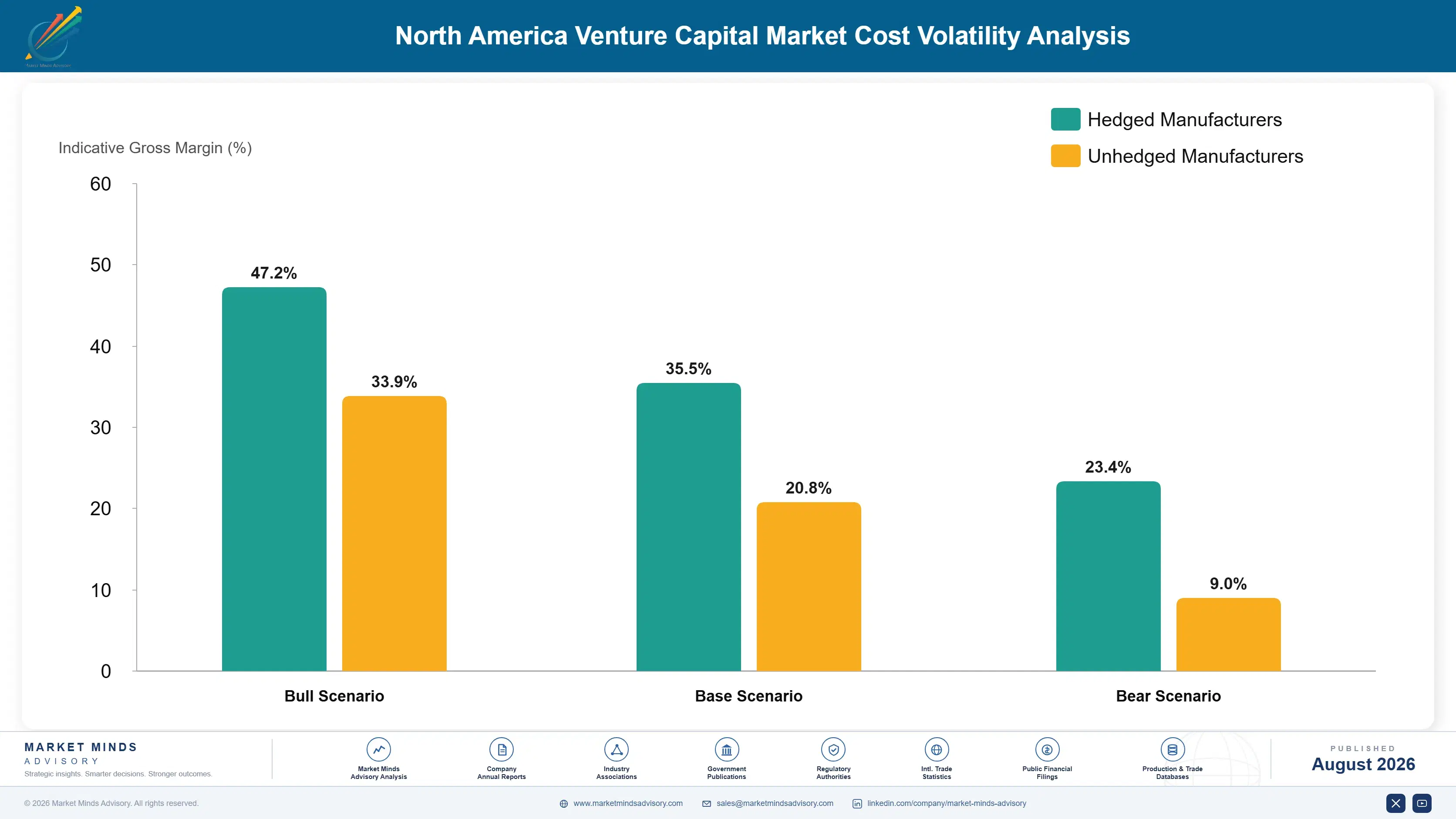
Fund Management And Carried Interest Cost Exposure

Fund management overhead and deal sourcing costs together represent the two largest cost inputs for North American venture capital firms, running roughly 25 to 35 percent of gross returns before carried interest distribution. Management fee revenue is sourced predominantly from limited partner commitments negotiated at fund closing, while deal sourcing costs scale directly with the competitive intensity of securing allocation in oversubscribed financing rounds.
The clearest recent volatility event was the 2022 to 2023 markdown cycle, when many funds wrote down portfolio valuations meaningfully following the broader technology sector correction and compressed public market comparables. Several fund managers' 2025 limited partner communications disclosed materially improved unrealized valuations during the recovery period, attributing much of the improvement directly to renewed AI sector investor enthusiasm restoring comparable company valuations broadly across the industry.

The competitive disadvantage mechanism falls disproportionately on smaller, newer fund managers without established track records, since they must offer more favorable economic terms to attract limited partner commitments than established firms with demonstrated realized return histories. This exposure varies by fund strategy too, since AI-focused sector specialist funds currently command stronger fundraising terms than generalist funds lacking comparable sector conviction.
north-america-venture-capital-market-cost-volatility-analysis-1787938746816

Building Track Record Through Smaller Opportunistic Funds

Newer fund managers are building demonstrated track records through smaller, more opportunistic fund vehicles before raising larger institutional funds, establishing credibility with limited partners incrementally rather than attempting to raise substantial capital without any realized return history to reference. This staged approach also lets managers refine their investment thesis based on real portfolio performance before committing to larger fund vehicles.

Co-Investing Alongside Established Fund Managers

Smaller funds are co-investing alongside established, brand-name managers in competitive deals, gaining access to deal flow and credibility by association that they could not secure independently, while sharing due diligence costs and underwriting insight across the co-investment partnership. This co-investment strategy also provides valuable learning exposure to underwriting approaches used by more established, brand-name fund managers.

Specializing In Underserved Sector Or Stage Niches

Some fund managers are deliberately specializing in underserved sector or stage niches rather than competing directly against dominant generalist funds for the same oversubscribed AI deals, building differentiated deal flow and expertise in categories larger funds consider too small to prioritize. This specialization has already helped newer managers build credible track records within categories larger funds overlook.

Portfolio Architecture for Margin Defence

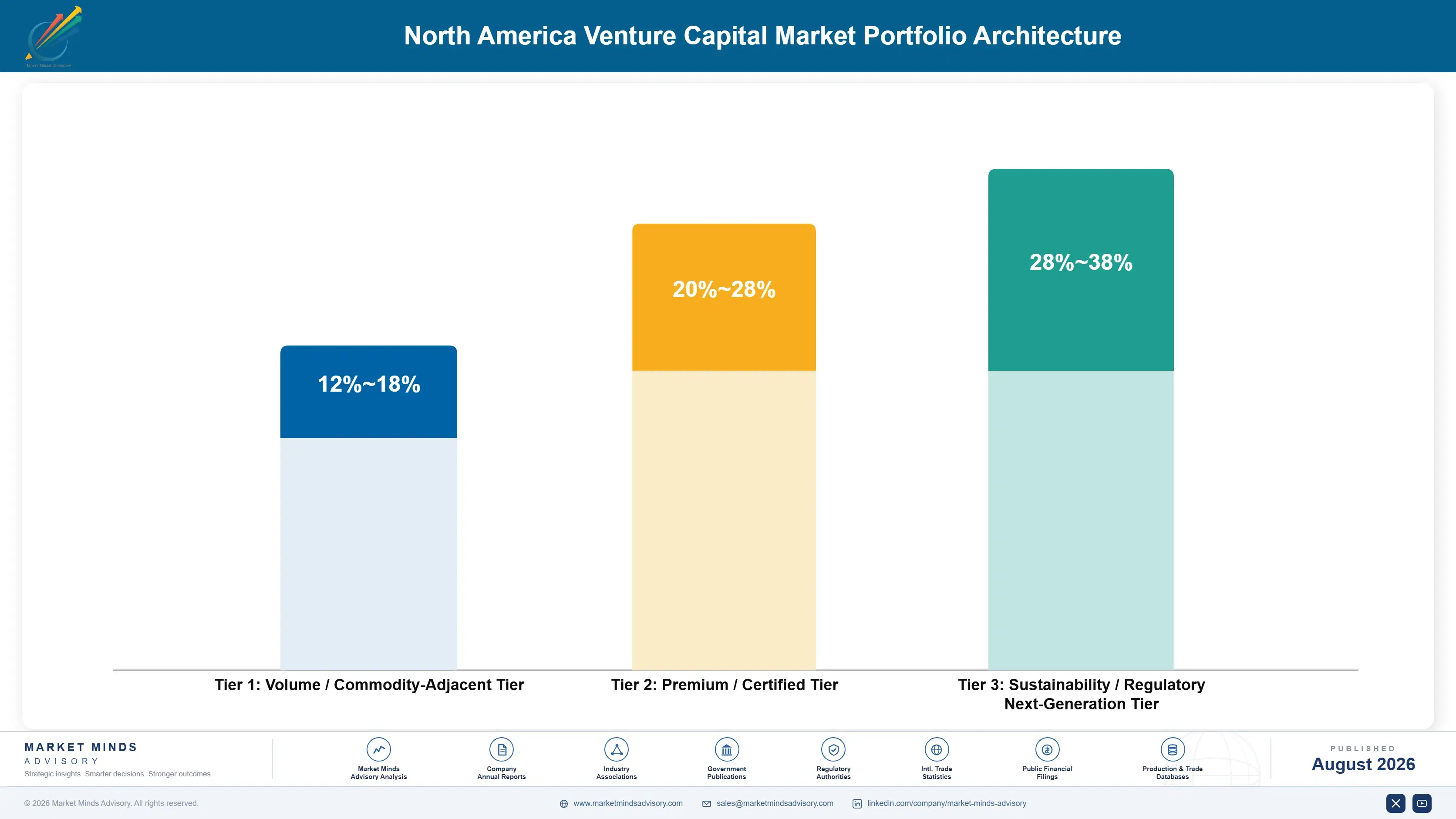
North American venture capital portfolios span three distinct economic tiers separated primarily by sector conviction and underwriting sophistication rather than fund size alone. Standard generalist equity investment sold on broad market access carries thinner differentiated returns as competition for quality deal flow intensifies industry-wide. Funds competing purely on broad market access in this tier face compressed returns as too much capital chases too few genuinely differentiated deals.
Certified and premium tiers, including dedicated AI sector expertise and structured venture debt offerings, command materially better returns because they require specialized underwriting capability and founder relationships competitors cannot replicate quickly. The highest value pool concentrates in AI infrastructure investment and continuation vehicle structuring, where genuine advantage through technical expertise and portfolio management sophistication drives the industry's strongest returns.

Volume-tier generalist investment remains necessary for maintaining overall deal flow diversity and portfolio construction flexibility, even though return contribution lags behind premium and next-generation tiers substantially, creating an ongoing tension between defending broad market coverage and reallocating capital toward higher-conviction specialized strategies. The funds managing this balance most effectively will likely define industry leadership over the next several fund cycles.

Volume / Commodity-Adjacent Tier

Standard generalist equity investment sold primarily on broad market access and diversification, with limited differentiation beyond fund brand and available capital. Returns compress further as capital availability outpaces the supply of genuinely differentiated investment opportunities nationwide.
Gross Margin: 12-18%

Premium / Certified Tier

Dedicated AI sector expertise and structured venture debt offerings requiring specialized underwriting capability and founder relationships smaller funds struggle to replicate quickly. These strategies carry stronger return potential given their embedded expertise and specialized underwriting relationships built over time.
Gross Margin: 20-28%

Sustainability / Regulatory / Next-Generation Tier

AI infrastructure investment and continuation vehicle structuring commanding the industry's strongest returns through genuine technical and portfolio management differentiation. Funds investing here early are building technical expertise and founder relationships competitors will struggle to replicate quickly.
Gross Margin: 28-38%
north-america-venture-capital-market-portfolio-architecture-1787938747306

High-value Sub-segments and Strategic Watch-out

AI Infrastructure And Foundation Model Investment

AI infrastructure and foundation model investment combines strong return potential with the fastest growth in the market, converting deep technical underwriting capability into a genuine durable competitive advantage for well-positioned funds. Funds still relying on surface-level thesis alignment risk missing this increasingly lucrative opportunity entirely.
Gross Margin: 30-40%

Structured Venture Debt For Capital-Efficient Founders

Structured venture debt for capital-efficient founders pairs solid returns with strong growth from founders avoiding further dilution, offering a dependable combination without the volatility risk carried by pure equity investment strategies. Early movers building this capability are establishing founder relationships later competitors will struggle to displace.
Gross Margin: 14-20%

Standard Generalist Multi-Stage Equity Investment

Standard generalist multi-stage equity investment remains the volume core of the industry, generating dependable deal flow diversity even as returns stay compressed by intensifying competition for the highest-quality opportunities. Funds should defend this base carefully even while shifting capital toward higher-conviction specialized strategies overall. Volume alone no longer secures returns.
Gross Margin: 12-16%

Undifferentiated Late-Stage Growth Equity Investment

Undifferentiated late-stage growth equity investment represents the industry's clearest strategic watch-out, since compressed exit markets are steadily proving this strategy carries meaningfully higher holding period risk than earlier-stage alternatives. Funds should tighten selectivity quickly rather than assume late-stage growth investing remains viable without differentiation. Delay only compounds this competitive gap.
Gross Margin: 8-14%

Cycle-Anchored Recurring Fund Demand

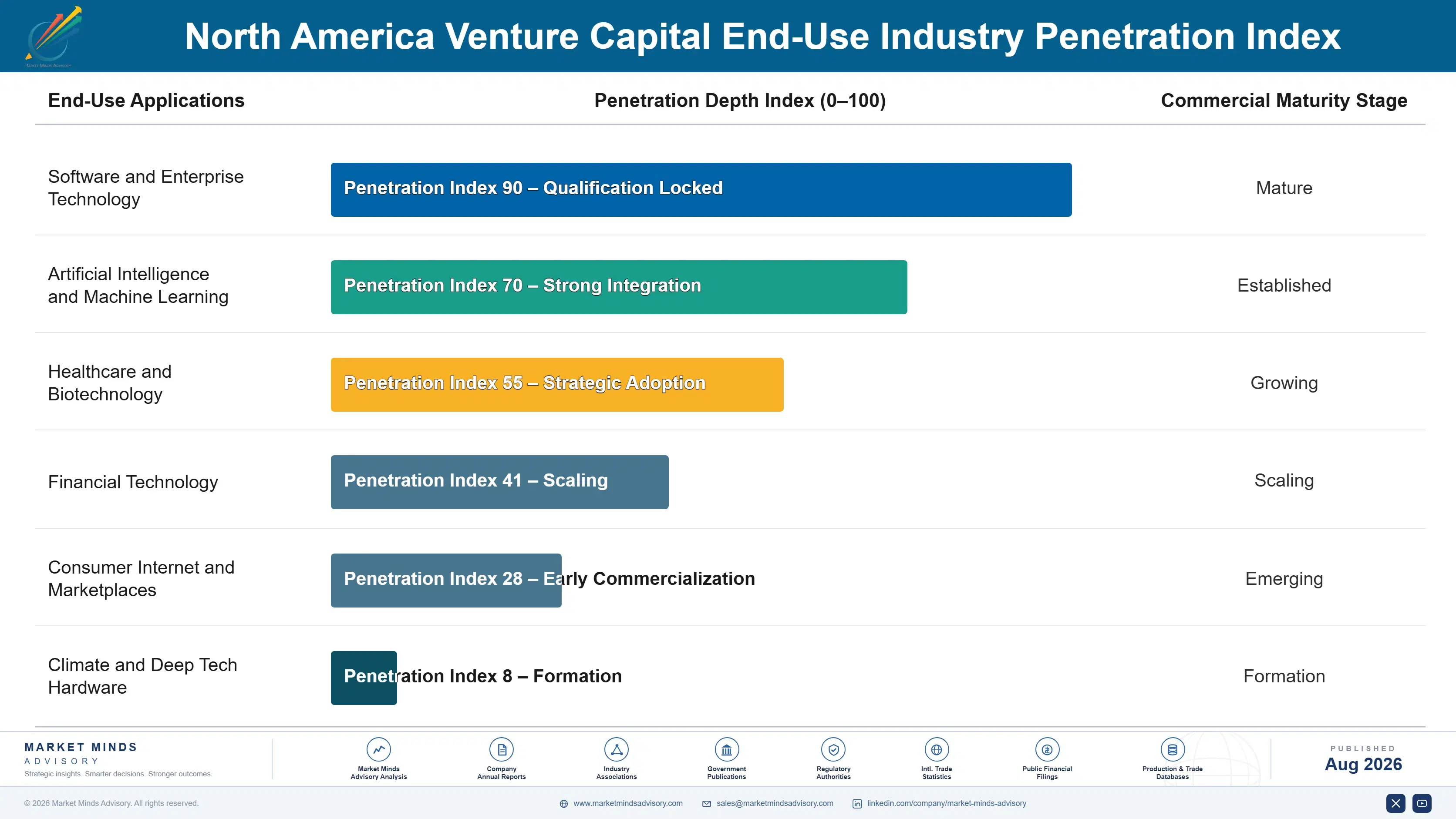
North American venture capital demand carries meaningful annuity characteristics because successful fund managers typically raise successor fund vintages from existing limited partners every three to five years, giving established firms unusually predictable recurring capital commitments once a strong track record and limited partner relationship is established. This recurring pattern strengthens further as funds build deeper relationships with the same limited partners across successive fund cycles.
Stickiness varies meaningfully by end-use vertical, though. Institutional limited partners including pension funds and endowments show the deepest retention since switching fund managers requires extensive due diligence and board approval processes, while family office and high-net-worth individual investors show comparatively shallower loyalty, frequently reallocating between competing funds based on recent performance and sector momentum. Family offices also show meaningfully more willingness to switch based on recent performance before switching costs meaningfully increase.

A generational buyer shift is also underway. Younger limited partners and family offices increasingly demand more transparent, data-driven reporting on portfolio company performance rather than the relationship-based, lower-transparency reporting norms that satisfied prior generations of institutional venture capital investors. Fund managers slow to build comparable reporting infrastructure risk losing access to this expanding pool of younger institutional capital over time.
north-america-venture-capital-market-end-use-penetration-index-1787938747794

Where Venture Funds Should Focus Next

These are among the four positions where our research anticipates prominent divergence between winners and laggards over the coming forecast period. Each is grounded in the demand model, the regulatory perimeter, and the announced capacity pipeline.
01 / AI UNDERWRITING INVESTMENT

Build genuine technical AI expertise before deal access narrows further

Funds still relying on surface-level thesis alignment alone risk losing the highest-quality AI deals to competitors with genuine, demonstrated technical underwriting capability built over years. Sequoia's dedicated AI team already demonstrates meaningfully improved deal win rates since this investment began several years ago. Funds that delay building this capability risk permanently ceding the most attractive deal flow to earlier-moving, better-resourced competitors already investing heavily in specialized expertise, a gap that widens further with every additional fund cycle these slower-moving generalist competitors wait.
02 / VENTURE DEBT PRODUCT EXPANSION

Add structured debt offerings before capital-efficient founders choose elsewhere

Funds still lacking complementary venture debt offerings risk steadily losing capital-efficient founders to rival competitors offering more flexible capital structures across the full company growth trajectory from seed through exit. Insight Partners' structured debt launch already demonstrates genuine, measurable founder demand for exactly this kind of flexibility. Funds that delay this expansion risk ceding an increasingly important financing category permanently to competitors who moved earlier and built comparable underwriting capability well ahead of the broader market and its slower-moving participants.
03 / CONTINUATION VEHICLE STRATEGY

Structure liquidity solutions before limited partner patience runs out

Funds still lacking continuation vehicle capability risk forcing premature exits that sacrifice meaningful unrealized portfolio value during compressed exit market conditions affecting multiple portfolio companies simultaneously across the fund. Early adopters already demonstrate meaningfully better preserved portfolio value than funds forced into premature, value-destroying early sales made under mounting investor pressure. Funds that wait until limited partner pressure intensifies further will likely face materially worse terms than those structuring these liquidity solutions proactively well ahead of any visible pressure or complaints.
04 / SECTOR CONCENTRATION RISK MANAGEMENT

Balance AI conviction against portfolio correlation risk carefully

Funds carrying excessive AI sector concentration today face significantly amplified downside exposure if valuations correct sharply before revenue growth catches up to current, aggressive pricing levels across the sector. More selective underwriting focused on demonstrated revenue traction has already proven considerably more resilient than pure growth potential bets made purely on compelling narrative alone. Funds that maintain excessive concentration without disciplined underwriting risk facing disproportionate portfolio losses if broader AI valuations correct meaningfully across the industry and its various sub-sectors.

Engagement Snapshot From the Field

A live engagement with an industry participant carrying material or product regulatory and market exposure ahead of a defining policy shift, showing how our research translates into a defensible multi-year portfolio strategy.
MARKET MINDS ADVISORY · CLIENT ENGAGEMENT SUMMARY
North America Venture Capital Producer Strategic Portfolio Review and Transition Roadmap 2026·Investment Scenario on North America Venture Capital Exposure Evaluation 2025-26
CLIENT PROFILE
The client was a regional university endowment with a growing allocation to venture capital as an asset class, historically relying on a small number of longstanding fund relationships rather than a structured, comparative fund manager evaluation process. The endowment managed approximately three billion dollars in total assets across its diversified investment portfolio. Roughly eight percent of that allocation targeted venture capital specifically.
STRATEGIC CHALLENGE
Endowment leadership needed to determine which fund managers offered the strongest combination of AI sector expertise, demonstrated realized returns, and alignment with the endowment's long-term liquidity needs, while diversifying beyond its historically concentrated set of fund relationships. Leadership also needed to avoid disrupting existing fund relationships that had performed reasonably well over previous investment cycles.
MMA APPROACH
MMA benchmarked candidate fund managers' AI sector underwriting capability, realized return track records, and continuation vehicle usage patterns, drawing on primary interviews with institutional allocators at comparable endowments that had recently completed similar fund manager diversification processes. The assessment also reviewed publicly available fund performance benchmarks from comparable institutional allocators pursuing similar diversification strategies.
KEY FINDINGS
  1. Fund managers with dedicated technical AI underwriting teams demonstrated meaningfully stronger realized returns than generalist competitors across the board (client-reported, unverified by MMA).
  2. Continuation vehicle usage varied substantially across candidate managers, directly affecting expected liquidity timing for the endowment's allocation. This variation directly shaped which managers the endowment prioritized for initial commitments.
  3. Smaller, newer fund managers offered more favorable economic terms but carried meaningfully less realized track record to evaluate confidently. This tradeoff required careful weighing against the endowment's risk tolerance and reporting requirements.
  4. Endowments that diversified fund relationships gradually reported better overall portfolio construction outcomes than those making abrupt wholesale manager changes. This pattern held consistently across nearly every comparable endowment surveyed regardless of size.
CLIENT PROFILE
The client was a regional university endowment with a growing allocation to venture capital as an asset class, historically relying on a small number of longstanding fund relationships rather than a structured, comparative fund manager evaluation process. The endowment managed approximately three billion dollars in total assets across its diversified investment portfolio. Roughly eight percent of that allocation targeted venture capital specifically.
STRATEGIC CHALLENGE
Endowment leadership needed to determine which fund managers offered the strongest combination of AI sector expertise, demonstrated realized returns, and alignment with the endowment's long-term liquidity needs, while diversifying beyond its historically concentrated set of fund relationships. Leadership also needed to avoid disrupting existing fund relationships that had performed reasonably well over previous investment cycles.
MMA APPROACH
MMA benchmarked candidate fund managers' AI sector underwriting capability, realized return track records, and continuation vehicle usage patterns, drawing on primary interviews with institutional allocators at comparable endowments that had recently completed similar fund manager diversification processes. The assessment also reviewed publicly available fund performance benchmarks from comparable institutional allocators pursuing similar diversification strategies.
KEY FINDINGS
  1. Fund managers with dedicated technical AI underwriting teams demonstrated meaningfully stronger realized returns than generalist competitors across the board (client-reported, unverified by MMA).
  2. Continuation vehicle usage varied substantially across candidate managers, directly affecting expected liquidity timing for the endowment's allocation. This variation directly shaped which managers the endowment prioritized for initial commitments.
  3. Smaller, newer fund managers offered more favorable economic terms but carried meaningfully less realized track record to evaluate confidently. This tradeoff required careful weighing against the endowment's risk tolerance and reporting requirements.
  4. Endowments that diversified fund relationships gradually reported better overall portfolio construction outcomes than those making abrupt wholesale manager changes. This pattern held consistently across nearly every comparable endowment surveyed regardless of size.
RECOMMENDED STRATEGY
Phase 1: Phase one allocated a modest commitment to one new fund manager with strong AI sector underwriting credentials. to validate fit before broader portfolio commitment. Phase 2: Phase two expanded commitments to additional managers once initial performance and reporting quality were confirmed. to build a more diversified overall fund relationship base. Phase 3: Phase three gradually rebalanced the overall portfolio toward the diversified target allocation over several fund cycles. to reach the endowment's target allocation mix.
OUTCOME
The endowment successfully diversified its fund manager relationships within the recommended timeline and reported meaningfully improved portfolio construction confidence and reporting transparency within the first two years of the transition (client-reported, unverified by MMA). Leadership credited the phased approach with preserving existing fund relationships throughout the diversification process.

Frequently Asked Questions

Foundational context covering the market sizes, CAGR, scope, country, region and competition that inform every finding below. This section is provided to cover basics and most often pre-purchase conversations, answered from the MMA Primary Research Dataset.

What is the current size of the North America Venture Capital Market?

The North American venture capital market reached an estimated 58.0 billion dollars in capital deployed in 2025. Growth has been propelled by renewed AI sector investor enthusiasm and expanding venture debt adoption.

How large will the North America Venture Capital Market be by 2036?

The market is projected to reach approximately 142.28 billion dollars in annual capital deployed by 2036. This reflects sustained AI sector investment and structured financing growth through the forecast period.

What is the CAGR for the North America Venture Capital Market 2026 to 2036?

The base case CAGR is 8.5 percent annually. Bull and bear scenarios range between 7.3 and 9.7 percent depending on the pace of AI startup exit activity.

Which segment is growing fastest?

AI and deep tech-focused venture investment leads at 15.5 percent CAGR, roughly 1.82 times the overall market pace. Compute infrastructure and foundation model funding are the primary drivers behind this acceleration.

Who are the major companies in the North America Venture Capital Market?

Leading firms include Sequoia Capital, Andreessen Horowitz, Accel, General Catalyst, and Insight Partners. These five firms hold a combined 22 percent share on an assets under management basis.

Which country is growing fastest?

The United States itself leads at an estimated 9.2 percent CAGR. Concentrated AI sector deal flow and expanding venture debt adoption are driving this above-average domestic pace.

Report Segmentation Architecture

The full report scope spans multiple orthogonal segmentation dimensions, with cross-tabulated demand data provided for each dimension pair. Coverage extends further to regional breakdowns, trend trajectories, and the competitive detail needed to support segment-level decision-making.

By Primary Market Dimension

  • Pre-Seed and Seed Stage Equity Investment
  • Early-Stage Series A and B Equity Investment
  • Growth-Stage Series C and Later Equity Investment
  • Corporate Venture Capital Investment
  • Venture Debt and Structured Growth Financing
  • AI and Deep Tech-Focused Venture Investment

By End-Use Industry

  • Software and Enterprise Technology
  • Artificial Intelligence and Machine Learning
  • Healthcare and Biotechnology
  • Financial Technology
  • Consumer Internet and Marketplaces
  • Climate and Deep Tech Hardware

By Commercial Dimension

  • Institutional Limited Partner Capital
  • Corporate Strategic Investment
  • Family Office and High-Net-Worth Capital
  • Sovereign Wealth Fund Capital
  • Secondary Market and Continuation Vehicle Capital
  • Structured Debt Financing

By Region

  • North America
  • Western Europe
  • East Asia
  • South Asia and Pacific
  • Latin America
  • Middle East and Africa
  • Eastern Europe

Scope, Methodology, and Coverage

Every figure in this report is reproducible from documented input assumptions. The scope below maps the historical period, the forecast horizon, the segmentation dimensions, and the countries covered, alongside the underlying primary and qualitative methodology.
Historical Period
2020 to 2025
Forecast Period
2026 to 2036
Base Year
2025 (USD billions; MMA Primary Research Dataset, August 2026)
Market Definition
This report covers equity and structured debt capital deployed by venture capital firms, corporate venture arms, and institutional growth investors into privately held technology and technology-enabled companies headquartered in the United States and Canada. It excludes private equity buyout transactions, public market secondary trading, and angel investment below institutional fund minimums.
Quantitative Units
USD billions (capital deployed, current prices); deal counts in thousands where cited.
Segmentation Dimensions
Primary Market Dimension (investment stage and structure); End-Use Industry; Commercial Dimension.
Regions Covered
North America, Western Europe, East Asia, South Asia and Pacific, Latin America, Middle East and Africa, Eastern Europe
Countries Covered
United States, Canada, UK, Germany, Japan, South Korea, China, India, Australia, Brazil, Mexico, UAE, Saudi Arabia, Poland, France.
Key Companies Profiled
Sequoia Capital, Andreessen Horowitz, Accel, General Catalyst, Insight Partners.
Quantitative Methodology
Primary survey, n=3,800 respondents, Q4 2025, six countries; demand-side model with trade association cross-validation
Qualitative Methodology
47 expert interviews, Q4 2025; applied to validate demand model assumptions, identify emerging dynamics, and assess competitive positioning
Report Format
PDF and XLSX data workbook (Word format preview document)
Publisher
Market Minds Advisory
Report Code
MMA-2026-TEC-109
Published
August 2026
Contact
sales@marketmindsadvisory.com | www.marketmindsadvisory.com

Purchase the full North America Venture Capital Market Report (2026 to 2036).

This report delivers a complete strategic assessment of the North America venture capital market through 2036. It combines primary survey data from 3,800 respondents across six countries with 47 expert interviews conducted in the fourth quarter of 2025. Coverage spans market sizing, six-segment MECE investment stage segmentation, competitive benchmarking across twenty profiled firms, and regional analysis across all seven global regions. The analysis is designed to support fund strategy, sector allocation, and limited partner relationship decisions. Buyers gain a structured basis for evaluating AI sector allocation against continued venture debt and continuation vehicle strategy decisions.
Six-segment MECE venture investment stage breakdown
Seven-region market sizing with country-level detail
Twenty-firm competitive benchmarking and moat analysis
AI sector concentration impact quantification and scenarios
Venture debt and continuation vehicle strategy guidance
Anonymized client case study with recommended strategy phases

Built For The People Who Decide

From boardroom strategy to bench-side execution, this report is read cover-to-cover by leaders shaping the next decade of their industry, turning demand scenarios, market dynamics and valuation benchmarks into decisions.
CXOs/ Presidents/ VPs/ Managers
M&A and Corporate Development
Strategy Teams and R&D Heads
Procurement and Product Directors
Regulatory and Compliance Leaders
Investor Relations and Equity Analysts