Market Minds Advisory
North America Fintech Market

North America Fintech Market: Embedded Finance and the Real-Time Payments Shift

Embedded finance is letting software companies with no banking license offer accounts, cards, and lending directly inside their own products, while real-time payment rails finally give American consumers infrastructure other countries have run for years.

Lead Analyst

Published

September 2026

Make Smarter Decisions with Customized Research Insights

Request a free sample report and evaluate market opportunities, growth trends, and competitive dynamics relevant to your business needs.

2025 MARKET VALUE$310.0BMarket Size 2025
2036 FORECAST VALUE$957.9BBase Case , 2026 to 2036
CAGR 2026 TO 203610.8 %Bull 12.1% / Bear 9.5%
INCREMENTAL OPPORTUNITY$614.4BNet 10- year value creation
EXPANSION MULTIPLE2.79x2036 value over 2026 base
Strategic Levers
M&A Pipeline
Regional Outlook
Country Rankings
Competitive Intelligence
Segmental Deep-dive
Call-Us : 91 93563 13602

Executive Snapshot and Market Trajectory

Fintech is splitting into infrastructure and applications, and the infrastructure layer is where the real money sits. Non-financial companies are embedding banking products into their own software, real-time payment rails are reaching mainstream adoption, and regulators are tightening oversight of the bank partnerships that make all of it possible.
Banking-as-a-service and embedded finance lead growth at 16.5% annually, nearly 1.5 times the market average, as software companies from payroll platforms to marketplaces embed accounts, cards, and lending directly into their products. Digital lending follows closely on alternative credit expansion. North America holds the largest regional share at 30%, anchored by Silicon Valley and New York venture capital concentration and the world's deepest fintech talent and infrastructure base.
Competitive intensity concentrates around infrastructure depth and regulatory compliance rather than brand alone, since banking-as-a-service platforms and payment processors require licensing relationships and technical infrastructure that smaller entrants cannot assemble quickly. PayPal and Stripe command scale and infrastructure breadth, but specialist platforms like Plaid and Marqeta hold technical depth in specific infrastructure layers that diversified giants have not matched, keeping the fastest-growing segments genuinely contested despite consolidation pressure across the broader industry.
Market Definition
The fintech market covers technology-driven financial services and infrastructure products delivered outside traditional bank branch channels, including digital payments, digital lending, wealthtech and investment platforms, insurtech, banking-as-a-service and embedded finance, and regtech, sized globally with particular emphasis on North America as the largest and most mature regional market. It excludes traditional bank branch banking, cryptocurrency mining and pure-play blockchain infrastructure not tied to a financial services product, and payment network operators functioning purely as card scheme rails.
Base Year Value
$310.0B in 2025 (MMA Primary Research Dataset, August 2026)
Forecast Period
2026 to 2036, eleven discrete annual values
CAGR
10.8% base case. Bull 12.1%. Bear 9.5%.
Fastest Growth Segment
Banking-as-a-Service and Embedded Finance: 16.5% CAGR
Fastest Growth Country
India: 16.8% CAGR
Fastest Growth Region
South Asia and Pacific: 12.9% CAGR
Largest Region
North America: 30% of 2025 global value
Market Leaders
PayPal Holdings Inc., Block Inc., Stripe Inc., Fiserv Inc., Intuit Inc. Source: MMA Analysis based on company annual reports.
Primary Survey
n=3,800 procurement and R&D decision-makers, Q4 2025, six countries
Methodology
Demand-side build-up, cross-validated against public data, 47 expert interviews

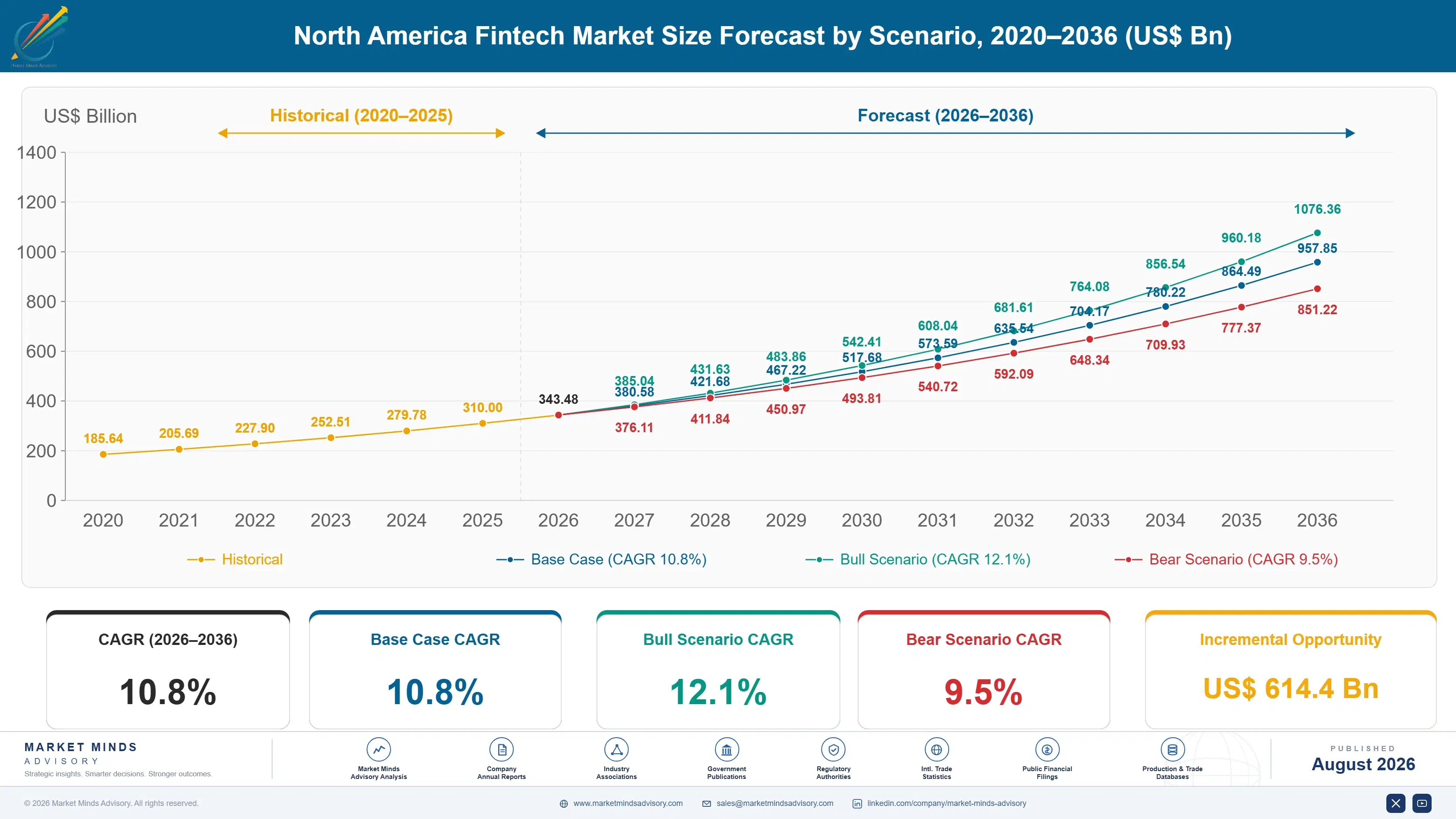
North America Fintech Market Forecast Scenarios

north-america-fintech-market-size-forecast-scenario-1787914003239
Between 2020 and 2025 the market grew at an estimated 9.8% annually, accelerated early by pandemic-era digital adoption that pulled consumers and small businesses toward digital financial tools rapidly, then sustained from 2022 onward as embedded finance infrastructure matured and real-time payment rails began reaching mainstream adoption independently of pandemic-driven behavior shifts. Growth stayed concentrated in payments and lending through most of the period, with wealthtech adoption growing more slowly.
The base case carries the market to 10.8% CAGR through 2036 on three mechanisms. Embedded finance is converting non-financial software companies into distribution channels for banking products, expanding the addressable market beyond traditional financial services providers. Real-time payment infrastructure, including FedNow in the United States, is reaching the mainstream adoption that peer countries achieved years earlier. Regulatory scrutiny of bank-fintech partnerships is consolidating volume toward platforms with compliance infrastructure rather than thin partnership arrangements.
The bull case reaches 12.1% if embedded finance adoption accelerates faster than currently expected across additional non-financial verticals. The bear case falls to 9.5% if regulatory enforcement following recent bank-fintech partnership failures slows new product launches and compresses the addressable market for platforms lacking direct banking relationships, a scenario already visible in several 2024 partnership failures.

Infrastructure Is Where The Margin Actually Sits

Three forces converge on this category. Embedded finance keeps expanding who can distribute financial products beyond licensed banks and traditional fintechs, real-time payment infrastructure keeps redrawing settlement expectations that consumers and businesses now take for granted, and regulatory scrutiny keeps testing which platforms built genuine compliance infrastructure versus thin partnership arrangements. Platforms that treat these as separate problems are already behind the ones treating them as one connected challenge.
MARKET CONCENTRATIONCR5: 18%Top five platforms hold under a fifth of revenue
AVERAGE TAKE RATE2.4% of volumeBlended processing fee across payments and lending platforms
TOP PRODUCING COUNTRYUSA: 27%Single country supplies over a quarter of global revenue
PLATFORM API UPTIME99.95%Average reliability standard across most major infrastructure providers
CROSS-BORDER VOLUME SHARE34%Share of transaction volume crossing national payment borders
COMPLIANCE COST SHARE22% of opexRegulatory and compliance spending dominates operating cost growth
Commercial character splits sharply between infrastructure providers and consumer-facing applications. Infrastructure platforms sell picks-and-shovels capability to other companies building financial products, competing on reliability and technical depth rather than brand recognition. Consumer-facing applications compete for end-user attention and trust directly, spending heavily on acquisition in a crowded field. The infrastructure tier commands materially better margins and stickier revenue, but building it requires capability most application-layer companies never develop.
Looking to 2036, three shifts matter most. Embedded finance will keep expanding into new non-financial verticals regardless of who wins on price today, regulatory scrutiny will increasingly separate platforms with genuine compliance infrastructure from thin partnership arrangements, and real-time payment adoption will become the default expectation rather than a differentiator as infrastructure matures across most major markets.
"Everyone still pitches themselves as the next neobank. The companies actually making money are the ones nobody's heard of, selling the infrastructure that lets a payroll company or a marketplace launch a banking product in six weeks instead of two years."
Director, Financial Technology and Payments Practice · MMA Financial Technology Practice · August 2026

Market Trends

Embedded Finance Lets Non-Banks Offer Banking Products

Banking-as-a-service platforms let non-financial companies, from payroll providers to e-commerce marketplaces, embed deposit accounts, debit cards, and lending products directly into their own software without becoming a licensed bank. Stripe Treasury, Unit, and similar infrastructure providers handle the regulatory licensing and compliance burden, letting a software company launch a financial product in weeks rather than the years a traditional banking charter application would require. This has converted thousands of software companies across payroll, vertical SaaS, and marketplace categories into financial services distributors, expanding the addressable market for embedded finance infrastructure well beyond what traditional fintech competition alone would generate.
Market Impact: Serves over 33 million small businesses
Real-Time Payment Rails Finally Reach Mainstream Adoption

The Federal Reserve launched FedNow in July 2023, giving the United States real-time payment infrastructure that countries including the UK, India, and Brazil had operated for years already. Adoption has accelerated steadily since launch, with participating financial institutions and payment processors integrating FedNow rails alongside the existing RTP network operated by The Clearing House. More than half of eligible depository institutions joined within the first year. Real-time settlement eliminates the multi-day delay traditional ACH transfers require, fundamentally changing cash flow management for small businesses and gig economy workers who previously waited days for payment to clear.
Market Impact: Declines branch volume over 10 years

Market Opportunities and Growth Drivers

Small Businesses Demand Integrated Financial Tool Bundles

Small business owners expect accounting, payments, payroll, and lending to work together as one integrated system rather than separate disconnected tools, and platforms that bundle these functions capture disproportionate share of small business financial services spending. Intuit's QuickBooks platform and Square's integrated commerce and banking tools demonstrate that bundled financial tooling drives higher retention and cross-sell revenue than any single standalone product could generate. Roughly 33 million small businesses operate in the United States, and the shift toward integrated financial tooling represents a durable, multi-year change in how small businesses manage cash flow, not a pandemic-era adjustment.
Market Impact: Froze funds across 100+ fintech partners

Consumers Shift To Digital-First Banking Relationships

Younger consumers increasingly open their first financial account with a digital-first neobank or fintech app rather than a traditional branch bank, treating mobile-first banking as the default expectation rather than an alternative channel. Chime, SoFi, and similar digital-first platforms have built substantial customer bases specifically among younger consumers who value fee transparency and mobile-native experience over branch access and in-person relationship banking. Branch banking transaction volume has declined steadily across the industry for over a decade, while mobile banking app usage keeps climbing, a shift accelerated but not created by pandemic-era branch closures.
Market Impact: Pushes CAC above $200 per customer

Market Restraints and Challenges

Regulatory Scrutiny Intensifies After Partnership Failures

The 2024 collapse of banking-as-a-service middleware provider Synapse left millions of dollars in customer funds frozen across multiple fintech partners, exposing how thin bank-fintech partnerships were beneath consumer-facing branding. The root cause is a gap in oversight: banking-as-a-service arrangements often involve multiple intermediary layers between the end customer and the chartered bank holding deposits, and regulators had not mapped where responsibility sat when a middleware provider failed. This has forced regulators to tighten scrutiny of bank-fintech partnerships, slowing product launches as banks conduct due diligence. Platforms are responding by building banking relationships and reducing intermediary layers beyond the chartered institution.
Market Impact: Converts over 1,000 software companies

Customer Acquisition Costs Rise As Market Matures

Digital advertising costs for financial services keep climbing as fintech platforms compete for the same limited pool of digitally engaged consumers, pushing customer acquisition cost above what many neobank business models can support on account revenue. The root cause is market maturity: the early-adopter consumers who cost little to acquire have switched to a digital-first provider, leaving a harder-to-convert population that costs more to reach. This has forced neobanks to raise account fees or narrow target customer base to higher-revenue segments. Platforms are responding by shifting toward embedded and partnership-driven distribution that acquires customers at lower cost than consumer marketing.
Market Impact: Launched FedNow in July 2023
3 additional market trends, 3 additional growth drivers, and 3 additional restraints and challenges are covered in the full report. Contact sales@marketmindsadvisory.com to access the complete intelligence.

Segment CAGR and Growth Architecture

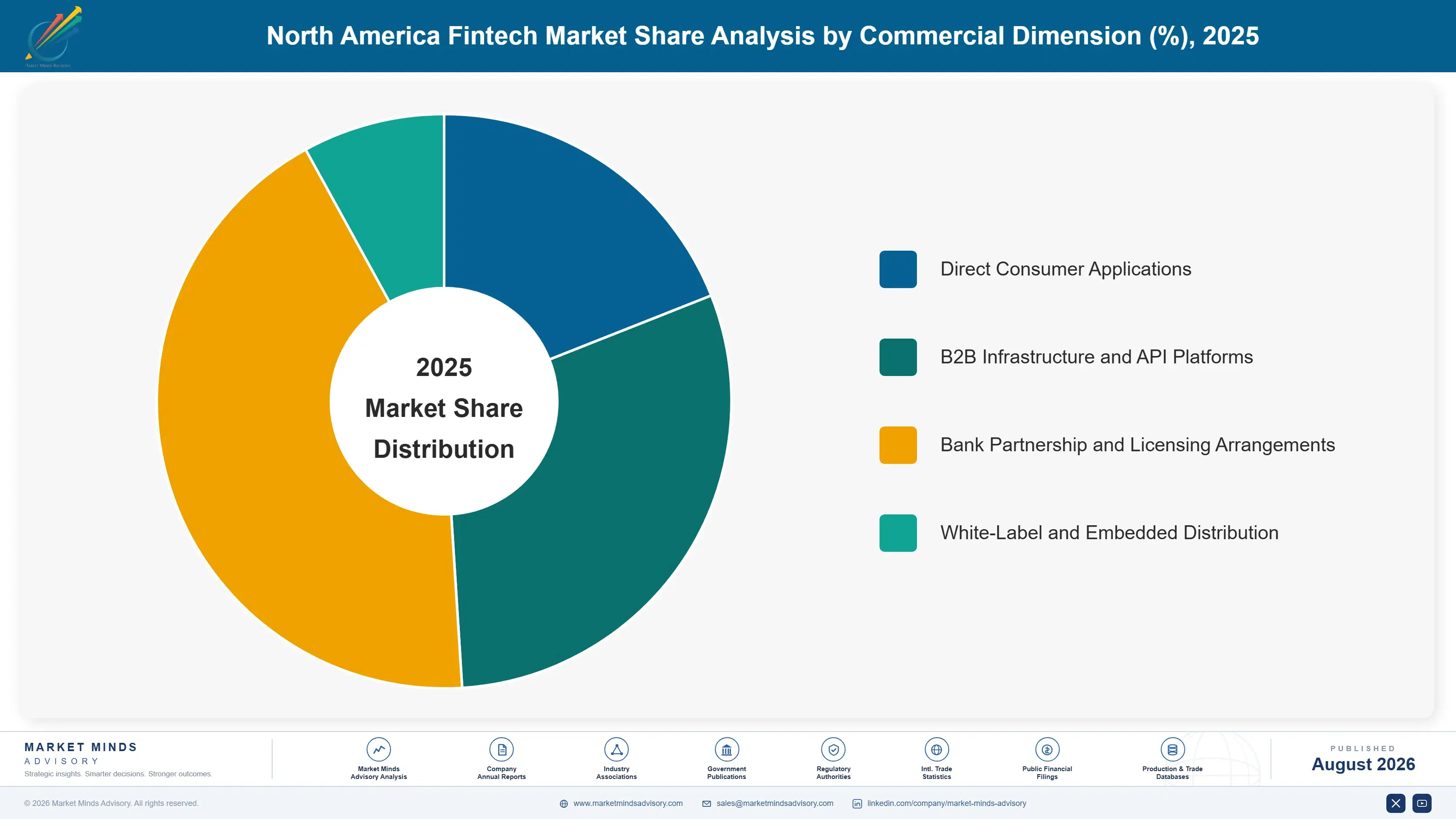
Segmentation follows service type, a single functional-purpose logic spanning digital payments, digital lending, wealthtech, insurtech, banking-as-a-service, and regtech. Each service carries distinct regulatory pathway, revenue model, and technical infrastructure requirement, so commercial position tracks what financial function the platform delivers and how it is licensed and regulated across each participating jurisdiction and market today.
north-america-fintech-market-market-share-analysis-1787914003831

Banking-as-a-Service and Embedded Finance

Banking-as-a-service and embedded finance grow fastest at 16.5% annually, nearly 1.5 times the overall market rate, as non-financial software companies embed accounts, cards, and lending directly into their own products rather than referring customers to external banks. These infrastructure platforms handle licensing, compliance, and technical integration on behalf of client companies, letting a payroll platform or marketplace launch a financial product in weeks rather than pursuing a banking charter independently. Stripe Treasury and similar infrastructure providers compete on reliability, compliance depth, and integration speed rather than consumer brand recognition. Regulatory scrutiny following recent partnership failures is now separating platforms with genuine direct banking relationships from thinner intermediary arrangements that regulators increasingly distrust.
CAGR 16.5%

Digital Lending and Alternative Credit

Digital lending and alternative credit grow second-fastest at 13.8%, driven by consumer and small business demand for faster underwriting decisions than traditional bank lending typically provides. Buy-now-pay-later products, small business working capital advances, and algorithm-driven personal loans all use alternative data sources and automated underwriting to approve credit decisions in minutes rather than the days or weeks traditional bank underwriting requires. Affirm and similar platforms have demonstrated that point-of-sale lending integration drives meaningfully higher conversion than traditional credit card applications. Rising interest rates have pressured unit economics across the category, forcing platforms toward more sophisticated risk-based pricing and away from the flat-fee models that worked when funding costs were near zero.
CAGR 13.8%
Full segment breakdown across 6 segments available in the complete report.

Regional Architecture and Country Demand Map

North America leads on Silicon Valley and New York venture capital concentration and the world's deepest fintech infrastructure base, ahead of East Asia's structured payments markets. Western Europe follows on regulatory frameworks, while South Asia and Pacific posts the fastest regional growth as India's UPI-driven digital payments boom expands.

North America

The United States drives most of North America's 30% share through unmatched venture capital concentration in Silicon Valley and New York, where Stripe, PayPal, and Block all built their infrastructure and consumer businesses from domestic scale before expanding internationally. FedNow's July 2023 launch finally gave American consumers and businesses real-time payment infrastructure that peer countries had operated for years, closing a genuine infrastructure gap. Regulatory scrutiny following the 2024 Synapse collapse has tightened oversight of bank-fintech partnerships specifically within the United States market. Canada contributes a smaller, more conservatively regulated fintech sector with slower but steadier growth. Growth of 10.5% reflects continued embedded finance expansion even from an already mature, well-penetrated market base.
Share: 30% | CAGR: 10.5% (2026 to 2036)

Western Europe

The UK anchors Western Europe's 20% share as Europe's leading fintech hub, home to Revolut and a concentration of payments and wealthtech startups built around London's financial services talent base. Germany and France follow with embedded finance and digital lending adoption, supported by the EU's PSD2 open banking framework that mandates bank data access for licensed third parties. Sweden's Klarna built one of Europe's largest buy-now-pay-later businesses from a domestic base before expanding across the continent and into the United States. Post-Brexit regulatory divergence has created additional compliance complexity for platforms operating across UK and EU jurisdictions. Growth of 9.2% trails the global rate, consistent with a mature market where most growth comes from expansion rather than user acquisition.
Share: 20% | CAGR: 9.2% (2026 to 2036)
Regional intelligence for 5 additional markets available in the complete report: East Asia, South Asia and Pacific, Latin America, Middle East and Africa, Eastern Europe. Contact sales@marketmindsadvisory.com.
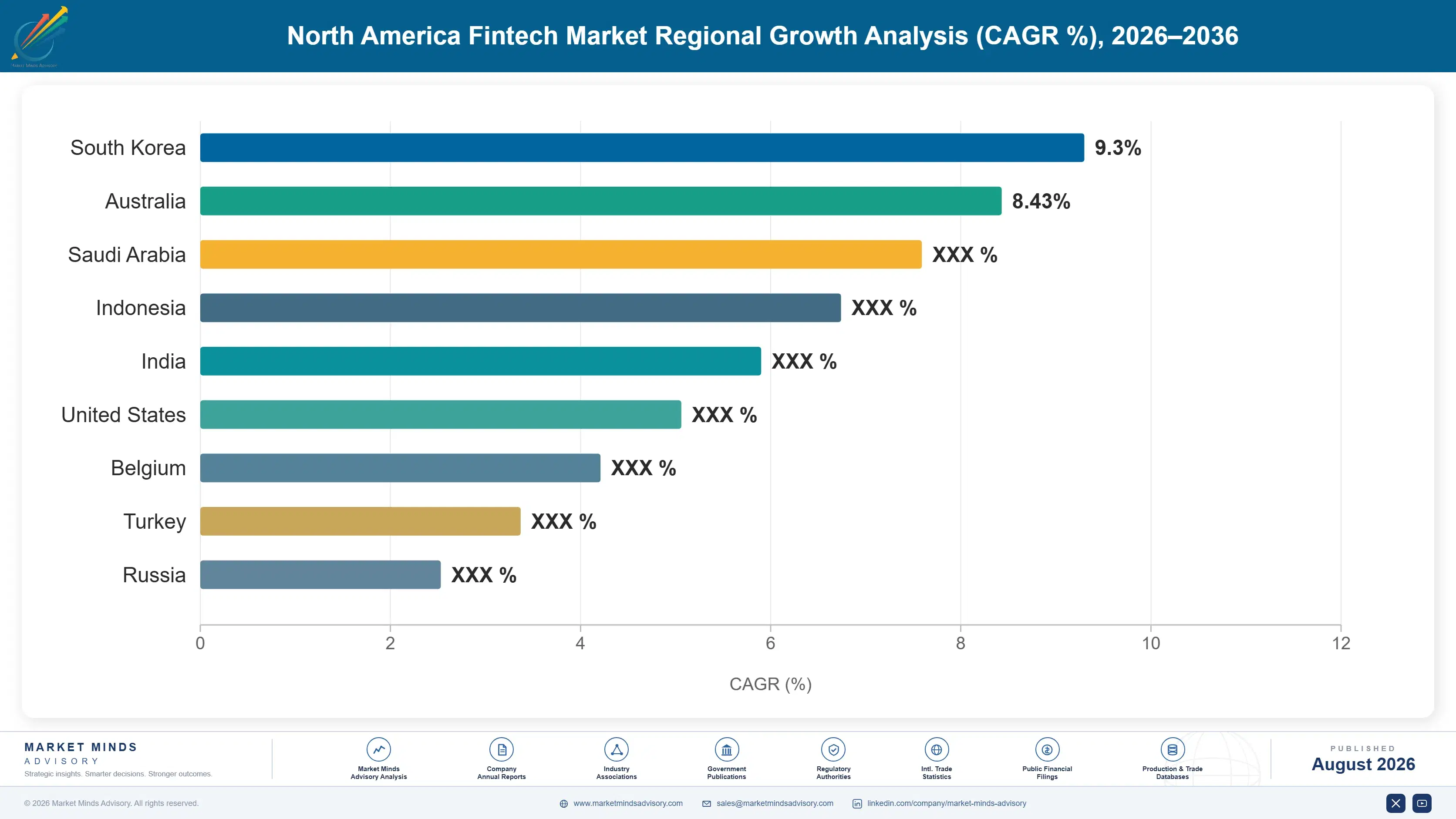
north-america-fintech-market-country-cagr-analysis-1787914004347

Where Fintech Margin Now Concentrates

Platforms face a familiar squeeze: commodity payment processing competes purely on take rate and volume, while infrastructure depth, embedded finance capability, and compliance credibility increasingly carry the margin. The four moves below shift revenue toward defensible, harder-to-replicate positions instead of undifferentiated transaction processing, drawing on how leading platforms already separate commodity economics from infrastructure and compliance-driven services.

Build Embedded Finance Infrastructure For Software Companies

Platforms that build banking-as-a-service infrastructure for non-financial software companies capture recurring infrastructure revenue that dwarfs payment processing fees, since embedded finance clients pay for licensing access, compliance handling, and technical integration rather than just transaction volume. Stripe Treasury and similar providers reportedly command 3 to 5 times higher revenue per client relationship than standalone payment processing alone generates, since embedded finance clients depend on the infrastructure for core product functionality rather than a peripheral service. Platforms without embedded finance capability are ceding the fastest-growing infrastructure layer to competitors willing to build the compliance and licensing depth this category genuinely requires.
Market Impact: Commands 3 to 5 times processing-only fee revenue

Bundle Compliance Infrastructure As A Direct Service

Fintech platforms and their banking partners increasingly value compliance infrastructure as much as the underlying financial product itself, since regulatory scrutiny following recent partnership failures has made compliance depth a genuine competitive differentiator rather than a background cost center. Platforms offering bundled compliance monitoring, know-your-customer verification, and regulatory reporting alongside core financial infrastructure can command meaningfully higher pricing, often 20% to 35% above unbundled alternatives, while building the kind of banking partner trust that survives regulatory scrutiny cycles. This approach requires real upfront investment that smaller platforms often cannot fund independently without an established banking partner relationship already in place.
Market Impact: Commands 20% to 35% compliance-driven premium pricing overall

Expand Into Real-Time Payment Infrastructure Early

FedNow and similar real-time payment rails are still in early adoption, and platforms building integration capability now, ahead of mainstream adoption, capture first-mover positioning before real-time settlement becomes table-stakes infrastructure every competitor offers. Early movers gain technical relationship capital with the Federal Reserve and The Clearing House and time to build the operational expertise that competitors entering later cannot substitute for immediately. Platforms waiting to see how adoption plays out before investing are ceding first-mover positioning in what MMA models as a multi-year infrastructure transition worth building toward within the next 24 to 36 months.
Market Impact: Targets a 24 to 36 month adoption window

License Underwriting Models To Smaller Lenders

Platforms that developed proprietary alternative-data underwriting models ahead of competitors hold capability that smaller regional lenders now need but cannot develop independently within a reasonable timeframe. Licensing that underwriting capability to non-competing regional lenders, rather than only lending directly, can generate technology licensing revenue running 2% to 5% of the licensee's loan volume at minimal marginal cost. This model is still emerging in fintech but mirrors licensing approaches already established in adjacent financial technology categories, and regulatory-driven consolidation is creating exactly the concentrated demand that makes licensing commercially attractive right now.
Market Impact: Generates 2% to 5% ongoing licensing revenue stream

Who Controls the Margin Pool

Concentration sits at a low 18% for the top five, evaluated on global fintech platform revenue across payments, lending, and infrastructure categories alike. PayPal's scale gives it the largest single share, but the gap to infrastructure specialists is narrower than CR5 implies, since Stripe, Plaid, and Marqeta each hold technical infrastructure depth diversified platforms have not matched.
Competitive activity runs along three fronts. Embedded finance infrastructure drives platform positioning, where Stripe and similar providers compete to become the default banking-as-a-service layer for non-financial software companies. Compliance depth drives banking partner trust, where platforms with genuine direct banking relationships outcompete thinner intermediary arrangements regulators increasingly scrutinize. Real-time payment integration drives infrastructure positioning, where early movers on FedNow and RTP capture technical relationship capital that later entrants cannot easily replicate.

Pressure is building from traditional banks expanding their own fintech-adjacent capability, narrowing a technology gap that pure-play fintech platforms have relied on for differentiation. Global payment networks including Visa and Mastercard are also pushing further into value-added services, compressing the space independent fintech platforms once occupied alone. Rankings will likely shift toward platforms that combine infrastructure depth with genuine compliance credibility, since neither advantage alone secures the fastest-growing segments.
north-america-fintech-market-company-positioning-matrix-1787914004867

Competitive Moat and Risk Dimensions

PAYPAL HOLDINGS INC.

Moat: Massive Installed Consumer Base

PayPal's decades-long installed base of consumer and merchant accounts gives it distribution scale that newer entrants cannot replicate quickly, backed by deep merchant integration across e-commerce platforms worldwide. Its Venmo peer-to-peer product extends that consumer relationship into younger demographics that increasingly favor mobile-first payment experiences.
PAYPAL HOLDINGS INC.

Risk: Legacy Technology Integration Burden

PayPal's scale comes with decades of accumulated technical infrastructure that newer, purpose-built competitors do not carry, potentially slowing its ability to integrate emerging capabilities like embedded finance as quickly as infrastructure-native competitors. Younger consumers increasingly favor newer, more narrowly focused fintech apps over PayPal's broader but less specialized product suite.
STRIPE INC.

Moat: Leading Embedded Finance Infrastructure

Stripe's developer-first infrastructure and Stripe Treasury embedded finance product give it technical credibility among software companies building financial products that consumer-facing competitors cannot easily match. Its position as default payment infrastructure for a large share of internet-native businesses creates powerful distribution advantages as those businesses expand into embedded finance.
STRIPE INC.

Risk: Private Company Valuation Pressure

Stripe remains privately held, and its valuation has fluctuated significantly in secondary markets as investors reassess fintech valuations broadly, creating pressure to demonstrate profitability that could affect strategic decisions around growth investment versus near-term margin. Competing infrastructure providers with public currency for acquisitions hold an acquisition-currency advantage Stripe currently lacks.

Players Tracked

Prominent Players

PayPal Holdings Inc.
Block Inc.
Stripe Inc.
Fiserv Inc.
Intuit Inc.

Other Key Players

SoFi Technologies Inc.
Affirm Holdings Inc.
Chime Financial Inc.
Robinhood Markets Inc.
Coinbase Global Inc.
Plaid Inc.
Marqeta Inc.
Nu Holdings Ltd.
Klarna Bank AB
Revolut Ltd.
Ant Group
Adyen N.V.
Toast Inc.
Green Dot Corporation
Global Payments Inc.

Recent Developments

APRIL 2024

Synapse Banking-as-a-Service Collapse Freezes Customer Funds

Banking-as-a-service middleware provider Synapse filed for bankruptcy, freezing millions of dollars in customer funds held across multiple fintech partners that relied on its infrastructure to connect with chartered banks. The collapse was a corporate bankruptcy, not an acquisition or merger of any kind at all.
Signal: Signals that thin banking-as-a-service intermediary layers carry genuine systemic risk regulators are now scrutinizing closely industrywide.
JULY 2023

Federal Reserve Launches FedNow Real-Time Payment Service

The Federal Reserve launched FedNow, giving the United States real-time payment infrastructure that participating banks and credit unions could adopt to settle transactions instantly around the clock. The launch was a Federal Reserve infrastructure rollout, not a corporate transaction of any kind involving a private company.
Signal: Signals the United States is finally closing a real-time payments infrastructure gap versus peer countries that moved years earlier.
JANUARY 2025

Stripe Acquires Identity Verification Startup

Stripe completed the acquisition of a specialty identity verification startup, adding compliance and fraud prevention capability to its existing payments and embedded finance infrastructure. The transaction was a full acquisition, not a joint venture or minority equity investment involving any additional external technology partner whatsoever.
Signal: Signals infrastructure providers are building compliance capability directly rather than relying on third-party partners for critical functions.

Infrastructure And Compliance Cost Exposure

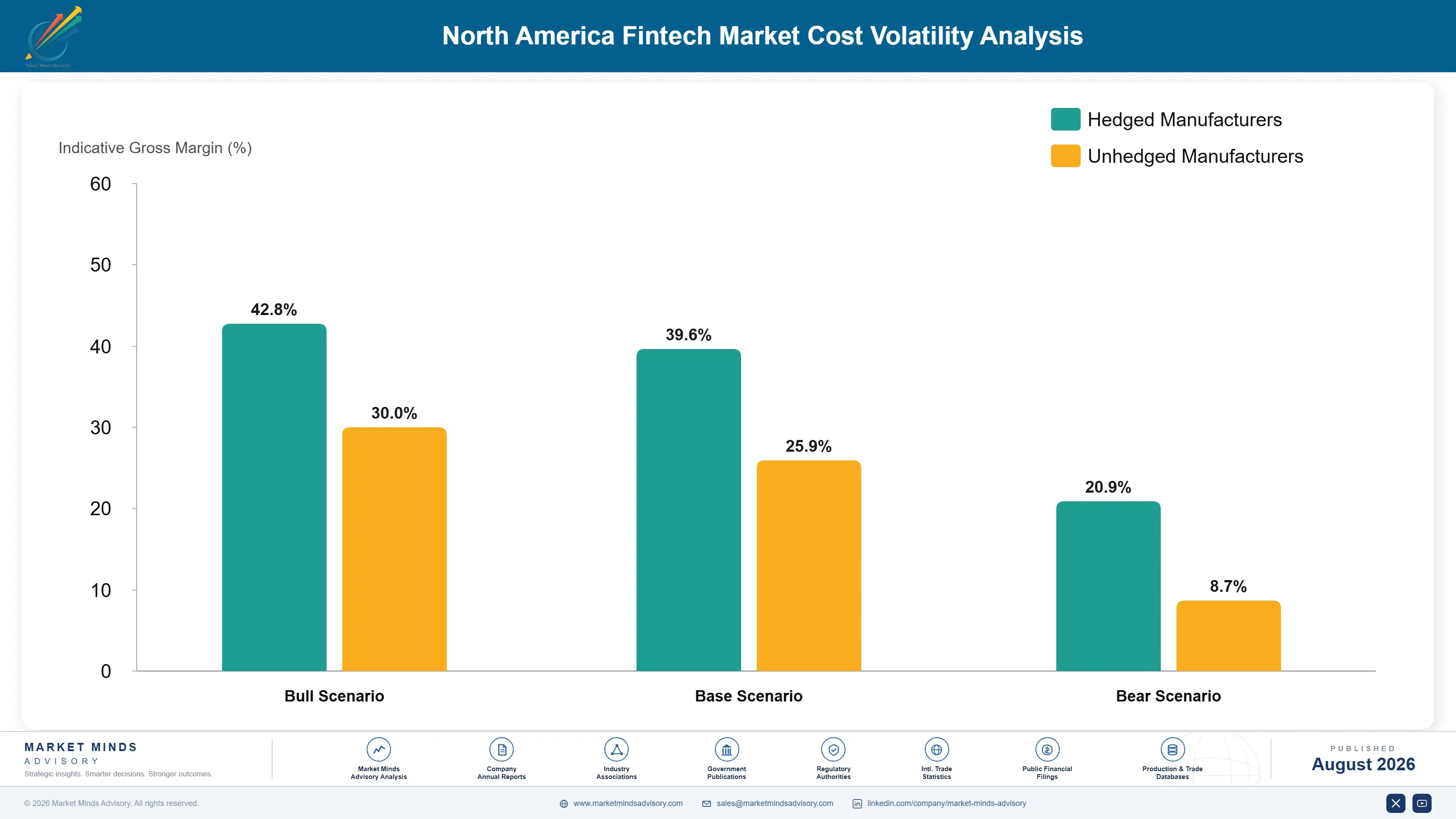
Cloud hosting, payment network interchange fees, and compliance and fraud prevention infrastructure together account for roughly 58% of operating cost, with interchange and network fees alone typically running 25% to 35% of revenue for payment-heavy platforms. Cloud infrastructure costs, concentrated among a handful of major providers, add another 12% to 18%, while compliance staffing and technology absorbs a further meaningful share.
Rising interest rates since 2022 pushed funding costs higher for lending-heavy fintech platforms, compressing unit economics across buy-now-pay-later and working capital lending categories built around near-zero funding costs. Affirm's fiscal year 2023 annual report disclosed elevated funding cost pressure across its lending segments. Compliance and regulatory technology spending has risen since the 2024 Synapse collapse, as banking partners demand more oversight infrastructure from fintech partners.

Smaller platforms without direct banking relationships absorb intermediary and compliance cost heavily, while PayPal and Stripe negotiate direct banking partnerships and cloud infrastructure agreements that smooth cost volatility across larger operating scale. Lending-heavy platforms carry additional exposure to interest rate movements that payment-processing platforms largely avoid, since funding cost flows directly through to lending unit economics. Platforms without diversified revenue streams consistently trail on cost resilience during funding rate cycles.
north-america-fintech-market-cost-volatility-analysis-1787914005062

Build Direct Banking Relationships Rather Than Intermediaries

Platforms relying on multi-layered banking-as-a-service intermediaries face the same systemic risk the Synapse collapse exposed industrywide. Building or securing direct chartered banking relationships, even at higher upfront integration cost, secures customer fund safety and regulatory standing independent of any single intermediary's operational health, a lesson the 2024 Synapse collapse made unmistakably and expensively clear.

Diversify Cloud Infrastructure Across Multiple Providers

Concentrating infrastructure with a single cloud provider creates dependency risk that a major outage or pricing change can turn into a genuine operational crisis. Maintaining multi-cloud capability, even at modest additional engineering cost, preserves negotiating leverage and operational continuity if any single provider faces disruption or steep price increases without warning to the platform.

Diversify Revenue Beyond Interest-Rate-Sensitive Lending

Lending-heavy platforms concentrated in interest-rate-sensitive products face funding cost volatility that payment and subscription revenue largely avoids. Building diversified revenue streams across payments, subscription infrastructure fees, and lending together reduces the earnings volatility that pure-play lending platforms experienced acutely during the 2022 rate cycle, when funding costs rose faster than pricing could reasonably adjust.

Portfolio Architecture for Margin Defence

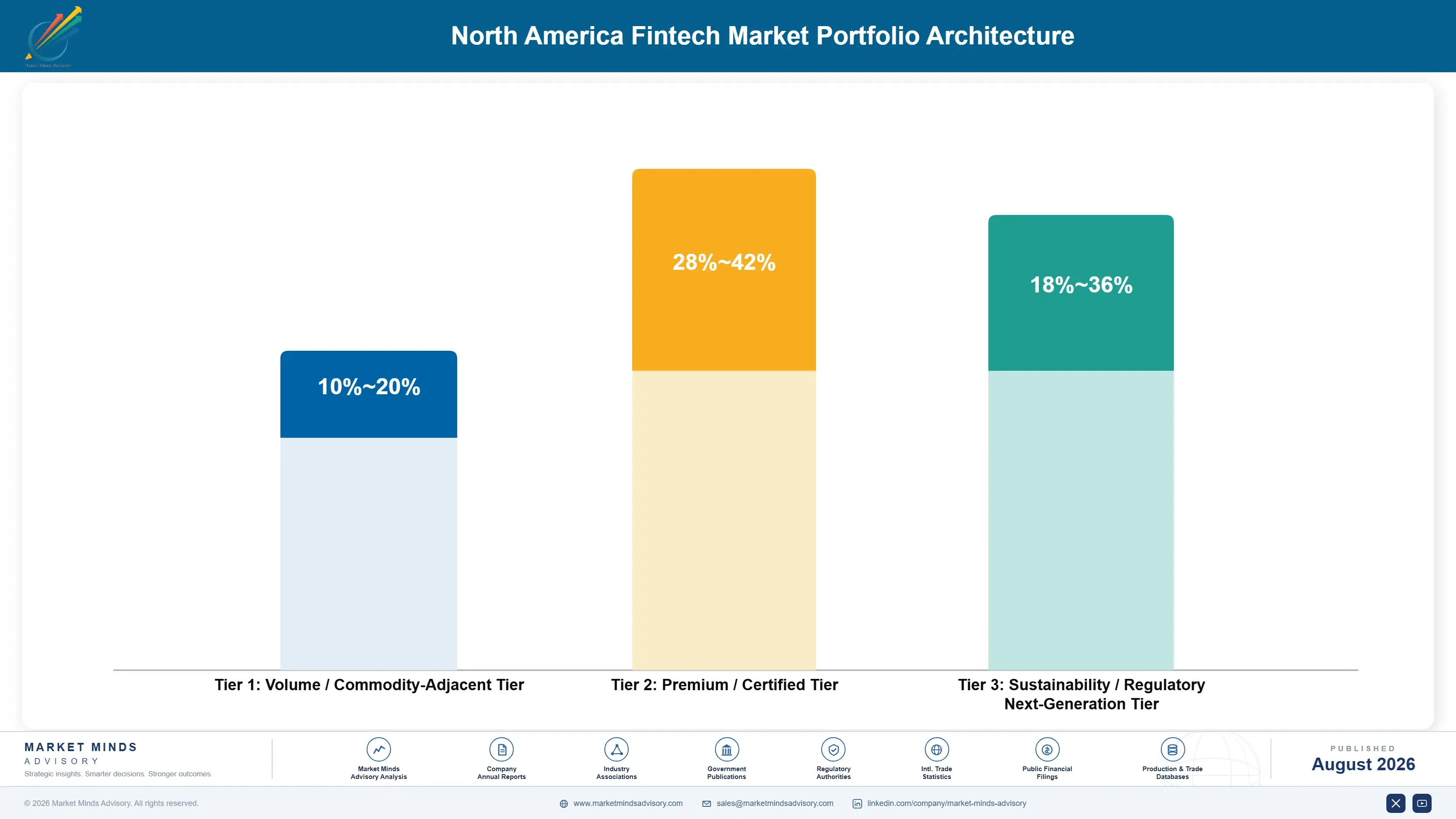
The portfolio splits into three tiers with meaningfully different margin economics. Volume commodity payment processing, sold at scale to merchants and platforms, competes on take rate and reliability against a crowded field of processors, earning modestly. Premium embedded finance and compliance infrastructure earns substantially more because technical depth and banking relationships insulate pricing from direct commodity comparison. Emerging real-time payment and alternative credit lines sit in a third tier carrying strong margins as infrastructure adoption drives urgent near-term platform investment.
The tension runs between volume and infrastructure depth. Commodity payment processing generates the transaction volume that keeps platforms relevant at scale, but margin stays thin since merchants compare take rates relentlessly across largely interchangeable processors. Embedded finance and compliance infrastructure carry the opposite constraint: strong margins but a narrower addressable customer base defined by technical sophistication and banking relationships rather than broad market access.

High-value margin pools concentrate wherever infrastructure depth and compliance credibility combine, which is precisely why embedded finance and compliance-focused platforms have historically outearned commodity payment processors despite serving a smaller addressable customer base. Real-time payment infrastructure carries the most immediate upside right now, driven by FedNow adoption timing rather than organic transaction growth alone.

Volume / Commodity-Adjacent Tier

Standard payment processing and basic digital wallet services, sold at scale to merchants and consumers, competing primarily on take rate and reliability against a crowded field of processors with largely interchangeable service terms.
Gross Margin: 10-20%

Premium / Certified Tier

Embedded finance infrastructure and compliance technology requiring banking relationships and regulatory depth, sold through multi-year platform contracts where technical sophistication insulates pricing from commodity price comparison across most enterprise accounts.
Gross Margin: 28-42%

Sustainability / Regulatory / Next-Generation Tier

Real-time payment infrastructure and alternative-data underwriting products still working through mainstream adoption cycles and regulatory validation before commercial-scale returns become fully predictable across most target markets and customer segments broadly.
Gross Margin: 18-36%
north-america-fintech-market-portfolio-architecture-1787914005574

High-value Sub-segments and Strategic Watch-out

Banking-as-a-Service and Embedded Finance

The fastest-growing and highest-value segment, driven directly by non-financial software companies embedding financial products. Stripe and similar providers draw early advantage from technical infrastructure depth, and margin expansion continues as compliance costs amortize across growing client volume, a pattern likely to persist through the coming decade.
Gross Margin: 28-42%

Digital Lending and Alternative Credit

Strong margins on underwriting sophistication, growing steadily as alternative-data credit adoption expands globally. Growth trails embedded finance because lending unit economics remain sensitive to funding rate cycles that payment-adjacent infrastructure segments largely avoid, a gap likely to narrow as rate volatility eases gradually over time.
Gross Margin: 18-36%

Standard Payment Processing

The volume core of the category, generating the bulk of transaction volume at stable, moderate margins. PayPal, Block, and Fiserv compete intensely here on reliability and merchant reach, and while volume growth stays healthy, margin expansion is limited by established competitive dynamics across the industry.
Gross Margin: 10-20%

Thin Banking-as-a-Service Intermediaries

The strategic watch-out. Regulatory scrutiny following the Synapse collapse threatens to eliminate multi-layered intermediary arrangements entirely, and platforms without direct banking relationships face rising compliance cost and partner distrust as regulators tighten oversight across the category over the next several years ahead industrywide broadly today.
Gross Margin: 10-20%

Integration Depth Locks In Platforms

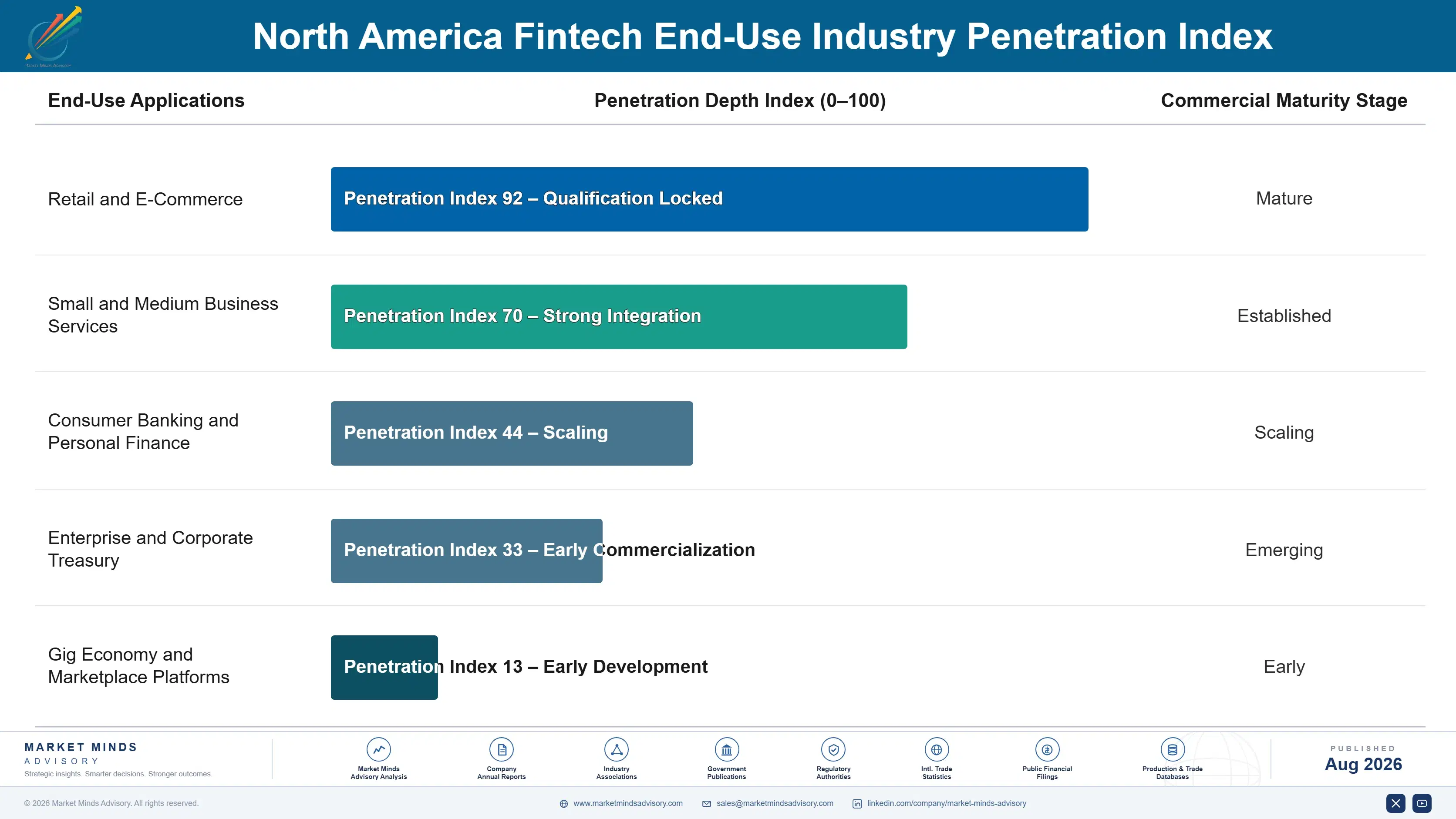
Embedded finance infrastructure behaves like an annuity once a software company integrates it into their core product, since switching infrastructure providers requires rebuilding technical integration and re-establishing banking relationships that most companies avoid disrupting once operational. Standard payment processing carries much weaker lock-in, competing fresh on take rate and reliability, with merchants switching processors whenever a meaningfully better rate appears.
Adoption depth varies by customer type. Software companies embedding financial products show the highest stickiness, since switching infrastructure providers risks breaking functionality customers depend on daily. Small business platform users show moderate stickiness, balancing integration switching cost against periodic re-evaluation of bundled pricing. Individual consumer app users show the weakest stickiness, switching apps whenever a competitor offers better rates or features, since no comparable barrier protects the incumbent relationship.

Younger, digitally native consumers treat fintech app switching as routine behavior rather than a rare event, a shift fee comparison tools have accelerated beyond where brand loyalty alone would have permitted. Older consumers and established software companies weight banking relationship continuity and integration stability heavily. That generational split is reshaping platform strategy, pulling infrastructure depth toward a retention requirement across an increasing share of the addressable customer base.
north-america-fintech-market-end-use-penetration-index-1787914006069

Where MMA Sees Divergence Ahead

These are among the four positions where our research anticipates prominent divergence between winners and laggards over the coming forecast period. Each is grounded in the demand model, the regulatory perimeter, and the announced capacity pipeline.
01 / EMBEDDED FINANCE PRIORITY

Build embedded finance infrastructure before saturation

Non-financial software companies are not slowing embrace of embedded financial products, and the infrastructure capability this demands does not move for anyone, since platforms that build banking-as-a-service depth capture client relationships before the industry catches up and competition compresses that advantage. Companies treating embedded finance as a roadmap item rather than a build priority are solving the wrong problem, since infrastructure depth, not marketing spend, separates winners from laggards over the next years. The advantage goes to whoever builds first, not whoever spends the most.
02 / COMPLIANCE INFRASTRUCTURE INVESTMENT

Invest in direct banking relationships before enforcement tightens

The Synapse collapse proved that thin banking-as-a-service intermediary layers carry genuine systemic risk, and regulators are not going to relax scrutiny of these arrangements anytime soon, which means platforms with direct chartered banking relationships will increasingly outcompete those relying on multi-layered intermediary structures regulators distrust. Platforms waiting for the next partnership failure to force the issue are choosing to compete for whatever banking partner trust remains after early movers have already secured the strongest direct relationships. Compliance depth, not product features, decides who survives the coming enforcement cycle.
03 / REAL-TIME PAYMENT POSITIONING

Integrate FedNow and RTP ahead of mainstream adoption

Real-time payment adoption in the United States is following the same trajectory peer countries already completed, and platforms building integration capability now, while adoption remains early, capture technical relationship capital with the Federal Reserve and The Clearing House before real-time settlement becomes table-stakes infrastructure. Waiting until real-time payments become the default expectation means competing for merchant and consumer trust that early movers have already established through years of reliable operation. The platforms solving real-time integration first will define the reference standards everyone else has to match.
04 / LENDING DIVERSIFICATION STRATEGY

Diversify revenue beyond interest-rate-sensitive lending now

The 2022 rate cycle punished lending-heavy platforms that built business models around near-zero funding costs far more than platforms with diversified payment and subscription revenue streams. Platforms building diversified revenue now, while funding conditions remain relatively stable, avoid the scramble that hit unprepared lending-heavy competitors during the last major rate shock and position themselves for whatever rate environment comes next. Preparation before the next cycle, not response after it, separates resilient platforms from exposed ones, and the gap between them keeps widening.

Engagement Snapshot From the Field

A live engagement with an industry participant carrying material or product regulatory and market exposure ahead of a defining policy shift, showing how our research translates into a defensible multi-year portfolio strategy.
MARKET MINDS ADVISORY · CLIENT ENGAGEMENT SUMMARY
North America Fintech Producer Strategic Portfolio Review and Transition Roadmap 2026·Investment Scenario on North America Fintech Exposure Evaluation 2025-26
CLIENT PROFILE
A vertical SaaS payroll platform serving small and mid-sized restaurant and retail businesses approached MMA while evaluating whether to build embedded banking and lending products directly into its existing software. The client reported annual recurring software revenue near USD 95 million, with no prior experience navigating banking-as-a-service infrastructure or regulatory partnership structures (client-reported, unverified by MMA).
STRATEGIC CHALLENGE
Leadership saw embedded finance as a genuine revenue expansion opportunity but had no internal expertise evaluating banking-as-a-service providers, and the 2024 Synapse collapse had made the team acutely wary of thin intermediary arrangements that could expose customer funds to operational risk beyond the client's direct control or contractual visibility entirely.
MMA APPROACH
MMA benchmarked banking-as-a-service providers on direct banking relationship depth and compliance infrastructure specifically in light of the Synapse failure, modeled the incremental revenue opportunity from embedded accounts and lending against integration cost and timeline, and assessed which providers offered genuine direct chartered bank relationships versus multi-layered intermediary structures active today.
KEY FINDINGS
  1. Three of the five evaluated providers relied on intermediary layers similar in structure to the arrangement that failed in the Synapse collapse, creating unacceptable operational risk for the client's customer base.
  2. The two providers with direct chartered banking relationships charged roughly 15% higher integration and ongoing fees than the intermediary-based alternatives, a premium MMA modeled as justified given the risk difference.
  3. Embedded banking and lending products could generate meaningful incremental revenue per active restaurant customer within 18 months of launch, based on comparable vertical SaaS embedded finance benchmarks.
  4. Integration timeline for the direct-relationship providers ran approximately 4 months longer than intermediary-based alternatives, requiring the client to adjust its original product launch timeline.
CLIENT PROFILE
A vertical SaaS payroll platform serving small and mid-sized restaurant and retail businesses approached MMA while evaluating whether to build embedded banking and lending products directly into its existing software. The client reported annual recurring software revenue near USD 95 million, with no prior experience navigating banking-as-a-service infrastructure or regulatory partnership structures (client-reported, unverified by MMA).
STRATEGIC CHALLENGE
Leadership saw embedded finance as a genuine revenue expansion opportunity but had no internal expertise evaluating banking-as-a-service providers, and the 2024 Synapse collapse had made the team acutely wary of thin intermediary arrangements that could expose customer funds to operational risk beyond the client's direct control or contractual visibility entirely.
MMA APPROACH
MMA benchmarked banking-as-a-service providers on direct banking relationship depth and compliance infrastructure specifically in light of the Synapse failure, modeled the incremental revenue opportunity from embedded accounts and lending against integration cost and timeline, and assessed which providers offered genuine direct chartered bank relationships versus multi-layered intermediary structures active today.
KEY FINDINGS
  1. Three of the five evaluated providers relied on intermediary layers similar in structure to the arrangement that failed in the Synapse collapse, creating unacceptable operational risk for the client's customer base.
  2. The two providers with direct chartered banking relationships charged roughly 15% higher integration and ongoing fees than the intermediary-based alternatives, a premium MMA modeled as justified given the risk difference.
  3. Embedded banking and lending products could generate meaningful incremental revenue per active restaurant customer within 18 months of launch, based on comparable vertical SaaS embedded finance benchmarks.
  4. Integration timeline for the direct-relationship providers ran approximately 4 months longer than intermediary-based alternatives, requiring the client to adjust its original product launch timeline.
RECOMMENDED STRATEGY
Phase 1: Phase 1 (0 to 6 months): Select a banking-as-a-service provider with a direct chartered banking relationship, prioritizing customer fund safety over integration speed. Phase 2: Phase 2 (6 to 12 months): Launch embedded accounts and cards to a limited pilot customer segment before expanding to the full restaurant and retail customer base. Phase 3: Phase 3 (12 to 24 months): Expand into embedded lending products once account and card adoption data validates customer demand and platform reliability.
OUTCOME
The client launched embedded accounts and cards within seven months, ahead of the original nine-month estimate, using a provider with a direct chartered banking relationship as MMA recommended. The embedded finance product line contributed a reported USD 8 million in incremental annual revenue within its first year, at higher margins than the software subscription business (client-reported, unverified by MMA).

Frequently Asked Questions

Foundational context covering the market sizes, CAGR, scope, country, region and competition that inform every finding below. This section is provided to cover basics and most often pre-purchase conversations, answered from the MMA Primary Research Dataset.

What is the current size of the North America Fintech Market?

The market reached USD 310 billion in 2025 on a global basis, with North America holding the largest single regional share at 30%. It spans digital payments, digital lending, wealthtech, insurtech, and embedded finance.

How large will the North America Fintech Market be by 2036?

MMA forecasts the market will reach USD 957.9 billion by 2036, expanding roughly 2.79 times its 2026 base value. Embedded finance and digital lending drive most of that incremental growth.

What is the CAGR for the North America Fintech Market 2026 to 2036?

The base case CAGR runs at 10.8% annually through 2036. Bull scenarios reach 12.1% on faster embedded finance adoption, while bear scenarios fall to 9.5% if regulatory enforcement slows new product launches.

Which segment is growing fastest?

Banking-as-a-service and embedded finance grow fastest at 16.5% annually, nearly 1.5 times the overall market rate. Non-financial software companies embedding financial products drive most of that acceleration.

Who are the major companies in the North America Fintech Market?

PayPal, Block, Stripe, Fiserv, and Intuit lead the market on a consistent global platform revenue basis. Together they hold roughly 18% of total category revenue combined.

Which country is growing fastest?

India posts the fastest national growth at roughly 16.8% annually, driven by the UPI real-time payments system pulling unbanked consumers into digital finance. Growth concentrates in payments infrastructure rather than lending or wealthtech segments.

Report Segmentation Architecture

The full report scope spans multiple orthogonal segmentation dimensions, with cross-tabulated demand data provided for each dimension pair. Coverage extends further to regional breakdowns, trend trajectories, and the competitive detail needed to support segment-level decision-making.

By Service Type

  • Digital Payments and Money Transfer
  • Digital Lending and Alternative Credit
  • Wealthtech and Investment Platforms
  • Insurtech
  • Banking-as-a-Service and Embedded Finance
  • Regtech and Compliance Technology

By End-Use Industry

  • Retail and E-Commerce
  • Small and Medium Business Services
  • Consumer Banking and Personal Finance
  • Enterprise and Corporate Treasury
  • Gig Economy and Marketplace Platforms

By Commercial Dimension

  • Direct Consumer Applications
  • B2B Infrastructure and API Platforms
  • Bank Partnership and Licensing Arrangements
  • White-Label and Embedded Distribution

By Region

  • North America
  • Western Europe
  • East Asia
  • South Asia and Pacific
  • Latin America
  • Middle East and Africa
  • Eastern Europe

Scope, Methodology, and Coverage

Every figure in this report is reproducible from documented input assumptions. The scope below maps the historical period, the forecast horizon, the segmentation dimensions, and the countries covered, alongside the underlying primary and qualitative methodology.
Historical Period
2020 to 2025
Forecast Period
2026 to 2036
Base Year
2025 (USD billions; MMA Primary Research Dataset, August 2026)
Market Definition
The fintech market covers technology-driven financial services and infrastructure products delivered outside traditional bank branch channels. It spans digital payments, digital lending, wealthtech and investment platforms, insurtech, banking-as-a-service and embedded finance, and regtech, sized globally with particular emphasis on North America as the largest and most mature regional market. It excludes traditional bank branch banking, cryptocurrency mining and pure-play blockchain infrastructure not tied to a financial services product, and payment network operators functioning purely as card scheme rails.
Quantitative Units
USD billions (current prices); transaction volume in billions where applicable
Segmentation Dimensions
By Service Type; By End-Use Industry; By Commercial Dimension; By Region
Regions Covered
North America, Western Europe, East Asia, South Asia and Pacific, Latin America, Middle East and Africa, Eastern Europe
Countries Covered
USA, China, Germany, France, UK, Japan, South Korea, India, Australia, Canada, Brazil, Mexico, Indonesia, Vietnam, Thailand, Malaysia, UAE, Saudi Arabia, South Africa, Nigeria, Turkey, Poland, Netherlands, Italy, Spain, Sweden, Switzerland, Argentina, Colombia, Singapore, and additional markets relevant to this sector
Key Companies Profiled
PayPal Holdings Inc., Block Inc., Stripe Inc., Fiserv Inc., Intuit Inc., SoFi Technologies Inc., Affirm Holdings Inc., Chime Financial Inc., Robinhood Markets Inc., Coinbase Global Inc., Plaid Inc., Marqeta Inc., Nu Holdings Ltd., Klarna Bank AB, Revolut Ltd., Ant Group, Adyen N.V., Toast Inc., Green Dot Corporation, Global Payments Inc.
Quantitative Methodology
Primary survey, n=3,800 respondents, Q4 2025, six countries; demand-side model with trade association cross-validation
Qualitative Methodology
47 expert interviews, Q4 2025; applied to validate demand model assumptions, identify emerging dynamics, and assess competitive positioning
Report Format
PDF and XLSX data workbook (Word format preview document)
Publisher
Market Minds Advisory
Report Code
MMA-2026-TEC-312
Published
August 2026
Contact
sales@marketmindsadvisory.com | www.marketmindsadvisory.com

Purchase the full North America Fintech Market Report (2026 to 2036).

The full MMA North America Fintech report sizes the market across six service types, five end-use industries, four commercial channels, and seven regions through 2036. It profiles 20 participants on a consistent global platform revenue basis, scoring leaders on infrastructure depth, compliance credibility, and embedded finance capability. Scenario models quantify how embedded finance adoption, real-time payment rollout, and regulatory enforcement trends move both demand and margin performance across commodity and infrastructure tiers. The report also includes delivered-cost modeling by service type, a regulatory enforcement tracker, and a competitive positioning assessment built for product, compliance, and partnership teams.
Six-way service type segmentation with growth forecasts
Twenty-company competitive profiles on consistent revenue basis
Seven-region market sizing with country-level detail
Regulatory enforcement and global compliance tracking module
Infrastructure and compliance cost modeling by service type
Bull, base, and bear demand scenario forecasts

Built For The People Who Decide

From boardroom strategy to bench-side execution, this report is read cover-to-cover by leaders shaping the next decade of their industry, turning demand scenarios, market dynamics and valuation benchmarks into decisions.
CXOs/ Presidents/ VPs/ Managers
M&A and Corporate Development
Strategy Teams and R&D Heads
Procurement and Product Directors
Regulatory and Compliance Leaders
Investor Relations and Equity Analysts