Solid-State Chemistry Steadily Displaces Printed Formats
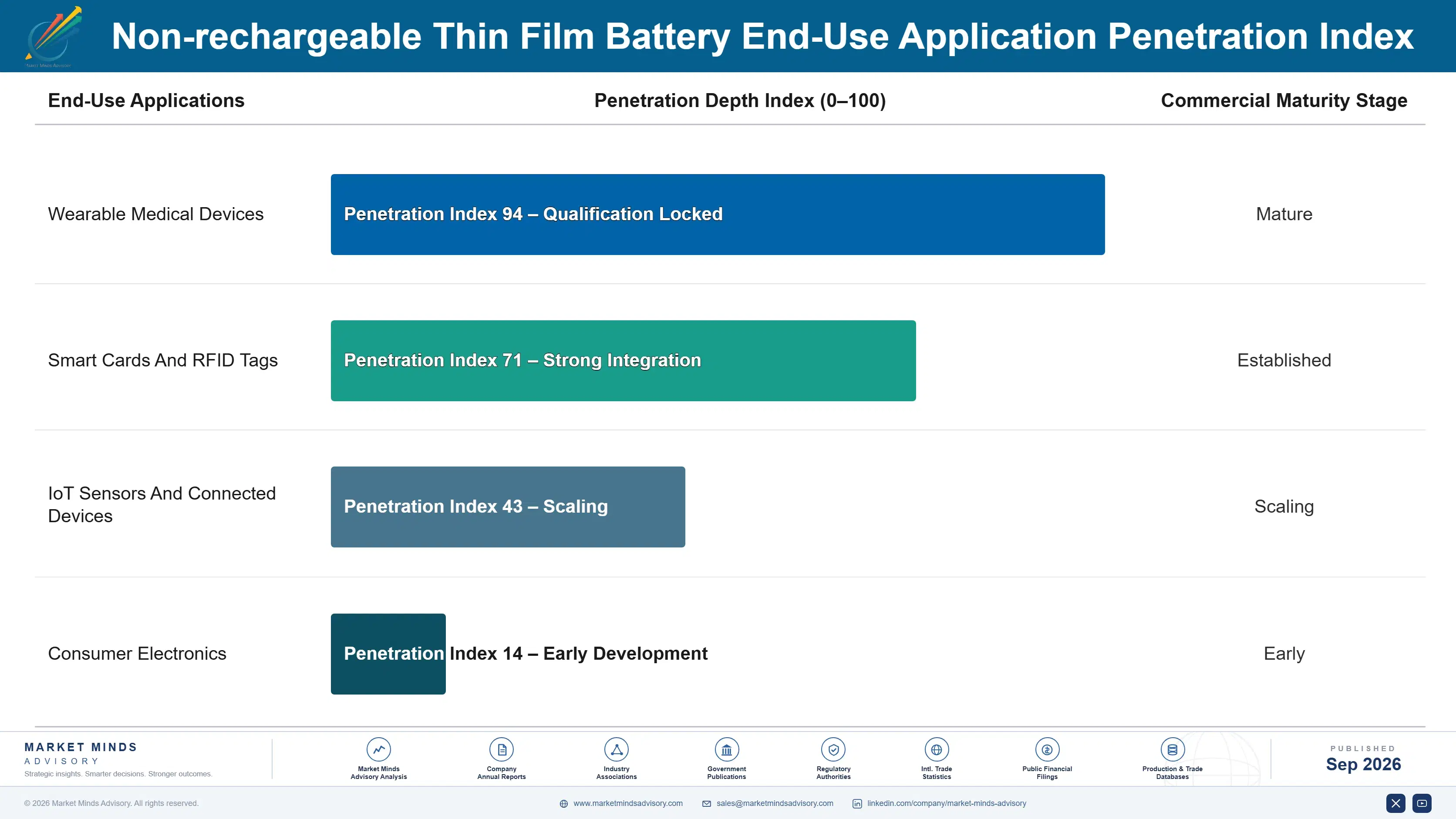
Device manufacturers across major North American and East Asian markets are increasingly specifying solid-state thin film batteries positioned against legacy printed zinc-manganese dioxide formats, responding to demand for extended shelf life and thinner packaging that fits within increasingly compact wearable medical device housings. This shift has required manufacturers to invest in electrode chemistry engineering and thin-film deposition validation capability, a process that can take twelve to eighteen months per product line given required biocompatibility certification. Device manufacturers are increasingly treating solid-state specification as a competitive prerequisite for new medical patch platforms, accelerating the transition well beyond printed retention.
Market Impact: Adds 8 percent wearable-driven volume