Market Minds Advisory
Modular Chillers Market

Modular Chillers Market: Modular Chillers Market. Global Demand, Technology, and Competitive Outlook 2026 to 2036

AI compute buildout is pulling modular chiller demand toward data center cooling faster than traditional commercial office and retail applications can offset through replacement volume alone. Established suppliers race to expand modular capacity accordingly.

Lead Analyst

Published

October 2026

Make Smarter Decisions with Customized Research Insights

Request a free sample report and evaluate market opportunities, growth trends, and competitive dynamics relevant to your business needs.

2025 MARKET VALUE$2.9BMarket Size 2025
2036 FORECAST VALUE$7.8BBase Case , 2026 to 2036
CAGR 2026 TO 20369.4 %Bull 10.7% / Bear 8.1%
INCREMENTAL OPPORTUNITY$4.6BNet 10- year value creation
EXPANSION MULTIPLE2.46x2036 value over 2026 base
Strategic Levers
M&A Pipeline
Regional Outlook
Country Rankings
Competitive Intelligence
Segmental Deep-dive
Call-Us : 91 93563 13602

Executive Snapshot and Market Trajectory.

Modular chiller demand is shifting from standard commercial office applications toward data center and healthcare cooling as AI compute buildout and hospital construction accelerate, forcing suppliers to scale capacity for scalable, high-density installations or lose share. Buyers increasingly weigh deployment speed before committing to large multi-year contracts. overall.
United States data center buildout anchors the fastest-growing order volume tracked in this report, while commercial office and retail applications continue sustaining the broadest underlying replacement volume base globally. Healthcare facility cooling is growing second fastest as hospital construction accelerates across multiple regions, and industrial process cooling continues at a measured pace tied to manufacturing capacity decisions. Office retrofits are a smaller but growing contributor as landlords pursue efficiency targets. overall nationwide.
Competitive intensity concentrates among a handful of established American and Japanese HVAC specialists, since documented modular scalability certification and decades of rapid deployment engineering experience create meaningful barriers for new entrants bidding on large data center contracts. Chinese manufacturers increasingly challenge incumbents on price for standard commercial units, though hyperscale data center contracts still favor suppliers with proven reliability records. Buyers now request deployment speed data.
Market Definition
The modular chillers market covers factory-assembled, scalable cooling units that can be combined to add capacity incrementally for data center, healthcare, commercial office, and industrial applications. It excludes standard monolithic chillers and residential-scale air conditioning equipment.
Base Year Value
$2.9B in 2025 (MMA Primary Research Dataset, October 2026)
Forecast Period
2026 to 2036, eleven discrete annual values
CAGR
9.4% base case. Bull 10.7%. Bear 8.1%.
Fastest Growth Segment
Data Center Cooling Modular Chillers: 13.5% CAGR
Fastest Growth Country
United States: 10.5% CAGR
Fastest Growth Region
South Asia and Pacific: 11.4% CAGR
Largest Region
North America: 30% of 2025 global value
Market Leaders
Daikin Industries, Trane Technologies, Carrier Global, Johnson Controls, Vertiv Holdings. Source: MMA Primary Research Dataset, July 2026.
Primary Survey
n=3,800 procurement and R&D decision-makers, Q4 2025, six countries
Methodology
Demand-side build-up, cross-validated against public data, 47 expert interviews

Modular Chillers Market Forecast Scenarios

modular-chillers-market-size-forecast-scenario-1791097761993
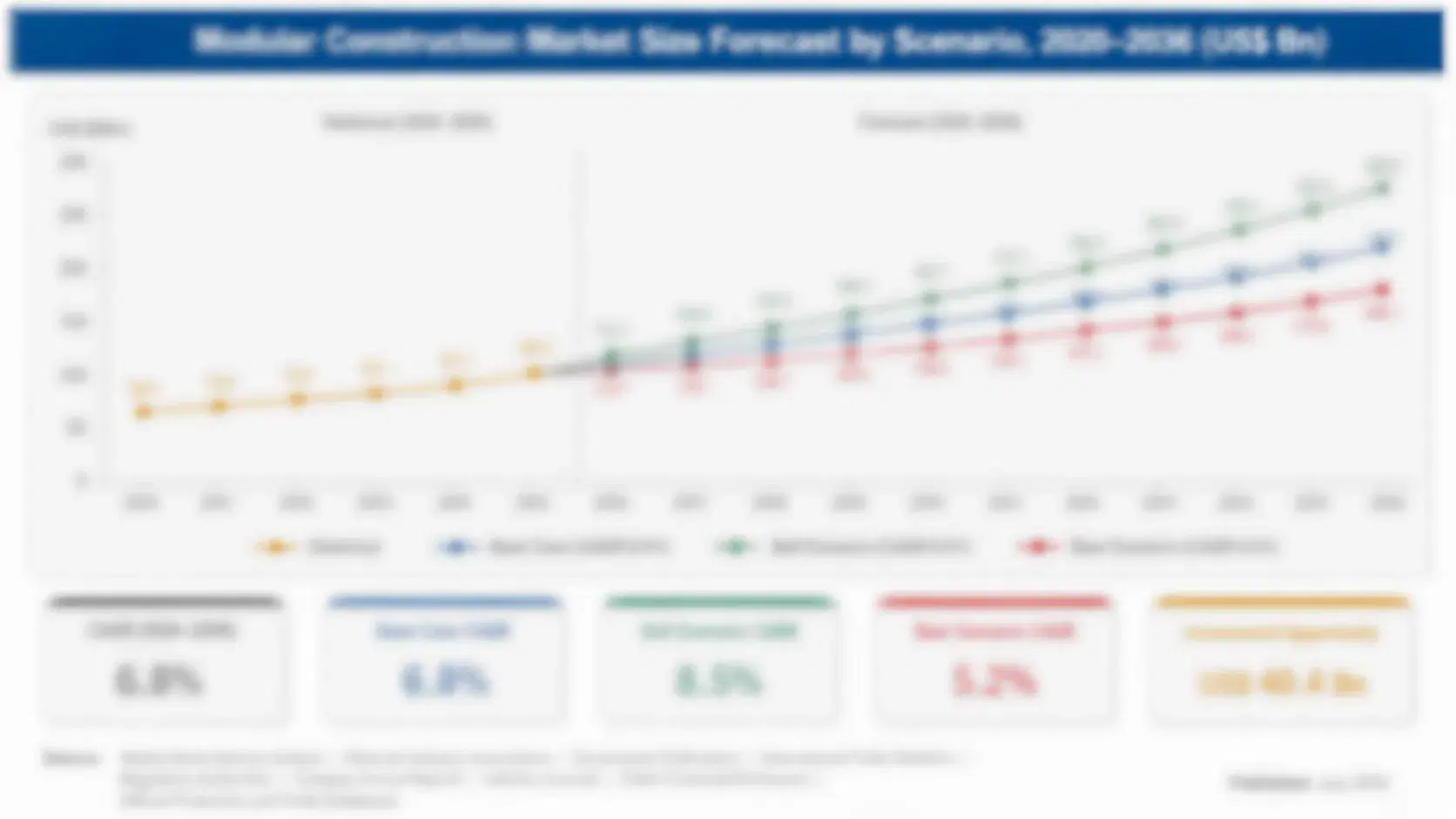
The 2020 to 2025 period saw accelerating adoption as data center operators began specifying modular configurations meaningfully, with the historical rate settling at 8.2%, below where AI compute buildout and hospital construction are now pushing the category for the coming decade. Order books strengthened steadily as early hyperscale adopters converted. Backlogs stayed moderate as hyperscale conversion decisions proceeded unevenly.
The base case assumes continued expansion driven by three mechanisms: data center electricity and cooling capacity requirements that standard monolithic chillers cannot match on deployment speed, United States AI compute buildout sustaining the fastest regional order growth tracked in this report, and commercial office replacement demand sustaining the broadest underlying volume base across the category. Each mechanism operates on its own calendar, and certified suppliers are positioned to outgrow narrower rivals.
The bull case rests on accelerated data center buildout pulling modular chiller adoption forward faster than currently modeled across the United States and China alike. The bear case centers on commercial construction slowdowns during periods of weak office demand, delaying the steady replacement purchasing that sustains a meaningful share of category revenue. Either scenario reshapes near-term procurement planning for facility operators and equipment buyers alike.

AI Compute Buildout Reshapes Chiller Specification

Purchase decisions increasingly hinge on documented deployment speed rather than catalog price alone. Hyperscale data center operators specify chiller configurations years before facility commissioning deadlines, forcing suppliers into design and testing cycles that start well ahead of installation, a shift from the simpler specification process that still characterizes smaller commercial office retrofit projects. Suppliers unable to engage at the design stage increasingly find themselves locked out of the highest-margin hyperscale contracts.
CR5 CONCENTRATION42%share held by five leading modular chiller manufacturers
AVERAGE SELLING PRICE$80,000 to $1.5 millionvaries substantially by capacity and deployment configuration selected
TOP PRODUCING COUNTRY SHARE30%United States share of total global manufacturing output currently
UNIT SERVICE LIFE15 to 20 yearstypical compressor and heat exchanger mechanical service lifetime observed
DEPLOYMENT SPEED ADVANTAGE40 to 60%faster installation versus comparable monolithic chiller systems overall
DATA CENTER SPECIFICATION SHARE26%new installations specifying modular configurations for hyperscale facilities
Manufacturing concentrates among established American and Japanese HVAC specialists, where documented modular scalability certification and decades of rapid deployment engineering relationships create barriers smaller entrants cannot easily overcome. Chinese manufacturers increasingly compete on standard commercial units, a dimension distinct from the complex data center contracts that still favor established suppliers across major hyperscale markets today.
Data center retrofit conversion is the category's quiet margin driver. These capacity-intensive projects, often tied to multi-year AI compute buildout schedules, carry meaningfully higher unit prices than standard commercial units, giving suppliers with strong data center engineering relationships a durable advantage over those relying purely on distributor sales. Suppliers without strong engineering relationships struggle to access this channel, limiting them to smaller commercial contracts.
"Everyone still prices these as commodity cooling hardware. The suppliers actually winning hyperscale contracts are the ones who can document verified deployment speed at data center scale."
Senior Analyst, Industrial Process Equipment Practice · MMA Industrial Process Equipment Practice · October 2026

Market Trends

AI Compute Buildout Accelerates Modular Specification

AI compute buildout is forcing hyperscale data center operators to specify modular cooling capacity well ahead of normal equipment retirement schedules, as rapid facility expansion demands deployment speed that monolithic chillers cannot match. Capacity expansion deadlines tied to AI infrastructure investment are compressing procurement timelines that historically spanned three to five years into windows closer to two. Suppliers able to document verified deployment speed across multiple hyperscale projects are winning disproportionate early-mover contracts, while standard commercial specialists face mounting pressure to diversify entirely. This dynamic is reshaping supplier capacity planning across the sector.
Market Impact: Cuts deployment time by 40%
Healthcare Facility Cooling Specification Rises Steadily

Healthcare facility cooling specification is rising steadily as hospital construction accelerates across multiple regions, with operators pursuing modular designs that allow capacity expansion without disrupting patient care areas during installation. Facilities retrofitting existing cooling systems with modular units can add capacity incrementally as departments expand. Suppliers bundling modular units with digital monitoring packages are capturing share from pure equipment vendors lacking that combined offering. Independent engineering firms report growing inbound interest in combined modular and monitoring packages across multiple hospital systems and facility sizes nationwide. Growth continues. indeed. overall. entirely.
Market Impact: Adds capacity across 60+ new facilities

Market Opportunities and Growth Drivers

Rising Data Center Demand Drives Modular Adoption

Rising data center electricity demand, driven by AI compute buildout and expanding hyperscale footprint, has pushed operators to seek cooling solutions that deploy faster than traditional monolithic chillers. Operators that locked into standard chiller plants during previous facility builds now face capacity constraints that limit their ability to scale alongside rapidly growing compute demand. Modular chiller configurations, while requiring careful system integration, offer deployment speed that offsets volatile construction timelines meaningfully. Government AI infrastructure incentive programs in several countries are accelerating procurement timelines across the sector. Adoption continues accelerating. overall.
Market Impact: Adds 2 to 4 weeks delay

US AI Compute Buildout Sustains Order Growth

United States AI compute buildout, backed by rapid hyperscale capacity investment and expanding data center footprint, is sustaining the fastest order growth tracked in this report. New facilities specify modern modular configurations from the outset rather than relying on standard monolithic chillers, giving suppliers with strong local engineering presence an early foothold in greenfield bidding. Domestic fabricators are scaling capacity to meet this demand, though multinational suppliers still win contracts requiring documented reliability certification. Order books for greenfield facilities remain strong across the country. Growth continues. indeed fully. overall. entirely.
Market Impact: Cuts margins by up to 15%

Market Restraints and Challenges

System Integration Complexity Extends Commissioning Timelines

Modular chiller configurations carry a system integration complexity that standard monolithic chillers do not require, forcing facility engineers to manage multiple interconnected units rather than a single centralized system. The root cause is the control software and piping integration coordination required across multiple modules, which demands specialized commissioning expertise many facility teams lack in-house. Facilities without this expertise can face extended commissioning timelines during initial deployment. Several manufacturers are now offering turnkey commissioning services as a mitigation pathway that addresses this skills gap directly. Adoption continues expanding steadily. Growth continues.
Market Impact: Compresses procurement cycles by 2 years

Chinese Price Competition Compresses Standard Margins

Price competition from Chinese modular chiller manufacturers is compressing margins for established suppliers serving price-sensitive standard commercial segments. The root cause is overcapacity among Chinese fabricators who built aggressive manufacturing scale during the previous investment cycle and now compete intensely for a slower-growing commercial category. Established suppliers are losing share on standard units priced below their cost structure in some bidding scenarios. Several manufacturers are shifting toward data center and healthcare segments as a mitigation pathway that commands premium pricing less exposed to pure price competition. This volatility is expected to persist.
Market Impact: Adds capacity across 50+ new hospitals
4 additional market trends, 3 additional growth drivers, and 2 additional restraints and challenges are covered in the full report. Contact sales@marketmindsadvisory.com to access the complete intelligence.

Segment CAGR and Growth Architecture

Modular chiller demand splits across five end-use industry segments that mirror distinct scalability, deployment speed, and cooling load requirements. Commercial office and industrial process cooling dominate installed capacity, while data center and healthcare segments capture the fastest order growth as AI infrastructure buildout reshapes procurement priorities. Hospitality and retail applications round out the remaining installed base.
modular-chillers-market-market-share-analysis-1791097762403

Data Center Cooling Modular Chillers

Data center cooling modular chillers are converting AI compute pressure into the category's fastest order growth, as hyperscale operators across the United States and China expand facility capacity to meet rising compute demand. These systems carry substantially higher deployment speed value but require careful system integration that smaller commercial specialists often lack. Suppliers with documented integration experience across multiple hyperscale deployments are winning disproportionate early-mover contracts, while incumbents lacking large-scale capability risk exclusion from greenfield bidding. Government AI infrastructure incentive programs in several countries are narrowing the construction timeline gap meaningfully for a widening range of operators. Segment growth is expected to outpace every other application category through the forecast window, reinforcing its growth leadership nationwide.
CAGR 13.5%

Healthcare Facility Modular Chillers

Healthcare facility modular chillers are gaining specification share as hospital construction accelerates across multiple regions, with operators pursuing incremental capacity expansion without disrupting patient care areas during installation. Hospitals retrofitting existing cooling systems with modular units can add capacity as departments expand without triggering full system replacement. Suppliers bundling modular units with digital monitoring packages are capturing share from pure equipment vendors lacking that combined offering. Hospital systems facing near-term expansion decisions but limited capital budgets increasingly favor this proven technology path over costlier full replacement. Demand for proven modular packages is expected to remain elevated through the expansion window across most major hospital systems, particularly where incremental capacity justifies the upfront investment required for these installations.
CAGR 11.0%
Full segment breakdown across 5 segments available in the complete report.

Regional Architecture and Country Demand Map

Modular chiller demand concentrates where data center and healthcare construction investment is accelerating fastest. United States AI compute buildout anchors the leading share, while East Asia and India's hospital construction drive the fastest regional growth tracked. This genuinely balanced shape reflects where construction investment accelerates fastest.

North America

United States AI compute buildout, backed by hyperscale data center investment and expanding facility footprint, sustains the region's largest installed modular chiller base tracked in this report. Replacement cycles here increasingly favor modular configurations as deployment speed becomes a competitive factor among hyperscale operators racing to bring capacity online. Canada contributes a smaller share concentrated in healthcare and commercial office applications serving domestic demand across major metropolitan markets. United States healthcare systems also maintain substantial modular installed base alongside the data center sector. Mexico-adjacent cross-border commercial production is also beginning to add incremental demand across shared supply chains. Adoption continues accelerating steadily across most major metropolitan markets. overall. indeed. clearly.
Share: 30% | CAGR: 10.0% (2026 to 2036)

East Asia

China's data center and chemical manufacturing expansion sustains steady modular chiller demand as facility developers pursue scalable cooling solutions that match phased construction timelines. Domestic Chinese manufacturers supply most standard units, while multinational suppliers retain premium hyperscale contracts requiring documented reliability certification. Japan and South Korea contribute a smaller but technically sophisticated share concentrated in premium healthcare and data center applications, where documented performance commands meaningfully higher unit prices. South Korean institutional buyers increasingly specify premium reliability features regardless of marginally higher unit cost, reflecting broader quality expectations across the regional construction industry. Adoption continues accelerating steadily across most major provinces nationwide. Growth continues steadily across most provinces. indeed. clearly.
Share: 24% | CAGR: 10.4% (2026 to 2036)
Regional intelligence for 5 additional markets available in the complete report: Western Europe, South Asia and Pacific, Latin America, Middle East and Africa, Eastern Europe. Contact sales@marketmindsadvisory.com.
modular-chillers-market-country-cagr-analysis-1791097762752

Where Modular Chiller Margins Concentrate

Standard commercial office replacement generates steady but thin margins across the category. Premium economics concentrate instead in data center engineering and healthcare facility integration, where documented deployment speed commands pricing power absent from commodity equipment sales. Suppliers that recognize this split early are reallocating engineering focus accordingly. This split sharpens with each new AI infrastructure buildout cycle.

Build Data Center Engineering Capability Early On

Suppliers that build data center engineering capability ahead of competitors are positioned to capture disproportionate share of greenfield hyperscale contracts as AI compute buildout accelerates across the United States. This requires investment in rapid deployment design and system integration expertise that most standard commercial specialists currently lack. Early movers in this category are securing roughly $300,000 to $700,000 in incremental contract value per large hyperscale project relative to standard equivalents, a gap that is widening as AI infrastructure deadlines draw closer across multiple markets. Suppliers that delay this investment risk permanent exclusion from the segment entirely.
Market Impact: Secures roughly $300,000 to $700,000 per new facility

Secure Direct Healthcare Facility Relationships Early

Suppliers that build dedicated healthcare facility relationships with hospital operators ahead of greenfield investment decisions are capturing disproportionate share of the highest-margin contracts tied to global hospital construction growth. This requires sustained regional technical presence rather than reliance on distributor networks that define much of the standard replacement market. Suppliers with established local engineering relationships are securing contract values roughly $150,000 to $350,000 higher per greenfield facility than competitors entering through distributor channels alone. Order books for greenfield contracts remain strong across the sector currently, reflecting sustained hospital system investment tied to construction timelines.
Market Impact: Secures roughly $150,000 to $350,000 per new facility

Who Controls the Margin Pool

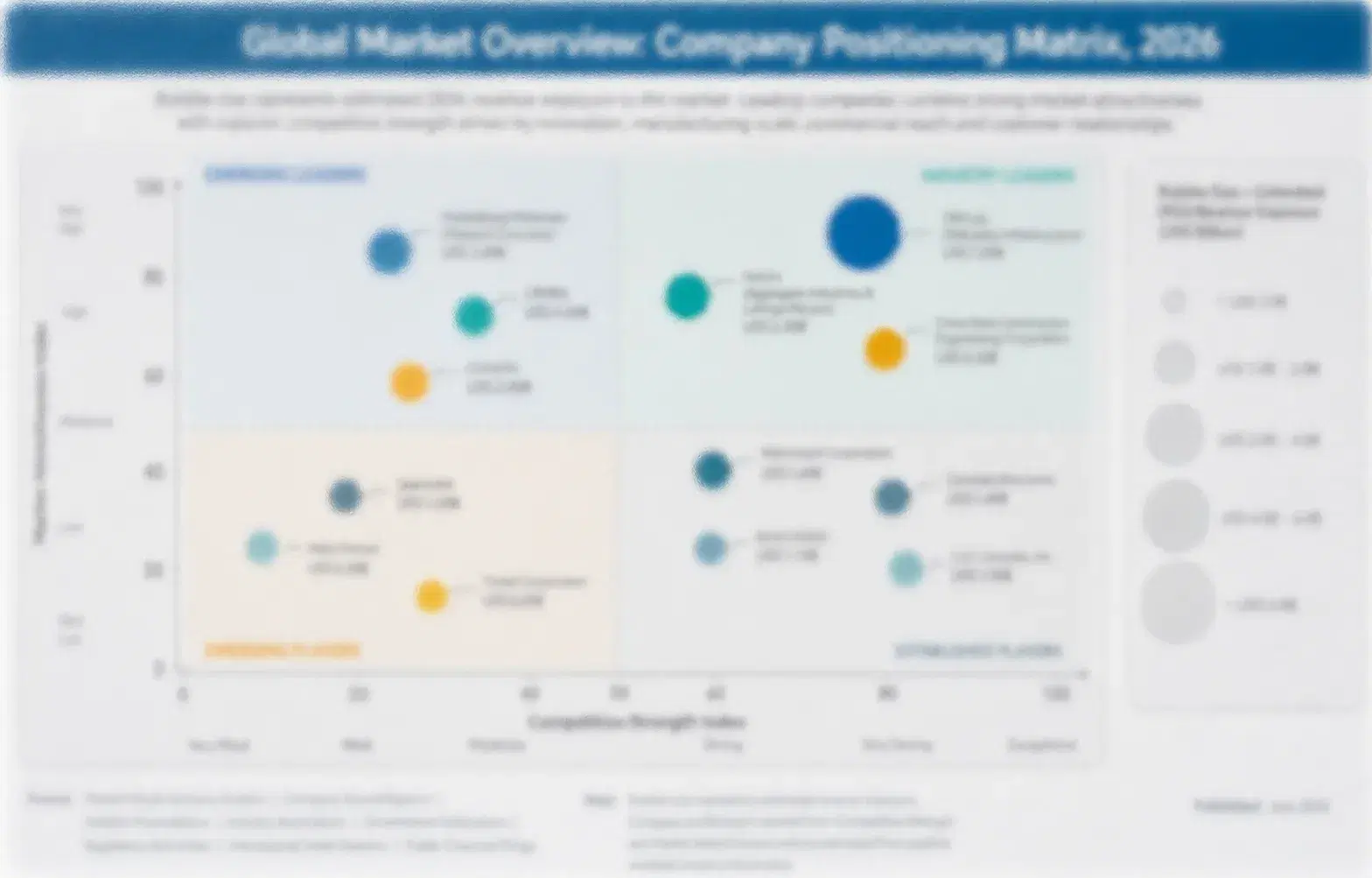
The modular chillers market carries moderate-high concentration, with the top five suppliers holding 42% of global unit shipments, built on decades of scalability certification and rapid deployment engineering credibility rather than price competition alone. The gap between leaders and challengers is widest in data center engineering, where Chinese fabricators have yet to match the integration depth that American and Japanese incumbents bring to large hyperscale contracts.
Current competitive activity centers on data center and healthcare product development, with leading suppliers racing to certify large-capacity configurations ahead of AI compute buildout. Several manufacturers expanded rapid deployment lines through targeted engineering investment, seeking to shorten time to market. Pricing competition remains fiercest in standard commercial units, where Chinese fabricators continue gaining share on cost rather than certification depth.

Emerging pressure is building from specialist data center cooling startups backed by hyperscale infrastructure expertise rather than traditional HVAC manufacturing heritage. These entrants lack certification depth today but are partnering with established manufacturers to access it faster than organic development. Rankings are most likely to shift in the data center and healthcare segments over the next five years, while standard commercial rankings should remain comparatively stable.
modular-chillers-market-company-positioning-matrix-1791097763096

Competitive Moat and Risk Dimensions

DAIKIN INDUSTRIES

Moat: Broad Global Service Network

Daikin Industries built an extensive distribution and service network across commercial and data center segments over several decades, giving it a retention advantage difficult for new entrants to replicate quickly. Its scale also keeps unit costs competitive against smaller regional rivals bidding on standard contracts.
DAIKIN INDUSTRIES

Risk: Limited Hyperscale Specialization Depth

Daikin's hyperscale data center product line trails specialist rivals in large-capacity rapid deployment configurations, limiting its reach in the highest-value AI infrastructure contracts. Closing that gap will require sustained engineering investment over several years ahead. Management has flagged this gap publicly in recent investor communications.
VERTIV HOLDINGS

Moat: Established Data Center Credentials

Vertiv Holdings holds decades of data center infrastructure engineering experience, positioning it well for the segment's accelerating specification growth under AI compute buildout. Its brand recognition also supports premium pricing on complex hyperscale contracts. That cost position is difficult for new entrants to replicate quickly.
VERTIV HOLDINGS

Risk: Data Center Concentration Risk

A meaningful share of Vertiv's order book concentrates in data center markets facing cyclical capital spending patterns, requiring diversification into healthcare and commercial segments to sustain its historical growth trajectory going forward. Leadership has flagged this diversification as a strategic priority going forward. This remains a priority.

Players Tracked

Prominent Players

Daikin Industries
Trane Technologies
Carrier Global
Johnson Controls
Vertiv Holdings

Other Key Players

Mitsubishi Electric
LG Electronics
Midea Group
Gree Electric Appliances
Smardt Chiller Group
Multistack LLC
Aermec
Clivet
Dunham-Bush
AAON Inc
Munters Group
Hitachi-Johnson Controls Air Conditioning
Thermofin
EVAPCO
Haier Group

Recent Developments

MARCH 2026

Daikin Industries announced an acquisition of a regional data center cooling engineering firm specializing in rapid deployment integration, expanding its capability to bundle equipment sales with ongoing performance monitoring services across its existing hyperscale customer base nationwide. to extend its service reach nationwide. entirely. overall.
Signal: Signals Daikin's deliberate strategic push into bundled data center retrofit services nationwide. ahead of rival suppliers.
OCTOBER 2025

Vertiv Holdings completed a joint venture with an Asian modular chiller fabricator to co-develop large-capacity configurations for hyperscale data centers, combining American design engineering with local manufacturing capacity for faster regional deployment. Financial terms of the arrangement were not disclosed publicly. to extend its reach.
Signal: Signals Vertiv's deliberate strategic push into Asian hyperscale cooling markets ahead of rivals. well ahead of rivals nationwide.

Steel and Compressor Supply Exposure

Carbon steel enclosures and scroll or screw compressors account for roughly 40 to 50% of total cost of goods sold for standard modular chillers, sourced predominantly from American, Japanese, and Chinese manufacturers. Large-capacity data center configurations add further exposure to specialized control and refrigerant handling components, sourced from a narrower base of specialist manufacturers. Suppliers hedge with long-term contracts.
Global compressor and steel prices spiked sharply during 2024 amid Chinese export tariff changes and elevated semiconductor component costs, according to Daikin Industries' 2024 Annual Report, compressing margins for suppliers locked into fixed-price hyperscale contracts signed before the increase took hold. Several manufacturers reported in their annual filings that raw material cost pass-through lagged price increases by two to three quarters, squeezing near-term profitability before pricing caught up fully.

Smaller regional fabricators carry disproportionate exposure to this volatility since they lack the purchasing scale to negotiate multiyear component contracts that larger multinational suppliers secure routinely. The disadvantage compounds for producers serving price-sensitive standard commercial segments, where margin compression cannot be passed through to buyers as easily as in premium data center contracts. Exposure varies meaningfully by geography, with Chinese domestic fabricators facing lower input costs than importers.
modular-chillers-market-cost-volatility-analysis-1791097763395

Multiyear Compressor and Steel Contracts

Leading suppliers are locking in multiyear compressor and steel supply contracts with fixed escalation clauses tied to published commodity indices, reducing exposure to sudden spot price swings. This approach requires forecasting accuracy that smaller fabricators often lack access to, keeping the practice concentrated among larger multinational players with dedicated procurement teams. A handful also pool purchasing through industry consortia.

Lighter Module Enclosure Design

Several manufacturers are redesigning module enclosures to use thinner, higher-grade steel panels that reduce total material volume without sacrificing structural integrity standards. Early adopters report meaningful cost savings per unit, though qualification testing adds months to product development timelines before full deployment. Several suppliers expect this approach to become standard practice across their lineup soon.

Portfolio Architecture for Margin Defence

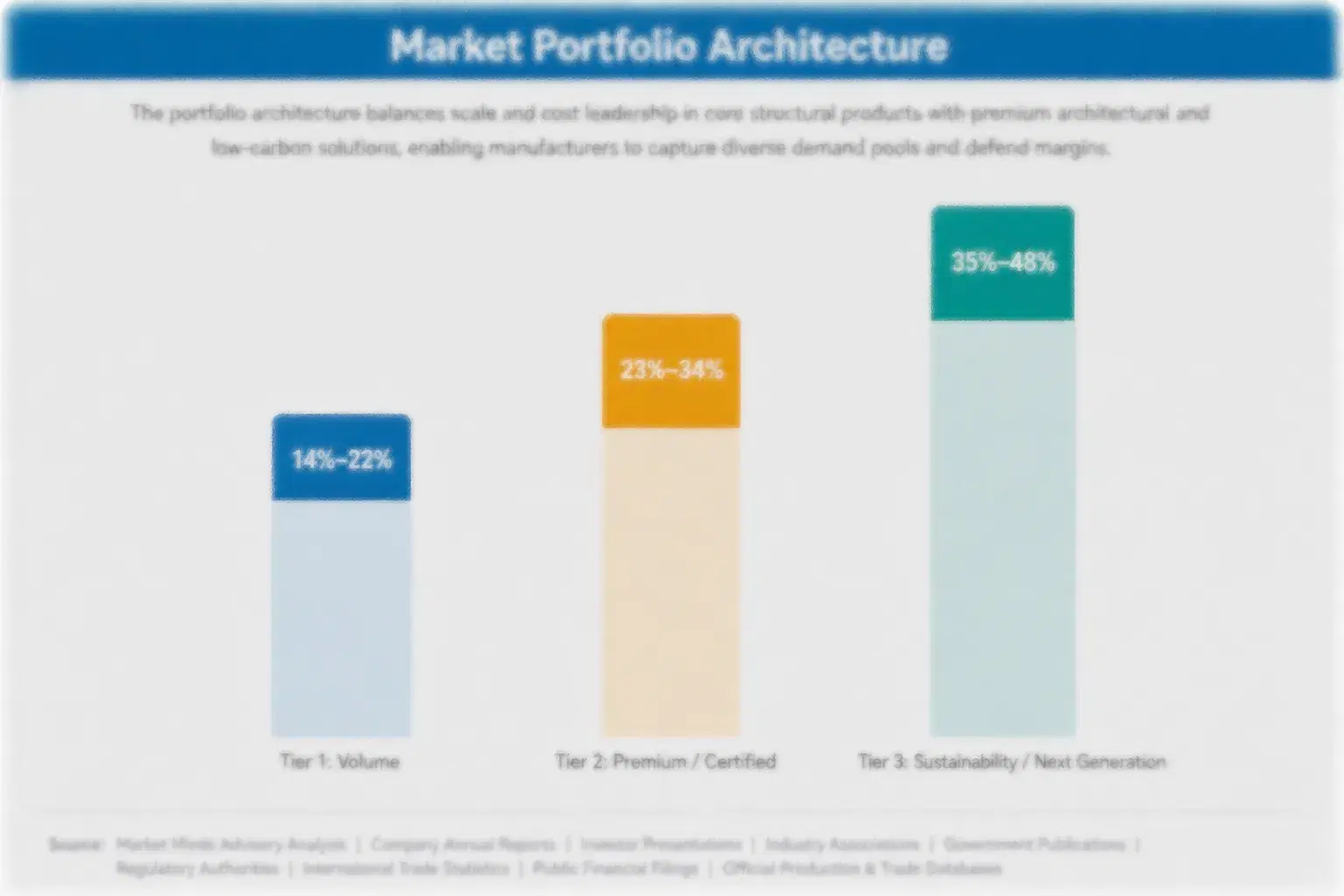
Gross margin economics vary sharply across the modular chillers category's three tiers. Standard commercial office replacement equipment competes largely on price, generating margins near the industry floor. Data center and healthcare systems, by contrast, command meaningfully higher margins tied to deployment speed and reliability urgency rather than raw material content alone. This split is widening as AI compute buildout pulls more capital toward the premium tier.
The volume versus premium tension plays out most visibly in how suppliers allocate limited engineering capacity. Chasing standard commercial volume keeps factories running but erodes margin as Chinese fabricators compete aggressively on price. Suppliers that instead prioritize premium data center contracts sacrifice some volume but capture disproportionate profit, a trade-off favoring the premium path as AI buildout accelerates across North America.

High-value pools concentrate in data center engineering, healthcare facility integration, and the long-term service contracts tied to complex reliability documentation. Suppliers that can bundle equipment sales with ongoing performance monitoring and maintenance services capture recurring revenue streams absent from one-time standard equipment transactions, a durable revenue advantage unique to the premium tier. Suppliers without a service arm increasingly partner with monitoring firms to compete.

Standard commercial office and retail chillers competing primarily on price with thin, commodity-level gross margins near 15 to 20%. Chinese fabricators dominate pricing here. Smaller regional fabricators also compete aggressively for this volume across most markets.
Gross Margin

Industrial process and hospitality systems carrying documented reliability certification, commanding gross margins in the 24 to 30% range. Buyers value reliability records over lowest-price bidding alone. This tier represents a meaningful share of total category revenue currently.
Gross Margin

Data center and healthcare chillers tied to AI infrastructure demand, commanding gross margins of 32 to 40% given engineering complexity and limited specialist competition currently. Early movers here are capturing disproportionate greenfield contract share nationwide.
Gross Margin
modular-chillers-market-portfolio-architecture-1791097763763

High-value Sub-segments and Strategic Watch-out

Data Center Cooling Modular Chillers

The fastest-growing and highest-margin segment, capturing disproportionate greenfield investment as AI compute buildout accelerates across the United States and China, with suppliers racing to build certified capacity and secure early-mover contracts. This segment should account for a growing share of category revenue through 2036, outpacing every rival application meaningfully.

Healthcare Facility Modular Chillers

High-value growth segment expanding steadily as hospital construction accelerates across multiple regions, particularly attractive to systems facing expansion decisions and limited capital budgets for full replacement. Suppliers bundling healthcare units with digital monitoring packages are winning disproportionate repeat business nationwide. Rebate programs further sweeten the economics for most hospital buyers.

Commercial Office Modular Chillers

The volume core of the category, sustaining steady replacement demand across legacy office installed base in Western Europe and new construction in East Asia, though margins remain comparatively thin against premium alternatives. Chinese and Indian fabricators increasingly compete on pricing here across most standard contract bids.

Industrial Process Cooling Modular Chillers

A strategic watch-out segment facing slower growth than logistics-driven categories given tied-to-maintenance replacement cycles, though legacy installed base in manufacturing hubs sustains near-term replacement volume for several more years. Suppliers that delay this transition risk losing share permanently to faster-moving data center specialists entirely over time.

Deployment-Driven Replacement Economics

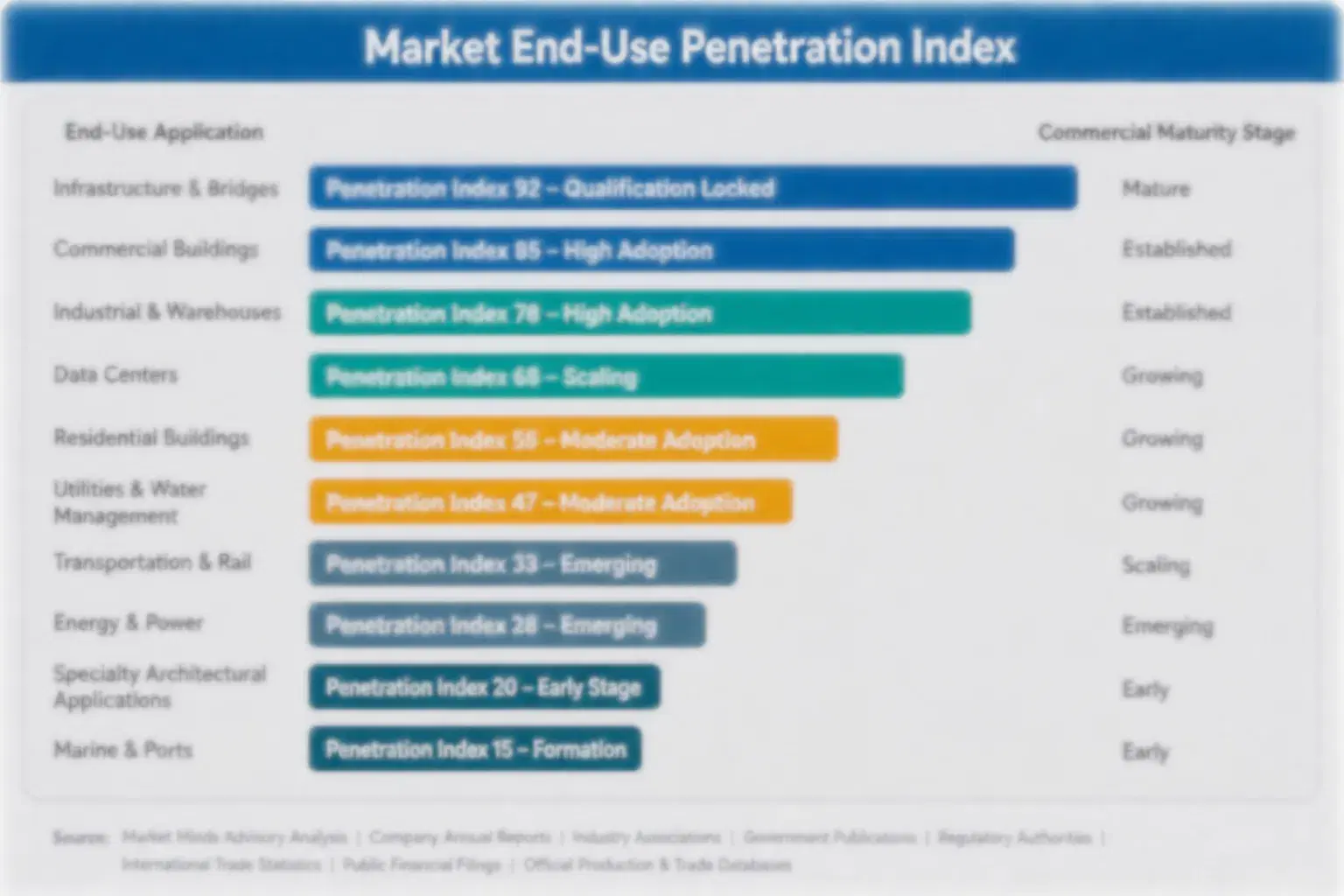
Modular chiller revenue runs on long replacement and service cycles rather than annuity-style subscriptions, but the economics function similarly once a supplier wins an installation. Service contracts, spare parts, and periodic recertification generate recurring revenue over a unit's 15 to 20 year service life that often exceeds the original equipment sale in cumulative value, giving incumbents an advantage over challengers on every subsequent call.
Adoption stickiness varies meaningfully by end-use vertical. Large hyperscale data center operators lock into supplier relationships for decades given the cost and risk of switching certified providers mid-contract, while smaller office buyers switch more readily when price or lead time differs meaningfully. Hospital systems sit between these extremes, balancing proven suppliers against budget constraints.

A generational shift in buyer profiles is underway as younger facility engineers, trained on digital monitoring and modular scalability technology, increasingly influence procurement decisions previously dominated by maintenance teams favoring proven standard designs. These buyers weigh lifecycle deployment speed alongside upfront cost, a shift that favors suppliers investing early in modular and digital service capability over those competing purely on price. This shift is expected to accelerate over the decade.
modular-chillers-market-end-use-penetration-index-1791097764058

The MMA Outlook

These are among the four positions where our research anticipates prominent divergence between winners and laggards over the coming forecast period. Each is grounded in the demand model, the regulatory perimeter, and the announced capacity pipeline.
01 / DATA CENTER ENGINEERING INVESTMENT

Build rapid deployment capacity before the AI buildout window closes

Suppliers that invest now in data center engineering capability, including rapid deployment design and system integration expertise, are positioned to capture the most profitable contracts tied to AI compute buildout running through 2030. Those that wait risk ceding greenfield bidding entirely to specialists who moved earlier and built documented integration records across multiple hyperscale facilities. The window for catching up narrows every quarter as AI infrastructure investment accelerates further across additional markets well before the next buildout wave fully materializes nationwide.
02 / US MARKET ACCESS

Establish local engineering presence ahead of America's AI compute boom

United States AI compute buildout is generating the fastest order growth tracked anywhere in this report, and suppliers without sustained regional engineering presence are losing greenfield bids to competitors with established local teams. Distributor-only strategies no longer suffice for capturing the largest new contracts awarded across multiple hyperscale regions nationally. Building direct engineering relationships now will determine market position for the next decade across this large and fast-growing market entirely, where greenfield facility awards keep accelerating steadily each quarter nationwide.
03 / COMPRESSOR COST HEDGING

Lock in multiyear component contracts before the next price cycle

Compressor and steel price volatility compressed margins meaningfully during the 2024 spike, and suppliers without multiyear supply contracts bore the brunt of that squeeze while competitors with locked pricing stayed profitable throughout the cycle and continued winning new contracts. Smaller fabricators lacking purchasing scale remain significantly exposed to the next price cycle regardless of near-term market conditions. Pooling procurement through industry consortia offers a practical path toward the scale economics that larger rivals already enjoy today across every major region tracked.
04 / CHINESE COMPETITION RESPONSE

Differentiate on deployment depth rather than compete on price alone

Chinese fabricators are gaining share on standard commercial units through aggressive pricing that established suppliers cannot match without eroding margin meaningfully across their broader product lineup. Competing head-on for commodity volume sacrifices the premium positioning that documented scalability certification and rapid deployment engineering depth currently command across every major hyperscale account. Suppliers should instead concentrate resources on data center and healthcare segments where certification depth still determines winners well before Chinese rivals close that specific gap meaningfully across multiple product lines.

Engagement Snapshot From the Field

A live engagement with an industry participant carrying material or product regulatory and market exposure ahead of a defining policy shift, showing how our research translates into a defensible multi-year portfolio strategy.
MARKET MINDS ADVISORY · CLIENT ENGAGEMENT SUMMARY
Modular Chillers Producer Strategic Portfolio Review and Transition Roadmap 2026·Investment Scenario on Modular Chillers Exposure Evaluation 2025-26
CLIENT PROFILE
The client operates three hyperscale data center facilities across the American Southwest, each relying on standard-capacity modular chillers nearing throughput limits amid rising AI compute demand. Annual revenue sits in the $1.2 billion to $1.8 billion range (client-reported, unverified by MMA), with cooling capacity expansion accounting for a meaningful share of total facility capital expenditure.
STRATEGIC CHALLENGE
The client faced mounting pressure to expand cooling capacity while managing a constrained capital budget across three separate facilities and tightening local grid allocation limits. Leadership needed to decide whether to upgrade all three facilities simultaneously or phase conversion over several years, with meaningful cost and capacity risk tied to either path.
MMA APPROACH
MMA conducted a site-by-site assessment of cooling load, deployment speed requirements, and grid capacity exposure, benchmarking the client's cost structure against comparable American hyperscale operators. The analysis modeled phased versus simultaneous expansion scenarios, incorporating grid incentive eligibility and supplier lead times across the three facilities under consideration, with interviews conducted at each individual site.
KEY FINDINGS
  1. The oldest facility carried the highest near-term capacity constraint, with lost compute revenue estimated at $7 million annually (client-reported, unverified by MMA).
  2. Phased expansion reduced peak capital outlay by 31% but extended total capacity constraint exposure across an additional 10 months. Leadership weighed this tradeoff carefully against available capital reserves.
  3. Grid incentive eligibility covered up to 26% of conversion cost at two of three facilities, meaningfully improving payback economics. This improved the project's overall return profile meaningfully.
  4. Supplier lead times for large-capacity modular systems ran 6 to 10 months, requiring earlier procurement commitment than leadership had originally planned for.
CLIENT PROFILE
The client operates three hyperscale data center facilities across the American Southwest, each relying on standard-capacity modular chillers nearing throughput limits amid rising AI compute demand. Annual revenue sits in the $1.2 billion to $1.8 billion range (client-reported, unverified by MMA), with cooling capacity expansion accounting for a meaningful share of total facility capital expenditure.
STRATEGIC CHALLENGE
The client faced mounting pressure to expand cooling capacity while managing a constrained capital budget across three separate facilities and tightening local grid allocation limits. Leadership needed to decide whether to upgrade all three facilities simultaneously or phase conversion over several years, with meaningful cost and capacity risk tied to either path.
MMA APPROACH
MMA conducted a site-by-site assessment of cooling load, deployment speed requirements, and grid capacity exposure, benchmarking the client's cost structure against comparable American hyperscale operators. The analysis modeled phased versus simultaneous expansion scenarios, incorporating grid incentive eligibility and supplier lead times across the three facilities under consideration, with interviews conducted at each individual site.
KEY FINDINGS
  1. The oldest facility carried the highest near-term capacity constraint, with lost compute revenue estimated at $7 million annually (client-reported, unverified by MMA).
  2. Phased expansion reduced peak capital outlay by 31% but extended total capacity constraint exposure across an additional 10 months. Leadership weighed this tradeoff carefully against available capital reserves.
  3. Grid incentive eligibility covered up to 26% of conversion cost at two of three facilities, meaningfully improving payback economics. This improved the project's overall return profile meaningfully.
  4. Supplier lead times for large-capacity modular systems ran 6 to 10 months, requiring earlier procurement commitment than leadership had originally planned for.
RECOMMENDED STRATEGY
Phase 1: Expand the oldest, highest-constraint facility first to eliminate the largest near-term revenue loss quickly. This step alone addressed the largest single source of revenue exposure. Phase 2: Secure incentive-eligible contracts at the two qualifying facilities within the current program window before it closes. Timing proved critical given program funding caps. Phase 3: Stagger remaining expansions across 10 months to manage capital outlay while meeting grid allocation deadlines. This sequencing balanced cash flow against grid urgency.
OUTCOME
The client expanded its highest-constraint facility within six months, recovering an estimated $7 million in annual compute revenue (client-reported, unverified by MMA). Incentive capture at the two eligible facilities offset roughly 24% of total conversion cost, and phased scheduling kept peak capital outlay within the client's original budget constraints throughout the full three-year program.

Frequently Asked Questions

Foundational context covering the market sizes, CAGR, scope, country, region and competition that inform every finding below. This section is provided to cover basics and most often pre-purchase conversations, answered from the MMA Primary Research Dataset.

What is the current size of the Modular Chillers Market?

The global modular chillers market reached $2.9 billion in 2025. Demand concentrates heavily in United States AI compute buildout alongside global healthcare facility and hospital construction expansion.

How large will the Modular Chillers Market be by 2036?

MMA projects the market will reach $7.79 billion by 2036, roughly 2.46 times its 2026 value. AI infrastructure investment and hospital construction growth both contribute to that expansion.

What is the CAGR for the Modular Chillers Market 2026 to 2036?

The market is forecast to grow at a compound annual rate of 9.4% between 2026 and 2036. That builds on a 2020 to 2025 historical rate of 8.2%, reflecting recent demand-driven acceleration.

Which segment is growing fastest?

Data center cooling modular chillers lead at a 13.5% CAGR. That is 1.44 times the overall market growth rate, driven by AI compute buildout across the United States and China.

Who are the major companies in the Modular Chillers Market?

Daikin Industries, Trane Technologies, Carrier Global, Johnson Controls, and Vertiv Holdings hold leading positions. Combined, the top five account for 42% of the market on a reported unit shipment basis.

Which country is growing fastest?

The United States leads country-level growth at a 10.5% CAGR. Its AI compute buildout, backed by rapid hyperscale capacity investment, is driving that pace well ahead of other major markets tracked.

Report Segmentation Architecture

The full report scope spans multiple orthogonal segmentation dimensions, with cross-tabulated demand data provided for each dimension pair. Coverage extends further to regional breakdowns, trend trajectories, and the competitive detail needed to support segment-level decision-making.
  • Commercial Office Modular Chillers
  • Industrial Process Cooling Modular Chillers
  • Hospitality and Retail Modular Chillers
  • Healthcare Facility Modular Chillers
  • Data Center Cooling Modular Chillers
  • Data Center and Hyperscale Computing
  • Healthcare and Hospital Systems
  • Commercial Office Real Estate
  • Industrial Manufacturing and Processing
  • Direct Industrial Procurement Channel
  • Government AI Infrastructure Incentive Channel
  • Distributor and Mechanical Contractor Channel
  • Retrofit and Replacement Channel

By Region

  • North America
  • Western Europe
  • East Asia
  • South Asia and Pacific
  • Latin America
  • Middle East and Africa
  • Eastern Europe

Scope, Methodology, and Coverage

Every figure in this report is reproducible from documented input assumptions. The scope below maps the historical period, the forecast horizon, the segmentation dimensions, and the countries covered, alongside the underlying primary and qualitative methodology.
Historical Period
2020 to 2025
Forecast Period
2026 to 2036
Base Year
2025 (USD billions; MMA Primary Research Dataset, October 2026)
Market Definition
The modular chillers market covers factory-assembled, scalable cooling units that can be combined to add capacity incrementally for data center, healthcare, commercial office, and industrial applications. It excludes standard monolithic chillers and residential-scale air conditioning equipment.
Quantitative Units
USD billions, unit shipments where disclosed
Segmentation Dimensions
End-use industry, end-use application, commercial procurement channel
Regions Covered
North America, Western Europe, East Asia, South Asia and Pacific, Latin America, Middle East and Africa, Eastern Europe
Countries Covered
United States, China, Germany, India, Japan, Brazil, Mexico, Saudi Arabia, United Arab Emirates, Poland, Vietnam, South Africa
Key Companies Profiled
Daikin Industries, Trane Technologies, Carrier Global, Johnson Controls, Vertiv Holdings, and 15 additional profiled participants
Quantitative Methodology
Primary survey, n=3,800 respondents, Q4 2025, six countries; demand-side model with trade association cross-validation
Qualitative Methodology
47 expert interviews, Q4 2025; applied to validate demand model assumptions, identify emerging dynamics, and assess competitive positioning
Report Format
PDF and XLSX data workbook (Word format preview document)
Publisher
Market Minds Advisory
Report Code
MMA-2026-CON-612
Published
October 2026
Contact
sales@marketmindsadvisory.com | www.marketmindsadvisory.com

Purchase the full Modular Chillers Market Report (2026 to 2036).

This report delivers a comprehensive assessment of the global modular chillers market across all seven MMA-tracked regions. It covers market sizing, segmentation, competitive benchmarking, and input cost exposure through 2036, with particular attention to AI compute buildout and healthcare construction dynamics shaping near-term supplier strategy. Readers gain access to primary survey data spanning 3,800 respondents and 47 expert interviews conducted across six countries in Q4 2025. The analysis includes detailed revenue lever guidance and portfolio tiering to support strategic planning, capital allocation, and competitive positioning decisions across the forecast period.
Ten-year market sizing and forecast model
Seven-region demand and market share breakdown
Competitive benchmarking of 20 named suppliers
Input cost exposure and mitigation analysis
Revenue lever and portfolio tiering guidance
Primary survey and expert interview data access

Built For The People Who Decide

From boardroom strategy to bench-side execution, this report is read cover-to-cover by leaders shaping the next decade of their industry, turning demand scenarios, market dynamics and valuation benchmarks into decisions.
CXOs/ Presidents/ VPs/ Managers
M&A and Corporate Development
Strategy Teams and R&D Heads
Procurement and Product Directors
Regulatory and Compliance Leaders
Investor Relations and Equity Analysts