Market Minds Advisory
Mineral Premix Market

Mineral Premix Market: Mineral Premix Market. Trace Mineral Form, Excretion Limits and Feed Formulation Economics

Mineral premixes blend zinc, copper, manganese, selenium and iodine into feed and food, and tighter environmental limits, organic mineral forms and volatile metal prices are moving formulators from cheap oxides toward lower-dose, better-absorbed products.

Lead Analyst

Published

September 2026

Make Smarter Decisions with Customized Research Insights

Request a free sample report and evaluate market opportunities, growth trends, and competitive dynamics relevant to your business needs.

2025 MARKET VALUE$3.2BMarket Size 2025
2036 FORECAST VALUE$5.5BBase Case , 2026 to 2036
CAGR 2026 TO 20365.0 %Bull 6.3% / Bear 3.7%
INCREMENTAL OPPORTUNITY$2.1BNet 10- year value creation
EXPANSION MULTIPLE1.63x2036 value over 2026 base
Strategic Levers
M&A Pipeline
Regional Outlook
Country Rankings
Competitive Intelligence
Segmental Deep-dive
Call-Us : 91 93563 13602

Executive Snapshot and Market Trajectory.

Mineral premixes are carefully weighed blends of trace and macro minerals that feed makers and food fortifiers add in small doses. Growth is steady rather than fast, but regulation on zinc and copper excretion and better absorption evidence are shifting value from oxides toward organic forms. Buyers check homogeneity.
Organic Trace Mineral Premixes grow fastest as producers replace part of high-dose inorganic zinc, copper and manganese with chelated forms that need lower inclusion, while sulphate and oxide premixes still carry the largest volume. East Asia holds the largest share because Chinese feed output is the world's biggest and new limits on zinc and copper in swine feed push formulation change, with North America close behind on integrator demand. Cost pressure stays intense.
Competition is moderately concentrated, with global nutrition groups, trace mineral specialists and regional premix makers competing on form science, formulation service and delivery reliability. Feed additive authorisation, maximum permitted levels for zinc and copper, contamination limits for lead and dioxins and customer audits shape entry, and buyers verify mineral assay, particle size and homogeneity before they approve suppliers for large integrator and feed mill programmes.
Market Definition
The market covers global sales of mineral premixes, defined as blended trace and macro mineral supplements including zinc, copper, manganese, iron, selenium, iodine, cobalt, calcium, phosphorus and magnesium in inorganic, hydroxychloride and organic chelated forms, sold to feed mills, integrators and food fortifiers. It excludes vitamin-only premixes, bulk commodity minerals sold without blending, mineral licks and blocks, and human dietary supplements sold to consumers.
Base Year Value
$3.2B in 2025 (MMA Primary Research Dataset, September 2026)
Forecast Period
2026 to 2036, eleven discrete annual values
CAGR
5.0% base case. Bull 6.3%. Bear 3.7%.
Fastest Growth Segment
Organic Trace Mineral Premixes: 7.0% CAGR
Fastest Growth Country
India: 7.8% CAGR
Fastest Growth Region
South Asia and Pacific: 7.1% CAGR
Largest Region
East Asia: 34% of 2025 global value
Market Leaders
DSM-Firmenich, Cargill, Nutreco, Zinpro, Adisseo. Source: MMA Analysis, company annual reports.
Primary Survey
n=3,800 procurement and R&D decision-makers, Q4 2025, six countries
Methodology
Demand-side build-up, cross-validated against public data, 47 expert interviews

Mineral Premix Market Forecast Scenarios

mineral-premixes-market-size-forecast-scenario-1789966732674
Between 2020 and 2025 the market grew at about 4.5% a year, supported by recovering feed output in Asia and Latin America, rising use of organic mineral forms in poultry and swine, and price increases that passed through higher metal costs. Growth slowed in 2023 when African swine fever, weak margins and feed cost pressure cut inclusion in some regions.
The base case rests on three commercial mechanisms. First, regulators in China, the European Union and other regions lower maximum zinc and copper levels, pushing producers toward lower-dose organic and hydroxychloride sources. Second, integrators seek better feed conversion and shell quality, which supports premium mineral programmes. Third, livestock output grows in Asia, Africa and Latin America, adding premix volume. Producers plan sourcing and service teams around these drivers, and buyers reward assay consistency.
The bull case reaches 6.3% if excretion limits spread quickly, integrators adopt organic programmes at scale and protein output grows faster than planned. The bear case falls to 3.7% if disease outbreaks cut herds, feed margins stay thin and buyers stay with cheap oxides. Both cases assume stable metal supply and no new tariffs, and neither assumes a large new ban on inorganic minerals.

Mineral Form Science, Excretion Rules and Assay Reliability Set Premix Returns

Trace minerals such as zinc, copper, manganese and selenium are needed in tiny amounts, but they support immunity, bone and eggshell strength, hoof health and growth. Feed mills buy them blended into premixes, so that every ration receives the right dose. The blend matters as much as the metals, because particle size, carrier choice and mixing quality decide whether animals receive an even dose.
MARKET CONCENTRATION42% CR5Top five suppliers hold about two fifths of premix sales
TRACE MINERAL INCLUSION0.2-0.5%Typical share of total ration used for trace mineral premix
ORGANIC SHARE27%Portion of premix value sold in organic chelated forms
POULTRY AND SWINE SHARE63%Portion of premix value used in poultry and swine feed
METAL SOURCE COST SHARE42% of COGSZinc, copper and manganese sources within total product cost
CONTRACT LENGTH1-2 yearsTypical supply agreement term for integrators and feed mills
Value pools sit in three places. Poultry and swine take most premix volume, especially in China, Brazil, the United States and Southeast Asia. Ruminant and aquaculture programmes add fast-growing pools, where organic forms support hoof health, fertility and disease resistance. Food fortification and pet food add smaller pools with stricter purity limits.
Supply is layered. Metal producers and chemical plants make zinc, copper and manganese sources, specialists create chelates and hydroxychlorides, and premix makers blend, test and deliver to feed mills. Metal price swings pass through quickly, while form science and technical service protect margin. Buyers hold two to three months of stock, and regulatory approvals tie each product to a named source and process, which makes qualification of new suppliers slow and demanding.
"Trace minerals are the least glamorous line in a feed mill and the one most exposed to a regulator's pen. When a country halves the allowed zinc, the premix business does not shrink. It gets smarter, and the suppliers with the best chemistry and the best service take the difference."
Senior Analyst, Animal Nutrition and Feed Additives Practice · MMA Mineral Premix Practice · September 2026

Market Trends

Lower Zinc Limits Push Feed Makers Toward Organic Trace Minerals

China tightened maximum zinc and copper levels in swine feed, and the European Union restricted therapeutic zinc oxide in piglets from 2022 and lowered permitted copper and zinc in feed, so formulators seek forms that deliver the same effect at lower inclusion. Organic Trace Mineral Premixes grow about 7.0% a year, and gross margins run 30% to 42%. The trend needs farm trial data on growth, immunity and excretion, cost per unit of absorbed mineral and consistent assay, and it rewards suppliers with technical teams, regulatory files and integrator programmes, while producers that lack evidence lose share to lower-cost oxides.
Market Impact: organic forms allow 30-60% lower doses

Hydroxychloride Sources Win Share as a Stable Alternative to Sulphates

Hydroxychloride zinc and copper are less reactive than sulphates, so they protect vitamins and enzymes in premixes and stay free-flowing in humid climates, while costing less than chelates. Hydroxychloride Trace Mineral Premixes grow about 6.0% a year, and gross margins run 26% to 36%. The trend needs supplier evidence on bioavailability, consistent particle size and approvals in each market, and it favours producers with proprietary processes and technical service, while integrators trial hydroxychlorides on a share of production before full adoption and monitor mortality, feed conversion and mineral excretion over several months. Premix stability improves.
Market Impact: Asia makes over 40% of feed

Market Opportunities and Growth Drivers

Environmental Rules on Excretion Encourage Lower-Dose Mineral Programmes

Regulators in China, the European Union and several other markets cap zinc and copper in feed because excess minerals are excreted and build up in soils and waters. Producers need forms that work at lower doses, and organic and hydroxychloride sources allow reductions of 30% to 60% in some programmes. The driver sustains a steady shift in formulation and rewards suppliers with farm data on animal performance and excretion, while integrators track environmental reporting and sustainability goals, which raises the value of premixes that lower mineral load without hurting growth or health across large production systems.
Market Impact: price spikes narrow organic premiums 10-20%

Rising Protein Output in Emerging Markets Adds Premix Volume

Poultry, pig and aquaculture production keeps growing in India, Vietnam, Brazil, Nigeria and other countries, and intensive systems need precise mineral supplementation for growth, eggshell and immune function. Asia accounts for the largest share of global feed output. The driver sustains volume growth even when prices fall, and it rewards suppliers with local blending plants, regulatory approvals and technical staff, while large integrators buy on annual tenders that favour reliable delivery, consistent assay and support for formulation changes as regulations tighten across the region. Local blending plants shorten delivery times for integrators.
Market Impact: larger trials cost $0.5-2 million each

Market Restraints and Challenges

Metal Price Volatility Pushes Buyers Toward the Cheapest Sources

Zinc, copper and manganese prices swing with energy costs, mine supply and demand from industry, and premix prices follow within weeks. The root cause is that metals trade on global exchanges tied to industrial cycles. Feed margins are thin, so buyers switch to the cheapest source when prices spike, and organic premiums narrow by 10% to 20% in stress periods. Suppliers respond with price formulas, forward buying and value-based selling, though smaller premix makers lack hedging tools and suffer margin swings that erode profits and customer loyalty. Hedging costs also rise.
Market Impact: organic trace minerals grow 7.0% yearly

Limited Farm-Level Evidence and Buyer Scepticism Slow Premium Form Adoption

Many organic mineral trials show mixed results, depend on diet and animal type and are funded by suppliers, so nutritionists hesitate to pay premiums. The root cause is small trials and difficulty isolating mineral effects from other diet factors. Adoption stalls in price-sensitive markets, and each larger trial costs $0.5 million to $2 million. Suppliers respond with independent studies, integrator pilots and transparent bioavailability data, though results take a full production cycle and buyers often insist on cost-benefit proof before any change is approved. Small farms rarely fund their own comparison studies.
Market Impact: hydroxychloride premixes grow 6.0% yearly
3 additional market trends, 2 additional growth drivers, and 4 additional restraints and challenges are covered in the full report. Contact sales@marketmindsadvisory.com to access the complete intelligence.

Segment CAGR and Growth Architecture

The global mineral premix market is segmented by mineral form, which shows where absorption science, regulation and cost pressure create pricing power. Five segments cover organic trace mineral premixes, hydroxychloride premixes, inorganic sulphate and oxide premixes, macro mineral premixes, and specialty selenium and iodine premixes. Organic and hydroxychloride forms grow fastest, while inorganic premixes carry the largest volume.
mineral-premixes-market-market-share-analysis-1789966732875

Organic Trace Mineral Premixes

Organic Trace Mineral Premixes is the fastest-growing segment at 7.0% a year, about 1.40 times the overall market rate, from a solid base. Amino acid complexes, proteinates and other chelates deliver minerals at lower inclusion and cut excretion, and gross margins of 30% to 42% support technical teams and trials. Integrators use them in breeder, layer and sow diets first, where performance gains pay back, and ruminant and aquaculture uses are growing. Suppliers with independent farm data, regulatory approvals and cost-benefit tools win the largest programmes, while generic chelates compete on price. Regulation on zinc and copper ceilings continues to favour lower-dose products, and sustainability targets add support for adoption.
CAGR 7.0%

Hydroxychloride Trace Mineral Premixes

Hydroxychloride Trace Mineral Premixes grows at 6.0% a year, about 1.20 times the overall market rate, because feed makers accept gross margins of 26% to 36% for sources that are more stable than sulphates and cheaper than chelates. Hydroxychloride zinc and copper protect vitamins, reduce dust and flow well in humid climates, which suits tropical feed mills. Suppliers with proprietary crystal forms, consistent particle size and approvals in major markets win integrator programmes, while commodity producers compete on price. Nutritionists often use hydroxychlorides for part of the mineral supply, combined with organic forms for critical stages. Feed mills value handling gains, and premix makers value stability in blends over long storage.
CAGR 6.0%
Full segment breakdown across 5 segments available in the complete report.

Regional Architecture and Country Demand Map

East Asia leads at 34% because Chinese feed output is the world's biggest and new zinc and copper limits push formulation change, with North America at 22% on integrator demand. South Asia and Pacific grows fastest. Western Europe trails its band on mature livestock numbers.

North America

North America holds 22% share, at the bottom of its band, with growth at the global rate of 5.0%. The United States leads through large poultry, swine, dairy and beef integrators and feed companies such as Cargill and ADM, and Zinpro and other trace mineral specialists have deep customer relationships. FDA and state feed control rules set maximum levels, and AAFCO ingredient definitions guide approvals. Organic minerals are widely used in breeder and dairy diets, while inorganic premixes serve broiler and finishing programmes. Feed margins, corn prices and disease pressure shape spending, and consolidation among integrators raises buying power. Canada and Mexico add volume through shared supply chains, and nutritionist trials guide formulation.
Share: 22% | CAGR: 5.0% (2026 to 2036)

Western Europe

Western Europe holds 14% share, below its band, which is justified because European livestock numbers are mature and declining in several countries, and strict regulation already limits zinc and copper, so absolute premix volume is small compared with Asia. Growth trails the global rate at 3.4%. The European Union lowered permitted zinc and copper levels and ended medicinal zinc oxide for piglets, so organic and hydroxychloride sources are widely used, and the region leads in environmental reporting. Germany, France, Spain, the Netherlands and Denmark host large feed groups such as Nutreco. Sustainability rules, price sensitivity and consolidation restrain growth, and Nordic buyers demand full traceability. Belgium adds fertiliser-linked premix demand.
Share: 14% | CAGR: 3.4% (2026 to 2036)
Regional intelligence for 5 additional markets available in the complete report: East Asia, South Asia and Pacific, Latin America, Middle East and Africa, Eastern Europe. Contact sales@marketmindsadvisory.com.
mineral-premixes-market-country-cagr-analysis-1789966733052

Four Margin Routes for Mineral Premix Suppliers

Margin in mineral premixes comes from form science, farm-level evidence, formulation services and price-linked contracts rather than commodity oxide blends. The routes below apply to trace mineral specialists, premix makers and feed groups, and each can start within one cycle, with measures in gross margin points, tender share and cost per absorbed mineral. Payback runs two to three years.

Running Independent Farm Trials That Prove Organic Programmes Pay Back

Nutritionists doubt supplier-funded studies, so producers that run independent trials with universities and integrators on growth, immunity and excretion and publish cost-benefit results win organic programmes worth 10% to 18% of premix sales and defend premiums of 10% to 20%. Trials cost $0.5 million to $2 million each. Producers should begin with breeder and sow diets, where returns are clearest, share protocols openly and give nutritionists calculators that show dose reductions and cost per absorbed unit, since evidence and simple economics decide adoption more than brand claims. Evidence beats brand claims.
Market Impact: independent trials win organic programmes worth 10-18% of sales

Building Local Blending Plants Near Asian and Latin American Integrators

Premix is bulky and freight sensitive, so producers that build blending plants near large integrators in China, India, Vietnam and Brazil cut delivery time and freight cost by 15% to 25% and win tenders that favour reliable supply. Plants cost $3 million to $12 million. Producers should begin with the two largest integrator clusters, secure approvals early and hire local technical staff, since price competition is intense and only assay consistency, service and speed justify a premium over local premix makers. Local presence also builds trust with nutritionists and regulators.
Market Impact: local blending plants cut freight cost by 15-25%

Offering Hydroxychloride and Blended Programmes That Balance Cost and Performance

Many integrators want a middle path, so producers that design blended programmes combining hydroxychloride zinc and copper with organic forms at critical stages and show total cost per tonne of feed win share from both cheap oxides and expensive chelates. Programmes cost $0.4 million to $1.5 million. Producers should model cost and performance for each customer, offer trial phases on 10% to 20% of production and adjust as regulation changes, since flexible programmes reduce switching risk and keep customers loyal. Margins on blended programmes run three to six points above oxide blends.
Market Impact: blended programmes earn margins 3-6 points above oxide blends

Using Price Formulas and Forward Buying to Protect Margin

Zinc, copper and manganese prices swing sharply, so producers that sign price formulas with integrators, buy metal forward and hold two months of stock protect margin when prices spike by 20% to 40%. Programmes cost $0.3 million to $1.2 million in systems, working capital and legal work. Producers should link premix prices to published metal indices with a monthly reset, share simple explanations with customers and avoid fixed-price tenders during volatile periods, since buyers prefer transparent formulas to surprise increases and suppliers that manage metal risk well keep long contracts.
Market Impact: price formulas protect margin against 20-40% metal spikes

Who Controls the Margin Pool

The global mineral premix market is moderately concentrated, with a CR5 of 42%, because form science, approvals and integrator relationships take years to build. This assessment measures participants on estimated mineral premix sales value, held constant across all players. DSM-Firmenich and Cargill lead through scale and technical service, while Nutreco, Zinpro and Adisseo follow, and the gap between the leader and the fifth player is moderate.
Competition runs on four dimensions today: mineral form and absorption evidence, assay consistency, technical service and delivery reliability. Global nutrition groups win on scale and formulation services, trace mineral specialists win on chelate science, and regional premix makers win on price and speed. Buyers compare cost per tonne of feed and cost per absorbed mineral, and failed assays or delivery delays can remove a supplier from a tender within one cycle.

Emerging pressure comes from Chinese and Indian producers offering low-cost organic minerals, from integrators building their own premix plants and from regulation that could lower zinc and copper limits further. Rankings shift where a supplier wins a large integrator programme, publishes independent trials or builds local capacity, and consolidation of smaller premix makers continues as metal cost swings hurt weaker firms.
mineral-premixes-market-company-positioning-matrix-1789966733230

Competitive Moat and Risk Dimensions

DSM-FIRMENICH

Moat: Premix Scale and Service Reach

DSM-Firmenich, the Swiss-Dutch nutrition and flavour group, supplies vitamins, minerals and premixes to animal nutrition and human nutrition customers through blending plants and technical teams worldwide. Its formulation services, regulatory teams and global logistics give it an advantage with large integrators, and its position supports multi-year contracts where assay accuracy and delivery reliability matter more than price.
DSM-FIRMENICH

Risk: Portfolio Reshaping and Local Rivals

DSM-Firmenich is reshaping its portfolio, including animal nutrition activities, so investment and ownership may shift. Local premix makers undercut it on price in Asia, and trace mineral specialists offer deeper chelate evidence. Feed margins also limit customers' willingness to pay for premium services. Currency swings add pressure.
CARGILL

Moat: Feed Integration and Customer Reach

Cargill, the American agribusiness group, sells premixes and feed through its animal nutrition business and works directly with poultry, swine and dairy producers in many countries. Its feed mills, farm relationships and procurement scale give it an advantage in serving integrators, and its position supports bundled programmes that combine premix, feed and technical support.
CARGILL

Risk: Cost Focus and Specialisation Gap

Cargill competes on scale and integration, so it may lack the deep chelate science of specialists. Metal price swings hit its premix margins, and regional competitors respond faster to local regulation. Customers that build in-house premix capability could also reduce its volume in large accounts.

Players Tracked

Prominent Players

DSM-Firmenich
Cargill
Nutreco
Zinpro
Adisseo

Other Key Players

ADM
Kemin Industries
Novus International
Alltech
Phibro Animal Health
Balchem
Evonik
Vetagro
Tanke Biosciences
Prinova Group
Glanbia Nutritionals
Guangdong Haid Group
New Hope Group
Charoen Pokphand Foods
De Heus

Recent Developments

JANUARY 2026

Zinpro Publishes Multi-Farm Trial of Lower-Dose Organic Zinc Programme in Swine Production

Zinpro published a multi-farm trial of a lower-dose organic zinc programme in swine production, according to company communications. It is a research publication, not an acquisition, and it tests whether reduced inclusion holds performance. The trial covered several commercial farms and measured growth and excretion. Commercial terms were not disclosed.
Signal: Confirms trace mineral specialists are publishing farm-level data because integrators need proof before cutting inclusion rates.
FEBRUARY 2026

Nutreco Opens New Premix Blending Plant in Vietnam to Serve Southeast Asian Integrators

Nutreco opened a new premix blending plant in Vietnam to serve Southeast Asian integrators, according to company communications. It is an organic capacity expansion, not an acquisition, and it tests demand for local supply. The plant adds blending, quality control and technical service capacity. Investment terms were not disclosed.
Signal: Shows global groups are building local plants because freight cost and delivery speed decide integrator tenders in Asia.
MARCH 2026

Adisseo Launches Hydroxychloride Trace Mineral Range for Poultry and Swine Feed in Latin America

Adisseo launched a hydroxychloride trace mineral range for poultry and swine feed in Latin America, according to company communications. It is a product launch, not an acquisition, and it tests mid-cost demand. The range includes stability data and blending guidance. Commercial terms were not disclosed.
Signal: Indicates suppliers see hydroxychlorides as a growth route because integrators want stability at lower cost than chelates.

What Drives Mineral Premix Costs

Metal and salt sources such as zinc, copper and manganese sulphates, oxides and chelates account for roughly 42% of product cost, carriers and additives about 8%, blending, quality control and energy about 12%, packaging and freight about 10%, and overheads, technical service and marketing about 28%. Metals come from smelters in China, Europe, India and South America, and blending plants sit close to feed mills in each region.
The clearest recent shock came in 2022. USGS Mineral Commodity Summaries and Eurostat energy data show European smelter cuts as gas prices surged, and MMA Estimate from expert interviews indicates that zinc source prices rose 25% to 45% while copper and freight costs also rose. Premix makers passed through part of the increase, buyers switched some volume to cheaper sources and price formulas gained ground after several months.

The disadvantage falls on premix makers without price formulas, forward purchasing or diversified sourcing, because they cannot pass through swings on annual tenders. Large groups negotiate metal terms and run several plants. Exposure also varies by geography: European producers face energy cost, while Asian producers face freight, quality variation in local sources and currency swings that hit imported inputs.
mineral-premixes-market-cost-volatility-analysis-1789966733415

Price Formulas Linked to Metal Indices

Producers agree formulas that link premix prices to published metal indices with monthly or quarterly resets. These formulas protect margin against metal swings of 20% to 40%. The main challenge is customer acceptance, so larger producers negotiate first, while smaller producers offer simple explanations, price caps and transparent reporting to persuade cautious buyers. Audits repeat yearly.

Forward Buying and Multi-Source Procurement

Producers buy metal sources forward, hold two months of stock and qualify at least two suppliers per mineral. These steps cut exposure to price and supply shocks by about a third. The main challenge is working capital and quality variation between sources, so producers audit smelters and test every lot, while smaller producers use pooled purchasing groups.

Formulation Efficiency and Organic Dose Reduction

Producers redesign programmes with organic and hydroxychloride forms at lower doses, cutting total metal use per tonne of feed by 20% to 40%. The main challenge is farm evidence and buyer trust, so producers run trials, share calculators and offer phased adoption, while integrators test programmes on a share of production before full change across all feed mills.

Portfolio Architecture for Margin Defence

Margins run from thin returns on inorganic oxide and sulphate premixes sold in volume to strong returns on organic chelated and specialty selenium and iodine programmes sold with technical service. Three tiers separate volume products, premium certified lines and next-generation solutions, and each tier draws on different form science, blending scale and regulatory approvals in a moderately concentrated market with limited price transparency below the leading suppliers.
The tension between volume and premium is sharp. Inorganic premixes fill large integrator tenders at low prices but face constant metal cost swings and regulation on maximum levels, while organic and hydroxychloride programmes earn higher margins on smaller volumes and depend on farm evidence, approvals and service. Producers that run only volume struggle when metal prices spike, while premium-only producers lose scale. Mix management decides which risk dominates each year.

High-value pools concentrate in organic trace mineral programmes for breeder, layer and sow diets and in hydroxychloride blends for tropical feed mills. They gather where buyers pay for evidence, stability and lower environmental load, not for the mineral name itself. Selenium and iodine specialty premixes add a smaller pool, and strong suppliers hold all three, though each needs different technical skills.

Volume / Commodity-Adjacent

Inorganic sulphate and oxide premixes sold in volume to feed mills and integrators through annual tenders. Buyers focus on price per tonne, contracts follow metal indices, and technical service is limited.
Gross Margin: 12%-22%

Premium / Certified

Hydroxychloride and blended premixes with certified assay, particle size control and third-party testing, sold to integrators and large feed groups. Buyers value consistency, stability data and audit records, and contracts run for one to two years.
Gross Margin: 24%-36%

Sustainability / Regulatory / Next-Generation

Organic chelated and specialty premixes with farm trial data, lower-dose programmes and environmental reporting support, sold to breeder, layer, sow and dairy programmes. Contracts run for several years and depend on evidence, approvals and technical service.
Gross Margin: 30%-44%
mineral-premixes-market-portfolio-architecture-1789966733607

High-value Sub-segments and Strategic Watch-out

Organic Trace Mineral Premixes

Organic trace mineral premixes combine the fastest growth with strong pricing, since integrators need lower-dose forms to meet zinc and copper limits and pay gross margins of 30% to 42% for proven programmes. Farm data, approvals and technical teams limit competition, and independent trials win breeder and sow contracts.
Gross Margin: 30%-42%

Hydroxychloride Trace Mineral Premixes

Hydroxychloride trace mineral premixes deliver firm growth and pricing, since feed makers accept gross margins of 26% to 36% for stable sources that cost less than chelates. Proprietary crystal forms, consistent particle size and approvals form the entry barrier, and feed mill handling gains decide which suppliers stay qualified.
Gross Margin: 26%-36%

Inorganic Sulphate and Oxide Premixes

Inorganic sulphate and oxide premixes are the volume core for feed mills and integrators. Value grows about 3.5% a year, and metal cost, blending scale and delivery reliability decide profit. Suppliers anchor sales on annual tenders and long relationships with integrators, and customers renew yearly at metal-linked prices.
Gross Margin: 12%-22%

Macro Mineral Premixes

Macro mineral premixes are the strategic watch-out, since growth of about 4.0% a year trails the leaders, phosphate and calcium sources are commodity products and price competition from local blenders is intense. Suppliers should manage these lines selectively and steer investment toward organic and hydroxychloride programmes with stronger margins.
Gross Margin: 10%-18%

Why Integrators Rarely Switch Premix Suppliers

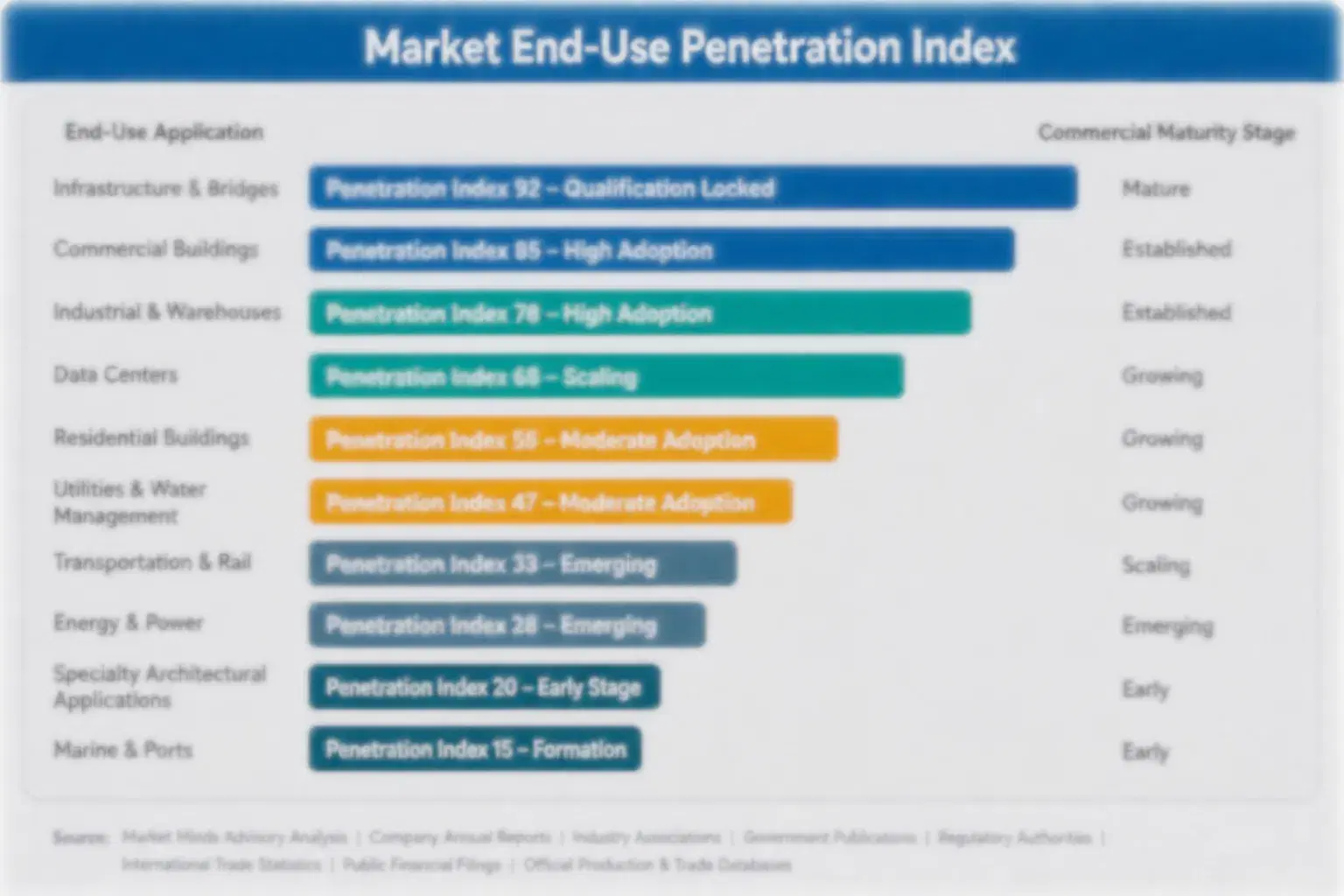
Mineral premix demand behaves like an annuity attached to feed formulas, mill approvals and integrator programmes. Once a feed mill qualifies a premix supplier after assay checks and animal performance trials, reorders follow every month, and switching means new assay tests, formulation changes and risk to animal health. Buyers set annual volume plans around livestock cycles, so suppliers with reliable delivery earn steady volume and priority allocation. Trust, once earned, is slow to lose.
Adoption stickiness differs by end-use vertical. Breeder, layer and dairy programmes are the deepest, since mineral forms are tied to performance protocols and veterinary advice. Broiler and finishing pig programmes are moderately sticky, driven by cost per tonne and tender terms. Small feed mills and farm-level buyers are more fluid, changing suppliers when price moves, though technical service and reliable delivery hold customers for several years.

Buyer profiles are shifting between generations. Older purchasing teams bought premixes by price and assay sheet, while newer teams ask for excretion data, cost per absorbed mineral and carbon footprint per tonne. Regulators and retailers add a third group that sets environmental and residue expectations. Suppliers that publish farm data and lower-dose programmes win newer buyers.
mineral-premixes-market-end-use-penetration-index-1789966733791

MMA Verdict on Mineral Premix Strategy

These are among the four positions where our research anticipates prominent divergence between winners and laggards over the coming forecast period. Each is grounded in the demand model, the regulatory perimeter, and the announced capacity pipeline.
01 / ORGANIC EVIDENCE STRATEGY

Run Independent Farm Trials Before Nutritionists Dismiss Organic Minerals as Costly Extras

Organic Trace Mineral Premixes grows at 7.0% a year, about 1.40 times the overall market rate, and lower zinc and copper limits favour lower-dose forms. Producers should invest $0.5 million to $2 million per trial with universities and integrators, share protocols openly and win programmes worth 10% to 18% of premix sales. Those that delay will lose integrator accounts to better documented rivals over the next two years, while prepared producers hold pricing, farm trust and regulatory readiness across every regulatory review cycle.
02 / HYDROXYCHLORIDE BLEND STRATEGY

Offer Blended Hydroxychloride Programmes Before Integrators Split Between Oxides and Chelates

Hydroxychloride Trace Mineral Premixes grows at 6.0% a year, about 1.20 times the overall market rate, and many integrators want a middle path between cheap oxides and expensive chelates. Producers should invest $0.4 million to $1.5 million in blended programmes, cost models and phased trials on 10% to 20% of production, and earn margins three to six points above oxide blends. Those that delay will lose mid-cost customers over the next two years, while early movers hold loyalty, stability advantages and pricing.
03 / LOCAL BLENDING STRATEGY

Build Local Blending Plants Near Asian Integrators Before Rivals Lock Tenders

Premix is bulky and freight sensitive, and local plants cut freight cost by 15% to 25% and win tenders that favour reliable supply. Producers should invest $3 million to $12 million in plants near the two largest integrator clusters, secure approvals early and hire local technical staff. Those that delay will lose tenders to local premix makers over the next two years, while prepared producers hold delivery speed, service credibility and customer confidence across every tender cycle and every livestock cycle.
04 / METAL RISK STRATEGY

Adopt Price Formulas and Forward Buying Before Metal Spikes Erase Premix Margins

Zinc, copper and manganese prices swing by 20% to 40%, and unhedged premix makers absorb losses that fixed-price tenders prevent them from recovering. Producers should invest $0.3 million to $1.2 million in price formulas, forward buying and two months of stock, and link premix prices to published metal indices with monthly resets. Those that delay will lose margin and customers over the next two years, while prepared producers hold margin stability, supplier credibility and long contracts through every metal price cycle.

Engagement Snapshot From the Field

A live engagement with an industry participant carrying material or product regulatory and market exposure ahead of a defining policy shift, showing how our research translates into a defensible multi-year portfolio strategy.
MARKET MINDS ADVISORY · CLIENT ENGAGEMENT SUMMARY
Mineral Premix Producer Strategic Portfolio Review and Transition Roadmap 2026·Investment Scenario on Mineral Premix Exposure Evaluation 2025-26
CLIENT PROFILE
The client is a mid-sized Asian premix manufacturer with annual sales near $90 million (client-reported, unverified by MMA), selling inorganic mineral and vitamin premixes to poultry and swine integrators in four countries. About 85% of mineral sales were sulphate and oxide blends, metal price swings had cut margins twice, and two large integrators had asked for organic and hydroxychloride programmes with farm data. Management wanted a plan to raise margin.
STRATEGIC CHALLENGE
Gross margin on inorganic premixes sat near 15% (client-reported, unverified by MMA), zinc and copper cost swings had reached 30% in two years, and competitors offered organic programmes to the same integrators. Management had to decide whether to fund farm trials, build a blending plant or adopt price formulas, with limited capital and one main plant. Key integrators wanted proposals within 12 months.
MMA APPROACH
MMA analysed sales, cost and customer data across 45 premix products, interviewed 14 nutritionists, integrator buyers and regulatory managers, and ran a buyer survey on forms, price and service across three countries. It modelled margin by product and scenario, compared trial, plant and price formula options by payback and execution risk, and tested each against metal price scenarios.
KEY FINDINGS
  1. A hydroxychloride and organic programme with two independent trials would cost about $1.6 million and lift gross margin on converted volume from about 15% to about 30% (client-reported, unverified by MMA).
  2. A second blending plant near the largest integrator cluster would cost about $6 million and cut freight cost by about 20% (client-reported, unverified by MMA).
  3. Price formulas linked to metal indices would cost about $0.3 million and protect margin against swings of about 30% (client-reported, unverified by MMA).
  4. Forward buying and dual sourcing would cost about $0.8 million in working capital and cut stock-out risk by about half (client-reported, unverified by MMA).
CLIENT PROFILE
The client is a mid-sized Asian premix manufacturer with annual sales near $90 million (client-reported, unverified by MMA), selling inorganic mineral and vitamin premixes to poultry and swine integrators in four countries. About 85% of mineral sales were sulphate and oxide blends, metal price swings had cut margins twice, and two large integrators had asked for organic and hydroxychloride programmes with farm data. Management wanted a plan to raise margin.
STRATEGIC CHALLENGE
Gross margin on inorganic premixes sat near 15% (client-reported, unverified by MMA), zinc and copper cost swings had reached 30% in two years, and competitors offered organic programmes to the same integrators. Management had to decide whether to fund farm trials, build a blending plant or adopt price formulas, with limited capital and one main plant. Key integrators wanted proposals within 12 months.
MMA APPROACH
MMA analysed sales, cost and customer data across 45 premix products, interviewed 14 nutritionists, integrator buyers and regulatory managers, and ran a buyer survey on forms, price and service across three countries. It modelled margin by product and scenario, compared trial, plant and price formula options by payback and execution risk, and tested each against metal price scenarios.
KEY FINDINGS
  1. A hydroxychloride and organic programme with two independent trials would cost about $1.6 million and lift gross margin on converted volume from about 15% to about 30% (client-reported, unverified by MMA).
  2. A second blending plant near the largest integrator cluster would cost about $6 million and cut freight cost by about 20% (client-reported, unverified by MMA).
  3. Price formulas linked to metal indices would cost about $0.3 million and protect margin against swings of about 30% (client-reported, unverified by MMA).
  4. Forward buying and dual sourcing would cost about $0.8 million in working capital and cut stock-out risk by about half (client-reported, unverified by MMA).
RECOMMENDED STRATEGY
Phase 1: Phase 1 (Months 1-9): Adopt price formulas, start two independent trials and begin forward buying with two qualified metal suppliers. Phase 2: Phase 2 (Months 10-24): Launch hydroxychloride and organic programmes with two integrators, begin plant construction and publish trial results to nutritionists. Phase 3: Phase 3 (Months 25-42): Commission the second plant, scale organic programmes and review metal contracts and formulas yearly as price data develop.
OUTCOME
Within 42 months, hydroxychloride and organic programmes reached 34% of mineral sales, blended gross margin rose from about 15% to about 24%, and freight cost fell by about 20% in the new plant region (client-reported, unverified by MMA). Price formulas covered most tenders, two large integrators signed multi-year agreements, and stock-outs fell by about half.

Frequently Asked Questions

Foundational context covering the market sizes, CAGR, scope, country, region and competition that inform every finding below. This section is provided to cover basics and most often pre-purchase conversations, answered from the MMA Primary Research Dataset.

What is the current size of the Mineral Premix Market?

The global mineral premix market was valued at $3.20 billion in 2025 on a sales revenue basis. Growth reflects rising livestock output and shifts toward lower-dose organic forms, offset by metal price swings and thin farm margins.

How large will the Mineral Premix Market be by 2036?

The market is projected to reach $5.47 billion by 2036, up from $3.36 billion in 2026. The increase of $2.11 billion reflects organic forms, hydroxychloride premixes and Asian growth.

What is the CAGR for the Mineral Premix Market 2026 to 2036?

The market is forecast to grow at a 5.0% CAGR from 2026 to 2036. The bull case reaches 6.3% and the bear case 3.7%, depending on excretion rules, disease outbreaks and metal prices.

Which segment is growing fastest?

Organic Trace Mineral Premixes is the fastest-growing segment at 7.0% CAGR, roughly 1.40 times the overall market rate. Hydroxychloride Trace Mineral Premixes follows at 6.0% CAGR each year.

Who are the major companies in the Mineral Premix Market?

Major companies include DSM-Firmenich, Cargill, Nutreco, Zinpro and Adisseo. ADM, Kemin Industries, Novus International, Alltech and Phibro Animal Health also hold positions in mineral premixes and trace minerals.

Which country is growing fastest?

India is growing fastest at about 7.8% CAGR, because expanding poultry and dairy output, integrator growth and rising regulation support new premix volumes. Vietnam and Indonesia follow as intensive farming grows.

Report Segmentation Architecture

The full report scope spans multiple orthogonal segmentation dimensions, with cross-tabulated demand data provided for each dimension pair. Coverage extends further to regional breakdowns, trend trajectories, and the competitive detail needed to support segment-level decision-making.

By Primary Market Dimension

  • Organic Trace Mineral Premixes
  • Hydroxychloride Trace Mineral Premixes
  • Inorganic Sulphate and Oxide Premixes
  • Macro Mineral Premixes
  • Specialty Selenium and Iodine Premixes

By End-Use Industry

  • Poultry Feed
  • Swine Feed
  • Ruminant Feed
  • Aquaculture Feed
  • Food Fortification and Pet Food

By Commercial Dimension

  • Direct Supply to Integrators
  • Feed Mill Tenders
  • Premix Distributor Networks
  • Contract Blending and Private Label
  • Programme and Service Contracts

By Region

  • North America
  • Western Europe
  • East Asia
  • South Asia and Pacific
  • Latin America
  • Middle East and Africa
  • Eastern Europe

Scope, Methodology, and Coverage

Every figure in this report is reproducible from documented input assumptions. The scope below maps the historical period, the forecast horizon, the segmentation dimensions, and the countries covered, alongside the underlying primary and qualitative methodology.
Historical Period
2020 to 2025
Forecast Period
2026 to 2036
Base Year
2025 (USD billions; MMA Primary Research Dataset, September 2026)
Market Definition
The market covers global sales of mineral premixes, defined as blended trace and macro mineral supplements including zinc, copper, manganese, iron, selenium, iodine, cobalt, calcium, phosphorus and magnesium in inorganic, hydroxychloride and organic chelated forms, sold to feed mills, integrators and food fortifiers. It excludes vitamin-only premixes, bulk commodity minerals sold without blending, mineral licks and blocks, and human dietary supplements sold to consumers.
Quantitative Units
USD billions (premix sales revenue); tonnes of premix for volume references
Segmentation Dimensions
By Mineral Form; By End-Use Industry; By Commercial Dimension; By Region
Regions Covered
North America, Western Europe, East Asia, South Asia and Pacific, Latin America, Middle East and Africa, Eastern Europe
Countries Covered
United States, Canada, Mexico, Germany, France, Spain, Netherlands, Denmark, China, Japan, South Korea, India, Vietnam, Thailand, Indonesia, Brazil, Argentina, Egypt, Nigeria, Poland, and additional markets relevant to this sector
Key Companies Profiled
DSM-Firmenich, Cargill, Nutreco, Zinpro, Adisseo, ADM, Kemin Industries, Novus International, Alltech, Phibro Animal Health, Balchem, Evonik, Vetagro, Tanke Biosciences, Prinova Group, Glanbia Nutritionals, Guangdong Haid Group, New Hope Group, Charoen Pokphand Foods, De Heus
Quantitative Methodology
Primary survey, n=3,800 respondents, Q4 2025, six countries; demand-side model with trade association cross-validation
Qualitative Methodology
47 expert interviews, Q4 2025; applied to validate demand model assumptions, identify emerging dynamics, and assess competitive positioning
Report Format
PDF and XLSX data workbook (Word format preview document)
Publisher
Market Minds Advisory
Report Code
MMA-2026-AGR-182
Published
September 2026
Contact
sales@marketmindsadvisory.com | www.marketmindsadvisory.com

Purchase the full Mineral Premix Market Report (2026 to 2036).

The full report delivers a detailed assessment of the mineral premix market through 2036, covering mineral form, end-use and regional forecasts, competitive benchmarking of leading nutrition groups and trace mineral specialists, and input cost analysis. It combines MMA primary research, including a six-country survey of 3,800 respondents and 47 expert interviews, with public statistical and company data. Analysts also model excretion rule scenarios, disease outbreak paths and metal price cycles. Clients receive form margin ranges, plant maps and a case study on growth strategy. Supplier programme and contract frameworks are also included.
Ten-year mineral form demand forecasts by region
Zinc, copper, and manganese cost tracking
Competitive benchmarking of leading premix suppliers
Feed mineral limit and approval rule tracker
Regional market comparative analysis and forecasts included
Quarterly primary survey data update access

Built For The People Who Decide

From boardroom strategy to bench-side execution, this report is read cover-to-cover by leaders shaping the next decade of their industry, turning demand scenarios, market dynamics and valuation benchmarks into decisions.
CXOs/ Presidents/ VPs/ Managers
M&A and Corporate Development
Strategy Teams and R&D Heads
Procurement and Product Directors
Regulatory and Compliance Leaders
Investor Relations and Equity Analysts