Market Minds Advisory
Milk Fat Fractions Market

Milk Fat Fractions Market: Structural Documentation, Reformulation Demand, and Competitive Dynamics Through 2036.

Infant formula and confectionery manufacturers are driving demand for precisely fractionated milk fat as reformulation toward documented triglyceride profiles replaces generic anhydrous milk fat across premium food applications nationwide and abroad currently.

Lead Analyst

Published

September 2026

Make Smarter Decisions with Customized Research Insights

Request a free sample report and evaluate market opportunities, growth trends, and competitive dynamics relevant to your business needs.

2025 MARKET VALUE$1.6BMarket Size 2025
2036 FORECAST VALUE$3.1BBase Case , 2026 to 2036
CAGR 2026 TO 20366.2 %Bull 7.3% / Bear 5.1%
INCREMENTAL OPPORTUNITY$1.4BNet 10- year value creation
EXPANSION MULTIPLE1.82x2036 value over 2026 base
Strategic Levers
M&A Pipeline
Regional Outlook
Country Rankings
Competitive Intelligence
Segmental Deep-dive
Call-Us : 91 93563 13602

Executive Snapshot and Market Trajectory.

Milk fat fractions demand is expanding steadily as infant formula and confectionery manufacturers increasingly specify documented triglyceride profiles, pushing processors to expand fractionation capacity across most major dairy-processing regions nationwide and abroad currently, consistently, and increasingly over time and across most applications and product categories.
Western Europe supplies the largest share of global demand given its concentrated fractionation technical capacity anchored by Corman and FrieslandCampina, while East Asia follows closely as China rising infant formula demand accelerates fat blend fractionation adoption nationwide. Infant formula fat blend fractions grow fastest as manufacturers reformulate toward documented triglyceride structures matching human milk fat, and South Asia and Pacific demand grows steadily as regional infant nutrition manufacturing capacity expands nationwide and abroad currently.
The supply base splits between dedicated fractionation specialists like Corman commanding established technical relationships, and diversified dairy cooperatives like Fonterra and FrieslandCampina that bundle fractionated fat with broader dairy ingredient portfolios and global distribution networks worldwide currently. That split is widening as documentation requirements for triglyceride structure become considerably harder for smaller regional processors to satisfy consistently without dedicated fractionation infrastructure and laboratory research investment capacity.
Market Definition
This market covers milk fat fractions, dairy fat products separated by melting point into high-melting and low-melting components for use in confectionery, bakery, and infant formula applications requiring documented triglyceride profiles. It excludes unfractionated anhydrous milk fat and butter.
Base Year Value
$1.6B in 2025 (MMA Primary Research Dataset, September 2026)
Forecast Period
2026 to 2036, eleven discrete annual values
CAGR
6.2% base case. Bull 7.3%. Bear 5.1%.
Fastest Growth Segment
Infant Formula Fat Blend Fractions: 9.5% CAGR
Fastest Growth Country
China: 8.5% CAGR
Fastest Growth Region
South Asia and Pacific: 8.2% CAGR
Largest Region
Western Europe: 26% of 2025 global value
Market Leaders
Corman, Fonterra, FrieslandCampina, Arla Foods, Lactalis. Source: MMA Analysis based on company annual reports.
Primary Survey
n=3,800 procurement and R&D decision-makers, Q4 2025, six countries
Methodology
Demand-side build-up, cross-validated against public data, 47 expert interviews

Milk Fat Fractions Market Forecast Scenarios

milk-fat-fractions-market-size-forecast-scenario-1789905757585
Global milk fat fractions demand grew steadily between 2020 and 2025, as infant formula manufacturers increasingly specified documented triglyceride profiles and confectionery producers sought cocoa butter equivalent applications, with historical growth running near 5.4 percent annually across most tracked markets throughout the period despite pandemic-related supply chain disruption during its early years and a subsequent gradual recovery.
The base case assumes continued infant formula reformulation toward human-milk-fat-mimicking triglyceride structures sustains premium fractionation demand across most developed and emerging nutrition markets, growing confectionery sector adoption of cocoa butter equivalent applications accelerates high-melting-point fraction demand meaningfully, and expanding Chinese infant nutrition manufacturing capacity drives incremental fractionation volume considerably, collectively supporting steady demand growth across most producing and consuming regions through the coming decade and well beyond current forecasts and expectations.
A bull scenario hinges on accelerated infant formula reformulation toward documented human-milk-fat structures pulling premium fractionation demand well above current projections as regulatory approval expands across additional markets and product categories, while the bear risk centers on declining global birth rates in mature markets reducing overall infant formula volume and associated fractionation demand nationwide and across neighboring markets.

Triglyceride Precision Meets Infant Nutrition Reformulation

Milk fat fractions occupy a genuinely technical position in premium food manufacturing: a documented triglyceride investment rather than a routine dairy ingredient purchase, priced increasingly to reflect precise melting-point specification rather than raw milk fat cost alone. That positioning shapes almost every purchasing decision manufacturers make, from formulation specification to supplier relationship length, since documented triglyceride structures increasingly determine which processors win infant formula contracts across most major markets nationwide.
MARKET CONCENTRATIONCR5 30%concentrated among established European fractionation technical specialists overall
AVERAGE CONTRACT PRICE$4,800-$7,200/tondocumented triglyceride specification commands noticeably higher pricing overall
TOP PRODUCING COUNTRY SHAREBelgium, ~22%concentrated fractionation technical capacity anchors regional production nationwide
HUMAN-MILK-FAT MIMICRY ADOPTIONRising steadilyinfant formula reformulation increasingly specifies matched triglyceride structures
WHOLE MILK COST SHARE55-62%raw milk fat feedstock dominates total production cost structure
COCOA BUTTER EQUIVALENT PENETRATIONModerate to Highconfectionery manufacturers increasingly specify documented fraction substitution ratios
Procurement strategy varies sharply by manufacturer scale. Large infant formula and confectionery manufacturers negotiate direct supply contracts with fractionation specialists like Corman, locking in documented consistency across multi-year reformulation cycles that hedge against raw milk fat volatility, while smaller specialty manufacturers buy through regional distributors carrying less negotiating leverage individually and facing considerably longer lead times for documented specification batches.
Documented triglyceride structures increasingly determine which suppliers win infant formula reformulation contracts over the next decade. Processors investing early in human-milk-fat-mimicking fractionation research are capturing volume that undocumented commodity competitors cannot access, a gap widening each year as regulators demand more rigorous structural substantiation before approving new infant formula fat blends across most major consuming markets nationwide.
"Nobody buys a milk fat fraction for the marketing story. They buy it because a lab report proves the triglyceride structure matches the specification sheet exactly."
Director, Dairy Ingredients and Specialty Fats Practice · MMA Agriculture and Food Practice · September 2026

Market Trends

Infant Formula Manufacturers Reformulate Toward Human-Milk-Fat Structures

Major infant formula manufacturers across North America and East Asia increasingly reformulate toward fat blends matching human breast milk triglyceride structure, tracked through regulatory filing disclosures and infant nutrition industry association guidance documenting reformulation timelines communicated directly to fractionation suppliers and formulation partners across most major infant nutrition manufacturers and their regional subsidiaries. This reformulation shift is pushing manufacturers toward fractionation suppliers with documented structural matching capability rather than generic anhydrous milk fat, forcing smaller processors to invest in precision fractionation technology or lose formulation contracts that increasingly standardize around structurally matched fat blends.
Market Impact: Adds 8 percent infant nutrition volume

Confectionery Producers Expand Cocoa Butter Equivalent Applications

Confectionery manufacturers are expanding cocoa butter equivalent applications using high-melting-point milk fat fractions, tracked through trade association data and company disclosed formulation reformulation activity documenting growing substitution of expensive cocoa butter with documented milk fat fraction blends across most major chocolate and confectionery manufacturers and their regional production facilities and global distribution networks worldwide currently. This growth is measurable in expanding high-melting-point fraction contract volume between confectionery manufacturers and specialty fractionation suppliers, pushing suppliers to develop dedicated melting-point-matched formulations distinct from standard fractions sold historically through commodity dairy ingredient channels nationwide.
Market Impact: Lifts structured blend adoption by 11%

Market Opportunities and Growth Drivers

Rising Global Infant Formula Production Capacity Expansion

Global infant formula production capacity continues expanding across China, Southeast Asia, and parts of Latin America as birth rates stabilize in some emerging markets while formula adoption rates rise, tracked through national dairy industry association data and company disclosed manufacturing capacity expansion figures published across most major infant nutrition producing countries and their regional facilities. This capacity expansion is measurable in growing milk fat fraction contract volume as new infant formula production lines specify documented fractionated fat blends from initial commissioning, pushing suppliers to expand dedicated infant-nutrition-grade fractionation capacity rather than relying solely on general-purpose commodity fraction production.
Market Impact: Compresses processor margins by 6 percent

Regulatory Approval Expands for Structured Fat Blend Formulations

Regulatory agencies in several major markets have expanded approval pathways for structured fat blend formulations that more closely mimic human milk fat triglyceride positioning, tracked through published regulatory guidance and infant nutrition industry association filings documenting approval timeline changes across most major regulatory jurisdictions and their national health authorities. This regulatory shift is measurable in growing manufacturer adoption of documented structured fat blends following expanded approval pathways, pushing fractionation suppliers to invest in dedicated clinical and regulatory documentation capacity rather than relying solely on generic compositional claims used historically across conventional infant formula fat blend categories.
Market Impact: Limits new entrant capacity to 15%

Market Restraints and Challenges

Volatile Raw Milk Fat Prices Compress Fractionation Margins

Raw milk fat feedstock costs, which represent 55 to 62 percent of fractionation cost of goods sold, fluctuate meaningfully with broader global dairy commodity cycles, creating margin pressure that fractionation processors cannot always pass through to price-sensitive confectionery and infant formula manufacturers immediately or consistently. The root cause traces to fractionation dependence on raw milk fat availability, which follows broader dairy market dynamics rather than dedicated fractionation-industry demand signals. Processors are exploring long-term feedstock contracts as a mitigation pathway, though full price insulation remains limited by underlying dairy commodity volatility.
Market Impact: Adds 10 percent premium fraction volume

Limited Fractionation Capacity Constrains Smaller Processor Entry

Milk fat fractionation requires specialized crystallization and separation equipment representing substantial capital investment, limiting the number of processors capable of entering the market at meaningful production scale and technical documentation depth across most tracked producing regions and export markets. This limits market entry specifically to well-capitalized processors, concentrating capacity among a small number of established European and multinational dairy cooperatives. Some smaller processors are addressing this through toll fractionation arrangements with established facilities as a mitigation pathway, gaining market access without the full capital investment required to build dedicated fractionation infrastructure.
Market Impact: Expands confectionery demand by 9%
4 additional market trends, 3 additional growth drivers, and 3 additional restraints and challenges are covered in the full report. Contact sales@marketmindsadvisory.com to access the complete intelligence.

Segment CAGR and Growth Architecture

Segmentation follows fraction type, the dimension that most directly determines melting-point specification, triglyceride structure, and buyer application pattern across high-melting-point, low-melting-point, infant formula fat blend, bakery and confectionery, anhydrous recombined dairy, and specialty nutraceutical milk fat fractions sold to food and nutrition manufacturers worldwide across most producing regions, distribution channels, and end-use categories alike.
milk-fat-fractions-market-market-share-analysis-1789905757901

Infant Formula Fat Blend Fractions

Infant formula fat blend fractions are growing fastest as manufacturers increasingly document triglyceride positioning matching human breast milk structure, pushing fractionation suppliers toward more rigorous structural analysis than conventional milk fat fraction applications historically required across most premium and standard infant nutrition product tiers nationwide and abroad currently and consistently over time. Suppliers increasingly specify precise sn-2 palmitate positioning to satisfy infant nutrition regulatory documentation requirements, a formulation discipline pushing manufacturers toward more sophisticated fractionation and interesterification processes than standard applications require. Growth concentrates among premium infant formula tiers rather than value-tier products, since documented structural claims justify premium pricing most clearly where purchasing decisions carry direct infant health considerations.
CAGR 9.5%

Specialty Nutraceutical and Pharmaceutical Fat Fractions

Specialty nutraceutical and pharmaceutical fat fractions represent the second-fastest-growing segment, as supplement and pharmaceutical manufacturers increasingly specify documented milk fat derivatives for encapsulation and delivery applications requiring precise melting-point control distinct from standard food-grade fraction specifications across most specialty formulation categories nationwide and abroad currently, consistently, and increasingly over time and across most regions. Manufacturers increasingly work directly with fractionation suppliers to customize melting-point windows for specific encapsulation technologies, a shift raising average per-unit value even as overall unit volumes grow steadily across the broader specialty category nationwide. Growth concentrates among pharmaceutical-grade accounts rather than standard food manufacturing, which remain more attached to conventional fraction specifications and established supply relationships.
CAGR 8.2%
Full segment breakdown across 6 segments available in the complete report.

Regional Architecture and Country Demand Map

Western Europe anchors global demand given its concentrated fractionation technical capacity centered on Belgium and the Netherlands, followed by East Asia and North America where rising infant formula reformulation sustains steady growth across most premium nutrition categories and confectionery manufacturing applications nationwide and abroad currently.

North America

The United States dominates regional demand through its large-scale infant formula and confectionery manufacturing base, with major manufacturers increasingly specifying documented triglyceride profiles from established fractionation suppliers including Fonterra USA subsidiary operations and regional distribution partners across most major metropolitan markets. Confectionery manufacturers concentrated in the Midwest and Northeast increasingly specify high-melting-point fractions as cocoa butter equivalent applications expand across mainstream chocolate categories and private-label confectionery lines. Canada contributes a smaller but steadily growing share, anchored by its own dairy processing sector and cross-border supply arrangements with United States manufacturers. Infant formula reformulation toward human-milk-fat-mimicking structures adds a distinct demand layer commanding meaningfully higher per-unit pricing than standard confectionery-grade fractions nationwide and abroad.
Share: 24% | CAGR: 6.5% (2026 to 2036)

Western Europe

Belgium and the Netherlands anchor regional and global fractionation technical capacity, with Corman and FrieslandCampina operating some of the most sophisticated crystallization and separation facilities worldwide, serving both domestic and export markets across neighboring countries, overseas customers, and long-standing trading partners built over many decades of accumulated expertise. France and Germany contribute substantial additional demand through their own confectionery and infant formula manufacturing bases, sourcing both domestically and from neighboring specialist fractionation facilities. The region technical leadership sustains export competitiveness despite meaningfully higher production costs than some emerging-market alternatives, reflecting genuine formulation science advantages accumulated over decades of specialized investment. Nordic markets contribute smaller, steadily growing specialty demand nationwide currently.
Share: 26% | CAGR: 4.7% (2026 to 2036)
Regional intelligence for 5 additional markets available in the complete report: East Asia, South Asia and Pacific, Latin America, Middle East and Africa, Eastern Europe. Contact sales@marketmindsadvisory.com.
milk-fat-fractions-market-country-cagr-analysis-1789905758211

Where Fractionation Processors Can Capture Margin

Margin expansion concentrates around commercial mechanisms distinct from commodity dairy fat economics: documented human-milk-fat structural matching for infant formula reformulation, cocoa butter equivalent specification for confectionery manufacturers, pharmaceutical-grade encapsulation fractions, and toll fractionation services that let smaller processors access specialized capacity without full capital investment across multiple product categories, regional markets, and manufacturing partnerships.

Documented Human-Milk-Fat Structural Matching Service Programs

Processors offering documented structural matching services, analyzing and certifying triglyceride positioning against human breast milk fat profiles, capture premium infant formula reformulation contracts that undocumented commodity fraction suppliers cannot reach, since major infant nutrition manufacturers increasingly require substantiated structural claims before regulatory submission across most major consuming markets and their national health authorities. This service pathway typically commands a 25 to 32 percent price premium over standard fractions, reflecting the analytical testing and clinical documentation investment buyers value highly. Building this capability requires dedicated lipid chemistry research partnerships that smaller processors often struggle to establish independently.
Market Impact: Commands an estimated 25 to 32 percent premium

Cocoa Butter Equivalent Specification for Confectionery Manufacturers

Processors developing dedicated cocoa butter equivalent specifications for confectionery manufacturers, rather than selling generic high-melting-point fractions, capture meaningfully higher contract value from chocolate manufacturers seeking documented melting-point and crystallization behavior matching cocoa butter properties precisely across most major confectionery categories and manufacturing facilities worldwide. This specification pathway typically commands a 18 to 24 percent price premium over standard fraction sales, reflecting the formulation matching and technical support confectionery manufacturers require to substitute cocoa butter reliably. Building this capability requires dedicated formulation research that smaller processors often lack the resources to fund.
Market Impact: Commands an estimated 18 to 24 percent premium

Pharmaceutical-Grade Encapsulation Fraction Development and Testing Programs

Processors building pharmaceutical-grade encapsulation fraction capability, rather than selling only food-grade fractions, capture specialty contract value from supplement and pharmaceutical manufacturers requiring documented melting-point precision for encapsulation and delivery technologies across most specialty formulation categories, regulatory jurisdictions, and manufacturing partnerships worldwide currently and consistently. This development pathway typically commands a 30 percent price premium over standard food-grade fraction pricing, reflecting the pharmaceutical-grade documentation and quality assurance testing required. Building this capability requires dedicated pharmaceutical-grade manufacturing certification that smaller processors often cannot justify economically given the specialized capital investment and staffing required.
Market Impact: Commands an estimated 30 percent price premium overall

Toll Fractionation Services for Smaller Processors

Processors offering toll fractionation services, processing raw milk fat on behalf of smaller manufacturers lacking dedicated fractionation infrastructure, capture incremental capacity utilization revenue without bearing the customer relationship and formulation development costs typically associated with branded fraction sales across most regional processing facilities and their surrounding manufacturing clusters and distribution networks. This service pathway typically generates steady utilization revenue covering 15 to 20 percent of total facility capacity during periods of lower proprietary product demand. Building this capability requires excess fractionation capacity that smaller processors rarely have available to offer commercially.
Market Impact: Generates revenue from 15 to 20 percent capacity

Who Controls the Margin Pool

The competitive landscape is moderately concentrated, with the top five participants holding an estimated 30 percent combined share on a global production capacity basis. Corman leads on dedicated fractionation technical depth, while Fonterra and FrieslandCampina compete more broadly across adjacent dairy ingredient categories, giving them cross-selling advantages smaller specialists lack. The gap between the top two and the next challenger tier has widened as documentation requirements raise the technical bar for entry across most major consuming markets.
Current competitive activity centers on human-milk-fat structural matching research, cocoa butter equivalent specification development, and pharmaceutical-grade fraction capability rather than price competition alone. Several processors have expanded dedicated lipid chemistry laboratories to support infant formula reformulation partnerships, a documentation dimension increasingly weighted as heavily as price in large-account negotiations with major nutrition manufacturers.

Emerging pressure comes from Chinese domestic dairy processors building fractionation capability rapidly enough to compete on documented quality rather than price alone, a shift that could erode multinational share in East Asia within a few years. Rankings among the second tier shift first, as smaller specialists without structural documentation or pharmaceutical-grade capability struggle to retain accounts.
milk-fat-fractions-market-company-positioning-matrix-1789905758500

Competitive Moat and Risk Dimensions

CORMAN S.A.

Moat: Dedicated Fractionation Technical Depth

Corman holds decades of dedicated fractionation crystallization and separation expertise that few competitors can match at comparable technical depth, giving it default-specification status among manufacturers reformulating toward documented human-milk-fat and cocoa butter equivalent structures. Its technical teams routinely co-develop formulations directly with major infant formula and confectionery accounts, a depth of engagement smaller specialists rarely have the staffing to sustain.
CORMAN S.A.

Risk: Limited Portfolio Diversification

Corman narrower product portfolio, focused almost entirely on fractionated dairy fat, limits its ability to bundle supply with adjacent dairy ingredient categories the way diversified cooperatives like Fonterra and FrieslandCampina can, occasionally losing large accounts seeking single-supplier consolidation across multiple ingredient categories and broader dairy portfolios.
FONTERRA CO-OPERATIVE GROUP LIMITED

Moat: Global Scale and Distribution Reach

Fonterra sells fractionated milk fat alongside a broad portfolio of dairy protein, milk powder, and specialty ingredient products from the same global distribution relationships, letting account teams bundle fraction supply with adjacent categories in ways single-category specialists cannot easily replicate at comparable account depth or geographic reach.
FONTERRA CO-OPERATIVE GROUP LIMITED

Risk: Slower Specialized Innovation Cycles

Broad portfolio focus can slow dedicated fractionation innovation investment relative to specialists who concentrate research entirely on structural matching and melting-point precision, occasionally ceding category-specific formulation leadership to smaller, more focused competitors willing to invest disproportionately in fractionation technology specifically rather than a broad diversified dairy portfolio.

Players Tracked

Prominent Players

Corman S.A.
Fonterra Co-operative Group Limited
Royal FrieslandCampina N.V.
Arla Foods amba
Lactalis Ingredients

Other Key Players

AAK AB
Bel Group
Savencia Fromage & Dairy
Sodiaal Union
Glanbia plc
Kerry Group plc
Milcobel cvba
DMK Deutsches Milchkontor GmbH
Ornua Co-operative Limited
Meggle AG
Emmi AG
Yili Group
Mengniu Dairy
Zott SE & Co. KG
Almarai Company

Recent Developments

MARCH 2025

Corman Expands Human-Milk-Fat Structural Matching Laboratory

Corman expanded its structural matching laboratory in Belgium in March 2025 to support faster human-milk-fat triglyceride analysis for infant formula reformulation clients, adding dedicated analytical staff to shorten typical structural certification timelines from several months to a few weeks for standard reformulation projects across most product lines.
Signal: Signals suppliers racing to compress structural certification cycles as infant formula regulatory deadlines continue tightening globally
OCTOBER 2025

Fonterra Signs Chinese Infant Formula Supply Agreement

Fonterra signed an expanded multi-year supply agreement with a major Chinese infant formula manufacturer in October 2025, locking in dedicated fractionation capacity to support the manufacturer transition toward documented human-milk-fat-mimicking triglyceride structures across its premium and standard product lines and existing regional export markets nationwide.
Signal: Signals multinational suppliers deepening Chinese infant formula manufacturing relationships ahead of expected reformulation volume growth nationwide
JULY 2025

FrieslandCampina Launches Pharmaceutical-Grade Fraction Line

FrieslandCampina launched a new pharmaceutical-grade encapsulation fraction line in July 2025, targeting supplement and pharmaceutical manufacturers requiring documented melting-point precision beyond standard food-grade fraction specifications sold historically through conventional dairy ingredient distribution channels, regional supply networks, and specialty formulation partnerships spanning most major markets worldwide.
Signal: Signals diversified dairy cooperatives entering the pharmaceutical-grade specialty fraction segment directly through new dedicated product lines

Raw Milk Fat Feedstock Cost Exposure

Raw milk fat and anhydrous milk fat feedstock together represent an estimated 55 to 62 percent of fractionation cost of goods sold, sourced predominantly from domestic dairy processors in producing regions and from New Zealand and European exporters elsewhere. Processing energy and specialized crystallization equipment amortization add another 10 to 14 percent of total production cost.
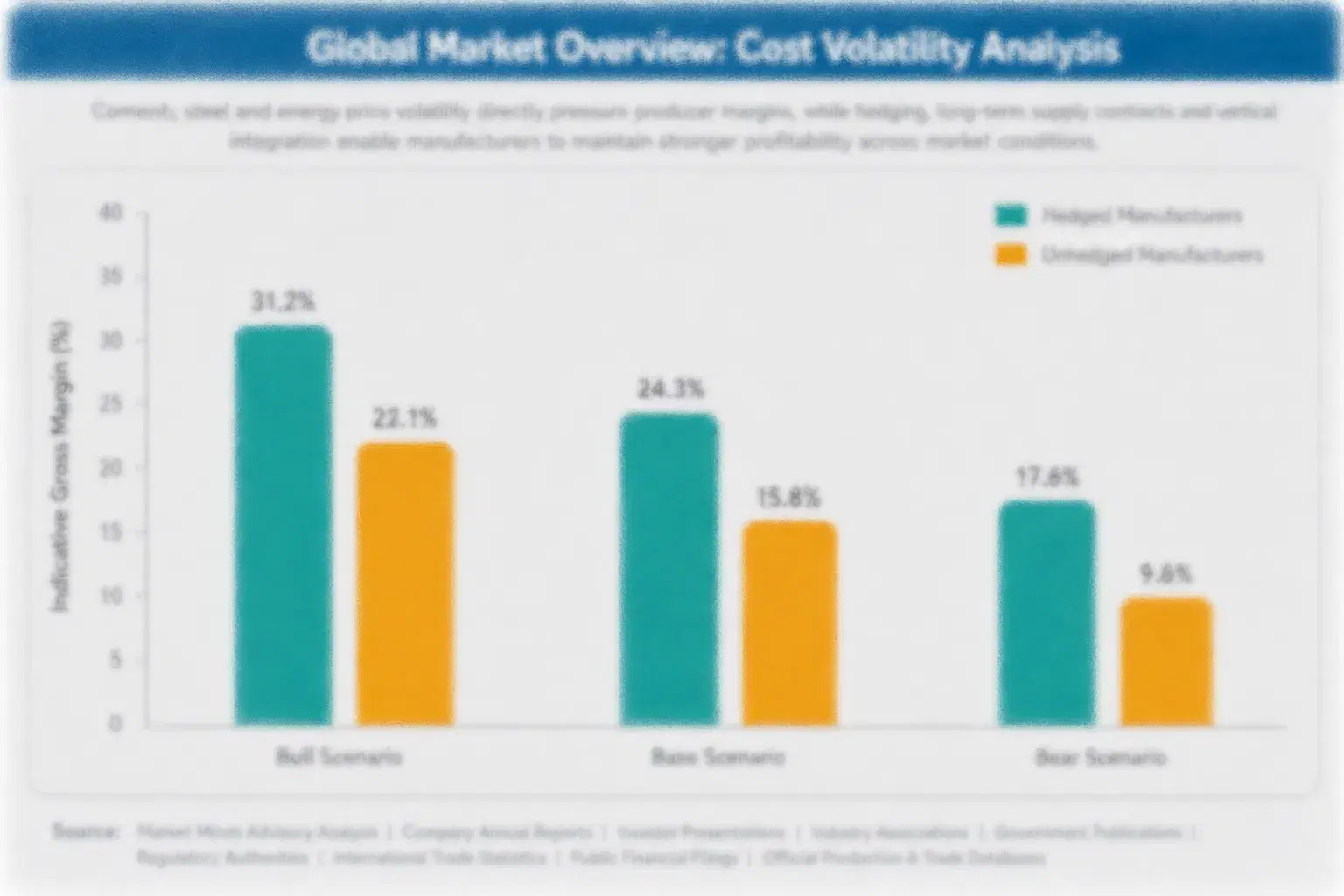
Global milk fat prices rose meaningfully during 2022 amid tight dairy supply and strong competing demand from butter and cream manufacturers, a volatility event documented in USDA and European Commission dairy market reports and confirmed by rising futures prices tracked on major commodity exchanges, compressing margins across fractionation processors unable to immediately pass costs through to price-sensitive confectionery and infant formula manufacturers operating under existing fixed-price contracts.

Smaller regional processors without long-term milk fat supply contracts absorb spot-market price swings directly, forcing them to compress margins or pass costs through faster than larger competitors with hedging capacity, risking account loss overall. Exposure runs highest among processors serving Latin America and Middle East and Africa, where local dairy fat sourcing options remain limited relative to Western Europe and North America.
milk-fat-fractions-market-cost-volatility-analysis-1789905758820

Multi-Year Milk Fat Supply Contracts

Larger processors increasingly negotiate multi-year milk fat contracts with collared pricing bands, capping downside exposure to spot-market spikes in exchange for guaranteed volume commitments to dairy processors. This shifts cost volatility risk toward the processor rather than the fractionation supplier, giving larger companies a durable pricing advantage over smaller rivals buying on the spot market.

Diversified Feedstock Sourcing Across Regions

Processors sourcing raw milk fat from multiple regions rather than a single domestic source reduce exposure to any one region supply disruption or seasonal production variability meaningfully. Geographic diversification adds logistics complexity but has become standard practice among the largest fractionation suppliers following repeated past regional dairy supply disruptions affecting single-source competitors and their production planning.

Vertical Integration Into Dairy Processing

Some larger fractionation companies, particularly cooperative-owned processors, maintain direct ownership stakes in dairy farms and milk collection operations, insulating them from spot-market feedstock price volatility that pure fractionation specialists without upstream integration must absorb directly and pass through to customers. This ownership structure requires substantial capital investment that smaller specialty processors typically cannot justify.

Portfolio Architecture for Margin Defence

Margin economics vary sharply by tier. Commodity-adjacent standard fraction sales generate thin per-unit margins sustained mainly through processing scale and long-term supply contracts, typically running in the low-to-mid teens on a gross margin basis overall. Certified, structurally-documented fractions for infant formula and pharmaceutical applications command materially higher gross margins, often exceeding 32 percent, reflecting analytical testing costs and the lipid chemistry research investment required.
The tension between volume and premium tiers shapes processor strategy directly: chasing standard fraction volume protects manufacturing utilization and fixed-cost absorption across large crystallization facilities, while premium structurally-documented lines protect margin during periods of raw milk fat cost pressure that squeeze commodity-tier profitability first. Most larger processors now run both tiers deliberately, cross-subsidizing structural research investment with steady commodity-tier cash flow.

High-value margin pools concentrate in infant formula and pharmaceutical-grade fractions, where documentation and analytical evidence limit competitive entry and support pricing that generic confectionery-grade fractions cannot sustain given their different buyer positioning and procurement behavior across most tracked markets. Processors building presence across both documented and commodity segments are best positioned to fund innovation without depending on either pool alone.

Volume / Commodity-Adjacent Tier

Standard confectionery and bakery grade fractions sold primarily on melting-point specification and price, serving mainstream food manufacturers with gross margins typically in the 12 to 18 percent range across most standard categories.
Gross Margin: 12%-18%

Premium / Certified Tier

Documented, structurally-certified fractions for premium infant formula and confectionery applications commanding premium pricing, with gross margins typically running 26 to 33 percent given the additional analytical testing and documentation investment required.
Gross Margin: 26%-33%

Sustainability / Regulatory / Next-Generation Tier

Pharmaceutical-grade and next-generation human-milk-fat-mimicking fractions addressing infant health and encapsulation demand, commanding the highest margins in the category, often exceeding 34 percent, reflecting formulation complexity and limited current competition among qualified suppliers.
Gross Margin: 30%-38%
milk-fat-fractions-market-portfolio-architecture-1789905759181

High-value Sub-segments and Strategic Watch-out

Infant Formula Fat Blend Fractions

Infant formula fat blend fractions combine the fastest current growth with the highest achievable margins in the category, as documented structural matching and regulatory substantiation both remain scarce enough to command premium contract pricing. Processors investing early in structural research are positioned to capture disproportionate share as reformulation standards tighten.
Gross Margin: 26%-33%

Specialty Nutraceutical and Pharmaceutical Fat Fractions

Specialty nutraceutical and pharmaceutical fractions deliver strong margins through encapsulation-channel positioning, though growth trails the fastest infant formula segment somewhat. Pharmaceutical manufacturers value documented melting-point precision over price, giving processors with dedicated pharmaceutical-grade capability durable, sticky account relationships worth defending closely across their expanding specialty client base.
Gross Margin: 30%-38%

Standard Confectionery and Bakery Grade Fractions

Standard confectionery and bakery grade fractions remain the volume core of the category, generating steady cash flow that funds premium-tier research investment even as its own margins stay comparatively thin. Processors cannot abandon this tier without losing the processing scale that supports manufacturing efficiency across their entire product portfolio.
Gross Margin: 12%-18%

Chinese Domestic Processor Disruption

Chinese domestic dairy processors building independent fractionation capability represent a genuine strategic watch-out, since their improving documented quality could erode multinational share in East Asia within several years if structural documentation and analytical capability gaps close faster than multinational suppliers currently expect them to across most markets.
Gross Margin: 18%-26%

Why Formulation Qualification Sustains Contracts

Milk fat fraction supply relationships behave more like annuities than transactional purchases once a formulation is qualified into a manufacturer production line, since requalifying a new supplier requires repeating structural analysis and shelf-life testing that most manufacturers avoid unless price or quality problems force the issue across most established accounts. Contract renewal rates among established infant formula and confectionery accounts commonly exceed 85 percent year over year.
Adoption stickiness varies meaningfully by end-use vertical. Infant formula manufacturers switch suppliers rarely given the regulatory risk of reformulation errors reaching vulnerable consumers directly, while confectionery manufacturers switch somewhat more readily once cocoa butter equivalent formulations are validated across multiple production runs and quality assurance cycles. Pharmaceutical manufacturers sit closest to infant formula in switching reluctance, given similarly strict regulatory documentation requirements.

Buyer profiles are shifting generationally as procurement teams increasingly include dedicated regulatory affairs and lipid chemistry specialists rather than purchasing being led solely by cost considerations. Younger formulation scientists entering the category also weight supplier analytical documentation and structural matching capability more heavily than their predecessors did, a shift reshaping which suppliers win new qualification processes.
milk-fat-fractions-market-end-use-penetration-index-1789905759511

MMA Category Playbook

These are among the four positions where our research anticipates prominent divergence between winners and laggards over the coming forecast period. Each is grounded in the demand model, the regulatory perimeter, and the announced capacity pipeline.
01 / STRUCTURAL DOCUMENTATION PRIORITY

Prioritize structural documentation over generic fraction expansion

Processors still competing primarily on price rather than documented structural evidence will lose infant formula reformulation share as manufacturers standardize purchasing around clinically substantiated triglyceride structures over the next several years, a trend already visible across North America and East Asia. The technical bar for human-milk-fat structural matching now separates category leaders from the rest, and that gap is widening rather than narrowing as regulatory scrutiny increases. Processors should treat structural research as a core investment, not an optional documentation exercise.
02 / CONFECTIONERY APPLICATION INVESTMENT

Invest in cocoa butter equivalent capability ahead of competitors

Cocoa butter equivalent capability offers a clearer near-term margin opportunity than chasing incremental standard fraction volume, given confectionery manufacturers documented willingness to pay for verified melting-point and crystallization matching across most tracked chocolate-producing markets and adjacent bakery categories. Building this capability requires dedicated formulation research that smaller processors often lack the resources to fund at meaningful scale. Processors that move first into this segment are likely to lock in confectionery-channel loyalty before larger diversified competitors turn their attention toward it seriously.
03 / PHARMACEUTICAL SEGMENT EXPANSION

Build pharmaceutical-grade capability before margins compress elsewhere

Pharmaceutical-grade fraction capability represents a genuine margin expansion opportunity as supplement and pharmaceutical manufacturers increasingly seek documented encapsulation-grade specifications distinct from standard food-grade fraction categories across most specialty formulation markets, regulatory jurisdictions, and manufacturing regions worldwide. Processors investing in dedicated pharmaceutical-grade certification and analytical testing capability are building specialty client relationships that competitors relying solely on food-grade production cannot easily replicate or displace quickly at meaningful scale. This advantage compounds over time as pharmaceutical clients build trust through repeated consistent product performance.
04 / CHINESE CAPACITY BUILDING WATCH

Track Chinese domestic processors closing the technical capability gap

Chinese domestic dairy processors are closing the technical capability gap with multinational fractionation suppliers faster than most competitive assessments currently assume, particularly as domestic dairy processing infrastructure matures alongside rising infant formula manufacturing investment. Their improving performance threatens multinational share specifically in East Asia, the region where addressable fractionation demand is expanding fastest among all tracked markets. Suppliers should track competitor capacity announcements and structural documentation publications in China closely rather than relying on historical technical leadership as a predictor of future outcomes.

Engagement Snapshot From the Field

A live engagement with an industry participant carrying material or product regulatory and market exposure ahead of a defining policy shift, showing how our research translates into a defensible multi-year portfolio strategy.
MARKET MINDS ADVISORY · CLIENT ENGAGEMENT SUMMARY
Milk Fat Fractions Producer Strategic Portfolio Review and Transition Roadmap 2026·Investment Scenario on Milk Fat Fractions Exposure Evaluation 2025-26
CLIENT PROFILE
The client is a mid-sized confectionery manufacturer operating three production facilities across Western Europe, serving both branded and private-label retail accounts with annual revenue in the low hundreds of millions (client-reported, unverified by MMA). The company had relied on imported cocoa butter for its premium chocolate lines for over a decade prior to engaging MMA.
STRATEGIC CHALLENGE
Rising and volatile cocoa commodity prices threatened the client premium chocolate line margins significantly, and management wanted to evaluate whether cocoa butter equivalent milk fat fractions could reduce cost exposure without compromising the sensory quality that premium retail accounts and consumers had come to expect from established branded product lines.
MMA APPROACH
MMA conducted a formulation benchmarking analysis comparing three certified cocoa butter equivalent fraction suppliers against the client existing cocoa butter formulation, incorporating sensory panel data and comparable manufacturer case precedent to assess substitution feasibility and overall cost impact realistically within the client existing production constraints and long-established premium quality standards.
KEY FINDINGS
  1. Sensory panel testing found one certified cocoa butter equivalent fraction indistinguishable from the client existing formulation in blind taste tests conducted across a representative consumer panel.
  2. Cost modeling showed the substitution could reduce raw material costs meaningfully given cocoa commodity volatility, while milk fat fraction pricing remained comparatively stable historically.
  3. Production trials confirmed the fraction required only minor equipment recalibration rather than a full production line retrofit, reducing implementation cost and timeline considerably.
  4. Retail partners required updated ingredient labeling disclosure for the reformulated line, adding a modest regulatory compliance timeline the client had not initially budgeted for.
CLIENT PROFILE
The client is a mid-sized confectionery manufacturer operating three production facilities across Western Europe, serving both branded and private-label retail accounts with annual revenue in the low hundreds of millions (client-reported, unverified by MMA). The company had relied on imported cocoa butter for its premium chocolate lines for over a decade prior to engaging MMA.
STRATEGIC CHALLENGE
Rising and volatile cocoa commodity prices threatened the client premium chocolate line margins significantly, and management wanted to evaluate whether cocoa butter equivalent milk fat fractions could reduce cost exposure without compromising the sensory quality that premium retail accounts and consumers had come to expect from established branded product lines.
MMA APPROACH
MMA conducted a formulation benchmarking analysis comparing three certified cocoa butter equivalent fraction suppliers against the client existing cocoa butter formulation, incorporating sensory panel data and comparable manufacturer case precedent to assess substitution feasibility and overall cost impact realistically within the client existing production constraints and long-established premium quality standards.
KEY FINDINGS
  1. Sensory panel testing found one certified cocoa butter equivalent fraction indistinguishable from the client existing formulation in blind taste tests conducted across a representative consumer panel.
  2. Cost modeling showed the substitution could reduce raw material costs meaningfully given cocoa commodity volatility, while milk fat fraction pricing remained comparatively stable historically.
  3. Production trials confirmed the fraction required only minor equipment recalibration rather than a full production line retrofit, reducing implementation cost and timeline considerably.
  4. Retail partners required updated ingredient labeling disclosure for the reformulated line, adding a modest regulatory compliance timeline the client had not initially budgeted for.
RECOMMENDED STRATEGY
Phase 1: Phase one: conduct blind sensory panel testing across three shortlisted cocoa butter equivalent fraction suppliers against the existing formulation baseline. Phase 2: Phase two: run pilot production trials with the top-performing fraction supplier, validating equipment compatibility and consistency across multiple production runs. Phase 3: Phase three: transition full production volume to the selected fraction supplier while updating retail labeling disclosures ahead of the reformulated line launch.
OUTCOME
Within six months of implementing the phased transition, the client reported cocoa-related raw material cost reduction of approximately 18 percent (client-reported, unverified by MMA), while maintaining consumer sensory acceptance scores comparable to the original formulation. The client has since evaluated fraction substitution across two additional product lines.

Frequently Asked Questions

Foundational context covering the market sizes, CAGR, scope, country, region and competition that inform every finding below. This section is provided to cover basics and most often pre-purchase conversations, answered from the MMA Primary Research Dataset.

What is the current size of the Milk Fat Fractions Market?

The global milk fat fractions market is valued at approximately 1.6 billion dollars in 2025, based on MMA analysis of primary survey data and company disclosures across major producing regions.

How large will the Milk Fat Fractions Market be by 2036?

MMA projects the market will reach approximately 3.1 billion dollars by 2036, driven primarily by infant formula reformulation and expanding cocoa butter equivalent applications across confectionery.

What is the CAGR for the Milk Fat Fractions Market 2026 to 2036?

The market is projected to grow at a compound annual growth rate of 6.2 percent between 2026 and 2036, with infant formula and pharmaceutical segments growing meaningfully faster than the average.

Which segment is growing fastest?

Infant Formula Fat Blend Fractions is the fastest-growing segment, expanding at approximately 1.53 times the overall market growth rate as manufacturers reformulate toward human-milk-fat structures.

Who are the major companies in the Milk Fat Fractions Market?

Leading suppliers include Corman, Fonterra, FrieslandCampina, Arla Foods, and Lactalis, together holding an estimated 30 percent combined global production capacity share across most producing regions.

Which country is growing fastest?

China is the fastest-growing country market, supported by rapidly expanding infant formula manufacturing capacity and rising demand for documented triglyceride structures nationwide and abroad currently.

Report Segmentation Architecture

The full report scope spans multiple orthogonal segmentation dimensions, with cross-tabulated demand data provided for each dimension pair. Coverage extends further to regional breakdowns, trend trajectories, and the competitive detail needed to support segment-level decision-making.

By Primary Market Dimension

  • High-Melting-Point Milk Fat Fractions
  • Low-Melting-Point Milk Fat Fractions
  • Infant Formula Fat Blend Fractions
  • Bakery and Confectionery Fat Fractions
  • Anhydrous Milk Fat Fractions for Recombined Dairy
  • Specialty Nutraceutical and Pharmaceutical Fat Fractions

By End-Use Industry

  • Infant and Toddler Nutrition Manufacturing
  • Confectionery and Chocolate Manufacturing
  • Bakery and Pastry Manufacturing
  • Pharmaceutical and Nutraceutical Manufacturing
  • Recombined and Reconstituted Dairy Manufacturing

By Commercial Dimension

  • Direct Manufacturer Supply Contracts
  • Toll Fractionation Services
  • Distributor and Regional Trading Channels
  • Specialty Encapsulation and Delivery Partnerships

By Region

  • North America
  • Western Europe
  • East Asia
  • South Asia and Pacific
  • Latin America
  • Middle East and Africa
  • Eastern Europe

Scope, Methodology, and Coverage

Every figure in this report is reproducible from documented input assumptions. The scope below maps the historical period, the forecast horizon, the segmentation dimensions, and the countries covered, alongside the underlying primary and qualitative methodology.
Historical Period
2020 to 2025
Forecast Period
2026 to 2036
Base Year
2025 (USD billions; MMA Primary Research Dataset, September 2026)
Market Definition
This market covers milk fat fractions, dairy fat products separated by melting point into high-melting and low-melting components for use in confectionery, bakery, and infant formula applications requiring documented triglyceride profiles. It excludes unfractionated anhydrous milk fat and butter.
Quantitative Units
USD billions (current prices); volume in metric tons where applicable
Segmentation Dimensions
By Primary Market Dimension; By End-Use Industry; By Commercial Dimension; By Region
Regions Covered
North America, Western Europe, East Asia, South Asia and Pacific, Latin America, Middle East and Africa, Eastern Europe
Countries Covered
USA, Canada, Belgium, Netherlands, France, Germany, China, Japan, South Korea, India, Vietnam, Australia, New Zealand, Brazil, Mexico, Argentina, Colombia, Saudi Arabia, UAE, South Africa, Poland, Russia, and additional markets relevant to this sector
Key Companies Profiled
Corman S.A., Fonterra Co-operative Group Limited, Royal FrieslandCampina N.V., Arla Foods amba, Lactalis Ingredients, AAK AB, Bel Group, Savencia Fromage & Dairy, Sodiaal Union, Glanbia plc, Kerry Group plc, Milcobel cvba, DMK Deutsches Milchkontor GmbH, Ornua Co-operative Limited, Meggle AG, Emmi AG, Yili Group, Mengniu Dairy, Zott SE & Co. KG, Almarai Company
Quantitative Methodology
Primary survey, n=3,800 respondents, Q4 2025, six countries; demand-side model with trade association cross-validation
Qualitative Methodology
47 expert interviews, Q4 2025; applied to validate demand model assumptions, identify emerging dynamics, and assess competitive positioning
Report Format
PDF and XLSX data workbook (Word format preview document)
Publisher
Market Minds Advisory
Report Code
MMA-2026-AGR-102
Published
September 2026
Contact
sales@marketmindsadvisory.com | www.marketmindsadvisory.com

Purchase the full Milk Fat Fractions Market Report (2026 to 2036).

This report provides a comprehensive assessment of the global milk fat fractions market. It covers demand drivers, segmentation, competitive dynamics, and regional growth patterns through 2036. The analysis combines primary survey data from 3,800 respondents across six countries with 47 expert interviews and company disclosure analysis to size the market and profile leading suppliers. It further identifies the commercial levers shaping supplier profitability across infant formula, confectionery, and pharmaceutical channels. The report additionally examines input cost exposure, portfolio margin architecture, and demand stickiness by end-use vertical.
Ten-year forecast with base, bull, and bear scenarios
Segmentation analysis across six MECE fraction type segments
Regional demand and sourcing analysis across all seven world regions
Competitive benchmarking of five leading and fifteen additional suppliers
Input cost exposure analysis with supplier mitigation strategies
Anonymized client case study with strategic recommendations included

Built For The People Who Decide

From boardroom strategy to bench-side execution, this report is read cover-to-cover by leaders shaping the next decade of their industry, turning demand scenarios, market dynamics and valuation benchmarks into decisions.
CXOs/ Presidents/ VPs/ Managers
M&A and Corporate Development
Strategy Teams and R&D Heads
Procurement and Product Directors
Regulatory and Compliance Leaders
Investor Relations and Equity Analysts