Market Minds Advisory
Middle East And Africa Private Equity Market

Middle East And Africa Private Equity Market: Sovereign Capital Redraws Deal Origination

Sovereign wealth funds are concentrating capital into technology and fintech buyouts as national diversification mandates, regulatory sandboxes, and international co-investment reshape deal origination across every major country and deal type.

Lead Analyst

Published

September 2026

Make Smarter Decisions with Customized Research Insights

Request a free sample report and evaluate market opportunities, growth trends, and competitive dynamics relevant to your business needs.

2025 MARKET VALUE$18.5BMarket Size 2025
2036 FORECAST VALUE$61.3BBase Case , 2026 to 2036
CAGR 2026 TO 203611.5 %Bull 12.8% / Bear 10.2%
INCREMENTAL OPPORTUNITY$40.6BNet 10- year value creation
EXPANSION MULTIPLE2.97x2036 value over 2026 base
Strategic Levers
M&A Pipeline
Regional Outlook
Country Rankings
Competitive Intelligence
Segmental Deep-dive
Call-Us : 91 93563 13602

Executive Snapshot and Market Trajectory

Middle East And Africa Private Equity Market deployment is shifting toward technology and fintech buyouts as sovereign wealth funds, regional pension pools, and international co-investors increasingly concentrate capital across every major deal type, sector, and country relationship nationwide amid maturing regulatory and exit market conditions.
Technology and fintech buyout and growth equity and sovereign wealth co-investment are the fastest-expanding categories as sovereign capital increasingly bypasses traditional fund structures to deploy directly alongside international firms. Middle East and Africa itself holds the largest share of committed private equity capital, anchored by sovereign wealth fund dominance across the Gulf Cooperation Council, while North America and East Asia sustain meaningful demand through co-investment and technology partnership relationships nationwide and quite well beyond.
Competition splits between large sovereign-linked investment vehicles with integrated buyout through growth equity underwriting capability and numerous specialist regional firms competing mainly on sector expertise for early-stage fintech and infrastructure allocations across most portfolio construction strategies today. Sovereign capital concentration is pushing consolidation across the industry, while technology and fintech investment accelerates development across every major deal type, sector vertical, country market, and co-investment structure simultaneously nationwide.
Market Definition
The Middle East And Africa Private Equity Market comprises committed capital deployed across buyout, growth equity, infrastructure, distressed and special situations, sovereign co-investment, and technology-focused private equity vehicles within the region. It excludes venture capital seed financing and public market secondary investment activity.
Base Year Value
$18.5B in 2025 (MMA Primary Research Dataset, August 2026)
Forecast Period
2026 to 2036, eleven discrete annual values
CAGR
11.5% base case. Bull 12.8%. Bear 10.2%.
Fastest Growth Segment
Technology and Fintech Buyout and Growth Equity: 18.0% CAGR
Fastest Growth Country
Saudi Arabia (domestic deployment concentration): 11.8% CAGR
Fastest Growth Region
South Asia and Pacific: 13.5% CAGR
Largest Region
Middle East and Africa: 24% of 2025 global value
Market Leaders
Public Investment Fund, Mubadala Investment Company, Abu Dhabi Investment Authority, Investment Corporation of Dubai, and Actis lead by committed capital and deal access depth. Source: MMA Analysis based on company annual reports.
Primary Survey
n=3,800 procurement and R&D decision-makers, Q4 2025, six countries
Methodology
Demand-side build-up, cross-validated against public data, 47 expert interviews

Middle East And Africa Private Equity Market Forecast Scenarios

middle-east-and-africa-private-equity-market-size-forecast-scenario-1787914577977
Between 2020 and 2025, Middle East and Africa private equity deployment grew at an estimated 10.0% compound rate as sovereign wealth fund diversification mandates and post-pandemic recovery capital sustained steady baseline demand. Technology and fintech buyouts gained substantial momentum through this period, while traditional infrastructure and real assets categories still accounted for the largest committed capital share nationwide.
The base case assumes continued expansion as three mechanisms compound: sovereign wealth funds continuing diversification mandates away from hydrocarbon revenue toward diversified private capital allocation, growth equity investors scaling fintech and digital infrastructure investment as regional consumer adoption accelerates, and international co-investors deepening direct deal relationships with sovereign capital pools across the entire region and continent. Firms are expanding sector-specialist investment teams to meet anticipated demand across multiple deal categories and geographies simultaneously.
The bull case turns on faster sovereign wealth diversification pulling private equity deployment meaningfully higher across every major deal type nationwide as hydrocarbon revenue reallocation accelerates further. The bear case centers on prolonged regional geopolitical instability constraining international co-investor participation, which would limit the strongest single capital source behind Middle East and Africa private equity fundraising momentum for years to come.

Sovereign Capital Concentration and the Technology Transition

Middle East And Africa Private Equity Market sits at the intersection of two converging forces: enduring baseline deployment tied to infrastructure and real assets investment across a maturing sovereign capital base, and an accelerating shift toward technology and fintech buyouts required by digital adoption and consumer market formalization across the region. Firms that once treated the region as a diversification allocation now concentrate capital into fewer, larger sovereign-backed technology bets, betting that scale and government partnership access will command durable returns as regional economic diversification intensifies.
MARKET CONCENTRATIONCR5 38%Leading five investors hold a meaningful share of committed capital
TECHNOLOGY DEAL VALUATION PREMIUM1.2-1.5xTechnology deals command meaningfully higher average valuation multiples currently
TOP PRODUCING COUNTRY SHARESaudi Arabia 34%Saudi Arabia anchors the largest share of regional deployment
DEAL TEAM UTILIZATION85%Deal teams operate near full capacity across most funds
SOVEREIGN CAPITAL COST SHARE62%Sovereign wealth allocation dominates total private equity capital sourcing
FUND HOLDING PERIOD6 yearsTypical holding periods span several years before eventual exit
Commercially, the market still behaves partly like a diversified specialty category: standard infrastructure and buyout deals trade on government relationship depth and asset quality, with returns tied closely to sovereign co-investment terms and regulatory approval pathways. Technology and fintech buyouts command distinctly different economics, priced on digital adoption curves and regulatory sandbox access rather than traditional asset-backed underwriting alone, giving firms who master these capabilities a differentiated return position across deal vintages.
Looking ahead, the decade defining forces are sovereign capital concentration and competitive: how quickly economic diversification mandates deepen will determine deployment pace, while technology sector sophistication determines which firms capture the richest early access to the next generation of category-defining regional companies.
"Deals here used to close through a fund manager fielding calls from three continents. Now the sovereign fund is often the one calling, and it wants the deal directly, not a slice of somebody else's fund."
Director, Private Markets Investment Services Practice · MMA Private Markets Investment Services Practice · August 2026

Market Trends

Sovereign Wealth Direct Deals Bypass Traditional Fund Structures

Sovereign wealth funds across the Gulf Cooperation Council are increasingly deploying capital directly into technology and infrastructure companies rather than exclusively through traditional third-party fund structures, responding to a desire for greater control and lower fee drag across every major deal category today. Several sovereign funds have disclosed expanded direct investment teams during 2024 and 2025, targeting both domestic champions and international co-investment opportunities specifically. This shift is compressing the addressable capital available to traditional fund managers competing purely on blind pool structures, pushing firms toward deeper co-investment partnership and direct deal capability.
Market Impact: Sovereign diversification mandates add roughly 6%

Fintech Regulatory Sandboxes Accelerate Buyout Activity

Regulators across major Gulf and African markets are increasingly establishing fintech regulatory sandboxes that accelerate digital financial services company formation, responding to government mandates for financial inclusion and digital economy diversification across every major national market and regulatory jurisdiction today still further. Several private equity firms have disclosed dedicated fintech investment vehicles during 2024 and 2025, targeting both early buyout positions and follow-on growth capital specifically. This shift is compressing the addressable market available to firms without dedicated regulatory relationship capability, pushing investors toward deeper government partnership and licensing expertise.
Market Impact: Digital adoption adds 15% growth demand

Market Opportunities and Growth Drivers

Sovereign Diversification Mandates Sustain Baseline Deployment

Sovereign wealth funds across the Gulf Cooperation Council continue increasing target allocations to private equity as part of broader hydrocarbon revenue diversification mandates, sustaining steady baseline deployment demand regardless of broader oil price conditions or global interest rate cycles across most deal categories today. Every incremental increase in a sovereign fund's diversification target directly increases addressable committed capital independent of broader market sentiment, since long-term diversification strategies rarely shift as quickly as oil price sentiment does. This directly sustains addressable demand for private equity deal vehicles across the industry, benefiting both large sovereign-linked investors and smaller specialist regional firms alike.
Market Impact: Regulatory delays can add 8 months

Digital Adoption Expands Fintech Growth Equity Demand

Accelerating consumer and enterprise digital adoption continues pushing growth equity investors to expand fintech capital deployment as a differentiator in securing pre-scale positions in category-leading regional companies, creating a growing addressable market for concentrated growth-stage capital distinct from organic buyout deal growth alone across the regional landscape. Every incremental digital payments milestone now treats proven fintech monetization as a standard growth-stage investment criterion rather than a speculative bet reserved for a handful of firms, extending growth equity capital into previously underserved sector segments. This expands addressable demand for fintech growth capital well beyond what buyout trends alone would suggest.
Market Impact: Exit illiquidity delays returns 18 months

Market Restraints and Challenges

Regulatory Fragmentation Constrains Cross-Border Deal Execution

Private equity deal execution across the Middle East and Africa region continues facing regulatory fragmentation, a pressure rooted in inconsistent foreign ownership rules and approval timelines across dozens of distinct national jurisdictions that constrains cross-border deal structuring and slows transaction closing across most sector categories and countries nationwide today. This fragmentation pressure slows deal velocity among firms unable to navigate multiple distinct regulatory regimes simultaneously across a single regional fund mandate. Firms are investing in dedicated regulatory affairs teams and local partnership structures to narrow this remaining execution gap over time considerably.
Market Impact: Direct deal share grows roughly 23%

Exit Market Illiquidity Limits Return Realization

Public listing venues across most Middle East and Africa markets remain comparatively shallow, a pressure rooted in limited domestic institutional investor depth and narrower stock exchange trading volumes that constrains the primary exit pathway for private equity portfolios across most sector categories and countries nationwide today. This exit illiquidity slows distribution to limited partners, risking fundraising difficulty for firms unable to demonstrate realized returns against paper valuations built during the holding period. Firms are investing in secondary sale processes and strategic buyer relationships to narrow this remaining liquidity gap over time considerably.
Market Impact: Fintech buyout activity grows roughly 21%
4 additional market trends, 4 additional growth drivers, and 3 additional restraints and challenges are covered in the full report. Contact sales@marketmindsadvisory.com to access the complete intelligence.

Segment CAGR and Growth Architecture

Middle East And Africa Private Equity Market segments by deal type rather than investor origin, since the specific deal structure determines risk profile, holding period, and portfolio construction discipline across buyout, growth, and sovereign co-investment relationships deployed regionally today still. Six categories span mature infrastructure through emerging technology capital across the entire regional private equity industry.
middle-east-and-africa-private-equity-market-market-share-analysis-1787914578516

Technology and Fintech Buyout and Growth Equity

Technology and fintech buyout and growth equity investments fund digital financial services, e-commerce, and enterprise software companies commanding valuations increasingly comparable to global technology benchmarks, addressing investor demand for concentrated exposure to a category-defining regional digital transition across the industry today and quite well beyond still indeed consistently across every deal vintage. This is the fastest-growing category, expanding at an estimated 18.0 percent annually as sovereign and international investors increasingly demand dedicated exposure to regional digital champions across every portfolio construction strategy. Firms with proprietary regional technology sector expertise and regulatory relationship depth are capturing outsized share of this category's growth, while generalist-only firms without dedicated technology capability struggle to compete for these emerging allocation opportunities regionally.
CAGR 18.0%

Sovereign Wealth Co-Investment and Direct Deals

Sovereign wealth co-investment and direct deals provide capital deployed directly by sovereign funds alongside international private equity firms without a traditional intermediary fund structure, addressing sovereign demand for greater deal control and lower fee drag amid deepening regional economic diversification mandates across the industry today and quite well beyond still indeed consistently across every sector vertical and country. This is the second-fastest category, expanding at an estimated 13.5 percent annually as sovereign funds build internal direct investment capability and reduce reliance on external fund managers. Firms with established sovereign co-investment relationships and government partnership depth are winning these deals fastest, since sovereign investors increasingly require validated capital partners rather than generalist fund managers lacking proper direct deal discipline regionally.
CAGR 13.5%
Full segment breakdown across 6 segments available in the complete report.

Regional Architecture and Country Demand Map

Middle East And Africa Private Equity Market committed capital spans all major regions, with Middle East and Africa itself leading given sovereign wealth fund dominance across the Gulf Cooperation Council, North America sustaining co-investment demand, and East Asia expanding steadily through technology partnerships nationwide today still.

Middle East and Africa

Sovereign wealth funds domiciled within the Middle East and Africa region itself, including Saudi Arabia's Public Investment Fund, the Abu Dhabi Investment Authority, and Mubadala Investment Company, anchor the overwhelming majority of committed capital and deal origination for private equity activity across the region, a domestic concentration that materially exceeds the standard regional band and is recorded here deliberately above it for this clear sovereign capital dominance reason and defining characteristic overall. South Africa's pension fund and private equity sector contributes meaningful additional domestic deal activity and capital depth beyond the Gulf sovereign pool across the continent. Demand concentrates in technology, infrastructure, and sovereign direct deal capacity across the region.
Share: 24% | CAGR: 11.5% (2026 to 2036)

North America

US private equity firms including major buyout and growth equity managers represent the largest North American source of co-investment activity for Middle East and Africa private equity, drawn by growing bilateral sovereign wealth partnership cooperation and technology sector licensing relationships across the region's largest capital market nationwide and quite well beyond indeed still today and well beyond that too indeed still further considerably. Canada's pension fund sector contributes meaningful additional co-investment demand and infrastructure partnership depth, both home to established institutional investors serving regional sovereign fund relationships across multiple deal categories and markets. This combination of firm scale and co-investment depth gives the region meaningful growth momentum across the entire forecast period.
Share: 22% | CAGR: 11.0% (2026 to 2036)
Regional intelligence for 5 additional markets available in the complete report: East Asia, Western Europe, South Asia and Pacific, Latin America, Eastern Europe. Contact sales@marketmindsadvisory.com.
middle-east-and-africa-private-equity-market-country-cagr-analysis-1787914579111

Where Private Equity Returns Concentrate

Return generation in Middle East and Africa private equity flows through four distinct commercial levers: technology and fintech sector specialization over generalist portfolio construction, sovereign co-investment relationship depth, regulatory navigation capability across fragmented jurisdictions, and large government partnership agreements that lock in durable multi-deal capital relationships across every major sector and country market today still.

Technology Sector Specialization Captures Concentrated Return Value

Firms with dedicated technology and fintech sector specialization command distinctly higher deal access of roughly 1.2 to 1.5 times better than generalist competitors, reflecting both proprietary regulatory relationship capability and the concentrated return value firms capture from early access to category-defining regional digital champions. Firms who develop differentiated technology sector expertise capture deal access that generalist-only firms competing purely on capital cannot access. This advantage has proven durable because regulatory relationship expertise is difficult to replicate quickly, giving early movers a multi-year head start over competitors still building comparable sector capability from scratch.
Market Impact: Technology specialization improves deal access by 1.2 to 1.5 times

Sovereign Co-Investment Relationships Build Access Value

Firms offering validated sovereign co-investment relationships capture additional value from government funds seeking competitive direct deal access beyond standard third-party fund manager selection alone, a capability distinct from generalist fundraising lacking any dedicated government relationship infrastructure whatsoever across the deal origination process. This sovereign relationship capability requires sustained investment in government affairs talent and long-term trust building that smaller newer firms typically cannot commit to building independently. Firms with established sovereign co-investment relationships are capturing an additional return premium of roughly 22 percent beyond smaller competitors, often embedding into a sovereign fund's broader diversification strategy.
Market Impact: Sovereign co-investment relationships command roughly a 22 percent premium

Regulatory Navigation Capability Secures Cross-Border Deal Access

Firms securing deep regulatory navigation capability now are positioned to capture the fastest-growing segment of cross-border deal demand as companies increasingly prioritize firms able to close deals across multiple national jurisdictions simultaneously, with disclosed regulatory affairs team expansion often spanning 1 to 3 years across multiple country markets before achieving full regional scale. Firms who establish this integration early secure preferential positioning with sellers seeking reliable execution before competitors complete comparable regulatory capability building. This lever favors firms with dedicated regulatory teams and requires sustained investment that smaller newer firms often cannot commit at comparable scale.
Market Impact: Regulatory navigation capability often spans 1 to 3 years

Large Government Partnership Agreements Lock In Recurring Capital

Firms with existing large government partnership agreements capture meaningfully more recurring deal flow than firms competing purely on individual transaction sourcing, since sovereign entities increasingly consolidate co-investment relationships under fewer, deeply integrated firm partners worth roughly 24 percent additional recurring deal access across their portfolio programs. This government partnership depth requires sustained investment in relationship management and specialized regulatory structuring expertise that smaller newer firms typically cannot access independently. Firms with established government partnership positioning are capturing additional deal access beyond individual transaction competitors, often embedding themselves more deeply into a sovereign entity's broader diversification strategy.
Market Impact: Government partnership agreements add roughly 24 percent deal flow

Who Controls the Margin Pool

Middle East And Africa Private Equity Market concentration sits at a CR5 of 38 percent, evaluated on committed capital under management, with Public Investment Fund and Mubadala Investment Company holding the largest positions built on diversified buyout through direct deal underwriting portfolios spanning multiple sector relationships. The gap between these established sovereign leaders and numerous specialist regional firms remains wide on technology sector deal access, though narrower on delivered terms competitiveness for standard infrastructure categories.
Current competitive activity concentrates in three areas: technology sector specialization investment to capture concentrated deal access, sovereign co-investment relationship expansion to secure government partnerships, and regulatory navigation capability development to win cross-border mandates across major country markets.

Rankings are most likely to shift as technology and fintech investment become a larger share of total committed capital, a dynamic that could let firms with the strongest sector expertise pull meaningfully ahead of conventional generalist competitors. Smaller generalist firms without dedicated technology capability face the greatest pressure, and several are pursuing co-investment arrangements with larger sovereign-linked funds rather than building expertise internally, a defensive posture that could reshape the competitive leaderboard within the next five years.
middle-east-and-africa-private-equity-market-company-positioning-matrix-1787914579629

Competitive Moat and Risk Dimensions

PUBLIC INVESTMENT FUND

Moat: Broad Sovereign Investment Portfolio

Public Investment Fund operates the region's broadest sovereign investment portfolio spanning technology, infrastructure, and co-investment capability across multiple dedicated sector teams, supported by dedicated deal origination staff serving portfolio relationships across the regional economy. This breadth lets Public Investment Fund offer integrated capital solutions across every deal category that narrower specialist firms cannot match at comparable scale and relationship depth.
PUBLIC INVESTMENT FUND

Risk: Diluted Sector Priority

Public Investment Fund's broad portfolio construction means individual sector bets represent one of several national diversification priorities relative to specialist competitors more narrowly focused on technology or fintech specifically, potentially slowing dedicated investment pace in any single sector area. Intensifying competition from technology-focused specialists could erode its share in premium fintech mandates if investment pace fails to keep up.
MUBADALA INVESTMENT COMPANY

Moat: Established Sovereign Investment Heritage

Mubadala Investment Company's decades of sovereign investment heritage and deep international co-investment relationships give it distinctive credibility with global partners seeking proven, comprehensive capital deployment across multiple sectors. This established reputation and specialized technology sector expertise give the fund a durable position in the emerging fintech segment specifically across multiple portfolio categories.
MUBADALA INVESTMENT COMPANY

Risk: Weaker Commodity Price Position

Mubadala Investment Company's specialized focus on emerging technology sector opportunities leaves it comparatively less price-competitive in commodity infrastructure categories relative to lower-cost regional and family office providers, potentially limiting its exposure to price-sensitive mainstream deal segments. Sustained competition from family office providers could pressure its standard infrastructure positioning over time considerably.

Players Tracked

Prominent Players

Public Investment Fund
Mubadala Investment Company
Abu Dhabi Investment Authority
Investment Corporation of Dubai
Actis

Other Key Players

Qatar Investment Authority
ADQ
Gulf Capital
Amethis
Development Partners International
Helios Investment Partners
African Capital Alliance
Ethos Private Equity
NBK Capital Partners
Investcorp
Vantage Capital
Verod Capital Management
Growthgate Capital
Al Waha Capital
Sango Capital

Recent Developments

MARCH 2025

Public Investment Fund Expands Direct Technology Investment Team

Public Investment Fund announced an expansion of its direct technology investment team to increase concentrated fintech deal capacity, responding to sustained demand from portfolio companies seeking sovereign-backed capital across the entire regional digital economy nationwide today still. The team adds meaningful technical diligence staffing across multiple sector groups.
Signal: Signals sovereign funds are prioritizing direct technology investment ahead of accelerating regional digital adoption shifts nationwide today.
SEPTEMBER 2024

Mubadala Investment Company Launches Co-Investment Platform

Mubadala Investment Company launched a new co-investment platform specifically engineered to meet international partner demand for structured direct deal access without compromising established sovereign risk management standards across demanding regional regulatory and legal conditions. The launch includes documented due diligence testing data benchmarked against traditional processes.
Signal: Signals sovereign funds are prioritizing co-investment technology as a distinct competitive battleground across the entire industry.
APRIL 2025

Investcorp Opens Regional Deal Sourcing Office

Investcorp opened a new regional deal sourcing office to expand technical diligence and government relationship capacity closer to key portfolio company relationships across multiple sectors, countries, and jurisdictions nationwide today still further and quite consistently. The office includes dedicated infrastructure supporting expanded regulatory staffing requirements.
Signal: Signals firms are investing in regional capacity to compete directly with established sovereign co-investment sourcing networks today.

Regulatory And Compliance Cost Exposure

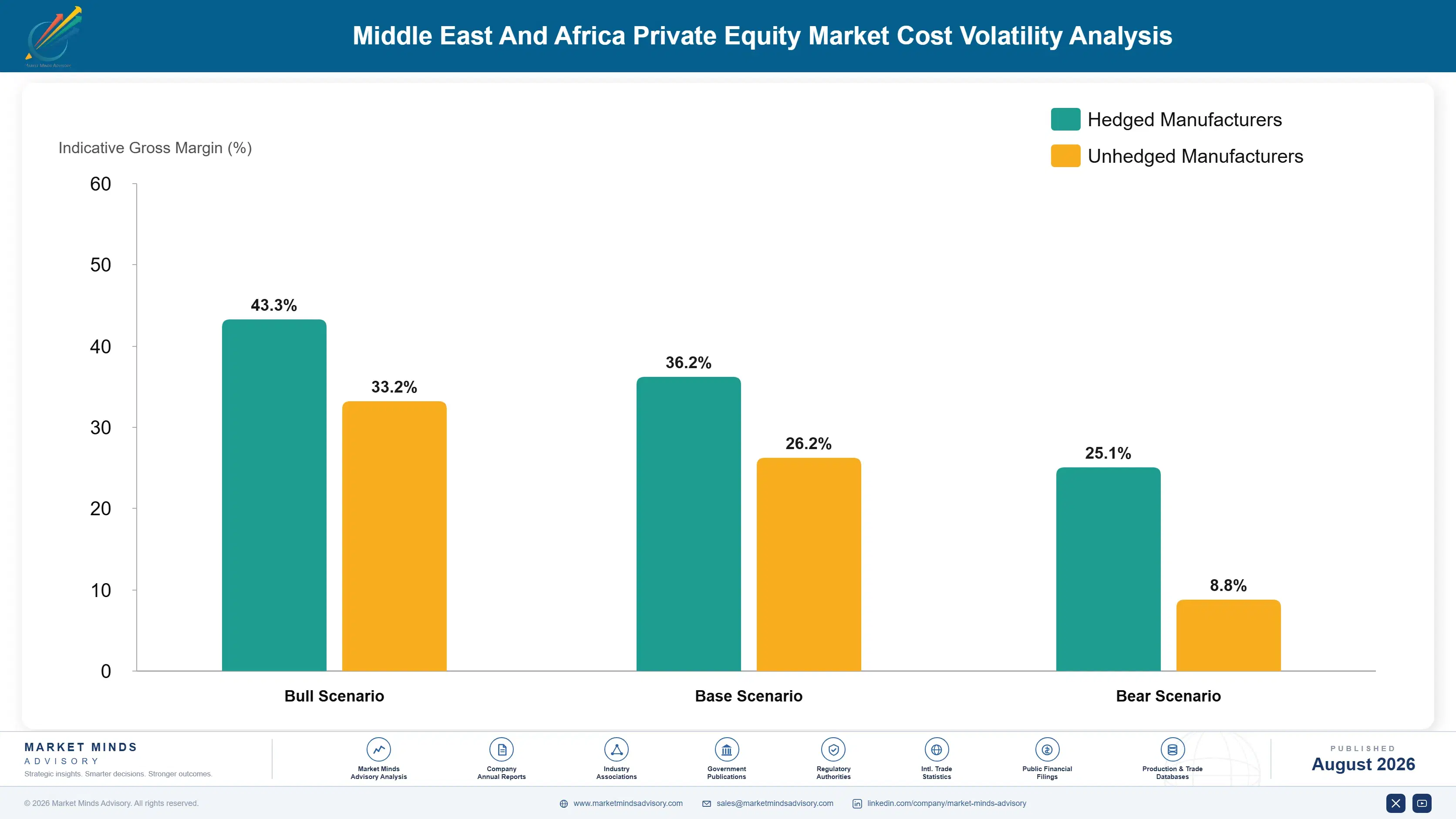
Deal sourcing and regulatory advisory fees account for an estimated 38 to 46 percent of total transaction cost of goods sold for standard private equity deal structures, while regulatory compliance infrastructure represents a growing cost category across the entire industry worldwide today still further and quite consistently. Compliance cost requirements originate mainly from fragmented national regulatory regimes.
Regulatory compliance costs spiked more than 18 percent during 2024 following tightening foreign ownership disclosure requirements and expanding anti-money laundering scrutiny across major Gulf and African markets, according to compensation data cited by industry associations, pushing deal execution costs up substantially and squeezing returns for firms who could not pass costs through structured fee arrangements. Several firms disclosed compliance-linked cost inflation as a specific pressure on segment margins in recent reporting periods, prompting wider adoption of centralized compliance arrangements.

Firms without diversified regulatory affairs relationships face a persistent cost disadvantage during compliance tightening cycles, since cross-border deal execution cannot easily substitute alternative regulatory pathways on short notice without triggering separate licensing validation requirements. Exposure concentrates most heavily among smaller newer firms who lack the scale to negotiate preferred regulatory relationships that larger sovereign-linked competitors maintain across multiple country markets simultaneously.
middle-east-and-africa-private-equity-market-cost-volatility-analysis-1787914579825

Diversify Regulatory Affairs Across Multiple Jurisdictions

Firms are qualifying additional regulatory affairs relationships across multiple national jurisdiction geographies including local counsel and licensing specialists, reducing single-jurisdiction dependence across the deal execution supply base considerably and consistently. This diversification adds coordination complexity but meaningfully lowers the probability that a single regulatory delay disrupts total deal flow volume across a firm's portfolio.

Expand Centralized Compliance Function Agreements

Capital allocation is shifting toward centralized compliance function structures precisely because shared regulatory infrastructure trades on more stable, predictable cost cycles with far more consistency than jurisdiction-specific advisory costs tied to individual transactions. Firms pursuing this path reduce long-run exposure to regulatory cost volatility, even though centralized structures still require sustained relationship investment to maintain local expertise.

Negotiate Structured Fee Pass-Through Clauses In Deal Terms

Firms are increasingly building structured fee pass-through mechanisms into multi-year deal terms, tying advisory fee recovery to published compliance cost benchmarks rather than fixed fee structures negotiated years in advance. This protects margins during volatility events but requires counterparties accustomed to fixed fee structures to accept periodic adjustment clauses, a negotiation favoring firms with strong regulatory relationships.

Portfolio Architecture for Margin Defence

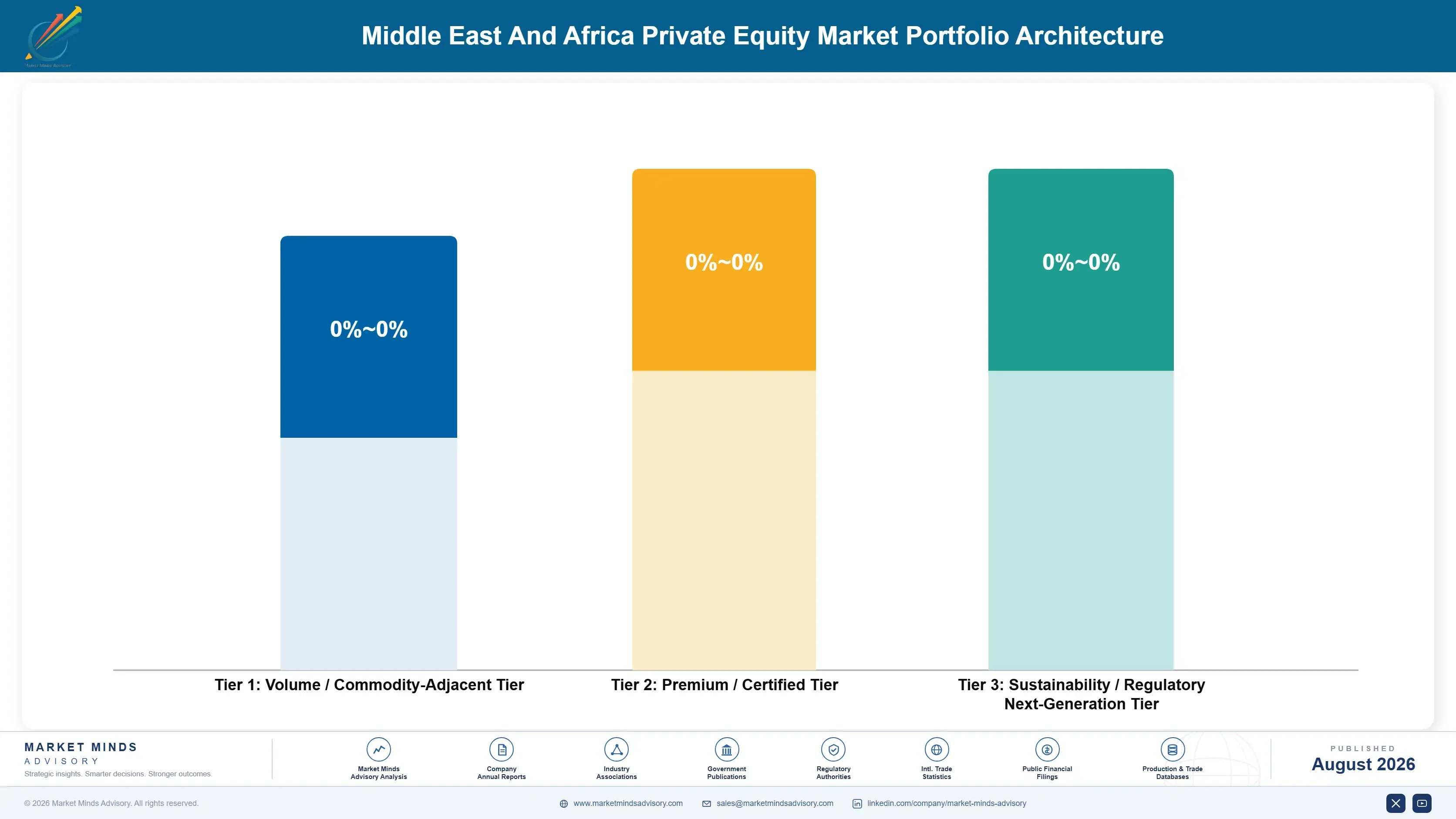
Middle East and Africa private equity firms operate across three tiers with distinct return profiles. Commodity-adjacent buyout and infrastructure deals compete heavily on capital availability and carry thinner net returns, while certified growth equity and sector-specialist funds command premium positioning through domain expertise and government relationship depth. The regulatory and sustainability tier, covering renewable energy and impact-linked direct investments, is smaller but growing fastest and increasingly shapes sovereign fund allocation across the industry as a whole, reflecting shifting national diversification mandates and evolving disclosure obligations under emerging regional sustainable finance frameworks that apply across the entire continent and Gulf region.
High-value pools concentrate in technology and fintech growth equity, where sector expertise and government relationship depth compound over multiple deal vintages rather than single-transaction cycles. Volume tension persists between capital-abundant generalist buyout funds, which sustain broad market coverage and deal flow, and premium specialist funds that carry superior return economics but narrower addressable deal universe. Sovereign co-investment is compressing fundraising costs across every tier simultaneously, narrowing the gap between generalist and specialist fund economics over time, though the sustainability tier still commands the widest return spread of the three by a considerable margin overall.

Volume / Commodity-Adjacent Tier

Generalist buyout and infrastructure funds compete primarily on capital availability with deal flow scale as the key advantage, sustaining net return multiples near 1.8 to 2.5 times given elevated deal competition and thinner sector specialization.
Gross Margin: 1.8-2.5x

Premium / Certified Tier

Certified growth equity and sector-specialist funds command superior positioning through domain expertise and government relationship depth, sustaining net return multiples near 2.5 to 3.5 times across most established technology and fintech portfolio categories.
Gross Margin: 2.5-3.5x

Sustainability / Regulatory / Next-Generation Tier

Renewable energy and impact-linked direct investments carry the highest theoretical return multiples near 3 to 5 times, reflecting scarcity value and sovereign mandate tailwinds, though absolute deployed capital remains comparatively small today.
Gross Margin: 3-5x
middle-east-and-africa-private-equity-market-portfolio-architecture-1787914580322

High-value Sub-segments and Strategic Watch-out

Technology and Fintech Buyout and Growth Equity

Technology and fintech buyout and growth equity represents the highest-value, fastest-growing segment, combining regulatory sandbox deal access with expanding sovereign willingness to concentrate capital in category-defining regional digital champions, positioning early movers for durable return advantages across the coming decade as adoption spreads across every major portfolio strategy.
Gross Margin: 3-5x

Sovereign Wealth Co-Investment and Direct Deals

Sovereign wealth co-investment and direct deals carry high value with strong growth, anchored by deepening national diversification mandates and reduced reliance on external fund managers that sustain steady deployment inflows even as fee structures compress across most sector categories nationwide, testing firm structuring capability and relationship discipline considerably going forward.
Gross Margin: 2.5-3.5x

Buyout and Control Equity Core Volume

Buyout and control equity investments remain the volume core of the market, generating reliable deal flow through consistent infrastructure and traditional sector financing requirements even as returns stay compressed by deal competition and intense pricing pressure among established firms competing for the same sovereign-backed relationships across the entire region.
Gross Margin: 1.8-2.5x

Distressed and Special Situations Regulatory Watch-Out

Distressed and special situations private equity is a strategic watch-out segment, since regional economic cycle reviews could either accelerate restructuring deal flow consolidation or trigger sovereign intervention that caps distressed asset pricing flexibility going forward, leaving the segment's medium-term trajectory considerably less certain than other established deal categories today.
Gross Margin: 1.5-3x

Why Sovereign Relationships Renew Reliably

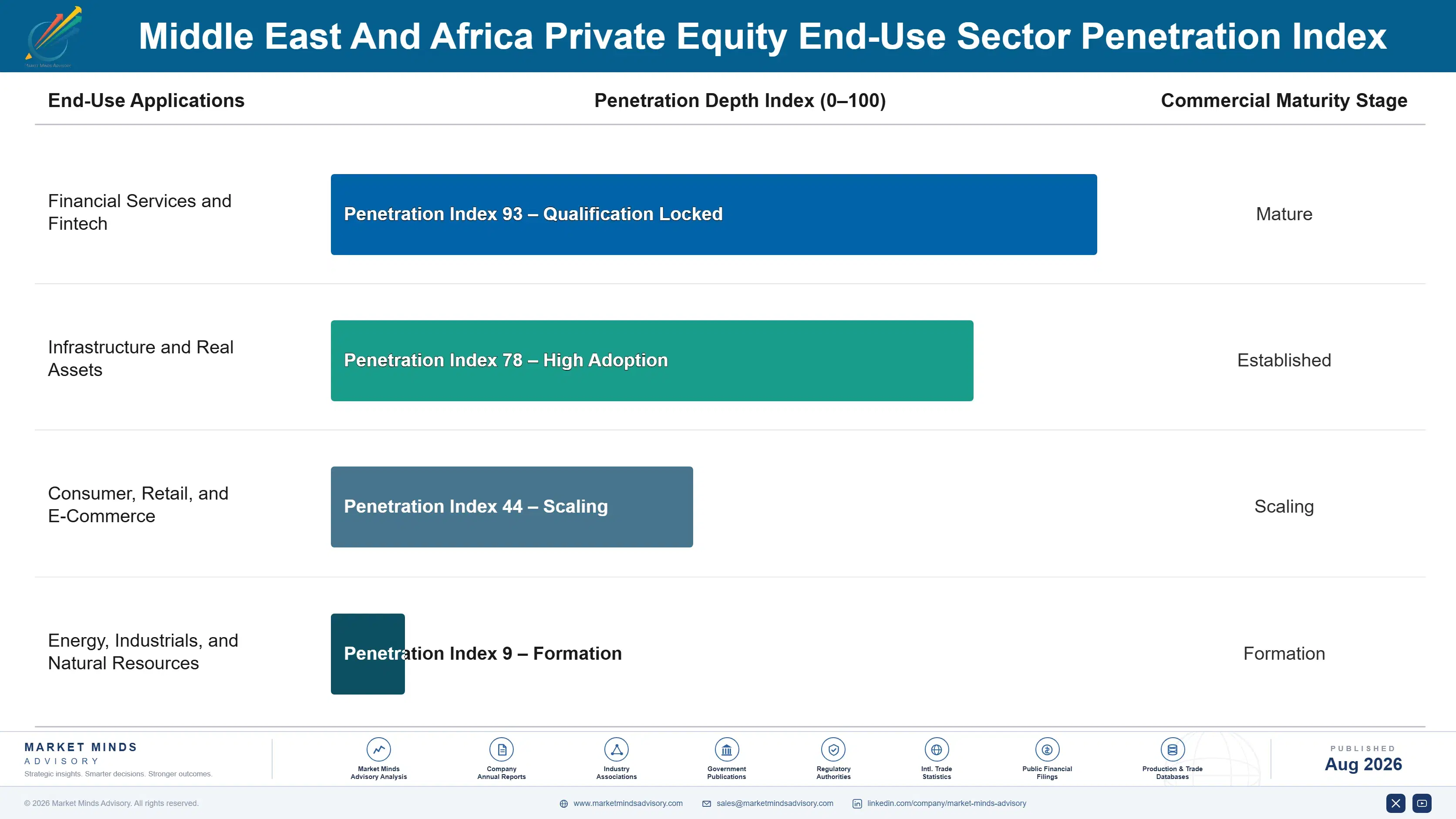
Sovereign wealth fund commitments generate multi-deal revenue streams that persist for a decade once underwritten, since sovereign entities rarely exit co-investment relationships mid-cycle given the illiquid nature of direct deal capital and reputational costs of withdrawing from an ongoing national diversification program. This locks in predictable fee and carry inflows that firms can plan capital deployment against with unusual precision, smoothing income across investment cycles that would otherwise prove considerably volatile.
Adoption stickiness varies sharply by end-use vertical. Infrastructure and government-linked allocations stay high due to long-term strategic national development targets, while technology and fintech growth equity allocations show shallower loyalty since comparison across firm track records and sector expertise make switching between managers considerably easier than a decade ago for newer sovereign entrants, compressing average partnership relationship duration across these specific investment categories over time.

Buyer profiles are shifting generationally as younger sovereign fund executives favor data-driven direct deal sourcing and quantitative portfolio construction over the relationship-driven fund manager selection their predecessors relied on for decades, forcing incumbent firms to rebuild sourcing infrastructure without abandoning the trusted government relationships that established portfolio companies expect from their lead investor, a dual-track approach few firms have yet fully resolved in practice.
middle-east-and-africa-private-equity-market-end-use-penetration-index-1787914580810

Where To Place Private Equity Bets

These are among the four positions where our research anticipates prominent divergence between winners and laggards over the coming forecast period. Each is grounded in the demand model, the regulatory perimeter, and the announced capacity pipeline.
01 / TECHNOLOGY SECTOR SPECIALIZATION PRIORITY

Build dedicated technology sector capability now

Technology and fintech buyout and growth equity is growing at nearly twice the market average and remains meaningfully underpenetrated relative to the scale of regional digital adoption opportunity already emerging across major Gulf and African markets today. Firms that delay dedicated technology sector specialization risk ceding the fastest-growing deal category entirely to nimbler specialist entrants and well-capitalized sovereign direct investment teams already active in adjacent technology segments. Early movers who build proprietary regulatory relationship capability now will hold a durable sourcing advantage over slower-moving competitors for years to come.
02 / SOVEREIGN PARTNERSHIP STRUCTURE ADAPTATION

Rebuild fund structures for direct sovereign co-investment

Sovereign wealth co-investment and direct deals anchor a growing share of the portfolio, but deepening national diversification mandates squeeze fee economics for traditional fund managers still structured under older intermediary arrangements written years earlier under different sovereign priorities. Firms must rebalance toward direct co-investment structures and government partnership models to preserve relevance without triggering sovereign confidence concerns during the multi-year transition period. Firms that fail to adapt partnership structures quickly enough risk sustained fee erosion across their largest and most historically stable capital source.
03 / REGULATORY NAVIGATION CAPABILITY BUILDING

Build regulatory depth ahead of the next compliance cycle

Regulatory fragmentation across dozens of distinct national jurisdictions is tightening as governments respond to elevated foreign ownership scrutiny and growing anti-money laundering compliance requirements across the broader regional private equity industry as a whole. Firms with weaker regulatory affairs capability face constrained deal execution speed and materially higher compliance costs relative to well-prepared peers operating in the very same fragmented regulatory environment. Building regulatory relationship depth ahead of the next compliance tightening cycle, rather than reactively during enforcement action, preserves both execution flexibility and competitive standing across the entire region.
04 / DISTRESSED CYCLE SOURCING DIVERSIFICATION

Diversify away from single-cycle distressed deal dependence

Distressed and special situations deal flow growth depends partly on continued regional economic cycle volatility that pushes overleveraged companies toward restructuring and forced asset sales at attractive entry valuations. A sudden regional economic stabilization or sovereign intervention capping distressed asset pricing flexibility could abruptly slow this segment's growth trajectory within a fairly short window of time. Firms should diversify deal sourcing away from single-cycle dependence and build scenario plans for a less favorable distressed opportunity environment over the next several years ahead.

Engagement Snapshot From the Field

A live engagement with an industry participant carrying material or product regulatory and market exposure ahead of a defining policy shift, showing how our research translates into a defensible multi-year portfolio strategy.
MARKET MINDS ADVISORY · CLIENT ENGAGEMENT SUMMARY
Middle East And Africa Private Equity Producer Strategic Portfolio Review and Transition Roadmap 2026·Investment Scenario on Middle East And Africa Private Equity Exposure Evaluation 2025-26
CLIENT PROFILE
The client is a mid-sized generalist private equity firm managing several billion dollars in committed capital across buyout and infrastructure vehicles focused on Gulf and African markets (client-reported, unverified by MMA), with a traditional fund manager structure and a limited partner base built primarily around international institutional relationships serving portfolio companies across energy, real estate, and traditional sectors regionally.
STRATEGIC CHALLENGE
The client faced eroding deal access in technology and fintech companies as sovereign direct investment teams offered faster regulatory navigation and deeper government relationships the incumbent's generalist deal team could not match. Leadership needed an independent assessment of which sector verticals to prioritize for specialization given constrained hiring budget and multi-year team-building timelines already underway.
MMA APPROACH
MMA conducted structured interviews with investment, government affairs, and fundraising leadership alongside proprietary sector-level deal flow and return analysis benchmarked against leading sovereign-linked and generalist peers. The engagement mapped sector readiness against deal access potential, quantified the return opportunity at risk from continued delay, and prioritized a phased technology specialization build sequenced around the client's existing fund cycle and fundraising calendar.
KEY FINDINGS
  1. Technology-focused deal access showed roughly eighteen percent projected sector CAGR (client-reported, unverified by MMA) versus roughly eight percent for generalist infrastructure deal flow across the client's core thesis.
  2. Regulatory approval cycle time ran thirty-five percent longer (client-reported, unverified by MMA) under the generalist team structure compared to sovereign-linked competitor teams for comparable technology deal categories.
  3. Deal win rate against sovereign-linked competitors dropped meaningfully in contested fintech rounds, with founders citing government relationship depth as the primary reason for choosing rival investors over the past two years.
  4. Traditional infrastructure and energy deal economics remained resilient, suggesting specialization investment should prioritize technology and fintech verticals over already well-performing core categories first.
CLIENT PROFILE
The client is a mid-sized generalist private equity firm managing several billion dollars in committed capital across buyout and infrastructure vehicles focused on Gulf and African markets (client-reported, unverified by MMA), with a traditional fund manager structure and a limited partner base built primarily around international institutional relationships serving portfolio companies across energy, real estate, and traditional sectors regionally.
STRATEGIC CHALLENGE
The client faced eroding deal access in technology and fintech companies as sovereign direct investment teams offered faster regulatory navigation and deeper government relationships the incumbent's generalist deal team could not match. Leadership needed an independent assessment of which sector verticals to prioritize for specialization given constrained hiring budget and multi-year team-building timelines already underway.
MMA APPROACH
MMA conducted structured interviews with investment, government affairs, and fundraising leadership alongside proprietary sector-level deal flow and return analysis benchmarked against leading sovereign-linked and generalist peers. The engagement mapped sector readiness against deal access potential, quantified the return opportunity at risk from continued delay, and prioritized a phased technology specialization build sequenced around the client's existing fund cycle and fundraising calendar.
KEY FINDINGS
  1. Technology-focused deal access showed roughly eighteen percent projected sector CAGR (client-reported, unverified by MMA) versus roughly eight percent for generalist infrastructure deal flow across the client's core thesis.
  2. Regulatory approval cycle time ran thirty-five percent longer (client-reported, unverified by MMA) under the generalist team structure compared to sovereign-linked competitor teams for comparable technology deal categories.
  3. Deal win rate against sovereign-linked competitors dropped meaningfully in contested fintech rounds, with founders citing government relationship depth as the primary reason for choosing rival investors over the past two years.
  4. Traditional infrastructure and energy deal economics remained resilient, suggesting specialization investment should prioritize technology and fintech verticals over already well-performing core categories first.
RECOMMENDED STRATEGY
Phase 1: Phase one: hire dedicated technology sector and regulatory affairs talent within nine months, measuring deal win rate improvement before wider team expansion. Phase 2: Phase two: rebuild sourcing infrastructure for technology and fintech verticals while retaining generalist coverage for infrastructure and energy sectors regionally. Phase 3: Phase three: extend specialist sourcing models to adjacent digital sectors and integrate portfolio data across funds to support cross-fund co-investment.
OUTCOME
Within eighteen months of the phased specialization rollout, the client reported a thirteen percent improvement in technology deal win rate and a six-point reduction in regulatory approval cycle time (client-reported, unverified by MMA), alongside measurably improved government relationship depth and deal sourcing across the pilot sector vertical.

Frequently Asked Questions

Foundational context covering the market sizes, CAGR, scope, country, region and competition that inform every finding below. This section is provided to cover basics and most often pre-purchase conversations, answered from the MMA Primary Research Dataset.

What is the current size of the Middle East And Africa Private Equity Market?

The Middle East And Africa Private Equity Market is valued at 18.5 billion US dollars in 2025. This figure reflects committed capital deployed across buyout, growth equity, infrastructure, and sovereign co-investment vehicles regionally.

How large will the Middle East And Africa Private Equity Market be by 2036?

The market is projected to reach 61.26 billion US dollars by 2036. This represents a 2.97 times expansion over the eleven-year forecast period beginning in 2026.

What is the CAGR for the Middle East And Africa Private Equity Market 2026 to 2036?

The market is forecast to grow at an 11.5 percent compound annual growth rate. The bull case reaches 12.8 percent while the bear case falls to 10.2 percent.

Which segment is growing fastest?

Technology and fintech buyout and growth equity leads growth at 18.0 percent CAGR, roughly 1.6 times the overall market rate. Regional digital financial services companies anchor this segment's expansion.

Who are the major companies in the Middle East And Africa Private Equity Market?

Public Investment Fund, Mubadala Investment Company, Abu Dhabi Investment Authority, Investment Corporation of Dubai, and Actis lead the market. Together the top five hold an estimated 38 percent combined share.

Which country is growing fastest?

Saudi Arabia anchors the largest single-country deployment share within the region, driven by Public Investment Fund's diversification mandate. South Asia and Pacific leads external co-investment growth at 13.5 percent.

Report Segmentation Architecture

The full report scope spans multiple orthogonal segmentation dimensions, with cross-tabulated demand data provided for each dimension pair. Coverage extends further to regional breakdowns, trend trajectories, and the competitive detail needed to support segment-level decision-making.

By Deal Type

  • Buyout and Control Equity Investments
  • Growth Equity and Expansion Capital
  • Infrastructure and Real Assets Private Equity
  • Distressed and Special Situations Private Equity
  • Sovereign Wealth Co-Investment and Direct Deals
  • Technology and Fintech Buyout and Growth Equity

By End-Use Sector

  • Financial Services and Fintech
  • Infrastructure and Real Assets
  • Consumer, Retail, and E-Commerce
  • Energy, Industrials, and Natural Resources

By Commercial Dimension

  • Sovereign Wealth and Government Capital
  • International Institutional Co-Investment
  • Family Office and Regional Private Capital
  • Fund-of-Funds and Secondary Market Capital

By Region

  • Middle East and Africa
  • North America
  • East Asia
  • Western Europe
  • South Asia and Pacific
  • Latin America
  • Eastern Europe

Scope, Methodology, and Coverage

Every figure in this report is reproducible from documented input assumptions. The scope below maps the historical period, the forecast horizon, the segmentation dimensions, and the countries covered, alongside the underlying primary and qualitative methodology.
Historical Period
2020 to 2025
Forecast Period
2026 to 2036
Base Year
2025 (USD billions; MMA Primary Research Dataset, August 2026)
Market Definition
This report covers committed private equity capital deployed across buyout, growth equity, infrastructure, distressed and special situations, sovereign co-investment, and technology-focused funding vehicles within the Middle East and Africa region. It excludes venture capital seed financing, public market secondary investment, and debt or credit-based financing structures not structured as equity investment.
Quantitative Units
USD billions (current prices); committed and deployed capital where disclosed
Segmentation Dimensions
Deal Type; End-Use Sector; Commercial Dimension; By Region
Regions Covered
Middle East and Africa, North America, East Asia, Western Europe, South Asia and Pacific, Latin America, Eastern Europe
Countries Covered
Saudi Arabia, UAE, Qatar, South Africa, Nigeria, Egypt, Kenya, USA, Canada, China, Japan, South Korea, Singapore, UK, France, Switzerland, Netherlands, India, Australia, Brazil, Mexico, Argentina, Poland, Hungary, Czechia, Russia, and additional markets relevant to this sector
Key Companies Profiled
Public Investment Fund, Mubadala Investment Company, Abu Dhabi Investment Authority, Investment Corporation of Dubai, Actis, Qatar Investment Authority, ADQ, Gulf Capital, Amethis, Development Partners International, Helios Investment Partners, African Capital Alliance, Ethos Private Equity, NBK Capital Partners, Investcorp, Vantage Capital, Verod Capital Management, Growthgate Capital, Al Waha Capital, Sango Capital
Quantitative Methodology
Primary survey, n=3,800 respondents, Q4 2025, six countries; demand-side model with trade association cross-validation
Qualitative Methodology
47 expert interviews, Q4 2025; applied to validate demand model assumptions, identify emerging dynamics, and assess competitive positioning
Report Format
PDF and XLSX data workbook (Word format preview document)
Publisher
Market Minds Advisory
Report Code
MMA-2026-TEC-322
Published
August 2026
Contact
sales@marketmindsadvisory.com | www.marketmindsadvisory.com

Purchase the full Middle East And Africa Private Equity Market Report (2026 to 2036).

This report delivers a comprehensive assessment of the Middle East And Africa Private Equity Market, covering segmentation, competitive positioning, and regional capital flows through 2036. It quantifies deployment opportunity across six deal type segments and profiles the twenty leading firms operating across buyout, growth equity, sovereign co-investment, and technology-focused private equity. Analysts detail regulatory fragmentation dynamics alongside compliance cost exposure, exit market illiquidity, and mitigation strategies firms are actively pursuing. The report supports strategic planning for fund managers, sovereign wealth institutions, and international co-investors evaluating opportunities across the regional private equity landscape.
Segment-level deployment forecasts through the year 2036
Competitive benchmarking of twenty leading regional firms
Regional capital and co-investment flow analysis
Regulatory fragmentation and compliance cost assessment
Sovereign direct deal and technology sector tracking
Exit market illiquidity exposure and mitigation strategy review

Built For The People Who Decide

From boardroom strategy to bench-side execution, this report is read cover-to-cover by leaders shaping the next decade of their industry, turning demand scenarios, market dynamics and valuation benchmarks into decisions.
CXOs/ Presidents/ VPs/ Managers
M&A and Corporate Development
Strategy Teams and R&D Heads
Procurement and Product Directors
Regulatory and Compliance Leaders
Investor Relations and Equity Analysts