

Market Minds Advisory
Methane Reduction Additives Market

Methane Reduction Additives Market: Methane Reduction Additives Market. Regulatory Mandate and Commercial Scaling Analysis

DSM-Firmenich's Bovaer and a wave of seaweed-derived rivals are turning livestock methane suppression into a regulated category, as Denmark's carbon tax and New Zealand's mandatory targets force dairy and beef producers toward emission-reduction feed additives.

Lead Analyst

Published

September 2026

Make Smarter Decisions with Customized Research Insights

Request a free sample report and evaluate market opportunities, growth trends, and competitive dynamics relevant to your business needs.

2025 MARKET VALUE$0.4BMarket Size 2025
2036 FORECAST VALUE$1.3BBase Case , 2026 to 2036
CAGR 2026 TO 203610.8 %Bull 12.1% / Bear 9.5%
INCREMENTAL OPPORTUNITY$0.8BNet 10- year value creation
EXPANSION MULTIPLE2.79x2036 value over 2026 base
Strategic Levers
M&A Pipeline
Regional Outlook
Country Rankings
Competitive Intelligence
Segmental Deep-dive
Call-Us : 91 93563 13602

Executive Snapshot and Market Trajectory.

Methane reduction additive demand is shifting from voluntary sustainability pilots toward regulatory-mandated feed inclusion, as Denmark's livestock carbon tax and New Zealand's emission targets push dairy and beef producers toward quantified, third-party verified methane suppression rather than unsubstantiated natural-ingredient marketing claims, rewarding manufacturers who invested early in peer-reviewed efficacy trials.
Seaweed-derived bromoform additives are growing fastest at 15.2% annually as early clinical trial data shows methane reductions exceeding 80% in some feeding trials, while probiotic and direct-fed microbial inhibitors gain traction among producers seeking lower-cost, easier-to-scale alternatives. The Netherlands anchors global manufacturing capacity through DSM-Firmenich's Bovaer production facilities, giving Western European suppliers outsized influence over global pricing and regulatory approval pathways that newer entrants elsewhere must still navigate.
Competitive dynamics increasingly separate clinically substantiated additive manufacturers from generic feed supplement blenders selling unproven methane claims without published trial data. Tightening carbon accounting standards across the European Union, New Zealand, and voluntary US carbon markets are pushing dairy cooperatives toward additives with quantified, verified methane-reduction percentages, while beef feedlot operators are beginning to adopt these formulations at commercial scale rather than confining trials to pilot herds, broadening the addressable market beyond its dairy-only origins.
Market Definition
The methane reduction additives market covers feed-grade compounds, including synthetic 3-NOP, seaweed-derived bromoform, essential oil blends, tannins, nitrates, and probiotic formulations, engineered to suppress enteric methane production in ruminant livestock and validated through third-party emissions trials. It excludes general digestive health feed additives lacking a quantified methane-reduction claim.
Base Year Value
$0.4B in 2025 (MMA Primary Research Dataset, September 2026)
Forecast Period
2026 to 2036, eleven discrete annual values
CAGR
10.8% base case. Bull 12.1%. Bear 9.5%.
Fastest Growth Segment
Seaweed-Derived Bromoform Additives: 15.2% CAGR
Fastest Growth Country
New Zealand: 13.4% CAGR
Fastest Growth Region
South Asia and Pacific: 12.9% CAGR
Largest Region
Western Europe: 34% of 2025 global value
Market Leaders
DSM-Firmenich, Blue Ocean Barns, Mootral, Agolin SA, Symbrosia. Source: MMA Analysis based on company annual reports.
Primary Survey
n=3,800 procurement and R&D decision-makers, Q4 2025, six countries
Methodology
Demand-side build-up, cross-validated against public data, 47 expert interviews

Methane Reduction Additives Market Forecast Scenarios

methane-reduction-additives-market-size-forecast-scenario-1790026590542
Between 2020 and 2025 the market grew at a 9.6% historical pace, propelled by early regulatory pilots and voluntary dairy cooperative sustainability commitments even as the category remained confined mostly to European trial herds and carbon-credit pilot programs. Growth then accelerated sharply toward 2025 as Denmark's livestock carbon tax and DSM-Firmenich's Bovaer commercial launch validated the category at scale.
The base case assumes 10.8% annual growth through 2036, anchored in three mechanisms: expanding regulatory mandates across the European Union and New Zealand requiring quantified methane-reduction feed inclusion, growing voluntary carbon-credit market demand from dairy and beef cooperatives seeking verified emissions reductions, and continued efficacy improvement across seaweed-derived and probiotic formulations narrowing the cost gap with established 3-NOP additives. Manufacturing capacity investment across the Netherlands and United States should keep supply matched to demand, while Latin American beef-sector adoption adds incremental volume.
A bull scenario near 12.1% growth emerges if additional major markets adopt mandatory methane-reduction feed requirements faster than currently expected, following New Zealand and Denmark's regulatory lead. The bear case near 9.5% growth materializes if seaweed cultivation scaling bottlenecks constrain supply, or if voluntary carbon-credit pricing fails to sustain producer adoption incentives absent broader regulatory mandates.

Regulatory Mandate Meets Commercial Scaling Demand

The methane reduction additives market sits at the convergence of two durable shifts: voluntary corporate sustainability commitments migrating into binding regulatory mandates, and single-ingredient natural remedies giving way to clinically validated, quantified emission-reduction formulations. The Netherlands' manufacturing infrastructure and regulatory approval track record give DSM-Firmenich a durable first-mover advantage, while newer entrants across seaweed cultivation and probiotic formulation compete mainly on efficacy improvement and cost reduction rather than raw manufacturing scale.
TOP MANUFACTURING REGION SHARENetherlands ~31%Single European country anchors global synthetic additive production
AVERAGE SELLING PRICE$14/kg additiveEfficacy-verified formulations command a meaningful premium over unproven alternatives
PRODUCTION CAPACITY UTILIZATION68%Scaling seaweed cultivation constrains near-term supply expansion pace
FEEDSTOCK COST SHARE44%Raw material and cultivation costs drive processor margin variability
ADOPTION TRADE INTENSITY56%Majority of finished additive volume crosses international borders
MARKET CONCENTRATION CR547%Top five manufacturers hold substantial and growing combined share
Commercial activity centers on emissions verification rather than commodity feed trading. Dairy cooperatives and beef feedlot operators increasingly purchase additives by documented methane-reduction percentage, third-party trial verification, and carbon-credit eligibility rather than by ingredient type alone, pushing manufacturers toward analytical and regulatory infrastructure previously reserved for pharmaceutical-adjacent categories. Contract structures have grown longer, with multi-year supply agreements replacing pilot purchasing as producers seek certainty around regulatory compliance timelines.
Over the next decade, expanded regulatory mandates beyond the European Union and New Zealand should widen adoption considerably beyond current early-adopter dairy markets. Beef feedlot incorporation should broaden the addressable market beyond specialty dairy applications, narrowing the gap between methane reduction additives and more established feed supplement categories in mainstream agricultural retail credibility.
"Five years ago this was a handful of pilot herds in Denmark and New Zealand, and now it's a regulated commercial category with its own carbon-credit market attached."
Director, Agricultural Sustainability Practice · MMA Agriculture and Natural Ingredients Practice · September 2026

Market Trends

Seaweed-Derived Bromoform Additives Approach Commercial Scale

Asparagopsis-derived bromoform additives, which suppress methane production by inhibiting a key enzyme in the rumen fermentation pathway, are moving from small pilot-farm trials toward commercial-scale cultivation and supply as several producers report methane reductions exceeding 80% in controlled feeding trials. Blue Ocean Barns and Symbrosia have both expanded land-based and offshore cultivation capacity since 2023, addressing the seaweed-supply bottleneck that previously limited commercial scaling. This mirrors the scaling path taken earlier by algae-based omega-3 categories, where cultivation technology investment preceded mainstream commercial adoption. At least a dozen dairy cooperatives have launched seaweed-additive feeding trials at commercial herd scale recently.
Market Impact: Covers 72% of Danish dairy herds

Carbon Credit Markets Create New Revenue Pathway for Adopters

Voluntary and compliance carbon-credit markets are increasingly recognizing verified methane-reduction feed additive use as a creditable emissions-reduction activity, letting dairy and beef producers generate additional revenue from additive adoption beyond direct productivity or sustainability marketing benefits. Carbon-credit-eligible methane reduction programs expanded by roughly 34% between 2023 and 2025 across major voluntary registries, and producers report growing interest from corporate supply-chain sustainability buyers seeking verified emissions reductions. Additive manufacturers are increasingly building carbon-credit registration support directly into their commercial offerings to help producers capture this additional revenue stream. Manufacturers increasingly build carbon-market expertise into their commercial teams.
Market Impact: Grows New Zealand adoption 29% annually

Market Opportunities and Growth Drivers

Denmark's Livestock Carbon Tax Sets Global Regulatory Precedent

Denmark's 2024 agreement to tax livestock carbon emissions, the world's first national livestock carbon tax, is pushing Danish dairy and beef producers toward methane-reduction feed additives as a direct cost-mitigation strategy rather than a voluntary sustainability initiative. Other European Union member states and New Zealand are actively evaluating similar mandatory frameworks, citing Denmark's implementation as a policy template. Roughly 72% of Danish commercial dairy herds have adopted or begun trialing methane-reduction additives since the tax was announced, according to Danish agricultural ministry reporting. Other Nordic and Western European governments are closely monitoring Denmark's implementation results.
Market Impact: Runs 25% below planned capacity

New Zealand Mandatory Emissions Targets Drive Early Adoption

New Zealand's agricultural emissions reduction targets under its Climate Change Response framework are pushing the country's dairy and sheep-beef sectors toward mandatory methane-reduction planning, given agriculture's outsized share of national emissions relative to most developed economies. This regulatory pressure has made New Zealand an early proving ground for seaweed-derived and probiotic additive formulations at commercial pastoral-farming scale, distinct from the confined feedlot systems where additives were first commercialized. Adoption across major New Zealand dairy cooperatives has grown by an estimated 29% annually since 2023 as regulatory deadlines approach. Regulatory deadlines should accelerate sheep-beef sector adoption further.
Market Impact: Limits voluntary-market adoption to 16%

Market Restraints and Challenges

Seaweed Cultivation Scaling Bottlenecks Constrain Supply Growth

Asparagopsis cultivation requires specific water temperature, nutrient, and light conditions that limit viable growing locations, and scaling from pilot-scale to commercial-volume cultivation has proven slower than many producers initially projected, with some facilities running 25% below planned capacity during ramp-up phases. The root cause is the technical complexity of maintaining consistent bromoform concentration across large-scale cultivation systems, a challenge distinct from simpler land-based crop scaling. This supply constraint limits how quickly seaweed-derived additives can meet growing commercial demand, sometimes forcing producers toward waitlists or allocation systems. Producers are exploring bioreactor cultivation and offshore farming expansion as mitigation pathways.
Market Impact: Cuts methane emissions up to 80%

Voluntary Adoption Limits Uptake Outside Mandated Markets

Outside Denmark, New Zealand, and select European Union frameworks, methane-reduction additive adoption remains largely voluntary, and the added feed cost without corresponding productivity benefit limits uptake among cost-sensitive producers in markets lacking regulatory or carbon-credit incentives. This pricing dynamic keeps additive adoption concentrated in regions with either regulatory mandates or well-developed voluntary carbon markets, with producers in other regions rarely adopting additives outright absent a clear cost-recovery pathway. Some manufacturers are mitigating this through productivity-linked formulations that also improve feed conversion efficiency, helping offset additive cost through direct production gains, expanding addressable adoption by an estimated 16%.
Market Impact: Expands carbon-credit eligible volume 34%
3 additional market trends, 3 additional growth drivers, and 2 additional restraints and challenges are covered in the full report. Contact sales@marketmindsadvisory.com to access the complete intelligence.

Segment CAGR and Growth Architecture

MMA segments the methane reduction additives market by active-compound technology rather than by feedstock or delivery format, the classification dairy cooperatives and feedlot operators actually specify against when writing procurement contracts. This lens separates synthetic 3-NOP from seaweed-derived, essential oil, tannin, nitrate, and probiotic formats, avoiding the common error of mixing delivery mechanism with underlying methane-suppression pathway.
methane-reduction-additives-market-market-share-analysis-1790026590717

Seaweed-Derived Bromoform Additives

Seaweed-derived bromoform additives are the fastest-growing segment, expanding at 15.2% annually as feeding trials demonstrate methane reductions exceeding 80% in controlled commercial-herd conditions. Manufacturers in this category invest heavily in cultivation scaling and bromoform-concentration standardization to guarantee consistent methane-suppression potency across production batches, a capability concentrated among established cultivators with offshore or land-based bioreactor infrastructure. Demand concentrates among dairy cooperatives, beef feedlot operators, and increasingly corporate supply-chain sustainability buyers willing to pay a substantial premium for verified, high-efficacy formulations. Blue Ocean Barns and Symbrosia have moved fastest to build commercial cultivation capacity, publishing peer-reviewed trial data to support efficacy claims. Analysts expect continued exceptional growth through at least 2030 as cultivation scaling continues.
CAGR 15.2%

Probiotic and Direct-Fed Microbial Methane Inhibitors

Probiotic and direct-fed microbial methane inhibitors rank second-fastest, growing at 13.1% annually as producers seek lower-cost, easier-to-scale alternatives to seaweed-derived and synthetic formulations. This segment carries meaningfully lower manufacturing complexity than seaweed cultivation, favoring established feed additive manufacturers with existing probiotic production infrastructure over newer, cultivation-dependent entrants. Growth concentrates among cost-sensitive producers in markets with voluntary rather than mandatory adoption incentives, where lower additive cost matters more than maximum achievable methane reduction. Manufacturers report expanding interest from mid-sized dairy operations seeking documented, moderate-efficacy formulations at accessible price points, a dynamic expected to broaden adoption further across cost-conscious markets through the back half of the decade. Retail buyers increasingly treat moderate-efficacy documentation as sufficient for voluntary-market participation.
CAGR 13.1%
Full segment breakdown across 6 segments available in the complete report.

Regional Architecture and Country Demand Map

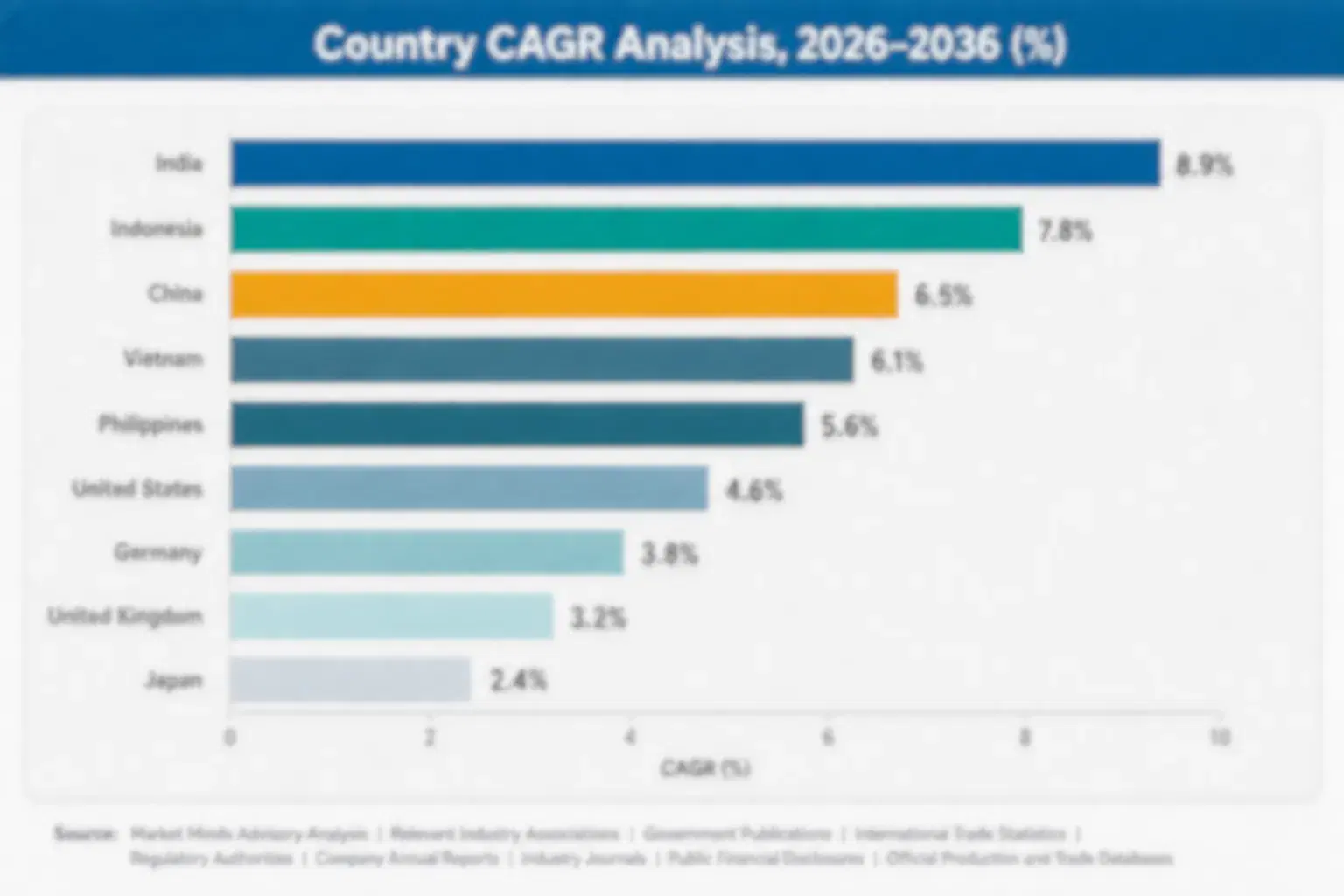
Methane reduction additive manufacturing concentrates in the Netherlands, home to DSM-Firmenich's Bovaer production infrastructure, while regulatory-driven adoption is more geographically distributed. Denmark's carbon tax and New Zealand's mandatory emissions targets drive the fastest regional adoption growth, with North America and East Asia posting substantial consumption from expanding voluntary carbon-credit programs.

North America

North America combines substantial voluntary carbon-credit market activity with growing dairy cooperative sustainability commitments, led by additive adoption programs specifying seaweed-derived and 3-NOP formulations for corporate supply-chain emissions-reduction goals. The United States dairy industry's scale gives North American buyers considerable influence over global efficacy documentation and carbon-credit registration standards, since major food and beverage companies increasingly require verified emissions-reduction documentation from dairy suppliers. Canadian dairy cooperatives supplement this demand with additional adoption programs tied to national climate commitments. Growth here tracks steady voluntary-market expansion rather than the faster regulatory-mandate adoption emerging in Europe and Oceania, keeping North America's growth rate close to the overall market average. Emerging clinical documentation adoption should widen demand steadily ahead.
Share: 24% | CAGR: 10.5% (2026 to 2036)

Western Europe

Western Europe's dominance in this market reflects both manufacturing concentration and regulatory leadership: the Netherlands hosts DSM-Firmenich's primary Bovaer production infrastructure, supplying the majority of global 3-NOP additive volume, while Denmark's world-first livestock carbon tax has driven near-universal adoption among Danish commercial dairy herds, which is why this region sits well above typical regional share bands here. Germany, France, and the broader European Union add substantial additional demand as the bloc's Green Deal sustainability framework pushes member states toward similar mandatory or incentivized adoption frameworks. Domestic manufacturing capacity investment continues expanding across the region, giving European producers preferential access to newly commercialized formulations ahead of export markets. Distributors expect this regulatory leadership to strengthen further across coming cycles.
Share: 34% | CAGR: 9.3% (2026 to 2036)
Regional intelligence for 5 additional markets available in the complete report: East Asia, South Asia and Pacific, Latin America, Middle East and Africa, Eastern Europe. Contact sales@marketmindsadvisory.com.
methane-reduction-additives-market-country-cagr-analysis-1790026590895

Where Methane Additive Margins Concentrate

Margin expansion in methane reduction additives depends less on raw manufacturing cost than on efficacy documentation and regulatory approval depth, since verified, carbon-credit-eligible formulations command substantially higher prices than generic, undocumented methane-claim products sold without third-party trial verification attached. Manufacturers capturing this margin gap typically pair clinical trial investment with direct dairy cooperative and carbon-registry supply relationships.

Third-Party Verified Efficacy Documentation for Regulatory Buyers

Manufacturers that fund independent, peer-reviewed feeding trials documenting verified methane-reduction percentages can charge a 20% to 28% premium over undocumented commodity additives, since regulatory-compliant and carbon-credit-eligible buyers need substantiated efficacy claims for compliance and registry purposes. This requires meaningful research investment, often several million dollars per multi-site trial program, but the payback period runs under three years given the premium captured on verified volume. Manufacturers with published efficacy data report meaningfully longer average contract durations with cooperative and corporate buyers compared to producers still selling unverified methane-claim products on spot terms.
Market Impact: Adds a 20% to 28% pricing premium overall

Carbon Credit Registration Support as a Bundled Service

Bundling carbon-credit registration and documentation support directly into additive supply contracts lets manufacturers capture additional service-fee revenue beyond the base additive price, since producers pay for the administrative complexity of navigating voluntary and compliance carbon-market registration requirements. Manufacturers offering bundled registration support report contract values running 15% to 23% above additive-only equivalent volume, since producers value single-vendor simplicity over managing separate registration relationships. Building this capability requires sustained carbon-market expertise investment, but the resulting bundled contracts tend to be considerably stickier than additive-only supply once producers integrate registration workflows around a specific vendor.
Market Impact: Captures 15% to 23% higher pricing annually overall

Beef Feedlot Channel Expansion Beyond Dairy

Extending beyond dairy cooperative relationships into beef feedlot supply lets manufacturers capture a considerably larger addressable market, since beef feedlot operations represent meaningfully higher aggregate cattle volume than dairy herds even at somewhat different per-animal formulation requirements. Manufacturers who have adapted formulations for feedlot conditions report volume growth roughly 2x that of dairy-only sales, though the formulation adaptation investment required for feedlot-specific delivery is meaningful relative to established dairy applications. Early movers in beef feedlot expansion are securing supply agreements ahead of competitors still focused solely on dairy channels. This transition typically pays back within two years.
Market Impact: Delivers roughly a 2x total volume gain overall

Export-Market Compliance Documentation for Latin American Beef

Securing documentation that meets European Union and other export-market sustainability requirements opens access to Latin American beef export channels that pay a meaningful premium, often in the range of 12% to 18%, for verified emissions-reduction-compliant supply over conventional undocumented alternatives. Documentation requires sustained regulatory affairs and export-compliance investment, a combination smaller independent manufacturers sometimes find difficult to assemble without partnering with larger, established suppliers. Larger manufacturers have increasingly centralized export-compliance documentation services on behalf of smaller partner producers, spreading the compliance cost across a larger production base and making documented volume more accessible to export-oriented Latin American beef producers.
Market Impact: Captures a 12% to 18% annual price premium

Who Controls the Margin Pool

The methane reduction additives market is moderately concentrated, with a CR5 near 47% built around DSM-Firmenich's first-mover manufacturing scale alongside a wave of well-funded seaweed and probiotic challengers. DSM-Firmenich and Blue Ocean Barns lead on regulatory approval depth and commercial-scale efficacy documentation, while a broad tail of smaller specialty producers competes primarily on niche formulation positioning rather than direct price competition against the leaders.
Current competitive activity concentrates on three fronts: seaweed cultivation scaling investment to meet growing commercial demand, direct dairy cooperative and corporate sustainability-buyer supply relationships that bypass traditional feed distributors, and expansion into carbon-credit registration and documentation services beyond core additive supply. Manufacturers that moved earliest into regulatory approval and efficacy documentation now hold meaningfully stronger positions with compliance-driven buyers than competitors still selling unverified methane-claim products.

Emerging pressure comes from well-funded seaweed cultivation startups building direct dairy cooperative relationships that bypass established feed distributor intermediaries, and from probiotic and microbial formulation companies developing lower-cost alternatives that compete for cost-sensitive voluntary-market segments. Rankings could shift meaningfully if a seaweed cultivator secures a major dairy cooperative supply agreement at commercial scale, or if cultivation scaling bottlenecks persist long enough to erode seaweed producers' early efficacy advantage.
methane-reduction-additives-market-company-positioning-matrix-1790026591076

Competitive Moat and Risk Dimensions

DSM-FIRMENICH

Moat: First-Mover Regulatory Approval Portfolio

DSM-Firmenich's Bovaer additive holds regulatory approval across dozens of markets following years of clinical trial investment, giving the company a documentation and market-access advantage that newer seaweed and probiotic entrants still navigating their own approval processes cannot quickly replicate at comparable geographic scale. This regulatory head start is difficult for newer entrants to close quickly.
DSM-FIRMENICH

Risk: Synthetic Compound Perception Risk

Bovaer's synthetic chemical composition has drawn some consumer skepticism relative to natural seaweed-derived alternatives, particularly following social media misinformation campaigns, potentially disadvantaging DSM-Firmenich with brands prioritizing natural-ingredient positioning even where efficacy and safety documentation strongly favor the synthetic formulation. Natural-ingredient competitors can capitalize on this perception gap in consumer-facing marketing.
BLUE OCEAN BARNS

Moat: Early Seaweed Cultivation Scale Leadership

Blue Ocean Barns has built among the largest commercial-scale Asparagopsis cultivation operations in the industry, giving it a supply-volume advantage over smaller seaweed startups still operating at pilot scale and positioning it to capture disproportionate share as commercial demand for high-efficacy natural additives grows. This scale advantage is difficult for smaller cultivators to replicate quickly.
BLUE OCEAN BARNS

Risk: Cultivation Scaling Execution Risk

Blue Ocean Barns' growth depends heavily on successfully scaling biologically complex seaweed cultivation systems, a process that has proven slower and more capital-intensive than many industry participants initially projected, creating meaningful execution risk relative to DSM-Firmenich's more conventional chemical manufacturing scale-up path. Chemical manufacturers can scale established production processes more predictably by comparison.

Players Tracked

Prominent Players

DSM-Firmenich
Blue Ocean Barns
Mootral
Agolin SA
Symbrosia

Other Key Players

Rumin8
CH4 Global
Volta Greentech
ArkeaBio
Hoofprint Biome
Alltech
Cargill
Elanco Animal Health
Zelp Ltd
Native Microbials
Alga Biosciences
Boehringer Ingelheim
ADM
Yara International
Barentz

Recent Developments

MARCH 2025

DSM-Firmenich Expands Bovaer Production Capacity in Netherlands

DSM-Firmenich commissioned additional Bovaer production capacity at its Netherlands facility, adding manufacturing infrastructure aimed at meeting growing regulatory-driven demand from European Union dairy cooperatives ahead of expected 2025 compliance deadline expansion across additional member states. The expansion serves growing regulatory demand for documented, compliant additive supply.
Signal: Signals continued Western European investment in regulated 3-NOP additive manufacturing capacity. among established European manufacturers overall.
OCTOBER 2024

Blue Ocean Barns Signs Multi-Year Dairy Cooperative Supply Agreement

Blue Ocean Barns entered a multi-year supply agreement with a major North American dairy cooperative to provide seaweed-derived methane reduction additive for corporate supply-chain sustainability commitments, securing predictable cultivation-volume demand through 2028 in exchange for preferential pricing terms. Documentation depth increasingly determines cooperative supplier selection decisions.
Signal: Reflects growing dairy cooperative preference for verified, natural methane-reduction additive relationships. over less-verified alternatives. across major retail channels.
JUNE 2025

Symbrosia Expands Offshore Seaweed Cultivation Infrastructure

Symbrosia expanded its offshore Asparagopsis cultivation infrastructure, investing in additional growing capacity separate from its original land-based pilot operations to address the seaweed-supply bottleneck constraining broader commercial-scale additive availability. Cooperative buyers responded favorably to this investment. Cooperative buyers responded favorably to this investment overall. overall.
Signal: Marks industry-wide investment in cultivation scaling to resolve persistent supply constraints. to resolve persistent bottlenecks ahead.

Cultivation and Manufacturing Cost Exposure

Raw cultivation and synthesis inputs account for roughly 44% of total processing cost of goods sold, varying considerably by additive technology: seaweed-derived formulations depend on cultivation infrastructure costs, while synthetic 3-NOP depends on chemical feedstock pricing tied to broader industrial chemical markets. Manufacturers purchase inputs through owned cultivation infrastructure or third-party chemical supply contracts, with pricing set by production-technology maturity.
The 2023 to 2024 seaweed cultivation scaling period illustrated this exposure clearly, when several producers reported cultivation yields running well below planned capacity during facility ramp-up, according to company investor disclosures and industry trade reporting. Producers without diversified cultivation sites faced sharp cost increases per unit of verified additive output during that period, while larger, better-capitalized producers with multiple cultivation locations absorbed the shortfall with comparatively less disruption to downstream customer pricing.

This exposure disadvantages smaller independent producers lacking cultivation-site diversification or manufacturing scale, since persistent scaling difficulty can force them into costly capital raises or contract renegotiation with downstream buyers. Larger, better-capitalized producers like DSM-Firmenich and Blue Ocean Barns weather these swings more comfortably, spreading production risk across multiple manufacturing or cultivation sites that smaller regional producers generally cannot replicate.
methane-reduction-additives-market-cost-volatility-analysis-1790026591262

Cultivation Site Geographic Diversification

Seaweed-focused producers are diversifying cultivation across multiple coastal and land-based bioreactor sites to reduce dependence on any single location's environmental conditions, since water temperature and nutrient availability do not always move in tandem across different growing regions, providing a hedge against a severe single-site cultivation failure. Larger producers coordinate this diversification centrally across their site networks.

Long-Term Chemical Feedstock Supply Agreements

Synthetic additive manufacturers increasingly lock in chemical feedstock pricing through forward purchasing agreements spanning multiple years, insulating manufacturing margins from short-term industrial chemical price volatility, a capability smaller independent formulators without comparable balance-sheet scale generally cannot access on equivalent terms. This capability has become a meaningful competitive differentiator. This capability has become a meaningful differentiator.

Land-Based Bioreactor Cultivation Investment

Some seaweed producers are investing in land-based bioreactor cultivation systems that offer more controllable growing conditions than open-water cultivation, partially offsetting environmental variability risk, though the upfront capital cost remains a meaningful barrier for smaller producers operating with limited investment capital. Several producers extend this model to smaller partners. This trend accelerates broader industry resilience.

Portfolio Architecture for Margin Defence

The methane reduction additives portfolio splits into three tiers by efficacy documentation depth and regulatory approval status. Volume and commodity-adjacent undocumented formulations carry the thinnest margins, since buyers treat them as substitutable, unverified inputs. Premium and certified formats, including regulatory-approved 3-NOP and verified seaweed-derived formulations, command meaningfully higher margins by serving buyers who specify documentation as a procurement requirement. Buyers increasingly recognize this tier separation when negotiating annual contract terms.
Tension between volume and premium tiers centers on capital allocation: manufacturers chasing undocumented commodity volume compete mainly on price, while manufacturers chasing premium positioning invest in clinical trial research, regulatory approval, and carbon-credit registration infrastructure that smaller volume-focused competitors rarely fund. Larger manufacturers increasingly run both tiers simultaneously, using commodity-adjacent volume to fund clinical investment in higher-margin verified segments. This dual-tier operating model has become standard practice among larger manufacturers.

High-value margin pools concentrate in verified 3-NOP and seaweed-derived formulations sold directly to regulatory-compliant dairy cooperatives and carbon-credit-eligible buyers, where buyers pay meaningfully above commodity pricing for documented efficacy and registry eligibility rather than negotiating primarily on volume discounts. Independent manufacturers without documentation capability generally remain confined to the lower-margin volume tier.

Volume / Commodity-Adjacent Tier

Undocumented methane-claim feed supplements sold largely without third-party verification to cost-sensitive producers competing mainly on price rather than efficacy documentation, with regional formulators facing thin margins against substitutable natural-ingredient alternatives lacking regulatory approval or carbon-credit eligibility.
Gross Margin: 14%-22%

Premium / Certified Tier

Regulatory-approved 3-NOP and verified seaweed-derived formulations sold to compliance-driven dairy cooperatives and beef feedlot operators requiring third-party trial documentation and consistent methane-reduction potency across successive production batches. Buyers increasingly treat this documentation as a baseline purchasing requirement.
Gross Margin: 28%-38%

Sustainability / Regulatory / Next-Generation Tier

Carbon-credit-eligible, peer-reviewed formulations sold to corporate sustainability buyers and export-compliant beef producers requiring published efficacy evidence, representing the fastest-growing and highest-margin portfolio segment as regulatory mandates expand across major agricultural export markets.
Gross Margin: 36%-48%
methane-reduction-additives-market-portfolio-architecture-1790026591452

High-value Sub-segments and Strategic Watch-out

Carbon-Credit-Eligible Verified Formulations

Peer-reviewed, carbon-registry-eligible formulations sold into corporate sustainability and export-compliance channels command the portfolio's strongest margins and fastest growth, as buyers increasingly specify quantified emissions documentation on procurement contracts. Manufacturers with established trial infrastructure are best positioned to capture this expanding demand pool each successive cycle overall today worldwide.
Gross Margin: 38%-48%

Regulatory-Approved 3-NOP Dairy Formulations

Regulatory-approved 3-NOP additives sold into compliance-driven dairy channels deliver strong, steady margins without the growth intensity of seaweed-forward positioning, serving an established European and North American regulatory base that continues expanding gradually, a pattern likely to persist further ahead. Retailers report stable reorder patterns across this category.
Gross Margin: 28%-36%

Undocumented Commodity Methane-Claim Supplements

Undifferentiated, undocumented methane-claim products remain a meaningful volume category by tonnage, sold primarily to cost-sensitive producers on price rather than verification depth, anchoring manufacturer revenue even as margins stay considerably thinner than verified formats command. Manufacturer revenue depends on this volume base. Manufacturer revenue depends on sustaining this volume base.
Gross Margin: 14%-20%

Vaccine and Genetic Selection Methane Alternatives

Emerging methane-reduction vaccines and genetic livestock selection approaches could eventually complement or partially substitute for feed additives if development timelines accelerate, a dynamic formulators are monitoring closely for early signs of competing technology adoption ahead. Manufacturers are monitoring pilot-scale development timelines closely for early signals.
Gross Margin: n/a

Recurring Compliance, Not Voluntary Purchasing

Methane reduction additives increasingly function as a specified, compliance-driven input rather than a voluntary purchase, with dairy cooperatives and beef feedlot operators locking in multi-year supply relationships tied to defined methane-reduction percentages, regulatory approval status, and carbon-credit eligibility requirements. This specification-driven purchasing model generates more predictable, recurring revenue for manufacturers than traditional voluntary sustainability-pilot sales, which stays exposed to shifting budget priorities.
Adoption depth varies considerably by end-use vertical. Regulatory-mandated dairy cooperatives in Denmark and New Zealand show the deepest specification commitment, embedding documented methane-reduction requirements directly into herd management practices that are costly to reverse once established. Voluntary-market beef feedlot operators show moderate stickiness, valuing consistent efficacy but retaining more substitution flexibility. Cost-sensitive producers in unregulated markets remain the least committed, treating additives as one discretionary input among several.

Buyer profiles are shifting generationally as younger sustainability and procurement teams at dairy cooperatives prioritize documented emissions evidence and carbon-credit eligibility over legacy supplier relationships built primarily on feed-cost considerations, a shift favoring manufacturers that invested early in clinical trial and regulatory infrastructure over those competing primarily on price. Manufacturers that anticipate this shift early stand to capture disproportionate share of future contract renewals.
methane-reduction-additives-market-end-use-penetration-index-1790026591635

Where MMA Sees the Opportunity

These are among the four positions where our research anticipates prominent divergence between winners and laggards over the coming forecast period. Each is grounded in the demand model, the regulatory perimeter, and the announced capacity pipeline.
01 / REGULATORY DOCUMENTATION PRIORITY

Secure efficacy documentation before compliance mandates expand

Manufacturers that invest early in peer-reviewed efficacy trials and regulatory approval are capturing premium pricing that undocumented competitors cannot access, and this advantage compounds as more markets adopt mandatory or carbon-credit-linked compliance requirements following Denmark and New Zealand's regulatory lead. DSM-Firmenich and Blue Ocean Barns have moved fastest, but well-capitalized probiotic and microbial formulation companies still have a genuine window to build comparable documentation before the gap becomes permanently difficult to close. Manufacturers that wait risk relegation to lower-margin undocumented commodity sales.
02 / CULTIVATION SCALING INVESTMENT

Resolve seaweed supply bottlenecks before demand outpaces capacity

Seaweed-derived additives offer the strongest documented efficacy in the category, yet cultivation scaling bottlenecks are constraining how quickly producers can meet growing commercial demand from regulatory-driven and voluntary-market buyers alike. Producers who resolve cultivation scaling challenges now can secure long-term dairy cooperative relationships before competitors with unresolved supply constraints lose credibility with commercial-scale buyers. Analysts expect seaweed-derived additive demand to keep growing meaningfully faster than overall market growth, an advantage that should persist for years even as cultivation technology matures.
03 / BEEF FEEDLOT CHANNEL TRANSITION

Expand beyond dairy into considerably larger feedlot volume

Manufacturers still selling primarily into dairy cooperative channels are leaving meaningful volume on the table, since beef feedlot operations represent considerably larger aggregate cattle populations once formulation adaptation investment is complete. Blue Ocean Barns and DSM-Firmenich have already demonstrated feedlot-channel viability at commercial scale, providing a credible template for smaller dairy-focused manufacturers to follow. Analysts expect this channel expansion to accelerate as more manufacturers recognize the volume opportunity, favoring early movers considerably over later entrants who will face a narrower opportunity.
04 / EXPORT COMPLIANCE ACCESS

Documentation services remain underbuilt outside Europe

European Union and other export-market sustainability channels pay a meaningful premium for fully documented, verified methane-reduction supply, yet documentation capability remains concentrated among a small number of larger European and North American manufacturers with the resources to manage multi-year compliance investment. Latin American and other export-oriented beef producers who invest in certification now can capture disproportionate access to this premium channel before larger competitors extend their compliance services further. This represents a genuine near-term window rather than a permanent advantage, one producers should move on now.

Engagement Snapshot From the Field

A live engagement with an industry participant carrying material or product regulatory and market exposure ahead of a defining policy shift, showing how our research translates into a defensible multi-year portfolio strategy.
MARKET MINDS ADVISORY · CLIENT ENGAGEMENT SUMMARY
Methane Reduction Additives Producer Strategic Portfolio Review and Transition Roadmap 2026·Investment Scenario on Methane Reduction Additives Exposure Evaluation 2025-26
CLIENT PROFILE
The client is a mid-sized North American dairy cooperative representing several hundred member farms, reporting approximately $890 million in annual revenue (client-reported, unverified by MMA). The cooperative had relied on voluntary sustainability pilots for methane reduction but sought to formalize additive supply relationships as corporate supply-chain buyers began requiring verified emissions-reduction documentation from dairy suppliers.
STRATEGIC CHALLENGE
The cooperative faced rising pressure from downstream food and beverage buyers demanding verified methane-reduction documentation and lacked visibility into which additive suppliers could reliably provide carbon-credit-eligible verification at the volume required across hundreds of member farms. Existing pilot-program relationships offered no contractual protection against supply shortfalls, exposing the cooperative to inconsistent sustainability reporting across its member base.
MMA APPROACH
MMA conducted a supplier landscape assessment covering major synthetic, seaweed-derived, and probiotic additive manufacturers, evaluating regulatory approval status, carbon-credit registration support, and production scale. The engagement modeled cost exposure under multiple adoption scenarios and benchmarked pricing terms across additive technologies to identify partners capable of supporting the cooperative's verified emissions-reduction commitments at member-farm scale.
KEY FINDINGS
  1. Bundled carbon-credit registration support meaningfully simplified member-farm administration compared to managing separate additive and registration relationships across hundreds of individual farms. This simplification proved especially valuable given the cooperative's decentralized farm structure.
  2. Seaweed-derived formulations carried an estimated 24% price premium over synthetic alternatives (client-reported, unverified by MMA), though superior documented efficacy justified the premium for corporate-buyer requirements.
  3. Diversifying across two separate additive suppliers reduced projected worst-case supply shortfall exposure by an estimated 32% compared to single-supplier dependence (client-reported, unverified by MMA).
  4. Multi-year supply contracts with locked carbon-credit registration support proved more cost-effective than annual spot renegotiation across the modeled five-year planning horizon overall.
CLIENT PROFILE
The client is a mid-sized North American dairy cooperative representing several hundred member farms, reporting approximately $890 million in annual revenue (client-reported, unverified by MMA). The cooperative had relied on voluntary sustainability pilots for methane reduction but sought to formalize additive supply relationships as corporate supply-chain buyers began requiring verified emissions-reduction documentation from dairy suppliers.
STRATEGIC CHALLENGE
The cooperative faced rising pressure from downstream food and beverage buyers demanding verified methane-reduction documentation and lacked visibility into which additive suppliers could reliably provide carbon-credit-eligible verification at the volume required across hundreds of member farms. Existing pilot-program relationships offered no contractual protection against supply shortfalls, exposing the cooperative to inconsistent sustainability reporting across its member base.
MMA APPROACH
MMA conducted a supplier landscape assessment covering major synthetic, seaweed-derived, and probiotic additive manufacturers, evaluating regulatory approval status, carbon-credit registration support, and production scale. The engagement modeled cost exposure under multiple adoption scenarios and benchmarked pricing terms across additive technologies to identify partners capable of supporting the cooperative's verified emissions-reduction commitments at member-farm scale.
KEY FINDINGS
  1. Bundled carbon-credit registration support meaningfully simplified member-farm administration compared to managing separate additive and registration relationships across hundreds of individual farms. This simplification proved especially valuable given the cooperative's decentralized farm structure.
  2. Seaweed-derived formulations carried an estimated 24% price premium over synthetic alternatives (client-reported, unverified by MMA), though superior documented efficacy justified the premium for corporate-buyer requirements.
  3. Diversifying across two separate additive suppliers reduced projected worst-case supply shortfall exposure by an estimated 32% compared to single-supplier dependence (client-reported, unverified by MMA).
  4. Multi-year supply contracts with locked carbon-credit registration support proved more cost-effective than annual spot renegotiation across the modeled five-year planning horizon overall.
RECOMMENDED STRATEGY
Phase 1: Phase 1 (Months 1 to 3): Complete supplier regulatory and carbon-registry documentation audits and negotiate framework agreements with two additive manufacturers. Phase 2: Phase 2 (Months 4 to 9): Roll out additive adoption gradually across member farms while building verified emissions-reduction reporting infrastructure. Phase 3: Phase 3 (Months 10 to 18): Formalize carbon-credit registration across the full member-farm base and expand corporate buyer relationships using the new verified sustainability positioning.
OUTCOME
The cooperative achieved verified methane-reduction additive adoption across approximately 70% of member farms within 18 months, supporting expanded supply relationships with three additional corporate food and beverage buyers (client-reported, unverified by MMA). Reported carbon-credit revenue generated across the member-farm base reached approximately $4.2 million annually following the rollout (client-reported, unverified by MMA).

Frequently Asked Questions

Foundational context covering the market sizes, CAGR, scope, country, region and competition that inform every finding below. This section is provided to cover basics and most often pre-purchase conversations, answered from the MMA Primary Research Dataset.

What is the current size of the Methane Reduction Additives Market?

The Methane Reduction Additives Market reached approximately $0.47 billion in 2026, following a 2025 base value of $0.42 billion. Growth reflects tightening livestock emissions regulation and expanding carbon-credit market participation.

How large will the Methane Reduction Additives Market be by 2036?

MMA projects the market will reach approximately $1.30 billion by 2036, roughly 2.79 times its 2026 value. This reflects expanding regulatory mandates and continued efficacy improvement across seaweed and probiotic formulations.

What is the CAGR for the Methane Reduction Additives Market 2026 to 2036?

The market is projected to grow at a 10.8% compound annual growth rate between 2026 and 2036. Bull and bear scenarios range from 12.1% to 9.5% depending on regulatory mandate expansion pace.

Which segment is growing fastest?

Seaweed-derived bromoform additives are the fastest-growing segment, expanding at 15.2% annually, roughly 1.41 times the overall market rate. Probiotic and direct-fed microbial methane inhibitors follow closely at 13.1% annual growth.

Who are the major companies in the Methane Reduction Additives Market?

Leading companies include DSM-Firmenich, Blue Ocean Barns, Mootral, Agolin SA, and Symbrosia, combining regulatory approval depth with cultivation and manufacturing scale. Market concentration remains moderate to substantial, with a CR5 near 47%.

Which country is growing fastest?

New Zealand is growing fastest at 13.4% annually, driven by mandatory agricultural emissions reduction targets under national climate policy. Denmark's world-first livestock carbon tax also supports strong regional growth.

Report Segmentation Architecture

The full report scope spans multiple orthogonal segmentation dimensions, with cross-tabulated demand data provided for each dimension pair. Coverage extends further to regional breakdowns, trend trajectories, and the competitive detail needed to support segment-level decision-making.

By Active-Compound Technology

  • Synthetic 3-NOP Additives
  • Seaweed-Derived Bromoform Additives
  • Essential Oil Blend Additives
  • Tannin and Polyphenol-Based Additives
  • Nitrate and Nitrooxy Compound Additives
  • Probiotic and Direct-Fed Microbial Inhibitors

By End-Use Livestock Segment

  • Dairy Cattle
  • Beef Feedlot Cattle
  • Pastoral Beef Cattle
  • Sheep and Other Ruminants

By Commercial Dimension

  • Regulatory-Mandated Compliance Contracts
  • Voluntary Carbon-Credit Programs
  • Corporate Supply-Chain Sustainability Contracts
  • Export-Market Compliance Supply

By Region

  • North America
  • Western Europe
  • East Asia
  • South Asia and Pacific
  • Latin America
  • Middle East and Africa
  • Eastern Europe

Scope, Methodology, and Coverage

Every figure in this report is reproducible from documented input assumptions. The scope below maps the historical period, the forecast horizon, the segmentation dimensions, and the countries covered, alongside the underlying primary and qualitative methodology.
Historical Period
2020 to 2025
Forecast Period
2026 to 2036
Base Year
2025 (USD billions; MMA Primary Research Dataset, September 2026)
Market Definition
The methane reduction additives market covers feed-grade compounds, including synthetic 3-NOP, seaweed-derived bromoform, essential oil blends, tannins, nitrates, and probiotic formulations, engineered to suppress enteric methane production in ruminant livestock and validated through third-party emissions trials. It excludes general digestive health feed additives lacking a quantified methane-reduction claim.
Quantitative Units
USD billions (current prices); metric tons of additive volume where applicable
Segmentation Dimensions
By Active-Compound Technology; By End-Use Livestock Segment; By Commercial Dimension; By Region
Regions Covered
North America, Western Europe, East Asia, South Asia and Pacific, Latin America, Middle East and Africa, Eastern Europe
Countries Covered
USA, China, Germany, France, UK, Japan, South Korea, India, Australia, Canada, Brazil, Mexico, Indonesia, Vietnam, Thailand, Malaysia, UAE, Saudi Arabia, South Africa, Nigeria, Turkey, Poland, Netherlands, Italy, Spain, Sweden, Switzerland, Argentina, Colombia, Singapore, and additional markets relevant to this sector
Key Companies Profiled
DSM-Firmenich, Blue Ocean Barns, Mootral, Agolin SA, Symbrosia, Rumin8, CH4 Global, Volta Greentech, ArkeaBio, Hoofprint Biome, Alltech, Cargill, Elanco Animal Health, Zelp Ltd, Native Microbials, Alga Biosciences, Boehringer Ingelheim, ADM, Yara International, Barentz
Quantitative Methodology
Primary survey, n=3,800 respondents, Q4 2025, six countries; demand-side model with trade association cross-validation
Qualitative Methodology
47 expert interviews, Q4 2025; applied to validate demand model assumptions, identify emerging dynamics, and assess competitive positioning
Report Format
PDF and XLSX data workbook (Word format preview document)
Publisher
Market Minds Advisory
Report Code
MMA-2026-AGR-639
Published
September 2026
Contact
sales@marketmindsadvisory.com | www.marketmindsadvisory.com

Purchase the full Methane Reduction Additives Market Report (2026 to 2036).

This report provides a comprehensive analysis of the global methane reduction additives market, covering sizing, segmentation, and regional dynamics across the 2026 to 2036 forecast period. It profiles twenty leading companies including DSM-Firmenich and Blue Ocean Barns, benchmarking competitive positioning across regulatory approval depth and cultivation or manufacturing scale. The analysis examines the Netherlands' manufacturing leadership, Denmark and New Zealand's regulatory precedent, and pricing dynamics across volume, premium, and next-generation portfolio tiers. Regional deep-dives cover all seven MMA-defined geographies, with particular attention to European regulatory leadership and global carbon-credit market expansion.
Seven-region market sizing with defined CAGR ranges
Twenty-company competitive benchmarking on regulatory approval scale
Segment-level growth analysis across six active-compound technologies
Input cost exposure and mitigation strategy assessment
Revenue lever analysis with quantified margin impact
Anonymized case study on cooperative sourcing strategy

Built For The People Who Decide

From boardroom strategy to bench-side execution, this report is read cover-to-cover by leaders shaping the next decade of their industry, turning demand scenarios, market dynamics and valuation benchmarks into decisions.
CXOs/ Presidents/ VPs/ Managers
M&A and Corporate Development
Strategy Teams and R&D Heads
Procurement and Product Directors
Regulatory and Compliance Leaders
Investor Relations and Equity Analysts