Market Minds Advisory
Mattifying Agents Market

Mattifying Agents Market: Mattifying Agents Market: One Ingredient Restricted, Three And A Half Replacing It

The polymer microsphere that did this job best is being legislated out of Europe on a published timetable, and nothing currently available replaces it one for one anywhere at all.

Lead Analyst

Published

August 2026

Make Smarter Decisions with Customized Research Insights

Request a free sample report and evaluate market opportunities, growth trends, and competitive dynamics relevant to your business needs.

2025 MARKET VALUE$1.6BMarket Size 2025
2036 FORECAST VALUE$3.2BBase Case , 2026 to 2036
CAGR 2026 TO 20366.6 %Bull 7.8% / Bear 5.4%
INCREMENTAL OPPORTUNITY$1.5BNet 10- year value creation
EXPANSION MULTIPLE1.89x2036 value over 2026 base
Strategic Levers
M&A Pipeline
Regional Outlook
Country Rankings
Competitive Intelligence
Segmental Deep-dive
Call-Us : 91 93563 13602

Executive Snapshot and Market Trajectory.

Polymethyl methacrylate microspheres did two jobs at once, absorbing sebum and diffusing light, and no single replacement does both. European microplastic restrictions are removing them on a published timetable, and formulators are now blending three or four materials where they previously used just one of them.
Biodegradable polymer microspheres grow at 9.9%, half again the market rate of 6.6%, because they are the only chemistry family that answers the restriction without abandoning the sphericity the optical effect depends on. East Asia holds 30% of demand, and the reason is climatic rather than cosmetic: shine control in a humid market is a daily functional requirement rather than an aesthetic preference anybody chooses. Western suppliers have consistently misread that particular distinction entirely.
Concentration is high at 44% for a specialty ingredient category, held by suppliers with the silica and polymer chemistry to serve a formulator who cannot afford a stability failure. The commercially decisive capability now is regulatory documentation rather than performance data, because a formulator choosing a material today is choosing what will still be legal in 2035 rather than what performs now. Nobody sold on that basis before.
Market Definition
The mattifying agents market covers functional ingredients supplied to cosmetic and personal care formulators to absorb sebum, reduce surface gloss and diffuse light, spanning precipitated and fumed silicas, synthetic polymer microspheres, biodegradable polymer microspheres, functionalised starch and cellulose actives, mineral absorbents such as talc, kaolin and perlite, and boron nitride and speciality platelets. Scope is measured as ingredient supply into finished cosmetic manufacture. Excluded are finished mattifying cosmetics sold to consumers, blotting papers and mattifying accessories, pigments and colourants without an absorbency function, and industrial matting agents supplied into coatings.
Base Year Value
$1.6B in 2025 (MMA Primary Research Dataset, August 2026)
Forecast Period
2026 to 2036, eleven discrete annual values
CAGR
6.6% base case. Bull 7.8%. Bear 5.4%.
Fastest Growth Segment
Biodegradable Polymer Microspheres: 9.9% CAGR
Fastest Growth Country
India: 8.8% CAGR
Fastest Growth Region
South Asia and Pacific: 8.8% CAGR
Largest Region
East Asia: 30% of 2025 global value
Market Leaders
Evonik Industries, W R Grace, Imerys, Sunjin Beauty Science and Kobo Products. Source: MMA Analysis, July 2026.
Primary Survey
n=3,800 procurement and R&D decision-makers, Q4 2025, six countries
Methodology
Demand-side build-up, cross-validated against public data, 47 expert interviews

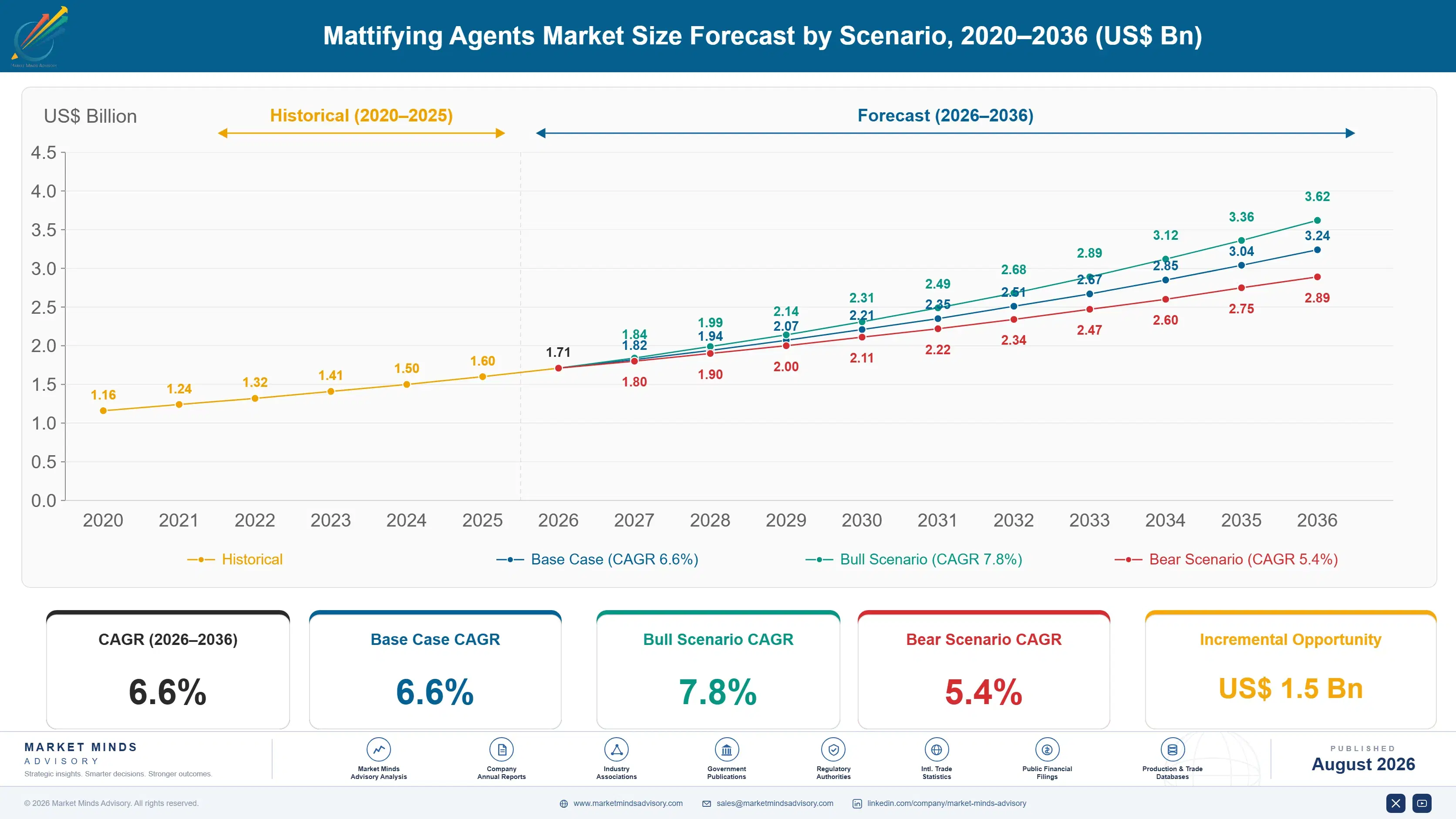
Mattifying Agents Market Forecast Scenarios

mattifying-agents-market-size-forecast-scenario-1788175872920
Between 2020 and 2025 the sector compounded at 5.6%, and almost none of that came from new demand. Formulators were reformulating rather than growing, replacing restricted polymer chemistry with blends of silica, starch and cellulose that cost more per kilogram and deliver less per material. Volume in tonnes moved very little while value rose on mix alone, which is worth understanding.
The 6.6% base case rests on three mechanisms. European microplastic restriction deadlines keep forcing reformulation on a published timetable that nobody can defer, and every replacement blend uses more material than the single ingredient it displaced. Asian humidity keeps shine control a functional requirement rather than a discretionary one. And measurable gloss and sebum testing lets a supplier substantiate a claim in a way most cosmetic ingredients cannot. None of the three depends on colour cosmetics volume growing.
The bull case at 7.8% turns on a biodegradable microsphere reaching genuine optical parity with the restricted polymer, which would let formulators return to a single ingredient. The bear case at 5.4% is restriction contagion: microplastic rules spreading beyond Europe on similar timetables would remove the chemistry family worldwide before any replacement is properly ready for it.

One Ingredient Doing Two Jobs

The restricted material did two things at once and that is what makes replacing it hard. Polymethyl methacrylate microspheres are perfectly spherical and closely sized, which gives sebum absorption and optical light diffusion from a single addition. Silica absorbs harder but feels dry and can destabilise an emulsion. Starch absorbs well and swells in humidity. Cellulose beads come closest and cost several times more than it did.
TOP FIVE CONCENTRATION44%Share held by the five largest mattifying agent suppliers
AVERAGE SELLING PRICEUSD 21.40Mean price per kilogram across the main chemistry families
RESTRICTED CHEMISTRY SHARE27%Portion of volume facing European microplastic restriction deadlines
SEBUM ABSORPTION CAPACITY2.8 ml/gOil uptake measured per gram under standard laboratory method
GLOSS REDUCTION ACHIEVED34%Typical measured shine reduction against an untreated control formulation
REFORMULATION BLEND COUNT3.4Average number of materials now replacing one restricted ingredient
The commercial consequence shows up in the blend count. A formulator replacing one restricted ingredient now uses an average of 3.4 materials to reach a comparable result, which raises raw material cost, complicates the manufacturing process and adds three more supply relationships. Total tonnage into the category rises even where finished cosmetic volume does not, which is why value has grown while units have barely moved.
This category has something most cosmetic ingredients lack, which is an instrument. Sebum absorption is measured as oil uptake per gram under a standard laboratory method, and gloss reduction is measured on a glossmeter against an untreated control. A supplier can therefore substantiate a performance claim numerically rather than descriptively. Remarkably few of them lead with the number when they actually sell it.
"Everybody in this business talks about sensory feel and nobody opens with the oil uptake figure, which is the one thing a formulator can put in a specification. The suppliers who lead with the number are winning trials against materials that perform better."
Director, Specialty Cosmetic Ingredients Practice · MMA Chemicals and Materials Practice · August 2026

Market Trends

Microplastic restriction removes the best performing chemistry

European restriction of intentionally added synthetic polymer microparticles reaches leave-on cosmetics on staged deadlines running well into the next decade, and mattifying agents are overwhelmingly leave-on products. Polymethyl methacrylate and nylon microspheres, which deliver sebum absorption and optical diffusion from one addition, sit squarely inside scope. Around 27% of category volume faces those deadlines. The unusual feature is that the timetable is published years ahead, which means every formulator knows exactly when the reformulation has to be finished and almost none of them have actually finished doing it just yet.
Market Impact: Drives 30% East Asian demand
Replacement blends use more material per formulation

No available material replaces a restricted polymer microsphere one for one, so formulators combine an absorbent silica for oil uptake, a starch or cellulose for feel and a platelet material for optical diffusion, at an average of 3.4 materials where one previously sufficed. The commercial effect is unusual: total tonnage supplied into the category rises even when finished cosmetic volume is flat, because every reformulated product carries more ingredient than the one it replaced. Suppliers with breadth across several chemistry families capture considerably more of that shift than any specialist does.
Market Impact: Measures 2.8 ml/g oil uptake

Market Opportunities and Growth Drivers

Humidity makes shine control a functional requirement

Across South and Southeast Asia and southern China, sebum production and perspiration make visible shine a daily practical problem rather than an aesthetic preference, and long-wear expectations follow from it. That produces mattifying agent demand at loadings and frequencies Western formulations rarely reach, in colour cosmetics, skincare and sun care alike. East Asia takes 30% of world demand and South Asia grows at 8.8%, the fastest of any region covered. Western suppliers pitching sensory elegance into those markets are answering a question about comfort that nobody in those markets is actually asking.
Market Impact: Replaces 1 material with 3.4

Measurable performance lets suppliers substantiate a claim

Oil uptake measured per gram and gloss reduction measured on a glossmeter give this category something almost no cosmetic ingredient family possesses, which is a number a formulator can write into a specification and a brand can defend to a regulator. Typical materials deliver around 2.8 millilitres of oil uptake per gram and 34% measured gloss reduction against an untreated control. Suppliers publishing those figures win formulation trials against materials that perform slightly better and say so less clearly. Very few of them lead with it in a sales conversation.
Market Impact: Extends development by 4 months

Market Restraints and Challenges

No replacement matches the restricted polymer alone

Polymethyl methacrylate microspheres are perfectly spherical, closely sized and inert, which is why one addition delivered sebum absorption, optical soft focus and a smooth application feel together. Every available replacement gets part of the way: silica absorbs aggressively but can feel dry and destabilise emulsions, starches swell in humid conditions and carry microbial risk, and cellulose beads approach the sphericity at several times the cost. The root cause is geometry rather than chemistry. Participants are responding with multi-material blends, biodegradable microsphere development, surface treatment programmes and formulation support teams that most suppliers never previously needed.
Market Impact: Restricts 27% of category volume

Starch replacements carry a preservation problem

Tapioca, rice and corn starches absorb sebum well and feel considerably better than silica, which is why they appear in most replacement blends, and they also introduce a nutrient source into a formulation that a preservative system then has to manage. The root cause is that starch is food, and microbial challenge testing treats it accordingly. Commercial impact is longer development cycles and occasional batch failures at scale. Mitigation runs through pregelatinised and crosslinked grades, hydrophobic surface treatment, tighter microbial specification on incoming material and preservative systems designed around the starch rather than added afterwards.
Market Impact: Uses 3.4 materials per replacement
3 additional market trends, 4 additional growth drivers, and 2 additional restraints and challenges are covered in the full report. Contact sales@marketmindsadvisory.com to access the complete intelligence.

Segment CAGR and Growth Architecture

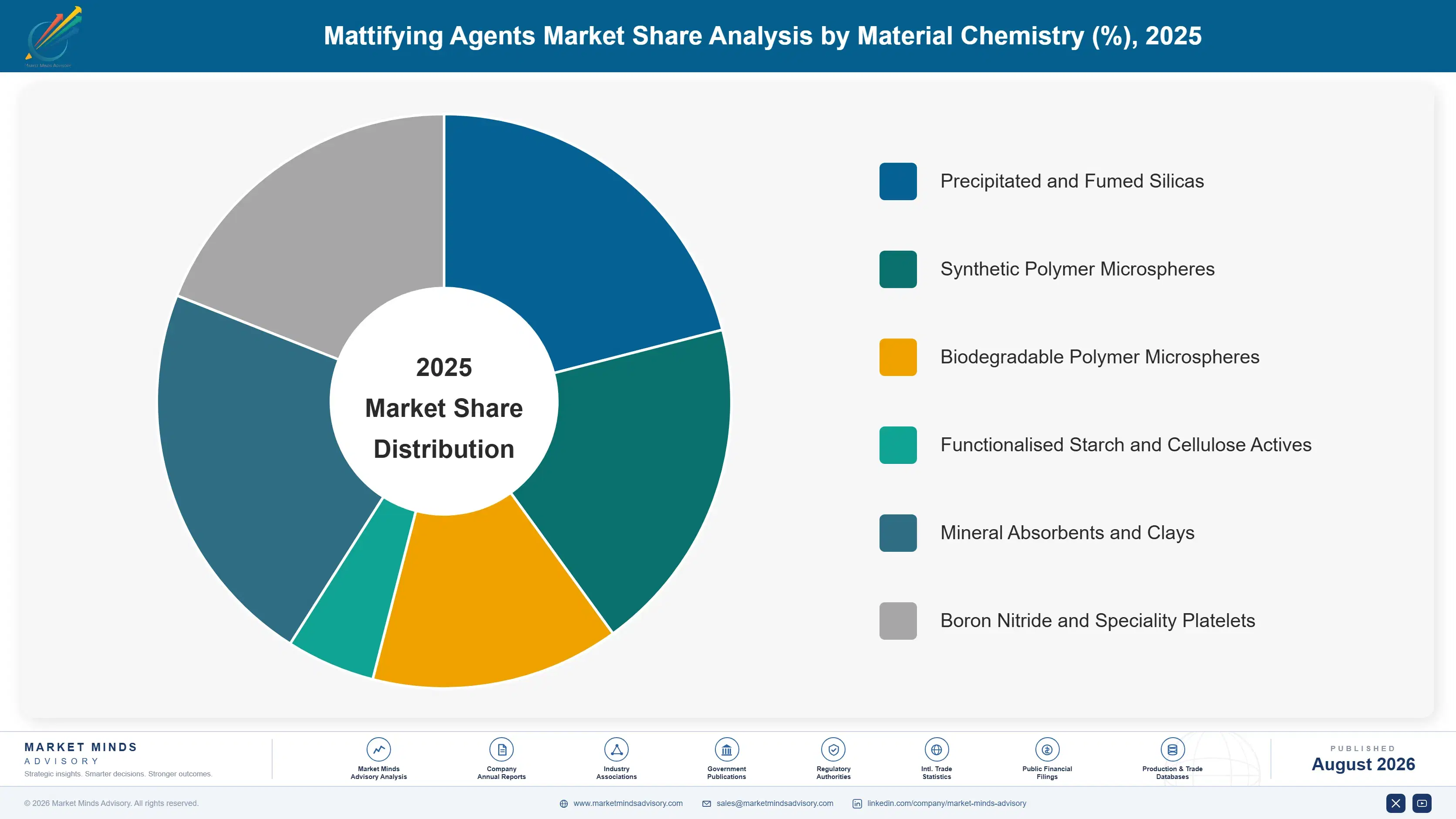
Segmentation follows material chemistry, the dimension on which regulatory status, performance mechanism and price all operate together. Silicas and mineral absorbents carry the volume at commodity prices. Biodegradable microspheres and functionalised starches carry the growth, because both answer a restriction that has a published date attached to it rather than a marketing argument behind it.
mattifying-agents-market-market-share-analysis-1788175873457

Biodegradable Polymer Microspheres

Biodegradable polymer microspheres grow at 9.9%, half again the market rate of 6.6%, and they are the only replacement family that keeps the geometry the optical effect actually depends on. Sphericity and narrow size distribution are what produce light diffusion, and a jagged mineral particle cannot reproduce it however well it absorbs. Materials based on polyhydroxyalkanoate, polylactic acid and crosslinked polysaccharide chemistries are reaching commercial supply at prices well above the restricted polymer they replace. The constraint is production scale rather than chemistry, and the suppliers who invested early are already selling forward against deadlines that have not arrived yet. That is an unusually comfortable position to be holding in a specialty ingredient business.
CAGR 9.9%

Functionalised Starch and Cellulose Actives

Functionalised starch and cellulose actives at 8.4% do the part of the job that silica does badly, which is feel. A blend carrying only absorbent silica applies dry and drags, and consumers reject it long before any laboratory measurement gets involved, so almost every replacement formulation carries a starch or cellulose alongside. Pregelatinised, crosslinked and hydrophobically treated grades address the swelling and preservation problems that raw starch introduces, at a cost the reformulation absorbs because there is no alternative. Supply sits with agricultural processors rather than with cosmetic chemical houses, which is an unfamiliar relationship for most buyers in this category. Several have discovered that harvest variability now reaches directly into their formulation.
CAGR 8.4%
Full segment breakdown across 6 segments available in the complete report.

Regional Architecture and Country Demand Map

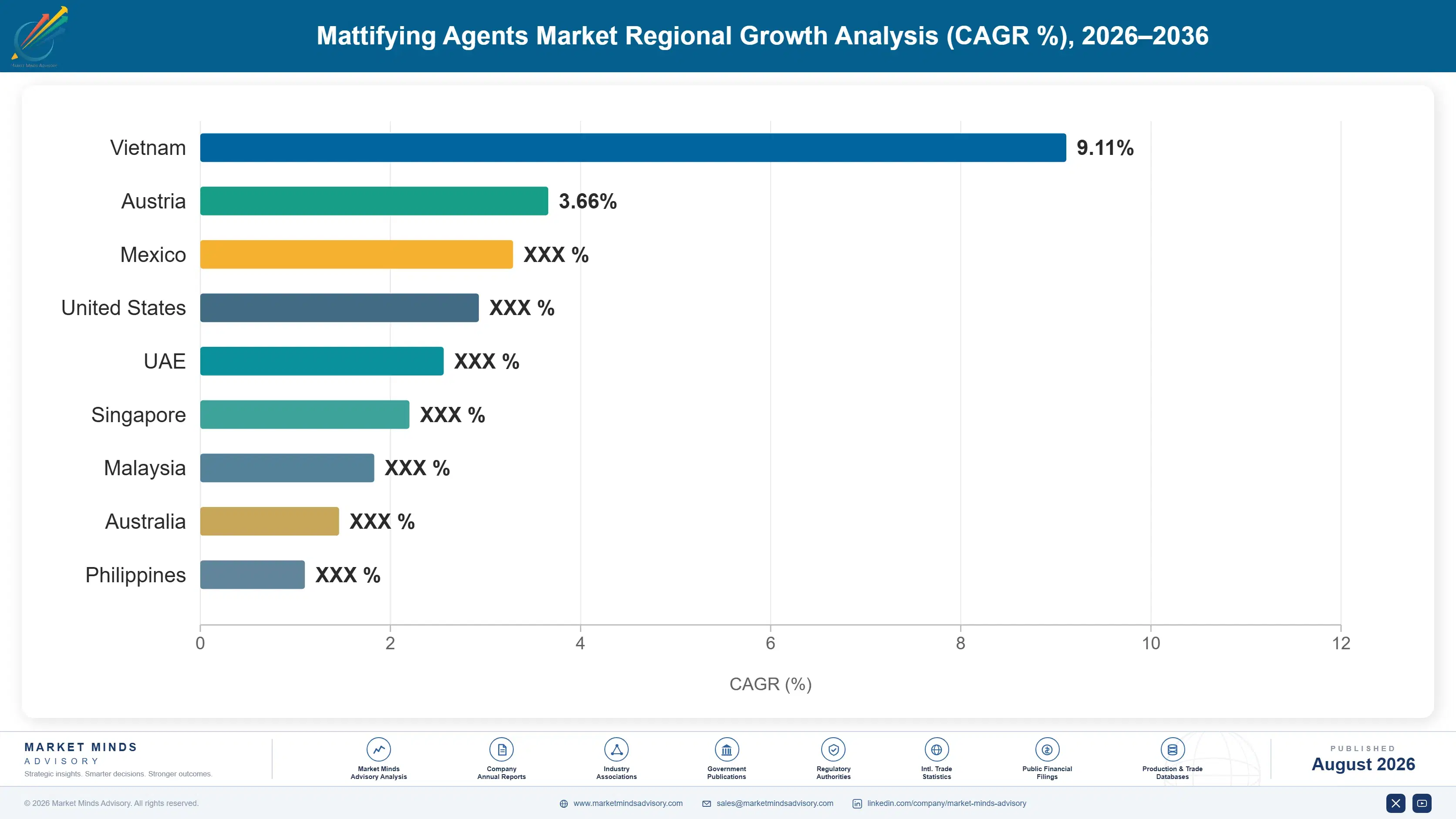
East Asia takes 30% of demand because humidity makes shine control functional rather than aesthetic, and the formulation houses sit there too. Western Europe carries the regulatory deadline that is reshaping the whole category. South Asia grows fastest of the seven regions by some way.

East Asia

Climate and formulation capability sit together here, which is why the region leads on consumption rather than merely on manufacturing. Humidity across southern China, Japan and Korea makes visible shine a daily practical problem, and long-wear expectations in colour cosmetics follow directly from it, so loadings run higher than Western formulations use. Korean and Japanese formulation houses set the product release calendar that Western brands follow six to nine months behind, and they specify mattifying systems accordingly. The contract manufacturing base for finished cosmetics is concentrated in the same countries. A supplier without a technical presence in Seoul or Tokyo is arguing about materials after the specification has already been written by somebody else.
Share: 30% | CAGR: 7.6% (2026 to 2036)

North America

Demand here is aesthetic rather than climatic, which changes both the loading and the argument. American formulations use mattifying agents at lower levels and position them around a matte finish preference rather than around sebum control, so the performance requirement is looser and the sensory requirement is tighter. No federal microplastic restriction matches the European timetable, which means restricted chemistry remains legal here while a global brand reformulates anyway to hold one specification worldwide. That produces the odd situation of a market reformulating on somebody else's deadline. Suppliers who assumed American demand would hold restricted material longer have been wrong about it. Global specification discipline moved faster than anybody in the industry expected it to.
Share: 24% | CAGR: 6.0% (2026 to 2036)
Regional intelligence for 5 additional markets available in the complete report: Western Europe, South Asia and Pacific, Latin America, Middle East and Africa, Eastern Europe. Contact sales@marketmindsadvisory.com.
mattifying-agents-market-country-cagr-analysis-1788175873975

Four Moves Before The Deadline

None of these four requires a better particle, which is fortunate, because the best particle is the one being restricted and nothing matches it. Each works with what the restriction actually created: more materials per formulation, a formulator who needs help rather than a datasheet, and a published deadline that everybody in the industry can see coming.

Sell the blend, not the material

A formulator replacing one restricted ingredient now assembles an average of 3.4 materials, usually from three different suppliers, and manages the interactions between them without much help. A supplier offering a validated blend with published oil uptake and gloss data removes that work entirely, and it captures the whole replacement rather than a third of it. The cost is a formulation support function rather than any new chemistry. Suppliers with breadth across silica, starch and platelet chemistries can do it today and almost none of them are actually doing it.
Market Impact: Captures all 3.4 materials instead of just one

Publish the oil uptake and gloss numbers

This category has a standard laboratory method for oil uptake and a glossmeter for shine reduction, which gives it something almost no cosmetic ingredient family has: a number a formulator can write into a specification and a brand can defend later. Typical performance sits around 2.8 millilitres per gram and 34% gloss reduction. Suppliers publishing measured figures win formulation trials against materials that perform marginally better and describe themselves in adjectives. The testing costs very little and remarkably few participants lead with the result of it in any sales meeting.
Market Impact: Substantiates a 34% measured gloss reduction claim properly

Contract starch supply before the blends need it

Almost every replacement blend carries a starch or cellulose for feel, which puts a cosmetic ingredient supplier into an agricultural supply chain it has never bought from before. Tapioca, rice, corn and cassava supply moves on harvest and on export policy rather than on chemical industry cycles, and functionalised cosmetic grades come from a narrow set of processors. Multi-season agreements cost roughly 8% over spot and secure the specification consistency a cosmetic formulation actually requires. Very few participants have signed one, and every deadline is still ahead of them. That will not stay true.
Market Impact: Secures 3 full seasons of specified starch supply

Scale biodegradable microspheres against a known date

Biodegradable microspheres are the only replacement that keeps the sphericity the optical effect depends on, and they grow at 9.9% against a market rate of 6.6% while production capacity remains the binding constraint. The unusual feature of this restriction is that its dates are published years ahead, so demand is forecastable in a way it almost never is for a specialty ingredient. A supplier building capacity now is selling forward against deadlines that have not yet arrived. The ones who waited will be quoting into a shortage they could all see coming.
Market Impact: Builds capacity ahead of a 9.9% growth segment

Who Controls the Margin Pool

CR5 stands at 44%, measured on volume supplied in tonnes, since almost no participant reports mattifying agents separately from wider specialty ingredient revenue. That is high for a cosmetic ingredient category and it reflects a formulator's unwillingness to risk a stability failure on an unproven supplier. The gap between the chemistry majors and the specialist powder houses is narrower on performance than it looks from outside.
Competition runs on regulatory documentation, formulation support and chemistry breadth. Documentation decides which materials a formulator will even evaluate now, because the question is what stays legal rather than what performs. Formulation support decides who captures the whole replacement blend instead of one component of it. Breadth decides whether a supplier can offer that blend at all. Price matters at the mineral end and nowhere else.

Rankings will move on capacity built against a published date. Biodegradable microsphere supply is constrained by production scale rather than by chemistry, and the restriction timetable makes the demand unusually forecastable for a specialty ingredient. Suppliers who committed capital early are selling forward. The pressure comes from a regulator rather than from a competitor, which rewards planning departments over commercial ones. That is not how this industry works.
mattifying-agents-market-company-positioning-matrix-1788175874503

Competitive Moat and Risk Dimensions

EVONIK INDUSTRIES

Moat: Silica chemistry and regulatory depth

Decades of silica and specialty powder chemistry give the group performance data across a breadth of materials that no specialist matches, and the regulatory function serving its wider chemical businesses supplies the documentation formulators now demand first. That combination answers both questions a customer asks. Building either capability alone takes years, and building both takes considerably longer than that.
EVONIK INDUSTRIES

Risk: European cost base under pressure

Silica production is energy intensive and a European manufacturing base carries a cost position that Asian and American producers do not, which matters most in the commodity tier that funds the technical relationships above it. Losing tonnage there erodes the access that makes the premium business possible. Defending it on price against cheaper energy is not a contest anybody wins.
SUNJIN BEAUTY SCIENCE

Moat: Proximity to Korean formulators

Sitting inside the formulation cluster that sets this category's product release calendar means the group is in the specification conversation before a Western competitor knows a brief exists, and Korean development cycles run short enough that presence beats performance data. Surface treatment capability adds a technical position on top. Distance from that cluster cannot be closed with a sales office.
SUNJIN BEAUTY SCIENCE

Risk: Regulatory documentation depth limited

European restriction compliance is now the first filter a global brand applies, and the documentation burden favours suppliers whose regulatory functions were built for chemical rather than cosmetic markets. Serving global brands means meeting European standards regardless of where the material is used. Building that function is unglamorous work that a formulation-led business tends to underfund.

Players Tracked

Prominent Players

Evonik Industries
W R Grace
Imerys
Sunjin Beauty Science
Kobo Products

Other Key Players

Croda International
Sensient Technologies
Daito Kasei Kogyo
Miyoshi Kasei
AGC Si-Tech
Ikeda Corporation
Roquette Freres
Cargill
Agrana Beteiligungs
Micro Powders
Nouryon
Syensqo
Momentive Performance Materials
Lessonia
Eckart

Recent Developments

JANUARY 2025

European restriction guidance clarified leave-on cosmetic deadlines

European guidance clarified how staged microplastic restriction deadlines apply to leave-on cosmetic categories, confirming that mattifying microspheres fall squarely inside scope. Formulators who had assumed a later date or an exemption brought reformulation programmes forward, and demand for compliant replacement chemistry rose sharply within a single quarter.
Signal: Clarity about a deadline moves a market considerably faster than the deadline itself has ever done.
MAY 2025

Evonik expanded biodegradable microsphere production capacity

Evonik Industries brought additional biodegradable microsphere production capacity into operation, an organic capacity expansion rather than any acquisition or joint venture. The investment targets the restriction replacement demand that arrives on published dates, and the group confirmed a substantial share of first year output was already committed under forward agreements.
Signal: Forward commitment on a product nobody legally needs yet tells you how the timetable is read.
SEPTEMBER 2025

Starch processors qualified cosmetic grades for replacement blends

Several agricultural starch processors completed cosmetic grade qualification for tapioca and rice derived mattifying actives, adding hydrophobic surface treatment and tighter microbial specification. Cosmetic ingredient buyers found themselves negotiating multi-season agricultural agreements, which is a supply relationship this industry has almost no experience of handling.
Signal: A cosmetic ingredient category has quietly acquired harvest risk it does not know how to manage.

Silica, Starch And Harvest Risk

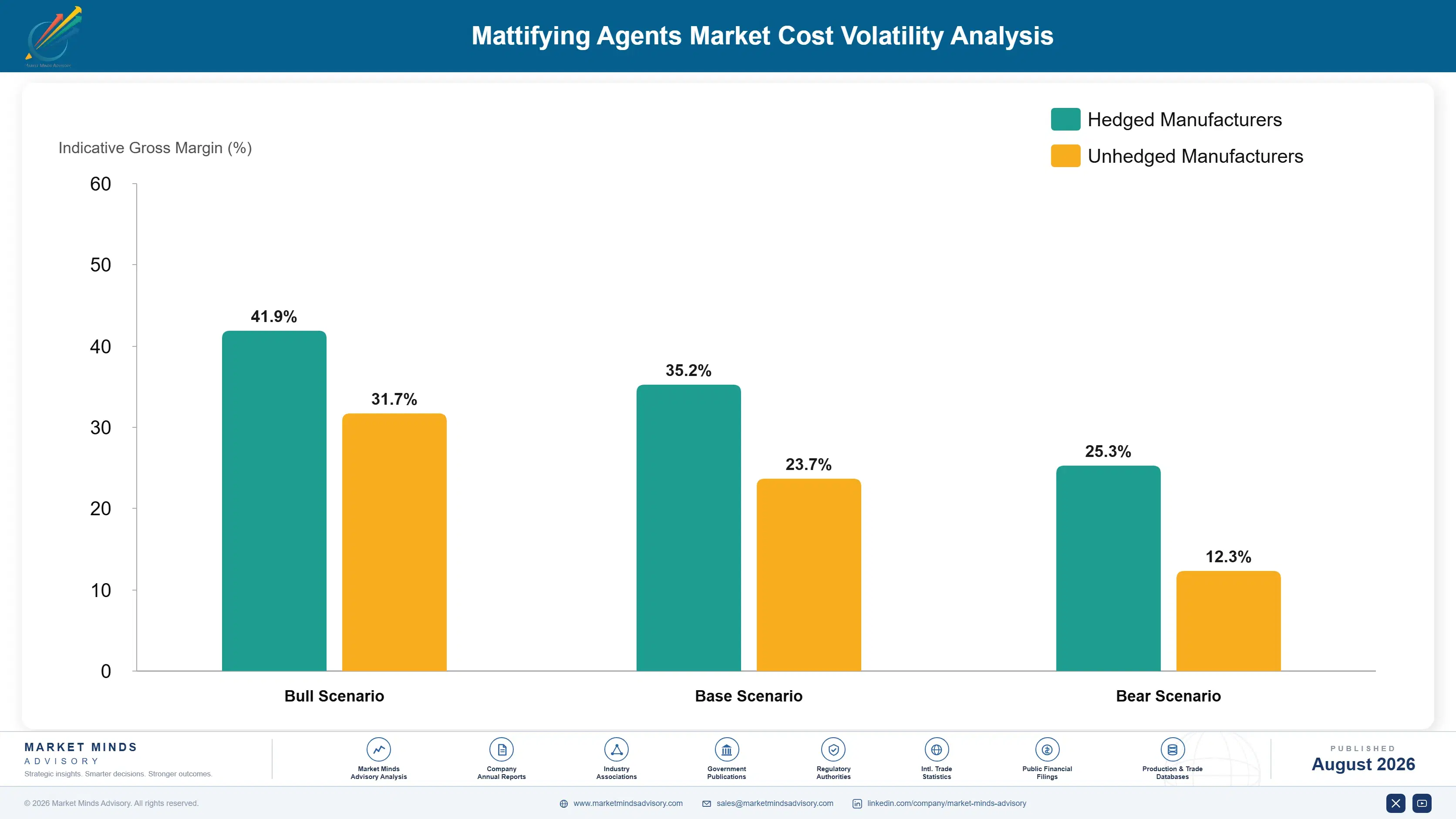
Precipitated and fumed silica account for roughly 33% of the value supplied into this category, polymer and biodegradable microspheres a further 24%, and starch and cellulose actives around 18%. Silica comes from a small number of chemical producers in Europe, North America and East Asia. Starch and cellulose come from agricultural processors, which is an entirely different supply chain with different risks.
Energy pricing gave the silica half of this category its clearest lesson. Precipitated and fumed silica production is energy intensive, European producers absorbed severe cost increases through 2022, and the International Energy Agency documented the scale of European industrial gas price movement across that period. Formulators holding annual contracts came through it with specifications intact. Spot buyers absorbed the whole move and several reformulated toward mineral absorbents they had previously rejected on performance grounds.

The disadvantage now falls on whoever has not entered the agricultural supply chain. Starch and cellulose grades move on harvest, weather and export policy rather than on petrochemical cycles, and a cosmetic ingredient buyer accustomed to chemical supply has no experience of any of them. Suppliers with multi-season grower agreements price steadily; the rest quote whatever the processor says that particular week.
mattifying-agents-market-cost-volatility-analysis-1788175874700

Contract silica supply on annual volume terms

Silica is a third of the value in this category and its production is energy intensive, which is why European grades moved so far through the last energy cycle. Annual contracts with a producer cost a premium over spot in a soft market and remove the largest uncontrolled line in a business that quotes formulators on long timelines.

Sign multi-season agreements with starch processors

Functionalised cosmetic-grade starch comes from a narrow set of processors and the crop moves on harvest and export policy rather than on chemical cycles. Multi-season agreements secure volume and the specification consistency a cosmetic formulation needs, at a premium over spot that is modest against a failed batch. Most cosmetic ingredient buyers have never negotiated an agricultural contract.

Build biodegradable microsphere capacity against published dates

Restriction deadlines are published years ahead, which makes demand for compliant microspheres forecastable in a way specialty ingredient demand almost never is. Capacity rather than chemistry is the constraint, and it takes longer to build than the remaining time allows for anybody starting late. Suppliers who committed early are selling forward against dates that have not yet arrived.

Portfolio Architecture for Margin Defence

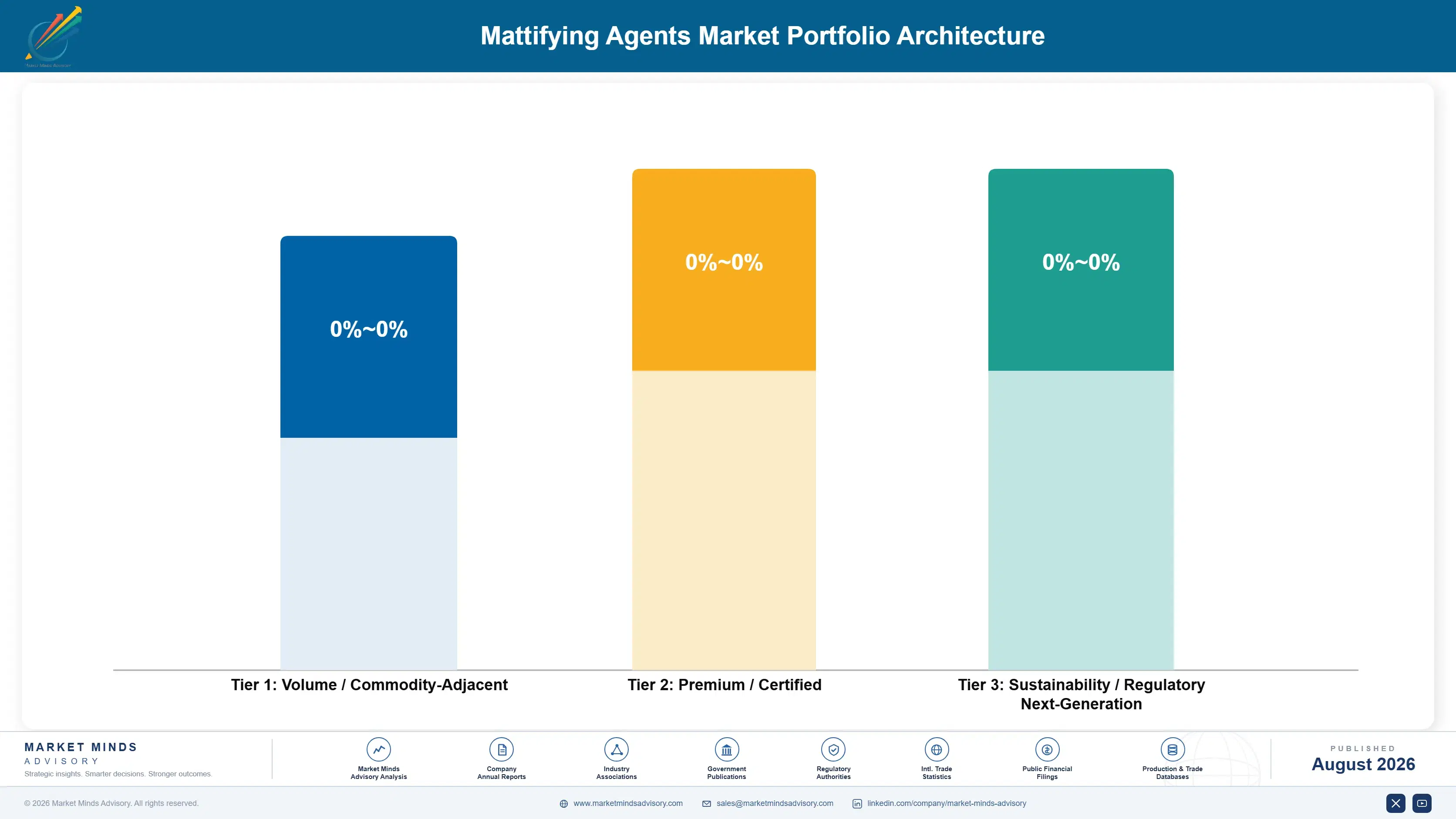
Margin here follows regulatory position rather than performance, which is a recent and uncomfortable development. A restricted polymer microsphere still outperforms everything replacing it and its price is falling toward disposal levels, while a compliant biodegradable equivalent commands a multiple on inferior performance. Suppliers costing on what stays legal rather than on what works run a completely different portfolio from those still selling on data sheets.
Volume and premium pull against each other through the blend rather than the market. Mineral absorbents and commodity silica carry the tonnage that makes a supply relationship worth holding and a technical team worth funding, and that relationship is what gets a supplier into the reformulation conversation. Dropping the volume tier saves margin and removes the access. Running only volume leaves the reformulation to somebody else.

High-value pools sit in biodegradable microspheres, in validated blends and in formulation support sold as a service. The third is barely recognised: a supplier with a technical team that can solve a reformulation earns access to every material in the blend rather than one, and that access is worth considerably more than the margin on any single component. Very few suppliers price the service at all.

Volume / Commodity-Adjacent

Talc, kaolin, perlite and commodity precipitated silica supplied on tonnage terms into accessible colour cosmetics and skincare. Competes on landed price against near-identical material from several producers. The 9 point spread reflects whether the supplier mines and processes or buys and distributes.
Gross Margin: 22 to 31%

Premium / Certified

Engineered silicas, surface-treated powders and functionalised starches supplied with documented performance data and regulatory files. Documentation and formulation support rather than raw performance decide the sale. The 9 point spread reflects whether the material is manufactured internally or toll processed.
Gross Margin: 38 to 47%

Sustainability / Regulatory / Next-Generation

Biodegradable microspheres, validated replacement blends and formulation support sold as a chargeable service. Margins are high because compliant capacity is scarce and the deadline is fixed. The 14 point spread separates material supply from blend development and technical service work.
Gross Margin: 44 to 58%
mattifying-agents-market-portfolio-architecture-1788175875206

High-value Sub-segments and Strategic Watch-out

Biodegradable Polymer Microspheres

High value and high growth at 9.9%. The only replacement family that keeps the sphericity the optical effect depends on, against a restriction timetable that makes demand genuinely forecastable. The 8 point spread reflects whether production capacity is owned or contracted from a toll processor.
Gross Margin: 48 to 56%

Functionalised Starch and Cellulose Actives

High value with strong growth at 8.4%. It does the sensory half of the job that silica does badly, so nearly every replacement blend carries one. The 8 point spread reflects whether the supplier holds grower agreements or buys processed material on the spot market.
Gross Margin: 40 to 48%

Precipitated and Fumed Silicas

The volume core. It earns modestly and it carries the tonnage that funds the technical team and keeps a supplier inside the reformulation conversation. The 9 point spread reflects energy exposure, which varies enormously between producing regions and between individual production plants. Nobody escapes that.
Gross Margin: 24 to 33%

Restricted Synthetic Microspheres

The strategic watch-out. European restriction removes this chemistry from leave-on cosmetics on published dates, and every global brand is reformulating to one worldwide specification rather than maintaining regional ones. The 30 point spread reflects how much still ships into markets with no equivalent restriction yet.
Gross Margin: 14 to 44%

How A Formulator Chooses

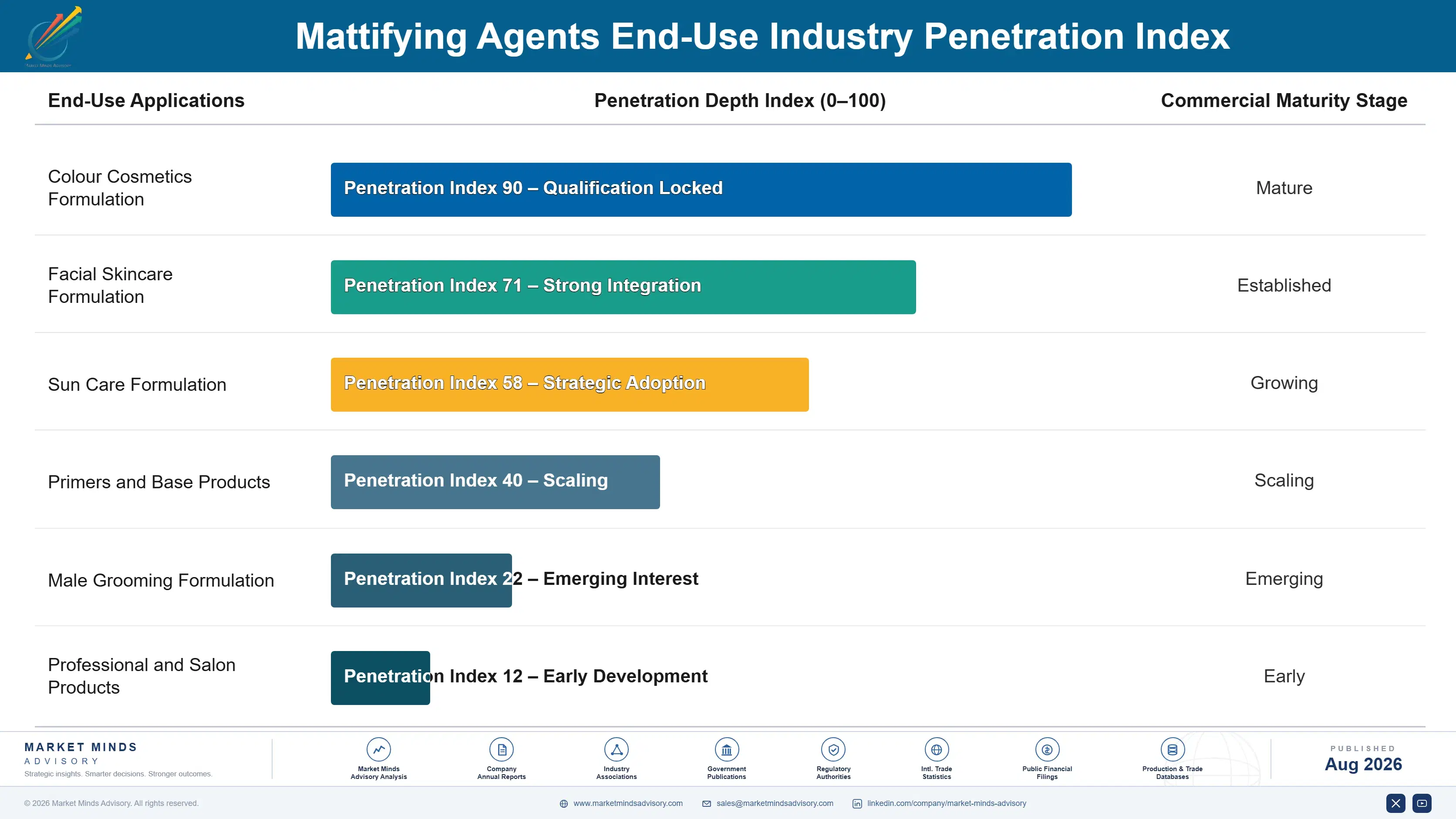
The annuity here is unusually strong because switching costs sit in stability testing rather than in price. Once a material is written into a formulation that has passed challenge testing, stability trials and a claims review, replacing it means repeating all three, and no formulator does that for a small price advantage. A specified ingredient stays specified for the whole commercial life of the product.
That same stickiness is why a restriction is so disruptive and so commercially valuable at once. A deadline forces every affected formulation open again, which is the only circumstance in which a supplier can displace an incumbent material without competing on price. The reformulation window is the entire commercial opportunity in this category, and it closes when the deadline passes rather than when the selling stops.

Buyer profiles have shifted from chemist toward regulatory affairs and almost no supplier has repositioned for it. The formulator still runs the trial, but the material list is now filtered before it reaches the bench by somebody asking what remains legal in 2035. A supplier selling performance to a chemist is presenting to the second decision-maker rather than the first, which is an expensive place to be.
mattifying-agents-market-end-use-penetration-index-1788175875694

What The Deadline Actually Creates

These are among the four positions where our research anticipates prominent divergence between winners and laggards over the coming forecast period. Each is grounded in the demand model, the regulatory perimeter, and the announced capacity pipeline.
01 / BLEND LEVEL SELLING

Sell the whole replacement, not one component

A formulator replacing one restricted ingredient now assembles an average of 3.4 materials, usually from three separate suppliers, and manages the interactions between them with very little technical help from any of them. A supplier offering a validated blend with published oil uptake and gloss data removes that work entirely and captures the whole replacement instead of a third of it. The cost is a formulation support function rather than any new chemistry, and almost nobody has actually built one yet.
02 / MEASURED CLAIM PUBLICATION

Lead with the number the instrument gives you

This category has a standard laboratory method for oil uptake and a glossmeter for shine reduction, which gives it something almost no cosmetic ingredient family possesses: a figure a formulator can write into a specification and a brand can defend to a regulator afterwards. Typical performance sits near 2.8 millilitres per gram and 34% measured gloss reduction. Suppliers publishing those numbers win trials against materials that perform marginally better and describe themselves entirely in adjectives instead of in any numbers.
03 / AGRICULTURAL SUPPLY ENTRY

Contract the starch before the blends need it

Almost every replacement blend carries a starch or cellulose for the sensory half of the job, which puts a cosmetic ingredient supplier into an agricultural supply chain it has never bought from and does not understand. Tapioca, rice, corn and cassava move on harvest and export policy rather than on petrochemical cycles, and functionalised cosmetic grades come from a narrow set of processors. Multi-season agreements secure the specification consistency a formulation needs, and very few participants have yet signed a single one.
04 / FORECASTABLE CAPACITY INVESTMENT

Build against a date everybody can already read

Biodegradable microspheres are the only replacement keeping the sphericity the optical effect depends on, they grow at 9.9% against a market rate of 6.6%, and production capacity rather than chemistry is what constrains supply of them today. The unusual feature of this restriction is that its dates are published years ahead, which makes demand forecastable in a way specialty ingredient demand almost never is. Suppliers who committed capital early are already selling forward against deadlines that nobody has actually reached yet.

Engagement Snapshot From the Field

A live engagement with an industry participant carrying material or product regulatory and market exposure ahead of a defining policy shift, showing how our research translates into a defensible multi-year portfolio strategy.
MARKET MINDS ADVISORY · CLIENT ENGAGEMENT SUMMARY
Mattifying Agents Producer Strategic Portfolio Review and Transition Roadmap 2026·Investment Scenario on Mattifying Agents Exposure Evaluation 2025-26
CLIENT PROFILE
A European specialty ingredient supplier with silica and surface-treated powder ranges sold to cosmetic formulators across twenty-six countries, with annual mattifying agent revenue in the low hundreds of millions of euros (client-reported, unverified by MMA). A substantial share of that revenue came from synthetic polymer microspheres facing European restriction deadlines. No compliant replacement existed anywhere in the range at the time.
STRATEGIC CHALLENGE
Restriction deadlines would remove a substantial revenue line on published dates, and customers had begun asking what the replacement would be before the business had one. Management wanted to know whether to buy a compliant technology, build capacity internally, or accept the decline and redeploy toward the silica and mineral ranges instead of any of that.
MMA APPROACH
MMA modelled affected revenue by customer and by deadline date across all twenty-six markets, then tested every candidate replacement chemistry against the client's own performance specifications. Forty-seven expert interviews with formulators, contract manufacturers, brand regulatory teams and microsphere producers established what customers would accept, what they would pay, and how much compliant capacity actually existed anywhere.
KEY FINDINGS
  1. Affected revenue was concentrated in eleven customers, all of them global brands already reformulating to a single worldwide specification rather than a regional one.
  2. No single replacement matched the restricted material, and the client's customers were assembling blends of 3 or 4 ingredients without any supplier help.
  3. Compliant microsphere capacity worldwide was already committed under forward agreements, meaning a buy-in strategy would arrive after the available supply had already gone.
  4. Every formulator interviewed said they would pay for a validated blend with published data, and none had ever been offered one by any supplier.
CLIENT PROFILE
A European specialty ingredient supplier with silica and surface-treated powder ranges sold to cosmetic formulators across twenty-six countries, with annual mattifying agent revenue in the low hundreds of millions of euros (client-reported, unverified by MMA). A substantial share of that revenue came from synthetic polymer microspheres facing European restriction deadlines. No compliant replacement existed anywhere in the range at the time.
STRATEGIC CHALLENGE
Restriction deadlines would remove a substantial revenue line on published dates, and customers had begun asking what the replacement would be before the business had one. Management wanted to know whether to buy a compliant technology, build capacity internally, or accept the decline and redeploy toward the silica and mineral ranges instead of any of that.
MMA APPROACH
MMA modelled affected revenue by customer and by deadline date across all twenty-six markets, then tested every candidate replacement chemistry against the client's own performance specifications. Forty-seven expert interviews with formulators, contract manufacturers, brand regulatory teams and microsphere producers established what customers would accept, what they would pay, and how much compliant capacity actually existed anywhere.
KEY FINDINGS
  1. Affected revenue was concentrated in eleven customers, all of them global brands already reformulating to a single worldwide specification rather than a regional one.
  2. No single replacement matched the restricted material, and the client's customers were assembling blends of 3 or 4 ingredients without any supplier help.
  3. Compliant microsphere capacity worldwide was already committed under forward agreements, meaning a buy-in strategy would arrive after the available supply had already gone.
  4. Every formulator interviewed said they would pay for a validated blend with published data, and none had ever been offered one by any supplier.
RECOMMENDED STRATEGY
Phase 1: Phase one: build a validated blend offer from existing silica, starch and platelet ranges, with published oil uptake and gloss data. Phase 2: Phase two: commit capital to biodegradable microsphere capacity immediately, since available third party supply was already committed under existing forward agreements elsewhere. Phase 3: Phase three: sign multi-season starch agreements with processors, since the blend offer would depend on specification consistency the spot market cannot give.
OUTCOME
Within five quarters the blend offer had converted seven of the eleven affected customers onto a fully compliant system, ahead of any deadline (client-reported, unverified by MMA). Microsphere capacity came online later than planned, and the forward commitments the business had signed by then covered most of the entire first production year already.

Frequently Asked Questions

Foundational context covering the market sizes, CAGR, scope, country, region and competition that inform every finding below. This section is provided to cover basics and most often pre-purchase conversations, answered from the MMA Primary Research Dataset.

What is the current size of the Mattifying Agents Market?

The global mattifying agents market was valued at USD 1.6 billion in 2025, covering ingredients supplied to cosmetic formulators for sebum absorption and gloss control. The 2026 figure reaches USD 1.71 billion.

How large will the Mattifying Agents Market be by 2036?

MMA forecasts USD 3.24 billion by 2036, an increase of USD 1.53 billion over the 2026 base. That represents an expansion multiple of 1.89 times across the forecast period.

What is the CAGR for the Mattifying Agents Market 2026 to 2036?

The base case compound annual growth rate is 6.6%, with a bull case at 7.8% and a bear case at 5.4%. Historical growth between 2020 and 2025 ran at 5.6%.

Which segment is growing fastest?

Biodegradable polymer microspheres grow at 9.9%, half again the market rate of 6.6%, because they keep the sphericity the optical effect depends on. Functionalised starches follow at 8.4%.

Who are the major companies in the Mattifying Agents Market?

Evonik Industries, W R Grace, Imerys, Sunjin Beauty Science and Kobo Products lead on volume supplied in tonnes, with combined CR5 of 44%. Concentration is high for a cosmetic ingredient category.

Which country is growing fastest?

India grows fastest at 8.8%, where humidity makes shine control a functional requirement and colour cosmetics penetration is rising quickly. South Asia and Pacific leads regionally at 8.8%.

Report Segmentation Architecture

The full report scope spans multiple orthogonal segmentation dimensions, with cross-tabulated demand data provided for each dimension pair. Coverage extends further to regional breakdowns, trend trajectories, and the competitive detail needed to support segment-level decision-making.

By Material Chemistry

  • Precipitated and Fumed Silicas
  • Synthetic Polymer Microspheres
  • Biodegradable Polymer Microspheres
  • Functionalised Starch and Cellulose Actives
  • Mineral Absorbents and Clays
  • Boron Nitride and Speciality Platelets

By End-Use Industry

  • Colour Cosmetics Formulation
  • Facial Skincare Formulation
  • Sun Care Formulation
  • Primers and Base Products
  • Male Grooming Formulation
  • Professional and Salon Products

By Commercial Dimension

  • Direct Supply to Brand Owners
  • Contract Manufacturer Supply
  • Regional Distributor Networks
  • Toll Processing Arrangements
  • Validated Blend Supply
  • Technical Service Contracts

By Region

  • North America
  • Western Europe
  • East Asia
  • South Asia and Pacific
  • Latin America
  • Middle East and Africa
  • Eastern Europe

Scope, Methodology, and Coverage

Every figure in this report is reproducible from documented input assumptions. The scope below maps the historical period, the forecast horizon, the segmentation dimensions, and the countries covered, alongside the underlying primary and qualitative methodology.
Historical Period
2020 to 2025
Forecast Period
2026 to 2036
Base Year
2025 (USD billions; MMA Primary Research Dataset, August 2026)
Market Definition
The mattifying agents market covers functional ingredients supplied to cosmetic and personal care formulators to absorb sebum, reduce surface gloss and diffuse light, spanning precipitated and fumed silicas, synthetic polymer microspheres, biodegradable polymer microspheres, functionalised starch and cellulose actives, mineral absorbents such as talc, kaolin and perlite, and boron nitride and speciality platelets. Scope is measured as ingredient supply into finished cosmetic manufacture. Excluded are finished mattifying cosmetics sold to consumers, blotting papers and mattifying accessories, pigments and colourants without an absorbency function, and industrial matting agents supplied into coatings.
Quantitative Units
USD billion, 2025 base year, 2026 to 2036 forecast period
Segmentation Dimensions
Material chemistry, end-use formulation, commercial channel, region
Regions Covered
North America, Western Europe, East Asia, South Asia and Pacific, Latin America, Middle East and Africa, Eastern Europe
Countries Covered
United States, Canada, Germany, France, United Kingdom, Italy, Spain, Poland, China, Japan, South Korea, India, Australia, Brazil, Mexico, Saudi Arabia, United Arab Emirates, South Africa
Key Companies Profiled
20 companies across chemistry majors, specialist powder houses and agricultural processors
Quantitative Methodology
Primary survey, n=3,800 respondents, Q4 2025, six countries; demand-side model with trade association cross-validation
Qualitative Methodology
47 expert interviews, Q4 2025; applied to validate demand model assumptions, identify emerging dynamics, and assess competitive positioning
Report Format
PDF and XLSX data workbook (Word format preview document)
Publisher
Market Minds Advisory
Report Code
MMA-2026-CHM-251
Published
August 2026
Contact
sales@marketmindsadvisory.com | www.marketmindsadvisory.com

Purchase the full Mattifying Agents Market Report (2026 to 2036).

The full MMA report on the mattifying agents market runs to detailed chemistry and regional models across the 2026 to 2036 forecast period, with cost benchmarks separated by material family and processing route. It profiles 20 companies on a consistent supplied tonnage basis, covering chemistry majors, specialist powder houses and the agricultural processors now entering the category. Restriction deadlines are mapped by product category alongside the replacement chemistries that satisfy them. Regional chapters cover the seven MMA regions with country-level detail on the eighteen markets surveyed. Primary research draws on a quantitative survey of 3,800 respondents across six countries and 47 expert interviews conducted in Q4 2025.
Cost benchmarks separated by material family and route
Restriction deadlines mapped by cosmetic product category
Measured oil uptake and gloss data across leading materials
Twenty company profiles on consistent supplied tonnage basis
Compliant microsphere capacity mapped against forecast demand
Seven regional chapters with eighteen country detail tables

Built For The People Who Decide

From boardroom strategy to bench-side execution, this report is read cover-to-cover by leaders shaping the next decade of their industry, turning demand scenarios, market dynamics and valuation benchmarks into decisions.
CXOs/ Presidents/ VPs/ Managers
M&A and Corporate Development
Strategy Teams and R&D Heads
Procurement and Product Directors
Regulatory and Compliance Leaders
Investor Relations and Equity Analysts