Market Minds Advisory
Malaysia Life Insurance Market

Malaysia Life Insurance Market: Family Takaful Growth Redefines Coverage Distribution

Malaysian life insurers face expanding family takaful demand colliding with rising bancassurance distribution costs, tightening capital adequacy regulation under Bank Negara Malaysia, and growing digital-first purchasing preferences among a young, mobile-first population.

Lead Analyst

Published

September 2026

Make Smarter Decisions with Customized Research Insights

Request a free sample report and evaluate market opportunities, growth trends, and competitive dynamics relevant to your business needs.

2025 MARKET VALUE$8.5BMarket Size 2025
2036 FORECAST VALUE$17.9BBase Case , 2026 to 2036
CAGR 2026 TO 20367.0 %Bull 8.2% / Bear 5.7%
INCREMENTAL OPPORTUNITY$8.8BNet 10- year value creation
EXPANSION MULTIPLE1.97x2036 value over 2026 base
Strategic Levers
M&A Pipeline
Regional Outlook
Country Rankings
Competitive Intelligence
Segmental Deep-dive
Call-Us : 91 93563 13602

Executive Snapshot and Market Trajectory

Insurers are launching family takaful products faster than conventional life insurance structures can match comparable enrollment growth, creating a widening product mix gap across insurers still weighted toward legacy conventional policy structures. Insurers unable to close this gap risk ceding enrollment to more agile takaful-focused rivals.
Family takaful and investment-linked life insurance are pulling category growth well ahead of conventional whole life and endowment products, as Malaysia's Muslim-majority population and rising middle class increasingly demand coverage structures that traditional conventional policies cannot efficiently provide. The South Asia and Pacific region commands the overwhelming share of this Malaysia-scoped report given its explicit national market definition, while other regions show comparative demand well below typical bands.
Competitive structure remains moderately concentrated among established insurers, with the top five holding a substantial combined share on a gross written premium basis, while a considerable number of specialized takaful operators compete for policy volume across mainstream individual and bancassurance segments. Tightening capital adequacy regulation under Bank Negara Malaysia is compounding compliance complexity, pushing insurers toward disciplined solvency management, risking ceded flagship accounts for slower moving rivals across mainstream distribution channels nationwide.
Market Definition
The Malaysia life insurance market covers commercial revenue generated by insurers and takaful operators underwriting conventional life, investment-linked, family takaful, group, and retirement coverage, measured through gross written premium and takaful contribution. It excludes general insurance revenue and excludes health insurance products not bundled with life coverage.
Base Year Value
$8.5B in 2025 (MMA Primary Research Dataset, August 2026)
Forecast Period
2026 to 2036, eleven discrete annual values
CAGR
7.0% base case. Bull 8.2%. Bear 5.7%.
Fastest Growth Segment
Family Takaful Products: 10.5% CAGR
Fastest Growth Country
Malaysia: 9.0% CAGR
Fastest Growth Region
South Asia and Pacific: 9.0% CAGR
Largest Region
South Asia and Pacific: 80% of 2025 global value
Market Leaders
Great Eastern Life Assurance (Malaysia) Berhad, AIA Bhd, Prudential Assurance Malaysia Berhad, Allianz Life Insurance Malaysia Berhad, and Etiqa Life Insurance Berhad. Source: MMA Analysis based on company annual reports.
Primary Survey
n=3,800 procurement and R&D decision-makers, Q4 2025, six countries
Methodology
Demand-side build-up, cross-validated against public data, 47 expert interviews

Malaysia Life Insurance Market Forecast Scenarios

malaysia-life-annuity-insurance-market-size-forecast-scenario-1787915165592
Between 2020 and 2025 the market grew at a historical pace of roughly 5.8 percent annually, as conventional whole life and endowment products provided steady baseline growth while family takaful and investment-linked product launches accelerated meaningfully only in the final two years of the period, once major insurers finalized expanded shariah-compliant investment infrastructure and digital distribution platforms.
The base case assumes growth near 7.0 percent annually through 2036, anchored in three commercial mechanisms: expanding family takaful adoption tied to Malaysia's Muslim-majority demographic base, growing investment-linked product demand tied to rising middle class wealth accumulation, and steady bancassurance distribution penetration as banks continue expanding cross-selling of life insurance products across both urban and regional consumer segments nationwide over the coming decade of forecast coverage. These mechanisms reinforce each other as takaful growth converges with digital distribution adoption.
A bull scenario builds on faster family takaful adoption requiring expanded shariah-compliant underwriting capacity across additional product categories, while a bear scenario centers on rising bancassurance distribution costs compressing underwriting margins faster than premium growth can offset the decline across smaller regional insurers lacking diversified distribution relationships. Insurers monitoring both trajectories are best positioned to reallocate capital as market conditions shift.

Family Takaful Growth Reshapes Distribution Economics

Three forces are converging on the category at once: insurers are launching family takaful products faster than conventional life insurance structures can match comparable enrollment growth, tightening capital adequacy regulation is raising solvency requirements across mainstream personal and bancassurance lines, and insurers are racing to expand digital distribution capability fast enough to meet accelerating direct-to-consumer demand simultaneously.
MARKET CONCENTRATIONCR5 55%top five insurers hold a substantial combined premium share
TAKAFUL MARKET PENETRATION36%share of premium volume placed in shariah-compliant products
LEADING DISTRIBUTION CHANNELBancassurancelargest single distribution channel by premium volume overall
AVERAGE CLAIMS LOSS RATIO62%typical share of premium paid out in life claims
AVERAGE POLICY PERSISTENCY RATE78%typical annual share of policyholders renewing each year
REINSURANCE COST SHARE13% of COGSreinsurance and retakaful inputs as portion of underwriting cost
Commercially the category increasingly behaves like a shariah-compliant asset management business layered on top of traditional actuarial underwriting operations, since an insurer's ability to win takaful market share now depends as much on shariah governance credibility and investment performance as on raw premium volume alone, a shift that is rewarding insurers with dedicated takaful capability over conventional protection-only specialists.
Over the next decade, insurers most likely to capture disproportionate value are those investing in takaful and digital distribution capability ahead of broader industry consolidation, since building this capability after competitors have already established it takes considerably longer than building it in from initial product design. Insurers that delay this investment risk losing flagship takaful accounts to competitors already embedded in shariah-compliant product pipelines. Insurers slow to build this capability risk permanent competitive disadvantage in the fastest-growing takaful segment.
"Life insurance in Malaysia used to mean a conventional policy sold through a bank teller. Now it means a shariah-compliant takaful plan chosen on a mobile app, and the insurers who solved that governance credibility problem first are the ones winning the fastest-growing segment of the market."
Director, Life Insurance and Takaful Practice · MMA Insurance / Life and Family Takaful Underwriting Services Practice · August 2026

Market Trends

Insurers Expanding Digital Family Takaful Distribution Platforms

Major Malaysian insurers have expanded digital family takaful distribution platforms considerably in the past two years, moving the category beyond agent-mediated sales into direct online shariah-compliant policy purchasing. This shift follows several years of accumulating evidence that digital distribution meaningfully increases takaful attachment rates among younger, digitally native Muslim consumers relative to conventional agent-based sales. Multiple insurers have expanded digital takaful platforms within the past two years, extending beyond basic policy purchase into broader investment allocation and shariah governance transparency tool categories as well. This engagement shift is reshaping how insurers design retention strategies for younger consumers.
Market Impact: Lifts takaful demand by 12%
Bank Negara Malaysia Tightening Capital Adequacy Requirements

Bank Negara Malaysia has tightened capital adequacy requirements considerably in the past two years, reflecting regulatory alignment with international risk-based capital frameworks following years of gradual convergence discussions across the life insurance and takaful sector. This shift requires enhanced risk-based capital modeling infrastructure that differs substantially from conventional statutory reserve calculations, concentrating early compliance among insurers with dedicated actuarial capital management capability. Several major insurers have expanded capital modeling capability within the past two years, extending compliance beyond conventional life into broader takaful reserve categories. This regulatory shift is compressing compliance timelines across nearly every major product line.
Market Impact: Adds 8% to bancassurance-driven demand

Market Opportunities and Growth Drivers

Expanding Muslim-Majority Population Demand for Shariah Coverage

Malaysia's Muslim-majority population continues expanding demand for shariah-compliant family takaful coverage substantially, directly increasing addressable demand for takaful operators as a critical protection component in next-generation Islamic financial planning designs. This shariah-compliant demand expansion is occurring across both established urban Muslim consumer segments and emerging regional communities, broadening the addressable customer base for takaful operators considerably beyond the historically concentrated set of religiously observant urban professionals that first drove early takaful adoption, pulling in new mainstream Muslim consumer segments each year. Insurers are responding by pre-booking underwriting capacity ahead of confirmed demand growth.
Market Impact: Compresses distribution margins by 8%

Growing Bancassurance Cross-Selling Distribution Reach Nationwide

Malaysian banks continue expanding bancassurance cross-selling capability substantially, directly increasing demand that sustains steady policy volume across both conventional and takaful applications nationwide. This bancassurance driver provides demand visibility that differs from purely agent-driven growth, giving insurers more predictable long-term volume planning than categories dependent entirely on independent agent distribution alone. Local regulators increasingly support this expansion through simplified bancassurance compliance frameworks nationwide. Several employer benefit consultants have expanded bancassurance disclosures to capture this growing consumer volume. This trend is accelerating across additional urban and regional segments nationwide today. Adoption continues broadening.
Market Impact: Limits rural market expansion by 7%

Market Restraints and Challenges

Rising Bancassurance Distribution Costs Compress Margins

Bancassurance distribution fee arrangements have risen considerably in recent years, compressing underwriting margins on products distributed through bank partnerships priced under earlier lower cost assumptions, a shift rooted in banks' growing negotiating leverage as bancassurance becomes an increasingly important fee income source for financial institutions that insurers cannot always offset through premium increases alone. The commercial impact is that insurers face compressed margins on bank-distributed products relative to earlier distribution agreements, pushing many toward direct digital distribution that better preserves margin. Several insurers are pursuing diversified distribution channel strategies as a mitigation path to reduce this cost exposure over time.
Market Impact: Lifts digital takaful demand by 14%

Limited Rural Insurance Penetration Constrains Growth

Life insurance and takaful penetration remains persistently limited across rural and East Malaysian markets despite growing national wealth, a complexity rooted in limited insurer branch presence and lower financial literacy that concentrate coverage among urban peninsular Malaysian consumers. The commercial impact is that insurers face a persistently underinsured population and elevated distribution costs relative to markets with stronger rural presence, slowing the pace at which insurers can expand total addressable coverage volume. Several insurers are pursuing rural digital distribution partnerships as a mitigation path to improve penetration over time. This gap disproportionately affects East Malaysian communities.
Market Impact: Adds 9% to compliance-driven demand
4 additional market trends, 3 additional growth drivers, and 3 additional restraints and challenges are covered in the full report. Contact sales@marketmindsadvisory.com to access the complete intelligence.

Segment CAGR and Growth Architecture

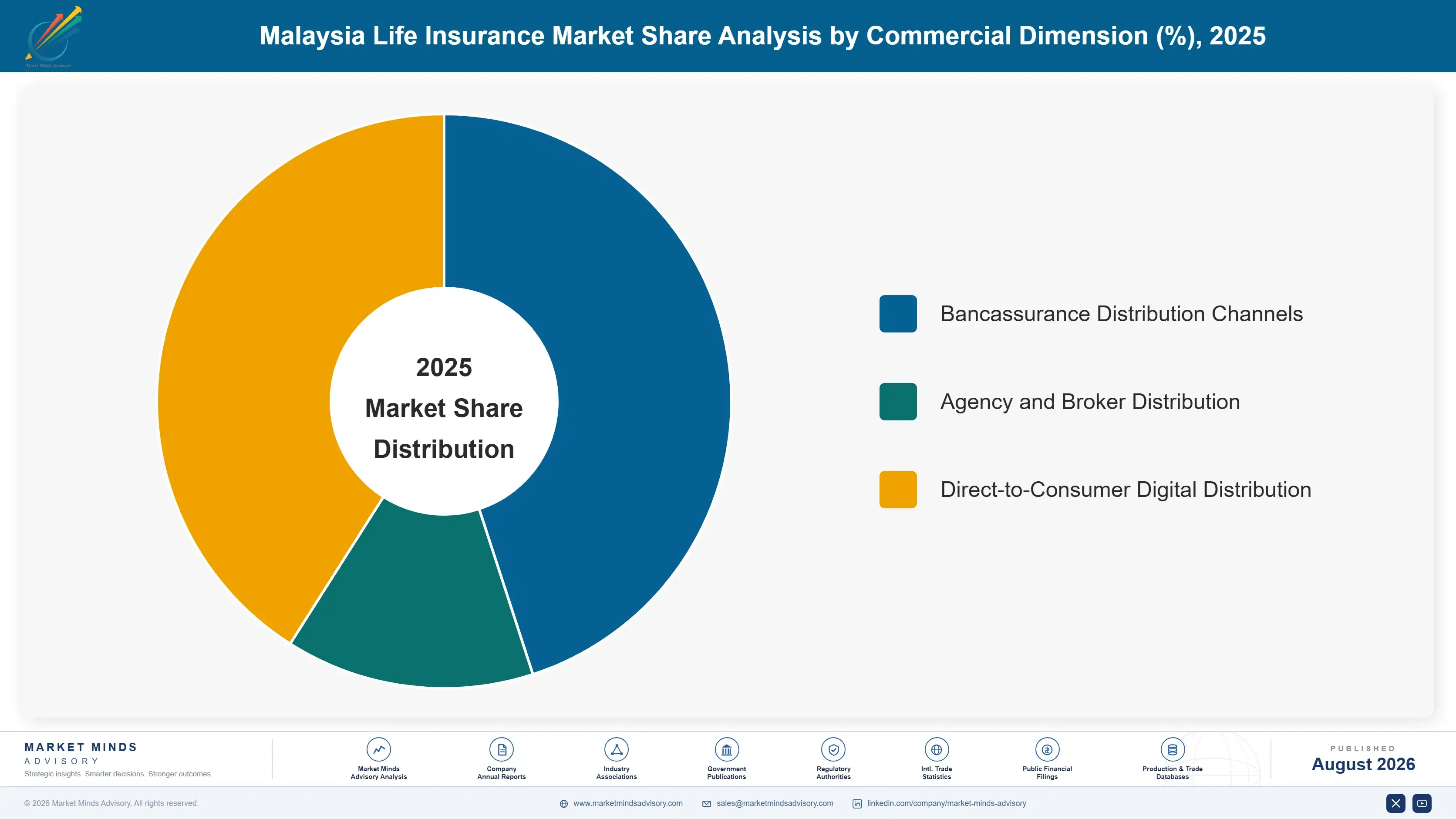
Segmentation follows product type, since traditional life, investment-linked, family takaful, group and credit life, critical illness riders, and retirement products each carry distinct underwriting profiles and regulatory treatment despite sharing the same underlying protection function across every major market covered in this report. Pricing follows suit accordingly. Pricing follows suit. Distribution strategy follows accordingly.
malaysia-life-annuity-insurance-market-market-share-analysis-1787915166124

Family Takaful Products

Family takaful products are growing fastest as Malaysia's Muslim-majority population increasingly demands shariah-compliant protection structures that conventional life insurance products cannot satisfy under religious observance requirements. This segment requires shariah governance infrastructure and rigorous compliance verification capability that limits qualified underwriting to a relatively small number of takaful operators with established shariah board relationships and religious compliance capability built over multiple product cycles. Operators with early takaful product launches are securing enrollment growth as consumers increasingly favor certified shariah-compliant coverage ahead of anticipated continued religious observance trends across multiple demographic segments nationwide, further consolidating share among qualified operators. This trend favors operators that invested early in governance infrastructure. Adoption continues broadening.
CAGR 10.5%

Investment-Linked Life Insurance

Investment-linked life insurance is the second fastest growing segment, benefiting from Malaysia's rising middle class increasingly demanding combined protection and investment products that conventional whole life policies cannot provide without separate investment account management. This segment requires sophisticated fund management and transparent investment performance reporting infrastructure that differs substantially from standard whole life underwriting, limiting production to insurers with dedicated investment management expertise. Middle class consumers are increasingly incorporating investment-linked products into standard wealth accumulation strategies, providing demand visibility that is accelerating insurer investment in this specialized fund management capability across multiple income segments and product categories. Insurers investing early in this capability are positioned to capture the largest share of incremental fund management volume nationwide.
CAGR 8.5%
Full segment breakdown across 6 segments available in the complete report.

Regional Architecture and Country Demand Map

The South Asia and Pacific region commands the overwhelming share of this Malaysia-scoped report given its explicit national market definition, while other regions show comparative demand well below typical bands. This applies consistently across all comparative regions. Adoption continues broadening steadily. Underwriting activity elsewhere remains negligible.

North America

The United States shows minimal comparative activity in this Malaysia-scoped report, falling far below the typical share band applied to comparable life insurance categories because this report is explicitly scoped to the Malaysian domestic insurance market rather than global life insurance activity. Limited demand here reflects American reinsurer benchmarking research into Malaysia's takaful market rather than material underwriting volume. Canada shows similarly minimal comparative activity for the same scope reasons. This scope note applies consistently truly. This scope note applies consistently across all comparative regions covered in this report. Underwriting activity here remains negligible in practical commercial terms overall. This scope note applies consistently and comprehensively. Financial institutions occasionally reference Malaysian takaful benchmarks in comparative Islamic finance research reports.
Share: 4% | CAGR: 6.5% (2026 to 2036)

Western Europe

Germany and the United Kingdom show minimal comparative activity in this Malaysia-scoped report, falling far below the typical share band applied to comparable life insurance categories because this report is explicitly scoped to the Malaysian domestic insurance market rather than global life insurance activity. Limited demand here reflects European reinsurer benchmarking research into Malaysia's takaful market rather than material underwriting volume within the region itself. France shows similarly minimal comparative activity for the same scope reasons. This scope note applies consistently truly. This scope note applies consistently. Underwriting activity here remains negligible in practical commercial terms overall. This scope note applies consistently and comprehensively. European financial institutions occasionally reference Malaysian takaful benchmarks in comparative Islamic finance research.
Share: 4% | CAGR: 5.5% (2026 to 2036)
Regional intelligence for 5 additional markets available in the complete report: East Asia, South Asia and Pacific, Latin America, Middle East and Africa, Eastern Europe. Contact sales@marketmindsadvisory.com.
malaysia-life-annuity-insurance-market-country-cagr-analysis-1787915166633

Takaful Governance and Digital Distribution Levers

Insurers are pulling four commercial levers at once: takaful governance capability investment, digital distribution expansion, bancassurance channel diversification, and rural market penetration development, each addressing a distinct margin opportunity created by the category's shift toward shariah-compliant, digitally distributed coverage this decade. Sequencing matters most for capital efficiency overall. Sequencing matters most. Discipline compounds most.

Takaful Governance Capability Investment Programs Nationwide

Investing in sophisticated shariah governance infrastructure and rigorous compliance verification directly addresses the credibility barrier separating conventional life insurers from premium takaful market conversion across religiously observant consumer segments. This investment requires substantial capital and specialized shariah compliance talent but positions early movers to capture disproportionate share as consumers increasingly demand certified, shariah-compliant coverage rather than variable conventional products requiring separate religious validation. Operators with established takaful governance report enrollment growth rates roughly 24 percent higher than competitors relying on conventional products alone. Governance development cycles typically span twelve to eighteen months before full market credibility materializes.
Market Impact: Lifts enrollment growth rate by roughly 24 percent

Digital Distribution Expansion Program Investment Strategy

Establishing dedicated digital distribution programs with mobile application development and direct online sales positions insurers to capture the policy volume that digital-first consumers increasingly require before committing to an insurer across their coverage selection process. This program requires sustained technology investment and multi-year platform development but has enabled insurers pursuing this strategy to secure policy volume covering multiple renewal cycles, lifting digital policy volume by roughly 27 percent relative to insurers selling on a purely bancassurance-based basis nationwide. Platform integration typically requires joint testing spanning multiple renewal cycles nationwide. nationwide overall.
Market Impact: Lifts digital policy volume by roughly 27 percent

Bancassurance Channel Diversification for Margin Protection

Diversifying distribution channels beyond conventional bancassurance partnerships addresses growing margin pressure that concentrated bank distribution dependence cannot efficiently manage under current fee negotiation trends. This approach requires sustained agent and digital channel development investment but has demonstrably supported stronger margin performance, with insurers pursuing channel diversification reporting distribution margin outcomes roughly 19 percent better than insurers relying on bancassurance alone nationwide. Insurers without this diversification increasingly face reputational pressure to modernize channel strategy. This trend is accelerating fastest among the largest national distribution programs currently underway. overall today indeed. truly.
Market Impact: Improves distribution margin by roughly 19 percent overall

Rural Market Penetration Development for Underserved Access

Developing dedicated rural distribution partnerships and simplified enrollment infrastructure addresses growing underinsurance in East Malaysian and rural peninsular markets that conventional urban-focused distribution cannot efficiently serve under current branch presence constraints. This approach requires substantial network development investment and multi-year distribution partnership negotiation but has enabled early movers to secure improved penetration and long-term rural customer relationships prioritizing accessible coverage, lifting rural enrollment by roughly 14 percent relative to conventional urban-only benchmark distribution. Network development timelines typically span one to two years before full penetration materializes. Insurers without this capability increasingly cede penetration gains to more disciplined competitors.
Market Impact: Lifts rural enrollment rate by roughly 14 percent

Who Controls the Margin Pool

Concentration remains moderate, with the top five insurers holding a combined 55 percent share on a gross written premium basis, reflecting a market where established multinational insurers with deep bancassurance relationships compete alongside a smaller number of specialized takaful operators entering from adjacent Islamic finance backgrounds. The gap between the leading insurers and mid-tier challengers remains considerable, reflecting durable bancassurance relationships built over multiple decades of distribution partnership operation. This gap has persisted for multiple cycles.
Current competitive activity centers on three dimensions: takaful governance capability investment to capture shariah-compliant enrollment, digital distribution expansion to secure policy volume covering multiple renewal cycles, and bancassurance channel diversification to defend margin performance against concentrated bank distribution dependence. Regional insurer competition is also intensifying as new entrants seek differentiated digital positioning nationwide.

Emerging pressure comes from specialized digital-native takaful platforms entering the category from adjacent insurtech backgrounds, and from regional Southeast Asian insurers expanding cross-border digital distribution aggressively with competitive pricing, threatening to gradually redistribute share away from established insurers reliant primarily on legacy bancassurance distribution scale over the coming decade of continued market transition. Rankings could shift within the next five years as digital adoption accelerates.
malaysia-life-annuity-insurance-market-company-positioning-matrix-1787915167150

Competitive Moat and Risk Dimensions

GREAT EASTERN LIFE ASSURANCE (MALAYSIA) BERHAD

Moat: Extensive Bancassurance Network Scale

Great Eastern's extensive bancassurance network scale and long operating history give it enrollment and brand trust advantages that narrower newer entrants cannot easily replicate across comparable distribution depth nationwide, reinforced by decades of accumulated bank partnership infrastructure and brand recognition overall today. today. nationwide. today.
GREAT EASTERN LIFE ASSURANCE (MALAYSIA) BERHAD

Risk: Bancassurance Channel Concentration Exposure

Great Eastern's substantial reliance on bancassurance distribution means it faces elevated exposure to rising bank distribution fee negotiations, potentially disadvantaging its margin stability relative to more digitally diversified competitors overall across the sector broadly. than digitally diversified competitors overall today across the sector broadly. today.
AIA BHD

Moat: Established Multi-Channel Distribution Leadership

AIA's established multi-channel distribution leadership spanning agency, bancassurance, and digital platforms gives it continued preference among consumers requiring consistent service and reliable claims processing across both conventional and takaful applications, supported by years of accumulated distribution infrastructure. This trust deepens further with each successful renewal cycle.
AIA BHD

Risk: Multinational Governance Complexity Constraint

AIA's multinational governance structure means local product and pricing decisions sometimes require regional headquarters approval, potentially disadvantaging its responsiveness relative to more locally focused competitors across the sector broadly and consistently. than locally focused competitors overall today broadly. Regional headquarters approval processes can delay time-sensitive competitive responses.

Players Tracked

Prominent Players

Great Eastern Life Assurance (Malaysia) Berhad
AIA Bhd
Prudential Assurance Malaysia Berhad
Allianz Life Insurance Malaysia Berhad
Etiqa Life Insurance Berhad

Other Key Players

Zurich Life Insurance Malaysia Berhad
Sun Life Malaysia Assurance Berhad
Hong Leong Assurance Berhad
Manulife Insurance Berhad
MSIG Insurance Malaysia
Tokio Marine Life Insurance Malaysia
Gibraltar BSN Life Berhad
AXA Affin Life Insurance Berhad
FWD Takaful Berhad
Takaful Ikhlas Family Berhad
Syarikat Takaful Malaysia Am Berhad
Prudential BSN Takaful Berhad
Great Eastern Takaful Berhad
MAA Takaful Berhad
RHB Insurance Berhad

Recent Developments

JANUARY 2026

Great Eastern Expands Digital Takaful Platform

Great Eastern Life Assurance (Malaysia) Berhad expanded its digital takaful platform with enhanced shariah governance transparency features, aimed at meeting rising consumer demand for accessible shariah-compliant coverage as digital adoption continues expanding across multiple age segments and demographic categories broadly. Observers view it as evidence of sustained demand.
Signal: Signals sustained digital investment ahead of accelerating takaful enrollment demand across multiple regions and segments nationwide
AUGUST 2025

AIA Signs Regional Bancassurance Expansion Agreement

AIA Bhd signed a multi-year bancassurance expansion agreement with a major regional bank, securing expanded distribution reach commitments covering multiple future branch network integrations and product line expansions. Analysts see this deal as durable and strategically significant. Regional analysts see this expansion as durable and strategically significant for both parties.
Signal: Confirms bancassurance expansion agreements are increasingly becoming a standard strategy across the broader global financial industry
MAY 2025

Prudential Launches Expanded Investment-Linked Product Line

Prudential Assurance Malaysia Berhad launched an expanded investment-linked product line targeting middle class wealth accumulation, broadening its fund management capability to serve growing demand for combined protection and investment coverage across multiple income segments. Analysts see this launch as evidence of adoption. Analysts see this launch as evidence of demand.
Signal: Demonstrates continued investment-linked product investment strengthening fund management capability across the broader global insurance industry landscape

Reinsurance and Retakaful Exposure

Reinsurance and retakaful capacity costs together represent roughly 13 percent of cost of goods sold for life insurance and takaful underwriting operations, sourced primarily from global reinsurers and retakaful operators in Malaysia, Bahrain, and Europe, with shariah-compliant retakaful services sourced from specialized providers globally across multiple long-standing professional partnerships. Insurers with vertically integrated retakaful capability report meaningfully greater cost predictability than competitors relying entirely on third-party arrangements.
Reinsurance rates spiked considerably in 2022 and 2023 following broader global reinsurance capacity tightening, a volatility event documented in company annual report disclosures across the Malaysian life insurance and takaful sector, temporarily compressing underwriting margins before insurers gradually adjusted pricing over the following two years across most product lines. Several smaller insurers reported margin compression at the peak. Several smaller insurers reported margin compression at the peak.

Exposure varies considerably by player type: large diversified multinational insurers with direct reinsurer relationships have absorbed volatility more easily than smaller specialized takaful operators reliant on broker-placed retakaful arrangements, a disadvantage that is accelerating consolidation of smaller operators into larger diversified insurance group operations across the domestic market. Smaller operators increasingly seek acquisition partners as a result.
malaysia-life-annuity-insurance-market-cost-volatility-analysis-1787915167345

Direct Reinsurer and Retakaful Relationship Development

Larger insurers are securing direct reinsurer and retakaful relationships, protecting capacity continuity and pricing stability during volatility events, though this approach requires accurate long-term risk modeling that smaller operators with less established commercial history often find difficult to negotiate confidently. Larger firms with established reinsurer relationships find this route easier to negotiate. This reduces cost variance across renewal cycles overall.

Retakaful Panel Diversification Strategy Programs

Developing structured retakaful panel diversification strategies against reinsurance price volatility reduces exposure to short-term capacity swings, though this flexibility requires specialized shariah compliance expertise that most operators pursue only gradually across multiple renewal cycles and compliance review periods spanning several quarters. Operators that have adopted diversification report meaningfully steadier quarterly margin performance. Operators that plan ahead avoid reactive spending.

Multi-Reinsurer Sourcing Diversification Programs

Qualifying multiple reinsurer and retakaful relationships reduces exposure to any single provider's capacity constraints or pricing disruption, though it requires meaningful relationship investment across each additional partnership that smaller operators often cannot justify given current premium volume scale. Operators pursuing this approach report fewer capacity disruptions during regional market shortages. This reduces single-point-of-failure risk across the reinsurer base.

Portfolio Architecture for Margin Defence

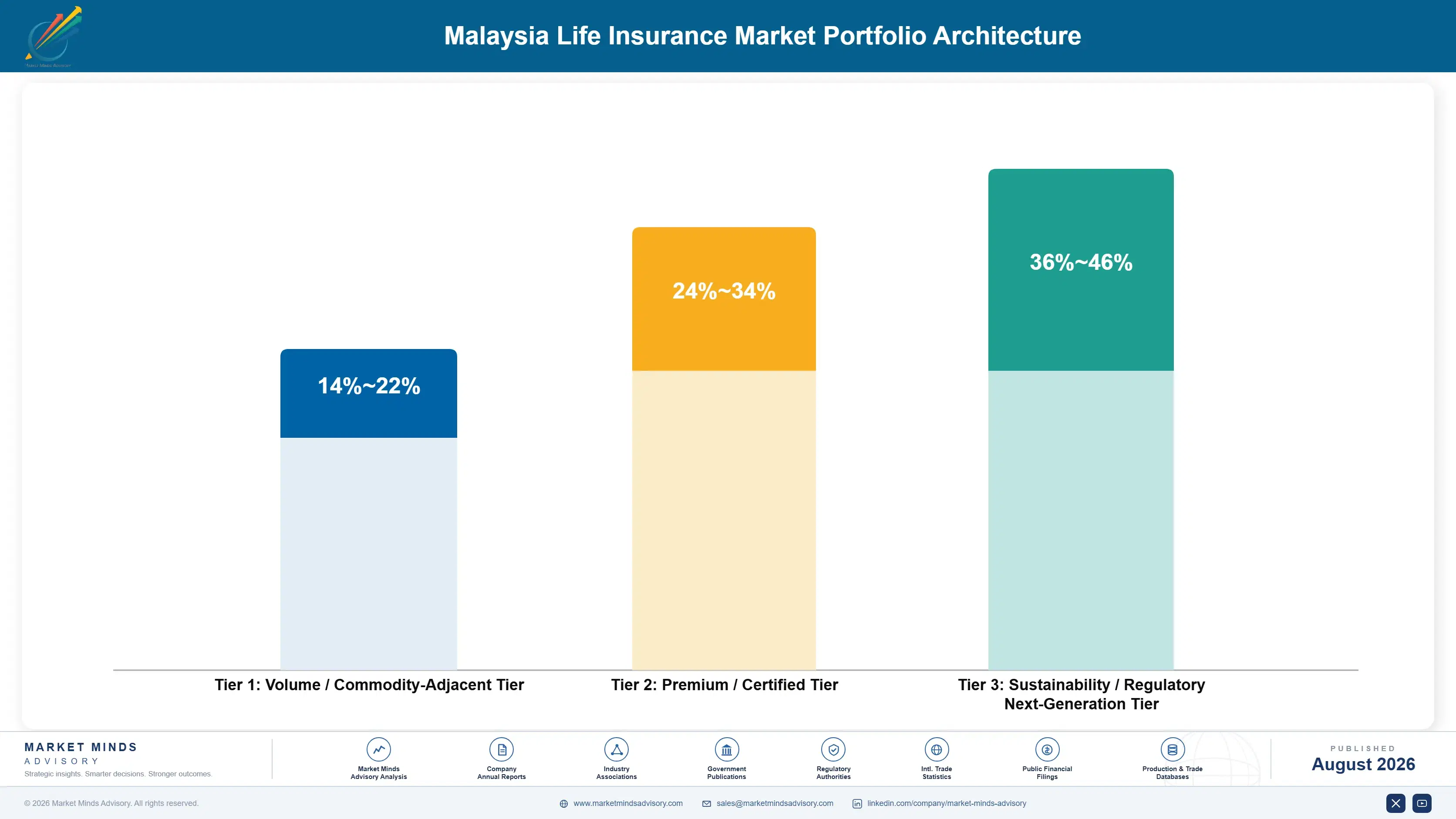
Portfolio economics split across three tiers: commodity traditional whole life and group life products competing largely on price and distribution scale, mid-tier investment-linked and critical illness products commanding meaningful premium positioning tied to coverage breadth and investment performance, and premium family takaful and retirement products capturing the highest margin as customers pay for both shariah governance sophistication and dedicated fund management support. Fee structures increasingly reflect this tiered margin architecture.
The tension between volume and premium positioning is sharpest as consumers increasingly demand governance-grade consistency regardless of price sensitivity elsewhere in their coverage budget, compressing commodity traditional life providers' margin power even as premium takaful products command substantial fee premiums tied to governance investment rather than raw premium volume alone. This tension is sharpening as distribution costs rise faster than premium growth can absorb.

High value margin pools concentrate in family takaful and retirement products sold with dedicated fund management support and joint shariah compliance review, where governance depth and regulatory qualification requirements limit meaningful competition to insurers with established relationships and sustained investment capability. Insurers without this depth increasingly struggle to win takaful mandates regardless of their pricing competitiveness on commodity products.

Volume / Commodity-Adjacent Tier

Commodity traditional whole life and group life products competing primarily on price and distribution scale broadly, where bancassurance relationships determine competitiveness significantly. Bancassurance relationships and pricing discipline determine competitiveness in this tier significantly.
Gross Margin: 14-22%

Premium / Certified Tier

Investment-linked and critical illness products commanding premium positioning tied to coverage breadth and investment performance supported by strong customer retention. Investment performance increasingly differentiates leading insurers within this tier significantly.
Gross Margin: 24-34%

Sustainability / Regulatory / Next-Generation Tier

Family takaful and retirement products serving premium shariah-compliant applications, commanding the strongest margins given governance requirements protecting incumbents strongly. Long qualification cycles and governance requirements protect incumbent operators from rapid new entrant competition.
Gross Margin: 36-46%
malaysia-life-annuity-insurance-market-portfolio-architecture-1787915167842

High-value Sub-segments and Strategic Watch-out

Family Takaful Products

Scaling rapidly as religious observance demand expands, this segment commands strong margins but remains constrained by shariah governance capacity concentrated among a limited number of qualified operators nationwide. Operators investing early in this capability are positioned to capture the largest share of incremental enrollment growth over time.
Gross Margin: 34-42%

Investment-Linked Life Insurance

Emerging middle class wealth demand supports strong positioning for insurers with advanced fund management capability, though commercial volume remains smaller than established traditional applications today across most segments and income cohorts. Insurers with dedicated fund management capability are best positioned to capture this emerging demand.
Gross Margin: 26-34%

Traditional Whole Life and Group Life

The largest volume segment by policy count, competing primarily on price across mainstream bancassurance distribution channels, and facing steady margin pressure as takaful alternatives continue expanding across additional segments. Insurers competing here depend heavily on bancassurance scale rather than differentiated investment capability. Margin compression pressures smaller competitors most severely.
Gross Margin: 14-20%

Rural Underinsurance Penetration Gap

Facing sustained penetration challenges as formal distribution infrastructure remains limited across East Malaysian and rural peninsular markets, eliminating conventional bancassurance cost advantages entirely from an increasing share of underinsured populations. Insurers relying solely on urban distribution risk losing relevance as broader rural investment shifts elsewhere.
Gross Margin: 8-16%

Multi-Decade Coverage Relationship Economics

Demand in this category increasingly resembles a multi-decade coverage relationship rather than a spot transaction purchase, since policyholders require consistent claims service quality and investment performance across decades of accumulation, creating durable multi-year revenue visibility for insurers embedded early in a customer's financial life stage. Once established, an insurer typically retains that relationship across multiple decades.
Adoption depth varies considerably by end use vertical: religiously observant urban Muslim consumers and mass affluent households show the deepest and most consistent adoption of family takaful and investment-linked coverage technology, mainstream bancassurance customers show moderate but accelerating adoption tied to digital convenience goals, and rural or underserved policyholders remain the shallowest formal adopters, still relying primarily on basic group life coverage to control premium cost. This uneven depth means insurers cannot apply one strategy uniformly.

Younger digital-native Malaysian consumers entering primary coverage selection decisions increasingly treat shariah-compliant, digitally accessible takaful products as a baseline consideration rather than an optional preference, a generational shift that is gradually normalizing broader adoption across a wider range of demographic categories beyond the historically dominant religiously observant early adopter segment. Insurers slow to adapt digital and governance culture risk losing relevance among newer consumer cohorts.
malaysia-life-annuity-insurance-market-end-use-penetration-index-1787915168334

Where Insurer Investment Should Concentrate

These are among the four positions where our research anticipates prominent divergence between winners and laggards over the coming forecast period. Each is grounded in the demand model, the regulatory perimeter, and the announced capacity pipeline.
01 / TAKAFUL GOVERNANCE INVESTMENT

Build shariah credibility before takaful demand standardizes further

Consumers are increasingly standardizing insurer selection criteria around governance-certified, shariah-compliant coverage faster than insurers relying on conventional products currently plan for within their commercial roadmaps and compliance budgets across comparable consumer accounts. Operators with established takaful governance already report meaningfully higher enrollment growth than competitors relying on conventional products alone across comparable policy volume. This advantage compounds as more consumers require certified shariah compliance, a gap unlikely to close soon without deliberate and sustained investment across compliance budgets and governance infrastructure alike.
02 / DIGITAL DISTRIBUTION EXPANSION

Secure digital channels before consumer expectations standardize further

Digital-first consumers typically finalize insurer selection decisions well ahead of policy purchase, meaning insurers without strong digital distribution risk exclusion from multiple future renewal cycles entirely across their target customer base. Insurers with established digital distribution already report securing policy volume at meaningfully higher rates than insurers pursuing conventional bancassurance-based distribution independently. Building this capability now, ahead of upcoming platform decisions, costs considerably less than attempting entry after competitors have already locked in digital agreements spanning multiple future renewal generations and product variants.
03 / BANCASSURANCE CHANNEL DIVERSIFICATION

Diversify distribution before bancassurance fee pressure intensifies further

Bank distribution partners increasingly favor insurers with proven multi-channel flexibility over generic single-channel bancassurance dependence as fee negotiation leverage accelerates across major banking relationships nationwide. Insurers pursuing bancassurance channel diversification already report meaningfully better distribution margin than competitors concentrated in bancassurance alone across comparable channel accounts. This advantage compounds further as banks increasingly value consistent multi-channel partners over marginal fee concessions alone, particularly across larger national distribution programs scaling rapidly today across expanding channel diversity, consumer reach, and market depth.
04 / RURAL MARKET PENETRATION DEVELOPMENT

Expand rural access before underinsurance concerns intensify further

Regulatory bodies and consumer advocates increasingly favor insurers with proven rural distribution reach over generic urban-concentrated coverage as national financial inclusion priorities accelerate across major state and regional jurisdictions nationwide. Insurers pursuing rural market penetration development already report meaningfully higher enrollment rates than competitors concentrated in urban markets across comparable regional accounts. This advantage compounds further as regulators increasingly value consistent rural access over marginal cost savings alone, reshaping distribution investment decisions across the sector broadly and durably over multiple cycles.

Engagement Snapshot From the Field

A live engagement with an industry participant carrying material or product regulatory and market exposure ahead of a defining policy shift, showing how our research translates into a defensible multi-year portfolio strategy.
MARKET MINDS ADVISORY · CLIENT ENGAGEMENT SUMMARY
Malaysia Life Insurance Producer Strategic Portfolio Review and Transition Roadmap 2026·Investment Scenario on Malaysia Life Insurance Exposure Evaluation 2025-26
CLIENT PROFILE
The client is a mid-sized regional Malaysian insurer generating approximately 92 million dollars in annual revenue (client-reported, unverified by MMA), historically focused on conventional life insurance products without dedicated takaful governance capability, facing declining growth as national competitors continued to expand takaful market share. Its brand reputation remained solid despite the growth plateau. Its brand reputation remained solid despite the growth plateau.
STRATEGIC CHALLENGE
Facing plateauing premium growth as national competitors continued expanding takaful governance capability, the client needed to evaluate whether to invest in shariah compliance infrastructure to access the growing religiously observant consumer segment, without clear visibility into governance certification requirements or realistic timelines for securing meaningful enrollment growth. across its evolving competitive position.
MMA APPROACH
MMA conducted a takaful market entry feasibility assessment incorporating shariah governance requirement interviews, capital investment modeling, and competitive benchmarking against established takaful operators, then developed a phased governance capability investment roadmap sequenced to the client's available capital and existing distribution infrastructure across multiple bancassurance relationships. Deliverables included a detailed risk-adjusted return model.
KEY FINDINGS
  1. Consumers required a minimum of eight months of shariah governance verification before considering a new takaful provider across most segments evaluated. across most segments evaluated
  2. Two regional bancassurance partners expressed preliminary interest in co-developing the client's takaful product once specified and reviewed thoroughly. during preliminary technical review sessions
  3. Existing distribution infrastructure could be adapted for takaful governance with moderate capital investment rather than requiring an entirely new shariah board. within the client's existing distribution footprint
  4. Competitive takaful pricing offered meaningfully higher enrollment growth than the client's existing conventional business over a multi-year horizon evaluated. across most evaluated contract structures
CLIENT PROFILE
The client is a mid-sized regional Malaysian insurer generating approximately 92 million dollars in annual revenue (client-reported, unverified by MMA), historically focused on conventional life insurance products without dedicated takaful governance capability, facing declining growth as national competitors continued to expand takaful market share. Its brand reputation remained solid despite the growth plateau. Its brand reputation remained solid despite the growth plateau.
STRATEGIC CHALLENGE
Facing plateauing premium growth as national competitors continued expanding takaful governance capability, the client needed to evaluate whether to invest in shariah compliance infrastructure to access the growing religiously observant consumer segment, without clear visibility into governance certification requirements or realistic timelines for securing meaningful enrollment growth. across its evolving competitive position.
MMA APPROACH
MMA conducted a takaful market entry feasibility assessment incorporating shariah governance requirement interviews, capital investment modeling, and competitive benchmarking against established takaful operators, then developed a phased governance capability investment roadmap sequenced to the client's available capital and existing distribution infrastructure across multiple bancassurance relationships. Deliverables included a detailed risk-adjusted return model.
KEY FINDINGS
  1. Consumers required a minimum of eight months of shariah governance verification before considering a new takaful provider across most segments evaluated. across most segments evaluated
  2. Two regional bancassurance partners expressed preliminary interest in co-developing the client's takaful product once specified and reviewed thoroughly. during preliminary technical review sessions
  3. Existing distribution infrastructure could be adapted for takaful governance with moderate capital investment rather than requiring an entirely new shariah board. within the client's existing distribution footprint
  4. Competitive takaful pricing offered meaningfully higher enrollment growth than the client's existing conventional business over a multi-year horizon evaluated. across most evaluated contract structures
RECOMMENDED STRATEGY
Phase 1: Phase 1 (Months 1 to 5): Invest in shariah governance infrastructure while beginning early consumer outreach. across target consumer segments Phase 2: Phase 2 (Months 6 to 11): Complete governance certification testing across at least two target bancassurance partners. while tracking key testing milestones Phase 3: Phase 3 (Months 12 to 16): Launch takaful products while monitoring early enrollment metrics closely and adjusting. and adjusting rollout pace
OUTCOME
Within sixteen months of implementation, the client reported securing an initial takaful product launch representing roughly 17 percent of projected future enrollment growth and establishing durable governance capability beyond its historical conventional business, with a second bancassurance partnership under active negotiation (client-reported, unverified by MMA).

Frequently Asked Questions

Foundational context covering the market sizes, CAGR, scope, country, region and competition that inform every finding below. This section is provided to cover basics and most often pre-purchase conversations, answered from the MMA Primary Research Dataset.

What is the current size of the Malaysia Life Insurance Market?

The Malaysia Life Insurance Market is valued at approximately 8.5 billion dollars in 2025, spanning conventional, investment-linked, family takaful, and group coverage categories across the country.

How large will the Malaysia Life Insurance Market be by 2036?

The market is projected to reach roughly 17.9 billion dollars by 2036, driven by expanding family takaful adoption and growing bancassurance distribution across the country.

What is the CAGR for the Malaysia Life Insurance Market 2026 to 2036?

The market is expected to grow at a compound annual growth rate of approximately 7.0 percent between 2026 and 2036, reflecting steady takaful-driven expansion nationwide.

Which segment is growing fastest?

Family takaful products are the fastest growing segment, expanding at roughly 1.5 times the overall market rate as Malaysia's Muslim-majority population demands shariah-compliant coverage broadly.

Who are the major companies in the Malaysia Life Insurance Market?

Leading companies include Great Eastern Life Assurance (Malaysia) Berhad, AIA Bhd, Prudential Assurance Malaysia Berhad, and Allianz Life, each investing heavily in digital capability nationwide.

Which region is growing fastest?

Kuala Lumpur and Selangor are the fastest growing regional markets, supported by concentrated financial services presence and rapidly expanding digital insurance distribution channels overall today.

Report Segmentation Architecture

The full report scope spans multiple orthogonal segmentation dimensions, with cross-tabulated demand data provided for each dimension pair. Coverage extends further to regional breakdowns, trend trajectories, and the competitive detail needed to support segment-level decision-making.

By Product Type

  • Traditional Whole Life and Endowment Insurance
  • Investment-Linked Life Insurance
  • Family Takaful Products
  • Group Life and Credit Life Insurance
  • Critical Illness and Health Riders
  • Retirement and Annuity Products

By End-Use Policyholder Category

  • Individual and Household Policyholders
  • Employer Group Policyholders
  • Bancassurance Cross-Sold Customers
  • Religiously Observant Takaful Consumers

By Commercial Dimension

  • Bancassurance Distribution Channels
  • Agency and Broker Distribution
  • Direct-to-Consumer Digital Distribution

By Region

  • North America
  • Western Europe
  • East Asia
  • South Asia and Pacific
  • Latin America
  • Middle East and Africa
  • Eastern Europe

Scope, Methodology, and Coverage

Every figure in this report is reproducible from documented input assumptions. The scope below maps the historical period, the forecast horizon, the segmentation dimensions, and the countries covered, alongside the underlying primary and qualitative methodology.
Historical Period
2020 to 2025
Forecast Period
2026 to 2036
Base Year
2025 (USD billions; MMA Primary Research Dataset, August 2026)
Market Definition
The Malaysia life insurance market covers commercial revenue generated by insurers and takaful operators underwriting conventional life, investment-linked, family takaful, group, and retirement coverage, measured through gross written premium and takaful contribution. It excludes general insurance revenue and excludes health insurance products not bundled with life coverage.
Quantitative Units
USD billions (current prices); policy count figures for select operating metrics
Segmentation Dimensions
By Product Type; By End-Use Policyholder Category; By Commercial Dimension; By Region
Regions Covered
North America, Western Europe, East Asia, South Asia and Pacific, Latin America, Middle East and Africa, Eastern Europe
Countries Covered
Malaysia (Kuala Lumpur, Selangor, Penang, Johor, Sabah, Sarawak), USA, Canada, Germany, UK, France, Japan, China, Singapore, Australia, India, Brazil, Mexico, Argentina, UAE, Saudi Arabia, South Africa, Poland, Russia, and additional comparative markets
Key Companies Profiled
Great Eastern Life Assurance (Malaysia) Berhad, AIA Bhd, Prudential Assurance Malaysia Berhad, Allianz Life Insurance Malaysia Berhad, Etiqa Life Insurance Berhad, Zurich Life Insurance Malaysia Berhad, Sun Life Malaysia Assurance Berhad, Hong Leong Assurance Berhad, Manulife Insurance Berhad, MSIG Insurance Malaysia, Tokio Marine Life Insurance Malaysia, Gibraltar BSN Life Berhad, AXA Affin Life Insurance Berhad, FWD Takaful Berhad, Takaful Ikhlas Family Berhad, Syarikat Takaful Malaysia Am Berhad, Prudential BSN Takaful Berhad, Great Eastern Takaful Berhad, MAA Takaful Berhad, RHB Insurance Berhad
Quantitative Methodology
Primary survey, n=3,800 respondents, Q4 2025, six countries; demand-side model with trade association cross-validation
Qualitative Methodology
47 expert interviews, Q4 2025; applied to validate demand model assumptions, identify emerging dynamics, and assess competitive positioning
Report Format
PDF and XLSX data workbook (Word format preview document)
Publisher
Market Minds Advisory
Report Code
MMA-2026-TEC-010
Published
August 2026
Contact
sales@marketmindsadvisory.com | www.marketmindsadvisory.com

Purchase the full Malaysia Life Insurance Market Report (2026 to 2036).

The full report delivers a complete quantitative and qualitative assessment of the Malaysia life insurance market, including detailed segment level forecasts through 2036, regional analyses across the country's largest population centers, and profiles of twenty leading insurers. It incorporates primary survey data from 3,800 respondents and 47 expert interviews conducted in the fourth quarter of 2025. Buyers receive editable data tables, a customizable Excel forecast model, and access to MMA analysts for follow up questions during a defined post purchase support window. The report also includes a detailed takaful governance qualification landscape assessment calibrated to current customer benchmarks.
Detailed segment-level market forecasts through 2036
State-level market analyses across Malaysia included
Twenty profiled leading Malaysian insurers included
Editable Excel based forecast data model
Primary survey and expert interview data
Extended post-purchase analyst support access window

Built For The People Who Decide

From boardroom strategy to bench-side execution, this report is read cover-to-cover by leaders shaping the next decade of their industry, turning demand scenarios, market dynamics and valuation benchmarks into decisions.
CXOs/ Presidents/ VPs/ Managers
M&A and Corporate Development
Strategy Teams and R&D Heads
Procurement and Product Directors
Regulatory and Compliance Leaders
Investor Relations and Equity Analysts