Market Minds Advisory
Malaria Treatment Market

Malaria Treatment Market: Artemisinin Combination Therapies and Chemoprevention Formulations

Rising artemisinin partial resistance across East Africa is forcing procurement agencies to diversify combination therapy portfolios, pulling next-generation antimalarial candidates into accelerated development while seasonal chemoprevention programmes expand across the Sahel region.

Lead Analyst

Alice Ballenger

Published

September 2026

Make Smarter Decisions with Customized Research Insights

Request a free sample report and evaluate market opportunities, growth trends, and competitive dynamics relevant to your business needs.

2025 MARKET VALUE$1.8BMarket Size 2025
2036 FORECAST VALUE$3.6BBase Case , 2026 to 2036
CAGR 2026 TO 20366.4 %Bull 7.7% / Bear 5.0%
INCREMENTAL OPPORTUNITY$1.6BNet 10- year value creation
EXPANSION MULTIPLE1.86x2036 value over 2026 base
Strategic Levers
M&A Pipeline
Regional Outlook
Country Rankings
Competitive Intelligence
Segmental Deep-dive
Call-Us : 91 93563 13602

Executive Snapshot and Market Trajectory

Rising artemisinin partial resistance across East Africa is forcing procurement agencies to diversify combination therapy portfolios, compressing timelines for next-generation antimalarial candidates racing toward regulatory approval and field deployment nationwide today. Global health officials describe this as the most urgent portfolio shift the category has faced in over a decade.
Expanding seasonal chemoprevention programmes, growing donor-funded procurement volume, and rising diagnosed case counts are concentrating demand overwhelmingly in Sub-Saharan Africa, where the disease burden and treatment infrastructure investment sustain the highest treatment volume of any region tracked in this study by an enormous margin. Nigeria alone accounts for the largest single-country share of global treatment volume by a considerable margin across nearly every major endemic country tracked in this study each cycle overall.
A moderately concentrated group of originator and generic manufacturers controls most procurement volume, while resistance-driven reformulation and next-generation pipeline development reshape which companies lead procurement tender conversations with major global health funding agencies worldwide. Smaller generic manufacturers without meaningful prequalification status increasingly struggle to secure large donor-funded tender volume consistently across most global health tender processes studied worldwide each cycle overall now.
Market Definition
This market covers pharmacological therapies used in the treatment and chemoprevention of malaria, including artemisinin-based combination therapies, severe malaria injectable formulations, seasonal chemoprevention regimens, and next-generation pipeline candidates. It excludes malaria diagnostic testing products, insecticide-treated bed nets, and vector control interventions unrelated to pharmacological treatment.
Base Year Value
$1.8B in 2025 (MMA Primary Research Dataset, August 2026)
Forecast Period
2026 to 2036, eleven discrete annual values
CAGR
6.4% base case. Bull 7.7%. Bear 5.0%.
Fastest Growth Segment
Next-Generation Antimalarial Pipeline Therapies: 12.8% CAGR
Fastest Growth Country
Nigeria: 9.8% CAGR
Fastest Growth Region
South Asia and Pacific: 8.5% CAGR
Largest Region
Middle East and Africa: 68% of 2025 global value
Market Leaders
Novartis AG, Sanofi S.A., Cipla Limited, Ipca Laboratories Limited, Fosun Pharma. Source: MMA Analysis based on company annual reports.
Primary Survey
n=3,800 procurement and R&D decision-makers, Q4 2025, six countries
Methodology
Demand-side build-up, cross-validated against public data, 47 expert interviews

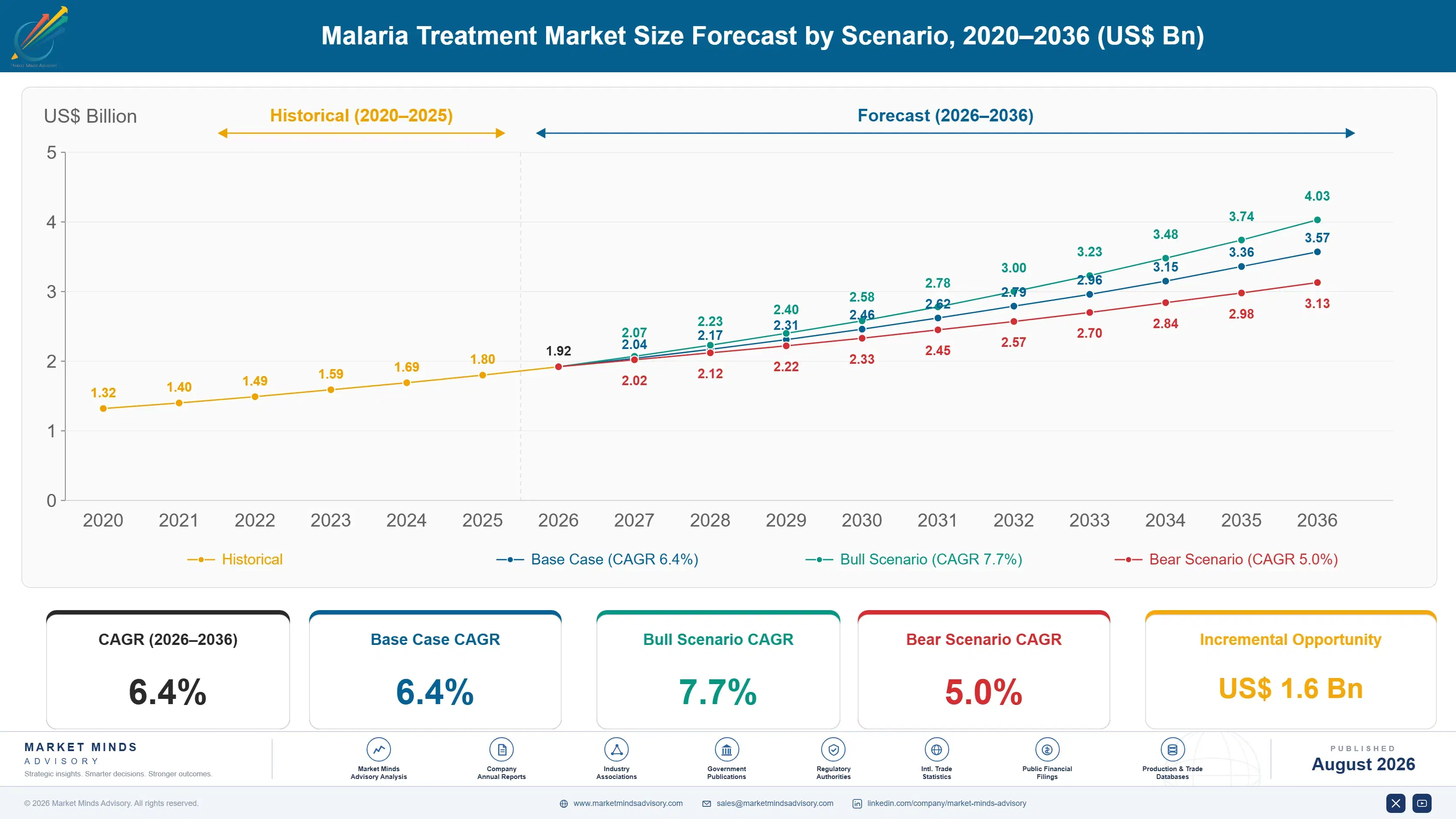
Malaria Treatment Market Forecast Scenarios

malaria-treatment-market-size-forecast-scenario-1787305878323
Malaria treatment spending grew at roughly 5.8% annually between 2020 and 2025, as expanding seasonal chemoprevention programmes and rising donor-funded procurement volume brought more treatment courses into distribution across major endemic markets tracked closely by industry observers throughout the historical period. Growth remained steady year over year given sustained donor funding commitment throughout the historical period and beyond.
The base case assumes continued seasonal chemoprevention programme expansion, steady next-generation pipeline development responding to artemisinin resistance, and sustained donor funding for procurement, sustaining a 6.4% blended annual growth rate through 2036 across most major endemic markets worldwide tracked in this study. Continued philanthropic co-funding and domestic manufacturing partnership investment further reinforce this trajectory across most major endemic markets and reimbursement channels reviewed by MMA analysts globally today overall continuously.
A bull scenario assumes accelerated next-generation antimalarial approval and deployment outpaces current resistance-driven treatment failure rates. The bear case centers on donor funding volatility that constrains procurement volume growth relative to the disease burden trajectory across the most affected low-income endemic countries. Either scenario would meaningfully reshape which manufacturers lead procurement tender conversations by the end of the forecast period ahead.

Resistance Pressure Redraws Procurement Portfolios

Malaria treatment sits at the convergence of global health procurement economics, resistance biology, and a genuinely urgent public health response that has pushed next-generation antimalarial development from a slow-moving academic pursuit into a funded, fast-tracked pharmaceutical priority. Global health funders increasingly weigh resistance urgency as heavily as raw disease burden when directing investment. This dynamic increasingly rewards companies with genuinely differentiated pipeline can
MARKET CONCENTRATIONCR5 58%share held by the five largest originator and generic manufacturers
AVERAGE TREATMENT COURSE COST$1.40typical procurement price per artemisinin combination therapy course
LEADING COUNTRY SHARENigeria 19%of global treatment course volume concentrated in a single country
DONOR-FUNDED PROCUREMENT SHARE71%of total treatment volume purchased through global health funding agencies
CHEMOPREVENTION COVERAGE RATE54%of eligible children currently receiving seasonal chemoprevention regimens
ARTEMISININ RESISTANCE DETECTION9 countriescountries reporting confirmed partial artemisinin resistance markers currently
Commercially, this market behaves unlike most pharmaceutical categories: per-treatment pricing is extraordinarily low given donor procurement negotiation power, and manufacturer profitability depends almost entirely on manufacturing scale and tender volume rather than premium pricing power common elsewhere in pharmaceuticals. This unusual economics profile increasingly attracts blended public and philanthropic capital rather than commercial investors. Few other pharmaceutical categories combine such low per-unit pricing with such enormous absolute treatment volume.
Over the next decade, expanding chemoprevention coverage, resistance-driven pipeline diversification, and sustained donor procurement volume will keep pulling treatment protocols toward combination therapies specifically designed to slow resistance emergence across the most heavily affected endemic countries tracked in this study. Manufacturers slow to diversify risk ceding tender share to faster-moving, better-prequalified competitors.
"This is a market where the customer isn't really the patient or even the government. It's the Global Fund and PMI procurement desks, and their tender decisions move more volume than any marketing campaign ever could."
Director, Global Health and Infectious Disease Pharmaceuticals Practice · MMA Ph

Market Trends

Artemisinin Resistance Drives Combination Therapy Diversification

Confirmed partial artemisinin resistance markers, now detected across nine African countries including several in East Africa, are prompting national malaria control programmes and global health procurement agencies to diversify combination therapy portfolios rather than relying on a single first-line regimen across an entire country. Procurement agencies report combination therapy diversification has expanded from essentially single-regimen national protocols to multi-regimen portfolios across roughly a third of high-burden countries within the past three years, reflecting genuine urgency around resistance management. This shift is pulling manufacturers to expand production capacity across multiple distinct combination formulations rather than a single dominant product.
Market Impact: Funds 71 percent of procurement vol
Seasonal Chemoprevention Programmes Expand Across the Sahel

Seasonal malaria chemoprevention, which delivers preventive antimalarial doses to young children during peak transmission season, continues expanding across Sahel region countries following strong clinical evidence of its effectiveness in reducing severe malaria cases and mortality among the most vulnerable pediatric population. Programme coverage has grown from a small pilot footprint to reaching roughly 54% of eligible children across implementing countries, with continued donor funding supporting further expansion toward universal coverage among the eligible population. This expansion is driving substantial procurement volume growth for chemoprevention-specific formulations distinct from standard treatment courses.
Market Impact: Case counts rise across 12 nations

Market Opportunities and Growth Drivers

Sustained Global Health Donor Funding Commitment

Continued funding commitment from major global health financing mechanisms, including the Global Fund and the President's Malaria Initiative, sustains large-scale procurement volume that most low-income endemic countries could not independently afford given their limited domestic health budgets and competing public health priorities across affected regions. This funding directly underwrites the vast majority of treatment course procurement across the highest-burden countries, making donor funding commitment the single most important demand driver in this category regardless of underlying disease burden trends. Continued replenishment cycles for these funding mechanisms remain the primary determinant of near-term procurement volume growth.
Market Impact: Funding gaps cut volume 15 percent

Rising Diagnosed Case Counts in High-Burden Countries

Diagnosed malaria case counts continue rising in several high-burden countries, reflecting both genuine transmission increases linked to climate and population factors and improving diagnostic testing access that identifies cases previously missed entirely by limited healthcare infrastructure in affected rural communities. World Health Organization surveillance data indicates several high-burden countries have reported case count increases in recent years even as global mortality trends have shown some improvement, reflecting the disease's continued public health significance across the most affected populations. This driver sustains steady baseline treatment volume growth even without accounting for chemoprevention or pipeline diversification effects separately.
Market Impact: Margins run below 8 percent typical

Market Restraints and Challenges

Donor Funding Volatility Threatens Procurement Stability

Global health funding mechanisms face periodic budget uncertainty tied to donor country political and fiscal cycles, creating genuine procurement volume volatility that can disrupt manufacturer production planning and, more critically, treatment access for patients in the most affected low-income countries entirely dependent on this funding. The root cause is that malaria treatment procurement in the highest-burden countries depends almost entirely on external donor commitment rather than domestic health budget capacity, leaving the category directly exposed to funding decisions made in donor capitals far removed from affected communities. This disproportionately affects the lowest-income countries least able to bridge funding gaps.
Market Impact: Covers 9 countries with confirmed r

Manufacturing Margin Compression Limits Innovation Investment

Extraordinarily low per-treatment pricing driven by donor procurement negotiation power leaves manufacturers with thin margins that limit the commercial incentive for continued innovation investment, particularly for smaller generic manufacturers competing primarily on production cost rather than clinical differentiation across their treatment portfolios. The underlying cause is that malaria predominantly affects low-income populations unable to pay commercial pricing, making donor-negotiated tender pricing the only viable commercial pathway for most treatment volume in this category entirely. This margin compression disproportionately limits innovation investment among smaller manufacturers lacking the scale to profitably invest in next-generation pipeline development.
Market Impact: Reaches 54 percent of eligible chil
3 additional market trends, 3 additional growth drivers, and 4 additional restraints and challenges are covered in the full report. Contact sales@marketmindsadvisory.com to access the complete intelligence.

Segment CAGR and Growth Architecture

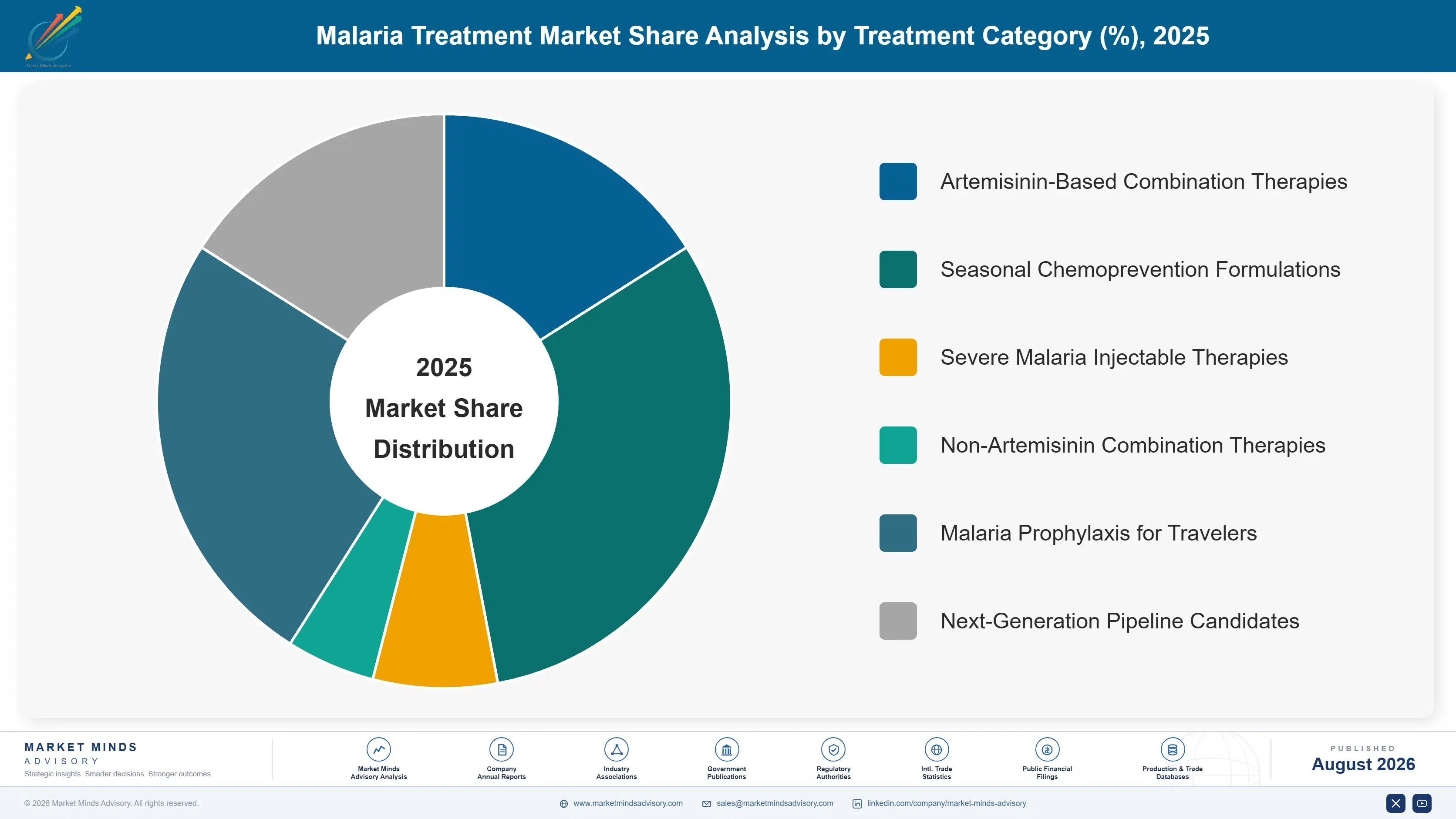
This market segments by treatment category spanning artemisinin-based combination therapies, seasonal chemoprevention formulations, severe malaria injectable therapies, non-artemisinin combination therapies, malaria prophylaxis for travelers, and next-generation pipeline candidates addressing resistance concerns. This dimension is the one procurement agencies actually reference when structuring tenders and funding decisions and funding allocation decisions across the full care and prevention con
malaria-treatment-market-market-share-analysis-1787305878856

Next-Generation Antimalarial Pipeline Therapies

Next-generation antimalarial pipeline therapies are the fastest-growing segment as global health funders and pharmaceutical partnerships accelerate development of novel treatment mechanisms specifically designed to address artemisinin resistance before it spreads more broadly across high-burden endemic regions worldwide. This segment remains predominantly in clinical development rather than commercial deployment today, meaning current procurement revenue is minimal, but research investment has grown substantially as resistance detection expands across additional countries and funding urgency increases correspondingly. Success in this segment could fundamentally reshape treatment protocols by providing genuinely new mechanisms of action that current resistance markers do not affect, extending the useful lifespan of first-line treatment options considerably. Global health partnerships are closely coordinating pipeline investment to avoid duplicative development efforts.
CAGR 12.8%

Seasonal Chemoprevention Formulations

Seasonal chemoprevention formulations are growing considerably faster than the broader market as programme coverage expands across Sahel region countries following strong clinical evidence supporting preventive dosing during peak transmission season for the most vulnerable pediatric populations. This segment addresses a genuinely distinct need from treatment therapy alone, since prevention reduces overall disease burden and downstream treatment demand rather than simply treating cases after infection has already occurred among affected children. Manufacturers are investing in production capacity specifically for chemoprevention-optimized formulations, since dosing requirements and packaging differ meaningfully from standard treatment courses, requiring dedicated manufacturing lines to meet expanding programme demand across implementing countries. This dedicated investment reflects the segment's outsized growth trajectory relative to standard treatment volume.
CAGR 10.5%
Full segment breakdown across 6 segments available in the complete report.

Regional Architecture and Country Demand Map

[house] Middle East and Africa's share sits dramatically above the standard regional band because Sub-Saharan Africa carries roughly 95% of global malaria cases and deaths, making disease burden the overwhelming determinant of regional treatment volume in this specific category. Every other region contributes only a small residual share tied to.

North America

[house] Malaria is not endemic in North America, so this region's share sits far below the standard regional band, reflecting a market limited almost entirely to traveler prophylaxis prescriptions and a small number of imported case treatments annually. The United States accounts for nearly all regional demand, driven by prophylaxis prescriptions for travelers visiting endemic regions and the treatment of imported cases at major hospital tropical medicine departments. Canada contributes a smaller share through similar traveler prophylaxis prescribing at travel medicine clinics serving outbound travelers to endemic countries. This region's demand pattern differs fundamentally from every other geography in this study, since it reflects travel medicine practice rather than endemic disease burden entirely.
Share: 3% | CAGR: 6.0% (2026 to 2036)

Western Europe

[house] Malaria is not endemic in Western Europe, so this region's share sits far below the standard regional band, reflecting a market limited almost entirely to traveler prophylaxis prescriptions and imported case treatment at major tropical medicine centres. The United Kingdom, France, and Germany account for most regional demand, driven by their large populations of travelers and expatriates visiting or working in endemic African and Asian countries. Southern European countries contribute a smaller share tied to their own outbound travel patterns toward endemic regions. This region's demand pattern reflects travel medicine and imported case management rather than any meaningful domestic endemic transmission whatsoever. Regional demand growth remains modest and tightly tied to outbound travel volume trends year over year.
Share: 3% | CAGR: 4.8% (2026 to 2036)
Regional intelligence for 5 additional markets available in the complete report: East Asia, South Asia and Pacific, Latin America, Middle East and Africa, Eastern Europe. Contact sales@marketmindsadvisory.com.
malaria-treatment-market-country-cagr-analysis-1787305879379

Tender Positioning and Resistance-Response Partnerships

Manufacturers are shifting commercial strategy toward global health tender positioning, resistance-response pipeline partnerships, and chemoprevention-specific manufacturing investment, capturing more predictable procurement-driven revenue rather than depending purely on fragmented national market pricing alone across the category. This mirrors a broader global health procurement shift toward relationship-driven, evidence-based commercial models overall today across the sector overall today.

Global Health Tender Positioning and Qualification Strategy

Manufacturers are investing in WHO prequalification and global health procurement agency relationship building to secure preferred tender positioning, since qualification requirements and established procurement relationships create meaningful barriers that new entrants must overcome before competing for large-volume donor-funded contracts. This lever requires substantial upfront regulatory and quality system investment, but successfully achieving prequalified status creates durable access to the majority of global procurement volume that flows through donor-funded channels specifically. Manufacturers report prequalified status improving tender win rates by roughly 42% compared to non-prequalified competing manufacturers. Manufacturers view prequalification as essential to competing for the majority of donor-funded procurement volume.
Market Impact: Improves tender win rates by roughl

Resistance-Response Pipeline Partnership Investment Programme Strategy

Manufacturers are partnering with global health research organizations and philanthropic funders to co-develop next-generation antimalarial candidates, sharing development risk and cost while positioning for preferred access to future procurement volume once resistance-response therapies reach commercial deployment across affected endemic markets. This lever requires patient, multi-year investment with uncertain near-term commercial return, but successful partnerships position manufacturers favorably for a category where global health funders increasingly prioritize resistance-response innovation over incremental improvements. Manufacturers report pipeline partnerships attracting roughly 38% higher philanthropic co-funding than independently pursued development programmes. Manufacturers increasingly treat these partnerships as core to long-term procurement relationship strategy overall.
Market Impact: Attracts roughly 38 percent higher

Chemoprevention Manufacturing Capacity Investment Strategy Overall

Manufacturers are building dedicated manufacturing capacity for chemoprevention-optimized formulations, capturing rapidly growing procurement volume from expanding seasonal chemoprevention programmes that require distinct dosing and packaging from standard treatment courses sold into the broader antimalarial category. This lever positions manufacturers favorably as chemoprevention programme coverage continues expanding toward universal eligible population coverage across implementing countries, a growth trajectory considerably faster than standard treatment course volume growth alone. Manufacturers report dedicated chemoprevention capacity investment capturing roughly 26% more programme volume than competitors relying on shared production lines. Manufacturers expect this segment to remain a primary growth driver through the current forecast period.
Market Impact: Captures roughly 26 percent more pr

Domestic Manufacturing Capacity Building Partnership Strategy

Manufacturers are partnering with African governments and regional health bodies to build domestic manufacturing capacity within endemic countries, reducing supply chain vulnerability while positioning favorably with policymakers increasingly prioritizing regional pharmaceutical manufacturing self-sufficiency over import dependency for essential medicines. This lever requires meaningful capital investment and technology transfer commitment, but builds durable goodwill and preferred positioning with national governments and regional procurement bodies increasingly favoring domestic and regional manufacturing partners. Manufacturers report domestic manufacturing partnerships improving national tender access by roughly 31% in participating countries. Manufacturers expect this approach to become increasingly common across the wider procurement landscape.
Market Impact: Improves tender access by roughly 3

Who Controls the Margin Pool

The top five manufacturers control roughly 58% of global procurement volume, a moderate concentration reflecting the WHO prequalification and manufacturing scale requirements needed to compete for large donor-funded tenders, alongside a meaningful long tail of generic manufacturers competing on production cost for national procurement contracts. Mid-sized generic manufacturers with strong prequalification records remain attractive partners for global health funders. This dynamic keeps tender com
Current competitive activity centers on resistance-response pipeline development in partnership with global health funders, chemoprevention-specific manufacturing capacity expansion, and domestic manufacturing partnership building across high-burden African countries seeking greater pharmaceutical self-sufficiency and supply chain resilience. Several manufacturers are also piloting bundled chemoprevention and treatment supply contracts to differentiate. This positioning increasingly determines which manufacturers win the largest multi-country tender relationships available.

Emerging pressure comes from African domestic manufacturers pursuing WHO prequalification to compete directly for national and regional tenders, and from smaller specialty companies developing next-generation resistance-response candidates that could reshape which manufacturers lead procurement conversations once these therapies reach commercial deployment. Established leaders are responding by accelerating their own resistance-response and domestic manufacturing investment.
malaria-treatment-market-company-positioning-matrix-1787305879898

Competitive Moat and Risk Dimensions

NOVARTIS AG

Moat: WHO Prequalification and Procurement Depth

Novartis's Coartem franchise holds decades of WHO prequalification status and deeply established procurement relationships with the Global Fund and President's Malaria Initiative, giving it a durable position in donor-funded tenders that newer entrants would need years of qualification history to replicate. This qualification history advantage compounds as procurement agencies favor manufacturers with established track records.
NOVARTIS AG

Risk: Donor Funding and Pricing Risk

Novartis's malaria franchise depends heavily on continued donor funding commitment and faces persistent generic pricing pressure from qualified manufacturers competing for the same tender volume, and any funding disruption or accelerated generic entry could meaningfully affect this comparatively low-margin revenue stream. Investors are watching funding replenishment cycles closely for signs of near-term procurement disruption.
SANOFI S.A.

Moat: Francophone Africa Distribution Network

Sanofi maintains an established distribution and manufacturing presence across Francophone West African countries built over many years, giving it logistical and regulatory relationship advantages in a sub-region where newer entrants often lack comparable distribution infrastructure and government relationships. Few competitors can match this embedded distribution position built over many years of operation.
SANOFI S.A.

Risk: Tender-Dependent Revenue Volatility Risk

A meaningful share of Sanofi's malaria treatment revenue depends on winning periodic national and multilateral procurement tenders, and losing a major tender to a lower-cost competitor could meaningfully affect near-term volume regardless of the company's established distribution advantages. Sanofi continues diversifying its tender relationships across additional countries to reduce this exposure.

Players Tracked

Prominent Players

Novartis AG
Sanofi S.A.
Cipla Limited
Ipca Laboratories Limited
Fosun Pharma

Other Key Players

Strides Pharma Science Limited
Viatris Inc.
Macleods Pharmaceuticals Limited
Ajanta Pharma Limited
Micro Labs Limited
Zydus Lifesciences Ltd.
Cadila Pharmaceuticals Limited
Emcure Pharmaceuticals Limited
Sun Pharmaceutical Industries Ltd.
Shin Poong Pharmaceutical Co., Ltd.
Amivas LLC
Bliss GVS Pharma Limited
Mankind Pharma Limited
Aurobindo Pharma Limited
Hetero Drugs Limited

Recent Developments

MARCH 2026

Novartis Expands Coartem Manufacturing Capacity in Africa

Novartis announced an organic capacity expansion at an African manufacturing facility to increase artemisinin combination therapy production, aimed at meeting rising demand from national malaria control programmes and reducing supply chain dependency on imports from outside the region. The expansion is expected to reach full production capacity within the next.
Signal: Signals continued manufacturer confidence
OCTOBER 2025

Ipca Laboratories Signs Multi-Year Supply Agreement With Global Fund

Ipca Laboratories entered a multi-year supply agreement with the Global Fund to provide artemisinin combination therapy across multiple high-burden countries, securing predictable procurement volume through an extended tender commitment period. Financial terms of the multi-year agreement were not fully disclosed by either party involved during the announcement.
Signal: Reflects continued reliance on multi-year
JANUARY 2026

Fosun Pharma Advances Next-Generation Candidate Into Phase Three Trials

Fosun Pharma announced its next-generation antimalarial candidate targeting artemisinin-resistant strains has advanced into Phase Three clinical trials, supported by philanthropic co-funding from a global health research partnership focused on resistance response. Additional trial sites are expected to open across several high-burden countries in coming months.
Signal: Indicates accelerating pipeline progress t

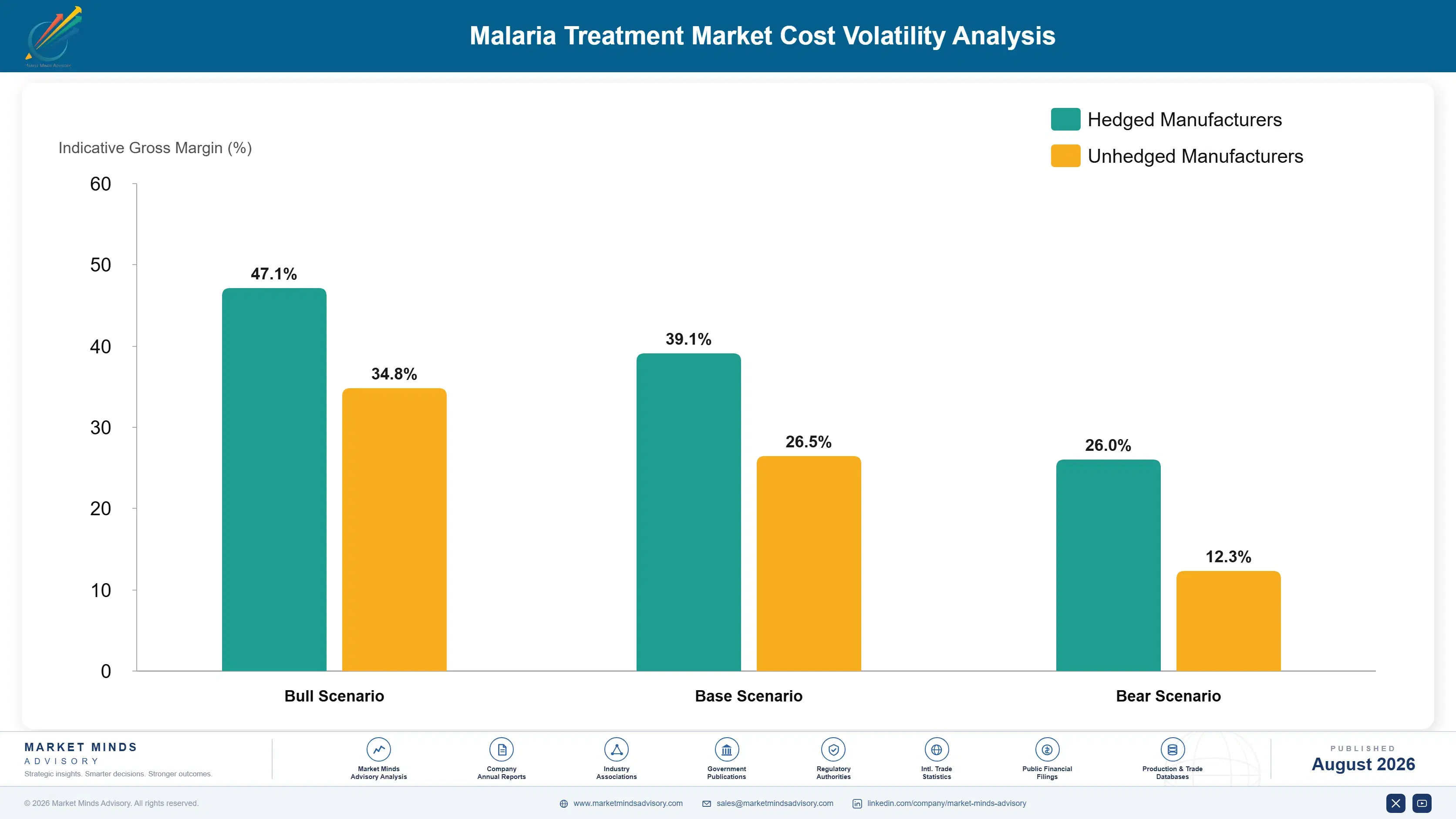
Artemisinin Plant Extract and API Cost Exposure

Artemisinin plant extract, synthetic active pharmaceutical ingredient production, and finished dose formulation together represent roughly 44% of cost of goods sold for antimalarial manufacturers, with artemisinin sourcing concentrated among a small group of specialty agricultural and extraction suppliers primarily based in East Africa and Southeast Asia. Manufacturers with vertically integrated extraction capability face materially less exposure to this concentration each cycle.
Artemisinin plant extract prices have historically shown significant volatility tied to harvest yields and planting decisions, with the World Health Organization noting supply and price swings have periodically disrupted procurement planning, though semi-synthetic artemisinin production has helped moderate this volatility somewhat through 2024 and 2025. Manufacturers report semi-synthetic production has meaningfully reduced their exposure to future harvest-driven price shocks previously to smaller producers lacking comparable technology access.

Smaller generic manufacturers without long-term artemisinin supply contracts face materially higher input cost exposure than larger manufacturers who can negotiate favorable multi-year agreements given their broader procurement volume, creating a durable cost disadvantage for smaller producers competing for the same low-margin tender contracts. This cost disadvantage compounds the already thin margins that characterize most tender-driven procurement volume.
malaria-treatment-market-cost-volatility-analysis-1787305880095

Semi-Synthetic Artemisinin Production Investment

Larger manufacturers are investing in semi-synthetic artemisinin production technology that reduces dependency on plant-derived extract subject to harvest volatility, insulating production costs from agricultural supply swings that smaller competitors remain fully exposed to. This approach has become standard practice among the largest manufacturers globally over the past decade, particularly those with strong purchasing scale available to negotiate favorable terms.

Long-Term Fixed Pricing Agricultural Contracts

Manufacturers are signing multi-year fixed pricing agreements directly with artemisinin-growing farming cooperatives, stabilizing input costs and securing reliable supply volume ahead of anticipated procurement tender cycles. This strategy has become increasingly common as manufacturers seek more predictable long-term input costs, reducing exposure to agricultural harvest volatility that smaller manufacturers cannot easily manage overall too.

Diversified Sourcing Across Growing Regions

Manufacturers are diversifying artemisinin sourcing across multiple growing regions in East Africa and Southeast Asia to reduce exposure to any single region's weather or political supply disruption. This diversification has become standard practice among the largest manufacturers managing global tender volume, spreading risk across multiple weather and political environments simultaneously and political disruption risk.

Portfolio Architecture for Margin Defence

This market organizes into three commercial tiers spanning generic artemisinin combination therapies at the volume end, WHO-prequalified branded combination therapies occupying the premium middle tier, and next-generation resistance-response and chemoprevention-specific formulations capturing the strongest margins at the top of the portfolio architecture overall. Manufacturers increasingly structure pricing and pipeline investment explicitly around this three-tier architecture. This explicit str
Volume and premium tiers pull manufacturers in different directions: generic combination therapies sustain baseline procurement volume across cost-sensitive national tenders, while prequalified branded formulations and next-generation candidates deliver materially stronger margins that increasingly determine which companies can fund the pipeline research the category requires. Most manufacturers now allocate a growing share of research budget toward the top two tiers. This dynamic increasingly shapes how manufacturers prioritize capital across their global portfolio decisions.

The highest-value pools concentrate around next-generation resistance-response candidates and chemoprevention-specific formulations sold under philanthropic co-funded partnerships, where innovation urgency and dedicated manufacturing investment together sustain premium positioning that generic combination therapies simply cannot match across comparable procurement volume. Manufacturers unable to compete in this tier increasingly struggle to sustain meaningful category leadership.

Volume / Commodity-Adjacent Tier

Generic artemisinin combination therapies sold primarily into cost-sensitive national and multilateral procurement tenders broadly. This tier represents the largest treatment course volume by unit count across all endemic markets each procurement cycle.
Gross Margin: 6-12%

Premium / Certified Tier

WHO-prequalified branded combination therapies sold under established procurement relationships with major global health funding agencies. Procurement agencies favor this tier once prequalification and supply reliability are firmly established across national programmes.
Gross Margin: 14-20%

Sustainability / Regulatory / Next-Generation Tier

Next-generation resistance-response and chemoprevention-specific formulations commanding the strongest positioning given innovation urgency. This tier increasingly determines which companies can fund the pipeline research the category requires going forward for the wider industry.
Gross Margin: 22-30%
malaria-treatment-market-portfolio-architecture-1787305880595

High-value Sub-segments and Strategic Watch-out

Next-Generation Antimalarial Pipeline Therapies

The fastest-growing segment by research investment, combining resistance-response urgency with intense philanthropic and global health funder interest, though still years from broad commercial deployment. Global health funders are allocating a growing share of research investment toward this segment specifically, and funders continue prioritizing this segment above nearly all others.
Gross Margin: 22-30%

Seasonal Chemoprevention Formulations

Strong growth driven by expanding programme coverage across Sahel region countries approaching universal eligible population coverage over time. Manufacturers are investing in dedicated production lines to further differentiate within this expanding segment, since dosing and packaging requirements differ meaningfully from standard treatment courses today now.
Gross Margin: 16-22%

Artemisinin-Based Combination Therapies

The volume core segment sustaining the majority of procurement volume even as resistance concerns gradually shift portfolio composition toward diversified alternatives. Manufacturers rely on this segment to sustain baseline procurement relationships even as newer options expand, and this role remains commercially essential despite slower relative growth overall.
Gross Margin: 8-14%

Malaria Prophylaxis for Travelers

A strategic watch-out segment facing modest growth ceiling given its narrow traveler-focused addressable population, though it remains a stable, higher-margin niche commercially. Manufacturers watch this segment for steady, predictable revenue given its narrow but stable addressable population, since its addressable population rarely fluctuates with broader disease burden trends.
Gross Margin: 18-25%

Tender-Cycle Procurement Revenue Streams

Procurement tender wins function as an annuity anchor across multi-year funding cycles: securing a major national or multilateral tender generates recurring treatment course revenue throughout the contract period, and losing a tender to a competitor can eliminate that revenue stream entirely until the next procurement cycle begins. Manufacturers increasingly price initial tender bids competitively to secure this multi-year revenue relationship. This dynamic increasingly shapes how manufacturers
Adoption depth varies considerably by country capacity: high-burden countries with mature national malaria control programmes deploy the newest combination therapies and chemoprevention protocols earliest, while lower-capacity countries more often continue established first-line regimens until donor-funded technical assistance supports protocol transition. Manufacturers tailor commercial and technical support investment differently across each of these distinct country tiers.

A generational shift is underway as public health officials trained during the resistance-response era enter national malaria programme leadership expecting diversified combination therapy portfolios as standard practice, gradually normalizing an approach that earlier-trained officials historically associated only with a single dominant first-line regimen. Manufacturers are adapting research and advocacy investment accordingly to reach this newly influential policy cohort.
malaria-treatment-market-end-use-penetration-index-1787305881081

Where Malaria Treatment Economics Are Heading

These are among the four positions where our research anticipates prominent divergence between winners and laggards over the coming forecast period. Each is grounded in the demand model, the regulatory perimeter, and the announced capacity pipeline.
01 / RESISTANCE RESPONSE STRATEGY

Portfolio diversification will keep expanding beyond single-regimen protocols

National malaria programmes diversifying combination therapy portfolios are directly responding to genuine resistance biology concerns, and this trajectory shows no sign of reversing given confirmed resistance markers now spanning nine countries and expanding. Single-regimen protocols will persist in lower-resistance-risk countries rather than disappearing from the category entirely. Manufacturers overweighted toward a single legacy combination therapy face gradually shrinking core category share over the coming decade regardless of overall market growth, across nearly every national programme MMA analysts reviewed this cycle.
02 / DONOR FUNDING DEPENDENCY

Donor funding stability will remain the category's central swing factor

Global health funding mechanism replenishment cycles represent the single largest source of demand volatility in this category, since the vast majority of procurement volume across the highest-burden countries depends entirely on external donor commitment rather than domestic health budget capacity. Manufacturers with diversified national tender relationships are better positioned to weather funding volatility than those concentrated in a small number of donor-dependent markets. Expect donor funding stability to remain the most closely watched indicator of this category's near-term commercial trajectory.
03 / CHEMOPREVENTION VOLUME EXPANSION

Chemoprevention will keep growing faster than standard treatment volume

Seasonal chemoprevention programme expansion toward universal eligible population coverage represents a genuinely distinct and faster-growing demand vector than standard treatment course volume, since prevention investment continues attracting strong donor support given its demonstrated mortality reduction impact. Manufacturers with dedicated chemoprevention manufacturing capacity are best positioned to capture this expanding volume. Expect chemoprevention volume growth to meaningfully outpace standard treatment course growth through most of the current forecast period ahead within this rapidly evolving global health procurement category overall within this rapidly evolving global health procurement category worldwide overall.
04 / DOMESTIC MANUFACTURING SHIFT

African domestic manufacturing will gradually reshape competitive dynamics

African governments and regional health bodies increasingly prioritizing domestic pharmaceutical manufacturing capacity are gradually building competitive alternatives to established international manufacturers, a trend that could meaningfully reshape tender competition over the coming decade as domestic producers achieve WHO prequalification. International manufacturers without domestic partnership strategies risk losing preferred positioning with policymakers. Expect domestic manufacturing partnerships to become an increasingly important strategic consideration for international manufacturers competing for African national tenders over the coming several years across the wider region over the coming several years across the wider African region.

Engagement Snapshot From the Field

A live engagement with an industry participant carrying material or product regulatory and market exposure ahead of a defining policy shift, showing how our research translates into a defensible multi-year portfolio strategy.
MARKET MINDS ADVISORY · CLIENT ENGAGEMENT SUMMARY
Malaria Treatment Producer Strategic Portfolio Review and Transition Roadmap 2026·Investment Scenario on Malaria Treatment Exposure Evaluation 2025-26
CLIENT PROFILE
The client is a national malaria control programme in a high-burden East African country, managing annual antimalarial procurement spend of approximately $42 million (client-reported, unverified by MMA) funded primarily through Global Fund and domestic budget allocations. Leadership sought guidance on diversifying its combination therapy portfolio in response to confirmed local artemisinin resistance markers prior to this engagement beginning in early 2025.
STRATEGIC CHALLENGE
The programme had relied on a single first-line combination therapy for over a decade, and leadership was uncertain how to sequence a transition to a diversified multi-regimen portfolio without disrupting existing supply chains, health worker training, and patient familiarity with current treatment protocols across the country given the country's limited health system administrative capacity.
MMA APPROACH
MMA's team benchmarked comparable national programme diversification transitions, modeled procurement cost and supply chain implications under phased versus simultaneous regimen introduction scenarios, and assessed manufacturer capacity to reliably supply multiple distinct combination therapies simultaneously across the country's health system to present to national health ministry leadership to present to national health ministry leadership for approval.
KEY FINDINGS
  1. Regions with the highest confirmed resistance marker prevalence showed the clearest clinical case for immediate second-regimen introduction ahead of national rollout elsewhere.
  2. Phased regional introduction reduced projected health worker retraining burden considerably compared to simultaneous nationwide multi-regimen rollout across all facilities at once compared to a single nationwide transition.
  3. Securing supply commitments from two separate prequalified manufacturers reduced projected stockout risk by roughly 34% compared to single-manufacturer dependency for the new regimen.
  4. Community health worker and patient education investment proved essential to maintaining treatment adherence during the regimen transition period across affected regions during the initial transition phase.
CLIENT PROFILE
The client is a national malaria control programme in a high-burden East African country, managing annual antimalarial procurement spend of approximately $42 million (client-reported, unverified by MMA) funded primarily through Global Fund and domestic budget allocations. Leadership sought guidance on diversifying its combination therapy portfolio in response to confirmed local artemisinin resistance markers prior to this engagement beginning in early 2025.
STRATEGIC CHALLENGE
The programme had relied on a single first-line combination therapy for over a decade, and leadership was uncertain how to sequence a transition to a diversified multi-regimen portfolio without disrupting existing supply chains, health worker training, and patient familiarity with current treatment protocols across the country given the country's limited health system administrative capacity.
MMA APPROACH
MMA's team benchmarked comparable national programme diversification transitions, modeled procurement cost and supply chain implications under phased versus simultaneous regimen introduction scenarios, and assessed manufacturer capacity to reliably supply multiple distinct combination therapies simultaneously across the country's health system to present to national health ministry leadership to present to national health ministry leadership for approval.
KEY FINDINGS
  1. Regions with the highest confirmed resistance marker prevalence showed the clearest clinical case for immediate second-regimen introduction ahead of national rollout elsewhere.
  2. Phased regional introduction reduced projected health worker retraining burden considerably compared to simultaneous nationwide multi-regimen rollout across all facilities at once compared to a single nationwide transition.
  3. Securing supply commitments from two separate prequalified manufacturers reduced projected stockout risk by roughly 34% compared to single-manufacturer dependency for the new regimen.
  4. Community health worker and patient education investment proved essential to maintaining treatment adherence during the regimen transition period across affected regions during the initial transition phase.
RECOMMENDED STRATEGY
Phase 1: Phase 1 (Months 1-6): Introduce the second combination therapy regimen in the three regions with highest confirmed resistance marker prevalence. Phase 2: Phase 2 (Months 7-14): Expand second-regimen availability to moderate-resistance regions while monitoring clinical outcomes from initial rollout areas and community health worker training. Phase 3: Phase 3 (Months 15-24): Complete nationwide multi-regimen portfolio rollout, finalizing supply chain and health worker training infrastructure nationwide across the health system.
OUTCOME
The programme completed phased rollout across all three initial priority regions within the recommended timeline, reporting stable treatment supply and improved clinical outcome tracking ahead of full nationwide expansion (client-reported, unverified by MMA) while maintaining consistent community health worker engagement throughout the transition period while maintaining engagement throughout the entire transition period.

Frequently Asked Questions

Foundational context covering the market sizes, CAGR, scope, country, region and competition that inform every finding below. This section is provided to cover basics and most often pre-purchase conversations, answered from the MMA Primary Research Dataset.

What is the current size of the Malaria Treatment Market?

The global malaria treatment market was valued at approximately $1.8 billion in 2025. This includes artemisinin combination therapies, chemoprevention formulations, and severe malaria injectable treatments.

How large will the Malaria Treatment Market be by 2036?

The market is projected to reach approximately $3.56 billion by 2036. This reflects continued chemoprevention expansion and resistance-driven pipeline diversification worldwide under continued chemoprevention expansion and resistance-response investment.

What is the CAGR for the Malaria Treatment Market 2026 to 2036?

The market is expected to grow at a compound annual growth rate of 6.4% between 2026 and 2036. This reflects steady demand from expanding prevention and treatment programmes.

Which segment is growing fastest?

Next-generation antimalarial pipeline therapies are the fastest-growing segment, expanding at approximately 12.8% annually. This reflects accelerated resistance-response development investment targeting artemisinin-resistant strains directly for the first time.

Who are the major companies in the Malaria Treatment Market?

Leading companies include Novartis, Sanofi, Cipla, Ipca Laboratories, and Fosun Pharma. Together they account for roughly 58% of global procurement volume across the global antimalarial procurement landscape worldwide.

Which country is growing fastest?

Nigeria is the fastest-growing major market at an estimated 9.8% CAGR, driven by its substantial and expanding malaria burden alongside growing national and donor-funded treatment access.

Report Segmentation Architecture

The full report scope spans multiple orthogonal segmentation dimensions, with cross-tabulated demand data provided for each dimension pair. Coverage extends further to regional breakdowns, trend trajectories, and the competitive detail needed to support segment-level decision-making.

By Treatment Category

  • Artemisinin-Based Combination Therapies
  • Seasonal Chemoprevention Formulations
  • Severe Malaria Injectable Therapies
  • Non-Artemisinin Combination Therapies
  • Malaria Prophylaxis for Travelers
  • Next-Generation Pipeline Candidates

By End-Use Channel

  • National Malaria Control Programmes
  • Global Health Procurement Agencies
  • Hospital and Clinic Treatment Settings
  • Community Health Worker Distribution
  • Travel Medicine Clinics

By Commercial Dimension

  • Multilateral Tender Procurement
  • National Government Procurement
  • Private Sector Distribution
  • Philanthropic Co-Funded Programmes

By Region

  • North America
  • Western Europe
  • East Asia
  • South Asia and Pacific
  • Latin America
  • Middle East and Africa
  • Eastern Europe

Scope, Methodology, and Coverage

Every figure in this report is reproducible from documented input assumptions. The scope below maps the historical period, the forecast horizon, the segmentation dimensions, and the countries covered, alongside the underlying primary and qualitative methodology.
Historical Period
2020 to 2025
Forecast Period
2026 to 2036
Base Year
2025 (USD billions; MMA Primary Research Dataset, August 2026)
Market Definition
This report covers pharmacological therapies used specifically in the treatment and chemoprevention of malaria, including artemisinin-based combination therapies, severe malaria injectable formulations, seasonal chemoprevention regimens, and next-generation pipeline candidates. It excludes malaria diagnostic testing products, insecticide-treated bed nets, and vector control interventions.
Quantitative Units
USD billions (current prices); treatment course volume; average cost per treatment course
Segmentation Dimensions
By Treatment Category; By End-Use Channel; By Commercial Dimension; By Region
Regions Covered
North America, Western Europe, East Asia, South Asia and Pacific, Latin America, Middle East and Africa, Eastern Europe
Countries Covered
USA, China, Germany, France, UK, Japan, South Korea, India, Australia, Canada, Brazil, Mexico, Indonesia, Vietnam, Thailand, Malaysia, UAE, Saudi Arabia, South Africa, Nigeria, Turkey, Poland, Netherlands, Italy, Spain, Sweden, Switzerland, Argentina, Colombia, Singapore, and additional markets relevant to this sector
Key Companies Profiled
Novartis AG, Sanofi S.A., Cipla Limited, Ipca Laboratories Limited, Fosun Pharma, Strides Pharma Science Limited, Viatris Inc., Macleods Pharmaceuticals Limited, Ajanta Pharma Limited, Micro Labs Limited, Zydus Lifesciences Ltd., Cadila Pharmaceuticals Limited, Emcure Pharmaceuticals Limited, Sun Pharmaceutical Industries Ltd., Shin Poong Pharmaceutical Co., Ltd., Amivas LLC, Bliss GVS Pharma Limited, Mankind Pharma Limited, Aurobindo Pharma Limited, Hetero Drugs Limited
Quantitative Methodology
Primary survey, n=3,800 respondents, Q4 2025, six countries; demand-side model with trade association cross-validation
Qualitative Methodology
47 expert interviews, Q4 2025; applied to validate demand model assumptions, identify emerging dynamics, and assess competitive positioning
Report Format
PDF and XLSX data workbook (Word format preview document)
Publisher
Market Minds Advisory
Report Code
MMA-2026-HLT-123
Published
August 2026
Contact
sales@marketmindsadvisory.com | www.marketmindsadvisory.com

Purchase the full Malaria Treatment Market Report (2026 to 2036).

The full report provides detailed treatment category segmentation, procurement channel pattern analysis, and country-level disease burden tracking across all seven regions covered in this study. It includes manufacturer-level competitive benchmarking based on prequalification status and manufacturing capacity. Subscribers receive quarterly updates tracking resistance marker detection and tender award activity as they occur. A companion dataset provides treatment course volume estimates by country for detailed market sizing purposes A dedicated analyst contact is also available to support custom data requests beyond the standard deliverable scope provided.
Treatment category segmentation breakdown by type
Procurement channel pattern trend analysis service
Country-level disease burden tracking and comparisons
Manufacturer competitive benchmarking scorecards and overview
Quarterly resistance and tender update service
Treatment course volume dataset by country

Built For The People Who Decide

From boardroom strategy to bench-side execution, this report is read cover-to-cover by leaders shaping the next decade of their industry, turning demand scenarios, market dynamics and valuation benchmarks into decisions.
CXOs/ Presidents/ VPs/ Managers
M&A and Corporate Development
Strategy Teams and R&D Heads
Procurement and Product Directors
Regulatory and Compliance Leaders
Investor Relations and Equity Analysts