Market Minds Advisory
Japan Machine Glazed Paper Market

Japan Machine Glazed Paper Market: Nineteen Cylinders and a One-Way Ratchet

Capacity here is defined by a small number of polished iron drums that nobody in Japan has installed for decades. When one stops, that capacity never comes back, and demand decline is the slower force.

Lead Analyst

Bilal Shaikh

Published

September 2026

Make Smarter Decisions with Customized Research Insights

Request a free sample report and evaluate market opportunities, growth trends, and competitive dynamics relevant to your business needs.

2025 MARKET VALUE$0.8BMarket Size 2025
2036 FORECAST VALUE$1.1BBase Case , 2026 to 2036
CAGR 2026 TO 20363.4 %Bull 4.6% / Bear 2.2%
INCREMENTAL OPPORTUNITY$0.3BNet 10- year value creation
EXPANSION MULTIPLE1.40x2036 value over 2026 base
Strategic Levers
M&A Pipeline
Regional Outlook
Country Rankings
Competitive Intelligence
Segmental Deep-dive
Call-Us : 91 93563 13602

Executive Snapshot and Market Trajectory

Machine glazed paper is dried against one enormous polished cylinder, and the sheet comes off that surface at roughly nine tenths of a micron roughness. No conventional dryer section reaches it. Nineteen machines in Japan can do this and nobody has installed a new one in decades.
Growth here comes from grade mix rather than from volume, because Japanese paper consumption keeps falling steadily. Release liner base grades grow fastest of all at 5.1%, exactly 1.50 times the market rate, on adhesive tape and label demand, where silicone holdout decides everything. Medical and sterilisation grades follow at 4.4% on hospital procedure volumes. Around 82% of all output stays inside Japan, which is genuinely unusual for a Japanese specialty paper grade.
Concentration reaches 68% across the top five measured on annual Japanese machine glazed tonnage, held by the large integrated paper groups. The commercially interesting feature is that capacity leaves faster than demand does, because a retired Yankee cylinder is never replaced, which supports pricing in a market everybody assumes is simply declining. A retired cylinder removes that capability from the country, and customers discover there is nowhere else.
Market Definition
This market covers machine glazed paper produced in Japan on Yankee cylinder machines, spanning food wrapping grades, release liner base, machine glazed kraft industrial grades, medical and sterilisation grades, speciality coated base, and interleaving and protective grades. Scope is measured at mill realised prices for reel and sheeted output. Conventional dryer section papers, glassine produced by supercalendering alone, tissue and hygiene grades, converted products, and machine glazed paper imported into Japan are excluded.
Base Year Value
$0.8B in 2025 (MMA Primary Research Dataset, August 2026)
Forecast Period
2026 to 2036, eleven discrete annual values
CAGR
3.4% base case. Bull 4.6%. Bear 2.2%.
Fastest Growth Segment
Release Liner Base Grades: 5.1% CAGR
Fastest Growth Country
Japan: 3.4% CAGR
Fastest Growth Region
South Asia and Pacific: 5.5% CAGR
Largest Region
East Asia: 71% of 2025 global value
Market Leaders
Nippon Paper Industries. Oji Holdings. Daio Paper. Hokuetsu Corporation. Mitsubishi Paper Mills. Source: MMA Analysis based on company annual reports.
Primary Survey
n=3,800 procurement and R&D decision-makers, Q4 2025, six countries
Methodology
Demand-side build-up, cross-validated against public data, 47 expert interviews

Japan Machine Glazed Paper Market Forecast Scenarios

machine-glazed-paper-industry-in-japan-size-forecast-scenario-1787299394267
The 2020 to 2025 period was shaped by capacity leaving rather than by demand arriving. Japanese paper consumption continued its long decline while several machine glazed assets were retired permanently, since a worn Yankee cylinder is not economically replaceable at Japanese scale. Energy costs rose sharply against a drying-intensive process. A 2.3% historical rate reflects a market where price held better than volume did.
Three mechanisms carry the 3.4% base case. Release liner demand is the largest, driven by Japanese adhesive tape and label manufacture where silicone holdout requirements favour a closed glazed surface. Medical and sterilisation grades are the second, supported by an ageing population and by hospital procedure volumes that keep rising. And capacity attrition is the third mechanism, which sustains pricing in a way that falling demand alone would never manage.
The 4.6% bull case rests on film release liner substitution reversing on recyclability grounds, which would move volume back toward paper base at prices current capacity could not easily serve. The 2.2% bear case is a further machine closure removing a grade capability entirely, since with nineteen cylinders operating the loss of any one changes what the country can produce at all.

What One Polished Cylinder Produces

The whole grade exists because of one piece of equipment. A Yankee cylinder is a polished iron drum several metres across, and the wet web is pressed against it and dried in a single pass, which transfers that polished surface to one side of the sheet. The glazed face comes off around nine tenths of a micron, while the reverse stays open and absorbent. That asymmetry is the product.
TOP FIVE CONCENTRATION68%Concentrated among the large Japanese integrated paper groups
OPERATING YANKEE CYLINDERS19Machines in Japan capable of producing machine glazed grades
GLAZED SIDE ROUGHNESS0.9 micronsSurface achieved against the polished Yankee cylinder face
SILICONE HOLDOUT REQUIREMENT96%Coating retained on the surface rather than absorbed into fibre
MACHINE SPEED PENALTY38%Slower than a conventional dryer section at comparable grammage
DOMESTIC CONSUMPTION SHARE82%Japanese machine glazed output consumed within the domestic market
The commercial consequence is unusual. Nineteen machines in Japan can produce these grades, nobody has installed a new Yankee for machine glazed production in decades, and replacing one is not economic at Japanese volumes. Capacity therefore only ever falls. In a market where demand also falls, the question is which declines faster, and so far it has been capacity, which is why pricing has held better than tonnage.
Two technical facts govern the mix. Silicone holdout near 96% is what release liner customers actually buy, and only a closed glazed surface delivers it. And the process runs around 38% slower than a conventional dryer section, because all the drying happens on one cylinder rather than across many.
"People model this as a declining paper grade and get the pricing badly wrong. The relevant number is not Japanese paper consumption, it is how many Yankee cylinders are still turning. When one stops, a grade capability leaves the country permanently, and the customers who needed it discover there is nowhere else to go."
Director. Specialty Papers and Industrial Grades Practice · MMA Packaging and Sp

Market Trends

Release Liner Base Demand Holds Against A Falling Market

Japanese adhesive tape and label manufacture remains substantial and sophisticated, and release liner base is the one machine glazed grade with genuinely growing demand. What those customers buy is silicone holdout: coating that sits on the surface rather than soaking into the fibre, which is what a closed glazed face delivers at around 96% retention. Poor holdout wastes expensive silicone and produces inconsistent release. Growth runs at 5.1% against a market rate of 3.4%, and it is the grade most worth defending capacity for. Poor holdout wastes silicone costing more than the paper.
Market Impact: Medical grades grow at 4.4%
Capacity Attrition Supports Pricing In A Declining Market

Nineteen Yankee cylinders remain in operation across Japan and the number has only ever fallen, because a worn cylinder costs an enormous sum, takes years to procure, and cannot be justified against domestic volumes that keep shrinking. Each closure removes capability permanently rather than temporarily. That produces the unusual situation of a declining market where supply tightens faster than demand does, and where mills consequently hold price on grades that conventional analysis would expect to be collapsing. Mills consequently hold price on grades conventional analysis expects to collapse, which surprises everybody analysing it from outside.
Market Impact: Required zero reformulation across

Market Opportunities and Growth Drivers

Medical And Sterilisation Grades Track An Ageing Population

Japan's demographic profile drives hospital procedure volumes upward even as the total population falls, and sterilisation wrap, medical pouches, and instrument interleaving all consume machine glazed grades with tightly controlled porosity and cleanliness. These are qualified products with documented specifications rather than commodity paper, which makes them defensible against both imports and substitution. Growth runs at 4.4% against a market rate of 3.4%. Hospital procurement audits mill quality systems directly, which favours the large integrated groups already holding that infrastructure. Imports and substitution both struggle against that qualification at scale.
Market Impact: Only 19 cylinders remain operating

Fluorochemical Withdrawal Favours Mechanically Closed Surfaces

Grease resistance in food wrapping historically came from fluorochemical treatment, which has been withdrawn across food contact applications. A heavily glazed surface resists grease mechanically because the sheet is closed rather than because anything was applied to it, which puts machine glazed grades in the same advantageous position that refined greaseproof occupies. Japanese food wrapping applications including confectionery, rice products, and prepared food all benefit. The grade needed no reformulation at all while coated competitors required requalification across their entire ranges. Coated competitors required requalification across entire ranges, while this grade needed nothing at all.
Market Impact: Output runs 38% below conventional

Market Restraints and Challenges

A Retired Cylinder Removes Capability From The Country

Nineteen Yankee cylinders operate in Japan and each closure is permanent, because procurement of a new cylinder runs to years and an enormous capital sum that domestic volumes cannot justify. The root cause is that machine glazed capacity was installed when Japanese paper consumption was far larger and has never needed replacing until now. Commercial impact falls on customers rather than mills, since a lost grade capability sends them to imports or to substitution. Mitigation runs through cylinder resurfacing, doctoring improvements, and consolidating grades onto fewer surviving machines. Customers rather than mills carry the consequence here.
Market Impact: Holdout reaches 96% retention

Single-Cylinder Drying Costs Nearly Forty Percent Of Speed

All the drying in a machine glazed process happens against one cylinder rather than across a conventional multi-dryer section, which caps output at roughly 38% below a comparable conventional machine at the same grammage. The root cause is heat transfer area, and no operational improvement changes it. Commercial impact is a permanently higher conversion cost per tonne that the grade premium must cover. Mitigation runs through steam system optimisation, hood air balance, coating rather than pressing where finish permits, and grade mix that maximises value per machine hour. Heat transfer area is the constraint and nothing changes it.
Market Impact: Only 19 cylinders remain operating
4 additional market trends, 2 additional growth drivers, and 3 additional restraints and challenges are covered in the full report. Contact sales@marketmindsadvisory.com to access the complete intelligence.

Segment CAGR and Growth Architecture

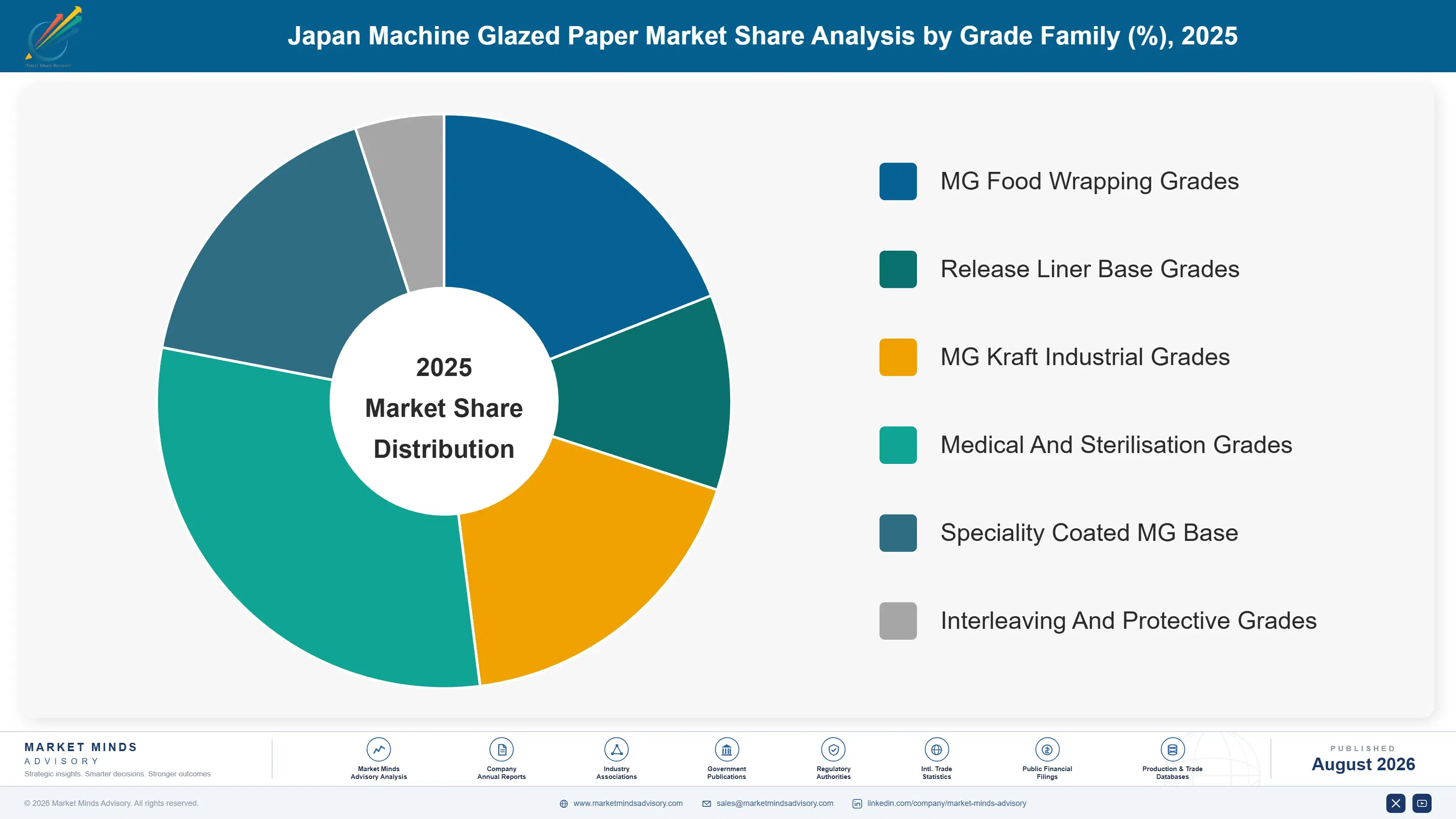
Segmentation follows grade family, because each family carries its own surface specification, qualification burden, customer type, and value per tonne. Basis weight and sheet width both cut across every grade rather than separating them, so neither works as a workable primary dimension for a market this narrow and this capacity-constrained. Six grade families result, and their value per tonne diverges.
machine-glazed-paper-industry-in-japan-market-share-analysis-1787299394842

Release Liner Base Grades

The fastest grade family at 5.1%, exactly 1.50 times the market rate, and the only one where demand is genuinely growing rather than merely holding. Japanese adhesive tape and label manufacture is substantial, and what those customers require is silicone holdout near 96%, meaning coating that stays on the surface instead of soaking into the fibre. A closed glazed face delivers that where an open sheet cannot, and poor holdout wastes silicone that costs far more than the paper beneath it. Film liner competes hard on dimensional stability and increasingly loses ground on recyclability, which is where the next few years will be decided. Silicone costs far more than the paper beneath it.
CAGR 5.1%

Medical And Sterilisation Grades

Second fastest at 4.4%, growing on Japanese hospital procedure volumes that keep rising even as the population falls. Sterilisation wrap requires controlled porosity that permits steam or ethylene oxide penetration while blocking bacterial ingress afterwards, which is a genuinely narrow specification window. Cleanliness, extractables, and lot traceability are all audited by hospital procurement rather than assumed. That qualification burden protects the grade against both imports and substitution more effectively than any technical property does, and it favours the large integrated groups whose quality systems already satisfy medical device documentation requirements without additional investment. Porosity must admit steam while blocking bacterial ingress, which is a genuinely narrow specification window, and hospital procurement audits it directly.
CAGR 4.4%
Full segment breakdown across 6 segments available in the complete report.

Regional Architecture and Country Demand Map

This is a single-country market, so the seven-region table cannot describe demand geography at all here. It has been repurposed to show where Japanese machine glazed output travels, which places every share well outside its normal framework band. Domestic consumption dominates in a way unusual for Japanese specialty paper.

East Asia

Seventy-one percent of Japanese machine glazed output stays within East Asia, far outside the framework band because this table shows destination rather than demand geography. Domestic Japanese consumption accounts for 82% of total output by itself, which is unusually high for a Japanese specialty paper and reflects how much of this grade serves adhesive tape, medical, and food wrapping customers inside the country. Korean and Taiwanese adhesive tape manufacture takes most of the regional export. Growth at 4.2% runs above the market rate on release liner and medical demand rather than on any recovery in food wrapping volume. Korean and Taiwanese adhesive tape manufacture takes most regional export, and both value holdout consistency highly.
Share: 71% | CAGR: 4.2% (2026 to 2036)

South Asia and Pacific

Eleven percent of output travels to South and Southeast Asia, above the framework band under this repurposed reading, principally to adhesive tape and label converters across Thailand. Malaysia. Vietnam, and increasingly India. Japanese liner base commands a premium in these markets on silicone holdout consistency, which local grades do not reliably match. Australian medical and food packaging converters take a smaller share. Growth at 5.5% is the highest of any destination, driven by adhesive tape manufacturing capacity that continues relocating into the region from higher-cost locations elsewhere. Local grades do not reliably match Japanese holdout consistency, which is what sustains the premium here, and adhesive tape capacity keeps relocating into the region.
Share: 11% | CAGR: 5.5% (2026 to 2036)
Regional intelligence for 5 additional markets available in the complete report: North America, Western Europe, Middle East and Africa, Latin America, Eastern Europe. Contact sales@marketmindsadvisory.com.
machine-glazed-paper-industry-in-japan-country-cagr-analysis-1787299395365

Four Levers on Nineteen Machines

Pulp is bought on published indices and every Japanese mill pays similarly, so purchasing settles nothing here. Value comes from pricing against capacity scarcity, from moving mix toward release liner, from extending cylinder life, and from qualifying medical grades that imports cannot displace. Four levers follow, and two of them concern one drum, rather than anything about the paper.

Price Against Capacity Scarcity Rather Than Against Pulp

Machine glazed capacity in Japan only ever falls, since a retired Yankee cylinder is never replaced at domestic volumes. Customers who lose a grade capability face imports at long lead times or substitution that requires requalification, and both are worse than paying more. Mills pricing against pulp cost and conventional paper benchmarks are ignoring the position they actually hold. Grades where fewer than three machines remain capable support price increases of 12 to 18% that customers accept once the alternative is examined properly. Both alternatives cost the customer more than the increase.
Market Impact: Supports 12 to 18% higher realised

Shift Machine Time Toward Release Liner Base Grades

Output on a machine glazed asset runs around 38% below a conventional machine, which makes value per machine hour the only measure that matters when allocating grades. Release liner base grows at 5.1% while food wrapping and interleaving decline, and it carries better realised price per tonne on the same machine time. Mix shift costs nothing beyond scheduling discipline and grade qualification work with liner converters. Mills allocating machine time by historical customer relationship rather than by contribution per hour are giving away their scarcest asset. Machine hours are the scarcest asset any mill holds.
Market Impact: Liner base grows at 5.1% against 3.

Extend Cylinder Life Through Resurfacing Rather Than Replacement

A Yankee cylinder wears at the surface long before the casting fails, and resurfacing through grinding and metallising restores the glazing performance at a fraction of replacement cost. Replacement is effectively unavailable at Japanese volumes, so resurfacing is not an economy measure but the only route to continued operation. Programmes cost around 4 million dollars per cylinder against replacement that would exceed ten times that and take years. Mills deferring resurfacing until finish quality visibly deteriorates have usually left it too late already. Energy savings alone recover part of the cost.
Market Impact: Resurfacing costs 4 million dollars

Qualify Medical Grades That Imports Cannot Easily Displace

Sterilisation and medical packaging grades carry porosity specifications, extractables documentation, and lot traceability that hospital procurement audits directly rather than accepting on assurance. That qualification burden is a barrier imports struggle to cross, and it protects volume in a way no technical property alone would. Grades grow at 4.4% on hospital procedure volumes that rise with an ageing population. Establishing medical documentation capability costs roughly 3 million dollars and converts a commodity tonne into a qualified one permanently. Hospital procurement audits mill quality systems directly, which favours groups already holding that infrastructure.
Market Impact: Documentation capability costs roug

Who Controls the Margin Pool

Concentration reaches 68% across the top five measured on annual Japanese machine glazed tonnage, which is far higher than most paper categories and reflects how few assets exist. The large integrated groups hold most of the operating cylinders, and the remainder sit with specialty mills serving particular grade families. Nobody is entering, because entry would require installing a Yankee cylinder that no Japanese mill has justified in decades. Entry would require a cylinder nobody has justified
Competition runs on three fronts. Grade capability is the first, since a mill either has a machine that can produce a specification or it does not. Medical and release liner qualification is the second, both of which take years and protect volume afterwards. Cylinder condition is the third, and it is discussed almost nowhere despite determining what each mill can still make. Cylinder condition determines what each mill can still make.

Pressure builds from two directions. Film release liner competes directly against the fastest-growing paper grade. And imported machine glazed paper from European and Chinese mills arrives whenever a domestic capability disappears, which happens with each closure. Both pressures arrive whenever a domestic capability disappears, which happens with each closure.
machine-glazed-paper-industry-in-japan-company-positioning-matrix-1787299395878

Competitive Moat and Risk Dimensions

NIPPON PAPER INDUSTRIES

Moat: Multiple operating cylinders across grades

Holding several machine glazed assets rather than one means the company can allocate grades across machines, absorb a maintenance outage without losing a capability, and serve specification ranges a single-machine mill cannot cover. In a market where nineteen cylinders exist nationally, holding several of them is a position no competitor can construct. Nobody is installing new capacity to challenge it.
NIPPON PAPER INDUSTRIES

Risk: Assets ageing without replacement path

Every cylinder in the fleet is decades old and none has an economic replacement route at Japanese volumes, which means the position depends on maintenance and resurfacing extending asset life indefinitely. A casting failure rather than surface wear would remove capacity permanently and without warning.
OJI HOLDINGS

Moat: Integrated pulp and specialty conversion

Owning pulp supply alongside machine glazed production removes the furnish exposure independent specialty mills carry, and downstream conversion capability captures value beyond the reel. That integration matters more in a low-growth market where cost position rather than volume growth determines returns. It also funds the medical and release liner qualification work that smaller mills struggle to justify against uncertain volumes.
OJI HOLDINGS

Risk: Machine glazed competes internally

Machine glazed sits inside a very large paper and packaging portfolio where capital competes against businesses with better growth and larger addressable markets. Cylinder resurfacing and medical qualification both require investment that a corporate centre may reasonably decline. Specialty mills concentrating exclusively on these grades move faster on both, and in a capacity-constrained market speed of decision matters considerably.

Players Tracked

Prominent Players

Nippon Paper Industries
Oji Holdings
Daio Paper
Hokuetsu Corporation
Mitsubishi Paper Mills

Other Key Players

Rengo
Tokushu Tokai Paper
Marusumi Paper
Chuetsu Pulp and Paper
Lintec
Nitto Denko
Ahlstrom
Nordic Paper
Delfort Group
UPM Specialty Papers
Sappi
Stora Enso
Loparex
Mondi
Gascogne

Recent Developments

MARCH 2025

Japanese mill completes Yankee cylinder resurfacing programme

A Japanese specialty paper producer completed grinding and metallising of a Yankee cylinder at an existing machine glazed machine, restoring glazed surface performance without replacing the casting. The work was scheduled maintenance capital rather than any capacity expansion, and it extends the asset's operating life materially.
Signal: Resurfacing is the only route to continued
JUNE 2025

Adhesive tape manufacturer tightens silicone holdout specification

A Japanese adhesive tape producer raised its incoming specification for release liner base surface holdout, following silicone consumption analysis across its coating lines. The change was an internal cost and quality decision rather than any arrangement with a paper supplier, and it applies across all liner base purchases.
Signal: Silicone costs far more than the paper ben
SEPTEMBER 2025

Machine glazed capacity retired permanently at regional Japanese mill

A Japanese paper producer permanently closed a machine glazed production line, citing cylinder condition and domestic volume decline. The closure removed a grade capability from the domestic market rather than transferring it elsewhere, and affected customers have been directed toward imports or alternative specifications. Tonnage removed was not disclosed publicly.
Signal: Each closure removes capability from the c

Pulp. Steam, and a Very Large Drum

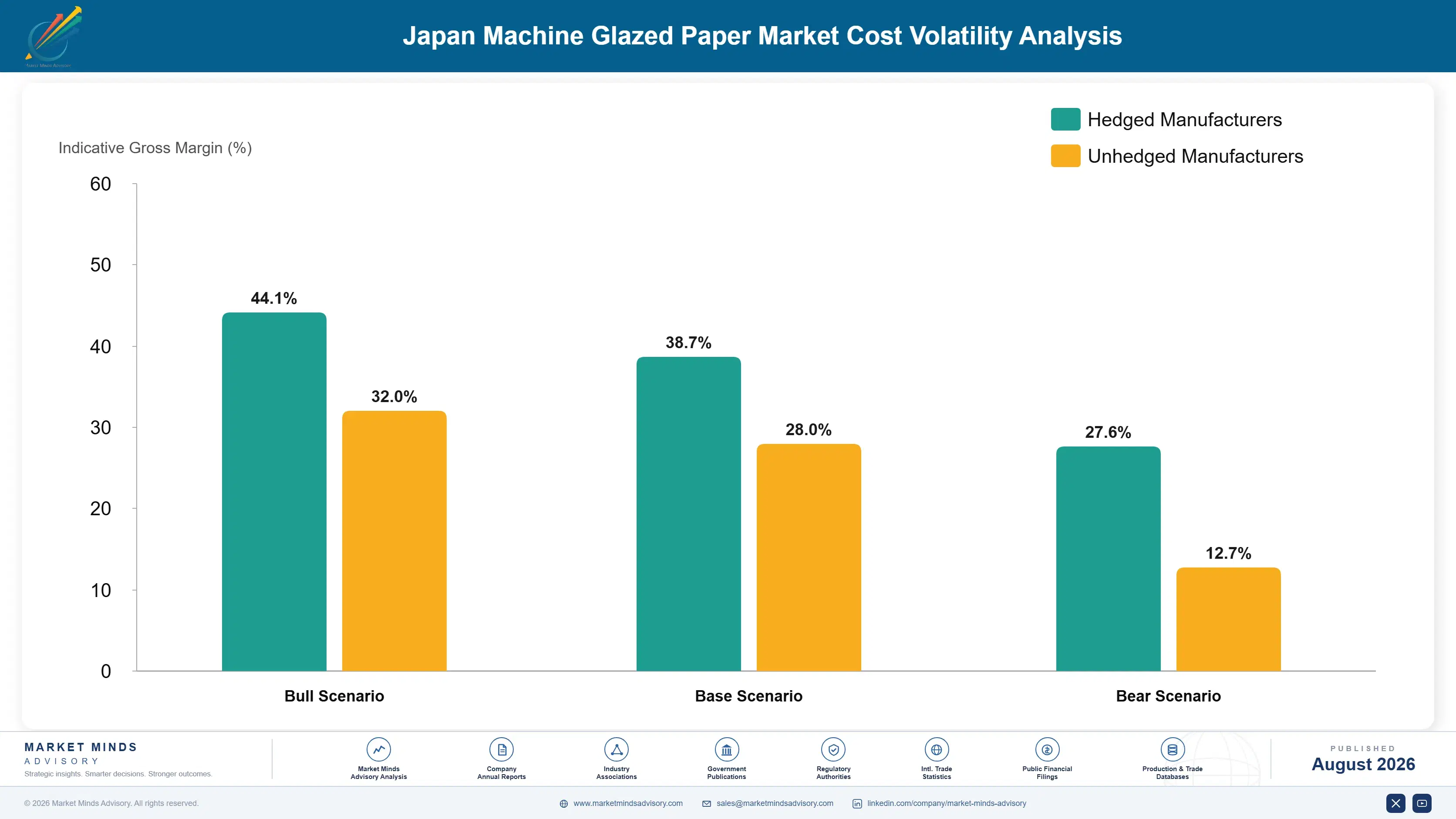
Three inputs carry the cost. Bleached kraft pulp runs about 39% of production cost, purchased domestically and imported from Canadian and Nordic suppliers depending on grade requirement. Drying energy, meaning steam raised for the Yankee cylinder and hood air, accounts for roughly 27%, which is high because all heat transfer happens across one surface. Cylinder maintenance, coating chemistry, and labour make up the remainder.
Energy was the exposure that mattered and it mattered more here than in conventional paper. Japanese industrial gas and electricity prices rose sharply through the recent period, and a process where drying is 27% of cost and cannot be made more efficient by adding dryer surface absorbed that directly. Company annual reports across Japanese paper producers describe the effect consistently, and it contributed to at least one machine glazed closure during the period.

The competitive disadvantage mechanism runs through cylinder condition rather than purchasing. A mill running a recently resurfaced cylinder achieves target glaze at lower steam pressure than one running a worn surface chasing the same finish, and that difference compounds across every tonne. Pulp exposure is broadly shared, while mills deferring resurfacing burn extra energy indefinitely and lose the capability anyway.
machine-glazed-paper-industry-in-japan-cost-volatility-analysis-1787299396074

Resurface cylinders before finish quality visibly deteriorates

A worn Yankee surface requires higher steam pressure to reach the same glaze, which raises the energy cost on every single tonne produced long before anybody notices a finish problem at all. Resurfacing costs around 4 million dollars and it pays back partly through energy alone, before considering the grade capability that it preserves.

Balance hood air systems against actual moisture profile

Drying energy at 27% of cost is dominated by the Yankee hood, and hood air balance is frequently set once at commissioning and rarely revisited across decades of grade changes. Rebalancing against the moisture profiles actually being run recovers a meaningful share without any capital. The engineering is straightforward and consistently deferred because nobody owns the measurement.

Contract long-fibre pulp separately from shorter furnish grades

Machine glazed grades vary considerably in fibre requirement, with liner base and medical grades needing longer fibre than food wrapping does. Buying all furnish under one contract produces an average price suiting neither requirement. Splitting the contracts reflects the genuinely different supply positions of the two grades and typically improves the blended cost more than any volume negotiation would.

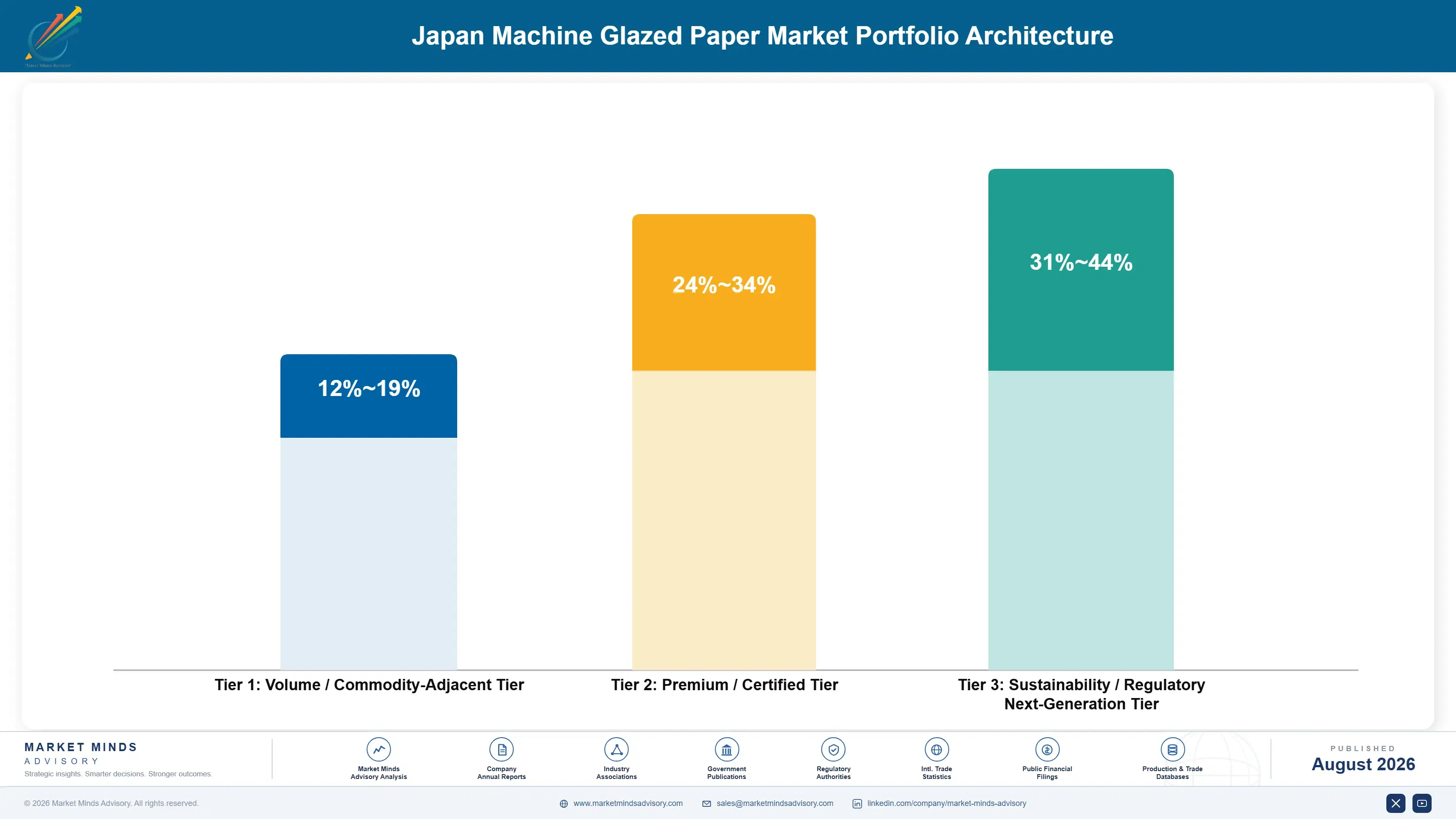
Portfolio Architecture for Margin Defence

Three tiers describe this market and the margin spread reflects qualification and scarcity rather than production cost. Standard food wrapping and interleaving grades sit at the bottom, competing against imports and against conventional papers wherever the glazed finish is not strictly required. Release liner base and speciality coated grades sit considerably higher on surface performance. And medical and sterilisation grades occupy a third tier where qualification depth rather than paper qualit
The tension is that standard grades keep the machines loaded. A machine glazed asset running below capacity carries enormous fixed cost across fewer tonnes, and with output already 38% below a conventional machine there is very little room to absorb poor loading. Mills that shed commodity volume to concentrate on specialty grades have generally found conversion cost per tonne rising faster than mix improved. Output already sits well below a conventional machine.

High-value pools concentrate where a customer cannot readily buy the grade elsewhere. Medical qualification and high-holdout liner base both create that position, and each closure elsewhere in Japan strengthens it further. Each closure elsewhere in Japan strengthens that position further, which is an unusual dynamic to be in.

Volume / Commodity-Adjacent Tier

Standard food wrapping, interleaving, and general machine glazed kraft supplied against straightforward specifications. Thin margin under import competition, and the tonnage that keeps a capacity-constrained machine loaded enough for fixed cost to be absorbed.
Gross Margin: 12-19%

Premium / Certified Tier

Release liner base and speciality coated grades sold on documented surface holdout and consistency rather than on basis weight. Margin reflects glazed surface performance that conventional dryer sections cannot deliver at any price.
Gross Margin: 24-34%

Sustainability / Regulatory / Next-Generation Tier

Medical and sterilisation grades with porosity validation, extractables documentation, and lot traceability audited by hospital procurement. Best margin because qualification takes years and imports struggle to cross that barrier at all.
Gross Margin: 31-44%
machine-glazed-paper-industry-in-japan-portfolio-architecture-1787299396581

High-value Sub-segments and Strategic Watch-out

Medical And Sterilisation Grades

Best margin in the category and protected by qualification depth that imports find genuinely difficult to cross, with hospital procurement auditing mill quality systems directly. Growth at 4.4% tracks procedure volumes that rise as the population ages. Requalification costs converters months of validation work and hospital notification.
Gross Margin: 31-44%

High-Holdout Release Liner Base

Strong margin and the fastest growth at 5.1%, sold on silicone retention near 96% rather than on paper properties. Film liner competes hard on dimensional stability and is losing ground steadily on recyclability grounds. Recalibrating a coating line costs the converter production, which is why they rarely switch base paper.
Gross Margin: 24-34%

Standard Food Wrapping Grades

The volume core at thin margin, exposed to imports and to conventional papers wherever the glazed finish is not strictly required. It supplies the machine loading that a capacity-constrained asset needs to absorb its fixed cost. Fixed cost absorption depends entirely on this tonnage being produced.
Gross Margin: 12-19%

Ageing Yankee Cylinder Capacity

The strategic watch-out, since nineteen cylinders remain and each closure removes a grade capability from Japan permanently. Resurfacing extends life at around 4 million dollars, while replacement is effectively unavailable at domestic volumes. Each closure strengthens the position of whoever remains, which is a peculiar consolation.
Gross Margin: 18-29%

How Grade Relationships Persist

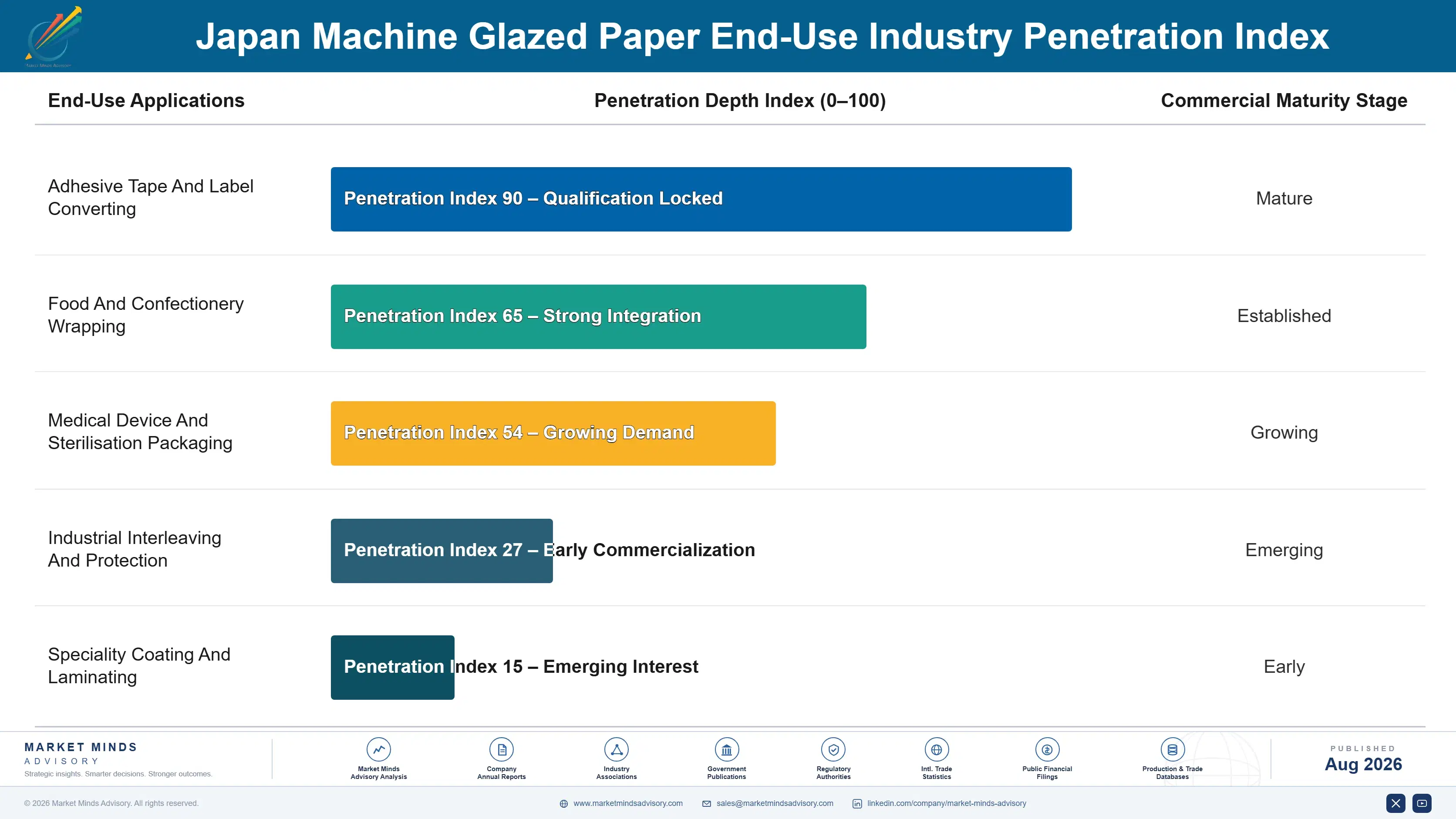
Machine glazed customers are qualified rather than acquired, and that qualification holds for years. A release liner converter that has optimised its silicone coating against a specific surface does not switch base paper casually, because holdout behaviour differs between mills and recalibrating a coating line costs production. Medical converters face a harder version of the same problem, since changing grade means revalidating porosity and notifying hospital customers. Demand therefore tracks t
Depth of relationship varies by grade family. Adhesive tape and label converters buy consistently against tight specifications and audit surface data. Medical packaging converters hold suppliers for years through qualification cost alone. Food wrapping customers are the most price-sensitive and switch most readily. Industrial interleaving buyers barely notice which mill supplies them, which is precisely why that grade carries the least margin.

Buyer profiles have shifted quietly as capacity has left. Purchasing conversations that were once about price increasingly concern security of supply, which is a considerably better conversation for a mill to be having. Security of supply is a far better conversation than price, and mills are only starting to use it.
machine-glazed-paper-industry-in-japan-end-use-penetration-index-1787299397068

What We Would Tell a Board

These are among the four positions where our research anticipates prominent divergence between winners and laggards over the coming forecast period. Each is grounded in the demand model, the regulatory perimeter, and the announced capacity pipeline.
01 / SCARCITY PRICING DISCIPLINE

You are pricing a declining grade you actually control

Machine glazed capacity in Japan only ever falls, because a retired Yankee cylinder is never replaced at domestic volumes and nobody has installed one for decades. Customers losing a grade capability face imports at long lead times or substitution requiring full requalification, and both of those cost them considerably more than any price increase would. Grades where fewer than three machines remain nationally capable support increases of 12 to 18% that customers accept readily once the alternative is examined properly.
02 / MACHINE HOUR ALLOCATION

Allocate by contribution per hour, not by relationship

A machine glazed asset produces around 38% less tonnage than a conventional machine at the same grammage, which makes machine hours easily the scarcest resource any mill in this category holds. Release liner base grows at 5.1% while food wrapping and interleaving both decline, and it earns considerably more per hour on the same asset. Mills still allocating machine time by historical customer relationship rather than by contribution per hour are quietly giving away the only genuinely scarce asset they own.
03 / CYLINDER MAINTENANCE PRIORITY

Resurface early; replacement is not actually available

A worn Yankee surface demands higher steam pressure to reach the same glaze, raising energy cost on every tonne long before anybody notices a finish problem, and drying accounts for 27% of production cost here. Resurfacing costs around 4 million dollars, while replacement would exceed ten times that figure and take several years to procure. Mills deferring the work to conserve capital burn additional energy indefinitely and then eventually lose the grade capability anyway, regardless of whatever they thought they saved.
04 / MEDICAL QUALIFICATION INVESTMENT

Qualification is the barrier imports genuinely cannot cross

Sterilisation grades carry porosity validation, extractables documentation, and lot traceability that hospital procurement functions audit directly rather than accepting on any supplier assurance. That burden protects volume far more effectively than any technical property of the paper itself does, and the grade grows at 4.4% on procedure volumes rising with an ageing population. Establishing medical documentation capability costs roughly 3 million dollars, and it converts ordinary commodity tonnage into qualified tonnage on a permanent basis rather than a contractual one.

Engagement Snapshot From the Field

A live engagement with an industry participant carrying material or product regulatory and market exposure ahead of a defining policy shift, showing how our research translates into a defensible multi-year portfolio strategy.
MARKET MINDS ADVISORY · CLIENT ENGAGEMENT SUMMARY
Japan Machine Glazed Paper Producer Strategic Portfolio Review and Transition Roadmap 2026·Investment Scenario on Japan Machine Glazed Paper Exposure Evaluation 2025-26
CLIENT PROFILE
A Japanese specialty paper producer with approximately 210 million dollars in annual revenue (client-reported, unverified by MMA), operating two machine glazed assets alongside conventional paper capacity. The company priced machine glazed grades against pulp cost and conventional paper benchmarks, allocated machine time by long-standing customer relationship, and had deferred cylinder resurfacing on one asset for several years.
STRATEGIC CHALLENGE
Machine glazed margin had declined for three consecutive years while volumes held, and energy cost per tonne on one asset had risen well above the other without any obvious explanation. Management proposed closing the weaker machine. The board wanted an independent assessment before removing capacity permanently. Nobody had measured steam against glaze achieved.
MMA APPROACH
We reconstructed contribution per machine hour by grade across both assets, measured steam consumption against glaze achieved on each cylinder, and mapped remaining national capability by grade against the operating cylinder base. Customer interviews across nine accounts tested what a supply withdrawal would actually cost them and what they would pay to avoid it.
KEY FINDINGS
  1. Steam consumption on the deferred-resurfacing cylinder ran roughly 22% above the other asset for equivalent glaze, which explained the entire energy cost difference between them.
  2. Machine time allocation showed food wrapping grades occupying capacity that release liner base would have used at substantially better contribution per hour on the same assets.
  3. Four grades produced by the client were made on fewer than three machines nationally, and no customer buying them had any domestic alternative at all.
  4. Seven of nine customers interviewed indicated they would accept material price increases rather than face requalification, and two had already experienced a supply withdrawal elsewhere.
CLIENT PROFILE
A Japanese specialty paper producer with approximately 210 million dollars in annual revenue (client-reported, unverified by MMA), operating two machine glazed assets alongside conventional paper capacity. The company priced machine glazed grades against pulp cost and conventional paper benchmarks, allocated machine time by long-standing customer relationship, and had deferred cylinder resurfacing on one asset for several years.
STRATEGIC CHALLENGE
Machine glazed margin had declined for three consecutive years while volumes held, and energy cost per tonne on one asset had risen well above the other without any obvious explanation. Management proposed closing the weaker machine. The board wanted an independent assessment before removing capacity permanently. Nobody had measured steam against glaze achieved.
MMA APPROACH
We reconstructed contribution per machine hour by grade across both assets, measured steam consumption against glaze achieved on each cylinder, and mapped remaining national capability by grade against the operating cylinder base. Customer interviews across nine accounts tested what a supply withdrawal would actually cost them and what they would pay to avoid it.
KEY FINDINGS
  1. Steam consumption on the deferred-resurfacing cylinder ran roughly 22% above the other asset for equivalent glaze, which explained the entire energy cost difference between them.
  2. Machine time allocation showed food wrapping grades occupying capacity that release liner base would have used at substantially better contribution per hour on the same assets.
  3. Four grades produced by the client were made on fewer than three machines nationally, and no customer buying them had any domestic alternative at all.
  4. Seven of nine customers interviewed indicated they would accept material price increases rather than face requalification, and two had already experienced a supply withdrawal elsewhere.
RECOMMENDED STRATEGY
Phase 1: Phase 1 (months one to nine): resurface the deferred cylinder and reprice the four scarce-capability grades against replacement cost for the customer. Phase 2: Phase 2 (months nine to twenty-one): reallocate machine time toward release liner base and qualify additional liner converters onto the freed capacity. Phase 3: Phase 3 (months twenty-one to thirty-six): establish medical documentation capability and pursue sterilisation grade qualification with hospital packaging converters directly.
OUTCOME
The client resurfaced the cylinder rather than closing the machine, and steam consumption fell back in line within a quarter. Repricing on the four scarce grades was accepted by every affected customer, and machine glazed margin recovered above its prior peak without any volume loss (client-reported, unverified by MMA).

Frequently Asked Questions

Foundational context covering the market sizes, CAGR, scope, country, region and competition that inform every finding below. This section is provided to cover basics and most often pre-purchase conversations, answered from the MMA Primary Research Dataset.

What is the current size of the Japan Machine Glazed Paper Market?

The market is valued at USD 0.78 billion in 2025, rising to USD 0.81 billion in 2026. Around 82% of output is consumed within Japan itself.

How large will the Japan Machine Glazed Paper Market be by 2036?

MMA forecasts USD 1.13 billion by 2036, an increase of USD 0.32 billion over the 2026 base. That represents an expansion multiple of 1.40 times.

What is the CAGR for the Japan Machine Glazed Paper Market 2026 to 2036?

The base case CAGR is 3.4%, with a bull case of 4.6% and a bear case of 2.2%. The historical rate from 2020 to 2025 was 2.3%.

Which segment is growing fastest?

Release liner base grades at 5.1%, exactly 1.50 times the market rate. Adhesive tape and label converters buy silicone holdout near 96%, which only a closed glazed surface delivers.

Who are the major companies in the Japan Machine Glazed Paper Market?

Nippon Paper Industries, Oji Holdings, Daio Paper, Hokuetsu Corporation, and Mitsubishi Paper Mills lead on annual Japanese machine glazed tonnage. The top five together hold 68% of the market.

Which country is growing fastest?

This is a single-country market, so the Japanese growth rate matches the market rate of 3.4%. Release liner and medical grades grow considerably faster within it.

Report Segmentation Architecture

The full report scope spans multiple orthogonal segmentation dimensions, with cross-tabulated demand data provided for each dimension pair. Coverage extends further to regional breakdowns, trend trajectories, and the competitive detail needed to support segment-level decision-making.

By Grade Family

  • MG Food Wrapping Grades
  • Release Liner Base Grades
  • MG Kraft Industrial Grades
  • Medical And Sterilisation Grades
  • Speciality Coated MG Base
  • Interleaving And Protective Grades

By End-Use Industry

  • Adhesive Tape And Label Converting
  • Food And Confectionery Wrapping
  • Medical Device And Sterilisation Packaging
  • Industrial Interleaving And Protection
  • Speciality Coating And Laminating

By Output Destination

  • Domestic Japanese Converting
  • Regional East Asian Export
  • Southeast Asian Converting Export
  • Long-Haul Speciality Export

By Region

  • East Asia
  • South Asia and Pacific
  • North America
  • Western Europe
  • Middle East and Africa
  • Latin America
  • Eastern Europe

Scope, Methodology, and Coverage

Every figure in this report is reproducible from documented input assumptions. The scope below maps the historical period, the forecast horizon, the segmentation dimensions, and the countries covered, alongside the underlying primary and qualitative methodology.
Historical Period
2020 to 2025
Forecast Period
2026 to 2036
Base Year
2025 (USD billions; MMA Primary Research Dataset, August 2026)
Market Definition
This market comprises machine glazed paper produced in Japan on Yankee cylinder machines, measured at mill realised prices for reel and sheeted output across all grade families. Coverage spans machine glazed food wrapping grades, release liner base, machine glazed kraft industrial grades, medical and sterilisation grades, speciality coated machine glazed base, and interleaving and protective grades. Conventional dryer section papers, glassine produced by supercalendering alone, tissue and hygiene grades made on Yankee machines, converted and coated finished products, and machine glazed paper imported into Japan from overseas mills fall outside scope.
Quantitative Units
USD billions (current prices); thousand tonnes produced annually; realised price per tonne
Segmentation Dimensions
By Grade Family; By End-Use Industry; By Output Destination; By Region
Regions Covered
East Asia, South Asia and Pacific, North America, Western Europe, Middle East and Africa, Latin America, Eastern Europe
Countries Covered
Japan as the market geography, with output destination coverage spanning South Korea, Taiwan, China, Thailand, Malaysia, Vietnam, Indonesia, India, Australia, USA, Canada, Mexico, Brazil, Germany, Italy, France, UK, Netherlands, Poland, Turkey, Israel, Saudi Arabia, UAE, South Africa, Egypt, Philippines, Singapore, New Zealand, and additional destinations relevant to this supply chain
Key Companies Profiled
Nippon Paper Industries, Oji Holdings, Daio Paper, Hokuetsu Corporation, Mitsubishi Paper Mills, Rengo, Tokushu Tokai Paper, Marusumi Paper, Chuetsu Pulp and Paper, Lintec, Nitto Denko, Ahlstrom, Nordic Paper, Delfort Group, UPM Specialty Papers, Sappi, Stora Enso, Loparex, Mondi, Gascogne
Quantitative Methodology
Primary survey, n=3,800 respondents, Q4 2025, six countries; demand-side model with trade association cross-validation
Qualitative Methodology
47 expert interviews, Q4 2025; applied to validate demand model assumptions, identify emerging dynamics, and assess competitive positioning
Report Format
PDF and XLSX data workbook (Word format preview document)
Publisher
Market Minds Advisory
Report Code
MMA-2026-PAC-357
Published
August 2026
Contact
sales@marketmindsadvisory.com | www.marketmindsadvisory.com

Purchase the full Japan Machine Glazed Paper Market Report (2026 to 2036).

The full report sizes Japanese machine glazed paper across six grade families, five end-use industries, four output destinations, and seven destination regions, treating Japan as the single market geography throughout. Operating Yankee cylinder capacity is mapped machine by machine with grade capability, condition, and remaining life assessed for each, since supply attrition rather than demand governs this market. Contribution per machine hour is modelled by grade across the operating asset base. Competitive profiling covers twenty companies on Japanese machine glazed tonnage. Silicone holdout performance is benchmarked across liner base grades and against film alternatives.
Operating Yankee cylinder capacity mapped machine by machine
Grade capability and remaining asset life assessed per cylinder
Contribution per machine hour modelled across all grade families
Silicone holdout benchmarked against film liner alternatives
Medical qualification requirements documented by hospital procurement standard
Output destination flows tracked across seven receiving regions

Built For The People Who Decide

From boardroom strategy to bench-side execution, this report is read cover-to-cover by leaders shaping the next decade of their industry, turning demand scenarios, market dynamics and valuation benchmarks into decisions.
CXOs/ Presidents/ VPs/ Managers
M&A and Corporate Development
Strategy Teams and R&D Heads
Procurement and Product Directors
Regulatory and Compliance Leaders
Investor Relations and Equity Analysts