Market Minds Advisory
Lung & Pulmonary Airway Disease Treatment Market

Lung & Pulmonary Airway Disease Treatment Market: From Broad Bronchodilation to Targeted Mechanism Control

Lung and pulmonary airway disease treatment is being reshaped by biologic therapies for severe asthma, as air pollution exposure and rising COPD prevalence push prescribers beyond conventional inhaled bronchodilators toward targeted mechanism-specific drug classes.

Lead Analyst

Alice Ballenger

Published

September 2026

Make Smarter Decisions with Customized Research Insights

Request a free sample report and evaluate market opportunities, growth trends, and competitive dynamics relevant to your business needs.

2025 MARKET VALUE$42.0BMarket Size 2025
2036 FORECAST VALUE$93.1BBase Case , 2026 to 2036
CAGR 2026 TO 20367.5 %Bull 8.8% / Bear 6.2%
INCREMENTAL OPPORTUNITY$47.9BNet 10- year value creation
EXPANSION MULTIPLE2.06x2036 value over 2026 base
Strategic Levers
M&A Pipeline
Regional Outlook
Country Rankings
Competitive Intelligence
Segmental Deep-dive
Call-Us : 91 93563 13602

Executive Snapshot and Market Trajectory

Lung and pulmonary airway disease treatment increasingly reflects biologic mechanism targeting rather than pure bronchodilation, as prescribers treating severe, poorly controlled asthma and COPD patients move beyond conventional inhaler therapy toward more precisely targeted drug classes across most major reimbursed treatment centers currently expanding rapidly.
Rising air pollution exposure and tobacco use expanding the global COPD and asthma patient population, payer reimbursement expansion for biologic therapies targeting severe and treatment-resistant disease, and growing combination inhaler adoption replacing older single-mechanism therapies are together concentrating demand upside in two clear directions: East Asian markets where patient volume growth outpaces most other regions, and biologic therapies that give prescribers genuine disease control for severe asthma patients previously unresponsive to conventional inhaled treatment.
AstraZeneca, GlaxoSmithKline, and Boehringer Ingelheim lead a moderately concentrated field where biologic mechanism differentiation is becoming as commercially decisive as inhaler device design and delivery reliability, while generic manufacturers compete primarily on price for mature bronchodilator categories facing patent expiration across most reimbursed markets currently expanding treatment access rapidly across most developed and emerging healthcare systems worldwide, particularly in regions with rising pollution-linked respiratory disease burden.
Market Definition
The lung and pulmonary airway disease treatment market covers pharmaceutical therapies for asthma, chronic obstructive pulmonary disease, and related airway conditions, including inhaled bronchodilators, corticosteroids, and biologic agents. Pulmonary devices, diagnostic equipment, and unrelated respiratory infection treatments are excluded from scope.
Base Year Value
$42.0B in 2025 (MMA Primary Research Dataset, August 2026)
Forecast Period
2026 to 2036, eleven discrete annual values
CAGR
7.5% base case. Bull 8.8%. Bear 6.2%.
Fastest Growth Segment
Biologic Therapies for Severe Asthma: 14.5% CAGR
Fastest Growth Country
China: 8.5% CAGR
Fastest Growth Region
South Asia and Pacific: 9.8% CAGR
Largest Region
East Asia: 27% of 2025 global value
Market Leaders
AstraZeneca, GlaxoSmithKline, Boehringer Ingelheim, Novartis, Sanofi. Source: MMA Analysis, July 2026.
Primary Survey
n=3,800 procurement and R&D decision-makers, Q4 2025, six countries
Methodology
Demand-side build-up, cross-validated against public data, 47 expert interviews

Lung & Pulmonary Airway Disease Treatment Market Forecast Scenarios

lung-pulmonary-airway-disease-treatment-market-size-forecast-scenario-1787305820365
Lung and pulmonary airway disease treatment demand grew steadily between 2020 and 2025, with pandemic-related respiratory health awareness and diagnostic testing volume pulling patient identification forward before moderating into a calmer, biologics-driven pattern by 2024. Biologic therapy adoption for severe asthma accelerated meaningfully during the back half of the historical period as payer reimbursement expanded and clinical evidence for mechanism-targeted treatment matured considerably.
The base case assumes 7.5 percent annual growth through 2036, anchored on three commercial mechanisms: rising air pollution exposure and tobacco use expanding the global COPD and asthma patient population requiring ongoing pharmaceutical management, payer reimbursement expansion for biologic therapies targeting severe and treatment-resistant respiratory disease, and steady replacement of older single-mechanism bronchodilator therapies as combination inhaler formulations become the standard prescribing pattern across most developed and emerging healthcare markets alike currently expanding treatment access.
The bull case centers on faster-than-expected biologic indication expansion into moderate asthma and additional airway disease categories, pulling forward treatment volume well beyond current forecasts. The bear case flags generic bronchodilator pricing pressure and slower biologic reimbursement expansion in some developed markets, which could compress overall category revenue growth and leave newer mechanism-targeted therapies running behind currently planned adoption curves.

From Broad Bronchodilation to Targeted Mechanism Control

Lung and pulmonary airway disease treatment spans a genuinely bifurcated category, where mature generic bronchodilator therapies coexist alongside a rapidly expanding biologic segment commanding premium pricing for mechanism-specific disease control. Prescribers increasingly stratify patients by disease severity and biomarker profile rather than treating asthma and COPD as broadly uniform conditions, pushing pharmaceutical companies toward more targeted clinical development programs.
MARKET CONCENTRATIONCR5 48%Top five manufacturers control roughly half of prescription volume
AVERAGE SELLING PRICEUSD 420/monthBlended average price across inhaler and biologic drug categories
TOP PRODUCING COUNTRY SHARE27%Share of global patient population concentrated in leading country
BIOLOGIC ELIGIBLE PATIENT ACCESS38%Portion of eligible patients currently receiving biologic therapy access
TRADE INTENSITY22%Portion of prescription volume crossing borders through parallel trade
INPUT COST SHARE42%Active ingredient and device costs as share of unit cost
Reimbursement policy varies sharply across therapeutic tiers and geographies, shaping which patients gain biologic access first. Countries and payers that have expanded biologic reimbursement for severe, treatment-resistant asthma have seen adoption accelerate meaningfully within a relatively short window, while jurisdictions still restricting biologic coverage to the most extreme cases show markedly slower uptake despite comparable clinical evidence and drug availability.
Air pollution exposure and tobacco use continue driving COPD and asthma prevalence upward across most developed and rapidly industrializing markets, sustaining a decade-long increase in device and pharmaceutical demand regardless of near-term economic conditions across most regions tracked. Combination inhaler formulations increasingly displace older single-mechanism bronchodilator prescribing patterns, reflecting clinical guideline evolution toward multi-mechanism disease management as the standard of care across most accredited respiratory treatment centers.
"Ten years ago every asthma patient basically got the same inhaler. Now a pulmonologist looks at a biomarker panel before deciding which specific inflammatory pathway to shut down, and the drug companies that saw this coming are the ones printing money."
Director, Respiratory Pharmaceuticals Practice · MMA Healthcare / Respiratory Ph

Market Trends

Biologic Reimbursement Expansion Accelerates Severe Asthma Adoption

Payer reimbursement for biologic therapies targeting severe, treatment-resistant asthma has expanded across several major markets in recent years, removing a longstanding financial barrier that historically confined biologic use to only the most extreme clinical cases. This reimbursement expansion has accelerated biologic prescribing meaningfully in markets where it has taken effect, with several national health systems publishing explicit biomarker-based eligibility criteria that broaden the addressable patient population. Pharmaceutical companies are responding with expanded biologic clinical development investment, recognizing that reimbursement policy increasingly determines addressable market size more than pure clinical efficacy data alone.
Market Impact: Pollution exposure raises COPD risk

Combination Inhaler Adoption Displaces Single-Mechanism Therapy

Combination inhaler formulations bundling multiple bronchodilator mechanisms and inhaled corticosteroids into a single device have moved from specialty prescribing patterns into mainstream first-line treatment guidelines across most major respiratory disease management protocols worldwide today and increasingly beyond. Clinical guideline bodies have increasingly recommended combination therapy over sequential single-mechanism prescribing for moderate to severe patients, reflecting accumulated evidence of improved disease control and patient adherence. This shift is reshaping pharmaceutical company portfolio investment priorities considerably, pulling development resources toward fixed-dose combination formulations rather than standalone single-mechanism bronchodilator products facing generic competition.
Market Impact: Screening programs target ages 65 p

Market Opportunities and Growth Drivers

Rising Air Pollution Exposure Expands Patient Population

Air pollution exposure continues rising across many rapidly industrializing regions, and multiple large-scale epidemiological studies have linked ambient particulate matter exposure directly to increased asthma and COPD incidence in affected populations. This environmental trend translates directly into expanding respiratory disease patient population growth that runs largely independent of broader economic cycles, since airway disease management represents medically necessary care rather than discretionary healthcare spending. Health systems across most affected countries are expanding respiratory screening and treatment program capacity specifically to accommodate this steadily growing patient population, sustaining consistent pharmaceutical demand growth.
Market Impact: Generic pricing falls 30 to 50%

Aging Population Increases Chronic Airway Disease Prevalence

Population aging across most developed economies is increasing chronic airway disease prevalence directly, since lung function naturally declines with age and older patients face compounding risk factors including prior smoking history and cardiovascular comorbidity. National health systems in several countries have expanded respiratory disease screening programs targeting older populations, identifying patients earlier and directing more of them toward pharmaceutical management before acute exacerbation emergencies occur. This trend sustains steady patient population growth even in markets where smoking prevalence has begun declining, broadening the demand base beyond any single underlying disease driver alone.
Market Impact: Annual biologic cost exceeds $30,00

Market Restraints and Challenges

Generic Bronchodilator Competition Pressures Legacy Pricing

Bronchodilator pricing faces mounting pressure from generic competition as patent protection expires on several major inhaler products, a dynamic rooted in regulatory pathways that increasingly favor faster generic approval to control healthcare costs across most reimbursed markets worldwide. This pricing pressure compresses margin considerably in the mature single-mechanism bronchodilator category even as the broader respiratory treatment market benefits from unrelated biologic growth. Manufacturers are mitigating this restraint by shifting product portfolio investment toward higher-growth biologic and combination therapy categories while managing legacy bronchodilator operations for cash flow rather than growth.
Market Impact: Covers over 60% of major markets

Biologic Therapy Cost Limits Broader Patient Access

Biologic therapies for severe asthma carry substantially higher per-patient annual treatment cost than conventional inhaled bronchodilator therapy, a dynamic rooted in the complex biologic manufacturing process and targeted mechanism research investment required to bring these therapies to market. This cost differential limits biologic access even where clinical eligibility exists, since payers require extensive prior authorization and biomarker documentation before approving treatment. Manufacturers and health systems are mitigating this restraint through patient assistance programs and value-based reimbursement contracts that tie payment partly to demonstrated clinical outcome improvement rather than pure treatment volume.
Market Impact: Combination therapy adoption exceed
4 additional market trends, 4 additional growth drivers, and 4 additional restraints and challenges are covered in the full report. Contact sales@marketmindsadvisory.com to access the complete intelligence.

Segment CAGR and Growth Architecture

Lung and pulmonary airway disease treatment segments by therapeutic mechanism and product type across six categories spanning biologics, inhaled therapies, and specialty drug classes. Biologic therapies for severe asthma and pulmonary fibrosis and rare disease therapeutics are the two fastest-growing categories tracked, both expanding well ahead of the broader market as mechanism-targeted treatment reshapes prescribing patterns.
lung-pulmonary-airway-disease-treatment-market-market-share-analysis-1787305820908

Biologic Therapies for Severe Asthma

Biologic therapies for severe asthma, which target specific inflammatory pathways such as IgE or interleukin signaling rather than providing broad bronchodilation, are converting the fastest share of new pharmaceutical development investment as payer reimbursement expands and clinical evidence for mechanism-targeted disease control continues accumulating across most major reimbursed markets. These therapies command substantially premium pricing compared to conventional inhaled treatment, reflecting their targeted mechanism and manufacturing complexity relative to generic bronchodilator alternatives available broadly. Pharmaceutical companies are racing to expand biologic indication coverage into moderate asthma and additional airway disease categories, recognizing that reimbursement policy increasingly determines addressable market size more than pure clinical efficacy data across most developed healthcare systems tracked closely by MMA analysts.
CAGR 14.5%

Pulmonary Fibrosis and Rare Disease Therapeutics

Pulmonary fibrosis and rare disease therapeutics, which address progressive scarring and rare inherited or acquired lung conditions affecting a comparatively small but growing diagnosed patient population, are expanding rapidly as diagnostic awareness and genetic testing capability improve across most major healthcare markets. Growth here tracks improved disease recognition directly, since many rare pulmonary conditions historically went undiagnosed or misattributed to more common respiratory conditions for years before receiving accurate diagnosis. This category benefits directly from orphan drug regulatory pathways that accelerate approval timelines and extend market exclusivity periods, giving pharmaceutical companies genuine commercial incentive to invest in therapies addressing these smaller but underserved patient populations across most developed regulatory jurisdictions worldwide.
CAGR 11.0%
Full segment breakdown across 6 segments available in the complete report.

Regional Architecture and Country Demand Map

Lung and pulmonary airway disease treatment demand concentrates most heavily in East Asia, where China rapidly expanding COPD and asthma patient population outpaces most other regions on a patient volume basis. North America follows closely on value, while South Asia and Pacific markets post the fastest regional growth.

North America

North America follows East Asia closely in absolute revenue terms, supported by comprehensive biologic reimbursement coverage that sustains a large and growing severe asthma and COPD patient population across accredited pulmonology practices nationwide and across every major metropolitan and rural healthcare network and provider tracked closely. The United States accounts for the large majority of regional volume, with biologic reimbursement expansion increasingly determining manufacturer product strategy among established pharmaceutical majors. Canada contributes a smaller but steadily growing share tied to comparable provincial health system coverage. Pharmaceutical pricing pressure affects North American purchasing decisions considerably, since generic competition has intensified across the mature bronchodilator category even as biologic pricing remains largely protected.
Share: 26% | CAGR: 8.3% (2026 to 2036)

Western Europe

Western Europe generates a meaningful share of global revenue, anchored by Germany, France, and the United Kingdom, where national health systems fund respiratory pharmaceutical coverage on coordinated national formulary and procurement schedules across most participating countries, regions, health authorities, and hospital networks. Biologic adoption varies considerably across member states depending on national health technology assessment structure, with several countries actively expanding severe asthma biologic coverage to reduce overall hospitalization cost. Germany maintains the largest pharmaceutical distribution network in the region, reflecting its dense hospital and outpatient respiratory care infrastructure. Growth trails East Asia and South Asia as the patient population matures, though public health system investment sustains steady replacement demand.
Share: 21% | CAGR: 6.0% (2026 to 2036)
Regional intelligence for 5 additional markets available in the complete report: East Asia, South Asia and Pacific, Latin America, Middle East and Africa, Eastern Europe. Contact sales@marketmindsadvisory.com.
lung-pulmonary-airway-disease-treatment-market-country-cagr-analysis-1787305821424

Biologic Expansion and Combination Therapy Growth

Lung and pulmonary airway disease treatment manufacturers are pursuing several distinct paths to grow revenue beyond mature bronchodilator sales as biologic mechanism differentiation reshapes purchasing criteria across the industry. Four levers stand out as commercially significant across the forecast period, spanning biologic indication expansion, combination therapy premiums, patient assistance programs, and value-based reimbursement contract structuring.

Biologic Indication Expansion Investment Growth Strategy

Pharmaceutical companies investing in clinical trials expanding biologic indication coverage from severe asthma into moderate disease and additional airway conditions are capturing disproportionate share of new prescription volume as reimbursement criteria broaden. Companies with dedicated biologic indication expansion programs report addressable patient population growth exceeding 40 percent within two years of a successful label expansion, considerably above baseline category growth rates. This investment requires meaningful clinical trial cost but generates durable long-term revenue as biologic therapy typically continues for years once initiated, creating a considerably more predictable revenue relationship than single-prescription bronchodilator transactions alone.
Market Impact: Label expansions grow addressable p

Combination Therapy Premium Pricing Structure Strategy

Manufacturers offering fixed-dose combination inhaler formulations are capturing meaningful price premiums over standalone single-mechanism bronchodilator products, with several major combination products commanding pricing roughly 35 percent above comparable single-agent generic alternatives across most reimbursed markets. This premium reflects genuine clinical value and manufacturing complexity, since combining multiple active ingredients into a single reliable delivery device requires meaningful formulation and device engineering investment. This lever matters most for manufacturers with proven combination device reliability track records, since prescribers and payers increasingly favor demonstrated delivery consistency over pure active ingredient efficacy alone.
Market Impact: Combination products command a roug

Patient Assistance Program Access Expansion Strategy

Manufacturers offering structured patient assistance programs that subsidize biologic therapy cost for eligible lower-income patients are expanding addressable market reach beyond what standard reimbursement coverage alone would support across most affected patient populations. These programs report enrollment growth exceeding 25 percent annually as awareness spreads among prescribers and patient advocacy organizations, meaningfully broadening treatment access in markets with incomplete reimbursement coverage. This approach requires sustained program administration investment, but positions manufacturers favorably with prescribers who value patient access support alongside pure clinical efficacy when making treatment recommendations for eligible patients.
Market Impact: Assistance program enrollment grows

Value-Based Reimbursement Contract Structuring Strategy Approach

Manufacturers negotiating value-based reimbursement contracts that tie payment partly to demonstrated clinical outcome improvement, rather than pure prescription volume, are securing preferred formulary status with payers increasingly focused on cost-effectiveness evidence across most therapeutic categories tracked closely. These structured contracts, now covering an estimated 30 percent of major biologic prescription volume, align manufacturer and payer incentives around actual patient outcomes rather than simple treatment volume alone. This lever matters most for manufacturers with strong real-world outcome data supporting their therapies, since payers increasingly demand evidence beyond controlled clinical trial results.
Market Impact: Structured contracts now cover 30 p

Who Controls the Margin Pool

Lung and pulmonary airway disease treatment carries a CR5 near forty-eight percent, concentrated among five pharmaceutical majors spanning biologic development capability and legacy bronchodilator portfolio scale worldwide. The gap between AstraZeneca and GlaxoSmithKline, the two largest vendors, and the next tier of challengers is meaningful, since biologic mechanism differentiation and clinical trial investment compound advantages considerably.
Current competitive activity plays out across three dimensions: biologic indication expansion races among established pharmaceutical majors seeking to broaden addressable patient population, combination inhaler device development targeting differentiated delivery reliability, and generic manufacturer price competition intensifying across mature single-mechanism bronchodilator categories facing patent expiration. Larger pharmaceutical companies are also pursuing selective acquisitions of specialty biotech firms developing novel respiratory mechanisms.

Emerging pressure comes from specialty biotech firms developing next-generation biologic mechanisms that could eventually challenge established players in the severe asthma and pulmonary fibrosis categories, and from generic manufacturers expanding low-cost bronchodilator production capacity across price-sensitive emerging markets. Rankings could shift meaningfully if biologic indication expansion speed diverges significantly between leaders, particularly as payers increasingly favor manufacturers demonstrating the clearest real-world outcome evidence across their broader respiratory treatment portfolio.
lung-pulmonary-airway-disease-treatment-market-company-positioning-matrix-1787305821943

Competitive Moat and Risk Dimensions

ASTRAZENECA

Moat: Biologic Mechanism Portfolio Breadth

AstraZeneca holds one of the broadest biologic mechanism portfolios among respiratory pharmaceutical companies tracked, spanning multiple distinct inflammatory pathway targets that give it flexibility to serve diverse patient biomarker profiles. This portfolio breadth lets AstraZeneca capture patients whose disease characteristics do not respond to a single dominant mechanism, a genuine advantage as prescribers increasingly stratify treatment by biomarker.
ASTRAZENECA

Risk: Generic Erosion of Legacy Portfolio

A meaningful share of AstraZeneca existing respiratory revenue still derives from mature bronchodilator products facing generic competition as patent protection expires across several major markets. Slower-moving legacy categories could compress overall margin if biologic revenue growth does not outpace legacy erosion fast enough to offset the decline currently underway.
GLAXOSMITHKLINE

Moat: Combination Inhaler Device Expertise

GlaxoSmithKline maintains deep combination inhaler device engineering expertise built over decades of respiratory drug delivery experience, giving it a genuine advantage in the fixed-dose combination category increasingly favored by clinical guidelines. This device reliability track record matters considerably to prescribers who prioritize consistent drug delivery alongside pure active ingredient efficacy.
GLAXOSMITHKLINE

Risk: Slower Biologic Pipeline Development

GlaxoSmithKline biologic respiratory pipeline has historically developed more slowly than some competitors, leaving it with comparatively thinner presence in the fastest-growing severe asthma biologic category. Building biologic development capability and clinical trial infrastructure from a smaller base could limit near-term share gains against more biologic-focused competitors currently expanding aggressively.

Players Tracked

Prominent Players

AstraZeneca
GlaxoSmithKline
Boehringer Ingelheim
Novartis
Sanofi

Other Key Players

Teva Pharmaceutical
Chiesi Farmaceutici
Regeneron Pharmaceuticals
Amgen
Viatris
Cipla
Merck & Co.
Roche
Vertex Pharmaceuticals
United Therapeutics
Circassia Pharmaceuticals
Verona Pharma
Insmed
Theravance Biopharma
Astellas Pharma

Recent Developments

APRIL 2025

AstraZeneca Receives Regulatory Approval for Expanded Biologic Asthma Indication

AstraZeneca received regulatory approval expanding its biologic asthma therapy indication to cover moderate disease severity, broadening eligibility beyond the previously approved severe asthma population. The expansion follows positive clinical trial results demonstrating meaningful symptom control improvement in the newly eligible patient population, reinforcing AstraZeneca leadership in mechanism-targeted respiratory therapy.
Signal: Signals accelerating biologic indication e
SEPTEMBER 2024

GlaxoSmithKline Signs Multi-Year Distribution Agreement With Regional Pharmacy Chain

GlaxoSmithKline signed a multi-year distribution agreement with a large regional pharmacy chain covering its combination inhaler product line across several hundred pharmacy locations, replacing fragmented wholesale distribution with a standardized supply relationship. The agreement includes coordinated patient assistance program enrollment support and pricing stability provisions through 2028.
Signal: Signals growing pharmaceutical company pre
JANUARY 2025

Boehringer Ingelheim Acquires Specialty Pulmonary Fibrosis Biotech Firm

Boehringer Ingelheim completed the acquisition of a specialty biotech firm developing novel pulmonary fibrosis treatment mechanisms, strengthening its rare respiratory disease pipeline ahead of anticipated regulatory submissions. The acquisition accelerates Boehringer Ingelheim internal rare disease development roadmap, reducing dependence on external licensing partnerships for this therapeutic category.
Signal: Signals continued industry consolidation a

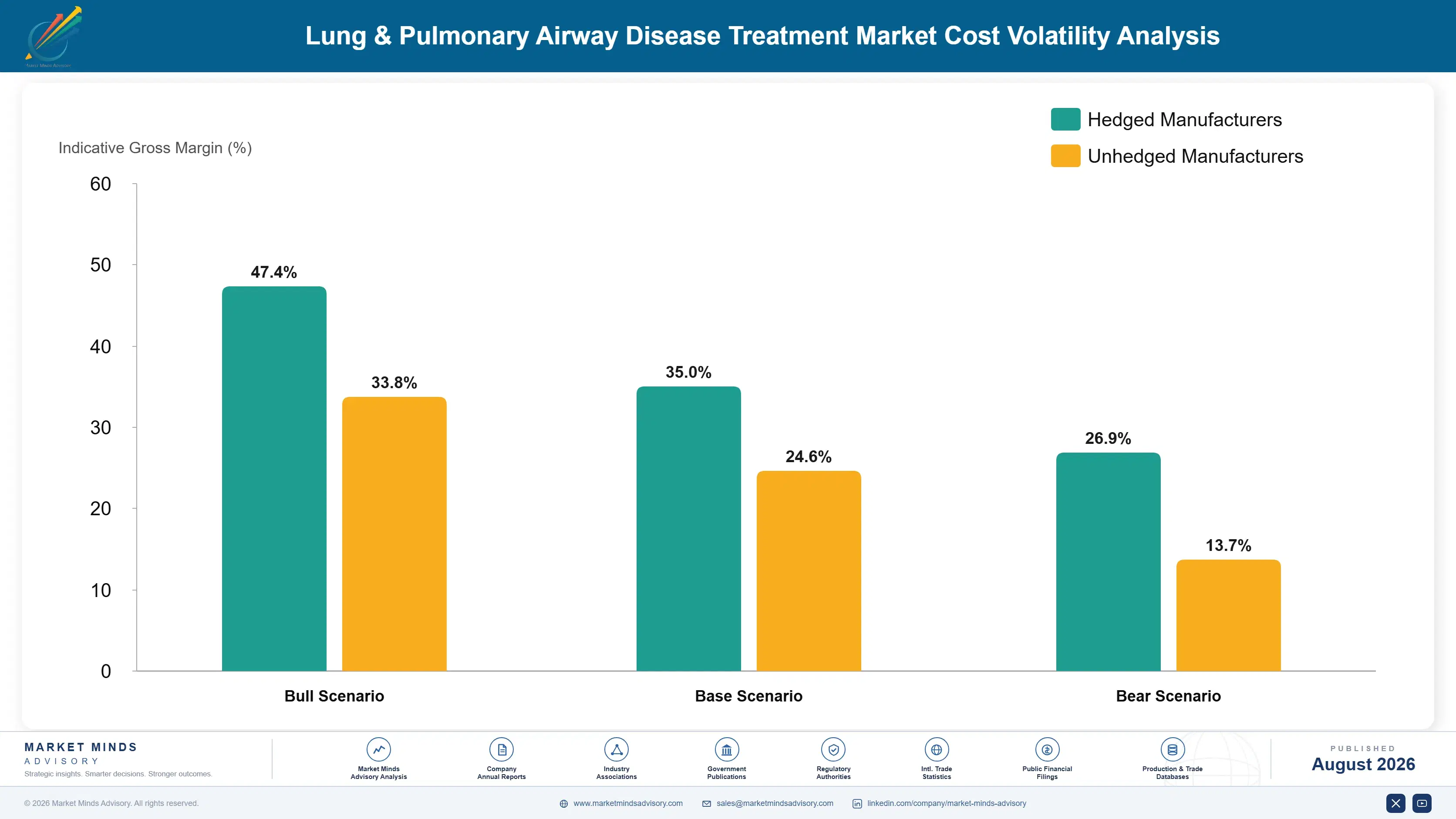
Active Ingredient Synthesis and Biologic Cost

Active pharmaceutical ingredient synthesis and biologic manufacturing costs together represent roughly forty to forty-five percent of lung and pulmonary airway disease treatment cost of goods sold, reflecting the category unusual mix of small-molecule and complex biologic manufacturing processes. These inputs derive from specialty pharmaceutical manufacturing facilities concentrated in a relatively small number of validated global production sites.
Biologic manufacturing capacity constraints emerged during 2022 and 2023 as demand for severe asthma biologic therapies outpaced initial pharmaceutical company production forecasts across several major reimbursed markets and territories worldwide. Several manufacturers disclosed in annual reports that biologic manufacturing scale-up costs and validation timelines exceeded initial projections meaningfully, prompting some companies toward contract manufacturing partnerships to close capacity gaps faster through 2024 and into 2025.

Cost exposure varies by manufacturer portfolio composition and manufacturing model. Companies with in-house biologic manufacturing capability absorb production cost volatility more easily than smaller competitors dependent entirely on contract manufacturing organizations for biologic production. Geographic exposure also differs: manufacturers sourcing active pharmaceutical ingredients primarily from Asian chemical manufacturers face different cost and logistics patterns than those relying on domestic North American or European production.
lung-pulmonary-airway-disease-treatment-market-cost-volatility-analysis-1787305822138

Contract Manufacturing Capacity Partnerships

Pharmaceutical companies are partnering with contract manufacturing organizations to bring validated biologic production capacity online faster than building entirely new internal facilities, addressing near-term supply commitments. This approach requires careful quality oversight but meaningfully accelerates capacity availability compared to fully independent facility construction, giving companies faster access to production volume during periods of demand growth.

Dual-Source Ingredient Supplier Qualification

Manufacturers are qualifying second suppliers for active pharmaceutical ingredients and biologic raw materials to reduce dependence on any single manufacturer during periods of supply tightness affecting the broader category and industry. This lengthens initial qualification cycles but meaningfully reduces exposure to regional supply disruption, giving procurement teams greater negotiating leverage during tight supply conditions.

Vertical Integration Into Biologic Manufacturing

Several major pharmaceutical companies have expanded in-house biologic manufacturing capacity to reduce dependence on external contract capacity and gain tighter control over production timing and quality across their therapeutic portfolios, product lines, and regional facilities. This shift requires substantial upfront capital investment but reduces exposure to external capacity constraints over multi-year manufacturing cycles ahead.

Portfolio Architecture for Margin Defence

Lung and pulmonary airway disease treatment portfolios span three margin tiers running from commodity-adjacent generic bronchodilator therapies through certified combination inhaler formulations to sustainability-linked next-generation biologic and rare disease therapeutics. Gross margin widens considerably moving up the tier structure, driven primarily by mechanism differentiation and clinical evidence depth rather than manufacturing complexity alone across most vendor product lines and portfol
Volume tier competition centers on price and basic bronchodilation reliability for cost-constrained healthcare systems, where manufacturing scale and generic production efficiency determine competitiveness more than mechanism sophistication or clinical differentiation. Premium tier competition instead centers on biologic mechanism targeting, real-world outcome evidence, and combination device reliability, an entirely different buying calculus that rewards manufacturers with dedicated clinical research capability built over many years.

High-value margin pools concentrate overwhelmingly in the premium and next-generation tiers, where biologic therapy and rare disease treatment generate revenue considerably above any generic bronchodilator transaction alone across the full patient treatment lifecycle. Manufacturers increasingly steer research and development investment and sales incentive structures toward this upper tier as volume-tier margin continues compressing under sustained generic competition and intensifying price pressure from lower-cost manufacturers.

Volume / Commodity-Adjacent Tier

Generic single-mechanism bronchodilator therapies targeting cost-constrained healthcare systems and payers where manufacturing efficiency and reliable supply matter more than mechanism differentiation or advanced clinical evidence depth across most established markets and treatment protocols.
Gross Margin: 24%-32%

Premium / Certified Tier

Combination inhaler formulations with demonstrated device reliability and clinical guideline endorsement, typically sold with patient support programs to health systems and prescribers seeking documented adherence and disease control outcomes for moderate to severe patients.
Gross Margin: 42%-50%

Sustainability / Regulatory / Next-Generation Tier

Biologic and rare disease therapeutics bundling targeted mechanism action, real-world outcome evidence, and orphan drug regulatory advantages, targeting leading pulmonology centers piloting next-generation precision respiratory treatment ahead of broader industry adoption.
Gross Margin: 58%-66%
lung-pulmonary-airway-disease-treatment-market-portfolio-architecture-1787305822636

High-value Sub-segments and Strategic Watch-out

Biologic Therapies for Severe Asthma

Biologic therapies for severe asthma are the fastest-growing, highest-margin pool as payers expand reimbursement and prescribers seek mechanism-targeted disease control for treatment-resistant patients across most reimbursed markets. Manufacturers with deeper biologic pipeline breadth and real-world outcome evidence capture disproportionate share as buyer evaluation criteria shift toward biomarker-based prescribing.
Gross Margin: 56%-64%

Pulmonary Fibrosis and Rare Disease Therapeutics

Rare pulmonary disease therapeutics generate steady high-margin recurring revenue tied closely to orphan drug regulatory advantages and improving diagnostic awareness across most developed healthcare markets. Growth here tracks genetic testing and disease recognition capability directly, offering manufacturers predictable revenue even as broader generic bronchodilator pricing compresses under competition.
Gross Margin: 54%-62%

Generic Single-Mechanism Bronchodilators

The largest volume category by prescription count, generic single-mechanism bronchodilators remain the backbone of respiratory disease management worldwide. Margins are thinner and growth slower than premium categories, but installed prescriber relationships sustain steady volume and anchor long-term pharmaceutical distribution partnerships across most established healthcare markets globally and regionally.
Gross Margin: 22%-30%

Biosimilar Competition Disruption Risk

Emerging biosimilar competition for established biologic therapies bears close watching across most major reimbursed markets, geographies, and treatment centers, since successful biosimilar entry could compress the premium pricing that currently sustains manufacturer revenue growth in the fastest-expanding segment of the category within the coming years.
Gross Margin: 18%-28%

Chronic Therapy Loyalty and Prescriber Trust

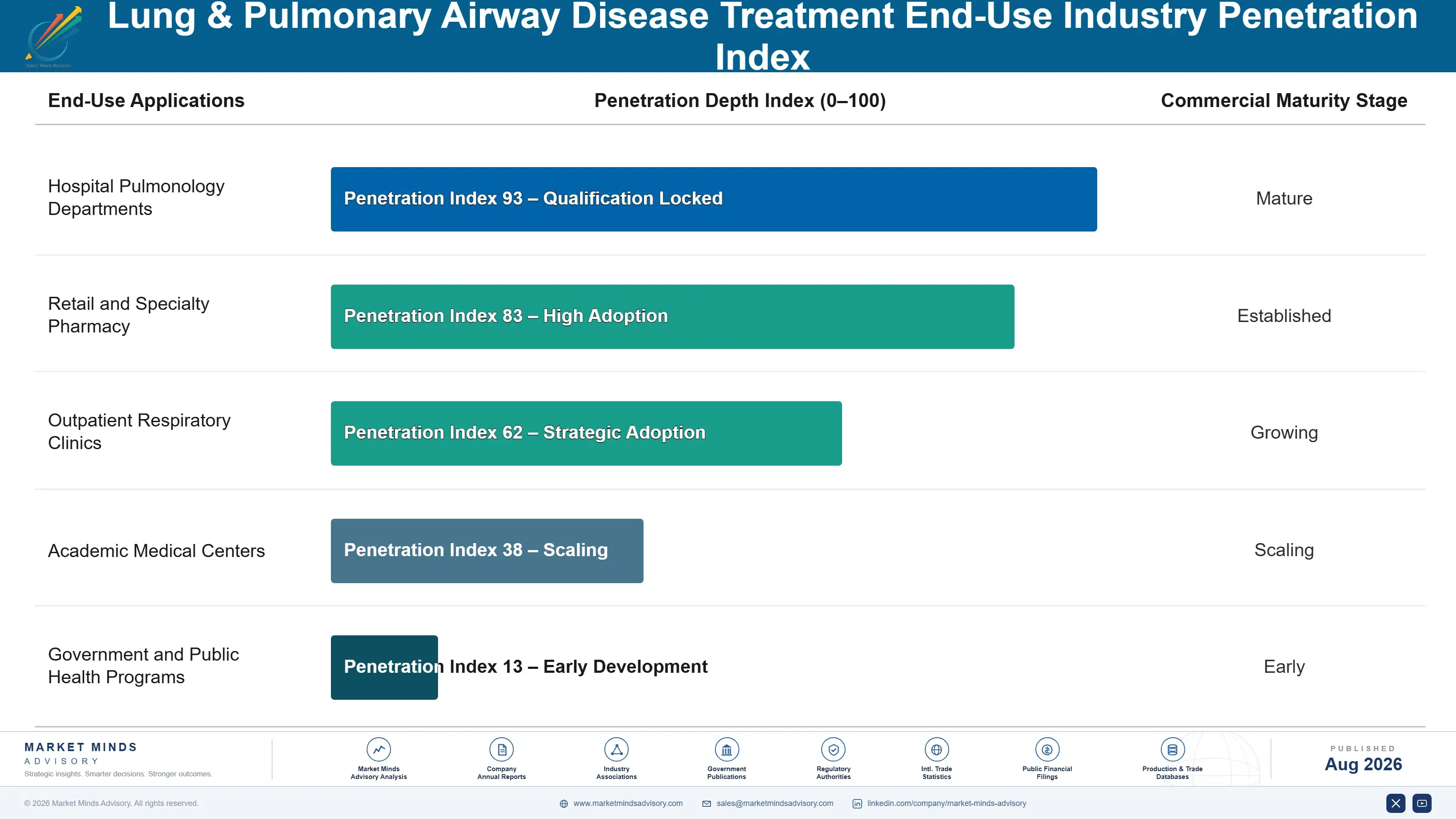
Lung and pulmonary airway disease treatment carries genuine annuity characteristics through chronic prescription relationships that continue for years or decades once treatment begins, meaning manufacturers capture far more value from sustained prescribing relationships than from any single prescription transaction alone. Pharmaceutical companies increasingly value prescriber trust and long-term treatment adherence over pure initial prescription volume, since switching therapy disrupts disease c
Adoption depth varies sharply by disease severity tier. Severe, treatment-resistant asthma shows the deepest and most rapidly expanding biologic engagement, layering targeted mechanism therapy across an increasingly broad specialist prescriber base beyond traditional pulmonology into allergy and immunology practice. Mild to moderate disease categories show more stable, established adoption patterns, with growth tracking population-level disease prevalence rather than any dramatic new mechanism catalyst.

A generational shift in prescriber behavior is underway as younger pulmonologists increasingly rely on biomarker-based stratification to guide treatment selection rather than defaulting to broad-spectrum bronchodilator prescribing regardless of underlying disease mechanism. This cohort expects biologic therapy as a standard treatment pathway option for eligible patients, reshaping prescribing patterns away from the narrower single-mechanism framing that dominated the category for decades before recent mechanism-targeted therapeutic expansion.
lung-pulmonary-airway-disease-treatment-market-end-use-penetration-index-1787305823127

Where Respiratory Treatment Value Concentrates

These are among the four positions where our research anticipates prominent divergence between winners and laggards over the coming forecast period. Each is grounded in the demand model, the regulatory perimeter, and the announced capacity pipeline.
01 / BIOLOGIC PIPELINE INVESTMENT

Prioritize Biologic Indication Expansion Over Legacy Portfolio Defense

Manufacturers that invest in expanding biologic indication coverage beyond severe asthma into moderate disease and additional airway conditions are capturing disproportionate share of new prescription growth across most major reimbursed respiratory treatment markets today and throughout the coming therapeutic development cycle. Payers increasingly weigh biomarker-based eligibility criteria alongside clinical efficacy data, a shift that rewards sustained indication expansion investment over defending legacy bronchodilator revenue alone. Manufacturers slow to expand biologic indications risk losing prescriber mindshare within three to five years as this becomes the clear standard of care.
02 / EAST ASIAN CAPACITY GROWTH

Expand East Asian Distribution Ahead of Patient Population Growth

East Asian markets are adding new respiratory disease patients faster than most manufacturers currently have distribution and clinical education infrastructure to serve profitably at meaningful scale across most affected provinces, cities, and regional healthcare networks today and beyond. Establishing local distribution and prescriber education partnerships ahead of patient population growth requires patient multi-year investment with limited near-term payback for most manufacturers entering these markets. Manufacturers that build this presence early are positioned to capture disproportionate share as pollution-driven disease burden continues expanding.
03 / GENERIC PORTFOLIO MANAGEMENT

Manage Legacy Bronchodilator Assets for Cash Flow Not Growth

Generic competition threatens to compress bronchodilator margin faster than established manufacturers can offset through pure manufacturing efficiency alone across most standard pricing negotiations and procurement cycles worldwide and internationally each year and beyond current expectations. Manufacturers need genuine capital discipline that redirects legacy bronchodilator cash flow toward higher-growth biologic categories rather than defending market share in a category facing sustained multi-year margin erosion. Manufacturers clinging to legacy growth ambitions risk misallocating capital away from the biologic opportunity that matters far more.
04 / REAL-WORLD EVIDENCE INVESTMENT

Build Real-World Outcome Evidence Ahead of Value-Based Contracts

Payers are moving toward value-based reimbursement contracts faster than most manufacturers currently have real-world outcome evidence infrastructure to support profitably at meaningful scale across most therapeutic categories and payer relationships today and well beyond current commitments. Establishing outcome tracking and evidence generation capability ahead of broader industry adoption requires patient multi-year investment with limited near-term payback for most manufacturers entering this space. Manufacturers that build this presence early are positioned to capture disproportionate share as value-based contracting continues expanding steadily.

Engagement Snapshot From the Field

A live engagement with an industry participant carrying material or product regulatory and market exposure ahead of a defining policy shift, showing how our research translates into a defensible multi-year portfolio strategy.
MARKET MINDS ADVISORY · CLIENT ENGAGEMENT SUMMARY
Lung & Pulmonary Airway Disease Treatment Producer Strategic Portfolio Review and Transition Roadmap 2026·Investment Scenario on Lung & Pulmonary Airway Disease Treatment Exposure Evaluation 2025-26
CLIENT PROFILE
The client is a regional health system operating twelve outpatient pulmonology clinics across the midwestern United States, serving a patient population with rising severe asthma and COPD prevalence tied partly to regional agricultural air quality conditions. The health system faced growing pressure from a major regional payer to demonstrate cost-effective biologic therapy utilization as part of a value-based care contract tying reimbursement partly to respiratory outcome metrics.
STRATEGIC CHALLENGE
Leadership needed to evaluate whether expanding biomarker testing and biologic eligibility screening across all twelve clinics could improve patient outcomes within the payer contract timeline, without disrupting existing prescribing workflows that took years to establish. The health system also needed to justify the biomarker testing investment against uncertain near-term reimbursement changes affecting overall program margin.
MMA APPROACH
MMA conducted an independent biomarker testing and biologic access assessment across three testing platform vendors, benchmarking diagnostic accuracy evidence, patient conversion rates from comparable health systems, and total program cost over a five-year contract period. The engagement combined primary interviews with pulmonology and clinical leadership at four pilot clinics, competitive benchmarking against peer health systems, and phased screening rollout planning sequenced by patient risk stratification.
KEY FINDINGS
  1. Biomarker testing at four pilot clinics identified biologic-eligible patients at a rate meaningfully higher than the health system prior informal screening approach, based on internal clinical tracking data.
  2. Patients converted to biologic therapy following biomarker-guided screening reported reduced exacerbation frequency by an estimated thirty-five percent within six months (client-reported, unverified by MMA), based on outcome tracking data.
  3. Total biomarker testing program cost ran an estimated twelve percent above the health system original budget, primarily due to higher than expected specialist consultation volume following positive screening results.
  4. Standardizing screening protocols across all twelve clinics improved documentation consistency, simplifying the health system reporting obligations under its value-based care contract with the regional payer.
CLIENT PROFILE
The client is a regional health system operating twelve outpatient pulmonology clinics across the midwestern United States, serving a patient population with rising severe asthma and COPD prevalence tied partly to regional agricultural air quality conditions. The health system faced growing pressure from a major regional payer to demonstrate cost-effective biologic therapy utilization as part of a value-based care contract tying reimbursement partly to respiratory outcome metrics.
STRATEGIC CHALLENGE
Leadership needed to evaluate whether expanding biomarker testing and biologic eligibility screening across all twelve clinics could improve patient outcomes within the payer contract timeline, without disrupting existing prescribing workflows that took years to establish. The health system also needed to justify the biomarker testing investment against uncertain near-term reimbursement changes affecting overall program margin.
MMA APPROACH
MMA conducted an independent biomarker testing and biologic access assessment across three testing platform vendors, benchmarking diagnostic accuracy evidence, patient conversion rates from comparable health systems, and total program cost over a five-year contract period. The engagement combined primary interviews with pulmonology and clinical leadership at four pilot clinics, competitive benchmarking against peer health systems, and phased screening rollout planning sequenced by patient risk stratification.
KEY FINDINGS
  1. Biomarker testing at four pilot clinics identified biologic-eligible patients at a rate meaningfully higher than the health system prior informal screening approach, based on internal clinical tracking data.
  2. Patients converted to biologic therapy following biomarker-guided screening reported reduced exacerbation frequency by an estimated thirty-five percent within six months (client-reported, unverified by MMA), based on outcome tracking data.
  3. Total biomarker testing program cost ran an estimated twelve percent above the health system original budget, primarily due to higher than expected specialist consultation volume following positive screening results.
  4. Standardizing screening protocols across all twelve clinics improved documentation consistency, simplifying the health system reporting obligations under its value-based care contract with the regional payer.
RECOMMENDED STRATEGY
Phase 1: Phase 1 (Months 1 to 2): Complete testing platform vendor assessment and pilot clinic selection across the twelve-clinic health system network. Phase 2: Phase 2 (Months 3 to 8): Deploy biomarker screening and biologic conversion tracking at four pilot clinics, monitoring outcome metrics closely. Phase 3: Phase 3 (Months 9 to 15): Roll out validated screening protocol across remaining eight clinics, sequencing deployment by patient population risk level.
OUTCOME
Within fifteen months, the health system expanded biomarker-guided biologic screening across all twelve clinics, reduced exacerbation frequency meaningfully among converted patients, and met its payer contract respiratory outcome targets ahead of schedule (client-reported, unverified by MMA). The health system has since extended the screening framework to additional chronic disease categories.

Frequently Asked Questions

Foundational context covering the market sizes, CAGR, scope, country, region and competition that inform every finding below. This section is provided to cover basics and most often pre-purchase conversations, answered from the MMA Primary Research Dataset.

What is the current size of the Lung & Pulmonary Airway Disease Treatment Market?

The global lung and pulmonary airway disease treatment market was valued at 42.0 billion dollars in 2025. This figure covers pharmaceutical therapies for asthma, COPD, and related airway conditions.

How large will the Lung & Pulmonary Airway Disease Treatment Market be by 2036?

MMA forecasts the market will reach 93.06 billion dollars by 2036, more than doubling in value. This growth is driven primarily by biologic therapy adoption and rising respiratory disease prevalence.

What is the CAGR for the Lung & Pulmonary Airway Disease Treatment Market 2026 to 2036?

The base case CAGR is 7.5 percent annually across the forecast period. Bull and bear scenarios range from 8.8 percent to 6.2 percent depending on biologic reimbursement expansion pace.

Which segment is growing fastest?

Biologic therapies for severe asthma are the fastest-growing segment, expanding at approximately 14.5 percent annually. This is roughly 1.9 times the overall market growth rate, driven by reimbursement expansion.

Who are the major companies in the Lung & Pulmonary Airway Disease Treatment Market?

Leading companies include AstraZeneca, GlaxoSmithKline, Boehringer Ingelheim, Novartis, and Sanofi. These five manufacturers hold a combined CR5 near forty-eight percent of the global market currently.

Which country is growing fastest?

China is the fastest-growing national market, expanding at approximately 8.5 percent annually. This reflects rising air pollution exposure and a rapidly expanding COPD and asthma patient population.

Report Segmentation Architecture

The full report scope spans multiple orthogonal segmentation dimensions, with cross-tabulated demand data provided for each dimension pair. Coverage extends further to regional breakdowns, trend trajectories, and the competitive detail needed to support segment-level decision-making.

By Therapeutic Mechanism and Product Type

  • Biologic Therapies for Severe Asthma
  • Pulmonary Fibrosis and Rare Disease Therapeutics
  • Combination Inhaler Therapies
  • Long-Acting Bronchodilators (LABA/LAMA)
  • Inhaled Corticosteroids
  • Short-Acting Rescue Inhalers

By End-Use Industry

  • Hospital Pulmonology Departments
  • Retail and Specialty Pharmacy
  • Outpatient Respiratory Clinics
  • Academic Medical Centers
  • Government and Public Health Programs

By Commercial Dimension

  • Direct Pharmaceutical Company Sales
  • Pharmacy Benefit Manager Contracts
  • Distributor and Channel Sales
  • Value-Based Reimbursement Agreements

By Region

  • North America
  • Western Europe
  • East Asia
  • South Asia and Pacific
  • Latin America
  • Middle East and Africa
  • Eastern Europe

Scope, Methodology, and Coverage

Every figure in this report is reproducible from documented input assumptions. The scope below maps the historical period, the forecast horizon, the segmentation dimensions, and the countries covered, alongside the underlying primary and qualitative methodology.
Historical Period
2020 to 2025
Forecast Period
2026 to 2036
Base Year
2025 (USD billions; MMA Primary Research Dataset, August 2026)
Market Definition
The lung and pulmonary airway disease treatment market covers pharmaceutical therapies for asthma, chronic obstructive pulmonary disease, and related airway conditions, including inhaled bronchodilators, corticosteroids, and biologic agents. Pulmonary devices, diagnostic equipment, and unrelated respiratory infection treatments are excluded from scope.
Quantitative Units
USD billions (current prices); prescription volume where applicable
Segmentation Dimensions
By Therapeutic Mechanism and Product Type; By End-Use Industry; By Commercial Dimension; By Region
Regions Covered
North America, Western Europe, East Asia, South Asia and Pacific, Latin America, Middle East and Africa, Eastern Europe
Countries Covered
USA, China, Germany, France, UK, Japan, South Korea, India, Australia, Canada, Brazil, Mexico, Indonesia, Vietnam, Thailand, Malaysia, UAE, Saudi Arabia, South Africa, Nigeria, Turkey, Poland, Netherlands, Italy, Spain, Sweden, Switzerland, Argentina, Colombia, Singapore, and additional markets relevant to this sector
Key Companies Profiled
AstraZeneca, GlaxoSmithKline, Boehringer Ingelheim, Novartis, Sanofi, Teva Pharmaceutical, Chiesi Farmaceutici, Regeneron Pharmaceuticals, Amgen, Viatris, Cipla, Merck & Co., Roche, Vertex Pharmaceuticals, United Therapeutics, Circassia Pharmaceuticals, Verona Pharma, Insmed, Theravance Biopharma, Astellas Pharma
Quantitative Methodology
Primary survey, n=3,800 respondents, Q4 2025, six countries; demand-side model with trade association cross-validation
Qualitative Methodology
47 expert interviews, Q4 2025; applied to validate demand model assumptions, identify emerging dynamics, and assess competitive positioning
Report Format
PDF and XLSX data workbook (Word format preview document)
Publisher
Market Minds Advisory
Report Code
MMA-2026-HLT-528
Published
August 2026
Contact
sales@marketmindsadvisory.com | www.marketmindsadvisory.com

Purchase the full Lung & Pulmonary Airway Disease Treatment Market Report (2026 to 2036).

The full report delivers detailed segment-level revenue forecasts across all six therapeutic categories through 2036. It includes country-level breakdowns for the fourteen markets carrying the deepest primary research coverage, alongside a complete competitive benchmarking module covering all twenty profiled companies. Proprietary MMA survey data drawn from 3,800 respondents across six countries supports the demand analysis, complemented by expert interview findings from 47 industry specialists gathered during the fourth quarter of 2025. Buyers also receive editable data tables and a quarterly market monitor update subscription for twelve months following purchase.
Segment-level revenue forecasts across six therapeutic categories
Country-level breakdowns for fourteen deeply researched markets
Competitive benchmarking module covering twenty profiled companies
Proprietary survey data from 3,800 respondents worldwide
Expert interview findings from 47 industry specialists
Twelve months of quarterly market monitor updates

Built For The People Who Decide

From boardroom strategy to bench-side execution, this report is read cover-to-cover by leaders shaping the next decade of their industry, turning demand scenarios, market dynamics and valuation benchmarks into decisions.
CXOs/ Presidents/ VPs/ Managers
M&A and Corporate Development
Strategy Teams and R&D Heads
Procurement and Product Directors
Regulatory and Compliance Leaders
Investor Relations and Equity Analysts