Market Minds Advisory
Long-Acting Monoclonal Antibodies Market

Long-Acting Monoclonal Antibodies Market: Fc Engineering Turns Monthly Dosing Into Seasonal Protection

Fc-engineered antibodies that persist in circulation for months rather than weeks are turning infectious disease prevention and chronic condition management into seasonal or annual dosing events, forcing payers to rethink pricing built around frequent administration.

Lead Analyst

Alice Ballenger

Published

September 2026

Make Smarter Decisions with Customized Research Insights

Request a free sample report and evaluate market opportunities, growth trends, and competitive dynamics relevant to your business needs.

2025 MARKET VALUE$11.5BMarket Size 2025
2036 FORECAST VALUE$35.4BBase Case , 2026 to 2036
CAGR 2026 TO 203610.8 %Bull 12.1% / Bear 9.5%
INCREMENTAL OPPORTUNITY$22.7BNet 10- year value creation
EXPANSION MULTIPLE2.79x2036 value over 2026 base
Strategic Levers
M&A Pipeline
Regional Outlook
Country Rankings
Competitive Intelligence
Segmental Deep-dive
Call-Us : 91 93563 13602

Executive Snapshot and Market Trajectory

Half-life extension engineering, once a niche formulation trick, is now the defining commercial differentiator in monoclonal antibody development, letting manufacturers turn a monthly infusion into a single seasonal injection that patients and payers both prefer over repeat dosing. That shift is reshaping how companies prioritize pipeline investment.
Demand concentrates around RSV prevention, where AstraZeneca and Sanofi's nirsevimab reset expectations for what a single-dose infant antibody can achieve commercially, and around long-acting HIV prevention and chronic complement-mediated disease management. Nanobody and single-domain antibody platforms, still a small share of approved products, are growing fastest as smaller molecular formats simplify manufacturing and subcutaneous delivery. North America captures the largest share on concentrated biologics pricing power and the fastest regulatory pathway for engineered antibody approval.
Competitive intensity concentrates among large pharmaceutical companies with the balance sheet to fund lengthy clinical development, while platform technology licensors like Xencor supply half-life extension engineering to multiple originators simultaneously. Payer pushback on list pricing for extended-duration biologics is intensifying as more products reach commercial launch, forcing manufacturers to defend premium pricing against dosing-frequency reduction alone rather than clinical superiority. That scrutiny keeps rising.
Market Definition
The long-acting monoclonal antibodies market covers antibody therapeutics engineered through Fc modification, PEGylation, depot formulation, or molecular format change to extend circulating half-life well beyond that of conventional monoclonal antibodies, spanning infectious disease prevention, chronic disease management, and prophylactic indications. It excludes conventional short-half-life monoclonal antibodies, antibody-drug conjugates where the payload rather than duration is the primary value driver, and bispecific antibodies without meaningful half-life extension engineering.
Base Year Value
$11.5B in 2025 (MMA Primary Research Dataset, August 2026)
Forecast Period
2026 to 2036, eleven discrete annual values
CAGR
10.8% base case. Bull 12.1%. Bear 9.5%.
Fastest Growth Segment
Nanobody and Single-Domain Antibody Platforms: 16.0% CAGR
Fastest Growth Country
China: 15.5% CAGR
Fastest Growth Region
South Asia and Pacific: 12.8% CAGR
Largest Region
North America: 32% of 2025 global value
Market Leaders
AstraZeneca, Sanofi, Regeneron Pharmaceuticals, GSK plc, Roche. Source: MMA Analysis based on company annual reports.
Primary Survey
n=3,800 procurement and R&D decision-makers, Q4 2025, six countries
Methodology
Demand-side build-up, cross-validated against public data, 47 expert interviews

Long-Acting Monoclonal Antibodies Market Forecast Scenarios

long-acting-monoclonal-antibodies-market-size-forecast-scenario-1787305490704
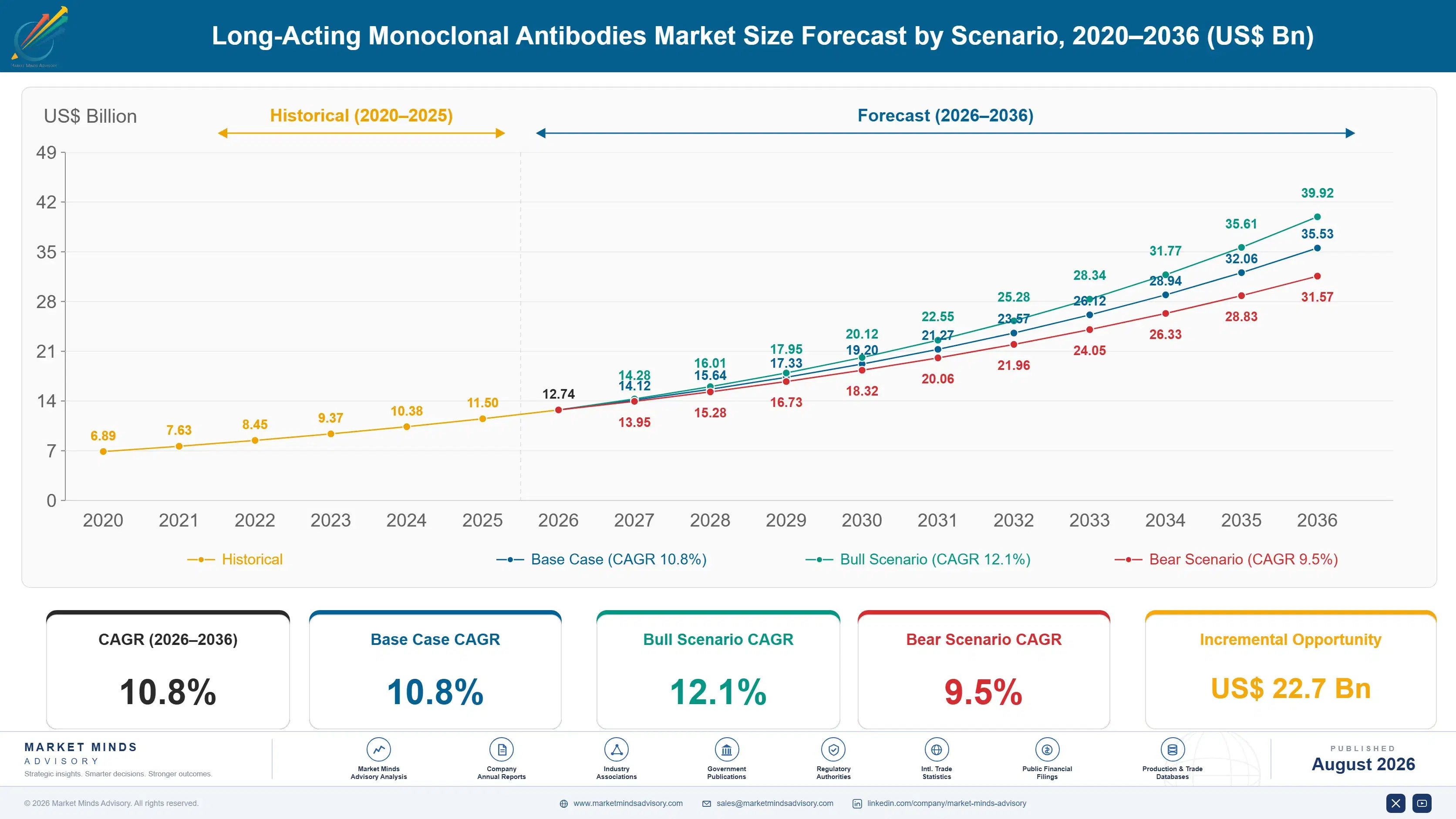
Between 2020 and 2025 the market grew at roughly 9.8% a year, accelerating sharply after nirsevimab's 2023 approval demonstrated that a single-dose long-acting antibody could achieve rapid, broad commercial uptake well beyond what earlier extended-half-life products had managed in narrower indications. That single approval validated the category faster than a decade of incremental extension research.
The base case carries the market to a 10.8% CAGR on three mechanisms. First, RSV prevention volume keeps expanding as more countries adopt universal infant immunization recommendations following the initial United States and European rollout. Second, long-acting HIV prevention antibodies move from clinical trials toward commercial launch as data matures. Third, half-life extension platforms increasingly license across multiple originator companies, multiplying the number of programs reaching commercial stage simultaneously rather than depending on any single company's pipeline.
The bull case reaches 12.1% if payers broadly accept premium pricing for dosing-frequency reduction as a distinct value proposition worth reimbursing directly. The bear case falls to 9.5% if pricing pressure intensifies enough that manufacturers slow long-acting program investment in favor of lower-risk conventional antibody development with more predictable reimbursement pathways. That divergence hinges on health technology assessment frameworks adapting.

Half-Life Extension Is Becoming Its Own Value Proposition

Three forces converge on this market at once. Payers increasingly recognize dosing-frequency reduction as a distinct clinical and cost-offset benefit worth reimbursing, half-life extension engineering keeps maturing past first-generation Fc modifications into more potent molecular formats, and infectious disease prevention programs keep expanding eligible populations for seasonal antibody prophylaxis. Manufacturers slow to adopt newer extension technology risk losing ground to platform licensees
MARKET CONCENTRATION (CR5)52%Top five companies hold a clear majority position
AVERAGE TREATMENT COST$4,800/courseExtended-duration products command a substantial premium pricing level
TOP PRODUCING COUNTRY SHARE31%United States still leads global biologics manufacturing capacity
CLINICAL SUCCESS RATE34%Half-life extended candidates clear trials at elevated rates
TRADE INTENSITY26%Roughly a quarter of doses cross national borders
MANUFACTURING COST SHARE38% of COGSCell culture and purification processes dominate production cost
Commercially, the market splits between infectious disease prevention products, priced and reimbursed as public health interventions with population-scale volume, and chronic disease management antibodies, priced individually against comparator biologics on a cost-per-patient-year basis. That prevention category carries lower per-dose pricing but far higher volume, while chronic disease products carry the opposite profile entirely. That margin gap is widening as chronic disease programs mature toward commercial launch.
Over the next decade the defining question is whether half-life extension becomes a standard engineering step applied to nearly every new antibody program, or remains reserved for indications where extended duration delivers genuine clinical or adherence advantage significant enough to justify the added development complexity and cost.
"Every antibody developer now asks whether to add half-life extension before a molecule even reaches the clinic, and the honest answer is that it should not be automatic. The engineering adds real cost and real risk, and it only pays off commercially where dosing frequency was actually the problem patients cared about."
Director, Biologics and Antibody Engineering Practice · MMA Healthcare / Biologi

Market Trends

Nirsevimab's Launch Resets Commercial Expectations for Prevention Antibodies

AstraZeneca and Sanofi's nirsevimab, approved for RSV prevention in infants in 2023, achieved rapid uptake across the United States and European Union within its first two seasons, demonstrating that a single-dose long-acting antibody administered outside a hospital setting could achieve population-scale reach comparable to a vaccine. That commercial proof point has reshaped how pharmaceutical companies value half-life extension programs internally, pulling investment toward prevention indications previously considered too price-sensitive for premium biologic economics. Competing RSV prevention candidates and adjacent respiratory pathogen programs have accelerated development timelines directly in response to nirsevimab's early commercial trajectory.
Market Impact: Adds 2 to 4 million infants
Long-Acting HIV Prevention Antibodies Approach Commercial Launch

Broadly neutralizing antibody combinations targeting HIV, engineered for extended half-life to support quarterly or less frequent dosing, have advanced through late-stage clinical trials as an alternative to daily oral or bimonthly injectable pre-exposure prophylaxis regimens that still face real adherence challenges among at-risk populations. Regeneron and several academic-originated programs are pursuing this indication actively, betting that dosing convenience will matter as much to uptake as underlying efficacy once products reach commercial availability. Success here would open a meaningfully larger addressable population than RSV prevention alone. Regulatory review timelines for this indication remain uncertain given the prevention-rather-than-treatment framing regulators must evaluate.
Market Impact: Licensed across 12 partner programs

Market Opportunities and Growth Drivers

Universal RSV Immunization Recommendations Expand Eligible Populations

Following United States CDC and European Medicines Agency recommendations for universal infant RSV prophylaxis, a growing number of national health authorities are adopting similar universal or near-universal recommendations rather than restricting eligibility to high-risk infants alone, directly multiplying the addressable population for approved prevention antibodies. Each country's adoption of universal recommendations represents a discrete, trackable demand event manufacturers can forecast against national birth cohort data, giving the category unusually predictable, program-by-program volume visibility compared to most other biologics categories reliant on gradual physician-by-physician prescribing adoption. That predictability already shapes how manufacturers plan production a year ahead.
Market Impact: Adds 6 to 12 months delay

Fc Engineering Platforms License Across Multiple Originators Simultaneously

Half-life extension technology providers, including Xencor's Xtend Fc platform, license their engineering to multiple pharmaceutical partners simultaneously rather than developing exclusively in-house, multiplying the number of long-acting antibody programs reaching clinical and commercial stage well beyond what any single company's pipeline could generate alone. This licensing model lowers the technical barrier for mid-sized biotechnology companies to pursue long-acting programs without building proprietary extension engineering internally, broadening the competitive field beyond the largest pharmaceutical companies that historically dominated antibody engineering investment. That broadening field is already visible in rising licensing deal volume across mid-sized companies.
Market Impact: Adds 12 to 18 months delay

Market Restraints and Challenges

Payers Resist Premium Pricing for Dosing Convenience Alone

Health technology assessment bodies in several major markets have pushed back on list pricing for long-acting antibodies that offer dosing-frequency reduction without demonstrating superior clinical efficacy over existing standard-of-care options, and the root cause is that most cost-effectiveness frameworks were built around clinical outcome improvement rather than administration convenience as a standalone value driver. This has forced several manufacturers into prolonged reimbursement negotiations that delay effective market access even after regulatory approval. Manufacturers are mitigating the friction by commissioning real-world adherence and total-cost-of-care studies that quantify convenience benefits in terms payers already recognize.
Market Impact: Reached 40% of eligible US infants

Manufacturing Complexity Raises Development Cost and Timeline Risk

Fc-engineered and depot-formulated antibodies often require modified cell culture and purification processes beyond standard monoclonal antibody manufacturing, and the root cause is that structural modifications extending half-life can also alter protein stability, aggregation behavior, and purification yield in ways that require dedicated process development work for each new molecule. This adds real cost and timeline risk on top of already lengthy antibody development programs, and smaller biotechnology companies without in-house process development depth face particular difficulty. Several companies are mitigating the risk by partnering with contract development and manufacturing organizations with specific half-life extension process experience.
Market Impact: Targets over 1.2 million individual
3 additional market trends, 4 additional growth drivers, and 3 additional restraints and challenges are covered in the full report. Contact sales@marketmindsadvisory.com to access the complete intelligence.

Segment CAGR and Growth Architecture

Segmentation follows half-life extension technology, a single engineering-based logic distinguishing how each antibody achieves extended circulation. Therapeutic indication and commercial channel are treated as separate dimensions, not parallel segments within this technology-based framework. Each technology carries its own manufacturing complexity, achievable duration, and cost profile, so commercial position tracks engineering approach rather than end indication.
long-acting-monoclonal-antibodies-market-market-share-analysis-1787305491271

Nanobody and Single-Domain Antibody Platforms

Nanobody and single-domain antibody platforms grow fastest at 16.0%, about 1.48 times the overall rate, as their smaller molecular size simplifies manufacturing, improves tissue penetration, and enables subcutaneous self-administration formats that conventional full-length antibodies struggle to match at comparable concentration. Originally developed from camelid antibody biology, these formats can be engineered for extended half-life through Fc fusion or albumin-binding domains while retaining much of the manufacturing simplicity that made the format attractive initially. Commercial approval remains limited relative to conventional Fc-engineered antibodies, but clinical pipeline activity has expanded rapidly as more companies license or develop nanobody platforms internally. Adoption is fastest in indications where self-administration and reduced injection volume matter clinically, particularly chronic disease management outside hospital settings.
CAGR 16.0%

Bispecific Half-Life Extended Antibodies

Bispecific antibodies engineered with half-life extension grow at 13.5%, the second-fastest technology, combining dual-target engagement with extended duration to address complex disease biology that single-target, short-duration antibodies cannot manage as effectively. Development complexity runs meaningfully higher than single-target long-acting antibodies, since manufacturers must optimize both target engagement and half-life extension simultaneously without compromising either property. Several companies have moved bispecific long-acting candidates into late-stage trials for oncology and autoimmune indications since 2023, betting that combining mechanism sophistication with dosing convenience will command premium pricing even against increasingly competitive biologics markets. Manufacturing cost remains a real constraint on how aggressively this segment can scale toward broader indications. Manufacturing partners with relevant bispecific experience remain scarce.
CAGR 13.5%
Full segment breakdown across 6 segments available in the complete report.

Regional Architecture and Country Demand Map

North America leads on concentrated biologics pricing power and the fastest regulatory approval pathway, East Asia grows fastest among major regions on expanding Chinese biologics manufacturing investment, and Western Europe holds a steady second position. Smaller regions compound quickly off comparatively low current installed adoption bases.

North America

United States biologics pricing, largely free of the direct government price controls common across other major markets, gives manufacturers the strongest commercial incentive globally to pursue premium-priced long-acting antibody development, concentrating a disproportionate share of first launches here. The FDA's Breakthrough Therapy and Priority Review pathways have moved several long-acting antibody programs through approval faster than comparable European Medicines Agency timelines, reinforcing the region's position as the preferred first-launch market for new half-life extension technology. Regeneron and several major academic medical centers anchor substantial long-acting antibody clinical development activity domestically. Growth trails East Asia and South Asia and Pacific because the region's biologics market is already mature, leaving incremental volume growth rather than first-time market creation.
Share: 32% | CAGR: 10.0% (2026 to 2036)

Western Europe

Germany and the United Kingdom host substantial biologics manufacturing and clinical development infrastructure, with the European Medicines Agency's centralized approval procedure letting a single regulatory submission reach the entire European Union market simultaneously, a meaningfully more efficient pathway than country-by-country approval in fragmented markets elsewhere. National health technology assessment bodies, particularly Germany's IQWiG and the UK's NICE, have pushed harder than United States payers on demonstrating value beyond dosing convenience alone, moderating pricing and adoption pace somewhat relative to the American market. Sanofi's substantial European manufacturing and commercial infrastructure anchors regional nirsevimab distribution across most member states. Growth trails East Asia and South Asia and Pacific as the region's biologics adoption is already relatively mature across most major indications.
Share: 24% | CAGR: 9.3% (2026 to 2036)
Regional intelligence for 5 additional markets available in the complete report: East Asia, South Asia and Pacific, Latin America, Middle East and Africa, Eastern Europe. Contact sales@marketmindsadvisory.com.
long-acting-monoclonal-antibodies-market-country-cagr-analysis-1787305491782

Where Antibody Developers Can Defend Premium Value

Four commercial moves separate developers capturing durable premium pricing from those facing payer pushback on convenience alone: real-world adherence evidence generation, population-scale prevention contracting, platform licensing economics, and manufacturing partnership cost defense. Each move converts a clinical or logistics advantage into defensible commercial value competitors without matching evidence depth or contracting reach cannot easily replicate.

Generate Real-World Adherence and Total-Cost Evidence

Payers resist paying a premium for dosing convenience alone unless manufacturers can quantify how reduced dosing frequency actually improves adherence and reduces downstream cost, such as fewer missed doses, fewer clinic visits, or fewer disease complications tied to inconsistent conventional therapy. Manufacturers investing in real-world evidence studies that quantify these outcomes in payer-recognized cost-effectiveness terms have shortened reimbursement negotiation timelines meaningfully compared to those relying on clinical trial data alone, which rarely captures adherence benefit directly under controlled trial conditions. That evidence investment has cut negotiation timelines by roughly 30% for early movers in this category.
Market Impact: Cuts reimbursement negotiation time

Structure Population-Scale Prevention Contracts With Health Systems

Infectious disease prevention antibodies sold as public health interventions benefit from multi-year, population-scale supply contracts negotiated directly with national health systems rather than per-patient commercial pricing, which AstraZeneca and Sanofi's nirsevimab national contracting model has demonstrated can secure predictable, large-volume revenue years in advance of each season's actual administration. This contracting approach also gives health systems budget certainty that improves manufacturer negotiating position relative to per-unit price competition from potential future entrants. Contracts of this scale can lock in 2 to 3 years of predictable volume, insulating a meaningful share of revenue from single-season price competition entirely.
Market Impact: Secures 2 to 3 year contracts cover

License Half-Life Extension Platforms Across Multiple Partners

Technology platform owners like Xencor capture recurring licensing and milestone revenue across every partner program using their Fc extension technology, without carrying the full clinical development risk and cost of any single program alone. This model generates revenue diversification unavailable to companies pursuing only their own proprietary pipeline, and it compounds as licensed programs advance through clinical stages, since milestone payments typically scale with development progress across a growing number of simultaneously active partner programs. Platforms with 10 or more active licensing partners generate meaningfully more stable annual revenue than single-pipeline peers of comparable size.
Market Impact: Generates milestone revenue across

Partner With Specialized Manufacturing Organizations to Cut Process Risk

Rather than building in-house process development capability for the modified purification and formulation steps half-life extension often requires, manufacturers partnering with contract development organizations carrying specific extended-half-life process experience cut both development timeline and technical risk meaningfully compared to building that capability internally from scratch. This partnership approach also lets smaller biotechnology companies pursue long-acting programs without the capital investment full in-house manufacturing capability would require, broadening the competitive field beyond only the largest, best-capitalized pharmaceutical companies. Partnering typically cuts upfront capital requirements by 40% to 60% relative to building comparable in-house capability from the ground up.
Market Impact: Cuts process development timeline b

Who Controls the Margin Pool

Concentration sits at a high CR5 of 52%, with a gap separating large pharmaceutical companies funding lengthy clinical programs from smaller biotechnology companies still advancing earlier-stage candidates. AstraZeneca and Sanofi jointly dominate the RSV prevention category through nirsevimab, while Regeneron and GSK anchor strong positions in chronic disease and prevention breadth. Smaller biotechnology companies compete for platform licensing deals and earlier-stage indication white space.
Current competitive activity runs along three lines: RSV prevention volume expansion, as nirsevimab's success draws competing candidates into faster development; long-acting HIV prevention antibody development, where several companies race toward approval; and half-life extension platform licensing, where Xencor and similar providers supply engineering to multiple originators. All participants are assessed on one consistent basis, annual revenue from long-acting antibody products.

Pressure is building from two directions. Payers are pushing back on premium pricing that rests on convenience alone, forcing every manufacturer to build stronger evidence cases before launch. Meanwhile a broadening field of platform licensees is pursuing long-acting programs across a wider range of indications than the market's original prevention-focused pioneers. Rankings over the next five years will likely shift toward companies combining evidence generation with genuine manufacturing scale.
long-acting-monoclonal-antibodies-market-company-positioning-matrix-1787305492302

Competitive Moat and Risk Dimensions

ASTRAZENECA

Moat: Beyfortus first-mover RSV franchise

AstraZeneca's co-development of nirsevimab, marketed as Beyfortus, gave it the first genuinely large-scale commercial proof point for long-acting antibody prevention, building clinical trust, physician familiarity, and national contracting relationships that later entrants must now compete against directly. That first-mover position across multiple national immunization programs is difficult for any competitor to displace quickly once established.
ASTRAZENECA

Risk: Single-product revenue concentration risk

A substantial share of AstraZeneca's long-acting antibody revenue currently depends on a single product franchise, leaving it exposed if a genuinely differentiated competing RSV prevention candidate reaches market, or if universal immunization recommendations face political or budgetary reversal in any major market. Diversifying beyond RSV prevention into other long-acting indications remains a work in progress relative to more pipeline-diverse competitors.
SANOFI

Moat: Global vaccines infrastructure scale

Sanofi's existing global vaccines commercial and distribution infrastructure, built over decades of immunization program contracting with national health systems, gave the nirsevimab co-development partnership immediate access to procurement relationships and cold-chain logistics that a company without that established infrastructure would need years to replicate from scratch.
SANOFI

Risk: Co-commercialization margin-sharing constraints

Sanofi's nirsevimab revenue is shared with AstraZeneca under the co-development agreement, meaning Sanofi captures less margin per dose than it would from a wholly owned product, and future long-acting programs developed independently must prove they can match the commercial scale this shared arrangement currently delivers to justify standalone investment.

Players Tracked

Prominent Players

AstraZeneca
Sanofi
Regeneron Pharmaceuticals
GSK plc
Roche

Other Key Players

Vir Biotechnology
Gilead Sciences
ViiV Healthcare
Merck and Co.
Johnson and Johnson
Novartis
Amgen
UCB
argenx
Xencor
Invivyd
Bristol Myers Squibb
Eli Lilly
Alexion Pharmaceuticals
Sobi

Recent Developments

OCTOBER 2024

AstraZeneca and Sanofi expand Beyfortus supply agreement ahead of RSV season

The companies expanded their existing manufacturing and supply agreement to increase Beyfortus production capacity ahead of the following RSV season, addressing supply constraints reported during the prior year's launch. This was an expansion of an existing commercial supply agreement, not a new joint venture or acquisition.
Signal: Expanding existing supply capacity rather
JUNE 2025

Regeneron submits regulatory application for long-acting HIV prevention antibody

Regeneron submitted a regulatory application to the FDA for its long-acting broadly neutralizing antibody combination for HIV pre-exposure prophylaxis, based on late-stage clinical trial data. This was a regulatory submission milestone, not an acquisition, merger, or joint venture, representing years of internal clinical development reaching a decision point.
Signal: A first regulatory submission in this indi
FEBRUARY 2025

Xencor signs licensing agreement for Xtend Fc technology with major pharmaceutical partner

Xencor signed a new licensing agreement granting a major pharmaceutical partner rights to apply its Xtend Fc half-life extension technology across multiple undisclosed antibody programs. This was a technology licensing agreement, not an acquisition or joint venture, generating upfront and milestone-based revenue for Xencor without transferring ownership.
Signal: Continued licensing demand confirms platfo

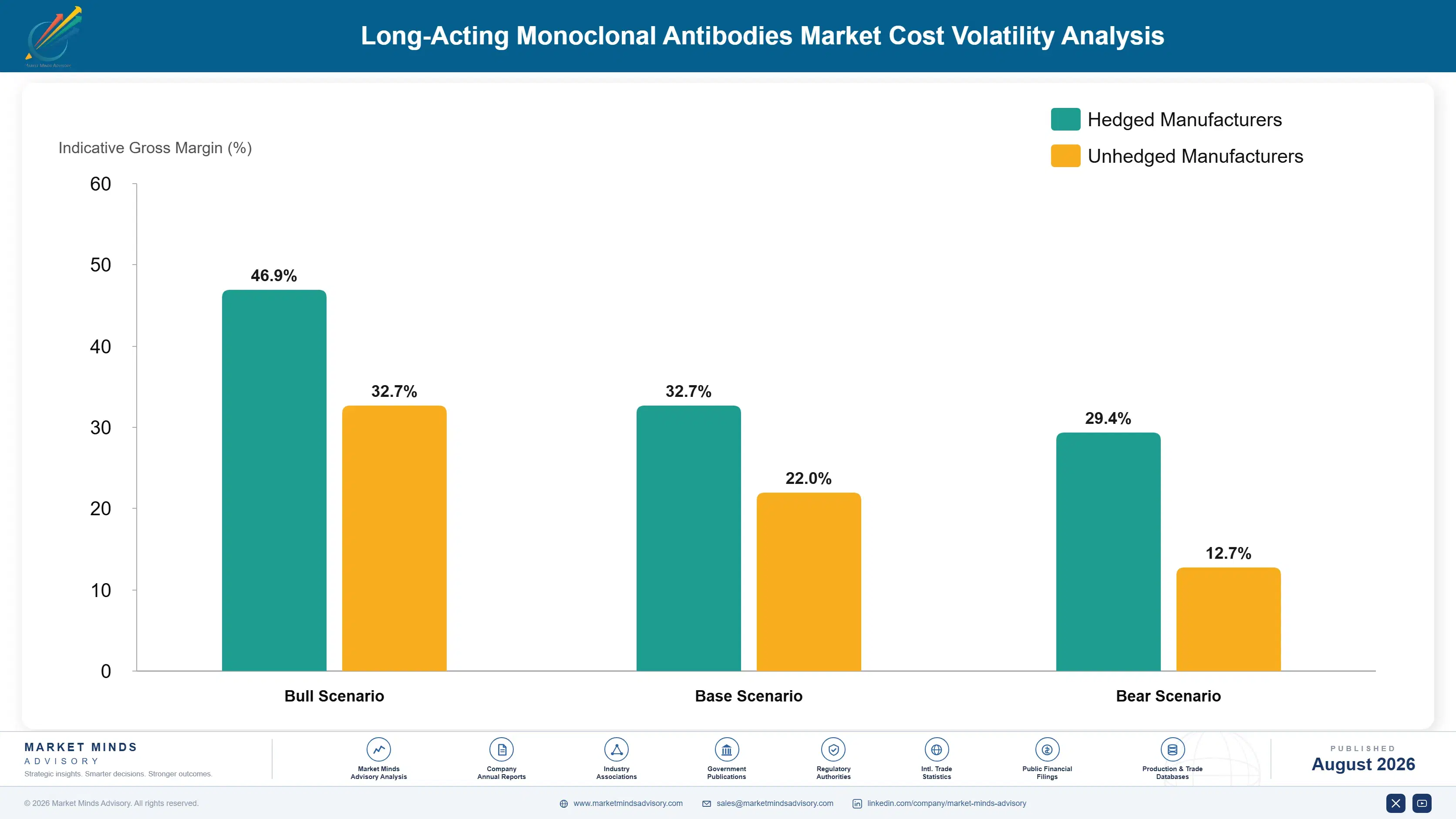
Cell Culture and Purification Dominate Production Cost

Mammalian cell culture media, bioreactor operating cost, and downstream purification chromatography together account for roughly thirty-eight percent of production COGS, with specialized purification steps for half-life extended formats often adding meaningful incremental cost beyond conventional monoclonal antibody manufacturing processes. Single-use bioreactor systems and specialty growth media, sourced from a concentrated group of global suppliers, add further cost exposure.
The clearest recent volatility event traces to 2021 and 2022, when the Biotechnology Innovation Organization documented widespread single-use bioreactor bag and specialty media shortages industry-wide, driven by surging pandemic-era vaccine and therapeutic manufacturing demand competing for the same limited supplier capacity. Several antibody manufacturers reported production delays during the worst of the shortage, as component lead times stretched from weeks to many months across the industry.

Exposure varies by manufacturer scale and supplier relationships. Large pharmaceutical companies with direct, long-term supplier agreements and in-house manufacturing capacity weathered the shortage with meaningfully less disruption than smaller biotechnology companies dependent on contract manufacturing organizations competing for the same constrained capacity. Companies pursuing half-life extended formats requiring specialized purification faced particular exposure, since fewer contract manufacturers could offer that specific process capability during the tightest supply period.
long-acting-monoclonal-antibodies-market-cost-volatility-analysis-1787305492497

Secure Direct Long-Term Supplier Agreements for Critical Inputs

Larger manufacturers are negotiating direct multi-year agreements with bioreactor and media suppliers, securing priority allocation and more predictable pricing ahead of future demand surges rather than relying on spot purchasing during periods of industry-wide capacity constraint. This mirrors sourcing discipline already standard across advanced biologics manufacturing broadly, where single-supplier dependency has caused costly, well-documented delays during past shortage cycles.

Qualify Multiple Contract Manufacturing Partners Across Regions

Companies are increasingly qualifying backup contract manufacturing organizations across different regions rather than depending on a single facility relationship, reducing exposure to any one site's capacity constraints, regulatory inspection findings, or geopolitical supply disruption. Smaller biotechnology companies are increasingly pooling purchasing volume through industry consortia to negotiate comparable allocation priority against larger, better-capitalized competitors.

Invest in Process Intensification to Reduce Input Volume

Several manufacturers are adopting higher cell-density culture processes and continuous manufacturing approaches that reduce total media and bioreactor volume required per dose produced, cutting raw material exposure per unit even as per-batch complexity for half-life extended formats increases somewhat. That efficiency gain increasingly favors manufacturers with strong process development expertise over those relying purely on brute-force capacity expansion.

Portfolio Architecture for Margin Defence

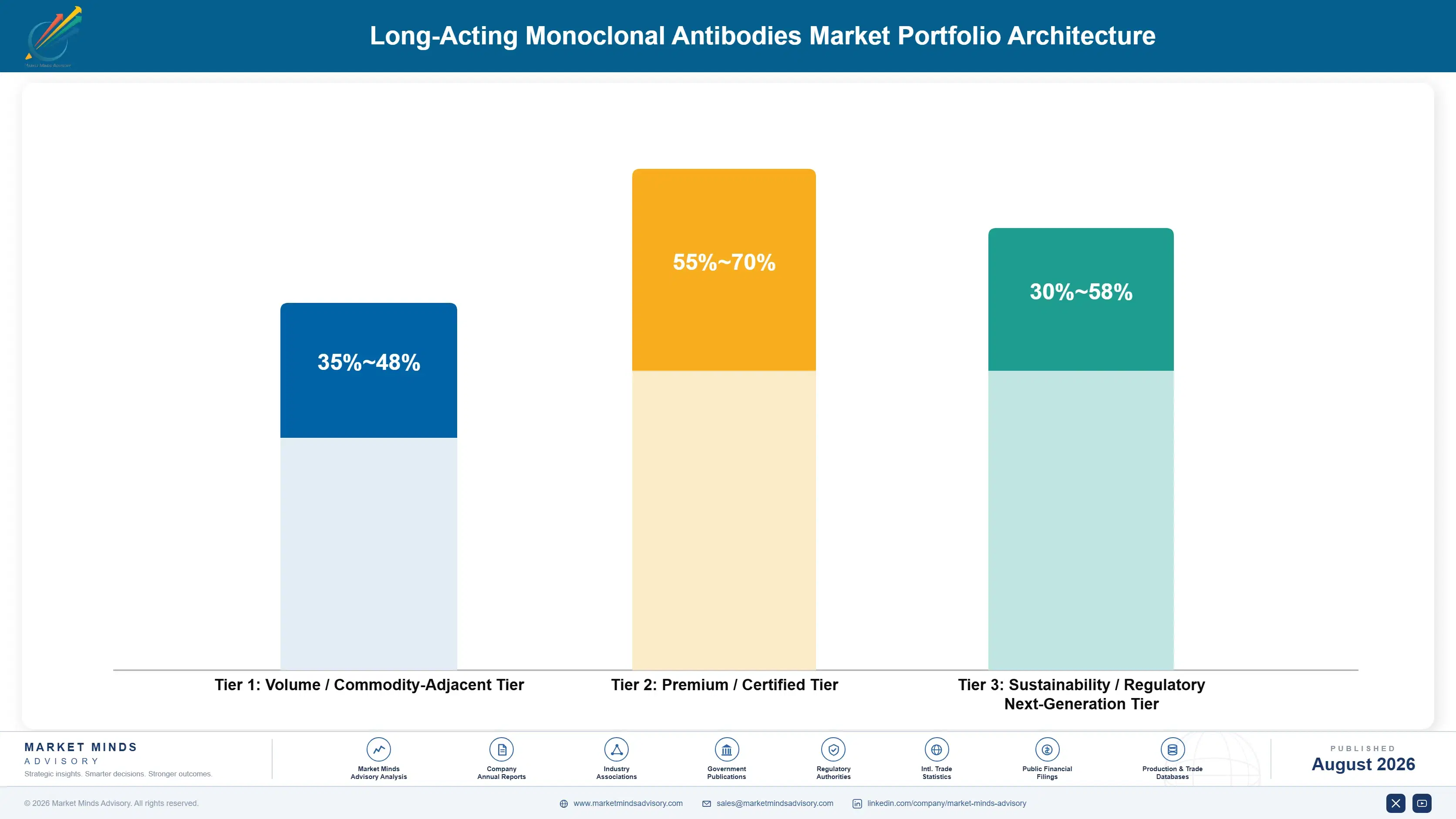
The portfolio splits into three tiers with substantial margin separation. Volume infectious disease prevention antibodies compete on population-scale contracting and manufacturing efficiency, earning solid but not exceptional margins given large-scale national procurement negotiating power. Certified premium chronic disease antibodies earn substantially more because pricing is negotiated per-patient against comparator biologics rather than through population-scale government contracting. That ga
The tension between prevention-scale volume and chronic-disease premium pricing shapes portfolio strategy directly: prevention programs build population-level manufacturing scale and public health credibility, but companies that let prevention volume crowd out chronic disease pipeline investment risk losing the higher-margin categories to more pipeline-diverse competitors. Companies that manage this balance well capture both the volume and the margin across their combined portfolio.

High-value pools concentrate in chronic disease long-acting antibodies and platform licensing revenue, where technical differentiation and per-patient pricing justify premium economics few volume-focused prevention competitors can match. The emerging next-generation nanobody and bispecific extended-duration tier currently earns unevenly as companies absorb development cost against still-maturing clinical and commercial validation. That unevenness should ease as nanobody and bispecific formats accumulate more mature commercial validation data.

Volume / Commodity-Adjacent Tier

Population-scale infectious disease prevention antibodies sold through national health system contracts at negotiated volume pricing., where manufacturing efficiency and multi-year contracting relationships determine which companies can sustain acceptable margin under negotiated pricing pressure.
Gross Margin: 35-48%

Premium / Certified Tier

Chronic disease long-acting antibodies priced per-patient against comparator biologics for developers with strong real-world evidence., who command durable premium pricing precisely because payers recognize demonstrated adherence and total-cost-of-care benefit clearly.
Gross Margin: 55-70%

Sustainability / Regulatory / Next-Generation Tier

Nanobody and bispecific extended-duration platforms still absorbing clinical development investment against developing commercial validation., where companies are betting today's development capital on formats they expect payers and clinicians to prefer within the next several years.
Gross Margin: 30-58%
long-acting-monoclonal-antibodies-market-portfolio-architecture-1787305492993

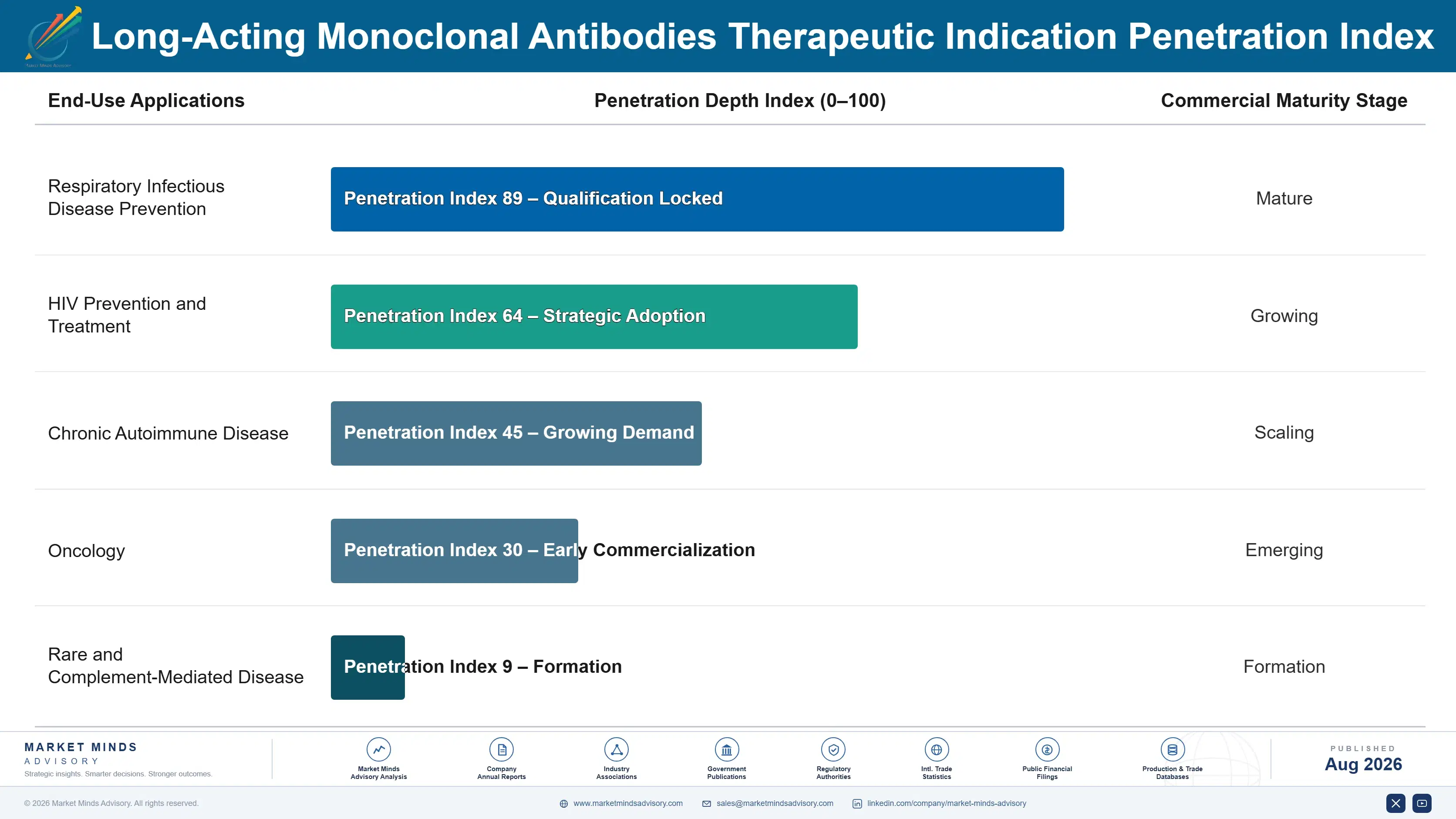
How Long-Acting Antibody Demand Actually Recurs

Demand here splits between annual seasonal administration for infectious disease prevention, tied directly to birth cohorts and seasonal disease patterns, and periodic chronic disease dosing tied to individual patient treatment continuation over years. Both patterns generate more predictable recurring revenue than conventional short-half-life antibodies requiring frequent, harder-to-forecast repeat dosing across fragmented individual prescribing decisions. That predictable recurrence gives manuf
Adoption depth varies sharply by vertical. National health systems integrate prevention antibodies deeply into standardized immunization programs once adopted, making switching rare absent a clearly superior competing product. Individual chronic disease prescribers, by contrast, evaluate long-acting options more idiosyncratically based on patient-specific factors and payer formulary status, creating more frequent, though still meaningful, switching opportunities between competing products. That difference forces manufacturers to split commercial strategy between institutional and individual channels.

Buyer profiles are shifting generationally as newly trained physicians, taught to weigh adherence and convenience alongside raw efficacy data during residency training increasingly informed by real-world evidence literature, arrive in practice already predisposed toward long-acting options where available. Older physicians trained primarily on conventional dosing regimens are adapting more gradually, but that generational shift is accelerating steadily across most therapeutic areas.
long-acting-monoclonal-antibodies-market-end-use-penetration-index-1787305493485

Where Long-Acting Antibody Value Concentrates Next

These are among the four positions where our research anticipates prominent divergence between winners and laggards over the coming forecast period. Each is grounded in the demand model, the regulatory perimeter, and the announced capacity pipeline.
01 / REAL-WORLD EVIDENCE INVESTMENT

Fund adherence studies before payers demand them

Payers are increasingly explicit that dosing convenience alone will not justify premium pricing without quantified adherence and cost-offset evidence, and manufacturers who wait until reimbursement negotiations begin to generate that evidence face longer delays and weaker negotiating positions than those who invest proactively. Building real-world evidence infrastructure before launch, not after payer pushback begins, has already separated faster-reimbursed products from slower ones in the RSV prevention category specifically. This gap will likely widen as more products launch and payers grow more sophisticated about evaluating convenience claims.
02 / PLATFORM LICENSING STRATEGY

Treat half-life extension technology as a licensable asset

Companies that developed proprietary half-life extension engineering face a choice between reserving it exclusively for their own pipeline or licensing it broadly to capture recurring revenue across many partner programs simultaneously. The licensing model, demonstrated successfully by Xencor, diversifies revenue and reduces dependence on any single program's clinical outcome. Companies still treating their extension technology as purely internal are likely leaving durable, lower-risk revenue on the table relative to competitors who have already opened licensing., a gap that widens every quarter licensing-focused competitors keep signing new partner programs.
03 / CHRONIC DISEASE PIPELINE DIVERSIFICATION

Diversify beyond prevention before the RSV window narrows

The RSV prevention category, while commercially proven, will eventually face competitive entry and pricing pressure as more candidates reach market, and companies overly dependent on a single prevention franchise risk the same concentration exposure AstraZeneca currently carries. Chronic disease indications offer meaningfully higher per-patient margin and more differentiated competitive positioning. Companies building chronic disease pipeline depth now, while prevention franchises still fund development, will be better positioned once that initial commercial window inevitably narrows., a transition that rewards patience over the temptation to keep milking a single successful franchise indefinitely.
04 / MANUFACTURING PARTNERSHIP TIMING

Lock in specialized manufacturing capacity ahead of the next surge

The 2021 and 2022 bioreactor and media shortage demonstrated how quickly specialized manufacturing capacity for half-life extended formats can become the binding constraint on commercial launch timing, and demand for that capacity is rising again as more programs reach late-stage development simultaneously. Companies that secure manufacturing partnerships and capacity commitments ahead of the next demand surge will avoid the launch delays competitors without secured capacity are likely to face. This is a timing decision with real commercial consequences, not a routine procurement afterthought.

Engagement Snapshot From the Field

A live engagement with an industry participant carrying material or product regulatory and market exposure ahead of a defining policy shift, showing how our research translates into a defensible multi-year portfolio strategy.
MARKET MINDS ADVISORY · CLIENT ENGAGEMENT SUMMARY
Long-Acting Monoclonal Antibodies Producer Strategic Portfolio Review and Transition Roadmap 2026·Investment Scenario on Long-Acting Monoclonal Antibodies Exposure Evaluation 2025-26
CLIENT PROFILE
A clinical-stage biotechnology company with a proprietary half-life extension platform and two internal antibody programs in early clinical trials approached MMA to evaluate whether to pursue broader platform licensing alongside its internal pipeline. The client reported total funding raised of approximately USD 210 million across venture and public offering rounds, with no existing licensing revenue on its balance sheet (client-reported, unverified by MMA).
STRATEGIC CHALLENGE
Leadership was divided between preserving the platform exclusively for internal programs to maximize eventual product economics, and licensing broadly to generate near-term non-dilutive revenue given a runway that limited internal program advancement without additional capital raises within the following eighteen months. The board wanted a defensible decision before the next investor update, not another quarter of internal debate without resolution.
MMA APPROACH
MMA benchmarked licensing deal structures and typical royalty and milestone economics across five comparable half-life extension platform transactions, modeled the client's internal program value under both licensing and exclusive-use scenarios, and assessed which therapeutic areas outside the client's internal focus represented the most attractive licensing targets given competitive platform availability.
KEY FINDINGS
  1. Comparable platform licensing transactions typically generated upfront payments sufficient to extend runway by twelve to eighteen months without diluting existing shareholders further, addressing the client's most immediate capital constraint directly.
  2. Licensing outside the client's own therapeutic focus areas carried minimal cannibalization risk against its internal pipeline, since competing programs in unrelated indications would not compete for the same patient populations or prescribers.
  3. Three of five benchmarked platforms had signed multiple licensing deals without any evidence of internal program disadvantage, suggesting the exclusivity concern was less commercially significant than leadership had initially assumed.
  4. Retaining exclusive rights in the client's two core internal indications while licensing broadly elsewhere captured most of the near-term revenue benefit without meaningfully constraining long-term internal program value (client-reported, unverified by MMA).
CLIENT PROFILE
A clinical-stage biotechnology company with a proprietary half-life extension platform and two internal antibody programs in early clinical trials approached MMA to evaluate whether to pursue broader platform licensing alongside its internal pipeline. The client reported total funding raised of approximately USD 210 million across venture and public offering rounds, with no existing licensing revenue on its balance sheet (client-reported, unverified by MMA).
STRATEGIC CHALLENGE
Leadership was divided between preserving the platform exclusively for internal programs to maximize eventual product economics, and licensing broadly to generate near-term non-dilutive revenue given a runway that limited internal program advancement without additional capital raises within the following eighteen months. The board wanted a defensible decision before the next investor update, not another quarter of internal debate without resolution.
MMA APPROACH
MMA benchmarked licensing deal structures and typical royalty and milestone economics across five comparable half-life extension platform transactions, modeled the client's internal program value under both licensing and exclusive-use scenarios, and assessed which therapeutic areas outside the client's internal focus represented the most attractive licensing targets given competitive platform availability.
KEY FINDINGS
  1. Comparable platform licensing transactions typically generated upfront payments sufficient to extend runway by twelve to eighteen months without diluting existing shareholders further, addressing the client's most immediate capital constraint directly.
  2. Licensing outside the client's own therapeutic focus areas carried minimal cannibalization risk against its internal pipeline, since competing programs in unrelated indications would not compete for the same patient populations or prescribers.
  3. Three of five benchmarked platforms had signed multiple licensing deals without any evidence of internal program disadvantage, suggesting the exclusivity concern was less commercially significant than leadership had initially assumed.
  4. Retaining exclusive rights in the client's two core internal indications while licensing broadly elsewhere captured most of the near-term revenue benefit without meaningfully constraining long-term internal program value (client-reported, unverified by MMA).
RECOMMENDED STRATEGY
Phase 1: Phase 1 (0 to 6 months): Retain exclusive internal rights in the two core indications while preparing licensing materials for all other therapeutic areas. Phase 2: Phase 2 (6 to 15 months): Execute two to three initial licensing deals in non-competing indications to extend runway and validate the licensing model commercially. Phase 3: Phase 3 (15 to 30 months): Expand licensing activity based on initial deal performance while advancing internal programs using extended non-dilutive runway.
OUTCOME
The client signed its first licensing agreement within five months of the engagement, reporting an upfront payment that extended runway by an estimated fourteen months without an additional equity raise. A second licensing discussion was underway at the time of reporting (client-reported, unverified by MMA).

Frequently Asked Questions

Foundational context covering the market sizes, CAGR, scope, country, region and competition that inform every finding below. This section is provided to cover basics and most often pre-purchase conversations, answered from the MMA Primary Research Dataset.

What is the current size of the Long-Acting Monoclonal Antibodies Market?

The long-acting monoclonal antibodies market was valued at USD 11.5 billion in 2025. Growth is driven by RSV prevention expansion, long-acting HIV prevention development, and broadening half-life extension platform licensing.

How large will the Long-Acting Monoclonal Antibodies Market be by 2036?

The market is projected to reach USD 35.4 billion by 2036 under the base case scenario. That reflects an expansion multiple of roughly 2.79 times the 2026 value.

What is the CAGR for the Long-Acting Monoclonal Antibodies Market 2026 to 2036?

The base case CAGR is 10.8%, with a bull case of 12.1% and a bear case of 9.5%. Payer acceptance of dosing-convenience pricing is the main swing factor between scenarios.

Which segment is growing fastest?

Nanobody and single-domain antibody platforms grow fastest at 16.0% CAGR, roughly 1.48 times the overall market rate. Bispecific half-life extended antibodies follow as the second-fastest segment at 13.5%.

Who are the major companies in the Long-Acting Monoclonal Antibodies Market?

Leading companies include AstraZeneca, Sanofi, Regeneron Pharmaceuticals, GSK plc, and Roche. The top five hold a combined 52% of the market, a notably higher concentration than most biologics categories.

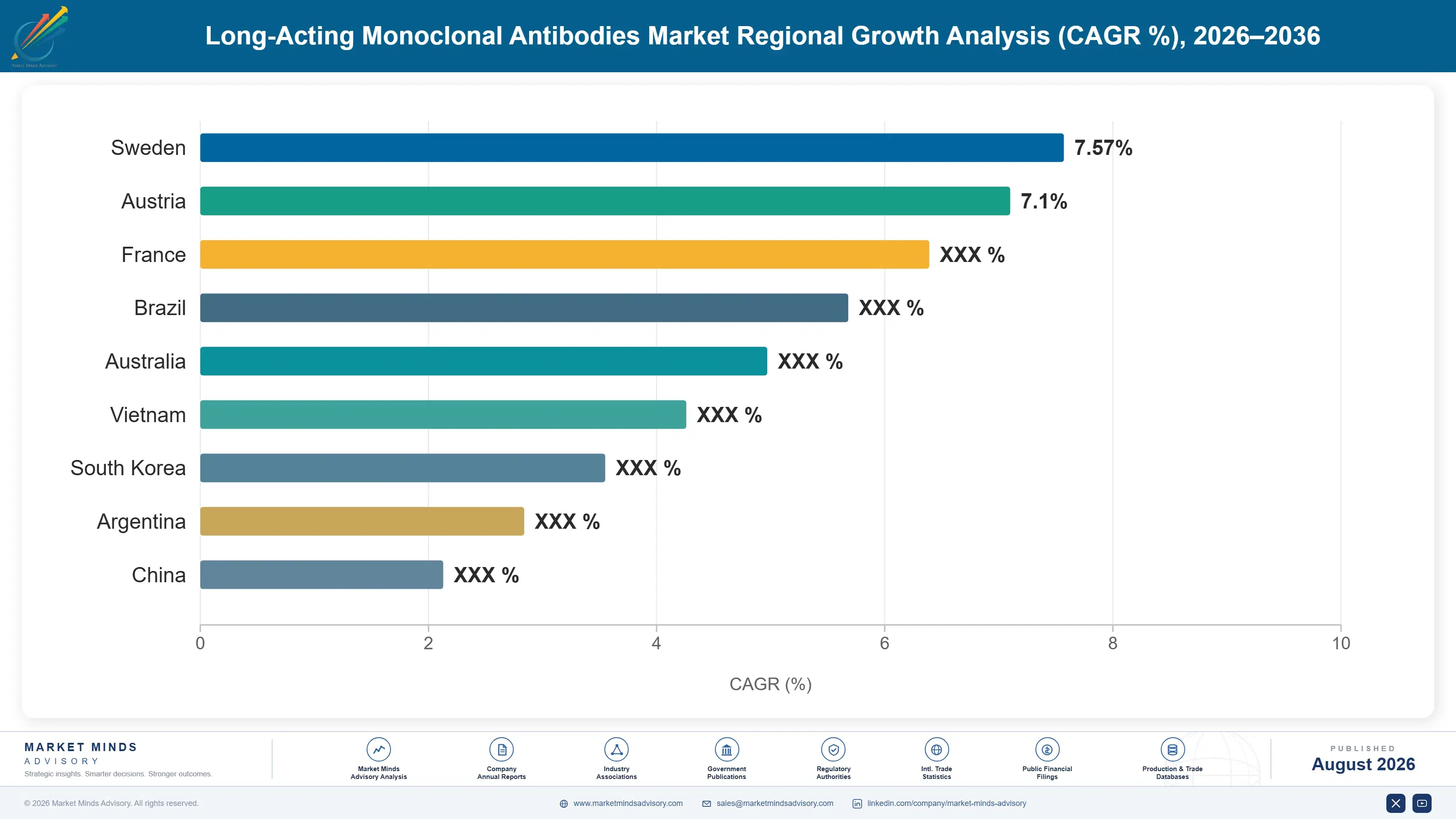
Which country is growing fastest?

China is the fastest-growing country at 15.5% CAGR, driven by expanding domestic biologics manufacturing and growing platform licensing activity. Domestic contract manufacturers anchor much of that buildout.

Report Segmentation Architecture

The full report scope spans multiple orthogonal segmentation dimensions, with cross-tabulated demand data provided for each dimension pair. Coverage extends further to regional breakdowns, trend trajectories, and the competitive detail needed to support segment-level decision-making.

By Half-Life Extension Technology

  • FcRn Binding-Enhanced Antibodies
  • PEGylated Antibody Fragments
  • Antibody-Polymer Conjugates
  • Depot and Sustained-Release Formulations
  • Bispecific Half-Life Extended Antibodies
  • Nanobody and Single-Domain Platforms

By Therapeutic Indication

  • Respiratory Infectious Disease Prevention
  • HIV Prevention and Treatment
  • Chronic Autoimmune Disease
  • Oncology
  • Rare and Complement-Mediated Disease

By Commercial Dimension

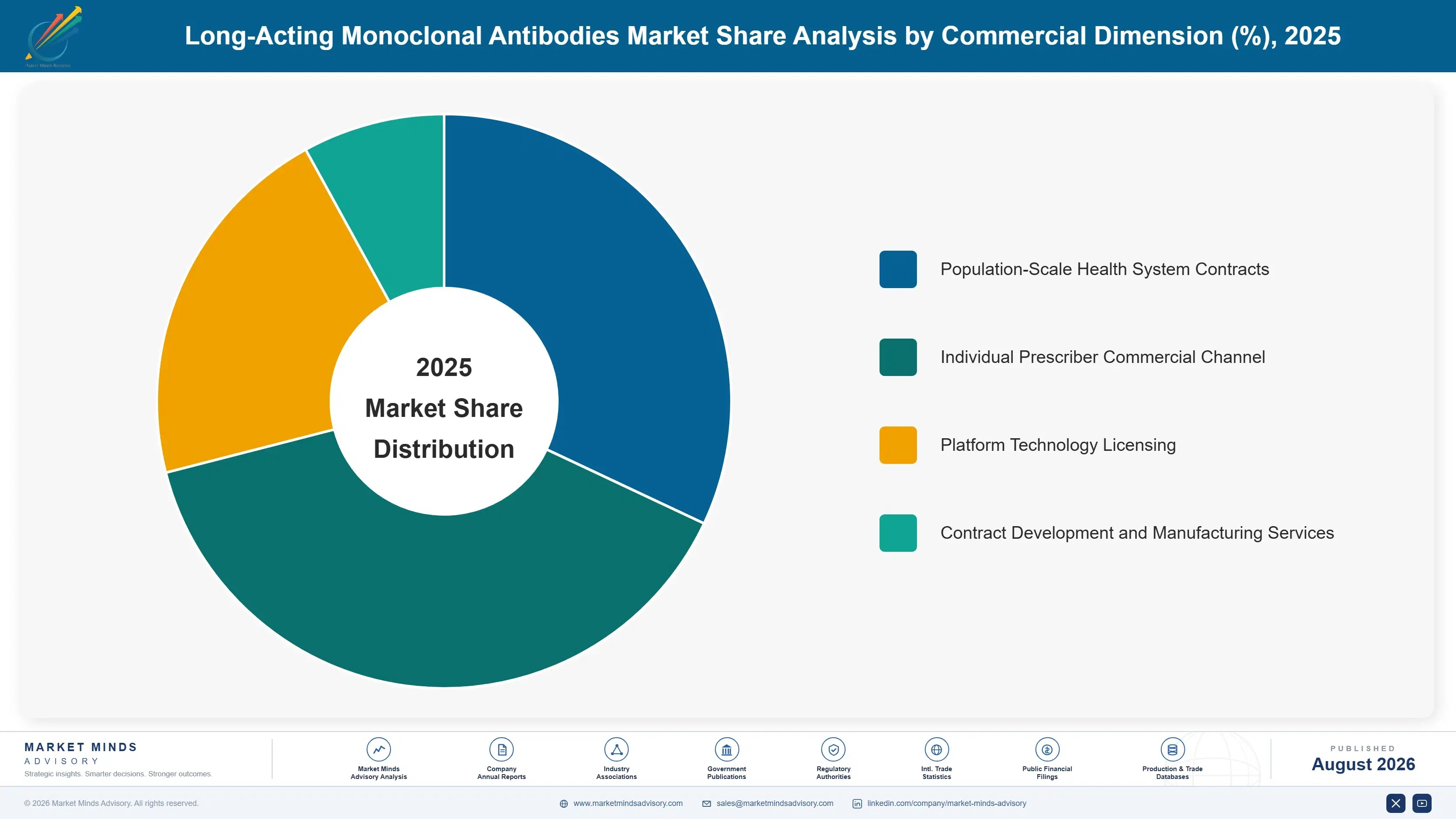
  • Population-Scale Health System Contracts
  • Individual Prescriber Commercial Channel
  • Platform Technology Licensing
  • Contract Development and Manufacturing Services

By Region

  • North America
  • Western Europe
  • East Asia
  • South Asia and Pacific
  • Latin America
  • Middle East and Africa
  • Eastern Europe

Scope, Methodology, and Coverage

Every figure in this report is reproducible from documented input assumptions. The scope below maps the historical period, the forecast horizon, the segmentation dimensions, and the countries covered, alongside the underlying primary and qualitative methodology.
Historical Period
2020 to 2025
Forecast Period
2026 to 2036
Base Year
2025 (USD billions; MMA Primary Research Dataset, August 2026)
Market Definition
The long-acting monoclonal antibodies market comprises antibody therapeutics engineered through Fc modification, PEGylation, depot formulation, or molecular format change to extend circulating half-life well beyond conventional monoclonal antibodies, spanning infectious disease prevention, chronic disease management, and prophylactic indications. Conventional short-half-life monoclonal antibodies, antibody-drug conjugates where payload rather than duration drives value, and bispecific antibodies without meaningful half-life extension are excluded.
Quantitative Units
USD billions (current prices); treatment courses administered where applicable
Segmentation Dimensions
By Half-Life Extension Technology; By Therapeutic Indication; By Commercial Dimension; By Region
Regions Covered
North America, Western Europe, East Asia, South Asia and Pacific, Latin America, Middle East and Africa, Eastern Europe
Countries Covered
USA, China, Germany, France, UK, Japan, South Korea, India, Australia, Canada, Brazil, Mexico, Indonesia, Vietnam, Thailand, Malaysia, UAE, Saudi Arabia, South Africa, Nigeria, Turkey, Poland, Netherlands, Italy, Spain, Sweden, Switzerland, Argentina, Colombia, Singapore, and additional markets relevant to this sector
Key Companies Profiled
AstraZeneca, Sanofi, Regeneron Pharmaceuticals, GSK plc, Roche, Vir Biotechnology, Gilead Sciences, ViiV Healthcare, Merck and Co., Johnson and Johnson, Novartis, Amgen, UCB, argenx, Xencor, Invivyd, Bristol Myers Squibb, Eli Lilly, Alexion Pharmaceuticals, Sobi
Quantitative Methodology
Primary survey, n=3,800 respondents, Q4 2025, six countries; demand-side model with trade association cross-validation
Qualitative Methodology
47 expert interviews, Q4 2025; applied to validate demand model assumptions, identify emerging dynamics, and assess competitive positioning
Report Format
PDF and XLSX data workbook (Word format preview document)
Publisher
Market Minds Advisory
Report Code
MMA-2026-HLT-401
Published
August 2026
Contact
sales@marketmindsadvisory.com | www.marketmindsadvisory.com

Purchase the full Long-Acting Monoclonal Antibodies Market Report (2026 to 2036).

The full MMA Long-Acting Monoclonal Antibodies Market report sizes demand across six extension technologies, five therapeutic indications, four commercial dimensions, and seven regions through 2036. It profiles twenty companies on a consistent revenue basis, scoring each on clinical pipeline depth, platform licensing activity, and manufacturing scale. Scenario models quantify how payer evidence requirements and universal prevention program adoption move both demand and realizable pricing. The report includes delivered-cost modeling by extension technology and a company evidence-readiness screen built for commercial and clinical strategy teams. Manufacturing capacity tracking rounds out the coverage for supply chain planning teams.
Half-life extension technology benchmarking across platforms
Payer evidence requirement tracking by major market
Prevention program adoption forecasts by country
Platform licensing deal structure and economics database
Manufacturing capacity exposure modeling by company scale
Chronic disease pipeline diversification scenarios under bull and bear cases

Built For The People Who Decide

From boardroom strategy to bench-side execution, this report is read cover-to-cover by leaders shaping the next decade of their industry, turning demand scenarios, market dynamics and valuation benchmarks into decisions.
CXOs/ Presidents/ VPs/ Managers
M&A and Corporate Development
Strategy Teams and R&D Heads
Procurement and Product Directors
Regulatory and Compliance Leaders
Investor Relations and Equity Analysts