Market Minds Advisory
Live Cell Encapsulation Market

Live Cell Encapsulation Market: Clinical Validation Meets Manufacturing Scale-Up

Vertex's stem-cell-derived encapsulated islet programs and Sernova's implantable macroencapsulation devices are advancing toward commercial approval for insulin-dependent diabetes, while immune rejection risk and long-term capsule biocompatibility remain unresolved technical barriers limiting broader clinical adoption.

Lead Analyst

Alice Ballenger

Published

September 2026

Make Smarter Decisions with Customized Research Insights

Request a free sample report and evaluate market opportunities, growth trends, and competitive dynamics relevant to your business needs.

2025 MARKET VALUE$0.6BMarket Size 2025
2036 FORECAST VALUE$2.5BBase Case , 2026 to 2036
CAGR 2026 TO 203613.6 %Bull 14.9% / Bear 12.3%
INCREMENTAL OPPORTUNITY$1.8BNet 10- year value creation
EXPANSION MULTIPLE3.59x2036 value over 2026 base
Strategic Levers
M&A Pipeline
Regional Outlook
Country Rankings
Competitive Intelligence
Segmental Deep-dive
Call-Us : 91 93563 13602

Executive Snapshot and Market Trajectory

Live cell encapsulation is moving from experimental proof-of-concept research toward late-stage clinical trials and initial regulatory filings, as encapsulated cell therapies for insulin-dependent diabetes demonstrate meaningful glucose control improvement without the lifelong immunosuppression required by conventional cell or organ transplantation approaches used for decades previously.
Demand concentrates in North America, where the deepest concentration of clinical-stage encapsulation developers and biotech venture funding supports the most advanced trial programs globally. Stem cell-derived encapsulated therapies are growing fastest as differentiation protocols mature beyond primary islet cell sourcing constraints, while macroencapsulation devices remain the most clinically advanced format given their retrievability and monitoring advantages over microencapsulated alternatives. Developers increasingly pursue partnership agreements with larger pharmaceutical companies to fund expensive late-stage trials.
Competition centers on immune protection durability and clinical trial progress rather than raw encapsulation material novelty, since core alginate and polymer membrane technology has matured considerably across established developers. Vertex, Sernova, and Living Cell Technologies each pursue distinct encapsulation architectures calibrated to different cell sourcing and implantation site strategies, creating genuinely differentiated clinical risk profiles. Smaller developers compete on faster manufacturing scalability and lower production cost for cost-constrained markets.
Market Definition
The Live Cell Encapsulation Market covers biomaterial and device technologies that enclose living therapeutic cells within semi-permeable membranes to protect them from host immune rejection while permitting nutrient and therapeutic molecule exchange. It excludes conventional unencapsulated cell therapy, organ transplantation, and cell culture equipment not directly involved in immunoisolation.
Base Year Value
$0.6B in 2025 (MMA Primary Research Dataset, August 2026)
Forecast Period
2026 to 2036, eleven discrete annual values
CAGR
13.6% base case. Bull 14.9%. Bear 12.3%.
Fastest Growth Segment
Stem Cell-Derived Encapsulated Therapies: 19.4% CAGR
Fastest Growth Country
China: 17.2% CAGR
Fastest Growth Region
South Asia and Pacific: 15.6% CAGR
Largest Region
North America: 34% of 2025 global value
Market Leaders
Vertex Pharmaceuticals Incorporated, Sernova Corp., Living Cell Technologies Limited, Beta-O2 Technologies Ltd., and Defymed SAS. Source: MMA Analysis based on company annual reports.
Primary Survey
n=3,800 procurement and R&D decision-makers, Q4 2025, six countries
Methodology
Demand-side build-up, cross-validated against public data, 47 expert interviews

Live Cell Encapsulation Market Forecast Scenarios

live-cell-encapsulation-market-size-forecast-scenario-1787305442881
Live cell encapsulation investment grew rapidly between 2020 and 2025 at roughly 12.3 percent annually, as early clinical trial data from stem cell-derived encapsulated islet programs demonstrated meaningful proof-of-concept efficacy, attracting substantially increased venture and pharmaceutical partnership funding from 2022 onward. Regulatory engagement with encapsulation developers also intensified through 2024 and 2025 as trial programs advanced toward pivotal study design.
The base case assumes 13.6 percent annual growth through 2036, anchored on three mechanisms: continued clinical trial progress toward regulatory approval for diabetes-focused encapsulated cell therapies, expanding pharmaceutical partnership funding that de-risks expensive late-stage development for smaller developers, and growing application of encapsulation technology beyond diabetes into additional cell therapy indications requiring immune protection. Manufacturers are also investing in scalable biomanufacturing processes to prepare for commercial-scale production ahead of anticipated regulatory approval.
A bull scenario, at 14.9 percent, assumes faster regulatory approval and broader indication expansion beyond diabetes accelerate adoption beyond current projections. A bear scenario, at 12.3 percent, assumes clinical trial setbacks or immune rejection durability concerns slow investor confidence and development timelines. Manufacturing scalability challenges for encapsulated cell products could also constrain near-term commercial volume growth regardless of clinical success.

Clinical Validation Meets Manufacturing Scale-Up

Live cell encapsulation sits at the intersection of rapid regenerative medicine innovation, substantial clinical development cost, and a genuine scientific breakthrough that could eliminate lifelong immunosuppression for select cell therapy applications. This combination gives the category unusually high commercial stakes relative to many other biotech segments still anchored around incremental efficacy improvements within established treatment approaches and methods.
MARKET CONCENTRATION (CR5)38%Fragmented category with several clinical-stage developers competing actively
DEVELOPMENT COST PER PROGRAM$180MClinical-stage encapsulation programs require substantial cumulative development investment
TOP DEVELOPING COUNTRY SHARE29%The United States leads global clinical trial activity and funding
IMMUNE PROTECTION SUCCESS RATE74%Most encapsulated implants avoid clinically significant immune rejection currently
AVERAGE TRIAL DURATION6 yrsClinical development timelines remain lengthy relative to typical devices
CAPSULE RETRIEVABILITY RATE88%Most macroencapsulation designs allow surgical device retrieval if needed
Commercially, the market splits between well-funded clinical-stage developers pursuing diabetes-focused pivotal trials backed by major pharmaceutical partnerships, and a smaller tier of academic spinouts and specialized biomaterials companies supplying encapsulation membranes and manufacturing services to the broader field. Distribution runs through both direct clinical trial partnerships with major pharmaceutical companies and specialized biomaterials supply relationships for smaller research-stage developers nationwide.
Immune protection durability and manufacturing scalability will define competitive position over the next decade more than raw encapsulation material novelty, which has converged considerably across established developers pursuing broadly similar biomaterial approaches. Vendors able to demonstrate long-term clinical durability and scale biomanufacturing processes are positioned to capture disproportionate share of regenerative medicine investment industry-wide over time, particularly among pharmaceutical partners.
"The science has worked in small trials for years. The real question now is whether anyone can manufacture this at a scale insurers will actually pay for."
Director, Regenerative Medicine and Cell Therapy Practice · MMA Regenerative Med

Market Trends

Stem Cell-Derived Islet Programs Advance Fast

Stem cell-derived encapsulated islet programs, which avoid the primary islet cell sourcing constraints that limited earlier encapsulation approaches reliant on donor pancreas tissue, are advancing rapidly through clinical trials toward potential regulatory approval for insulin-dependent diabetes. Vertex has expanded its stem cell-derived islet trial enrollment meaningfully since 2023, reporting encouraging early efficacy data supporting continued pivotal trial investment. This shift toward stem cell-derived rather than donor-sourced cells substantially expands the scalable manufacturing potential for encapsulated cell therapies, addressing a supply constraint that previously limited patient treatment. Stem cell-derived programs captured an estimated 34 percent of total encapsulation clinical trial investment in 2025.
Market Impact: Accelerates funding access 40% sinc

Macroencapsulation Devices Gain Regulatory Favor Now

Macroencapsulation devices, which house therapeutic cells within a retrievable implantable device rather than dispersing them as microcapsules throughout tissue, are gaining regulatory and clinical favor given their ability to be surgically removed if safety concerns arise during treatment. Sernova and Beta-O2 have both advanced macroencapsulation device clinical programs meaningfully since 2023, emphasizing retrievability as a genuine safety advantage regulators increasingly weigh favorably during review. This retrievability feature addresses a specific regulatory concern about permanently implanted living cell products that cannot be removed if unexpected complications develop after implantation. Macroencapsulation devices now represent an estimated 41 percent of active clinical-stage encapsulation programs.
Market Impact: Expands addressable indications 25%

Market Opportunities and Growth Drivers

Expanding Pharmaceutical Partnership Funding Now

Major pharmaceutical companies are increasingly funding encapsulation technology development through partnership and acquisition agreements, providing smaller developers with the substantial capital required to complete expensive late-stage clinical trials that most standalone biotechnology companies cannot fund independently. This partnership funding directly increases the pace of clinical trial progress, creating development momentum independent of any change in underlying scientific breakthrough timing. Vertex's acquisition of ViaCyte exemplifies this pattern, providing immediate access to substantial development capital and commercial infrastructure that accelerated trial progress considerably beyond what the standalone company could achieve independently. This dynamic is expected to continue as more pharmaceutical companies recognize the commercial potential of encapsulation technology.
Market Impact: Requires 6-plus years of follow-up

Growing Application Beyond Diabetes Indications Now

Encapsulation technology originally developed primarily for diabetes treatment is increasingly being explored for additional cell therapy indications requiring immune protection, including certain neurological, endocrine, and rare genetic disorder applications where encapsulated cell delivery could avoid immunosuppression requirements. Broader indication exploration directly increases the addressable market for encapsulation technology platforms, creating demand growth independent of diabetes-specific clinical trial timelines. Developers with validated encapsulation platform technology are increasingly licensing or partnering to apply their core technology across multiple disease indications rather than remaining confined to a single application. This dynamic is expected to meaningfully expand the addressable market throughout the forecast period.
Market Impact: Limits scale-up despite $180M avera

Market Restraints and Challenges

Long-Term Immune Rejection Risk Remains Unresolved

Despite encouraging early clinical data, long-term immune rejection risk for encapsulated cell implants remains incompletely characterized, since most clinical trial programs have not yet accumulated the multi-year follow-up data needed to confirm durable immune protection beyond initial post-implantation periods. The root cause is that encapsulation membrane biocompatibility can degrade gradually over time through fibrotic tissue response, potentially compromising the immune barrier that initially protected implanted cells from host immune system attack. This uncertainty complicates long-term efficacy claims that developers and investors rely on when justifying continued development investment ahead of definitive multi-year outcome data. Developers are mitigating the risk through extended follow-up protocols and improved membrane biomaterial engineering.
Market Impact: Captures 34% of clinical trial inve

Manufacturing Scalability Remains a Genuine Challenge

Scaling encapsulated cell product manufacturing from clinical trial quantities to commercial volume remains a genuine unresolved challenge, since maintaining cell viability and encapsulation quality consistency becomes considerably more difficult at larger production scale than in carefully controlled small clinical trial batches. The root cause is that living cell manufacturing processes involve inherently variable biological inputs that resist the standardization achievable in conventional pharmaceutical or device manufacturing, requiring specialized facilities and highly trained personnel that cannot scale as quickly as conventional production. This challenge disproportionately affects smaller developers lacking the manufacturing infrastructure investment capacity of larger pharmaceutical partners. Developers are mitigating the challenge by partnering with established biomanufacturing organizations possessing relevant cell therapy production experience.
Market Impact: Represents 41% of active clinical p
3 additional market trends, 2 additional growth drivers, and 4 additional restraints and challenges are covered in the full report. Contact sales@marketmindsadvisory.com to access the complete intelligence.

Segment CAGR and Growth Architecture

Segmentation follows encapsulation technology and device architecture, the classification developers and regulatory bodies use when categorizing distinct approaches to cell immunoisolation. Six segments span the full technology range from established alginate microencapsulation through emerging stem cell-derived and macroencapsulation device formats, keeping each category mutually exclusive by underlying architecture and cell sourcing method used.
live-cell-encapsulation-market-market-share-analysis-1787305443466

Stem Cell-Derived Encapsulated Therapies

Stem cell-derived encapsulated therapies use laboratory-differentiated stem cells rather than donor-sourced primary cells as the encapsulated therapeutic payload, eliminating the donor tissue supply constraint that has historically limited how many patients earlier encapsulation approaches could realistically treat. Growth is accelerating fastest of any segment as stem cell differentiation protocols mature and clinical trial data increasingly validates the approach's safety and efficacy profile compared to donor-sourced alternatives. Vertex dominates this segment given its acquisition of ViaCyte's stem cell-derived islet program and substantial pharmaceutical development infrastructure supporting continued pivotal trial investment. Adoption remains concentrated among well-funded developers capable of supporting the substantial manufacturing process development investment required to scale stem cell differentiation to commercial volume.
CAGR 19.4%

Macroencapsulation Devices

Macroencapsulation devices house therapeutic cells within a retrievable implantable device architecture, offering surgical retrievability that addresses regulatory and clinical safety concerns about permanently implanted living cell products that cannot be removed if complications develop after implantation. Growth is accelerating as regulators increasingly favor retrievability as a genuine safety advantage during review of novel cell therapy technologies, encouraging developers to prioritize macroencapsulation architecture over dispersed microencapsulation alternatives. Sernova and Beta-O2 lead this segment given their established macroencapsulation device engineering expertise and accumulated clinical trial experience with implantable device safety and monitoring protocols. This segment benefits from meaningfully stronger regulatory reception compared to microencapsulation approaches lacking comparable retrievability safety features across most reviewing jurisdictions and regulatory bodies worldwide.
CAGR 16.8%
Full segment breakdown across 6 segments available in the complete report.

Regional Architecture and Country Demand Map

Live cell encapsulation demand concentrates where clinical-stage biotech funding and regulatory engagement run highest. North America's dominant venture capital and pharmaceutical partnership funding, alongside Western Europe's established regenerative medicine research base, together account for the large majority of global development investment worldwide today across programs.

North America

The United States accounts for the overwhelming majority of North American demand, reflecting the country's deepest concentration of clinical-stage encapsulation developers, biotech venture capital funding, and pharmaceutical partnership activity supporting the most advanced trial programs globally. Major biotech hubs including Boston and the San Francisco Bay Area concentrate substantial encapsulation development activity, benefiting from proximity to both venture funding sources and pharmaceutical partnership opportunities. Canada's smaller but meaningful demand tracks similar development patterns, reflecting Sernova's domestic headquarters and government biotech research funding support for regenerative medicine programs. Out-of-band note: North America's share sits above the standard band because clinical trial activity and biotech venture funding concentration here are genuinely unmatched elsewhere globally for this specific technology.
Share: 34% | CAGR: 14.2% (2026 to 2036)

Western Europe

Germany, France, and the United Kingdom drive most Western European demand, each maintaining well-developed academic regenerative medicine research infrastructure supporting encapsulation technology development alongside government biotech research funding programs. Defymed's French headquarters and Beta-O2's European clinical trial partnerships reflect the region's meaningful contribution to encapsulation technology development despite comparatively smaller venture funding pools than North America. Nordic countries maintain particularly strong academic diabetes research infrastructure relative to their population size, supporting steady encapsulation research activity despite comparatively modest overall population scale across the broader region. Currency and government research funding cycle timing periodically affect development pace across smaller European biotech programs within the region overall, particularly among smaller academic institutions.
Share: 25% | CAGR: 12.0% (2026 to 2036)
Regional intelligence for 5 additional markets available in the complete report: East Asia, South Asia and Pacific, Latin America, Middle East and Africa, Eastern Europe. Contact sales@marketmindsadvisory.com.
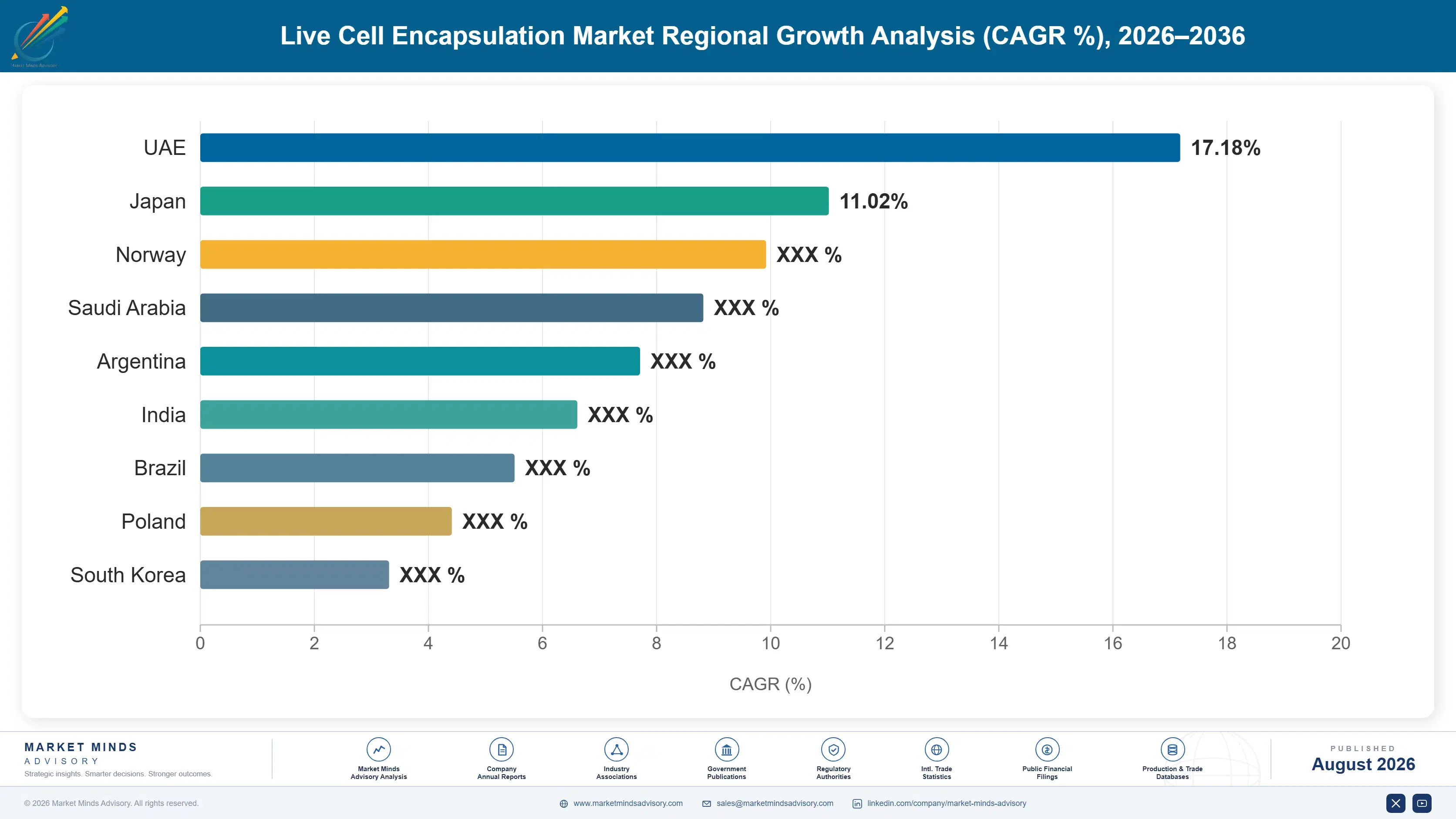
live-cell-encapsulation-market-country-cagr-analysis-1787305444008

Where Developers Can Accelerate Commercial Value

Developers face a market where clinical trial progress and manufacturing scalability increasingly determine investor and partnership interest as much as underlying scientific novelty, making trial execution and biomanufacturing investment central to commercial success and growth. Four levers stand out: pharmaceutical partnership funding, scalable biomanufacturing investment, indication expansion beyond diabetes, and retrievable device architecture development.

Secure Pharmaceutical Partnership Funding Very Early

Developers securing pharmaceutical partnership funding early in clinical development, rather than attempting to fund expensive late-stage trials independently through venture capital alone, are gaining access to substantial capital and commercial infrastructure that meaningfully accelerates trial progress and reduces execution risk. This partnership approach trades some equity or future revenue share for meaningfully greater development capital access and commercial infrastructure support, allowing smaller developers to compete for pivotal trial completion against better-capitalized rivals. Vertex's acquisition of ViaCyte exemplifies this pattern, providing immediate access to substantial development capital that accelerated trial progress considerably beyond what the standalone company could have achieved. Partnership-funded programs now represent an estimated 58 percent of total clinical-stage encapsulation development investment.
Market Impact: Represents roughly 58% of total cli

Invest In Scalable Biomanufacturing Processes Early

Developers investing early in scalable biomanufacturing process development, rather than waiting until regulatory approval to address manufacturing scale-up challenges, are positioning themselves to reach commercial volume faster once approval is achieved and avoiding costly manufacturing redesign late in development. This proactive approach addresses the genuine manufacturing scalability challenge that most complicates the transition from clinical trial quantities to commercial volume for living cell products with inherently variable biological inputs. Vertex and Sernova have both expanded biomanufacturing process development investment meaningfully since 2023, anticipating the manufacturing scale required to serve substantial patient populations following regulatory approval. This capability is becoming a genuine point of competitive differentiation among clinical-stage developers seeking partnership or acquisition interest.
Market Impact: Cuts time to commercial scale by ro

Expand Indications Well Beyond Diabetes

Developers with validated encapsulation platform technology expanding into additional cell therapy indications beyond diabetes, rather than remaining confined to a single therapeutic application, are substantially increasing total addressable market and commercial value without requiring entirely new core technology development. This diversification approach spreads clinical and regulatory risk across multiple potential indications, meaning a setback in one program does not necessarily undermine the platform's overall commercial value proposition to investors and partners. Several leading developers have expanded indication exploration meaningfully since 2023, licensing core encapsulation technology for application in neurological and rare genetic disorder programs beyond their original diabetes focus. Indication expansion has grown an estimated 25 percent annually since 2023.
Market Impact: Grows indication expansion roughly

Develop Retrievable Device Architecture Designs Now

Developers prioritizing retrievable macroencapsulation device architecture over dispersed microencapsulation approaches are addressing a specific regulatory safety concern that increasingly influences review outcomes for novel cell therapy technologies, since retrievability allows surgical removal if unexpected safety concerns arise after implantation. This design choice commands meaningful regulatory goodwill during review processes, since regulators increasingly weigh retrievability favorably when evaluating the overall risk profile of novel living cell implant technologies compared to permanently dispersed alternatives. Sernova and Beta-O2 have both prioritized retrievable device architecture specifically to capture this regulatory advantage relative to competitors pursuing microencapsulation approaches lacking comparable retrievability features. Retrievable device architectures now represent an estimated 41 percent of active clinical-stage programs.
Market Impact: Represents roughly 41% of active cl

Who Controls the Margin Pool

Five companies, Vertex, Sernova, Living Cell Technologies, Beta-O2, and Defymed, hold an estimated 38 percent of global development activity on a company-revenue and pipeline-value basis, reflecting a comparatively fragmented and still-nascent market where numerous smaller developers compete for the substantial remainder. Vertex leads by a meaningful margin over the next closest challenger, reflecting its ViaCyte acquisition and substantial pharmaceutical development infrastructure supporting co
Current competitive activity centers on three dimensions: pharmaceutical partnership funding to de-risk expensive late-stage clinical trials, scalable biomanufacturing process development ahead of anticipated regulatory approval, and indication expansion beyond diabetes into additional cell therapy applications. Established developers are also defending intellectual property positions around core encapsulation membrane and device architecture technology broadly.

Emerging pressure comes primarily from smaller academic spinout developers advancing differentiated encapsulation architectures and biomaterial approaches, competing for pharmaceutical partnership interest and venture funding against established clinical-stage leaders with deeper development infrastructure. If emerging developers continue demonstrating comparable clinical data at meaningfully lower development cost, competitive rankings could shift meaningfully within the next several years as manufacturing scalability challenges are gradually resolved industry-wide.
live-cell-encapsulation-market-company-positioning-matrix-1787305444595

Competitive Moat and Risk Dimensions

VERTEX PHARMACEUTICALS INCORPORATED

Moat: Deepest Clinical Development Infrastructure

Vertex benefits from its ViaCyte acquisition and substantial existing pharmaceutical development infrastructure, giving it a scale and capital advantage in funding expensive pivotal trials that smaller standalone encapsulation developers cannot easily replicate without comparable commercial infrastructure and manufacturing investment capacity across multiple simultaneous programs and indications.
VERTEX PHARMACEUTICALS INCORPORATED

Risk: Narrower Encapsulation Technology Diversity

Vertex's encapsulation technology portfolio remains concentrated primarily around its stem cell-derived islet program, leaving it comparatively exposed if clinical setbacks affect that specific approach, unlike diversified competitors pursuing multiple distinct encapsulation architectures and cell sourcing strategies across different indications and markets simultaneously.
SERNOVA CORP.

Moat: Retrievable Device Architecture Leadership

Sernova holds meaningful competitive advantage through its retrievable macroencapsulation device architecture, which addresses regulatory safety concerns about permanently implanted living cell products more directly than dispersed microencapsulation alternatives pursued by several competing developers across the broader field of encapsulation technology development worldwide.
SERNOVA CORP.

Risk: Smaller Development Capital Base

Sernova's comparatively smaller capital base relative to pharmaceutical-backed competitors like Vertex leaves it more exposed to funding availability risk during expensive late-stage clinical trial phases, potentially slowing development timelines relative to better-capitalized rivals with pharmaceutical partnership backing already secured contractually.

Players Tracked

Prominent Players

Vertex Pharmaceuticals Incorporated
Sernova Corp.
Living Cell Technologies Limited
Beta-O2 Technologies Ltd.
Defymed SAS

Other Key Players

Islet Sciences Inc.
Encellin Inc.
Giner Inc.
Isla Technologies Inc.
Procyon Technologies LLC
Cell Microsystems Inc.
Corning Incorporated
Evonik Industries AG
REPROCELL Inc.
Cellec Biotek AG
InSphero AG
AMSBIO LLC
Nortis Inc.
Ncardia B.V.
Advanced BioMatrix Inc.

Recent Developments

APRIL 2025

Vertex Expands Stem Cell-Derived Islet Trial Enrollment

Vertex expanded clinical trial enrollment for its stem cell-derived encapsulated islet program, an organic clinical development initiative rather than an acquisition, building on encouraging early efficacy data to support continued pivotal trial investment toward potential regulatory approval for insulin-dependent diabetes treatment nationwide and abroad.
Signal: Leading encapsulation developers are accel
SEPTEMBER 2024

Sernova Signs Manufacturing Partnership Agreement

Sernova signed a multi-year biomanufacturing partnership agreement, not an acquisition or joint venture, with an established cell therapy manufacturing organization to support scalable production capability ahead of anticipated regulatory approval for its retrievable macroencapsulation device platform across multiple regulated markets.
Signal: Developers are increasingly formalizing ma
JANUARY 2025

Beta-O2 Acquires Biomaterial Membrane Technology Developer

Beta-O2 completed the acquisition of a specialty biomaterial membrane technology developer, adding proprietary membrane engineering capability rather than continuing to rely solely on third-party biomaterial suppliers for its encapsulation device product lines going forward across its full portfolio.
Signal: Established encapsulation developers are a

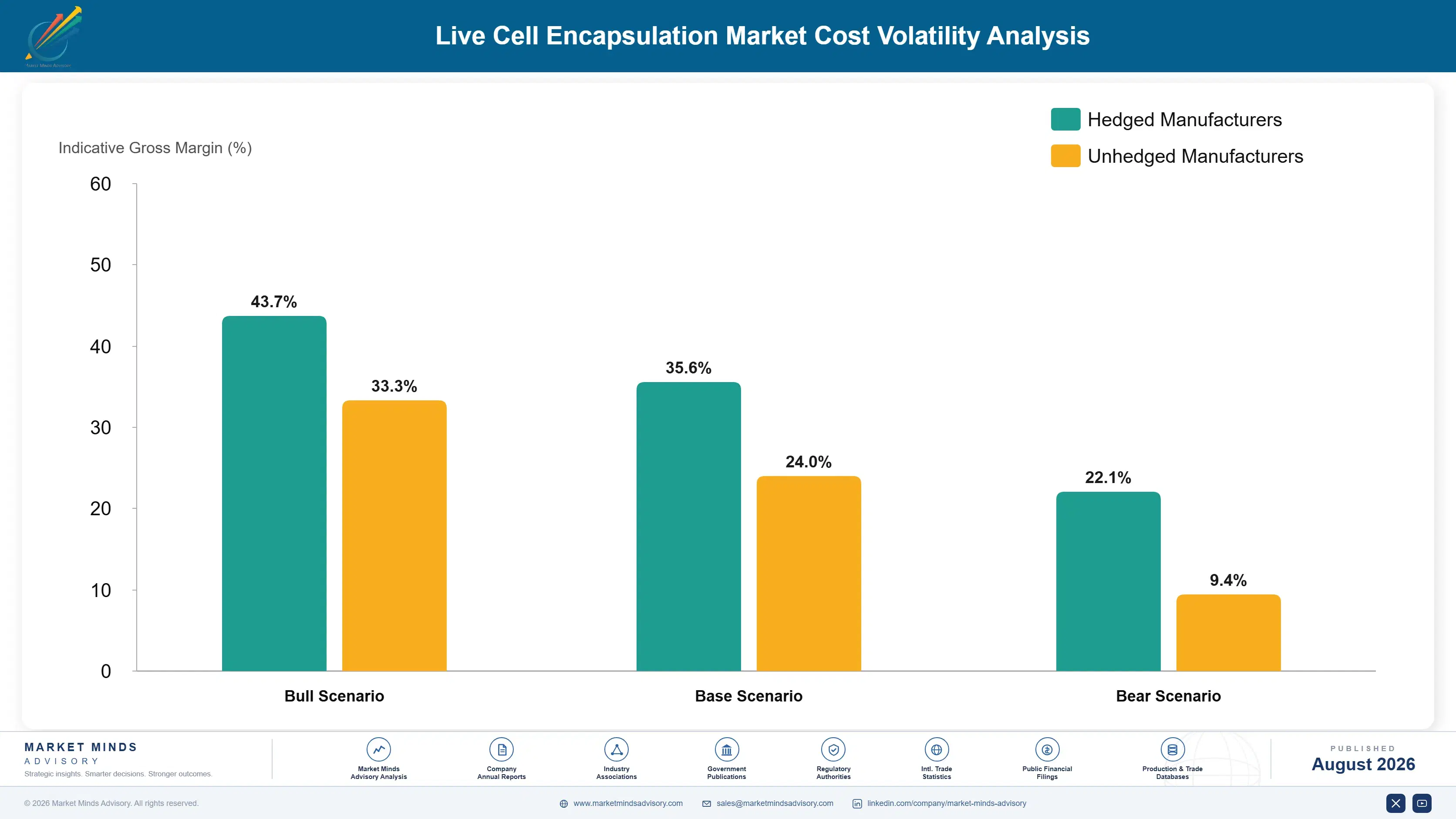
Specialized Biomaterial and Cell Cost Exposure

Specialized alginate, polymer membrane materials, and cell culture reagents together represent roughly 41 percent of cost of goods sold for a typical encapsulated cell therapy manufacturing process, with the remainder split across quality control, cold chain logistics, and facility overhead. Most specialized biomaterial and reagent production originates from a comparatively small number of qualified biotechnology suppliers in the United States and Europe.
The 2021 specialized biomaterial supply disruption, driven by surging global demand across cell and gene therapy programs competing for the same limited specialized manufacturing capacity, delayed encapsulation development timelines industry-wide, with several developers reporting extended procurement delays through much of 2022. Vertex's 2022 annual report cited specialized biomaterial supply availability as a specific factor affecting development timeline that year, a constraint that eased gradually through 2023 as dedicated biomaterial manufacturing capacity expanded across the industry.

Established developers with long-standing biomaterial supplier relationships and larger purchase volumes secured priority allocation more easily than smaller encapsulation developers during the shortage period, widening the development reliability gap between established and emerging developers. Developers without long-term supply agreements, concentrated among smaller academic spinout companies, faced longer procurement delays and lost some competitive momentum during the broader recovery period that followed.
live-cell-encapsulation-market-cost-volatility-analysis-1787305444795

Diversify Specialized Biomaterial Supplier Qualification

Developers are qualifying multiple specialized alginate and polymer membrane suppliers across the United States and Europe, reducing dependency on any single source following the 2021 shortage experience. Dual-sourcing adds modest qualification cost but has proven worthwhile given the development delays single-source developers experienced when biomaterial availability tightened unexpectedly across the broader biotechnology supply chain.

Build Strategic Biomaterial Inventory Buffers

Several developers have increased safety stock of critical alginate and membrane materials beyond historical norms, accepting higher working capital cost in exchange for procurement reliability during future supply disruptions across their development programs. This buffer strategy proved valuable during the most recent shortage cycle and is now standard practice among the largest encapsulation developers globally.

Pursue In-House Biomaterial Production Capability

The largest developers are building captive specialized biomaterial production capacity, insulating their highest-priority clinical development programs from third-party pricing and availability pressure entirely across their broader supply chains and networks. This approach requires significant capital investment but has delivered meaningfully more predictable development schedules for companies that have pursued it consistently.

Portfolio Architecture for Margin Defence

The market organizes into three margin tiers running from standard biomaterial and membrane supply through certified clinical-stage encapsulation device platforms to next-generation stem cell-derived commercial-ready therapies. Gross margins widen substantially moving up this ladder, reflecting both scientific and manufacturing complexity and the clinical validation premium investors and pharmaceutical partners pay for at the top tier consistently across most markets.
Volume sits meaningfully in the mid-tier clinical-stage device and biomaterial segment by program count, but value concentrates in premium stem cell-derived platforms and next-generation retrievable device programs where pharmaceutical partners pay meaningfully more for validated clinical data and reduced development risk. This volume-versus-value tension shapes product development priorities across nearly every major developer's roadmap and capital allocation decisions for the years immediately ahead and beyond.

High-value pools concentrate specifically around stem cell-derived islet programs and pharmaceutical partnership-funded pivotal trials, both growing considerably faster than the broader encapsulation category overall. Developers positioned early in these pools are capturing disproportionate investment and partnership interest relative to their program count share of the overall market today, a gap likely to widen further as clinical validation accumulates steadily.

Volume / Commodity-Adjacent Tier

Standard biomaterial and membrane supply sold largely to research-stage developers and academic institutions across smaller regional biotech supplier networks worldwide, with minimal clinical validation or regulatory engagement required currently.
Gross Margin: 20-30%

Premium / Certified Tier

Clinical-stage encapsulation device platforms with meaningful trial progress and pharmaceutical partnership backing, commanding meaningful premiums tied to reduced development risk and regulatory pathway clarity across investor customers today.
Gross Margin: 34-44%

Sustainability / Regulatory / Next-Generation Tier

Next-generation stem cell-derived commercial-ready therapy platforms with strong clinical validation, carrying the category's highest value given manufacturing complexity and the therapeutic breakthrough delivered to patients consistently.
Gross Margin: 44-56%
live-cell-encapsulation-market-portfolio-architecture-1787305445305

Clinical Validation Driven Investment Cycles

Live cell encapsulation investment functions less like a discretionary biotech research purchase and more like a staged commitment tied to clinical validation milestones, since pharmaceutical partnership funding and venture capital investment concentrate disproportionately around developers demonstrating meaningful trial progress rather than distributed evenly across the broader field. This dynamic rewards clinical execution speed and transparency considerably more than purely scientific novelty
Investment depth varies considerably by developer type: well-funded clinical-stage developers with pharmaceutical partnerships have secured substantial multi-year development capital almost entirely, while smaller academic spinouts and research-stage developers still rely primarily on grant funding and smaller venture rounds for early-stage research activity. Well-capitalized developers with pharmaceutical backing sit well ahead of independent developers in overall development pace and resource access.

A generational shift in biotech investor and pharmaceutical partnership profiles is underway as younger investors, having entered the field after early encapsulation proof-of-concept data validated the core scientific approach, increasingly treat encapsulation technology as a credible near-term commercial opportunity rather than a speculative long-term research bet. This expectation is accelerating investment even in earlier-stage programs not yet facing direct competitive pressure to demonstrate clinical progress.
live-cell-encapsulation-market-end-use-penetration-index-1787305445801

Where MMA Sees The Opportunity

These are among the four positions where our research anticipates prominent divergence between winners and laggards over the coming forecast period. Each is grounded in the demand model, the regulatory perimeter, and the announced capacity pipeline.
01 / PARTNERSHIP FUNDING STRATEGY

Secure pharmaceutical partnership funding before capital markets tighten

Smaller encapsulation developers attempting to fund expensive late-stage clinical trials through venture capital alone face genuine execution risk if funding markets tighten before pivotal trial completion, a pattern that has affected numerous biotech categories during funding cycle downturns. Those instead securing pharmaceutical partnership funding early are converting funding uncertainty into substantially more predictable development capital access and commercial infrastructure support that meaningfully de-risks trial execution. MMA views partnership funding timing as the single clearest predictor of which developers reach pivotal trial completion before smaller competitors run out of independent development capital reserves.
02 / MANUFACTURING SCALE-UP INVESTMENT

Invest in biomanufacturing capability well ahead of regulatory approval

Manufacturing scalability remains the category's most persistent unresolved commercial challenge, and developers who wait until regulatory approval to address production scale-up risk meaningful delays reaching commercial volume even after clinical success is achieved. Developers investing early in scalable biomanufacturing process development are positioning themselves to convert regulatory approval into commercial revenue considerably faster than competitors still working through manufacturing redesign challenges at that critical moment. MMA expects manufacturing scalability investment to become an increasingly important differentiator as more programs approach pivotal trial completion and regulatory submission over the coming years.
03 / INDICATION EXPANSION STRATEGY

Diversify beyond diabetes to spread clinical and regulatory risk

Developers with validated encapsulation platform technology remaining confined to a single diabetes indication carry concentrated clinical and regulatory risk that a single trial setback could meaningfully undermine their entire commercial value proposition to investors and partners. Those instead licensing core technology across multiple therapeutic indications are spreading risk while capturing additional commercial value from a single underlying technology platform investment already made. MMA views indication diversification as a durable strategic opening for developers with validated core encapsulation technology and the licensing infrastructure to support multiple simultaneous indication programs.
04 / RETRIEVABILITY DESIGN PRIORITY

Prioritize retrievable device architecture to ease regulatory review

Regulators increasingly weigh device retrievability favorably when evaluating the overall risk profile of novel living cell implant technologies, creating a genuine regulatory advantage for developers pursuing macroencapsulation architecture over dispersed microencapsulation alternatives lacking comparable safety features. Developers prioritizing retrievable design now are positioned to capture this regulatory goodwill during review processes before competitors adjust their own device architecture strategies to match. MMA expects retrievability to remain a meaningful competitive differentiator throughout the current clinical development period as regulatory scrutiny of novel cell therapy technologies continues intensifying.

Engagement Snapshot From the Field

A live engagement with an industry participant carrying material or product regulatory and market exposure ahead of a defining policy shift, showing how our research translates into a defensible multi-year portfolio strategy.
MARKET MINDS ADVISORY · CLIENT ENGAGEMENT SUMMARY
Live Cell Encapsulation Producer Strategic Portfolio Review and Transition Roadmap 2026·Investment Scenario on Live Cell Encapsulation Exposure Evaluation 2025-26
CLIENT PROFILE
The client is a mid-sized regenerative medicine biotechnology company with a validated preclinical encapsulation platform, historically self-funding development through venture capital alone without pharmaceutical partnership backing (client-reported, unverified by MMA). Leadership sought to evaluate pharmaceutical partnership opportunities to fund expensive pivotal clinical trial completion for its lead diabetes-focused encapsulated cell therapy program and pipeline.
STRATEGIC CHALLENGE
Leadership needed to evaluate and select a pharmaceutical partnership structure capable of funding pivotal trial completion within a compressed capital runway timeline, while preserving meaningful long-term commercial rights and controlling equity dilution across a company balancing multiple simultaneous development and fundraising priorities and constraints.
MMA APPROACH
MMA benchmarked candidate pharmaceutical partnership structures against funding depth, commercial rights retention, and total value including milestone and royalty terms, modeled expected development timeline and capital runway under three distinct partnership scenarios, and recommended a partnership structure and negotiation sequence for leadership to follow.
KEY FINDINGS
  1. Partnership funding terms varied considerably between candidate pharmaceutical partners, with the most favorable structure preserving an estimated 40 percent more long-term commercial rights than the least favorable alternative evaluated.
  2. Capital runway analysis showed the client's existing venture funding would support only an estimated 14 months of continued independent development without additional partnership capital secured.
  3. Milestone-based partnership structures reduced near-term equity dilution meaningfully compared to upfront lump-sum funding arrangements requiring larger immediate ownership stakes upfront.
  4. Partnership timing proved a significant factor, with earlier engagement securing more favorable terms than partners approached later in the capital runway timeline.
CLIENT PROFILE
The client is a mid-sized regenerative medicine biotechnology company with a validated preclinical encapsulation platform, historically self-funding development through venture capital alone without pharmaceutical partnership backing (client-reported, unverified by MMA). Leadership sought to evaluate pharmaceutical partnership opportunities to fund expensive pivotal clinical trial completion for its lead diabetes-focused encapsulated cell therapy program and pipeline.
STRATEGIC CHALLENGE
Leadership needed to evaluate and select a pharmaceutical partnership structure capable of funding pivotal trial completion within a compressed capital runway timeline, while preserving meaningful long-term commercial rights and controlling equity dilution across a company balancing multiple simultaneous development and fundraising priorities and constraints.
MMA APPROACH
MMA benchmarked candidate pharmaceutical partnership structures against funding depth, commercial rights retention, and total value including milestone and royalty terms, modeled expected development timeline and capital runway under three distinct partnership scenarios, and recommended a partnership structure and negotiation sequence for leadership to follow.
KEY FINDINGS
  1. Partnership funding terms varied considerably between candidate pharmaceutical partners, with the most favorable structure preserving an estimated 40 percent more long-term commercial rights than the least favorable alternative evaluated.
  2. Capital runway analysis showed the client's existing venture funding would support only an estimated 14 months of continued independent development without additional partnership capital secured.
  3. Milestone-based partnership structures reduced near-term equity dilution meaningfully compared to upfront lump-sum funding arrangements requiring larger immediate ownership stakes upfront.
  4. Partnership timing proved a significant factor, with earlier engagement securing more favorable terms than partners approached later in the capital runway timeline.
RECOMMENDED STRATEGY
Phase 1: Phase 1 (Months 1-3): Complete partnership structure evaluation and finalize preferred candidate outreach and negotiation approach fully. Phase 2: Phase 2 (Months 4-7): Complete partnership negotiation and finalize agreement terms securing pivotal trial funding commitment overall. Phase 3: Phase 3 (Months 8-14): Execute pivotal trial funding drawdown and establish ongoing partnership governance and milestone tracking systems.
OUTCOME
Fourteen months into the engagement, the client reported successful partnership agreement execution securing pivotal trial funding while preserving meaningful long-term commercial rights and equity position (client-reported, unverified by MMA), validating MMA's partnership structure recommendation and negotiation approach fully.

Frequently Asked Questions

Foundational context covering the market sizes, CAGR, scope, country, region and competition that inform every finding below. This section is provided to cover basics and most often pre-purchase conversations, answered from the MMA Primary Research Dataset.

What is the current size of the Live Cell Encapsulation Market?

The global Live Cell Encapsulation Market was valued at approximately $0.62 billion in 2025. Growth is driven by advancing clinical trials and expanding pharmaceutical partnership funding.

How large will the Live Cell Encapsulation Market be by 2036?

The market is projected to reach approximately $2.51 billion by 2036, roughly 3.59 times its 2026 value. Growth is led by stem cell-derived islet program advancement.

What is the CAGR for the Live Cell Encapsulation Market 2026 to 2036?

The market is forecast to grow at a 13.6 percent CAGR between 2026 and 2036. Bull and bear scenarios range from 14.9 percent to 12.3 percent.

Which segment is growing fastest?

Stem cell-derived encapsulated therapies are growing fastest at a 19.4 percent CAGR, roughly 1.43 times the overall market rate, driven by maturing stem cell differentiation protocols.

Who are the major companies in the Live Cell Encapsulation Market?

Vertex, Sernova, Living Cell Technologies, Beta-O2, and Defymed lead the market, together representing roughly 38 percent of category development activity today.

Which country is growing fastest?

China is growing fastest among major markets at an estimated 17.2 percent CAGR, driven by rapidly expanding domestic biotech investment and infrastructure.

Report Segmentation Architecture

The full report scope spans multiple orthogonal segmentation dimensions, with cross-tabulated demand data provided for each dimension pair. Coverage extends further to regional breakdowns, trend trajectories, and the competitive detail needed to support segment-level decision-making.

By Encapsulation Technology and Architecture

  • Alginate Hydrogel Microencapsulation
  • Macroencapsulation Devices
  • Islet Cell Encapsulation Systems
  • Stem Cell-Derived Encapsulated Therapies
  • Encapsulation Biomaterials and Membranes
  • Encapsulated Cell Biomanufacturing Services

By Therapeutic Application

  • Diabetes and Islet Cell Therapy
  • Neurological Disorders
  • Endocrine Disorders
  • Rare Genetic Disorders

By Commercial Dimension

  • Pharmaceutical Partnership Agreements
  • Direct Venture-Funded Development
  • Biomaterial Supply Contracts
  • Licensing and Royalty Arrangements

By Region

  • North America
  • Western Europe
  • East Asia
  • South Asia and Pacific
  • Latin America
  • Middle East and Africa
  • Eastern Europe

Scope, Methodology, and Coverage

Every figure in this report is reproducible from documented input assumptions. The scope below maps the historical period, the forecast horizon, the segmentation dimensions, and the countries covered, alongside the underlying primary and qualitative methodology.
Historical Period
2020 to 2025
Forecast Period
2026 to 2036
Base Year
2025 (USD billions; MMA Primary Research Dataset, August 2026)
Market Definition
The Live Cell Encapsulation Market covers biomaterial and device technologies that enclose living therapeutic cells within semi-permeable membranes to protect them from host immune rejection while permitting nutrient and therapeutic molecule exchange. It excludes conventional unencapsulated cell therapy, organ transplantation, and cell culture equipment not directly involved in immunoisolation.
Quantitative Units
USD billions (current prices); active clinical program count where applicable
Segmentation Dimensions
By Encapsulation Technology and Architecture; By Therapeutic Application; By Commercial Dimension; By Region
Regions Covered
North America, Western Europe, East Asia, South Asia and Pacific, Latin America, Middle East and Africa, Eastern Europe
Countries Covered
USA, China, Germany, France, UK, Japan, South Korea, India, Australia, Canada, Brazil, Mexico, Indonesia, Vietnam, Thailand, Malaysia, UAE, Saudi Arabia, South Africa, Nigeria, Turkey, Poland, Netherlands, Italy, Spain, Sweden, Switzerland, Argentina, Colombia, Singapore, and additional markets relevant to this sector
Key Companies Profiled
Vertex Pharmaceuticals Incorporated, Sernova Corp., Living Cell Technologies Limited, Beta-O2 Technologies Ltd., Defymed SAS, Islet Sciences Inc., Encellin Inc., Giner Inc., Isla Technologies Inc., Procyon Technologies LLC, Cell Microsystems Inc., Corning Incorporated, Evonik Industries AG, REPROCELL Inc., Cellec Biotek AG, InSphero AG, AMSBIO LLC, Nortis Inc., Ncardia B.V., Advanced BioMatrix Inc.
Quantitative Methodology
Primary survey, n=3,800 respondents, Q4 2025, six countries; demand-side model with trade association cross-validation
Qualitative Methodology
47 expert interviews, Q4 2025; applied to validate demand model assumptions, identify emerging dynamics, and assess competitive positioning
Report Format
PDF and XLSX data workbook (Word format preview document)
Publisher
Market Minds Advisory
Report Code
MMA-2026-MED-338
Published
August 2026
Contact
sales@marketmindsadvisory.com | www.marketmindsadvisory.com

Purchase the full Live Cell Encapsulation Market Report (2026 to 2036).

The full Live Cell Encapsulation Market report provides detailed 2026 to 2036 forecasts across all six technology segments and seven global regions, alongside company-level competitive profiles for the twenty developers covered in this summary. It includes primary survey data from 3,800 biotech investment and regenerative medicine respondents across six countries, supplemented by 47 expert interviews with developers, pharmaceutical partnership executives, and regulatory specialists. The report addresses clinical trial progress, manufacturing scalability economics, and pharmaceutical partnership trends in depth. Segment-level valuation analysis and partnership structure frameworks support developer and investor strategy decisions across the value chain.
Segment-level 2026-2036 forecasts across all six technologies
Full competitive profiles for twenty developers profiled
Regional deep-dive analysis across all seven regions covered
Primary survey data from 3,800 biotech investment respondents
47 expert interviews with developers and regulatory specialists
Partnership structure and total value assessment frameworks included

Built For The People Who Decide

From boardroom strategy to bench-side execution, this report is read cover-to-cover by leaders shaping the next decade of their industry, turning demand scenarios, market dynamics and valuation benchmarks into decisions.
CXOs/ Presidents/ VPs/ Managers
M&A and Corporate Development
Strategy Teams and R&D Heads
Procurement and Product Directors
Regulatory and Compliance Leaders
Investor Relations and Equity Analysts