Lithium Mining Market
Lithium Mining Market Outlook from 2026 to 2033
The global lithium mining market is poised for robust expansion, driven by the accelerating adoption of electric vehicles (EVs), energy storage solutions, and advancements in battery technologies. In 2026, the lithium mining market is projected to reach a value of USD 9.8 billion, with expectations to grow to USD 22.7 billion by 2033. This represents a compound annual growth rate (CAGR) of 12.7% over the forecast period. The market’s growth trajectory is underpinned by increasing investments in sustainable energy infrastructure and the strategic importance of lithium as a critical raw material for the clean energy transition.
The market landscape is characterized by heightened competition among established mining companies and new entrants, as well as significant government interventions aimed at securing domestic lithium supply chains. The expansion of lithium extraction projects across diverse geographies, coupled with technological innovations in extraction and processing, is reshaping the competitive dynamics. As the demand for high-purity lithium compounds intensifies, market participants are focusing on operational efficiency, environmental compliance, and strategic partnerships to capitalize on emerging opportunities.

Lithium Mining Market Scenario & Strategic Insights
The lithium mining market is undergoing a transformative phase, shaped by the global shift toward electrification and decarbonization. The surge in demand for lithium-ion batteries, particularly from the automotive and renewable energy sectors, is compelling mining companies to ramp up production capacities and explore new reserves. Governments in key regions are implementing policies to incentivize domestic lithium production, reduce import dependencies, and foster the development of integrated battery supply chains. This strategic focus is further reinforced by the critical role of lithium in achieving national energy security and meeting climate targets.
Market participants are increasingly investing in sustainable mining practices, including direct lithium extraction (DLE) technologies and water-efficient processes, to address environmental concerns and regulatory pressures. The competitive landscape is marked by consolidation, joint ventures, and long-term supply agreements, as companies seek to secure access to high-grade lithium resources. The interplay between supply constraints, fluctuating lithium prices, and evolving end-user requirements is expected to shape the market’s growth trajectory over the forecast period.
| Attribute | 2026 (USD Billion) | 2033 (USD Billion) | CAGR (2026 – 2033) |
| Market Size | 9.8 | 22.7 | 12.7% |
Lithium Mining Market Trends
- Expansion of Direct Lithium Extraction (DLE) Technologies
The adoption of direct lithium extraction (DLE) technologies is gaining momentum as mining companies seek to improve yield, reduce environmental impact, and lower operational costs. DLE enables the selective extraction of lithium from brines with higher efficiency and minimal water usage compared to traditional evaporation pond methods. This trend is particularly significant in regions with water scarcity and stringent environmental regulations. The scalability and adaptability of DLE are expected to drive its widespread adoption, fostering sustainable growth in the lithium mining market.
- Strategic Investments in Upstream-Downstream Integration
Major lithium producers are increasingly pursuing vertical integration strategies, encompassing both upstream mining operations and downstream refining or battery manufacturing. This approach enables companies to capture greater value across the supply chain, enhance supply security, and respond more effectively to market fluctuations. Strategic partnerships, mergers, and acquisitions are becoming prevalent as firms seek to consolidate their market positions and secure long-term contracts with battery manufacturers and automakers.
- Geographical Diversification of Lithium Supply Sources
The concentration of lithium production in a few countries, notably Australia, Chile, and China, has prompted efforts to diversify supply sources. New mining projects are being developed in Africa, Europe, and North America to mitigate geopolitical risks and ensure stable supply chains. Governments and private investors are supporting exploration activities and infrastructure development in emerging lithium-producing regions. This trend is expected to reshape global trade flows and enhance market resilience.
Segment & Category Analysis for Lithium Mining Market
By Source
- Brine
- Hard Rock
- Clay
The lithium mining market is segmented by source into brine, hard rock, and clay. Brine extraction, primarily in South America’s “Lithium Triangle,” remains the dominant source due to its lower production costs and large reserves. Hard rock mining, prevalent in Australia and parts of China, is gaining traction owing to its shorter project development timelines and higher lithium concentrations. Clay-based lithium extraction is still in the nascent stage but holds potential for future growth as technological advancements make it economically viable.

By Application
- Batteries
- Glass & Ceramics Lubricants Air Treatment
- Pharmaceuticals
Batteries represent the largest application segment, accounting for the majority of lithium demand, driven by the proliferation of electric vehicles and renewable energy storage systems. The glass and ceramics industry utilizes lithium for its fluxing properties, while lubricants, air treatment, and pharmaceuticals constitute smaller but stable demand segments. The rapid expansion of the battery segment is expected to outpace other applications, reinforcing its central role in market growth.
By Extraction Method
- Conventional Evaporation
- Direct Lithium Extraction (DLE)
- Heap Leaching
Conventional evaporation remains widely used for brine-based lithium extraction, but its environmental footprint and lengthy processing times are driving interest in alternative methods. Direct lithium extraction (DLE) is emerging as a game-changer, offering higher recovery rates and reduced water consumption. Heap leaching, though less common, is being explored for certain clay and hard rock deposits. The evolution of extraction technologies is pivotal in addressing sustainability challenges and unlocking new reserves.
By End-User Industry
- Automotive
- Energy Storage Industrial
- Consumer Electronics
The automotive sector is the primary end-user, propelled by the global shift toward electric mobility. Energy storage systems, including grid-scale batteries, are another significant growth driver, supported by the integration of renewable energy sources. Industrial applications and consumer electronics continue to contribute to steady demand, but their share is gradually declining relative to automotive and energy storage.

By Region
- Asia-Pacific
- North America Europe South America
- Middle East & Africa
Asia-Pacific dominates the lithium mining market, led by China’s robust battery manufacturing ecosystem and Australia’s extensive mining operations. North America and Europe are witnessing increased investment in domestic lithium projects to support local battery industries. South America remains a key supplier of brine-based lithium, while the Middle East & Africa are emerging as new frontiers for exploration and development.
Growth Drivers and Opportunities in Lithium Mining Market
- Rising Demand for Electric Vehicles and Energy Storage
The exponential growth in electric vehicle adoption and the expansion of renewable energy infrastructure are primary drivers of lithium demand. Governments worldwide are implementing stringent emission regulations and offering incentives to accelerate the transition to clean transportation. This has led to a surge in lithium-ion battery production, creating substantial opportunities for lithium miners to expand capacity and invest in new projects. The integration of energy storage systems into power grids further amplifies demand, positioning lithium as a cornerstone of the global energy transition.
- Technological Advancements in Extraction and Processing
Innovations in lithium extraction and processing technologies are unlocking new reserves and improving operational efficiency. Direct lithium extraction (DLE) and advanced refining methods enable higher recovery rates, lower environmental impact, and reduced production costs. These advancements are facilitating the development of previously uneconomical deposits, broadening the geographic scope of lithium mining activities. Companies that invest in technology-driven solutions are well-positioned to capitalize on emerging opportunities and gain a competitive edge.
Emerging Opportunities for Lithium Mining Market
- Development of Sustainable and Low-Impact Mining Practices
The growing emphasis on environmental sustainability presents opportunities for lithium miners to differentiate themselves through responsible practices. Adoption of water-efficient extraction methods, renewable energy integration, and comprehensive environmental management systems can enhance social license to operate and attract investment from environmentally conscious stakeholders. Companies that prioritize sustainability are likely to benefit from favorable regulatory treatment and stronger relationships with local communities.
- Expansion into New Geographies and Resource Types
As traditional lithium-producing regions face resource depletion and regulatory challenges, the exploration of new geographies and resource types is gaining momentum. Africa, Europe, and North America are emerging as attractive destinations for lithium mining investments, supported by government incentives and rising local demand. The development of clay and unconventional lithium resources offers additional avenues for market expansion, reducing reliance on established supply sources and enhancing global supply security.
Growth Restrain Factors and Challenges in Lithium Mining Market
- Environmental and Regulatory Constraints
The lithium mining industry faces increasing scrutiny over its environmental impact, particularly concerning water usage, land degradation, and waste management. Regulatory authorities are imposing stricter environmental standards, requiring companies to invest in mitigation measures and obtain comprehensive permits. These requirements can lead to project delays, increased operational costs, and, in some cases, the suspension of mining activities. The need to balance economic growth with environmental stewardship remains a persistent challenge for market participants.
In addition to regulatory hurdles, public opposition and community resistance to mining projects can pose significant challenges. Social license to operate is becoming a critical factor, with stakeholders demanding greater transparency, community engagement, and benefit-sharing. Companies must navigate complex stakeholder landscapes and demonstrate a commitment to sustainable development to secure project approvals and maintain long-term viability.
- Supply Chain Disruptions and Price Volatility
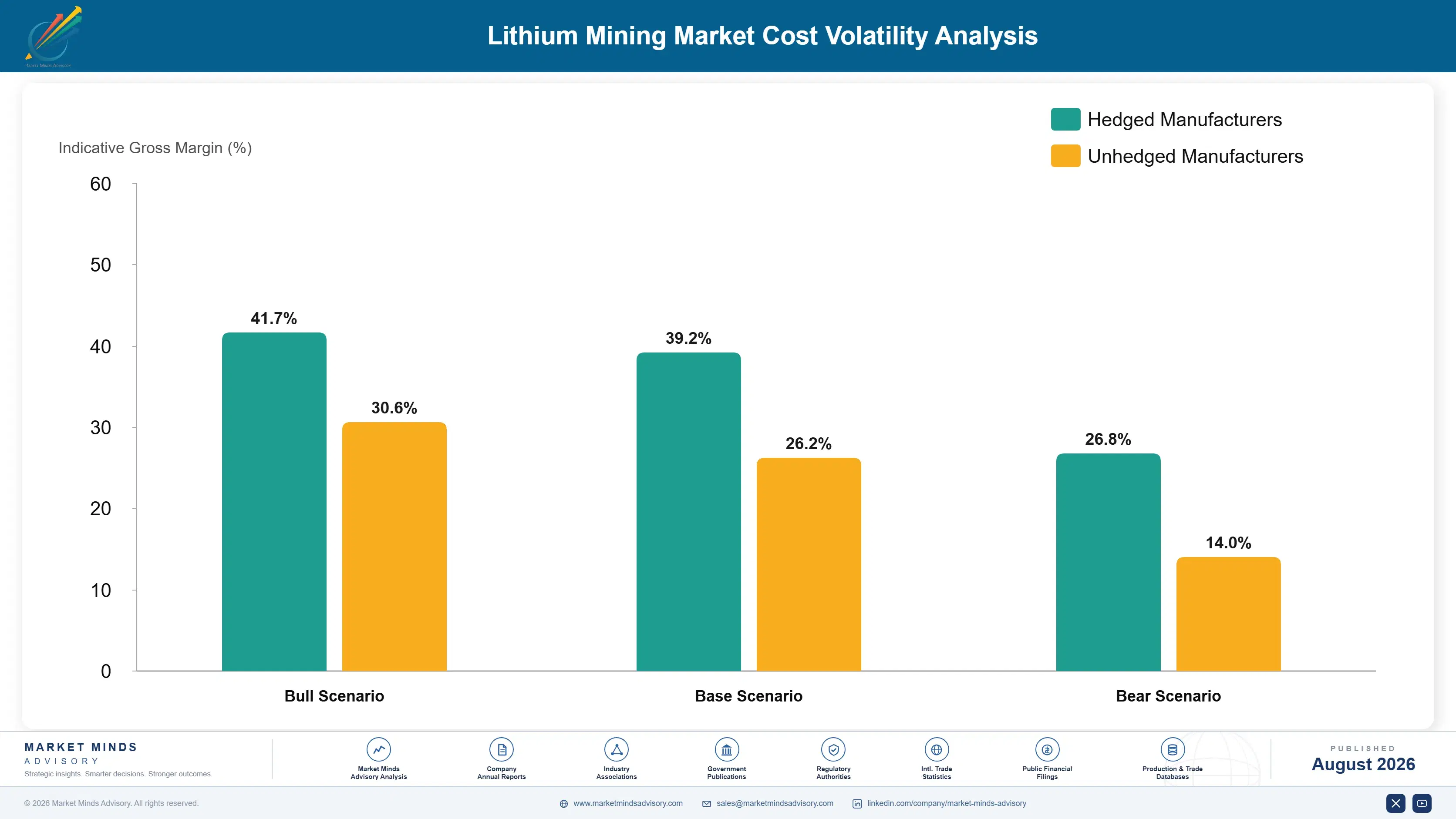
The lithium mining market is susceptible to supply chain disruptions, including logistical bottlenecks, geopolitical tensions, and fluctuations in raw material availability. These disruptions can impact production schedules, increase costs, and create uncertainty for downstream industries. Price volatility, driven by shifts in supply-demand dynamics and speculative trading, adds another layer of complexity to market planning and investment decisions.
The concentration of lithium production in a few countries exposes the market to geopolitical risks and trade restrictions. Efforts to diversify supply sources and build resilient supply chains are underway, but achieving a balanced and stable market environment remains a long-term objective. Companies must adopt agile strategies to mitigate risks and capitalize on emerging opportunities in a rapidly evolving landscape.
Vehicle Market Regional Analysis Table
| Region | Market Share (2025) | Key Market Highlight |
| Asia-Pacific | 47% | Dominates due to China’s battery industry and Australia’s mining output |
| North America | 19% | Rising investments in domestic mining and battery manufacturing |
| Europe | 16% | Strong policy support for EVs and local supply chain development |
| South America | 13% | Major brine-based lithium production in Chile and Argentina |
| Middle East & Africa | 5% | Emerging exploration activities and new project developments |
Regional Analysis for Lithium Mining Market
- Asia-Pacific
Asia-Pacific leads the lithium mining market, accounting for nearly half of global production and consumption. China’s dominance in battery manufacturing and Australia’s position as the world’s largest lithium producer underpin the region’s leadership. Government policies supporting electric vehicle adoption, coupled with investments in refining and processing infrastructure, are driving sustained growth. The region’s integrated supply chain and proximity to key end-user industries provide a competitive advantage.
- North America
North America is experiencing a resurgence in lithium mining activities, fueled by the need to secure domestic supply chains for the burgeoning electric vehicle and energy storage sectors. The United States and Canada are investing in exploration, project development, and downstream processing capabilities. Policy initiatives aimed at reducing reliance on imports and fostering local manufacturing are expected to accelerate market growth. Strategic partnerships and public-private collaborations are key features of the regional landscape.
- Europe
Europe’s lithium mining market is characterized by strong regulatory support for clean energy and electric mobility. The European Union’s battery alliance and critical raw materials strategy are driving investments in domestic mining and refining projects. Efforts to establish a fully integrated battery value chain, from raw material extraction to cell manufacturing, are gaining momentum. The region’s focus on sustainability and circular economy principles is shaping industry practices and investment decisions.
- South America
South America remains a pivotal player in the global lithium market, with Chile and Argentina hosting some of the world’s largest brine-based reserves. The region’s competitive advantage lies in its abundant resources and established mining infrastructure. However, regulatory uncertainties, environmental concerns, and social challenges present ongoing risks. Continued investment in sustainable extraction methods and community engagement is essential for long-term growth.
- Middle East & Africa
The Middle East & Africa region is emerging as a new frontier for lithium exploration and development. Countries such as Zimbabwe and Namibia are attracting investment in hard rock lithium projects, supported by favorable geology and government incentives. While the region’s market share is currently modest, ongoing exploration activities and infrastructure development are expected to unlock significant growth potential in the coming years.

Competition Landscape in Lithium Mining Market
The lithium mining market is highly competitive, with a mix of established global players and emerging entrants vying for market share. Companies are focusing on expanding production capacities, securing long-term supply agreements, and investing in technological innovation to enhance operational efficiency. Strategic partnerships, mergers, and acquisitions are prevalent as firms seek to consolidate their positions and access new reserves. Environmental, social, and governance (ESG) considerations are increasingly influencing investment decisions and stakeholder engagement. The ability to balance cost competitiveness with sustainability and regulatory compliance is a key differentiator in the evolving market landscape.
Major Players in Lithium Mining Market
- Albemarle Corporation
- SQM (Sociedad Química y Minera de Chile)
- Ganfeng Lithium Co., Ltd.
- Tianqi Lithium Corporation
- Livent Corporation
- Mineral Resources Limited
- Pilbara Minerals Limited
- Orocobre Limited (now Allkem Limited)
- Lithium Americas Corp.
- Galaxy Resources Limited (now Allkem Limited)
- FMC Corporation
- Nemaska Lithium
- Bacanora Lithium
- Piedmont Lithium
- Sayona Mining Limited
- Critical Elements Lithium Corporation
- Neo Lithium Corp.
- European Lithium Limited
- Altura Mining Limited
- Millennial Lithium Corp.
Recent Developments in Lithium Mining Market
- In January 2024, Albemarle Corporation announced the expansion of its lithium hydroxide production facility in Western Australia to meet rising global demand.
- In November 2023, SQM entered into a strategic partnership with a European battery manufacturer to supply high-purity lithium carbonate for EV batteries.
- In September 2023, Ganfeng Lithium completed the acquisition of a majority stake in a new lithium clay project in Mexico, expanding its resource base.
- In July 2023, Livent Corporation secured a long-term supply agreement with a leading U.S. automaker to provide battery-grade lithium hydroxide.
- In May 2023, Pilbara Minerals commenced commercial production at its Pilgangoora Lithium-Tantalum Project expansion in Australia.
- In March 2023, Lithium Americas received regulatory approval for its Thacker Pass lithium project in Nevada, advancing its U.S. production plans.
FAQ for Lithium Mining Market
- What is the projected market size of the lithium mining market by 2033?
The lithium mining market is expected to reach USD 22.7 billion by 2033, growing from USD 9.8 billion in 2026, with a compound annual growth rate (CAGR) of 12.7% during the forecast period.
- What are the main drivers of growth in the lithium mining market?
The primary growth drivers include the rapid adoption of electric vehicles, expansion of renewable energy storage systems, and technological advancements in lithium extraction and processing methods.
- Which regions are leading in lithium mining market development?
Asia-Pacific leads the market, followed by North America, Europe, and South America. The Middle East & Africa is emerging as a new growth region due to increased exploration activities.
- What are the major challenges faced by the lithium mining industry?
Key challenges include environmental and regulatory constraints, supply chain disruptions, price volatility, and the need to secure social license to operate in local communities.
- How are companies addressing sustainability concerns in lithium mining?
Companies are investing in sustainable mining practices such as direct lithium extraction (DLE), water-efficient processes, renewable energy integration, and comprehensive environmental management to minimize their ecological footprint and meet regulatory requirements.
Contact us today to access the full report and propel your business forward with comprehensive insights into the lithium mining market.