Market Minds Advisory
Peru Life and Non-life Insurance Market

Peru Life and Non-life Insurance Market: The Line That Legislation Removed

Retirees may now take 95.5% of a pension fund in cash rather than buying an annuity, which removed the most profitable line this market ever had almost overnight and permanently.

Lead Analyst

Published

September 2026

Make Smarter Decisions with Customized Research Insights

Request a free sample report and evaluate market opportunities, growth trends, and competitive dynamics relevant to your business needs.

2025 MARKET VALUE$5.4BMarket Size 2025
2036 FORECAST VALUE$13.1BBase Case , 2026 to 2036
CAGR 2026 TO 20368.4 %Bull 9.6% / Bear 7.2%
INCREMENTAL OPPORTUNITY$7.3BNet 10- year value creation
EXPANSION MULTIPLE2.24x2036 value over 2026 base
Strategic Levers
M&A Pipeline
Regional Outlook
Country Rankings
Competitive Intelligence
Segmental Deep-dive
Call-Us : 91 93563 13602

Executive Snapshot and Market Trajectory

A law rather than a competitor took the best business away. Allowing retirees to withdraw 95.5% of a pension fund in cash collapsed annuity sales from the default outcome at retirement to a small minority of them. No competitor could have done that to anybody.
Domestic activity carries 81% of value, far above the usual regional band, because this is a single-country market with only trace outward exposure attached. Health and medical assistance grows at 12.6%, half again the market rate of 8.4%, as employers extend cover and as households buy medical products through bank branches that never sold them anything before. Nobody selling these products through that channel was selling anything at all five years ago here.
Concentration reaches 78%, among the highest of any insurance market anywhere, resting on five groups tied closely to the country's banking families. Catastrophe exposure barely stays here at all, with roughly 92% of earthquake risk ceded abroad to reinsurers who will decide the terms whenever Lima finally moves. Nothing about the local balance sheets matters very much when the exposure has already been passed on somewhere else entirely instead.
Market Definition
The market covers gross written premium across life and general insurance lines in Peru, spanning health and medical assistance, microinsurance and mass-market products, property fire and catastrophe, individual and group life, compulsory motor accident and voluntary motor, and retirement annuities and pension-linked products. Private pension fund management fees, state social security contributions, reinsurance accepted from outside the country, investment income earned on shareholder funds, and insurance written in other Andean markets by locally headquartered groups are excluded.
Base Year Value
$5.4B in 2025 (MMA Primary Research Dataset, August 2026)
Forecast Period
2026 to 2036, eleven discrete annual values
CAGR
8.4% base case. Bull 9.6%. Bear 7.2%.
Fastest Growth Segment
Health and Medical Assistance: 12.6% CAGR
Fastest Growth Country
Australia: 10.4% CAGR
Fastest Growth Region
South Asia and Pacific: 10.4% CAGR
Largest Region
Latin America: 81% of 2025 global value
Market Leaders
Rimac Seguros, Pacifico Seguros, La Positiva Seguros, Mapfre Peru, Interseguro. Source: MMA Analysis based on disclosed gross written premium in the Peruvian market, company annual reports 2025.
Primary Survey
n=3,800 procurement and R&D decision-makers, Q4 2025, six countries
Methodology
Demand-side build-up, cross-validated against public data, 47 expert interviews

Peru Life and Non-life Insurance Market Forecast Scenarios

life-non-life-insurance-market-in-peru-size-forecast-scenario-1787914732030
Growth from 2020 to 2025 ran at 7.2% and the composition changed completely underneath that number. Emergency pension withdrawals authorised repeatedly from 2020 drained a substantial share of retirement assets and removed most of what remained of the annuity market. Health and mass-market products grew quickly to fill the gap. Property rates then hardened as international reinsurers reassessed the catastrophe exposure they carry here.
The 8.4% base case rests on three mechanisms. Health cover keeps growing as employers extend benefits and households buy medical products through bank branches for the first time. Microinsurance keeps reaching customers through retail, utility and mobile channels that conventional distribution never touched. And property premium keeps rising on both exposure growth and reinsurance terms that have not returned to previous levels. None of the three depends on the annuity market returning at all.
The bull case at 9.6% assumes penetration continues climbing from 1.8% of output as mass-market distribution matures. The bear case at 7.2% is further pension legislation reducing what little annuity business survives, alongside catastrophe reinsurance capacity tightening for a market that cedes roughly 92% of earthquake exposure and therefore has almost no ability to write it independently.

Ninety-Five Percent Changed Everything

Annuities were the best business in this market until they were legislated out of it. Retirement from the private pension system once meant buying an annuity, and insurers competed hard for that flow. Permitting a lump sum of 95.5% ended it. Retirees took the cash, annuity sales collapsed, and the most profitable line anybody wrote here stopped existing at scale.
FIVE-FIRM CONCENTRATION78%Share of premium written by the largest domestic groups
PENSION LUMP SUM OPTION95.5%Share of a retirement fund withdrawable directly in cash
INSURANCE PENETRATION RATE1.8%Premium measured against total national economic output annually
CATASTROPHE CESSION RATIO92%Earthquake exposure passed to reinsurers outside the country
BANCASSURANCE SHARE47%Premium reaching customers through banking group branch networks
YEARS SINCE MAJOR QUAKE51Interval since the last damaging event struck the capital
The catastrophe position is unusual and nobody local really controls it. Lima sits on a subduction zone and has not seen a damaging earthquake in 51 years, a long quiet period for that geology. Local insurers cede roughly 92% of the exposure abroad. When Lima moves, the loss will be paid largely by reinsurers in Europe and Bermuda, and the terms available afterwards will be decided entirely by them.
Growth now comes from people who have never bought insurance before. Penetration sits near 1.8% of output, low even by regional standards, and the route to those customers runs through bank branches, retail chains, utility bills and mobile operators rather than through any agent. Bancassurance already carries 47% of premium. The products are small, margins per policy are thin and volume is the only thing making it work.
"Everyone here is waiting for the earthquake and almost nobody is exposed to it, because it has all been ceded. What they should be worrying about is the next pension bill, which is the thing that has actually destroyed a line of business in living memory."
Director, Latin American Insurance Practice · MMA Life and General Insurance Practice · August 2026

Market Trends

Bank Branches Sell Insurance To First-Time Buyers

Bancassurance already carries 47% of premium and it reaches households that no agent network was ever going to visit, using payroll deduction, account debit and branch conversation to sell products people had not considered buying. Health and mass-market cover moves this way most effectively. The bank owns the customer relationship and prices its access accordingly, which limits how much of the resulting margin ever reaches the insurer writing the risk. Nobody in this market has built any serious alternative to that channel, which is exactly why the terms keep moving one way.
Market Impact: Grows health cover at 12.6%

Annuity Business Has Not Recovered And Will Not

Allowing retirees to withdraw 95.5% of accumulated pension savings removed the compulsion that had made annuities the default outcome at retirement, and emergency withdrawals authorised repeatedly since 2020 drained much of what remained in the funds themselves. That segment now grows at 3.6%, slower than anything else here. Insurers that built reserving, mortality and investment capability around annuities are carrying infrastructure for a business that no longer arrives. Nothing about better product design or sharper pricing brings back a flow that a statute redirected, and everybody here understands that perfectly well.
Market Impact: Serves penetration of just 1.8%

Market Opportunities and Growth Drivers

Health Cover Expands Through Employers And Branches

Employers extending medical benefits and households purchasing health products through banking channels together drive the fastest growth in this market at 12.6%, from a base where most people relied entirely on the public system and private cover was a professional class privilege. Medical inflation raises premium mechanically alongside enrolment growth. Provider network capability rather than pricing decides which insurers convert that demand successfully. Assembling clinic and hospital arrangements outside the capital takes years of negotiation and almost nobody has completed one properly, which leaves national employers unable to buy anything that covers their whole workforce.
Market Impact: Removed 95.5% of annuity flow

Mass-Market Channels Reach Uninsured Households Directly

Retail chains, utility billing, mobile operators and remittance agents now distribute small insurance products to households that no traditional channel had ever approached, at premiums low enough that the purchase requires almost no consideration. That segment grows at 11.4%. Penetration near 1.8% of output leaves enormous headroom, and the constraint has always been distribution economics rather than any shortage of people who would benefit. The channel partner rather than the insurer generally captures the larger share of whatever margin these arrangements produce, which is the price of reaching customers nobody else could find.
Market Impact: Cedes 92% of quake exposure

Market Restraints and Challenges

Legislation Has Removed A Line Before And Could Again

Pension policy has repeatedly overridden commercial arrangements, first permitting 95.5% lump sums and then authorising emergency withdrawals across multiple rounds, and each change reduced the assets on which annuity business depends. Root cause is political pressure that insurers cannot influence. Commercial impact was the loss of the most profitable line here. Mitigation involves diversifying away from pension-linked business entirely, which most participants have now done from necessity rather than choice. Nobody writing insurance here has any influence whatsoever over what the legislature decides to go and do about it next either.
Market Impact: Carries 47% of total premium

Catastrophe Terms Are Decided Entirely Outside The Country

Ceding roughly 92% of earthquake exposure means local capacity depends on reinsurance appetite for a subduction zone that has been quiet for 51 years, which is a long time for underwriters to keep pricing patiently. Root cause is capital far too small for the exposure. Commercial impact is that property capacity contracts whenever global catastrophe terms tighten. Mitigation involves catastrophe bonds and regional pooling, neither of which has yet reached meaningful scale. Fifty-one quiet years is a very long time to keep pricing a subduction zone as patiently as this indeed.
Market Impact: Slows annuity growth to 3.6%
3 additional market trends, 4 additional growth drivers, and 2 additional restraints and challenges are covered in the full report. Contact sales@marketmindsadvisory.com to access the complete intelligence.

Segment CAGR and Growth Architecture

Segmentation follows line of business, since distribution economics, capital requirement and regulatory treatment all differ by line rather than by customer or channel. Six categories cover the market without overlap. Customer segment, distribution channel and provincial geography are treated as separate commercial dimensions throughout this report rather than as segmentation logic in their own right here.
life-non-life-insurance-market-in-peru-market-share-analysis-1787914732570

Health and Medical Assistance

Health cover grows at 12.6%, half again the market rate of 8.4%, as employers extend medical benefits and households buy through banking channels from a base where private cover was largely a professional class privilege and everybody else relied on the public system. Medical inflation lifts premium mechanically alongside enrolment. Provider network capability rather than pricing decides which insurers actually convert the demand, and building clinic and hospital arrangements outside Lima is considerably harder than anybody expects it to be. National employers with workforces spread across mining regions and provincial cities simply cannot buy a product that stops at the capital, and almost every insurer here is still offering them exactly that.
CAGR 12.6%

Microinsurance and Mass-Market Products

Mass-market products grow at 11.4% through retail chains, utility billing, mobile operators and remittance agents reaching households that no traditional channel ever approached, at premiums low enough that buying requires almost no deliberation at all. Penetration near 1.8% of output leaves enormous headroom. The constraint has always been distribution economics rather than demand, and the channel partner rather than the insurer generally captures the larger share of whatever margin the arrangement produces. Persistency on these policies is poor because the customer never formed any relationship with the insurer at all, having bought the cover from a retailer or a mobile operator alongside something else entirely, and lapse rates reflect that plainly.
CAGR 11.4%
Full segment breakdown across 6 segments available in the complete report.

Regional Architecture and Country Demand Map

This is a single-country market and the distribution reflects where insured exposures sit, with modest outward exposure following mining, trade and reinsurance relationships abroad. Reinsurance relationships abroad matter considerably more to this particular market than any outward premium share of any kind ever will at all.

North America

Share sits at 5%, far below the standard regional band, because this is a single-country market and North American exposure appears only through mining group operations and trade flows. That justification is definitional rather than analytical. What matters more than the outward premium is that North American and Bermudian reinsurers hold substantial shares of the catastrophe programme, which means they will pay most of the loss when Lima eventually moves and will set the terms afterwards. Bermudian reinsurers in particular carry substantial shares of the catastrophe programme, and their appetite for a subduction zone that has stayed quiet for fifty-one years determines how much property cover any local carrier can actually offer.
Share: 5% | CAGR: 7.2% (2026 to 2036)

Western Europe

Share sits at 6%, far below the standard regional band, for the same definitional reason. European reinsurers lead most local catastrophe treaties and have priced this subduction zone patiently through 51 quiet years, which is a considerable act of underwriting faith. Their appetite decides how much property cover local carriers can offer at all. Spanish group ownership within the market also links pricing and governance practice back to European parent company standards. Bancassurance practice imported from European parent companies has shaped how the whole market distributes, and the channel structure that now carries 47% of premium owes considerably more to European group standards than to anything that developed independently here.
Share: 6% | CAGR: 6.8% (2026 to 2036)
Regional intelligence for 5 additional markets available in the complete report: East Asia, South Asia and Pacific, Latin America, Middle East and Africa, Eastern Europe. Contact sales@marketmindsadvisory.com.
life-non-life-insurance-market-in-peru-country-cagr-analysis-1787914733090

Sell Where Nobody Sold Before

Penetration sits near 1.8% of output, bancassurance carries 47% of premium, catastrophe cession runs at 92% and health grows at 12.6%. Four levers here work on channel economics, provider network reach, retention capacity and pension diversification rather than on competing hard for the same existing customers that absolutely everybody here already holds between them.

Negotiate Channel Economics Before Volume Arrives

Bancassurance carries 47% of premium and the bank owns the customer relationship, which means it prices access to that relationship and captures a large share of the margin on every policy sold. Insurers negotiating commission after volume has become dependent on the channel negotiate from nowhere. Agreeing economics while the arrangement is still optional, and building some direct capability alongside it, preserves considerably more of the eventual result. Nobody ever negotiates well from a position where the counterparty knows perfectly well that no alternative distribution route exists anywhere at all.
Market Impact: Protects the margin across 47% of all premium

Build Provider Networks Outside The Capital

Health grows at 12.6% and provider network capability rather than pricing decides which insurers convert that demand into retained customers. Clinic and hospital arrangements outside Lima are genuinely difficult to assemble and almost nobody has done it properly. Insurers with real provincial network reach can sell to national employers who currently cannot buy a product that works for their whole workforce, which is an argument no competitor can currently answer. Nobody has completed a national network properly, which means the first to do it will sell to employers everybody else must decline.
Market Impact: Supports a whole line growing at 12.6% annually

Take Back Some Catastrophe Retention Deliberately

Ceding roughly 92% of earthquake exposure leaves local carriers as administrators of a risk somebody else prices, and their capacity contracts whenever global terms tighten regardless of local experience. Retaining a modest first layer requires capital and considerable nerve given 51 quiet years. It also earns underwriting result rather than commission and gives a carrier standing in treaty negotiations that no purely ceding participant ever has. Fifty-one quiet years makes that decision feel reckless and makes it cheap, which is precisely the combination that has always rewarded whoever moved first.
Market Impact: Retains part of that 92% ceded quake exposure

Redeploy Annuity Infrastructure Rather Than Maintaining It

Reserving, mortality and long-duration investment capability was built for a line that legislation reduced to 3.6% growth and will not restore. Carrying that infrastructure for business which no longer arrives is expensive and quietly common across this market. Redirecting it toward group life, credit life and long-term health products uses capability that already exists rather than writing it off, and very few participants have actually attempted the redeployment. Writing off capability that already exists and is already paid for is a decision remarkably few boards in this market have been willing to examine properly.
Market Impact: Redeploys away from a 3.6% growth annuity line

Who Controls the Margin Pool

Measured on disclosed gross written premium in the Peruvian market, the five largest groups hold a CR5 of 78%, among the highest concentration of any insurance market and reflecting ownership tied closely to the country's banking families. Rimac Seguros holds the broadest position across lines, Pacifico Seguros carries substantial banking group distribution, La Positiva Seguros and Mapfre Peru hold established general insurance franchises, and Interseguro retains meaningful life and annuity capability. Nobody outside that group holds meaningful scale across more than two lines of business.
Three contests define activity. Health competes on provider network reach rather than price. Bancassurance competes for shelf position inside banking groups. Property competes on whichever reinsurer will support the placement. Each of those three rewards a completely different capability, and almost nobody here competes convincingly across all of them.

Pressure builds from mass-market distributors capturing margin on policies they sell but do not underwrite. Rankings shift toward whoever holds provincial network reach rather than whoever holds the largest Lima presence. Premium volume tells you very little about who is retaining anything, which is the only comparison that has ever mattered in a market that cedes as much as this one.
life-non-life-insurance-market-in-peru-company-positioning-matrix-1787914733616

Competitive Moat and Risk Dimensions

RIMAC SEGUROS

Moat: Breadth Across Every Line

Writing across health, life, property, motor and mass-market lines at scale gives the group cross-selling reach, treaty standing and expense absorption that narrower competitors cannot match, and its health provider network is the most extensive locally available. That breadth took decades to assemble in a market this size. Cross-line relationships also survive the loss of any single line.
RIMAC SEGUROS

Risk: Health Cost Inflation Exposure

Leading the fastest growing line means carrying the largest exposure to medical cost inflation, which has consistently outpaced general price growth and is difficult to pass through in annual pricing without losing accounts. Provider network scale helps negotiate rates and does not stop utilisation rising. The growth and the exposure arrive together and cannot be separated.
PACIFICO SEGUROS

Moat: Banking Group Distribution Access

Affiliation with a major banking group provides branch, payroll and account-based distribution reaching households no agent network would visit, at an acquisition cost independent competitors cannot approach anywhere. Bancassurance already carries 47% of market premium and access of that quality is not purchasable. The channel also supplies income data supporting underwriting where credit history is thin.
PACIFICO SEGUROS

Risk: Channel Owns The Relationship

Distribution through an affiliated bank means the bank holds the customer relationship and can price its access, which limits how much margin reaches the underwriting entity even where volumes are excellent. Group affiliation moderates that tension without removing it. An insurer dependent on one channel has very little negotiating position when terms are reviewed.

Players Tracked

Prominent Players

Rimac Seguros
Pacifico Seguros
La Positiva Seguros
Mapfre Peru
Interseguro

Other Key Players

Protecta Security
Crecer Seguros
Vivir Seguros
Chubb
Liberty Seguros
HDI Seguros
Zurich Insurance Group
Munich Re
Swiss Re
SCOR
Everest Group
Sura Asset Management
Qualitas
Assurant
Sanitas

Recent Developments

FEBRUARY 2025

Further pension withdrawal legislation advances through congress

Additional legislation permitting pension fund withdrawals advanced through the legislature, continuing a pattern established across previous rounds. This was a political development rather than any commercial one, and it further reduced the asset base on which any remaining annuity business would eventually have to depend upon.
Signal: Pension policy keeps overriding commercial arrangements and insurers here cannot influence any of it at all.
JUNE 2025

Insurer extends health provider network into provincial cities

A domestic insurer completed provider network arrangements covering clinics and hospitals across several provincial cities, extending medical cover beyond the capital region. This was an organic network development rather than any acquisition, and it addressed the constraint that had been limiting national employer sales badly.
Signal: Provincial network reach decides these health placements far more reliably here than any pricing ever does.
OCTOBER 2025

Catastrophe treaty terms tighten despite quiet local experience

Local catastrophe treaty renewals produced tighter terms and higher attachment points despite the absence of any significant regional loss. This was a global reinsurance market decision rather than any local development, and property capacity available to domestic carriers contracted accordingly and immediately across the board.
Signal: Ceding 92% means that global conditions decide local capacity regardless of any local loss experience here.

Cessions, Claims, Commission

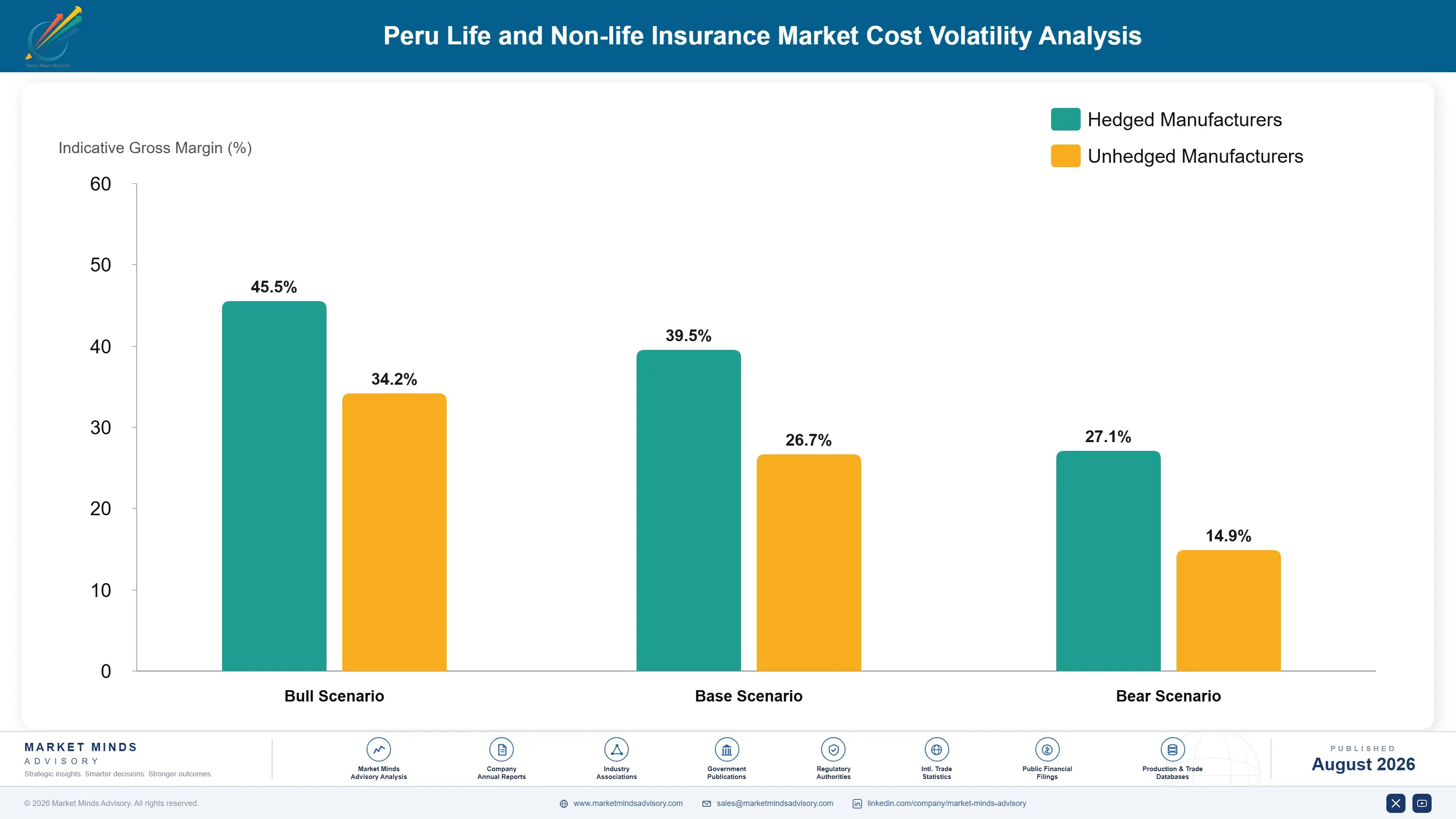
Three costs consume premium here. Reinsurance ceded on catastrophe and large risks, incurred claims across health motor and life, and distribution commission with administration together account for 82 to 93% of gross written premium at a typical carrier. Distribution cost is unusually high because bancassurance and mass-market channels both price their access to customers aggressively, and the partner frequently captures more margin than the insurer carrying the risk.
Two forces moved the cost base independently. Catastrophe reinsurance repriced globally and local treaties followed despite 51 quiet years, which Superintendencia de Banca Seguros y AFP sector statistics show reducing available property capacity. Medical cost inflation then ran well ahead of general price growth, and Credicorp Annual Report 2024 and Rimac Seguros Annual Report 2024 disclosures describe how difficult that has been to pass through in annual health pricing.

Exposure divides by channel ownership rather than by underwriting quality. Carriers with affiliated banking distribution acquire customers at a cost independents cannot approach, though the affiliate captures much of the resulting margin internally. Carriers renting mass-market channels pay whatever the retailer or operator demands and hold no relationship at all. Building direct capability alongside those channels is expensive and almost nobody has tried.
life-non-life-insurance-market-in-peru-cost-volatility-analysis-1787914733810

Agree channel economics before volume creates dependence

Bancassurance carries 47% of premium and mass-market partners price access to customers they own outright. Negotiating commission once a carrier depends on the channel means negotiating from no position at all. Agreeing terms while the arrangement remains genuinely optional costs some volume in the short run and preserves considerably more margin across the whole relationship.

Retain a first catastrophe layer to earn treaty standing

Ceding roughly 92% of earthquake exposure makes a carrier an administrator of somebody else's risk with no standing in treaty negotiations at all. Retaining a modest first layer costs capital and requires nerve after 51 quiet years. It earns underwriting result rather than commission and changes the conversation at every subsequent renewal quite considerably.

Build provincial provider networks before competitors arrive

Health grows fastest and provider arrangements outside the capital are genuinely difficult to assemble, which is precisely why almost nobody has completed one properly. Building clinic and hospital coverage across provincial cities takes years of negotiation. It supports national employer sales that competitors confined to the capital simply cannot make at all from anywhere.

Portfolio Architecture for Margin Defence

Margin follows channel control and network capability rather than premium volume. Compulsory motor accident cover earns almost nothing on regulated low premiums. Microinsurance earns thinly once the channel partner has taken its share. Property earns modestly on ceding commission with retention near nothing. Individual and group life earn reasonably through payroll and credit-linked distribution. Health earns well where provider networks are genuinely strong. Retirement annuities earn best per policy and almost nobody writes them any more.
The tension is that the only line earning properly per policy is the one legislation destroyed. Annuities carried long-duration investment margin and mortality result that nothing else in this market approaches, and they now grow at 3.6% because retirees take the cash instead. Insurers still holding the reserving and investment capability built for that business are maintaining infrastructure for volumes that will never return to it.

High-value pools sit in three places. Provincial health provider networks, which decide national employer placements and which almost nobody has assembled properly. Directly owned distribution alongside bancassurance, which preserves margin the channel would otherwise take. And retained catastrophe layers, which convert commission into underwriting result and buy standing in treaty negotiations.

Volume / Commodity-Adjacent

Compulsory motor accident cover and microinsurance sold through channels that price their own access to customers aggressively. The 10-point range separates carriers with affiliated distribution from those renting retail and mobile channels at whatever terms are offered.
Gross Margin: 3-13%

Premium / Certified

Property, voluntary motor and group life business carrying moderate retention and established commercial relationships. The 14-point spread reflects how differently ceded property and retained life business perform once reinsurance commission is separated out.
Gross Margin: 15-29%

Sustainability / Regulatory / Next-Generation

Health cover supported by genuine provider networks alongside the residual annuity business still being written. The 24-point range is wide because health margins depend on network strength while annuity margins depend on investment and mortality result entirely.
Gross Margin: 26-50%
life-non-life-insurance-market-in-peru-portfolio-architecture-1787914734313

High-value Sub-segments and Strategic Watch-out

Provincial Health Networks

Highest margin available in the fastest growing line at 12.6%, protected by clinic and hospital arrangements outside the capital that take years of negotiation to assemble. The risk is medical cost inflation running ahead of what annual pricing can recover. Nobody has solved that yet.
Gross Margin: 36-50%

Owned Distribution Capability

Strong economics from preserving margin that bancassurance and mass-market partners would otherwise capture on every policy sold. The risk is that building it competes directly with the channel partners a carrier currently depends upon for volume. And that is an awkward conversation for anybody to start.
Gross Margin: 28-40%

Mass-Market Policy Volume

The volume core, reaching households at penetration near 1.8% of output and building the customer base everything else can eventually be sold to. Carriers hold it for reach, not because the margin per policy justifies attention. Reach is what it actually buys, and nothing else.
Gross Margin: 5-15%

Stranded Annuity Infrastructure

The strategic watch-out. Reserving, mortality and investment capability built for a line now growing at 3.6% still costs money to maintain. The risk is carrying infrastructure for volumes that legislation removed permanently. Nobody wants to make that particular decision explicitly, so almost nobody ever does.
Gross Margin: 2-12%

Compulsion At The Bottom Only

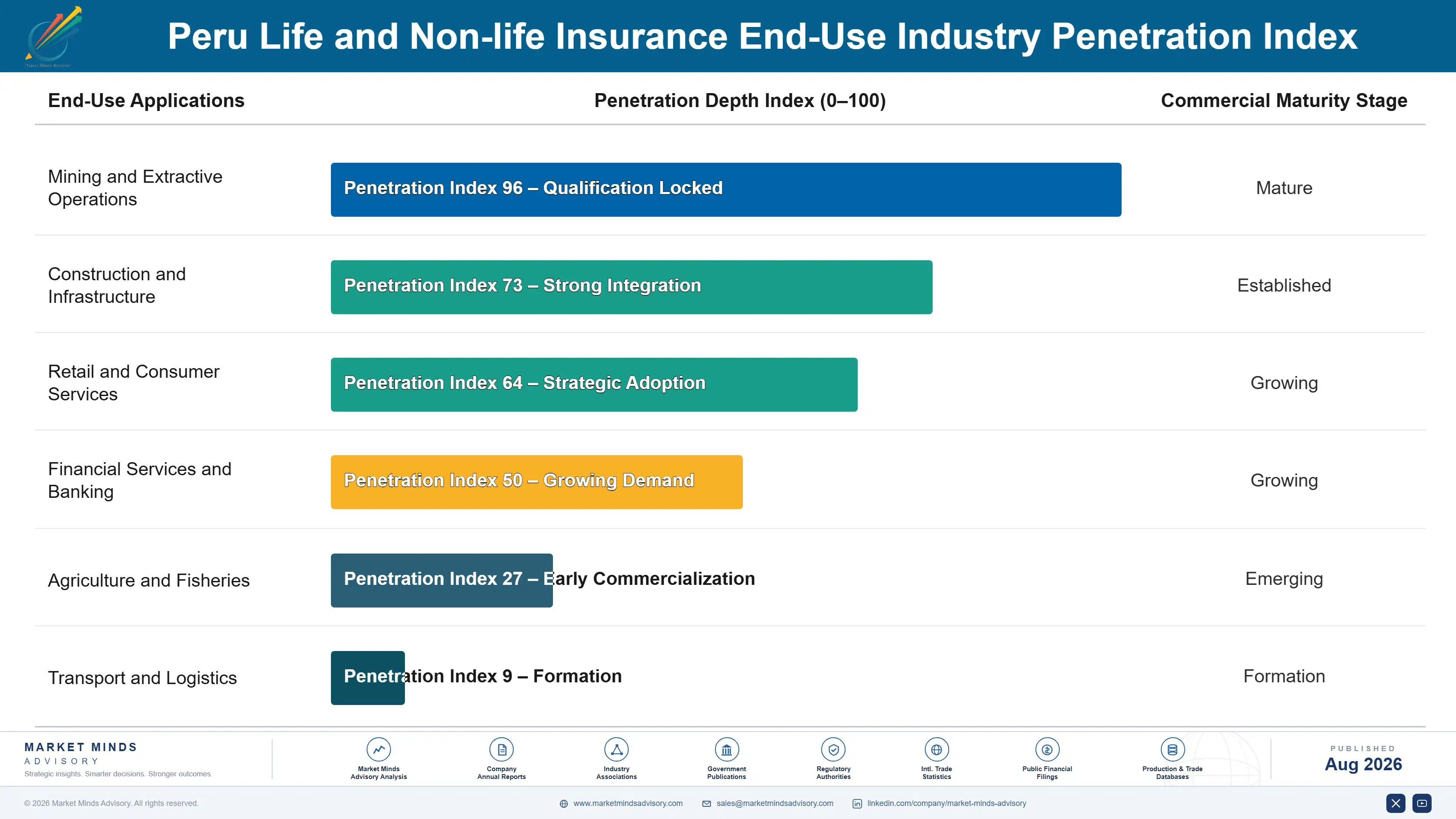
Annuity characteristics are strong only where purchase is compelled or automatic. Compulsory motor accident cover renews across the whole vehicle population regardless of anything. Credit-linked life and payroll-deducted health persist because cancelling requires a deliberate act nobody bothers to take. Everything else is genuinely discretionary in a market where penetration sits near 1.8% of output, and discretionary insurance purchases are the first thing households stop when income tightens at all.
Stickiness therefore depends almost entirely on how the premium is collected. Account debit and payroll deduction produce persistency that active payment never matches, which is why channel structure matters more than product design in this market. Health group schemes stick through employer inertia and provider network familiarity. Mass-market policies sold through retail lapse heavily, because the customer never formed any relationship with the insurer at all.

The decision maker varies more than in most markets. Corporate health and property buyers are professional and compare carefully. Mass-market customers frequently do not know which company underwrites what they bought, having purchased it from a retailer or a mobile operator. Bank customers sit between, buying on branch recommendation from an institution they trust rather than any assessment of the insurer.
life-non-life-insurance-market-in-peru-end-use-penetration-index-1787914734806

Distribution Decides This Market

These are among the four positions where our research anticipates prominent divergence between winners and laggards over the coming forecast period. Each is grounded in the demand model, the regulatory perimeter, and the announced capacity pipeline.
01 / CHANNEL ECONOMICS NEGOTIATION

The bank owns the customer and prices the access

Bancassurance already carries 47% of premium in this market and the banking partner owns the customer relationship outright, which means it prices access to that relationship and captures a substantial share of the margin on every single policy that gets sold. Insurers negotiating commission after volume dependence has already developed are negotiating from no position at all. Agreeing terms while the arrangement is still genuinely optional preserves considerably more of the eventual result for everybody who is writing the risk.
02 / PROVINCIAL NETWORK BUILDING

National employers cannot buy a Lima-only product

Health cover grows at 12.6% a year and provider network capability rather than pricing is what decides which insurers actually convert that demand into retained customers over any length of time. Clinic and hospital arrangements outside the capital region here are genuinely difficult to assemble, and almost nobody in this market has completed one properly yet. Insurers holding any real provincial reach can sell to national employers who currently cannot buy anything at all that works across their entire national workforce today.
03 / CATASTROPHE RETENTION RECOVERY

Ninety-two percent ceded leaves nothing to negotiate with

Ceding roughly 92% of the earthquake exposure leaves local carriers administering a risk that somebody else prices entirely, and their own property capacity contracts whenever global terms tighten, regardless of any local loss experience. Retaining even a modest first layer of it requires capital and considerable nerve given the 51 quiet years already recorded on that subduction zone. It earns actual underwriting result rather than commission and it confers treaty standing that no purely ceding carrier has ever once held.
04 / ANNUITY CAPABILITY REDEPLOYMENT

Legislation took the line and left the infrastructure

Reserving, mortality and long-duration investment capability was all built here for a business that pension legislation has now reduced to 3.6% growth and will not be restoring it at any point now. Maintaining all that infrastructure for volumes which simply no longer arrive is expensive and remains quietly common across this whole market. Redirecting it toward group life, credit life and any long-term health products uses capability that already exists and is already paid for rather than writing it off.

Engagement Snapshot From the Field

A live engagement with an industry participant carrying material or product regulatory and market exposure ahead of a defining policy shift, showing how our research translates into a defensible multi-year portfolio strategy.
MARKET MINDS ADVISORY · CLIENT ENGAGEMENT SUMMARY
Peru Life and Non-life Insurance Producer Strategic Portfolio Review and Transition Roadmap 2026·Investment Scenario on Peru Life and Non-life Insurance Exposure Evaluation 2025-26
CLIENT PROFILE
A domestic composite insurer writing life, health, property and motor business with reported gross written premium of 240 million dollars (client-reported, unverified by MMA). Roughly 58% arrived through a single bancassurance arrangement. Health provider network coverage was confined to the capital region and annuity reserving capability was still fully staffed despite almost negligible new business arriving.
STRATEGIC CHALLENGE
The bancassurance partner had signalled a commission review at renewal, putting margin on the majority of premium at risk with no alternative distribution available. Management proposed accepting reduced terms to protect volume. That preserved the arrangement while confirming a dependence the partner would price again at every subsequent renewal without any resistance being possible.
MMA APPROACH
MMA analysed margin by channel separating what the insurer retained from what the partner captured, then modelled the cost of building direct and provincial capability. Twenty-three expert interviews with bank distribution heads, retail partners, provider network managers and corporate benefits buyers established where value is genuinely created. The analysis treated channel diversification and provincial network building as the routes forward.
KEY FINDINGS
  1. The bancassurance partner captured a larger share of policy margin than the insurer retained on several product lines, and no analysis had ever presented the split clearly.
  2. Three national employers had declined health proposals specifically because provider coverage stopped at the capital region and their own workforces plainly did not.
  3. Annuity reserving and investment staffing remained at pre-legislation levels while new business had fallen to a small fraction of the former volumes entirely.
  4. Direct digital acquisition on two simple products had been trialled and abandoned before reaching any scale where its economics could actually be judged.
CLIENT PROFILE
A domestic composite insurer writing life, health, property and motor business with reported gross written premium of 240 million dollars (client-reported, unverified by MMA). Roughly 58% arrived through a single bancassurance arrangement. Health provider network coverage was confined to the capital region and annuity reserving capability was still fully staffed despite almost negligible new business arriving.
STRATEGIC CHALLENGE
The bancassurance partner had signalled a commission review at renewal, putting margin on the majority of premium at risk with no alternative distribution available. Management proposed accepting reduced terms to protect volume. That preserved the arrangement while confirming a dependence the partner would price again at every subsequent renewal without any resistance being possible.
MMA APPROACH
MMA analysed margin by channel separating what the insurer retained from what the partner captured, then modelled the cost of building direct and provincial capability. Twenty-three expert interviews with bank distribution heads, retail partners, provider network managers and corporate benefits buyers established where value is genuinely created. The analysis treated channel diversification and provincial network building as the routes forward.
KEY FINDINGS
  1. The bancassurance partner captured a larger share of policy margin than the insurer retained on several product lines, and no analysis had ever presented the split clearly.
  2. Three national employers had declined health proposals specifically because provider coverage stopped at the capital region and their own workforces plainly did not.
  3. Annuity reserving and investment staffing remained at pre-legislation levels while new business had fallen to a small fraction of the former volumes entirely.
  4. Direct digital acquisition on two simple products had been trialled and abandoned before reaching any scale where its economics could actually be judged.
RECOMMENDED STRATEGY
Phase 1: Phase one: accept the commission review but begin provincial provider network building immediately, since that opens sales the partner cannot supply. Phase 2: Phase two: redeploy annuity reserving and investment capability into long-term health and group life rather than continuing to maintain it idle. Phase 3: Phase three: restart direct acquisition on two simple products and run it to genuine scale before judging whether the economics work.
OUTCOME
Provincial network building began and one national employer proposal was won within the year (client-reported, unverified by MMA). Annuity capability was redeployed into long-term health product development. Direct acquisition restarted at deliberate scale. The commission review was accepted, but with a diversification programme running alongside it rather than in place of any response at all.

Frequently Asked Questions

Foundational context covering the market sizes, CAGR, scope, country, region and competition that inform every finding below. This section is provided to cover basics and most often pre-purchase conversations, answered from the MMA Primary Research Dataset.

What is the current size of the Peru Life and Non-life Insurance Market?

The market was worth 5.4 billion dollars in gross written premium in 2025, across health, life, property, motor, microinsurance and annuity lines. It reaches 5.85 billion dollars in 2026.

How large will the Peru Life and Non-life Insurance Market be by 2036?

MMA forecasts 13.11 billion dollars by 2036, an increase of 7.26 billion dollars over the 2026 base. That represents an expansion multiple of 2.24 times across the forecast period.

What is the CAGR for the Peru Life and Non-life Insurance Market 2026 to 2036?

The base case compounds at 8.4% annually. The bull case reaches 9.6% if penetration keeps climbing from 1.8% of output, while the bear case sits at 7.2%.

Which segment is growing fastest?

Health and medical assistance, at 12.6%, half again the market rate of 8.4%. Employers extend cover while households buy through bank branches for the first time.

Who are the major companies in the Peru Life and Non-life Insurance Market?

Rimac Seguros, Pacifico Seguros, La Positiva Seguros, Mapfre Peru and Interseguro lead on disclosed premium. Concentration reaches 78%, among the highest of any insurance market.

Which country is growing fastest?

Australia at 10.4%, reflecting Australian mining groups holding significant Peruvian operations whose property and construction exposures are which are placed locally here and reinsured internationally abroad.

Report Segmentation Architecture

The full report scope spans multiple orthogonal segmentation dimensions, with cross-tabulated demand data provided for each dimension pair. Coverage extends further to regional breakdowns, trend trajectories, and the competitive detail needed to support segment-level decision-making.

By Line of Business

  • Health and Medical Assistance
  • Microinsurance and Mass-Market Products
  • Property Fire and Catastrophe
  • Individual and Group Life
  • Compulsory Motor Accident and Motor
  • Retirement Annuities and Pension-Linked

By End-Use Industry

  • Mining and Extractive Operations
  • Construction and Infrastructure
  • Retail and Consumer Services
  • Financial Services and Banking
  • Agriculture and Fisheries
  • Transport and Logistics

By Commercial Dimension

  • Bancassurance Branch Distribution
  • Broker Placed Corporate Business
  • Retail and Utility Mass-Market Channels
  • Mobile Operator Partnerships
  • Direct Digital Acquisition
  • Payroll and Employer Scheme Enrolment

By Region

  • North America
  • Western Europe
  • East Asia
  • South Asia and Pacific
  • Latin America
  • Middle East and Africa
  • Eastern Europe

Scope, Methodology, and Coverage

Every figure in this report is reproducible from documented input assumptions. The scope below maps the historical period, the forecast horizon, the segmentation dimensions, and the countries covered, alongside the underlying primary and qualitative methodology.
Historical Period
2020 to 2025
Forecast Period
2026 to 2036
Base Year
2025 (USD billions; MMA Primary Research Dataset, August 2026)
Market Definition
Scope covers gross written premium across life and general insurance lines written in Peru, spanning health and medical assistance cover, microinsurance and mass-market products distributed through retail utility and mobile channels, property fire and catastrophe insurance including earthquake exposure, individual and group life including credit-linked life, compulsory motor accident cover and voluntary motor insurance, and retirement annuities and other pension-linked products. Private pension fund management fees earned by fund administrators, state social security contributions and public health provision, reinsurance accepted by locally licensed entities from outside the country, investment income earned on shareholder funds, and insurance written in other Andean markets by locally headquartered groups are excluded from the market size and all derived figures.
Quantitative Units
USD billions of gross written premium (current prices); penetration as percentage of national output; catastrophe cession ratio; distribution share by channel; pension lump sum withdrawal percentage
Segmentation Dimensions
By Line of Business; By End-Use Industry; By Commercial Dimension; By Region
Regions Covered
North America, Western Europe, East Asia, South Asia and Pacific, Latin America, Middle East and Africa, Eastern Europe
Countries Covered
Peru, with exposure and reinsurance analysis across USA, Spain, Switzerland, Germany, Bermuda, China, Australia, Canada, Chile, Colombia, Brazil, Mexico, UK, Japan, Ecuador
Key Companies Profiled
Rimac Seguros, Pacifico Seguros, La Positiva Seguros, Mapfre Peru, Interseguro, Protecta Security, Crecer Seguros, Vivir Seguros, Chubb, Liberty Seguros, HDI Seguros, Zurich Insurance Group, Munich Re, Swiss Re, SCOR, Everest Group, Sura Asset Management, Qualitas, Assurant, Sanitas
Quantitative Methodology
Primary survey, n=3,800 respondents, Q4 2025, six countries; demand-side model with trade association cross-validation
Qualitative Methodology
47 expert interviews, Q4 2025; applied to validate demand model assumptions, identify emerging dynamics, and assess competitive positioning
Report Format
PDF and XLSX data workbook (Word format preview document)
Publisher
Market Minds Advisory
Report Code
MMA-2026-TEC-231
Published
August 2026
Contact
sales@marketmindsadvisory.com | www.marketmindsadvisory.com

Purchase the full Peru Life and Non-life Insurance Market Report (2026 to 2036).

The full report runs to 165 pages and covers all six lines of business, seven exposure regions and 20 profiled participants in detail. It includes the complete segment CAGR set, analysis of pension legislation and its effect on annuity business, and channel margin analysis separating what insurers retain from what distribution partners capture. Company profiles carry evaluation on disclosed gross written premium in the Peruvian market, with moat and risk assessment for the top five groups. The competitive section extends to 13 tracked legislative, network and reinsurance developments across 2024 and 2025. Primary research inputs include a quantitative survey of 3,800 respondents and 47 expert interviews conducted in Q4 2025.
Six lines of business with individual CAGR forecasts
Seven exposure regions reflecting domestic concentration and reinsurance flows
Twenty participant profiles on consistent gross premium evaluation basis
Thirteen tracked legislative and reinsurance developments with commercial interpretation
Channel margin analysis separating insurer and distributor economics
Catastrophe cession quantified against retained local exposure

Built For The People Who Decide

From boardroom strategy to bench-side execution, this report is read cover-to-cover by leaders shaping the next decade of their industry, turning demand scenarios, market dynamics and valuation benchmarks into decisions.
CXOs/ Presidents/ VPs/ Managers
M&A and Corporate Development
Strategy Teams and R&D Heads
Procurement and Product Directors
Regulatory and Compliance Leaders
Investor Relations and Equity Analysts