Market Minds Advisory
Letter Sorters Market

Letter Sorters Market: Letter Sorters Market: Falling Mail Volumes, Adhesive Mount Failure and What These Products Now Hold

Letter volumes have fallen for two decades and this category keeps growing, because roughly seven in ten of these products now hold stationery and documents rather than any posted mail.

Lead Analyst

Published

September 2026

Make Smarter Decisions with Customized Research Insights

Request a free sample report and evaluate market opportunities, growth trends, and competitive dynamics relevant to your business needs.

2025 MARKET VALUE$0.9BMarket Size 2025
2036 FORECAST VALUE$1.3BBase Case , 2026 to 2036
CAGR 2026 TO 20363.8 %Bull 5.0% / Bear 2.6%
INCREMENTAL OPPORTUNITY$0.4BNet 10- year value creation
EXPANSION MULTIPLE1.44x2036 value over 2026 base
Strategic Levers
M&A Pipeline
Regional Outlook
Country Rankings
Competitive Intelligence
Segmental Deep-dive
Call-Us : 91 93563 13602

Executive Snapshot and Market Trajectory.

This category outlived its purpose and grew anyway. Posted letter volumes have declined for twenty years across every developed market, and around 71% of these products now hold stationery, documents and devices rather than mail. The name is the only part that still refers to letters.
Wall-mounted sorters grow at 5.7%, half again the market rate of 3.8%, because desk surface is the scarce resource in a home office and a wall is not. Multi-function desk organisers with sorting follow at 5.1%. Expanding concertina sorters grow slowest at 2.6%, tied to a filing habit that has largely gone with the paper that fed it. Most ranges are still dimensioned around standard envelope sizes rather than around a notebook or a tablet.
Adhesive mounting is where the fastest-growing format fails. About 6% of wall products publish a weight capacity for adhesive fixing, and a mount that lets go takes paint with it, which is precisely what a renter chose adhesive to avoid. The home channel now takes 58% of units, and renters are most of it. Publishing a tested capacity with surface guidance converts that hesitation directly, and almost nobody has done it.
Market Definition
This market covers desktop and wall-mounted organisers designed to sort and hold letters, documents and paper, spanning upright slot sorters, tiered tray sorters, wall-mounted sorters, expanding concertina sorters, drawer and cabinet sorting units, and multi-function desk organisers incorporating sorting. Sizing is at wholesale shipment value. Industrial postal sorting machinery, filing cabinets, document storage boxes, magazine files and mailroom furniture are excluded from scope entirely.
Base Year Value
$0.9B in 2025 (MMA Primary Research Dataset, September 2026)
Forecast Period
2026 to 2036, eleven discrete annual values
CAGR
3.8% base case. Bull 5.0%. Bear 2.6%.
Fastest Growth Segment
Wall-Mounted Sorters: 5.7% CAGR
Fastest Growth Country
India: 6.4% CAGR
Fastest Growth Region
South Asia and Pacific: 5.6% CAGR
Largest Region
East Asia: 33% of 2025 global value
Market Leaders
ACCO Brands, Fellowes Brands, Kokuyo, Ryohin Keikaku, Deli Group. Source: MMA Primary Research Dataset, July 2026.
Primary Survey
n=3,800 procurement and R&D decision-makers, Q4 2025, six countries
Methodology
Demand-side build-up, cross-validated against public data, 47 expert interviews

Letter Sorters Market Forecast Scenarios

letter-sorters-market-size-forecast-scenario-1790022208936
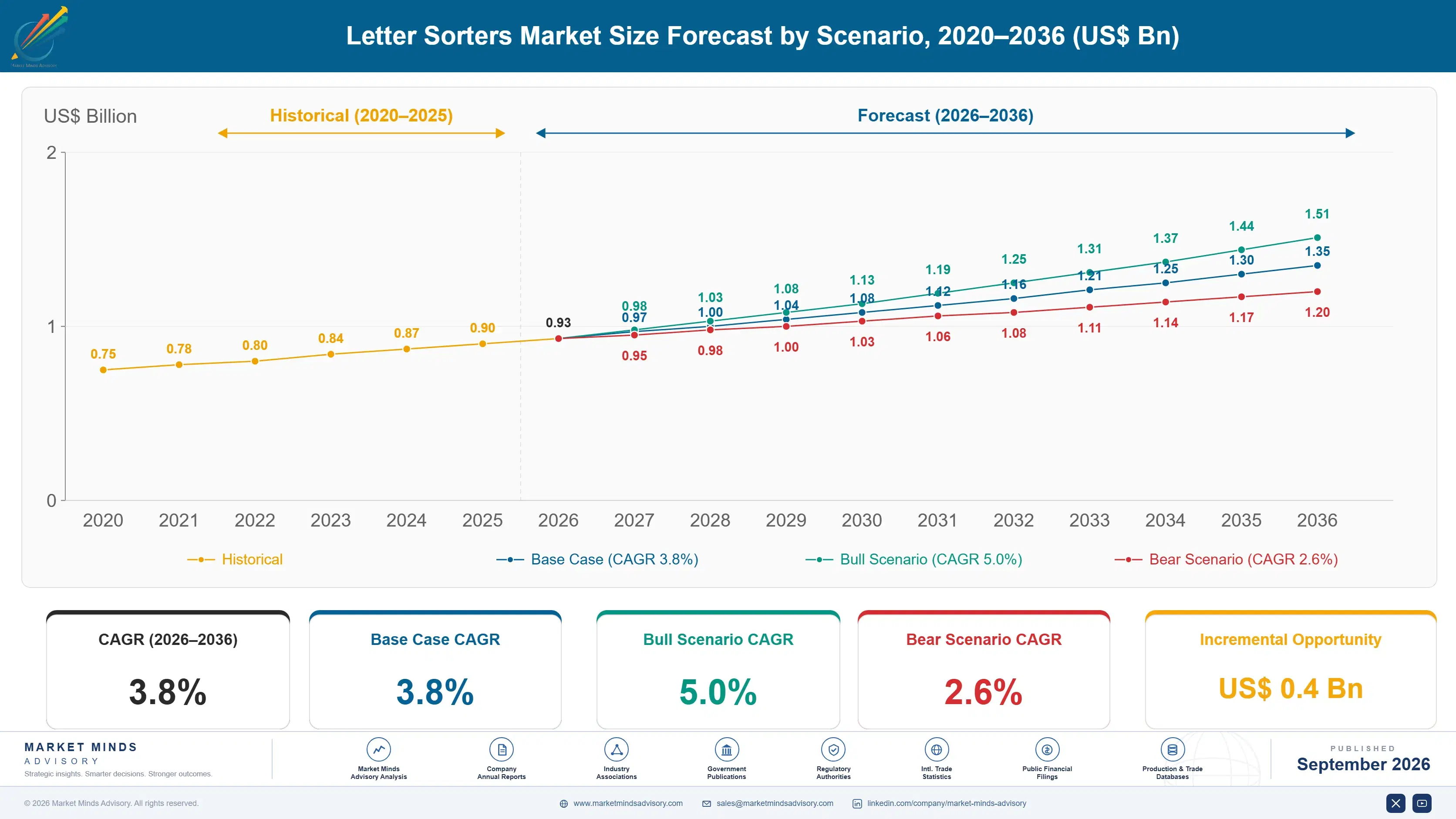
Growth of 2.9% between 2020 and 2025 came from a channel switch rather than from any recovery in what these products were built for. Home office formation through 2020 and 2021 created household demand that had never existed at scale, while commercial mailroom and office purchasing fell alongside letter volumes and never came back. The two roughly offset while the composition changed completely.
Three mechanisms carry the base case. Home working arrangements have settled at a level well above 2019 and household desk organisation demand settled with them. Wall-mounted formats grow at 5.7% because desk surface is scarce in a home office and vertical space is not. Indian and Southeast Asian demand grows from low household penetration, with India at 6.4%, as domestic manufacture reaches price points that imported product never could in those markets.
The bull case is adhesive mount specification. If wall products carried published load ratings, renters would buy the format with confidence rather than treating it as a gamble, and the fastest-growing segment would grow considerably faster. The bear case is desk consolidation. Multi-function organisers absorbing sorting into one unit reduce how many separate products a household buys, suppressing volume even as spending holds.

What These Products Now Hold

A category named after a task almost nobody performs any more has no business growing, and this one does. Posted letter volumes have fallen across every developed market for two decades while these products expanded, because the job changed underneath the name. Around 71% now hold stationery, notebooks, school paperwork, chargers and documents that print themselves regardless of what the post brings.
TOP FIVE CONCENTRATION17%Combined shipment value share held by the five largest participants
HOME CHANNEL SHARE58%Units sold into household rather than commercial office use
AVERAGE SELLING PRICEUSD 16Weighted global wholesale price across all product formats
ADHESIVE MOUNT LOAD STATED6%Wall products publishing a weight capacity for adhesive mounting
NON-MAIL USE SHARE71%Units holding stationery or documents rather than posted letters
REPLACEMENT CYCLE LENGTH6.3 yearsAverage interval before a household replaces a sorting unit
The channel composition inverted over five years and most participants have not fully adjusted their ranges. Commercial mailroom and office purchasing fell with letter volumes, while home office formation created household demand that had never existed at anything like this scale. Home now takes 58% of units. Products designed for a mailroom sit awkwardly on a kitchen worktop, and buyers notice.
Wall mounting is the format solving the real constraint, which is desk surface rather than storage volume. It is also where the category fails, because adhesive fixing is what renters can use and roughly 6% of products state what an adhesive mount will hold. A failed mount removes paint, which is the outcome a renter chose adhesive specifically to avoid. Ranges offering both fixing methods are rare and convert better.
"Nobody is buying these to sort letters and the industry keeps designing them as though somebody were. The products that acknowledge what a household actually puts in them are the only ones growing at any speed."
Director, Office Products and Home Organisation Practice · MMA Consumer and Industrial Goods Practice · September 2026

Market Trends

Vertical Space Solves The Constraint Desks Cannot

A home office is usually a corner of a room where desk surface is the binding limit and wall area is free, which is why wall-mounted sorters grow at 5.7% against a category rate of 3.8%. The format also suits kitchens and hallways, where household paper accumulates and no desk exists at all. Adhesive fixing is what makes it available to renters, who represent most household demand in exactly the metropolitan markets growing fastest. Products designed to be screwed into a stud forfeit that buyer completely, and very few ranges offer both fixing methods.
Market Impact: Home channel holds 58% share
Multi-Function Units Absorb Sorting Into Desk Organisation

Households buying for a home office increasingly want one object that holds paper, pens, a phone and a charging cable rather than several dedicated items competing for the same surface. Multi-function organisers with sorting compartments grow at 5.1%. The commercial effect is mixed for participants: unit prices rise while the number of separate products a household buys falls, so category volume growth understates spending growth. Ranges built around single-purpose sorters are losing shelf space to combination products that a retailer can merchandise as a complete answer. Category spending therefore grows faster than unit volume does.
Market Impact: India grows 2.6 points faster

Market Opportunities and Growth Drivers

Home Working Settled Well Above Its Previous Level

Household home office formation created demand at a scale this category had never seen, and unlike much pandemic-era buying it did not reverse when offices reopened. Hybrid arrangements settled at levels far above 2019 across North America, Western Europe and much of East Asia, and each of those households needs somewhere for paper to live. The home channel now takes 58% of units against a minority position five years ago. Replacement cycles near 6.3 years mean that cohort returns to the category rather than leaving it. Products designed for a mailroom sit awkwardly on a kitchen worktop.
Market Impact: Only 6% publish a capacity

Indian Household Penetration Rises On Domestic Manufacture

Desk and household organisation products have historically been imported into India at prices that placed them beyond most households, and domestic manufacture has changed that over roughly five years. India grows at 6.4%, the fastest national market covered here, from penetration well below Western levels. Deli, Comix and local moulders supply at price points imported product could never approach, and organised retail expansion is putting the category in front of buyers who had not previously encountered it. Growth here comes from new households rather than replacement. Wall-mounted formats sell disproportionately well, reflecting apartment living and scarce desk space.
Market Impact: Failure ends 1 product entirely

Market Restraints and Challenges

Adhesive Mount Capacity Is Almost Never Published

Roughly 6% of wall-mounted products state what an adhesive fixing will actually hold, and the root cause is liability rather than ignorance: publishing a figure creates a warranty exposure that silence avoids, particularly where wall surface varies enormously. Commercially the failure is severe, because a mount that lets go removes paint or plaster and that is exactly what a renter chose adhesive to prevent. Participants publishing tested capacities alongside surface guidance report the format converting far better among renters, who currently treat it as a gamble. Wall surface varies enormously, which is the reason usually given.
Market Impact: Grows 1.9 points above category

Acrylic Slot Dividers Crack And Cannot Be Repaired

Injection-moulded acrylic and polystyrene dividers flex every time paper is inserted and removed, and they eventually crack at the base of the slot where stress concentrates. The root cause is material choice made on appearance, since clear acrylic looks better on a shelf than powder-coated wire does. Once cracked the unit is discarded, as nobody sells replacement dividers and the repair is not practical. Powder-coated steel mesh lasts far longer at similar cost, and participants who switched report warranty contacts falling substantially. Wire also nests better and ships more cheaply.
Market Impact: Grows 1.3 points above category
3 additional market trends, 4 additional growth drivers, and 2 additional restraints and challenges are covered in the full report. Contact sales@marketmindsadvisory.com to access the complete intelligence.

Segment CAGR and Growth Architecture

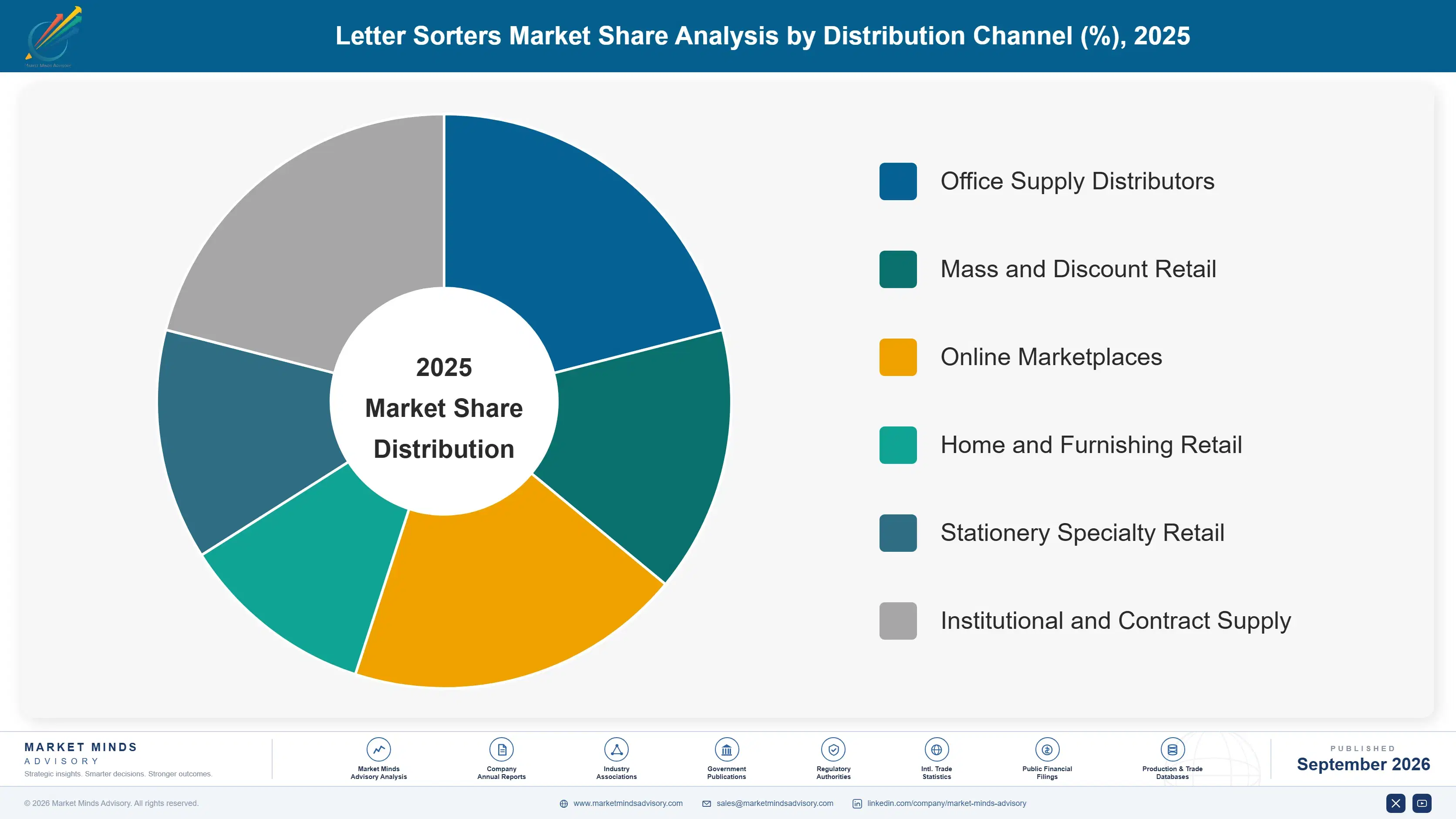
Segmentation follows product format, the dimension on which mounting method, tooling, shipping density and retail positioning all divide together in this category. Six formats are assessed at wholesale shipment value. Industrial postal sorting machinery, filing cabinets, document storage boxes and mailroom furniture sit outside the defined scope. Construction material is treated as an attribute rather than a segment.
letter-sorters-market-market-share-analysis-1790022209478

Wall-Mounted Sorters

Wall-mounted sorters grow at 5.7%, half again the market rate of 3.8%, because they solve the constraint that actually binds in a home office. Desk surface is scarce and wall area is free, and the format also works in kitchens and hallways where household paper accumulates and no desk exists. Adhesive fixing is what makes the format available to renters, who make up most household demand in the metropolitan markets growing fastest. That is also where it fails: about 6% of products publish an adhesive load capacity, and a mount that lets go takes paint with it. Ranges offering both adhesive and screw fixing are rare and they convert considerably better.
CAGR 5.7%

Multi-Function Desk Organisers With Sorting

Multi-function organisers incorporating sorting compartments grow at 5.1% because households setting up a home office want one object rather than several competing for the same surface. Paper, pens, a phone and a charging cable now belong together in a way they never did in a commercial office where each had its own dedicated product. Unit prices run well above single-purpose sorters, which means category spending grows faster than unit volume does. Retailers favour the format because it merchandises as a complete answer rather than as a component. Participants with ranges built around dedicated sorters are steadily losing shelf space to it. Households want one object rather than several competing for the same surface.
CAGR 5.1%
Full segment breakdown across 6 segments available in the complete report.

Regional Architecture and Country Demand Map

Regional shares measure wholesale shipment value where product is sold rather than where it is moulded, which matters because Chinese manufacture supplies most of the category. East Asia sits above its standard band and Middle East and Africa below. Housing type shapes this table more than income does.

East Asia

At 33% this sits above the standard band, and the region is both the manufacturing base for nearly the whole category and its largest market. Japanese desk organisation is a mainstream consumer category rather than a niche one, supported by Kokuyo, King Jim, Lihit Lab and Ryohin Keikaku selling into homes where small living space makes surface discipline a daily concern. Chinese domestic demand has expanded rapidly as household formation and home working both grew, with Deli and Comix supplying at prices no importer can match. Korean demand follows Japanese patterns closely at smaller scale. Small living space makes surface discipline a daily concern rather than an occasional tidying project, which is why the category is mainstream here.
Share: 33% | CAGR: 4.7% (2026 to 2036)

North America

The 26% position sits inside the standard band and this is where the channel switch was sharpest. Commercial office and mailroom purchasing fell hard with letter volumes while home office formation created household demand that had never existed at scale, and the two crossed over within about three years. ACCO and Fellowes hold the largest positions through office supply and mass retail distribution built for the previous market. Renters in metropolitan areas favour adhesive wall mounting and find almost no published load guidance. Growth of 3.1% reflects a mature market where composition changed more than size did. Ranges and distribution built for the previous market are adjusting slowly, and shelf allocation has been slower still to follow household demand.
Share: 26% | CAGR: 3.1% (2026 to 2036)
Regional intelligence for 5 additional markets available in the complete report: Western Europe, South Asia and Pacific, Latin America, Eastern Europe, Middle East and Africa. Contact sales@marketmindsadvisory.com.
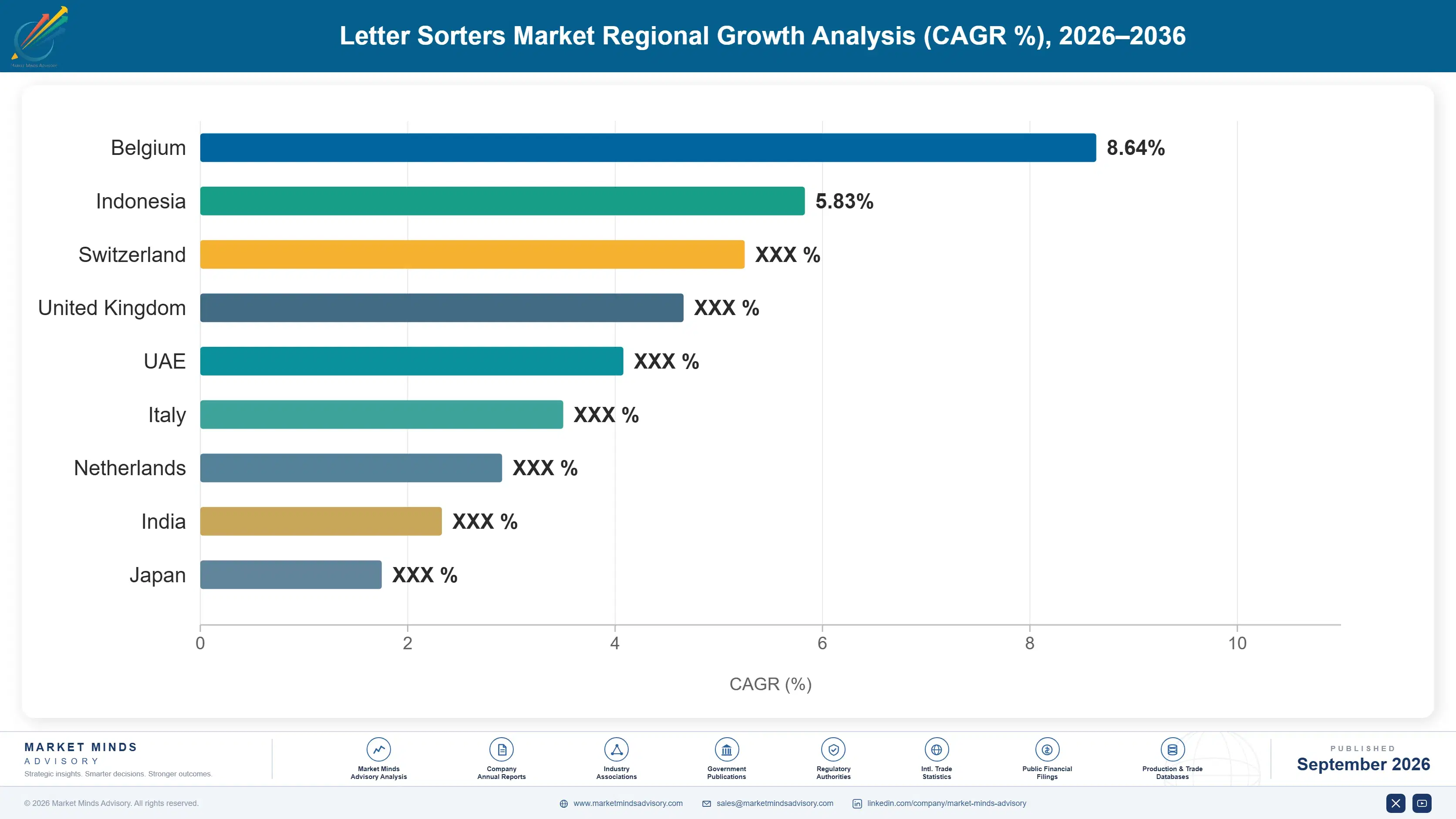
letter-sorters-market-country-cagr-analysis-1790022210010

Four Changes Worth Making Now

These four address the same disconnect: the category is named and designed for a task nobody performs, while the format that solves the real problem fails on a specification nobody publishes. Each has been executed by at least one participant, and none requires new tooling beyond a material change already available. Three of the four are specification decisions.

Publish Tested Adhesive Capacity With Surface Guidance

Roughly 6% of wall-mounted products state what an adhesive fixing will hold, because publishing a figure creates warranty exposure that silence avoids. Renters are most of household demand in the metropolitan markets growing fastest, and they treat the format as a gamble that could cost them paint. Publishing tested capacity alongside guidance on painted plaster, tile and wallpaper converts that hesitation directly. Participants who have done it report wall format conversion running around 1.6 times comparable products with no stated rating at all. Nobody in the category currently publishes anything.
Market Impact: Raises wall format conversion to roughly 1.6 times

Switch Slot Dividers From Acrylic To Coated Wire

Injection-moulded acrylic dividers flex whenever paper moves through them and crack at the slot base where stress concentrates, and the unit is then discarded because nobody sells replacement parts. Material choice was made on shelf appearance rather than on service life. Powder-coated steel wire lasts far longer at broadly similar cost, adding roughly USD 0.30 to a product retailing near USD 16. Participants who switched report warranty and complaint contacts falling by about 38%, on a specification decision requiring no new tooling investment. Wire also nests better and ships more cheaply.
Market Impact: Cuts warranty contact volumes by roughly 38% overall

Design For What Households Actually Store

Around 71% of these products hold stationery, documents, chargers and school paperwork rather than posted letters, and most ranges are still dimensioned for envelopes. Slot depths sized for a notebook, a tablet and a charging cable rather than for standard mail suit what buyers put in them. Participants who redimensioned report retail sell-through rising by roughly 24% at unchanged price points. The change costs a tooling revision at the next product cycle and nothing recurring, and no competitor has yet made it explicit on pack. No competitor has yet made the change explicit on pack.
Market Impact: Lifts retail sell-through rates by roughly 24% overall

Offer Both Adhesive And Screw Fixing In One Box

Renters need adhesive and homeowners prefer screws, and most ranges commit to one, forfeiting whichever buyer they did not choose. Including both fixing kits costs a few cents and a slightly larger carton, and it removes a purchase objection at the shelf rather than after it. Participants supplying both report returns falling by around 19%, since a substantial share of returns are buyers discovering the wrong fixing method in the box. The change requires no tooling and can be made at the next packaging run. The objection is removed before purchase rather than afterwards.
Market Impact: Cuts product return rates by roughly 19% overall

Who Controls the Margin Pool

Concentration is extremely low at 17% held by the top five, measured consistently on wholesale shipment value of letter and mail sorting organisers rather than on units. The leader to challenger gap is wide in retail and office supply distribution, built over decades, and effectively absent in manufacturing, where hundreds of moulders supply anyone placing an order.
Competition runs on three dimensions currently. Retail listing and shelf position decide most volume, since this is a low-consideration purchase made in front of a fixture or a search result. Landed cost decides price, and it is dominated by shipping density on a product that is largely air by volume. Design intent decides the growing part of the market, where products dimensioned for households rather than mailrooms are visibly different at the shelf.

Pressure is building on participants whose ranges and channels were built for commercial office supply, and that is where positions will move. Office supply distribution is contracting alongside letter volumes while household demand grows through mass retail and online. Those without wall formats or household dimensioning compete hardest in the shrinking half of their own market.
letter-sorters-market-company-positioning-matrix-1790022210539

Competitive Moat and Risk Dimensions

ACCO BRANDS

Moat: Office Supply Range Depth

Range relationships with office supply distributors and mass retailers across North America and Europe place the company on shelves that individual product merit alone would not reach. Category management depth across office products means buyers treat it as a range partner rather than a single-product vendor, which is a position accumulated over decades.
ACCO BRANDS

Risk: Channel Built For Mailrooms

Distribution strength sits in office supply channels contracting alongside letter volumes, while growth has moved to household buyers reached through mass retail and online. Ranges dimensioned for commercial mail sit awkwardly in a kitchen or home office, and buyers notice the difference at the shelf even when they cannot articulate it.
FELLOWES BRANDS

Moat: Home Office Product Adjacency

An established position in home office products including shredders, supports and workspace accessories gives the company genuine access to the household buyer who now represents most of this category. That adjacency also supports multi-function organisation products, which is the second fastest growing format in the market.
FELLOWES BRANDS

Risk: Limited Wall Format Presence

Ranges weighted toward desktop products leave the company underrepresented in wall mounting, which grows fastest because it solves the surface constraint that binds in home offices. Building adhesive fixing credibility requires published load testing that nobody in the category currently supplies, so the gap will not close through product introduction alone.

Players Tracked

Prominent Players

ACCO Brands
Fellowes Brands
Kokuyo
Ryohin Keikaku
Deli Group

Other Key Players

Deflecto
Safco Products
Rubbermaid Commercial Products
Smead
Storex
Bantex
HAN Burogerate
Helit
Exacompta
King Jim
Lihit Lab
Comix Group
M and G Chenguang
Sterilite
mDesign

Recent Developments

FEBRUARY 2025

ACCO Brands consolidates European office products distribution

The company concentrated European warehousing and distribution for office products into fewer facilities as part of a wider cost programme. This was an internal logistics decision taken on cost grounds, involving no acquisition, divestiture or external partner at any stage. Household retail distribution was unaffected by the change.
Signal: Distribution built for office supply volumes is being resized as that channel keeps contracting. The channel is being resized deliberately.
SEPTEMBER 2024

Kokuyo introduces modular household desk organisation range

The company launched a modular range combining paper sorting with stationery and device storage, dimensioned for household rather than commercial use. This was internal product development involving no partnership, licence or acquisition of external design or technology. Existing commercial ranges continue alongside the new household modules.
Signal: Product dimensioning is being rebuilt around what households store rather than around envelopes. Envelope dimensions no longer define the product.
JUNE 2025

Deli Group expands moulding capacity in Zhejiang

The company added injection moulding and wire forming capacity at its Zhejiang operations serving domestic and export demand for office and household organisation products. This was organic capital investment funded internally with no joint venture or contract partner involved. Both moulding and wire forming capacity were added together.
Signal: Chinese domestic demand now justifies capacity rather than export volumes alone justifying it. Domestic demand now justifies the capacity.

Where Landed Cost Sits

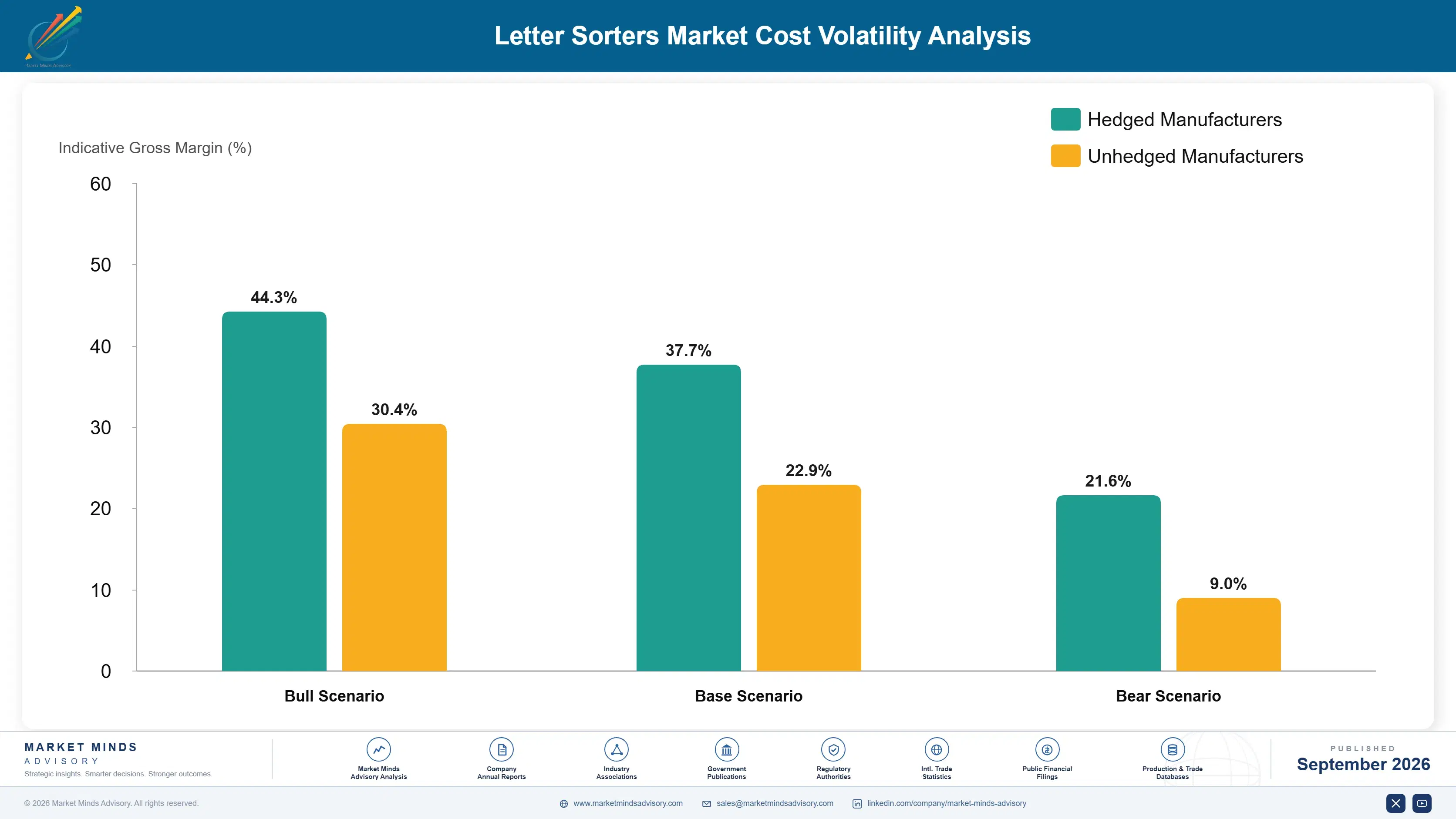
Powder-coated steel wire accounts for roughly 24% of manufacturing cost on mesh construction and nothing on moulded products, while injection-moulded polystyrene and acrylic account for about 21% on those. Packaging adds around 17%, which is high relative to product value because these items are awkward shapes that need protection. Coating, assembly labour and hardware account for most of the remainder before freight is added to anything.
Container freight in 2021 and 2022 exposed the fundamental problem with this category. These are bulky, low-density, low-value products shipping largely air by volume, and when container rates on Asia to Europe routes multiplied several times over the freight component exceeded manufactured cost on many references. ACCO Brands annual reporting for that period identifies inbound freight and raw material inflation as material factors requiring pricing action across office products.

Exposure varies almost entirely by shipping distance and nesting efficiency, which decides who can hold a price. Products that nest inside one another travel at a fraction of the cost of those that do not, and very few ranges are designed that way. Chinese and Indian manufacturers selling into their own markets avoid the freight layer completely, which explains most of the price gap everywhere.
letter-sorters-market-cost-volatility-analysis-1790022210737

Design product ranges to nest during shipping

Nesting efficiency determines freight cost far more than product weight does on a category shipping largely air by volume. Designing a range so units stack inside one another can halve the container count for the same sell-through. The constraint is that nesting geometry has to be decided at tooling stage, and almost nobody raises it during design review.

Specify coated wire construction over moulded acrylic

Acrylic dividers crack at the slot base and end the product, while powder-coated wire lasts considerably longer at broadly similar cost. The material decision is usually made on shelf appearance rather than on service life or warranty exposure. Wire also nests better and ships more cheaply, which compounds the benefit across the whole cost structure.

Qualify manufacturing outside a single sourcing country

Concentrated Chinese sourcing exposes an entire range to one freight route and one policy environment at the same moment. Qualifying Indian, Vietnamese or Eastern European capacity spreads that risk and shortens transit into some destinations. Minimum order quantity rather than technical capability is the practical obstacle here, since nothing about this manufacturing is demanding anywhere.

Portfolio Architecture for Margin Defence

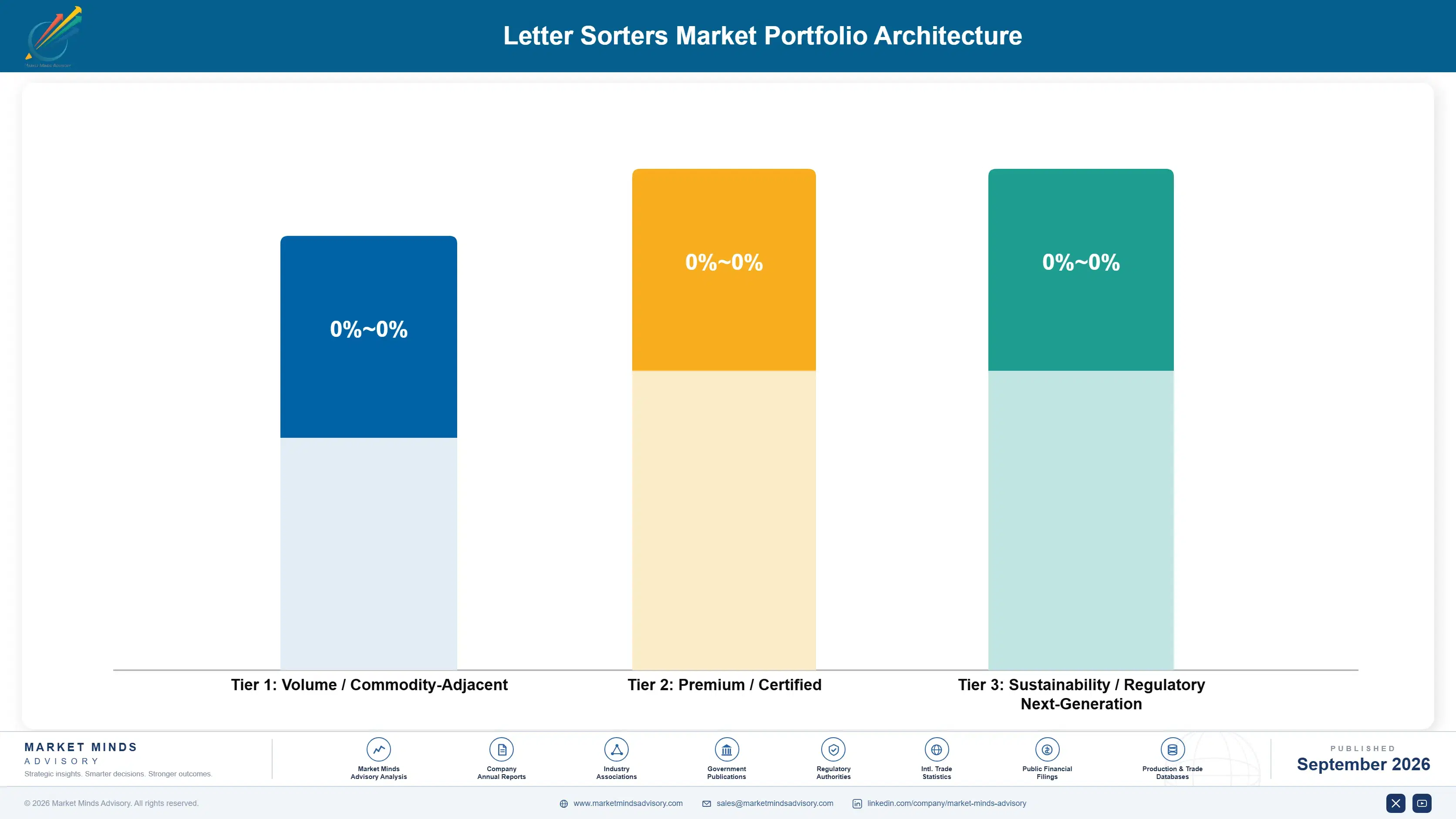
Margin architecture divides by shipping density and by whether a product can support a specification claim, which is not what a materials model would predict. Entry moulded desktop sorters sold through online marketplaces and discount retail run at gross margins in the low to high twenties, competing against hundreds of nearly identical products from moulders that supply anyone.
Powder-coated wire and wooden desktop formats sold through office supply and home retail hold gross margins in the mid thirties to low forties. The spread reflects channel and durability perception rather than construction cost, since wire and acrylic land at broadly similar factory prices. A product on a home retail fixture avoids the direct price comparison a search result enforces.

The highest-value pool sits in wall-mounted products carrying published adhesive load ratings and in multi-function organisers, both at margins in the low to high forties. A stated capacity converts renters who currently treat the format as a gamble, and a multi-function unit prices well above the sum of what it replaces. Entry desktop volume fills containers. It does not fund anything else. Neither higher tier is contested on specification.

Volume / Commodity-Adjacent

Entry moulded desktop sorters sold through online marketplaces and discount retail. Hundreds of nearly identical products compete on search position and price, and no participant holds any visible specification advantage.
Gross Margin: 22 to 28%

Premium / Certified

Powder-coated wire and wooden desktop formats sold through office supply and home retail. The eight-point range reflects channel and durability perception rather than construction cost, since materials land at similar factory prices.
Gross Margin: 34 to 42%

Sustainability / Regulatory / Next-Generation

Wall-mounted products with published adhesive load ratings and multi-function organisers with sorting. A stated capacity converts renters directly, and multi-function units price above the sum of what they replace. Neither claim is currently contested by anyone.
Gross Margin: 42 to 49%
letter-sorters-market-portfolio-architecture-1790022211260

High-value Sub-segments and Strategic Watch-out

Wall Products With Published Load Ratings

High value and high growth at 5.7%. Only about 6% of wall products state an adhesive capacity, and renters treat the format as a gamble that could cost them paint. Participants publishing tested figures convert around 1.6 times better. The position is unoccupied across every retailer audited.
Gross Margin: 44 to 49%

Multi-Function Desk Organisers

High value and moderate growth at 5.1%. Unit prices run well above single-purpose sorters, so spending grows faster than volume. Retailers favour the format because it merchandises as a complete answer rather than a component. Households want one object rather than several competing for a single surface.
Gross Margin: 42 to 47%

Entry Moulded Desktop Sorters

Volume core, competing on search position against hundreds of near-identical listings from moulders supplying anyone. It fills containers and holds shelf presence without contributing meaningfully to anything else. Search position rather than any product attribute decides which listing a buyer ever sees, and no participant holds a durable claim here.
Gross Margin: 22 to 27%

Acrylic Construction Across All Formats

Strategic watch-out. Dividers crack at the slot base and end the product, since nobody sells replacement parts. The ten-point range reflects how differently participants price a material chosen on shelf appearance rather than service life. Wire construction lasts far longer and ships more cheaply at similar factory cost.
Gross Margin: 24 to 34%

Why Households Buy Again

Replacement here is failure-driven on a cycle of about 6.3 years, and the failure is nearly always the same: an acrylic divider cracks at the slot base and the unit is discarded because no replacement part exists. Households do not upgrade these products out of dissatisfaction with capacity. They replace them because something broke, which makes material choice the variable that quietly determines how often anyone returns to the category.
Stickiness varies sharply by why the product was bought and by who bought it. Households that set up a home office and built a working system around a range return to the same brand when a component fails, because matching matters visually on a desk. Buyers replacing a single broken unit from a marketplace listing have no attachment at all. Commercial office purchasing is specification-led and switches on price at every tender.

Buyer profiles shifted decisively after 2020. The cohort that furnished a home office during that period is now reaching first replacement and arrives knowing what it actually stores, which is rarely letters. That group looks for slot depths taking a notebook or tablet and asks about wall fixing before buying.
letter-sorters-market-end-use-penetration-index-1790022211755

Where This Category Earns

These are among the four positions where our research anticipates prominent divergence between winners and laggards over the coming forecast period. Each is grounded in the demand model, the regulatory perimeter, and the announced capacity pipeline.
01 / MOUNT CAPACITY DISCLOSURE

Publish what the adhesive fixing will hold

Roughly 6% of wall-mounted products state an adhesive load capacity, because publishing a figure creates warranty exposure that silence conveniently avoids. Renters are most of household demand in the metropolitan markets growing fastest, and a mount that lets go removes paint, which is exactly what they chose adhesive to prevent. Participants publishing tested capacity with surface guidance report the format converting around 1.6 times comparable products carrying no stated rating, and no competitor audited in any market currently publishes a figure at all.
02 / DIVIDER MATERIAL SPECIFICATION

Stop building the failure point out of acrylic

Injection-moulded acrylic dividers flex every time paper moves through them and crack at the slot base where stress concentrates, ending the product because nobody sells replacement parts. The material was chosen for shelf appearance rather than for service life or warranty exposure. Powder-coated steel wire lasts far longer at broadly similar cost, adding around USD 0.30 to a product retailing near USD 16, and participants who switched report complaint contacts falling by about 38%, and coated wire nests better in a carton and ships more cheaply besides.
03 / HOUSEHOLD DIMENSIONING DISCIPLINE

Size the slots for what people actually store

Around 71% of these products hold stationery, documents, chargers and school paperwork rather than posted letters, and most ranges are still dimensioned around standard envelope sizes. Slot depths sized for a notebook, a tablet and a charging cable match what buyers put in them and are visibly different at the shelf. Participants who redimensioned report retail sell-through rising by roughly 24% at unchanged price points, on a tooling revision at the next product cycle, and no competitor has yet made the difference explicit anywhere on pack.
04 / FIXING KIT INCLUSION

Put both mounting methods in the box

Renters need adhesive fixing and homeowners generally prefer screws, and most ranges commit to one method and forfeit whichever buyer they did not choose. Including both kits costs a few cents and a marginally larger carton, and it removes an objection at the shelf rather than after the purchase. Participants supplying both report returns falling by around 19%, since a meaningful share of returns are buyers who found the wrong fixing method inside, and the change needs no tooling and can be made at the next packaging run.

Engagement Snapshot From the Field

A live engagement with an industry participant carrying material or product regulatory and market exposure ahead of a defining policy shift, showing how our research translates into a defensible multi-year portfolio strategy.
MARKET MINDS ADVISORY · CLIENT ENGAGEMENT SUMMARY
Letter Sorters Producer Strategic Portfolio Review and Transition Roadmap 2026·Investment Scenario on Letter Sorters Exposure Evaluation 2025-26
CLIENT PROFILE
A supplier of desktop and wall organisation products to European office supply distributors and mass retailers, with category revenue near USD 41 million (client-reported, unverified by MMA). Acrylic construction accounted for roughly 68% of the range and office supply channels for 61% of volume. No product carried a published adhesive load rating, and no range had been redimensioned since before 2019.
STRATEGIC CHALLENGE
Revenue through office supply distribution had fallen for four consecutive years while mass retail listings had not grown enough to replace it, and management attributed the decline to distributor consolidation. A price reduction programme had been proposed. Nobody had examined whether the products themselves still matched what buyers were storing in them.
MMA APPROACH
MMA surveyed 640 household buyers about what they actually kept in these products and measured the contents against slot dimensions across the client range. Warranty and complaint records were coded by failure mode across two years. Landed cost was decomposed by construction and nesting efficiency, and shelf position was audited across 180 retail outlets.
KEY FINDINGS
  1. Household buyers reported posted mail as the primary content in 24% of cases, while stationery, notebooks, devices and school paperwork accounted for the remainder across every market surveyed.
  2. Slot depths across the range accommodated standard envelopes and would not take a notebook or tablet without protrusion, which buyers cited as the leading reason for not purchasing.
  3. Cracked acrylic dividers accounted for 71% of coded warranty contacts, and no replacement parts existed for any product in the range. Nobody had connected the two facts.
  4. None of the wall-mounted products stated an adhesive capacity, and neither did any of the six competitors audited, leaving the position unoccupied across every retailer visited.
CLIENT PROFILE
A supplier of desktop and wall organisation products to European office supply distributors and mass retailers, with category revenue near USD 41 million (client-reported, unverified by MMA). Acrylic construction accounted for roughly 68% of the range and office supply channels for 61% of volume. No product carried a published adhesive load rating, and no range had been redimensioned since before 2019.
STRATEGIC CHALLENGE
Revenue through office supply distribution had fallen for four consecutive years while mass retail listings had not grown enough to replace it, and management attributed the decline to distributor consolidation. A price reduction programme had been proposed. Nobody had examined whether the products themselves still matched what buyers were storing in them.
MMA APPROACH
MMA surveyed 640 household buyers about what they actually kept in these products and measured the contents against slot dimensions across the client range. Warranty and complaint records were coded by failure mode across two years. Landed cost was decomposed by construction and nesting efficiency, and shelf position was audited across 180 retail outlets.
KEY FINDINGS
  1. Household buyers reported posted mail as the primary content in 24% of cases, while stationery, notebooks, devices and school paperwork accounted for the remainder across every market surveyed.
  2. Slot depths across the range accommodated standard envelopes and would not take a notebook or tablet without protrusion, which buyers cited as the leading reason for not purchasing.
  3. Cracked acrylic dividers accounted for 71% of coded warranty contacts, and no replacement parts existed for any product in the range. Nobody had connected the two facts.
  4. None of the wall-mounted products stated an adhesive capacity, and neither did any of the six competitors audited, leaving the position unoccupied across every retailer visited.
RECOMMENDED STRATEGY
Phase 1: Phase one: cancel the price reduction and redimension slot depths for notebooks and tablets at the next tooling cycle. Envelope sizing was the leading purchase objection. Phase 2: Phase two: move divider construction from acrylic to powder-coated wire across the highest volume references first. Cracked dividers drove most warranty contacts recorded. Phase 3: Phase three: test and publish adhesive load capacities with surface guidance, and include both fixing kits. No competitor audited had published any figure.
OUTCOME
Mass retail sell-through on redimensioned references rose by roughly 29% within two quarters (client-reported, unverified by MMA), and warranty contacts fell by more than half after the wire construction reached the field. The price reduction programme was abandoned, and margin recovered above its level before the office supply decline began.

Frequently Asked Questions

Foundational context covering the market sizes, CAGR, scope, country, region and competition that inform every finding below. This section is provided to cover basics and most often pre-purchase conversations, answered from the MMA Primary Research Dataset.

What is the current size of the Letter Sorters Market?

The market was valued at USD 0.9 billion in 2025, rising to USD 0.9 billion in 2026. Sizing is at wholesale shipment value across six product formats for household and office use.

How large will the Letter Sorters Market be by 2036?

MMA forecasts USD 1.3 billion by 2036, an increase of USD 0.4 billion over the 2026 base. That represents expansion of 1.44 times across the forecast period.

What is the CAGR for the Letter Sorters Market 2026 to 2036?

The base case CAGR is 3.8%, with a bull case of 5.0% and a bear case of 2.6%. Historical growth between 2020 and 2025 ran at 2.9%.

Which segment is growing fastest?

Wall-mounted sorters grow at 5.7%, half again the market rate, because desk surface is the binding constraint in a home office and wall area is free. Multi-function organisers follow at 5.1%.

Who are the major companies in the Letter Sorters Market?

ACCO Brands, Fellowes Brands, Kokuyo, Ryohin Keikaku and Deli Group lead on shipment value, holding a combined 17%. The category is unusually fragmented, with hundreds of moulders supplying comparable product.

Which country is growing fastest?

India grows fastest at 6.4%, as domestic manufacture brings price points within household reach and organised retail expansion puts the category in front of new buyers.

Report Segmentation Architecture

The full report scope spans multiple orthogonal segmentation dimensions, with cross-tabulated demand data provided for each dimension pair. Coverage extends further to regional breakdowns, trend trajectories, and the competitive detail needed to support segment-level decision-making.

By Product Format

  • Desktop Upright Slot Sorters
  • Desktop Tiered Tray Sorters
  • Wall-Mounted Sorters
  • Expanding Concertina Sorters
  • Drawer and Cabinet Sorting Units
  • Multi-Function Desk Organisers With Sorting

By End-Use Setting

  • Home Office Workspaces
  • Household Kitchens and Hallways
  • Commercial Office Desks
  • Shared and Co-Working Space
  • Education and Institutional Use
  • Small Business Reception Areas

By Distribution Channel

  • Office Supply Distributors
  • Mass and Discount Retail
  • Online Marketplaces
  • Home and Furnishing Retail
  • Stationery Specialty Retail
  • Institutional and Contract Supply

By Region

  • East Asia
  • North America
  • Western Europe
  • South Asia and Pacific
  • Latin America
  • Eastern Europe
  • Middle East and Africa

Scope, Methodology, and Coverage

Every figure in this report is reproducible from documented input assumptions. The scope below maps the historical period, the forecast horizon, the segmentation dimensions, and the countries covered, alongside the underlying primary and qualitative methodology.
Historical Period
2020 to 2025
Forecast Period
2026 to 2036
Base Year
2025 (USD billions; MMA Primary Research Dataset, September 2026)
Market Definition
This market covers desktop and wall-mounted organisers designed to sort and hold letters, documents and paper, spanning upright slot sorters, tiered tray sorters, wall-mounted sorters, expanding concertina sorters, drawer and cabinet sorting units, and multi-function desk organisers incorporating sorting compartments. Sizing is at wholesale shipment value across office supply, mass, online, home retail, stationery and contract channels. Industrial and postal sorting machinery, filing cabinets, document storage boxes, magazine files and mailroom furniture are excluded from scope entirely.
Quantitative Units
USD billions at wholesale shipment value; volume in millions of units; adhesive mount capacity in kilograms.
Segmentation Dimensions
Product format, end-use setting, distribution channel, and geographic region.
Regions Covered
East Asia, North America, Western Europe, South Asia and Pacific, Latin America, Eastern Europe, Middle East and Africa
Countries Covered
China, United States, Japan, Germany, India, Brazil
Key Companies Profiled
ACCO Brands, Fellowes Brands, Kokuyo, Ryohin Keikaku, Deli Group, Deflecto, Safco Products, Rubbermaid Commercial Products, Smead, Storex, Bantex, HAN Burogerate, Helit, Exacompta, King Jim, Lihit Lab, Comix Group, M and G Chenguang, Sterilite, mDesign
Quantitative Methodology
Primary survey, n=3,800 respondents, Q4 2025, six countries; demand-side model with trade association cross-validation
Qualitative Methodology
47 expert interviews, Q4 2025; applied to validate demand model assumptions, identify emerging dynamics, and assess competitive positioning
Report Format
PDF and XLSX data workbook (Word format preview document)
Publisher
Market Minds Advisory
Report Code
MMA-2026-CON-776
Published
September 2026
Contact
sales@marketmindsadvisory.com | www.marketmindsadvisory.com

Purchase the full Letter Sorters Market Report (2026 to 2036).

The full report sizes the letter sorters market across six product formats, six end-use settings and six distribution channels for all seven global regions. It includes household content surveying establishing what buyers actually store in these products, measured against slot dimensions across leading ranges. Warranty and complaint records are coded by failure mode and traced to material construction. Adhesive mount capacity disclosure is audited product by product across participants, and landed cost is decomposed by construction and nesting efficiency. Competitive assessment covers 20 participants on a consistent wholesale shipment value basis.
Household content surveyed against measured slot dimensions
Warranty records coded by failure mode and material
Adhesive capacity disclosure audited product by product
Landed cost decomposed by construction and nesting
Six product formats sized through 2036
Twenty participants assessed on wholesale shipment value

Built For The People Who Decide

From boardroom strategy to bench-side execution, this report is read cover-to-cover by leaders shaping the next decade of their industry, turning demand scenarios, market dynamics and valuation benchmarks into decisions.
CXOs/ Presidents/ VPs/ Managers
M&A and Corporate Development
Strategy Teams and R&D Heads
Procurement and Product Directors
Regulatory and Compliance Leaders
Investor Relations and Equity Analysts