Large Granular Lymphocytic Leukemia (LGLL) Therapeutics Market
Large Granular Lymphocytic Leukemia (LGLL) Therapeutics Market: The Shift Toward Targeted Pathway Inhibition
A thin, off-label treatment base built on decades-old immunosuppressants is giving way to targeted JAK and STAT inhibitors as trials mature, pushing developers to compete for orphan designation ahead of the first dedicated LGLL approval.
2025 MARKET VALUE$0.3BMarket Size 2025
2036 FORECAST VALUE$1.2BBase Case , 2026 to 2036
CAGR 2026 TO 203613.2 %Bull 14.6% / Bear 11.8%
INCREMENTAL OPPORTUNITY$0.8BNet 10- year value creation
EXPANSION MULTIPLE3.46x2036 value over 2026 base
Strategic Levers
M&A Pipeline
Regional Outlook
Country Rankings
Competitive Intelligence
Segmental Deep-dive
Executive Snapshot and Market Trajectory
Large granular lymphocytic leukemia remains treated almost entirely with off-label immunosuppressants today, but maturing JAK and STAT pathway inhibitor trials are creating the first realistic path toward a dedicated, on-label therapy within the coming several years across major hematology referral centers, specialty clinics, and academic treatment programs nationwide and internationally.
JAK and STAT pathway inhibitors are the fastest growing category as trial data increasingly links STAT3 mutation status to treatment response, while North America commands the largest regional share on the strength of concentrated hematology referral centers, orphan drug incentives, and genetic diagnostic testing capacity that most other regions still lack, a combination Western Europe approaches but has not yet matched in raw diagnosed patient volume terms nationally across its comparatively fragmented specialty referral network.
A small group of hematology-oncology specialists and JAK inhibitor developers dominate active LGLL clinical programs, while generic immunosuppressant manufacturers continue supplying the bulk of actual prescriptions through off-label use across most current treatment settings worldwide today. Orphan drug designation and expanding genetic testing access are reshaping which developers can realistically compete for the first dedicated regulatory approval in this rare indication.
Market Definition
LGLL therapeutics covers pharmacological treatments, including immunosuppressive agents, purine analogs, monoclonal antibodies, and JAK and STAT pathway inhibitors, along with stem cell transplantation and supportive care used to manage large granular lymphocytic leukemia, a rare, typically indolent lymphoproliferative disorder of cytotoxic T-cell or NK-cell origin. It excludes general leukemia and lymphoma treatments not commonly used, on or off-label, in this specific indication, and excludes diagnostic testing services.
Base Year Value
$0.3B in 2025 (MMA Primary Research Dataset, August 2026)
Forecast Period
2026 to 2036, eleven discrete annual values
CAGR
13.2% base case. Bull 14.6%. Bear 11.8%.
Fastest Growth Segment
JAK and STAT Pathway Inhibitors: 19.4% CAGR
Fastest Growth Country
United States: 14.2% CAGR
Fastest Growth Region
South Asia and Pacific: 15.2% CAGR
Largest Region
North America: 32% of 2025 global value
Market Leaders
Incyte Corporation, Swedish Orphan Biovitrum AB (Sobi), Novartis AG, Bristol Myers Squibb Company, AbbVie Inc. Source: MMA Analysis based on company annual reports and investor filings.
Primary Survey
n=3,800 procurement and R&D decision-makers, Q4 2025, six countries
Methodology
Demand-side build-up, cross-validated against public data, 47 expert interviews
Large Granular Lymphocytic Leukemia (LGLL) Therapeutics Market Forecast Scenarios

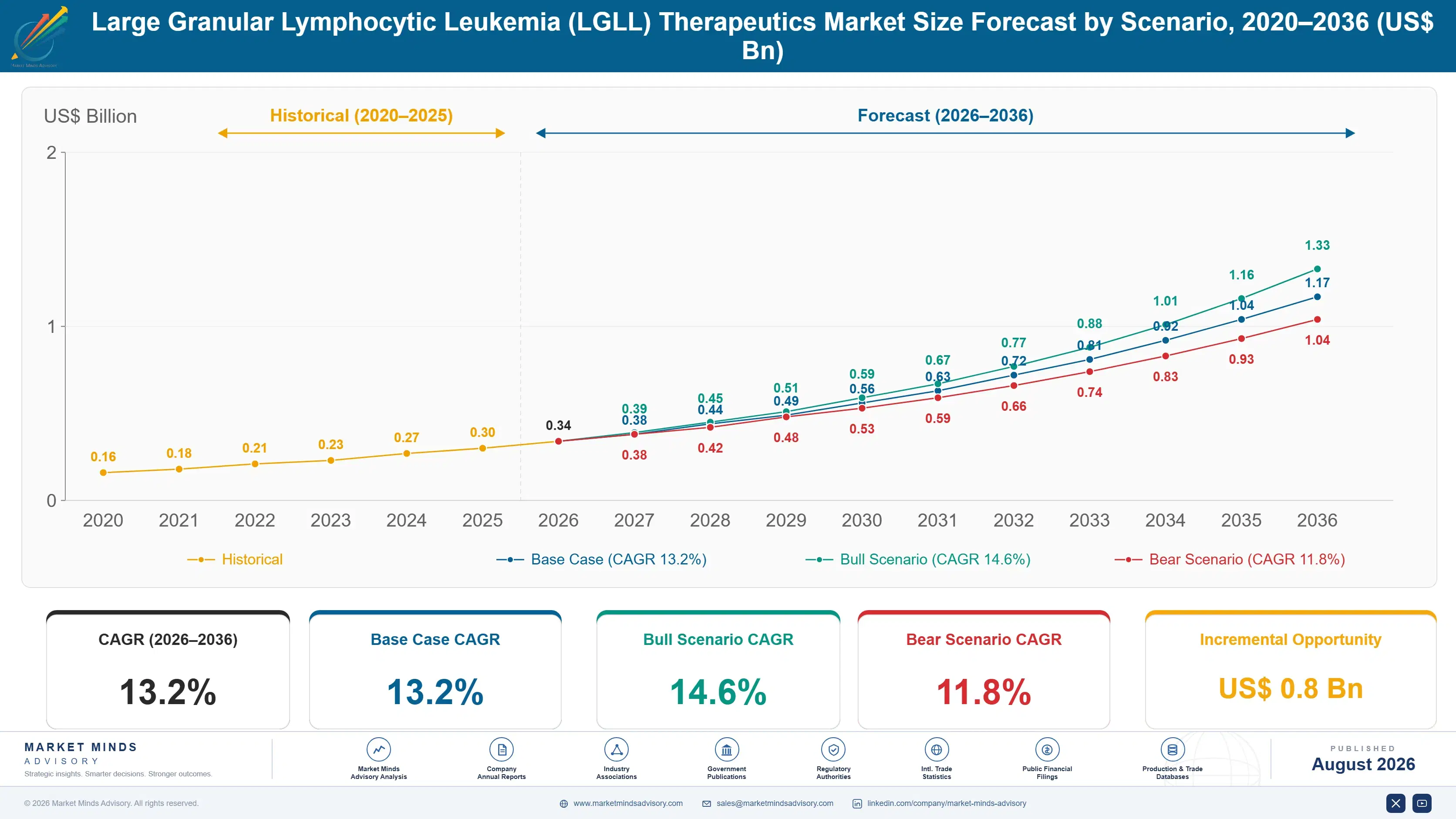
LGLL therapeutics demand grew slowly from 2020, constrained by limited disease awareness and a diagnosis pathway that still depends heavily on specialist flow cytometry testing at academic hematology centers. Clinical trial activity accelerated from 2023 onward as JAK and STAT pathway data matured. The market grew at a historical rate of roughly 11.8% annually across this period.
The base case rests on three mechanisms: expanding genetic and flow cytometry testing access improving diagnosis rates across community hematology practices that previously referred every suspected case to academic centers, maturing JAK and STAT pathway inhibitor trial data supporting the first dedicated on-label therapy submissions within the forecast window, and orphan drug pricing incentives sustaining developer investment in a patient population too small to attract mainstream oncology portfolio attention otherwise.
The bull case rests on faster than expected regulatory approval of a dedicated JAK or STAT pathway inhibitor following breakthrough therapy designation already granted to leading candidates in active development. The bear case centers on trial enrollment delays common to ultra rare indications, where the diagnosed patient pool available for randomized studies remains genuinely too small to recruit quickly.
The base case rests on three mechanisms: expanding genetic and flow cytometry testing access improving diagnosis rates across community hematology practices that previously referred every suspected case to academic centers, maturing JAK and STAT pathway inhibitor trial data supporting the first dedicated on-label therapy submissions within the forecast window, and orphan drug pricing incentives sustaining developer investment in a patient population too small to attract mainstream oncology portfolio attention otherwise.
The bull case rests on faster than expected regulatory approval of a dedicated JAK or STAT pathway inhibitor following breakthrough therapy designation already granted to leading candidates in active development. The bear case centers on trial enrollment delays common to ultra rare indications, where the diagnosed patient pool available for randomized studies remains genuinely too small to recruit quickly.
A Rare Disease Awaiting Its First Dedicated Therapy
Large granular lymphocytic leukemia is a genuinely rare, typically indolent lymphoproliferative disorder, and its treatment landscape reflects that rarity directly: no therapy carries a dedicated on-label indication, so prescribing rests almost entirely on off-label immunosuppressants originally developed for rheumatoid arthritis or transplant rejection. That gap is narrowing as JAK and STAT pathway science, borrowed from adjacent hematologic malignancies, moves through clinical trials aimed spe
MARKET CONCENTRATION42% (CR5)Small treatment base spans generic and emerging targeted hematology drugs
AVERAGE TRIAL-STAGE PRICING$95,000-$220,000Reflects premium orphan drug pricing across pipeline candidate programs
TOP COUNTRY BY DIAGNOSESUSA, 31% shareLargest diagnosed population tied to hematology referral network density
MUTATION-TESTED DIAGNOSES44%Share of patients diagnosed through specialist flow cytometry testing
OFF-LABEL PRESCRIBING SHARE78%Share of prescriptions still relying on generic off-label agents
TRIAL COST SHARE38% of program spendReflects specialty pharmaceutical distribution and testing infrastructure cost burden
Demand concentrates wherever specialist hematology diagnostic capacity and genetic testing access are strongest across a given healthcare system. North America generates the largest diagnosed patient pool given its concentrated academic hematology referral network and broad flow cytometry testing access, while Western Europe sustains a comparably sophisticated but smaller diagnosed population across its national health systems and specialty referral centers nationwide.
Over the next decade, orphan drug designation and trial enrollment access will matter more than manufacturing scale, since the entire addressable patient population remains small enough that a single successful pivotal trial could establish the first dedicated standard of care. Developers able to secure trial sites at high volume referral centers are positioned to define treatment guidelines for years to come.
"There are more companies chasing this indication right now than there are patients enrolled in any single trial. Whoever locks down the referral centers effectively locks down the disease."
Market Trends
Growing clinical evidence linking STAT3 and STAT5B mutation status to both diagnosis confirmation and treatment response is pushing hematology centers to adopt targeted genetic sequencing panels alongside traditional flow cytometry, converting what was once a purely morphological diagnosis into a molecularly stratified one that increasingly determines which trial or off-label regimen a patient receives. Academic centers with in-house sequencing capability are capturing a growing share of referred cases, since community hematologists increasingly route suspected patients toward centers that can confirm mutation status first. This shift also expands the trial-eligible patient pool developers depend on.
Market Impact: Adds 3,200 new diagnoses annually
Breakthrough Therapy Designation Accelerates Pathway Inhibitor Trials
Regulatory agencies have granted breakthrough therapy designation to at least two JAK or STAT pathway inhibitor candidates in active LGLL trials, a status that compresses review timelines and grants developers more frequent regulatory guidance during pivotal trial design. This designation is prompting additional hematology-oncology developers to initiate their own LGLL-focused programs, borrowing molecular targets already validated in adjacent T-cell and NK-cell malignancies rather than starting target discovery from scratch. Developers with designated candidates are positioned to reach the first dedicated on-label approval well ahead of competitors still in earlier discovery stage work.
Market Impact: Supports pricing above $180,000 annually
Market Opportunities and Growth Drivers
Expanding Genetic Testing Access Improves Diagnosis Rates
Broader availability of flow cytometry and T-cell receptor gene rearrangement testing at community hematology practices is improving diagnosis rates for a disease historically underdiagnosed due to its indolent, often asymptomatic early course and its overlap with other cytopenias in routine bloodwork. Each newly diagnosed patient enters a treatment relationship that typically spans years given the disease's chronic, relapsing nature, sustaining recurring drug spend across the full treatment lifecycle rather than a single course. Developers and diagnostic companies with established community hematology relationships are capturing disproportionate share of this expanding diagnosed population.
Market Impact: Extends enrollment timelines by 18 months
Orphan Drug Pricing Sustains Developer Investment
Orphan drug designation and its associated market exclusivity and pricing flexibility are sustaining developer investment in a patient population too small to interest mainstream oncology portfolios without these incentives. Each dedicated LGLL approval would command premium orphan pricing similar to other rare hematologic malignancy therapies, a commercial structure that makes even a genuinely small addressable population financially viable for specialty developers willing to run smaller, faster pivotal trials with fewer enrolled patients. Developers securing orphan designation early are positioned to capture the full commercial value of the first approved indication.
Market Impact: Caps first-line switching at 22%
Market Restraints and Challenges
Ultra Rare Population Limits Trial Enrollment Speed
The genuinely small diagnosed patient population, estimated at well under one per 100,000 people, makes recruiting statistically meaningful randomized trial cohorts a persistent challenge for every developer pursuing a dedicated LGLL indication. The root cause is that most diagnosed patients are dispersed across community hematology practices rather than concentrated at the handful of academic centers running active trials, and many eligible patients are never referred at all given the disease's typically indolent course. This delays pivotal trial completion and increases per-patient development cost substantially. Developers are responding by pooling enrollment across multiple international trial sites.
Market Impact: Lifts mutation-tested diagnoses to 44%
Generic Off-Label Drugs Anchor Low Price Expectations
Methotrexate and cyclophosphamide, both long available as inexpensive generics, remain the default first-line therapy for most diagnosed patients, anchoring physician and payer price expectations well below what a dedicated targeted therapy would need to charge to justify its development cost. The root cause is that these generic immunosuppressants achieve adequate symptom control in a meaningful share of patients despite lacking a formal LGLL indication, reducing urgency around switching to unapproved or trial-stage targeted alternatives. This limits pricing power for developers bringing forward the first dedicated therapy. Developers are responding by targeting patients who fail generic therapy first.
Market Impact: Cuts review timeline by 4 months
3 additional market trends, 4 additional growth drivers, and 2 additional restraints and challenges are covered in the full report. Contact sales@marketmindsadvisory.com to access the complete intelligence.
Segment CAGR and Growth Architecture
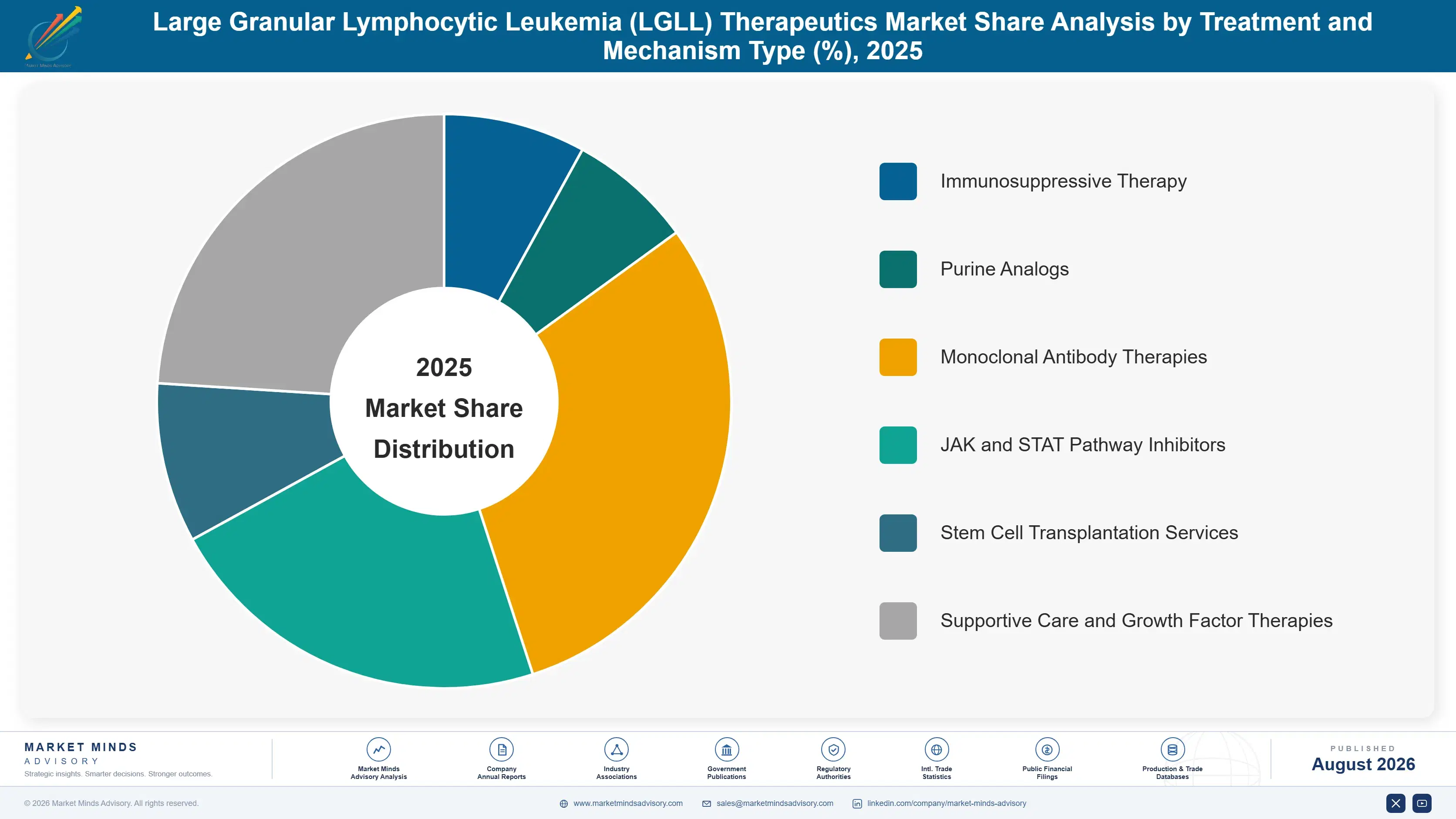
MMA segments the LGLL therapeutics market by treatment and mechanism type, the classification that most directly determines regulatory pathway, pricing tier, and prescribing physician type across immunosuppressive, purine analog, monoclonal antibody, JAK and STAT pathway inhibitor, transplantation, and supportive care categories, rather than an end-use or line of therapy based split across the industry overall.

JAK and STAT Pathway Inhibitors
JAK and STAT pathway inhibitors are growing fastest, at roughly 19.4% annually, as trial data increasingly links STAT3 and STAT5B mutation status to treatment response, giving this mechanism class a genuine biological rationale that older immunosuppressants never had. Adoption concentrates among academic hematology centers running active trials and, increasingly, community practices referring mutation-positive patients toward these programs. Pricing, where established through analogous approvals in adjacent hematologic malignancies, runs many multiples above generic immunosuppressant costs, reflecting both development investment and orphan drug market exclusivity. Developers with validated STAT pathway candidates are positioned to define the first dedicated standard of care as this category moves from trial stage toward eventual commercial launch nationwide.
CAGR 19.4%
Monoclonal Antibody Therapies
Monoclonal antibody therapies are growing at roughly 15.8% annually, driven by developers repurposing antibodies already validated in adjacent T-cell and NK-cell malignancies toward LGLL-specific trial programs targeting surface markers expressed on the malignant clone. Demand concentrates among patients who have already failed first-line immunosuppressive therapy and require a second-line option beyond generic alternatives, a population academic hematology centers increasingly route toward active trial enrollment programs nationwide and beyond. This segment commands meaningful pricing premiums over generic immunosuppressants, sustained by the biological specificity antibody therapies offer relative to broad, non-targeted immune suppression, and developers with repurposed antibody candidates face a considerably shorter development timeline than entirely novel mechanisms would otherwise require.
CAGR 15.8%
Full segment breakdown across 6 segments available in the complete report.
Regional Architecture and Country Demand Map
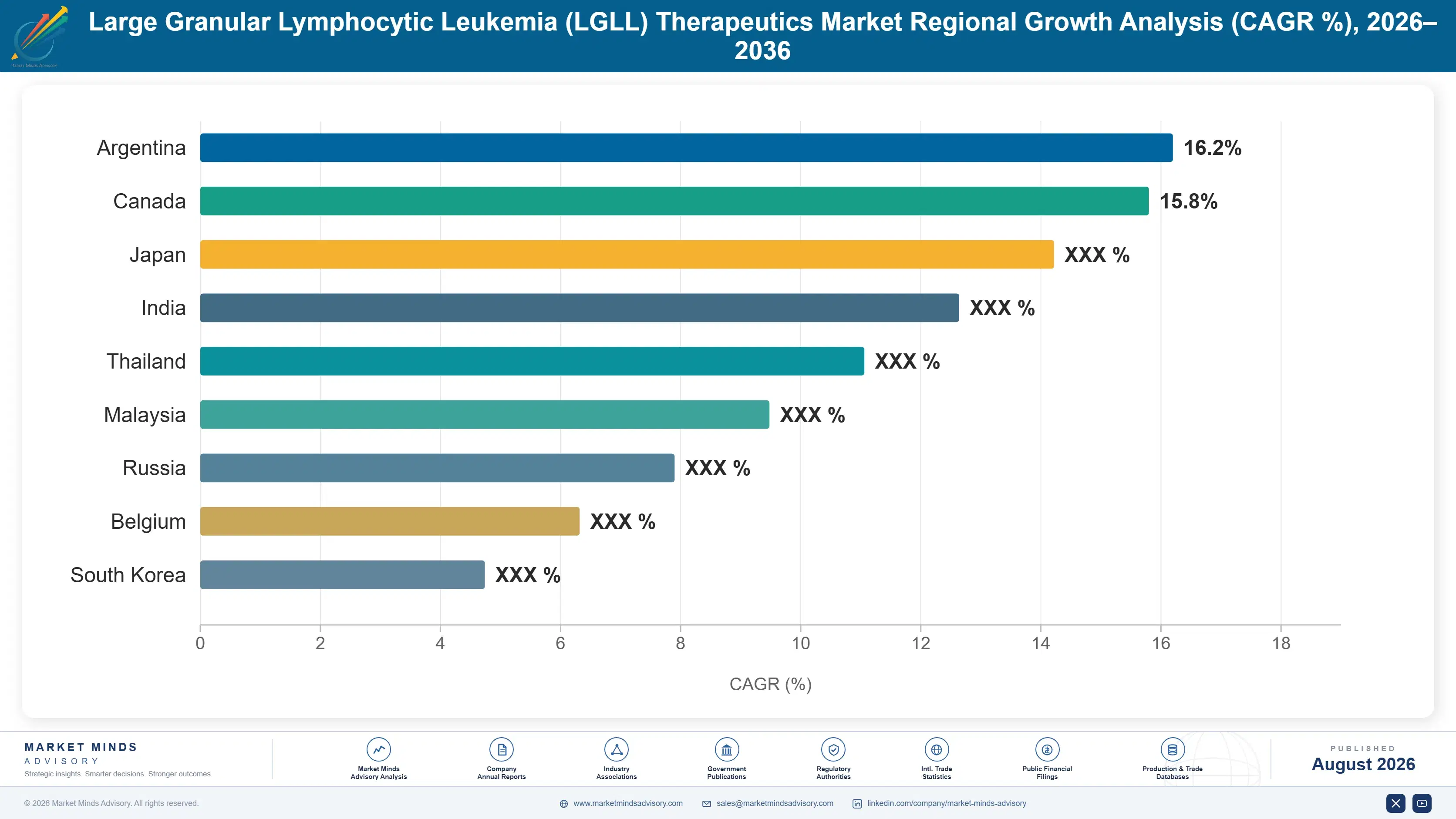
North America holds the largest regional share given its concentrated hematology referral network and orphan drug incentives, while South Asia and Pacific grows fastest as genetic testing access expands rapidly. Western Europe sustains a comparably sophisticated but smaller diagnosed population across its national health systems nationwide.
North America
North America's demand is anchored by the United States, where concentrated academic hematology referral centers, broad flow cytometry and genetic testing access, and orphan drug pricing incentives sustain the largest diagnosed patient population and clinical trial activity globally across dozens of active research programs nationwide and well beyond. Breakthrough therapy designation granted to leading JAK and STAT pathway candidates has concentrated trial activity disproportionately at United States academic centers relative to other regions currently running comparable programs. Canada's smaller, publicly funded hematology system contributes steady secondary demand concentrated in similar diagnostic and generic treatment categories. Mexico's more limited specialist referral infrastructure keeps diagnosed volume considerably lower than its overall population would otherwise suggest.
Share: 32% | CAGR: 14.2% (2026 to 2036)
Western Europe
Western Europe's demand centers on Germany, France, and the UK, where national health systems fund flow cytometry testing and generic immunosuppressant therapy broadly, sustaining a comparably sophisticated but smaller diagnosed population than North America across the region's academic hematology centers and specialty referral networks nationwide and well beyond. The region grows the slowest of the seven given its diagnosed population growth has largely plateaued relative to faster expanding testing access across South Asia and East Asia currently under active development. German academic centers maintain deep participation in international multi-site trial programs across the entire continent and beyond. Nordic countries contribute smaller but technically sophisticated demand concentrated in early trial enrollment access nationwide.
Share: 23% | CAGR: 11.8% (2026 to 2036)
Regional intelligence for 5 additional markets available in the complete report: East Asia, South Asia and Pacific, Latin America, Middle East and Africa, Eastern Europe. Contact sales@marketmindsadvisory.com.

Capturing Value Ahead of the First Approval
Generic immunosuppressant pricing anchors physician and payer expectations well below what a dedicated therapy needs to justify development cost. Developers that secure orphan designation, build trial site relationships at high volume referral centers, and pursue combination regimens capture considerably better commercial positioning than those competing purely on molecule novelty alone across every major hematology market.
Securing Orphan Drug Designation Early in Development
Developers securing orphan drug designation early capture disproportionate access to market exclusivity and pricing flexibility worth an estimated 3 to 5 times standard oncology drug pricing, where regulatory incentives directly determine whether a small addressable population can support the full cost of pivotal trial development and eventual commercial launch. This designation process typically requires eighteen to twenty-four months of regulatory engagement and epidemiological documentation, but developers that complete it successfully secure market exclusivity that protects commercial return across a multi year period well beyond initial approval and subsequent label expansion.
Market Impact: Commands pricing 3 to 5 times standard oncology drugs
Building Trial Site Relationships at Referral Centers
Developers building dedicated trial site relationships at high volume academic hematology referral centers capture disproportionate share of the limited eligible patient pool, addressing an enrollment bottleneck that has historically extended trial timelines by roughly 30 percent for programs relying on a single site, given the disease's rarity and dispersed diagnosis pattern across community practices nationwide and well beyond today. This referral center relationship, difficult for developers without established academic partnerships to replicate quickly, creates a durable enrollment advantage that extends well beyond a single trial into future pivotal and post-marketing study relationships with the same centers.
Market Impact: Cuts enrollment timelines by an estimated 30 percent
Pursuing Combination Regimens With Generic Backbones
Developers pursuing combination regimens that pair targeted pathway inhibitors with existing generic immunosuppressant backbones are capturing disproportionate share of a demand pool worth an estimated 95 million dollars, positioning their candidate as an add-on to established therapy rather than requiring physicians to abandon a familiar first-line regimen entirely and immediately. This combination strategy requires meaningful trial design investment but positions developers to capture faster physician adoption than a monotherapy switch would achieve, since it meaningfully lowers the clinical risk perceived by treating hematologists managing a chronic, relapsing disease long term.
Market Impact: Captures a growing $95M combination therapy demand segment
Expanding Genetic Testing Partnerships With Diagnostic Labs
Developers partnering with genetic and flow cytometry diagnostic laboratories are capturing a disproportionate share of a demand pool worth an estimated 60 million dollars tied to expanding mutation testing access across community hematology practices nationwide today, a segment offering considerably earlier trial-eligible patient identification than waiting for academic center referral alone typically provides. This diagnostic partnership relationship requires meaningful investment in physician education and testing subsidy programs but positions developers to capture recurring, testing-anchored referral relationships across a multi year commercial relationship considerably more durable than one-time trial enrollment alone.
Market Impact: Captures a growing $60M diagnostic partnership demand pool
Who Controls the Margin Pool
The LGLL therapeutics market is moderately concentrated, with a CR5 of roughly 42%. Incyte Corporation and Sobi lead a group of hematology specialists with a meaningful gap over the next tier of generic immunosuppressant suppliers and earlier stage biotech developers competing across trial and off-label prescribing channels simultaneously in the current market environment.
Competitive activity concentrates on three fronts: JAK and STAT pathway trial investment tied to maturing mutation testing data, orphan drug designation pursuit that determines which developers can realistically fund pivotal trials, and academic referral center partnerships tied to the limited eligible patient pool available for enrollment. Established hematology developers defend positions through decades of accumulated trial infrastructure and regulatory relationships that smaller biotech competitors cannot easily replicate quickly.
Emerging pressure comes from smaller biotech developers repurposing antibodies and pathway inhibitors already validated in adjacent T-cell malignancies, a path that established players are racing to match through licensing deals rather than internal discovery programs. Rankings could shift meaningfully if a smaller developer successfully secures the first dedicated LGLL approval, demonstrating credible regulatory execution that has historically been the primary advantage of established diversified hematology-oncology companies with broad trial infrastructure.

Competitive Moat and Risk Dimensions
Moat: Concentrated JAK Inhibitor Trial Infrastructure
Incyte's established JAK inhibitor development infrastructure and its regulatory relationships built through prior hematologic malignancy approvals give it a faster pathway toward LGLL-specific trial execution than biotech developers starting target validation from scratch, allowing it to move candidates through pivotal trial design with fewer novel regulatory questions to resolve.
Risk: Exposure to Trial Enrollment Delays
Incyte's LGLL pipeline progress remains genuinely exposed to the enrollment bottleneck every developer faces in this ultra rare indication, since even a well resourced trial infrastructure cannot manufacture eligible patients faster than the diagnosed population allows, a constraint no amount of capital investment can fully resolve on its own.
Moat: Deep Rare Hematology Disease Expertise
Sobi's dedicated rare disease commercial infrastructure and its established relationships with hematology referral centers across Europe and North America give it credibility with physicians and payers evaluating a genuinely small patient population that mainstream oncology developers often deprioritize relative to larger indication opportunities elsewhere in their broader portfolios.
Risk: Limited Internal Discovery Pipeline Depth
Sobi's rare hematology commercial strength has not been matched by comparable internal discovery investment specific to LGLL, leaving it more dependent on licensing external candidates than competitors building pathway inhibitors from their own research programs, a gap that could limit its share of the first dedicated approval.
Players Tracked
Prominent Players
Incyte Corporation
Swedish Orphan Biovitrum AB (Sobi)
Novartis AG
Bristol Myers Squibb Company
AbbVie Inc.
Other Key Players
Kymera Therapeutics Inc
Syros Pharmaceuticals Inc
Actinium Pharmaceuticals Inc
Genentech Inc
Sanofi S.A.
Pfizer Inc
Merck & Co Inc
Takeda Pharmaceutical Company Limited
Jazz Pharmaceuticals plc
CTI BioPharma Corp
MEI Pharma Inc
Recordati Rare Diseases
PharmaEssentia Corporation
Kura Oncology Inc
Rigel Pharmaceuticals Inc
Recent Developments
Incyte Initiates Pivotal STAT3 Pathway Inhibitor Trial
Incyte initiated a pivotal trial for its STAT3 pathway inhibitor candidate in mutation-positive LGLL patients, aimed at generating the efficacy data needed to support the first dedicated regulatory submission in this indication across multiple academic hematology referral sites in North America, Western Europe, and parts of East Asia.
Signal: Signals leading JAK inhibitor developers are advancing steadily toward the first dedicated LGLL regulatory submission today.
Sobi Expands Rare Hematology Referral Center Network
Sobi announced an expansion of its rare hematology referral center partnership network across additional academic medical centers in North America and Europe, aimed at improving trial-eligible patient identification and accelerating enrollment for its pipeline candidates targeting genuinely underserved rare hematologic malignancy indications including LGLL specifically.
Signal: Signals rare disease specialists are now increasingly prioritizing referral network depth over broader indication breadth strategically.
Kymera Therapeutics Licenses LGLL-Targeted Protein Degrader
Kymera Therapeutics licensed a novel protein degrader candidate with preclinical activity against the malignant clone implicated in LGLL, aimed at biotech investors and potential pharmaceutical partners seeking exposure to genuinely differentiated mechanisms beyond the JAK and STAT pathway inhibitors currently dominating most active clinical trial pipelines today.
Signal: Signals smaller biotech developers are increasingly pursuing differentiated mechanisms to better compete against established pathway leaders.
Trial Site and Biologic Manufacturing Cost Exposure
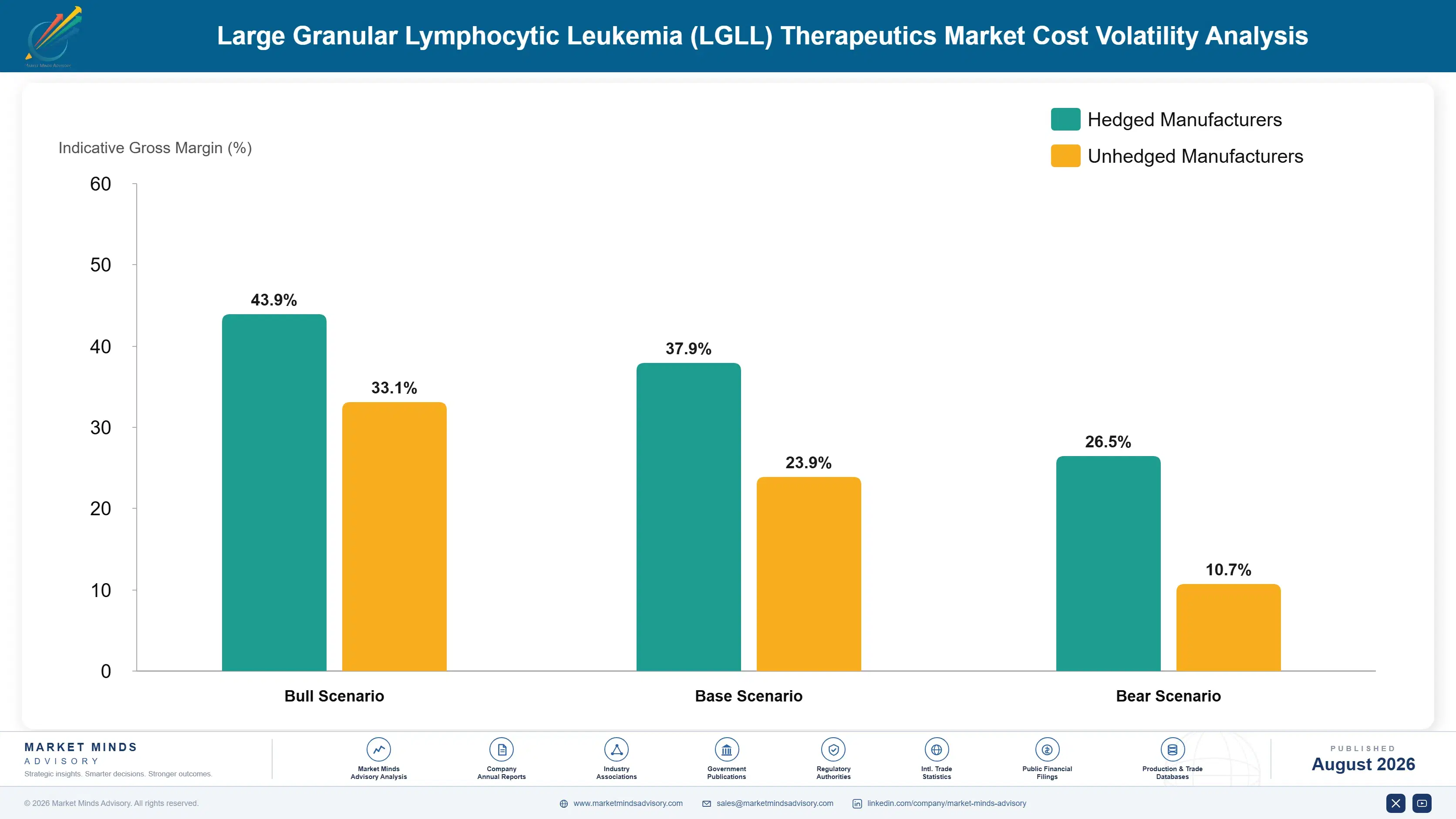
Clinical trial execution at academic hematology referral centers, including patient recruitment support, genetic testing, and specialist investigator fees, accounts for roughly 38 to 45% of operating cost for developers pursuing dedicated LGLL approval, reflecting the enrollment intensity ultra rare indication trials require. Biologic manufacturing for antibody and pathway inhibitor candidates contributes a further 20 to 25% of total development cost across active programs.
Contract research organization pricing for rare disease trials rose meaningfully during 2022 and 2023 amid broader biotech funding tightening and rising specialist investigator demand across competing rare hematology programs, pushing per-patient trial costs up by more than 24% within roughly eighteen months, according to operating cost disclosures in Incyte's 2023 annual report. The disruption prompted several developers to consolidate trial sites and negotiate longer term contract research agreements.
Smaller biotech developers without established contract research relationships face greater cost exposure than larger diversified players like Incyte and Sobi, who negotiate multi program volume agreements directly with academic trial networks. Developers dependent on a single referral center relationship face additional exposure to enrollment capacity constraints, a limitation better capitalized companies with broader academic partnerships do not share to the same degree.

Consolidating Trial Sites at Established Centers
Developers are increasingly consolidating trial activity at a smaller number of established, high enrollment academic hematology centers rather than spreading recruitment across many lower volume sites, a meaningful undertaking given the limited pool of investigators experienced with this genuinely rare indication and its specific diagnostic and genetic testing requirements across the broader trial network nationwide.
Negotiating Multi-Program Contract Research Agreements
Several developers have negotiated multi-program contract research agreements spanning several rare hematology indications simultaneously, reducing per-trial overhead and building predictable trial execution capacity that remains genuinely scarce relative to growing industry wide demand for specialist investigator time across multiple concurrent programs, academic partnerships, and referral networks currently operating today and well into the years ahead.
Building Physician Education Programs to Speed Referral
Larger developers are increasingly funding community hematologist education programs about LGLL diagnosis and referral pathways, reducing dependence on already stretched academic center capacity and building a considerably broader base of trial-eligible patient identification across primary and secondary care settings nationwide and internationally over the coming several years and well into the more distant future.
Portfolio Architecture for Margin Defence
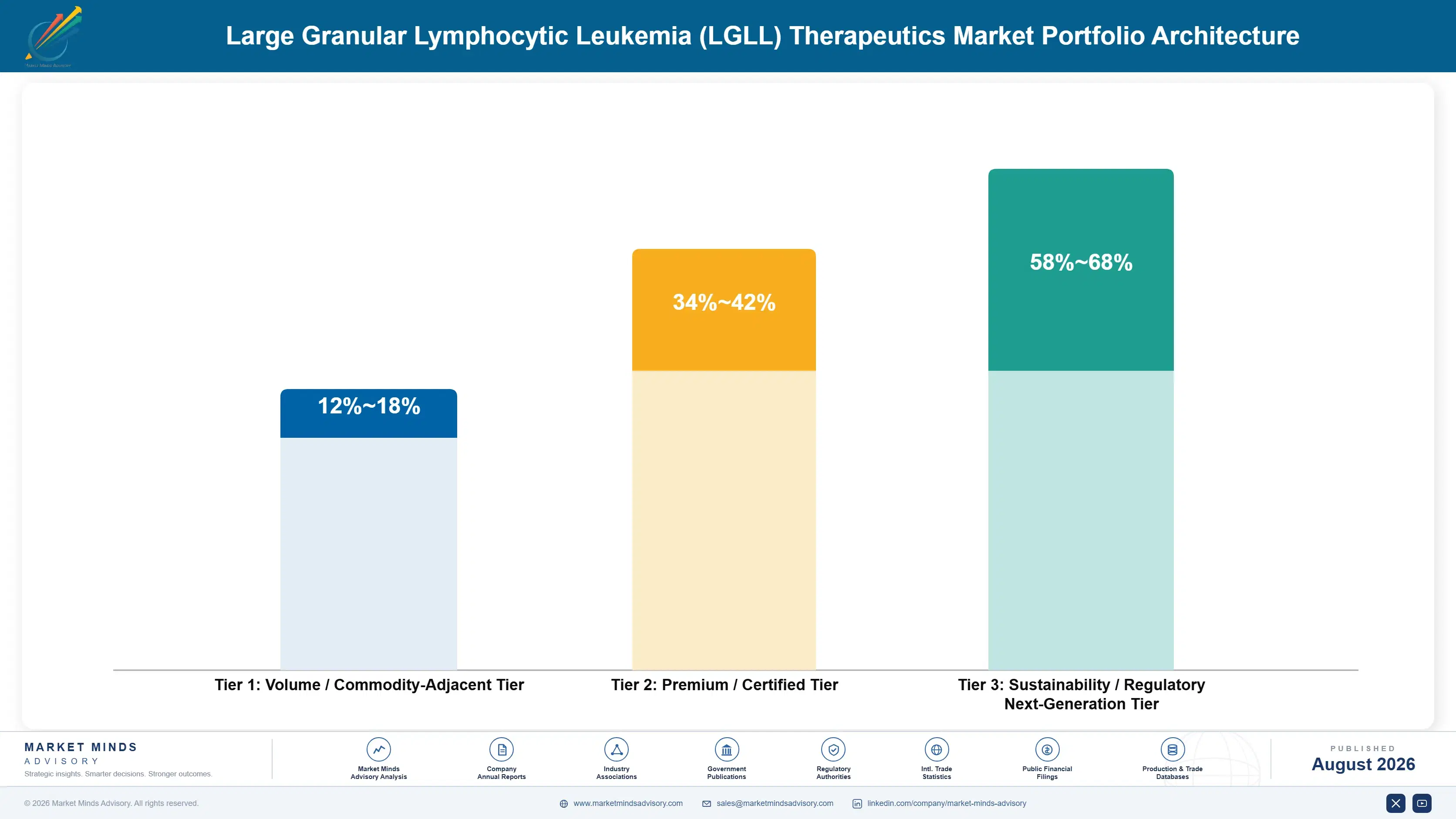
The market splits into three tiers running from generic off-label immunosuppressants to premium targeted therapies bundled with genetic testing and orphan drug pricing. Margin concentrates heavily at the top: targeted pathway inhibitors paired with orphan designation earn gross margins 35 to 48 percentage points above generic immunosuppressant products, reflecting both development investment and the pricing flexibility orphan status provides across the full commercial lifecycle.
Volume and premium tiers pull developers in different strategic directions simultaneously across the industry today. Generic manufacturers continue supplying the bulk of actual prescriptions at commodity pricing, while specialty developers concentrate almost entirely on the premium targeted tier, since the addressable population is too small to support a meaningful mid tier product without genuine biological differentiation from existing generic alternatives.
High value margin pools concentrate among developers combining pathway inhibitor candidates with genetic testing partnerships and orphan drug pricing strategy, since these programs capture the full commercial value of a dedicated approval across a multi year exclusivity period, far exceeding the value any single generic prescription relationship could ever provide and remaining the primary target of every serious developer's strategy and long term investment planning today.
Volume / Commodity-Adjacent Tier
Generic immunosuppressants including methotrexate and cyclophosphamide, prescribed off-label at low cost across most current first-line treatment settings nationwide, competing purely on established physician familiarity and minimal per-dose pricing structures overall.
Gross Margin: 12-18%
Premium / Certified Tier
Purine analogs and monoclonal antibodies used as second-line therapy after generic failure, capturing meaningfully better margin through demonstrated efficacy in refractory patients and growing trial-stage regulatory validation and physician confidence.
Gross Margin: 34-42%
Sustainability / Regulatory / Next-Generation Tier
JAK and STAT pathway inhibitors bundled with genetic testing and orphan drug pricing, commanding the highest margin as the first dedicated approvals move toward commercial launch and broader physician adoption.
Gross Margin: 58-68%

High-value Sub-segments and Strategic Watch-out
JAK and STAT Pathway Inhibitors Nearing Approval
Pathway inhibitor candidates approaching pivotal trial completion and potential first approval, growing fastest as mutation testing identifies more trial-eligible patients and breakthrough therapy designation compresses regulatory review timelines across multiple concurrent development programs and academic trial site partnerships worldwide today and in the near term ahead.
Gross Margin: 58-68%
Monoclonal Antibody Second-Line Therapy Programs
Repurposed antibody candidates targeting refractory patients who have failed generic first-line therapy, expanding steadily as developers borrow validated targets from adjacent T-cell and NK-cell malignancy programs rather than pursuing entirely novel discovery across multiple concurrent hematology-oncology development pipelines and academic research partnerships currently underway worldwide.
Gross Margin: 36-44%
Generic Immunosuppressant First-Line Prescribing
The largest prescription volume segment, serving newly diagnosed patients globally who need proven, low cost first-line therapy without the highest tier's full development and testing cost, forming the steady prescribing backbone of most treatment guidelines worldwide across both academic and community hematology practice settings today.
Gross Margin: 12-18%
Trial Enrollment Capacity Facing Persistent Constraints
Constrained academic hematology referral center capacity facing sustained trial demand growth from expanding pathway inhibitor development, a segment strategic watchers should track closely as enrollment scarcity intensifies development timelines faster than some developers' program plans currently anticipate or have adequately prepared for across their broader portfolios.
Gross Margin: 30-38%
From Off-Label Prescription to Managed Care
LGLL treatment is shifting from an off-label prescription relationship toward a managed, guideline-anchored care relationship as genetic testing, orphan drug pricing, and dedicated trial programs increasingly extend a developer's commercial relationship across a patient's full multi year chronic disease course rather than a single generic prescription, particularly among developers building diagnostic partnerships into their core commercial offering rather than pursuing molecule development alon
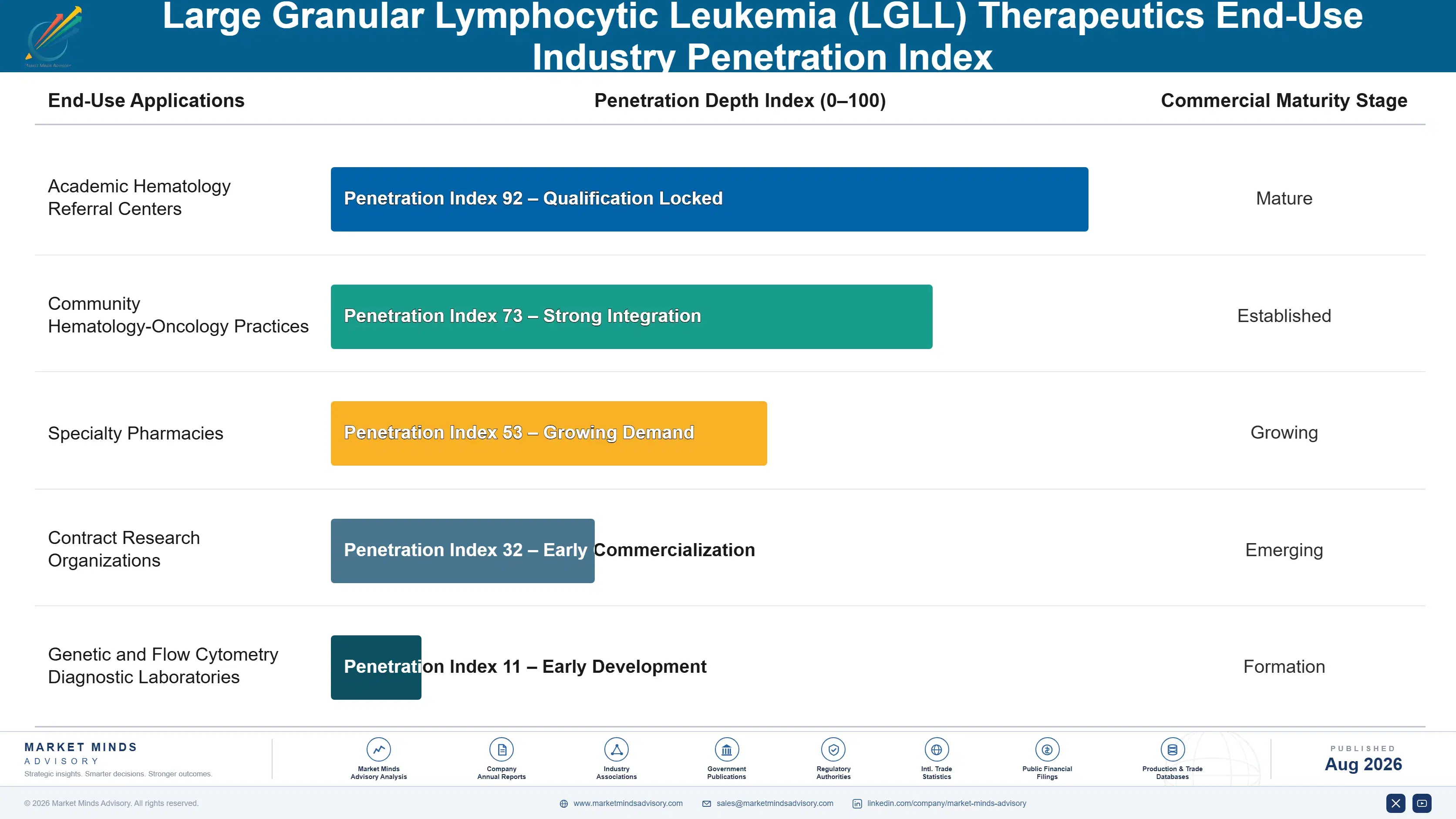
Adoption depth varies sharply by end-use vertical. Academic hematology referral centers navigating trial enrollment and genetic testing standardization engage most deeply with targeted therapy programs, given the direct clinical and enrollment consequences of treatment selection at their specialist scale. Community hematology practices adopt more transactionally, often continuing generic first-line prescribing rather than committing to the deeper referral relationships that characterize academic center accounts and their broader trial infrastructure.
A generational shift in buyer profile is underway as molecular pathologists and genetic counselors, increasingly focused on mutation status and trial eligibility criteria, join traditional hematologist decision making in treatment selection, a change reshaping which developer capabilities actually win physician adoption across practices of all sizes and specialist referral relationships nationwide and increasingly beyond.

Where LGLL Developers Should Focus Next
These are among the four positions where our research anticipates prominent divergence between winners and laggards over the coming forecast period. Each is grounded in the demand model, the regulatory perimeter, and the announced capacity pipeline.
Secure orphan designation before competing programs consolidate advantage
Orphan drug designation directly determines whether a developer can fund pivotal trial development in a population too small for standard oncology economics, converting this regulatory step from a formality into a genuinely central strategic decision that shapes which programs survive to commercial launch. Developers still pursuing standard regulatory pathways risk losing pricing flexibility to designated competitors already capturing investor and academic attention. Moving now, ahead of the first dedicated approval, allows developers to secure exclusivity before competition intensifies meaningfully further across this narrow field.
Build referral center partnerships ahead of enrollment bottlenecks
The genuinely limited eligible patient pool makes academic referral center relationships the single most valuable asset a developer can build, since no amount of capital investment can manufacture patients faster than the diagnosed population allows across a genuinely rare indication with a dispersed diagnosis pattern. Developers building dedicated site partnerships now are positioned to capture disproportionate enrollment share as competing programs compete for the same limited pool. Waiting until enrollment competition intensifies risks ceding priority access to developers already embedded in these academic relationships.
Fund genetic testing access ahead of community diagnosis expansion
Expanding genetic and flow cytometry testing access at community hematology practices is identifying a larger trial-eligible population than academic centers alone ever reached, creating substantial near term opportunity for developers willing to fund testing partnerships and physician education programs across underserved geographic markets. Developers building dedicated diagnostic relationships now are positioned to capture disproportionate share of newly identified patients as community testing access continues expanding. Waiting until testing becomes standard practice risks ceding this referral advantage to developers already investing in laboratory partnerships.
Pursue add-on positioning ahead of monotherapy switching resistance
Physicians managing a chronic, relapsing disease with an established generic first-line option show genuine reluctance to abandon familiar therapy entirely, creating substantial adoption friction for any monotherapy switch strategy a new developer might pursue across most community and academic prescribing settings. Developers positioning targeted candidates as an add-on to existing generic therapy are better positioned to capture faster physician adoption than those requiring a complete regimen switch. This combination approach requires additional trial design investment, but the alternative is slower adoption against genuinely entrenched prescribing habits.
Engagement Snapshot From the Field
A live engagement with an industry participant carrying material or product regulatory and market exposure ahead of a defining policy shift, showing how our research translates into a defensible multi-year portfolio strategy.
MARKET MINDS ADVISORY · CLIENT ENGAGEMENT SUMMARY
Large Granular Lymphocytic Leukemia (LGLL) Therapeutics Producer Strategic Portfolio Review and Transition Roadmap 2026·Investment Scenario on Large Granular Lymphocytic Leukemia (LGLL) Therapeutics Exposure Evaluation 2025-26
CLIENT PROFILE
The client is a mid-sized rare disease biotechnology company generating roughly 85 million dollars in annual revenue (client-reported, unverified by MMA) advancing a STAT pathway inhibitor candidate through early phase LGLL trials. The company had enrolled its first cohort at a single academic hematology center and was evaluating whether expanding to additional trial sites would accelerate pivotal trial timelines ahead of an anticipated breakthrough therapy designation application.
STRATEGIC CHALLENGE
Management needed to decide whether expanding trial sites to additional academic hematology centers justified the coordination cost and regulatory complexity, given genuine uncertainty about which centers could realistically deliver meaningful enrollment volume for a genuinely rare indication within the company's targeted pivotal trial timeline, funding runway, and broader investor expectations.
MMA APPROACH
MMA benchmarked patient referral volume and mutation testing capability across eight candidate academic hematology centers, modeled projected enrollment timelines under single site and multi site expansion scenarios, and assessed each center's prior rare disease trial experience against the company's regulatory submission timeline, available development budget, and clinical operations staffing capacity.
KEY FINDINGS
- Multi site expansion to four additional centers showed a projected 40 to 55% reduction in expected pivotal trial enrollment timeline overall across the program.
- Two candidate centers demonstrated meaningfully higher mutation testing volume than the company's original single trial site currently had in active operational use.
- Coordination cost across all five total sites remained manageable within the company existing clinical operations budget, staffing structure, and headcount planning process.
- Regulatory submission timeline modeling confirmed multi site data could support breakthrough therapy designation roughly six months earlier than originally planned and budgeted.
CLIENT PROFILE
The client is a mid-sized rare disease biotechnology company generating roughly 85 million dollars in annual revenue (client-reported, unverified by MMA) advancing a STAT pathway inhibitor candidate through early phase LGLL trials. The company had enrolled its first cohort at a single academic hematology center and was evaluating whether expanding to additional trial sites would accelerate pivotal trial timelines ahead of an anticipated breakthrough therapy designation application.
STRATEGIC CHALLENGE
Management needed to decide whether expanding trial sites to additional academic hematology centers justified the coordination cost and regulatory complexity, given genuine uncertainty about which centers could realistically deliver meaningful enrollment volume for a genuinely rare indication within the company's targeted pivotal trial timeline, funding runway, and broader investor expectations.
MMA APPROACH
MMA benchmarked patient referral volume and mutation testing capability across eight candidate academic hematology centers, modeled projected enrollment timelines under single site and multi site expansion scenarios, and assessed each center's prior rare disease trial experience against the company's regulatory submission timeline, available development budget, and clinical operations staffing capacity.
KEY FINDINGS
- Multi site expansion to four additional centers showed a projected 40 to 55% reduction in expected pivotal trial enrollment timeline overall across the program.
- Two candidate centers demonstrated meaningfully higher mutation testing volume than the company's original single trial site currently had in active operational use.
- Coordination cost across all five total sites remained manageable within the company existing clinical operations budget, staffing structure, and headcount planning process.
- Regulatory submission timeline modeling confirmed multi site data could support breakthrough therapy designation roughly six months earlier than originally planned and budgeted.
RECOMMENDED STRATEGY
Phase 1: Phase 1 (Months 1 to 3): Select four additional trial sites and finalize multi site coordination agreements, protocols, and staffing. Phase 2: Phase 2 (Months 4 to 10): Activate all five sites and accelerate enrollment across the newly expanded academic referral network. Phase 3: Phase 3 (Months 11 to 16): Submit breakthrough therapy designation application using accumulated multi site enrollment and efficacy data package.
OUTCOME
The company completed pivotal trial enrollment across five sites within fourteen months, ahead of the original twenty month single site projection (client-reported, unverified by MMA). The company submitted its breakthrough therapy designation application on the accelerated timeline and received a favorable regulatory response shortly thereafter.
Frequently Asked Questions
Foundational context covering the market sizes, CAGR, scope, country, region and competition that inform every finding below. This section is provided to cover basics and most often pre-purchase conversations, answered from the MMA Primary Research Dataset.
What is the current size of the Large Granular Lymphocytic Leukemia (LGLL) Therapeutics Market?
The global LGLL therapeutics market was valued at approximately $300 million in 2025. Growth is being driven by maturing JAK and STAT pathway inhibitor trials.
How large will the Large Granular Lymphocytic Leukemia (LGLL) Therapeutics Market be by 2036?
The market is projected to reach approximately $1.17 billion by 2036, up from $340 million in 2026. This represents nearly three and a half times growth over the ten-year forecast window.
What is the CAGR for the Large Granular Lymphocytic Leukemia (LGLL) Therapeutics Market 2026 to 2036?
The market is forecast to grow at a CAGR of 13.2% between 2026 and 2036. Bull and bear scenarios range from roughly 11.8% to 14.6%.
Which segment is growing fastest?
JAK and STAT pathway inhibitors are the fastest-growing segment, expanding at approximately 19.4% annually as mutation testing matures. This is roughly 1.47 times the overall market growth rate.
Who are the major companies in the Large Granular Lymphocytic Leukemia (LGLL) Therapeutics Market?
Leading companies in this space include Incyte, Sobi, Novartis, Bristol Myers Squibb, and AbbVie. Together these five hold roughly 42% of active clinical program share.
Which country is growing fastest?
The United States is currently the fastest-growing single country, reflecting its concentrated hematology referral network and orphan drug incentives. Expanding trial infrastructure is accelerating this growth further.
Report Segmentation Architecture
The full report scope spans multiple orthogonal segmentation dimensions, with cross-tabulated demand data provided for each dimension pair. Coverage extends further to regional breakdowns, trend trajectories, and the competitive detail needed to support segment-level decision-making.
By Treatment and Mechanism Type
- Immunosuppressive Therapy
- Purine Analogs
- Monoclonal Antibody Therapies
- JAK and STAT Pathway Inhibitors
- Stem Cell Transplantation Services
- Supportive Care and Growth Factor Therapies
By End-Use Industry
- Academic Hematology Referral Centers
- Community Hematology-Oncology Practices
- Specialty Pharmacies
- Contract Research Organizations
- Genetic and Flow Cytometry Diagnostic Laboratories
By Commercial Dimension
- Off-Label Generic Prescribing
- Clinical Trial Enrollment Access
- Orphan Drug Reimbursement Pathways
- Specialty Pharmacy Distribution
By Region
- North America
- Western Europe
- East Asia
- South Asia and Pacific
- Latin America
- Middle East and Africa
- Eastern Europe
Scope, Methodology, and Coverage
Every figure in this report is reproducible from documented input assumptions. The scope below maps the historical period, the forecast horizon, the segmentation dimensions, and the countries covered, alongside the underlying primary and qualitative methodology.
Historical Period
2020 to 2025
Forecast Period
2026 to 2036
Base Year
2025 (USD billions; MMA Primary Research Dataset, August 2026)
Market Definition
LGLL therapeutics covers pharmacological treatments, including immunosuppressive agents, purine analogs, monoclonal antibodies, and JAK and STAT pathway inhibitors, along with stem cell transplantation and supportive care used to manage large granular lymphocytic leukemia, a rare, typically indolent lymphoproliferative disorder of cytotoxic T-cell or NK-cell origin. It excludes general leukemia and lymphoma treatments not commonly used, on or off-label, in this specific indication, and excludes diagnostic testing services.
Quantitative Units
USD millions and billions (current prices); diagnosed patient population where disclosed
Segmentation Dimensions
By Treatment and Mechanism Type; By End-Use Industry; By Commercial Dimension; By Region
Regions Covered
North America, Western Europe, East Asia, South Asia and Pacific, Latin America, Middle East and Africa, Eastern Europe
Countries Covered
USA, Canada, Mexico, Germany, France, UK, Sweden, Japan, China, South Korea, India, Australia, Brazil, Argentina, Colombia, Saudi Arabia, UAE, Israel, South Africa, Nigeria, Turkey, Poland, Czechia, Hungary, Romania, Russia, Netherlands, Italy, Spain, Switzerland, and additional markets relevant to this sector
Key Companies Profiled
Incyte Corporation, Swedish Orphan Biovitrum AB (Sobi), Novartis AG, Bristol Myers Squibb Company, AbbVie Inc., Kymera Therapeutics Inc, Syros Pharmaceuticals Inc, Actinium Pharmaceuticals Inc, Genentech Inc, Sanofi S.A., Pfizer Inc, Merck & Co Inc, Takeda Pharmaceutical Company Limited, Jazz Pharmaceuticals plc, CTI BioPharma Corp, MEI Pharma Inc, Recordati Rare Diseases, PharmaEssentia Corporation, Kura Oncology Inc, Rigel Pharmaceuticals Inc
Quantitative Methodology
Primary survey, n=3,800 respondents, Q4 2025, six countries; demand-side model with trade association cross-validation
Qualitative Methodology
47 expert interviews, Q4 2025; applied to validate demand model assumptions, identify emerging dynamics, and assess competitive positioning
Report Format
PDF and XLSX data workbook (Word format preview document)
Publisher
Market Minds Advisory
Report Code
MMA-2026-HLT-339
Published
August 2026
Contact
sales@marketmindsadvisory.com | www.marketmindsadvisory.com
Purchase the full Large Granular Lymphocytic Leukemia (LGLL) Therapeutics Market Report (2026 to 2036).
The full report provides a comprehensive assessment of the global LGLL therapeutics market, including detailed segmentation by treatment and mechanism type, end-use industry, and commercial dimension across all seven world regions. It profiles twenty leading and emerging developers, benchmarking trial pipeline depth, orphan designation status, and academic referral center partnerships. The analysis includes ten-year forecasts through 2036 under base, bull, and bear scenarios, alongside primary research findings drawn from MMA's survey of 3,800 respondents and 47 expert interviews conducted in the fourth quarter of 2025. A dedicated input cost section examines trial site and biologic manufacturing exposure across major development programs.
Detailed segment-level ten-year forecasts through 2036
Profiles of twenty leading and emerging developers
Regional analysis spanning all seven world regions
Trial cost and enrollment risk assessment
Competitive benchmarking on moats and vulnerabilities
Primary survey and expert interview data appendix
Built For The People Who Decide
From boardroom strategy to bench-side execution, this report is read cover-to-cover by leaders shaping the next decade of their industry, turning demand scenarios, market dynamics and valuation benchmarks into decisions.
CXOs/ Presidents/ VPs/ Managers
M&A and Corporate Development
Strategy Teams and R&D Heads
Procurement and Product Directors
Regulatory and Compliance Leaders
Investor Relations and Equity Analysts