Market Minds Advisory
Langerhans Cell Histiocytosis Management Market

Langerhans Cell Histiocytosis Management Market: One Mutation Rewrote The Economics

For decades this disease was treated with cheap cytotoxics discovered in the 1960s. Identifying one driver mutation moved roughly half of patients onto oncology pricing, and the case count never changed at all.

Lead Analyst

Alice Ballenger

Published

September 2026

Make Smarter Decisions with Customized Research Insights

Request a free sample report and evaluate market opportunities, growth trends, and competitive dynamics relevant to your business needs.

2025 MARKET VALUE$0.4BMarket Size 2025
2036 FORECAST VALUE$1.2BBase Case , 2026 to 2036
CAGR 2026 TO 203611.4 %Bull 12.7% / Bear 10.2%
INCREMENTAL OPPORTUNITY$0.8BNet 10- year value creation
EXPANSION MULTIPLE2.94x2036 value over 2026 base
Strategic Levers
M&A Pipeline
Regional Outlook
Country Rankings
Competitive Intelligence
Segmental Deep-dive
Call-Us : 91 93563 13602

Executive Snapshot and Market Trajectory

Nothing about the disease changed. Identifying BRAF V600E in Langerhans cell histiocytosis moved roughly half of patients from vinblastine costing a few hundred dollars a course onto targeted agents priced above USD 160,000 a year, and market value now grows at four times the case rate.
The market reaches USD 0.38 billion in 2025 and compounds at 11.4% to USD 1.25 billion by 2036, an expansion multiple of 2.94 times. BRAF and MEK inhibitor therapy grows fastest at 17.1%, exactly 1.50 times the market rate. North America holds 34% of value, above the band this framework applies, and the reason is drug pricing rather than any difference in how many children fall ill.
Concentration is high at 52% across the top five, splitting two branded targeted therapy owners against a long field of generic injectable suppliers competing on tender. The commercial problem that nobody in this field has yet solved is that targeted therapy controls this disease without ever curing it. Around 70% of responders relapse when treatment stops, which quietly turns what used to be a defined course of therapy into an indefinite prescription.
Market Definition
The Langerhans cell histiocytosis management market covers pharmacological treatment of Langerhans cell histiocytosis across paediatric and adult patients, spanning BRAF and MEK inhibitor targeted therapy, nucleoside analogue salvage chemotherapy, vinca alkaloid and corticosteroid first-line regimens, emerging immunotherapies, and bone-directed agents. Molecular and histological diagnostic testing, imaging, haematopoietic stem cell transplantation procedures, surgical intervention, radiotherapy, and management of other histiocytic disorders including Erdheim-Chester disease are excluded.
Base Year Value
$0.4B in 2025 (MMA Primary Research Dataset, August 2026)
Forecast Period
2026 to 2036, eleven discrete annual values
CAGR
11.4% base case. Bull 12.7%. Bear 10.2%.
Fastest Growth Segment
BRAF And MEK Inhibitor Targeted Therapy: 17.1% CAGR
Fastest Growth Country
India: 15.2% CAGR
Fastest Growth Region
South Asia and Pacific: 13.9% CAGR
Largest Region
North America: 34% of 2025 global value
Market Leaders
Novartis, Roche, Pfizer, Teva Pharmaceutical Industries, Fresenius Kabi. Source: MMA Primary Research Dataset, July 2026.
Primary Survey
n=3,800 procurement and R&D decision-makers, Q4 2025, six countries
Methodology
Demand-side build-up, cross-validated against public data, 47 expert interviews

Langerhans Cell Histiocytosis Management Market Forecast Scenarios

langerhans-cell-histiocytosis-management-market-size-forecast-scenario-1787298204627
Growth between 2020 and 2025 came almost entirely from price rather than from volume, which is unusual even in rare disease. Case incidence held steady while targeted therapy use widened, first through named-patient access and then under tumour-agnostic BRAF approvals. Paediatric prescribing lagged adult use by several years on safety caution. A 10.1% historical CAGR describes a substitution effect, not an epidemiological one.
Three mechanisms carry the 11.4% base case. Targeted therapy penetration is the largest, since roughly 55% of patients carry an actionable mutation and only a fraction of those currently receive an inhibitor. Indefinite duration is the second, because around 70% of responders relapse on withdrawal and clinicians increasingly treat continuously rather than in courses. And molecular testing access is the third, since a patient never tested is a patient never treated.
The 12.7% bull case rests on a dedicated paediatric label replacing off-label and tumour-agnostic prescribing, which would remove the funding friction that currently caps access in most public systems. The 10.2% bear case is generic entry into the BRAF inhibitor class as early patents expire, which would cut realised pricing sharply even as treated patient numbers continue rising.

A Rare Disease Repriced By Genomics

Langerhans cell histiocytosis spent forty years being treated as a poorly understood proliferative disorder with vinblastine and prednisone, a regimen costing very little and curing many children. The discovery that most cases carry BRAF V600E reclassified it as a clonal neoplasm and opened it to the same targeted agents used in melanoma. Nothing about incidence changed. What changed was the price of treating each patient.
TOP FIVE CONCENTRATION52%Two targeted therapy owners against a generic injectable field
BRAF MUTATION PREVALENCE55%Share of patients carrying the actionable driver mutation
TARGETED THERAPY COSTUSD 168,000Annual cost of continuous targeted treatment per patient
RELAPSE ON WITHDRAWAL70%Portion of responders relapsing after stopping targeted treatment
PAEDIATRIC ANNUAL INCIDENCE5 per millionNew cases arising yearly among children under fifteen
DIAGNOSTIC DELAY6 monthsMedian time from first symptom to confirmed histological diagnosis
The clinical difficulty is that inhibitors suppress the disease rather than eradicating it. Response rates are high and durable while treatment continues, but roughly 70% of patients relapse within months of withdrawal, and no reliable predictor separates those who can stop from those who cannot. Clinicians have therefore drifted toward indefinite treatment, which is a chronic therapy model applied to a disease previously managed in defined courses.
Access runs through unusual channels. There is no dedicated Langerhans cell histiocytosis label in most jurisdictions, so prescribing depends on tumour-agnostic BRAF approvals, off-label use, or named-patient schemes negotiated hospital by hospital. That makes funding decisions local rather than national, and it means the same child receives quite different care depending on which centre diagnosed them.
"The uncomfortable question nobody in this field wants to answer publicly is what happens when a child treated at four is still on an inhibitor at twenty-four. We have no idea, and we are running the experiment anyway."
Director, Rare Disease And Orphan Therapeutics Practice · MMA Healthcare Practic

Market Trends

Indefinite Dosing Replaces Defined Treatment Courses

Targeted inhibitors produce high response rates in mutation-positive disease and then lose them again when treatment stops, with around 70% of responders relapsing within months of withdrawal. No biomarker reliably identifies which patients can safely discontinue, so clinicians increasingly continue treatment indefinitely rather than attempt a planned stop. That converts a defined course into a chronic prescription, multiplies lifetime treatment cost per patient by a factor that nobody modelled at launch, and raises long-term toxicity questions in children that the original trial programmes were never designed to answer at all.
Market Impact: Covers 55% of diagnosed cases
Reflex Molecular Testing Becomes Standard At Diagnosis

BRAF V600E testing at the point of histological confirmation has moved from a research activity to routine practice across major paediatric oncology centres, and reflex testing protocols now trigger it automatically rather than requiring a clinician to request it. Roughly 55% of patients carry the mutation and every one of them becomes a candidate for targeted therapy the moment the result returns. Testing access has therefore become the binding constraint on treatment volume across every system where the drugs themselves are already fundable. Assay cost varies enormously between regions, which shapes access more than clinical opinion does.
Market Impact: Adult recognition raised incidence 40%

Market Opportunities and Growth Drivers

Tumour-Agnostic Approvals Open A Route Around Missing Labels

Regulatory approvals granted on the basis of a mutation rather than a tumour type have given clinicians a legitimate prescribing pathway for a disease that has no dedicated label anywhere. Dabrafenib with trametinib carries such an approval covering BRAF V600E solid tumours, and Langerhans cell histiocytosis falls inside it in several jurisdictions. That converts a payer conversation about off-label use into one about an approved indication, which is a materially easier argument to win inside any public health system. Roughly 55% of patients qualify on mutation status alone, so the pathway reaches a substantial share of the population.
Market Impact: Incidence just 5 per million

Adult Disease Recognition Widens The Treated Population

Langerhans cell histiocytosis was long regarded as a paediatric condition, and adult cases were routinely misdiagnosed as sarcoidosis, lymphoma, or interstitial lung disease for years before histology settled the question. Improved awareness among pulmonologists, dermatologists, and haematologists has raised recorded adult incidence substantially. Adult patients typically present with multisystem disease requiring systemic treatment rather than the localised bone lesions common in children, so each newly recognised adult case adds considerably more treatment value than a typical paediatric one does. Pulmonary Langerhans cell histiocytosis in smokers accounts for a meaningful share of that newly recorded volume.
Market Impact: Expiry lands within 7 years

Market Restraints and Challenges

No Dedicated Label Leaves Funding To Local Discretion

Almost no jurisdiction has a Langerhans cell histiocytosis indication on any targeted agent, so prescribing runs through tumour-agnostic approvals, off-label use, or named-patient applications negotiated hospital by hospital. The root cause is that randomised trials in a disease affecting five children per million are close to impossible to power conventionally. Commercially this means funding decisions sit with individual centres rather than national payers, and access varies enormously between neighbouring hospitals. Participants are mitigating through registry evidence, single-arm basket trials, and compassionate access programmes designed specifically to build usable outcome data.
Market Impact: 70% relapse after treatment withdrawal

Generic Entry Threatens The Targeted Therapy Price Base

The BRAF and MEK inhibitors carrying this market were approved for melanoma more than a decade ago, and the earliest compounds face patent expiry within the forecast period. The root cause is simply that the market rests on drugs developed for a far larger indication and priced accordingly. Commercially, generic entry would cut realised pricing sharply while treated patient numbers keep climbing. Mitigation runs toward next-generation inhibitors with paediatric formulations, toward combination regimens, and toward capturing patients onto branded therapy well before generic switching becomes routine practice in paediatric oncology pharmacies.
Market Impact: Testing identifies 55% of patients
4 additional market trends, 3 additional growth drivers, and 2 additional restraints and challenges are covered in the full report. Contact sales@marketmindsadvisory.com to access the complete intelligence.

Segment CAGR and Growth Architecture

Segmentation follows therapeutic class, because the drug class determines the price point, the regulatory route, the funding conversation a clinician must have, and whether the manufacturer is a branded oncology company or a generic injectable supplier. Line of therapy, patient age, and disease extent are handled in the framework rather than treated as segments here.
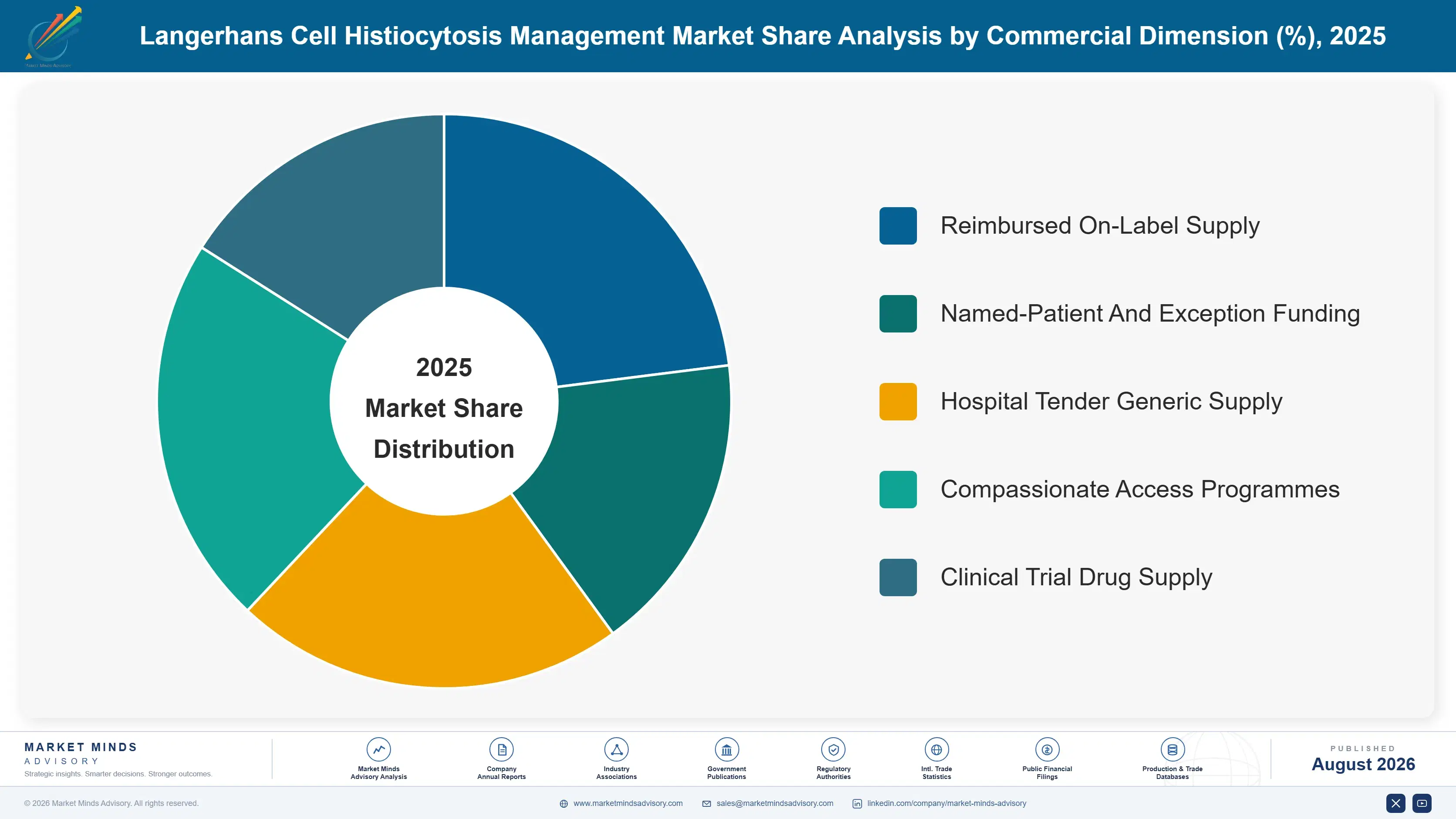
langerhans-cell-histiocytosis-management-market-market-share-analysis-1787298205158

BRAF And MEK Inhibitor Targeted Therapy

Targeted inhibitors grow fastest at 17.1%, exactly 1.50 times the market rate, and they already account for the majority of market value despite reaching only a minority of patients. Roughly 55% of cases carry BRAF V600E and a further group carry other MAP kinase pathway alterations that respond to MEK inhibition. Annual cost above USD 168,000 per patient is what makes a disease affecting five children per million into a market worth hundreds of millions. Response is high while treatment continues and collapses when it stops. That combination is the entire commercial story of this segment, and it is also the clinical problem the next generation of agents is trying to solve.
CAGR 17.1%

Emerging Immunotherapies And Novel Agents

Emerging immunotherapies grow at 14.2% from a very small base, covering agents directed at Langerhans cell surface targets, next-generation pan-RAF inhibitors developed specifically to address resistance, and repurposed compounds under investigator-led study. Almost none of this is approved anywhere at all for this indication and most current volume runs through clinical trials and compassionate access rather than commercial supply. The commercial logic is straightforward though: a durable off-treatment remission would be worth far more than an indefinite suppression, and that is precisely what the current standard of care fails to deliver for these patients. Investigator-led studies rather than sponsor programmes carry most of the development activity here, which slows timelines considerably.
CAGR 14.2%
Full segment breakdown across 5 segments available in the complete report.

Regional Architecture and Country Demand Map

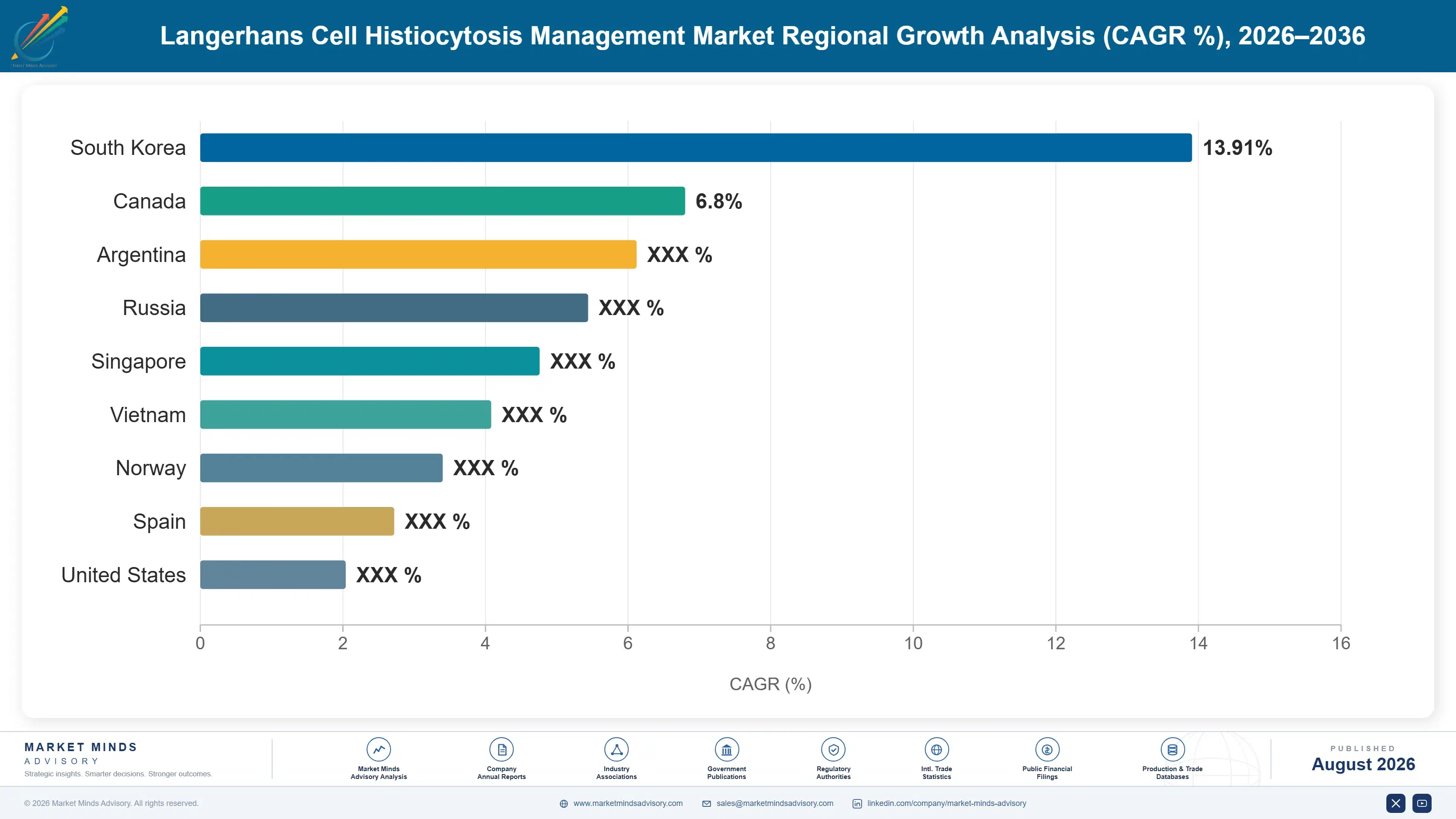
Disease incidence is broadly uniform per head of population across every region, so regional shares here measure drug pricing and funding access rather than epidemiology. Two regions sit outside the framework bands for exactly that reason, and neither of them reflects any difference at all in underlying case numbers.

North America

North America holds 34% of value against a 32% ceiling in this framework, and the breach is entirely a pricing effect rather than an epidemiological one. Targeted therapy costs several times more per patient year here than in any European system, and paediatric oncology centres access it readily through tumour-agnostic approvals and established off-label pathways. Comprehensive cancer centres run reflex molecular testing at diagnosis as routine practice. Adult disease recognition is also further advanced than elsewhere. Parent advocacy organisations engage payers and manufacturers more directly here than in any other region. Growth at 10.8% sits slightly below the global rate, because penetration is already high and generic entry risk lands here first.
Share: 34% | CAGR: 10.8% (2026 to 2036)

East Asia

Twenty percent of global value sits in East Asia, below the 22% floor this framework applies, and the gap is funding rather than clinical capability. Japanese paediatric oncology has contributed a great deal to the treatment evidence base through the Japan LCH Study Group protocols, but reimbursement for targeted agents in this indication remains restrictive. Chinese case volume is very large in absolute terms while targeted therapy access concentrates in a handful of tier-one centres. Korean practice sits considerably closer to European treatment norms and funding conventions. Domestic Chinese generic suppliers carry nearly all conventional chemotherapy volume. Growth at 12.9% exceeds the global rate as targeted therapy access widens from a low base.
Share: 20% | CAGR: 12.9% (2026 to 2036)
Regional intelligence for 5 additional markets available in the complete report: Western Europe, South Asia and Pacific, Latin America, Middle East and Africa, Eastern Europe. Contact sales@marketmindsadvisory.com.
langerhans-cell-histiocytosis-management-market-country-cagr-analysis-1787298205678

Building Value Without A Label

There is no dedicated approval for this disease in most countries, so every commercial lever here works by manufacturing the evidence and the access pathway that a label would normally provide. Registry data, testing infrastructure, paediatric formulation, and duration economics each move revenue. Four follow, and none of them requires a conventional randomised trial to be run.

Fund Registries That Substitute For Randomised Evidence

A disease affecting five children per million cannot support a conventionally powered randomised trial, which is precisely why health technology assessment bodies keep rejecting single-arm submissions. Sponsor-funded international registries capturing response, duration, and relapse across several hundred treated patients cost USD 2 million to USD 4 million over five years and give assessors something they can actually evaluate. Several European reimbursement decisions have turned on registry data alone. It is the cheapest usable evidence any orphan indication can generate, and it keeps producing value long after a trial would have reported.
Market Impact: Costs USD 2 to 4 million over five years

Underwrite Molecular Testing At Diagnosing Centres

A patient never tested for BRAF V600E is a patient who never becomes a candidate for targeted therapy, and testing access rather than drug funding is the binding constraint across much of the world. Sponsoring reflex testing at paediatric pathology centres costs roughly USD 300 per patient tested and identifies the 55% who carry the mutation. The economics are obvious at a treatment cost above USD 160,000 a year, yet remarkably few companies have built any testing support programme in this indication at all. Indian assay cost runs an order of magnitude below Western pricing, which shows what is achievable.
Market Impact: Testing costs roughly USD 300 per patient tested

Develop Paediatric Formulations Ahead Of Competitors

Targeted inhibitors were developed for adult melanoma and arrive as tablets that a four-year-old cannot reliably swallow, forcing hospital pharmacies into unlicensed manipulation with genuinely uncertain resulting dosing. A dispersible or liquid paediatric formulation costs somewhere between USD 8 million and USD 15 million to develop and register, and it also secures paediatric investigation plan incentives worth extended exclusivity in Europe. Given that the substantial majority of patients in this disease are children, whoever holds the paediatric formulation holds this indication for years after the adult molecule loses its protection entirely.
Market Impact: Development runs USD 8 to 15 million total

Price For Duration Rather Than For Course Completion

Around 70% of responders relapse when treatment stops, so patients now stay on therapy for years rather than months, which makes annual pricing built on melanoma course assumptions increasingly indefensible to any payer. Outcome-linked arrangements that reduce per-year cost beyond a defined duration convert an unaffordable lifetime bill into a fundable one and protect volume from discontinuation pressure. Several European systems have signalled clearly that they would fund on those terms. Very few sponsors have actually offered them, which leaves the access decision unresolved in markets that would otherwise pay.
Market Impact: Roughly 70% of all responders relapse after stopping

Who Controls the Margin Pool

Concentration at 52% across the top five reflects a market split between two branded targeted therapy owners and a long tail of generic injectable suppliers competing on tender price for drugs discovered decades ago. All participants here are compared on measured global revenue attributable to Langerhans cell histiocytosis treatment, which requires apportioning multi-indication products and is the only basis placing a branded inhibitor and a generic supplier on comparable terms.
Competition in the targeted tier is genuinely narrow. Novartis holds the tumour-agnostic BRAF approval that gives dabrafenib with trametinib the cleanest prescribing route, while Roche supplies vemurafenib and cobimetinib with longer clinical history in histiocytic disease. Neither actively promotes in this indication, since the population is too small to justify a field force. Prescribing follows academic protocol recommendations and Histiocyte Society guidance rather than commercial activity.

Pressure is arriving from patent expiry rather than from any new entrant. The compounds carrying this market were approved for melanoma over a decade ago and generic entry would reset pricing sharply. Rankings shift most on whichever sponsor first secures a paediatric formulation and a dedicated indication, since both outlast the current molecules.
langerhans-cell-histiocytosis-management-market-company-positioning-matrix-1787298206204

Competitive Moat and Risk Dimensions

NOVARTIS

Moat: Tumour-Agnostic Approval Prescribing Route

The dabrafenib and trametinib combination carries a mutation-based approval covering BRAF V600E solid tumours, which converts what would otherwise be an off-label conversation into an approved indication discussion with payers. In a disease with no dedicated label anywhere, that regulatory position is worth considerably more than any promotional investment could achieve.
NOVARTIS

Risk: Patent Cliff Within Forecast Period

Both compounds were approved for melanoma more than a decade ago and face expiry inside this forecast window. Generic entry would reset realised pricing across the whole targeted tier, and the company has no dedicated paediatric formulation or histiocytosis indication that would survive the molecule losing protection. Volume would persist; the revenue would not.
ROCHE

Moat: Longest Clinical History In Histiocytosis

Vemurafenib accumulated the earliest and deepest published experience in histiocytic disease, including the studies that established BRAF inhibition as viable in these patients at all. Academic protocol recommendations and Histiocyte Society guidance reflect that history, and in an indication driven by protocol rather than promotion, being the compound the literature describes carries real prescribing weight.
ROCHE

Risk: Tolerability Disadvantage In Children

Vemurafenib carries a heavier cutaneous and photosensitivity burden than the newer combination, which matters disproportionately in paediatric patients facing potentially indefinite treatment. Clinicians increasingly select on long-term tolerability rather than on response rate, since both options control disease effectively. That preference has been shifting share steadily and shows no sign of reversing.

Players Tracked

Prominent Players

Novartis
Roche
Pfizer
Teva Pharmaceutical Industries
Fresenius Kabi

Other Key Players

Sandoz
Hikma Pharmaceuticals
Accord Healthcare
Dr Reddys Laboratories
Sun Pharmaceutical Industries
Cipla
Amneal Pharmaceuticals
Zydus Lifesciences
STADA Arzneimittel
Eugia Pharma
Baxter International
Viatris
Nippon Kayaku
Kyowa Kirin
Qilu Pharmaceutical

Recent Developments

MARCH 2025

International Histiocytosis Registry Expands Targeted Therapy Data Collection

An international paediatric histiocytosis registry widened its data collection to capture treatment duration, discontinuation attempts, and relapse timing in patients receiving targeted inhibitors. The expansion is a collaborative academic effort with partial sponsor funding, and it carries no commercial rights to the resulting dataset for any contributing company.
Signal: Registry evidence is quickly becoming the practical substitute for trials that this population can never support
JUNE 2025

European Assessment Body Rejects Single-Arm Submission In Histiocytic Disease

A European health technology assessment body declined to recommend routine funding for a targeted agent in histiocytic disease, citing the absence of comparative evidence rather than any doubt about clinical response. Named-patient and hospital exception routes remain available, leaving access dependent on individual centre decisions across the country.
Signal: Assessment frameworks built for common disease keep failing populations that are far too small to randomise
SEPTEMBER 2025

Indian Tertiary Centres Widen Reflex BRAF Testing At Diagnosis

Several Indian paediatric oncology centres adopted reflex BRAF V600E testing at histological confirmation of Langerhans cell histiocytosis, using domestically developed assays at a fraction of Western testing cost. The change was a protocol decision taken by the centres rather than any sponsored programme or commercial arrangement.
Signal: Cheap local testing removes the diagnostic constraint entirely, even where drug funding remains completely unresolved today

What These Molecules Cost To Make

Active pharmaceutical ingredient accounts for roughly 4% to 9% of branded targeted therapy revenue, produced through multi-step synthesis at contract manufacturers concentrated in India, China, and Europe. For the generic injectable tier the ratio inverts entirely, with active ingredient and sterile fill together running 55% to 70% of realised price. Regulatory maintenance, pharmacovigilance, and cold chain distribution account for most of the remainder across both tiers.
Generic injectable oncology supply has been repeatedly disrupted by sterile manufacturing quality failures rather than by input pricing, and vinblastine and cytarabine both appeared on national shortage lists during 2023 and 2024. The United States Food and Drug Administration documented sustained oncology injectable shortages across that period. Teva's 2023 annual report described capacity and remediation pressure across its sterile injectable network, which is where the constraint actually sits.

Exposure separates completely by tier rather than by company size. A branded inhibitor at USD 168,000 per patient year is insensitive to input cost by any reasonable measure, and its commercial risk lies in patents and payers. A generic vinblastine supplier operates on margins where one sterile line remediation wipes out a year of product profit. The two share a disease and no commercial characteristics.
langerhans-cell-histiocytosis-management-market-cost-volatility-analysis-1787298206399

Dual-Source Sterile Fill For First-Line Injectable Regimens

Vinblastine and cytarabine remain the backbone of first-line treatment and both have appeared on national shortage lists recently, which puts children's care at risk over a manufacturing problem rather than a clinical one. Qualifying a second sterile fill site takes twelve to eighteen months and modest capital, and it protects a product line whose clinical importance far exceeds its revenue.

Contract Active Ingredient Supply Across Two Regions

Multi-step synthesis for targeted inhibitors concentrates among a small number of contract manufacturers, and geographic concentration in one country adds regulatory and trade exposure that has nothing to do with chemistry. Qualifying a second regional source costs registration variations and stability work, and it removes a dependency that becomes acute precisely when it is hardest to fix.

Build Paediatric Formulation Manufacturing Capability Early

Dispersible and liquid formulations require different equipment, different stability programmes, and different quality release testing from adult tablets, and outsourcing all of it leaves supply in a partner's queue. Establishing that capability alongside development rather than afterwards shortens launch timelines considerably and it protects the extended exclusivity that paediatric investigation plans deliver in European markets.

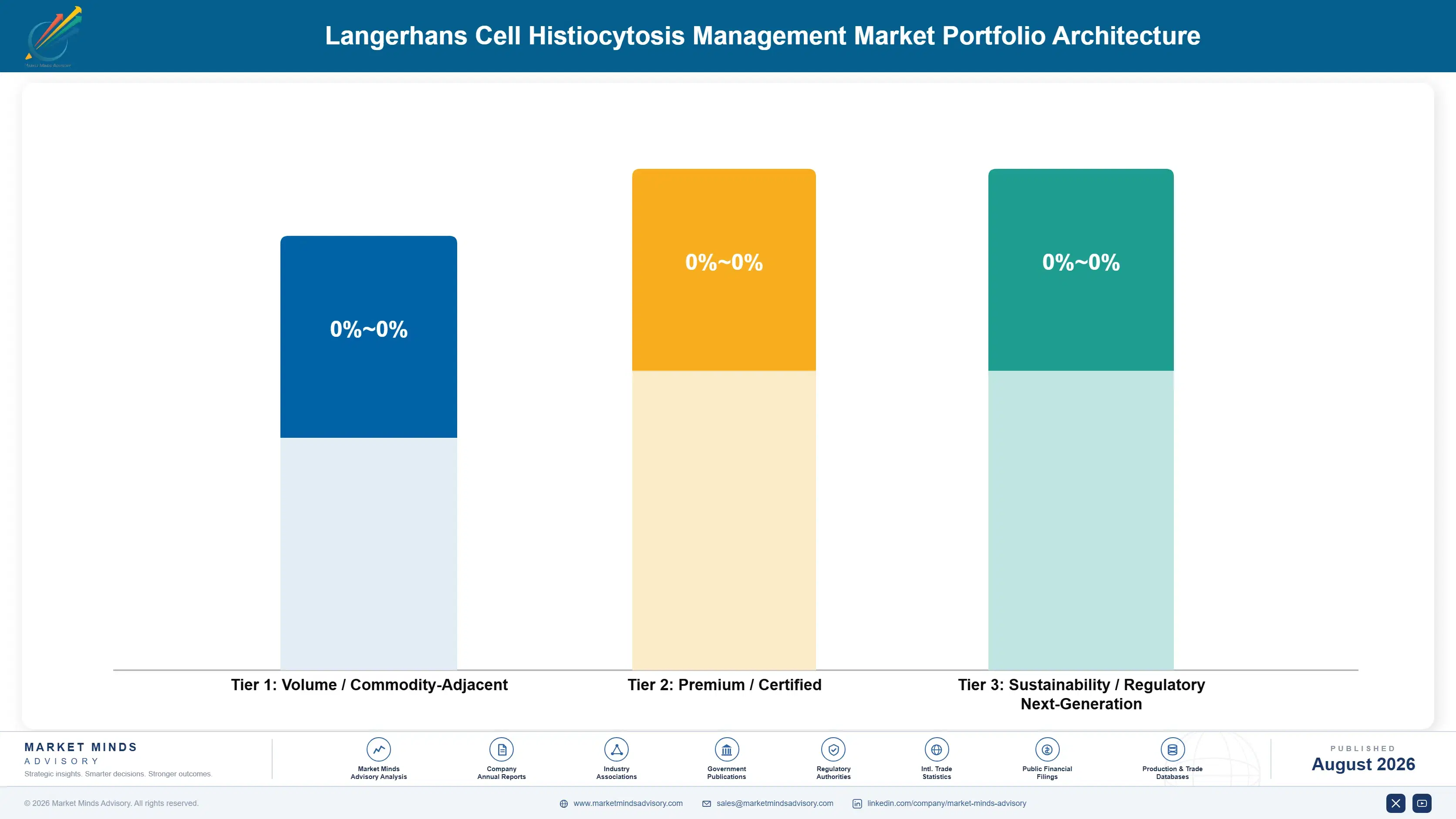
Portfolio Architecture for Margin Defence

Margin architecture in this disease splits more sharply than in almost any market MMA covers. Generic injectables carrying first-line treatment earn 8% to 20% and periodically go negative when a sterile line requires remediation. Branded targeted inhibitors earn 82% to 91%, since active ingredient cost is a rounding error against a price built for adult melanoma and the promotional spend in this indication is close to zero.
The tension is that the cheap tier cures more children. Vinblastine with prednisone resolves single-system disease in the majority of patients and costs a few hundred dollars, while targeted therapy addresses the refractory and multisystem cases that first-line treatment fails. Commercial value and clinical volume therefore sit in different places entirely, which distorts every conversation about where research investment should go.

High-value pools concentrate in paediatric formulations, registry-supported access programmes, and next-generation agents targeting off-treatment remission. All three outlast the current molecules, which is the point given patent expiry inside the forecast window. Emerging immunotherapies carry the widest margin range, because nothing here is priced yet, and an agent delivering durable off-treatment remission would command terms no suppressive therapy ever could.

Volume / Commodity-Adjacent

Generic vinblastine, corticosteroids, cytarabine, and cladribine supplied on tender into paediatric oncology pharmacies. The twelve-point range reflects the difference between suppliers with reliable sterile capacity and those carrying remediation costs across their injectable network.
Gross Margin: 8% to 20%

Premium / Certified

Branded BRAF and MEK inhibitors prescribed under tumour-agnostic approvals or named-patient arrangements at oncology pricing. The nine-point range separates markets with negotiated managed access discounts from those paying close to list, which varies enormously between health systems.
Gross Margin: 82% to 91%

Sustainability / Regulatory / Next-Generation

Paediatric formulations, pan-RAF and next-generation inhibitors, and emerging immunotherapies aimed at durable off-treatment remission. The thirty-two point range reflects genuine uncertainty: nothing here is priced yet and a curative agent would command terms no suppressive therapy ever could.
Gross Margin: 62% to 94%
langerhans-cell-histiocytosis-management-market-portfolio-architecture-1787298206900

High-value Sub-segments and Strategic Watch-out

Paediatric Formulation Products

High value and high growth, because most patients here are children and adult melanoma tablets cannot be dosed reliably in a four-year-old. Development secures paediatric investigation plan exclusivity in Europe, and whoever holds the formulation keeps the indication long after the adult molecule loses protection.
Gross Margin: 78% to 90%

Registry-Supported Access Programmes

High value with moderate growth, converting compassionate supply into evidence that health technology assessment bodies can actually evaluate. Several European funding decisions have already turned on registry data alone. Programme cost runs to a few million dollars against an indication already worth hundreds of millions.
Gross Margin: 70% to 84%

First-Line Vinblastine Regimens

The clinical volume core of this disease and commercially the least attractive part of it, resolving single-system presentations in most children for a few hundred dollars a course. Shortage risk is the real exposure here rather than pricing, and it recurs regularly across sterile injectable supply.
Gross Margin: 8% to 20%

Off-Patent Targeted Inhibitors

Strategic watch-out. The compounds carrying most of this market's value were approved for melanoma over a decade ago and face expiry inside the forecast period. Treated patient numbers will keep rising while realised pricing resets, and nothing in the current portfolio protects the position when that happens.
Gross Margin: 18% to 34%

Why Treatment Never Ends

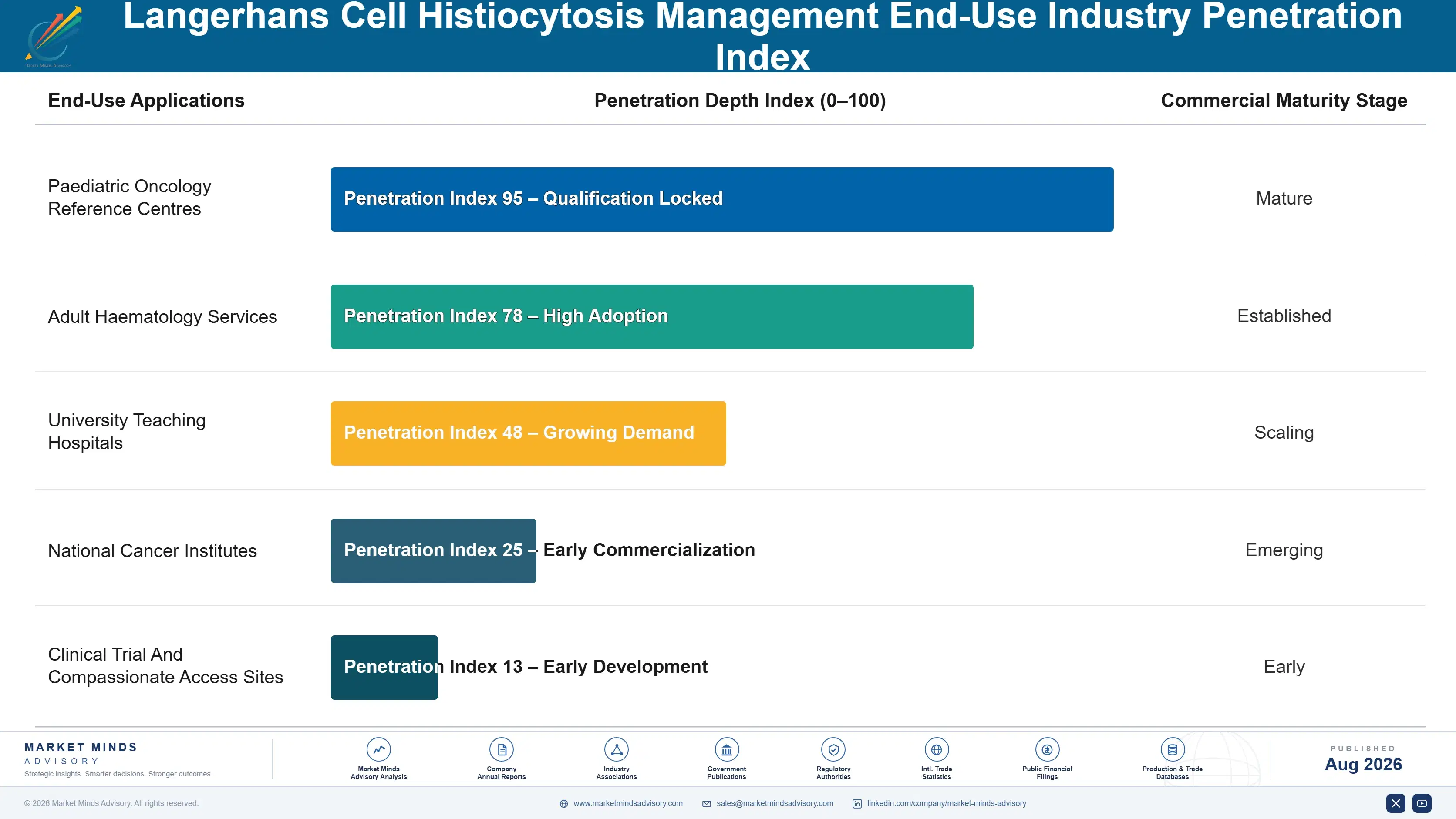
The annuity in this market was created by accident. Targeted inhibitors suppress disease rather than eradicating it, roughly 70% of responders relapse within months of withdrawal, and no biomarker separates those who can safely stop from those who cannot. So clinicians continue treatment, and a disease previously managed in twelve month courses has become an indefinite prescription. Lifetime value per patient has risen by a multiple that nobody modelled when these agents entered the indication.
Depth varies by disease extent rather than by care setting. Multisystem and risk-organ disease is the stickiest, since these patients have failed conventional treatment and have no alternative to fall back on. Central nervous system involvement and neurodegenerative sequelae generate decades of management regardless of what happens to the primary lesions. Single-system bone disease is shallowest, frequently resolving on first-line treatment or even spontaneously without any systemic therapy.

Buyer profiles have changed considerably. Treatment decisions moved from individual paediatric oncologists toward multidisciplinary histiocytosis boards at reference centres, which concentrate prescribing in a small number of institutions worldwide. Parent advocacy organisations now engage payers directly on access. Both shifts reward companies engaged with academic protocol committees and registries over those relying on any conventional commercial model.
langerhans-cell-histiocytosis-management-market-end-use-penetration-index-1787298207636

Where We Come Out

These are among the four positions where our research anticipates prominent divergence between winners and laggards over the coming forecast period. Each is grounded in the demand model, the regulatory perimeter, and the announced capacity pipeline.
01 / PAEDIATRIC FORMULATION OWNERSHIP

The formulation outlives the molecule, so build it now

Most patients with this disease are children and the targeted agents treating them arrive as adult melanoma tablets that a four-year-old cannot swallow reliably, forcing pharmacies into unlicensed manipulation with genuinely uncertain dosing. A dispersible paediatric formulation costs eight to fifteen million dollars to develop and register, secures paediatric investigation plan exclusivity in Europe, and remains protected long after the adult compound faces generic entry. That makes it comfortably the cheapest durable commercial asset available anywhere in this indication today.
02 / REGISTRY EVIDENCE INVESTMENT

Registries do what trials in five per million cannot

Health technology assessment bodies keep declining single-arm submissions in histiocytic disease, not because they doubt the clinical response but because their frameworks were built for populations that can be randomised. An international registry capturing response, duration, and relapse across several hundred treated patients costs two to four million dollars over five years and gives assessors something evaluable. Several European funding decisions have already turned on registry data alone, which makes it comfortably the highest return evidence spend available in this indication.
03 / DIAGNOSTIC ACCESS FUNDING

An untested patient is a patient you never treat

Roughly fifty-five percent of these patients carry BRAF V600E and every one of them becomes a treatment candidate the moment the result returns, yet testing access rather than drug funding is the binding constraint across much of the world. Sponsoring reflex testing at paediatric pathology centres costs around three hundred dollars per patient tested against an annual treatment value above one hundred and sixty thousand. Remarkably few companies have built any testing support programme in this indication, which leaves the constraint sitting exactly where it is.
04 / DURATION PRICING REFORM

Melanoma course pricing cannot survive indefinite paediatric dosing

These agents were priced on melanoma course assumptions and are now being given to children who may remain on them for decades, because seventy percent of responders relapse when treatment stops and nothing predicts who can safely discontinue. Payers will not fund that arithmetic indefinitely and several European systems have already signalled they would accept duration-linked terms instead. Sponsors offering those terms protect volume; sponsors defending annual list pricing are going to lose access decisions they could comfortably have won.

Engagement Snapshot From the Field

A live engagement with an industry participant carrying material or product regulatory and market exposure ahead of a defining policy shift, showing how our research translates into a defensible multi-year portfolio strategy.
MARKET MINDS ADVISORY · CLIENT ENGAGEMENT SUMMARY
Langerhans Cell Histiocytosis Management Producer Strategic Portfolio Review and Transition Roadmap 2026·Investment Scenario on Langerhans Cell Histiocytosis Management Exposure Evaluation 2025-26
CLIENT PROFILE
A mid-sized specialty oncology company holding a targeted kinase inhibitor approved in a common solid tumour, with roughly USD 340 million in annual product revenue (client-reported, unverified by MMA). Off-label use in histiocytic disease had grown steadily through named-patient requests across fourteen countries, generating unplanned revenue the commercial organisation had never resourced, forecast, or supported in any structured way.
STRATEGIC CHALLENGE
Named-patient volume was rising while three European health technology assessment bodies had declined routine funding submissions, and the compound faced patent expiry within seven years. The board needed to decide whether to invest in building a defensible position in histiocytic disease or to treat the volume as incidental revenue that would disappear alongside the parent molecule.
MMA APPROACH
MMA sized the treated and treatable histiocytosis population by region against molecular testing availability, interviewed twenty-nine paediatric oncologists and eleven payer assessors on evidence requirements, and modelled registry programme cost against expected funding decisions across nine markets. Paediatric formulation development cost and the exclusivity it would generate were assessed separately against the base molecule's expiry timeline.
KEY FINDINGS
  1. Named-patient volume represented roughly 4% of product revenue at gross margin nine points above the primary indication, because no field force or promotional spend supported it at all.
  2. Payer assessors in nine of eleven interviews indicated registry data capturing duration and relapse would materially change their evaluation, where single-arm response data had not.
  3. Molecular testing rather than drug funding was the binding constraint in seven of the fourteen countries reviewed, and the client had no testing support programme anywhere.
  4. Paediatric formulation exclusivity would extend protection in this population roughly four years beyond the base compound's expiry, at development cost under 3% of cumulative indication revenue.
CLIENT PROFILE
A mid-sized specialty oncology company holding a targeted kinase inhibitor approved in a common solid tumour, with roughly USD 340 million in annual product revenue (client-reported, unverified by MMA). Off-label use in histiocytic disease had grown steadily through named-patient requests across fourteen countries, generating unplanned revenue the commercial organisation had never resourced, forecast, or supported in any structured way.
STRATEGIC CHALLENGE
Named-patient volume was rising while three European health technology assessment bodies had declined routine funding submissions, and the compound faced patent expiry within seven years. The board needed to decide whether to invest in building a defensible position in histiocytic disease or to treat the volume as incidental revenue that would disappear alongside the parent molecule.
MMA APPROACH
MMA sized the treated and treatable histiocytosis population by region against molecular testing availability, interviewed twenty-nine paediatric oncologists and eleven payer assessors on evidence requirements, and modelled registry programme cost against expected funding decisions across nine markets. Paediatric formulation development cost and the exclusivity it would generate were assessed separately against the base molecule's expiry timeline.
KEY FINDINGS
  1. Named-patient volume represented roughly 4% of product revenue at gross margin nine points above the primary indication, because no field force or promotional spend supported it at all.
  2. Payer assessors in nine of eleven interviews indicated registry data capturing duration and relapse would materially change their evaluation, where single-arm response data had not.
  3. Molecular testing rather than drug funding was the binding constraint in seven of the fourteen countries reviewed, and the client had no testing support programme anywhere.
  4. Paediatric formulation exclusivity would extend protection in this population roughly four years beyond the base compound's expiry, at development cost under 3% of cumulative indication revenue.
RECOMMENDED STRATEGY
Phase 1: Phase one: fund an international histiocytosis registry capturing treatment duration and relapse, positioned as an academic collaboration rather than a sponsored study. Phase 2: Phase two: underwrite reflex molecular testing at paediatric pathology centres across the seven markets where testing access limits treatment volume. Phase 3: Phase three: begin paediatric dispersible formulation development immediately, and file the paediatric investigation plan to secure European exclusivity ahead of expiry.
OUTCOME
The client launched the registry within two quarters and testing support across five markets in the first year. Histiocytic disease revenue grew 46% while two of the three previously negative assessment bodies reopened review, and the paediatric formulation entered development on the recommended timeline (client-reported, unverified by MMA).

Frequently Asked Questions

Foundational context covering the market sizes, CAGR, scope, country, region and competition that inform every finding below. This section is provided to cover basics and most often pre-purchase conversations, answered from the MMA Primary Research Dataset.

What is the current size of the Langerhans Cell Histiocytosis Management Market?

The global Langerhans cell histiocytosis management market reached USD 0.38 billion in 2025, covering pharmacological treatment across paediatric and adult patients. That spans targeted inhibitors, salvage chemotherapy, first-line regimens, and bone-directed agents.

How large will the Langerhans Cell Histiocytosis Management Market be by 2036?

MMA forecasts USD 1.25 billion by 2036, up from USD 0.42 billion in 2026, an increase of USD 0.82 billion. That represents an expansion multiple of 2.94 times across the forecast period.

What is the CAGR for the Langerhans Cell Histiocytosis Management Market 2026 to 2036?

The base case CAGR is 11.4%, with a bull case of 12.7% and a bear case of 10.2%. Historical growth between 2020 and 2025 ran at 10.1%, driven by price substitution rather than by any change in case incidence.

Which segment is growing fastest?

BRAF and MEK inhibitor targeted therapy grows fastest at 17.1%, exactly 1.50 times the market rate, reaching the roughly 55% of patients carrying an actionable mutation. Emerging immunotherapies follow at 14.2% from a very small base.

Who are the major companies in the Langerhans Cell Histiocytosis Management Market?

Novartis, Roche, Pfizer, Teva Pharmaceutical Industries, and Fresenius Kabi lead, together holding 52% of the market. Two branded inhibitor owners sit against a field of generic injectable suppliers.

Which country is growing fastest?

India grows fastest at 15.2%, driven by expanding paediatric oncology capacity and domestically developed molecular assays that make BRAF testing affordable. Drug funding remains the constraint rather than diagnosis.

Report Segmentation Architecture

The full report scope spans multiple orthogonal segmentation dimensions, with cross-tabulated demand data provided for each dimension pair. Coverage extends further to regional breakdowns, trend trajectories, and the competitive detail needed to support segment-level decision-making.

By Therapeutic Class

  • BRAF And MEK Inhibitor Targeted Therapy
  • Nucleoside Analogue Salvage Chemotherapy
  • Vinca Alkaloid And Corticosteroid Regimens
  • Emerging Immunotherapies And Novel Agents
  • Bisphosphonates And Bone-Directed Agents

By End-Use Industry

  • Paediatric Oncology Reference Centres
  • Adult Haematology Services
  • University Teaching Hospitals
  • National Cancer Institutes
  • Clinical Trial And Compassionate Access Sites

By Commercial Dimension

  • Reimbursed On-Label Supply
  • Named-Patient And Exception Funding
  • Hospital Tender Generic Supply
  • Compassionate Access Programmes
  • Clinical Trial Drug Supply

By Region

  • North America
  • East Asia
  • Western Europe
  • South Asia and Pacific
  • Latin America
  • Middle East and Africa
  • Eastern Europe

Scope, Methodology, and Coverage

Every figure in this report is reproducible from documented input assumptions. The scope below maps the historical period, the forecast horizon, the segmentation dimensions, and the countries covered, alongside the underlying primary and qualitative methodology.
Historical Period
2020 to 2025
Forecast Period
2026 to 2036
Base Year
2025 (USD billions; MMA Primary Research Dataset, August 2026)
Market Definition
The Langerhans cell histiocytosis management market covers pharmacological treatment of Langerhans cell histiocytosis in paediatric and adult patients across all disease extents and lines of therapy. Scope spans BRAF and MEK inhibitor targeted therapy, nucleoside analogue salvage chemotherapy including cladribine, cytarabine and clofarabine, vinca alkaloid and corticosteroid first-line regimens, emerging immunotherapies and novel agents, and bisphosphonates and bone-directed agents. Molecular and histological diagnostic testing, imaging, stem cell transplantation, surgery, radiotherapy, and other histiocytic disorders are excluded.
Quantitative Units
USD billions at manufacturer revenue level; treated patients annually; cost per patient treatment year.
Segmentation Dimensions
By therapeutic class; by end-use industry; by commercial dimension; by region.
Regions Covered
North America, East Asia, Western Europe, South Asia and Pacific, Latin America, Middle East and Africa, Eastern Europe
Countries Covered
United States, Canada, United Kingdom, Germany, France, Italy, Spain, Netherlands, Sweden, Poland, Czech Republic, Japan, South Korea, China, India, Australia, Brazil, Mexico, Saudi Arabia, South Africa.
Key Companies Profiled
Novartis, Roche, Pfizer, Teva Pharmaceutical Industries, Fresenius Kabi, Sandoz, Hikma Pharmaceuticals, Accord Healthcare, Dr Reddys Laboratories, Sun Pharmaceutical Industries, Cipla, Amneal Pharmaceuticals, Zydus Lifesciences, STADA Arzneimittel, Eugia Pharma, Baxter International, Viatris, Nippon Kayaku, Kyowa Kirin, Qilu Pharmaceutical.
Quantitative Methodology
Primary survey, n=3,800 respondents, Q4 2025, six countries; demand-side model with trade association cross-validation
Qualitative Methodology
47 expert interviews, Q4 2025; applied to validate demand model assumptions, identify emerging dynamics, and assess competitive positioning
Report Format
PDF and XLSX data workbook (Word format preview document)
Publisher
Market Minds Advisory
Report Code
MMA-2026-HLT-792
Published
August 2026
Contact
sales@marketmindsadvisory.com | www.marketmindsadvisory.com

Purchase the full Langerhans Cell Histiocytosis Management Market Report (2026 to 2036).

The full MMA report on Langerhans cell histiocytosis management covers therapeutic class, regional, and competitive analysis in detail, with separate treatment of the access pathways that substitute for a dedicated label in every major market. It includes treated and treatable population sizing against molecular testing availability, named-patient and exception funding mapping by country, registry evidence assessment against health technology requirements, and paediatric formulation exclusivity modelling. Regional chapters cover twenty countries with access routes assessed individually. Competitive profiling spans twenty companies compared on a single consistent revenue basis throughout.
Twenty country regional access pathway chapters
Treated population sizing against testing availability
Named-patient and exception funding route mapping
Registry evidence assessment against payer requirements
Twenty company competitive profiles compared consistently
Paediatric formulation exclusivity modelling and timelines

Built For The People Who Decide

From boardroom strategy to bench-side execution, this report is read cover-to-cover by leaders shaping the next decade of their industry, turning demand scenarios, market dynamics and valuation benchmarks into decisions.
CXOs/ Presidents/ VPs/ Managers
M&A and Corporate Development
Strategy Teams and R&D Heads
Procurement and Product Directors
Regulatory and Compliance Leaders
Investor Relations and Equity Analysts