Market Minds Advisory
Korea Industrial Electronics Packaging Market

Korea Industrial Electronics Packaging Market: Korea Industrial Electronics Packaging Market: Power Module and Advanced Substrate Demand

Power electronics reshoring and advanced substrate qualification are pulling industrial packaging capacity toward Korea's specialized foundries, forcing global suppliers to defend commodity lead frame volume while chasing higher-margin wafer-level contracts.

Lead Analyst

Bilal Shaikh

Published

September 2026

Make Smarter Decisions with Customized Research Insights

Request a free sample report and evaluate market opportunities, growth trends, and competitive dynamics relevant to your business needs.

2025 MARKET VALUE$3.4BMarket Size 2025
2036 FORECAST VALUE$8.3BBase Case , 2026 to 2036
CAGR 2026 TO 20368.5 %Bull 9.8% / Bear 7.2%
INCREMENTAL OPPORTUNITY$4.7BNet 10- year value creation
EXPANSION MULTIPLE2.26x2036 value over 2026 base
Strategic Levers
M&A Pipeline
Regional Outlook
Country Rankings
Competitive Intelligence
Segmental Deep-dive
Call-Us : 91 93563 13602

Executive Snapshot and Market Trajectory.

Industrial electronics packaging has split into two distinct businesses under one label. Power module and substrate packaging for electric vehicles and grid infrastructure now commands genuine engineering premiums, while legacy lead frame and molded plastic packaging behaves like a commodity chasing scale above all else across most product lines.
Amkor Technology and ASE Technology Holding continue supplying the bulk lead frame and molded plastic packages that industrial sensor and control electronics have relied on for decades, since cost-per-unit economics still govern most general industrial applications regardless of technology cycles elsewhere entirely. Power module and IGBT packaging for electric vehicle inverters and grid infrastructure is capturing disproportionate growth as power electronics manufacturers specify higher thermal performance standards following expanded electrification investment worldwide.
Kyocera and Samsung Electro-Mechanics are investing specifically in wafer-level and advanced substrate packaging to serve industrial sensor and power semiconductor customers, betting that Korea's specialized foundry cluster sustains premium pricing for years across most product categories and end markets. Packagers without advanced substrate capability increasingly find themselves confined to price-competitive commodity contracts rather than the higher-margin power electronics programs customers increasingly prefer for new capacity investment this decade.
Market Definition
The industrial electronics packaging market covers lead frame packaging, molded plastic packaging, ceramic substrate packaging, power module and IGBT packaging, wafer-level and advanced packaging, and hermetic metal can packaging sold for industrial sensor, control, and power semiconductor applications. It excludes consumer electronics packaging, printed circuit board assembly services, and standalone semiconductor wafer fabrication.
Base Year Value
$3.4B in 2025 (MMA Primary Research Dataset, August 2026)
Forecast Period
2026 to 2036, eleven discrete annual values
CAGR
8.5% base case. Bull 9.8%. Bear 7.2%.
Fastest Growth Segment
Wafer-Level and Advanced Packaging: 13.0% CAGR
Fastest Growth Country
South Korea: 10.5% CAGR
Fastest Growth Region
South Asia and Pacific: 10.5% CAGR
Largest Region
East Asia: 42% of 2025 global value
Market Leaders
Amkor Technology, ASE Technology Holding, JCET Group, Kyocera Corporation, Samsung Electro-Mechanics. Source: MMA Analysis based on company annual reports.
Primary Survey
n=3,800 procurement and R&D decision-makers, Q4 2025, six countries
Methodology
Demand-side build-up, cross-validated against public data, 47 expert interviews

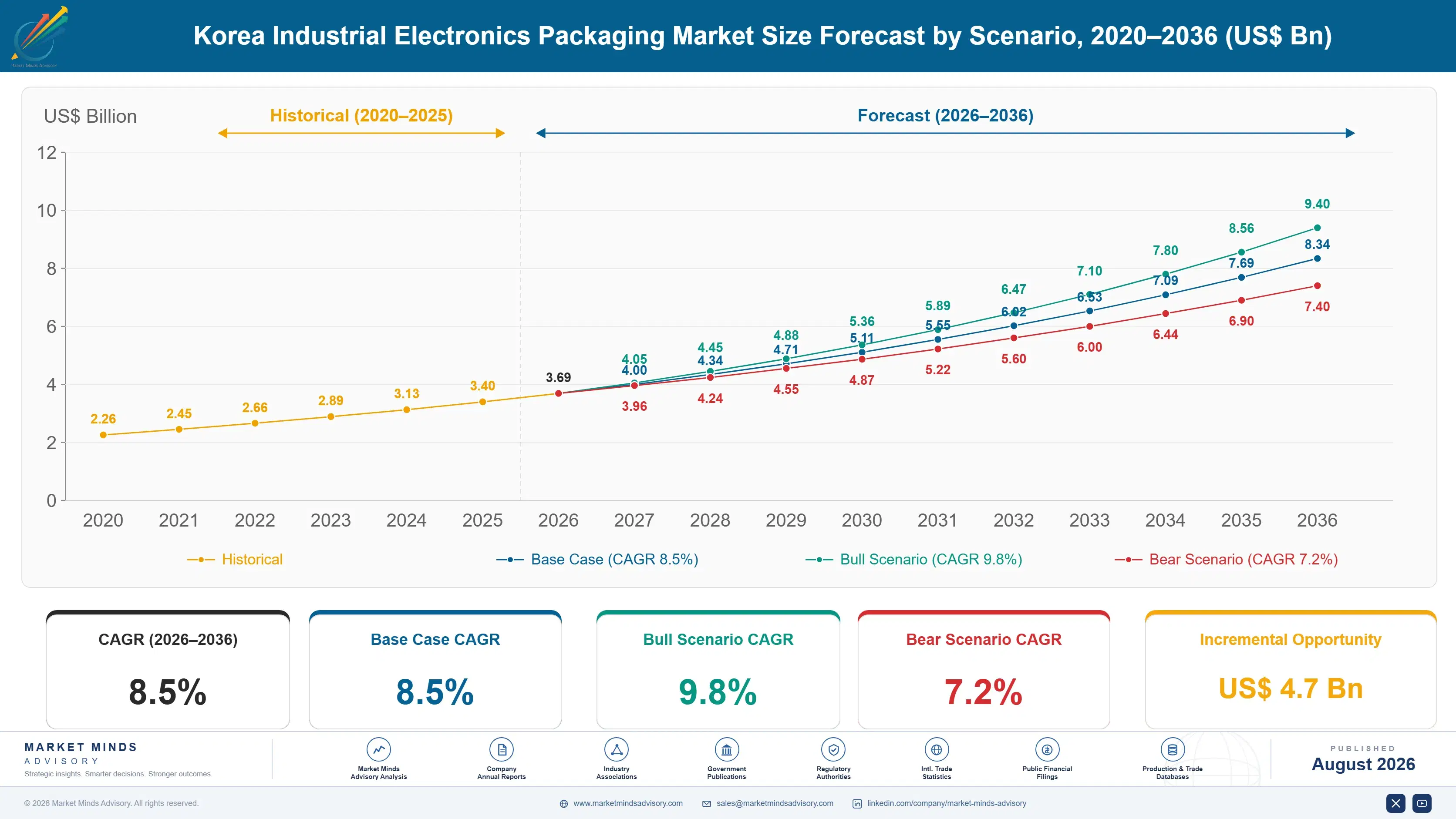
Korea Industrial Electronics Packaging Market Forecast Scenarios

korea-industrial-electronics-market-size-forecast-scenario-1787552524598
Between 2020 and 2025 the market grew at roughly 7.5 percent a year, as electric vehicle power electronics demand and early advanced substrate qualification lifted packaging revenue steadily above the slower growth general industrial segment had posted through most of the previous decade, setting the stage for the acceleration now underway across specialty categories today.
The base case assumes 8.5 percent annual growth to 2036, built on three mechanisms: electric vehicle and grid infrastructure power module demand driving IGBT packaging volume across Korea and the broader East Asian manufacturing base, wafer-level advanced packaging capacity expanding to serve industrial power semiconductor customers, and legacy lead frame packaging maintaining steady replacement demand across general industrial sensor and control applications specifically over the coming decade of continued capacity buildout and investment.
A bull case near 9.8 percent depends on electric vehicle power electronics adoption accelerating faster than currently planned across major manufacturing regions worldwide overall. The bear case near 7.2 percent assumes power module demand growth slows amid a cyclical semiconductor industry downturn, delaying advanced substrate qualification and pressuring specialty packagers reliant on that channel specifically each quarter.

Thermal Performance, Not Volume, Now Sets Price

Industrial electronics packaging sits at an unusual crossroads between commodity assembly and specialty semiconductor science, and that split now defines competitive strategy across the category. Lead frame and molded plastic packaging for general industrial sensors behaves like a mature commodity, priced on delivered volume with thin single-digit margins that reward manufacturing scale above all else.
MARKET CONCENTRATIONCR5 48%Top five packagers hold substantial combined global market share
AVERAGE SELLING PRICE$0.85/unitBlended price varies sharply by packaging complexity tier
TOP PRODUCING COUNTRY SHARESouth Korea 24%Leading producer nation supplies advanced substrate packaging volume
CAPACITY UTILIZATION82%Utilization reflects tight but not fully constrained output
SUBSTRATE COST SHARE42%Ceramic and laminate substrates dominate total input cost structure
REPLACEMENT CYCLE LENGTH5 to 8 yearsCycle length varies with thermal load and application severity
Power module and IGBT packaging for electric vehicle and grid infrastructure applications occupies the opposite end of the spectrum, where thermal performance specifications now run tighter than consumer electronics requirements and manufacturers treat packaging performance as a reliability variable rather than a procurement line item. Wafer-level and advanced packaging for industrial power semiconductors sits further out still, commanding premium pricing tied directly to Korea's specialized foundry cluster rather than general assembly benchmarks.
Substrate material costs and thermal cycling reliability increasingly shape total cost of ownership conversations with industrial customers, who now evaluate packaging suppliers on field failure rates rather than upfront unit price alone. Packagers able to document lower field failure rates and longer thermal cycling life are winning contract renewals even at a price premium, a shift that favors established players with genuine reliability testing infrastructure over low-cost regional entrants.
"Buying a package used to mean buying a box for a chip. Now it means buying a thermal performance guarantee, and Korea's specialty foundries are the ones setting that price."
Practice Lead, Advanced Electronics Packaging and Substrates · MMA Technology Practice · August 2026

Market Trends

Electric Vehicle Power Electronics Redefine Packaging Standards

Electric vehicle inverter and onboard charger manufacturers are pushing power module packaging thermal cycling requirements well beyond the standards that satisfied industrial motor drive customers a decade ago. Automakers increasingly specify packaging reliability performance directly in their supplier qualification documents rather than treating packaging as a generic assembly step, giving packagers with proven automotive-grade track records a genuine seat at the table during vehicle platform design. This shift is compressing the addressable supplier pool, since qualifying a new power module package for automotive use now takes over two years of validation testing.
Market Impact: Adds 6 percent grid sector demand
Korea's Foundry Cluster Attracts Advanced Substrate Investment

Global semiconductor customers are specifying advanced wafer-level and substrate packaging capacity in Korea years before production begins, treating Korea's specialized foundry cluster as critical infrastructure on par with fabrication capacity itself and planning accordingly. Government incentive programs supporting domestic packaging capacity are accelerating investment timelines, and each new facility locks in multi-year customer supply agreements that lengthen planning horizons across the advanced segment considerably and reshape competitive positioning industry-wide. Packagers with proven fine-pitch substrate capability are securing premium long-term contracts well ahead of facility commissioning dates, locking in customer relationships for years.
Market Impact: Adds 5 percent automation sector demand

Market Opportunities and Growth Drivers

Grid Infrastructure Expansion Sustains Power Module Demand

Grid modernization and renewable energy integration projects require power module packaging capable of handling higher voltage and thermal loads than legacy grid infrastructure ever demanded, and utility investment programs increasingly bundle power electronics upgrades into broader modernization budgets rather than treating packaging as a standalone procurement line. Regulatory grid reliability standards in several jurisdictions now require specialty packaging grades that legacy assembly lines were never designed to handle. This creates predictable replacement demand independent of new grid construction, since existing infrastructure simply cannot meet updated reliability standards without a packaging upgrade.
Market Impact: Margins compress 6 to 9 percent

Industrial Automation Growth Sustains Sensor Packaging Demand

Factory automation and robotics deployment continues expanding across manufacturing facilities globally, and each new automated production line requires sensor and control electronics packaging from the day it comes online rather than as a later addition. Manufacturers treat packaging reliability as a genuine production continuity issue rather than a cost line item, since packaging failure can force unplanned line shutdowns costing far more than any premium packaging grade would. This reliability-first purchasing behavior sustains stable demand for established packagers with proven industrial automation track records, insulating that channel from the price competition seen in general consumer electronics assembly.
Market Impact: Adds 10 percent compliance cost

Market Restraints and Challenges

Ceramic Substrate Price Volatility Pressures Packager Margins

Ceramic and laminate substrate materials together represent the dominant material cost for advanced packaging, and both trace to specialty mineral and resin supply chains subject to sharp price swings during raw material shortages and geopolitical trade disruptions. The root cause is limited backward integration: most packagers purchase substrate materials on the open market rather than producing them internally, leaving them exposed to price movements they cannot control or hedge easily. The impact falls hardest on smaller regional packagers lacking long-term supply contracts. Larger players are exploring multi-year indexed agreements and qualified secondary substrate suppliers to dampen this exposure.
Market Impact: EV packaging demand grows 35 percent

Geopolitical Trade Restrictions Complicate Supply Chains

Export control measures targeting advanced semiconductor and packaging technology increasingly complicate cross-border supply chains for packagers serving both Western and Chinese customers simultaneously, forcing difficult choices about which markets to prioritize. The root cause is genuine geopolitical tension: packaging technology has become a strategic asset subject to export restrictions that did not exist a decade ago. The commercial impact concentrates among packagers with significant China-facing revenue exposure, who face genuine customer diversification pressure. Packagers are mitigating this by building dual-region capacity to serve both Western and Chinese customers without triggering export control conflicts.
Market Impact: Adds 22 percent advanced packaging growth
4 additional market trends, 3 additional growth drivers, and 3 additional restraints and challenges are covered in the full report. Contact sales@marketmindsadvisory.com to access the complete intelligence.

Segment CAGR and Growth Architecture

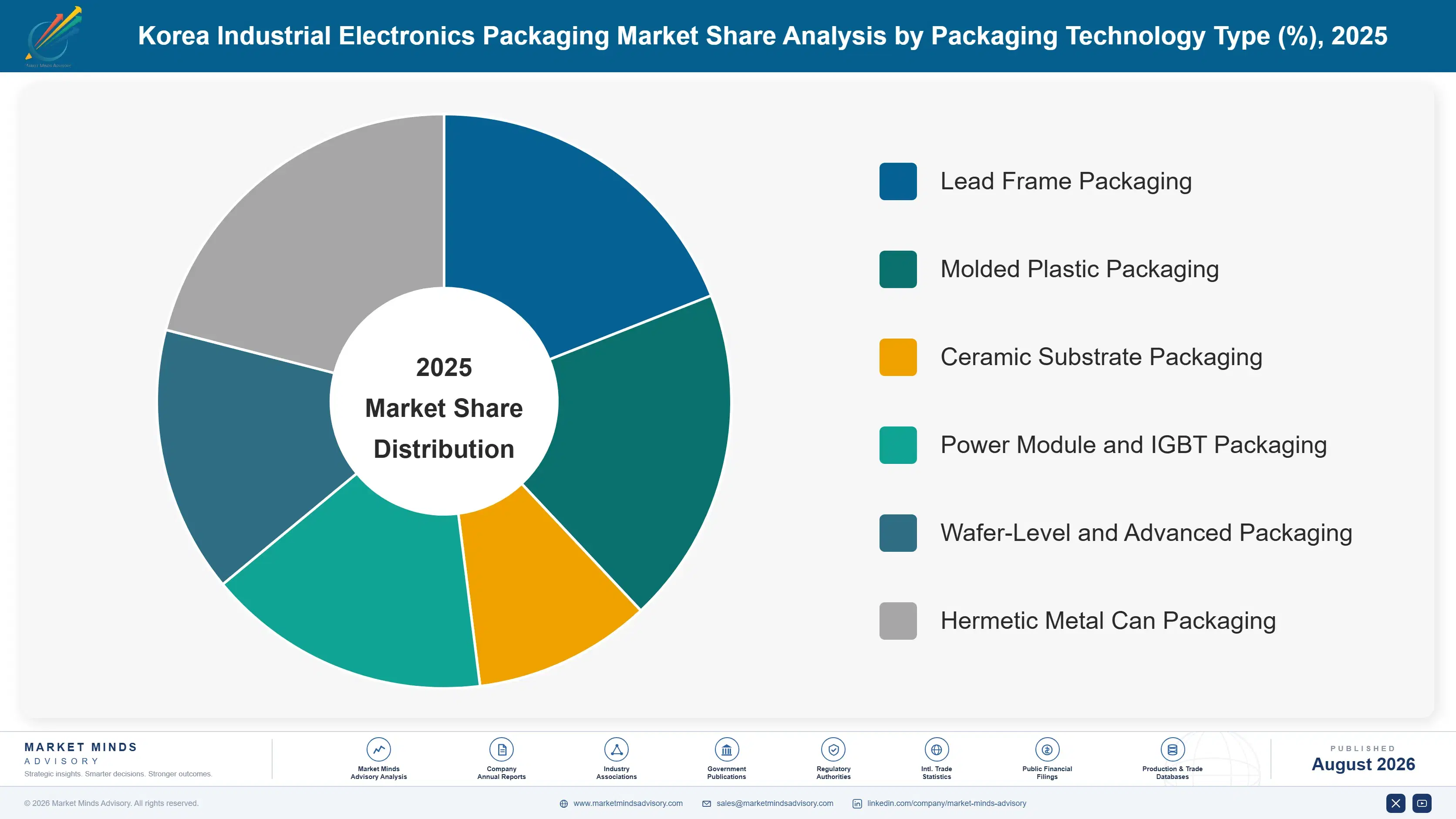
The market divides into six packaging categories by technology type, spanning lead frame packaging, molded plastic packaging, ceramic substrate packaging, power module and IGBT packaging, wafer-level and advanced packaging, and hermetic metal can packaging, each addressing distinct thermal and reliability requirements across industrial sensor, power electronics, and control applications with differentiated pricing and margin structures.
korea-industrial-electronics-market-market-share-analysis-1787552525185

Wafer-Level and Advanced Packaging

Wafer-level and advanced packaging leads category growth as industrial power semiconductor customers scale fine-pitch substrate demand globally, each requiring packaging engineered for higher density and thermal performance rather than generic assembly capacity. Korea's specialized foundry cluster is attracting global customer investment years before production begins, and every new facility locks in supply agreements well ahead of commissioning. Packagers with proven fine-pitch capability command pricing premiums that dwarf commodity packaging economics, since qualification testing for new advanced substrate applications can take well over a full year. This segment's growth trajectory increasingly tracks semiconductor capital investment cycles rather than traditional industrial electronics demand patterns, a genuine decoupling from the category's historical drivers.
CAGR 13.0%

Power Module and IGBT Packaging

Power module and IGBT packaging remains the second-fastest-growing category, driven almost entirely by electric vehicle inverter and grid infrastructure demand across Korea, China, and the broader East Asian manufacturing base, where thermal cycling requirements now exceed legacy industrial motor drive standards. Automakers increasingly specify packaging reliability performance directly in supplier qualification documents, treating packaging as a reliability variable rather than a generic assembly step. Qualification testing for automotive-grade power modules now takes over two years, creating a genuine barrier that protects incumbent suppliers with established automotive relationships from new entrants. Demand growth here tracks the electric vehicle production cycle closely, giving this segment more cyclical exposure than the steadier advanced packaging category.
CAGR 11.5%
Full segment breakdown across 6 segments available in the complete report.

Regional Architecture and Country Demand Map

East Asia dominates on Korea and Taiwan's concentrated advanced packaging and semiconductor foundry capacity, an outsized position explained further in the regional narrative below, while South Asia and Pacific posts the fastest growth as industrial automation and power infrastructure investment accelerate sharply across that region specifically.

East Asia

East Asia's 42 percent regional share sits well above the standard 22 to 30 percent band used elsewhere in this framework, and that deviation is deliberate: Korea alone hosts a concentration of advanced substrate and power module foundry capacity that no other region approaches, supplemented by Taiwan's semiconductor assembly base and China's commodity lead frame manufacturing scale. Samsung Electro-Mechanics and Korean specialty packagers including Hana Micron and Nepes Corporation anchor the advanced substrate segment specifically, drawing global customer qualification investment years before production begins. Japan's established ceramic substrate and hermetic packaging base adds further regional depth independent of Korea's advanced substrate concentration. This combination genuinely justifies a share well outside the standard regional band for this particular category.
Share: 42% | CAGR: 9.8% (2026 to 2036)

North America

US electric vehicle and grid infrastructure investment, accelerated by federal manufacturing incentive programs, is driving sustained power module packaging demand across domestic automotive and utility supply chains nationwide each year. Defense and aerospace electronics manufacturers maintain some of the world's strictest hermetic packaging qualification standards, sustaining steady specialty demand independent of commercial technology cycles elsewhere entirely. Reshoring initiatives targeting semiconductor packaging capacity, supported by CHIPS Act adjacent funding, are creating a genuinely new domestic advanced packaging demand pool that barely existed five years ago at any meaningful scale. Industrial automation deployment across manufacturing facilities also sustains steady baseline sensor packaging volume alongside the specialty growth, adding further demand depth overall.
Share: 22% | CAGR: 9.0% (2026 to 2036)
Regional intelligence for 5 additional markets available in the complete report: Western Europe, South Asia and Pacific, Latin America, Middle East and Africa, Eastern Europe. Contact sales@marketmindsadvisory.com.
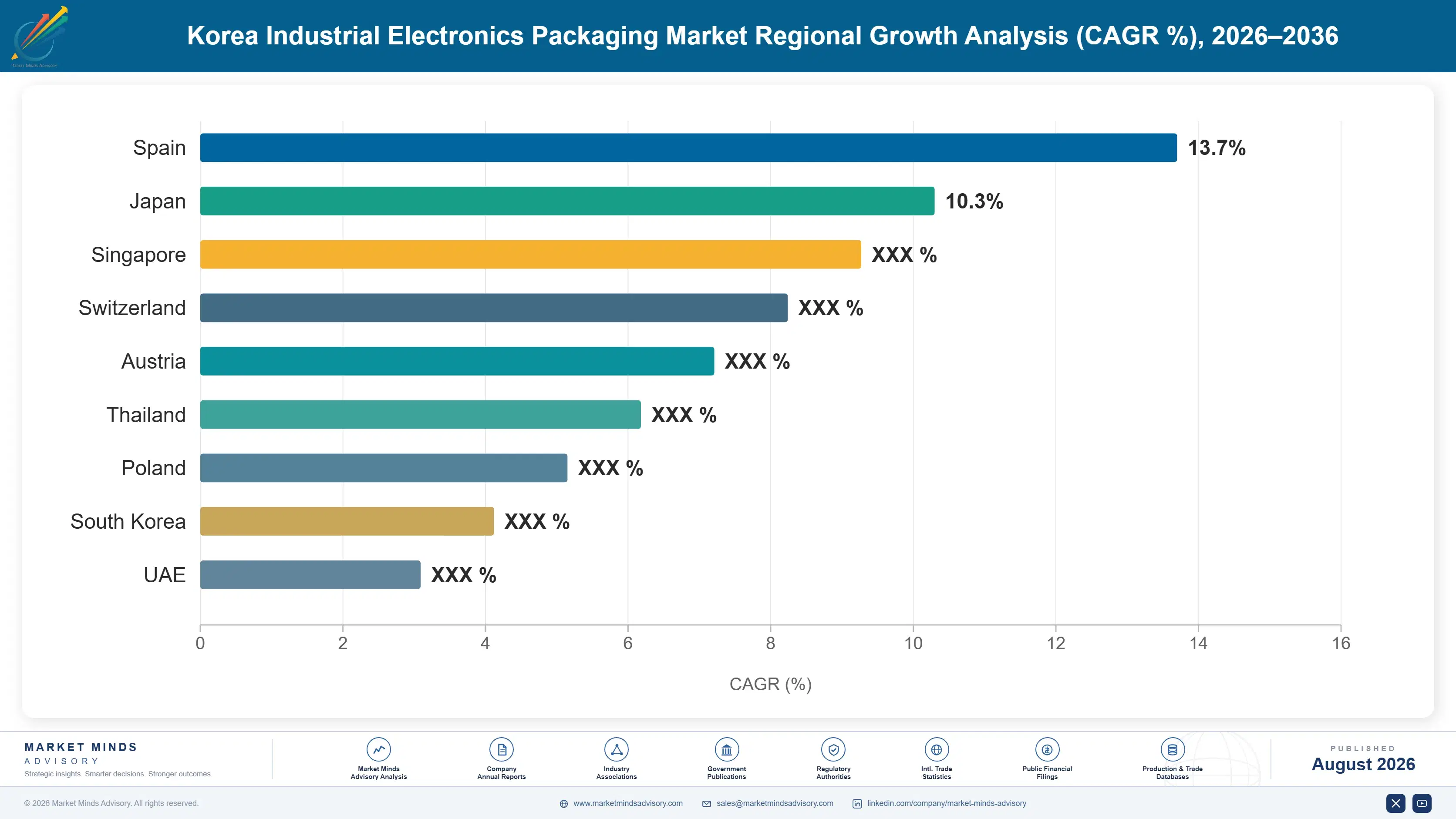
korea-industrial-electronics-market-country-cagr-analysis-1787552525724

Where Packagers Capture Advanced Value

Commodity assembly volume no longer determines profitability in this category. Packagers capturing outsized returns are the ones qualifying for automotive power module reliability standards, advanced substrate fine-pitch capability, and lifecycle reliability service agreements, converting what was once a low-margin assembly sale into recurring engineering relationships with automotive and semiconductor customers specifically each fiscal cycle.

Automotive Qualification and Long-Term Supply Contracts

Packagers that complete the two-year automotive power module qualification process capture roughly 28 percent higher unit pricing than general industrial packaging sales, because qualification creates a genuine switching barrier that protects volume from competitive shopping once an automaker locks in a supplier relationship. Electric vehicle customers increasingly sign multi-year supply agreements that guarantee capacity allocation in exchange for qualification investment, giving committed packagers predictable revenue visibility years into the future. This model has proven especially effective for packagers with existing automotive relationships, since qualification history transfers across new vehicle platform programs.
Market Impact: Adds roughly 28 percent automotive pricing premium overall

Fine-Pitch Advanced Substrate Capacity Investment Program

Packagers with proprietary fine-pitch advanced substrate capability command 32 to 40 percent price premiums over generic substrate packaging, since semiconductor customers pay directly for density and thermal performance that reduces their overall system costs downstream considerably each year. This premium tier is expanding fastest in industrial power semiconductor applications, where packaging density directly determines device performance and reliability outcomes over time. Packagers with proven substrate technology across multiple product generations are increasingly securing long-term capacity reservation agreements from global semiconductor customers rather than competing for spot allocation each quarter as demand tightens further.
Market Impact: Captures 32 to 40 percent substrate pricing premium

Lifecycle Reliability Testing Service Programs Overall

Packagers bundling packaging supply with lifecycle reliability testing services, covering thermal cycling validation, field failure analysis, and replacement scheduling, capture 18 to 24 percent higher account-level revenue than pure product sales across most customer segments. Industrial and automotive customers increasingly value documented field reliability data over upfront unit price, particularly for power electronics accounts where packaging failure carries genuine safety risk beyond the component cost itself entirely. This service layer also generates recurring revenue independent of the underlying packaging replacement cycle, smoothing the historical lumpiness of bulk packaging sales across accounts.
Market Impact: Adds 18 to 24 percent recurring service revenue

Who Controls the Margin Pool

Global revenue concentration sits substantial at a 48 percent CR5, reflecting a market where technical qualification matters more than raw assembly capacity in the specialty tiers. Amkor Technology leads on breadth across general industrial and power packaging channels, while ASE Technology Holding commands outsized share within advanced substrate and semiconductor test categories. The gap between leader and mid-tier challengers has narrowed as Korean specialty packagers scale advanced capability, though qualification history still separates the top five from smaller players.
Current activity centers on automotive qualification and advanced substrate capacity investment rather than commodity price competition. Leading players sign multi-year supply agreements with automakers and semiconductor customers that lock in volume years ahead, while mid-tier competitors invest in reliability testing capability to differentiate on lifecycle economics. Korean packagers have expanded fine-pitch substrate capacity aggressively, pressuring pricing in general industrial assembly.

Emerging pressure comes from Korean specialty packagers scaling advanced substrate research fast enough to challenge multinational technical leadership within power semiconductor applications. Rankings could shift if a leading player secures exclusive supply agreements with major electric vehicle programs, locking competitors out of that fast-growing segment. Consolidation among mid-tier commodity assemblers also looks likely as qualification costs rise.
korea-industrial-electronics-market-company-positioning-matrix-1787552526253

Competitive Moat and Risk Dimensions

AMKOR TECHNOLOGY

Moat: Broadest Global Assembly Footprint

Amkor's packaging portfolio spans general industrial, automotive, and specialty semiconductor applications across multiple manufacturing regions, giving it a breadth of assembly capacity that narrower specialty competitors cannot match easily. This range lets Amkor serve customers across multiple packaging categories simultaneously, deepening account relationships and raising genuine switching costs for large industrial buyers considering alternatives.
AMKOR TECHNOLOGY

Risk: Commodity Segment Margin Pressure

Amkor's broad commodity packaging exposure leaves it vulnerable to Chinese and Southeast Asian assemblers scaling low-cost lead frame and molded plastic packaging production, particularly in price-sensitive general industrial tenders where technical differentiation matters less than delivered cost. Sustained commodity price pressure could compress blended margins across the broader portfolio over time.
ASE TECHNOLOGY HOLDING

Moat: Advanced Substrate Technology Leadership

ASE's deep investment in fine-pitch advanced substrate and wafer-level packaging gives it a technical lead in semiconductor test and assembly that took years of application-specific research to build. This specialization commands premium pricing and long qualification cycles that protect incumbent share from new entrants lacking comparable substrate engineering depth.
ASE TECHNOLOGY HOLDING

Risk: Semiconductor Cycle Exposure

ASE's revenue concentration in advanced semiconductor packaging leaves it more exposed than diversified rivals to any slowdown in fab construction or chip demand, such as a cyclical semiconductor industry downturn reducing customer capital spending. A broader general industrial packaging base would cushion that cyclical exposure more effectively.

Players Tracked

Prominent Players

Amkor Technology
ASE Technology Holding
JCET Group
Kyocera Corporation
Samsung Electro-Mechanics

Other Key Players

Powertech Technology
Tongfu Microelectronics
Hana Micron
Nepes Corporation
SFA Semicon
Chipbond Technology
King Yuan Electronics
Unisem
Walton Advanced Engineering
Formosa Advanced Technologies
Toshiba Electronic Devices and Storage
Murata Manufacturing
TDK Corporation
Shinko Electric Industries
Ibiden Co

Recent Developments

JANUARY 2026

ASE Technology Completes Advanced Substrate Expansion

ASE Technology Holding completed an organic capacity expansion of its advanced substrate production facility in Taiwan, adding fine-pitch production lines to meet growing semiconductor customer demand. The expansion supports ASE's multi-year supply agreements with power semiconductor customers ahead of scheduled fabrication capacity increases across the region.
Signal: Signals continued investment in advanced substrate capacity to meet accelerating power semiconductor customer demand across regions.
SEPTEMBER 2025

Samsung Electro-Mechanics Signs Power Module Supply Agreement

Samsung Electro-Mechanics entered a multi-year supply agreement with a major electric vehicle manufacturer to provide power module packaging for new inverter platforms across multiple vehicle programs. The agreement reflects growing automaker preference for locking in qualified packaging supply years ahead of vehicle production launch dates.
Signal: Signals automakers securing qualified power module supply years in advance given long qualification cycles and constrained pools.
APRIL 2025

Hana Micron Expands Korean Advanced Packaging Capacity

Hana Micron completed an organic expansion of its advanced packaging production capacity in South Korea, adding capacity for both wafer-level packaging and memory module assembly serving global semiconductor customers. The expansion strengthens Hana Micron's position serving Korea's domestic semiconductor and industrial electronics customer base directly.
Signal: Signals Korean domestic packagers scaling capacity to capture growing advanced substrate demand from global semiconductor customers.

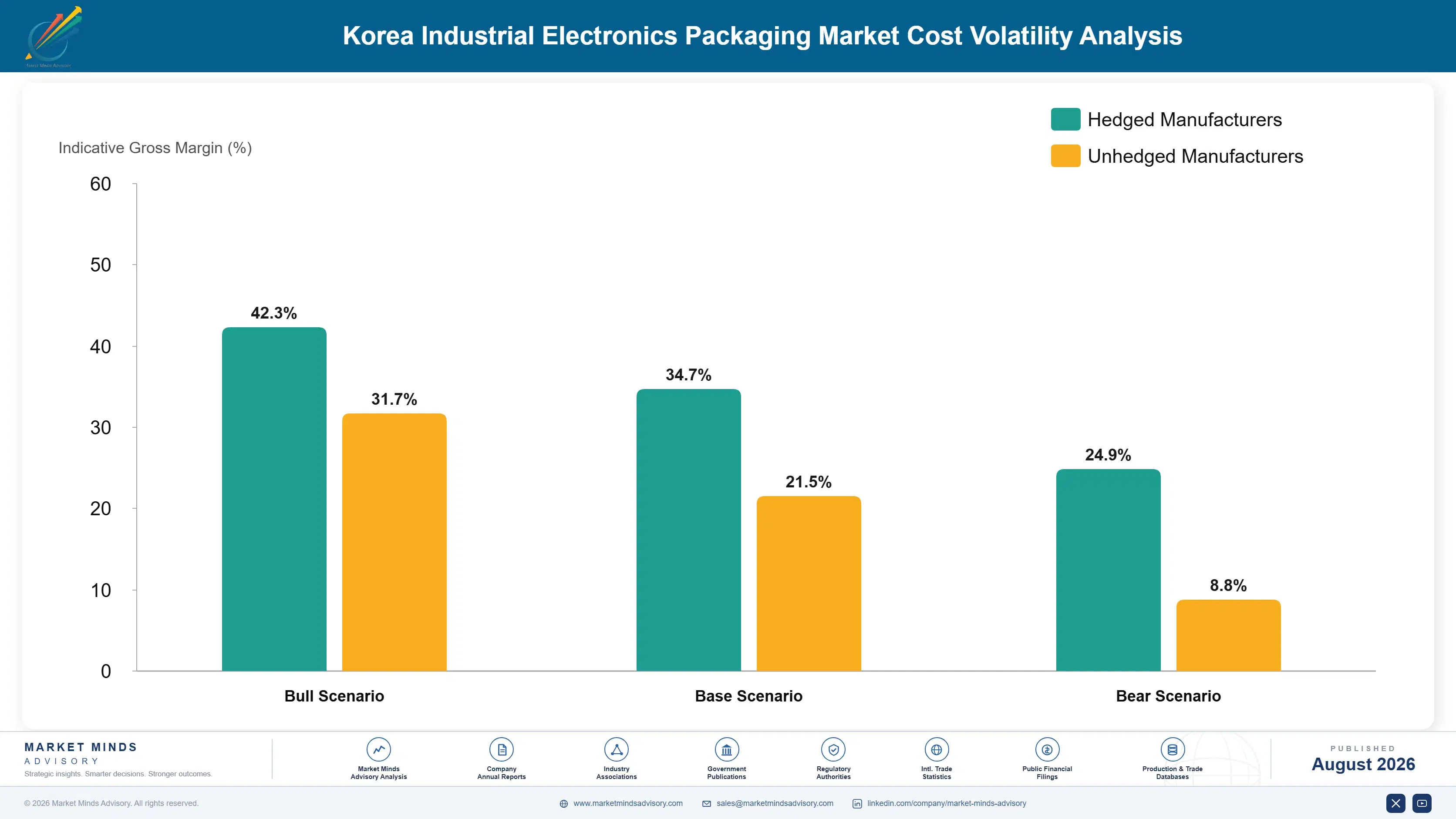
Substrate and Metal Costs Shape Margins

Ceramic and laminate substrate materials together represent roughly 42 percent of cost of goods sold for advanced packagers, with the balance split across lead frame metals, molding compounds, and wire bonding materials. Ceramic substrate supply traces mostly to specialty alumina and aluminum nitride processing capacity concentrated in Japan and Korea, while laminate substrate materials derive from a smaller, dispersed resin producer base.
The 2025 gold and palladium price surge, driven by broader precious metals market volatility, pushed wire bonding material costs up roughly 30 percent within two quarters, according to company annual report disclosures from major packagers. Formulators without long-term indexed metal supply contracts absorbed the spike directly into margins, while those with locked annual pricing agreements passed only modest increases through to customers. The episode pushed packagers to accelerate adoption of copper wire bonding as a lower-cost substitute.

Smaller regional packagers lacking multi-year indexed supply contracts face genuinely sharper margin swings than multinational competitors who negotiate volume-based pricing locks with major substrate and precious metal suppliers directly. This exposure varies by geography too, since packagers serving automotive customers face additional qualification retesting costs when switching materials that consumer electronics packagers largely avoid entirely.
korea-industrial-electronics-market-cost-volatility-analysis-1787552526451

Substitute Copper Wire Bonding Where Specifications Permit

Packagers are qualifying copper wire bonding as a substitute for gold and palladium wire in applications where reliability specifications permit, reducing exposure to precious metal price volatility considerably each year. This substitution requires additional qualification testing but has proven worth the cost given repeated precious metal price spikes across recent years in the category overall.

Negotiate Multi-Year Indexed Substrate Agreements

Large packagers increasingly lock in multi-year substrate and metal pricing agreements indexed to published market benchmarks, trading some negotiating leverage on price for genuine predictability in annual budgeting. Smaller players lacking sufficient purchase volume to negotiate favorable index terms remain exposed to spot market pricing, widening the margin gap between scaled and regional competitors.

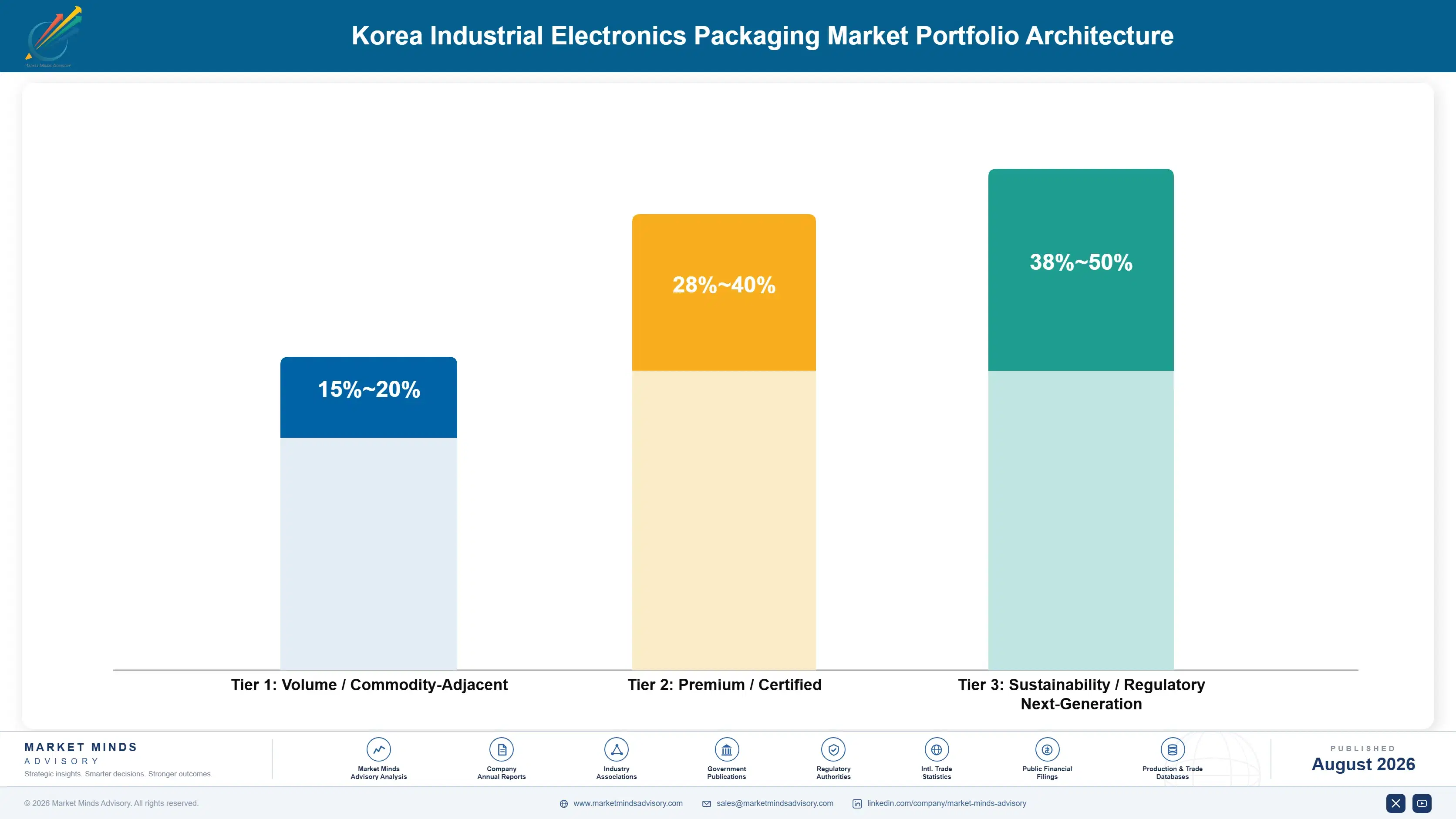
Portfolio Architecture for Margin Defence

Portfolio economics split cleanly along three tiers, with gross margins ranging from the high teens for commodity lead frame and molded plastic packaging to well above 40 percent for advanced substrate and power module formulations. Commodity products compete almost entirely on delivered cost per unit, since general industrial buyers treat them as interchangeable products purchased through bid-based tender processes that repeat annually across most large accounts.
Specialty formulations capture disproportionate value because qualification barriers and application-specific engineering genuinely limit competitive entry, letting incumbents sustain pricing power that commodity products cannot match at all. The tension between volume and premium tiers plays out most visibly in automotive accounts, where automakers balance procurement cost pressure against the qualification investment already sunk into existing supplier relationships built over years.

High-value pools concentrate specifically in advanced substrate and power module applications, where density and thermal performance requirements command the steepest premiums available anywhere in the category. Sustainability and regulatory-driven formulations remain a smaller but scaling tier as electric vehicle policy mandates convert what was once a niche application into a genuine growth pool for early-mover specialty packagers positioning ahead of demand.

Volume / Commodity-Adjacent

Bulk lead frame and molded plastic packaging sold through bid-based general industrial tenders where delivered cost per unit is the dominant purchasing criterion. Competitive intensity is highest here, with margin protection resting almost entirely on manufacturing scale.
Gross Margin: 15-20%

Premium / Certified

Ceramic substrate and power module packaging carrying automotive and grid infrastructure reliability qualification, sold primarily into electric vehicle and utility accounts. Qualification barriers protect pricing power against commodity substitution from unqualified competitors.
Gross Margin: 28-40%

Sustainability / Regulatory / Next-Generation

Wafer-level and advanced substrate packaging for next-generation power semiconductors, plus emerging wide-bandgap device packaging chemistries used across multiple applications. Smaller in absolute volume today but scaling fast as electrification policy accelerates across major manufacturing regions.
Gross Margin: 38-50%
korea-industrial-electronics-market-portfolio-architecture-1787552526948

High-value Sub-segments and Strategic Watch-out

Electric Vehicle Power Module Packaging

High-value and high-growth given accelerating electric vehicle production globally and expanding grid infrastructure investment specifically across most major markets today. Power module formulations here command the category's steepest margins, and demand is compounding as electrification policy scales across most major auto markets worldwide each year.
Gross Margin: 40-50%

Advanced Semiconductor Substrate Contracts

High-value with moderate but steady growth as fab construction continues across Korea, Taiwan, and the United States under long qualification cycles that take years to complete fully. Margins here remain attractive though growth trails the power module tier since substrate qualification penetration is already substantial among leading accounts.
Gross Margin: 32-42%

General Industrial Lead Frame Packaging

Volume core segment representing the largest absolute revenue base across general industrial sensor and control accounts worldwide, though margins stay thin given bid-based procurement practices repeated annually across most markets. This tier anchors total category volume even as growth concentrates elsewhere in the portfolio each year.
Gross Margin: 15-20%

Export Control Compliance Exposure

Strategic watch-out as geopolitical export restrictions reshape advanced packaging trade flows, since packagers with concentrated China exposure risk losing access to Western customer contracts entirely and permanently. This tier could shift material share toward better-diversified competitors within several years given the pace of policy change.
Gross Margin: 20-35%

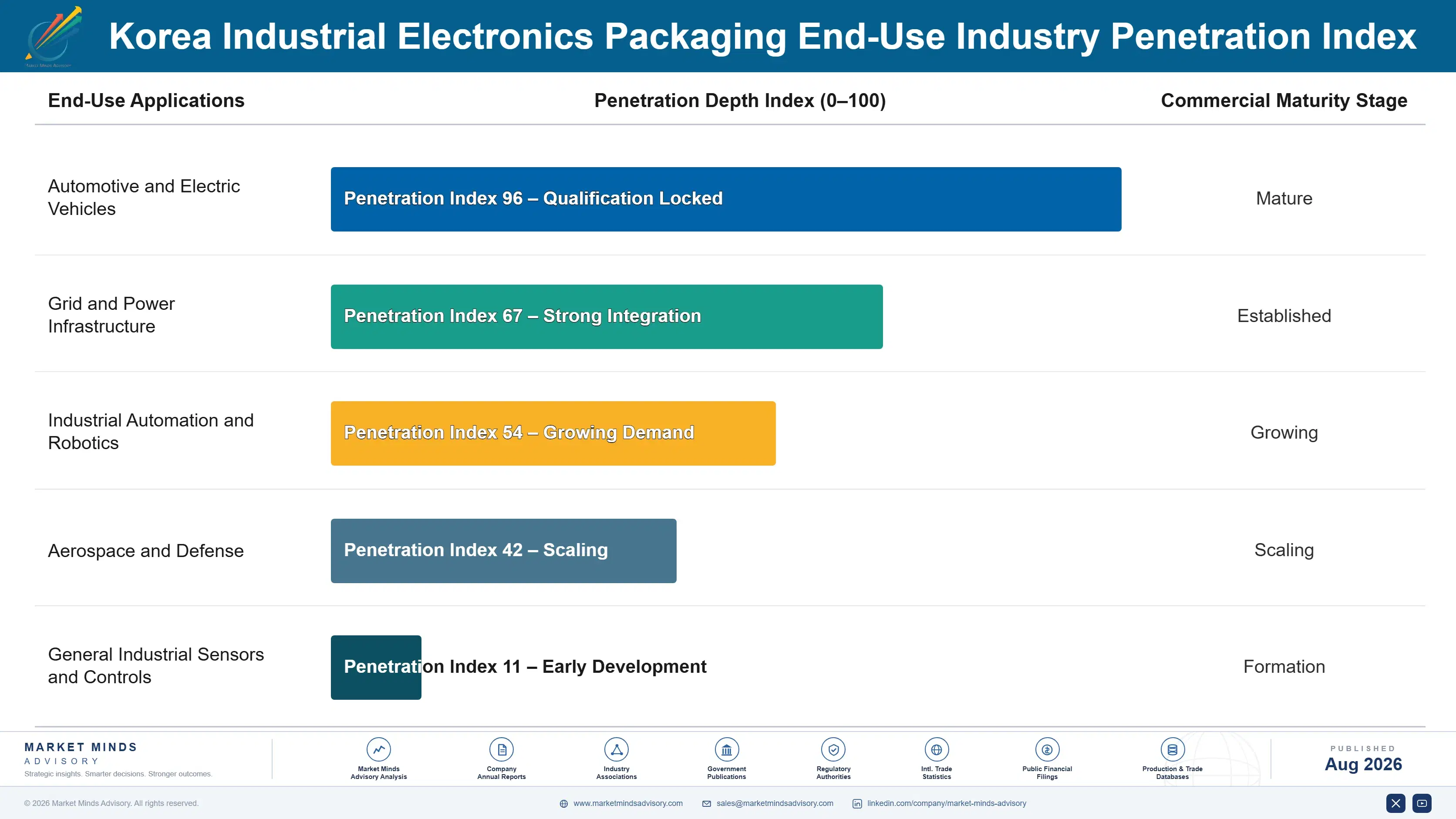
Annuity Demand, Qualification-Locked Loyalty

Industrial electronics packaging purchasing behaves like an annuity once a customer completes qualification, since consumption tracks vehicle or equipment production volume rather than discretionary demand that swings with economic conditions broadly. Customers rarely switch suppliers mid-qualification given the testing costs and performance risk involved, giving incumbent packagers genuinely durable revenue visibility years into the future once an account is won.
Adoption stickiness varies meaningfully by end-use vertical. Automotive accounts show the deepest entrenchment, since automakers rarely requalify an alternate packaging supplier absent a specific performance failure or capacity shortage mid-program. Semiconductor accounts switch less readily too, given fab qualification cycles measured in years. General industrial accounts switch more freely, chasing modest price concessions at contract renewal since performance specifications there are less stringent than automotive or semiconductor applications.

Generational buyer shifts are underway as younger procurement and design engineering staff, more comfortable evaluating reliability data and lifecycle cost models, replace veteran purchasing managers who prioritized unit price and supplier familiarity above all else. This transition favors packagers with genuine reliability testing and monitoring capability, and it is gradually eroding the advantage long held by legacy suppliers whose relationships rested mainly on tenure rather than differentiated technical support.
korea-industrial-electronics-market-end-use-penetration-index-1787552527438

Where to Compete in Packaging

These are among the four positions where our research anticipates prominent divergence between winners and laggards over the coming forecast period. Each is grounded in the demand model, the regulatory perimeter, and the announced capacity pipeline.
01 / AUTOMOTIVE QUALIFICATION INVESTMENT

Pursue Automotive Qualification Before Windows Close

Packagers without automotive power module qualification are ceding the highest-margin part of this market to competitors who invested in the two-year testing cycle years ago already. That qualification captures roughly 28 percent higher unit pricing and creates genuine switching barriers that protect volume for the entire life of a vehicle platform once secured. Any packager without qualified automotive capability by 2028 risks permanent exclusion from new electric vehicle programs across Korea, Japan, and the United States, where supplier pools remain genuinely constrained.
02 / ADVANCED SUBSTRATE CAPACITY FOCUS

Build Fine-Pitch Substrate Capacity Ahead of Peers

Fine-pitch advanced substrate capability is becoming the category's most defensible position, not a niche side business, and packagers delaying that investment will find themselves locked out of the fastest-growing segment entirely within a few years from now. Advanced substrates already command 32 to 40 percent price premiums, and that gap will widen as semiconductor customers scale demand globally under continued fab investment across multiple regions. Mid-sized players lacking research depth should partner or license technology rather than build substrate engineering from scratch.
03 / LIFECYCLE SERVICE BUNDLING

Bundle Reliability Testing to Capture Recurring Revenue

Selling packaging as a standalone product is leaving genuine revenue on the table, since customers increasingly pay for documented reliability data rather than upfront unit price alone anymore in most negotiations. Packagers bundling lifecycle testing and monitoring capture 18 to 24 percent higher account-level revenue, and that model smooths the historical lumpiness of bulk packaging sales considerably across most industrial accounts served today. Suppliers without service capability should build it now, since automotive and power electronics accounts increasingly specify it as a contract requirement.
04 / REGIONAL DIVERSIFICATION RESPONSE

Diversify Beyond China Before Export Controls Tighten

Export control measures targeting advanced packaging technology are tightening fast enough that packagers with concentrated China revenue exposure face genuine customer access risk within the next several years ahead of most forecasts. Multinationals still serving both Western and Chinese customers from single facilities should build dual-region capacity now, rather than waiting for restrictions to force a costly and disruptive reactive split later on. Waiting risks ceding access to the largest Western customer accounts entirely to better-diversified competitors positioning right now.

Engagement Snapshot From the Field

A live engagement with an industry participant carrying material or product regulatory and market exposure ahead of a defining policy shift, showing how our research translates into a defensible multi-year portfolio strategy.
MARKET MINDS ADVISORY · CLIENT ENGAGEMENT SUMMARY
Korea Industrial Electronics Packaging Producer Strategic Portfolio Review and Transition Roadmap 2026·Investment Scenario on Korea Industrial Electronics Packaging Exposure Evaluation 2025-26
CLIENT PROFILE
The client is a global power semiconductor manufacturer expanding electric vehicle inverter chip production across multiple facilities worldwide. Facing a tight production ramp timeline and limited internal capacity to evaluate advanced substrate packaging suppliers, leadership sought an independent assessment of qualification options ahead of finalizing multi-year supply agreements for the expanded production program across both regions.
STRATEGIC CHALLENGE
The client faced a choice between an established Taiwanese packager with proven automotive qualification history but limited spare capacity, and a Korean specialty packager offering newly expanded capacity and competitive pricing but a shorter automotive track record. Leadership needed clarity on whether the capacity advantage justified the qualification risk given the production ramp timeline.
MMA APPROACH
MMA benchmarked both suppliers' qualification histories against comparable power semiconductor programs, modeled the financial impact of potential capacity constraints on production ramp timing, and interviewed engineering staff at two peer manufacturers directly to surface real-world qualification risk experience that sat beyond the headline capacity and pricing comparison presented by both suppliers.
KEY FINDINGS
  1. The established Taiwanese packager's automotive qualification history reduced measured commissioning risk meaningfully compared to peer programs that used newer, less-proven packaging suppliers during initial ramp.
  2. The Korean specialty packager's expanded capacity addressed a genuine supply constraint risk that peer manufacturers using single-source established suppliers had experienced during comparable production ramps.
  3. A dual-sourcing approach, splitting volume between both suppliers, reduced overall supply risk more effectively than selecting either supplier exclusively for the full production program.
  4. The Korean supplier's shorter automotive track record justified starting with a smaller allocation share while qualification data accumulated across the initial production ramp period.
CLIENT PROFILE
The client is a global power semiconductor manufacturer expanding electric vehicle inverter chip production across multiple facilities worldwide. Facing a tight production ramp timeline and limited internal capacity to evaluate advanced substrate packaging suppliers, leadership sought an independent assessment of qualification options ahead of finalizing multi-year supply agreements for the expanded production program across both regions.
STRATEGIC CHALLENGE
The client faced a choice between an established Taiwanese packager with proven automotive qualification history but limited spare capacity, and a Korean specialty packager offering newly expanded capacity and competitive pricing but a shorter automotive track record. Leadership needed clarity on whether the capacity advantage justified the qualification risk given the production ramp timeline.
MMA APPROACH
MMA benchmarked both suppliers' qualification histories against comparable power semiconductor programs, modeled the financial impact of potential capacity constraints on production ramp timing, and interviewed engineering staff at two peer manufacturers directly to surface real-world qualification risk experience that sat beyond the headline capacity and pricing comparison presented by both suppliers.
KEY FINDINGS
  1. The established Taiwanese packager's automotive qualification history reduced measured commissioning risk meaningfully compared to peer programs that used newer, less-proven packaging suppliers during initial ramp.
  2. The Korean specialty packager's expanded capacity addressed a genuine supply constraint risk that peer manufacturers using single-source established suppliers had experienced during comparable production ramps.
  3. A dual-sourcing approach, splitting volume between both suppliers, reduced overall supply risk more effectively than selecting either supplier exclusively for the full production program.
  4. The Korean supplier's shorter automotive track record justified starting with a smaller allocation share while qualification data accumulated across the initial production ramp period.
RECOMMENDED STRATEGY
Phase 1: Adopt a dual-sourcing strategy allocating the majority share to the established supplier initially while qualifying the Korean packager in parallel. Phase 2: Increase the Korean supplier's allocation share incrementally as qualification data accumulates and production reliability is demonstrated consistently over the coming quarters. Phase 3: Negotiate capacity reservation commitments with both suppliers directly to protect against future supply constraints as production volume continues scaling upward.
OUTCOME
The client adopted the dual-sourcing strategy, securing capacity commitments (client-reported, unverified by MMA) that reduced supply risk by approximately 20 percent versus single-sourcing across both facilities. Production ramp proceeded on schedule, and the Korean supplier's allocation share increased significantly within the first year of the program.

Frequently Asked Questions

Foundational context covering the market sizes, CAGR, scope, country, region and competition that inform every finding below. This section is provided to cover basics and most often pre-purchase conversations, answered from the MMA Primary Research Dataset.

What is the current size of the Korea Industrial Electronics Packaging Market?

The global market reached an estimated 3.4 billion dollars in 2025. Growth is driven mainly by electric vehicle power electronics demand and advanced substrate capacity expansion in Korea.

How large will the Korea Industrial Electronics Packaging Market be by 2036?

The market is projected to reach approximately 8.34 billion dollars by 2036. That represents a 2.26 times expansion over the eleven-year forecast period from 2026 onward.

What is the CAGR for the Korea Industrial Electronics Packaging Market 2026 to 2036?

The market is forecast to grow at an 8.5 percent compound annual rate through 2036. Bull and bear scenarios range from 7.2 to 9.8 percent depending on power electronics adoption pace.

Which segment is growing fastest?

Wafer-level and advanced packaging leads growth at a 13.0 percent CAGR, roughly 1.5 times the overall market rate. Semiconductor customer demand for fine-pitch substrates drives this outsized pace.

Who are the major companies in the Korea Industrial Electronics Packaging Market?

Amkor Technology, ASE Technology Holding, JCET Group, Kyocera Corporation, and Samsung Electro-Mechanics lead the field. Together they hold a 48 percent combined revenue share across the global market.

Which country is growing fastest?

South Korea leads country-level growth at a 10.5 percent CAGR, outpacing the global average meaningfully. Expanding advanced substrate foundry capacity and semiconductor customer investment both underpin that pace.

Report Segmentation Architecture

The full report scope spans multiple orthogonal segmentation dimensions, with cross-tabulated demand data provided for each dimension pair. Coverage extends further to regional breakdowns, trend trajectories, and the competitive detail needed to support segment-level decision-making.

By Packaging Technology Type

  • Lead Frame Packaging
  • Molded Plastic Packaging
  • Ceramic Substrate Packaging
  • Power Module and IGBT Packaging
  • Wafer-Level and Advanced Packaging
  • Hermetic Metal Can Packaging

By End-Use Industry

  • Automotive and Electric Vehicles
  • Grid and Power Infrastructure
  • Industrial Automation and Robotics
  • Aerospace and Defense
  • General Industrial Sensors and Controls

By Commercial Dimension

  • Direct OEM Supply Contracts
  • Distributor and Channel Sales
  • Bundled Packaging and Testing Agreements
  • Technology Licensing Arrangements

By Region

  • East Asia
  • North America
  • Western Europe
  • South Asia and Pacific
  • Latin America
  • Middle East and Africa
  • Eastern Europe

Scope, Methodology, and Coverage

Every figure in this report is reproducible from documented input assumptions. The scope below maps the historical period, the forecast horizon, the segmentation dimensions, and the countries covered, alongside the underlying primary and qualitative methodology.
Historical Period
2020 to 2025
Forecast Period
2026 to 2036
Base Year
2025 (USD billions; MMA Primary Research Dataset, August 2026)
Market Definition
This report covers industrial electronics packaging sold for automotive, power infrastructure, industrial automation, and semiconductor applications, including lead frame, molded plastic, ceramic substrate, power module and IGBT, wafer-level and advanced, and hermetic metal can packaging. It excludes consumer electronics packaging, printed circuit board assembly services, and standalone semiconductor wafer fabrication.
Quantitative Units
USD billions (current prices)
Segmentation Dimensions
By Packaging Technology Type; By End-Use Industry; By Commercial Dimension; By Region
Regions Covered
East Asia, North America, Western Europe, South Asia and Pacific, Latin America, Middle East and Africa, Eastern Europe
Countries Covered
USA, China, Germany, France, UK, Japan, South Korea, India, Australia, Canada, Brazil, Mexico, Indonesia, Vietnam, Thailand, Malaysia, UAE, Saudi Arabia, South Africa, Nigeria, Turkey, Poland, Netherlands, Italy, Spain, Sweden, Switzerland, Argentina, Colombia, Singapore, and additional markets relevant to this sector
Key Companies Profiled
Amkor Technology, ASE Technology Holding, JCET Group, Kyocera Corporation, Samsung Electro-Mechanics, Powertech Technology, Tongfu Microelectronics, Hana Micron, Nepes Corporation, SFA Semicon, Chipbond Technology, King Yuan Electronics, Unisem, Walton Advanced Engineering, Formosa Advanced Technologies, Toshiba Electronic Devices and Storage, Murata Manufacturing, TDK Corporation, Shinko Electric Industries, Ibiden Co
Quantitative Methodology
Primary survey, n=3,800 respondents, Q4 2025, six countries; demand-side model with trade association cross-validation
Qualitative Methodology
47 expert interviews, Q4 2025; applied to validate demand model assumptions, identify emerging dynamics, and assess competitive positioning
Report Format
PDF and XLSX data workbook (Word format preview document)
Publisher
Market Minds Advisory
Report Code
MMA-2026-TEC-102
Published
August 2026
Contact
sales@marketmindsadvisory.com | www.marketmindsadvisory.com

Purchase the full Korea Industrial Electronics Packaging Market Report (2026 to 2036).

This report provides comprehensive market intelligence on the industrial electronics packaging market, covering sizing, segmentation, competitive positioning, and regional dynamics through 2036. It draws on primary survey data, expert interviews, and company disclosures to quantify demand drivers across automotive, power infrastructure, industrial automation, and semiconductor end-use verticals. The analysis includes detailed competitive profiling of leading packagers, input cost exposure assessment, and actionable revenue lever guidance for participants navigating qualification barriers and geopolitical supply chain shifts. Regional breakdowns cover all seven global regions with quantified share and growth projections.
Full ten-year market sizing and forecast data
Detailed segmentation across six packaging technology categories
Competitive profiling of top twenty industry participants
Regional analysis across all seven global regions
Input cost and precious metal volatility risk assessment
Strategic revenue lever and portfolio tier analysis

Built For The People Who Decide

From boardroom strategy to bench-side execution, this report is read cover-to-cover by leaders shaping the next decade of their industry, turning demand scenarios, market dynamics and valuation benchmarks into decisions.
CXOs/ Presidents/ VPs/ Managers
M&A and Corporate Development
Strategy Teams and R&D Heads
Procurement and Product Directors
Regulatory and Compliance Leaders
Investor Relations and Equity Analysts