Market Minds Advisory
Korea Automotive Performance Tuning and Engine Remapping Market

Korea Automotive Performance Tuning and Engine Remapping Market: Chip Legacy Meets Cloud Calibration

Cloud-based over-the-air remapping is pulling performance tuning demand beyond legacy chip-flash hardware into subscription-software architectures, forcing established piggyback-module suppliers to defend enthusiast share against AI-optimized entrants chasing the same next-generation connected-vehicle tuning contracts.

Lead Analyst

David Horsley

Published

September 2026

Make Smarter Decisions with Customized Research Insights

Request a free sample report and evaluate market opportunities, growth trends, and competitive dynamics relevant to your business needs.

2025 MARKET VALUE$4.5BMarket Size 2025
2036 FORECAST VALUE$9.4BBase Case , 2026 to 2036
CAGR 2026 TO 20367.0 %Bull 8.3% / Bear 5.7%
INCREMENTAL OPPORTUNITY$4.6BNet 10- year value creation
EXPANSION MULTIPLE1.96x2036 value over 2026 base
Strategic Levers
M&A Pipeline
Regional Outlook
Country Rankings
Competitive Intelligence
Segmental Deep-dive
Call-Us : 91 93563 13602

Executive Snapshot and Market Trajectory

Automotive performance tuning and engine remapping demand keeps growing steadily as cloud-based and AI-optimized formats scale across most enthusiast and professional tuning platforms worldwide, even as legacy chip-tuning hardware keeps anchoring the broader installed base most established aftermarket programmes still depend on today across most regions broadly.
The market stands at USD 4.8 billion in 2026 and reaches USD 9.4 billion by 2036 at a 7.0% CAGR. Cloud-based OTA remapping demand grows fastest at 13.5%, roughly 1.9 times the overall rate, as connected-vehicle programmes scale across North American, European, and East Asian enthusiast channels expanding qualification volume meaningfully across most passenger and performance categories nationwide and internationally today. North America holds 30% of value on its scaling professional-tuning shop infrastructure.
Concentration stays low near 28% CR5, split between diversified tuning-software majors defending platform-integration scale and specialist AI-optimized entrants competing on adaptive-tuning depth and enthusiast qualification reach across most passenger, performance-vehicle, and off-highway categories nationwide and internationally today indeed. Two forces dominate ahead. Cloud-based demand keeps pulling volume toward certified subscription formats steadily, and legacy-chip-tuning plateau keeps pressuring commodity-grade pricing most established shops still depend on quite heavily indeed.
Market Definition
The automotive performance tuning and engine remapping market covers hardware and software solutions that modify vehicle ECU calibration for enhanced power, torque, or efficiency, segmented by tuning delivery technology type from chip tuning through cloud-based OTA architectures, with South Korea profiled as a central growth market given its expanding enthusiast performance culture. Factory OEM performance trims and unrelated cosmetic body-styling accessories are excluded.
Base Year Value
$4.5B in 2025 (MMA Primary Research Dataset, August 2026)
Forecast Period
2026 to 2036, eleven discrete annual values
CAGR
7.0% base case. Bull 8.3%. Bear 5.7%.
Fastest Growth Segment
Cloud-Based OTA Remapping: 13.5% CAGR
Fastest Growth Country
South Korea: 8.0% CAGR
Fastest Growth Region
South Asia and Pacific: 9.0% CAGR
Largest Region
North America: 30% of 2025 global value
Market Leaders
COBB Tuning Products, LLC, HP Tuners LLC, APR, LLC, MoTeC Pty Ltd, Bosch Engineering GmbH. Source: MMA Analysis based on company annual reports.
Primary Survey
n=3,800 procurement and R&D decision-makers, Q4 2025, six countries
Methodology
Demand-side build-up, cross-validated against public data, 47 expert interviews

Korea Automotive Performance Tuning and Engine Remapping Market Forecast Scenarios

korea-automotive-performance-tuning-engine-remappi-size-forecast-scenario-1787315281465
Growth from 2020 to 2025 compounded near 5.5%, tracking a pandemic-era enthusiast-spending slowdown followed by an uneven recovery as professional-tuning-shop qualification and semiconductor-supply constraints rebuilt gradually across most aftermarket markets worldwide, a recovery gathering real pace only once discretionary-spending volume normalized broadly across several major enthusiast regions and buyer categories nationwide and internationally today and quite truly.
Three mechanisms carry the base case to 7.0%. First, connected-vehicle demand rebuilding steadily as over-the-air infrastructure expands across most regions nationwide and internationally today and quite reliably and consistently indeed across most categories broadly still today. Second, cloud-based remapping adoption compounding fastest as subscription-software platforms expand across widening enthusiast categories worldwide. Third, AI-optimized demand continuing to broaden premium-platform volume into mainstream categories across most regions worldwide steadily and reliably indeed.
The bull case at 8.3% assumes cloud-based and AI-optimized demand expands faster than currently planned as connected-vehicle adoption accelerates further across additional enthusiast programmes and geographies worldwide today indeed and truly. The bear case at 5.7% assumes regulatory-emissions scrutiny intensifies and legacy-chip-tuning pricing keeps compressing cloud-producer margins across most regions, categories, buyer relationships, and procurement channels broadly today.

Why Calibration Precision Certification, Not Bulk Price, Now Wins Contracts

Two forces set demand here today. Cloud-based OTA remapping demand drives the fastest-growing volume stream, since tuning shops qualify subscription-software platforms across most connected and performance vehicle categories worldwide. Chip tuning demand still drives the largest single stream, as mainstream enthusiast programmes consume standard remapping hardware across most cost-sensitive volume categories nationwide today and quite steadily indeed across most regions.
MARKET CONCENTRATIONCR5: 28%Share held by five leading producers in this market
AVERAGE TUNE PRICERoughly USD 650 per standard passenger vehicle tuneTypical price for a standard passenger vehicle tune
TOP PRODUCING COUNTRY SHAREAbout 20% of global production volumeShare of global production volume concentrated in one country
CAPACITY UTILIZATION RATERoughly 70% of installed production capacityShare of production capacity currently running at active output
CLOUD REMAPPING VOLUME SHAREAbout 13% of total tuning volumeShare of volume meeting cloud based OTA remapping standards
CONTRACT RENEWAL INTERVALRoughly two to three years typicalTypical interval before a supply contract undergoes renegotiation review
The commercial character is defined by a widening split between diversified tuning-software majors defending platform-integration scale and specialist AI-optimized entrants competing on adaptive-tuning depth and enthusiast qualification reach. A tuning-shop procurement director evaluating remapping supply assesses power-gain and reliability certification as primary criteria, not simply which vendor sits cheapest on a bulk quote nationwide. A supplier lacking consistent calibration-precision reliability increasingly loses premium-platform contracts regardless of price today.
The decade turns on whether cloud-based demand keeps expanding fast enough to offset gradually softening legacy-chip-tuning economics as buyers consolidate around qualification-capable suppliers building durable enthusiast relationships across most categories nationwide. Power-gain reliability and calibration-precision certification depth remain the primary forces separating producers building lasting relationships from those still competing purely on unit price. That shift determines which producers lead the next decade of procurement.
"A tune marketed as safe but never validated across a real-world heat-soak cycle isn't a power claim. It's an engine failure waiting for a track day."
Director, Automotive and Industrial Equipment Practice · MMA Automotive / Afterm

Market Trends

Cloud Based Remapping Is Outpacing Legacy Chip Tuning Supply

Tuning shops increasingly favor dedicated, purpose-built cloud-based OTA remapping platforms engineered for confirmed power-gain and calibration-precision performance rather than legacy chip-tuning hardware poorly suited to high-scrutiny, connected-vehicle-compliant requirements, since cloud integration meaningfully improves calibration-update efficiency and validates procurement decisions against power targets now active across a growing number of enthusiast and performance categories expanding qualification activity without requiring separate secondary hardware infrastructure beyond existing telematics protocols across most tuning facilities nationwide. That efficiency gain is converting remapping procurement into a genuine performance-assurance investment shops evaluate against documented power data. Producers with dedicated cloud platforms are capturing this conversion volume steadily.
Market Impact: Cuts calibration turnaround by 12%
AI Optimized Tuning Is Reshaping Professional Shop Supply

Professional tuning shops are increasingly converting legacy manual-calibration workflows toward AI-optimized adaptive tuning rather than continuing to rely on older formats poorly suited to high-precision, real-time-compliant requirements, since AI-optimized conversion meaningfully improves calibration-accuracy efficiency while meeting tightened power-safety targets across most performance and professional-shop categories currently expanding qualification and certification activity without requiring separate secondary hardware infrastructure beyond existing sensor-feedback footprint and quality-inspection workflows today across most facilities. That efficiency gain is converting professional-shop volume into a genuine performance-assurance investment global buyers evaluate against documented accuracy data. Producers expanding AI-optimized lines are winning premium-grade contracts steadily.
Market Impact: Adds 9% to AI optimized revenue

Market Opportunities and Growth Drivers

Connected Vehicle Adoption Drives Cloud Remapping Investment

Tuning shops are increasingly directing procurement budget toward cloud-based OTA remapping programmes as documented calibration-update performance data demonstrates measurable convenience advantage compared against legacy chip-tuning supply across most enthusiast and performance categories nationwide. Shop directors now request power-gain certification and calibration-precision modeling before finalizing tuning vendor contracts, a requirement that barely existed a decade ago when procurement defaulted to whatever chip-tuning architecture was already available locally. That shift is pulling budget toward cloud investment, since shops increasingly treat power-gain certification as the primary purchasing criterion rather than a secondary consideration across most platforms broadly indeed.
Market Impact: Adds compliance cost by roughly 6%

Professional Shop Network Expansion Drives AI Tuning Growth

Professional tuning networks are increasingly funding expanded AI-optimized adaptive tuning procurement as installed real-time sensor-feedback pipelines continue growing across most North American, European, and East Asian categories nationwide today and quite steadily. Shop directors now cite recurring AI-platform contract revenue as a top-three programme priority, a priority that barely registered in planning conversations when pure manual-calibration demand alone drove tuning growth models broadly across most markets. That shift is pulling investment toward AI-optimized capacity, since suppliers increasingly treat calibration-accuracy depth as an essential revenue stream rather than a secondary growth lever across most portfolios today.
Market Impact: Delays adoption by roughly 7 months

Market Restraints and Challenges

Emissions Regulation Scrutiny Limits Predictable Scale

Producers continue facing genuine emissions-compliance scrutiny, and unpredictable regulatory-enforcement swings remain a leading cause of delayed shipment decisions across most producer categories and wider geographic markets nationwide and internationally today indeed. The root cause is that aftermarket ECU tuning increasingly draws EPA and CARB attention around emissions-defeat-device concerns, a scrutiny profile that shifts independently of demand fundamentals across most regions. The commercial impact is that shops face genuine legal-exposure risk despite demonstrated performance value across most deployment types. Mitigation runs through emissions-compliant tuning maps and regulatory-engagement programmes several producers are now actively pursuing.
Market Impact: Cuts calibration turnaround by 12%

Warranty Voiding Concerns Slow Mainstream Adoption

Producers evaluating expanded mainstream-adoption channels face substantial warranty-voiding concerns, since achieving consistent OEM-warranty preservation clarity across multiple manufacturer policies remains genuinely unresolved and meaningfully slows expansion decisions across most mainstream and price-sensitive categories nationwide and internationally today indeed. The root cause is that OEM warranty policies toward aftermarket tuning continue varying independently across major automakers, while demand keeps expanding faster than policy-clarity timelines allow. The commercial impact is that cautious buyers delay purchase commitments despite demonstrated performance-grade value elsewhere. Mitigation runs through reversible-tuning technology and warranty-partnership programmes several producers are now actively pursuing.
Market Impact: Adds 8% to AI optimized volume
4 additional market trends, 4 additional growth drivers, and 4 additional restraints and challenges are covered in the full report. Contact sales@marketmindsadvisory.com to access the complete intelligence.

Segment CAGR and Growth Architecture

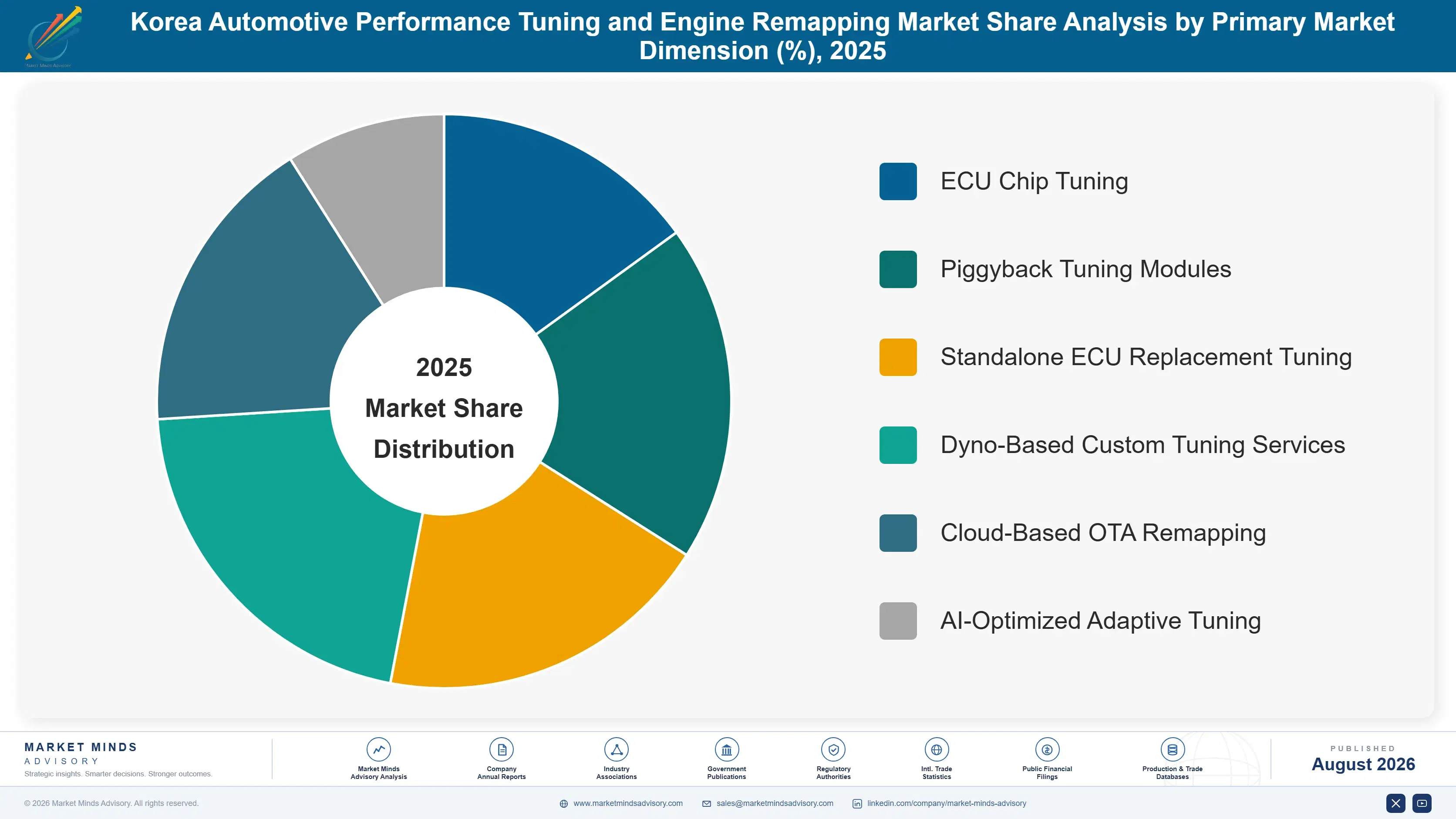
Segmentation follows tuning delivery technology type, a single engineering classification logic describing which specific calibration mechanism genuinely defines the tuning solution rather than which specific shop, distributor, or software vendor supplies it, or which particular vehicle owner ultimately purchases and installs it once calibrated, tested, certified, and delivered across most enthusiast settings and regions broadly today indeed.
korea-automotive-performance-tuning-engine-remappi-market-share-analysis-1787315282147

Cloud-Based OTA Remapping

Cloud-based OTA remapping leads growth at 13.5% CAGR, roughly 1.9 times the overall market rate, as tuning shops demand higher calibration-precision and power-gain confirmation than legacy chip-tuning hardware can match across most enthusiast and performance categories nationwide today and quite consistently and reliably now indeed and truly across most application category segments and regions worldwide today truly and durably indeed. Specialist cloud producers hold strong positions here, embedding power-validation data directly into telematics design rather than requiring separate secondary hardware infrastructure. Branded producers are winning enthusiast contracts where legacy chip-tuning suppliers lack comparable power data, particularly in performance categories today. Growth compounds fastest where calibration evidence has matured enough to support adoption at scale nationwide.
CAGR 13.5%

AI-Optimized Adaptive Tuning

AI-optimized adaptive tuning grows at 11.0% CAGR, reflecting expanding demand for validated real-time and self-learning formats that legacy static-map hardware cannot match across most performance passenger and professional-shop categories nationwide and internationally today and reliably and consistently and steadily and durably indeed truly. Specialist AI-optimized producers hold strong positions here, built on deep machine-learning engineering expertise and shop-relationship depth that newer entrants cannot quickly replicate easily. Demand remains durable because AI-optimized formats meet precision and safety requirements that static-map formats cannot efficiently sustain, a combination shops increasingly favor for regulated categories today across most markets. Qualification cycles stay long, and switching costs remain genuinely high once a shop commits to a specific producer and validated format indeed.
CAGR 11.0%
Full segment breakdown across 6 segments available in the complete report.

Regional Architecture and Country Demand Map

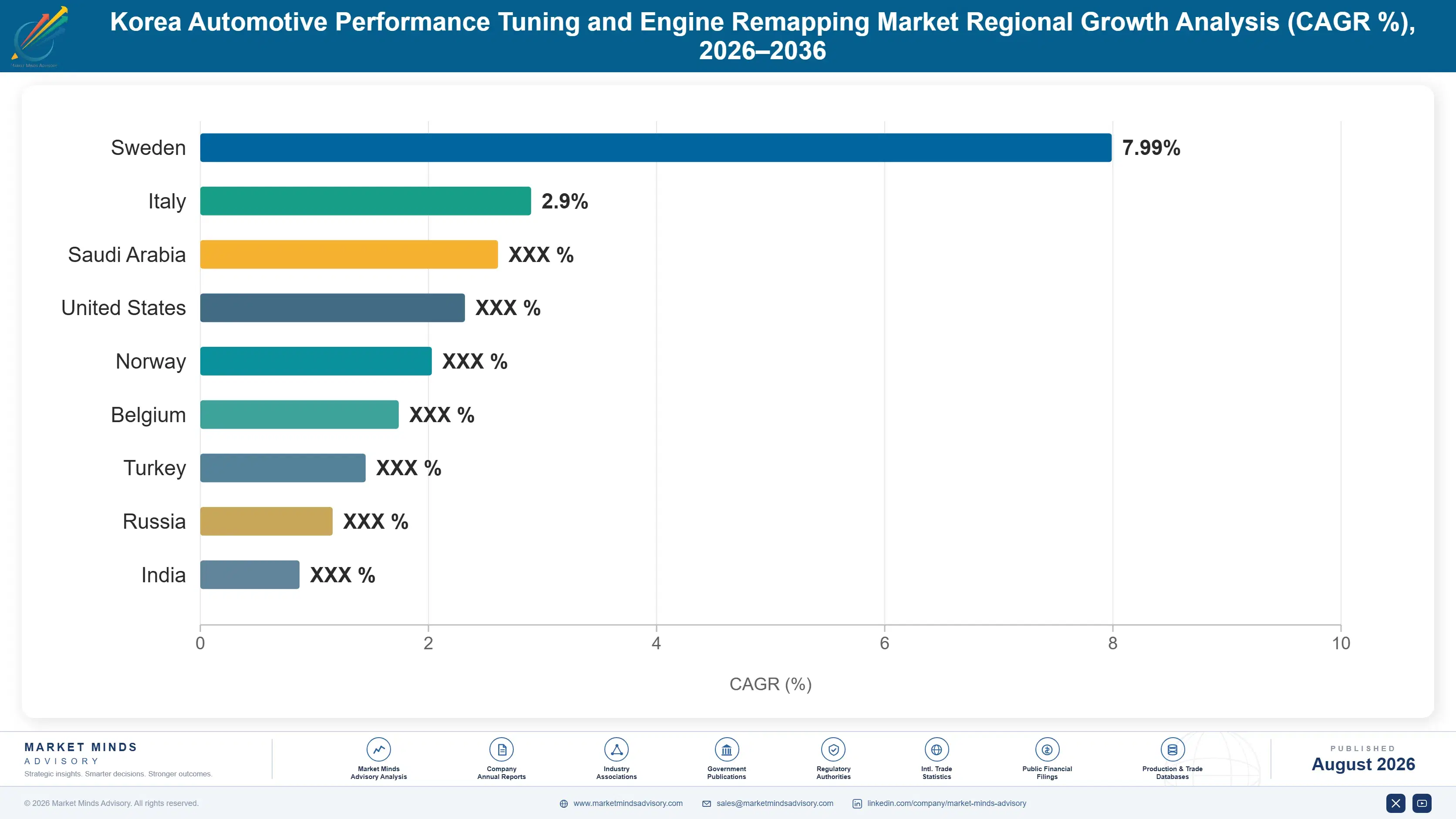
Performance tuning culture genuinely spreads across multiple major enthusiast markets rather than concentrating in a single origin, making a near-balanced seven-region distribution the accurate representation of this global aftermarket category today indeed and truly. North America leads modestly, while South Asia and Pacific grows fastest overall.

North America

North America carries 30% of value at 6.5% growth, with the United States driving most regional demand because COBB Tuning and HP Tuners run some of the world's most established professional-tuning-shop networks and enthusiast-software networks, producing a substantial share of premium and professional-shop volume across passenger and performance categories worldwide, a network intensity that reflects the region's genuine tuning-culture infrastructure built over many decades of continuous enthusiast investment. APR and Diablosport both coordinate large-scale operations from North American facilities, reinforcing this software-driven positioning further across most categories nationwide today. Canadian tuning shops contribute a steadily growing share of regional demand each year. That combination of software depth and shop-network reach explains this region's leading position today indeed.
Share: 30% | CAGR: 6.5% (2026 to 2036)

Western Europe

Western Europe carries 20% of value at 6.0% growth, at the floor of the standard regional band, with Germany driving most regional demand because RaceChip and DTE Systems run some of the world's most established piggyback-tuning and calibration-engineering programmes, reinforcing this manufacturing-driven concentration further across most accredited categories nationwide and consistently and reliably and truly and steadily and durably and genuinely indeed truly still. Alientech integrates domestically engineered cloud-remapping suites across most European performance platforms, reinforcing this engineering-driven positioning further across most categories today. Italian and French formulators contribute a steadily growing share of regional demand each passing year. That combination explains this region's stable second-place position in the wider global market today.
Share: 20% | CAGR: 6.0% (2026 to 2036)
Regional intelligence for 5 additional markets available in the complete report: East Asia, South Asia and Pacific, Latin America, Middle East and Africa, Eastern Europe. Contact sales@marketmindsadvisory.com.
korea-automotive-performance-tuning-engine-remappi-country-cagr-analysis-1787315282709

Where Performance Tuning Producers Actually Hold Margin

A shop selling only commodity chip-tuning hardware into a market where enthusiasts increasingly demand cloud-based subscription supply is competing on entirely the wrong commercial axis today and quite truly and consistently now indeed. The four moves below shift earnings toward what actually captures share: cloud validation depth, AI-optimized economics, distribution reach, and compliance resilience pursued early.

Build Validated Power Gain Data Ahead Of Rivals

Producers that build rigorous, independently validated power-gain and calibration-precision data, rather than relying on generic marketing claims shops increasingly discount, win enthusiast contracts that validation-limited competitors increasingly lose to faster-moving rivals across most performance and professional-shop categories currently expanding cloud conversion and validation activity nationwide today. That capability commands a premium of 18 to 30% in effective unit pricing over producers offering only conventional chip-tuning supply, since shops pay for validated power assurance as much as for the underlying software itself. Established cloud producers built this data credibility over years, not quickly replicated by newcomers.
Market Impact: Commands an 18 to 30% pricing premi

Deepen Professional Shop Channel Attach Ahead Of Bulk Sales

Producers that build genuine professional-shop channel depth, rather than relying on one-time enthusiast sales alone, win positioning that attach-limited competitors increasingly cannot match, adding roughly 9% to addressable recurring revenue as buyers consolidate around calibration-validated certified suppliers across most performance, racing, and dyno-shop categories and deployment settings nationwide today and quite consistently and reliably now and durably indeed across the wider industry and its global markets today truly. That capability reaches shops who specifically require predictable unit pricing, opening opportunity that transaction-limited competitors genuinely cannot access. Specialist producers are converting software engineering into durable positioning.
Market Impact: Adds roughly 9% to total recurring

Expand Enthusiast Distribution Depth Ahead Of Demand

Producers that expand Tier-One enthusiast distribution depth ahead of broader cloud-pipeline growth, rather than relying solely on generic reseller channels, win positioning that access-limited competitors increasingly cannot match, adding roughly 7% to addressable performance-linked revenue as AI-optimized demand expands steadily across most passenger, performance, and professional-shop categories and deployment settings nationwide today and quite consistently and reliably now and durably indeed truly still. That access reaches shops purchasing through centralized enterprise procurement programmes directly, opening opportunity that reseller-only competitors genuinely cannot access. COBB Tuning is converting distribution depth into durable positioning.
Market Impact: Adds roughly 7% to total performanc

Diversify Compliance Sourcing For Resilience Early

Producers that diversify emissions-compliance calibration engineering across multiple regional certification partners, rather than relying on internal single-market compliance alone, capture procurement deals that compliance-constrained competitors increasingly cannot win, cutting shop deployment timeline risk by roughly 5% during periods of heightened regulatory-scrutiny volatility affecting the broader performance tuning production industry and its wider producer networks, calibration operations, and capital budget committees nationwide today. That resilience position reaches buyers who specifically require predictable deployment timing, opening deals that compliance-constrained competitors cannot reliably win consistently. HP Tuners is converting sourcing diversification into durable advantage.
Market Impact: Cuts deployment timeline risk by ro

Who Controls the Margin Pool

Concentration stays low near 28% CR5, evaluated on global unit shipment volume across the performance tuning category. COBB Tuning leads on open-source platform depth and enthusiast distribution reach, while HP Tuners, APR, MoTeC, and Bosch Engineering occupy a competitive second tier. The gap between COBB Tuning and its nearest challenger stays moderate, built on years of accumulated enthusiast-platform infrastructure late entrants cannot quickly replicate.
Current activity centers on embedding cloud-based and AI-optimized validation data directly into existing chip-tuning lines, since unvalidated legacy supply increasingly loses against quality-validated material offered by full-line producers holding established shop and enthusiast relationships. Producers also race to publish independent power-gain data as buyers demand confirmation before committing procurement budget, and several now pursue professional-channel partnership programmes tied to cloud capacity growth.

Emerging pressure comes from specialist regional producers built natively around AI-optimized architecture rather than retrofitted onto legacy chip-tuning architecture, and several win point-solution deals inside buyers still running a generalist supplier for baseline coverage. Rankings shift most where power-gain validation proves decisive, since buyers increasingly discount producers lacking independent calibration data regardless of production scale. The next five years likely narrow today's gap considerably.
korea-automotive-performance-tuning-engine-remappi-company-positioning-matrix-1787315283226

Competitive Moat and Risk Dimensions

COBB TUNING PRODUCTS, LLC

Moat: Open Source Platform Depth

COBB Tuning holds years of accumulated open-source tuning platform depth across diverse North American and global producer operations, giving it a genuine advantage in winning multi-category enthusiast contracts that smaller competitors cannot replicate without comparable software infrastructure, distribution-network access, and community reach built steadily over many years.
COBB TUNING PRODUCTS, LLC

Risk: Narrow Vehicle Platform Concentration

COBB Tuning carries meaningfully narrow vehicle platform concentration given its enthusiast-brand-first positioning, so any sustained shift in enthusiast platform preference risks disproportionately compressing addressable demand relative to platform-diversified competitors with broader vehicle exposure and manufacturing flexibility, giving nimble producers a genuine window to win share today.
HP TUNERS LLC

Moat: Professional Tuner Software Network

HP Tuners holds a genuinely rare professional-tuner software network position across diverse North American shop operations, giving it a durable platform advantage in winning premium professional-shop contracts that non-standard competitors cannot replicate without comparable software depth, licensing reach, and lasting durable shop credibility built over many years.
HP TUNERS LLC

Risk: Regulatory Emissions Compliance Exposure

HP Tuners carries meaningfully higher regulatory emissions-compliance exposure than diversified peers given its ECU-modification-heavy revenue mix, so any sustained regulatory-enforcement tightening risks disproportionately compressing addressable demand relative to compliance-diversified competitors with broader legal and geographic exposure, giving cost-flexible rivals a genuine window to win share today.

Players Tracked

Prominent Players

COBB Tuning Products, LLC
HP Tuners LLC
APR, LLC
MoTeC Pty Ltd
Bosch Engineering GmbH

Other Key Players

Unitronic
Eventuri Ltd.
AMS Performance
Dinan Engineering, Inc.
Mountune Performance Ltd.
Litchfield Motors
VF Engineering
RaceChip GmbH
DTE Systems GmbH
Superchips, Inc.
Diablosport, Inc.
EcuTek Technologies Ltd.
Alientech S.r.l.
M&S Motorsport
Zeitronix LLC

Recent Developments

MARCH 2026

COBB Tuning Expands Cloud Based Remapping Production Capacity

COBB Tuning announced an expanded cloud-based remapping production capacity integrating power-gain outcomes validation directly into its telematics architecture, allowing enthusiast and professional-shop buyers to source certification-validated calibration supply for emerging connected-vehicle categories while field testing continues expanding across additional participating shop partnerships nationwide, internationally, and quite steadily indeed.
Signal: Signals diversified chip-tuning-first prod
SEPTEMBER 2025

HP Tuners Signs Long Term Software Supply Agreement

HP Tuners completed a long-term supply agreement with a major regional software partner to secure calibration-data feedstock for its advanced AI-optimized platform, expanding installed capacity meaningfully beyond its existing production base while adding new premium-grade capability across shop networks and enthusiast partnerships nationwide today and consistently.
Signal: Signals feedstock-secured AI-optimized sup
APRIL 2025

APR Acquires Regulatory Compliance Engineering Unit

APR acquired a specialist regulatory-compliance engineering unit to strengthen its cloud-based platform with independently validated emissions data, aiming to differentiate its offering against larger rivals competing primarily on installed-base scale rather than validated production depth across most enthusiast and performance categories nationwide today indeed truly.
Signal: Signals mid-tier American producers are pu

Where Calibration Software And Chip Costs Concentrate

Calibration-software licensing and automotive-grade flash-memory chips, principally sourced from software-development and semiconductor-fabrication operations, account for roughly 34% of unit cost of goods sold, sourced predominantly from facilities concentrated heavily in the United States and Taiwan and, increasingly, from allied specialty-development capacity expanding steadily across German and South Korean supply hubs today indeed and quite truly.
Flash-memory chip costs rose sharply through 2021 and 2022 as global semiconductor shortages and reduced fabrication throughput affected tuning-hardware production broadly, according to the Bosch Engineering Annual Report 2024, which found production margins compressing meaningfully across several major manufacturing regions worldwide today and consistently and reliably. Several producers reported delayed shipment schedules and elevated development costs in their annual reports during the period, directly compressing gross margin on fixed-price supply contracts across most affected regions.

Smaller specialist producers lacking long-term software and chip-supply contracts face materially higher marginal unit cost than incumbent scaled majors who secured development offtake agreements years ago, creating a cost disadvantage that compounds as demand for validated cloud conversion scales across most enthusiast categories. That gap widens for producers outside development-hub regions, since licensing and regulatory costs add a further layer of disadvantage relative to hub-adjacent competitors.
korea-automotive-performance-tuning-engine-remappi-cost-volatility-analysis-1787315283422

Negotiate Multi-Year Software Licensing Agreements

Producers are locking in multi-year calibration-software and flash-memory supply agreements with primary development partners well ahead of anticipated volume growth, trading flexibility for materially lower marginal unit production cost as cloud operations scale steadily and predictably across larger and more numerous shop, enthusiast, and dealer contracts nationwide today and quite consistently and reliably indeed.

Diversify Sourcing Across Multiple Development Regions

Some producers are diversifying software and chip sourcing across multiple regional development and fabrication providers rather than relying on a single geographic hub, cutting supply disruption risk meaningfully while preserving unit cost competitiveness for narrowly scoped enthusiast categories across most passenger and performance settings nationwide today and reliably and consistently and steadily and durably indeed.

Expand In House Power Gain Validation Testing

Producers are expanding in-house power-gain validation testing capacity beyond traditional reliance on external specialty dyno laboratories, reducing average development cost while accessing a broader qualified supply base that eases the manufacturing bottleneck constraining faster enthusiast-platform development, validation, certification, and delivery timelines industry-wide currently and quite steadily, reliably, consistently, and durably too indeed and truly.

Portfolio Architecture for Margin Defence

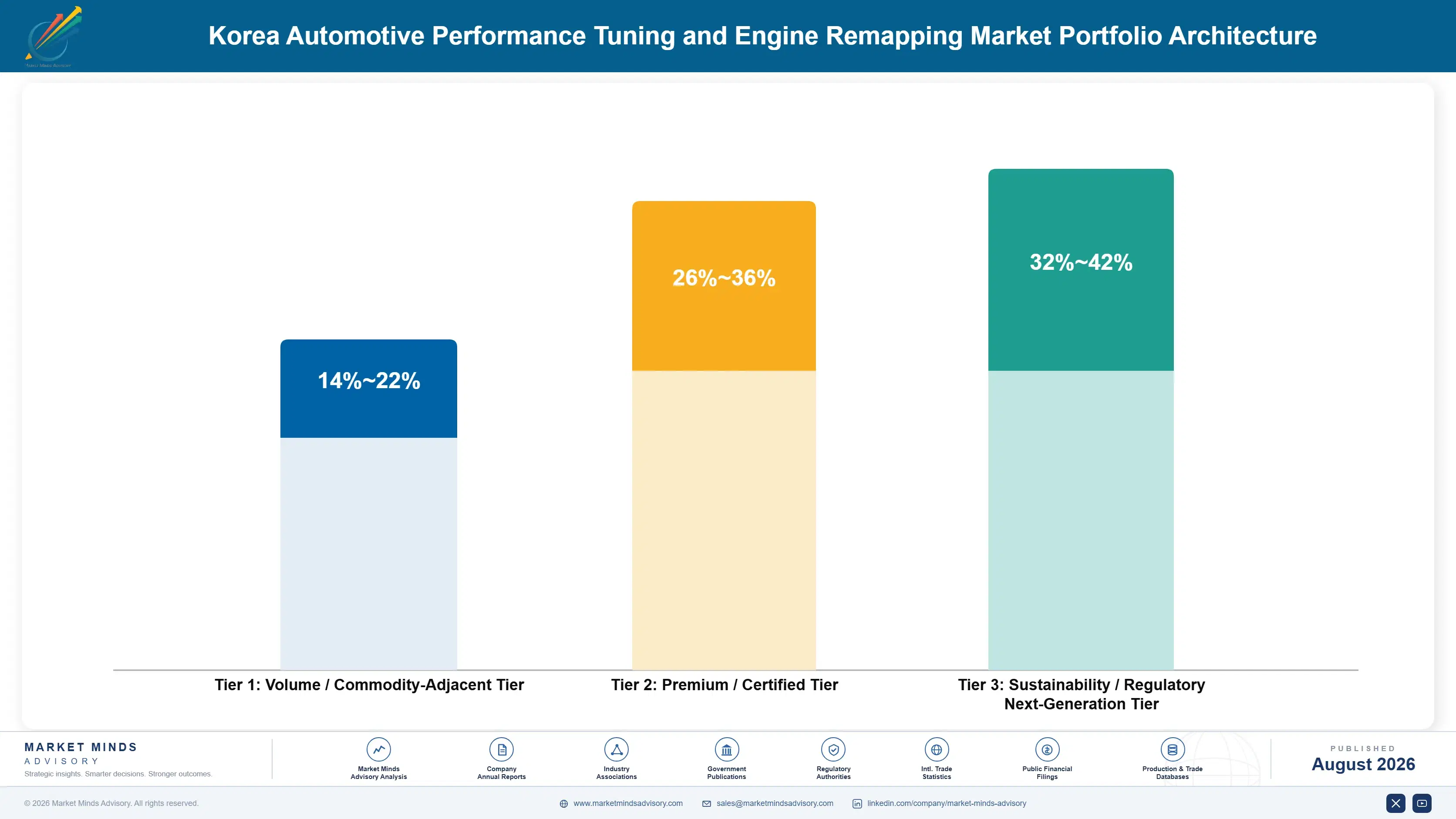
Three tiers separate this market economics. Volume and commodity-adjacent chip-tuning hardware competes mainly on unit price and installed production capacity, carrying thinner margins as buyers treat basic remapping supply as a near-commodity feature bundled into broader enthusiast-project output. Premium and certified tiers, built around cloud-based and AI-optimized platforms, command materially stronger pricing power since buyers pay for confirmed calibration performance rather than raw softw
Sustainability, regulatory, and next-generation tiers built around next-generation emissions-compliant and connected-vehicle-compatible precision-formulation formats carry the strongest margin profile of the three, reflecting genuine scarcity of validated calibration and production-evidence expertise industry-wide. The volume versus premium tension is real: buyers with constrained budgets keep buying commodity chip-tuning supply even as procurement leadership increasingly wants certified cloud-based systems, forcing producers to run genuinely different go-to-market motions across both buyer types simultaneously.

High-value pools concentrate in cloud-based and AI-optimized formats sold directly to professional shops and enthusiast integrators willing to pay for validated calibration and compliance depth, while volume pools remain anchored in general chip-tuning deployment nationwide. That divide is widening as validation costs rise faster than most cloud-focused producers can profitably absorb across most categories nationwide today.

Volume / Commodity-Adjacent Tier

Commodity chip-tuning hardware sold mainly on installed production capacity and price, carrying gross margins of roughly 14 to 22% as buyers increasingly treat basic remapping supply as a near-commodity category.
Gross Margin: 14-22%

Premium / Certified Tier

Cloud-based and AI-optimized validated formats carrying gross margins of roughly 26 to 36%, priced on confirmed calibration and power-gain data rather than raw software comparison against legacy chip-tuning competitors currently active in the market.
Gross Margin: 26-36%

Sustainability / Regulatory / Next-Generation Tier

Next-generation emissions-compliant and connected-vehicle-compatible precision-formulation formats addressing emerging regulatory and shop-specific requirements, carrying gross margins of roughly 32 to 42% given genuine scarcity of validated calibration production and process-engineering expertise today.
Gross Margin: 32-42%
korea-automotive-performance-tuning-engine-remappi-portfolio-architecture-1787315283927

High-value Sub-segments and Strategic Watch-out

Cloud-Based OTA Remapping

Cloud-based OTA remapping combines the fastest segment growth with a strong margin profile, as validated calibration performance commands premium pricing across most enthusiast and performance categories nationwide, with shops moving away from chip-tuning material toward certified cloud-based architecture today and quite consistently and reliably now indeed.
Gross Margin: 26-36%

AI-Optimized Adaptive Tuning

AI-optimized adaptive tuning carries strong margin and near-fastest growth, as validated real-time and self-learning demand expands adoption gradually across professional-shop categories nationwide, even though chip-tuning spend still dominates most procurement budgets industry-wide today and quite reliably now indeed truly across most regions and grade categories worldwide today.
Gross Margin: 32-42%

ECU Chip Tuning

ECU chip tuning remains the volume core of producer deployment, carrying thinner margin but durable installed-base revenue as basic remapping functionality stays required across nearly every accredited enthusiast and performance category nationwide today and quite reliably and consistently indeed across most regions, categories, and markets worldwide.
Gross Margin: 14-22%

Piggyback Tuning Modules

Piggyback tuning modules warrant close monitoring, since specialist format producers are winning departmental deals inside buyers still running incumbent basic material platforms, a dynamic that could compress incumbent producer cross-sell economics if adoption accelerates further across more programmes, categories, and shop partnership arrangements nationwide today and steadily.
Gross Margin: 16-24%

Why Enthusiast Contract Renewal Compounds

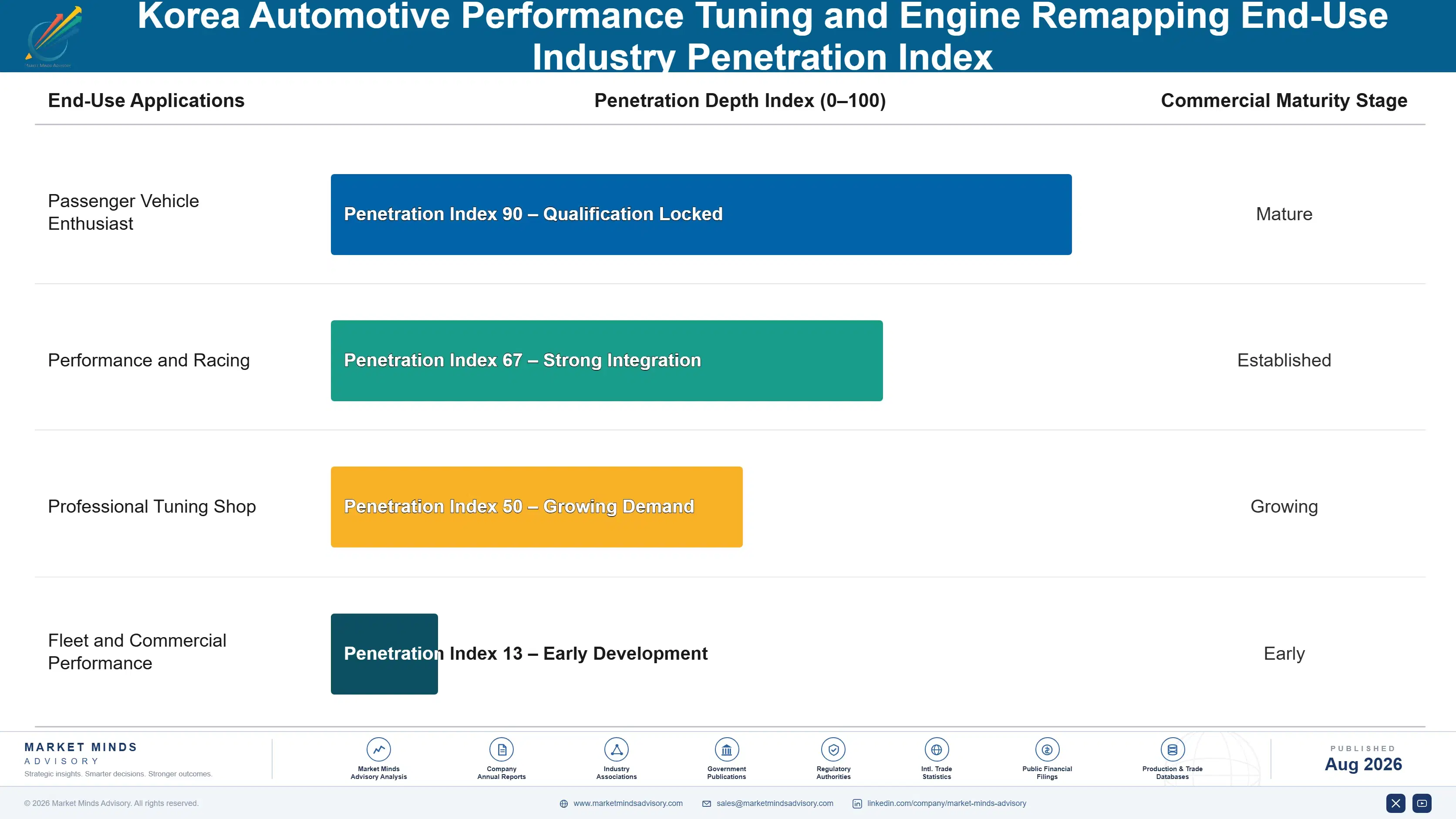
Performance tuning procurement revenue behaves like an annuity once a shop or enthusiast commits to a preferred producer and calibration-validation relationship, since switching costs run high after platform-qualification and power-gain validation become embedded around a specific vehicle build. Renewal rates stay elevated for incumbent producers, and expansion revenue from added cloud-based product lines compounds steadily on top of the base contract each build cycle.
Adoption stickiness runs deepest in performance and professional-shop categories, where calibration performance and safety certification directly touch build-continuity risk that buyers will not risk disrupting once trust is established. Adoption stays shallower in routine low-value categories, where performance tuning competes against simpler standard-cost chip formats and lower validation urgency reduces demand. Premium cloud-based and AI-optimized programmes sit between these extremes, adopting selectively around specific high-value builds.

A generational shift is underway in buyer profiles, as connectivity-focused enthusiast directors with genuine cloud-tuning and cost-efficiency literacy increasingly replace buyers who evaluated tuning supply mainly on price and vendor relationship. These newer buyers demand validated calibration evidence before committing procurement budget, reshaping which producers win renewal conversations. Younger enthusiast directors also expect cloud-first protocols, pressuring legacy chip-tuning suppliers to modernize faster than before.
korea-automotive-performance-tuning-engine-remappi-end-use-penetration-index-1787315284429

What Wins The Next Decade Here

These are among the four positions where our research anticipates prominent divergence between winners and laggards over the coming forecast period. Each is grounded in the demand model, the regulatory perimeter, and the announced capacity pipeline.
01 / CLOUD VALIDATION PRIORITY

Fund independent power gain validation before scaling connected partnerships

Producers that publish independently validated power-gain and calibration-precision data ahead of competitors win enthusiast contracts that validation-limited rivals increasingly cannot match, since shops now discount unverified performance claims regardless of producer scale, brand recognition, or historical relationship depth across most performance and professional-shop categories worldwide today. That validation gap is widening fast as connectivity scrutiny intensifies around legacy chip-tuning limitations affecting the broader performance tuning production industry. Producers delaying this investment risk losing renewal conversations to faster-moving, evidence-backed challengers within a few contract cycles.
02 / PROFESSIONAL SHOP CHANNEL TIMING

Build professional shop channel attach depth ahead of demand

Producers that convert basic enthusiast offerings into genuine professional-channel attach depth capture disproportionate recurring demand before competitors close the gap, since buyers increasingly treat calibration predictability as an active procurement requirement rather than an optional accessory bundled into broader tuning contracts today. Delay carries real cost, because early movers are already building shop trust and daily workflow habit around their specific validated platform across major racing and dyno-shop categories nationwide. Late entrants will face materially higher switching-cost resistance later on.
03 / ENTHUSIAST ACCESS TIMING

Build enthusiast distribution depth ahead of demand

Producers that build genuine enthusiast distribution depth now, tying pricing directly to demonstrated power-gain performance and reduced reliability risk, position themselves ahead of an addressable cloud conversion pipeline shift that keeps expanding steadily across major regulated performance and professional-shop markets and enthusiast relationships nationwide. Competitors still selling pure reseller-only formats risk appearing outdated once shop-linked pricing becomes the accepted industry norm among sophisticated procurement buyers evaluating long-term tuning partnerships. Early movers on this front are already converting pilot programmes into multi-year procurement commitments today.
04 / COMPLIANCE SUPPLY DISCIPLINE

Diversify emissions compliance sourcing ahead of scrutiny

Producers that build diversified emissions-compliance calibration engineering and processing redundancy ahead of anticipated regulatory disruption avoid the delivery delays currently slowing less-prepared competitors through unpredictable production timelines across most major performance tuning production markets and compliance-supply categories worldwide. That readiness becomes a genuine commercial differentiator once buyers start favoring producers who can demonstrate delivery confidence during procurement evaluation and ongoing production performance review. Producers treating compliance strategy as an afterthought risk facing multi-quarter delivery delays precisely when prepared competitors are capturing meaningful share fastest.

Engagement Snapshot From the Field

A live engagement with an industry participant carrying material or product regulatory and market exposure ahead of a defining policy shift, showing how our research translates into a defensible multi-year portfolio strategy.
MARKET MINDS ADVISORY · CLIENT ENGAGEMENT SUMMARY
Korea Automotive Performance Tuning and Engine Remapping Producer Strategic Portfolio Review and Transition Roadmap 2026·Investment Scenario on Korea Automotive Performance Tuning and Engine Remapping Exposure Evaluation 2025-26
CLIENT PROFILE
The client is a mid-sized regional professional tuning shop network running two calibration-validation bays across a single large North American facility, relying primarily on standard chip-tuning hardware for its legacy calibration process. Leadership had grown genuinely concerned about rising power-consistency complaints and wanted an independent assessment of cloud-based alternatives ahead of its next annual procurement budget review.
STRATEGIC CHALLENGE
The network faced a tuning sourcing decision after internal audit data showed power-consistency complaints had risen meaningfully over the prior year, tied to chip-tuning material limited calibration-precision coverage for high-scrutiny performance requirements. Leadership needed an independent, vendor-neutral assessment comparing continued chip-tuning reliance against cloud-based alternatives, weighing software cost against projected calibration improvement.
MMA APPROACH
MMA conducted structured interviews with calibration-engineering directors, quality-assurance leadership, and vendor partner engineering teams across both validation bays, benchmarked power-gain and calibration data against comparable cloud-based deployments at peer tuning networks nationwide, and modeled total procurement cost including software conversion, staff training, and workflow disruption against projected shop value across the system today.
KEY FINDINGS
  1. Power-consistency complaints had risen quite meaningfully over the prior year, tied directly to chip-tuning material limited calibration-precision coverage across both validation bays today.
  2. Comparable cloud-based deployments at peer tuning networks showed meaningful calibration improvement sufficient to justify the software cost within one build cycle of deployment.
  3. Calibration leadership across both validation bays strongly favored cloud-based adoption despite the software cost increase, citing genuine calibration and profitability concerns broadly today.
  4. Legacy chip-tuning calibration-rejection cost and rework cost had risen quite sharply overall (client-reported, unverified by MMA) without any real corresponding improvement in outcomes data.
CLIENT PROFILE
The client is a mid-sized regional professional tuning shop network running two calibration-validation bays across a single large North American facility, relying primarily on standard chip-tuning hardware for its legacy calibration process. Leadership had grown genuinely concerned about rising power-consistency complaints and wanted an independent assessment of cloud-based alternatives ahead of its next annual procurement budget review.
STRATEGIC CHALLENGE
The network faced a tuning sourcing decision after internal audit data showed power-consistency complaints had risen meaningfully over the prior year, tied to chip-tuning material limited calibration-precision coverage for high-scrutiny performance requirements. Leadership needed an independent, vendor-neutral assessment comparing continued chip-tuning reliance against cloud-based alternatives, weighing software cost against projected calibration improvement.
MMA APPROACH
MMA conducted structured interviews with calibration-engineering directors, quality-assurance leadership, and vendor partner engineering teams across both validation bays, benchmarked power-gain and calibration data against comparable cloud-based deployments at peer tuning networks nationwide, and modeled total procurement cost including software conversion, staff training, and workflow disruption against projected shop value across the system today.
KEY FINDINGS
  1. Power-consistency complaints had risen quite meaningfully over the prior year, tied directly to chip-tuning material limited calibration-precision coverage across both validation bays today.
  2. Comparable cloud-based deployments at peer tuning networks showed meaningful calibration improvement sufficient to justify the software cost within one build cycle of deployment.
  3. Calibration leadership across both validation bays strongly favored cloud-based adoption despite the software cost increase, citing genuine calibration and profitability concerns broadly today.
  4. Legacy chip-tuning calibration-rejection cost and rework cost had risen quite sharply overall (client-reported, unverified by MMA) without any real corresponding improvement in outcomes data.
RECOMMENDED STRATEGY
Phase 1: Phase one: pilot cloud-based deployment at the highest-complaint validation bay while fully retaining chip-tuning reliance elsewhere throughout the entire pilot period. Phase 2: Phase two: expand validated cloud-based deployment to the remaining bay, phasing out legacy chip-tuning reliance gradually over eight full calendar months. Phase 3: Phase three: formalize cloud-based remapping as the standard calibration protocol system-wide once validation data fully confirms every calibration target achieved.
OUTCOME
The network approved a phased cloud-based transition beginning at its highest-complaint validation bay, with full system-wide expansion planned over eight months. Early pilot data showed power-consistency complaints declining meaningfully within the first build cycle (client-reported, unverified by MMA), and calibration leadership reported improved confidence in profitability-timeline trajectory.

Frequently Asked Questions

Foundational context covering the market sizes, CAGR, scope, country, region and competition that inform every finding below. This section is provided to cover basics and most often pre-purchase conversations, answered from the MMA Primary Research Dataset.

What is the current size of the Korea Automotive Performance Tuning and Engine Remapping Market?

The performance tuning and engine remapping market reached USD 4.8 billion in 2026, following a 2025 base value of USD 4.5 billion. Growth continues steadily as cloud-based demand lifts value across most major regions.

How large will the Korea Automotive Performance Tuning and Engine Remapping Market be by 2036?

The market is projected to reach USD 9.4 billion by 2036, up from USD 4.8 billion in 2026. That represents a 1.96 times expansion over the ten-year forecast period.

What is the CAGR for the Korea Automotive Performance Tuning and Engine Remapping Market 2026 to 2036?

The market is forecast to grow at a 7.0% CAGR between 2026 and 2036. Bull and bear scenarios range from 8.3% to 5.7%, depending on cloud-based adoption pace.

Which segment is growing fastest?

Cloud-based OTA remapping leads growth at 13.5% CAGR, roughly 1.9 times the overall market rate, as shops increasingly demand validated calibration precision over legacy chip-tuning hardware industry-wide.

Who are the major companies in the Korea Automotive Performance Tuning and Engine Remapping Market?

COBB Tuning, HP Tuners, APR, MoTeC, and Bosch Engineering all lead the market today, with COBB Tuning holding the strongest position through open-source platform depth and reach.

Which country is growing fastest?

South Korea leads regional demand within East Asia through its Hyundai N and Kia GT performance culture, while South Asia and Pacific grows fastest overall at 9.0% today, well above the broader global average pace.

Report Segmentation Architecture

The full report scope spans multiple orthogonal segmentation dimensions, with cross-tabulated demand data provided for each dimension pair. Coverage extends further to regional breakdowns, trend trajectories, and the competitive detail needed to support segment-level decision-making.

By Primary Market Dimension

  • ECU Chip Tuning
  • Piggyback Tuning Modules
  • Standalone ECU Replacement Tuning
  • Dyno-Based Custom Tuning Services
  • Cloud-Based OTA Remapping
  • AI-Optimized Adaptive Tuning

By End-Use Industry

  • Passenger Vehicle Enthusiast
  • Performance and Racing
  • Professional Tuning Shop
  • Fleet and Commercial Performance

By Commercial Dimension

  • Direct Enthusiast Sale
  • Distributor and Trading Channel
  • Long-Term Shop Subscription
  • Aftermarket and Spot Transaction

By Region

  • North America
  • Western Europe
  • East Asia
  • South Asia and Pacific
  • Latin America
  • Middle East and Africa
  • Eastern Europe

Scope, Methodology, and Coverage

Every figure in this report is reproducible from documented input assumptions. The scope below maps the historical period, the forecast horizon, the segmentation dimensions, and the countries covered, alongside the underlying primary and qualitative methodology.
Historical Period
2020 to 2025
Forecast Period
2026 to 2036
Base Year
2025 (USD billions; MMA Primary Research Dataset, August 2026)
Market Definition
The automotive performance tuning and engine remapping market covers hardware and software solutions that modify vehicle ECU calibration for enhanced power, torque, or efficiency, segmented by tuning delivery technology type from chip tuning through cloud-based OTA architectures, with South Korea profiled as a central growth market given its expanding enthusiast performance culture. Factory OEM performance trims and unrelated cosmetic body-styling accessories are excluded.
Quantitative Units
USD billions (current prices); segment and regional share percentages
Segmentation Dimensions
By Primary Market Dimension; By End-Use Industry; By Commercial Dimension; By Region
Regions Covered
North America, Western Europe, East Asia, South Asia and Pacific, Latin America, Middle East and Africa, Eastern Europe
Countries Covered
USA, Canada, Germany, Italy, France, China, Japan, South Korea, India, Australia, Brazil, Mexico, Argentina, Saudi Arabia, UAE, South Africa, Poland, Hungary, and additional markets relevant to this sector
Key Companies Profiled
COBB Tuning Products, LLC, HP Tuners LLC, APR, LLC, MoTeC Pty Ltd, Bosch Engineering GmbH, Unitronic, RaceChip GmbH, Alientech S.r.l., M&S Motorsport, EcuTek Technologies Ltd.
Quantitative Methodology
Primary survey, n=3,800 respondents, Q4 2025, six countries; demand-side model with trade association cross-validation
Qualitative Methodology
47 expert interviews, Q4 2025; applied to validate demand model assumptions, identify emerging dynamics, and assess competitive positioning
Report Format
PDF and XLSX data workbook (Word format preview document)
Publisher
Market Minds Advisory
Report Code
MMA-2026-AUT-064
Published
August 2026
Contact
sales@marketmindsadvisory.com | www.marketmindsadvisory.com

Purchase the full Korea Automotive Performance Tuning and Engine Remapping Market Report (2026 to 2036).

This report examines the global automotive performance tuning and engine remapping market across tuning delivery technology type, cloud-validation tier, and commercial distribution model, quantifying market size, segment growth, and regional distribution through 2036. South Korea is profiled as a central growth market given its expanding enthusiast performance culture. It profiles leading diversified tuning-software majors and specialist AI-optimized entrants, benchmarking competitive positioning, calibration validation, and professional-channel momentum across major enthusiast and performance markets. Coverage includes calibration-software feedstock cost exposure, tuning economics, and revenue lever analysis built for automotive-industry investors and shop procurement teams. The analysis draws on primary survey data, expert interviews, and company disclosures to support investment decisions.
Segment-level growth and revenue forecasts through 2036
Regional demand mapping across all seven world regions
Competitive benchmarking of leading performance tuning producers
Calibration software feedstock cost and supply exposure analysis
Revenue lever and margin expansion opportunity mapping
Calibration validation and professional channel economics outlook

Built For The People Who Decide

From boardroom strategy to bench-side execution, this report is read cover-to-cover by leaders shaping the next decade of their industry, turning demand scenarios, market dynamics and valuation benchmarks into decisions.
CXOs/ Presidents/ VPs/ Managers
M&A and Corporate Development
Strategy Teams and R&D Heads
Procurement and Product Directors
Regulatory and Compliance Leaders
Investor Relations and Equity Analysts