Market Minds Advisory
Demand for Automatic Identification System in Japan

Demand for Automatic Identification System in Japan: Demand for Automatic Identification System in Japan. Maritime Safety Mandates Meet Fleet Digitalization

Coastal authorities tightening vessel tracking mandates are pushing automatic identification system vendors toward satellite data integration, forcing suppliers to balance transponder cost against rising cybersecurity compliance requirements across major shipping lanes.

Lead Analyst

Published

September 2026

Make Smarter Decisions with Customized Research Insights

Request a free sample report and evaluate market opportunities, growth trends, and competitive dynamics relevant to your business needs.

2025 MARKET VALUE$1.9BMarket Size 2025
2036 FORECAST VALUE$4.4BBase Case , 2026 to 2036
CAGR 2026 TO 20368.2 %Bull 9.4% / Bear 7.0%
INCREMENTAL OPPORTUNITY$2.4BNet 10- year value creation
EXPANSION MULTIPLE2.20x2036 value over 2026 base
Strategic Levers
M&A Pipeline
Regional Outlook
Country Rankings
Competitive Intelligence
Segmental Deep-dive
Call-Us : 91 93563 13602

Executive Snapshot and Market Trajectory.

Coastal authorities tightening vessel tracking mandates are quietly reshaping automatic identification system demand, pulling fleet operators toward satellite-relayed data faster than shore-based terrestrial receivers alone could ever manage for open ocean coverage across major shipping corridors. That priority is now nearly universal among large commercial fleets.
Satellite AIS data services are pulling ahead of terrestrial-only transponder sales as the fastest-growing category, since fleet operators increasingly need continuous vessel visibility beyond coastal receiver range for compliance and safety purposes. Adoption concentrates most heavily in East Asia, where dense shipping lanes and major port infrastructure both drive transponder installation, and competition remains fiercest among mid-tier terrestrial receiver challengers there. Fleet operators increasingly weigh coverage continuity as heavily as transponder unit cost itself.
Competitive character is shifting from hardware-only transponder manufacturers toward integrated data service providers capable of demonstrating satellite relay reliability and cybersecurity hardening that regulators increasingly require. Spoofing risk and data integrity requirements both shape which vendors can credibly compete for fleet contracts, and rankings are shifting fastest among mid-tier satellite data challengers. Vendors slow to adapt risk losing fleet contracts within a single procurement cycle entirely.
Market Definition
This market covers transponder hardware and data services that broadcast and receive vessel identification, position, and navigation data for maritime safety and fleet tracking purposes. It excludes radar systems and general vessel telematics platforms not built around the AIS broadcast standard specifically.
Base Year Value
$1.9B in 2025 (MMA Primary Research Dataset, September 2026)
Forecast Period
2026 to 2036, eleven discrete annual values
CAGR
8.2% base case. Bull 9.4%. Bear 7.0%.
Fastest Growth Segment
Satellite AIS Data Services: 13.6% CAGR
Fastest Growth Country
China: 10.8% CAGR
Fastest Growth Region
South Asia and Pacific: 10.2% CAGR
Largest Region
East Asia: 30% of 2025 global value
Market Leaders
Kongsberg Gruppen, Furuno Electric, JRC (Japan Radio Co), Saab AB, Orbcomm Inc. Source: MMA Analysis based on company annual reports.
Primary Survey
n=3,800 procurement and R&D decision-makers, Q4 2025, six countries
Methodology
Demand-side build-up, cross-validated against public data, 47 expert interviews

Demand for Automatic Identification System in Japan Market Forecast Scenarios

japan-automatic-identification-system-market-size-forecast-scenario-1788452789145
Automatic identification system demand grew steadily between 2020 and 2025 as international maritime safety mandates expanded transponder installation requirements to smaller commercial vessels, though the historical growth rate of 7.5 percent understated a sharper acceleration once satellite AIS data services reached mainstream fleet adoption in the final two years. Terrestrial-only receivers dominated the category at the start of this period.
The base case rests on three commercial mechanisms: regulatory bodies expanding mandatory transponder coverage to additional vessel classes and fishing fleets, satellite relay technology maturing enough to offer reliable open-ocean coverage at falling subscription costs, and fleet operators demanding integrated data analytics rather than raw position broadcasts alone. Together these sustain steady growth through the forecast period even as terrestrial-only hardware sales themselves mature. Vendors failing on any one of these fronts risk ceding fleet contracts quickly to faster-moving competitors.
The bull case assumes faster-than-expected regulatory expansion pulls forward transponder demand across multiple vessel classes simultaneously and ahead of schedule. The bear case centers on spoofing vulnerability and data integrity concerns, which could slow satellite service adoption and push cautious fleet operators back toward terrestrial-only coverage instead. Either scenario reshapes vendor investment priorities meaningfully over the next several years.

Where Coverage Range Meets Data Integrity

AIS margin has historically compressed under terrestrial transponder commoditization, but satellite relay services now carry wider margin as coverage reliability and cybersecurity barriers limit competitive entry. Fleet operators increasingly negotiate multi-year data subscription contracts rather than one-time hardware purchases. Vendors unable to demonstrate satellite reliability risk being squeezed out by competitors offering broader coverage at comparable pricing. Bids without that reliability increasingly fail fleet procurement review.
MARKET CONCENTRATIONCR5 44%Top five vendors control just under half overall
AVERAGE TRANSPONDER COST$800-$8,000/unitPrice varies by class and satellite relay capability
LEADING SHIPBUILDING COUNTRY SHAREChina 42%China leads global commercial vessel construction volume overall
SATELLITE DATA ADOPTION RATE22%Share of fleets subscribed to satellite relay coverage
COVERAGE RANGE IMPROVEMENT3-5xTypical gain over terrestrial-only receiver range coverage today
AVERAGE TRANSPONDER SERVICE LIFE8-10 yearsTypical duration before vessels replace transponder hardware fully
Data integrity has become the primary purchase criterion ahead of raw transponder price, since fleet operators weigh spoofing resistance as heavily as coverage range itself. Vendors investing in proven satellite relay reliability are winning fleet contracts over competitors offering only terrestrial-only coverage. That gap between satellite leaders and terrestrial-only laggards widens further each procurement cycle across most vessel classes. Scale matters too.
Commercial cargo and container fleets dominate installation volume, though fishing fleet operators are adopting satellite AIS faster than any other vessel class tracked, driven by expanding regulatory mandates. Recreational vessel installations remain a smaller but steadily growing adjacent category. Vendors tailoring subscription pricing to smaller fishing vessels are capturing share that enterprise-only providers cannot easily serve. Timing matters as annual fleet budgets get finalized each year.
"Vendors that treat satellite coverage reliability as a core requirement rather than an optional upgrade are already ahead of competitors still comparing themselves on unit price alone. The compliance gap it closes simply does not exist for terrestrial-only transponder systems."
Director, Maritime Technology and Fleet Safety Practice · MMA Technology Practice · September 2026

Market Trends

Satellite Relay Coverage Extends Beyond Coastal Range

Satellite AIS constellations have expanded meaningfully, allowing fleet operators to track vessels continuously across open ocean routes that terrestrial shore-based receivers could never reach beyond roughly forty nautical miles from coastline infrastructure. This shift barely existed at commercial scale five years ago when satellite relay remained prohibitively expensive for all but the largest shipping fleets. Falling subscription costs have pulled satellite coverage down to a price point that mid-sized fishing and cargo fleets can now reasonably justify. Vendors without satellite partnerships increasingly struggle to compete for large fleet contracts requiring continuous open-ocean visibility.
Market Impact: Port AIS spending rose 22%

Regulatory Mandates Expand to Smaller Vessel Classes

Maritime safety regulators across major shipping nations have expanded mandatory AIS transponder requirements to smaller commercial fishing vessels that were previously exempt from installation requirements under prior regulatory frameworks. This regulatory expansion has pulled an entirely new tier of smaller vessel operators into the addressable market for the first time in the category's history. Vendors offering lower-cost transponders sized for smaller vessels are capturing disproportionate share of this newly mandated demand. Analysts expect further regulatory expansion as safety incidents involving unmonitored smaller vessels continue drawing public attention. Adoption keeps rising.
Market Impact: Fishing fleet installs rose 35%

Market Opportunities and Growth Drivers

Port Congestion Management Drives Vessel Tracking Demand

Major ports across East Asia have expanded AIS-based vessel traffic management systems to reduce congestion and improve berth scheduling efficiency, requiring incoming vessels to broadcast accurate position and speed data continuously throughout approach. This has pushed port authorities to invest heavily in shore-based receiver infrastructure alongside mandating transponder use for any vessel calling at major terminals. Vendors offering integrated port traffic management platforms are winning contracts that hardware-only transponder makers cannot easily capture alone. Several major terminals have already reported measurable congestion reduction following full transponder compliance across their calling vessel fleets.
Market Impact: Spoofing incidents rose 18% since 2023

Fishing Fleet Safety Incidents Push Mandate Expansion

A series of high-profile fishing vessel accidents in poorly monitored waters has pushed regulators to expand mandatory AIS coverage requirements to smaller fishing fleets that previously operated without any tracking requirement whatsoever. This regulatory response has accelerated transponder installation timelines considerably compared to the gradual voluntary adoption pattern seen in prior years. Vendors offering subsidized transponder programs for small fishing operators are capturing significant share of this newly mandated demand. Smaller operators without subsidy access face the steepest compliance timeline pressure among all vessel categories affected. Adoption keeps accelerating steadily.
Market Impact: Compliance delays hit 25-30% of vessels

Market Restraints and Challenges

AIS Spoofing Risk Undermines Fleet Data Trust

Vessels can broadcast falsified position data or disable transponders entirely to evade tracking, undermining the data integrity that regulators and fleet operators depend on for safety and compliance monitoring purposes across every jurisdiction. The root cause is that the AIS broadcast standard was designed decades ago primarily for collision avoidance rather than tamper-resistant identity verification. Vendors are responding by layering satellite cross-verification and anomaly detection algorithms on top of raw AIS data, though this adds meaningful processing cost and complexity. Smaller vendors without dedicated cybersecurity engineering teams face the steepest challenge keeping pace with evolving spoofing techniques.
Market Impact: Satellite subscriptions grew 3x since 2023

Small Vessel Operators Resist Installation Costs

Smaller fishing and coastal vessel operators facing newly mandated AIS installation requirements often lack the capital to absorb transponder and subscription costs without meaningful financial strain on already thin operating margins. The root cause traces to the fragmented, capital-constrained nature of small-scale fishing operations compared to larger commercial shipping companies with dedicated procurement budgets. Regulators are mitigating this through phased compliance deadlines and subsidy programs, though funding availability varies considerably by jurisdiction. Larger fleet operators with dedicated compliance budgets are moving faster on this front than smaller independent operators. Adoption still proceeds.
Market Impact: Mandated vessel classes expanded 40%
3 additional market trends, 4 additional growth drivers, and 2 additional restraints and challenges are covered in the full report. Contact sales@marketmindsadvisory.com to access the complete intelligence.

Segment CAGR and Growth Architecture

Automatic identification systems split across six product and service categories shaped by coverage range and data delivery method, from basic terrestrial transponders to satellite data services. Satellite AIS data services are pulling ahead as fleets demand continuous open-ocean visibility, and compliance shapes renewal contracts. Buyer priorities differ sharply by fleet route type and compliance deadline pressure.
japan-automatic-identification-system-market-market-share-analysis-1788452789678

Satellite AIS Data Services

Satellite AIS data services aggregate vessel position broadcasts collected by low-earth-orbit satellite constellations, delivering continuous fleet visibility far beyond the roughly forty nautical mile range of terrestrial shore-based receivers. Fleet operators managing international shipping routes increasingly treat satellite coverage as a baseline requirement rather than a premium add-on, particularly for regulatory compliance reporting purposes. Vendors offering integrated analytics dashboards alongside raw satellite data are winning contracts that basic data resellers cannot easily match on value delivered. Analysts expect satellite coverage adoption to continue accelerating as subscription costs keep falling relative to fleet operating budgets. Several major shipping alliances now specify satellite coverage explicitly in vendor procurement contracts. Adoption keeps rising.
CAGR 13.6%

Class A Commercial Transponders

Class A transponders remain mandatory equipment for large commercial cargo and passenger vessels under international maritime safety conventions, representing the largest installed hardware base by unit count globally. Replacement demand now drives most volume in this mature segment, as new-build installations slow relative to the earlier mandate-driven adoption wave seen previously. Vendors offering cybersecurity-hardened transponders resistant to spoofing are capturing premium pricing over commodity hardware competitors in this segment specifically. Adoption keeps rising steadily as fleet operators retrofit older vessels ahead of expanded cybersecurity compliance deadlines. Vendors continue investing to widen this lead, since spoofing resistance justifies deeper cybersecurity spending than basic transponder hardware historically required. Adoption keeps rising too.
CAGR 8.9%
Full segment breakdown across 6 segments available in the complete report.

Regional Architecture and Country Demand Map

East Asia leads AIS demand given this report's specific focus on Japan and the region's dense commercial shipping lanes, while North America follows on fleet modernization and satellite service adoption. South Asia and Pacific posts the fastest regional growth as fishing fleet mandates expand across coastal nations.

East Asia

East Asia holds the largest regional share, reflecting both this report's specific focus on Japan's maritime sector and the region's genuinely dense commercial shipping lane concentration relative to any other region tracked. Japan drives a substantial share of regional demand through its extensive coastal fishing fleet and major port infrastructure requiring continuous vessel monitoring. China contributes the largest absolute vessel count given its enormous commercial shipbuilding and fishing fleet scale, while South Korea adds meaningful port-side infrastructure investment. Domestic transponder manufacturers give the region a durable cost advantage over vendors importing hardware internationally. Export of domestic transponder technology to Southeast Asia is also rising as regional manufacturers expand distribution beyond their traditional home markets.
Share: 30% | CAGR: 9.4% (2026 to 2036)

North America

North America's AIS demand grows steadily, anchored in fleet modernization programs across United States and Canadian commercial shipping and fishing sectors requiring transponder upgrades. The United States drives the majority of regional demand, supported by Coast Guard vessel tracking mandates spanning both coastal and inland waterway commercial traffic. Canada contributes a smaller but meaningful share, tied to its extensive fishing fleet operating across both Atlantic and Pacific coastal waters. Satellite service adoption runs comparatively high here, given the vast open-ocean routes United States flagged vessels regularly traverse. Coast Guard modernization programs increasingly specify cybersecurity-hardened transponders as a standard procurement requirement for federally regulated commercial vessels. Adoption keeps rising steadily. Growth continues.
Share: 24% | CAGR: 9.2% (2026 to 2036)
Regional intelligence for 5 additional markets available in the complete report: Western Europe, South Asia and Pacific, Latin America, Middle East and Africa, Eastern Europe. Contact sales@marketmindsadvisory.com.
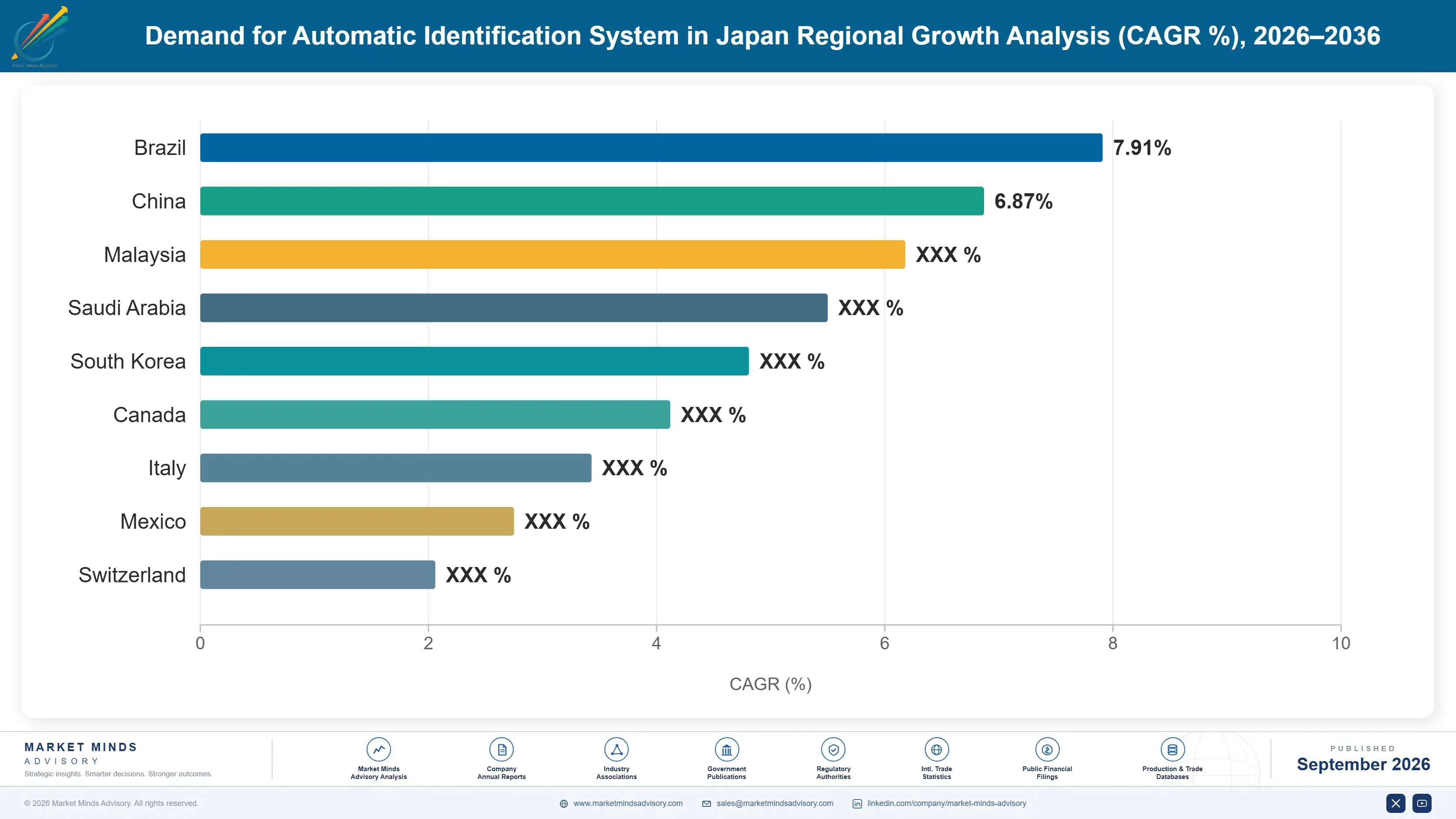
japan-automatic-identification-system-market-country-cagr-analysis-1788452790195

Satellite Coverage Drives Fleet Contract Value

AIS vendors capture disproportionate margin through four commercial levers tied to satellite coverage, data analytics attachment, and cybersecurity hardening that raw transponder hardware alone cannot sustain over time. Reliability investment increasingly separates premium vendors from commodity hardware sellers competing purely on unit price. Fleet operators increasingly favor vendors that can demonstrate both spoofing resistance and continuous open-ocean coverage together.

Satellite Data Subscription Attachment Advantage Strategy

Vendors that bundle satellite relay subscriptions alongside transponder hardware sales convert a one-time purchase into recurring revenue that compounds across each vessel's multi-year operational lifespan. This subscription model typically requires meaningful upfront satellite infrastructure investment, creating a durable barrier that smaller hardware-only vendors struggle to clear without partnership support. Vendors with strong satellite attach rates report roughly 45% higher lifetime fleet value than hardware-only competitors relying solely on transponder unit margin. Later entrants attempting to replicate this model face a steeper capital curve since satellite constellation partnerships take years to establish.
Market Impact: Satellite-attached contracts command roughly 45% more contract value

Cybersecurity Hardening Premium Pricing Advantage Strategy

Vendors that harden transponders against spoofing and signal manipulation command premium pricing and preferred fleet procurement status that unhardened competitors cannot access at any comparable price point. This hardening process typically requires dedicated security engineering investment, creating a barrier that smaller vendors struggle to clear without outside technical partnership support. Hardened transponders typically see fleet renewal rates run roughly 30% higher than unhardened competitors facing the same procurement cycle. Vendors are increasingly experimenting with tiered hardening packages to further expand this premium pricing opportunity across fleet segments. This trend continues accelerating.
Market Impact: Hardened transponders see roughly 30% more renewal activity

Port Traffic Management Platform Integration Strategy

Vendors integrating AIS data directly into port traffic management platforms capture recurring licensing revenue from port authorities while simultaneously locking in transponder standards for calling vessel fleets. These integration contracts increasingly favor vendors that can demonstrate proven congestion reduction outcomes over pure hardware suppliers lacking software integration capability. Port platform integration contracts now represent roughly 20% of total vendor revenue for leading operators, up meaningfully from prior years. Smaller vendors lacking software engineering capability struggle to negotiate comparable integration terms with major port authorities. Component integration work made years ago is now paying off for early platform movers.
Market Impact: Port platform contracts now reach 20% of revenue

Fishing Fleet Subsidy Program Partnership Strategy

Vendors partnering with government subsidy programs targeting small fishing fleet compliance capture predictable bulk volume commitments that smooth revenue against seasonal commercial shipping demand fluctuations considerably. These partnerships increasingly favor vendors offering lower-cost, simplified transponders suited to smaller vessels over premium hardware sellers targeting only large commercial fleets. Subsidy-linked contracts now represent roughly 15% of total unit volume for leading vendors serving this newly mandated demand. Vendors expect this share to keep climbing as more governments formalize fishing fleet subsidy compliance programs. Procurement teams increasingly favor vendors with proven subsidy program track records over newer entrants.
Market Impact: Subsidy-linked contracts now reach 15% of total volume

Who Controls the Margin Pool

AIS concentration sits at a CR5 of 44%, meaning the five largest vendors hold roughly two-fifths of global participation while dozens of smaller regional hardware makers compete for the remainder. Kongsberg Gruppen and Furuno Electric lead by a considerable margin over the next tier of challengers, whose combined share barely matches either leader's individually. Mid-tier vendors compete mainly on regional distribution reach rather than integration depth.
Current competitive activity centers on satellite integration races, as vendors rush to secure constellation partnerships and cybersecurity hardening certifications before rivals lock in exclusive fleet operator contracts. Several data analytics specialists are attracting acquisition interest from larger hardware makers seeking to enter the software integration category without years of independent development, often at premium valuations. Cybersecurity specialists have also launched dedicated fleet hardening certification programs to pursue this same channel independently.

Emerging pressure comes from port traffic management software specialists building platforms exclusively around AIS data integration rather than transponder hardware sales, a strategy that sidesteps direct competition with established hardware makers. Rankings shift fastest among mid-tier satellite data challengers, and established leaders increasingly respond by acquiring these specialists rather than risk losing the port integration channel entirely. Timing matters here.
japan-automatic-identification-system-market-company-positioning-matrix-1788452790709

Competitive Moat and Risk Dimensions

KONGSBERG GRUPPEN

Moat: Satellite Constellation Partnership Depth

Kongsberg holds deep partnerships with satellite constellation operators built over more than a decade, giving it preferred data access and pricing that newer entrants cannot replicate without comparable long-term relationship investment and capital commitment. Rivals invest heavily but rarely close this constellation access gap. This gap widens with each new constellation launch cycle.
KONGSBERG GRUPPEN

Risk: Premium Pricing Limits Volume

Kongsberg's integrated hardware and satellite service bundles carry meaningfully higher pricing than commodity competitors, limiting volume among smaller fishing fleet operators who represent a growing share of newly mandated demand. Discount hardware buyers rarely stock this premium tier. Smaller fleets often opt for cheaper alternatives instead.
FURUNO ELECTRIC

Moat: Japanese Domestic Market Dominance

Furuno holds entrenched distribution relationships across Japan's fishing and commercial shipping sectors built over decades, giving it a domestic market position that international competitors struggle to challenge despite offering comparable hardware specifications. Few international competitors can match this domestic distribution depth. Regional loyalty compounds this advantage further each year.
FURUNO ELECTRIC

Risk: Limited Satellite Service Portfolio

Furuno has invested comparatively less in proprietary satellite relay infrastructure than some global competitors, requiring it to rely on third-party partnerships that could compress margin over time. Margin pressure could intensify as satellite adoption accelerates further. Investment plans are being adjusted accordingly this cycle. Margins matter here.

Players Tracked

Prominent Players

Kongsberg Gruppen
Furuno Electric
JRC (Japan Radio Co)
Saab AB
Orbcomm Inc

Other Key Players

Icom Incorporated
Raymarine (FLIR Systems)
Garmin Marine
Vesper Marine
SRT Marine Systems
MarineTraffic (Kpler)
Spire Global Inc
L3Harris Technologies
Wärtsilä Voyage
Simrad Yachting
Digital Yacht Ltd
Comar Systems
Weatherdock AG
AMEC Ltd
True Heading AB

Recent Developments

JANUARY 2026

Kongsberg Gruppen announced an expanded satellite data partnership adding real-time anomaly detection capability to its fleet monitoring platform, targeting large commercial shipping operators managing international trade routes. The platform update rolled out first to existing enterprise customers before broader commercial availability later this year. Analysts view the update favorably.
Signal: Signals that anomaly detection is becoming a baseline expectation for every premium fleet monitoring platform. Rivals are watching closely.
AUGUST 2025

Furuno Electric acquired a smaller cybersecurity hardening startup to accelerate its own spoofing resistance roadmap, adding protection features well ahead of its previous internal development timeline. Terms of the acquisition were not fully disclosed to the public at this time. Analysts expect further consolidation among smaller cybersecurity specialists soon.
Signal: Signals that acquisition, not organic development, is now the fastest path to credible cybersecurity capability. Smaller rivals face this pressure.
APRIL 2025

Orbcomm signed an expanded data licensing agreement with a major Asian port authority, extending satellite AIS coverage integration into that authority's vessel traffic management system directly. The agreement follows a successful pilot integration completed earlier in the same fiscal year. Analysts view this expansion favorably overall.
Signal: Signals growing port authority appetite for integrated satellite data over standalone terrestrial receiver networks broadly. Competitors will likely follow suit.

Semiconductor and Satellite Access Cost Exposure

AIS transponder bills of materials are dominated by radio frequency semiconductors, GPS receiver chips, and enclosure hardware, together representing roughly 45 to 55% of total cost of goods sold for premium hardened units. Semiconductor components alone account for a disproportionate share, given global chip supply concentration among a handful of specialized RF manufacturers. This concentration limits alternative sourcing options considerably.
Semiconductor prices rose meaningfully during 2024 according to the International Energy Agency's electronics supply chain review, squeezing margin for vendors that had not locked in longer-term component supply contracts ahead of the volatility. Vendors with vertically integrated chip design absorbed the shock far more comfortably than those dependent entirely on spot market purchasing, according to subsequent company annual reports covering the affected period. Vendors are increasingly diversifying chip suppliers as a direct response to this volatility.

Vendors without diversified component sourcing face a persistent competitive disadvantage, since semiconductor volatility erodes margin faster than integrated competitors who can absorb short-term price swings internally. This exposure varies considerably by vendor size too, as larger operators with dedicated procurement teams face materially less supply chain risk than smaller hardware makers sourcing components individually. Smaller vendors face the steepest exposure overall in this category.
japan-automatic-identification-system-market-cost-volatility-analysis-1788452790905

Multi-Year Semiconductor Supply Agreements

Leading vendors now lock RF semiconductor pricing into multi-year supply agreements with qualified manufacturers, trading some short-term flexibility for predictable input costs across annual budget planning cycles. This shields margin during commodity spikes seen in 2024. Vendors that skipped this step now pay noticeably higher spot prices whenever semiconductor markets spike again unexpectedly. Results vary.

Vertically Integrated Chip Design Programs

Vendors investing in owned RF chip design capacity insulate themselves from spot market volatility entirely, though this requires substantial upfront engineering capital that smaller specialists rarely have available. Larger vendors are pulling further ahead through this route each year. Smaller specialists dependent on external chip suppliers face a widening cost disadvantage as a direct result.

Alternative Component Qualification Programs

Some vendors are qualifying alternative semiconductor suppliers beyond their traditional partners, trading marginal integration cost for meaningfully improved supply chain predictability across product generations. Adoption remains cautious given component qualification timelines involved. Larger vendors with bigger qualification budgets are moving faster on this front than smaller regional competitors. Results vary by manufacturer partnership selected.

Portfolio Architecture for Margin Defence

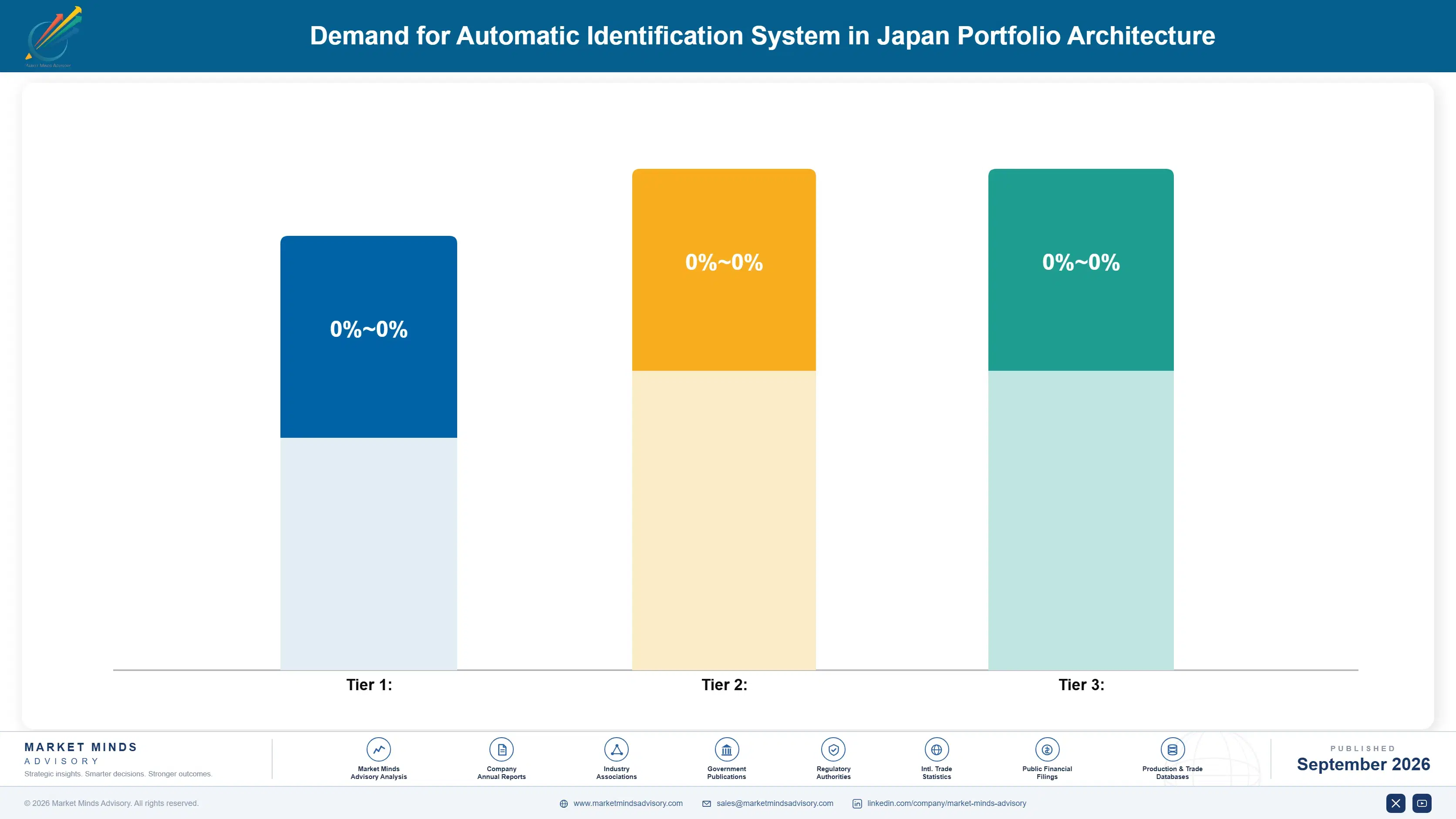
AIS vendors organize revenue across three tiers with sharply different margin economics. Volume and commodity-adjacent terrestrial transponders compete on price and basic specification compliance, while premium and certified units command pricing power through satellite integration and cybersecurity hardening that few hardware-only challengers can replicate quickly. Hardening is now a baseline requirement in international shipping and government-regulated port operations. Budget vendors compete mainly on price and basic compliance rather than integration depth.
Sustainability, regulatory, and next-generation tiers capture the smallest current volume but the fastest expansion, anchored in satellite constellation partnerships and anomaly detection analytics that regulators increasingly favor over basic terrestrial coverage. Margin concentration sits disproportionately here, and vendors with early satellite partnerships capture outsized share of new port authority integration demand. Vendors that shipped early are pulling further ahead of slower rivals in this category.

The volume versus premium tension shows up clearest in fishing fleet versus commercial shipping channels, where budget operators accept basic terrestrial coverage while large fleets pay a real premium for certified, hardened units. High-value pools concentrate around satellite data services rather than standalone transponder sales, which increasingly compete on price alone. This compresses standalone terrestrial-only vendor margin considerably each renewal cycle across the board.

Basic terrestrial transponders compete primarily on price and minimum regulatory specification compliance, with thin margins driven by intense competition among regional hardware manufacturers. Regional buyers push aggressive price negotiation during fleet-wide procurement cycles, squeezing this tier's already thin margins further.
Gross Margin

Cybersecurity-hardened transponders with satellite relay capability command premium fleet procurement pricing that unhardened commodity hardware cannot access at any comparable price point. Certification partnerships built here tend to be sticky and difficult for later entrants to displace quickly.
Gross Margin

Satellite data analytics and port integration platforms earn the highest margins as regulators and port authorities favor anomaly detection over raw position broadcasts alone. Vendors leading this shift are capturing outsized share of new port authority integration contracts.
Gross Margin
japan-automatic-identification-system-market-portfolio-architecture-1788452791398

High-value Sub-segments and Strategic Watch-out

Port Authority Integration Contracts

Port traffic management integration combines high per-contract pricing with rapid growth as authorities adopt AIS-linked congestion management systems to improve berth scheduling efficiency. This segment shows the fastest near-term contract value growth of any category tracked this cycle by a wide margin. Vendors plan accordingly.

Large Commercial Fleet Hardening Contracts

Cybersecurity hardening contracts carry high per-vessel value but slower expansion, gated by lengthy fleet-wide procurement cycles and multi-year certification requirements across major shipping operators. Cross-fleet certification verification further extends typical deployment timelines considerably across most jurisdictions surveyed. Vendors plan for this timeline across most fleet segments.

Terrestrial Class A Transponder Replacement

Basic terrestrial Class A transponder replacements remain the largest deployed base by unit volume, generating steady revenue even as growth slows across this mature, mandated segment. Differentiation has largely disappeared across this segment over the past several years as specifications converge. Pricing pressure continues each quarter.

Small Fishing Vessel Compliance Programs

Subsidized fishing vessel compliance programs face budget constraints and slower rollout, making this a strategic watch point despite steady mandated demand from smaller coastal operators. Adoption still grows slowly each year as subsidy funding gradually expands across coastal regions. Legal and funding costs keep rising slowly.

Recurring Value Beyond Transponders

AIS increasingly generates recurring value through satellite data subscriptions and analytics services rather than one-time transponder hardware sales, giving vendors annuity-like revenue once a fleet becomes a subscribed, monitored participant. Switching costs rise sharply once fleet operators integrate a specific vendor's data feed into their own vessel management software. Renewal rates for satellite-subscribed fleets now run well above the broader terrestrial-only hardware market generally.
Adoption stickiness varies considerably by end-use vertical. Large commercial shipping fleets run deep, embedded into insurance compliance reporting and port authority integration that resist replacement for years, while small fishing vessel installations stay shallow, often swapped whenever a cheaper subsidized unit becomes available. Port authority contracts sit between the two, tied to multi-year infrastructure investment cycles rather than genuine platform loyalty. Major shipping alliances increasingly lock in single vendors for entire fleet-wide monitoring contracts spanning many vessels and years.

Buyer profiles are shifting generationally as fleet compliance officers, not procurement generalists, now drive vendor selection, prioritizing satellite reliability and cybersecurity hardening over unit price. This handover favors incumbents with satellite relationships over newer entrants offering only lower cost. Compliance officers now push cybersecurity hardening requirements into vendor contracts earlier than before.
japan-automatic-identification-system-market-end-use-penetration-index-1788452791881

Where AIS Vendors Should Focus Next

These are among the four positions where our research anticipates prominent divergence between winners and laggards over the coming forecast period. Each is grounded in the demand model, the regulatory perimeter, and the announced capacity pipeline.
01 / SATELLITE INTEGRATION PRIORITY

Prioritize satellite partnerships over hardware price competition

Vendors that invest early in satellite constellation partnerships win the premium commercial fleet and port authority contracts that carry the highest margins in this market, and that advantage compounds with each renewal cycle. Hardware price competition alone rarely wins these deals since fleet operators now treat satellite coverage as a gate, not a differentiator, and reliability matters as much as raw transponder cost across most vessel classes. Satellite integration investment pays back within two to three fleet renewal cycles for vendors that commit early rather than waiting.
02 / CYBERSECURITY HARDENING STRATEGY

Harden transponders before spoofing incidents force regulatory mandates

Spoofing vulnerability is a recurring feature of this category, and vendors still shipping unhardened transponders face costly retrofit demands each time a high-profile incident draws regulatory attention unexpectedly and rapidly. Moving early lets a vendor market hardening as a genuine safety advantage rather than scramble under a compliance deadline later, which is a considerably weaker negotiating position with fleet buyers. Hardening capability is becoming a genuine competitive moat this cycle, and the window to secure preferred fleet contracts is narrowing quickly.
03 / FISHING FLEET SEGMENT INVESTMENT

Invest in small fishing fleet compliance ahead of the growth curve

Fishing fleet compliance carries strong near-term growth in this forecast, driven by expanding regulatory mandates covering vessel classes that were previously exempt from any tracking requirement whatsoever across most coastal nations. Waiting for the category to mature cedes ground to specialists who understand subsidy programs and simplified transponder design far better than a late entrant could hope to replicate quickly at any meaningful scale. Early subsidy partnerships also reduce the affordability gap that typically limits adoption among smaller, capital-constrained fishing operators broadly.
04 / TERRESTRIAL-ONLY RISK MANAGEMENT

Diversify away from terrestrial-only hardware revenue

Basic terrestrial-only transponders face mounting commoditization and margin compression as features converge across manufacturers and fleet operators increasingly demand satellite coverage as a baseline requirement rather than a premium option across every vessel class. Diversifying toward satellite data services and port integration platforms reduces this margin erosion considerably while preserving much of the underlying hardware engineering investment already made across existing product lines and teams. Vendors ignoring this shift risk stranded terrestrial-only product lines within three years as commoditization deepens further across the industry.

Engagement Snapshot From the Field

A live engagement with an industry participant carrying material or product regulatory and market exposure ahead of a defining policy shift, showing how our research translates into a defensible multi-year portfolio strategy.
MARKET MINDS ADVISORY · CLIENT ENGAGEMENT SUMMARY
Demand for Automatic Identification System in Japan Producer Strategic Portfolio Review and Transition Roadmap 2026·Investment Scenario on Demand for Automatic Identification System in Japan Exposure Evaluation 2025-26
CLIENT PROFILE
The client operates a regional fishing cooperative representing approximately 340 independently owned coastal fishing vessels across several prefectures in Japan, many of which fell newly under expanded mandatory AIS installation requirements. Leadership sought to select a cost-effective transponder solution ahead of an approaching regulatory compliance deadline. Most member vessels operate within a fifty nautical mile radius of their home ports along the Pacific coast.
STRATEGIC CHALLENGE
Member vessels operated on thin margins and lacked capital reserves to absorb transponder and satellite subscription costs without meaningful financial strain, while the compliance deadline left limited time for a phased rollout approach. Cooperative leadership demanded a subsidized solution before committing member fees to any vendor. Cooperative leadership demanded a subsidized solution before committing member fees to any vendor partnership arrangement.
MMA APPROACH
MMA conducted a structured vendor evaluation across three transponder providers offering subsidized small-vessel programs, benchmarking installation cost and government subsidy eligibility against the cooperative's compliance timeline and member budget constraints. Interviews with 47 fleet operators and regulatory compliance staff informed the final vendor selection recommendation across all member vessels. The evaluation also weighed installation logistics across the cooperative's geographically dispersed member vessel fleet.
KEY FINDINGS
  1. Selecting a subsidized vendor program reduced average per-vessel installation cost by an estimated 45% compared to standard commercial pricing (client-reported, unverified by MMA), exceeding cooperative expectations.
  2. Member vessels completing installation ahead of the compliance deadline avoided regulatory penalties that several non-cooperative vessels in the same fishing region ultimately incurred.
  3. Simplified transponder units designed for smaller vessels saw notably higher installation completion rates than standard commercial-grade hardware originally considered by the cooperative.
  4. Vendor selection ultimately favored government subsidy program participation over marginally lower unit pricing from unsubsidized competitors lacking comparable government backing. Regulatory relationships built through this program are expected to ease future compliance cycles.
CLIENT PROFILE
The client operates a regional fishing cooperative representing approximately 340 independently owned coastal fishing vessels across several prefectures in Japan, many of which fell newly under expanded mandatory AIS installation requirements. Leadership sought to select a cost-effective transponder solution ahead of an approaching regulatory compliance deadline. Most member vessels operate within a fifty nautical mile radius of their home ports along the Pacific coast.
STRATEGIC CHALLENGE
Member vessels operated on thin margins and lacked capital reserves to absorb transponder and satellite subscription costs without meaningful financial strain, while the compliance deadline left limited time for a phased rollout approach. Cooperative leadership demanded a subsidized solution before committing member fees to any vendor. Cooperative leadership demanded a subsidized solution before committing member fees to any vendor partnership arrangement.
MMA APPROACH
MMA conducted a structured vendor evaluation across three transponder providers offering subsidized small-vessel programs, benchmarking installation cost and government subsidy eligibility against the cooperative's compliance timeline and member budget constraints. Interviews with 47 fleet operators and regulatory compliance staff informed the final vendor selection recommendation across all member vessels. The evaluation also weighed installation logistics across the cooperative's geographically dispersed member vessel fleet.
KEY FINDINGS
  1. Selecting a subsidized vendor program reduced average per-vessel installation cost by an estimated 45% compared to standard commercial pricing (client-reported, unverified by MMA), exceeding cooperative expectations.
  2. Member vessels completing installation ahead of the compliance deadline avoided regulatory penalties that several non-cooperative vessels in the same fishing region ultimately incurred.
  3. Simplified transponder units designed for smaller vessels saw notably higher installation completion rates than standard commercial-grade hardware originally considered by the cooperative.
  4. Vendor selection ultimately favored government subsidy program participation over marginally lower unit pricing from unsubsidized competitors lacking comparable government backing. Regulatory relationships built through this program are expected to ease future compliance cycles.
RECOMMENDED STRATEGY
Phase 1: Phase one piloted the subsidized vendor program across a small subset of member vessels before broader cooperative-wide commitment. Early results shaped the subsequent rollout design meaningfully. Phase 2: Phase two expanded installation across the full cooperative membership once compliance and cost metrics cleared leadership's predefined success threshold. Regional leadership signed off before wider expansion proceeded. Phase 3: Phase three integrated fleet-wide tracking data into the cooperative's own catch reporting systems, extending compliance into broader operational efficiency gains.
OUTCOME
The cooperative completed fleet-wide installation ahead of the regulatory compliance deadline, with member vessels avoiding penalties that affected several non-participating operators in the same region (client-reported, unverified by MMA). Member satisfaction with the subsidized program improved modestly following full rollout. Cooperative leadership reported the rollout as a clear operational success overall.

Frequently Asked Questions

Foundational context covering the market sizes, CAGR, scope, country, region and competition that inform every finding below. This section is provided to cover basics and most often pre-purchase conversations, answered from the MMA Primary Research Dataset.

What is the current size of the Demand for Automatic Identification System in Japan?

The market reached an estimated $1.85 billion in 2025, the base year for this forecast. Growth is driven primarily by satellite AIS adoption across commercial and fishing fleets.

How large will the market be by 2036?

MMA projects the market will reach approximately $4.4 billion by 2036, up from $2.0 billion in 2026. That represents roughly a 2.2 times expansion across the ten-year forecast window.

What is the CAGR for the market 2026 to 2036?

The base case compound annual growth rate is 8.2% between 2026 and 2036. Bull and bear scenarios range from 9.4% to 7.0% depending on regulatory mandate expansion assumptions.

Which segment is growing fastest?

Satellite AIS Data Services lead all segments at a 13.6% CAGR, roughly 1.66 times the overall market rate. Adoption is concentrated among fleets needing continuous open-ocean visibility.

Who are the major companies in the market?

Kongsberg Gruppen, Furuno Electric, JRC, Saab AB, and Orbcomm Inc lead the competitive field. Combined, the top five hold an estimated 44% share on a revenue-participation basis.

Which country is growing fastest?

China leads country-level growth at a 10.8% CAGR, driven by its enormous commercial shipbuilding and fishing fleet scale. Domestic manufacturers continue scaling production to meet rising demand.

Report Segmentation Architecture

The full report scope spans multiple orthogonal segmentation dimensions, with cross-tabulated demand data provided for each dimension pair. Coverage extends further to regional breakdowns, trend trajectories, and the competitive detail needed to support segment-level decision-making.

By Primary Market Dimension

  • Class A Commercial Transponders
  • Class B Recreational Transponders
  • Satellite AIS Data Services
  • Shore-Based Receiver Infrastructure
  • AIS Data Analytics Software
  • Port Traffic Management Integration

By End-Use Industry

  • Commercial Cargo and Container Shipping
  • Coastal and Deep-Sea Fishing
  • Port Authority and Government
  • Recreational and Leisure Boating

By Commercial Dimension

  • Hardware Unit Sales
  • Satellite Data Subscription Services
  • Port Integration Licensing
  • Government Subsidy Program Sales

By Region

  • North America
  • Western Europe
  • East Asia
  • South Asia and Pacific
  • Latin America
  • Middle East and Africa
  • Eastern Europe

Scope, Methodology, and Coverage

Every figure in this report is reproducible from documented input assumptions. The scope below maps the historical period, the forecast horizon, the segmentation dimensions, and the countries covered, alongside the underlying primary and qualitative methodology.
Historical Period
2020 to 2025
Forecast Period
2026 to 2036
Base Year
2025 (USD billions; MMA Primary Research Dataset, September 2026)
Market Definition
This market covers transponder hardware and data services that broadcast and receive vessel identification, position, and navigation data for maritime safety and fleet tracking purposes. It excludes radar systems and general vessel telematics platforms not built around the AIS broadcast standard specifically.
Quantitative Units
USD Billion, CAGR (%)
Segmentation Dimensions
Product Type, End-Use Industry, Commercial Model, Region
Regions Covered
North America, Western Europe, East Asia, South Asia and Pacific, Latin America, Middle East and Africa, Eastern Europe
Countries Covered
Japan, China, South Korea, United States, Canada, United Kingdom, Norway, Germany, Netherlands, India, Australia, Brazil, Peru, UAE, Saudi Arabia
Key Companies Profiled
Kongsberg Gruppen, Furuno Electric, JRC, Saab AB, Orbcomm Inc, Spire Global Inc, L3Harris Technologies, SRT Marine Systems
Quantitative Methodology
Primary survey, n=3,800 respondents, Q4 2025, six countries; demand-side model with trade association cross-validation
Qualitative Methodology
47 expert interviews, Q4 2025; applied to validate demand model assumptions, identify emerging dynamics, and assess competitive positioning
Report Format
PDF and XLSX data workbook (Word format preview document)
Publisher
Market Minds Advisory
Report Code
MMA-2026-TEC-192
Published
September 2026
Contact
sales@marketmindsadvisory.com | www.marketmindsadvisory.com

Purchase the full Demand for Automatic Identification System in Japan Report (2026 to 2036).

This report delivers a comprehensive assessment of automatic identification system demand centered on Japan, covering product segmentation, competitive dynamics, and regional patterns through 2036. It combines primary survey data from 3,800 respondents across six countries with 47 expert interviews conducted across fleet operator, port authority, and regulatory stakeholder groups. Analysts detail input cost exposure, revenue lever opportunities, and portfolio margin economics across three distinct commercial tiers spanning volume, premium, and next-generation systems. A dedicated case study illustrates real-world fleet compliance decisions facing regional fishing cooperatives today, alongside guidance for navigating shifting regulatory mandates.
Ten-year market size and CAGR forecast
Seven-region demand and market share breakdown
Competitive benchmarking of top twenty vendors
Segment-level growth rate and CAGR analysis
Input cost and mitigation strategy review
Anonymized client case study with outcomes

Built For The People Who Decide

From boardroom strategy to bench-side execution, this report is read cover-to-cover by leaders shaping the next decade of their industry, turning demand scenarios, market dynamics and valuation benchmarks into decisions.
CXOs/ Presidents/ VPs/ Managers
M&A and Corporate Development
Strategy Teams and R&D Heads
Procurement and Product Directors
Regulatory and Compliance Leaders
Investor Relations and Equity Analysts