Market Minds Advisory
Injectable Cocoa Fillings Market

Injectable Cocoa Fillings Market: Injectable Cocoa Fillings Market. Precision Dosing Technology and Clean-Label Formulation Reshape Confectionery Center-Filling Supply.

Precision dosing technology and clean-label reformulation are reshaping how confectionery manufacturers source center-fillings, replacing generic bulk cream bases with functional, allergen-declared formulations built for automated high-speed injection lines used across global chocolate production.

Lead Analyst

Published

September 2026

Make Smarter Decisions with Customized Research Insights

Request a free sample report and evaluate market opportunities, growth trends, and competitive dynamics relevant to your business needs.

2025 MARKET VALUE$2.4BMarket Size 2025
2036 FORECAST VALUE$4.8BBase Case , 2026 to 2036
CAGR 2026 TO 20366.5 %Bull 7.7% / Bear 5.3%
INCREMENTAL OPPORTUNITY$2.2BNet 10- year value creation
EXPANSION MULTIPLE1.88x2036 value over 2026 base
Strategic Levers
M&A Pipeline
Regional Outlook
Country Rankings
Competitive Intelligence
Segmental Deep-dive
Call-Us : 91 93563 13602

Executive Snapshot and Market Trajectory.

Confectionery manufacturers worldwide are replacing generic bulk fillings with precision-dosed, functional formulations, as automated injection lines demand tighter viscosity control and allergen consistency than legacy recipes reliably deliver across increasingly high-speed, high-volume production runs at plants on nearly every populated continent on earth right now today, still.
Clean-label demand is pushing fillings suppliers toward plant-based fats, reduced sugar systems, and recognizable ingredient lists, while functional additions like added protein and dietary fiber expand fastest among health-focused snack and nutrition bar manufacturers seeking clearly differentiated shelf positioning against competitors nationwide and abroad. Western Europe anchors premium chocolate applications through established artisan and industrial manufacturing bases, while East Asian confectionery output scales rapidly on private-label filled snack expansion across growing retail formats.
Competitive intensity centers on dosing precision and shelf-stability formulation science rather than brand recognition alone, favoring ingredient houses with pilot-plant testing capability and rapid reformulation turnaround for customer product launches across multiple categories simultaneously and without significant delay whatsoever these days. Allergen labeling regulation across major export markets is forcing smaller regional fillings producers toward consolidation or exit entirely, reshaping approved supplier lists at major confectionery manufacturers worldwide.
Market Definition
Injectable cocoa fillings comprise pumpable chocolate and cocoa-based center-fill formulations dosed into confectionery shells, bars, and baked goods via automated injection equipment. The scope excludes solid enrobed coatings and standalone bar fillings applied through non-injection deposition methods.
Base Year Value
$2.4B in 2025 (MMA Primary Research Dataset, September 2026)
Forecast Period
2026 to 2036, eleven discrete annual values
CAGR
6.5% base case. Bull 7.7%. Bear 5.3%.
Fastest Growth Segment
Plant-Based and Vegan Fillings: 11.0% CAGR
Fastest Growth Country
China: 9.5% CAGR
Fastest Growth Region
South Asia and Pacific: 8.5% CAGR
Largest Region
Western Europe: 30% of 2025 global value
Market Leaders
Puratos Group, Barry Callebaut AG, Cargill Incorporated, AAK AB, Sensient Technologies Corporation. Source: MMA Analysis, company annual reports.
Primary Survey
n=3,800 procurement and R&D decision-makers, Q4 2025, six countries
Methodology
Demand-side build-up, cross-validated against public data, 47 expert interviews

Injectable Cocoa Fillings Market Forecast Scenarios

injectable-cocoa-fillings-market-size-forecast-scenario-1789747446320
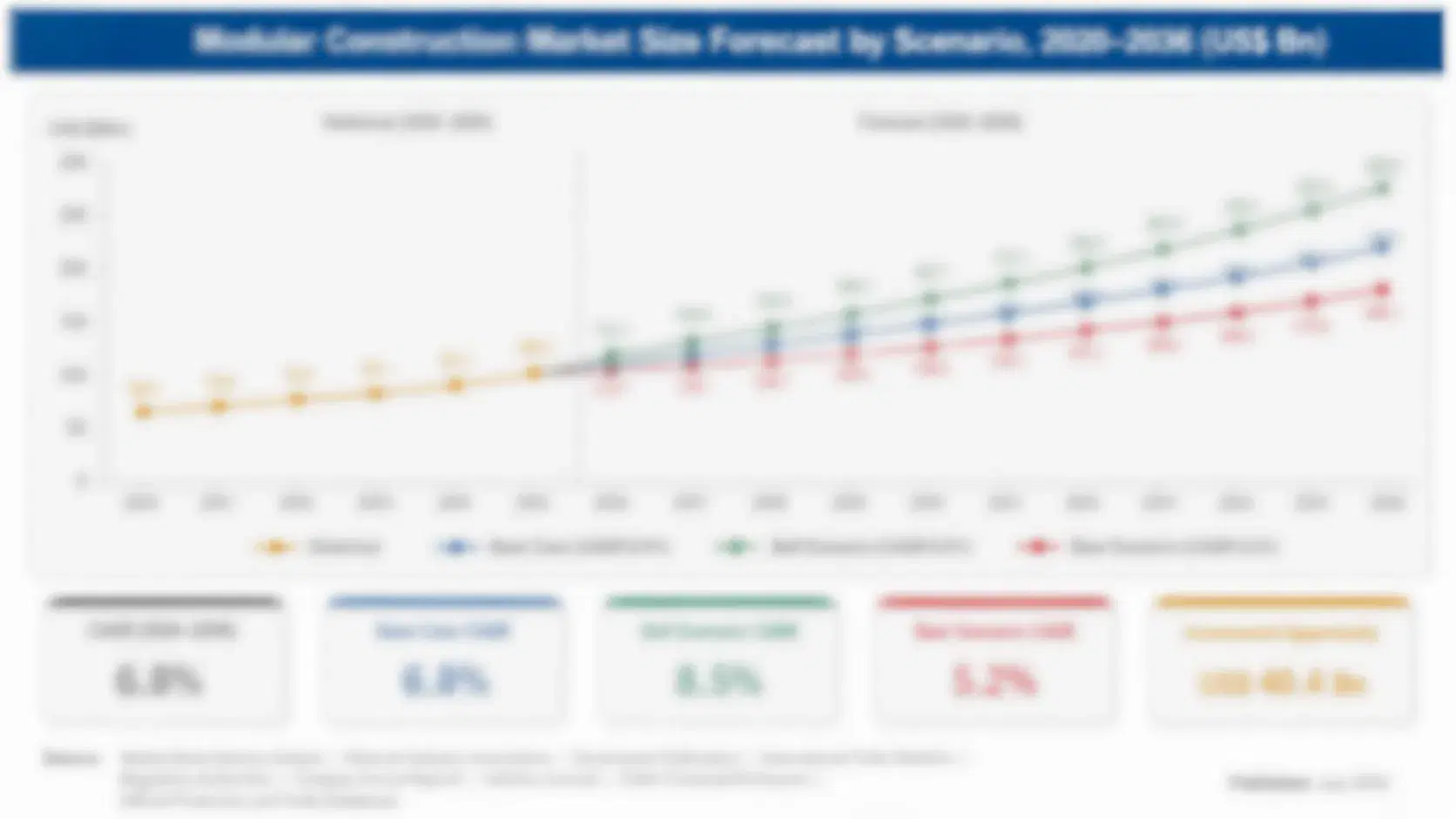
Between 2020 and 2025, injectable filling demand grew steadily as confectionery manufacturers automated production lines and expanded filled-product portfolios beyond traditional chocolate bars into cookies, wafers, and snack bars across nearly every major retail channel. Growth ran at roughly a 5.5% historical rate, driven mainly by equipment upgrades rather than entirely new product categories emerging during the period.
The base case assumes 6.5% annual growth through 2036, anchored on three mechanisms: continued conversion from manual to automated filling lines among mid-sized manufacturers still running legacy equipment, clean-label reformulation cycles that command premium ingredient pricing across major retail categories, and expansion of filled snack formats beyond confectionery into bakery and nutrition bar categories. Private-label filled products are adopting injection technology at a notably faster rate than branded incumbents across most major markets worldwide.
The bull case, reaching 7.7%, depends on plant-based filling technology closing its viscosity gap with dairy-based systems faster than currently expected across most manufacturing regions. The bear case, falling to 5.3%, reflects cocoa input cost volatility forcing manufacturers to reformulate away from cocoa-forward fillings toward cheaper compound alternatives during sustained price spikes and extended shortage periods.

Automation Reshapes Who Supplies Confectionery Fillings

Injectable cocoa fillings sit at the intersection of ingredient science and processing equipment, since formulation viscosity must match the specific injection technology a manufacturer has already installed on its production floor and validated over time. This dependency creates unusually sticky supplier relationships once a filling passes qualification testing on a given production line, a pattern far less common among simpler bulk commodity ingredients sold on price alone.
MARKET CONCENTRATION45% CR5Top five suppliers hold a moderate combined market share
AVERAGE SELLING PRICE$3.20 per kgPremium formulations command meaningfully higher per-kilogram pricing points
TOP MANUFACTURING COUNTRY28% shareLeading manufacturing hub concentrates significant regional filling production capacity
CAPACITY UTILIZATION78%Injection line utilization remains healthy across most manufacturing facilities
AUTOMATION PENETRATION62%Majority of filling lines now use automated precision dosing
COCOA COST SHARE38% of COGSCocoa content represents a substantial share of formulation cost
Demand is shifting from dairy-based cream systems toward plant-based and reduced-sugar formulations as manufacturers respond to clean-label retail pressure and allergen simplification requests from major grocery chains across most developed markets worldwide. Reformulation cycles have shortened meaningfully in recent years, pushing ingredient suppliers to maintain pilot-plant capacity capable of rapid iteration rather than relying solely on established recipe libraries built years ago.
Capacity investment is concentrating in East Asia, where private-label filled snack production is scaling quickly alongside rising automated line installation across new and retrofitted manufacturing facilities nationwide. Western European producers retain the premium artisan and branded chocolate segment, competing on formulation sophistication rather than unit cost against faster-scaling Asian manufacturing capacity and its steadily growing export ambitions.
"Fillings suppliers that treat reformulation speed as core infrastructure, not a project-by-project scramble, are winning qualification slots on the newest injection lines. The ones still running static recipe libraries are losing shelf space to faster competitors."
Practice Lead, Food Ingredients and Confectionery Inputs Practice · MMA Food Ingredients and Confectionery Inputs Practice · September 2026

Market Trends

Clean-Label Mandates Push Fillings Toward Plant-Based Fats

Major retail chains across North America and Western Europe are tightening ingredient declaration requirements, pushing confectionery manufacturers to reformulate fillings away from partially hydrogenated and dairy-derived fats toward plant-based systems with shorter, more recognizable ingredient lists that satisfy increasingly informed shoppers browsing crowded store shelves. This shift requires fillings suppliers to solve viscosity and mouthfeel challenges that plant-based fats historically struggled to match against traditional dairy cream systems at comparable cost. Suppliers with proven plant-based formulation libraries are winning reformulation contracts considerably faster than competitors still developing comparable alternatives from scratch.
Market Impact: 34% of volume now outside chocolate

Smart Dosing Systems Enable Real-Time Viscosity Control

Confectionery manufacturers are installing sensor-equipped injection systems that monitor filling viscosity and temperature in real time, automatically adjusting dosing parameters to maintain consistency across long production runs without constant manual intervention from line operators watching every single batch closely and repeatedly throughout each shift. This technology reduces waste from misfilled or leaking products and allows meaningfully faster changeovers between filling formulations running on the same production line day after day. Ingredient suppliers are increasingly designing formulations specifically compatible with these smart dosing platforms to secure preferred-supplier status among leading manufacturers.
Market Impact: private label growing 9.5% annually

Market Opportunities and Growth Drivers

Filled Snack Categories Expand Beyond Traditional Chocolate

Bakery and nutrition bar manufacturers are adopting injection filling technology once limited mostly to chocolate confectionery, opening entirely new demand channels for cocoa-based center-fill formulations across categories that never used this technology before at any meaningful scale. Cookies, wafers, and protein bars increasingly feature injected cocoa centers as manufacturers seek differentiated texture and flavor combinations that compete against established chocolate bar formats on retail shelves everywhere. This category expansion is pulling fillings suppliers into product development conversations earlier in the innovation process than the confectionery-only relationships that historically defined the category.
Market Impact: margins compressed up to 8 points

Private-Label Retailers Scale Filled Confectionery Programs

Major grocery retailers worldwide are expanding private-label filled confectionery lines to compete directly against branded chocolate products, driving substantial incremental fillings procurement volume through contract manufacturers that produce these store-brand items at increasing scale nationwide and internationally as well. Retailers increasingly specify clean-label and allergen-declared formulations for these programs, pushing contract manufacturers toward suppliers capable of meeting retailer-specific standards quickly, consistently, and at a genuinely competitive cost across regions. This channel has grown considerably faster than branded confectionery fillings demand over the past several years across nearly every major market.
Market Impact: qualification takes 6 to 9 months

Market Restraints and Challenges

Cocoa Price Volatility Squeezes Filling Formulation Margins

Cocoa bean price swings pass through to filling formulation cost with a lag, since fillings suppliers typically hold multi-month ingredient inventory and quote pricing on fixed contracts negotiated well before the current price spike began to accelerate sharply upward across the industry. This root cause leaves suppliers absorbing margin compression during rapid price increases until contracts reset, squeezing profitability precisely when raw material costs are highest across the board. Some suppliers are mitigating exposure through shorter contract cycles and cocoa-content reduction formulations that substitute compound fats where customer specifications permit the change.
Market Impact: 62% of new launches now plant-based

Lengthy Qualification Cycles Slow New Supplier Entry

Manufacturers require extensive viscosity, shelf-stability, and allergen safety validation before approving a new filling supplier for production use, a process rooted in the real cost of production line downtime if a formulation fails during a full manufacturing run at commercial scale and volume across multiple production shifts daily. This qualification burden protects incumbent suppliers and slows market entry for newer or smaller formulation houses regardless of underlying product quality. Several suppliers are now offering pre-validated compatibility test kits and accelerated pilot-line trials to shorten the qualification timeline for prospective customers.
Market Impact: up to 15% less production waste
3 additional market trends, 4 additional growth drivers, and 3 additional restraints and challenges are covered in the full report. Contact sales@marketmindsadvisory.com to access the complete intelligence.

Segment CAGR and Growth Architecture

Injectable fillings segment by formulation type, since fat base and functional additive content determine both processing compatibility and retail positioning more directly than application category does across confectionery, bakery, and snack manufacturing alike. Plant-based and functionally fortified formulations are absorbing disproportionate reformulation investment as clean-label and health-focused retail demand accelerates across major markets worldwide.
injectable-cocoa-fillings-market-market-share-analysis-1789747446591

Plant-Based and Vegan Fillings

Plant-based and vegan fillings have become the fastest-growing segment as manufacturers respond to both clean-label retail pressure and genuine vegan consumer demand that dairy-based cream systems cannot satisfy regardless of the reformulation effort applied to them over recent years. Coconut, sunflower, and cocoa butter blends have closed much of the viscosity and mouthfeel gap that historically separated plant-based fillings from dairy cream equivalents on automated injection lines running at high speed. Suppliers with mature plant-based formulation libraries are winning reformulation projects at major confectionery brands well ahead of competitors still developing comparable technology, and retailer private-label programs are increasingly specifying plant-based fillings as a default requirement rather than a premium option.
CAGR 11.0%

Functional and Fortified Fillings

Functional and fortified fillings, enriched with added protein, fiber, or vitamins, are expanding rapidly as nutrition bar and health-positioned snack manufacturers seek differentiated formulations beyond standard sweetness and flavor profiles alone, chasing genuine shelf differentiation in an increasingly crowded product category. This segment commands meaningful premiums over standard cocoa fillings, since functional claims support higher retail pricing and justify more sophisticated ingredient sourcing decisions across the supply chain from farm to finished product. Formulation complexity is considerably higher here than in most other segments, since added functional ingredients frequently alter viscosity and stability in ways that require additional pilot-plant testing before a manufacturer will approve production-scale use at commercial volume.
CAGR 9.0%
Full segment breakdown across 6 segments available in the complete report.

Regional Architecture and Country Demand Map

Injectable fillings demand concentrates where confectionery manufacturing capacity is deepest and most technologically advanced today across the industry. Western Europe's long-established chocolate industry anchors global volume, while East Asia and North America scale rapidly on private-label expansion and automated line investment across growing consumer markets worldwide.

North America

North America's 24% share reflects a mature confectionery manufacturing base that has largely completed its transition from manual to automated filling lines, leaving growth driven more by reformulation cycles than by new capacity installation across the region's already-established plants and facilities nationwide. Clean-label retailer pressure from major grocery chains is pushing manufacturers toward plant-based and functional fillings at a faster pace than equipment investment alone would suggest to most industry observers watching the sector closely from year to year. Nutrition bar and snack manufacturers are adopting injection technology once limited mostly to traditional chocolate confectionery, broadening the addressable base for fillings suppliers across the region's diverse and fragmented food manufacturing sector overall today.
Share: 24% | CAGR: 6.0% (2026 to 2036)

Western Europe

Western Europe holds 30% share, above its usual band, because Belgium, Switzerland, Germany, and Italy together host the world's deepest concentration of chocolate manufacturing expertise and equipment installed base, making this a regulated, established-base market rather than one sized on population alone. Manufacturers here run the widest variety of filling formulations per facility, since premium and artisan segments demand constant recipe rotation across seasonal product launches throughout the calendar year. European Union clean-label and allergen labeling requirements are also pushing reformulation investment faster here than in any other region, reinforcing the area's role as the innovation center for new filling technology before it spreads elsewhere across global manufacturing networks and supply chains.
Share: 30% | CAGR: 5.0% (2026 to 2036)
Regional intelligence for 5 additional markets available in the complete report: East Asia, South Asia and Pacific, Latin America, Middle East and Africa, Eastern Europe. Contact sales@marketmindsadvisory.com.
injectable-cocoa-fillings-market-country-cagr-analysis-1789747446938

Four Margin Levers Reshaping Fillings Economics

Margin growth in injectable fillings increasingly comes from formulation sophistication and service speed rather than raw volume alone, since basic cocoa cream fillings command thin, commoditized pricing across most global markets today. Suppliers that pair functional formulation science with faster qualification turnaround are capturing disproportionate share of new product development budgets at major confectionery manufacturers.

Upselling Functional and Fortified Filling Formulations

Suppliers that add protein, fiber, or vitamin fortification to standard cocoa fillings command price premiums of 20% to 30% over unfortified equivalents, since functional claims support higher retail pricing for the finished product sold on crowded store shelves nationwide and abroad. This upsell requires additional formulation expertise and often additional stability testing, but the margin gain typically exceeds the incremental cost of development several times over across a product's full lifecycle. Suppliers with established functional ingredient relationships can move faster on these projects than competitors building the capability entirely from scratch.
Market Impact: premiums of 20% to 30% over standard fillings

Accelerating Customer Qualification and Onboarding Timelines

Suppliers that shorten viscosity and shelf-stability qualification cycles from the industry-typical 6 to 9 months down to three or four months win a meaningfully larger share of new product development projects, since manufacturers prize speed to market almost as highly as formulation quality itself in a highly competitive category dominated by fast-moving retail trends and frequent seasonal launches throughout the year. Building pre-validated compatibility test kits and dedicated pilot-plant capacity requires meaningful upfront investment, but suppliers that make this investment are consistently named first-choice partners on time-sensitive product launches across multiple categories.
Market Impact: qualification time cut from 9 to 3 months

Co-Developing Private-Label Filled Confectionery Programs Jointly

Ingredient suppliers that embed formulation teams directly within retailer private-label development programs are securing multi-year volume commitments worth 15% to 25% more than standard spot-market supply relationships, since retailers value the reduced development risk that comes from working with an experienced formulation partner they already trust and rely upon. These co-development relationships also generate valuable early visibility into upcoming retailer product roadmaps, letting suppliers plan capacity investment well ahead of formal purchase order commitments arriving later in the development cycle. Retailers increasingly treat these partnerships as strategic rather than purely transactional.
Market Impact: volume commitments worth 15% to 25% more value

Reducing Material Loss Through Precision Dosing Partnerships

Suppliers that work directly with equipment manufacturers to optimize filling viscosity for specific dosing hardware are helping customers cut production line material waste by 10% to 15%, a saving that suppliers increasingly capture partial credit for through value-based pricing agreements rather than pure per-kilogram sales alone across the full customer relationship lifecycle over many years and multiple contract cycles. This approach deepens the technical relationship between supplier and manufacturer well beyond a typical commodity ingredient transaction, creating switching costs that protect the relationship over multiple product generations and reformulation cycles.
Market Impact: material waste cut by 10% to 15% typically

Who Controls the Margin Pool

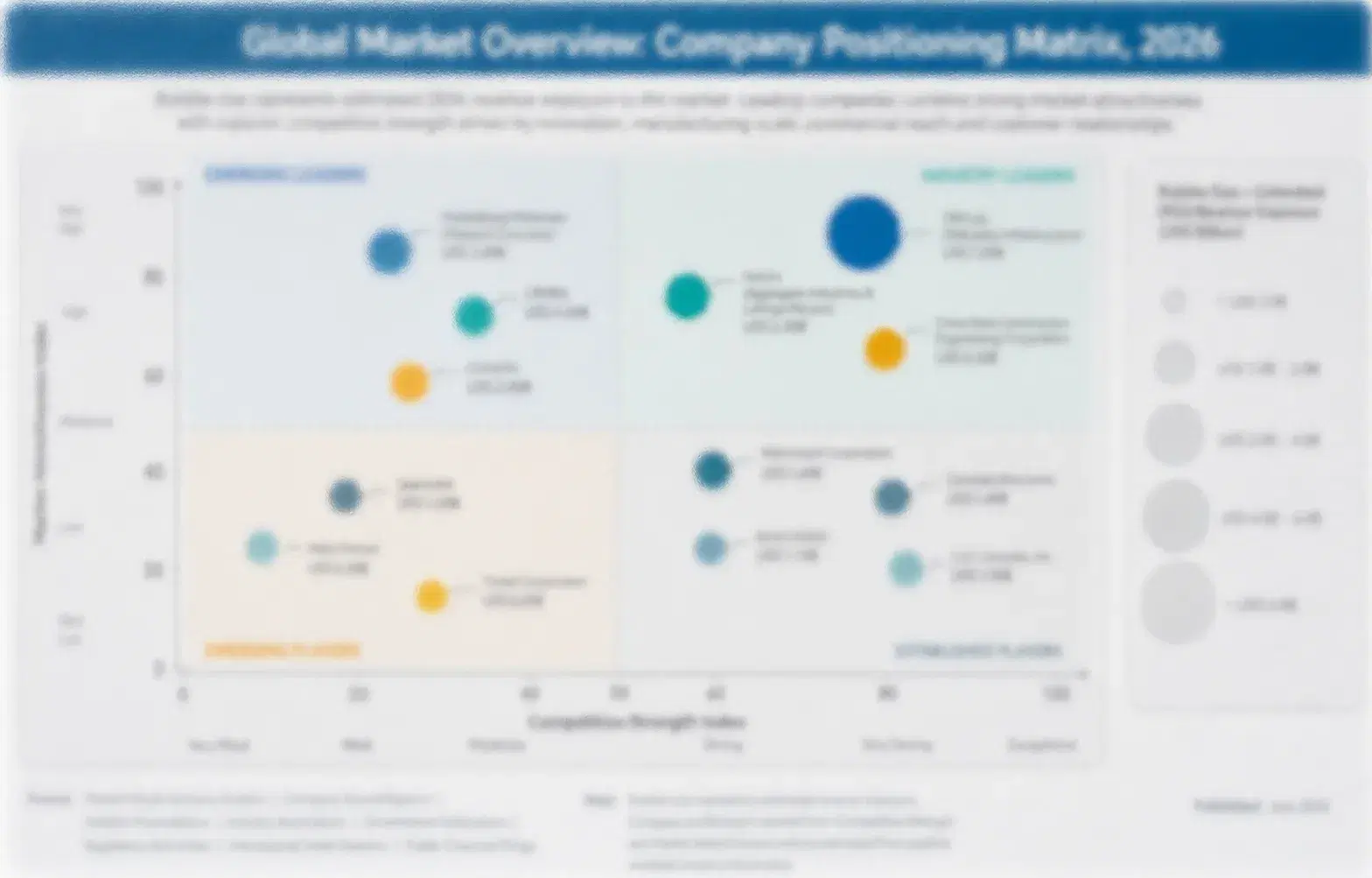
Injectable fillings sits at moderate concentration, with the top five suppliers controlling 45% of global revenue on a consistent revenue basis used throughout this section. Puratos and Barry Callebaut lead the category by a meaningful margin over mid-tier challengers, most of whom compete regionally rather than across all major manufacturing markets simultaneously and at comparable scale.
Current competitive activity centers on formulation speed, plant-based reformulation capability, and functional ingredient integration rather than price alone across nearly every customer segment. Suppliers are investing heavily in pilot-plant testing infrastructure to shorten qualification cycles, while several are building dedicated private-label co-development teams embedded within major retailer innovation programs to secure multi-year volume commitments ahead of smaller regional rivals still relying on older recipe libraries.

Emerging pressure comes from East Asian ingredient houses scaling domestic formulation capability to serve China's rapidly growing private-label filled snack segment, a category historically served by imported European fillings shipped at considerable cost. These regional entrants compete primarily on cost and proximity to fast-growing Chinese confectionery manufacturers, a dynamic that could meaningfully reorder mid-tier rankings over the next several years if reformulation capability keeps improving at its current pace.
injectable-cocoa-fillings-market-company-positioning-matrix-1789747447306

Competitive Moat and Risk Dimensions

PURATOS GROUP

Moat: Deep Fillings Formulation Specialization

Puratos built its business specifically around bakery and confectionery fillings rather than treating them as an adjacent product line, giving it formulation depth and application expertise that diversified commodity trading houses cannot easily replicate. This specialization supports faster reformulation turnaround and closer technical partnerships with manufacturer customers across most major markets.
PURATOS GROUP

Risk: Limited Scale Against Diversified Rivals

As a fillings and bakery ingredient specialist, Puratos lacks the broader commodity trading infrastructure and raw material purchasing scale that diversified rivals like Cargill and Barry Callebaut bring to cocoa procurement. This can leave Puratos more exposed to input cost volatility during sharp cocoa price spikes than competitors able to cross-subsidize from other business lines.
BARRY CALLEBAUT AG

Moat: Integrated Cocoa Sourcing and Processing

Barry Callebaut's fillings business draws directly on its own cocoa grinding and sourcing operations, giving it cost and supply security advantages that fillings-only competitors sourcing cocoa externally cannot match. This vertical integration lets Barry Callebaut offer bundled chocolate and filling solutions to manufacturers seeking a single qualified supplier relationship.
BARRY CALLEBAUT AG

Risk: Fillings a Secondary Business Priority

Fillings represent a smaller, secondary business line within Barry Callebaut's much larger chocolate and cocoa operation, which can mean slower dedicated investment in filling-specific innovation relative to specialists like Puratos. Internal capital allocation decisions sometimes favor core chocolate grinding capacity over fillings-specific pilot-plant expansion projects.

Players Tracked

Prominent Players

Puratos Group
Barry Callebaut AG
Cargill Incorporated
AAK AB
Sensient Technologies Corporation

Other Key Players

Palsgaard A/S
Fuji Oil Holdings Inc.
Kerry Group plc
Dohler Group
Tate & Lyle plc
Ingredion Incorporated
Wilmar International Limited
Musim Mas Group
Blommer Chocolate Company
Zeelandia Group
Corman SA
Dawn Foods
Bunge Loders Croklaan
IOI Corporation Berhad
Cemoi Group

Recent Developments

MARCH 2026

Puratos Expands Plant-Based Fillings Pilot Facility

Puratos completed an organic capacity expansion at its plant-based fillings pilot facility in Belgium, adding formulation and testing capacity dedicated specifically to vegan and reduced-sugar product development for European customers. The expansion supports faster reformulation turnaround for chocolate manufacturers facing tightening clean-label retail requirements across the continent.
Signal: Signals intensifying investment in plant-based reformulation capability among leading European fillings specialists and their regional competitors.
SEPTEMBER 2025

Barry Callebaut Signs North American Private-Label Agreement

Barry Callebaut signed a multi-year supply and co-development agreement with a major North American private-label confectionery manufacturer, locking in fixed-volume fillings commitments tied to certified cocoa sourcing standards across multiple product lines. The agreement is a long-term supply contract, not an equity transaction, structured to secure predictable volume.
Signal: Confirms private-label co-development contracts are becoming standard competitive practice among leading fillings suppliers across most regions.
JANUARY 2026

AAK Acquires Chinese Fillings Formulation House

AAK completed an acquisition of a mid-sized Chinese fillings and specialty fats formulation house, expanding its East Asian manufacturing and technical service footprint substantially across several provinces and key export corridors. The acquisition strengthens AAK's position serving China's rapidly scaling private-label confectionery manufacturing base and export ambitions.
Signal: Reflects growing Western supplier interest in securing direct access to China's expanding filled snack segment and its growth.

What Drives Fillings Formulation Cost

Cocoa and cocoa butter represent 40% to 55% of formulation cost for standard fillings, sourced primarily from West African and Latin American origins through grinders and traders. Sugar, dairy or vegetable fats, and functional additives like protein and fiber make up most of the remainder, with packaging and logistics contributing a smaller but still meaningful share of total landed cost.
Cocoa futures prices more than doubled between 2023 and 2024 according to USDA Foreign Agricultural Service crop reports, forcing fillings suppliers to renegotiate customer contracts mid-cycle or absorb margin compression until pricing reset. Barry Callebaut's fiscal 2024 annual report cited the cocoa price surge as a direct driver of volume softness in filling and coating product lines, as manufacturers delayed reformulation projects to manage cost exposure.

Smaller fillings suppliers without hedging positions or diversified raw material sourcing absorb cocoa price spikes more directly than scaled players with forward-priced contracts, compressing margins fastest among specialist houses lacking broader commodity exposure. Suppliers located near cocoa processing hubs in Western Europe also hold a logistics advantage over more distant Asian or North American competitors sourcing semi-finished cocoa inputs from overseas.
injectable-cocoa-fillings-market-cost-volatility-analysis-1789747447577

Diversifying Fat Base to Reduce Cocoa Dependence

Suppliers are blending cocoa butter with alternative vegetable fats in formulations where customer specifications and regulations permit, reducing direct cocoa exposure per kilogram of finished filling produced across product lines. This approach trades some flavor authenticity for meaningfully greater cost stability, particularly valuable in mass-market and private-label formulations where price sensitivity outweighs premium positioning considerations.

Locking In Forward Cocoa Purchasing Contracts

Larger suppliers increasingly negotiate forward-priced cocoa purchasing agreements spanning multiple quarters to smooth input cost volatility rather than buying entirely on the spot market at prevailing prices each and every time. This approach requires meaningful working capital commitment but protects customer-facing pricing stability, an increasingly important differentiator when competing for multi-year private-label supply contracts.

Passing Costs Through Tiered Customer Pricing

Suppliers are structuring customer contracts with tiered pricing mechanisms that automatically adjust for cocoa price movements beyond agreed thresholds, sharing volatility risk more transparently between supplier and manufacturer. This reduces the need for suppliers to absorb sudden cost spikes entirely on their own margin, though it requires customers willing to accept less pricing certainty than flat-rate contracts.

Portfolio Architecture for Margin Defence

Fillings margin structure runs from thin volume-tier spreads on standard cocoa cream formulations to substantially richer premium and next-generation pools, with gross margin roughly doubling between the volume tier and the sustainability tier across most product categories. Formulation complexity, functional claims, and certification status all function as margin multipliers layered on top of the same underlying ingredient base and manufacturing process.
Volume tension persists: most tonnage still moves through standard cocoa cream fillings sold largely on price into mainstream confectionery, leaving thin spreads for suppliers without differentiation in a crowded and highly competitive field. Premium and functional volume remains a minority of total tonnage but captures a disproportionate share of supplier profit, pulling reformulation investment steadily toward clean-label and fortified categories that retailers increasingly favor.

High-value pools concentrate where functional claims, plant-based positioning, and rapid reformulation capability intersect, since manufacturers pay the steepest premiums for suppliers who can move fastest on new product development cycles. Nutrition bar, premium confectionery, and private-label innovation programs anchor this demand, and suppliers serving them consistently are capturing margin growth well ahead of the broader market's underlying volume expansion rate.

Volume / Commodity-Adjacent Tier

Standard dairy or basic cocoa cream fillings sold primarily on price into mainstream confectionery and bakery applications, with limited functional or clean-label differentiation and thin competitive spreads across most manufacturing regions worldwide.
Gross Margin: 10%-16%

Premium / Certified Tier

Plant-based, reduced-sugar, and clean-label fillings meeting retailer allergen and ingredient declaration standards, commanding consistent premiums from manufacturers responding to shifting consumer health preferences across most major retail categories and markets today.
Gross Margin: 20%-28%

Sustainability / Regulatory / Next-Generation Tier

Functionally fortified, certified, and rapidly reformulated fillings built for next-generation nutrition and premium confectionery applications, positioned well ahead of anticipated retailer sustainability disclosure and traceability requirements expected across most markets soon.
Gross Margin: 25%-35%
injectable-cocoa-fillings-market-portfolio-architecture-1789747447861

High-value Sub-segments and Strategic Watch-out

Plant-Based and Vegan Fillings

Plant-based and vegan fillings combine the fastest volume growth in the market with strong pricing power, drawing accelerating manufacturer investment as clean-label retail requirements tighten further and vegan consumer demand continues expanding across most major confectionery categories and export markets worldwide today and into the near future.
Gross Margin: 22%-30%

Functional and Fortified Fillings

Functional and fortified fillings sustain strong growth and durable premiums among nutrition-focused manufacturers, though formulation complexity and additional stability testing requirements constrain how quickly new products reach commercial-scale production volume across most manufacturing facilities worldwide, slowing broader category expansion somewhat relative to faster-scaling plant-based fillings.
Gross Margin: 20%-28%

Standard Cocoa Cream Fillings

Standard cocoa cream fillings remain the volume core of the market, moving the largest absolute tonnage even as their share of total value shrinks relative to functional and plant-based segments gaining share across most confectionery manufacturing regions today and likely through the forecast period ahead.
Gross Margin: 10%-15%

Dairy-Based Cream Fillings

Dairy-based cream fillings represent a genuine strategic watch-out as clean-label and vegan substitution accelerates, threatening demand for traditional dairy formulations if plant-based viscosity and mouthfeel parity keeps improving at its current pace across most major manufacturing regions and customer segments over the next several years.
Gross Margin: 12%-18%

Why Fillings Relationships Stay Locked In

Fillings demand behaves like an annuity once a formulation clears qualification testing on a manufacturer's specific injection equipment, since reformulating carries real risk of production disruption and taste inconsistency that most manufacturers avoid unless genuinely necessary for the business. Multi-year supply agreements, increasingly bundled with co-development services, extend this repeat-purchase pattern further for suppliers that qualify early and consistently.
Stickiness varies by end-use vertical. Confectionery manufacturers show the deepest relationship depth, since recipe changes risk altering taste and texture that consumers notice immediately and often reject outright. Bakery and nutrition bar manufacturers, newer adopters of injection technology, show somewhat shallower loyalty as they continue testing multiple suppliers before settling on long-term partners, while cosmetics buyers of cocoa-derived fats demonstrate persistence similar to confectionery customers.

Buyer profiles are shifting generationally as younger procurement and product development leaders prioritize clean-label credentials and functional claims over pure cost competitiveness, a meaningful change from purchasing norms that dominated the category for decades across most manufacturing regions. This generational shift is accelerating plant-based and functional fillings' share of total procurement spend, even among manufacturers whose end products still compete primarily on price at retail shelves nationwide.
injectable-cocoa-fillings-market-end-use-penetration-index-1789747448056

MMA Verdict on Fillings Strategy

These are among the four positions where our research anticipates prominent divergence between winners and laggards over the coming forecast period. Each is grounded in the demand model, the regulatory perimeter, and the announced capacity pipeline.
01 / PLANT-BASED REFORMULATION INVESTMENT

Invest Now in Plant-Based Formulation Capability

Suppliers that delay plant-based reformulation investment risk losing qualification slots as manufacturers respond to accelerating clean-label retail pressure and genuine vegan consumer demand across most developed markets. Plant-based fillings already command growth roughly 1.7 times the overall market rate, and early movers are winning reformulation contracts well ahead of competitors still developing comparable viscosity and mouthfeel technology. MMA views the next two to three years as the critical window before plant-based capability becomes table stakes rather than a genuine differentiator.
02 / QUALIFICATION SPEED ADVANTAGE

Shorten Qualification Cycles to Win More Projects

Manufacturers increasingly prize speed to market almost as highly as formulation quality itself, and suppliers that compress qualification timelines from the industry-typical six to nine months down to three or four months are winning a disproportionate share of new product development projects across most categories. Building pre-validated compatibility test kits and dedicated pilot-plant capacity requires meaningful upfront investment, but the payoff compounds across every subsequent customer relationship over time. MMA recommends treating qualification speed as core competitive infrastructure rather than an operational afterthought.
03 / FUNCTIONAL FORTIFICATION STRATEGY

Build Functional Fortification Capability Before Rivals Do

Functional and fortified fillings command meaningful premiums over standard cocoa formulations, since added protein, fiber, or vitamin claims support higher retail pricing that manufacturers are willing to pay for genuine differentiation in a crowded category. This segment's formulation complexity is real, requiring additional stability testing that not every supplier can execute quickly, which protects early movers from fast imitation by smaller rivals. MMA expects functional fortification to become a standard offering among leading suppliers well within the current forecast period, rewarding those who invest first.
04 / PRIVATE-LABEL PARTNERSHIP DEPTH

Deepen Private-Label Co-Development Relationships Early

Retailers increasingly value embedded formulation partnerships over transactional spot-market purchasing, and suppliers that secure multi-year private-label co-development agreements are locking in volume commitments worth meaningfully more than standard supply relationships across nearly every major retail category and geography. These partnerships also generate early visibility into upcoming retailer product roadmaps, letting suppliers plan capacity investment well ahead of formal purchase orders arriving later in the cycle. MMA sees private-label co-development as an increasingly durable source of competitive separation as retailer filled confectionery programs continue expanding.

Engagement Snapshot From the Field

A live engagement with an industry participant carrying material or product regulatory and market exposure ahead of a defining policy shift, showing how our research translates into a defensible multi-year portfolio strategy.
MARKET MINDS ADVISORY · CLIENT ENGAGEMENT SUMMARY
Injectable Cocoa Fillings Producer Strategic Portfolio Review and Transition Roadmap 2026·Investment Scenario on Injectable Cocoa Fillings Exposure Evaluation 2025-26
CLIENT PROFILE
The client is a mid-sized North American nutrition bar manufacturer generating approximately $210 million in annual revenue (client-reported, unverified by MMA), producing branded and private-label bars sold through major grocery, convenience, and specialty retail channels nationwide. The company had relied on a single dairy-based cocoa filling supplier for nearly a decade prior to engaging MMA for this strategic review.
STRATEGIC CHALLENGE
The client faced declining sales in its flagship dairy-filled product line as competitors launched plant-based and functional alternatives that better matched shifting consumer preferences across the category. Leadership needed a reformulation strategy that would modernize the filling without alienating existing customers loyal to the original product's distinctive taste and texture profile.
MMA APPROACH
MMA conducted a competitive benchmarking exercise across plant-based and functional fillings suppliers, then facilitated blind taste testing comparing candidate formulations against the client's existing dairy-based recipe across multiple consumer panels. The engagement combined primary consumer research, supplier capability assessment, and phased reformulation timeline modeling tailored to the client's retail calendar.
KEY FINDINGS
  1. Blind taste testing showed that 68% of consumers could not distinguish the best-performing plant-based candidate from the client's original dairy-based filling recipe.
  2. Two of five evaluated fillings suppliers offered dedicated pilot-plant testing capacity capable of supporting a full reformulation within roughly four months total.
  3. Competitors with functional or plant-based fillings had already captured an estimated 12% of the client's core retail shelf space over eighteen months.
  4. A phased dual-SKU launch strategy meaningfully reduced consumer defection risk compared to a full, immediate conversion of the entire existing product line.
CLIENT PROFILE
The client is a mid-sized North American nutrition bar manufacturer generating approximately $210 million in annual revenue (client-reported, unverified by MMA), producing branded and private-label bars sold through major grocery, convenience, and specialty retail channels nationwide. The company had relied on a single dairy-based cocoa filling supplier for nearly a decade prior to engaging MMA for this strategic review.
STRATEGIC CHALLENGE
The client faced declining sales in its flagship dairy-filled product line as competitors launched plant-based and functional alternatives that better matched shifting consumer preferences across the category. Leadership needed a reformulation strategy that would modernize the filling without alienating existing customers loyal to the original product's distinctive taste and texture profile.
MMA APPROACH
MMA conducted a competitive benchmarking exercise across plant-based and functional fillings suppliers, then facilitated blind taste testing comparing candidate formulations against the client's existing dairy-based recipe across multiple consumer panels. The engagement combined primary consumer research, supplier capability assessment, and phased reformulation timeline modeling tailored to the client's retail calendar.
KEY FINDINGS
  1. Blind taste testing showed that 68% of consumers could not distinguish the best-performing plant-based candidate from the client's original dairy-based filling recipe.
  2. Two of five evaluated fillings suppliers offered dedicated pilot-plant testing capacity capable of supporting a full reformulation within roughly four months total.
  3. Competitors with functional or plant-based fillings had already captured an estimated 12% of the client's core retail shelf space over eighteen months.
  4. A phased dual-SKU launch strategy meaningfully reduced consumer defection risk compared to a full, immediate conversion of the entire existing product line.
RECOMMENDED STRATEGY
Phase 1: Phase 1 (Months 1-3): Benchmark candidate suppliers and run blind consumer taste testing against the client's existing dairy-based filling recipe. Phase 2: Phase 2 (Months 4-7): Pilot a reformulated plant-based filling alongside the original recipe as a limited regional dual-SKU market test. Phase 3: Phase 3 (Months 8-12): Scale the winning formulation nationally and gradually phase out the underperforming legacy dairy-based filling recipe entirely.
OUTCOME
Within ten months, the client launched a reformulated plant-based filling that recovered an estimated 9% of lost retail shelf space (client-reported, unverified by MMA) while retaining 94% of existing customers through the transition period. The dual-SKU approach limited revenue disruption during the changeover and preserved brand loyalty.

Frequently Asked Questions

Foundational context covering the market sizes, CAGR, scope, country, region and competition that inform every finding below. This section is provided to cover basics and most often pre-purchase conversations, answered from the MMA Primary Research Dataset.

What is the current size of the Injectable Cocoa Fillings Market?

The global injectable cocoa fillings market was valued at $2.4 billion in 2025. This figure covers pumpable cocoa-based center-fill formulations dosed via automated injection equipment.

How large will the Injectable Cocoa Fillings Market be by 2036?

MMA projects the market will reach approximately $4.8 billion by 2036. This represents cumulative growth of roughly $2.2 billion over the full ten-year forecast window.

What is the CAGR for the Injectable Cocoa Fillings Market 2026 to 2036?

The market is forecast to grow at a 6.5% compound annual rate between 2026 and 2036. The bull case reaches 7.7% while the bear case falls to 5.3%.

Which segment is growing fastest?

Plant-Based and Vegan Fillings is the fastest-growing segment, expanding at 11.0% CAGR, roughly 1.7 times the overall market rate. Functional and Fortified Fillings follows as the second-fastest segment at 9.0%.

Who are the major companies in the Injectable Cocoa Fillings Market?

Leading companies include Puratos Group, Barry Callebaut AG, Cargill Incorporated, AAK AB, and Sensient Technologies Corporation. These five players together control an estimated 45% of global revenue.

Which country is growing fastest?

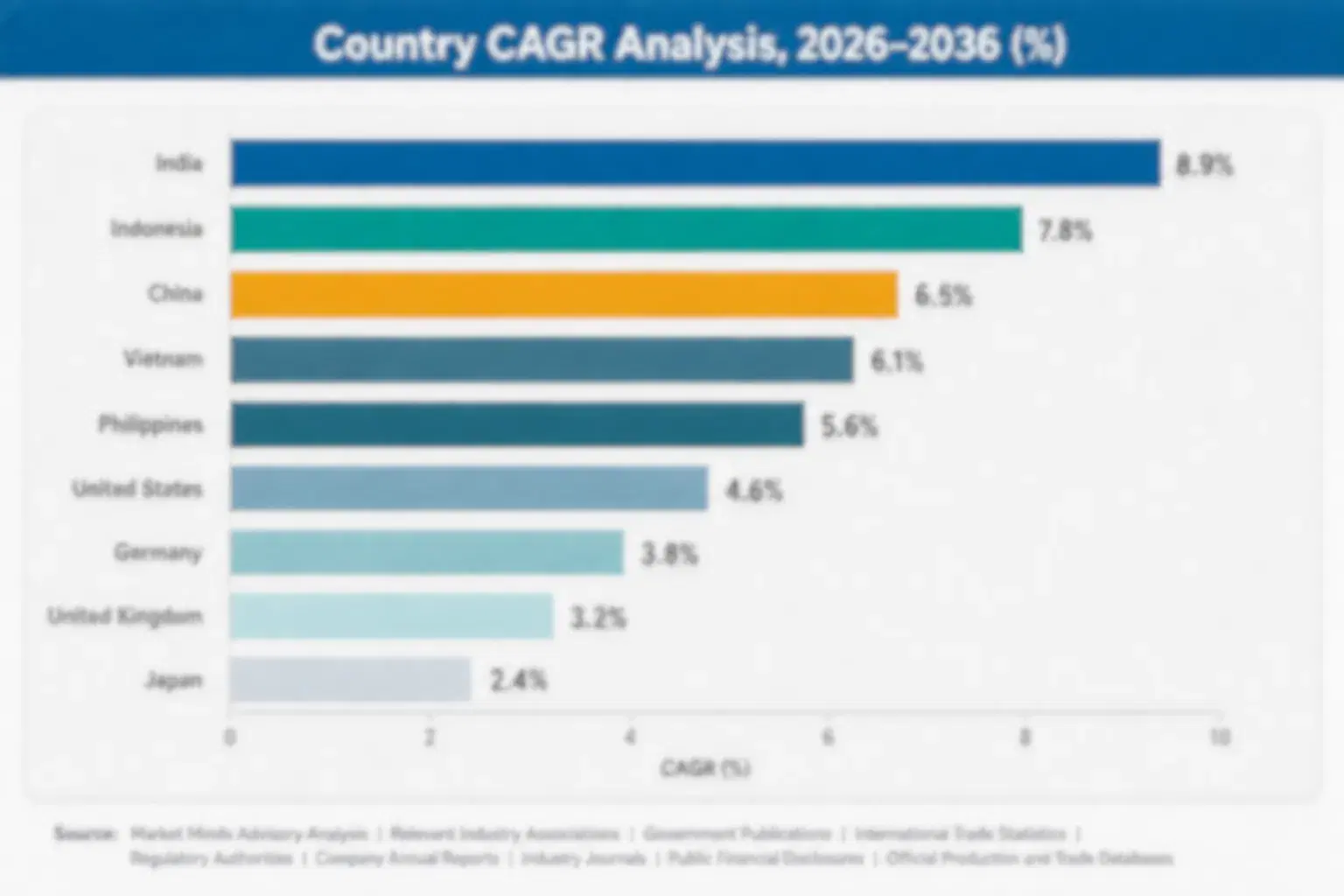
China is the fastest-growing major market, expanding at approximately 9.5% CAGR. Rapid private-label filled snack expansion and automated line installation are driving this above-market growth.

Report Segmentation Architecture

The full report scope spans multiple orthogonal segmentation dimensions, with cross-tabulated demand data provided for each dimension pair. Coverage extends further to regional breakdowns, trend trajectories, and the competitive detail needed to support segment-level decision-making.

By Primary Market Dimension

  • Plant-Based and Vegan Fillings
  • Functional and Fortified Fillings
  • Standard Cocoa Cream Fillings
  • Dairy-Based Cream Fillings
  • Fruit and Nut-Based Fillings
  • Caramel and Praline Fillings

By End-Use Industry

  • Confectionery and Chocolate Products
  • Bakery Products
  • Nutrition and Snack Bars
  • Cookies and Wafers
  • Cosmetics and Personal Care

By Commercial Dimension

  • Direct-to-Manufacturer Sales
  • Private-Label Co-Development Programs
  • Contract Manufacturing Supply
  • Distributor and Broker Channels

By Region

  • North America
  • Western Europe
  • East Asia
  • South Asia and Pacific
  • Latin America
  • Middle East and Africa
  • Eastern Europe

Scope, Methodology, and Coverage

Every figure in this report is reproducible from documented input assumptions. The scope below maps the historical period, the forecast horizon, the segmentation dimensions, and the countries covered, alongside the underlying primary and qualitative methodology.
Historical Period
2020 to 2025
Forecast Period
2026 to 2036
Base Year
2025 (USD billions; MMA Primary Research Dataset, September 2026)
Market Definition
Injectable cocoa fillings comprise pumpable, cocoa-based center-fill formulations dosed into confectionery, bakery, and snack products via automated injection equipment. The scope excludes solid enrobed coatings, standalone bar fillings applied through non-injection deposition, and finished retail chocolate products.
Quantitative Units
USD billions (current prices); metric tons for volume references
Segmentation Dimensions
By Formulation Type; By End-Use Industry; By Commercial Dimension; By Region
Regions Covered
North America, Western Europe, East Asia, South Asia and Pacific, Latin America, Middle East and Africa, Eastern Europe
Countries Covered
USA, China, Germany, France, UK, Japan, South Korea, India, Australia, Canada, Brazil, Mexico, Indonesia, Vietnam, Thailand, Malaysia, UAE, Saudi Arabia, South Africa, Nigeria, Turkey, Poland, Netherlands, Italy, Spain, Sweden, Switzerland, Belgium, Argentina, Colombia, Singapore, and additional markets relevant to this sector
Key Companies Profiled
Puratos Group, Barry Callebaut AG, Cargill Incorporated, AAK AB, Sensient Technologies Corporation, Palsgaard A/S, Fuji Oil Holdings Inc., Kerry Group plc, Dohler Group, Tate & Lyle plc, Ingredion Incorporated, Wilmar International Limited, Musim Mas Group, Blommer Chocolate Company, Zeelandia Group, Corman SA, Dawn Foods, Bunge Loders Croklaan, IOI Corporation Berhad, Cemoi Group
Quantitative Methodology
Primary survey, n=3,800 respondents, Q4 2025, six countries; demand-side model with trade association cross-validation
Qualitative Methodology
47 expert interviews, Q4 2025; applied to validate demand model assumptions, identify emerging dynamics, and assess competitive positioning
Report Format
PDF and XLSX data workbook (Word format preview document)
Publisher
Market Minds Advisory
Report Code
MMA-2026-AGR-227
Published
September 2026
Contact
sales@marketmindsadvisory.com | www.marketmindsadvisory.com

Purchase the full Injectable Cocoa Fillings Market Report (2026 to 2036).

The full report delivers a comprehensive assessment of injectable cocoa fillings supply, formulation trends, and supplier competitive positioning through 2036. It includes detailed segment-level forecasts across formulation categories, country-level demand data for all seven world regions, and profiles of the twenty companies most relevant to fillings formulation and ingredient sourcing worldwide. Analysts also receive input cost modeling and portfolio margin benchmarking built from MMA's primary research dataset. A dedicated scenario planning module lets subscribers stress-test bull and bear case assumptions against their own reformulation timelines.
Ten-year segment and regional demand forecasts
Formulation trend and reformulation cycle tracking
Competitive benchmarking of top twenty suppliers
Input cost and margin sensitivity modeling tools
Regional demand mechanism comparative analysis included
Quarterly primary survey data update access

Built For The People Who Decide

From boardroom strategy to bench-side execution, this report is read cover-to-cover by leaders shaping the next decade of their industry, turning demand scenarios, market dynamics and valuation benchmarks into decisions.
CXOs/ Presidents/ VPs/ Managers
M&A and Corporate Development
Strategy Teams and R&D Heads
Procurement and Product Directors
Regulatory and Compliance Leaders
Investor Relations and Equity Analysts