Market Minds Advisory
Portable and Inflatable Swimming Pool Market

Portable and Inflatable Swimming Pool Market: Portable and Inflatable Swimming Pool Market: Freight Cube, Twelve Weeks and the Water Rules

A bulky, cheap, seasonal product whose economics are decided by container freight and a twelve week selling window, while drought rules and drowning legislation quietly redraw where it can be sold at all.

Lead Analyst

Published

September 2026

Make Smarter Decisions with Customized Research Insights

Request a free sample report and evaluate market opportunities, growth trends, and competitive dynamics relevant to your business needs.

2025 MARKET VALUE$3.8BMarket Size 2025
2036 FORECAST VALUE$7.1BBase Case , 2026 to 2036
CAGR 2026 TO 20365.8 %Bull 7.0% / Bear 4.6%
INCREMENTAL OPPORTUNITY$3.0BNet 10- year value creation
EXPANSION MULTIPLE1.76x2036 value over 2026 base
Strategic Levers
M&A Pipeline
Regional Outlook
Country Rankings
Competitive Intelligence
Segmental Deep-dive
Call-Us : 91 93563 13602

Executive Snapshot and Market Trajectory.

Nobody in this category is really selling a pool. They are selling a container of air with a plastic skin around it, into a twelve week window, at a price that leaves no room for a second shipment. Everything commercially interesting here follows from those three facts.
Frame-supported above-ground pools grow at 8.7%, half again the market rate of 5.8%, because they took the demand that used to buy a permanent above-ground pool at roughly ten times the price. North America holds 30% of demand for an unglamorous reason: the product needs a private yard, and that housing stock is concentrated. East Asia assembles 83% of world output and consumes considerably less of it. That imbalance sets the freight problem.
Concentration is high at 44%, unusually so for a consumer durable, and it exists because two Chinese-manufacturing groups can land product at a cost nobody else reaches. The competitive question is not product design, which is broadly identical across the shelf. It is who can commit container space in February for a season that starts in May, and who eats the inventory when it rains all summer.
Market Definition
The portable and inflatable swimming pool market covers non-permanent above-ground pools sold as consumer products, spanning ring-top inflatable pools, kiddie and paddling pools, metal or resin frame-supported pools, soft-sided splash pools, portable lap pools and inflatable spa units. Scope includes filtration pumps, covers and ladders supplied within a pool kit. Excluded are permanently installed in-ground and steel-wall above-ground pools, commercial and municipal pools, rigid fibreglass shells, and pool chemicals or accessories sold separately.
Base Year Value
$3.8B in 2025 (MMA Primary Research Dataset, August 2026)
Forecast Period
2026 to 2036, eleven discrete annual values
CAGR
5.8% base case. Bull 7.0%. Bear 4.6%.
Fastest Growth Segment
Frame-Supported Above-Ground Pools: 8.7% CAGR
Fastest Growth Country
India: 7.8% CAGR
Fastest Growth Region
South Asia and Pacific: 7.8% CAGR
Largest Region
North America: 30% of 2025 global value
Market Leaders
Intex Recreation, Bestway Global Holdings, Polygroup Holdings, Jilong Plastic Products and Newell Brands. Source: MMA Analysis, July 2026.
Primary Survey
n=3,800 procurement and R&D decision-makers, Q4 2025, six countries
Methodology
Demand-side build-up, cross-validated against public data, 47 expert interviews

Portable and Inflatable Swimming Pool Market Forecast Scenarios

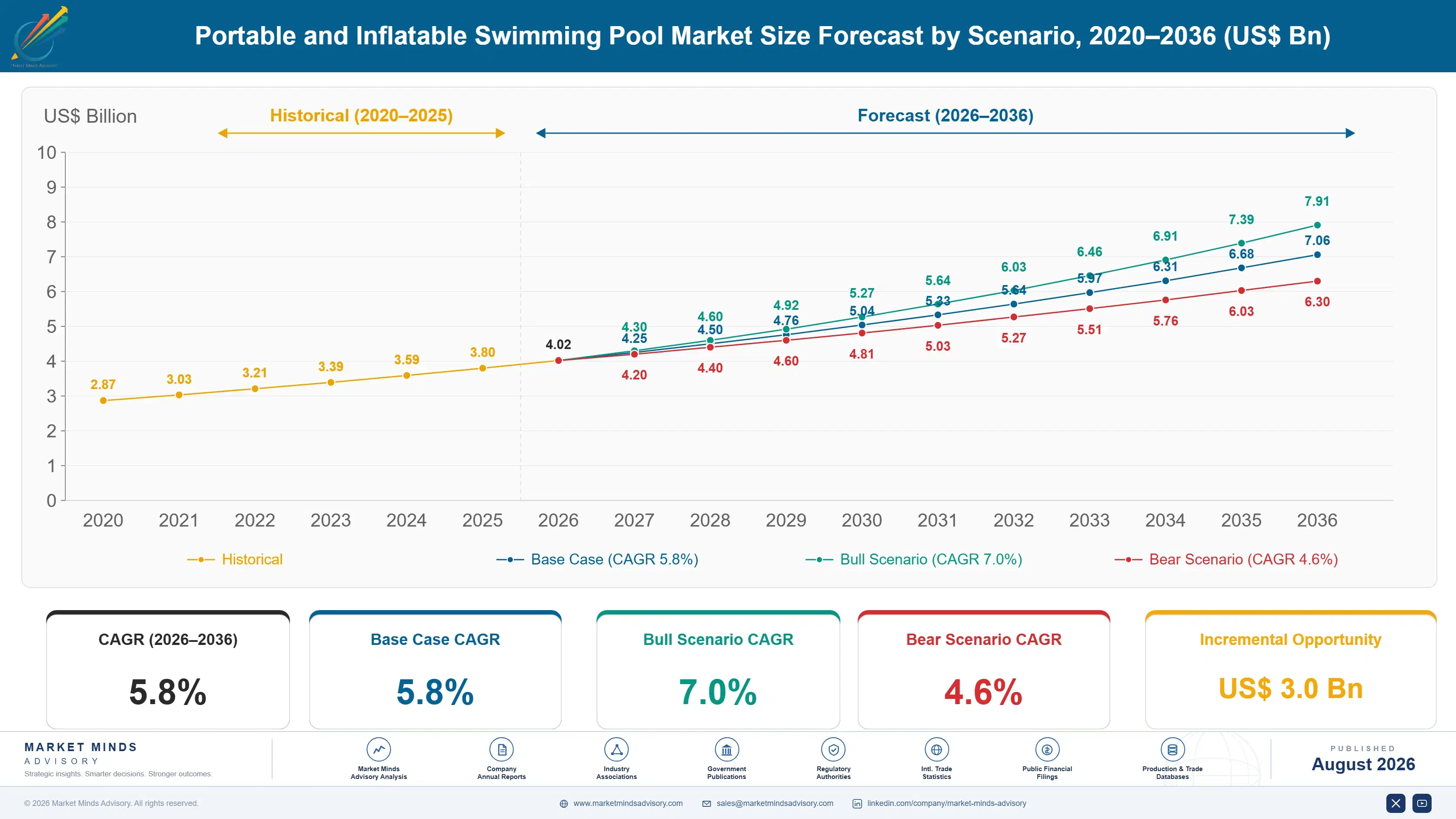
inflatable-swimming-pool-market-size-forecast-scenario-1788169654896
Between 2020 and 2025 the category compounded at 4.8%, and the shape of that number hides two different years. Lockdown demand in 2020 and 2021 emptied warehouses and pulled forward several seasons of purchase. What followed was a correction nobody in the supply chain had planned for, with 2022 and 2023 spent clearing inventory bought at pandemic era freight rates.
The 5.8% base case rests on three mechanisms. Frame pools keep converting households that would previously have bought nothing, at a price point that survives a weak consumer year. Container rates have normalised enough that landed cost is predictable again, which restores the promotional pricing that drives volume. And inflatable spa units have opened a second selling season in autumn and winter that the category never had. None of the three depends on a particularly hot summer.
The bull case at 7.0% turns on inflatable spas becoming a year-round category rather than a seasonal one, which would break the working capital problem that defines this business. The bear case at 4.6% is water: drought restrictions across Spain, southern France, California and eastern Australia have already made filling a pool a regulated act in places, and enforcement is spreading.

Freight, Weather And Twelve Weeks

The product is close to worthless per cubic metre and that governs everything. A forty foot container holds a modest number of large frame pools, so ocean freight runs near a fifth of landed cost, and a rate move that a machinery importer would shrug at rewrites this category's margin. Producers who book space early ship. Producers who wait pay whatever the spot market feels like charging.
TOP FIVE CONCENTRATION44%Share held by the five largest portable pool makers
AVERAGE SELLING PRICEUSD 128Mean retail price across frame and inflatable pool formats
CONTAINER COST SHARE19% of landed costOcean freight as proportion of delivered cost to retail
SEASON CONCENTRATION71%Portion of annual volume sold within a single quarter
CHINA PRODUCTION SHARE83%Portion of world output assembled in a single producing country
RETURN RATE6.8%Share of units returned, largely for seam and valve failure
Seasonality compounds the freight problem into something close to a gamble. Roughly 71% of annual volume moves in a single quarter, and the buying decision that determines whether there is stock to sell happens five months earlier, before anybody knows what the weather will do. Get it wrong upward and the warehouse holds pools until next May. Get it wrong downward and the shelf is empty in July.
Returns run at 6.8% and almost all of it is seam and valve failure rather than buyer regret, which is a manufacturing signal hiding inside a retail statistic. A returned pool is worthless: it cannot be repacked, resold or repaired economically. That single line explains why the two largest participants own their factories and why the smaller importers keep discovering the same problem.
"Everybody asks about pool design. Nobody asks who booked container space in January, which is the only question that has ever decided who makes money in this category."
Director, Consumer Durables and Outdoor Living Practice · MMA Construction and Industrial Equipment Practice · August 2026

Market Trends

Frame pools absorbed the permanent pool buyer

Metal frame above-ground pools have taken demand that previously went to permanently installed above-ground pools costing roughly ten times as much, and the buyer barely notices the difference in a single season of use. Installation is an afternoon rather than a contractor booking. Removal at the end of summer is possible, which matters in markets where a permanent pool changes property tax or insurance treatment. The result is a segment growing at 8.7% while the traditional above-ground pool business contracts, and the two are rarely counted in the same market.
Market Impact: Anchors 30% North American share
Inflatable spas opened a winter selling season

Inflatable hot tub units sell from September through February, which is the exact inverse of the pool season, and that changes the working capital shape of any business carrying both. The same factory, the same freight lane and the same retail relationships serve two seasons instead of one. Growth at 7.6% is strong but the commercial value is larger than the growth rate suggests, because it converts a business that idles half the year into one that ships continuously. Several participants entered spas purely for the calendar rather than the category.
Market Impact: Cuts freight to 19% share

Market Opportunities and Growth Drivers

Detached housing stock determines where demand exists

A portable pool needs a private outdoor space of a few square metres that the household controls, which sounds trivial and is the single hardest constraint in this market. Regions with high detached and semi-detached housing shares support the category; regions dominated by apartment stock do not, regardless of income or climate. That is why North America takes 30% of demand while East Asia, with far more people and a comparable climate range, takes 22%. New housing completion mix therefore forecasts this category better than any consumer sentiment measure does.
Market Impact: Removes 4 regional selling seasons

Normalised container rates restored promotional pricing

Ocean freight on the Asia to North America and Asia to Europe lanes has settled far below the 2021 and 2022 peaks, and for a product where freight is a fifth of landed cost that transfers directly into retail price. Promotional pricing is what moves volume in this category, since almost nobody shops for a pool on brand. Participants who held pricing through the freight spike and did not raise it again have taken share from importers who repriced twice and lost their promotional slots at major retail accounts entirely.
Market Impact: Adds 2 compliance items required

Market Restraints and Challenges

Drought restrictions make filling a pool regulated

Water restrictions across Spain, southern France, California and eastern Australia have moved from advisory to enforceable, and several jurisdictions now prohibit filling private pools during declared drought periods. The root cause is straightforward: multi-year rainfall deficits against fixed municipal supply, and a portable pool is politically the easiest discretionary use to ban. Commercial impact is a whole season lost in an affected region, with no way to redirect stock that was containerised months earlier. Participants are responding with smaller water volumes, cover kits that cut evaporation, and filtration that extends a single fill across a full season.
Market Impact: Converts buyers at 10% cost

Drowning legislation adds barrier and alarm requirements

French law requires safety devices on private pools, and Australian state legislation extends barrier requirements to portable pools above a stated depth, which turns a boxed consumer purchase into something with a compliance obligation attached. The root cause is a genuine child drowning record in shallow domestic water, and no participant argues with the intent. Commercial impact falls on the retailer as much as the maker, since point-of-sale disclosure is often mandated. Mitigation runs through bundled barrier kits, depth designs that fall below regulated thresholds, and clearer packaging that shifts the compliance conversation before purchase rather than after.
Market Impact: Adds 5 months of shipping
3 additional market trends, 4 additional growth drivers, and 2 additional restraints and challenges are covered in the full report. Contact sales@marketmindsadvisory.com to access the complete intelligence.

Segment CAGR and Growth Architecture

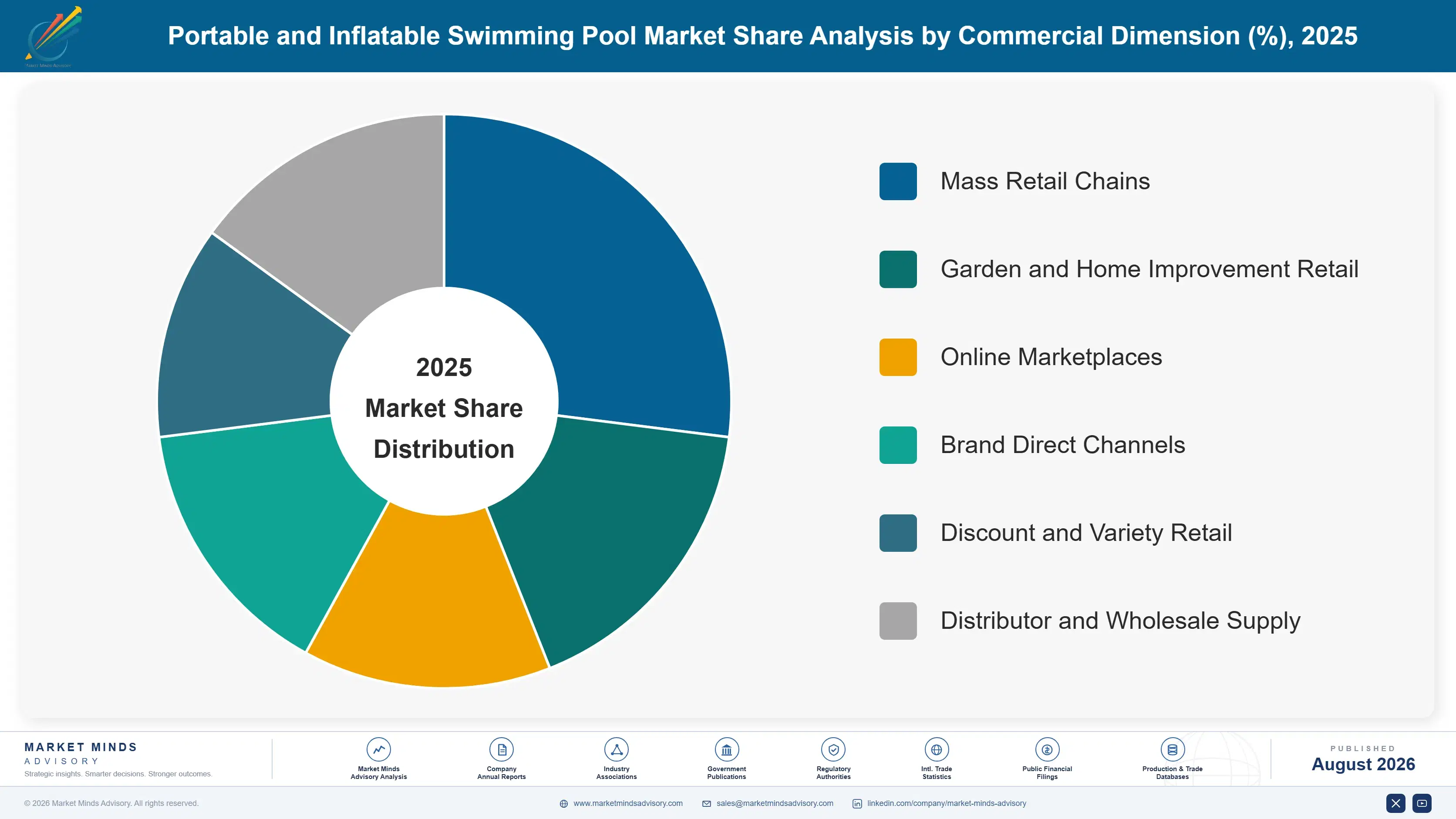
Segmentation follows pool construction format, the dimension on which tooling, freight cube and retail price point all operate together. Ring-top and kiddie formats carry the unit volume and almost none of the value. Frame-supported pools and inflatable spas carry the growth, the higher price points and the freight problem, because both ship considerably larger than the small formats.
inflatable-swimming-pool-market-market-share-analysis-1788169655430

Frame-Supported Above-Ground Pools

Frame-supported pools grow at 8.7%, half again the market rate of 5.8%, and the demand is not coming from people who wanted an inflatable pool. It is coming from households who would have bought a permanent above-ground pool, or nothing, and found a steel frame product at a tenth of the cost that lasts several seasons if stored properly. Average selling prices run four to six times the ring-top format, which makes this the only segment where a participant can earn a margin worth defending. Freight cube is the constraint: a large frame pool eats container space, so landed cost discipline decides who can hold a promotional price point through a whole season.
CAGR 8.7%

Inflatable Spa and Hot Tub Units

Inflatable spa units at 7.6% solve a calendar problem before they solve a demand problem. They sell through autumn and winter, filling the half of the year when a pool business has nothing to ship, and they use the same factories, the same containers and the same retail buyers. Unit prices sit at the top of the category, and the attach rate on chemicals, covers and replacement filters produces a recurring revenue line that no pool format offers. The engineering is harder than it looks, since a heated unit under pressure fails differently from an unheated one, and the participants who entered casually found that out the hard way through warranty claims.
CAGR 7.6%
Full segment breakdown across 6 segments available in the complete report.

Regional Architecture and Country Demand Map

North America takes 30%, and it is one of the few consumer categories where that lead is genuinely about housing rather than income: the product needs a private yard. East Asia makes 83% of world output and consumes far less of it, which is the whole freight story.

North America

Detached housing with private yard space is the reason this region leads, and no amount of demand elsewhere changes that arithmetic. American households buy frame pools through big-box retail on promotional price points set six months before the season, and the two largest participants have built their entire North American operation around those buying calendars. Canadian demand is smaller and considerably more compressed, with a selling window that can close by mid-August. The commercial risk here is concentration on the retail side: a handful of chains control most of the volume, and losing a promotional slot at one of them costs a participant more than any competitor action could. Nobody wins that slot back the following year.
Share: 30% | CAGR: 5.2% (2026 to 2036)

Western Europe

Water policy is doing more to shape this region than consumer demand is. Spanish and southern French drought declarations have prohibited filling private pools in whole provinces during recent summers, removing a season with no notice and no way to move stock. French safety legislation adds barrier and alarm obligations that the category has to design around. Against that, German, Dutch and Nordic demand grows steadily on garden culture and a housing stock that supports it. Growth at 4.2% is the slowest of the seven regions, and the mechanism is regulatory rather than any weakening of consumer interest. Participants planning European volume now model water policy alongside weather, which nobody did five years ago.
Share: 25% | CAGR: 4.2% (2026 to 2036)
Regional intelligence for 5 additional markets available in the complete report: East Asia, South Asia and Pacific, Latin America, Middle East and Africa, Eastern Europe. Contact sales@marketmindsadvisory.com.
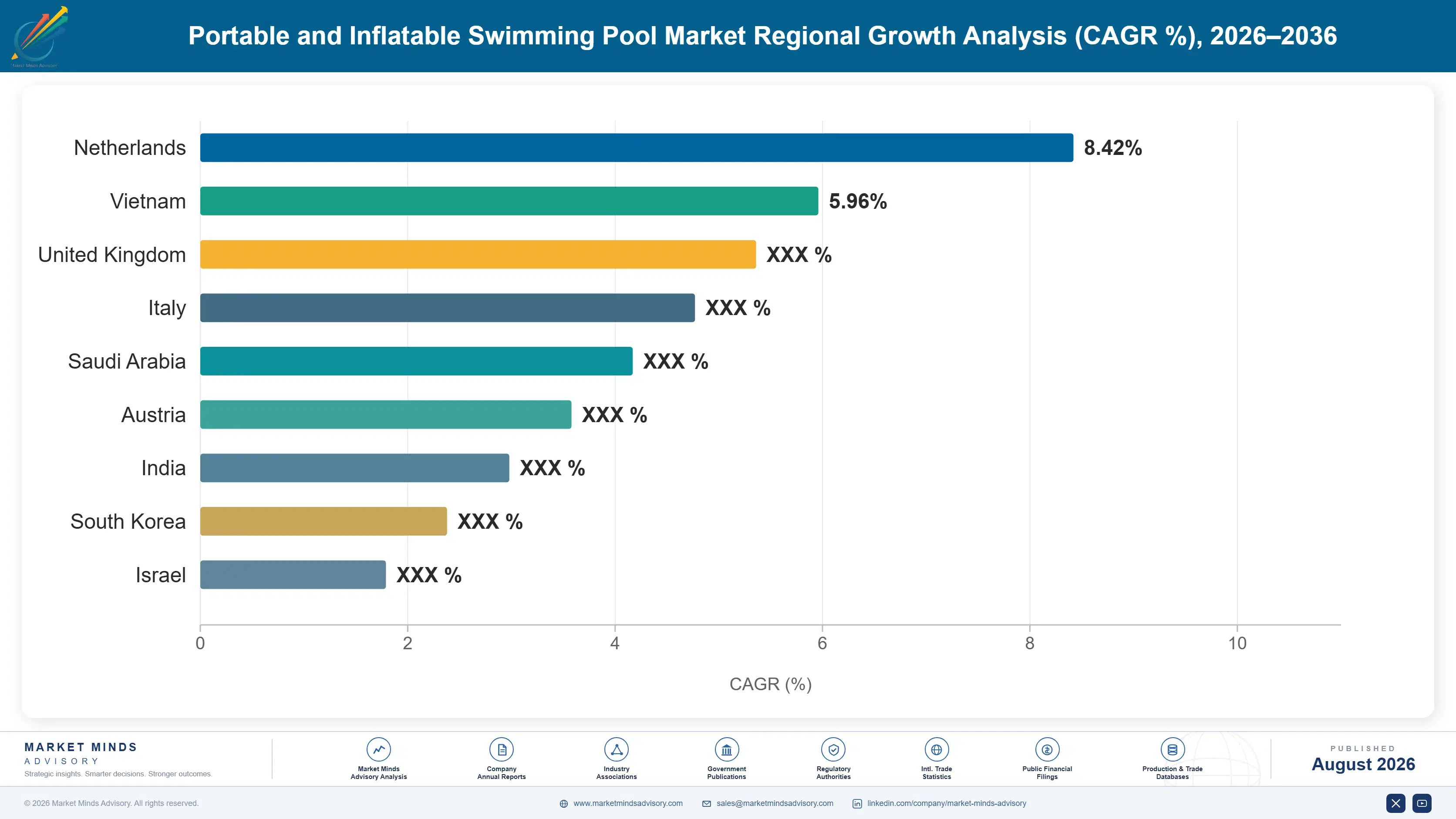
inflatable-swimming-pool-market-country-cagr-analysis-1788169655958

Four Moves Against The Season

None of these four needs a new pool design, which is fortunate, because the product has barely changed in twenty years and nobody buys it on innovation. Each addresses the two problems that actually decide profit in this category: a twelve week selling window and a freight bill that arrives months before the revenue does.

Carry inflatable spas for the calendar

A pool business ships for roughly 5 months and idles for the rest, which is a working capital problem disguised as a seasonality complaint. Inflatable spa units sell from September through February using the same factory, the same lane and the same retail buyers, and they carry the highest average selling price in the category. Adding the range converts fixed overhead from a half-year burden into a full-year one. The engineering is not trivial, since heated units under pressure fail differently, but the calendar benefit alone justifies the development spend.
Market Impact: Adds 5 more months of annual shipping revenue

Book container space on annual contract

Freight runs near 19% of landed cost on a product this bulky, and spot booking in a tight market can move that figure by half again inside a quarter. Annual contracts with a carrier cost a premium over the best spot rate in a soft market and remove the single largest uncontrolled line in the cost sheet. More importantly they guarantee space in the February to April window when every seasonal importer wants the same slots. Participants who missed sailings in that window have lost entire seasons, which no pricing decision recovers.
Market Impact: Protects the 19% freight share of landed cost

Fix seams and valves before adding features

A 6.8% return rate on a product that cannot be repacked or resold is pure margin destruction, and almost all of it traces to seam welding and valve assembly rather than to anything the buyer did. Tightening weld parameters and moving to a two-stage valve adds a small amount to unit cost and removes most of the failures within a single production run. The commercial half of the move matters more: retail buyers currently have no way to compare suppliers on reliability, so a quoted return rate is a genuine differentiator that costs nothing to offer.
Market Impact: Recovers most of a 6.8% unit return rate

Sell water efficiency where drought rules bite

Restrictions in Spain, southern France, California and eastern Australia have made filling a pool a regulated act, and the category's response so far has been to hope it rains. A better response is a product designed to need one fill: heavier covers that cut evaporation, filtration rated for a full season, and volumes deliberately kept below the thresholds regulators use. That specification sells at a premium in exactly the 4 regions where the category is otherwise losing seasons, and it gives a retailer something to say when a customer asks about local restrictions.
Market Impact: Defends selling seasons across 4 drought-restricted regional markets

Who Controls the Margin Pool

CR5 stands at 44%, measured on retail unit shipment volume, since almost no participant reports this category separately. That is high for a consumer durable and it exists for one reason: two groups manufacture at a scale and cost that importers buying from third-party factories cannot approach. The gap between the top two and everybody below them is wider than the gap between second and fifteenth.
Competition runs on landed cost, retail slot ownership and reliability, in that order. Landed cost is decided by owning the factory and booking freight early, not by negotiation. Retail slots at the big-box chains are effectively annual contracts, and losing one removes a participant from a national market for a full season. Reliability decides whether the retailer invites you back, since returns land on their books first.

Rankings will move where the channel does. Marketplace selling has let Chinese producers reach Western households directly, without the importer who used to add a brand and a margin, and the price gap is visible. That pressure runs upward from the factory rather than downward from the brand. The counterweight is bulk: a pool is expensive to ship in ones, which still favours anybody holding retail distribution.
inflatable-swimming-pool-market-company-positioning-matrix-1788169656478

Competitive Moat and Risk Dimensions

INTEX RECREATION

Moat: Owned manufacturing at scale

Intex manufactures its own product rather than buying from contract factories, which gives it a landed cost position importers cannot match at any negotiated price. Scale across pools, airbeds and inflatable furniture spreads tooling and resin purchasing across a much larger volume than pools alone would justify. Replicating that means building factories for a seasonal product, which few would fund.
INTEX RECREATION

Risk: Single manufacturing country exposure

Production concentrated in China leaves the company exposed to tariff action and port disruption on the two lanes that carry almost all its volume. A seasonal product cannot absorb delay, since a container arriving in July is worth a fraction of the same container arriving in April. Diversifying assembly means duplicating capacity that would sit idle half of every year.
BESTWAY GLOBAL HOLDINGS

Moat: Breadth across leisure formats

The group spans pools, spas, airbeds, paddleboards and outdoor furniture from the same manufacturing base, which lets it offer a retail buyer a full seasonal category rather than a single line. That breadth wins shelf space negotiations that a pool-only supplier loses before it starts. Building the equivalent range means tooling investment across formats that share little beyond the material.
BESTWAY GLOBAL HOLDINGS

Risk: Marketplace channel erodes pricing

The direct marketplace route that the group uses to reach households also lets smaller Chinese producers reach them, at prices that make the branded premium hard to defend. Retail buyers use those listings as a negotiating reference. Holding price means investing in features a shopper can see on a product page, which is not where this category's engineering has gone.

Players Tracked

Prominent Players

Intex Recreation
Bestway Global Holdings
Polygroup Holdings
Jilong Plastic Products
Newell Brands

Other Key Players

Aqua Leisure Industries
International Leisure Products
Manufacturas Gre
Piscines Laghetto
Ubbink Garden
Kokido Development
Poolmaster
Doughboy Pools
Wilbar International
Blue Wave Products
Decathlon
Marimex
Steinbach Pool
Exit Toys
Fluidra

Recent Developments

APRIL 2025

Spanish regional authorities extended drought pool filling restrictions

Catalonian and Andalusian authorities extended drought measures restricting the filling of private pools into a further season, covering municipalities holding several million households. Retailers in affected provinces cancelled or reduced pool orders placed months earlier, and importers carrying stock had no practical route to redirect it elsewhere.
Signal: Water policy can remove a national selling season with a notice period this category cannot absorb.
AUGUST 2025

Bestway commissioned additional inflatable spa production capacity

Bestway Global Holdings brought additional inflatable spa production capacity into operation at its Chinese manufacturing base, an organic capacity expansion rather than any acquisition or joint venture. The investment targets the autumn and winter selling window, which uses the same freight lanes and retail relationships as the summer pool season.
Signal: The calendar problem is being solved with product rather than with any clever inventory financing arrangement.
OCTOBER 2025

Australian state barrier rules extended to portable pool depths

Australian state authorities moved to apply pool barrier and fencing obligations to portable pools above a stated water depth, closing an exemption that had covered most frame products. Retailers were required to display compliance information at point of sale, and several suppliers revised depth specifications rather than carry the obligation.
Signal: Product specification is now being set by safety regulators rather than by any consumer preference at all.

Resin, Steel And Container Space

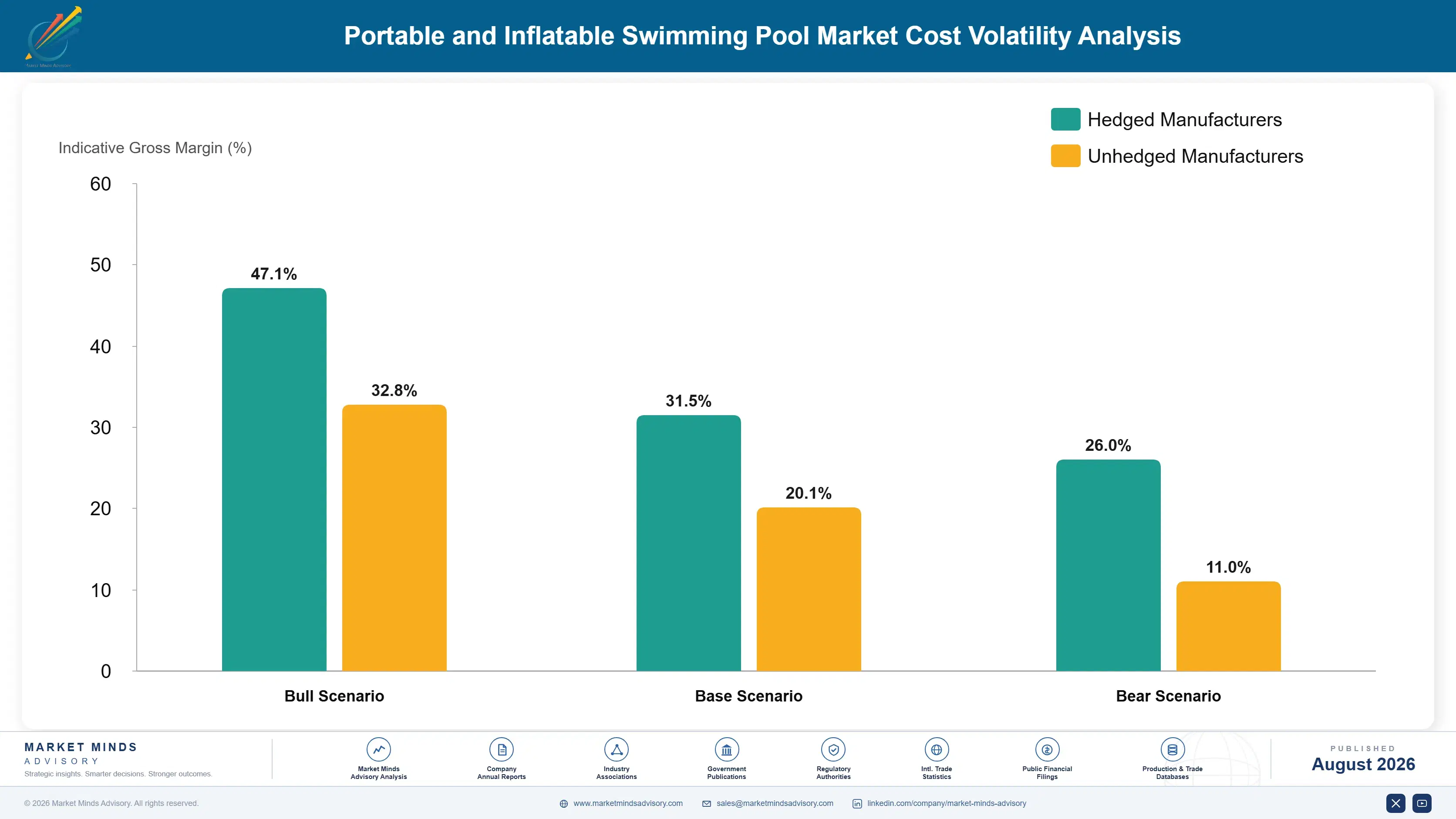
Polyvinyl chloride sheet and reinforced laminate account for roughly 34% of cost of goods, galvanised steel frame components a further 14%, and ocean freight around 19% of landed cost. Resin comes from Chinese and Middle Eastern petrochemical supply, steel from domestic Chinese mills, and both are priced on cycles that have nothing to do with swimming pools.
Container freight gave the category its clearest lesson. Rates on the Asia to North America lane rose to multiples of historic levels through 2021 and 2022 before collapsing, and for a product where freight is a fifth of landed cost that swing was larger than any raw material move. Newell Brands referenced elevated inbound freight costs in its outdoor segment in its Annual Report 2022. Importers who repriced mid-season lost promotional slots they never recovered.

The disadvantage falls on whoever does not own the factory. A vertically integrated producer sees resin and steel cost directly and can shift specification within a season. An importer buying finished units sees one quoted price that moves without explanation, usually after the retail price list is agreed. Geography adds to it: participants shipping into Latin America or Eastern Europe pay an inland leg above the ocean lane.
inflatable-swimming-pool-market-cost-volatility-analysis-1788169656674

Contract ocean freight annually instead of booking spot

Annual carrier contracts cost a premium over the best spot rate in a soft market and remove the largest uncontrolled line in the cost sheet. They also guarantee space in the February to April window when every seasonal importer competes for the same slots. Missing a sailing in that window costs a season, which no later pricing decision recovers.

Design for container cube, not for catalogue

Freight is charged on volume long before weight matters, so a frame redesign that improves packed cube by a tenth moves more margin than any material saving available. Nesting components, flat-packing frames and revising carton geometry are unglamorous engineering with an immediate landed cost return. Very few participants staff a role that owns packed cube as a measure.

Qualify a second assembly country for tariff cover

Concentrating world assembly in one country is a tariff exposure rather than a cost advantage, and a seasonal product cannot absorb a disruption that lands in March. Vietnamese and Indonesian plants can take frame assembly with imported resin sheet, and qualifying one costs a season of engineering. The value is optionality, which looks worthless until the quarter it does not.

Portfolio Architecture for Margin Defence

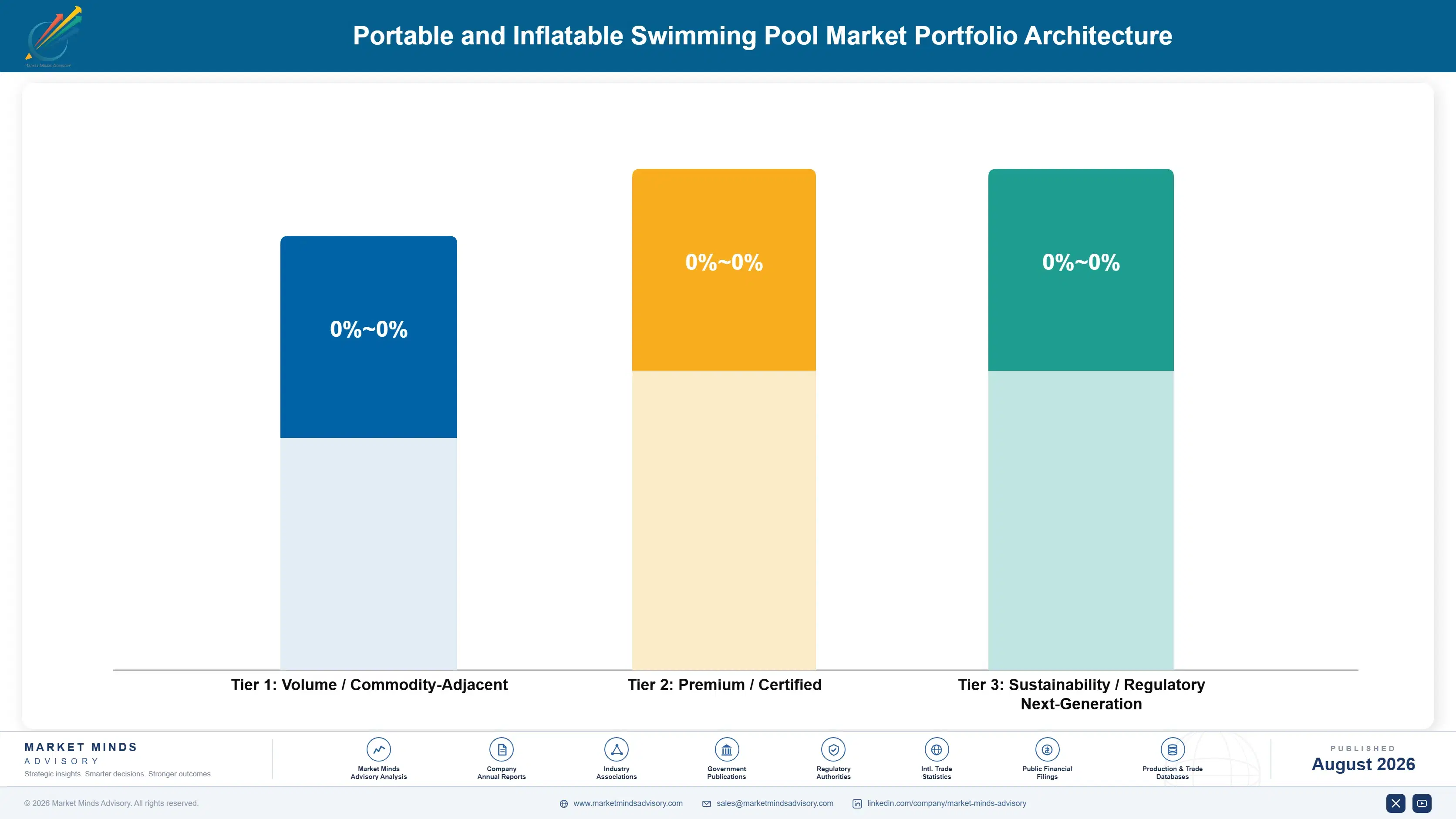
Margin in this category is decided by packed cube and return rate, not by retail price point. A frame pool at a high price that ships four to a pallet position can earn less than a compact spa at the same price shipping eight. Participants who cost their range on delivered margin after returns run a different portfolio from those working off gross price.
Volume and premium pull against each other on the container. Small inflatable formats ship cheaply and sell in enormous numbers at almost no margin, but they hold the retail relationship and the shelf presence that the frame and spa ranges need. Dropping them frees container space and loses the account. The answer is to run the small formats as a shelf-holding cost and take the margin in frame and spa.

High-value pools concentrate in inflatable spas and in the consumables attached to them. Chemicals, covers and replacement filters produce a recurring revenue line at margins the pool itself never reaches, and the customer returns for them every season without any acquisition cost. The second pool is water efficiency specification in drought-affected regions, which is currently unserved and where a retailer badly needs something to say.

Volume / Commodity-Adjacent

Ring-top inflatable and kiddie pools sold through mass retail on promotional price points. Competes on landed cost against near-identical product, and returns absorb a meaningful part of it. The 9 point spread reflects how much volume moves at promotional rather than list pricing.
Gross Margin: 17 to 26%

Premium / Certified

Frame-supported pools with filtration, covers and ladders supplied as complete kits. Higher price points and better packed cube support the margin, and buyers treat these as multi-season purchases. The 9 point spread reflects the difference between branded retail and marketplace direct selling.
Gross Margin: 31 to 40%

Sustainability / Regulatory / Next-Generation

Inflatable spa units, water-efficient designs built for drought-restricted markets, and the consumables attached to both. Margins are high because the buyer is not comparing on price and the consumable stream recurs. The 12 point spread separates hardware sales from the chemical and filter attach.
Gross Margin: 42 to 54%
inflatable-swimming-pool-market-portfolio-architecture-1788169657185

High-value Sub-segments and Strategic Watch-out

Inflatable Spa Units

High value and high growth at 7.6%. Sells in the months when the pool business ships nothing, carries the top price point in the category, and attaches chemicals and filters at a recurring rate. The 8 point spread reflects whether consumables are sold by the maker or by the retailer.
Gross Margin: 44 to 52%

Frame-Supported Above-Ground Pools

High value with the highest growth at 8.7%. It took the buyer who would otherwise have bought a permanent pool or nothing at all, at roughly a tenth of the cost. The 8 point spread reflects packed cube efficiency, which varies considerably between frame designs.
Gross Margin: 33 to 41%

Ring-Top and Kiddie Pools

The volume core. It earns almost nothing after returns and freight, but it holds the retail shelf position and the buying relationship that the profitable ranges depend on entirely. The 8 point spread reflects promotional depth, which varies enormously between retail accounts and seasons alike.
Gross Margin: 18 to 26%

Drought-Exposed Regional Volume

The strategic watch-out. Spanish, Californian and Australian volume can disappear on a regulatory declaration made after stock has already been containerised. The 14 point spread reflects how much of the affected volume clears at full price rather than at end-of-season liquidation in a bad year.
Gross Margin: 24 to 38%

How A Seasonal Purchase Repeats

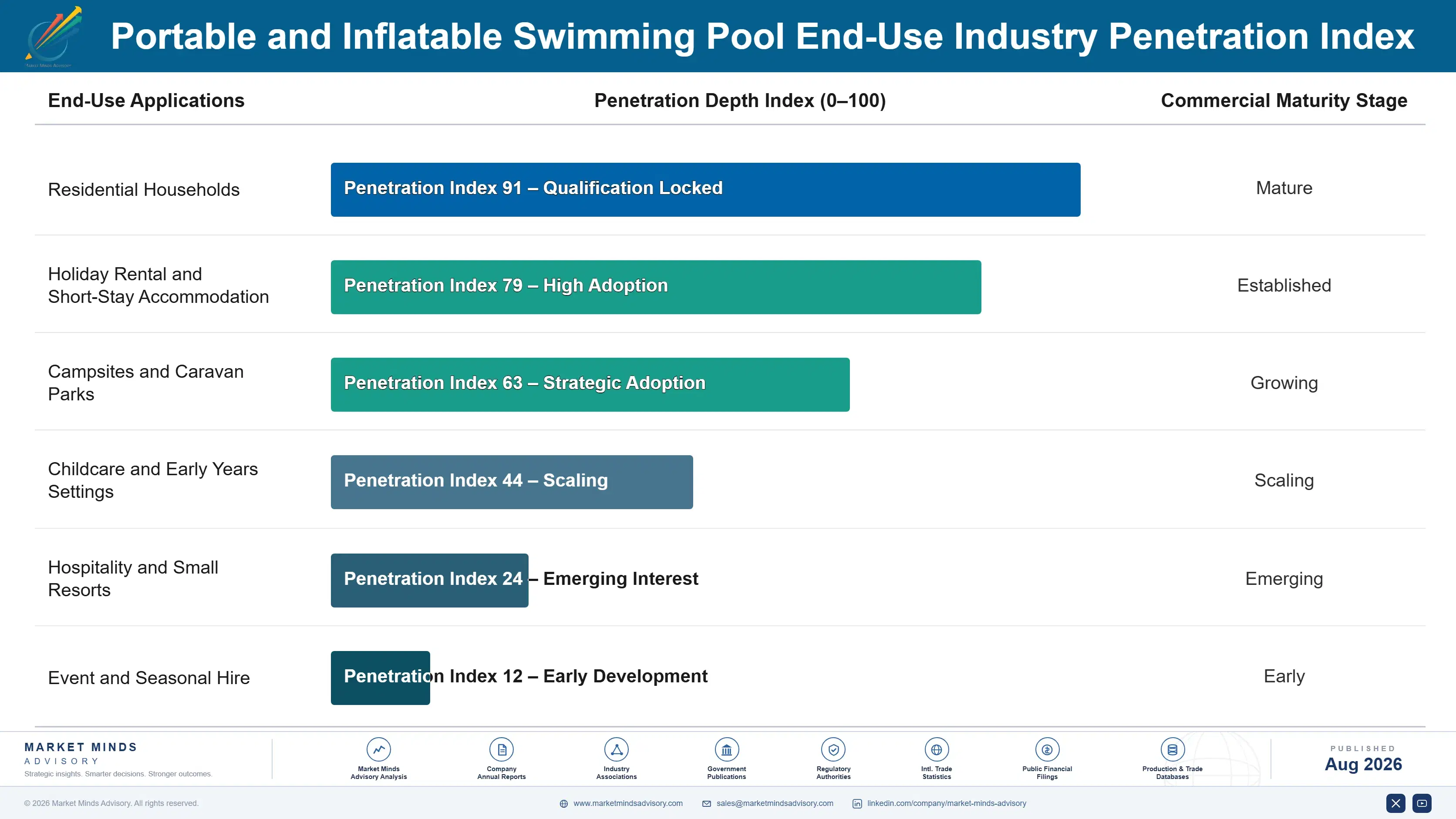
The annuity here is weaker than the category likes to admit. A frame pool lasts three to five seasons if it is stored properly, which most households do not manage, so the real replacement interval sits closer to two. Consumables carry the recurring revenue instead: chemicals, replacement filters and covers return every season regardless of whether the pool does, and they cost nothing to acquire.
Stickiness varies more by format than by anything else. Spa owners are the stickiest, because the unit stays inflated across months and the consumable relationship establishes itself. Frame pool households repeat the category but rarely the brand, since the purchase happens on a promotional price point in a crowded aisle. Kiddie pool buyers show no loyalty and are effectively buying a disposable item they will replace next summer.

Buyer profiles have shifted in a way the category has been slow to price. The household buying a frame pool today is often making a substitution decision against a permanent installation costing ten times more, and they arrive having compared both. That buyer asks about durability, filtration and storage rather than colour. Sellers still merchandising on summer imagery are answering a question the current buyer stopped asking.
inflatable-swimming-pool-market-end-use-penetration-index-1788169657675

What Decides Profit Here

These are among the four positions where our research anticipates prominent divergence between winners and laggards over the coming forecast period. Each is grounded in the demand model, the regulatory perimeter, and the announced capacity pipeline.
01 / FREIGHT CONTRACT DISCIPLINE

Book the container before you argue about the product

Ocean freight is roughly 19% of landed cost on a product with almost no value per cubic metre, which makes it the largest controllable line in the business by a wide margin. Annual carrier contracts cost a premium against best spot pricing in a soft market and buy guaranteed space in the February to April window that every seasonal importer wants. Participants who missed sailings in that window lost whole seasons, and no pricing decision taken afterwards has ever recovered one.
02 / SELLING CALENDAR DIVERSIFICATION

Sell spas so the factory ships all year

A pool business ships for roughly 5 months and carries fixed overhead through the other seven, which is a working capital problem the category has always treated as weather. Inflatable spa units sell from September through February using the same factory, the same freight lane and the same retail buyers, at the highest price point in the range. The development cost is real, since heated units fail differently under pressure, but the calendar benefit alone repays it several times over.
03 / SEAM RELIABILITY ECONOMICS

Fix the welds before adding another colourway

A 6.8% return rate on a product that cannot be repacked or resold destroys more margin than any promotional pricing decision recovers, and almost all of it traces to seam welding and valve assembly. Tightening weld parameters and moving to a two-stage valve removes most of those failures inside a single production run at trivial unit cost. The commercial half matters more, because a quoted return rate is something no competitor currently offers a retail buyer anywhere in this category.
04 / WATER POLICY POSITIONING

Design for the drought before it is declared

Restrictions across Spain, southern France, California and eastern Australia have made filling a private pool a regulated act, and the category's response so far has amounted to hoping for rain. A product designed to need one fill, with heavy covers, season-rated filtration and volumes below regulated thresholds, sells at a premium in exactly those 4 markets. It also gives a retailer an answer when a customer asks what the local rules allow, which nobody in this category currently has at all.

Engagement Snapshot From the Field

A live engagement with an industry participant carrying material or product regulatory and market exposure ahead of a defining policy shift, showing how our research translates into a defensible multi-year portfolio strategy.
MARKET MINDS ADVISORY · CLIENT ENGAGEMENT SUMMARY
Portable and Inflatable Swimming Pool Producer Strategic Portfolio Review and Transition Roadmap 2026·Investment Scenario on Portable and Inflatable Swimming Pool Exposure Evaluation 2025-26
CLIENT PROFILE
A European importer and distributor of portable pools and outdoor leisure goods supplying discount and garden retail chains across seven countries, with annual revenue in the low hundreds of millions of euros (client-reported, unverified by MMA). The business bought finished units from Chinese contract factories and booked ocean freight on the spot market, season by season, with no annual carrier arrangement in place.
STRATEGIC CHALLENGE
Two consecutive seasons had gone badly for different reasons: a freight spike that arrived after retail prices were agreed, then a Spanish drought declaration that removed a whole market after stock had shipped. Management wanted to know whether the business was fundamentally unprofitable or simply badly organised, and what a defensible range would look like.
MMA APPROACH
MMA rebuilt three seasons of unit economics on a delivered margin basis, allocating freight by packed cube and returns by product line rather than spreading both across the range. Forty-seven expert interviews across carriers, contract factories and retail buyers established what annual freight terms were achievable at that volume and what reliability data buyers would actually act on.
KEY FINDINGS
  1. Ring-top pools carried 46% of units but a negative delivered margin once freight was allocated by packed cube rather than by revenue.
  2. Annual carrier terms were available at the client's volume, at roughly 8% above the softest spot rate but with guaranteed February sailings.
  3. Returns concentrated in two supplier factories and traced to valve assembly rather than to any design fault in the products themselves at all.
  4. No competing supplier offered retail buyers any reliability data, and every buyer interviewed said they would use it in a listing decision.
CLIENT PROFILE
A European importer and distributor of portable pools and outdoor leisure goods supplying discount and garden retail chains across seven countries, with annual revenue in the low hundreds of millions of euros (client-reported, unverified by MMA). The business bought finished units from Chinese contract factories and booked ocean freight on the spot market, season by season, with no annual carrier arrangement in place.
STRATEGIC CHALLENGE
Two consecutive seasons had gone badly for different reasons: a freight spike that arrived after retail prices were agreed, then a Spanish drought declaration that removed a whole market after stock had shipped. Management wanted to know whether the business was fundamentally unprofitable or simply badly organised, and what a defensible range would look like.
MMA APPROACH
MMA rebuilt three seasons of unit economics on a delivered margin basis, allocating freight by packed cube and returns by product line rather than spreading both across the range. Forty-seven expert interviews across carriers, contract factories and retail buyers established what annual freight terms were achievable at that volume and what reliability data buyers would actually act on.
KEY FINDINGS
  1. Ring-top pools carried 46% of units but a negative delivered margin once freight was allocated by packed cube rather than by revenue.
  2. Annual carrier terms were available at the client's volume, at roughly 8% above the softest spot rate but with guaranteed February sailings.
  3. Returns concentrated in two supplier factories and traced to valve assembly rather than to any design fault in the products themselves at all.
  4. No competing supplier offered retail buyers any reliability data, and every buyer interviewed said they would use it in a listing decision.
RECOMMENDED STRATEGY
Phase 1: Phase one: sign annual carrier terms covering the February to April window before committing to any retail price list for the coming season. Phase 2: Phase two: cut ring-top volume by half and redeploy the container space into frame pools and inflatable spa units instead. Phase 3: Phase three: move valve assembly to the better performing factory and quote a tested return rate to every retail buyer during listing negotiations.
OUTCOME
Within two seasons delivered margin had improved by several points despite flat revenue, and the business shipped through the winter for the first time on spa volume (client-reported, unverified by MMA). Two retail accounts expanded frame pool listings after being shown the return rate data, and the Spanish exposure was reduced by redirecting volume northward before the season.

Frequently Asked Questions

Foundational context covering the market sizes, CAGR, scope, country, region and competition that inform every finding below. This section is provided to cover basics and most often pre-purchase conversations, answered from the MMA Primary Research Dataset.

What is the current size of the Portable and Inflatable Swimming Pool Market?

The global portable and inflatable swimming pool market was valued at USD 3.8 billion in 2025, covering all non-permanent above-ground consumer pools. The 2026 figure reaches USD 4.02 billion.

How large will the Portable and Inflatable Swimming Pool Market be by 2036?

MMA forecasts USD 7.06 billion by 2036, an increase of USD 3.04 billion over the 2026 base. That represents an expansion multiple of 1.76 times across the forecast period.

What is the CAGR for the Portable and Inflatable Swimming Pool Market 2026 to 2036?

The base case compound annual growth rate is 5.8%, with a bull case at 7.0% and a bear case at 4.6%. Historical growth between 2020 and 2025 ran at 4.8%.

Which segment is growing fastest?

Frame-supported above-ground pools grow at 8.7%, half again the market rate of 5.8%, having taken demand that previously went to permanent installations. Inflatable spa units follow at 7.6%.

Who are the major companies in the Portable and Inflatable Swimming Pool Market?

Intex Recreation, Bestway Global Holdings, Polygroup Holdings, Jilong Plastic Products and Newell Brands lead on retail unit shipment volume, with combined CR5 of 44%. Concentration is high for a consumer durable.

Which country is growing fastest?

India grows fastest at 7.8%, driven by kiddie and paddling formats reaching urban middle income households through online marketplaces. South Asia and Pacific leads regionally at 7.8%.

Report Segmentation Architecture

The full report scope spans multiple orthogonal segmentation dimensions, with cross-tabulated demand data provided for each dimension pair. Coverage extends further to regional breakdowns, trend trajectories, and the competitive detail needed to support segment-level decision-making.

By Pool Construction Format

  • Ring-Top Inflatable Pools
  • Kiddie and Paddling Pools
  • Frame-Supported Above-Ground Pools
  • Soft-Sided Splash and Water Play Pools
  • Portable Lap and Exercise Pools
  • Inflatable Spa and Hot Tub Units

By End-Use Industry

  • Residential Households
  • Holiday Rental and Short-Stay Accommodation
  • Campsites and Caravan Parks
  • Childcare and Early Years Settings
  • Hospitality and Small Resorts
  • Event and Seasonal Hire

By Commercial Dimension

  • Mass Retail Chains
  • Garden and Home Improvement Retail
  • Online Marketplaces
  • Brand Direct Channels
  • Discount and Variety Retail
  • Distributor and Wholesale Supply

By Region

  • North America
  • Western Europe
  • East Asia
  • South Asia and Pacific
  • Latin America
  • Middle East and Africa
  • Eastern Europe

Scope, Methodology, and Coverage

Every figure in this report is reproducible from documented input assumptions. The scope below maps the historical period, the forecast horizon, the segmentation dimensions, and the countries covered, alongside the underlying primary and qualitative methodology.
Historical Period
2020 to 2025
Forecast Period
2026 to 2036
Base Year
2025 (USD billions; MMA Primary Research Dataset, August 2026)
Market Definition
The portable and inflatable swimming pool market covers non-permanent above-ground pools sold as consumer products, spanning ring-top inflatable pools, kiddie and paddling pools, metal or resin frame-supported pools, soft-sided splash pools, portable lap pools and inflatable spa units. Scope includes filtration pumps, covers and ladders supplied within a pool kit. Excluded are permanently installed in-ground and steel-wall above-ground pools, commercial and municipal pools, rigid fibreglass shells, and pool chemicals or accessories sold separately.
Quantitative Units
USD billion, 2025 base year, 2026 to 2036 forecast period
Segmentation Dimensions
Pool construction format, end-use industry, commercial channel, region
Regions Covered
North America, Western Europe, East Asia, South Asia and Pacific, Latin America, Middle East and Africa, Eastern Europe
Countries Covered
United States, Canada, Germany, France, United Kingdom, Spain, Italy, Poland, China, Japan, South Korea, India, Australia, Brazil, Mexico, Saudi Arabia, United Arab Emirates, South Africa
Key Companies Profiled
20 companies across vertically integrated manufacturers, importers and marketplace-direct producers
Quantitative Methodology
Primary survey, n=3,800 respondents, Q4 2025, six countries; demand-side model with trade association cross-validation
Qualitative Methodology
47 expert interviews, Q4 2025; applied to validate demand model assumptions, identify emerging dynamics, and assess competitive positioning
Report Format
PDF and XLSX data workbook (Word format preview document)
Publisher
Market Minds Advisory
Report Code
MMA-2026-CON-491
Published
August 2026
Contact
sales@marketmindsadvisory.com | www.marketmindsadvisory.com

Purchase the full Portable and Inflatable Swimming Pool Market Report (2026 to 2036).

The full MMA report on the portable and inflatable swimming pool market runs to detailed format and regional models across the 2026 to 2036 forecast period, with landed cost benchmarks by format. It profiles 20 companies on a consistent retail unit shipment basis, covering vertically integrated manufacturers, importers and the marketplace-direct Chinese producers now competing with both. Water restriction exposure is mapped by region alongside the barrier and safety obligations that shape product specification. Regional chapters cover the seven MMA regions with country-level detail on the eighteen markets surveyed. Primary research draws on a quantitative survey of 3,800 respondents across six countries and 47 expert interviews conducted in Q4 2025.
Landed cost benchmarks by format and packed cube
Return rate analysis by construction and supplier
Water restriction exposure mapped across affected regions
Twenty company profiles on consistent shipment volume basis
Freight lane cost history across the main routes
Seven regional chapters with eighteen country detail tables

Built For The People Who Decide

From boardroom strategy to bench-side execution, this report is read cover-to-cover by leaders shaping the next decade of their industry, turning demand scenarios, market dynamics and valuation benchmarks into decisions.
CXOs/ Presidents/ VPs/ Managers
M&A and Corporate Development
Strategy Teams and R&D Heads
Procurement and Product Directors
Regulatory and Compliance Leaders
Investor Relations and Equity Analysts